Likes
Comments
Share
@GYOweed
Follow
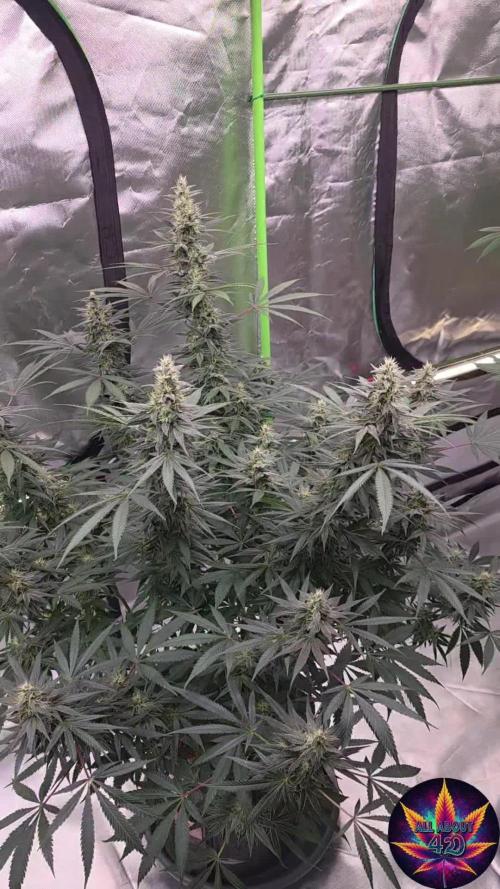
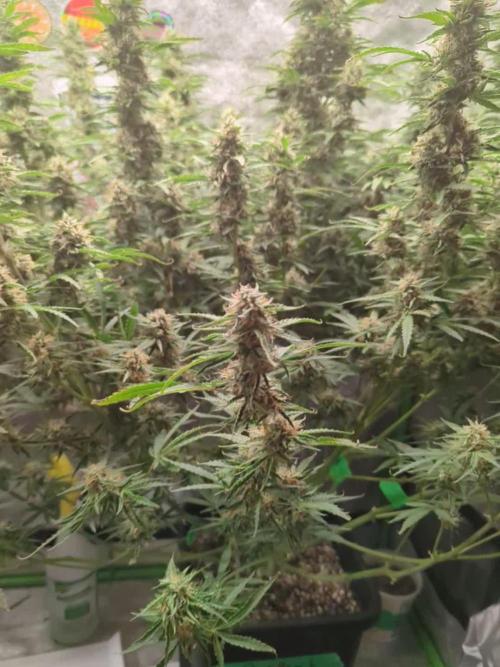
Result was on par to breeder descriptions. High yield for a lanky sativa. Bap will help stretch and density a lot on this strain at flip. I have to grow my last seed outdoors and breed it with another nasty sativa like sourD muahahahaha
Likes
50
Share
First time running hydroponics. And I’ll say it’s pretty easy although running into problems with ph rising cause of not using ro water so it started getting a potassium deficiency. I think I’m prepared for next run.
Likes
28
Share
@Budcrack
Follow
End off week 11, concluding week 7 off flowering: Hi(gh) Guys! Thanks for viewing my weekly update (i hope again?)! The girls are doing great. I have to come back on a previous statement, i said that 3 girls are ahead of the rest and up for an early harvest, although that is both true, actually there straight on schedule, and i think the rest is behind. The manual on this strain says they need 9 weeks and flowering week 7 is now concluded. They start to gain weight all three and the stems are beginning to bend. This upcoming week they will get their last nutrients, but week 9 they will only get water, so i can flush properly for the upcoming week and a half. End of week 9 they will be terminated, because my vaporizer is idle for too long already! As for the rest, they will need at least 2 or 3 weeks longer, because everywhere i look i see loads of white hairs, and i’m seeing forward to show you some off my biggest nugs ever! This is my first time on this website and i’m having a lot of fun. Earlier i'd grow my best round ever with 9 Gorilla Glue #4 ladieboys, what nice buds did they produce. But i guess the OG is going to be at least as close. That’s good for me because this is my favorite strain. Please leave a comment, and like my post. My account needs a little more love! Please come and see for another update next week. (p.s. sorry for that shakie video, I was sitting on top of an little pebble with my knee, but I liked the video anyway…)
Likes
11
Share
🌿 Woche 8 - Zweite Erntewoche ️🌿 🌱 Wachstum🌱 Lady 2 wurde Ende Woche 9 also nach knapp 10 Wochen auch geerntet. Bei ihr kam Erwarungsgemäß mehr rum bei rum. 47g bei Pflanze Nr. 2 Die Mängel sind kaum noch zu übersehen. Ich bin überzeugt das die Pflanze zum Schluss ihr volles Potenzial nicht ausschöpfen konnte. Trotzdem haben es viele gute Buds geschafft und der Rest sieht auch rauchbar aus 😋 🌱 Living Soil🌱 Ich bin mit der Erde so semi zufrieden. Aber wenn man die Umstände bedenkt, und das eigentlich zu kleine Beet, für gleich 2 Pflanzen. Kann ich mich doch noch glücklich schätzen. Nächstes Mal vllt nur eine Pflanze 😜 Vllt hab ich auch hier und da was falsch gemacht. Der Blumat hat mich mitten im Run auch im Stich gelassen. Vllt war es hin und wieder doch etwas zu Trocken. Grade in der 2. Hälfte des Runs. Bevor ich den nächsten Grow starte , werd das wohl überholen müssen. 💡 Licht & Schatten PPFD 📈 gegen Ende ca. 950 µmol/m²/s. ☀️ Wetter Die Temperaturen sind und bleiben brutal: 25–31 °C 🌡️🔥 🎶 The Grow must go on! 🌱✨
Likes
17
Share
@Hashy
Follow
Week 4 Light cycle=18/6 Light Power=100w Extractor controller settings High temp= 25c Low temp= c Temp step=0c High Rh= 60% Low Rh= % Rh step=0% Speed max=5 Speed min=1 Smart controller settings (during lights on). Lights on=06.00am Radiator on= below 20c Radiator off= above 21c Smart controller settings (during lights off). Lights off=00.00am Radiator on= below 18c Radiator off= above 19c VPD aim=0.6-1.2 DLI aim=22-30 EC aim=0.8 PH aim=6.2 Fri 12/1/24 #1 (Day 22) 📋 Turned pot 180 deg Sat 13/1/24 #1 (Day 23) 📋 pot is getting lighter, prob water tomorrow. Sun 14/1/24 #1 (Day 24) 📋 💧💧💧💧💧💧💧💧💧💧💧💧💧💧💧💧 Method= manual Feed= veg nutes Total volume made=12L Neutralise=0.1ml/L Silicon=1.0ml/L Calmag=1.0ml/L Terra grow=2.0ml/L Roots=0.2ml/L Easy Ph down=0.2ml/L Volume=2L Ec=1.7 PH= 5.8/6.0 Time=4.30pm Runoff. Total runoff=60ml Ec=4.98 PH=5.3/5.5 💧💧💧💧💧💧💧💧💧💧💧💧💧💧💧💧 Mon 15/1/24 #1 (Day 25) 📋 turned pot 90 deg. Tue 16/1/24 #1 (Day 26) 📋 opened up the plant. wed 17/1/24 #1 (Day 27) 📋 removed 1st 3 fingered fan leaves. Installed the drippers. 🚿 foliar sprayed (cal-mag 5ml/L) Turned pot 90 deg. Thur 18/1/24 #1 (Day 28)**** 📋 H=30cm D=43cm DLI=25.2 💧💧💧💧💧💧💧💧💧💧💧💧💧💧💧💧 Method= manual Feed=Water Total volume made=10L Neutralise=0.1ml/L Roots=0.25ml/L Easy Ph down=0ml/L Volume=2.5L Ec=0.2 PH= 6.5/6.6 Time=7.30pm Runoff. Total runoff=15ml Ec= PH=/ no reading 💧💧💧💧💧💧💧💧💧💧💧💧💧💧💧💧 11.00pm Increased light power from 100w to 120w. She has grown quite well this week, looking quite healthy. Starting to grow more vigorously. Back soon. Take it easy.
Likes
37
Share
week 6 of flower and she is starting to put on the weight. Buds have not got more frosty, not sure if its the strain or I've missed something. We are going to go with it the strain and not me, LoL. RQS says 8 to 9 weeks for flower. We will see how accurate that is. i'm going to give some Silica this week to see if it will help with trich production.
Likes
4
Share
Hola a todos ,ya desde la semana pasada que vengo regando solo con agua porque no falta mucho para el corte aproximadamente 10 días. Los cogollos no han engordado como lo que esperaba, en comparación a la misma "genética " del año pasado.Tambien he notado que el tamaño de los cogollos es menor, pero si son más compactos y más densos. Esta semana empezaron a tornarse la mayoria de los cogollos en un tono purpura, como así también algunas hojas, también indicadores de que el final ya se aproxima, a todo esto hay que sumarle el descenso de la temperatura también es un factor para que los cogollos y hojas se pongan de ese color. Así que de aquí a que llegue el día del corte solo regare con agua.
Likes
51
Share
Likes
25
Share
Ordered a scale the other day so should have some more numbers tomorrow! Not going to sample anything until I get the scale, then I'll update with some more details.
Likes
10
Share
💙 Project Blue Tent – Week 9 Blue Waffle F1 – Pheno A 🌿 Too Much Stretch, Then a Big Reset Hello everyone, and welcome back to another chapter inside Project Blue Tent! 💙🌱 If you're new here, Project Blue Tent is our little experiment with four individual Blue Waffle F1 plants from Zamnesia, each documented separately from seed to harvest. All four girls share the same environment, lighting, irrigation, nutrition and general cultivation philosophy. And yet, as always... they each have their own personality. Last week I was wondering just how much these girls were going to stretch after seven weeks of vegetation. Well... I got my answer. 😂 They stretched. A lot. And this week became one of those weeks where the grower has to stop watching and start acting. The plants were getting simply too tall. With the height of the pots and substrate, the drainage system underneath them, and the distance between the canopy and the LED fixtures becoming increasingly limited, some of the tops were getting dangerously close to the lights. So we made some changes. A fairly big reset, actually. And looking at the room now? I'm very happy with where we landed. 🌿 Pheno A – She Took the Invitation to Stretch Seriously Plant A is now approximately 145 cm tall. 😂 Yes. One hundred and forty-five centimetres. And when you add the height coming from the pots, substrate and drainage arrangement underneath the plants, that number becomes even more relevant when you're working inside a relatively limited vertical space. Last week she was already moving quickly. This week she basically said: "Hold my nutrient solution." 😂💙 The structure she built during those seven weeks of vegetation gave her an enormous amount of material to work with. The SCROG distributed that growth beautifully. But once flowering stretch really kicked in, all of that established structure began pushing upward. And eventually... we simply ran out of comfortable vertical room. So rather than fighting the plants continuously, we changed the room around them. 🕸️ The Second SCROG – Because These Girls Are Getting Big One of the biggest changes this week was the installation of a second SCROG net. This wasn't done because the first net failed. Quite the opposite. The first net did exactly what we wanted during vegetation: It helped distribute the plants horizontally and build an even canopy. But now these girls have become much taller. And as flowering progresses, those branches are going to become heavier. So the second net is there for something different: support. We're essentially creating another layer of structure through the upper portion of the plants. This gives the flowering branches something to lean against as the flowers develop and gain weight. And with plants this tall, I would much rather organize that structure now than discover later that a heavy flowering branch has decided to take a dramatic trip toward the floor. 😂 The second net also helps keep the canopy organized after the major defoliation. And looking at the room now... I think it was absolutely the right decision. ✂️ The Big Defoliation And then came the other major event of the week. Defoliation. Not a little cleanup. Not removing three leaves and calling it a day. We went deep. The room had become extremely dense, and with the plants stretching this aggressively, we needed to open everything up. We removed leaves where they were creating unnecessary congestion and took out foliage from stems where appropriate, leaving the productive growth and flowering structure we wanted to carry forward. This wasn't about making the plants look naked. It was about making the structure functional again. And there's an important distinction here. We're not defoliating because removing leaves magically creates more flowers. That's not the objective. Leaves are valuable. They're part of the plant's photosynthetic machinery. The objective here was to manage excessive congestion, improve visibility through the canopy, increase air movement through the plant and reduce the amount of unnecessary foliage competing for space around the developing flowers. We're trying to create a better working environment for the plant. Not punish the plant. Not stress it for the sake of stress. And certainly not remove every leaf we can find. 🌿 What We Expect From This Defoliation Now comes the interesting part. After a significant cleanup like this, I don't expect the plants to immediately look like they're growing faster. Quite the opposite. There can be a period where they need to settle. They've lost a considerable amount of leaf area. We've physically changed their architecture. So I expect the plants to spend some time adjusting and continuing their transition into flowering. What I'm hoping to gain is something different: better structure. Better airflow. Better light penetration. Better access to the flowering sites. Less congestion. And a much easier canopy to manage as the flowers continue developing. Will it completely stop the stretch? No. I wouldn't expect that. The plants are already well into their flowering transition, and genetics, plant maturity and environmental conditions still have a huge influence on how much they stretch. But by removing excess congestion and adding the second SCROG, we've made the remaining structure considerably easier to manage. Now we watch. 🔥 A Few LED Burned Tops – And We Caught It There was another little lesson hidden inside all that stretching. Some tops had gotten too close to the LEDs. And we saw a few leaves and flowering tips showing signs of LED stress/burning. Nothing catastrophic. Nothing that concerns me at this point. But definitely something we needed to address. And honestly? I'm glad we caught it now. Because once the plants were getting that close to the lights, we were already running out of room to work with. So we attacked the problem from several directions. We moved the ventilation equipment outside the tent. We raised the LEDs. We opened the canopy. We installed another SCROG. And suddenly... we gained some valuable vertical breathing room. That little bit of extra space can make a huge difference inside a tent. 🌬️ Moving the Carbon Filter & Extractor Outside Another major change was moving the carbon filter and extractor outside the tent. Previously, having that equipment inside the tent was consuming precious vertical space. And with these girls reaching toward the lights, every centimetre suddenly became valuable. So we moved the filter and extractor to the top of the tent. The system now pulls air from the tent through the carbon filter and extractor and then exhausts it outside. This gave us the space we desperately needed. And that allowed us to raise the LED fixtures closer to the top of the tent rather than having the ventilation equipment occupying that valuable ceiling space. It sounds like a relatively small modification. But in a tent with plants this tall? Huge difference. Sometimes the solution isn't changing the plant. Sometimes it's changing the room around the plant. 😂💙 💡 More Room for the Lights And this is one of the most satisfying results of the whole operation. Once the ventilation equipment was moved outside, we could bring the LEDs higher. That immediately created more separation between the flowering tops and the fixtures. The few areas that had experienced LED stress were addressed before things could become serious. And now we have much more room to work with. That's exactly what I wanted. Because I don't want to spend the remainder of flowering constantly fighting the ceiling. I want these girls to have somewhere to finish. They already have plenty of height. Now we need them to put their energy into the flowers. 🌬️ Two Fans – Creating a Vortex We also added a second Zamnesia clip fan, positioned underneath the canopy. So now we have: One fan above. One fan below. And the goal isn't simply to make the leaves move. We're trying to create a more complete circulation pattern through the tent. With one fan moving air across the upper canopy and another helping move air underneath, the airflow can circulate through different levels of the room rather than leaving the lower portion relatively stagnant. The idea is to encourage a kind of vortex-style circulation through the canopy. Air moves. Circulates. Changes direction. And continues moving through the plant structure. This is particularly important now because we've spent the week opening the canopy and creating space. There's no point creating all that space if the air simply sits there. So now we've got airflow working from above and below. And looking at the room? It feels considerably more alive. 🌿 The Room After Defoliation I have to say... I love the way the room looks now. Before the defoliation, it was an absolute jungle. Beautiful. Healthy. But incredibly dense. Now? You can see the architecture. You can see the branches. You can see the flowering sites. You can see the second SCROG. You can see the airflow equipment. And most importantly... you can see the plants. 😂💙 The room feels organized again. And that's exactly what we needed. These girls have been growing extremely aggressively. Now we're giving them a structure in which that growth can actually be managed. ✂️ A Word About Scissors I also want to mention something that might seem insignificant but is actually very important to me. The Zamnesia curved scissors. I really like these. For much of my defoliation, I actually use my fingers. If a leaf can be gently removed without cutting anything else, that's often my preference. But that's not always possible. Some leaves are tucked into awkward places. Some are smaller. Some are delicate. Some require a precise cut. And that's where the scissors come in. But there is one rule I don't compromise on: Clean scissors. Always. Even when they're brand new, I still like to make sure the scissors are clean before using them. When you're moving from plant to plant and making multiple cuts, cleanliness matters. We're working with living tissue. So there's no reason to introduce unnecessary contamination into the process. Clean tools. Gentle hands. Deliberate cuts. And don't cut something just because you happen to have scissors in your hand. 😂 💙 Pheno A After the Reset And now... let's come back to our girl. Because despite all the work this week, Pheno A looks fantastic. She's still one of the larger structures in this tent. She's tall. She's vigorous. She's got plenty of flowering sites. And after the cleanup, her architecture is much easier to appreciate. The plant has gone from: "How the hell are we going to fit all of this in here?" to: "Okay. Now we have a plan." 😂💙 The flowers are there. The structure is there. The health is there. And now she has additional support underneath her developing flowering branches. This is a very good place to be heading into the next stage. 🌸 From Building Plant to Building Flowers This is the transition I'm most interested in now. Up until this point, so much of the conversation has been about growth. Height. Branches. SCROG. Canopy. Stretch. But now? The plant has done enough building. I want to see her start putting more of that energy into flowering. The architecture is established. The second net is installed. The canopy has been opened. The lighting has been raised. The airflow has been improved. The room has been reorganized. Now we let her work. And hopefully... the next photographs will show us exactly what all that preparation was for. Beautiful flowers getting bigger. 💧 Nutrition – The Girls Are Hungry Another important development this week is nutrition. The girls are absolutely loving the feeding. So we've increased the Hydro A and Hydro B recipe slightly. We're now running: Plagron Hydro A — 2.2 ml/L Plagron Hydro B — 2.2 ml/L Plagron Hydro Roots — 1 ml/L Plagron Power Buds — 1 ml/L pH adjustment as required That small increase has brought the EC up accordingly. Current recorded EC is approximately 2.49 mS/cm. And again, this wasn't some dramatic change. It was simply a small progression because the plants are consuming aggressively and showing us that they are ready for it. They're growing. They're flowering. They're drinking. They're hungry. So we listen. And we adjust. That's the whole philosophy. Don't feed a number. Feed the plant. 🌡️ Week 9 Environment The current recorded conditions are: 🌸 Flowering: Week 9 📏 Height: approximately 145 cm 💡 Light schedule: 12/12 ☀️ Day temperature: 27°C 🌙 Night temperature: 27°C 💧 Relative humidity: 67% ⚗️ pH: 6.01 ⚡ EC: approximately 2.49 mS/cm 🌡️ Solution temperature: 25.3°C 🌱 Substrate temperature: 24°C 🌬️ CO₂: approximately 666 ppm ? Pot size: 8 L 💦 Watering: approximately 1.6 L per plant / 24h The environment remains remarkably stable. And that's especially valuable after a week where we've physically changed so much of the room. The plants have enough to deal with simply adapting to their new architecture. I don't want environmental instability adding another variable. So now... stability. Consistency. Observation. 🔬 Same Room. Same Conditions. Four Different Girls. One thing that's fascinating about this particular project is how uniform the room remains despite the plants being so vigorous. The four Blue Waffle F1 girls are remarkably similar. They all went through the same long vegetative period. They all experienced the same lighting. They all received the same irrigation. They all received the same nutrition. They all experienced the same environmental conditions. And now they're all showing that same general flowering transition. There are individual differences, of course. That's what we're documenting. But overall? They are behaving like sisters. And that's making this experiment incredibly interesting. 🌿 What I'm Watching Now After this week's reset, there are several things I'm going to be watching closely. First: How quickly does the stretch settle? Second: How do the plants respond to the heavy defoliation? Third: How does the second SCROG hold the flowering branches as they gain weight? Fourth: How does the new airflow pattern perform under a developing flowering canopy? And finally... How much of that beautiful vegetative structure is going to turn into flowers? Those are the questions now. We've done the work. Now we observe the results. 🌸 The Big Lesson From This Week If there's one thing this week reminded me of, it's that a grow isn't always about having a perfect plan. Sometimes you make the best plan you can. Then the plant laughs at you. 😂 We knew they might stretch. We didn't know they'd stretch this much. So we adapted. We moved the ventilation equipment. We raised the LEDs. We cleaned the canopy. We installed another SCROG. We added another fan. We adjusted the nutrition. And now? The room is looking better than it did before the problem appeared. That's what I consider a successful grow. Not avoiding every problem. Recognizing them early and adapting intelligently. 🔭 Looking Ahead – Now We Let Them Flower And this is where things get exciting. The girls have been through a major reset. The canopy is open. The second SCROG is in place. The LEDs are higher. The ventilation system has been moved outside. Airflow is now working from above and below. The plants are receiving their updated nutrition. And Pheno A? She's standing there at 145 cm, looking at me like none of this was particularly dramatic. 😂💙 Now I want to see what she does with the room we've created for her. Hopefully the aggressive vertical growth begins to calm down. Hopefully the flowers start becoming the dominant story. Hopefully the second SCROG gives us the support we need as those flowers gain weight. And hopefully those few LED-stressed tops recover without further drama. I think we caught that issue early enough. Now we watch. 💙 Final Thoughts – The Room Is Back Under Control What a week. Seriously. 😂 We went from: "They're stretching a little." to: "Okay, these girls are going to hit the LEDs." And then we went to work. The carbon filter and extractor moved outside the tent. The LEDs went higher. The canopy received a serious cleanup. A second SCROG was installed. A second Zamnesia clip fan went underneath the canopy. Airflow now works from above and below. The nutrition was increased slightly. A few LED-burned leaves and tops were cleaned up. And after all of that... I look at the room and smile. Because it looks beautiful. The plants look healthy. The structure is organized. The flowering sites are everywhere. And Pheno A is absolutely shining. She's tall. She's vigorous. She's beautifully developed. And now she's finally got some breathing room. 🌿💙 The defoliation wasn't about making her smaller. It wasn't about forcing her to flower. It wasn't about chasing some magical yield increase. It was about taking an overly crowded flowering structure and making it more functional. The second SCROG isn't there because we expect failure. It's there because these girls have become substantial plants and we want to support them properly. The second fan isn't there simply to make the leaves dance. It's there to help create better circulation through the entire canopy. Moving the ventilation equipment wasn't cosmetic. It gave us precious vertical space. And raising the LEDs gave us more room between the fixtures and the flowering tops. Every change had a reason. And now... we wait. The girls have done their part. We've done ours. Now let's see what Blue Waffle F1 Pheno A does with this new chapter. Because I have a feeling the next few weeks are going to get very interesting. 💙🌸🌿 🙏 A Huge Thank You A huge thank you once again to Zamnesia for making Project Blue Tent possible and for giving us the opportunity to explore these beautiful Blue Waffle F1 genetics phenotype by phenotype. Thank you to Plagron for the Hydro nutrient line and everything supporting these girls through this very vigorous cycle. A massive thank you to Zamnesia for the Phytonaut LED lighting and for the curved scissors and clip fan that have become part of the practical side of this project. Thank you to Mars Hydro for the irrigation and drainage system that continues keeping these girls supplied while they absolutely demolish their water. 😂💙 And thank you to GrowDiaries for giving us the platform to document all of this craziness and share it with growers around the world. Most importantly... thank you to everyone following Project Blue Tent. This week was definitely one of those chapters where the plants reminded us who's actually in charge. We planned. They stretched. We adapted. 😂 And now the room is ready for the next phase. Four Blue Waffle F1 girls. One room. One environment. One very ambitious flowering canopy. And a second SCROG ready to catch whatever these ladies decide to throw at us next. Let's see how they finish. Until next week... More room. More airflow. More support. And hopefully a lot more flowers. 💙🌸🌿 Growers Love, happy growing, and take care everyone! 🌱💙
Likes
146
Share
@Salokin
Follow
Hello Growmies, The final chapter of this incredible journey has unfolded, and it's time to share the bountiful harvest and reflections on the entire cultivation process. Trimming the plant was a joy, and with gentle fingers, I removed all the large fan leaves. The precision in this process revealed the true beauty of the buds, setting the stage for a smooth harvest. With care and gratitude, the plant was chopped, and the buds were hung to dry. The anticipation for what lies ahead only adds to the sense of accomplishment. The wet weight, excluding fan leaves, stands at an impressive 782 grams. The buds are massive, a testament to the efficacy of the nutrients used, particularly the Power Buds. The name seems apt, as the result is a collection of sticky, dense buds with subtle lemon notes and sweet pungent undertones. In the final moments, the plant unveiled some delightful purple hues. While I wish I could have allowed them to intensify further, it's a reminder that each grow is a learning experience. In hindsight, a slightly longer fading period would have accentuated those beautiful colors. We live and learn, and that's the essence of this journey. A heartfelt thank you to Plagron and Zamnesia for hosting this amazing contest. The quality of the products and the support throughout the journey have been invaluable. As this chapter concludes, I'm left with a sense of fulfillment and gratitude for the collective experience we've shared. The plant's growth, from seed to harvest, has been a testament to the art and science of cultivation. Feel free to check out my other adventures in my bigger environments, until then...happy growing! Stay Lifted Salokin
Likes
42
Share
Thank you. Gave her a cocktail to help with stress. Added 1st net for lateral support, not so much now, but for later. Blue light is absorbed by photoreceptor proteins called phototropins, which trigger a hormonal response that causes cells on the shaded side to elongate, making the plant bend toward the light. Try and fill this side a little. She is quite big already, just needs to find her stride again after the undue torture. 5 apex stems with 20-30 mini cola, let them develop a little, with the apical dominance shattered, all those 20-30 will all compete with each other as soon as that stretch is initiated. Key to a good stretch is making sure the plant is cycling efficiently, with large ATP conversions occurring lights out. For now, I'm keeping light intensity high. A plant will slow its vertical growth in very high light intensities, leading to a more compact form with thicker stems and leaves. This response is a protective mechanism against light stress, which can damage the photosynthetic apparatus and lead to symptoms like leaf scorching, yellowing, and brittleness. Instead of growing taller, the plant invests its energy into creating a more robust, stress-tolerant structure. Providing plants with necessary antioxidants helps protect the photosynthetic apparatus by scavenging reactive oxygen species (ROS) that cause damage from excess light. UV light exposure can impact the xanthophyll cycle by either enhancing its photoprotective role or causing damage, depending on the intensity and type of UV radiation. UV exposure can trigger the synthesis of more xanthophyll cycle pigments to increase the plant's capacity to dissipate excess energy, but it can also cause direct damage, particularly to Photosystem II, and may lead to a decrease in the de-epoxidation state (DEPS ratio) which indicates a reduced capacity to dissipate excess energy. Plants can respond to UV stress by increasing the synthesis of xanthophyll cycle pigments, such as violaxanthin and zeaxanthin, to improve their photoprotective capacity. UV-induced changes in xanthophyll cycle pigments can be linked to a plant's overall tolerance to high radiation stress. The xanthophyll cycle helps protect against photoinhibition, which is especially important when the plant is exposed to high levels of both UV and visible light. High doses of UV radiation can directly damage photosynthetic components, including the proteins, lipids, and pigments in the thylakoid membranes. Exposure to UV radiation can have a mixed effect on the de-epoxidation state (DEPS ratio) of the xanthophyll cycle pigments. In some cases, UV can inhibit the conversion of violaxanthin to zeaxanthin, resulting in a lower DEPS ratio and a reduced capacity for energy dissipation. However, the total pool of xanthophyll cycle pigments may increase, and this enhanced pool size could provide a greater potential for photoprotection despite a lower DEPS ratio. The xanthophyll cycle works alongside other mechanisms, such as the accumulation of flavonoids (UV screens), to protect the plant from UV-induced damage. Blue light repairs 100% UV-induced damage in plants through a process called photoreactivation, which uses a light-dependent enzyme called photolyase. This enzyme uses energy from blue and UV-A light to directly reverse the damaging pyrimidine dimers in the DNA caused by UV-B radiation, a key mechanism for maintaining the plant's genetic integrity. After carbon, light, water, temperature, and nutrients, the limiting factor of a plant's growth is often its own internal factors or the amount of a key ingredient. Chlorophyll concentration is one such factor, as the amount of this pigment limits how much light can be captured for photosynthesis. Other factors include chloroplast number, respiration rate, and the concentration of carbon dioxide in the atmosphere, as plants are often in a CO2-deficient condition. 60x60x18=64800seconds x 700 = 45,360,000moles. 45DLI Exposure to 165 µW/cm² of ultraviolet-B (UV-B) light for 3600 seconds = 1 hour, a extremely high, acute dose triggering stress responses and protective mechanisms. . The plant's photoreceptor protein, UVR8, senses the UV-B radiation. This triggers a signaling cascade that activates specific genes to protect the plant from damage. In response to the UV-B signal, the plant ramps up the biosynthesis of protective compounds like flavonoids, phenolic acids, and anthocyanins. These compounds absorb UV radiation and accumulate in the epidermal layers of leaves to shield inner photosynthetic tissues. The plant may increase leaf thickness or deposit more cuticular wax, creating a physical barrier to the radiation. The plant will produce more enzymatic and non-enzymatic antioxidants to neutralize the reactive oxygen species (ROS) produced by the UV-B radiation. The plant activates enzymes, including photolyases, to repair DNA damage caused by the UV-B. These repair mechanisms are critical for preventing permanent genetic mutations. While protective measures are activated, a high dose delivered over a short period can cause stress that overwhelms the plant's defenses. Photosynthesis is highly sensitive to UV-B. A high dose can inactivate Photosystem II (PSII), damage thylakoid membranes within the chloroplasts, and reduce chlorophyll content, which lowers the plant's overall photosynthetic capacity. Despite repair mechanisms, high UV-B doses can inflict persistent damage on the plant's DNA. The overproduction of reactive oxygen species can cause oxidative stress, leading to the oxidation of lipids and proteins and disrupting cellular function.
Likes
14
Share
@Chubbs
Follow
Weekly update on these gorgeous ladies, they're growing fantastic. I chopped some and froze it to wash and the few that are left will get harvested later this week if not early next week. The smell it gives off is straight mouth watering so with the amount of frost will see if she makes a good washer. All in all Happy Growing
Likes
31
Share
Day 60 11/27/20 welcome to week 10 I had a busy week last week trying to counter my cal/mag problem but I feel I'm making headway and she looks to be still growing good. I have been making changes to the nute level's that I think will work out for the best. I'm adding overdrive to the nutes this week as well. as always feel free to comment and keep your stick on the ice
Likes
14
Share
Green House Feeded one is moved to the middle and she enjoys her new spot. Advanced Nutrients feeded one is overfed. I will be adjusting the Ph and reduce feeding. Light intensisty is at 90% in 50 cm distance.
Likes
69
Share
@nonick123
Follow
Cosecha Reporte de Peso húmedo & Peso Seco de LemonPaya by FastBuds! ⚖️ Total peso húmedo 186 ⚖️ Total peso seco TBD 💦Pérdida de H2O durante el proceso de secado TBD 🎨Colores Un color verde claro brillante! 👃Olores 💐Floración Papaya (predominante) con un toque (potente) de delicioso limón 🏜️ Secado TBD 🍗 Curado TBD 🍽️Sabor A definir cuando esté bien curada en el reporte de humo Variedad 💪Resistencia Resistente 9/10! - Floración detenida por 10 días por el bloqueo de nutrientes que se ha presentado en la mayoría de plantas de este ciclo. Pero ella se recuperó muy bien y ha hecho unos cogollos densos al final de floración! 🏋️‍♂️Entrenamiento: Se ha adaptado bien al topping (en 2 ocasiones), supercropping y LST! Una crack! 🌱Vegetativo: Un vegetativo sin incidencias, con una bonita estructura! Ya en vegetativo al frotar las ramas, se desprendía olor a Papaya 😍 💐 Floración: Cogollos muy densos a pesar del bloqueo de nutrientes que superó sin problemas en 10 días! El olor a Papaya y fondo de limón es impresionante! Genética: Estupendo trabajo de breeding de FastBuds! 👨‍⚖️Conclusión: Una cepa deliciosa a plantar una vez en la vida! Muy interesante el perfil de Papaya y Limón!
Likes
4
Share
@CheeRz
Follow
Our journey is slowly coming to an end. Both Gelatos have developed well, and I'm looking forward to testing them soon. The smell in the box is mind blowing 💚💚💚.
Likes
6
Share
Continued LST throughout the week and starting to shape nicely. Girls are starting to explode and are really healthy. Both girls started to show sex at the very end of the week.