Likes
Comments
Share
The week looked as such: Nothing until Wednesday: 1 gal each pot water with gnarley barley ground and bubbled for 24 hours. Topped each pot w ground gnarly barley, build a soil special blend, kashi and neem meal.
Likes
69
Share
@nonick123
Follow
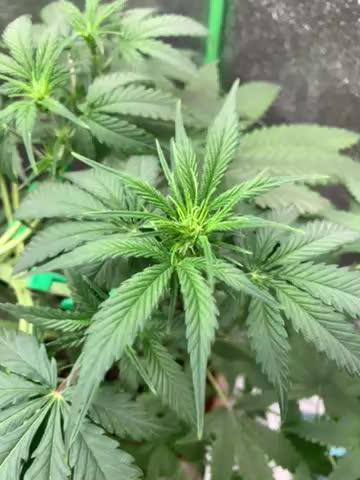
Día 108 (16/09) Tras el flush las plantas muestran tímidamente nuevos pistilos blancos! 😍 Hoy no es necesario regar! Día 109 (17/09) Me he encontrado a OnionOG #1 y a Purple Punsh completamente sedientas! Con las hojas caídas! Riego con 1,25 litros de H2O a cada una de ellas (el resto no necesitan riego) Día 110 (18/09) Riego con 500 ml H2O Las plantas con el bloqueo empiezan a mostrar nuevos pistilos, sobre todo en las partes inferiores Día 111 (19/09) Riego con 250 / 500 ml H2O Se vuelven a formar pistilos blancos en todas las plantas que han sufrido el bloqueo! 😍💥 OnionOG #1 va como un cohete formando y apilando flores 💪 🚀 😍 Día 112 (20/09) Día lluvioso. Riego ligero 250 ml H2O Día 113 (21/09) Otro día lluvioso. Riego ligero con 250 ml Día 114 (22/09) Detecto algunas moscas blancas apoderándose de las plantas y decido hacer una aplicación foliar de piretrinas (Spruzit a 15 ml / l) Riego con 1 Litro de Té Floración de Lurpe Solutions. Preparación: 24 horas con bomba de aire (oxigenación) con ingredientes: Healthy Harvest 8 ml/L + Insect Frass 16 ml/L + Kelp Hidrolizado 0,3 g/L 💦Nutrients by Lurpe Solutions - www.lurpenaturalsolutions.com 🌱Substrate PRO-MIX HP BACILLUS + MYCORRHIZAE - www.pthorticulture.com/en/products/pro-mix-hp-biostimulant-plus-mycorrhizae
Likes
16
Share
@Max1973
Follow
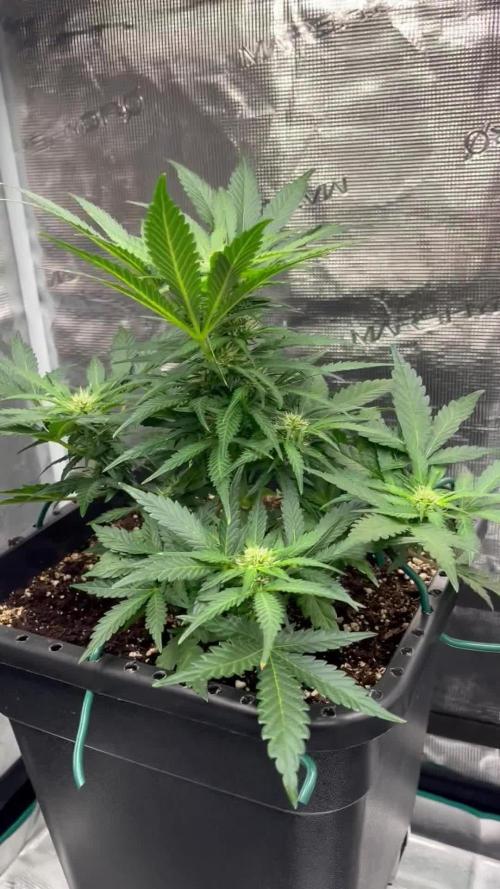
Day 38 - they are still alive ? interestingly keep these mazar seedlings still alive in seedling stage... going to setup a little dwc project, see what happens... Day 39 - decided to build 7.5L DIY DWC 's ...... 👍😎
Processing
Likes
9
Share
@Kushizlez
Follow
Day 69 (March 6th) Just gave everyone their last watering. I’m going to harvest and wash everything tomorrow night on day 70. I‘m not going to do that whole 48 hours of darkness thing because I didn’t see a difference last time I did it. In fact, it made my plant under watered before drying which caused it to dry too fast. Slurricane and cheese will be washed with h2o2 and the rest will just be rinsed off in warm RO water and hung up. Before and after washing I’m going to go over each branch with a flashlight and make sure there is no dog hair or debris in or on the buds. I will be drying in my spare bathroom (that no one uses!) from hangers. Aiming to keep it around 60-62F and 50-60 RH. Hoping for that 10-12 day dry. I wanted to do a full plant hang but the tent got pretty dirty and I would feel more comfortable just cutting and rinsing everything off branch by branch. I’m going to try my best to keep the full plant intact. Got my humidifier hooked up and running RO water because with tap water it deposits calcium and lime all over the buds and walls. For air flow I’m just indirectly running a small usb fan. I’m not worried about air flow in the bathroom honestly. It stays nice and breezy down there anyway. Got the food grade peroxide and RO water to wash up the slurricane and cheese. Everything except for the cheese and garlic#1 is looking more than done. Trichomes all look pretty well done. Some of them have even burst open. Smells are all super ripe and mature too. Can’t wait to smell each individually in jars. Next week I will recap what went wrong and what I will do differently next time to keep it from happening again. (Day 70F) Just got everything chopped, washed and hanging. The vast majority of the PM was washed out but I can still see very small amounts. When they dry out I can shake the branches a bit to get the rest off. At very least it’s sterile now. There is no question I lost some potency while washing but the amount is negligible for a much cleaner product. I could see lots of dirt and other debris float to the surface of the water after being washed. And no those are not trichomes, those sink to the bottom. I could put that nasty water through a bubble bag and wouldn’t get all that much. Although it probably does remove a lot of the actual trichomes heads. I’ll have to check with the microscope. Everything is rigged up for a nice slow dry. Temp is sitting at 64 and RH is at a nice 60%.
Likes
6
Share
Se nos fue un poco de altura pero intentaremos arreglar el error farmers... al final quedo simplemente en podas apicales y de momento ramas muy finas. Iremos comentando el proceso Farmers!🍁
Likes
64
Share
@valiotoro
Follow
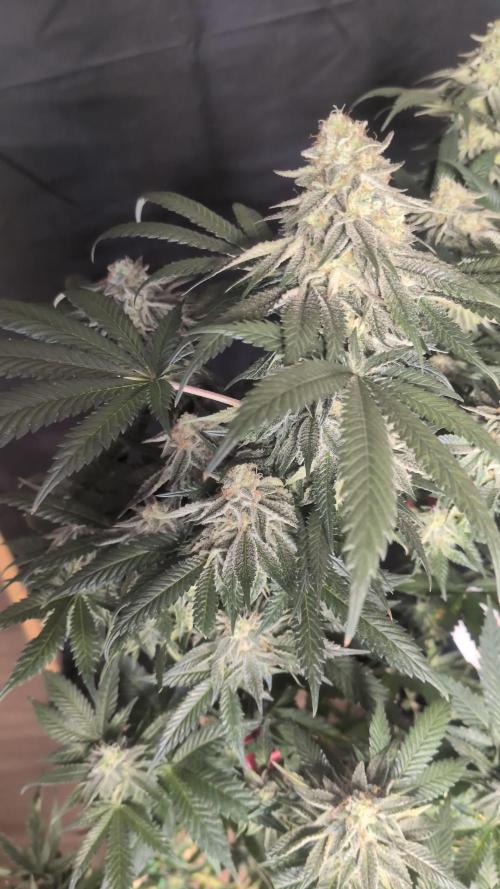
The buds are exactly how I like them super dense, frosty, and sticky! The smell almost makes you hungry… gonna pair perfectly with the afternoon coffee, haha! Biscotti see you soon
Likes
16
Share
Put all the plants into 4 ltr pots. And there all filling out. Barney's farm are in the middle. Light is now at 30000 lux
Likes
3
Share
Buenas a tod@s... Segunda semana de floracion de las green poison de sweet seed, la variedad se la ve bien, fuerte, los nutrientes son muy buenos, aún q es mi segundo armario ya se va notando un gran cambio, espero q siga todo bien, se que si... 💪🏻💪🏻 A seguir trabajando... Buenos humos para tod@s.. 💨💨💨🔥🔥 😎💎 🇦🇷🤝🏻🇪🇦
Likes
3
Share
Week 2 update 🌱 Pablo is pushing ahead into week 2 with strong early growth. Nutrition this week is Plagron Alga Grow combined with Plagron Silic Rock for structure and powe roots. Stable environment around 26°C, light cycle 18/6. Good energy for the weeks ahead Day 20 Topping Done.
Likes
18
Share
I don’t think I ever had white powdery mildew and I was just noid of every little dust particle that came around. All good. I’m now battling high temps as we don’t have central air and it’s mid 90s outside. Most likely about to buy an ac unit. LST seemed to go ok but we shall see. Overall very pleased w my results so far. Cheers
Likes
19
Share
This week went real well! All 5 of the Twenty20 Ogreberry Autos and the 1 Fastbuds Bruce Banner have successfully germinated and sprouted up from the soil!! This upcoming week we will start giving these girls a heavy feeding of nutrients PH d at 6.5 an see how they react , most likely will love it!! Temperature an humidity has been on point, through out the day we reach 70-75 degrees an a nice humidity of 65%which is always nice ! Hope you all enjoy an keep them eyes peeled for next week !! Peace, love, an positive vibes to all you Growmies out there! If any questions please feel free to ask , more then happy to help! Cheers everybody to another great grow!!!
Likes
15
Share
Likes
12
Share
@Shinobi
Follow
Máme tu dosť silné búrky so silným vetrom.rastlina 1 dostala zabrať.jeden konár spadnutý na zemi,ale nebol zlomený.použil som pletivo ako podporu.stále vyzerajú ok.dnes posledné kŕmenie .držte im palce.mier
Likes
45
Share
@Wastent91
Follow
Ohhh ragazzi non sapete che splosio e continua a dimostrare! Si sta dimostrando un fenotipo che tende verso la sativa , però spero che vengano delle belle cime a forma di biscotto compatte e luccicanti di resina e tricomi! Già ora l odore si sta leggermente facendo sentire quando apro la grow, fino ad ora tutto bene apparte che la ragazza ha fame dato che ha delle foglie in necrosi che danno segni di mancanza di calcio e magnesio , così ho deciso di aggiungere Cal/Mag alla soluzione nutrivita ,poiché tutte le nuove foglie quindi la costruzione cellulare di esse, a quanto pare richiede molto calcio e magnesio rispetto al previsto ! Infatti la pianta non doveva essere così grande nelle previsioni! Apparte questo tutto bene ! Buon 420 anno a tutti!
Likes
13
Share
the plants are using a lot of water. having to top up the res every other day or so. i need a bigger res. they are in full flower and have gotten very stinky. the smell is amazing. i can’t wait to try it out. buds are solid and getting fatter. looking good. business as usual.
Likes
4
Share
@DonEspas
Follow
Bonne récupération pour l'ensemble des plants que j'ai maltraité Encore une semaine de récupération pour mon dernier plant fatigué et ensuite Floraison 🌈😎🤳 Un magnifique TCO pour raviver les bactéries bénéfiques. C'est les racines qui vont être contentes 🌈💅 Forbidden fruit : 2 phénotypes qui sont influencé par la génétique du parent "Tangie" mais sans l'orange. On retrouve l'expression skunk#1. Pour du forbidden fruit c'est bof, perte de temps et d'argent (3/10) Zkittlez : 6/10 Gelato #33 : 5/10
Likes
45
Share
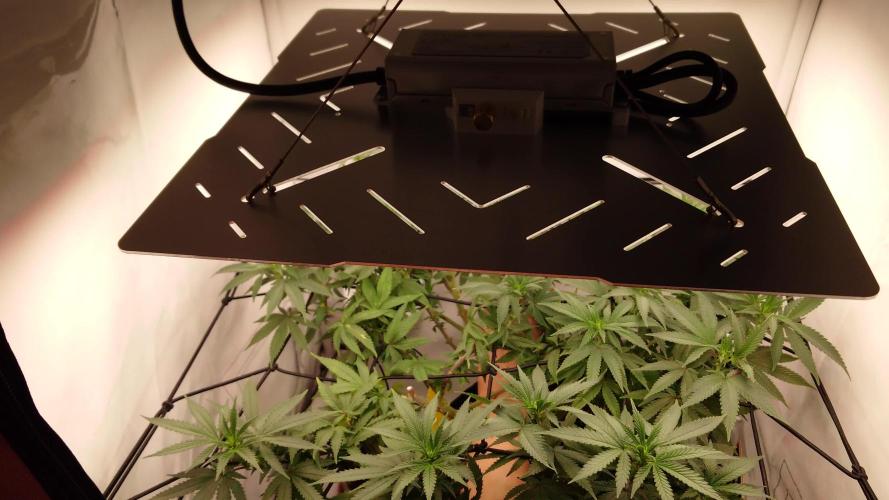
2nd net is up. Early bud formations are promising. holding up to the extremes pretty well, some leaves taking minor damage, but overall, she is holding up, gave her 1 night at 50F see how she would react, stressful. Not advised as it messes with her metabolism, but I want to see if it triggers any anthocyanin response. Love to see her purp up but no signs yet. My homework. Rubisco regeneration is intrinsically linked to nitrogen supply because Rubisco is a major sink for nitrogen in plants, typically accounting for 15% to over 25% of total leaf nitrogen. The regeneration phase itself consumes nitrogen through the synthesis of the Rubisco enzyme and associated proteins (like Rubisco activase), and overall nitrogen status heavily influences the efficiency of RuBP regeneration.Structural Component: Nitrogen is an essential building block for all proteins, and the sheer abundance of the Rubisco protein makes it the single largest storage of nitrogen in the leaf. Synthesis and Activity: Adequate nitrogen supply is crucial for the synthesis and maintenance of sufficient Rubisco enzyme and Rubisco activase (Rca), the regulatory protein responsible for maintaining Rubisco's active state. Nitrogen deficiency leads to a decrease in the content and activity of both Rubisco and Rca, which in turn limits the maximum carboxylation rate, Vmax, and the rate of RuBP regeneration Jmax, thus reducing overall photosynthetic capacity. Nitrogen Storage and Remobilization: Rubisco can act as a temporary nitrogen storage protein, which is degraded to remobilize nitrogen to other growing parts of the plant, especially under conditions of nitrogen deficiency or senescence. Nitrogen Use Efficiency (NUE): The allocation of nitrogen to Rubisco is a key determinant of a plant's photosynthetic nitrogen use efficiency (PNUE). In high-nitrogen conditions, plants may accumulate a surplus of Rubisco, which may not be fully activated, leading to a lower PNUE. Optimizing the amount and activity of Rubisco relative to nitrogen availability is a target for improving crop NUE. Photorespiration and Nitrogen Metabolism: Nitrogen metabolism is also linked to the photorespiration pathway (which competes with carboxylation at the Rubisco active site), particularly in the reassimilation of ammonia released during the process. To increase RuBisCO regeneration, which refers to the process of forming the CO2 acceptor molecule Ribulose-1,5-bisphosphate (RuBP) during photosynthesis, the primary methods involve optimizing the levels and activity of Rubisco activase (Rca) and enhancing the performance of other Calvin-Benson-Bassham (CBB) cycle enzymes. Biochemical and Environmental Approaches: Optimize Rubisco Activase (Rca) activity: Rca is a crucial chaperone protein that removes inhibitory sugar phosphates, such as CA1P (2-carboxy-D-arabinitol 1-phosphate), from the Rubisco active site, thus maintaining its catalytic competence. •Ensure optimal light conditions: Rca is light-activated via the chloroplast's redox status. Adequate light intensity ensures Rca can effectively maintain Rubisco in its active, carbamylated state. •Maintain optimal temperature: Rca is highly temperature-sensitive and can become unstable at moderately high temperatures (e.g., above 35°C/95F° in many C3 plants), which decreases its ability to activate Rubisco. Maintaining temperatures within the optimal range for a specific plant species is important. •Optimize Mg2+ concentration: Mg2+ is a key cofactor for both Rubisco carbamylation and Rca activity. In the light, Mg2+ concentration in the chloroplast stroma increases, promoting activation. •Manage ATP/ADP ratio: Rca activity depends on ATP hydrolysis and is inhibited by ADP. Conditions that maintain a high ATP/ADP ratio in the chloroplast stroma favor Rca activity. Enhance Calvin-Benson-Bassham (CBB) cycle enzyme activity: The overall rate of RuBP regeneration can be limited by other enzymes in the cycle. •Increase SBPase activity: Sedoheptulose-1,7-bisphosphatase (SBPase) is a key regulatory enzyme in the regeneration pathway, and increasing its activity can enhance RuBP regeneration and overall photosynthesis. •Optimize other enzymes: Overexpression of other CBB cycle enzymes such as fructose-1,6-bisphosphate aldolase (FBA) and triose phosphate isomerase (TPI) can also help to balance the metabolic flux and improve RuBP regeneration capacity. Magnesium ions, Mg2+, are specifically required for Rubisco activation because the cation plays a critical structural and chemical role in forming the active site: A specific lysine residue in the active site must be carbamylated by a CO2 molecule to activate the enzyme. The resulting negatively charged carbamyl group then facilitates the binding of the positively charged Mg2+ion. While other divalent metal ions like Mn2+ can bind to Rubisco, they alter the enzyme's substrate specificity and lead to dramatically lower activity or a higher rate of the non-productive oxygenation reaction compared to Mg2+, making them biologically unfavorable in the context of efficient carbon fixation. The concentration of Mg2+ in the chloroplast stroma naturally increases in the light due to ion potential balancing during ATP synthesis, providing a physiological mechanism to ensure the enzyme is activated when photosynthesis is possible. At the center of the porphyrin ring, nestled within its nitrogen atoms, is a Magnesium ion (Mg2+). This magnesium ion is crucial for the function of chlorophyll, and without it, the pigment cannot effectively capture and transfer light energy. Mg acts as a cofactor: Mg2+ binds to Rubisco after an activator CO2 molecule, forming a catalytically competent complex (Enzyme-CO2-Mg2+). High light + CO2) increases demand: Under high light (60 DLI is a very high intensity, potentially saturating) and high CO2, the plant's capacity for photosynthesis is high, and thus the demand for activated Rubisco and the necessary Mg2+ cofactor increases. Mg deficiency becomes limiting: If Mg2+ is deficient under these conditions, the higher levels of Rubisco and Rubisco activase produced cannot be fully activated, leading to lower photosynthetic rates and potential photo-oxidative damage. Optimal range: Studies show that adequate Mg2+ application can enhance Rubisco activation and stabilize net photosynthetic rates under stress conditions, but the required concentration is specific to the experimental setup. Monitoring is key: The most effective approach in a controlled environment is to monitor the plant's physiological responses e.g., leaf Mg2+ concentration, photosynthetic rate, Rubisco activation state, and adjust the nutrient solution/fertilizer to maintain adequate levels, rather than supplementing a fixed "extra" amount. In practice, this means ensuring that Mg2+ is not a limiting factor in the plant's standard nutrient solution when pushing the limits with high light and CO2. Applying Mg2+ through foliar spray is beneficial to Rubisco regeneration, particularly in alleviating the negative effects of magnesium (Mg) deficiency and high-temperature stress (HTS). While Mg can be leached from soil, within the plant it is considered a mobile nutrient, particularly in the phloem. Foliar-applied Mg is quickly absorbed by the leaves and can be translocate to other plant parts, including new growth and sink organs. Foliar application of: NATURES VERY OWN MgSO4 @ 15.0g L-1 in a spray bottle. Foliar sprays are often recommended as a rapid rescue measure for existing deficiencies or as a supplement during critical growth stages, when demand for Mg is high. Application in the early morning or late evening can improve absorption and prevent leaf burn. The starting point [of creativity] is curiosity: pondering why the default exists in the first place. We’re driven to question defaults when we experience vuja de, the opposite of déjà vu. Déjà vu occurs when we encounter something new, but it feels as if we’ve seen it before. Vuja de is the reverse—we face something familiar, but we see it with a fresh perspective that enables us to gain new insights into old problems. Come walk in the enchanted forest.