The Grow Awards 2026 🏆
Likes
Comments
Share
@Dunk_Junk
Follow
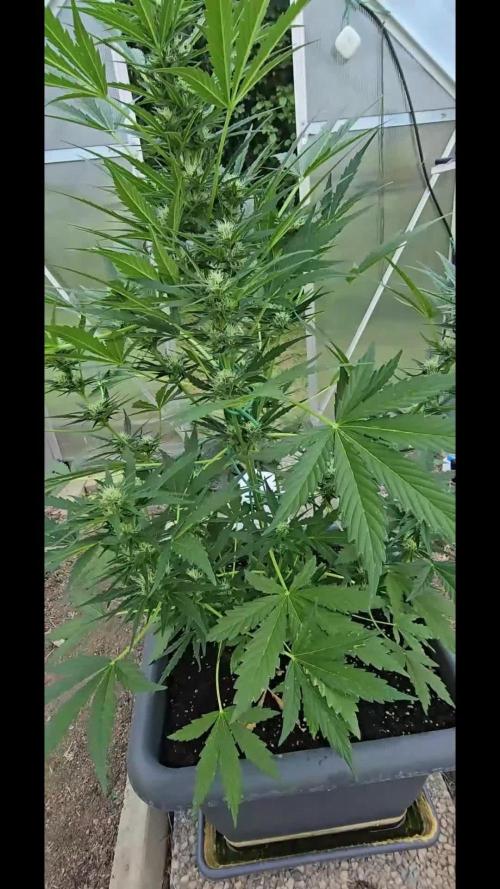
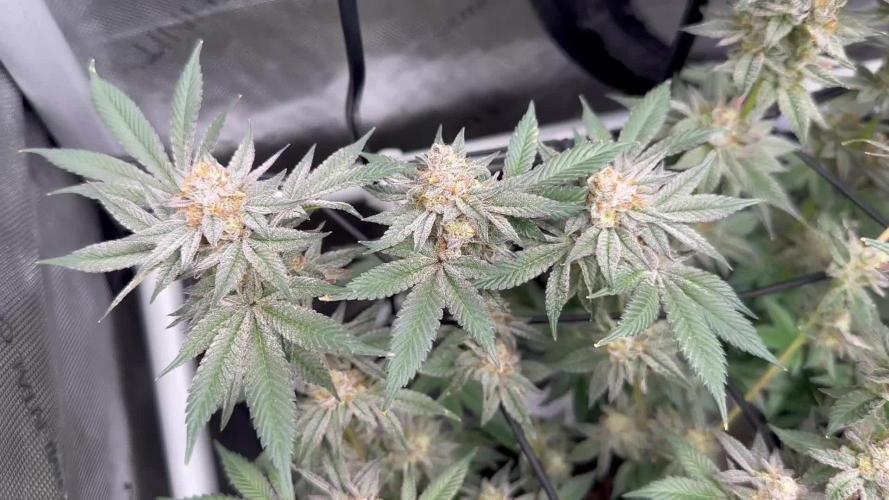
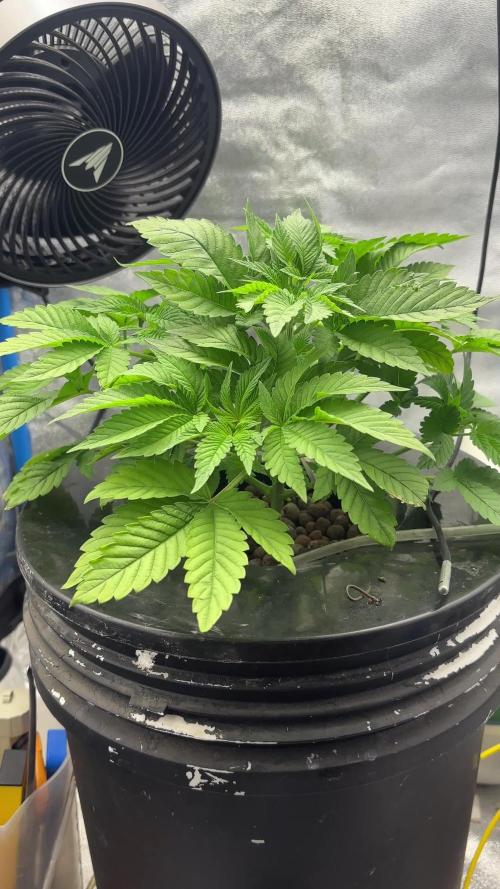
She's kinda chugging through flowering. On autopilot.
Processing
Likes
16
Share
@HisHope
Follow
1/22 And another week in the books. Included some CalMag more for just in case than anything. May leave topping at once as side nodes coming up quickly and don't want them passing the center. 1/29 Pics to end week Growing well raised lights to promote some stretch
Likes
3
Share
La 3ra semana la planta ha crecido bien hasta ahora sin rastros de plagas se le aplicó preventivos hace un par de días para prevenir araña roja
Likes
6
Share
Eccoci. Siamo entrati nella prima settimana di fioritura.....bella pianta strongh.....mi auguro che faccia dei fiorelloni giganti e carichi di tricomi profumatissimo🙏💪
Likes
11
Share
@FruitBud
Follow
Oggi uno sguardo prima di una bella sessione di foto stiamo andando forte il ferti prima di cominciare un bel flush per far saltare fuori tutto il gusto e l' aroma che cerchiamo e che sappiamo può offrire.👻
Likes
21
Share
@Mr_Gezeta
Follow
06/05/21 -Riego todas las plantas con 1.8 litros de agua y los nutrientes. -Los cogollos siguen engordando poco a poco, se nota sobre todo en los inferiores, que ahora están llenos de pelos. -Algunas hojas están amarillas pero supongo que será debido a que no les da suficiente luz. Las que están peor son las que defolio, además de 1 o 2 hojas por planta que tapan algunos cogollos. 10/05/21 -Riego las plantas con 2 litros de agua cada una y los nutrientes. -Se nota una pequeña quemadura en los cogollos de arriba de una de las plantas, quizás porque la luz estaba demasiado cerca. Estuve 4 días fuera y no lo pude corregir. -Por lo general las plantas siguen fuertes y sin ningún problema 11/05/21 -No se qué ha pasado pero cuando hoy he abierto el armario tenía uno de los cogollos de CCXLA1 cubierto de moho. Me fijé porque 2 hojas parecían un poco podridas y al tocar el cogollo estaba muy blando. Me puse guantes, corté el cogollo con unas tijeras e inspeccioné la planta buscando otros posibles signos de moho. Parece que no hay más así que dejaré la planta por ahora. La he defoliado más para que tenga más flujo de aire. -No entiendo cómo ha podido pasar esto ya que la humedad relativa del cultivo no supera nunca el 57% aprox y en general se mantiene al 50%. -Ahora toca estar muy pendiente estas últimas semanas para ver si se forma más moho que pueda acabar con la cosecha. Fck
Likes
77
Share
Day 51. Growth: The girls stopped growing vertically and are between 62 and 75cm. Theyre all frosty already so im guessing theyll be frosty girls once they have put on weight. They arent looking healthy and i fucked up this week :( Ill explain everything down below. Training: Selective deleafing (cannabalized leaves) Nutrients: Ok so i had some ph issues last week and flushed as soon as i could( had to wait for soil to dry) I explained this in depth in last week's diary. Anyway, they got flushed and finally fed them 3 ml of canna terra florres 2-2-4. And next feeding will be 1ml of Canna Mono Calcium 15% and 1ml of Canna Mono Magnesium 7% Issues: The soil wasnt completely dry yet when i first fed after the flush but the girls were suffering and begging for theyre first dose of flores. I also carefully gave a foliar feeding to help her a bit during her flush instead of cannabalizing the shit out of theirselves. According to the time I have set on the timer the girls shouldve had 2 more hours of darkness after the foliar. Turns out somehow my timer wasnt set the way i left it and it ended up burning a few leaves, luckily it was a big foliar feeding. I must of bumped into it when setting up the tent. My dumbass shouldve checked the timer more often and im so mad at myself for letting this happen. Environment: So the ladies have a new home, a 27"×27"×63" tent. I didnt expect them to fit properly but it did!. The tent is definitely full. But i dont think ill run into issues. Right now i have a 150m3/h filter with a 185m3/h fan. The temperature and humidity is under control for now. I do have a little bit of positive pressure in the tent but not enough to inflate the tent, the room doesnt smell so im assuming no air is escaping from anywhere other then the exhaust. I will be updrading the inline fan and filter so i dont run into heat problems
Likes
22
Share
@BruWeed
Follow
☘️04/11 - Empieza su tercera semana en Etapa de crecimiento. ☘️Su crecimiento es muy notorio de una semana a otra, esta creciendo fuerte y su desarrollo es muy bueno. Esta creciendo de forma correcta sin ningún problema. ☘️Este diario es para participar en el sorteo de "Best Rarest & Smallest Pot by seedman". ☘️Esta es su última semana en Etapa de crecimiento, ya el 09/11 comienza en Floración. ☘️Estos días seguiré subiendo más imágenes de como viene.
Likes
58
Share
High GD community, Week 14, Probably its last week as veg. She starts a good stretch now taking 17cm in a week. 1 watering with the bokashi juice, honey and molasses . Bokashi juice is AM microbiological life. Thats it for this week boys and girls, Thanks for reading and passing by and 💚💚💚👏👏👏👍👍👍 for Marshydro leds. Quality/price top! Grow safe buds and feel free to check out my other ladies doing fine thanks! 🙏🌿🌿🌿🙏 Weedseedsexpress!!!! 👏👏👏 LarfxWSE for discount at weedseedsexpress!!! 15% off!!! Zamnesia!!! 👽👽👽 Add OrganicLarF as a code when buying your own MarsHydro LED light and get a nice reduction!!!👽🚀🛸
Likes
2
Share
12/13/24 chopped and hung. 12/16/24 trimmed but still hanging room is 69°F and 62% humidity shes very hashy while trimming. sticky and oily like fresh hash. very minimal trimming. thick spongey buds with dark greens and fiery red hairs the tips of sugar leaves are a dark purple, if i wouldve let her go another couple of weeks she wouldve gotten suuuper dark.
Likes
12
Share
Was a busy week in this tent . Needed my 2x4 tent for some tutankhamon that I have coming up so this big girl got a roommate . Starting to have to feed her every day and a half and she's drinking 1.75 gallon each time . Also had some leaves higher up taco and the tips of the edges go brown and figured out that I sm pretty much over driving the plant with the light . So dropped it down to 70% for now to see how it reacts .
Processing
Likes
41
Share
Week 2 of flowers started, gave her a nutrients feeding. She's loving life. This plant is going to be much bigger than my first grow. I'm excited, I'm using half the amount of nutrients suggested on the bottles. I don't know if it's the breeder or the nutrients. But I'll continue doing what I'm doing. I'll post more pictures during the week. Why are the white hairs already starting to get brown? Day44.....this plant keeps growing, I'm getting worried lol. She's actually 24inches tall and there are buds everywhere 😊. Day 46....seems like she eased up on the vertical growth. I guess it time to fatten up. Day 47......thank God I didn't do 2 gsc plants. I would have definitely needed a dehumidifier. She's doing very well, I have no complains. I hope she will be ready to harvest in 3week because I will be going out of town for at least 4 days and she drinks at least a gallon in 2 days. Lat day of week 2 of flower day 48..... she's doing very well and keeps growing. Finished up this week with a nice fat feeding. Can't wait to see these buds swell up, I think I might end up having to support her buds.
Likes
7
Share
So she is a little stunted by the rain! The soil got completely drenched for about a week and I can tell it effected the growth. Looks like the pre pre flowers are starting to show at the end of week 3. No food yet, but thinking soon when the soil drys out because the rain washed out the soil! 🤷‍♀️🏻 ✌️💚🌿💨
Likes
47
Share
2nd net is up. Early bud formations are promising. holding up to the extremes pretty well, some leaves taking minor damage, but overall, she is holding up, gave her 1 night at 50F see how she would react, stressful. Not advised as it messes with her metabolism, but I want to see if it triggers any anthocyanin response. Love to see her purp up but no signs yet. Remember, For every molecule of glucose produced during photosynthesis, a plant needs to split six molecules of water. This process provides the hydrogen needed for synthesizing glucose and other organic compounds, while oxygen is released as a byproduct. Homework. If Rubisco activity is impaired and it cannot properly function or regenerate its substrate, the plant's leaves are likely to turn a pale green or lime green, a condition known as chlorosis. Essentially, Rubisco activity is highly regulated and susceptible to various environmental and metabolic factors that can cause it to become inhibited, leading to an apparent failure in RuBP regeneration due to a lack of consumption. Rubisco regeneration is intrinsically linked to nitrogen supply because Rubisco is a major sink for nitrogen in plants, typically accounting for 15% to over 25% of total leaf nitrogen. The regeneration phase itself consumes nitrogen through the synthesis of the Rubisco enzyme and associated proteins (like Rubisco activase), and overall nitrogen status heavily influences the efficiency of RuBP regeneration. RuBisCO is a very large enzyme that constitutes a significant proportion (up to 50%) of leaf soluble protein and requires large investments in nitrogen. Insufficient nitrogen supply limits the plant's ability to produce adequate amounts of RuBisCO, thereby limiting the overall capacity for photosynthesis and carbon fixation. Maintaining the optimal, slightly alkaline pH is crucial for the proper function and regeneration of Rubisco. Deviations in either direction (too high or too low) disrupt the enzyme's structure, activation state, and interaction with its substrates, leading to decreased activity and impaired RuBP regeneration. (Lime/yellowing) Structural Component: Nitrogen is an essential building block for all proteins, and the sheer abundance of the Rubisco protein makes it the single largest storage of nitrogen in the leaf. Synthesis and Activity: Adequate nitrogen supply is crucial for the synthesis and maintenance of sufficient Rubisco enzyme and Rubisco activase (Rca), the regulatory protein responsible for maintaining Rubisco's active state. Nitrogen deficiency leads to a decrease in the content and activity of both Rubisco and Rca, which in turn limits the maximum carboxylation rate, Vmax, and the rate of RuBP regeneration Jmax, thus reducing overall photosynthetic capacity. Nitrogen Storage and Remobilization: Rubisco can act as a temporary nitrogen storage protein, which is degraded to remobilize nitrogen to other growing parts of the plant, especially under conditions of nitrogen deficiency or senescence. Nitrogen Use Efficiency (NUE): The allocation of nitrogen to Rubisco is a key determinant of a plant's photosynthetic nitrogen use efficiency (PNUE). In high-nitrogen conditions, plants may accumulate a surplus of Rubisco, which may not be fully activated, leading to a lower PNUE. Optimizing the amount and activity of Rubisco relative to nitrogen availability is a target for improving crop NUE. Photorespiration and Nitrogen Metabolism: Nitrogen metabolism is also linked to the photorespiration pathway (which competes with carboxylation at the Rubisco active site), particularly in the reassimilation of ammonia released during the process. To increase RuBisCO regeneration, which refers to the process of forming the CO2 acceptor molecule Ribulose-1,5-bisphosphate (RuBP) during photosynthesis, the primary methods involve optimizing the levels and activity of Rubisco activase (Rca) and enhancing the performance of other Calvin-Benson-Bassham (CBB) cycle enzymes. Biochemical and Environmental Approaches: Optimize Rubisco Activase (Rca) activity: Rca is a crucial chaperone protein that removes inhibitory sugar phosphates, such as CA1P (2-carboxy-D-arabinitol 1-phosphate), from the Rubisco active site, thus maintaining its catalytic competence. •Ensure optimal light conditions: Rca is light-activated via the chloroplast's redox status. Adequate light intensity ensures Rca can effectively maintain Rubisco in its active, carbamylated state. •Maintain optimal temperature: Rca is highly temperature-sensitive and can become unstable at moderately high temperatures (e.g., above 35°C/95F° in many C3 plants), which decreases its ability to activate Rubisco. Maintaining temperatures within the optimal range for a specific plant species is important. •Optimize Mg2+ concentration: Mg2+ is a key cofactor for both Rubisco carbamylation and Rca activity. In the light, Mg2+ concentration in the chloroplast stroma increases, promoting activation. •Manage ATP/ADP ratio: Rca activity depends on ATP hydrolysis and is inhibited by ADP. Conditions that maintain a high ATP/ADP ratio in the chloroplast stroma favor Rca activity. Enhance Calvin-Benson-Bassham (CBB) cycle enzyme activity: The overall rate of RuBP regeneration can be limited by other enzymes in the cycle. •Increase SBPase activity: Sedoheptulose-1,7-bisphosphatase (SBPase) is a key regulatory enzyme in the regeneration pathway, and increasing its activity can enhance RuBP regeneration and overall photosynthesis. •Optimize other enzymes: Overexpression of other CBB cycle enzymes such as fructose-1,6-bisphosphate aldolase (FBA) and triose phosphate isomerase (TPI) can also help to balance the metabolic flux and improve RuBP regeneration capacity. Magnesium ions, Mg2+, are specifically required for Rubisco activation because the cation plays a critical structural and chemical role in forming the active site: A specific lysine residue in the active site must be carbamylated by a CO2 molecule to activate the enzyme. The resulting negatively charged carbamyl group then facilitates the binding of the positively charged Mg2+ion. While other divalent metal ions like Mn2+ can bind to Rubisco, they alter the enzyme's substrate specificity and lead to dramatically lower activity or a higher rate of the non-productive oxygenation reaction compared to Mg2+, making them biologically unfavorable in the context of efficient carbon fixation. The concentration of Mg2+ in the chloroplast stroma naturally increases in the light due to ion potential balancing during ATP synthesis, providing a physiological mechanism to ensure the enzyme is activated when photosynthesis is possible. At the center of the porphyrin ring, nestled within its nitrogen atoms, is a Magnesium ion (Mg2+). This magnesium ion is crucial for the function of chlorophyll, and without it, the pigment cannot effectively capture and transfer light energy. Mg acts as a cofactor: Mg2+ binds to Rubisco after an activator CO2 molecule, forming a catalytically competent complex (Enzyme-CO2-Mg2+). High light + CO2) increases demand: Under high light (60 DLI is a very high intensity, potentially saturating) and high CO2, the plant's capacity for photosynthesis is high, and thus the demand for activated Rubisco and the necessary Mg2+ cofactor increases. Mg deficiency becomes limiting: If Mg2+ is deficient under these conditions, the higher levels of Rubisco and Rubisco activase produced cannot be fully activated, leading to lower photosynthetic rates and potential photo-oxidative damage. Optimal range: Studies show that adequate Mg2+ application can enhance Rubisco activation and stabilize net photosynthetic rates under stress conditions, but the required concentration is specific to the experimental setup. Monitoring is key: The most effective approach in a controlled environment is to monitor the plant's physiological responses e.g., leaf Mg2+ concentration, photosynthetic rate, Rubisco activation state, and adjust the nutrient solution/fertilizer to maintain adequate levels, rather than supplementing a fixed "extra" amount. In practice, this means ensuring that Mg2+ is not a limiting factor in the plant's standard nutrient solution when pushing the limits with high light and CO2. Applying Mg2+ through foliar spray is beneficial to Rubisco regeneration, particularly in alleviating the negative effects of magnesium (Mg) deficiency and high-temperature stress (HTS). While Mg can be leached from soil, within the plant it is considered a mobile nutrient, particularly in the phloem. Foliar-applied Mg is quickly absorbed by the leaves and can be translocate to other plant parts, including new growth and sink organs. Foliar application of: NATURES VERY OWN MgSO4 @ 15.0g L-1 in a spray bottle. For those high-intensity workouts when 1 meal a day is just not enough! Foliar sprays are often recommended as a rapid rescue measure for existing deficiencies or as a supplement during critical growth stages, when demand for Mg is high. Application in the early morning or late evening can improve absorption and prevent leaf burn. The plant was getting a little limey yellow in the centre. Shortly thereafter, she was back in business, green mostly regenerated. The starting point [of creativity] is curiosity: pondering why the default exists in the first place. We’re driven to question defaults when we experience vuja de, the opposite of déjà vu. Déjà vu occurs when we encounter something new, but it feels as if we’ve seen it before. Vuja de is the reverse—we face something familiar, but we see it with a fresh perspective that enables us to gain new insights into old problems. Confidence is evidence... nothing more. You are confident because you have driven 10,000 times, you are confident because you have spoken 10,000 times. People think confidence is a feeling, but it's not. If you want more confidence, then you need to create evidence, take more shots, collect more data, build more experiences, take more risks; fail, confidence doesn't come first; it is the reward you get for doing the work. no one else wants to do.
Processing
Likes
12
Share
@GrowGuy97
Follow
Have seen a lot of good diary’s on these had to get some for myself to see how it goes! Hopefully we get some super purple buds! Stay tuned & happy growing friends!🤙🏼✌️🏼🌱 Day 1 - Finally got them planted & water with fox farm big bloom (6tsp per gal) Day 2 - all 5 have sprouted & doing great! Day 3 - 2 out of 5 seeds have fallen off but they are all still growing & looking good! Watered them a little more this morning👍🏼 Day 4 - Looking great🙏🏼 Day 5 - Grow babies Grow!! Day 6 - Plain PH water 6.4
Likes
9
Share
@Loucifer
Follow
This plant is struggling from bite burn but I gave it same nutes as rest
Likes
Comments
Share
After 3 days they are already starting to pop! This is going to be a good run.
Likes
47
Share
@inversi0n
Follow
Hey! I found something moving in the solution, when I was adding some water. I didn't really know what that was, nether know now. But I decided that they most likely not helpful for the plant, so I added some H2O2 to try kill it, it helped, when I was changing the solution next day, they didn't move anymore. I still added around 5 ml the top of the bucket's solution. It should be a good idea to change the solution after that, I though. I also wanted to wash her roots and sponge from air pump, so I did it 7 times with absolutely clean water and only by the end it wasn't looking terribly dirty. Nice practice to have is rootwashing 😁 Actually, it'd be better if I wouldn't need to do that. But as I did it, I think it helped her. Anyway I didn't stop cutting her, since I was doing it slow, now I cut off some lower branches that had already or would have in the future light deficit. So, now she looks kind of lollipoped too, I guess. It's better now, it was a hot week also. Even I'm growing indoor, actually air-condition is quiet far, and I didn't know how to use it properly. Smell is super strong.