


Likes
Comments
Share


@ThaGoat
Follow
Will not give any nutrients until week five or until I see any deficiency


Likes
100
Share


@AsNoriu
Follow
Day 50. Oh boy ....
Most challenging healthy grow I ever had ...
Have loads of things covering each other and it's hard to understand, but they constantly unhappy ....
Low temps day and nights, different rate of watering, wind damages, too intense lights, understanding feeding with living soil, too high humidity for best VPD and so on ....
Loads of challenges !!!!
So I decided to harm them more ;)))
In the middle of action I was almost regretting it ... But heavy defoliation, SuperCroping and lolitoping session is DONE !!!
All 3 Northern Lights are worst in this run. Smallest plant is still in veg or early preflower.
All 3 Green Cracks found strength and power and now at least two plants look very decent !!
Alaskan Diesel is my love of this run !!! Amazing strain, super fast, super healthy and productive !!!
Hope after all that heavy training my humidity will be back to desired 65 , not 70+.
Day 52. Long story - short : I am f@ckingly HAPPY, that I did it, plants grew 7 more cm, colas on some and quantity are INSANE !!!
Video tells it all ...
Day 56. Even if I'll screw up @Seedsman is amazing house ! They just overgrew my setup, I can't crop 25-20 colas on each plant, so tops are burning a bit and yellowing, not best for photos, but amazing for quantity still !!!! ;))))
For this not to be all fun, today I had two hours without electricity, temps dropped to 13 in the night .... All heaters were off ...
Happy Growing !!!

Likes
24
Share

@420SYL
Follow
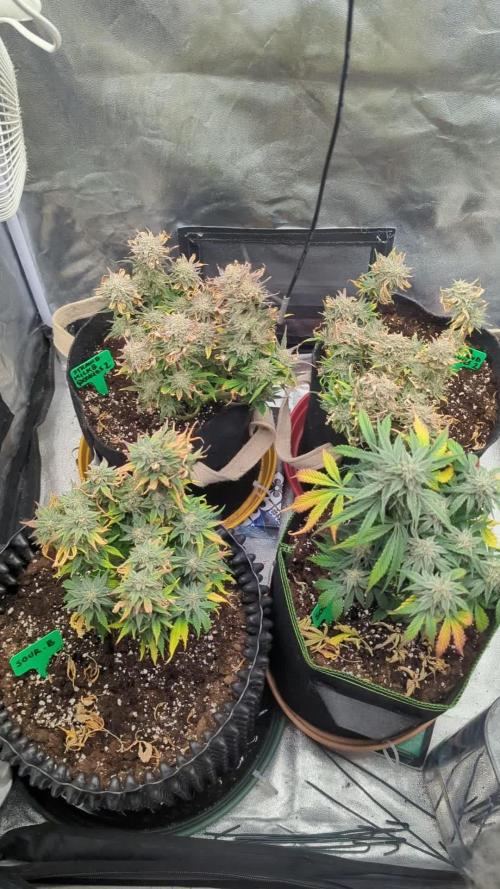
The plants recovered well, and the buds are swelling 💪🌳
I changed my pH pen and switched to AC Infinity 👌
The trichomes on both SM&Q2 are already nicely milky with quite a few amber ones, so I think today was their last watering. I’ll harvest them in 2–3 days!
Likes
9
Share


@Rufytaro
Follow
What do you think? What is the problem of the plant? Did it suffer? Or is near to the end?

Likes
15
Share


@SmokingTiki
Follow
Weather was quite good this week, a bit of sun and the temperatures were not too high. The buds are full of trichomes 😎


Likes
5
Share

@psychonaut420
Follow
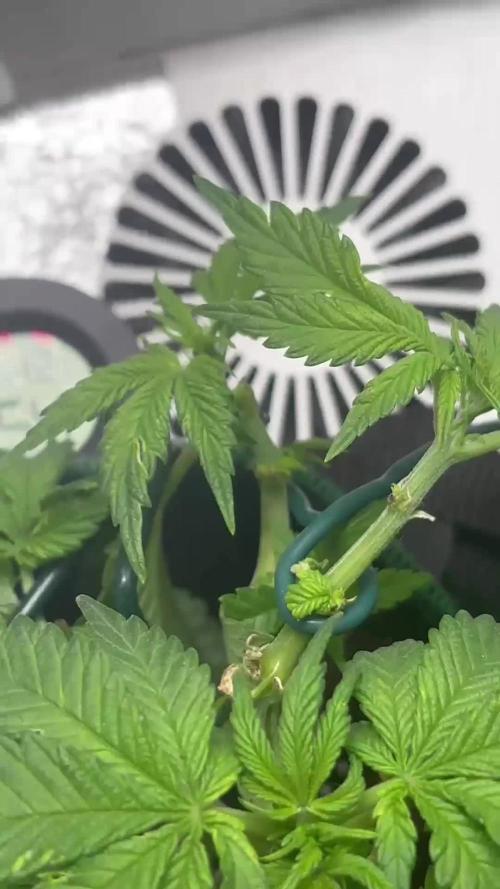
Mental rainbow f1 I have just switched her to 12/12 light schedule to start the flowering stage and hopefully start to see more streaching and signs of transitioning become more noticeable been seeing the plant stretching over the past few days and foliage getting wider

Likes
42
Share


@TerpTurtle
Follow
12 day dry @ 58-63RH & 60-66F in blacked out dry tent | Glass Jar Cure
LOUD N STANKY, opening a jar gives you the duck face funk face
Early taste test & this Bud KOs leaving you in major terp sweats! Hitting like a Sumo wrestler sitting on you tickling all over! Flower hits with overwhelming squeeze & flavor like drinking a smoothie!
Breaks down chunky, greasy & has a vivivd dark purple color.

Likes
69
Share

@DogDoctorOfficial
Follow
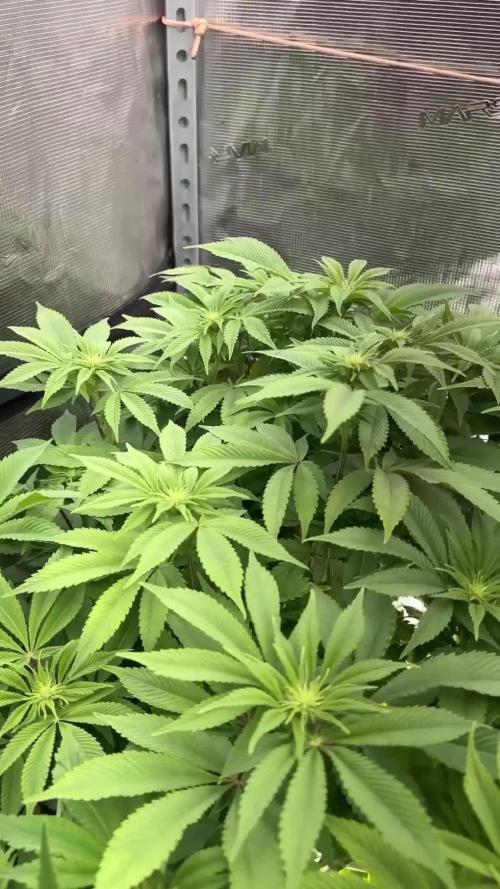
Week 14 from Seed – Week 3 of Flower – Full Bloom Ahead
The garden is shifting, and so are the vibes — we’re now stepping into the serious stages of the Eternity Grow Cup. Week 3 of flower, and what a beautiful time it is. The girls are officially locked into bloom mode and starting to show their power, stretching with grace and stacking flowers that promise magic. They’ve filled up the SCROG like it was meant for them — one look, and you can feel the energy radiating off the canopy.
We started this week a little on the chilly side, with temps dropping down to 16°C, but we found the rhythm. By the end of the week, we had it all dialed in: 24°C with 60% humidity, giving us a clean and steady VPD of 1.22 kPa. CO₂ is rolling at 1107 ppm, and let me tell you, the girls are loving every part of it. They’re responding like pros — strong, healthy, compact, with early signs of dense flower sites setting in all over the canopy.
The ICL 300s are fully in play now, and they’re doing a spectacular job. Light penetration is even, and the plants are soaking it up. We’re still holding off on UV, just letting the full spectrum and reds do their thing for now.
We’ve updated our feeding too — we’re now into Week 4 of the Aptus Holland Clean Program, and we are about to introduce Plagron Green Sensation into the mix. A little booster to spice up the bloom and get those flower stacks rising to the challenge. The water temps were a struggle — stuck at 14°C — so we dropped in a classic aquarium water heater, and now we’re sitting at a comfy 20°C. Small changes, big impacts. You can see it in the leaves, in the way they pray up toward the light.
This week’s visuals? Shot with both the Nikon and Sony setups, featuring different lenses and filters to capture the layers of depth, light, and mood in the garden. The difference between them is clear — two different worlds coming together to tell one story. You’ll feel the vibe through the lens, I promise.
Also, it’s veggie season outside — and in the middle of the flower hustle, I’ve been grounding myself with the babies in the outdoor garden. You’ll find some shots of the onions, peppers, and early green life joining the party. Nature always balances herself.
Looking forward, Day 21 defoliation is just around the corner — we’ll be opening up the canopy, making way for the light to reach deeper, and helping these compact queens shine even brighter in the weeks to come. We’re just getting started.
Massive love and gratitude to Zamnesia, Plagron, and Grow Diaries for building this amazing platform for us to grow, share, and celebrate this journey together. And to my beloved sponsors — Aptus Holland, Grove Bags, TrolMaster, ThinkGrow LEDs, Promix, Cannakan, and Ziggy Papers — thank you for the love, the gear, and the belief.
And to all of you — lovers, haters, OGs, first-timers, and curious wanderers — thank you for being here. For showing up. For feeling the garden. This journey is for all of us.
Let’s keep blooming.
More magic coming in the next chapter. 🌸💨
Genetics - Runtz https://www.zamnesia.com/6000-zamnesia-seeds-runtz-feminized.html
Nutrients - Plagron https://plagron.com/en/hobby
- Aptus Holland https://aptus-holland.com/
Controls - Trol Master https://www.trolmaster.eu/
LED - https://www.futureofgrow.com/en
LED - https://www.thinkgrowled.com
Soil - https://www.promixgardening.com/en
Germination - Cannakan https://cannakan.com/?srsltid=AfmBOopXr-inLXajXu3QFgKXCXXos4F1oEvScjMKIB5MR5dk8-GJ-F49
DOGDOCTOR 15% off
Smoking Papers - https://ziggioriginal.com/
Terpene saver - https://grovebags.com/
As always thank you all for stopping by, for the love and for it all , this journey of mine wold just not be the same without you guys, the love and support is very much appreciloved and i fell honored with you all in my life
With true love comes happiness Always believe in your self and always do things expecting nothing and with an open heart , be a giver and the universe will give back to you in ways you could not even imagine so
As always, this is shared for educational purposes, aiming to spread understanding and appreciation for this plant. The journey with nature is one of discovery, creativity, and respect. Let’s celebrate it responsibly and continue to learn and grow together!
Growers Love To you All 💚
#EternityGrowCup #RuntzHunt #GrowersLove #CannabisCommunity #AptusHolland #ProMixSoil #TrolMaster #Zamnesia #Plagron #ZiggiPapers #Grovebags


Likes
45
Share


@KrautFabrik
Follow
Day 69: flush 💦
Day 75: water (no flush)💦 & changed place🔚
Pictures are taken on day 77📸
--------------------------------------------------
I will chop her next weekend ⚔️

Likes
47
Share


@Northern_Ent
Follow
June 1: looking good but the weather has been fairly cool which has slowed growth. I might have been a day or two too early doing the first topping, but this week will be a bit better. Forecast for second week looks great so there will be fast progress in the next two weeks.
Did a foliar spray of Extreme Blend in the morning.
June 3: rained a lot yesterday and that should continue for another day.
June 4: some rain again but sunny too.
June 7: back inside the house because it will be too cold for next two days. High of only 8 C tomorrow and the overnight low will be +1 C. A risk of frost is too much so back inside they go.
#seedsman420growoff
#seedsmanseeds


Likes
91
Share


@PEAKYPLANTERS
Follow
Hi everyone, brothers and sisters of Weed!
The beautiful glazed wedding cakes are strengthening quite well, their sprouts are beginning to escape from the net and their leaves do not show any kind of growth problem .... we continue like this!
Likes
4
Share


@Skinnytalls420
Follow
Another easy auto to grow looks like she’s gonna come out amazing
When dried let’s see how it goes!!!

Likes
12
Share


@RamboGringo
Follow
She was the smallest of the 4 but weighed in at 2nd place. All in all I would grow again. Great weed. 9/10 from me


Processing
Likes
25
Share


@CBD_Sweden
Follow
2018-04-02. Week 3 day 1. It was time too upgrade the 0.1 liter pot too the 1 liter.
Did the transplant today.
They are a little bit overwatered but i will let them dry out now.
This is the newest release from RQS seeds.
And i will veg her under a Apollo 10 led and flower her in Growroom Nr2 under a 600 w Hps on a light mover.
Its a organic grow and i will be using BioBizz nutrients.
Strain information.
Purple Queen is an indica dominant kush hybrid that based on the crossing between Hindu Kush and Purple Afghani. This amazing purple strain contains 75% indica and 25% sativa genetics.
The plant grows up to 1 m tall and demonstrates beautiful frosty purple buds during flowering. Purple Queen grows well both indoor and outdoor and suits for any growing medium. The warm and temparate climate is ideal for her cultivation. The harvest comes after 7-8 weeks of flowering and brings decent yeilds of resinous buds. You can expect 450 - 500 gr/m2 indoor and 800 gr/plant outdoor.
The smoke brings a soft, deep flavors with notes of citrus and relaxing and euphoric effects.
Gender Feminised
Genes 75% indica / 25% sativ
Genetics Hindu Kush x Purple Afghani
Harvest 450 - 500 gr/m2
Flowering 7-8 weeks


