


Likes
Comments
Share


@Weedy_Shepherd
Follow
Well what can I say apart from holy shiZzz that looks amazing waking up and seeing your small eco system working out how it should be!! Feeding still very heavily and still taking it like the plant she is!! (they)! Any ideas what kind of weight il get out of this guys? I'm a newbie excuse me guys I never harvested a field before 🌿🐕 By the way guys all shockwave f2 plants turned out to be female 🌠🌌🦄


Likes
69
Share


@Mimi420
Follow
Hi guys!
The girls are on FD 52,and they look and smell awsome!It's my last update before the harvest.And the update on the harvest is cooming when I have dry buds,and I can weight them.
Stay green!


Likes
4
Share

@The_Doctor_Green
Follow
Hola a todo el mundo 🌎.
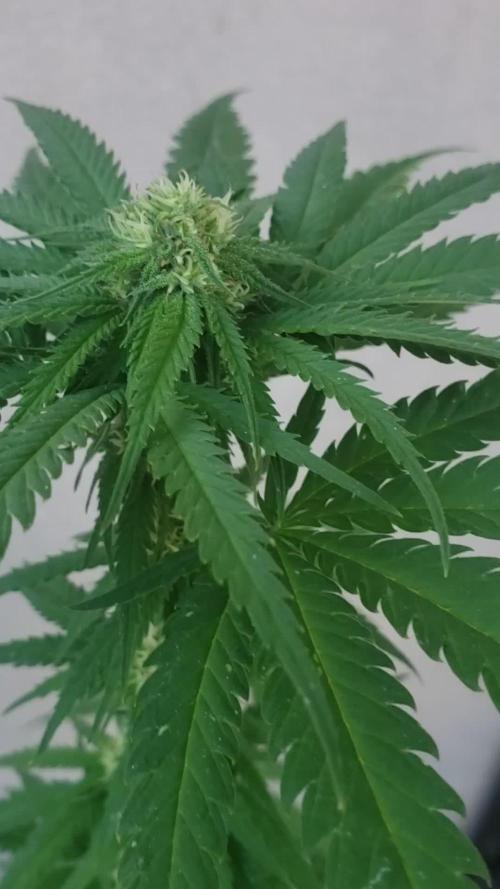
Perdon pero no se porque me ocurre que no me carga las imágenes, pero bueno , les cuento que esta #BigBang de @DivineSeeds esta en su segunda semana de floración, y para ser honesto , de las 3 geneticas que estoy cultivando, es la que en comparación ya tiene los cogollos más desarrollados ( las otras 2 son de rápida floracion, pero los cogollos son más pequeños).
A la planta le di un riego foliar con jabón para combatir los trips y los pulgones que vi aparecer.
En cuanto a fertilizantes utilice top candy y top bloom 1 y 2 ml x litro de agua respectivamente.
Esta semana también he medido el drenaje, y obtuve valores altos (ph 7.5 y Ec 950ppm). Asique los próximos riegos los hare con un ph más bajo (5.6-5.8) para poder estabilizar los niveles nuevamente.


Likes
35
Share


@Ganjagrandaddy
Follow
Day 28 Flowering: Hi all. Another week passes and the bud building goes on.
Red hot cookies is a beautiful little bonsai still tiny but looks such a great colour on the Purples . Sods law that they are this pheno so early on.
Sweed Afghani Delicious is still building herself up into a long cola. She took a lot of damage early on.
Amnesia Haze is a whole different picture. She has begun forming some nice thick stacked colas that have a minty sweet smell to them now as does the whole room.lol
Her buds are nice and compact with close nodes forming a whole tip to base cola. Health is looking good but a lighter green is noticable now as she feeds from the soil. I added a feed of Megacrop to see how this could help , also gave a little calmag too as i noticed a couple of tell tale rust spots.
I am so impressed with this strain and can only wait to see the end results she can put out.
Thanks for the visit. be safe.
Likes
53
Share


@MistaOC
Follow
19.04. Day 83
Day 43 and things remain steady. The two overfed plants are still on pH-adjusted water only. The one in the front is starting to show signs of recovery – looks like the flush is working.
The one in the back right, though, is pretty far gone – necrosis has set in deep. At this point, it’s just about damage control. No real comeback expected, but I’ll keep it going.
All the other girls are thriving. Still getting 2–2.5 liters of nutrients every two days. Buds are swelling up nicely – and finally, the frost is starting to settle in. Winter is coming!
*******************************************
10L RO Water // ph 6,2 // 1ml/L Regulator // 2ml/L CalMag // 10ml Green Sensation // ph- // every second day
*******************************************

Likes
9
Share


@Ronin716
Follow
Loved it!! Relatively easy going!! Couple off moments but not worth getting into but the smell!!! It’s not super strong where you smell it throughout the house when you burp the jars but she has a very (what I could only reference as sour, sweet and lemony, almost like that lemon pledge your mom use to clean the house with) smell but I love it!!!


Likes
8
Share


@Growador
Follow
Shoot!!!! They’re beginning to thickening up, i’ve done some lst for 5 days and now they’re pretty good. I’m letting them grow and will begin to tie the other branches when they will be big enough!


Likes
71
Share

@GreenHobbit
Follow
The Hobbit Hole Outdoor Grow 2026
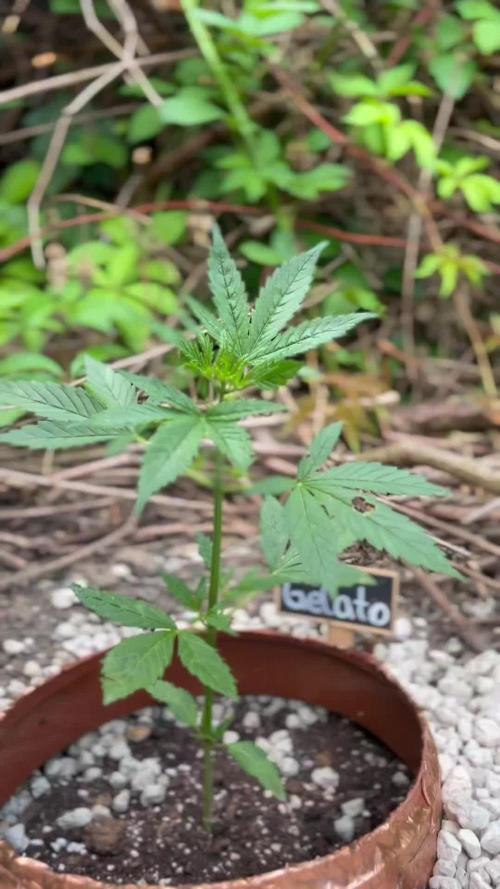
Woche 4 – Der Sommer ist angekommen… und die Natur zeigt ihre Zähne.
Diese Woche fühlte sich an wie der eigentliche Beginn des Hobbit Hole.
Nach den regnerischen und kühlen Tagen der vergangenen Wochen zeigte sich endlich der Sommer. Drei Tage Sonne am Stück reichten aus, um den kleinen Autos einen sichtbaren Wachstumsschub zu verpassen. Fast so, als hätten sie nur darauf gewartet, endlich loslegen zu dürfen.
Besonders auffällig war die Entwicklung der Blätter. Alle vier Pflanzen bildeten inzwischen ihre ersten fünffingrigen Blätter – für mich immer einer der schönsten Momente im frühen Wachstum. Ab diesem Punkt wirken sie nicht mehr wie kleine Sämlinge, sondern wie richtige Cannabispflanzen.
Natürlich blieb das Hobbit Hole auch diese Woche nicht völlig verschont.
Wie gewohnt bekamen alle Pflanzen vorsorglich eine Behandlung mit Neem, um Schädlingen möglichst früh den Appetit zu verderben. Die Kupferringe verrichteten weiterhin zuverlässig ihren Dienst – zumindest dachte ich das.
Dann kam der Rückschlag.
Die Guava Runtz, die bis dahin sogar zu den stärksten Pflanzen gehörte, wurde komplett von einer Schnecke erwischt. Vermutlich nutzte sie genau die Stelle aus, an der ein Wühltier zuvor den Kupferschutz beschädigt hatte. Der Stängel wurde einfach durchgeknabbert und der Rest lag dann daneben😓
Genau solche Momente gehören leider zu einem echten Outdoor-Grow dazu. Ärgerlich? Absolut. Aber genau deshalb dokumentiere ich auch solche Rückschläge. Nicht jeder Grow verläuft perfekt, und die Natur schreibt ihre eigenen Regeln.
Als direkte Konsequenz bekam die Cinderella sofort einen zweiten Kupferring als zusätzliche Absicherung. Lieber einmal zu vorsichtig als eine weitere Pflanze zu verlieren.
Der kleine Zwischenfall hat gleichzeitig das Feld neu sortiert.
Die Gelato übernimmt inzwischen die Führung und entwickelt sich aktuell am kräftigsten. Direkt dahinter folgt die Cinderella, die weiterhin ihren Ruf als schnelle und vitale Sorte bestätigt. Auch die Purple Punch hat sich nach ihrem missglückten Start erstaunlich gut erholt und holt langsam auf.
Mit jeder Woche wird deutlicher, dass die eigentliche Arbeit unter der Erde längst erledigt wurde. Die Wurzeln scheinen sich inzwischen fest im Boden etabliert zu haben und das oberirdische Wachstum zieht nun sichtbar nach.
Outdoor bedeutet eben nicht, jede Situation kontrollieren zu können.
Man arbeitet mit dem Wetter, mit Insekten, mit Schnecken, mit Tieren und manchmal auch gegen sie. Genau das macht dieses Projekt für mich so spannend.
Drei Hobbits stehen noch im Hobbit Hole.
Und jetzt beginnt der eigentliche Kampf.

Likes
6
Share

@Bncgrower
Follow
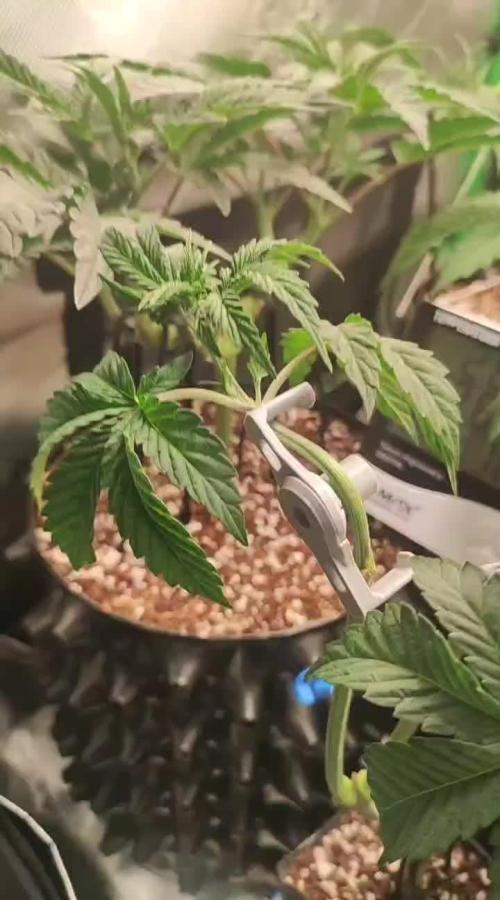
Sorry, I'm a bit behind on my updates... Everything is going according to plan 💪🌿
Processing
Likes
176
Share


@Teamdirtbag2
Follow
This is a tough one. But the greenhouse is in the trash.. 3 plants at 8+ feet dumped. Between the powdery mildew and now a spider mite infestation there is no way I will gift this to friends especially sick friends. It is all in the trash.... I still have Orinoco outside the battle goes on. There is no point to make medicine from bug infested or toxic plants. Please respect my decision. I will run both plants again. ..... this was a real tough thing to do. But it is what is right. I could have fixed the problems...... but it would haunt me. The whole point of the greenhouse was clean medicine to share .... I'm sorry I failed... I can blame everything.. but the responsibility falls back to me. So for that I'm sorry. Please realise I'm ok with my decision.... it is what is right. Life moves on... keep growing 👊


Likes
33
Share


@FlavoursUk
Follow
Just letting her ripen now, colours coming in.. and fading out nicely. Last few days will be RO water. EC is still lower than what comes out of my tap, 0.5.
We are near..
Day 77 - the girls are nicely faded/flushed with RO water, so my EC is sitting lower than what comes out of the tap.. only like white ash burning and to maximise flavour and smells. Shes currently a problem as the small tester bid i took left the whole place smelling very strong to the point where i haven't chopped her yet as the smells too strong even with a carbon filter. (No joke). Thinking to possibly chop either tomorrow or the day after.
Not much to report until I've chopped and left to hang dry, I'd normally let the whole plant hang dry but might have to do it differently due to the sheer size of these girls. Once hang dried she will be in jars (might even get some more boveda packs). But yeah, stay tuned for this one 😉 this ones gonna pack a punch.
Again i tried to upload a 3 minute video but GD won't allow the video.

Likes
12
Share


@Jays_Not_Here_Man
Follow
This was an easy grow, and had some amazing results. This is some of my best homegrown to date ❤️ the ladies were easy to manage, no PM, pests or disease. The root balls were enormous, wasn’t much soil to recover. They got heavy in the end from the weight but managed to stay upright for the most part. They were big stretchers , prepare for that, scrog was a good way to go but some of the eager beavers got away from me, which ended in some massive colas. Overall easy to grow, no surprises and you won’t regret the results! 10/10 ❤️👊🤤

Likes
24
Share


@nonick123
Follow
Día 9 (10/06) N/A
Día 10 (11/06) N/A
Día 11 (12/06) Llueve mucho. Humedad alta por aquí. Eso les favorece
Día 12 (13/06) Se empiezan a desarrollar las hojas verdaderas a una buena velocidad! Todo en marcha! 💨
Día 13 (14/06) Riego ligero 100 ml sólo H20 EC 0,5 en previsión del trasplante en el día 15 de la planta
Día 14 (15/06) Se nota que estamos en el día 14 desde germinación y la mayoría de las plántulas van viento en popa!
Día 15 (16/06) Hoy procedemos a trasplantar a las chicas a su maceta intermedia de 6,5 litros
Se prepara con 5,5 Litros (85%) de sustrato PRO-MIX HP BACILLUS+MYCORRHIZAE + 1 Litro de Insect Frass (15%) + 65 gramos de Earth Vibes Super Soil (10 g/L substrato)
Se llena la maceta de sustrato con las manos (limpias) y rompiendo los trozos más gruesos, para que el sustrato esté aireado y esponjoso, sin presionar
Se coloca una maceta vacía de 1L para que quede la forma perfecta de la maceta donde están las plántulas (ver fotos)
Se espolvorea la parte proporcional de la probeta de microorganismos sobre el agujero de trasplante
Se saca la plántula de su maceta actual (bonitas raíces 😍) y se coloca en la maceta final
Se riega muy lentamente hasta percolación profunda con H2O EC 0,5 pH 6,5
Se coloca mulch (acolchado) de paja para evitar traspiración excesiva y cuidar a los microorganismos del suelo
A ver como reacciona al trasplante!
💦Nutrients by Lurpe Solutions - www.lurpenaturalsolutions.com
🌱Substrate PRO-MIX HP BACILLUS + MYCORRHIZAE - www.pthorticulture.com/en/products/pro-mix-hp-biostimulant-plus-mycorrhizae

Likes
35
Share


@ReinDeer
Follow
I started the week with watering the plants, new buds are developing nicely and they’ve got some mass since last week. I am a little worried for the plants at the edges of a groow room beacuse tey are still small and not as bushy as I hoped they would be.
Day two: Yesterday’s nut feed turns out to put extra fuel to the plants and buds grew in size significantly:) upper leaves got a little purplish color which looks amazing but I hope it is not some kind of deficiency 🤘
Day three: I thought centered plants were too near to the light source so I bended every plant in a way so the light would be evenly exposed to the whole growing area and I am happy with the results so far. Hopefully it will have a final effect for the harvest quantity😺💪