





Likes
11
Share


@mike97
Follow
Week 10 beginning of the final stages.
Smell is amazing 🤩
What would you guys make different?

Likes
3
Share

@German_GrowLab
Follow
Grüßt euch, liebe Grow-Community!
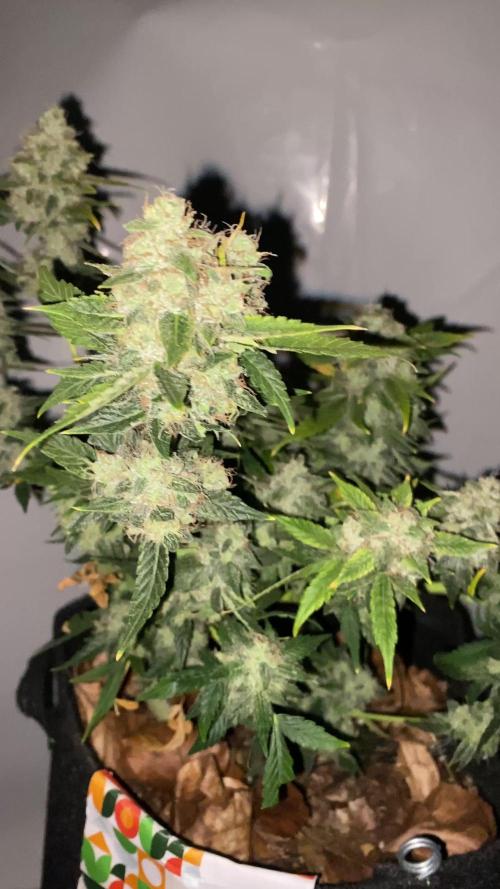
Zur 9. Woche / Blütewoche 6 dieses betreuten Grow-Projekts.
Und wie ihr seht, ist es doch etwas lichter in der Box geworden. Und ihr könnt euch ja sicherlich denken, was das heißt …
Letzten Montag (31.08.26) haben sich die Mephisto’s Wedding #1 und die Orange Diesel #1 für die größere Sache geopfert. Und mit „größerer Sache“ meine ich, bald von ein paar Studis gesmoked zu werden.😝 (Wir wissen dieses Opfer doch sehr zu schätzen.)😇
Also ran mit der Schere und ab dafür! Die Kleinen wurden nach einer kleinen Entlaubung im Ganzen aufgehängt und trocknen nun munter vor sich hin.
Da die Jungs doch tatsächlich keine Kohle für eine Klimaanlage locker machen konnten, da dies – Zitat – „doch etwas zu viel des Guten wäre“, trocknen die zwei nun bei etwas suboptimalen 20 °C und immerhin 60 % Luftfeuchtigkeit.😒
Was vielleicht gar nicht mal so verkehrt ist, da neuere Untersuchungen eher darauf hindeuten, dass es durchaus Vorteile haben kann, den Blüten zu Beginn der Trocknung etwas schneller Feuchtigkeit zu entziehen. Dadurch verlassen sie schneller den mikrobiell kritischen Feuchtebereich, was das Risiko eines Pathogenbefalls reduzieren kann. Gleichzeitig bedeutet eine möglichst lange Trocknung nicht automatisch eine bessere Terpenerhaltung – schließlich können sich flüchtige Aromastoffe auch über die zusätzliche Trocknungszeit weiter verflüchtigen.
Also ein State-of-the-Art-Ansatz, wenn man so will... 😅
Ich habe dazu mal ein Paper angeheftet, für diejenigen, die es interessiert.
Nach einem kurzen Blick in die Box muss ich sagen, dass ich über das, was ich sehe – und vor allem rieche – doch sehr verzückt bin.
Der andere Phäno der Mephisto’s Wedding hat sich zu einer wahren Frost-Factory entwickelt und besticht durch ein kräftiges Chem-Aroma. 😋Der andere Phäno braucht noch etwas länger, spiegelt dafür aber doch eher den Wedding-Cake-Elternteil wider.
Die zwei etwas unterernährten Orange Diesel machen zwar optisch nicht ganz so viel her, weisen dafür aber ein angenehmes Diesel-Orangen-Aroma auf, was der ersten geernteten Diesel doch etwas gefehlt hat. Ich hoffe nur, dass mein Erde-Topdress noch etwas Futter bereitstellt.🙏
Sooo, an dieser Stelle wünsche ich viel Spaß mit den Bildern/Videos. Wie ihr seht, haben wir hier keine Produktionskosten gescheut. 😂
Ich wünsche euch wie immer ein schönes Wochenende! Genießt die letzten Sommertage, bevor die Winterdepression wieder kickt.😅
Adios!

Likes
5
Share


@Misterindoor
Follow
Esta semana pasa a floracion y continua la estimulacion con delta 9 y mañana cambia el fotoperiodo a 12 /12

Likes
7
Share


@Onlygrow99
Follow
Bien pues ya tenemos en marcha el 2º seguimiento del perfil...
Son 6 white truffles, 6 Apple&Bazzokies de GBSTRAINS y 5 GG4 de GBSEEDS que se empezaron a germinar el 15 de mayo por la tarde sobre las 19:00
Todas nutridas con BOOM nutrients jejeje
Todas las semanas iremos viendo los cambios y la evolución, los riegos y las flores que vendrán :)
El 16 de mayo del 23 sobre las 07:00 de la mañana pase las semillas del vaso con agua, a los tapers con servilleta. Ahí estuvieron 24 horas mas haciendo un total de 36 horas germinando para después,
pasarlas a las macetas de 1 litro.
22/05/23 actualizado, meto unas fotos mas de como van las semillas después de 7 días desde que se empezaron a germinar en el vaso de agua.
A día 22/05/23 llevamos 7 días desde que se empezaron a germinar.
ACTUALIZACION DE ESTADO:
30/05/23 Subo unas fotos después de 8 días.
Llevamos 15 días desde que se empezó a germinar las semillas en vaso de agua.
A partir de aquí, empiezo a contar semanas de crecimiento.
Trasplantaremos a maceta definitivas de 7L dentro de una semana o 2.

Likes
35
Share

@wolfvb
Follow
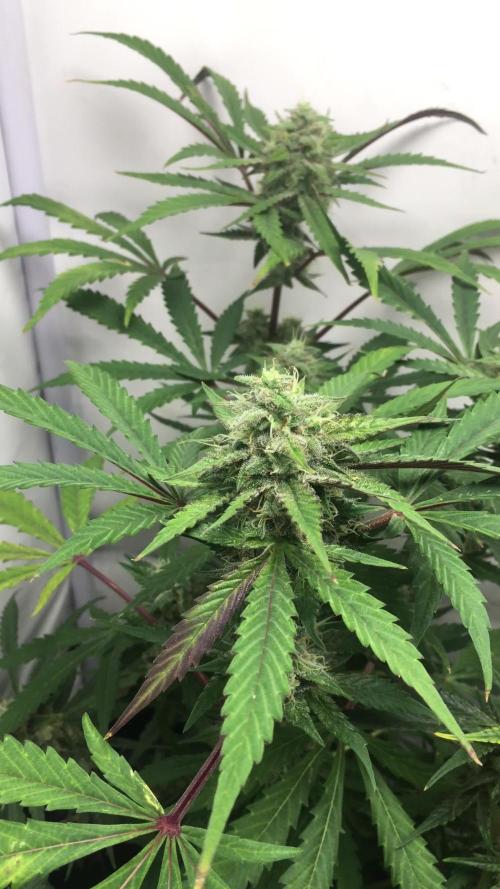
Trichome Takeover! ❄️🍰 : The Cake is Frosting Up!
Welcome to Week 8! This Wedding Cake Auto is really living up to her name now. The "stretch" from the previous weeks has finally settled, and she is focusing all her energy on stacking those buds.
The frost is becoming much more apparent trichomes are starting to crawl onto the sugar leaves, and the scent is getting deeper and more doughy every time I open the tent. I’m really impressed with how she handled the topping and LST earlier on; the canopy is nice and even, and every bud site is getting a prime spot under the Agyrochy LED.
Feeding & Environment:
Watering: She’s getting thirsty! I’ve maintained a steady watering schedule, making sure to keep the pH around 5.5-6.0 as she bulks up.
Nutrients: Continuing with the mix. She seems to be loving the current PPM levels (around 800), so I’m sticking to the plan without pushing too hard.
Zamnesia really knocked it out of the park with these genetics. Low effort, high reward so far! Can't wait to see how much more she swells in the coming days.

Likes
21
Share


@NorthernMonkeyzInc
Follow
Im finding these great fun to grow, training is very easy to do considering it the first time ive trained any plants

Likes
18
Share


@Zurban_Poison
Follow
Hi all!
Autoflowering experiment continues!
1 more topping was made and now we have 8 branches on each plant. in total, there are already 16 branches! and in principle I can leave her alone. and give her a lot of fame and masses for flowering .. I hope she will see this stress ..

Likes
5
Share


@Rizza78
Follow
Sorry busy week. They are getting close. Just turned the lights down 20% to simulate fall for last couple weeks. Will add ice in 6 days to flush.


Likes
15
Share


@URUGUAY_BOY
Follow
Estupendas, estoy muy contento con los resultados que voy observando, me tienen enamorado con el olor a frutas variadas, la resina que tiene es impresionante brillan como una cucharada de azúcar,
y tiene 67 dias. El proveedor dice que con 70 dias pero alguna le queda un poquito mas de de lo recomendado si que otras están muy bien echas pero otras no.
llevo toda la semana lavando la raíz con agua.

Likes
28
Share


@Chubbs
Follow
420Fastbuds
FBT2307 Week 9
What up fellow growers. Weekly update for these three amazing girls. All seem to be growing good even the one to the left that's been fighting me the whole grow. The other two's flower sites are swelling up nice at this stage of flower. The middle one has decided to go into beast mode since transitioning into flower showing growth daily. Over all no big issues to be to worried about getting some fade/yellowing in the leafs but over all Happy Growing.
Likes
7
Share

@Stacy_smokez
Follow
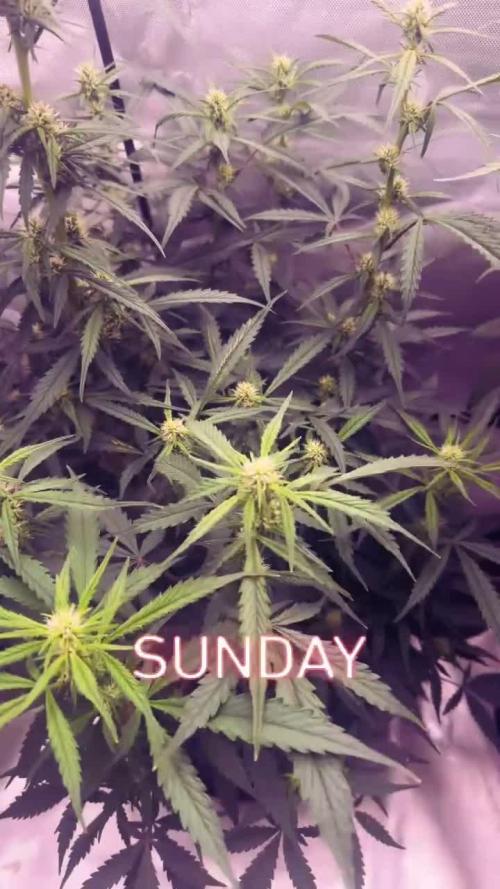
Topped again and defoliated more she’s coming along well. This is my first time manifolding and can’t wait to see what happens further in the grow .

Likes
Comments
Share


Likes
20
Share


@SkunkyDog
Follow
Hallo zusammen 🤙.
Sie erhalten 25 Prozent Rabatt in unserem Shop
Mindestbestellwert beträgt 75 Euro
https://greenbuzzliquids.com/en/shop/
Code: GD42025

Processing
Likes
6
Share


@Barcelona_Farmers710
Follow
Aplicamos recientemente jabón potásico por problemas con trips... estamos controlando todo a tiempo, en 3 semanas ya pasaremos al armario grande para continuar dándole crescimiento para las nenas farmers!🍁

Likes
22
Share


@dillande3
Follow
Hello, Day 63, Flower Phase , PGK, Final weeks of flower phase is started, Day 84 or week 12, I am planing to harvest the plant, Trichomes still cloudy and buds looks grate, smells also like tropical Mango ))) cant wait to smoke this )))). Thanks
Week 9 - Flower Phase
Day 63 - 5/01/23
Day 64 - 6/01/23
Likes
6
Share


@Mismatas
Follow
PRIMERA SEMANA DE FLORACIÓN, VAMOS PASANDO LAS RAMAS ENTRE LA MALLA, Y AÑADIMOS EL BUD IGNITOR A NUESTRO RIEGO

Likes
26
Share


@Magic_frequency
Follow
This 2 Liter is better than my 10L grow, probably a lot more 😅. My next grow i know what to do! 👌 its gonna be legendary.


Likes
18
Share


@VI_Cannabis
Follow
July 5 - The girls are still doing awesome. temps are between 21-26. Humidity is 40-50. Still feeding every 24-36 hours with 3L per plant.
July 6 - They are doing good. Showing lots of flower sites now. Unfortunately I did not get any pictures today.
July 7 - Tons of progress since last week. I don't see any signs of any problems, and still no pests! The smell is getting A lot stronger as it starts to flower more
July 8 - Still doing there thing, no problems, temps and humidity is fine. Have been feeding every 24 hours now as they seem to be really thirsty
July 9 - Super happy with how they are doing. No issues yet. Smell is heavier, and tons of bud sites showing up. Only issue is they are growing pretty uneven.
July 10 - Time to get a even canopy! First time doing some HST. I also did some defoliation. One of the stems split open a bit but it seems to be doing just fine. I did he HST and defoliation in the morning, i then took pictures of 12 hours later and everything seems just fine!
July 11 - Everything seems to be a lot more even and the broken stem doesn't seem to affect the growth.
Likes
14
Share


@MWHomegrow
Follow
Vegetative Woche 3:
Tag 29 gab es das erste LST nach dem Umtopfen für die Ladys, damit sie das Zelt bald schön ausfüllen zu viert 😊
Hierfür einfach bodenhaken für die Triebe und am Hauptstamm nutze ich gerne die roten Clips.
Tag 30+31 gab es nichts besonderes zu tun 😊
Tag 32 wurde das erste Mal gegossen nach dem Umtopfen mit 2l ph 6.2 Wasser mit 0,8g/l Enhancer, das Wasser habe ich zum ersten Mal mit meiner neuen Akkugießlanze verteilt und ich hoffe so noch gleichmäßiger gießen zu können 😊
Tag 33 wurden wieder mit LST gearbeitet und die Triebe mit den Bodenhaken weiter nach außen gebogen, damit ich möglichst bald ein relativ gleichmäßiges Blätterdach habe welches die gesamte Grundfläche des Zeltes ausfüllt.
Tag 34 war wieder Ruhetag
Tag 35 wurde wieder gegossen und zwar wieder mit 2l pro Pflanze mit ph Wert von 6.2 und 1ml/l Calmag und auch hier wurde zum Gießen di Akkulanze verwendet.
Und so endet Woche 3 der Veg
Processing
Likes
12
Share


@Csmithch
Follow
Buds are packing on weight pretty good for only being at the end of week 3. I think these buds have potential to get some good size to them by the end of flowering period.
I noticed a few days ago my timer stopped working, lights were stuck on. Looks like there's no ill effects yet though despite worrying about them revegging if they were left on for too long.
Noticed leaf tips are all nute burned so they are at their maximum for ppm as far as nutrient uptake is concerned. Going to back the ppm off by 250 in the next feeds and continue to observe the leaf tips.
Plants are still recovering from a nute lockout that caused a mg deficiency and took away a lot of bottom growth from all 4 plants. Ph is back on track and plants are growing rapidly again.
Stay blessed and happy growing 😎

