


Likes
Comments
Share


@BlumenBot
Follow
7/26 - shes in flower and got her first feeding. Debating removing some bottom growth or just letting her run as is with no modifications.
5.8pH
73.6*F
740ppm
Bloom 2.18g
Phosphorus 0.32g
Kelp 0.28g
Cal/Mag 0.32g
Amino Acids 0.58g
Enzymes 0.12g
Terpinator 12ml
Great White 1.19g
Real Growers Recharge 0.1g
Rezin 2ml
7/27 - removed bottom 4 branches as they will never be close to the top. Want her focusing energy on the rest
7/28 - she was thirsty today, really dry...did a quick flush feeding, probably full feed Friday. This an heat is making it really difficult to keep the temps down in the box!! Running high 80s :/
7/29 - it's a girl!!
8/1 - looks like I may have a deficiency.
Gave her a good feeding today.
Bloom 3.08g
Phosphorus 0.57g
Potassium 0.76g
Kelp 0.38g
Cal/Mag 0.55g
Amino Acids 0.62g
Enzymes 0.15g
Terpinator 12ml
Great White 1.1g
Real Growers Recharge 0.12g
Rezin 3ml
5.8ph
73.4*F
1030ppm

Likes
15
Share

@masterofsmeagol
Follow
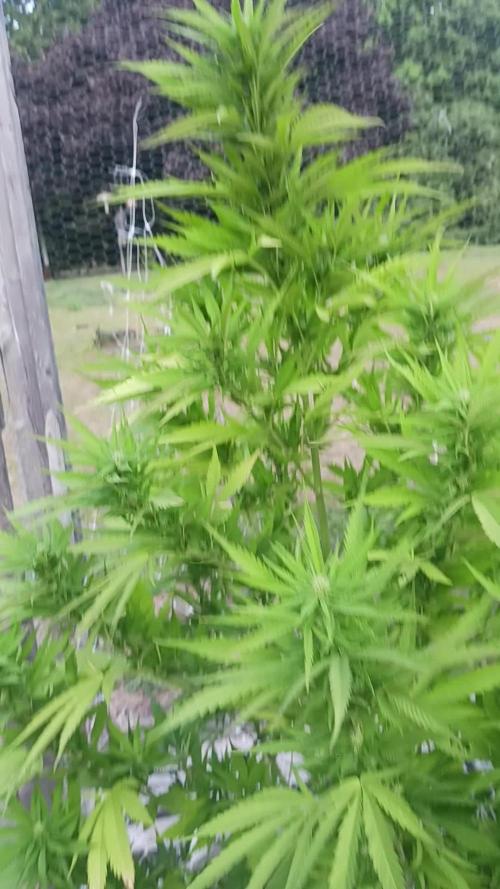
8/3 Went over to treat the 10th planet that needed water with plant doctor around 10:30. I was in the garden at 6 but didn't have much time. That plant seems to be curled up or "droopy". It DID need water. I defoliated a few sep leaves off it but I didn't see any today. I guess I don't ever really see the leaves "up" or praying like I do with the rest of tge plants. It's starting to flower like the rest though. Today is the day everything is supposed to get its second or third plant doctor dose but I decided to wait until they need the water. I don't think 24hrs will mean much. I've been staying on top of defoliation but I'm seeing some pillar damage. I'd like to spray bt but what my buddy said about spraying with septoria is still in my head. Maybe I can use citric acid. That way it won't "wash away" spores it will just eat them. At least I think. And I hope lol. Birds get most of the pillars but I hand pick some too. I need to pick up nutes. Wondering if I should just get grow big again. I don't use much but plants are switching to flower and leaves are fading. I have big bloom and kool bloom bit neither have nitrogen. I still need some sort of nitrogen. Especially since that could be a deficiency. Not sure if it's the transition or a condition with the sep. I see some interior small leaves bleeding out and some dying. I'm wondering if what I thought was earwig damage years prior was really a combo of sep and they just ate the evidence. I'm super grateful though. I've got some resilient girls and they're doing well. The special kush in flower is gorgeous as well. Looks like I'll have an early plant. Short flowering time on this strain. Smells pungent.
8/4 Treated everything in the garden with plant doctor except the 10th planet I got yesterday. I need to take a closer look at that plant. It rarely looks "happy" like my others. I'll check it again later. 3tsp per gallon and 1gal a plant. The 10s got a half gallon. This seems to be working great. I have some defoliation to do on the tenth planet I was talking about earlier. Everything is in some form of flower. The flowers on that early special kush are getting bigger. I'll update this later.
UPDATE: WENT BACK OVER AT NOON TO TAKE A LOOK AT THAT OTHER 10TH PLANET TO SEE IF IT PICKED UP AT ALL. IT DID. IM GLAD I CAME OVER TO CHECK THOUGH. MAKES ME FEEL BETTER. THE OTHER 10TH PLANET LOOKS HORRIBLE O. FILM FROM ONE ANGLE LOL BUT ITS REALLY A GREAT LOOKING PLANT AND IM USUALLY FILMING AT LIKE 6AM. JIST WANTED TO STICK UP FORCMY GIRL AND HER BAD HAIR DAY. ITS BEEN HIT AND A FEW OF HER LEAVES ARE TACOED. SHE GOT HER FIRST "PREVENTATIVE" DOSE OF PLANT DOCTOR WHICH WAS HALF A TSP/GALLON. IT REALLY SEEMS TO BE DOING SUBSTANTIALLY BETTER. EVERYTHING IS. IM HAVING TO LOOK HARDER AND AM HAVING TROUBLE FINDING LEAVES EFFECTED BY SEPTORIA. KNOCK ON WOOD. IM EXCITED. THIS IS GOING BETTER THAN I THOUGHT. IM STILL GOING TO BE MONITERING LIKE I USUALLY DO.
8/5 Watered the 10th planet I dodnt get yesterday. Looked and didn't see any sep leaves. Phone was dead so I vouldnt do a video. Went back over at like 130pm and did a quick video and checked out the girls. Everything is looking good and transitioning well. I WANT to use a diy Dr. Zymes with citric acid as I've noticed a few pillars. Only reason I've hesitated is because my buddy said not to spray it. But if what I spray it with "eats" it I would think it's ok. But what do I know. Birds get a great deal of them. I watch them on the camera sit on the cage and wait for one to stick it's head up before snatching it up. Still need to get either more grow big or a bloom product with nitrogen. I was able to defoliate that other 10th planet of anything suspect. It's hard work but it's worth it in the end.
8/6 It's like 81 at 4pm. I didn't have time to video this morning but i went back over. WATERED EVERYTHING THIS BUT THE 50 AND THE 10TH PLANET I GOT YESTERDAY. Temps are supposed to pick up soon and it will be in the 90's again. We've had like NO rain. I searched for leaves that had signs of sep to defoliate. I may find one or two but for the most part things are doing great. Overall I'm happy.
8/7 Bought a new bottle of grow big. Wanted to switch to the roots organic teas but I cant do that invthe middle of an already complicated grow. I'll switch nutes next season. I'm noticing some pillar damage. Not much amd I've been hand picking them. I've found a few in curled up leaves. I watered the 10th planet in the front corner that didn't get it yesterday. I hope the watering yesterday will hold them until the morning. I'm still thinking about doing an application of diy Dr. Zymes to clear up any random pests. I'll ask a question and see what other growers on here have to say.
EDIT: MY SPIDEY SENSES STARTED TINGLING SO I WENT OVER TO CHECK ON THE GIRLS THIS AFTERNOON. THE MK ULTRA THAT I LEFT NATURAL WAS STARTING TO DROOP. THE REST OF THE GIRLS COULD WAIT. I MIXED WATER FOR ONE OF THE TENS BUT DECIDED AGAINST IT. I DONT WANT TO OVERWATER AND I THINK IT CAN MAKE IT. I GAVE THE MK ULTRA A FULL WATERING CAN WHICH IS ALMOST TWO GALLONS. IT WAS PUCKING UP BYVTHE TIME I LEFT AND WASNT EVEN ALL THE WAY DOWN. IM GLAD I CHECKED.
The ONLINE cannabis community can be such a joke. There ARE good groups but this places sucks. I put a question up as PART of the research I was doing and ive received some dumb answers but this was aggressive too. I had it figured out prior to reading the answer but it caught me off guard. I decided that since Im able to keep it suppressed with what im doing (leaf septoria on a couple of plants) than don'tchange it. I've dealt with it before and kept it suppressed but not nearly as well. It was a yes or no question really. Stated for outdoor experienced growers as I was looking to avoid the copy paste/ look how smart I am bullshit. I just have an anxiety disorder and like to hear numerous responses before I act. I figure it out and log on and I get some smart ass response from an INDOOR grower. When I SPECIFICALLY asked for EXPERIENCED OUTDOOR growers (as the question is unique to the outdoor environment and indoor growers seem snobby and seem to get jealous when they see my massive plants a quote what they just searched on the internet). I can read shit on the internet as well and had prior to posting. I'm sorry if my success with a product (that you are unaware of "but can't see how it could work" (despite not knowing the active ingredients by your own admission) and lots of hard work have prevailed. When I have to ditch a plant it's 1/4 to a full elbow. Not an 1/8th. So I won't be burning shit. I hate when people say that. There are cases for it but many new growers have been led astray with stupid advice like this. ESPECIALLY if everything is going GOOD! If a plant was less than perfect I'd put it in my concentrates bag. Not much fits through a 25 micron screen. But by all means burn your plants. I have no idea how I have ZERO wpm this year but I would hear shit like this for a couple leaves "with gravel on them" on a 10ft tall plant that yielded like a pound. So I don't know why I listen or why I even responded. Even if it WAS wpm I would've kept it and washed it. It must be nice to be able to work 20 weeks on something numerous times a day put a bunch of money in it and when you hit flower burn it because you don't want to do the extra work. You can easily tell the people that don't grow outdoors. It's a completely different game. But since I've already written it I'm leaving it. One more thing. You didn't even know what the active ingredients in my product were. How can you make ANY statements about the efficacy of ANYTHING without knowing what it is? You said "unless it's a bunch of silica" that provokes an immune response. It's not silica hun. I've been hunting for years for something that works. Go back to your closet.
8/8 The Lion's Gate Portal. Watered everything but the mk ultra and 10th planet upfront I got yesterday. I was going to feed but I ran out of time. I may still feed today I'm not sure. I found a couple septoria leaves on that pink kush that has "some" soil from last year in it. That is a mistake I won't make again. I'm checking a few times a day and defoliating anything suspect. The girls are looking good. I'm proud of them. Very resilient. They've withstood pretty much everything nature can throw at them. HAIL, torrential downpours, 30mph winds, disease and still they are thriving. There's really no way to explain the feeling that I get when I come to the garden in the morning and see everything looking good and smell that familiar odor. Serenity I guess. Pure serenity. I'll update if I feed or do anything else.
EDIT: WENT BACK OVER AT LIKE 5:30 since it was over 90°. Everything was fine waterwise though. Caught a HUGE grasshopper and found a pillar the likes I've never seen. It was a scary looking bastard! Looked like one of the worms from tremors and it almost seemed like it had some silk around it. It opened its mouth when I went to grab it. It was brown but neon green when I squished it. I need to find a good mulch. They say that helps with septoria. I defoliated a few leaves while I was there. It's close to the time for app of plant doctor. I decided to not feed. I saw a couple leaves that had SLIGHT nute burn on the tips. I'll observe and treat accordingly.
8/9 I decided to not feed this week. All new growth looks great and I noticed SLIGHT burns on tje tips of a few leaves so I figured I'd back off this week. Boy that early special Kush keeps getting bigger. It's going to be nice to have one plant ready long before the others. I'm wondering about my other 10th planet. The one that's had all the plant doctor treatment is doimg fantastic! The other not as much. It's droopy more often than not and doesn't really have many leaves effected by sep. What it LOOKS like is that beat curly top virus. The plant was one of the largest but it's much smaller sister has surpassed her (by far) and looks extremely healthy. I think I may move the plant out of the enclosure. It's a big plant and maybe after it's gotten treatment it will improve but I'm not sure it's worth the risk. It's spaced pretty far from everything else but still. Has me worried. I was reading that like 90 something percent of cannabis coming from California is infected with a virus. Don't remember where I read it but it wad a reputable source that was cited. Looks like I'm not doing ethos outdoors again. I may do some indoor this winter if external things come


Likes
53
Share


@MistaOC
Follow
26.04. Day 90
Day 50 of flower, and the tent is an absolute showpiece. The buds are looking ripe, dense, and coated in a thick layer of frost – a true visual treat. Even the plants that struggled earlier have pulled through and are now showcasing stunning, resin-drenched flowers.
The overall canopy is shining, and every plant tells its own little success story. If things continue like this, harvest time isn’t far off – just a little more patience, and then it’s time to reap the rewards!
*******************************************
10L RO Water // ph- // ph 6,2 // every second day
*******************************************

Likes
6
Share


@Brookillinit
Follow
I started the week super cropping. Each of these babies is looking great now.


Likes
2
Share


@Cannaapeace
Follow
hey,
I think she looks pretty good and is growing without any problems.
I think I'll top it for the first time next week :)
I'm curious to see how she copes with this.
cannaapeace

Likes
14
Share


@GandalfsHat
Follow
I would ideally have let these go for another week (if not 2 for the imperium) but my cuttings are in serious need of transplanting due to cold temps and becoming rootbound so will see how they fare on the next run given a full 10-12 weeks

Likes
7
Share


@Bluemels
Follow
Tag 105: Ab heute beginnt die letzte Phase, ich gieße nur noch ohne Dünger, in 2 Wochen plane ich die Ernte.
Likes
3
Share


@Mett420
Follow
Effettuato topping, lst con clip e defogliazione degli strati più vicini all internodo (questo la settimana scorsa), e si può vedere un importante espansione delle foglie e irrobustimento degli steli. Tagli e tecniche necessarie per questo tipo di genetica e setup
Likes
21
Share


@Budhunter
Follow
Have been away from my babies for a few days. Couldn’t wait to be back.
Purple punch and gorilla punch completed 1 week flush. The smell of them are really strong.
Mimosa cake is a bit behind but still promising. It is drinking 5l water each watering.

Processing
Likes
10
Share


@JiminyCricket
Follow
I've been having a tough time with shipping getting things I need to properly control my environment and running into issues.
I have invested in a new; 4x5 Vivosun tent to give the bigger plants more room, a Spider Farmer 1000 ( MrCanucks, a guy I learned a lot from on YouTube did a paid trial of this product with pretty great results, thought I'd try compared to my current crappy LED.), Sizing down to 1 and 3gal fabric pots for a softer transplant transition next go around, the hygrometer/thermometers, some more appropriate sized fans for the tent ( Genesis clip on and treveda circulating fan) to help with general airflow.
Overall I'm actually very happy with all my first set plants (the bigger ones), most seem to be producing multiple sites and growing bigger every day. Noticed the seedlings having trouble about two to three days ago at most. Honestly did not give them the attention they needed. First though it was nutrient deficiency or lockout, maybe, overwatering. Finally checked the soil good and seen how clay like and thick it had become, then took a few out their cups and seen the roots we're choking. I have a grow question up wondering whether I should try to save the seedlings or scrap them in favor of more light for the bigger plants that are obviously growing well?
Until next week!
Happy growing and much love to all! ✌️🌱
-UPDATE-
So I ended up receiving my new Spider Farmer SF-1000 LED grow light and my two fans a bit ahead of schedule today! ☺️ Got the Treveda circulating fan and Genesis clip on fan. Reset all the plants to better benefit from the new gear and a couple other things. Need video I uploaded shows the most current setup.
I moved all my bigger 1st set seed to the left side and hung the SF LED to about 20.5-21in from the tallest of the 4 of those plants. Most all are at least 9 inches. I moved the ring of the 1st set and seedlings to the right side under the Vivosun 600W at about 24in. Still haven't received much feedback on my grow question regarding my seedlings. Since I wasn't quite what to do, I ended up leaving them out of the cups and putting them in my germination tray. My hope is I can keep the plants surviving long enough off of regular sprayings and using the tray as a make shift nutrient reservoir until the soil and pots finally arrive. Scheduled to be here Wednesday, hopefully earlier like the light and fans 👍
Would love to hear all your feedback and opinions! Hope everyone is having good grows and good vibes!


Likes
27
Share


@ButterfliesLittleFarm
Follow
Hello Diary.
The third week of vegetation has passed and Haze Berry Auto is entering the pre-flowering phase. Haze Berry has grown 63cm in the first three weeks which is really quite but not surprising considering he is Sativa. Haze lengthened nicely and the distance between the branches is much larger than, for example, with his roommate Fat Banana. Now the leaves and branches are already causing problems when watering.
I continue to add BioBizz to each watering on a schedule for that week, and I also started adding CalMag preventively.
The plants have generally become more thirsty, now watering is almost every two days when I prepare 6 liters of water with which to water all three plants evenly.
All in all, everything is fine for now and I’m looking forward to the start of flowering. Haze looks really promising.
Let’s take a look at the review of the week.
09/10/2020 - Day 16.
Watering. I added BioBizz as scheduled for the third week and added 1.5ml / lit CalMag preventively. p.H. I lowered the values to 6.4 with Plagron’s Lemon Kick. The temperature of the water I water with is always around 18, 19 degrees. I also put in a Box and another fan.
Temp / Humidity on the farm - 25.3 degrees and 48% humidity.
11/10/2020 - Day 18.
Watering. This time I didn’t add BioBizz but just put 1.5ml / lit CalMag and lowered the p.H. value at 6.4.
Temp / Humidity on the farm - 25.3 degrees and 45% humidity.
13/10/2020 - Day 20.
Watering. BioBizz for the third week and CalMag preventively. p.H was 6.3
Temp / Humidity on the farm - 25 degrees and 45% humidity.
14/10/2020 - Day 21.
Photography, Watering and height measurement. After photographing for the end of the third week of vegetation, I measured the plants on the farm and after all watered with BioBizz and added CalMag preventively. p.H. I dropped to 6.4
Temp / Humidity on the farm - 25.2 degrees and 45% humidity.
Haze Berry Auto # 1 - Day 21. - 63 cm
Haze Berry Auto # 2 - Day 14. - 25 cm
This week the vegetation is over and I am entering the flowering phase, which is obvious given the development of the plants. For now, they look happy and content. Their conditions are pretty good and I will try to keep it that way. See you next week.


Likes
15
Share


@emeraldlabs
Follow
Progressing nicely. Took a little longer to bounce back after topping from what I have grown used to. Feeding lightly with calmag as I am using RO water.
Third plant of perpetual grow broke soil today... went with Ethos Cherry Garcia (from multipass).
Photos/video taken 28 days after breaking soil

Likes
10
Share


@KinoBudz74
Follow
I think week 8 is when I’m going to chop I already see some amber trichomes🌳
Likes
27
Share


@Sativa_Juice_Grows
Follow
HARVEST@DAY84!!!
Took way longer than i expected to finish but it was worth it
i was going actually going to give it a couple more days to wait for some more brown trichomes
but she started to get a few nanna's so i cut her down.
i could not tell how chunky the buds really were underneath
all of the leaves. thiccness from
the main colas all the way down and alot of frost. Smells heavenly.
chemical and gassiness.
Will absolutely be growing the rest of the
seeds i have next time around.
She was more sensitive to the light
and i topped her a little early are my only complaints.
i didnt have a big enough scale so couldnt weigh her wet.
will post dried weight.
its a nice yeild for me being my first grow.
she smells dank
Super happy!!!!
Likes
Comments
Share


@GroloCup
Follow
Great week, plant hit it's stride and the time lapse shows it. Upping the EC to 1750 and letting her rip now. Should be seeing pistils soon.

Likes
4
Share

@Jardineiro_Br
Follow
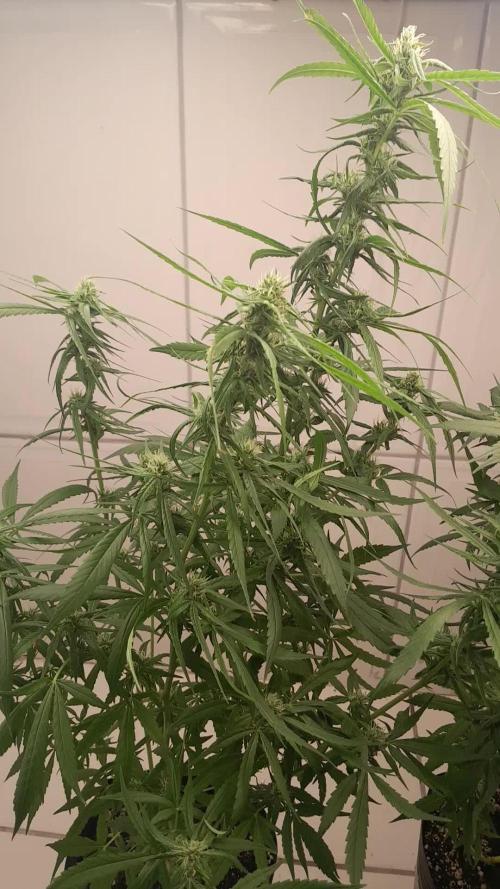
As duas plantas estão bem perfumadas e começaram a engordar os botões, estao saudáveis e estou dando mais fertilizante em concentração e em regas.
Likes
1
Share

@Mo_Powers
Follow
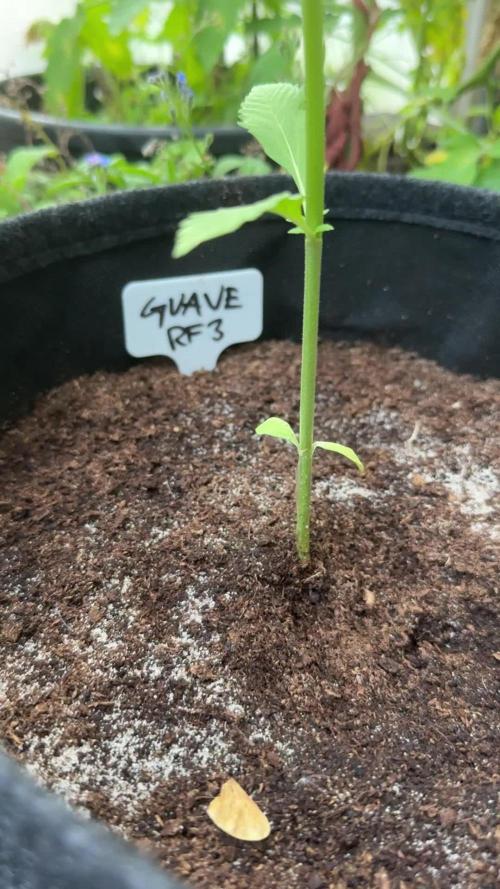
It’s growing well. The first pistils are visible. hey ho let´s go..... 💪
Likes
10
Share

@DogDoctorOfficial
Follow
🌸 Week 5 Flower – Frost on the Horizon
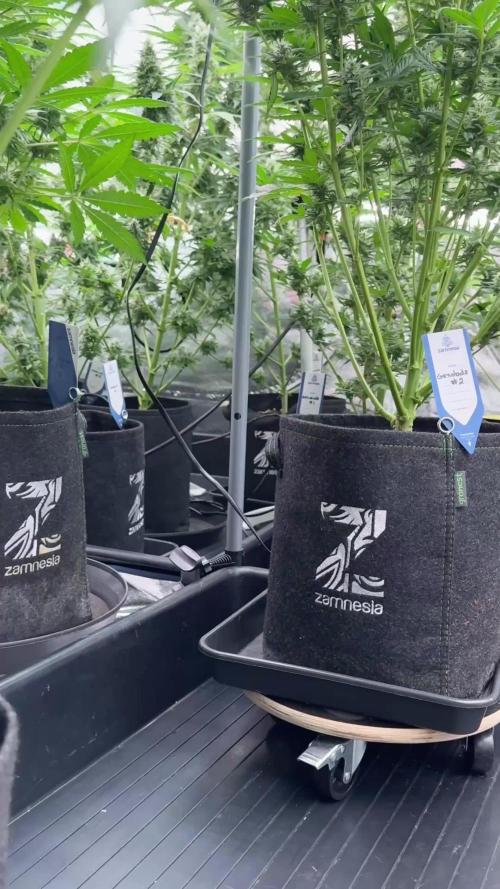
We’ve reached the midway mark of flower, and the Mango Kush sisters are entering their true production phase. What started as white hairs and clusters is now becoming recognizable bud sites, with calyx swelling, pistils stacking, and resin glands beginning to form.
Even though the two phenos are still at slightly different paces, both are showing the strength of Mango × Hindu Kush genetics: dense flower set, uniform branching, and a promise of rich aromas to come.
⸻
💧 Feeding Update – Adjusting for Signs & Demands
This week we observed minor leaf spotting, likely an early sign of calcium/magnesium imbalance. With the canopy pushing hard into bloom, demand for structural nutrients rises. To address this, we adjusted the recipe:
Updated Feeding Mix (per liter):
• 🌿 Aptus Regulator – 0.15 ml
• 🌿 Aptus CalMag Boost – 0.35 ml (slight increase for leaf support)
• 🌿 Aptus All-In-One Liquid – 1 ml (reintroduced for balanced NPK support)
• 🌿 Plagron Sugar Royal – 1 ml
• 🌿 Plagron Green Sensation – 1 ml
Why this change?
• All-In-One Liquid provides a steady base of NPK to complement the super soil and ensure no hidden deficiencies appear as flowers bulk.
• CalMag Boost increased slightly to help counter early spotting and reinforce leaf health.
• Sugar Royal & Green Sensation remain to push terpene, resin, and bud density.
🌱 Educational Takeaway: At mid-flower, nutrition must shift slightly from “steering” to supporting. The plant is now a high-demand engine, and small deficiencies show quickly. Adding back a balanced NPK base (All-In-One) ensures pistil and calyx production doesn’t stall.
⸻
🌡️ Environment – Riding the Heat
The room remains lively but challenging:
• 🌡️ Temps: peaking at 31–34°C
• 💧 RH: 50–60%
• 📊 VPD: ~1.8–2.0 kPa
While slightly hotter than ideal, the Mango Kush girls are holding strong thanks to airflow and the resilience provided by biostimulants like Sugar Royal and Regulator. An AC unit is on the way, which will stabilize the climate moving forward.
🌱 Educational Takeaway: High VPD increases water demand, plants drink more, transpire faster, and pull nutrients quicker. This can be beneficial if balanced correctly, but also risky: deficiencies show up faster, and stress can slow bud formation. Monitoring and adjusting is the key.
⸻
💡 Lighting – Mid-Canopy Power Boost
Our lighting orchestra is now running at higher intensity to fuel flower bulking:
• ThinkGrow Model One – deep penetration into the canopy
• 2× ThinkGrow ICL-300 bars – mid-canopy support, ensuring no shadowed sites
• Future of Grow Black Series 600W – full-spectrum coverage
• Lumatek Zeus 465W Compact Pro – evening out the footprint
PPFD is averaging 750–800 µmol/m²/s, which is perfect for mid-flower. The canopy is even, with bud sites developing from top to bottom.
🌱 Educational Takeaway: Mid-canopy lighting like the ICL-300 prevents “popcorn buds” by ensuring lower sites receive enough light intensity to develop properly. The result: fuller plants, less larf, more usable flower.
⸻
🌱 Genetics in Action – Mango Kush Week 5
• Pheno #1 – Still ahead, stacking pistils into early bulking buds, beginning to sparkle under macro view.
• Pheno #2 – Catching up fast, with strong pistil growth and early calyx development. Though she started later, her structure is filling in beautifully.
Both phenos are showing that classic Mango Kush balance: fruit-forward aromas beginning to rise when you brush the flowers, with the Kush backbone promising earthy depth in the final cure.
⸻
🔮 What to Expect & What Not to Expect
✅ Expect this week and next:
• Rapid calyx swelling → buds begin “rounding out”
• Trichome initiation across sugar leaves
• First noticeable sticky texture
• Stronger aroma when handling
❌ Not yet:
• Full frost coverage (peaks Weeks 6–7)
• True terpene explosion (Weeks 7–8)
• Final density (Weeks 7–9)
🌱 Educational Takeaway: Week 5 is often where growers get impatient. Resist the urge to overfeed or over-adjust. Buds are setting their foundation now, the bulk and frost come with time.
⸻
🔄 Recap – The Journey So Far
• Weeks 0–2: Seedlings established, Aptus Start Booster support
• Weeks 3–4 Veg: Rapid branching, transplant into super soil + Aptus Mycor-Mix & Buffer
• Week 5 (Flip): 12/12, stretch begins
• Flower Weeks 1–2: Power Buds introduced, lighting expanded
• Flower Week 3: Flower set established, pistils everywhere
• Flower Week 4: Bulking begins, feeding simplified
• 🌸 Flower Week 5 (Now): Buds swelling, trichomes emerging, All-In-One Liquid reintroduced, environment monitored closely
⸻
🙏 Gratitude
To everyone following along, thank you. Each week is a balance of science, art, and patience, and it means a lot to share this journey together. The Mango Kush sisters are teaching us once again: growth happens in stages, and trust in the process brings the best results.
⸻
💭 Grower’s Note:
“This week felt like the garden finally started to sparkle. The first trichomes are here, pistils are building like fireworks, and even with the heat waves, the girls stand tall. Pheno #1 is racing, Pheno #2 is steady — and together, they remind me that nature never grows in straight lines, only in rhythms.”
📲 Don’t forget to Subscribe and follow me on Instagram and YouTube @DogDoctorOfficial for exclusive content, real-time updates, and behind-the-scenes magic. We’ve got so much more coming, including transplanting and all the amazing techniques that go along with it. You won’t want to miss it.
• GrowDiaries Journal: https://growdiaries.com/grower/dogdoctorofficial
• Instagram: https://www.instagram.com/dogdoctorofficial/
• YouTube: https://www.youtube.com/@dogdoctorofficial
There’s a new series blooming and it’s more than just plants. It’s about process, patience, and paying attention.
⸻
Explore the Gear that Powers My Grow
If you’re curious about the tech I’m using, check out these links:
• Genetics, gear, nutrients, and more – Zamnesia: https://www.zamnesia.com/
• Environmental control & automation – TrolMaster: https://www.trolmaster.eu/
• Advanced LED lighting – Future of Grow: https://www.futureofgrow.com/
• Root and growth nutrition – Aptus Holland: https://aptus-holland.com/
• Nutrient systems & boosters – Plagron: https://plagron.com/en/
• Soil & substrate excellence – PRO-MIX BX: https://www.pthorticulture.com/en-us/products/pro-mix-bx-mycorrhizae
• Curing and storage – Grove Bags: https://grovebags.com/
⸻
We’ve got much more coming as we move through the grow cycles. Trust me, you won’t want to miss the next steps, let’s push the boundaries of indoor horticulture together!
As always, this is shared for educational purposes, aiming to spread understanding and appreciation for this plant. Let’s celebrate it responsibly and continue to learn and grow together.
With true love comes happiness. Always believe in yourself, and always do things expecting nothing and with an open heart. Be a giver, and the universe will give back in ways you could never imagine.
💚 Growers love to all 💚