


Likes
Comments
Share


@Homegrown93
Follow
She just keeps getting chunkier. Growing steadily and without issues. This is the last week I’ll feed her big bud, then move onto begin flushing at around day 63. My only concern about this grow is the humidity being a tad high and AVT being so big she’s blocking the light to the babies in the corners. So far she smells like pine/tabaco/funk.

Likes
15
Share


@Fronti89
Follow
Die Ladys entwickeln sich Planmäßig,auch die Ersatz Pflanze gibt jetzt gas . Nachdem die Ladys so extrem Buschig untenrum wurden hab ich sie ein wenig Entlaubt.(Lollipoping)

Likes
15
Share


@JUNGLE_B4RNS
Follow
Hey what’s up fellas ✌️
Week 2 of flowering,
I have trim the legs by cutting all the small shoots in the bottom that won’t reach the canopy. And removing some few big fans leaves that are covering some lower shoots.
I gave them a lil bit of nutrients during this week, last time was about 13 days ago. Just to support the stretch.
Keeping an eye on the plants is the best way to know when to feed them.
Lights are at max level now, all the ladies should have plenty enough space to grow without reaching the cooking zone. The Mars-Hydro led is just a bit lower and closer as it produces less heat.
✅New Growers Tips✅
✅Trim your plants legs, don’t waste energy on the bottom popcorn buds.
✅Your plants are stretching, they need Nitrogen, stick to your Grow/Veg. nutrients
✅Always pop more seeds than expected to grow, look at the shitty plants in the middle between the 2 scrog in the video, those plants were germinated same day than the ones in the scrog... Keep the best phenotypes and put the shitty ones at the trash.
That’s all for this week 😉
Stay tuned for the Jungle Show 😂👍
(I’m looking for a job in the Cannabis industry as Master Grower, Mineralogist, Quality Control)


Likes
5
Share

@Rangaku
Follow
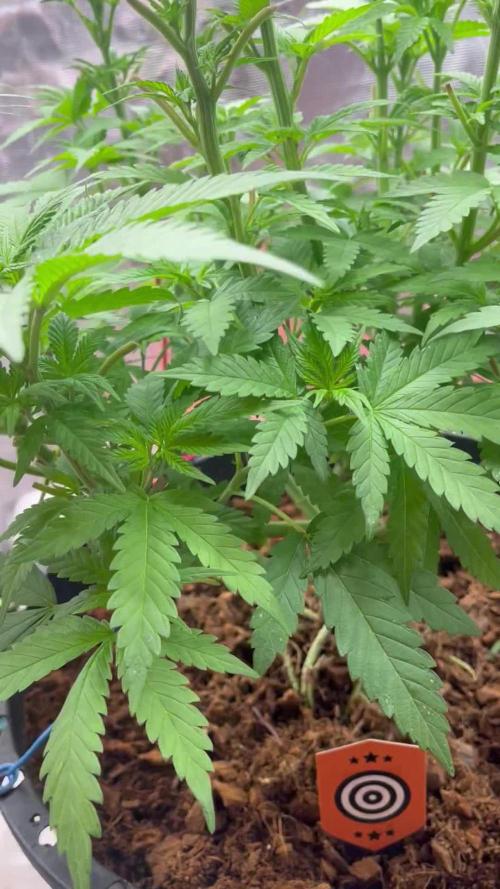
Apple fritter had a nice first week of flower went smooth, put on some height and looking healthy as . Keeping up the defol and tying her down to get the light in on the reg . Same same next week





Likes
19
Share


@adam_pawloski87
Follow
This week went real great, 2 ogreberrys and Bruce banner got trimmed up an jarred ! We chopped the 3 other Ogreberrys on Sunday the 14th , they will hang out to dry for 14 days ! Stay tuned for next update! More trimming an weight an overall photos! Cheers to y’all 😶🌫️💨💨💨💨

Likes
6
Share


@Dutchhobby
Follow
The lst one is making denser and bigger buds .u can see she wants to make me happy..the other one smells very citrus..like it..green one smells bit like original jack her.dont expect high hield.but the people from growers choice say on website that they only produce 30 gr...looking forward to smoke it do

Likes
3
Share


@OrganicPower
Follow
Flower development definitely set back right from the beginning with extreme light intensity reaching 1650 ppfd before corrected. Never fully took off I don’t think. Midway through week 7 started to slowly dial back the intensity from 900 at tops to 650 ppfd. This is a 9.5-10 week strain. Using fish shit to keep things ramped up, also Bokashi Bran and worm casting. Also mixing in Gaia seaweed extract 0-0-17 with the fish shit. Not a whole lot more needed that the soil and top dressings doesn’t already have, if anything at all. I just like to give it that extra kick. I had completely wiped out those pesky fungus gnats and future offspring before flower, but they came back after top dressing and adding more soil. They come in the bag soil, and while I was on holidays for 10 days they came back and I wasn’t on top of the new wave of those dirty bastards. Just about got them cleared out again with the use of nematodes and sticky traps.
Likes
25
Share


@TheeLemon
Follow
Plants taking to the technique very well imo. Particularly the back right one, which has created a almost perfect dome shape.
I did miss a watering and they didn't like that atall. As I usually wait for the soil to be dry before I water again, so if I miss a watering, they get extremely dry. All the leaves dropped down completely vertical, I thought it was all over, but they bounced straight back with the next watering. 🙌
The plant has now been topped twice, once to creat the initial + shape, and again to split each stem of the + into 2. So each plant now has 8 main stems.

Likes
2
Share


@Ninjabuds
Follow
My Bubble OG plants are looking really good. I chopped down the first one a few days ago, and it's almost dried. The other two plants are absolutely covered in buds. The tall one's a monster, totally solid and covered in crystals. And that purple plant is just gorgeous, stacked with buds all the way down. Can't wait to try them all out.
The past week has been awesome for drying my plants. The weather's been perfect – nice and dry, with just enough breeze to keep things moving. I finally got around to chopping down those two big plants I've been meaning to trim. They're almost ready, just need a little more time to dry out completely. I can't wait to see how they turned out.

Likes
12
Share


@Earthling37
Follow
Week 10 Harvest, will update with dry results soon
Use code GROWITGD for a 20% discount over at www.Zamnesia.com
They have a wide variety of smart shop and headshop products, such as cannabis seeds, dried plants and herbs, vaporizers, magic truffles, and mushroom grow kits.


Likes
7
Share


@Messypies
Follow
In the second week the plant has now started to produce its first set of single bladed leafs.

Likes
19
Share


@UncleErrl
Follow
She’s getting really close! I’ve started the flush and trichomes are almost all milky probably around 80% and then just a few ambers. I’m hoping to stretch her out another week but we will see. She is so gorgeous tho and i can not believe it came from bagseed! Check out my other grows, say what’s up and give me a like and a follow! Thanks!

Likes
19
Share


@GoldenWeedGrower
Follow
Legend
Timestamp: 📅
EC - pH: ⚗️
Temp - Hum: 🌡️
Water: 🌊
Food: 🍗
pH Correction: 💧
Actions: 💼
Thoughts: 🧠
Events: 🚀
Media: 🎬
D: DAY, G: GERMINATION, V: VEGETATIVE, B: BLOOMING, R: RIPENING, D: DRYING, C: CURING
________________________________
📅 D08/V01 - 23/11/23
⚗️ EC: 0.5 pH: 6
🌡️ T: 24 °C H: 80%
🍗 Grow A-B
💧
💼
🧠 I'm still hoping, but I'm pessimistic now
🚀
🎬
________________________________
📅 D09/V02 - 24/11/23
⚗️ EC: 1 pH: 6
🌡️ T: 21 °C H: 76%
🌊
🍗
💧
💼 I put a support to hold the big one
🧠
🚀 I talked with Marina from Pure Instinto, she's very kindly and she has already sent to me the seeds not sprouted. Many thanks to Marina for the perfect customer care. 5 stars to Pure Instinto.
🎬
________________________________
📅 D10/V03 - 25/11/23
⚗️ EC: 1 pH: 5.8
🌡️ T: 21 °C H: 76%
🌊
🍗
💧
💼 Humidifier out. Collar on the big one.
🧠 Little weird the leafes of the little one
🚀 With the support the big one is going better
🎬
________________________________
📅 D11/V04 - 26/11/23
⚗️ EC: 1 pH: 5.8
🌡️ T: 21 °C H: 55%
🌊
🍗
💧
💼 I left the support, now she can grow free. Collar on the little one: I named her "Nicole"
🧠 Little weird the little one leafes
🚀
🎬 6 pics of Nicole and the other girl that will be used to produce clones. Added Timelapse video
_______________________________
📅 D12/V05 - 27/11/23
⚗️ EC: 0.9 pH: 5.5
🌡️ T: 21 °C H: 50%
🌊 Added 1L
🍗
💧
💼 Lowered EC
🧠
🚀
🎬
________________________________
📅 D13/V06 - 28/11/23
⚗️ EC: 1 pH: 5.5
🌡️ T: 21 °C H: 50%v
🌊 Added 2L
🍗
💧
💼
🧠 Lowered EC until 0.8
🚀
🎬 Added Timelapse video
________________________________
📅 D14/V07 - 29/11/23
⚗️ EC: 0.8 pH: 5.4
🌡️ T: 23 °C H: 40%
🌊 Added 4L
🍗 CalMag -Grow A-B
💧
💼
🧠
🚀
🎬

Likes
37
Share


@Stork
Follow
Time for drying. Btw drying them like this was a bad idea buds are pressed from one side may be conceded to move them, well I still prefer hanging drying 🤪

Likes
52
Share


@WhiteEdge
Follow
23.04.2024
Continue into week 8
Replaced all filters in the system and cleaned them.
Mixed a new batch with the following components:
20+25ml AN Connoisseur Bloom A+B
Total volume: 34 liters
Electrical Conductivity (EC): 1.0
Target EC for this week: 0.8-1.0. Adjustments will be based on plant observations.
Performed one long misting session (3 minutes).
Environmental Conditions:
Outside temperatures going up, today is raining but this week start higher temps and humidity
Wedding Cheesecake: One girl is gonna finish in this week, Two others probably in next. Frutti terps in this, Two pheno in total from 3 girls'
Tropicana Cookies: Phenomenal strain; One girl is going to finish this week and second couple days after . Two pheno in Tropicana's girls
Purple Lemonade: Tall plants, massive producer, all three girls will be in 9 week provably. Here so far all three girl share same characteristics and bud structure
Beautiful and high odor in the room!
Lighting Parameters: PAR Map: Maximum PPFD is 950, minimum PPFD is 650.
VPD: Ranges from -1.1 to -1.2.
Daytime Temperature (DT): 23-24°C.
Nighttime Temperature (NT): 19-20°C.
Leaf Temperature: 21-22°C.
Light Distance: 45-55 cm from the plants.
CO2 Levels: 700+ ppm.
HLG Scorpion Diablo: Set at 70%, positioned at a 45-55 cm distance.
Girls drink less water, so for this week and till the end of flowering new misting timing's
Daytime: ON for 70 seconds, followed by 30 minutes OFF.
Nighttime: OFF for 70 seconds, followed by 35 minutes OFF.
Nutrient Tank (NT):
pH: Maintained between 5.80 and 6.00. Stable PH, small drifting up and downs
EC: 1.05.
Temperature: 19-21°C
25.04.2024
TrolMaster toys arrived! Purchase new DST2E, DSP2E, DSH2E, AMP3+probes. Another DSH2E and DSP2E ordered to complete this grow box!
Replaced all filters in the system and cleaned them.
Mixed a new batch with the following components:
25+30ml AN Connoisseur Bloom A+B. Total volume: 17 liters
Electrical Conductivity (EC): 1.05
Tomorrow Tropicana Cookies harvest! Put bucket with this girl on separate line for flushing
Wedding Cheesecake also finish soon, probably in next week, Wednesday think...
Purple Lemonade still need full week or more...Exceptional odors
Temps and humidity outside start to raises, hope i will finish this run before Tropical heat
Lighting Parameters: PAR Map: Maximum PPFD is 950, minimum PPFD is 650.
VPD: Ranges from -1.0 to -1.1.
Daytime Temperature (DT): 23-24°C.
Nighttime Temperature (NT): 19-20°C.
Leaf Temperature: 21-22°C.
Light Distance: 45-55 cm from the plants.
CO2 Levels: 700+ ppm.
HLG Scorpion Diablo: Set at 70%, positioned at a 45-55 cm distance.
Daytime: ON for 70 seconds, followed by 30 minutes OFF.
Nighttime: OFF for 70 seconds, followed by 35 minutes OFF.
Nutrient Tank (NT):
pH: Maintained between 5.80 and 5.95. Stable PH...
EC: 1.05.
Temperature: 19-21°C
26.04.2024
Connect TrolMaster components into the Tent-X system. Program DSP2E, Temperature DST2E, Humidity DSH2E, as well as the AMP3 sensor with PH and EC probes, are all in place.
After calibrating the probes, AMP3 module works perfectly! It has a quick response in measurements, is accurate, and I am very happy about the possibility of online monitoring of liquid values.
After day off use i can tell that all readings are very consistent, compared with Milwaukee, totally without all over the place measurements. Perfectly steady and on spot receding!
The Program device runs flawlessly all day, and I hope it has solved all the problems I had with DH48-S timers.
The humidity control operates without errors throughout the day, and it’s nice to see in the app when the module is active.
Raise light as much as i can..50-55cm from canopy. Set off misting time from 30min to 35min @ day time , and from 35min to 45min @ night time
Flush Tropicana Cookies' for one more day, tomorrow harvest, prepared tent for drying with humidifier , ventilation and temperature and humidity controllers
PAR Map: Maximum PPFD is 850, minimum PPFD is 500.
VPD: Ranges from 1.0 to 1.1.
Daytime Temperature (DT): 23-24°C.
Nighttime Temperature (NT): 19-20°C.
Leaf Temperature: 21-22°C.
Light Distance: 45-55 cm from the plants.
CO2 Levels: 700+ ppm.
HLG Scorpion Diablo: Set at 65%, positioned at a 50-55 cm distance.
Daytime: ON for 70 seconds, followed by 35 minutes OFF.
Nighttime: OFF for 70 seconds, followed by 45 minutes OFF.
Nutrient Tank (NT):
pH: Maintained between 5.80 and 5.95. Stable PH...
EC: 1.05.
Temperature: 19-21°C
28.04.2024
First harvest in this run! Tropicana Cookies No1 is a winner.) First Tropicana Cookies is harvested on 89 day from seed. Total 55 days off flowering.
Fast flowering indeed as fast in vegetative stage. Cut this girl in branches and hang upside-down in smaller tent for drying
Set RH @ 55% , temperatures not able to control so they will be something around 20-21 in drying tent
Second Tropicana will be chopped within a couple off days. Checking trichomes with microscopes can tell that one Purple Lemonade is also going to finish in next days
Somme lady's will take full 9 weeks or so..
Lowering light intensity, EC in tank start to raise slowly so i will start to adjust according to condition. Currently 0.85EC is perfect strength i think
PAR Map: Maximum PPFD is 850, minimum PPFD is 550.
VPD: Ranges from - 0.9-1.0
Daytime Temperature (DT): 23-24°C.
Nighttime Temperature (NT): 19-20°C.
Leaf Temperature: 21-22°C.
Light Distance: 45-55 cm from the plants.
CO2 Levels: 700+ ppm.
HLG Scorpion Diablo: Set at 65%, positioned at a 45-55 cm distance.
Daytime: ON for 60 seconds, followed by 30 minutes OFF.
Nighttime: OFF for 60 seconds, followed by 35 minutes OFF.
Nutrient Tank (NT):
pH: Maintained between 5.80 and 5.95. Stable PH...
EC: 0.85.
Temperature: 19-21°C
Week 8 off Flowering in Summary
80 litter off RO water,
120ml+150ml AN connoisseur A+B
45kW electricity in total for light, Pumps and AC Infinity Fans. 42kW for Light + 2kW Dehumidification + AC Infinity ventilation
Week start @ 1.1EC, nutrient strength., week finish with 0,87EC
Tropicana Cookies is first harvested on day 89 from sprouting , week 8 off flowering
Purple Lemonade is on second place with harvest on day 91, last day off 8 week off flowering
PH was stabile and move from 5.70 min to 5,9 max.
Light distance for this week - 50-55cm from tallest top , PPFD levels around 900 in center, trough whole week. Lowest reading 500 @ corner
Temperature are from 20c at start off day to 24.5c max at some points.
Night temps around 19.5-20c. Outside humidity is generally low
This week i have install TrolMaster AMP3 sensor and humidity, temp and program devices
Day RH is moved from 45% to 55% max, at night times drop to 45-48%
Lighting Parameters: PAR Map: Maximum PPFD is 900, minimum PPFD is 650.
VPD: Ranges from -1.0-1.1.
Daytime Temperature (DT): 24.5°C.
Nighttime Temperature (NT): 20°C.
Leaf Temperature: 22°C.
Light Distance: 45-55 cm from the plants.
CO2 Levels: 700+ ppm.
HLG Scorpion Diablo: Set at 65%, positioned at a 45-55 cm distance.
Daytime: ON for 70 seconds, followed by 25 minutes OFF.
Nighttime: OFF for 70 seconds, followed by 35 minutes OFF.
Nutrient Tank (NT):
pH: Maintained between 5.8 and 6.1
EC: 0.87-1,1.
Temperature: 20-21°C
Likes
18
Share


@Borberad
Follow
Hoffe nach den Überraschungen in der letzten Woche verlaüft diese wieder ruhiger. Habe den Leitwert des Drain bei beiden Pflanzen auf ph6 und 2000 microSiemens Ende letzter Wiche reduziert bekommen. Interessanter Weise waren die Leitwerte bei den Pflanzen trotz exakt gleicher Wasser/Düngergabe um den Faktor 2 auseinander. Der ph-wert lag bei beiden bei 4,8 [Warum auch immer]. Hab die Werte durch Spülen mit Leitungswasser und Osmosewassermix mit Leitwert 500 auf die oben beschrieben Werte gebracht und hoffe das die Damen es mir verzeihen und mich trotzdem in 3 Wochen mit reicher und vor allem leckerer Ernte belohnen werden. Gieße jetzt jeden 2Tag, so viel, dass genügend Drain entsteht um die Werte zu kontrollieren. Drain liegt bei Ph ca. 6,0 bei max 2,5mS andernfalls wird mit Osmose oder Leitungswasser (0,8mS und Ph7.2) gegegengehalten. Da sie in Stofftöpfen stehen, ist es hoffentlich nicht so dramatisch etwas zu viel Wasser zu bekommen.
