


Processing
Likes
Comments
Share


@GrowCaCola
Follow
Everything looks really great. Flower has reallt taken hold here at the end of week 5. Ive started my flower hardener (mendocino avalanche) and they really have perked up. Im getting much slower dry out than i woukd like, next time more perlite in my bottom layer for sure. These larger pots (7.5 gallon) really take some dialing in but the plants love them for sure. I habe 6 inches of roots coming out of the bottom of all of them. Ill try to get a picture.


Likes
6
Share


@Floryx
Follow
-getting really tight now
-will install scrog-web to use the space fully
-some leafs still have yellow and brown spots
-think i will fetilize twice a week from now on
-getting a lil cold in the night but therefore humidity is now almost perfect
Thankful for any comment :)

Likes
209
Share


@Rock_n_Roll_Randy
Follow
CHANGED MY EMAIL ADDRESS ON GROW DIARIES AND IT WONT LET ME DO A CONFIRMATION FOR MY NEW EMAIL, SO NOW I CANT LIKE ANYTHING, COMMENT ON ANYTHING OR CHAT. SORRY MY FRIENDS. I HOPE GROW DIARIES TEAM WILL HELP ME OUT SOON🙏🙏🤞🤞
EVERYTHING IS CHOPPED NOW FROM THE:
8X8 GROW TENT WITH THE NEW FC-E6500, FC4800 AND TSW2000 AND THE NEW 5X5 GROW TENT WITH A TSW2000 AND AUTOMATIC EXHAUST FAN WITH CHARCOAL FILTER KIT👍and they were being fed GREEN BUZZ LIQUIDS all organic/vegan fertilizers🤘.
I only pinched the tops on 2 or 3 plants but I defoliated every plant ALOT. it slowed the vertical growth alot but it's exactly what I wanted. I can keep track of the plant sizes, how they grew, how healthy they were, how easy they were to grow and how good the final product is👍 every plant was given the same strength of GREEN BUZZ LIQUIDS and I'm keeping track of which plants were happy with the suggested amounts and which plants seemed to want more or less🤘
I chopped 22 photoperiods at 125 days. I chopped 8 more at 130 days of growing. And the last 13 were chopped at 141 days of growing. I'm impressed with how good my mars hydro gear is. Always gets em nice and frosty and everything stinks alot.
VERY HAPPY WITH GREEN BUZZ LIQUIDS. I've used lots of brands and this is my NEW favorite brand. And with it being vegan/organic, it makes it even better. Joints burn soo clean👍
The girls are loving their 8x8 MARS MANSION and THE 5X5 INLAW SUITE and everything is doing good and looking nice and getting bigger👍 They are all starting to finish now and the bud sacs are swelling and they are all getting nice and frosty and starting to stink ALOT. MARS HYDRO ALWAYS GETS EM FROSTY👍.I AM NEVER DISAPPOINTED With how awesome these lights are🤘. KEEP KILLING IT MARS🤘👏👏
BREEDERS AND SEEDS:
DIVINE SEEDS:
MAZAR, OPIUM, WHITE WIDOW, OG KUSH, PABLO ESCOBAR, DIVINE INDICA.
AUTO WHITE WIDOW
AUTO PABLO ESCOBAR
AUTO WHITE RUSSIAN
AUTO FRACTAL
AUTO MONTREAL
AUTO OPIUM
AUTO KABUL
AUTO MAZAR.
WEEDSEED EXPRESS:
GREEN CRACK, GHOST TRAIN HAZE, LITHIUM OG, CHEESE.
DOCTORS CHOICE:
DC KUSH, AUTO NIAGARA, AUTO ROCK MACHINE.
EXOTIC SEEDS:
HIPPIE BERRY, MALASANA GELATO, EXOTIC ANIMAL.
GENE/MEME SEEDS:
BLACK HELL.
ORIGINAL SENSIBLE SEEDS:
PURPLE PUNCH COOKIES, WEDDING CAKE, PURE KUSH, GORILLA COOKIES.
SWEET SEEDS:
BLACK JACK, GORILLA GIRL, SWEET ZKITTLES.
EMERALD TRIANGLE SEEDS:
GORILLA GLUE, MASTODON KUSH.
SEEDSMAN SEEDS:
BLACK SUGAR, PEYOTE FORUM, PEYOTE WIFI, BADAZZ COOKIES OG, PURPLE GHOST CANDY, STRAWBERRY BANANA GRAPE, L.A. PEYOTE KUSH, PEYOTE WIFI CBD, FUEL DOG, CRITICAL PURPLE KUSH.
AMSTERDAM MARIJUANA SEEDS:
GIRL SCOUT COOKIES EXTREME, GREEN CRACK.
QUEBEC CANNABIS SEEDS:
BRUCE BANNER, GREEN CRACK, QUEBEC CBD 20:1.
I 💚 GROWING MARIJUANA:
SKYWALKER OG, BANANA KUSH, BLUEBERRY CBD.
FOR EVERYTHING MARS HYDRO VISIT:
www.mars-hydro.com
www.marshydroled.ca
PROMO CODE: rocknroll
VISIT THE ALIEXPRESS STORE:
@marshydro_aliexpress
Instagram: @marshydropenny
https://youtube.com/channel/UChU5ZWwNi-DvnO3oWVU3ceA
https://greenbuzzliquids.com/
#greenbuzzliquids
@GreenBuzzLiquids
https://greenbuzzliquids.com/en/shop/
PROMO CODE: rocknroll
https://www.youtube.com/watch?v=8hEqyS1jPpI
https://growdiaries.com/diaries/112437-grow-journal-by-rock-n-roll-randy/week/593118
Thanks for taking the time to read and check out my diary🤜🤛
FC-E6500 LED GROW LIGHT:
FC-E6500 grow light with 3978pcs OSRAM BridgeLux Diodes & Moso Driver, market-leading PPF 2.7 µmol/J, Max 2.5g yield/watt with 30% higher Average PPE, more cost-effective when compared to same style type lights. Only consumes 650W, perfectly cover 5x5ft (personal), 4x4ft (commercial) grow space. Innovative Precise Uniform Lighting-Built-in removable bars interval & dimmability enable the exact & dynamic PPFD control over each of the plant growing stages, FC-E6500 detachable bars deliverSuperior Heat Dissipation: Real Aluminum heatsink together with 6 slim profile passive cooled bars (THINNER & LARGER surface) and detachable Meanwell Driver, create less heat. save 50% hydro than other old grow lights! Driver can be mounted remotely on the side of a grow tent/rack or on an adjacent wall to remove heat from grow space. Full Spectrum UV IR LED: With Yield Max spectrum (660nm Osram enhanced Deep Red,2800k-5000k,730-740nm IR,380-410nm UV LEDs), Average PPFD the FC-E6500 LED grow lamp enables cultivators to produce BIG FAT Dense Buds, perfect for full-cycle hydroponic, soil, grow tent/grow room.
Dimmable Commercial Grow Light: Cost-efficient, easy dimming & daisy chain With a max up to 20 lights, IP65 Waterproof, master light easily controls the rest. Perfect for commercial & home horticulture.
FC4800 LED GROW LIGHT:
GET THE MAX FROM MARS👍: Welcome one of the newest members of the Mars Hydro family🤜🤛🤘. The Mars Hydro FC 4800 480W LED Grow Light can accommodate up to a 4' x 4' area for flowering. It has OVER 2000 LED chips consisting of the best selling Samsung LM301B diodes which has a Luminous Efficacy of: 220 lm/W
0.2 W, 3 V mid power,
Osram 660nm Diodes, Infrared light and UV LIGHT👍. It boasts the incredible efficiency of 2.8 µmol/J, maximum 2.5gram yield per watt with 30% higher Average PPFD. This High-intensity spectrum is beneficial for plants at all stages - from veg to bloom, and creates Big dense Buds👍. achieve 50% higher yields & quality compared with the old lights! Only consumes 480W for 4x4ft personal grows, and 3x3ft for commerical grow. It comes with a dimmer and daisy chain function with a maximum of up to 15 lights, the master light controls the rest👍. Wide 6-bar design offers even & wide canopy coverage and can maximizes your grow space. slim 180° FOLDABLE DESIGN... YES I SAID FOLDABLE🤘🤣 , making it compact and easy to install, it's IP65 WATERPROOF and will give you no worries while growing in a humid environment and makes it a flexible high performance commercial grow light for enormous SUPER FROSTY yields.😛😛😛. MARS GETS EM FROSTY BOYS👍
AWESOME HEAT DISSIPATION: The Low energy consumption FC4800 growing light has 6 passive-cooled bars and an aluminum heat-sink a removable driver you can upgrade later or have it outside your tent. with zero noise you can save up to 50% in your electricity bill compared to HID's or HPS lights!
It also has a removable driver so you can upgrade it in the future or have it outside your grow space for better heat control in your growroom👍
UPGRADED FULL SPECTRUM: Yield Max Spectrum with enhanced red (Top-Bin Samsung 3000k-5000knm, Osram 660nm Deep Red), speed up blooming & fruiting, perfectly suited for full-cycle growing. The FC4800 LED grow lamp was born for Big Buds, perfect for commercial, grow tent, grow room, hydroponics, and all soil grows.👍
THE BEST SAMSUNG DIODES: THE FC4800 has Top Bin genuine Samsung Osram Diodes, combined with remarkable 2.8 µmol/J Efficacy, 30% higher Average PPFD, 50% less energy consumption, to maximize your yields. They give you a TRUSTED 3 years warranty 100% Satisfactory guaranteed!!!
X2 TSW2000 LED GROW LIGHT:
INCREASE YIELD AND CROP QUALITY WITH MARS HYDRO LED GROW LIGHTS: NEWEST SMD LED technology provides the highest PAR/LUMEN output (1122umol@18") and can make you get 30% higher yield compared to OLD blurple led lights. Max 2.5g yield per wattage and achieve maximum quality and quantity, much better than traditional HPS grow systems
LOW ENERGY CONSUMPTION LED GROW LIGHT: Consuming only 300W true output with 684 LEDS! It saves up to 50% energy than other led grow lights. Perfect for 3.5x3.5ft bloom stage, 4x4ft veg stage. Over 90% light energy can be absorbed by plants, it will have higher intensity in a MARS HYDRO grow tent with diamond design mylar, or by crossing over using multiple TSW2000
HIGH EFFICIENCY FULL SPECTRUM INDOOR GROW: 3000K 5000K and IR 660nm 760nm RED, makes it close to natural light, highly engineered to provide improved growing performance for plants at all stages of growing, rapid plant response from seed to flower; Uniform and wide-beam light distribution for your plant's optimal growth
Likes
6
Share


@GreenForce
Follow
Very happy with harvest , in more three weeks I will give my feedback about terpenes , etc.


Likes
7
Share

@DogDoctorOfficial
Follow
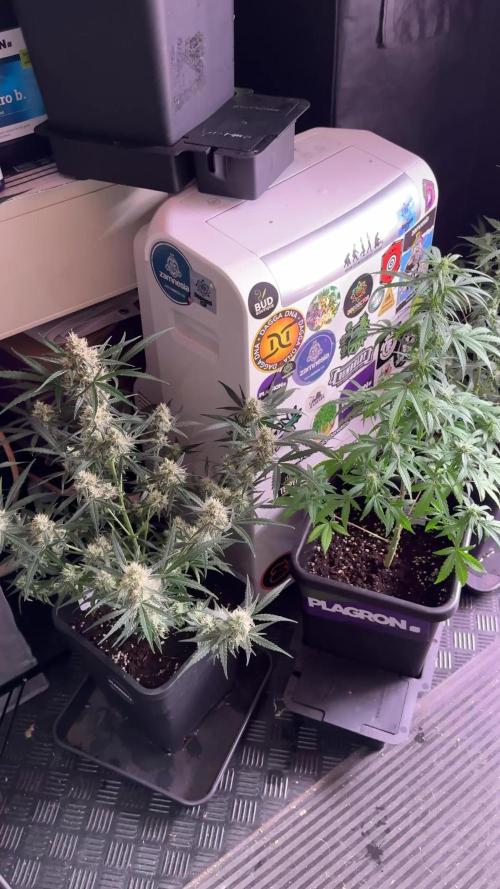
💎 Black Diamond Auto by Zamnesia – Pheno B | Week 3 Flower
The Quiet Sister Is Starting to Shine
Not every plant needs to be the biggest in the room to deserve attention.
Sometimes the more interesting story belongs to the one quietly developing in the background, steadily building her structure while her sister is busy taking every photon she can find.
That is exactly where Black Diamond Auto Pheno B finds herself this week.
Her sister, Pheno A, continues to be the more explosive phenotype of the two, pushing larger and more dominant flower clusters and naturally demanding attention whenever I open the tent.
Pheno B?
Well...
She's a little more shy. 😄
But I'm pretty sure she's still walking around the room looking for those extra photons.
Unfortunately for her, Pheno A seems to have already collected most of them.
And yet, when I stop and actually look at Pheno B, there is a lot to admire.
She may not be producing the same oversized colas as her sister, but she is developing into a beautiful, balanced plant with exceptionally healthy foliage, excellent flower distribution, and a very elegant structure.
This is exactly why I love documenting individual phenotypes.
Same genetics.
Same environment.
Same nutrition.
Same lighting.
Same irrigation.
Same training philosophy.
Two completely different personalities.
And Pheno B is beginning to show us hers.
🌱 12/12 From Seed
Like every plant in this project, Pheno B has been grown using my favourite technique:
12/12 From Seed.
From the moment she emerged from the soil, she has lived under a flowering light schedule without an extended vegetative period.
No topping.
No high-stress training.
No aggressive manipulation.
Just gentle Low Stress Training, leaf tucking, observation, and allowing the genetics to decide how the plant wants to develop.
And this phenotype is making a very convincing argument for that approach.
Her architecture has remained upright and elegant, with flower sites developing progressively along the branches rather than forming one massive dominant structure.
She isn't trying to become the biggest girl in the room.
She's simply becoming her own girl.
And I really like that.
🌿 Environment
Another week of stability inside the flowering room gives these plants exactly what they need: consistency.
🌡️ Day Temperature: 29°C
🌙 Night Temperature: 25°C
💧 Relative Humidity: 60%
🥤 Nutrient Solution Temperature: 21°C
🌱 Root Zone Temperature: 21°C
☀️ Light Schedule: 12/12
🌬️ CO₂: 636 ppm
💦 Watering: 1.3 L per plant / 24h
? Pot Size: 15 L
📏 Plant Height: approximately 160 cm
The root zone remains stable at 21°C, while the nutrient solution is also maintained around 21°C.
This kind of environmental consistency is something I value enormously.
The plants don't need to spend their energy adapting to constant changes.
They can simply grow.
And that's exactly what Pheno B is doing.
🌿 Training & Canopy Management
The training philosophy remains unchanged.
Gentle LST continues to guide the branches outward, while leaf tucking is used whenever necessary to open developing flower sites.
There is still no defoliation.
The fan leaves remain healthy, green, and highly active, so I see no reason to remove them simply for the sake of creating a cleaner-looking plant.
Those leaves are working.
They're capturing light.
They're producing energy.
And Pheno B still has plenty of flowering ahead of her.
So for now, I prefer to let her keep every healthy solar panel she has.
Sometimes the best training decision is knowing when not to interfere.
🌾 Feeding Program
The flowering nutrition program continues supporting the transition from stretch into increasingly active flower production.
Current feeding includes:
• Plagron Terra Bloom – 2.2 ml/L
• Plagron Power Buds – 1 ml/L
• Plagron Green Sensation – 1 ml/L
• Plagron Sugar Royal – 1 ml/L
• Plagron pH Plus – 0.03 ml/L
• Plagron Lemon Kick – 0.03 ml/L
Current solution strength is around 2 mS/cm, with the irrigation maintained at approximately 1.3 litres per plant per 24 hours.
And visually?
She's loving it.
The foliage remains a beautiful, deep green without showing obvious signs of excess or deficiency.
No dramatic corrections are necessary.
No reason to chase numbers simply because we can.
The plant is telling us that she's comfortable.
So once again, the best decision is simply to stay the course.
💎 Phenotype Spotlight – The Quiet Sister
This is where Pheno B really deserves her moment.
At approximately 160 cm, she has developed into a tall, elegant plant with a very different expression from her sister.
The colas may not be quite as large or aggressive as Pheno A's, but there is something incredibly attractive about the way Pheno B is building her flowers.
The plant is covered in developing sites.
The branches remain nicely spaced.
The flowers are stacking progressively along the internodes.
And the entire plant has that beautiful, healthy green appearance that makes you stop and look twice.
Her slender leaf fingers continue to stand out as one of her most interesting characteristics.
For a heavily indica-dominant Black Diamond Auto, this particular phenotype continues expressing a surprisingly elegant, narrow-leaf appearance.
It's another reminder that genetics are never quite as simple as a percentage written on a seed description.
You can grow two plants from the same genetic line, place them in the exact same environment, and still watch them tell completely different stories.
Pheno A is the loud sister.
Pheno B is the quiet one.
But quiet doesn't mean uninteresting.
Far from it.
🌸 Flower Development
This is probably the most exciting part of this week's update.
The flowers are becoming much more defined now.
The early framework of individual pistil clusters is beginning to transform into recognizable buds, and the calyxes are progressively stacking along the flowering branches.
The pistils are still predominantly fresh and white, although a few are already beginning to change.
The flowers are also carrying an increasingly visible layer of resin, especially around the sugar leaves and developing calyxes.
It's still far too early to make any serious predictions about the final level of frost or aroma.
But the first signs are definitely there.
And sometimes that's all you need.
A little sparkle.
A little promise.
A hint of what might be waiting several weeks from now.
💡 The Photon Hunt Continues
One of the funniest differences between these two sisters is how they seem to approach the light.
Pheno A?
She simply takes it.
Pheno B?
She looks like she's still searching for more.
😂
With her more open and elongated structure, she seems almost determined to explore every available pocket of light inside the room.
But there is a problem.
Her sister is already standing there.
Taking it all.
Pheno A continues producing those larger, more dominant colas, while Pheno B is developing a greater number of beautifully distributed flowering sites.
And honestly, I don't think that's a bad thing at all.
Different architecture.
Different flower distribution.
Different potential.
That's exactly what makes a phenotype hunt interesting.
🌿 Welcoming Lumiflora
The introduction of the Lumiflora under-canopy lighting system is also becoming increasingly interesting as flowering progresses.
The goal is simple:
Complement the overhead lighting by bringing additional usable light into areas of the canopy that naturally receive less intensity.
Pheno B's more open structure makes her particularly interesting to watch under this setup.
Rather than trying to predict exactly what the additional light will accomplish, I'm choosing the approach I always prefer:
Document it. Observe it. Compare it.
Then let the harvest tell us the truth.
🔭 Looking Ahead
Over the coming week, I expect the transition toward heavier flower production to become increasingly obvious.
The remaining stretch should continue slowing down, while the developing flowers begin putting more emphasis on calyx expansion and stacking.
Pheno B may never produce the same massive cola structure as her sister.
And that's perfectly fine.
Because she's building something different.
She's becoming a tall, elegant plant covered in beautifully distributed flowers, with healthy dark-green foliage and an increasingly visible resin presence.
Maybe Pheno A is the sister everyone notices first.
But Pheno B?
She's the one who makes you stop when you finally take the time to look.
And I think she's going to surprise us.
💚 Final Thoughts
There is something incredibly rewarding about watching two sisters grow side by side.
One is more explosive.
One is more reserved.
One seems determined to conquer the entire tent.
The other appears to be quietly wandering around asking where all the photons went.
😂💎
But both are expressing the same genetics in completely different ways.
And that's the beauty of phenotype hunting.
Pheno B doesn't need to beat her sister.
She simply needs to become the best version of herself.
Right now, she's on a beautiful path to doing exactly that.
Her foliage is lush.
Her structure is elegant.
Her flowers are developing beautifully.
Her resin production is beginning to announce itself.
And she's slowly transforming from the quieter sister into a plant that deserves her own spotlight.
So this week, the spotlight belongs to her.
Black Diamond Auto Pheno B.
The quiet sister.
The photon hunter.
And maybe...
just maybe...
the one hiding a beautiful surprise underneath all that green.
A huge thank you once again to Zamnesia for providing these Black Diamond Auto genetics, to Plagron for supporting this journey with their nutrient line, and to Lumiflora for joining the project with their under-canopy lighting system.
And, as always, thank you to the amazing GrowDiaries community for following along, sharing your knowledge, and enjoying this journey with me.
Two sisters.
One genetic line.
Two completely different stories.
And we're still only getting started.
Until next week...
Growers love and Happy Growing! 🌱💚

Likes
17
Share


@eldruida_lamota
Follow
Que hay familia, actualizo la tercera semana de crecimiento de estas Runtz F1 automáticas de Zamnesia.
Vemos que las 5 están en perfectas condiciones, tienen un buen color y van creciendo a buen ritmo.
Empiezo por supuesto abonando una pequeña cantidad de la gama Agrobeta.
La temperatura está 25 grados y la humedad anda entorno al 50%. Riego cada 48 horas y suelo pulverizar con agua para aumentar un poco la humedad ambiental.
Hasta aquí es todo estas próximas semanas veremos cómo van avanzando.
Agrobeta:
https://www.agrobeta.com/agrobetatiendaonline/36-abonos-canamo
Mars hydro:
Code discount: EL420
https://www.mars-hydro.com/
Os comento que tengo un descuento y para que compréis en la web de Zamnesia de un 20%, el código es ZAMMIGD2023
The discount 20% and the code is ZAMMIGD2023
https://www.zamnesia.com/
Hasta aquí es todo, buenos humos 💨💨💨.
Likes
2
Share


@KeemBboomin
Follow
Everything is not as accurate as I would like to say, but I wanted you guys to see what I can do

Likes
10
Share


@PolezGardn
Follow
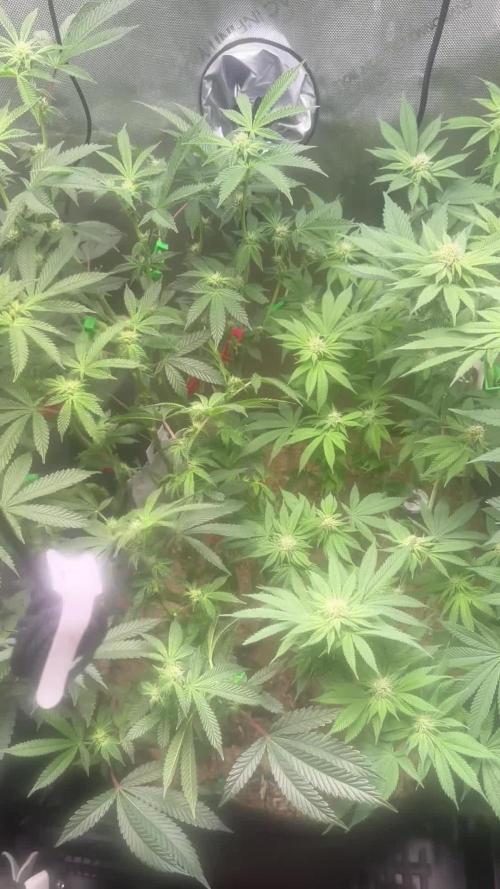
week two flower everything looks healthy :D
today i defoliated them
i watered them with 1.5l every 48h
the light i use was set to 80% and it hangs 80cm away from the tops


Likes
46
Share


@DogDoctorOfficial
Follow
Hey there, green warriors and cannabis lovers! 🌱🔥 We’re now in week 3 of the flowering stage in our Runtz Battle, and things are really starting to heat up! This week brought an interesting twist as we had to make a strategic adjustment to ensure all our plants are on the same page. Let’s dive into the details and explore how things are progressing.
Week 3 Flowering Progress 🌿✨
Our Runtz plants continue to flourish, and here’s what’s been happening:
• Bud Development 🌸:
• The buds are filling out beautifully, with each day bringing more growth and resin production. The plants are stacking up nicely, with dense flowers forming at multiple sites. The F1 strain remains compact and uniform, showcasing tight, resin-packed bud sites.
• Environmental Stability 🌡️:
• We’re maintaining consistent environmental conditions with a room temperature of 30.3°C, water temperature at 18°C, and humidity at 51%. These stable conditions are key to supporting strong bud growth and overall plant health.
Switching to 12/12: The Light Adjustment 🌟💡
This week, we made a crucial adjustment to our lighting schedule:
• Why the Change? 🌞🌙:
• One of our plants hadn’t yet started flowering, so we made the decision to switch all plants to a 12/12 light cycle. This change is essential to trigger flowering in the plant that was lagging, ensuring it joins the rest of the group in producing those beautiful buds.
• How 12/12 Helps 🌿💡:
• The 12/12 light cycle mimics the natural change in daylight hours as summer transitions to fall, signaling to the plants that it’s time to focus on reproduction (flowering). This shift is a classic technique to ensure all plants in the garden synchronize their flowering process. The reduction in light hours encourages the production of flowering hormones, which will now help the plant that was behind to catch up and start forming buds.
• Impact on the Runtz Plants 🌸:
• The Runtz strains that were already flowering won’t be negatively affected by this change. In fact, the consistent 12/12 cycle can help to further boost their flowering intensity, ensuring that the buds continue to develop fully and evenly.
Nutrient and Care Strategy 🌱💧
Our focus on proper nutrition and environmental care remains a top priority:
• Watering and Nutrients 💧:
• With the Autopots still running smoothly, we’re continuing with Regulator and CaMg Boost in the reservoir. The nutrient-rich soil and organic inputs are keeping the plants well-fed, and the consistent hydration is ensuring steady growth and flower development.
• Lighting and Environmental Control 🌡️:
• The Lumatek Zeus 465 Compact Pro continues to provide powerful, full-spectrum light that supports the flowering process. With the 12/12 schedule in place, the plants are receiving the perfect balance of light and dark, critical for flower development.
• The TrolMaster Hydro-X controller remains essential in managing these conditions, keeping everything dialed in for optimal plant health.
Looking Ahead 🌟🌿
As we move deeper into flowering, the anticipation only grows. The 12/12 light cycle is now in full effect, ensuring all our plants are flowering together. The Runtz strains are on track to produce a stunning harvest, with each plant showcasing its unique strengths.
Stay tuned for more updates as we continue this green journey. The next few weeks are going to be thrilling as we watch these buds fatten up and reach their full potential! 🌟💚
#RuntzBattle #Week3Flower #CannabisCommunity #FloweringStage #LightCycle #12and12 #GreenMagic #LumatekZeus #TrolMasterHydroX #GrowStrong #StayPositive
Germination method 🌱 @thecannakan
Genetics Runtz F1 @zam.nesia Runtz auto @kannabiaglobal
Nutrition
@aptusholland 🌿
@aptus_world 🌎
@aptus_es 🌍
@aptusbrasil 🌱
@aptus_thailand 🌿
@aptus_portugal 🌳
@aptususa_official 🍀
@aptusplanttechnz 🌺
@aptusplanttechaus 🍃
Ambient controls🎮
@trolmaster.eu @trolmaster.eu.support @trolmaster.support @trolmaster.agro
Soil @promix_growers_eur @promix_cannabis
LED - @lumatekeu
Watering- @autopot_usa @autopot_global
Love and attention- @dogdoctorofficial
#aptus #aptusplanttech #aptusgang #aptusfamily #aptustrueplantscience #inbalancewithnature #trolmaster #trolmastereurope #trolmastersecrets #Autopots #RuntzBattle #KannabiaVsZamnesia #GreenJoy
As always thank you all for stopping by, for the love and for it all , this journey of mine wold just not be the same without you guys, the love and support is very much appreciated and i fell honored and so joyful with you all in my life 🙏
With true love comes happiness 💚🙏 Always believe in your self and always do things expecting nothing and with an open heart , be a giver and the universe will give back to you in ways you could not even imagine so 💚
More info and complete updates from all my adventures can be found ⬆️ link in the profile description ⬆️
Friendly reminder all you see here is pure research and for educational purposes only
💚Growers Love To you All 💚

Likes
5
Share


@Mr_nugs_lover_David
Follow
Amo este fenotipo tanto como el otro esta genetica es magistral,cogollos compactos,pegajosos,super duros un aroma muy rico y agradable,no se puede pedir mas,este es el último riego que realizo con nutrientes a partir de ahora comienzo a lavar las raices por tanto solo regaré con agua con su ph bien ajustado a 6,5 para que ka planta se vaya alimentando de todo de lo que quede y eliminar cualquier resto que pueda quedar que empeora la calidad a la hora de fumar,exquisitez de 00 seed bank!

Likes
25
Share


@Mr_ZAF_Budz
Follow
Hello Canna Fam,
So it is the end of week 3 of 12/12 and the ladies are starting to fill out nicely.


Processing
Likes
22
Share

@eldruida_lamota
Follow
Que hay familia, de nuevo hemos acabado con la segunda semana de crecimiento y llevan un gran ritmo, su crecimiento se va viendo día tras día, están bastante sanas el alimento lo están aceptando muy bien.
No es nada nuevo es la primera variedad que cultive en indoor allá para el 2010, con lo cual siempre que e podido e puesto algunas critical en mi armario.
.
Vamos con parámetros, ya está segunda semana baje un poco la humedad pero poco , anda entre 60/70% la temperatura está entre 22,24 grados, el led es increíble , y como siempre el ph , ya que es de lo más importante,está en 5,8/6,0.
.
AgroBeta:
0,8 ml x L Piramid , vía radicular.
0,6 ml x L Growth black line , vía radicular.
0,1 gr x L Cancerbero , vía radicular.
0,1 ml x L Tucán , vía radicular.
0,1 ml x L Flash Root , vía radicular.
0,4 ml x L Great Green , vía foliar.
0,05 ml x L Gold Joker, vía radicular.
.
así concluye esta segunda semana y estoy bastante contento con el resultado hasta ahora, buenos humos fumetillas.


Processing
Likes
17
Share


@kcartel
Follow
at the moment, in the stage of drying, I was stunned by the fact that this stem is like a stone, it is unbearably hard and dense, it took me a while to cut it off at the root. Faced with a small problem associated with low temperature in the box, after the light stopped working, I didn’t even think about it, at the moment the temperature in the box is 13 to 16 degrees Celsius, I believe that this is a very low temperature I can guess that the drying and curing stage will take a long time, and as far as I was put on course, the mold probability is also possible. doses in irrigation, and in the last three days I didn’t irrigate at all, having dried one lump with a quick method, I was impressed with a smoky and very pungent smell, in general I want to say that the variety is excellent and I advise the Haze family! Easy to grow and very resistant to diseases, since this is my first experience I don’t have much to compare with, well, as for me, my first row turns out quite well, I plan to upgrade in the future, by the way, the harvest itself was spent deep at night since I read that do it best at night before turning on the light.


