The Grow Awards 2026 🏆 












Likes
Comments
Share
@Victusaa
Follow
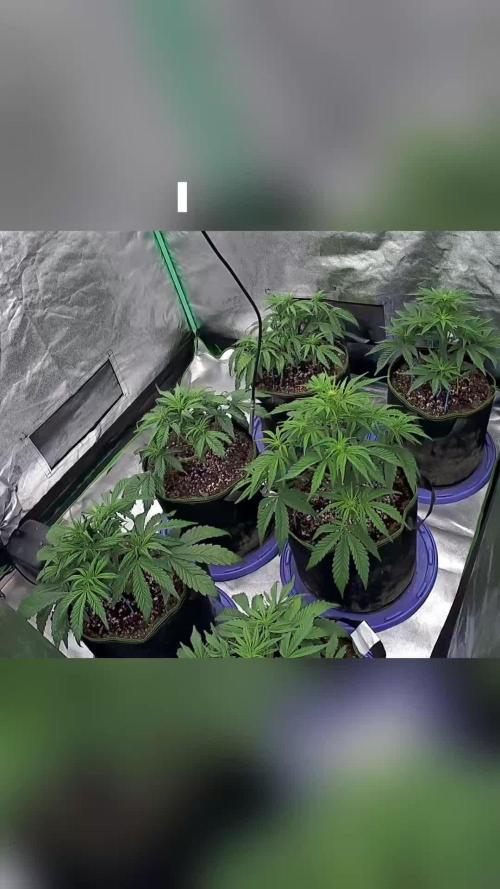
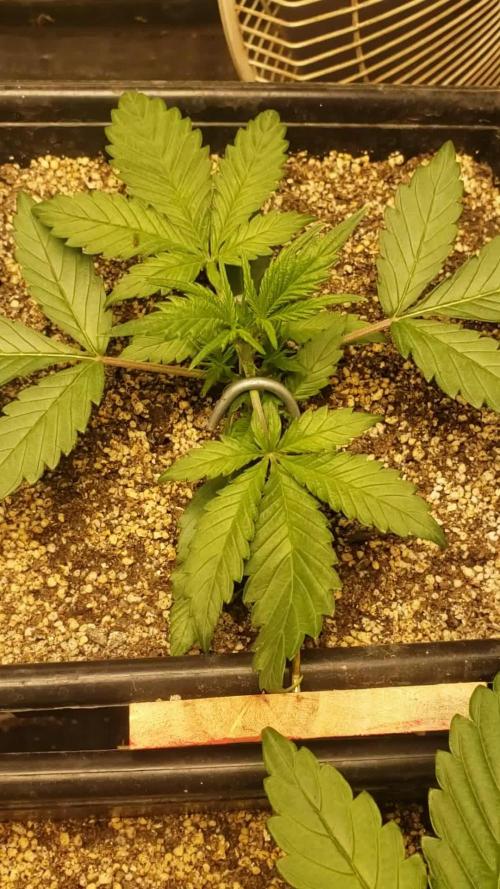
200g total, it wasn't my best batch but it was something.
Sorry for the late update, I was busy with getting high 😎
Processing
Likes
6
Share
@Jabberwolky
Follow
The Ladies are going great so far this week the buds are comming in really nice. the smell is wonderfull
Kind soil as a base media and roots organic on the top.
only di water
Its really nice not having to worry about the ppms and ph of water and this n that ...
so far this grow is just want i need
nite time temp dropped below 58 a clp times on me .. i hope it done hurt the outcome to much

Likes
71
Share
@DogDoctorOfficial
Follow
Greetings, fellow growers! Week 5 has brought us to a pivotal moment in our Anesia pheno hunt journey as we embark on the transformative process of topping our thriving beauties. Let's delve into the world of topping and explore the magic behind this essential technique.
Topping is a fundamental aspect of plant training, involving the removal of the apical meristem, or main growth tip, to encourage lateral growth and bushier plant development. By snipping away the topmost growth, we redirect the plant's energy towards the lower branches, stimulating new growth and increasing overall yield potential. It's like giving our plants a strategic haircut, with the promise of fuller, more abundant foliage in return.
But topping isn't just about increasing yield – it's also about promoting a more balanced and uniform canopy, ensuring that light penetration is maximized and no precious photons go to waste. With each well-placed snip, we're sculpting our plants into lush green masterpieces, ready to flourish under the glow of our Future of Grow LED lights.
Speaking of lights, maintaining optimal environmental conditions is key to our plants' success. That's why we've raised our TDS to 420 and adjusted our pH to a precise 5.8 using our trusty Blue Lab Guardian monitor. This advanced monitoring system allows us to keep a close eye on nutrient levels and pH fluctuations, ensuring that our plants receive the perfect balance of nutrients for optimal growth and health. It's like having a guardian angel watching over our garden, guiding us towards horticultural excellence.
And let's not forget the satisfying sight of water droplets glistening on freshly topped plants. These tiny droplets are more than just a visual treat – they serve as a gentle reminder of our care and attention to detail, ensuring that our plants receive the hydration they need to recover and thrive. It's a moment of zen in the midst of our bustling garden, a testament to the beauty of nature and the joys of cultivation.
With each passing week, our Anesia pheno hunt grows more exciting, and I can't wait to see what the future holds. Stay tuned for more updates, more growth, and more green goodness as we continue to cultivate joy and growth together in our Green Oasis!
Genetics Red Banana Pudding = RBP
Apricot Oreoz = AO
Zoomiez = Z
Future#1 = F
https://anesiaseeds.com/
Plant nutrition - Aptus Holland - https://aptus-holland.com
LED Photons - Future of Grow - https://www.thefuturofgrow.com/
Controls - Trol Master - https://www.trolmaster.eu/
Watering - Autopot - https://autopot.co.uk/
Tent - Mars Hydro - https://marshydro.eu/
Love and attention - Me, myself and i
As always thank you all for stopping by, for the love and for it all , this journey of mine wold just not be the same without you guys, the love and support is very much appreciated and i fell honored and blessed with you all in my life, With true love comes happiness. Always believe in your self and always do things expecting nothing and with an open heart , be a giver and the universe will give back to you in ways you could not even imagine so
More info, the ocasional give-away and exclusive updates from all my adventures can be found - links in the profile description
Friendly reminder all you see here is pure research and for educational purposes only
Growers Love To you All 💚

Likes
15
Share
@caliboyyy22
Follow
Sorry y’all I don’t have the true weight for this granddaddy here wife went to town on it lol


Likes
27
Share
@pifflestikkz
Follow
Day 50
Friday 17/05/24
I attempted to try mainline her, failed 😅
But I think I'm learning the fundamentals of this method.
She seems to have exploded since I did it. The tops seem to have a surge of energy.
Seeing sex all over plant now😁 female first tell signs are awesome to see 😍
Feed today.
Day 52
Day 9 Flower
19/05/24 - Sunday.
Water today with calmag- Finally seeing her slap them female pistils out, and turn a nice vibrant green on her tops indicating the pre flower/flower stage.
Since trying the mainlining and lollipopping, she really has thrown out awesome new growth development.
Continually pulling tops back down via lst to encourage an even canopy.
Day 56
Day 13 flower
23/05/24
Light water with calmag
Wow, this one loves pre flower stress. Her stretch is starting, I've stopped plucking and snipping till required now.
The tops are throwing so many bud sites out it's incredible.
Likes
53
Share
@cheetah844
Follow
32 Site Bubble Cloner:
Amnesia Lemon 2/5 (2 swollen look like roots will start)
Blackberry Gum 3/5 (2 swollen look like roots will start)
Gelato 4/5 (1 swollen look like roots will start)
Gold Leaf 4/5 (0 swollen look like roots will start)
Sherbert 4/6 (1 swollen look like roots will start)
Zkittlez 5/6 (1 swollen look like roots will start)
*Amnesia Lemon, Blackberry Gum & Sherbet strains have the fewest with roots. Amnesia Lemon are kinda droopy & don't have many with roots either. Blackberry Gum many really don't have roots only a couple with roots barely starting but have healthy looking leaves. Sherbert always looks sad/droopy leaves but has roots but not tons of roots.*
*Gold Leaf's were the first to show roots & many have nice long root systems. Gelato's has nice root systems as well. Zkittlez was a little slower to start but picking up now with some roots.*
6 Site Bubble Cloner: *still too early to tell - only 2 days old*
Gold Leaf /2
Sherbert /2
Zkittlez /2
*There are several clones that have full root systems that can be transplanted into soil*
Likes
2
Share
@BudVision
Follow
Everything’s nice and steady – stable conditions, happy plants . La Bomba, however, decided to keep things interesting… she had some “birth pains” and even went through a tiny surgery 😀 (seed shell removal). That’s why she’s still the little sister of the bunch, but no worries.
Next week all the girls are moving into their final homes, and I’m really excited to see how each of them takes off.
Thanks for stopping by, and catch you all in the next update


Likes
3
Share


Likes
8
Share
@Growingistherapy
Follow
Only Compost tea mix
Worm,cow,fish, rabbit, chicken,
two pieces deployed late

Likes
9
Share
@THCReich
Follow
I realised that the roots were too cold and put Styrofoam under the pots. In addition, a plant has a positive mutation. A branch has become 2.



Likes
Comments
Share
@mojogrow
Follow
It was my first grow and I really screwed it up a lot, but it resisted all my beginner mistakes, pests, stress, being without irrigation, irrigation without measuring PH, revegetation, etc.
I love her, really, in love with this strain.
It is a genetics with a very relaxing effect, recommended for those who cannot sleep at night.
shoutout for trimix, very good prices for begginers> https://www.trimix-pro.com/
Processing
Likes
3
Share
@Canadian
Follow
Day 71 from seed the plant seems to be coming along nicely and flowering stretch has come to a end . I cut some of the lower branches that were carrying some flower because there was no way they were going to develop on time with the higher branches because of lack of light penetration at that lower level and since nothing well happened to those lower branches she can start concentrating her effort and energy on to the higher buds.
Thank you for reading I will continue to update have a happy grow.

Likes
24
Share
@Daweed83
Follow
Girls look super healthy ! can’t wait for them to grow bigger buds but overall they looking great to me ! 🙏

Likes
27
Share
@Dunk_Junk
Follow
Well that was her last week! 😎
I think she's done well in her 10 litre fabric pot. 😍
Will be harvested within 24h.

Likes
23
Share
@Piorkeed
Follow
Tenth week of flowering started.
I went out a week and at my return I discovered that the #2 is sick. The plant doesn't drink anymore and a lot of branches are falling down with limp leaves. I think that the missing defoliation, the height and the poor ventilation caused that. At the moment I removed her from the tent moving her out to the balcony.
I did a huge defoliation to the #1 and a massive LST in order to low the height of buds that reached the lamp that is at its maximum height.
So far I gave to the plant only water.
I think that the cause of plant disease is the high humidity level (at least 90%...). Tomorrow I will buy a dehumidifier hoping that this will help the remaining plant.
D63: changed the water into the pot. Added 15 ml grow, 30ml micro and 40ml bloom. [email protected] EC 1.2
D64: after the defoliation the plant seems to be healthy. The humidity into the tent is still high, tomorrow I will install the dehumidifier.
D65: I've put a dehumidifier into the tent, I've added 3 liters of tap water to the pot; the plant is drinking a lot so I think that she is fine. The plants produces a lot of fat buds, so I've checked the trichomes for the first time, they are clear for the majority.
D67: added 5 liters of tap water to the pot. The plant is drinking a lot
Likes
37
Share
@Hawkbo
Follow
Ok folks, gunna be one armed for another 6 weeks so I'm just the conductor the true heroes will go unseen. Everything is alive atleast, had a scare yesterday as things got so dried out everything went limp but an hour after feed turned back around. Noticed some yellowing and other coloring coming thru on alot of leaves so I bumped ppm up a little bit this last feed. They dont look like they have a deficiency, it's weird, they look beautiful but with a premature fade almost. I really like Green Buzz' line up/regiment I just have to dial it in which isnt easy since it's a multi strain crop and various size plants. It's very easy to use and makes me feel good knowing it's not poison. Did a minor leaf strip around the tent just to make things fit better. I'll copy and paste this to the diaries for the rest of the crop per usual but go into a little more detail on each plant individually. Pics and vids were taken on day 28 of flower. I'm trying to keep up with these as best I can from start to finish, the flip date was 6.10.19, today is 7.9.19.
I fucking love this girl she might be my favorite. Reason why is because I know these nugs are going to swell, and the 1st pheno was such a good smoke but the buds didnt fill in like i hoped so this is redemption. Already has a skunky orange scent when Terps get on your fingers. This one also has dramatic coloring in the foliage must be due to lack of N I assume (could be wrong). My lady gets the photo credit I didnt do shit only video.

Likes
2
Share
@The_Doctor_Green
Follow
Hola a todos!.
Las imágenes corresponden al periodo 28/08 al 03/09.
Esta semana he regado con agua 400ml ph 6.3
Y le agregue un poco de top crop (top veg) 100ml solamente.
La empecé a doblar en las ramas principales veremos que pasa.
Likes
35
Share
@DudeGrowsWeed
Follow
Hello everybody!
Here we are a week later and I’m starting to see some nice improvements and developments. This week I fed all plants pretty heavily with Recharge and Dolomite Lime (and a little Cal Mag). The plants seemed to like it, the color is really coming back to a nice shade of green instead of the pale yellow’ish green and I'm starting to see nice bud sites developing! I’m going back to my normal nutrient routine this week and think it should be fairly smooth sailing from here.
One negative is I seem to have inherited some bugs from my wife. She asked me to put one of her outdoor plants in the room so it would survive the winter, well it looks like that plant was infested with bugs. The little f’ers had a feast on some of the leaves. My wife gave me the OK to toss the plant, so with the plant removed it should be fairly easy to irradiate any remaining bugs with some sticky paper.
I’d like to say thank you to all who answered my question regarding recommend reading on cannabis. I’m selecting the answer for the Grow Bible by Greg Green because I was actually unaware of that one. I’m familiar with the Cervantes and Rosenthal versions but not Greg Greens. I’ll be ordering that book after I receive and finish “True Living Organics” by The Rev (should be here tomorrow).
This week I have a new question for my GD friends…. CO2? I have not been using CO2 but EVERY book I read recommends using it, I’m not prepared to go out and buy a CO2 tank, regulator, etc… at this time. Has anyone ever used one of those CO2 bags? Or do you have any DIY CO2 solutions you can recommend?
I’m looking forward to your answers on CO2.
I’ll leave you this week with another interesting excerpt from “Marijuana Cultivation Reconsidered: The Science and Techniques For Huge Indoor Yields” by Read Spear:
“I prefer to use high-pressure sodium lamps. With the exception of LED's, HPS lamps are the most efficient source of light you can buy, both in terms of light output and light spectrum. Having read nearly every book on the subject of growing pot, I feel that their authors tend to overemphasize the importance of light spectrum. You do not need to alternate between metal halides (for growth) and sodiums (for flowering). That is an oversimplification of the plant's light requirements. You may do this if you like--it certainly won't hurt--but I firmly believe that the gains are just not great enough to justify the cost of the extra MH lamp.”
-Read Spear

Likes
40
Share
@Krisis
Follow
03/03/25. It’s flip time! Day 1 flower let’s go
This runtz definitely gotta have this name because of the candy. Nothin small about this girl. She’s a wild beast.
I did use some lst clips on her to move her branches out a bit because her leaves are just huge.. and sticking all over everywhere.
I didn’t keep following up with more lst clips as I’ve done with some others this grow. I kinda like her being all wild and doing what she wants.
If she could talk she’d say -can’t be tamed!
Okay, okay..so she’s skipping watering day today. Her soil is a bit damp still today, so I will wait until tomorrow. If we’re going based off last watering, she will be drinking a bit over a gallon, with run off. I was going to skip watering because I normally feed every other watering, but with as crazy as she’s going, and the fact that she’ll be putting in some extra work now, I’ll be feeding her again.
I’ve kind of been showcasing plant #2 most recently just because I feel she is probably more standard in appearance.
Plant #1 (Mellow Yellow) was born a pale color and through her life she’s always had yellow new growth, and as she pushed out more growth, the leaves would green, and the next new growth would come out yellow.
It’s a crazy sight to see now that the whole top looks yellow. I initially thought something was wrong with her, or her nutrition, but she’s just always been this way, and has grown perfectly fine.
I guess we will see if she seems to have any problems in flower. Should be interesting.
Oh, and, her feedings/waterings are the same as her sisters.
Let’s get ready to see some beautiful buds!

Likes
5
Share
@Ensign420
Follow
Greetings fellow growers 🖖 and welcome to my first grow ever. This adventure actually started several months ago when I decided to stop buying flower from dispensaries and just grow my own bud. How hard can it be!?
This is actually my second seed of this strain. The first bean sadly died due to over watering (sorry girl, RIP). I was literally watering the cube to the point where water was dripping from the bottom, then heavily sprayed the humidity dome and tray with the vents completely closed. Everyday. Multiple times. I never let the dome or try dry out. So after about 8 days of not sprouting, there was a funky smell of rot. So that was that.
Later I learned that rockwool retains a lot of water and can easily drown seeds. So a wet/dry cycle is best for rockwool germination.
So even after hours of researching and digging through forums and tutorial videos, I was still under prepared for this journey. Did not consider how delicate the germination phase is. Oh well. Lesson learned. Reset and try again!
I hope everyone is safe and stoned during this corona crisis. Just like everyone else in the world, I want this pandemic to be over with. But in the meantime, let's grow some weed! 🖖
[START OF WEEK 01]
Day 01 - Monday - 08/03/20 - Total Days: 001
-----------------------------------
- [0830]: Light Schedule: 24Hrs/0
--- Soaked cube in 5.5 PH water for 10 min. Did not shake water out.
--- NO NUTES! Only PH'd down to control the PH levels.
--- Did not use the default hole (way too deep).
--- Flipped cube upside down and made a shallow hole for the seed (less than 0.25" deep).
--- Placed seed in and pinched hole close. No additional water added.
--- Sprayed the tray and dome with straight water (5.5 PH).
--- Vents are cracked opened a for ventilation (about 1/4 opened each).
--- Distance between the light and tray was 53"
--- AC was set to 80 °F
--- Exhaust fan was set to 86 °F
--- Room average temp was at 85 °F
--- Dome humidity was at 85-99% when sprayed.
--- Allowing to completely dry before respraying.
- [2200]: Dome and tray were completely dry! Sprayed only tray and dome with more water.
Day 02 - Tuesday - 08/04/20 - Total Days: 002
-----------------------------------
- [0845]: Sprayed dome and tray in the morning. Everything was dry.
--- Hoping for the best!
- [2130]: Everything was dry again, so sprayed dome and tray at night along with a light spray on the cube.
Day 03 - Wednesday - 08/05/20 - Total Days: 003
-----------------------------------
- [0830]: Everything was dry again. Resprayed dome and tray. Slightly sprayed cube.
- [2125]: Hooo damn!! She popped! Am little stub is visible! Resprayed dome and tray again.
--- Still going 24/0 for lights.
- [+0033]: Just checked up on her and I swear she grew a bit taller! Getting excited!
Day 04 - Thursday - 08/06/20 - Total Days: 004
-----------------------------------
- [0845]: Wow! Went from a little stub to fully sprouted overnight! Everything was pretty dry again so resprayed dome and tray.
- [2200]: Tap root is visible! Over 1" long too! Just resprayed dome and tray again.
-- Going to prep for hydroton transplant tomorrow!
Day 05 - Friday - 08/07/20 - Total Days: 005
-----------------------------------
- [0930]: She keeps growing!
-- Added a bit of CalMag to the spray bottle (8 drops to 650ml of distilled water). Resprayed dome and tray. Water was at a 5.4 PH with 141 PPM.
- [1045]: Prepped the bubble bucket with 4.5gal of water. Water is high enough to reach about 0.25" above the bottom of the net pot.
--- Added 3 drops of Superthrive
--- Added 3.5ml of CaliMagic
--- Added 2ml Hydroguard
--- Then PH'd down to 5.6
--- Solution Strengh: 120 PPM
--- Water chiller is set to 20 °C
- [1100]: Transplant time!
--- Filled the net basket 1/3 with hydroton. When placed in the bucket, air bubbles are not visible, but are slightly below the surface (slight digging will reveal the water/bubbles below).
--- Removed plastic on rockwool cube and placed in basket, then filled around and covered with hydroton. Making sure to block any light from passing through the net pot and into the nutrient solution.
--- Covered with a half-bottle dome sprayed with the CalMag water from earlier.
--- Hoping for the best!
- [1300]: Raised Bucket 5" higher. Now light distance is 48" to top of bucket.
- [1820]: Lowered tent exhaust temp to 76 °F
--- Lowered AC to 75 °F
--- Raised bucket even higher so light distance is 30" to top of bucket.
- [2300]: Looking good!
--- Sprayed dome and surrounding hydroton with more CalMag water.
--- Attached timer to light! So new 18 Hrs On/6 Hrs Off light schedule.
--- Lights On: [1600] (4pm)
--- Lights Off: [+1000] (10am the next day)
--- Decided to go with lights on during the evening/night and off during the later mornings/afternoon (the hottest part of the day) to see if temps can be controlled better.
--- Please survive girl!
Day 06 - Saturday - 08/08/20 - Total Days: 006
-----------------------------------
- [0800]: Everything was dry. Resprayed hydroton and dome.
- [2000]: Here first night cycle seemed to go well! Get'n taller!
--- Dry again. Removed the dome.
--- PH went up to 6.5 so PH'd down to 5.7
--- Ran the top feed drip ring for a bout a minute to wet the hydroton and rockwool with the nutient solution.
---Too scared to leave the top feed on 24hrs (I don't want over water her and cause dampening-off). Will let dry before re-watering.
- [2100]: After closer inspection, I think she's looking a bit yellow.
--- Decided to add a bit of grow nutes to the bubbler solution.
--- Added 2ml of Sensi Grow A
--- Added 2ml of Sensi Grow B
--- Solution strength after adding more nutes: 176 PPM
--- PH went up to 6
--- I hope that the extra chelating properties of the 'PH Perfect' solution is enough of a buffer for proper nutrient uptake.
Day 07 - Sunday - 08/09/20 - Total Days: 007
-----------------------------------
- [0800]: Water dropped a bit (mostly due to evaporation) so solution strength was at 190.
--- Checked PH again. Was still at 6, so PH'd down to 5.4
--- Ran the top feed for a minute to wet the hydroton a bit.
- [0915]: Since she's looking perky but still a bit yellow. So decided to up the nutrient concentration even more before lights out.
--- Added 2ml more of Sensi Grow A
--- Added 2ml more of Sensi Grow B
--- Solution strength after adding more nutes: 199 PPM
--- PH went up to 5.8
- [1700]: Checked nutrients.
--- PH: 5.9
--- Solution strength: 202 PPM
--- Added 4ml of Voodoo Juice
--- Added 4ml of B-52
--- PH after adding more nutes: 5.9
--- Solution strength after adding more nutes: 238 PPM
- [2130]: Decided to make a new foliar spray to address the continued yellowing.
--- Started with 500ml of distilled water.
--- Added 3 drops of CaliMagic
--- Added 3 drops of Sensi Grow A
--- Added 3 drops of Sensi Grow B
--- Added 3 drops of B-52
--- Added 1 drop of Superthrive
--- Solution strength: 164 PPM
--- PH was at 5.9 and did not adjust.
--- Gave her one spray.
--- Also sprayed the surrounding hydroton.
[END OF WEEK 01]
