


Likes
Comments
Share


@TheCannaProphet
Follow
~Humboldt Seed Co. AMHERST SOUR DIESEL~
???Secret origins???
The mystery of the unknown🧐
Amherst Sour Diesel is a cannabis seed whose origins are kept a secret. This wonderful vigorous marijuana plant will reward your work with large, elongated, compact buds complemented by a rich complex aroma. Indoors it performs best with a short growth and outdoors, in temperate, warm, dry and Mediterranean climates or in a greenhouse. A marijuana plant that boasts balanced properties.
-Top-notch flavor and effect
-Idyllic feelings to treat the senses
-The aroma of this cannabis hybrid is a pleasant combination of ripe fruit and oil. The flavor is rich and complex, with hints of tropical fruit, oil and exotic wood.
-The effect, typically Sativa, is euphoric, uplifting, powerful and long-lasting. A cannabis strain Sativa lovers will know how to appreciate.
________________________________________________________________________________________________________________________________________________________________________________________________________________________________________________________________________________________________________________________________________________________________________________________________________________________________________________________
Tech Specs:
~Amherst Sour Diesel~
Feminized
Genotype: 20% Indica / 80% Sativa
Cross: Chemdawg x Amherst Super Skunk
Suitable for: Indoors and outdoors
Indoor flowering: 65-70 days
Indoor yield: 400-600 g/m2
Outdoor harvest time: Late October
Outdoor yield: 2000-3000 g/plant
Outdoor height: 2-3 m
THC: 27%
CBD: 0.1%
________________________________________________________________________________________________________________________________________________________________________________________________________________________________________________________________________________________________________________________________________________________________________________________________________________________________________________________
THE SETUP:
~Planted into Jiffy Peat Pellets that were hydrated with de-chlorinated water with SuperThrive added then ph'd to 6.0 @ 80℉
~Grown 100% organic in 10g fabric pots with Mother Earth 70/30 Coco/Perlite medium amended with 2tbs/g of Down To Earth 4-4-4 / 2 cups/g of Earthworm Castings / 1tbs/g of Dr. Earth Flower Girl 3-9-4, 1tbs/g of Dr. Earth Bat Guano, 3/4 cup of Down To Earth Azomite and 1 tsp/g Down To Earth Fish Bone Meal.
~24hr light cycle during Germination / 19/5 light cycle for Vegetation and 12/12 for Flower
~Straight water ph'd @ 6.2-6.8 when needed and weekly Compost Tea's.
________________________________________________________________________________________________________________________________________________________________________________________________________________________________________________________________________________________________________________________________________________________________________________________________________________________________________________________
WEEKLY UPDATES:
9/20- 💥BOOM!💥 Week Six of flower is here and my girl's in high gear, stacking her flowers and pumping out trichomes!
Today I watered her with 1.5g de-chlorinated water with 5ml/g of Botanicare CalMag+ added, then ph'd to 6.2 @ 72℉. I turned her pot and plucked a couple of yellow shade leaves...the basic daily maintenance.
9/22- I didn't water her yesterday as she looked great and was 'praying' hard. Today she was given 1.5g of de-chlorinated water which was ph'd to 6.2 @ 72℉ which I gave her through her drip pan (bottom chuggin) and I also gave her pot a turn.
She continues to have a great deep green color that is beautifully contrasted by the snow white trichomes piling up on them! Her height has not really increased but she is extremely bushy with tight node spacing which will necessitate plucking some leaves to keep the light penetrating into her canopy.
9/24- We're getting close to wrapping up Week Five of flower in a couple of days and she'll be past the half-way point with the most exciting weeks yet to come!
I didn't water yesterday and today I went ahead and Top Dressed her with 2 tbsp/g Dr. Earth Flower Girl 3-9-4, 1 tbsp/g Dr. Earth Gold Premium 4-4-4, 1/2 cup Down To Earth Bio-Fish, 1/3 cup Down To Earth High Phosphorus Bat Guano and 2 cups of Worm Castings.
I watered in the Top Dress with 1.5g of de-chlorinated water which was ph'd to 6.2 @ 72℉ and let her enjoy her meal! 😜
9/26- After her heavy watering on the 24th I didn't water yesterday and when I checked her today at 'lights on' and she still had some weight to her pot and her leaves were praying hard so I held off on watering today and will hit her tomorrow with her usual 0.75g watering.
~Thanks for stopping in! Things should be getting a lot more interesting in the coming weeks...Stay lifted and be Blessed! 😎🙏~

Likes
3
Share


@Watts_Growing_On
Follow
Last week we started with LST and this week we will continue but also do topping.One week closer to the goal 💚


Likes
11
Share


@TechDCo
Follow
Happy Xmas 😊
No better day to lay them down!
"We're Off to the races" 🏁
Greyhound's at the ready!
"I feel like; we're in for a speed run Martina"
•HydroSol Grow + H202•
#Peanut Butter OGKB - Sensible Seeds
#Peyote Wi-Fi CBD - Seedsman.
#Monkey SlapZ - PreyBird Farms.
#The Future - DC Seeds
"Sprayed SEEDS with weak 3% solution of hydrogen peroxide foodgrade. Placed on mineral wool inside of a glass food container in a propagandist! 😉 on a heat mat at 24c.
26/12/2024
Peanut Butter OGKB has sprouted her tap!
27/12/2024
Peyote Wi-Fi CBD (PW) is ready for the light as well with The Future (TF)
28/11/2024
All have germinated!
Peeled back the shell 🐚 on peanut butter OGKB (PB) being a good Santa's little helper.
Will introduce HydroSol water soluble feed in the morning. They should have enough in there tap root until morning.
"Its only been 3days since I laid them down 👀 and it's been 1 day from seed sprouting tap root" mathematical genius i am.
Midday: Apllied a very weak feed of HydroSol at ratio of 1ml/L.
DLI: 20 (c) Little above average!
Lights Off!
Sprayed propagator with HP 6% all round avoiding direct touch!
About week 3 will up the dose spray to 12% "avoiding direct touch" this is bleach strength.
But hopefully being introduced early will stop the micro-organisms "ever" building up in the plants cells ever.
May have to do a laboratory grow next to get the results i want that are projected in my minds eye! If the hydrogen keeps reacting with micro organisms; it could by the very definition rip atoms and form mutations of its own kind!
Hence these are "Experiments" Because i think every grow is an experiment (leave it to the professionals: I hear you!
Would; could; should but the world is full of lies and deceptions; from knowledge; technology; history and Morden-day! Well Morden day academics 'to me. Personally is all bs!
Take it as it is, just my opinions and a cloud of thought sprawling and spiraling out over these digital diaries.
I hwar ya too. A huge still box would be needed or properly designing a room for a labradory grow.
I don't know! I would need zero interferences from "out of space" where the nasties come from in our world. The space between me and you; consists of everything we know in that "gap" for we are forever shinning from our own island! Hard to explain.
Lights Off:
147watts wall draw with DLI at 20!
Light Shedule: 3-9pm
Monkey SlapZ (MS) hasnt cracked her shell yet. I may have to do it tomorrow morning (may die otherwise)
29/11/2024
Lights On!
(MS removed shell and accidently snapped its tap toot)
PW tap as got snap accidentally as well as I re perisione it. This happened before and MS recovered from the snapped tap root. I made the MS joke 😃
Anyways...let it be!
30/12/2024
I'll update agai😗n next week: i think this talk for the first few days has set the pace for myself!
Enter.the.Void.2009.DC.1080p.BluRay.DDP5.1.x265.10bit-GalaxyRG265
Just finshed watching it! for real i thought it was me! mint film to watch stoned
31/11/2024
Increased light: 293watts DLi 35
***Happy New Years 2025***
How did you smoke yaself in? Me; diy chemistry kit lol
"All the best brothers" ❤️ 💪
Keep it strong!
I can only hope this diary can bring HydroSol some limes 🍋 🙏 in the sunshine 🌞 water soluble feed. Zero residues "allegedly".
All I have heard is positive things about HydroSol water soluble feed.
I had a thot, " The HP 12% i am using for cosmetic reasons is basically "water" with an extra molecule.
H202 is basically water and is can be soluble with HydroSol feed.
I'll explain more on from my pervious grow diary by Segwaying in and out of this diary with quotations from It and continuing on.
02/01/2025
Dimmed light: 188 25DLi
Will update next week, these puppies need to stretch their roots. Nothing much happening!
Loads happening really. You know what i mean lol
" My little rusties i call them"
Free radicals have caused the leafs to have a faint ginger tint when it stole the Oxygen Atom, which released free radicals. Not to worry this will boost growth in the next two week.
04/01/2025
All seems okay. Monkey SlapZ lost a leaf 🍃 😳 but looks like shes recovering fine.
I introduced HydroSol way too early. Never mind you live and learn. They are all back in the propagator and I put some fresh seeds down to germinate/same strains.
11/01/2024
All fresh new seeds have sprouted.
MS is showing new baby leafs 🍃 recovering from losing a leaf and top. Fresh baby growth is now showing!
13/01/2024
MS n TF has sprouted! Old MS recovered
God burnt down Mel Gibsons house for making passion of the christ lol
18/01/2025
Its felt like a long start; experimenting with H202.
The 2nd load of seeds i introduced h202 2days after tap root sprouted and HydroSol on day 3.
This seems to of worked
20/01/2024
21/01/2024
TF and MS repotted into 5L jerry starter cans with 1.25ml/l
22/01/2024
All looks okay, will slowly 🐌 increase lights over the next week as they creep out of germination.
PW hasn't germinated yet, ive placed another PW seed down!
Midday Check ✔️
DLI: 28
Watts: 270
Canopy distance est: 35-40inches
MS is 3days old after sprouting! Maybe it's just me but she looks older and her colours and texture looks different!
Could it be the #HydroSol #H202?
Who knows? Will have to replicate the protocols to verify these results on indeed because of HydroSol + H202 (1.5ml/l)
23/07/2025
I put down to germinate Freaky Pablo TerpYz and Magic MarkerxZZTOP
26/07/2025
Lights
Rapid Growth has slowed 🐌 down.
#The HydroSol feed 6.5ml/5litre of water for germinating....1ml of 12% HP.
I think this is the ratio I am after.
Being water soluble feed it looks like just water ; well it is 98% water i suppose.
26/07/2025
Midday
It seems the HydroSol is working perfectly. It's been a rough sturdy journey to start off with but I've found a steady road to the right ratios.
1ml 12%HP to 5L 6.5ml HydroSol Feed for germinating.
Vegging I will slowly increase to double the amount as she 👀 sees fit.
It seems the HydroSol is working perfectly. It's been a rough sturdy journey to start off with but I've found a steady road to the right ratios.
1ml 12%HP to 5L 6.5ml HydroSol Feed for germinating.
Vegging I will slowly increase to double the amount as she 👀 sees fit.
Vegging begins tomorrow. It's been 2wks since TF & MS sprouted from seed.
Others are still germinating in the propagator.
2 in this tent.
1 in loft tent
1 in Sativa tent (loft)
thats the plan.
Midday: light increased to 310watts
DLi (c): 32

Likes
5
Share

@CalGonJim
Follow
9/15 12AM MONDAY!!! THEY ARE ALL DOING GREAT!!! VERY HEAVY AMINOS YESTERDAY, NO DAMAGE.
9/15 11:24PM. In plant cells, glutathione S-transferases (GSTs) act as transporters, facilitating the movement of anthocyanins from the endoplasmic reticulum (ER) to the vacuole for storage, though their exact mechanism is still being studied. The synthesis of glutathione (GSH) itself occurs in the cytosol of mammalian cells through two ATP-requiring enzymatic steps, while anthocyanins are synthesized via a separate phenylpropanoid pathway
9/15 11:42PM glutathione metabolism glutathione S-transferases plantsThinkingKicking off 5 searchesLooking at 71 sitesPutting it all together In plants, glutathione S-transferases (GSTs) are a diverse family of enzymes integral to glutathione (GSH) metabolism, primarily functioning in detoxification and stress response. The core of this process involves GSTs catalyzing the conjugation of the tripeptide GSH with various toxic compounds, or xenobiotics, making them less harmful and easier to sequester or transport. Glutathione (GSH) metabolism in plants GSH metabolism is a tightly regulated process that maintains cellular redox balance and protects against stress. Biosynthesis: GSH is synthesized in two adenosine triphosphate (ATP)-dependent steps:(gamma )-Glutamylcysteine synthetase (GSH1) joins L-glutamate and L-cysteine to form (gamma )-glutamylcysteine. In Arabidopsis, this enzyme is located exclusively in the chloroplasts.Glutathione synthetase (GSH2) adds glycine to (gamma )-glutamylcysteine to produce GSH. This enzyme is found in both the cytosol and the chloroplasts.Oxidation and reduction: GSH exists in two forms: a reduced monomer (GSH) and an oxidized disulfide dimer (GSSG).Oxidation: In the process of scavenging reactive oxygen species (ROS), GSH is oxidized to GSSG.Reduction: Glutathione reductase (GR) uses NADPH to reduce GSSG back into active GSH, which is essential for maintaining a high GSH-to-GSSG ratio inside the cell.Degradation: Glutathione can be degraded in the cytosol, apoplast, and vacuoles by (gamma )-glutamyltransferases (GGTs) and other peptidases, allowing for recycling of its amino acid components.Transport and compartmentalization: While synthesis occurs in the chloroplasts and cytosol, transporters move GSH and its conjugates throughout the cell, including to the mitochondria, peroxisomes, and vacuoles. Functions of glutathione S-transferases (GSTs) GSTs are a large, ancient gene family with diverse roles that extend beyond detoxification. The primary functions involving GSH are: Detoxification of xenobiotics and heavy metals: GSTs catalyze the conjugation of the thiol group of GSH to a wide range of electrophilic and hydrophobic substrates, including herbicides, pesticides, and heavy metals. The resulting GSH-conjugates are then recognized by ATP-binding cassette (ABC) transporters and sequestered in the vacuole, reducing their cellular toxicity.Protection from oxidative stress: Stress conditions like drought, salinity, and high light increase levels of ROS, which cause lipid peroxidation. 🚨Some GST isoforms have glutathione peroxidase (GPOX) activity, using GSH to reduce toxic lipid hydroperoxides to less damaging alcohols, thereby protecting cell membranes.Defense against pathogens: During pathogen attacks, GST activity increases to detoxify microbial toxins and secondary defense-related compounds. This helps to bolster the plant's resistance response.Metabolism of endogenous compounds: GSTs play roles beyond immediate stress response by participating in the normal metabolic processes of plants. Examples include:Hormone transport: Some GSTs act as binding proteins (ligandins) that transport plant hormones like auxins within the cell.Metabolite transport: Specific GSTs facilitate the transport of important compounds like flavonoids and anthocyanin pigments into the vacuole.Tyrosine degradation: The zeta GST class (GSTZ) catalyzes a critical step in the breakdown of the amino acid tyrosine.Redox signaling: By influencing the GSH/GSSG ratio and interacting with plant hormones, GSTs can regulate cellular signaling pathways that control growth and stress response. 🚨GSTs and plant stress response The expression of many GST genes is highly inducible by various environmental and endogenous cues, making them key players in a plant's ability to adapt to adverse conditions. Abiotic stress: Drought, salinity, heavy metals, and extreme temperatures all trigger increased GST expression, which helps plants manage resulting oxidative damage. Overexpression of specific GST genes has been shown to enhance stress tolerance in transgenic plants.Herbicide resistance: The ability of crops and weeds to detoxify herbicides through GST-catalyzed conjugation is a well-studied example of GSTs in stress adaptation. Herbicide safeners, chemical agents that protect crops from herbicide injury, work by boosting the activity of these GST enzymes.Developmental processes: Studies have linked the expression of certain GST genes to specific stages of plant development, such as fruit ripening, root and stem development, and flower formation. ""
9/16 12:32am
AI Overview
In plants, phenylalanine is the precursor for anthocyanin synthesis, a process that involves a multistep pathway in which glutathione (GSH) plays a critical role in the transport of the final pigment to the cell vacuole.
Phenylalanine initiates anthocyanin synthesis
The biosynthesis of anthocyanins begins with the amino acid phenylalanine, which is produced via the shikimate pathway. The conversion process, known as the phenylpropanoid pathway, involves a series of enzymatic reactions:
1. Phenylalanine ammonia-lyase (PAL): This enzyme catalyzes the first committed step of the pathway, converting L-phenylalanine into trans-cinnamic acid.
2. Downstream enzymatic reactions: A series of additional enzymes, such as chalcone synthase and chalcone isomerase, convert the intermediate compounds into unstable anthocyanidins.
3. Glycosylation: Glycosyltransferase enzymes stabilize the anthocyanidins by adding sugar molecules, creating the final, stable anthocyanin pigments.
4.
Glutathione is crucial for anthocyanin transport
After synthesis, glutathione is essential for transporting anthocyanins for storage.
* Glutathione S-transferases (GSTs): These enzymes bind to the newly formed anthocyanins in the cytoplasm. This binding is a key step that facilitates the transport of the anthocyanin-GST complex across the tonoplast (the vacuolar membrane) and into the vacuole.
* Vacuolar storage: Once inside the vacuole, the anthocyanins accumulate and provide color to plant parts, such as flowers, fruits, and leaves.
* Catalytic role: Recent research has also found that certain GSTs have a catalytic role in anthocyanin synthesis. They can catalyze a dehydration step to form specific anthocyanidins, significantly boosting production in engineered systems.
*
The process in summary
The synthesis and accumulation of anthocyanins involve a coordinated process of multiple steps:
1. Production from phenylalanine: The amino acid phenylalanine enters the phenylpropanoid pathway, where enzymes convert it into the basic flavonoid structures.
2. Formation of anthocyanidins: Further enzymatic modifications produce the colored but unstable anthocyanidins.
3. Stabilization and transport with glutathione: These anthocyanidins are stabilized by glycosylation and then bound by GSTs (which use glutathione). This binding enables their transport into the vacuole for storage and visible pigmentation.
9/15 12:46AM https://pmc.ncbi.nlm.nih.gov/articles/PMC7238016/
9/16 1:30AM BKO is looking great!!!
Conclusion
The “butter frosting” resin on Cookie Apple F1, healthy yellow-green fusiform, and Blueberry KO’s pigmented cotyledons show your anthocyanin-glutathione-phenylalanine strategy is working—phenylalanine drives synthesis, glutathione ensures transport. Tweak amino acids to 100–150 mg/L to reduce tip burn.
9/16 3:34am
9/16 4:31AM Anthocyanin glutathione synthesis phenylalanine proline tmg powder relating current project:
* Phenylalanine is a precursor: Phenylalanine is an amino acid and the starting point for the phenylpropanoid pathway in plants.
* Anthocyanin synthesis: This pathway creates various secondary metabolites, including the flavonoid pigments known as anthocyanins, which give plants their red, purple, and blue colors.
* Pathway activation: Multiple enzymes, such as phenylalanine ammonia-lyase (PAL), catalyze the conversion of phenylalanine into the building blocks for anthocyanin.
*
Anthocyanin and glutathione synthesis
* Glutathione S-transferase (GST): This enzyme is crucial for synthesizing anthocyanins in plants. It transports anthocyanins into the cell's vacuole for storage.
* Glutathione (GSH) production: Anthocyanins can promote glutathione synthesis in certain cells. For instance, the anthocyanin cyanidin-3-O-β-glucoside (C3G) has been shown to increase the expression of glutamate-cysteine ligase (Gclc), a key enzyme in GSH synthesis.
* Antioxidant effect: By upregulating GSH production, anthocyanins contribute to the antioxidant defense system, protecting cells from oxidative stress.
*
Proline and glutathione synthesis
* Shared precursor: In some organisms, the synthesis pathways for proline and glutathione share a precursor molecule called γ-glutamyl phosphate.
* Alternative pathway: Research on bacteria and yeast has revealed an alternative, trace pathway where γ-glutamyl phosphate from the proline synthesis pathway can be diverted to produce the glutathione precursor γ-glutamylcysteine.
* Oxidative stress response: Studies in mouse oocytes show that supplementing with proline upregulates genes related to glutathione synthesis (Gclc and Gclm), increases glutathione levels, and reduces oxidative stress.
*
TMG powder, methylation, and homocysteine
* Methyl donor: Trimethylglycine (TMG), or betaine, is a potent methyl donor, meaning it provides methyl groups needed for various biochemical processes in the body, including the methylation cycle.
* Homocysteine regulation: One of TMG's primary functions is to convert the amino acid homocysteine into methionine. This helps regulate homocysteine levels, which is important for cardiovascular health.
* TMG and proline interaction: In plants and some organisms, TMG and proline act as compatible solutes or osmoprotectants, helping cells stabilize against osmotic stress like drought or salinity. However, in human biology, TMG mainly functions through methylation, while proline is involved in different metabolic and antioxidant roles.
*
How they all relate
The listed components are connected through several overlapping metabolic and regulatory pathways:
* Anthocyanin synthesis starts with phenylalanine.
* Anthocyanins can promote glutathione synthesis via upregulation of key enzymes like Gclc.
* Glutathione synthesis can be influenced by the proline synthesis pathway, as they share an intermediate in some contexts.
* TMG powder supports the methylation cycle, which helps regulate homocysteine levels. While TMG and proline serve similar protective roles in some organisms, their primary human metabolic functions differ, with TMG focusing on methylation and proline having distinct roles in antioxidant response and metabolism
9/17 217am Die Hard Christmas Grow
9/18, 11:34 AM. I ordered some square saucers that were cartoonishly too small but they fit inside the AC infinity germination kit and they fit with the Bud Cups perfectly really nice so it’s not a total loss.
9/18 11:45AM mix. Foliar Spray, the rest of the mix ec 0.46
Mixed up Aminos first and separate and use 16 oz for foliar spray. Then mixed up:
Root: 1 mL/L Connoisseur A & B GROW,
.2 mL/L CaliMagic,
.2 mL/L Purpinator.
Setria Glutathione: 150 mg/L(Brand: Emerald 250mg capsule.)
TMG: 150 mg/L = (Brand Nutricost)
Phenylalanine: 150 mg/L (Brand Nutricost)
Proline: 150 mg/L (Brand Nutricost).
9/18 228PM AI Overview
Glutathione influences plant colors by regulating the accumulation of pigmented compounds, primarily anthocyanins. The tripeptide accomplishes this through its role in transporting pigments within plant cells and in protecting against environmental stresses like UV radiation that can cause oxidative damage.
Transporting pigments into plant cell vacuoles
Glutathione works with a class of enzymes called Glutathione S-transferases (GSTs) to transport pigments like anthocyanins into the vacuole for storage.
Anthocyanin transport: In plants with pigmented tissues, such as purple grapes or red flowers, glutathione-conjugated pigments are transported by GSTs across the tonoplast membrane into the vacuole. This process is crucial for the stable accumulation of pigments.
Genetic manipulation: Research shows that manipulating specific GST genes can alter a plant's pigmentation. For instance, silencing a particular GST gene in purple grape hyacinths caused their petal color to shift to a lighter shade of purple. Similarly, defective GST genes in carnations resulted in pale-colored flowers.
Protecting against UV light and stress
Glutathione helps regulate plant pigmentation in response to environmental factors, especially UV-B radiation.
Activating flavonoid production: When plants are exposed to UV light, a surge in glutathione triggers the expression of genes involved in producing flavonoids. Flavonoids, including anthocyanins, can act as protective sunscreens for the plant, and their increased synthesis and accumulation can alter visible coloration.
Balancing oxidative stress: Intense UV-B radiation increases reactive oxygen species (ROS) in plants, which can cause oxidative damage. Glutathione is a master antioxidant that helps detoxify these ROS, preventing cellular damage that can affect a plant's pigment-producing mechanisms.
Indirectly influencing plant colors
By regulating cellular redox status and interacting with other molecules, glutathione also affects pigment expression in more indirect ways.
The xanthophyll cycle: As part of a plant's antioxidant system, glutathione helps maintain the reduced state of other protective antioxidants like tocopherol and zeaxanthin. Zeaxanthin is a carotenoid pigment involved in the xanthophyll cycle, which helps dissipate excess light energy.
Redox signaling: The balance between reduced glutathione (GSH) and oxidized glutathione (GSSG) is a key cellular signal for stress response. A shift in this ratio during environmental stress can influence the production of secondary metabolites like pigments, allowing the plant to adapt. "
9/19 1:41AM AI Overview
The key difference is that anthocyanins are the sugar-containing form (glycosides) of pigments, while anthocyanidins are the sugar-free form (aglycones). Anthocyanidins are the foundational molecules, and when a sugar molecule attaches to them, they become anthocyanins, which are more stable and water-soluble, making them the forms found naturally in plants, such as berries and purple vegetables.
Anthocyanidin (Aglycone)
Structure: The basic, sugar-free molecule of the anthocyanin structure.
Location: Not found freely in nature but is the core component that is then glycosylated.
Properties: Color changes with pH, being visible in acidic conditions but colorless in basic conditions.
Examples: Cyanidin, delphinidin, pelargonidin, peonidin, petunidin, and malvidin.
Anthocyanin (Glycoside)
Structure: Consists of an anthocyanidin linked to one or more sugar molecules.
Location: Found in the vacuoles of plant cells.
Properties: Water-soluble and are the pigments responsible for the red, purple, and blue colors in plants.
Function: The sugar attached provides stability, allowing for accumulation in plants and providing antioxidant properties.
Examples: Cyanidin-3-glucoside and other derivatives like acylated anthocyanins. "
9/19 2:43AM I also saw a good mans immediate accent into Heaven, that perspective matters too. no less angry about it though.
9/19 10AM Heavy Amino spray 250mg each in 1L of Setria Glutathione and Phenylalanine
9/19 10:10PM The sons and daughters of americas real terror organization carried out the last horror show, and the one before that and before that. It's not a foreign country, it's always the anti white anti human black sheets and badges that did this.
9/19 10:43PM AI Overview
Phenylalanine and glutathione contribute to plant colors through different biochemical pathways
. Phenylalanine is a precursor for the pigments themselves, primarily anthocyanins, while glutathione is involved in the transport and stabilization of these pigments within the plant cell.
Phenylalanine: The pigment precursor
The source of aromatic compounds: Phenylalanine is an aromatic amino acid and the starting compound for the phenylpropanoid pathway in plants. This pathway produces a vast number of secondary metabolites, including anthocyanins, which give many plants their red, purple, and blue colors.
Color enhancement: Research has shown that increasing the amount of available phenylalanine can lead to more intense red coloration in some fruits, such as mangoes and apples.
Pathway stimulation: Phenylalanine ammonia-lyase (PAL) is a key enzyme in this pathway that converts phenylalanine into precursors for anthocyanin biosynthesis. An increase in phenylalanine levels stimulates this entire process.
Glutathione: The pigment transporter
Anthocyanin transport: After anthocyanin pigments are synthesized in the cell's cytoplasm, they must be transported into the central vacuole for storage. Glutathione S-transferases (GSTs) are a family of enzymes that facilitate this process.
Color intensity: A functional GST is essential for proper anthocyanin accumulation. Mutations in GST genes can result in a significant decrease in color intensity, as seen in the pale or white flowers of certain gentian mutants.
Mechanism of action: The GST binds to the anthocyanin pigment and moves it from the cytoplasm into the vacuole. If the GST is defective, the pigment cannot be transported correctly, leading to a loss of coloration.
Summary of interactions
The roles of phenylalanine and glutathione are distinct but cooperative in producing plant colors:
Phenylalanine provides the essential building blocks for creating the colored compounds (anthocyanins).
Glutathione, with the help of GSTs, ensures these colored compounds are correctly moved to their storage location (the vacuole).
This cooperative system explains why mutations or deficiencies in either process can lead to reduced or altered coloration in plants."
9/19 10:51PM AI Overview.
Trimethylglycine (TMG) supports the production of glutathione, a vital antioxidant
. However, there is no evidence to suggest a direct relationship between these supplements, the amino acid phenylalanine, and the colors of plants. The concepts are linked indirectly via complex biological processes.
Trimethylglycine (TMG) and glutathione
TMG and glutathione are connected through the body's methylation cycle.
TMG as a methyl donor: TMG plays a critical role in the methylation process by donating a methyl group, which helps convert the harmful amino acid homocysteine back into methionine.
Support for glutathione production: This methylation cycle, which is supported by TMG, is essential for producing glutathione. Glutathione is a powerful antioxidant that protects against cellular damage and is crucial for detoxification.
Supplementation considerations: TMG supplements are sometimes taken alongside other supplements to support health, though consultation with a healthcare provider is recommended.
Phenylalanine and the methylation cycle
Phenylalanine is an essential amino acid, but its role is distinct from the TMG-glutathione process.
Essential nutrient: Phenylalanine is a key nutrient for cellular metabolism.
Potential interactions: A separate medical study on experimental hyperphenylalaninemia (abnormally high phenylalanine levels) in chicks observed a decrease in other amino acids in the brain, including those involved in the glutathione pathway. This demonstrates how excessive levels of one amino acid can potentially influence others, though this does not represent a typical interaction.
Plant colors
The connection between the supplements and plant colors is purely conceptual, as the colors are determined by completely different biological processes.
Anthocyanins: The colors of many plants, including red, purple, and blue flowers, come from pigments called anthocyanins.
Glutathione in plants: While plants contain glutathione as an antioxidant to combat stress, it influences color by regulating the transport and accumulation of anthocyanin pigments, not by being a pigment itself.
TMG and phenylalanine in plants: Plants contain TMG, which functions as an osmoprotectant (protecting against osmotic stress). They also contain phenylalanine, but these substances do not directly determine the plant's visible color."
9/19 11:21PM. !!!!!! this was pointless and im dumber for having read it. !!! Light intensity and spectrum affect metabolism of glutathione and amino acids at transcriptional level: https://pmc.ncbi.nlm.nih.gov/articles/PMC6938384/
9/20 11:08 AM the seedlings and the four autos are doing just great. The amino spray with phenylene and glutathione really had nice effects no burning nice solid growth even seedlings from basil lavender various lettuce all are perfect.🚨🚨🚨👍👍👍👍👍
9/21 2AM I AM BECOME ANTHOCYANID!!! ITS WORKING AND ON A SEEDLING I SEE THE GELATO COLLORS IN BLUEBERRY KO AND THE LEAF SHAPE OF BUBBLES BLUEBERRY,!!!


Likes
56
Share


@Prilyfe13
Follow
April 19, 2024 Day 64
A new week and nothing to change. I took each plant out and separately took pics. But that's it.
Banana Purple Punch A has a final height of 23". She is 24" from the light and the DLI is 43 mol/m²/d. She is the bigger of the two but has more space and less bud. The buds are still really nice and covered in trichomes. I'll get a couple pictures in when I remember to.
Banana Purple Punch B has a final height of 21". She is 23" from the light due to the risers. The DLI is 44 mol/m²/d. She's the smaller, but has way more bud and it appears the size isn't going to matter with this one.
I can't really tell for sure what the yield will be for them, but if they bulk up enough, I may get 4 oz out of each plant. Maybe 5 depending on the bud density.
No watering today. They will be needing water tomorrow though.
I may pull back on the Overdrive. I'm getting some burning tips. I'm guessing it's the dose of Overdrive. I'll drop it down to 4 ml instead of the 8 ml it's currently at. Same thing with the Bud Candy. I just don't think they need the full dose. Especially when everything else is getting a half dose.
The light is obviously staying the same this week. Probably for the next 2 weeks. Unless they start to finish up super quick. So maybe another 3 to 4 weeks left on the plants total.
The environment is a bit off today. The temp is kind of high at 78° and the humidity is also kind of high at 56%. I'd much rather everything be down. 75° and 50% is good for now. Still don't know how I'm going to get the humidity down to 45%. I may have to work with 50% for the rest of the grow.
Grow System Environment:
Temp: 74.2°
RH: 53.3%
VPD: 1.31 kPa
April 20, 2024! Happy 420!
Well, today was watering day. I decided not to add the Overdrive today. It should help with the nutrient burn. Next watering I'll start the 4 ml dose. I also dropped the Bud Candy down to 4 ml also to help with the nutrient burn.
Banana Purple Punch A looks great! Her buds are super fat. I can't wait to see the end result for this lady. Great leaf to bud ratio and beautiful colors.
Banana Purple Punch B is getting super fat buds. Not as big as Banana Purple Punch A, but still swelling. I'm also fairly certain that, Banana Purple Punch A started flowering earlier, so her buds are naturally further along and of course are bigger. However, Banana Purple Punch B has more bud throughout the plant. When the buds really start to swell, I may not see branch anymore. Lol. That would be fantastic.
The lighting didn't change yet again.
The environment is back to normal today. The temps are gradually climbing up from last night's 68° with the humidity staying happily at 51%. As I said, it would fix itself. Happy days!
Now it's at 74° and should be back up to 76° in a couple of hours.
Grow System Environment:
Temp: 73.4°
RH: 52.3%
VPD: 1.30 kPa
April 21, 2024
Nothing going on today with these two.
I'll be taking Trichomes pics in a few days. Maybe starting next week. I was planning on starting this week, and there are tons of trichomes, but not enough to be impressive.
Banana Purple Punch A has super fat buds and looks great! She is a tiny bit crushed against Banana Purple Punch B and it's pressing the leaves inward. No big deal, but I need to document something.
Banana Purple Punch B doesn't have the fastest buds like her sister plant, but they are still fat and compact. Hopefully they bulk up like Banana Purple Punch A. Her leaves are also being forced in from the contact with Banana Purple Punch A.
Lighting is the same.
The environment finally fixed itself and is now at 75° and 49% humidity. Looking great!
Grow System Environment:
Temp: 73.4°
RH: 49.7%
VPD: 1.39 kPa
April 22, 2024
Nothing going on today. I filled the jugs with the nutrients and they are standing by. Both reservoirs are still about a quarter full. So watering will be waiting for either first thing tomorrow or later today. The advantage is I don't have to water just in the morning. I can water anytime, so when the reservoir is near empty, I can refill it. Hell, I could do that later tonight. But I don't think I will unless necessary. I don't like to pull the plants out more than once a day, just Incase they get stressed or damaged somehow. But I take them out for inspection and solo pics.
Banana Purple Punch A is getting heavy buds now. The branches are starting to sway in that way now. She looks great!
Banana Purple Punch B is also looking great! She had a couple leaves snipped off today. Just a couple though. 2 leaves that were being crushed. Other than that, her structure is still great and her buds are coming along nicely. I may be expecting this to finish up in the next 2 to 3 weeks.
As always, the lighting has stayed in place. Another week and we shall see if I'm dropping the intensity down. We will see what the plants are doing.
The environment is doing quite nicely. A good 75° today with the humidity at 50%. I couldn't ask for any better with this setup. It has been dipping down to 48%, so that's a good sign. The night temp and humidity are still looking pretty good. Steady humidity at 50% and the temp average for last night was still 68°. I'd like to see the average at around 66° for the rest of the run, but I'm still having trouble getting the temp that low. It did drop down to 65° for a bit last night, but through the night, the temp needs time to drop and I only get about an hour or so of cold. I'm planning on cooling my room off earlier in the evening, so when the lights go out, we are down to maybe 72° and will drop even lower for a longer period of time. I'll start that next week I think.
Grow System Environment:
Temp: 73.8°
RH: 49.2%
VPD: 1.41 kPa
April 23, 2024
Not a lot going on today. Just watering and inspection.
Both plants got the full watering and half the dose of Overdrive and half the dose of Bud Candy.
Banana Purple Punch A has great fat buds, but spaced out quite a bit. She still looks super good though. Beautiful greens and good sized fan leaves.
Banana Purple Punch B is the best of the two by far. She has the most bud and the cleanest structure. Leaf to bud ratio is right on point if not a little high. But no big deal. I'll be doing a wet trim anyway, so it won't matter too much. In the mean time, I'll just leave her alone. Just watering and observation.
Both ladies have a wonderful aroma. Strong and sweet. A little hint of gas as well. It's a sharp smell, the best way I can explain it. It's not super heady like diesel, but sharp like petrol.
I'd like to discuss the time frame these ladies have left. By the way they look, id say another 2 to 3 weeks. Maybe less. They have tons of pistils and only a couple have turned orange. So they're still going strong.
The lighting is still spot on for these two. Depending on how they look next week, I may leave it or drop the power down. We shall see.
The environment is looking good today. Currently 8 have it at 78°, but that will go down to 75° in an hour. I had to kickstart my heater and bring the temp up as quick as I could. Now I just have to adjust it down to 75° simple. Also, I discovered that my dehumidifier was off. Oops. Anyway, I turned that back on and the humidity is hanging just below 50% now. The VPD is around 1.60 kPa. Should be fine for the next few hours. Honestly, I'm pretty sure the VPD should be around 1.60 kPa anyway. But that's with the temp at 75° and the humidity at 45%. Currently it's fine, but with the dehumidifier back on, I should be able to lower the temp a bit and really drop the humidity. Hopefully.
Grow System Environment:
Temp: 73.7°
RH: 49.0%
VPD: 1.42 kPa
Nothing going on today. Just observation.
What I'm observing is tons of trichomes. Frosty tops and leaves. Frost everywhere.
I'll start with the trichome pics next week. Then we should have tons of good pics. Now if I can keep my hand steady... That's the trick.
Banana Purple Punch A looks great as always. Her buds are getting fatter everyday. No orange pistils yet. Well, not an abundance of them. Just a few scattered here and there. You can tell she's got another 2 weeks left. But that's a good thing. Big ole fat buds. Lots of frost and tons of smell.
Banana Purple Punch B looks majestic. Her buds are coated on trichomes and she's almost at the place where I can really call her frosty. Not quite yet though. I want a full blanket of frost. Very close. And with her structure, she looks all the better.
I'm not expecting to move the light for at least another week or so, and even then I may only drop the power down to 80%. I just don't quite know yet.
The environment is a bit off today. The temp is fine at 75°, but it's the humidity that is a bit high today. It's holding at 52%. Nothing crazy, but definitely not below 50%.
Grow System Environment:
Temp: 74.6°
RH: 50.9%
VPD: 1.41 kPa
April 25, 2024
Today is the end of week 9 and moving into late flower. Things will be changing starting next week. Lots to document.
Nothing to do today. Both reservoirs are still too full to refill, so that won't be happening until later today or early tomorrow.
There honestly isn't much to report at all. Everything looks the same as yesterday. The buds are bigger, but that's about it.
Same thing with the lighting. Nothing to change.
The environment is actually really nice. I have the heat in my room cranked for now. I've been keeping the tent around 76°. The humidity has been happy at 50%. I also managed to get the temp down to 62° last night. Not for long though. It was too cold on my room for that. Lol. The average for the night was 65°. Right where I want it. Now to figure out how to keep it at 65° without slamming it all the way down to 62°. The humidity was also nice and low at 48%. Excellent night temp. Let's hope I can keep it up.
Grow System Environment:
Temp: 74.1°
RH: 49.3%
VPD: 1.43 kPa
Quick update:
I totally forgot to make the end of week video, so I made one today, May 1, 2024. I only did so because I'm switching to solo plant videos for the rest of the grow. Sorry for the confusion.
Likes
7
Share


@Mr_nugs_lover_David
Follow
This ladies have started the 4th week of veg great, however they'll start flower tomorrow on February 15th which is the last day of veg. I applied a little defoliation on both phenos removing the biggest leafs let's see how this ladies develop when the stretch starts! Can't wait!
As said my ladies have been flipped into flower on February 15th which means that from now on they'll sleep more hours! I cannot wait to see this haze berry couple stretching to produce beautiful nuggets with that tropical aromas that I love so much! Let's see what happens, stay tuned! 💚💛❤️✌️




Likes
40
Share


@CampaCavallo
Follow
7a settimana di fioritura 💐😛
La ragazza della Super Sativa Seed Club sembra pronta per la raccolta!
Purtroppo un paio di bud li ho dovuti buttare a causa di qualche brucho che li ha fatti andare a male...
Il suo profumo è fruttato, intenso e dolce! 😋
Il prossimo week si raccoglie👍🏻

Likes
10
Share


@barlobruz
Follow
7/6/2021
- Trimmed lower fan leaves as they were being blocked completely, and a few tips were yellowing.
- Continuing to lightly bend the upper branches so the lowers can catch up.
- Bought some Gaia Green veg + bloom dry fertilizers as I expect I'll be flipping to flower soon.
7/7/2021
- Watered in a little bit of Gaia Green's veg fertilizer.
- Foliar fed w/ DIY kelp extract.
- Yellowing/browing on a new leaf, can't identify what it is.
- Staked down the branches on the upper mains this evening to open her up for more light penetration, she was gettin' real bushy.
7/9/2021
- Trimmed out middle to expose canopy

Likes
19
Share


Likes
44
Share


@Roberts
Follow
FBT 2402 is still struggling. I did another solution change today. I think it was some root rot from early on. I add H202 yesterday to sterilize everything to change it today. Hopefully she don't have no more issue. Thank you Fast Buds, Medic Grow, and Athena. 🤜🏻🤛🏻🌱🌱🌱
Thank you grow diaries community for the 👇likes👇, follows, comments, and subscriptions on my YouTube channel👇. ❄️🌱🍻
Happy Growing 🌱🌱🌱
https://youtube.com/channel/UCAhN7yRzWLpcaRHhMIQ7X4g
If anyone needs to purchase fastbuds here is a link for my affiliate program
https://myfastbuds.com/?a_aid=60910eaff2419
Likes
3
Share


@BudBeat
Follow
Wow 🤩 Die Kabul befindet sich in der vollen Stretchphase😏 Ihre Blütenbüschel sind auch schon ausgeprägter. Sie ist absolut anspruchslos und somit gut in der Pflege. Ihre Höhe beträgt jetzt 50 cm, was bis jetzt fast 100 % des stretches bedeutet 🤘🏻

Likes
11
Share


@horticulturale
Follow
Buena planta la dichosa Hulkberry.
La técnica de doblar el tallo todavía no está muy conseguida. No me gustaba el aspecto que tenían esta vez.
Contra todo pronóstico, han dado más cantidad de lo que parecía a primera vista.
En todo caso los resultados son superables. La planta más pesada ha dado 22 gramos, y la que menos, 6 gramos de cogollos.


Likes
16
Share

@PavementPunk
Follow
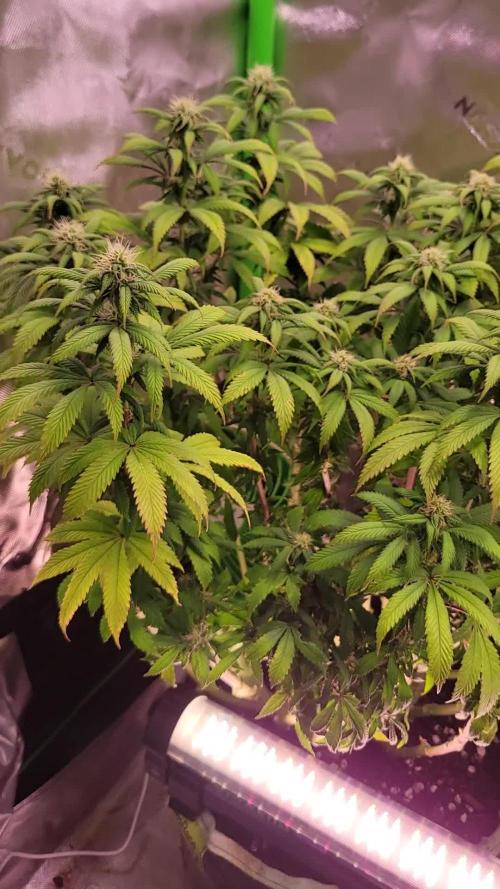
6/30/26 50% strength Strive ph 6.3 tds 600 ec 1100 water temperature 69 degrees Fahrenheit. The indoor tent seems to be doing generally good. Split my z42 down the middle and duct taped it back together. I expect a full recovery. Started running the small dehumidifier in the tent again. It makes it warmer but it also gets the vpd kpa cranking. 1.9 was the high yesterday. Thats high. Easing them into the strive w a half strength dose to start. Happy growing friends ✌️
Likes
1
Share


@bigsmoke42069
Follow
Week 4 of flowering 10/9/24
Defoliated plants.
Watering 4 times a day (with 10%-20% runoff)
hand watering to full saturation of the media with 20% runoff at the end of the week.
Checking runoff EC every 3 days.
Lights now at max height and 90% power.
Cheap AliExpress exhaust fan timer broke.
Humidity rose up to 99% inside the grow tent, but fans kept circulating the air.
After noticing, immediately turned on the dehumidifier to 40% RH with extra fan pointing on the canopy to max.
hopefully no herm problems and mold issues.
Adding 2.5ml/gal of H2O2 (35%) to the reservoir to keep bacteria away.