Likes
Comments
Share
@Grow3rPT
Follow
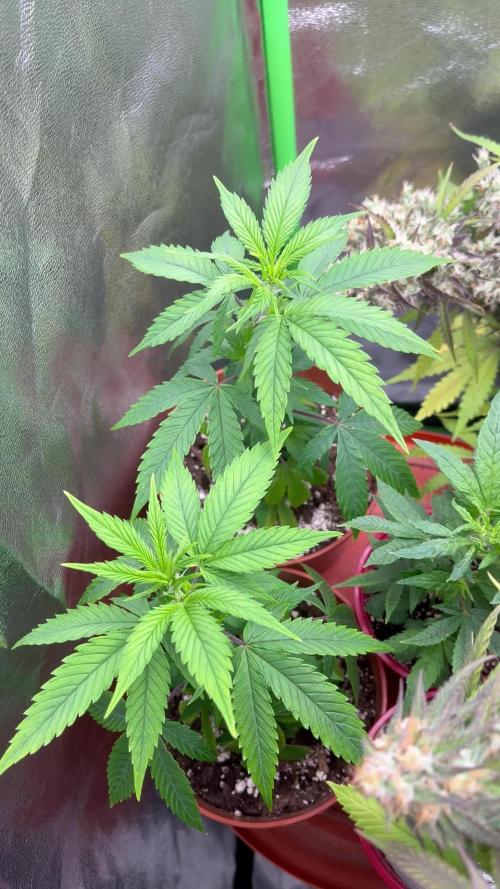
👉 ( Floração ) 👈 📅 Total de Dias 57 (F 27) - 28/09/2021 / Crescimento normal... 😀 📅 Total de Dias 58 (F 28) - 29/09/2021 / 💦 Rega apenas com agua 📅 Total de Dias 59 (F 29) - 30/09/2021 📅 Total de Dias 60 (F 30) - 01/10/2021 / 💦 Rega com nutrientes ( Grow + Micro + Bloom ) 📅 Total de Dias 61 (F 31) - 02/10/2021 📅 Total de Dias 62 (F 32) - 03/10/2021 / 💦 Rega apenas com agua. 📅 Total de Dias 63 (F 33) - 04/10/2021 👉 MARSHYDRO 👉 CODIGO PORMOCIONAL : Grow3rPT 👉 Em marshydro.eu 3% de desconto em qualquer produto
Likes
5
Share
@Kinghaze
Follow
Harvest day ! The plants are chopped and are hanging to dry. I put in a dehumidifier and a humidifier to control the humidity around 60%. The goal is to dry for 10 to 14 days. Then i will trim and cure them in grove bags for 6 weeks. I put the mutant straight in a zip lock in the freezer. I will make fresh frozen bubble hash (full spectrum) out of this one. I will update if the buds are dry en trimmed 🍀✌️
Likes
24
Share
@Theia
Follow
The bean was soaked in a 25c solution of humic acid calmag and more roots for around 12 hrs then put into a paper towels for 18 hrs.. taproots came and they went into a jiffy.. As they get introduced to some photons I will give some fastplant spray.. Details... Growing Jack Herer feminized seeds (indoors and outdoors) As for cultivation, Jack Herer is a reasonably thick and productive plant that produces enormous buds. Make sure that the branches are supported to prevent snapping. Most Sativa plants should be controlled indoors by training or pruning a little. She is pretty rapacious when it comes to nutrients but, in return, offers impressive results under the right growing conditions. Outdoors, Jack Herer prefers warm, dry climates such as the Mediterranean coast, where she will give outstanding results with large, productive trees. However, you would be well-advised to use a greenhouse if growing in a cooler, wetter region. In addition, she does not develop a strong odor until after harvest and good ripening, which makes Jack Herer an ally of choice in terms of discretion. Jack Herer's genetics achieve excellent yields indoors or outdoors in the right conditions. Flowering time Flowering time takes between 60 and 70 days when grown indoors. Plant height Jack Herer seeds grow into relatively compact strains. Its height indoors is 90 to 130 cm, and typical sizes outdoors range from 130 to 180 cm. Jack Herer feminized yield Indoors, the maximum yield is 500 to 600 grams per m². Yields outdoors are generally higher, with 600 to 700 grams per plant. Effects of Jack Herer First, the smoke is heavy and lingers in the mouth; you won't want to light yourself up a cigarette right after smoking Jack Herer. This bud is perfect for chilling with friends having a little fun. For film lovers, it's the ideal choice! The high that lasts a little is sure to keep your interest in the plot as long as the stone nails you, even seeing the time pass. The effect is a pleasant balance between a full-bodied stone and a cerebral high, although the stone is powerful and dominant. Jack Herer will be suitable for daytime smoke to improve your mood and feel relaxed. However, the buzz won't bring on couch-lock if you need to get things done. Despite low levels of CBD (0.8%), Jack Herer is highly rated for stress, anxiety, depression, pain, fatigue, migraine headaches, and appetite. Side effects Users frequently report that Jack Herer can make them feel dehydrated, particularly in the mouth and eyes. So make sure you have plenty of fluids to hand to combat this side effect. Smell and taste The Haze taste is excellent, a flavor that takes different paths depending on the seeds. But very often, you will find the typical Indica aromas which mingle with the sweet notes of Sativa, quite fruity, lemony with earthy and skunky undertones. In addition, you may experience sweet nuances of fruit reminiscent of sandalwood or even pine forest smells. Jack Herer has become famous for its medicinal benefits over the years. The strain is straightforward and will produce a good yield if grown in the right conditions. Jack Herer produces copious quantities of THC, so much that you can practically see the branches glistening with the sticky resin. Origin Jack Herer was created in the Netherlands in the mid-1990s as a tribute to the infamous activist and author. Consisting of Haze x Shiva Skunk x Northern Lights #5 genetics, she quickly rose on the bestsellers list in Dutch coffeeshops for being a reputable and reliable medical-grade variety. Thanks for looking. I'm excited to see how these strains grow.. 💚🌿
Likes
7
Share
Im Vergleich zur letzten Woche ist eine klare Entwicklung zu erkennen. Die Pflanzen stehen insgesamt vitaler da, mit deutlich stärker ausgeprägten Blütenständen. Viele Budsites haben sichtbar an Volumen zugelegt, die Kelche wirken dichter und die Harzbildung hat spürbar zugenommen. Besonders bei einigen Exemplaren stechen jetzt kompaktere Colas heraus, während andere weiterhin etwas luftiger wachsen – ein typischer Unterschied zwischen den verschiedenen Genetiken. Die Farbpalette hat sich erweitert: Neben sattem Grün zeigen mehrere Pflanzen inzwischen ausgeprägte violette und rötliche Töne, vor allem an den oberen Blättern und rund um die Blüten. Bei einzelnen Pflanzen setzt zudem die natürliche Herbstfärbung ein, was sich durch gelbliche Blattpartien an älteren Blättern bemerkbar macht. Das wirkt insgesamt harmonisch und passt gut zum fortgeschrittenen Blütestadium. In der Struktur ist ebenfalls Fortschritt zu sehen. Die Blüten haben sich weiter gestapelt, Internodien erscheinen „gefüllter“ und die Pflanzen wirken insgesamt reifer. Die Höhenunterschiede zwischen den Strains sind klarer geworden: Einige wachsen weiter in die Höhe, andere konzentrieren ihre Energie nun fast vollständig auf die Verdickung der Buds. Zusammengefasst zeigt diese Woche eine deutliche Reifephase. Mehr Masse, mehr Harz, stärkere Farben und klar erkennbare Unterschiede zwischen den Strains – ein solider Schritt nach vorne im Gesamtbild. Fortsetzung folgt...💚✌️☺️
Likes
Comments
Share
@UDUDUDUDU
Follow
One iz a clone, while de other is a snippet portion of a hatched seed 🤔 It iz an experiment. itz 3 weeks in, I have been kind enough to wait before posting - both to me & da community
Likes
16
Share
GORILLA KING AUTO / KANNABIA WEEK #11 OVERALL WEEK #6 FLOWER This week no real issues to report she's looking good buds are nice and dense and continue to grow her trichomes abound she's really sticky to the touch additionally she's got a sweet aroma to her!! Overall some great genetics from the KANNABIA TEAM!! STAY GROWING!! THANK YOU FOR STOPPING BY AND TAKING A LOOK IT'S MUCH APPRECIATED!!! THANK YOU KANNABIA!! 😊 KANNABIA.COM GORILLA KING AUTO
Likes
65
Share
@Dendegrow
Follow
Welcome to week six! 🌱 Week five was a complete success – all parameters are perfectly aligned. I’ve increased the water conductivity to a solid 3000 and bumped the CO2 level up to 1200 🌿. Light intensity is now set at 1400 µmol in the center and 1000 at the edges, which will keep the plants strong in their generative state 🌞. I’ll maintain these levels until the end of the third week and then start slowly removing the large fan leaves to ensure the buds get plenty of light 💡✨. I’m also trying something new to activate the “Emerson effect” 🌄: I’m running the deep red lights for 5 minutes before sunset and for another 5 minutes after the day ends. This should give the plants a final boost in photosynthesis, helping to maximize their growth potential! Everything’s looking fantastic so far! The Black Cherry has rooted well across different experimental setups, and at the end of the grow, I’ll provide a full report on the best care techniques for both strains 🌺👌. Willkommen in Woche sechs! 🌱 Die fünfte Woche lief perfekt – alle Parameter stimmen. Ich habe die Leitfähigkeit des Wassers auf satte 3000 erhöht und den CO2-Gehalt auf 1200 angehoben 🌿. Die Lichtstärke beträgt jetzt 1400 µmol in der Mitte und 1000 am Rand, was dafür sorgen wird, dass die Pflanzen stark im generativen Zustand bleiben 🌞. Ich werde diese Werte bis Ende der dritten Woche beibehalten und dann langsam damit beginnen, die großen Sonnensegel zu entfernen, damit die Blüten ordentlich Licht abkriegen 💡✨. Zusätzlich probiere ich etwas Neues aus, um den „Emerson-Effekt“ zu aktivieren 🌄: Ich lasse das tiefrote Licht 5 Minuten vor Sonnenuntergang und 5 Minuten nach dem Ende des Tages weiterlaufen. Das sollte der Photosynthese einen letzten Schub geben und das Wachstum der Pflanzen maximal fördern! Bis jetzt sieht alles fantastisch aus! Die Black Cherry ist in verschiedenen Versuchsreihen gut angewachsen, und am Ende des Grows werde ich einen ausführlichen Bericht darüber abgeben, wie sich die beiden Sorten am besten pflegen lassen 🌺👌.
Likes
95
Share
🤩 WoW those girls are definitely enjoying their life with this new light ⭐️⭐️⭐️⭐️⭐️ Flowering time now just ad 2ml/l of calmag. Northernlight she’s really fast all ready forming buds !!🤩 Tente ⛺️ : marshydro 120/120/2m Light 💡 : marshydro ts 3000 Genetics : - 5 girls scoot cookies auto, Seedstocker - 3 runtz auto, Zamnesia - 2 northernlight auto, Seeds Mafia Soil : coco mix 50% Cannaterra light mix 50% Promo code zamnesia 10%off: 🔥🔥⭐️✨ GROWITGD✨⭐️🔥🔥 Marshydro discount code : ⭐️⭐️🔥Only4passion 🔥⭐️⭐️ Thanks all for the likes n comments happy to share with you all growers 🙌🍀💪💪🍀👊
Likes
52
Share
@MeaCulpa
Follow
Hey everyone. I made one video with flash and one without as last week. So far everything seems to be good. The buds look very impressive. I never expected it.
Likes
42
Share
WEEK 7 - The ladies start looking like gorillas 😃 9L Pot trichomes start forming on sugar leaves 12L Pot the buds are strat forming and this lady will be big gorilla
Likes
7
Share
@MistaOC
Follow
11.08. Update – Day 13 • The plants are continuing steady early vegetative growth. • Leaf development looks good, with a healthy green color and compact structure. • Stems are becoming stronger, showing stable progress since germination. ⸻ Pest Situation • Unfortunately, the thrips problem is still present, despite thorough cleaning of the grow area beforehand. • To address this issue in a natural way, I have ordered beneficial nematodes. • They are expected to arrive in the next few days and should help control the thrips population effectively. ⸻ Notes & Outlook • Until the nematodes arrive, close observation of the leaves continues to be necessary. • The plants themselves are holding up well, showing resilience despite the pest pressure. • I am confident that once the nematodes are applied, the situation will improve and allow for uninterrupted growth. ⸻ 🌱 Day 13 – steady growth continues, with pest control measures soon being implemented.
Likes
27
Share
@Dunk_Junk
Follow
She's done!! Will be chopped within 24h. Her flowers are mega frosty! 💪
Processing
Likes
1
Share
@Lifted
Follow
Hooked up my carbon filter today. I'm only using it to scrub the air on a timer. Decided to poke a few holes in the ducting to help move scrubbed air around my plant. Added the other fan back in to keep air circulating. Since I don't have fresh air coming in I plan on using a supplement for co2. What are you guys using? It's only a small 2×2×6 tent with one plant and running a 150w HP's light.
Likes
113
Share
my experience with these strains has not been one of the best .... in the last few weeks there has been a sharp increase in temperatures making things very difficult ... very slow growth for coockies considering that in the same tent I had 3 other autoflows that had been ready for a few weeks. discrete power .... almost light ... lighter flowers inside the buds ... ABUNDANT HARVESTS FOR ALL OF YOU ... FRIENDS PEAKYPLANTERS GREETS YOU
Likes
5
Share
Servus Moin! Die Bluzcotti sieht prima aus. Die 4 Triebe haben sich super entwickelt. Ich hab die Lady gleich umgetopft und die Triebe ein wenig zur Seite gezogen.
Likes
4
Share
Likes
27
Share
@AsNoriu
Follow
Day 78. A bit forced by bud rot chop. Hot and humid summer, not the best ... Girls still ended up nice with almost 0 care. Happy Growing !!!
Likes
57
Share
The cannabis strain Grape Guava can be a purple strain, depending on its specific phenotype and genetic makeup. While not all phenotypes of Grape Guava are purple, some variations, such as the Zatix Grape Guava, are noted for their striking purple appearance due to the genetic expression of anthocyanin pigments. Grand Cru Genetics is a cannabis seed bank that emerged in 2018 from a group of breeders in Madrid to provide a satisfactory experience to all cannabis users. "If we do things, we do them well. Due to our experience in the sector and our taste for excellence, we know high quality and we seek it in everything we propose and do." "We have a “cultivate without giving up” philosophy that we apply to everything we do. We do not give up, we are friends of change, and we adapt as necessary in a still restricted sector." "We speak relaxed because we know how to relax. We are not intense or preachy; we accept everyone as they are, and we understand that farming is not for everyone. But for those who do, we are here to accompany you. We like to do it and tell it. We are experts in the field because we are the first to do it. We speak from experience and connect with others because we share the passion for cultivation." "Cannabis has the ability to show us a world of possibilities. When you cultivate and live its growth process, you enjoy a path full of emotions and not just the final destination. At Grand Cru we find beauty in small things. We are attentive, observant, detail-oriented and aware of everyday things, and we savor them without rushing." In a garden of green, Grape Guava gleams, With its fruity aroma, enchanting dreams. Clusters of grapes, guava's sweetness ignite, A strain so divine, in purple and white. Euphoria whispers, a lush fruity haze, Grape Guava's embrace, a tranquil daze. Off and away.@1400ppm. The increased CO2 allows plants to thrive at higher temperatures, which in turn necessitates higher humidity to maintain the ideal VPD for healthy growth and transpiration. 80F -5F = 75F LST with 70% RH = 0.72 kPa. Higher temperatures and humidity promote rapid growth, nutrient uptake, and photosynthesis while maintaining a lower stress level. Temperature influences the rate of enzymatic reactions involved in aerobic respiration. Enzymes, such as those involved in glycolysis, the Krebs cycle, and the electron transport chain, work most efficiently at an optimal temperature range. In low temperatures, enzymatic activity will slow down, thus reducing the rate of aerobic respiration. In high temperatures, enzymes can become denatured, thus impairing their function and stopping the process of aerobic respiration. Glucose is the primary fuel for aerobic respiration. The rate of aerobic respiration increases with the availability of glucose, as it is the starting point for glycolysis. If glucose levels are low, cells may rely on alternative energy sources such as fatty acids or amino acids , but these processes may yield less ATP or be less efficient. To determine this effect, carbon dioxide volume was measured (as carbon dioxide is an output of aerobic respiration) 18/6 with the 6 being IR. The near infrared (IR-a) borders around 700nm up to 1400nm @ photon par flux density of 1.8 instead of darkness, keeping temps overnight a neat 77F-80F. I think of my tent as a lung. What goes in must come out. When the rate of air going out exceeds the amount of air coming in, it creates a negative pressure. Tent concaves (bends in). If set up correctly, the RH will begin to drop slowly to the desired level I set, and the extraction turns off when it reaches the desired RH. The plant, as it performs cellular respiration, will always release more water into the air; therefore, the RH% of the tent overnight will increase, as long as oxidative phosphorylation is occurring. As soon as the RH% creeps back up to 55%, the extraction turns back on, over and over. This creates a strong pressure differential, which will work wonders with mass flow. Replicating high and low-pressure fronts in nature. Critical for oxygen diffusion at the critical time of peak cellular respiratory function.. Moisture will not transfer from a saturated atmosphere to another if that air is already at or above its saturation point, meaning the air can't hold any more water vapor. Once I understood that water is produced as a by product during cellular respiration, specifically at the very end of the electron transport chain (ETC) where electrons are finally transferred to molecular oxygen, the higher the RH of the air, the more resistance there is for more moisture to be added to that environment, and effects the ease with which it does so. But none of that water comes from the pot; it's pulled from the air. If you run high daytime RH, your medium/pot is 100% reliant on transpirational root pull to move water. ZERO evaporation happens across the atmosphere if the tent air has high RH%, the medium cannot release its water through evaporation. Once a canopy develops, light no longer slowly wicks and evaporates from the topsoil. The Soil-Plant-Atmosphere Continuum (SPAC) describes the continuous pathway and process of water movement, driven by a gradient in water potential, from the soil, through the plant's roots, stem, and leaves, and finally evaporating into the atmosphere through transpiration. There is evaporation, there is transpiration, and then there is evapotranspiration; Evapotranspiration (ET) is the combined total of two processes: evaporation (water lost directly from soil and surface water into the atmosphere) and transpiration (water released from plants to the atmosphere through their leaves). Evapotranspiration represents the total amount of water that moves from the medium into the air. There is no such thing as a medium with too much water, only a medium that retains too much for too long. The water must always flow efficiently from one atmosphere(Medium) to another(Air) in a timely manner. Moisture is a critical factor for bacterial growth and decay. Dictating how long it's allowed to sit in any one location for any given period is a key preferred control. To ensure a net reduction in a bacterial population, the rate of removal (ET) must exceed the rate of bacterial growth (decay rate), which is often modeled as a growth rate for the specific bacterium under the given conditions. By optimizing daytime VPD, we also optimize conditions for bacterial growth to explode exponentially above 77°F.. If water is allowed to sit in a medium without an escape within a timeframe, nothing good will happen. IF High RH is maintained overnight as well as during the day, placing 100% of water movement at the behest of daytime transpiration, roots can only pull where they can reach, and if soil is compressed above a certain point, moisture will become trapped in a medium with no way of moving day or night. This will begin the countdown for decay to take hold. When water stagnates in a medium, it loses oxygen, creating anaerobic conditions that foster the growth of harmful microorganisms like bacteria and fungi, which can produce toxins and disease vectors. Thigmomorphogenesis, the process by which plants respond to mechanical stimuli like touch by altering their growth and development, results in significant morphological changes to improve survival against mechanical perturbations. This complex response involves sensing touch and initiating physiological and genetic responses, leading to changes in form and structure over days or weeks. The process is triggered by physical forces such as wind, rain, or touch. Plants adapt to these stimuli by changing their shape and structure, which may include slower growth, thickened stems, or altered leaf development. Plants possess sophisticated mechanisms to detect even subtle mechanical stimuli and initiate responses. A variety of molecules, including calcium ions, jasmonates, ethylene, and nitric oxide, are involved in signaling these mechanical inputs. Touch can induce the expression of genes that encode proteins for calcium sensing, cell wall modification, and defense mechanisms. A plant exposed to constant wind may become shorter and sturdier. A plant that is touched frequently might grow more slowly to conserve energy and develop thicker cell walls. These changes increase a plant's resilience and ability to survive in harsh environments. Let's get Thiggy with it.
Processing
Likes
33
Share
I typically use the nutes at 1/2 tsp per gal but I have cut back on nitrogen since transitioning to flowering😎