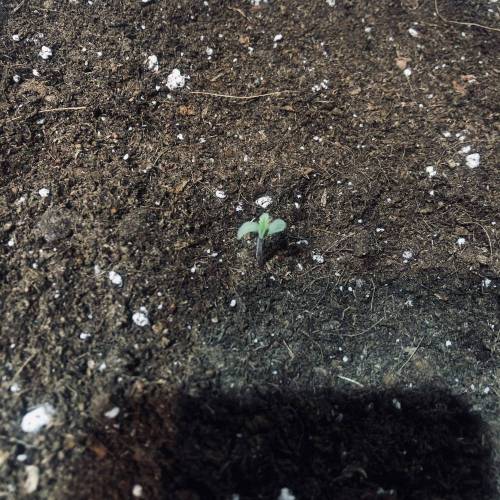
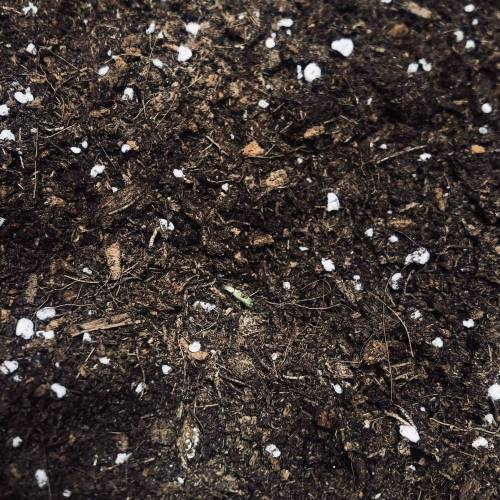
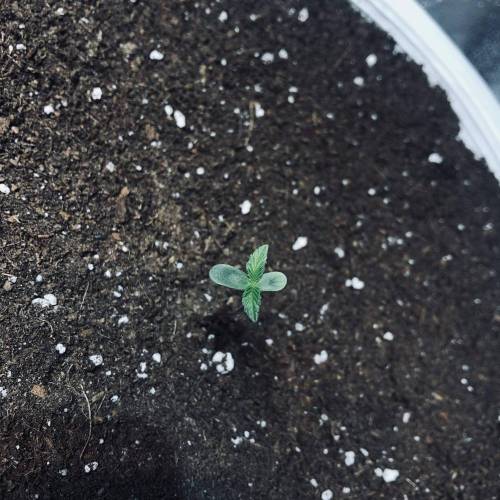
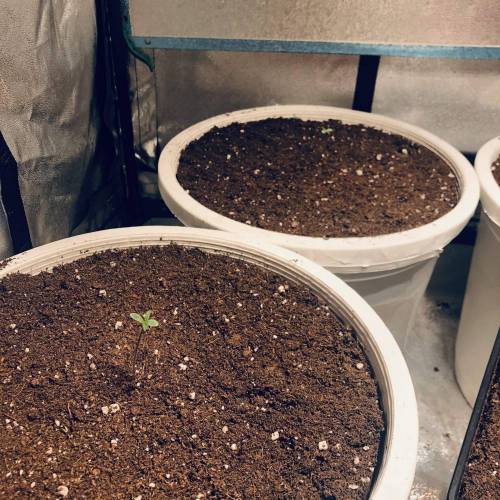
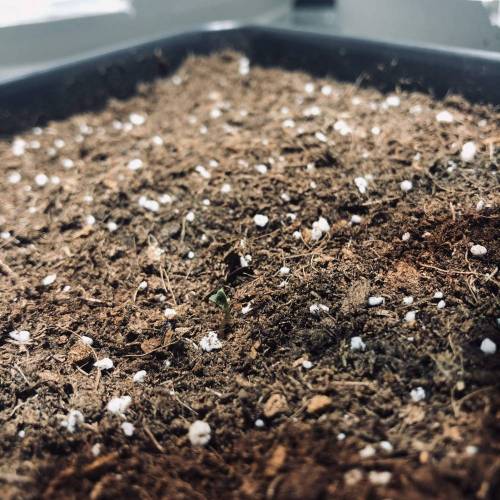
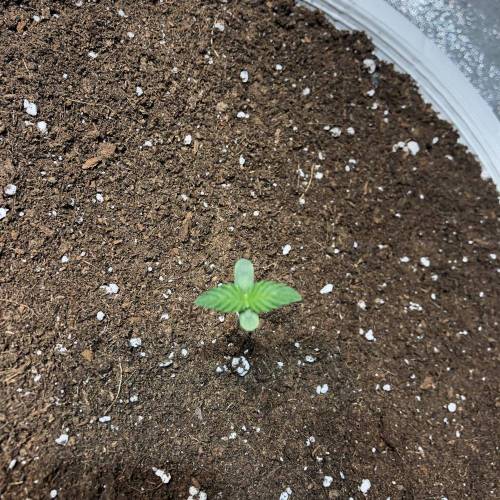
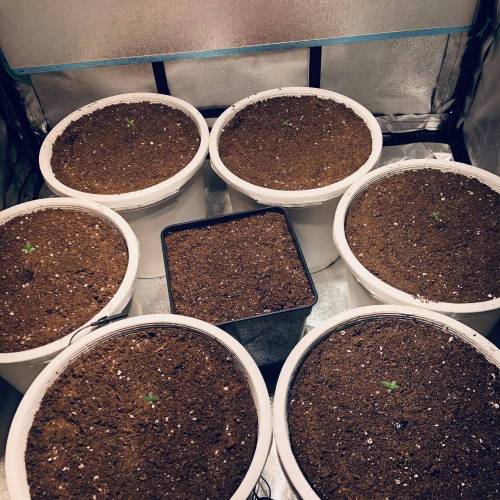
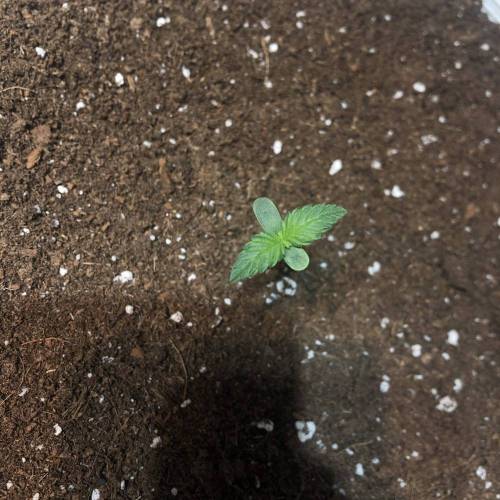
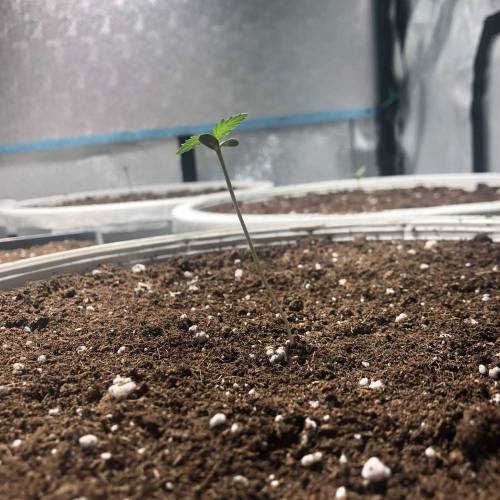
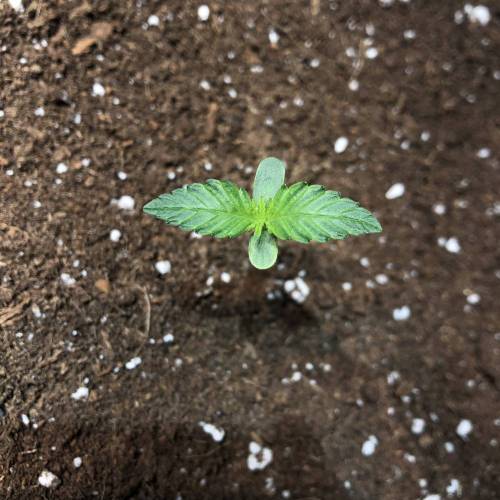
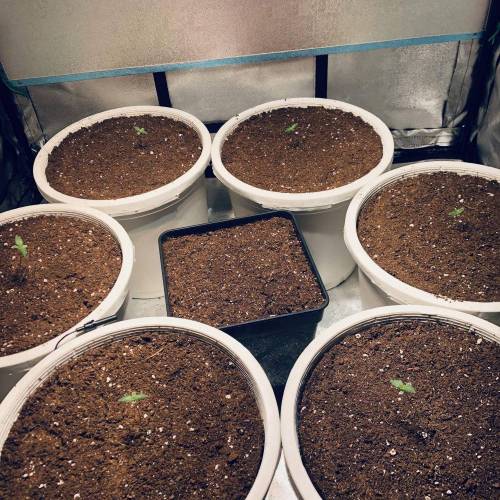
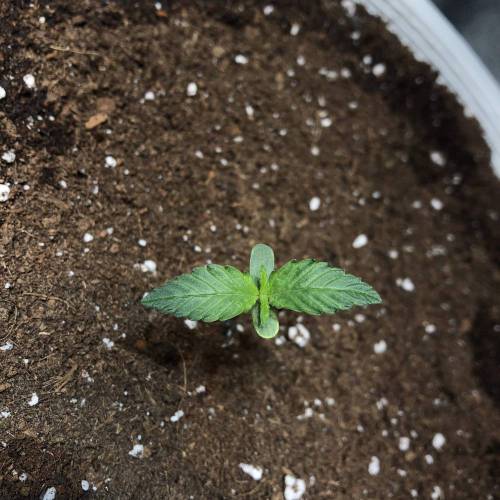
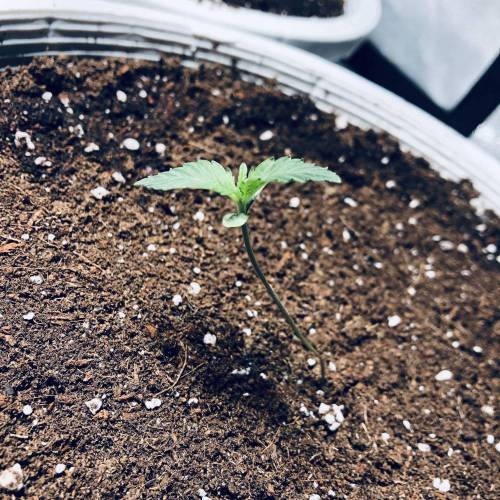
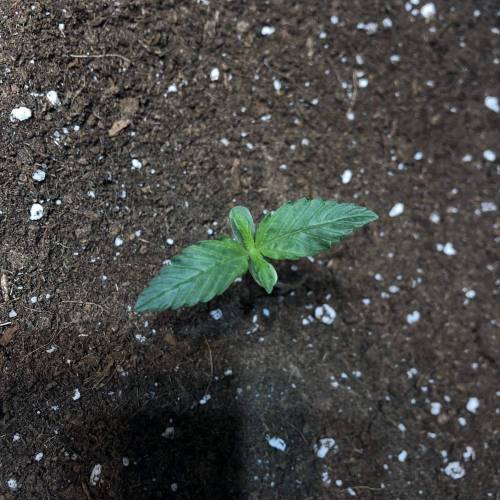
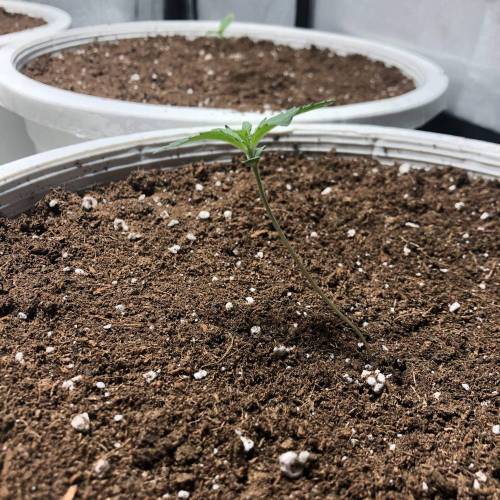
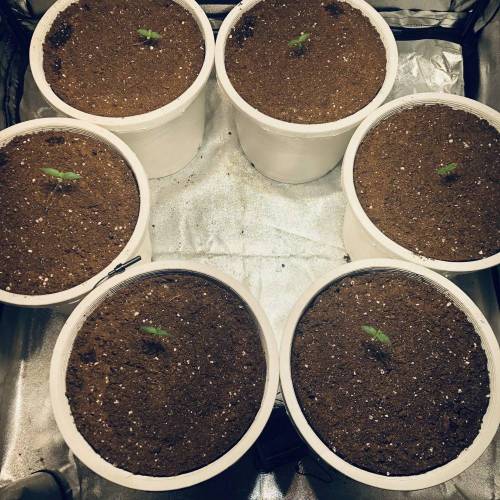
Nicblackk The seeds were placed to germinate on 12/11/21 and were planted in soil on 15/11/21. They broke through the soil on 17/11/21 (which corresponds to day 1 of vegetative).
On the third day of soaking the seeds in paper, the radicle was long enough to plant them in the substrate (17 L pots).
Surprisingly, one of them had 2 radicles poking out of the shell instead of one (which is the usual). It turns out that this seed has an embryo from a "male" and a female ("male" because since it's feminized, the male plant that pollinated the seed is actually a female plant that has been induced to produce pollen). On the other hand, it also has a second embryo that is a clone of the mother plant that has developed (usually they degenerate).
To proceed with their separation and avoid having two plants in the same pot, the outer covering (endocarp or shell) was carefully removed with the help of previously cleaned and sterilized tweezers. After that, the tegmen was detached (difference from photo 3 to 4) (this is a protective covering that isolates the embryo from the perianth). Once this step was completed, the separation of the two embryos was almost instantaneous.
As a result, from 6 germinated seeds, 7 plants were obtained. (the 7th individual has been added to the grow cabinet in an 11 L pot).
3 likes
4 comments
Share
Used method
Paper Towel
Germination Method
1
Week 1. Vegetation
5y ago
1/22
3.5 cm
Height
18 hrs
Light Schedule
21 °C
Day Air Temp
5.8
pH
66 %
Air Humidity
20 °C
Night Air Temp
17 liters
Pot Size
58 cm
Lamp Distance
Nutrients 3
pH Perfect Sensi Grow Part A
1 mll
pH Perfect Sensi Grow Part B
1 mll
Organic Root Stimulator
0.2 mll
Nicblackk During this week, no growth nutrients will be applied, beyond what the soil provides. The interior of the indoor is being sprayed with dechlorinated water (chlorine-free) with 0.2 ml of B.A.C. rooting solution per liter of water (to maintain some humidity). pH=5.8.
Day 0. On this day, the seedlings emerged from the soil taking the cotyledons. It can be seen in the photos that the cotyledons have not yet captured chlorophyll (yellow).
Day 1. All the seedlings (6, including the twin embryo resulting from two gametes) have an approximate height of 3.5 cm. The first true leaves are starting to show, but there has been little movement.
Day 2. Same as day 1.
Day 3. The perimeter of the soil has been watered with 100 mL/plant. Dechlorinated water with 0.2 mL of B.A.C. rooting solution per liter of water. Electrical conductivity 0.3 and pH 5.9.
Day 4. Nothing.
Day 5. Nothing.
Day 6. The perimeter has been watered with 200 mL/plant. Dechlorinated water with 0.2 mL of B.A.C. rooting solution per liter of water and 1 mL of Sensi Grow part A and 1 mL of Sensi Grow part B. pH=5.9. Ec=0.7.
Day 7. Nothing. The diplosporic twin has not managed to develop and has been discarded.
Regarding the twin, a clone of the mother, it has also emerged, but I'm worried because it only shows 1 cotyledon and is not well formed. In principle, this shouldn't be a problem for the subsequent development of the plant (maybe it's just taking longer to start). What worries me the MOST is whether it will have primary meristems in that area and will form true leaves (once I planted the species Mentha piperita and it came out as a monocotyledon, a genetic failure, and it continued its development normally), we'll see what happens.
EXPLANATION OF THE TWIN. When the plant forms the seed primordium and the ovary, the female gametophyte ("ovule") is produced by macrosporogenesis and subsequent macrogametogenesis. Macrogametogenesis is the process that will form a functional female gametophyte; for this, the initial cell must undergo mitosis without cytokinesis, cellularization, and cellular differentiation. The mature female gametophyte (after a series of mitosis and meiosis) will consist of 3 cells at one pole (antipodal), 2+1 cells at the other pole (2 synergids + 1 ovule), and a polar nucleus (the nucleus of the cell where the rest are embedded). There is a normal process in other plant species, but abnormal in Cannabis called apomixis or diplospory. The first embryo occurs through normal fertilization of the male gametophyte (pollen) with the female gametophyte (ovule). The second can occur in two ways: the first is a second fertilization (where another male gametophyte fertilizes the polar nucleus of the seed primordium), the second is a poor formation of this polar nucleus (it does not undergo meiosis) so it begins to develop with 100% of the mother's genetic material (it develops by parthenogenesis).
3 likes
1 comment
Share
2
Week 2. Vegetation
5y ago
1/5
7 cm
Height
18 hrs
Light Schedule
21 °C
Day Air Temp
5.9
pH
50 %
Air Humidity
20 °C
Night Air Temp
17 liters
Pot Size
Nutrients 3
pH Perfect Sensi Grow Part A
1 mll
pH Perfect Sensi Grow Part B
1 mll
Organic Root Stimulator
0.2 mll
Nicblackk Day 8. 100 mL has been given to each plant. 0.2 mL rooting agent B.A.C. per L of water + 1 mL of Seis Grow Part A per Liter of water + 1 mL of Sensi Grow Part B per Liter of water. pH=5.9. Ec=1.
Day 9. Nothing.