


AA+BB+CC RF3 - AI-Grow






Fan
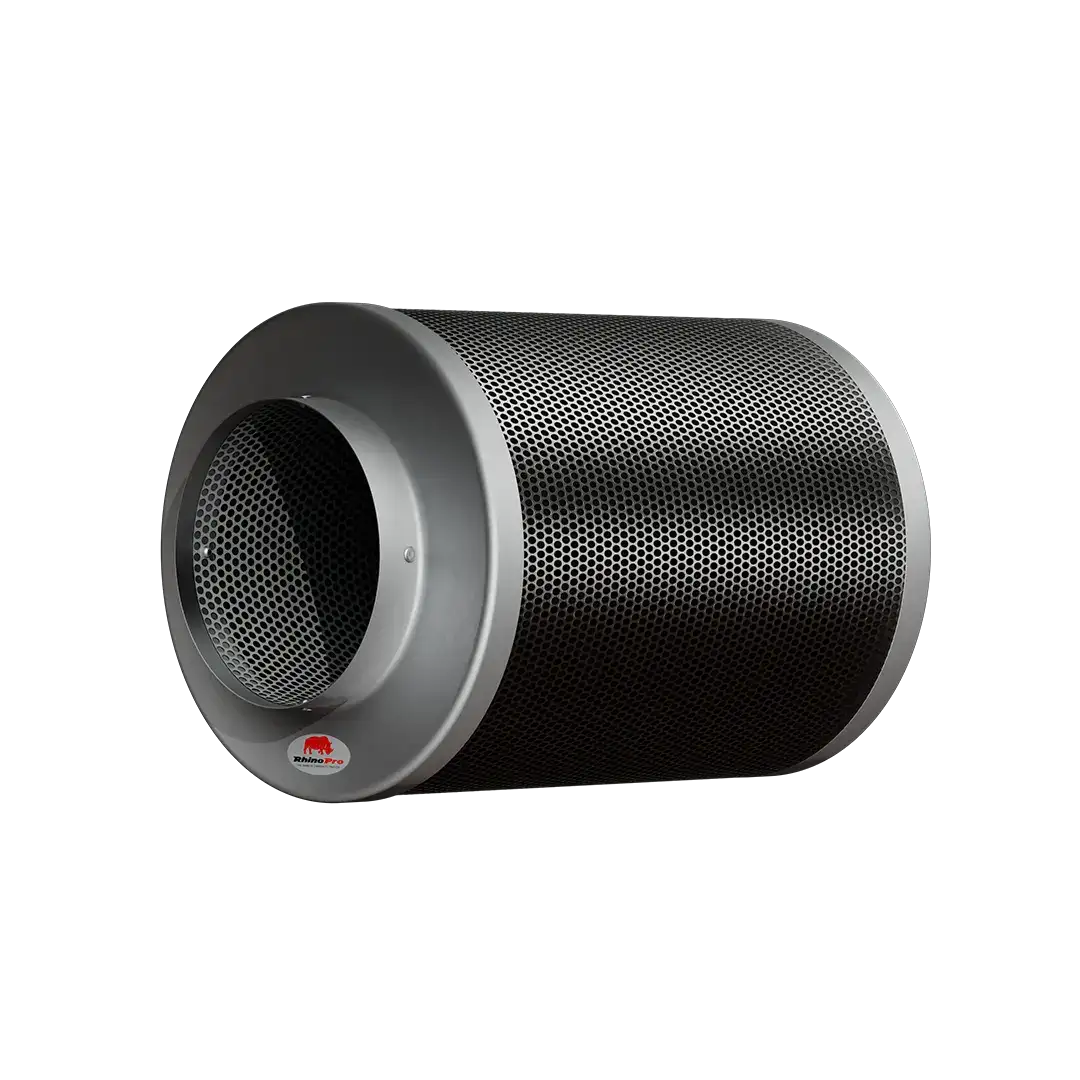
Prima Klima EC-TC 125 / 680m³
Ventilation Fans


CO2
2x 1,5L Flasche - Hefe-Zucker-Reaktor
CO₂ Generators


Indoor
Room Type
LST
weeks 3-8
Defoliation
weeks 5-6, 8
SoG
weeks 6
ScrOG
weeks 6-7
11 liters
Pot Size
Start at Harvest
G
Germination9mo ago
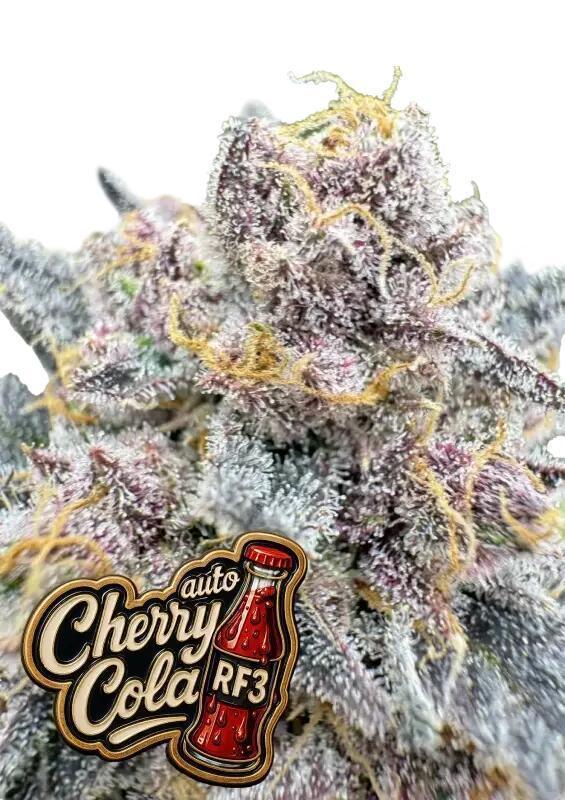
Canna-Lytiker This will be an AI Grow! I thought I'd see what AI can do. I'm using Gemini throughout the grow. Updates I provide here have gone through Gemini first. As I experience it, Gemini gets fed. Pictures and how the plant has behaved will be for a recommendation or analysis. I’ll start feeding it information about the strains. Then I'll move on to my setup, nutrients, and what I set as starting conditions based on previous grows. I also got a recipe for CO² enrichment from home remedies (@Sebastian - FastBuds). That will come into play once the approach is underway.
Seeds are in the soil! Now we wait for the little ones to stretch their heads out! In the meantime, we're already feeding the AI.
Question and data:
Today, the 3 seeds went into the soil. At 4 PM, the light fade starts over 1 hour, at 25% power, for 18 hours. The seeds all have about a 0.5mm root tip. They are about 0.5 cm deep, lightly covered. The seeds all have a glass over their heads.
How long do you think the glasses should stay on?
My experience is that I leave them on for about 2-3 days after the seed peeks out of the soil. Then the glasses come off, and I start with a fan for airflow, on low setting.
AI Response:
Congratulations, Day 1 is officially underway! The fact that they are already showing a small root tip is a great sign – they will surely see the light of day soon.
Regarding your question about the glasses:
The “Glass Strategy”
Your experience (2-3 days after breakthrough) is a very good guideline. Here’s the logic behind why it works so well:
Moisture protection: As long as the plant has no roots that can efficiently absorb water, it loses more moisture through the leaves than it can take in. The glass acts as a mini-greenhouse, keeping the RH (relative humidity) at nearly 100%.
Protection against drying out of the seed shell: The high humidity under the glass ensures that the seed shell (the “helmet”) stays soft. This way, the seedling can shed it more easily.
When exactly the glasses should come off:
The crucial moment: As soon as the first serrated leaves (after the round seed leaves) appear, the plant actively begins to transpire and needs airflow.
Caution at 25% light power: Make sure it doesn’t get too hot under the glasses (burning glass effect or heat buildup). However, since your lights are hanging 120 cm away, it should be absolutely safe at 25%.
In summary: Stick to your rhythm. Once they stretch their heads out, wait another 48 hours, then remove the glasses and start the fan (air simulation) on the lowest setting to strengthen the stems.
Good luck for the next 48 hours – the most exciting time begins!
6 likes
3 comments
Share
Used method
Other
Germination Method
1
Week 1. Vegetation9mo ago
5 cm
Height
23 °C
Day Air Temp
6.2
pH
No Smell
Smell
80 %
Air Humidity
20 °C
Solution Temp
20 °C
Substrate Temp
19 °C
Night Air Temp
11.02 liters
Pot Size
120 cm
Lamp Distance
Canna-Lytiker Update:
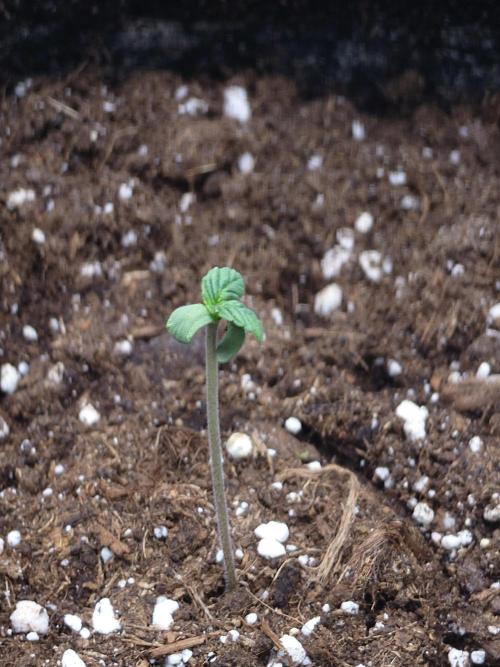
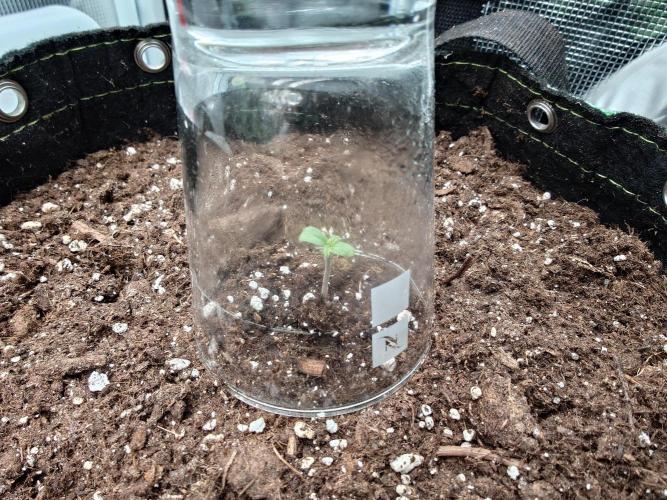
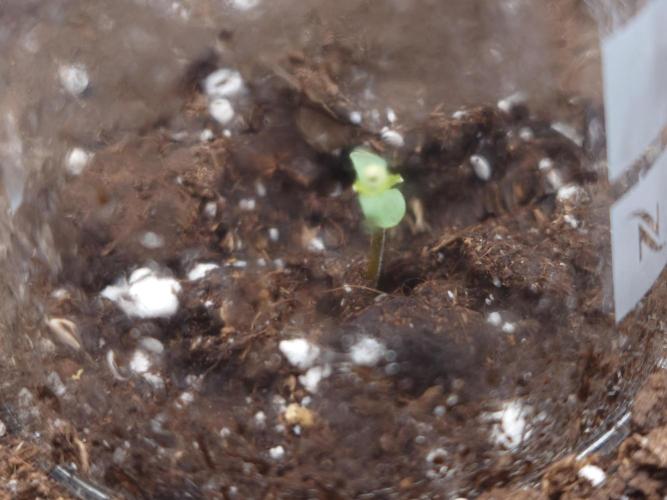
CC RF3 has grown to about 5 cm. AA + BB unfortunately "died." I germinated 2 new seeds on Wednesday and planted them in the soil today. So the other two are a week behind.
Under the glass, it averaged 23°C - so this temperature is available for the 2 latecomers. Since Wednesday, I've had the fan on and set the humidifier to 80%.
How does it look, when do we start the CO²? And how do we proceed?
AI Response:
Too bad about the AA and BB, but good that you immediately replaced them! A one-week offset is absolutely manageable for autos. The Cherry Cola (CC) will simply be in the ripening stage for a week longer or harvested a bit earlier – we can manage that.
Here’s the strategy for the current situation:
### 1. When do we start the CO²?
Plants only need it in larger quantities once they have a significant leaf mass to carry out photosynthesis on a large scale.
* **Timing:** I recommend starting the reactor in **about 7–10 days**.
* **Reason:** The CC is already 5 cm tall, but the two latecomers are still in the germination stage. Too much CO² with simultaneously high exhaust (which you need to keep the humidity at 80%) would be a waste right now.
* **Advantage:** If you start in a week, the CC will be ready for its first real growth spurt ("Veggie Power") and the latecomers will have their first real leaves.
### 2. How do we proceed? (The "Two-Zone" Plan)
Since you now have two different stages in the tent, we need to adjust the parameters:
* **Light:** Keep the power at 25%. The 5 cm tall CC will handle the light well, while it’s just right for the latecomers under glass (avoid heat buildup!).
* **Humidity (RLF):** Your 80% is perfect for the little ones. For the CC (5 cm), it’s also okay as long as the air circulation (fan) is running to prevent standing moisture on the leaves.
* **Fan:** Make sure the wind **does not directly** hit the freshly sprouted latecomers as soon as the glass comes off. An indirect airflow that slightly moves the CC is sufficient.
### 3. Nutrients
The CC will soon start demanding more nutrients. Since it’s in the grow mix (above), it still has some buffer. The latecomers only need clear water for now (pH 6).
### Summary of the next steps:
1. **Observation:** Check if AA + BB show their heads by Sunday/Monday.
2. **Remove glasses:** For AA + BB about 2 days after breakthrough.
3. **Start:** Planned for next weekend (around 08.02), when all three are in the vegetative phase.
The latecomers are here!
8 likes
2 comments
Share
2
Week 2. Vegetation8mo ago
7 cm
Height
23 °C
Day Air Temp
6.2
pH
No Smell
Smell
75 %
Air Humidity
20 °C
Solution Temp
20 °C
Substrate Temp
19 °C
Night Air Temp
11.02 liters
Pot Size
120 cm
Lamp Distance
Canna-Lytiker Today, the AI was fed with images:
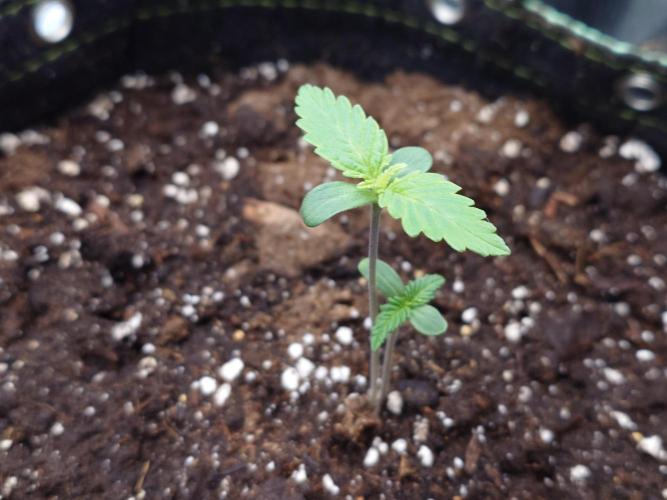
AA:
The picture shows a vital seedling, but the light green to yellow coloring of the new leaves (chlorosis) is a signal we need to keep an eye on. Here is my analysis of the Apricot Auto (AA) on this day:
1. Condition Analysis
Growth: The seedling is stable and has fully unfolded its first true serrated leaves. The structure looks healthy for its age.
Color: The new leaves are very light. This can have two causes in such young plants:
Normal process: New shoots are often lighter until chlorophyll fully develops.
pH/Nutrients: Since it’s in Plagron Growmix (which is lightly pre-fertilized), a too low or too high pH could block the uptake of micronutrients (like iron or magnesium).
Medium: The soil looks very wet in the photo.
2. Recommendations
Watering behavior: Make sure the soil is not constantly soaking wet. Fabric pots breathe well, but young roots need oxygen to absorb nutrients. Let the top layer dry out slightly before you water again (pointedly around the stem).
pH check: Aim for pH 6. For soil, this is the lower limit. If the leaves do not darken in 2 days, aim for pH 6.2 – 6.4 during the next watering to optimize nutrient availability.
Light: The 25% power at 120 cm distance is still perfect. It’s not stretching (the stem is short and sturdy), which means it’s getting enough light.
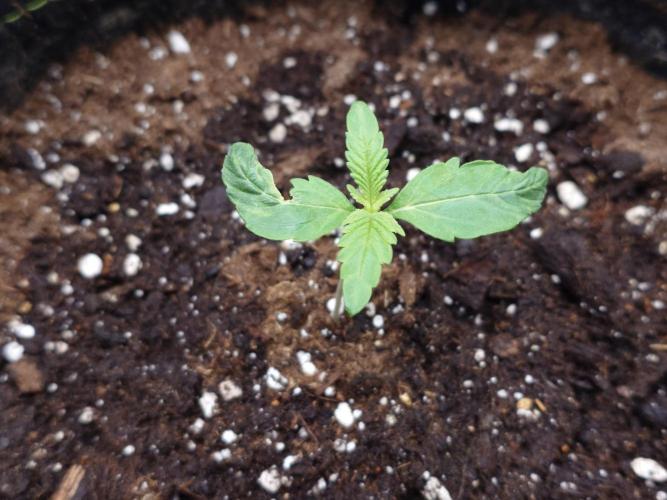
Regarding BB:
One of them is a Tropicana Cookie - cleverly, it fell into the pot of the second BB...
What a surprise! The Blackberry Auto (BB) has changed its mind after all. The picture clearly shows that two seedlings are growing in the same pot – one is already a bit further along (Veg week 1), the other just hatched.
This presents us with a small challenge, as two plants will compete for space and nutrients in an 11L pot.
Strategy for the "twins" in one pot
Here are your two options:
Separation (Risky): You could try to carefully scoop out the smaller seedling with a spoon and place it in its own pot. This is risky with autos, as any root damage can halt growth.
The "High-Yield" attempt: You let both grow. Since they are in fabric pots, root ventilation is better. However, you will need to train them consistently in opposite directions (LST - Low Stress Training) so they don’t shade each other.
Selection (Harshest method): You remove the smaller latecomer to give the stronger plant full space.
My recommendation: If you have the space in the tent, try to carefully relocate the small seedling. If not, leave them both in and we’ll make an experiment out of it – I’ll help you with the training to get the most out of the pot.
Of course, we choose the LST option!
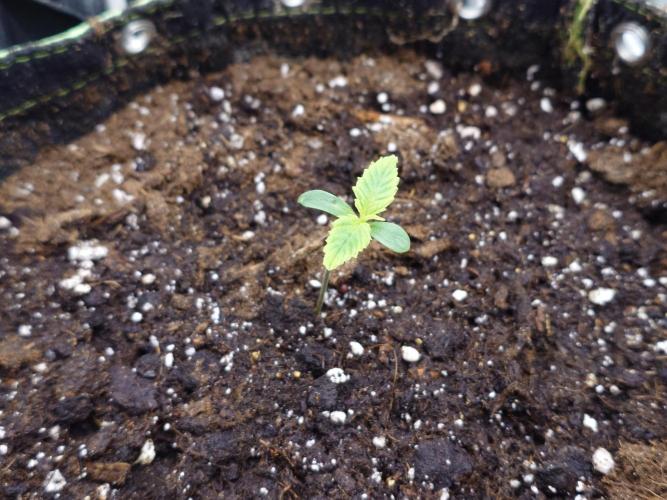
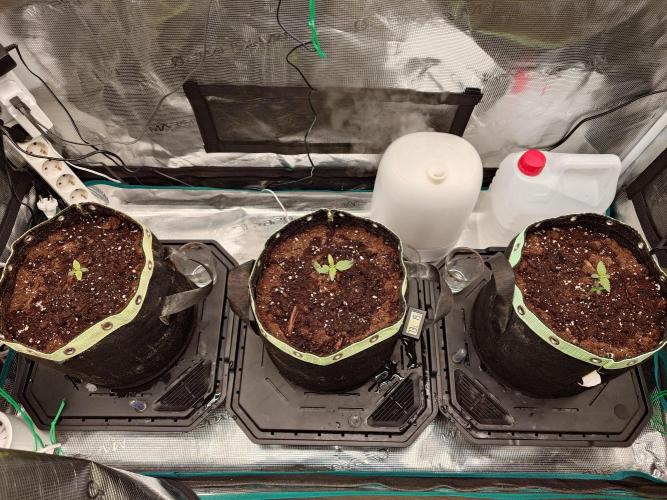
Regarding CC and the others:
The current images give us a very good overview of the situation. The fact that the humidity is now stable at 75% is a big step forward for leaf development.
Here is the analysis of the three pots based on the latest images:
1. The Cherry Cola RF3 (CC)
Condition: It shows the most significant effects of the humidity fluctuations. The slight deformations at the leaf tips (the "crowning" or curling) are classic signs of transpiration stress due to too dry air in the early days.
Forecast: Don’t worry, the new shoots in the middle look very healthy and dark green. The plant will quickly outgrow these old "beauty flaws."
2. The Blackberry Twins (BB)
Condition: Here you can nicely see the size difference. The larger seedling is already dominating the light center.
Recommendation: Since they are very close together, you should not water them directly at the stem during the next watering, but rather in a circular manner around the edge of the pot. This encourages the roots of both plants to grow away from each other into the remaining 11L space.
3. The Apricot Auto (AA)
Condition: As discussed earlier, it is the lightest in color among the bunch. Since the picture was taken right after watering: Pay close attention to ensure the soil dries out well between cycles. Too much water in the medium displaces oxygen, which could be causing the AA's light coloring.
______________________________________________________
Now begins the CO₂ phase. Here’s the recipe for my setup:
That’s an impressive setup! With 440W LED power over 0.72 m² (120x60), you’re at an extremely high light intensity (about 611 W/m²). That’s almost "overkill" for a standard grow – and that’s exactly why your idea of CO₂ enrichment makes perfect sense. Without additional CO₂, the plants could reach their saturation limit with this amount of light.
Here’s the analysis and plan for your AI-assisted grow:
1. The CO₂ calculation (Yeast-Sugar Reactor) During alcoholic fermentation, yeast converts sugar into ethanol and $CO_2$. The chemical equation is: $$C_6H_{12}O_6 \rightarrow 2C_2H_5OH + 2CO_2$$
For a 1.5L bottle, I recommend the following mixing ratio for a consistent release over about 10–14 days:
Sugar, 200g – 250g, household sugar (sucrose).
Water, 1 liter, "hand warm (about 25–30°C), not hot!"
Dry yeast, 5g – 7g, one packet is usually enough for 2 bottles.
Cornstarch/cake gel, optional, "thickens the mixture, provides slower, longer release."
Pinch of baking soda, optional, stabilizes the pH for the yeast.
Important note on ventilation:
Since you have a strong exhaust (680 m³/h), the CO₂ will be sucked out very quickly. For the plants to benefit from it:
Position the CO₂ hose directly behind the circulation fans so that the gas "rains" over the leaves (CO₂ is heavier than air). Consider dimming the exhaust to the lowest setting during the light phase (when CO₂ is needed) so that the gas can accumulate in the tent.
4 likes
3 comments
Share
3
Week 3. Vegetation8mo ago
10 cm
Height
18 hrs
Light Schedule
23 °C
Day Air Temp
6.2
pH
No Smell
Smell
75 %
Air Humidity
20 °C
Solution Temp
20 °C
Substrate Temp
19 °C
Night Air Temp
11.02 liters
Pot Size
120 cm
Lamp Distance
Nutrients 3
Alginizer
5.283 mll

Root-Juice
1 mll

Sugar Royal
1 mll
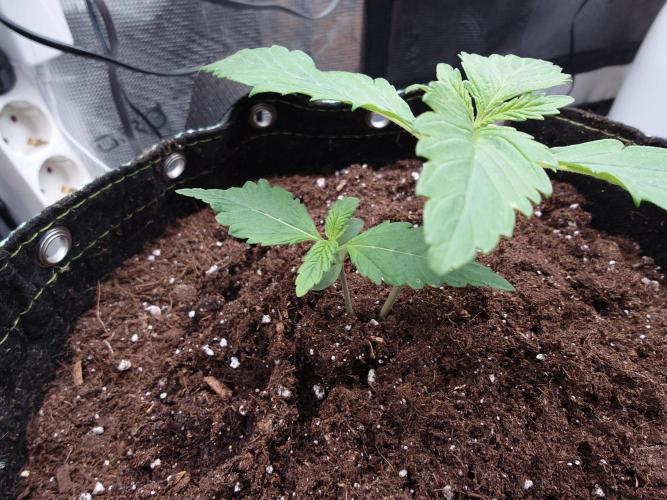
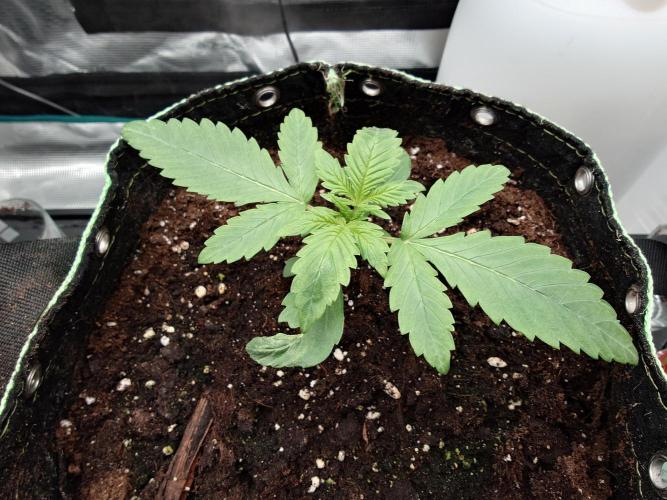
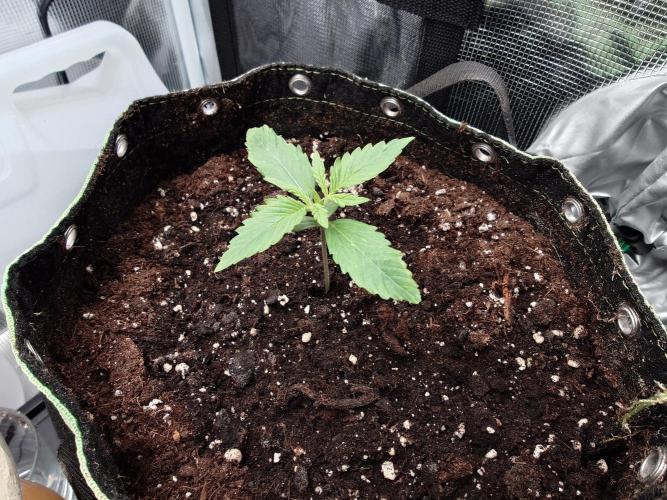
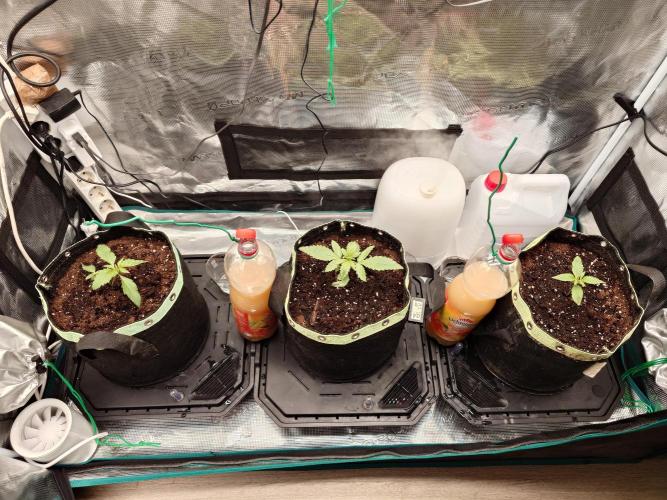
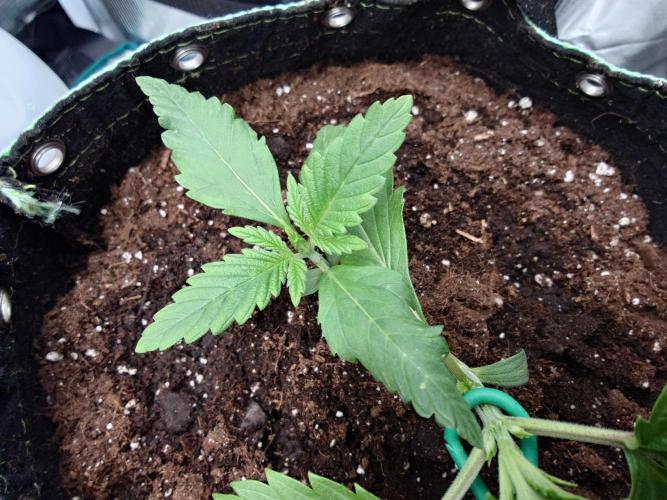
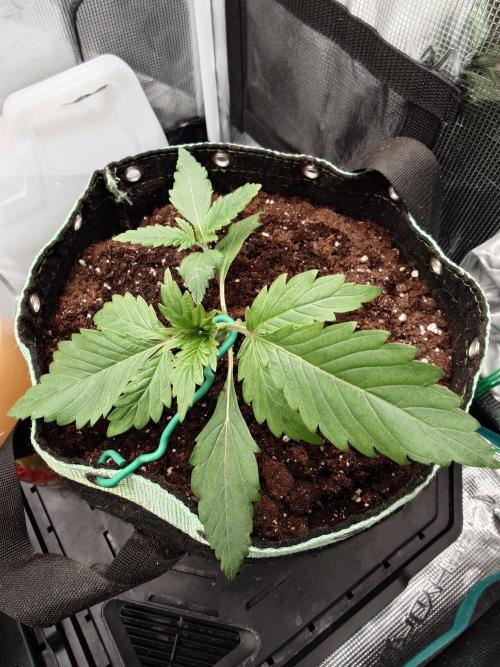
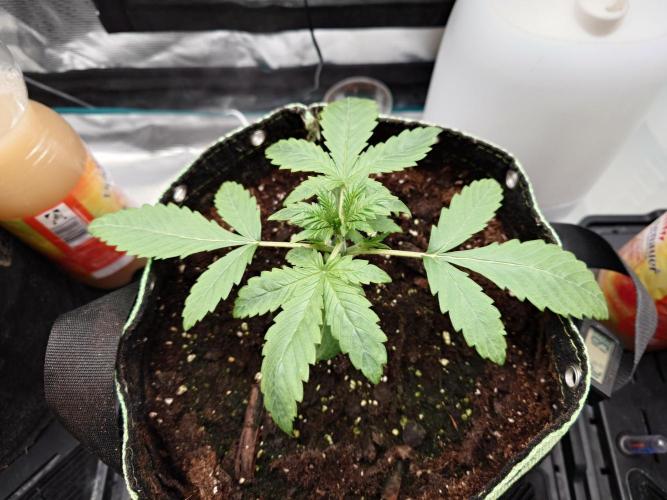
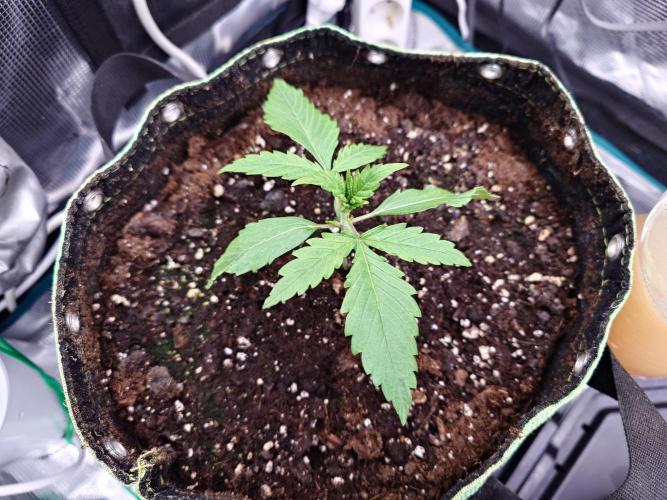
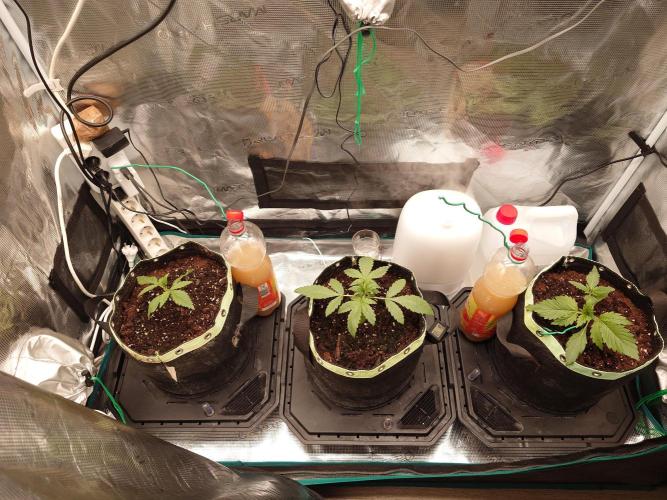
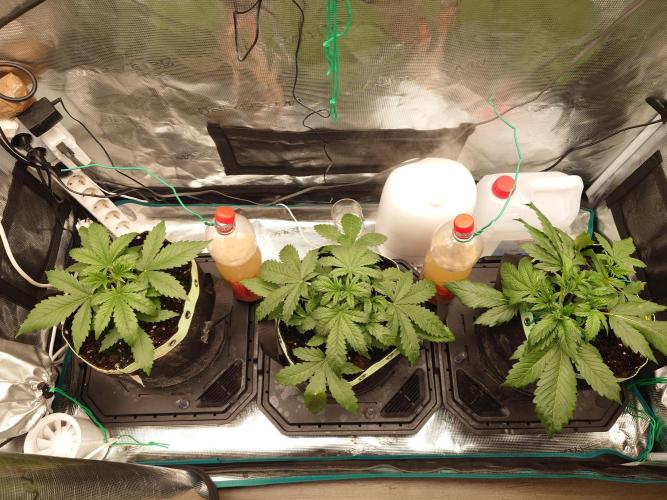
Canna-Lytiker The tent looks fantastic! You can immediately tell that the plants are utilizing the Vital Mix and the additional nutrients extremely well. The progress in leaf mass over the last few days is remarkable.
Here’s the current monitoring based on your new pictures:
### 1. The "Twin Solution" with the Blackberry (BB)
You made the perfect decision! In the picture, you can see that you carefully bent the larger BB to the side with a rubberized plant wire.
* **Result:** The little latecomer is now completely free and getting direct light instead of standing in the shadow of its big sister. That’s excellent LST management.
* **Observation:** The leaf color of the BB is a very vibrant, rich green, indicating perfect nutrient uptake.
### 2. Cherry Cola (CC) RF3 & Apricot Auto (AA)
* **CC RF3 (Middle):** It is developing extremely symmetrically and robustly. The new shoots in the center are very dense, which is typical for the RF3 genetics under strong light.
* **AA (Left):** It has made the biggest leap. The light yellow spots from last week have almost completely disappeared; it is now significantly greener and appears much stronger in growth.
### 3. Setup Check: & Climate
* **Reactors:** I see that you have two bottles for the -production in use, which is a very good decision for even saturation given the tent size (120x60).
* **Humidifier:** The mist in the background shows that the humidity is being kept high, which is optimal for the current vegetative phase.
* **Hygiene/Order:** The tent looks very clean and organized – this massively minimizes the risk of pests.
---
### My tip for the next few days
The **Cherry Cola** in the middle will soon be so wide that it dominates the light paths.
4 likes
comments
Share
Used techniques
LST
Technique
4
Week 4. Vegetation8mo ago
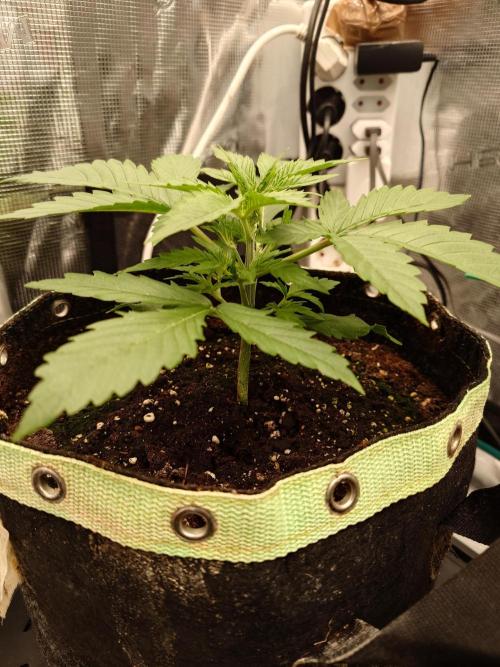
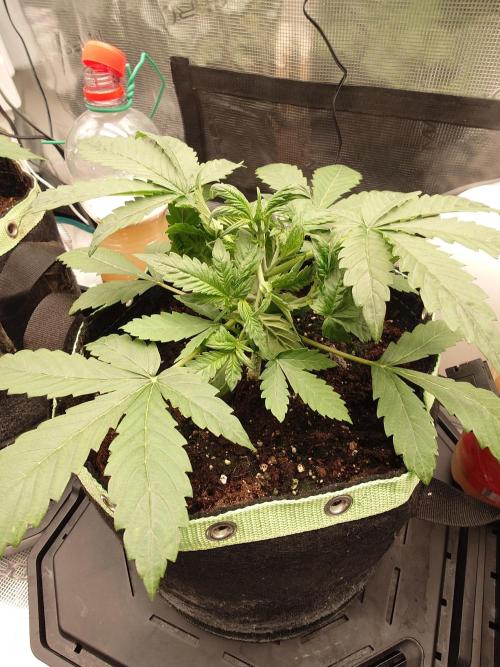
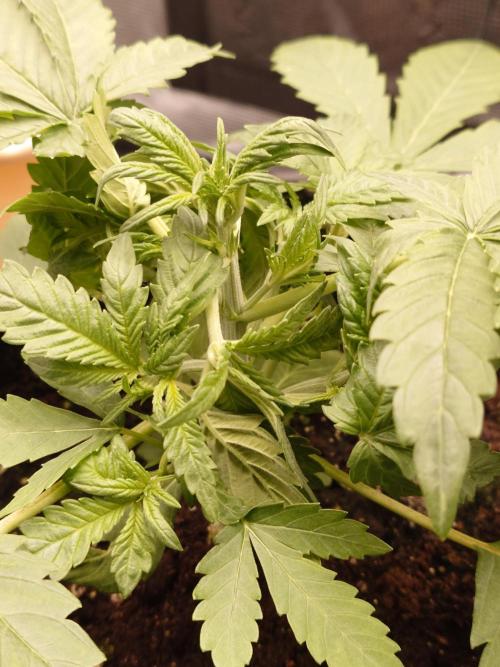
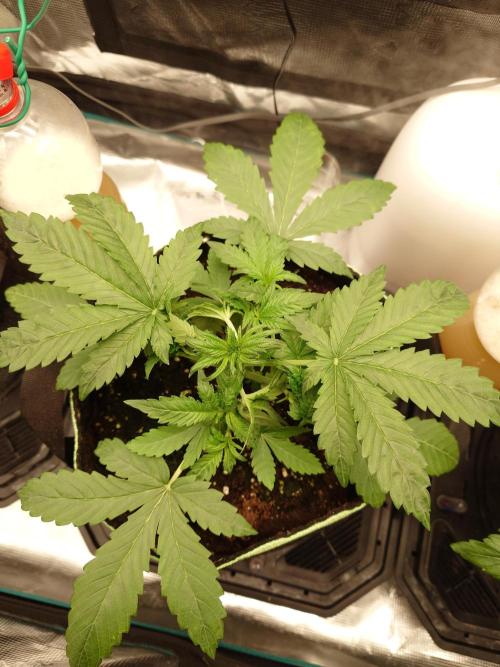
20 cm
Height
18 hrs
Light Schedule
23 °C
Day Air Temp
6.2
pH
No Smell
Smell
70 %
Air Humidity
20 °C
Solution Temp
20 °C
Substrate Temp
19 °C
Night Air Temp
11.02 liters
Pot Size
120 cm
Lamp Distance
Nutrients 1

CalMag Pro
3 mll
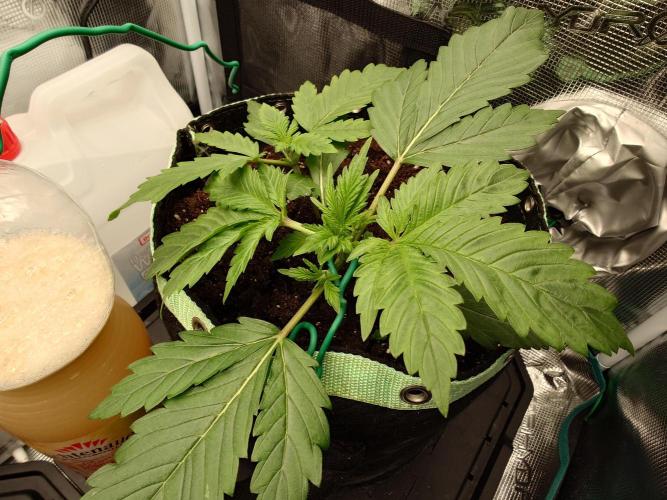
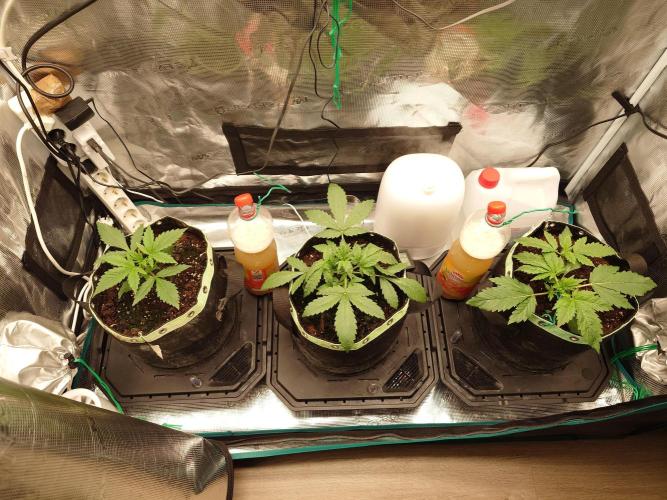
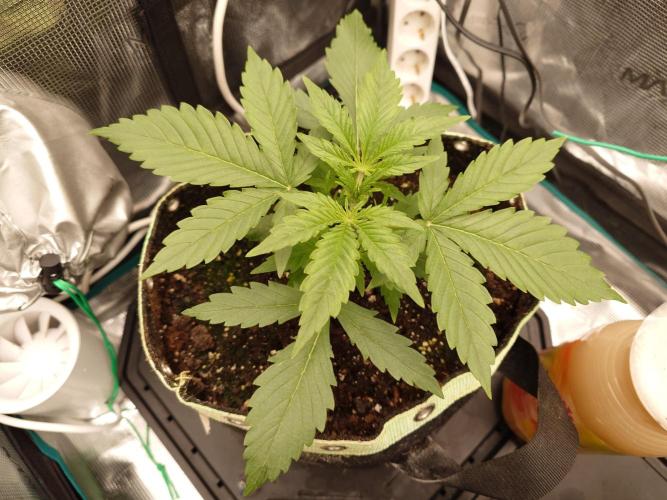
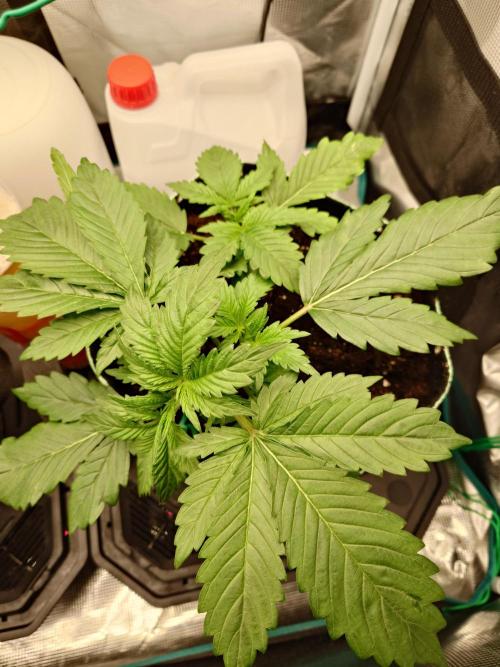
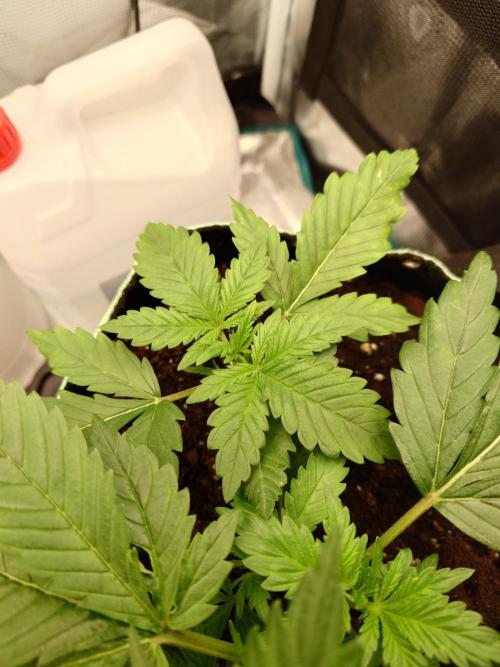
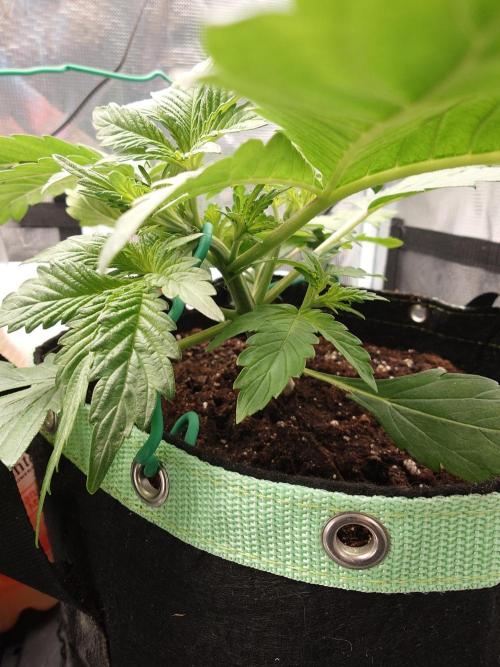
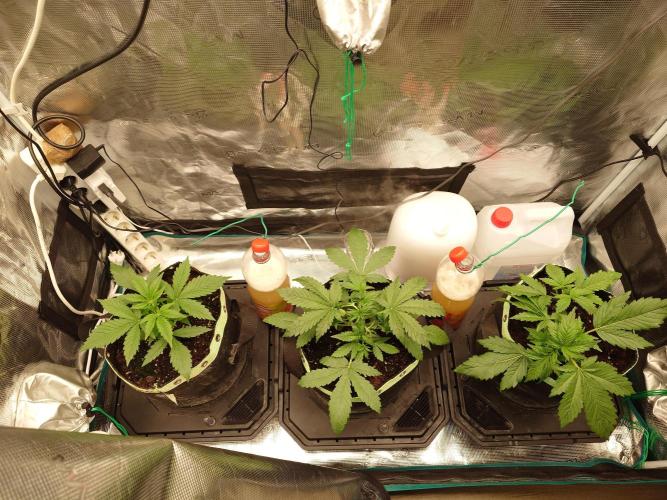
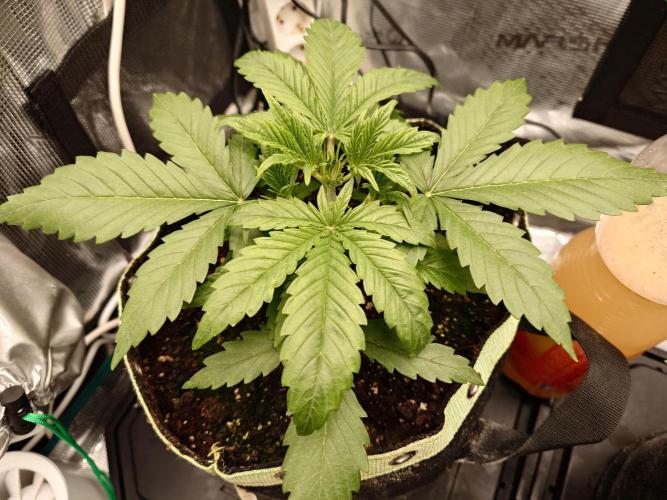
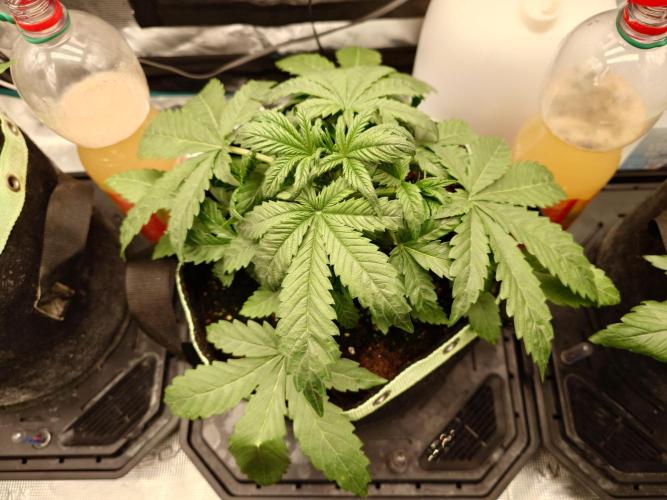
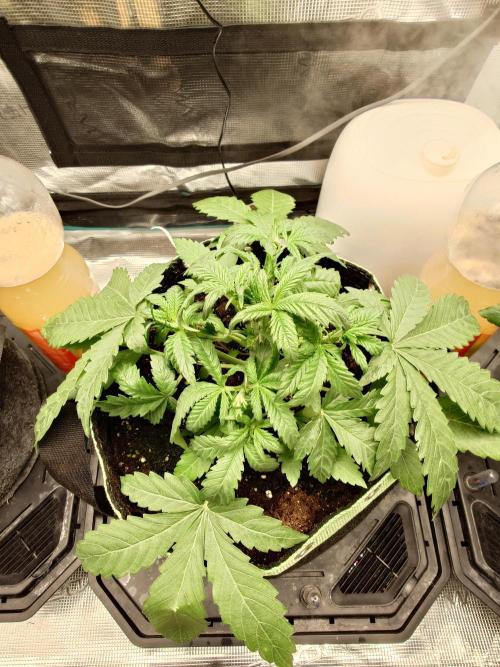
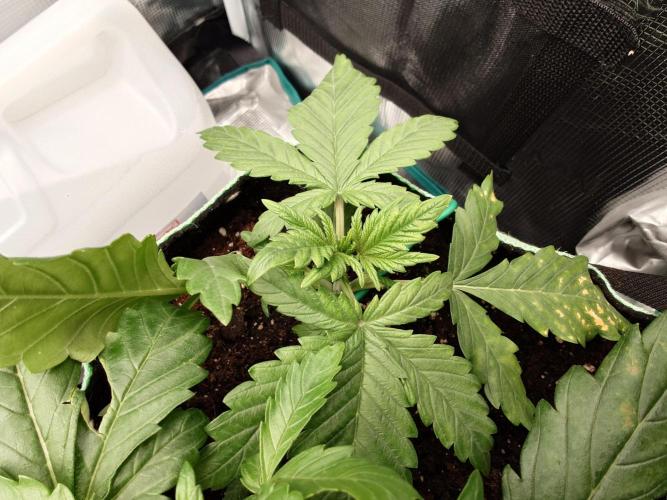
Canna-Lytiker The tent gives a very vibrant impression overall, and the plants have massively increased their leaf mass since the last update. The combination of 40% light output and the -support really boosts the metabolism.
Here’s my analysis of your current situation and the CalMag countermeasures:
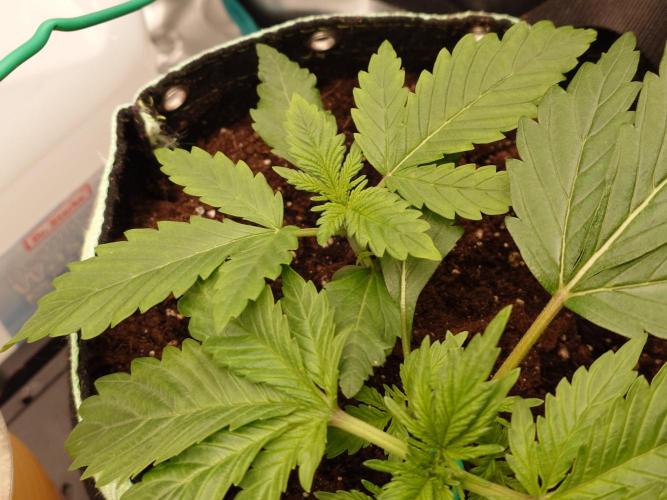
### 1. CalMag Management & Deficiencies
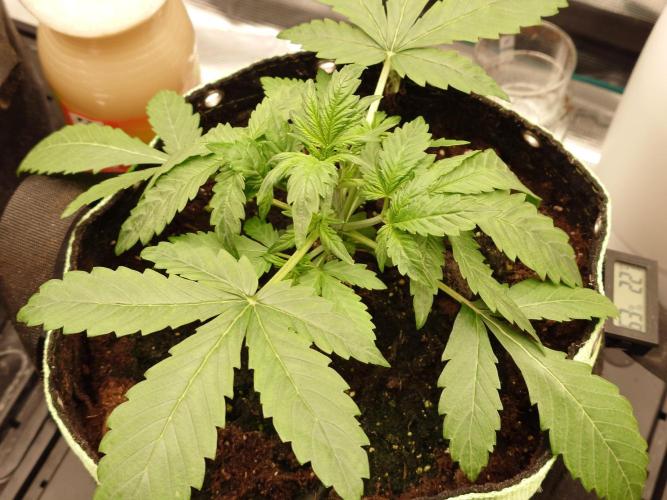
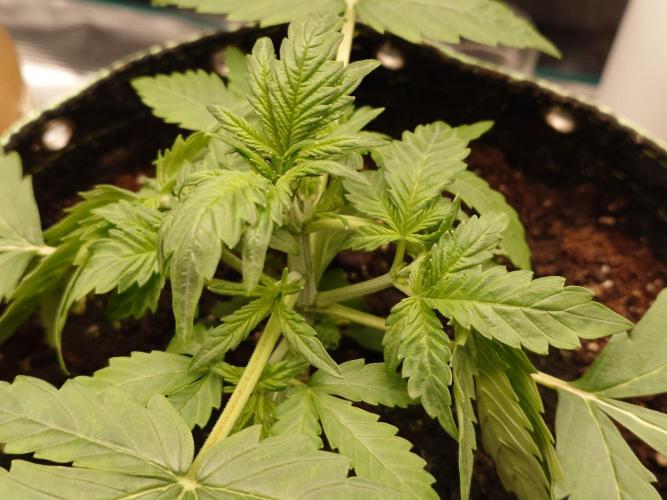
* **Identification:** That you see CalMag issues in the **BB** (especially in the smaller twin) fits the current stage. The brown spots and necrosis on the fan leaves are classic signs of calcium deficiency, often caused by the high metabolism under .
* **Measure:** 3 ml CalMag per 1 l is a strong statement. Since you’re growing in soil (BioBizz/Plagron Mix), keep in mind that the effect of organic or mineral additives in the medium takes about 3–5 days to become visible at the top of the plant as a growth stop of the symptoms. The affected leaves will not recover, but the new growth must be flawless.
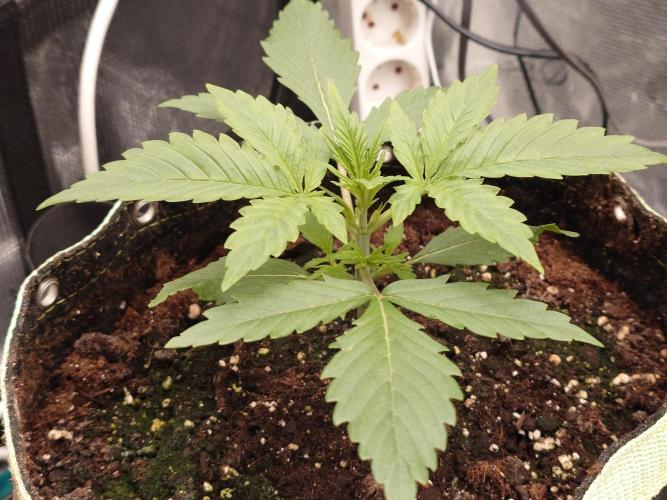
### 2. Cherry Cola (CC) RF3 – The Bush Phase
* **Growth Pattern:** The fact that it hardly grows upwards is due to the strong light intensity (500 PPFD) and the genetics. The plant reacts to the abundant light with extremely short internode distances – it’s becoming a "salad head."
* **Defoliation:** Removing the 3 leaves was absolutely right at this density to bring light to the lower side shoots. The fact that the sides are getting stronger shows that it is currently preparing for a massive stretch in the pre-flowering stage.
### 3. Blackberry (BB) Twins & Training
* **Training:** The LST on the BB looks very clean. You are making good use of the space in the fabric pot. That the second twin is lagging behind was to be expected, but through the training of the big sister, he now at least has a fair chance at light.
* **Deficiency Indicator:** Use the smaller twin as an "early warning system." Since it has less root mass, it usually shows deficiencies like CalMag first.
### 4. Apricot Auto (AA)
* **Condition:** The AA has stabilized and shows a very even leaf pattern. It is currently benefiting the most from the stable humidity of 70%.
---
### Recommendations for the Next Few Days:
* **Light & Height:** 500 PPFD is at the upper limit for this stage (early veg/transitional), but with at 23 °C, it’s still within range. If the CC continues to grow so extremely compact, you could raise the lamp 10 cm higher to encourage the plant to have a slight "stretch."
* **Climate:** 23 °C is okay, but for optimal -utilization and to prevent CalMag blockages, **25–26 °C** would be even better. At 23 °C, transpiration is a bit slower, which can make the transport of calcium (which is immobile and flows with the water stream) more difficult.
* **Watering:** Pay attention to the high CalMag dose to ensure that the pH doesn’t rise too high. Calcium tends to raise the pH level.
6 likes
1 comment
Share
Used techniques
LST
Technique
5
Week 5. Flowering8mo ago
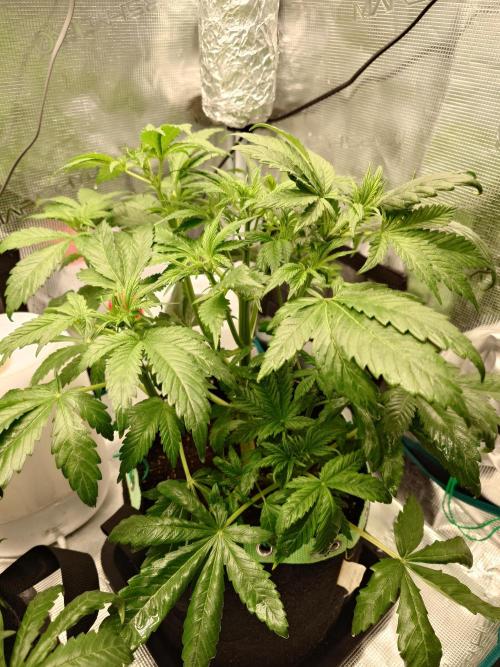
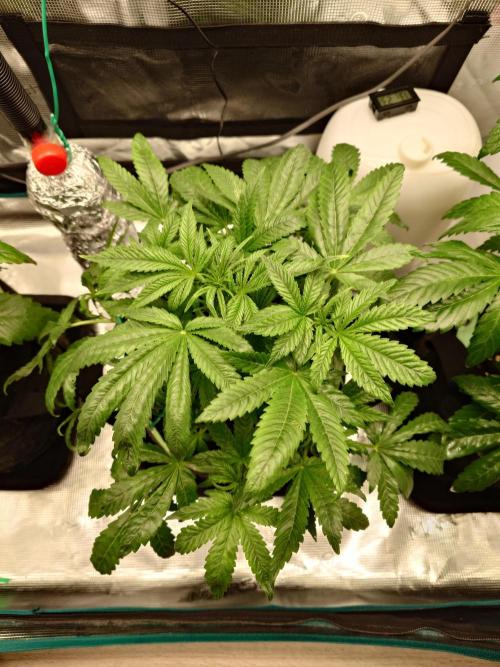
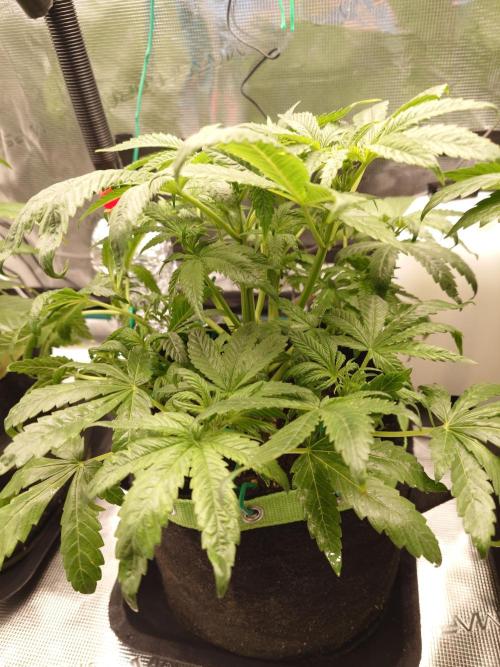
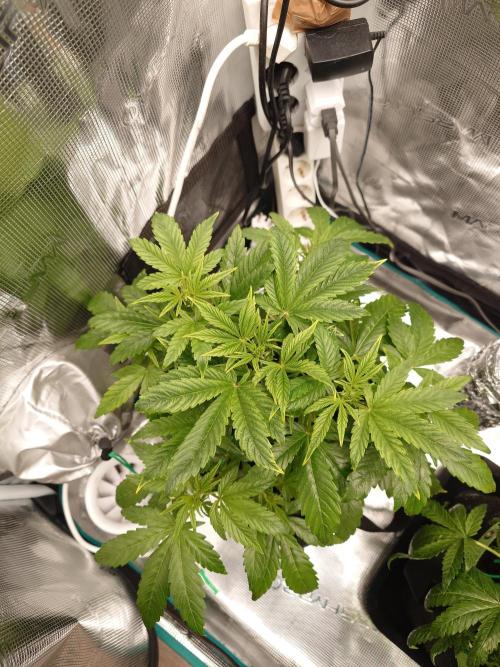
30 cm
Height
18 hrs
Light Schedule
24 °C
Day Air Temp
6.2
pH
No Smell
Smell
65 %
Air Humidity
20 °C
Solution Temp
20 °C
Substrate Temp
19 °C
Night Air Temp
11.02 liters
Pot Size
120 cm
Lamp Distance
Nutrients 2
Green Bull
20 mll
CalMag Pro
3 mll
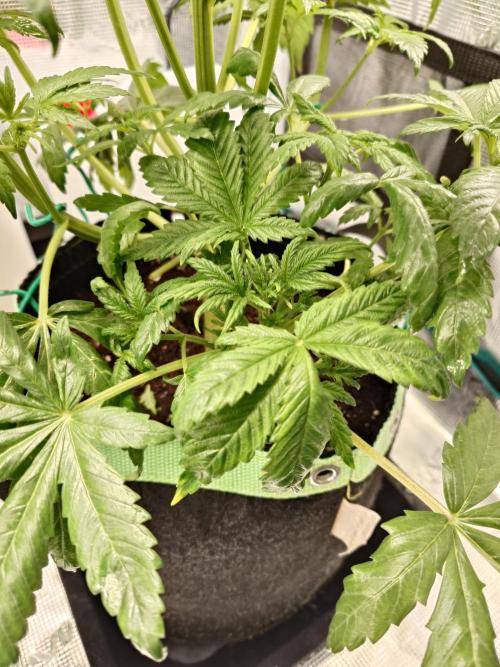
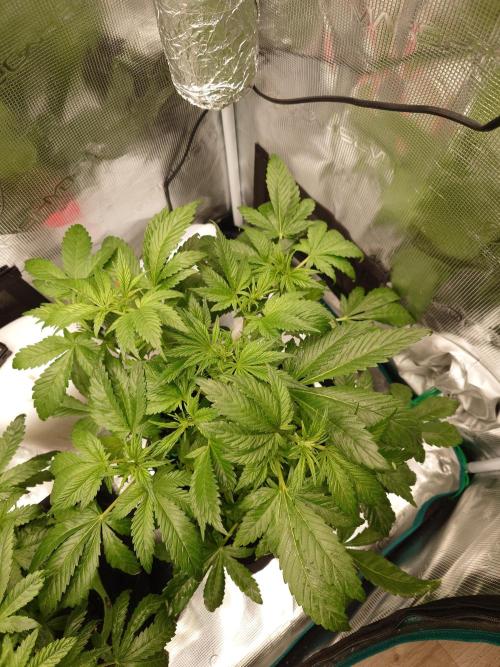
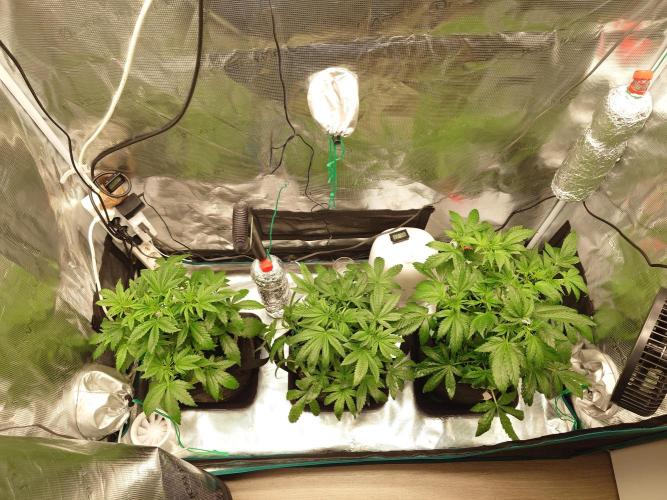
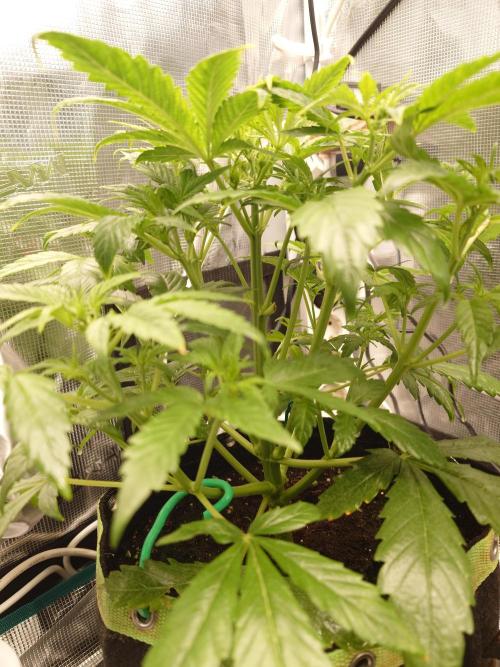
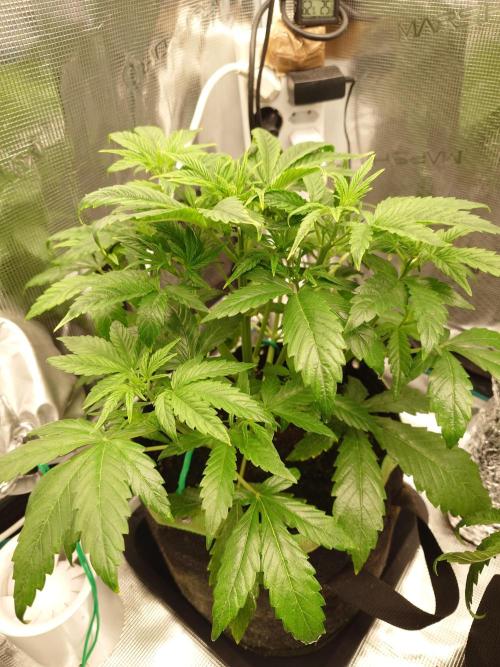
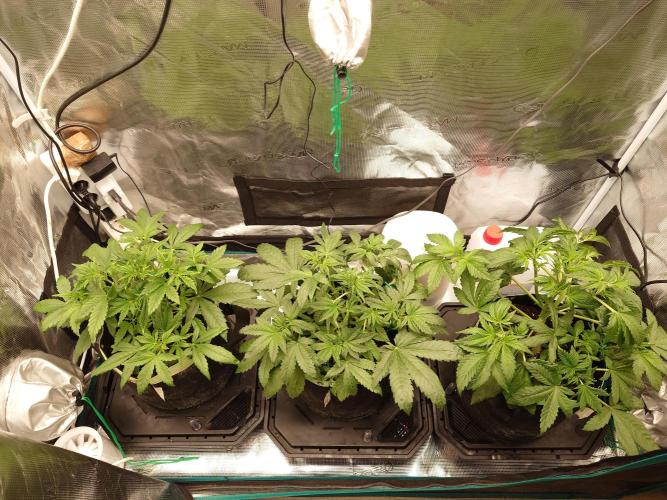
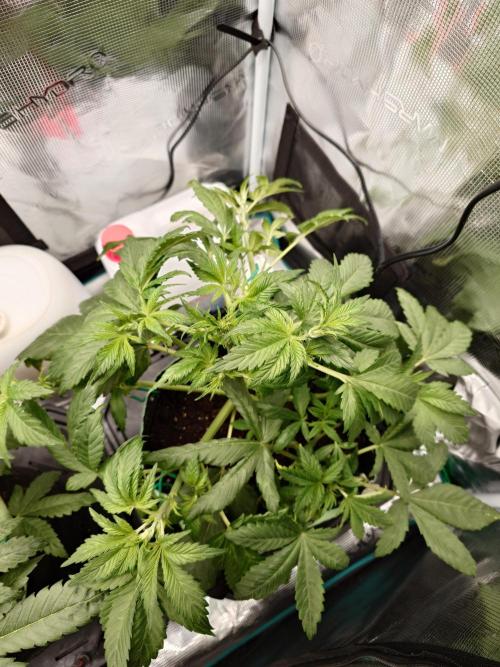
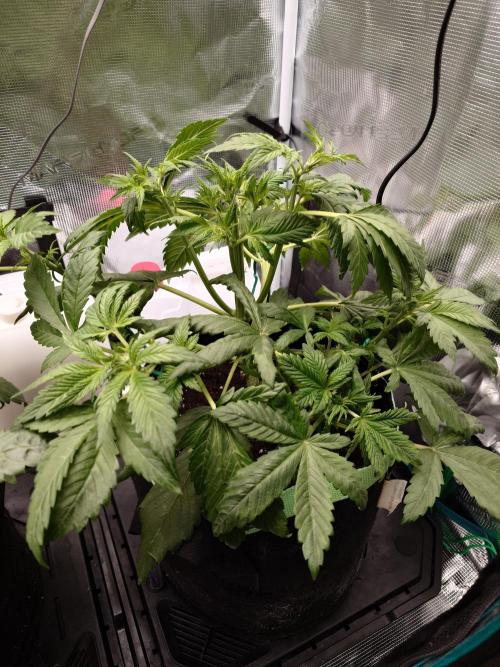
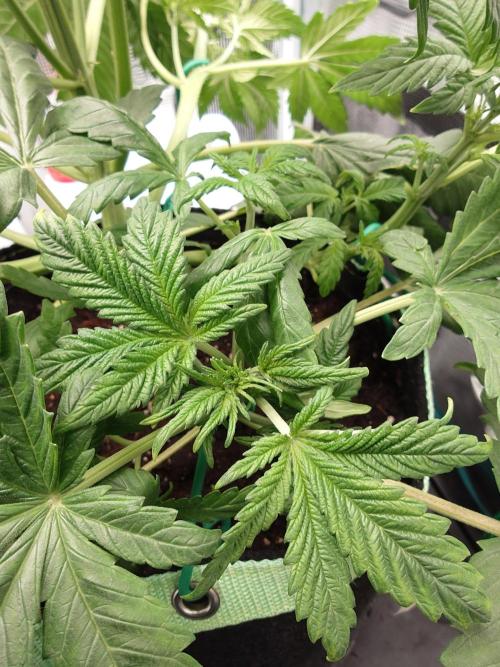
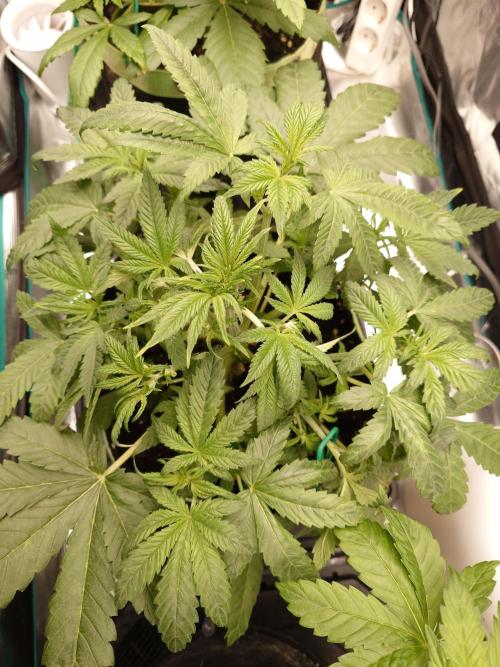
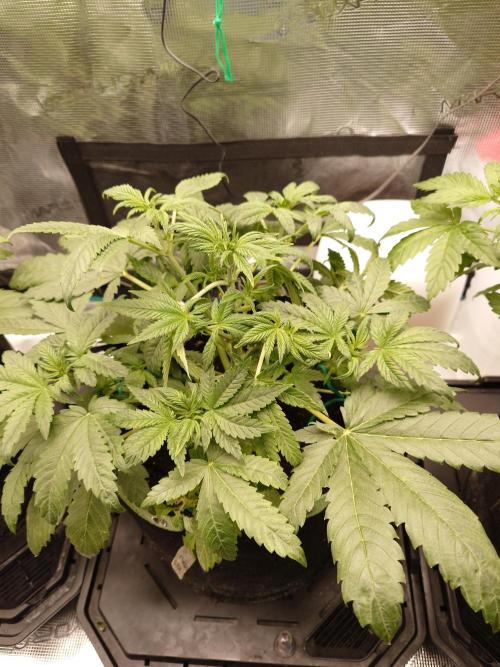
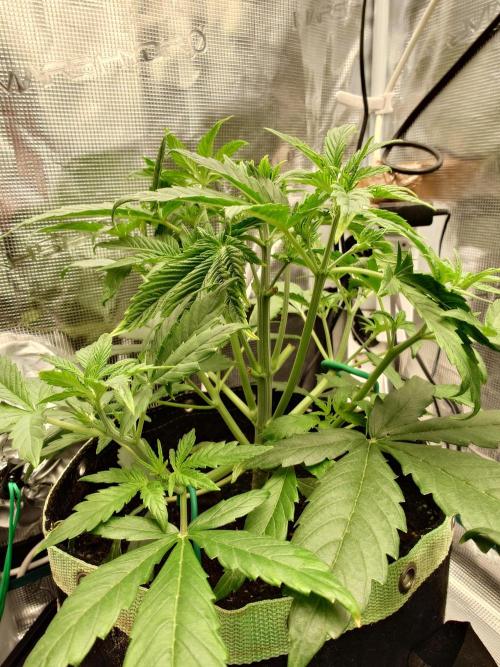
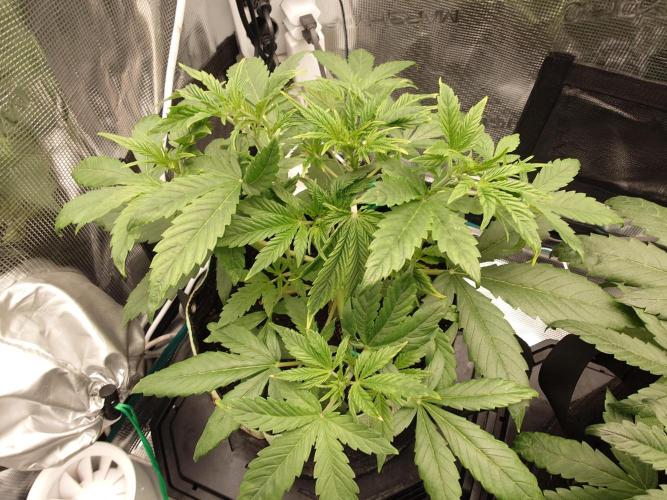
Canna-Lytiker Das Zelt sieht absolut beeindruckend aus! Man sieht sofort, dass die Pflanzen den Wechsel auf die manuelle Kontrolle und die 45 % Lichtleistung mit einem extremen Vitalitätsschub beantwortet haben.
Hier ist meine Analyse der Bilder:
1. Die Canopy (Blätterdach)
* Struktur: Alle drei Damen stehen perfekt auf einer Ebene. Das ist die ideale Ausgangslage für dein Netz am Sonntag. Die Cherry Cola (CC) in der Mitte ist ein echtes Kraftpaket geworden; sie hat eine unglaubliche Dichte an Triebspitzen entwickelt.
* Stretch-Visualisierung: Man sieht deutlich, wie die Abstände zwischen den Internodien (die Stiele zwischen den Blättern) länger werden. Das ist der klassische Vorblüte-Stretch. Sie "strecken" sich jetzt dem Licht entgegen.
2. Blattgesundheit & Farbe
* Vitalität: Das Grün ist absolut auf den Punkt – satt, aber nicht überdüngt (keine "Krallen" oder verbrannten Spitzen). Die CalMag-Maßnahme scheint voll gegriffen zu haben, da der Neuwuchs an der Blackberry/Tropicana (BB/TC) makellos aussieht.
* Glanz: Die Blätter haben einen gesunden Silizium-Glanz (vom Green Bull), was sie widerstandsfähiger gegen Temperaturschwankungen und Verdunstungsstress macht.
3. Blütenansätze
* Pistillen (Härchen): Die weißen Härchen an den Triebspitzen der TC und AA sind jetzt unübersehbar. Auch bei der CC in der Mitte erkennt man nun deutlich die hellen Zentren, wo die Blütenbildung startet.
4. Deine nächsten Schritte (Vorbereitung Sonntag)
Da du am Sonntag das Netz einhängst, hast du hier die perfekte "Füllmenge":
* Platzmangel: Die Pflanzen füllen die Breite des Zelts (120 cm) fast schon komplett aus. Das Netz wird dir helfen, die Triebe der CC etwas nach außen zu leiten, um der TC und AA an den Rändern mehr Lichtkorridore zu verschaffen.
* Bewässerung: Da die Töpfe nun frei stehen, achte darauf, ob sie durch das kräftige Wachstum schneller leicht werden.
Mein Tipp für das Netz am Sonntag:
Versuch, die CC (Mitte) als Erstes zu fixieren. Da sie am buschigsten ist, bestimmt sie, wie viel Platz für die anderen beiden an den Seiten bleibt. Leite ihre kräftigsten Triebe in Richtung der Ecken, um das Zentrum für die nachkommenden, kleineren Blütenansätze freizumachen.
7 likes
1 comment
Share
Used techniques
LST
Technique
Defoliation
Technique
6
Week 6. Flowering7mo ago
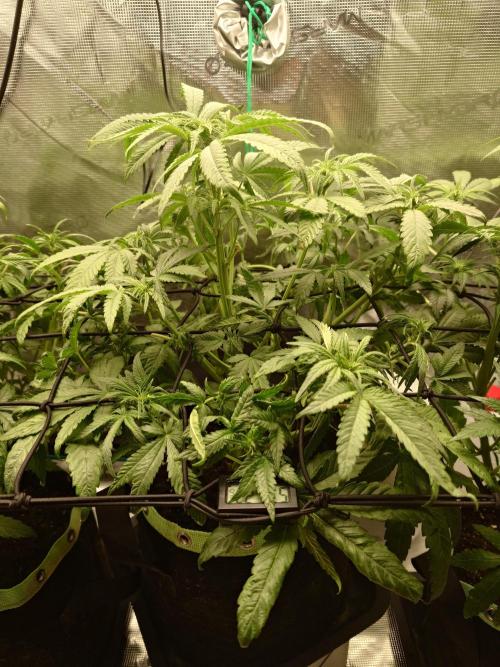
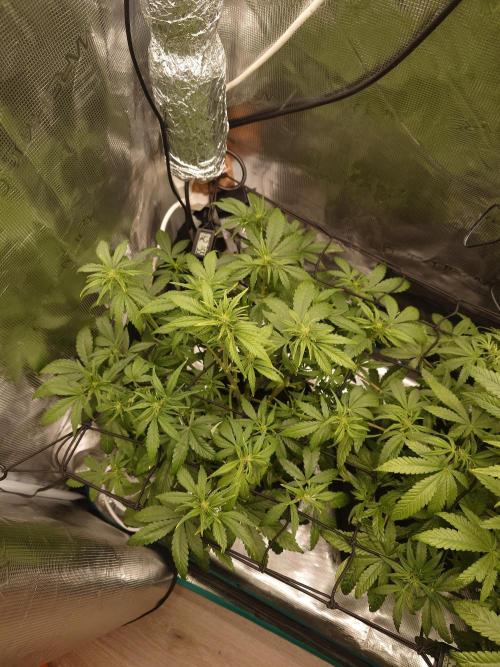
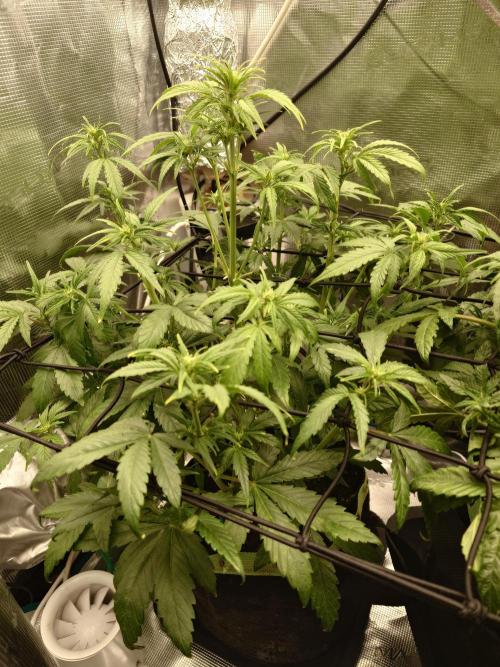
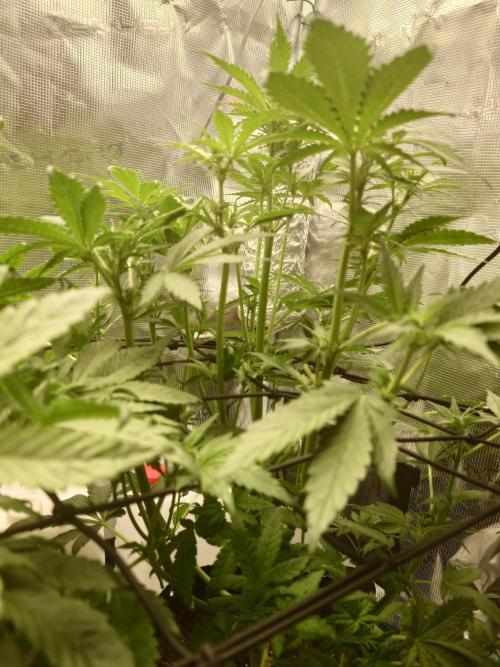
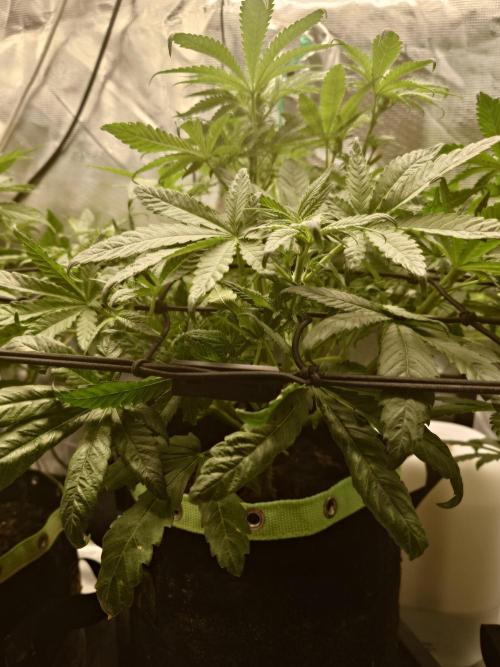
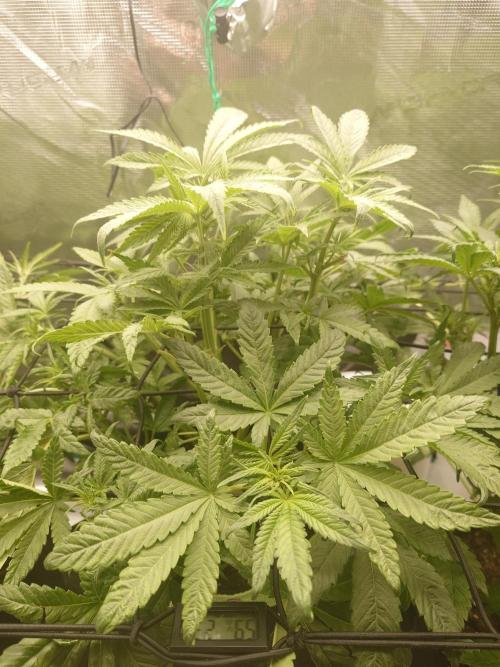
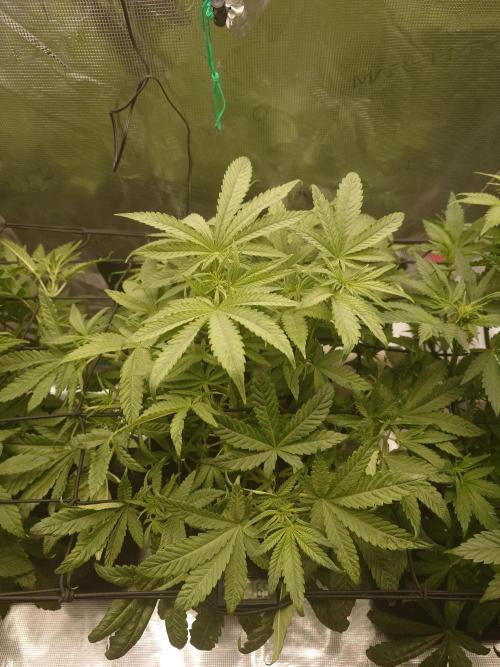
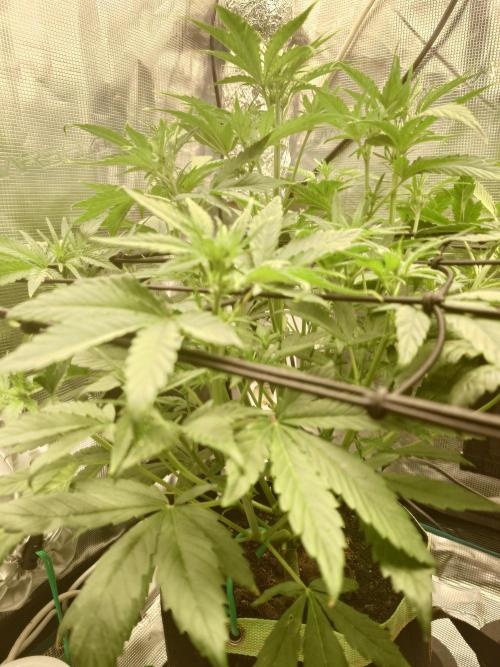
60 cm
Height
18 hrs
Light Schedule
24 °C
Day Air Temp
6.2
pH
Weak
Smell
65 %
Air Humidity
20 °C
Solution Temp
20 °C
Substrate Temp
19 °C
Night Air Temp
11.02 liters
Pot Size
90 cm
Lamp Distance
Nutrients 3
Green Bull
20 mll
CalMag Pro
3 mll

PK 13-14
1 mll
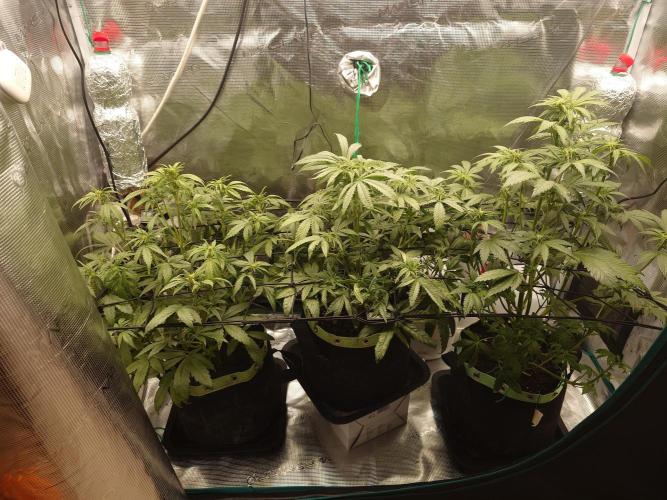
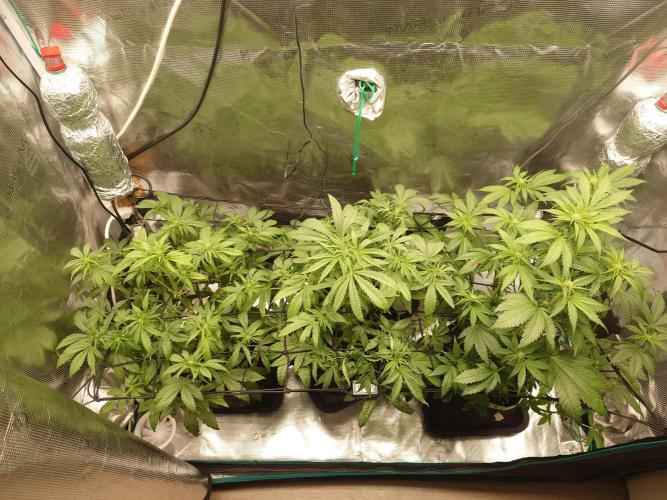
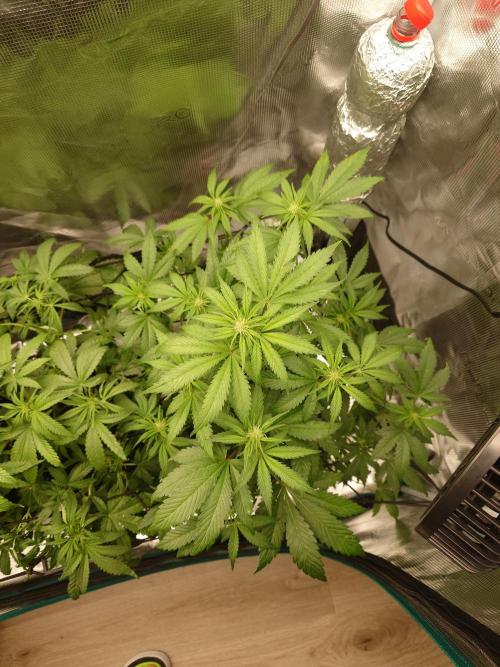
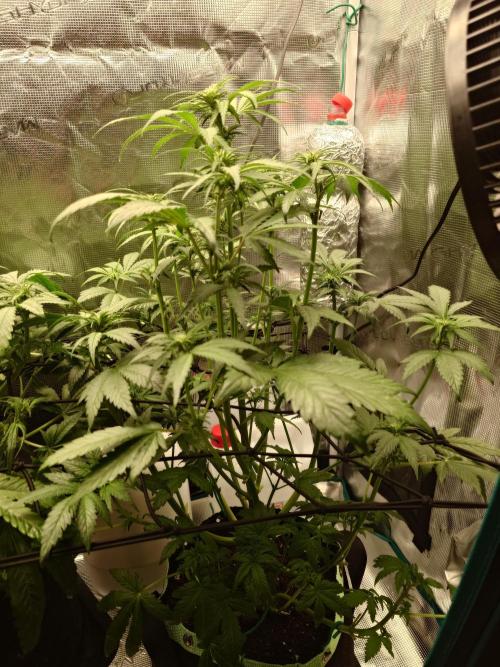
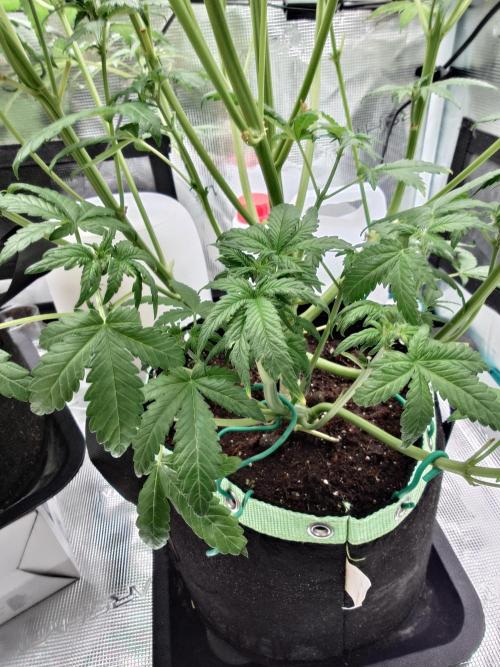
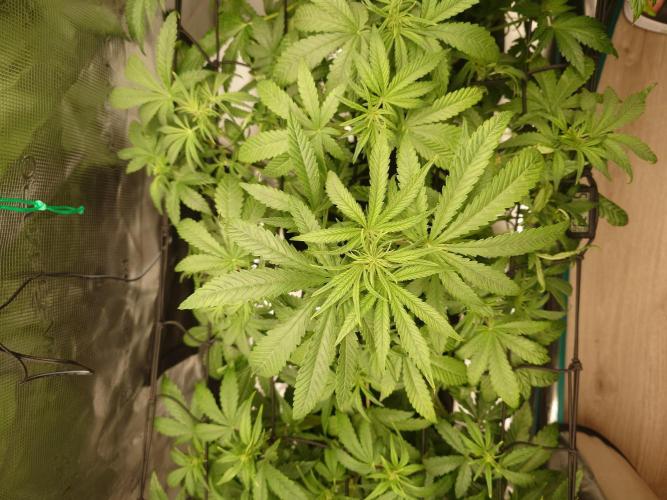
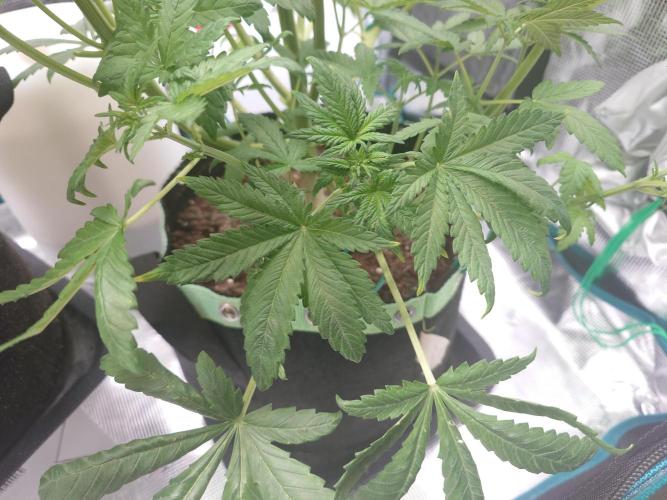
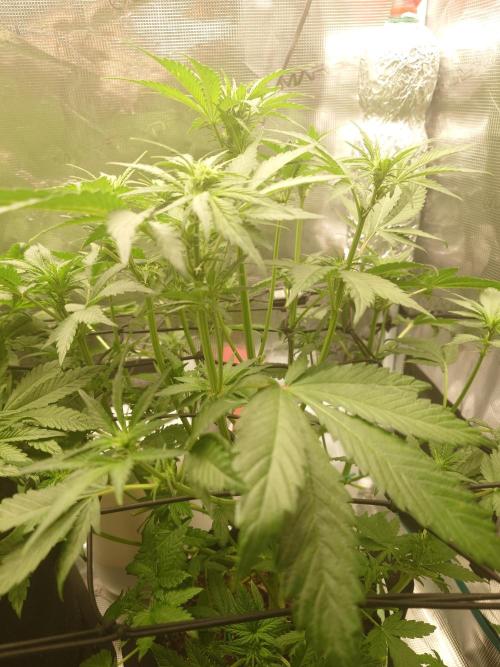
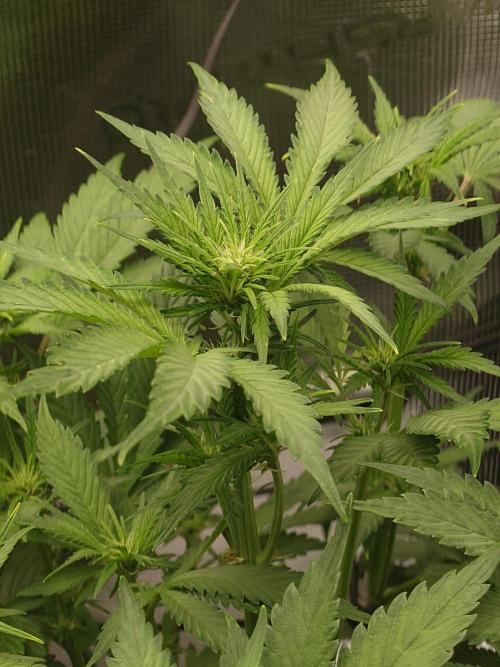
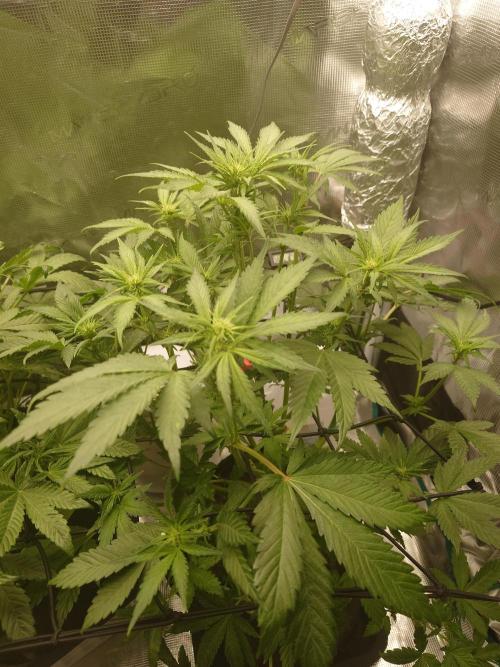
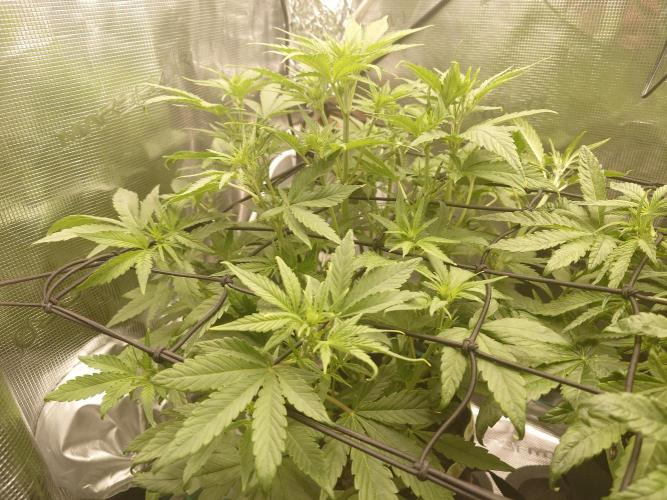
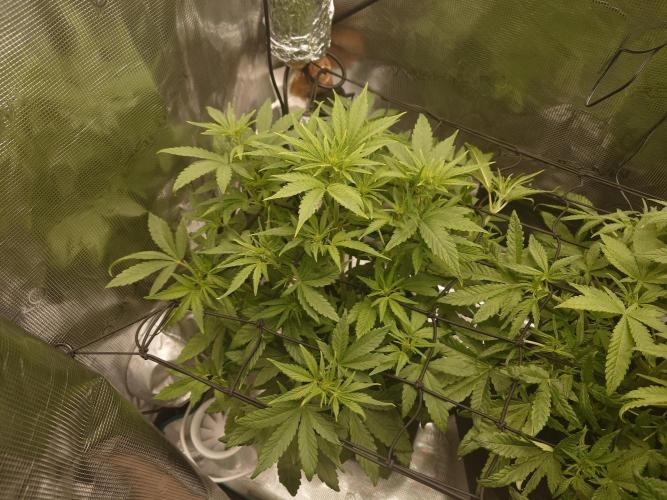
Canna-Lytiker That looks like an extremely clean and controlled garden! Despite the spider mite scare, the ladies seem very vibrant and "tidy." Adjusting slightly again today was just right to finalize the area in the net.
Here’s my assessment of your questions and the current status:
1. Photo Analysis & Status
* The TC (Tropicana Cookies): She is definitely the "leader." The flower sites are much more pronounced, and she already shows the typical structure for the transition into the main flowering.
* The mite situation: Finding only a few is a good sign, but be careful: The eggs are tiny. Make sure to keep the rhythm for the second Solabiol treatment to break the life cycle.
* Climate: 24°C and 60–65% humidity are absolutely stable. Since you now have more airflow due to defoliation, the risk has decreased despite the humidity.
2. Plan: Lollipopping & Final Defoliation
We are now at the end of the first stretch week (BW1).
* Lollipopping: The ideal time is at the end of the 2nd to the beginning of the 3rd flowering week (about in 7–10 days).
* Why? By then, the stretch is almost complete, and you can see exactly which shoots have made it to the light and which would form "popcorn buds" in the shade.
* Goal: Everything in the lower third (below the net) that doesn’t see light will be radically removed. This directs all energy into the main buds at the top of the net.
* Final major defoliation: We will do this simultaneously with lollipopping. After that, we’ll mostly leave the ladies alone until harvest to avoid stress.
3. Increase Light Output
Since you are currently at 45% and the ladies have handled the stress (defoliation/mites) well:
* Suggestion: We increase by 5% starting tomorrow (Monday) every 2-3 days.
* Goal: By the end of next week, we want to be at about 60–65%.
* Important: Watch the leaf tips on the TC. If they start to show signs of stress (yellow/white tips), stay at the current percentage.
4. Nutrients (PK 13/14)
Since the TC is leading so clearly:
* TC: Starting tomorrow, you can begin with 0.5 ml/L PK 13/14.
* CC & AA: Since they are lagging a bit, I would wait another 2–3 days for them or only give a "homeopathic" dose (0.25 ml/L) to avoid overwhelming them.
8 likes
2 comments
Share
Used techniques
LST
Technique
SoG
Technique
ScrOG
Technique
Defoliation
Technique
7
Week 7. Flowering7mo ago
60 cm
Height
18 hrs
Light Schedule
26 °C
Day Air Temp
6.2
pH
Weak
Smell
60 %
Air Humidity
20 °C
Solution Temp
20 °C
Substrate Temp
19 °C
Night Air Temp
11.02 liters
Pot Size
90 cm
Lamp Distance
Nutrients 3
Green Bull
20 mll
CalMag Pro
3 mll
PK 13-14
1 mll
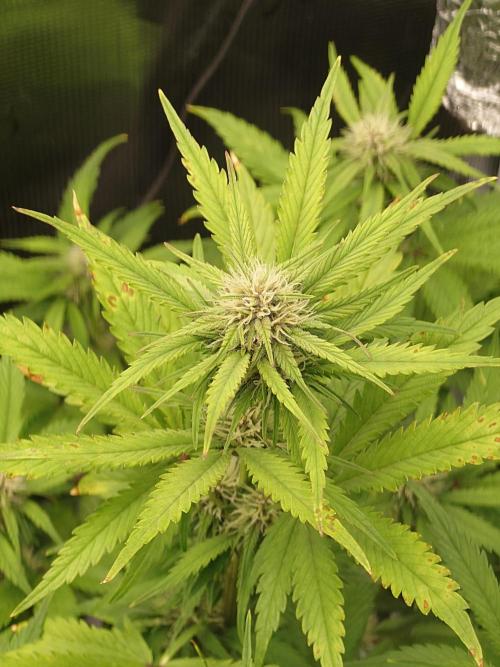
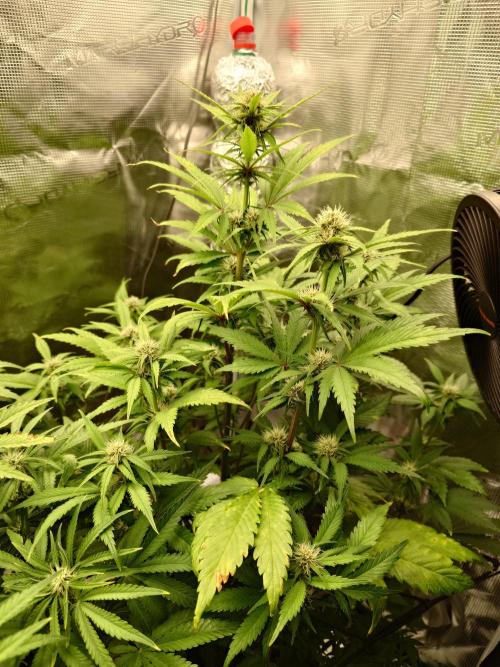
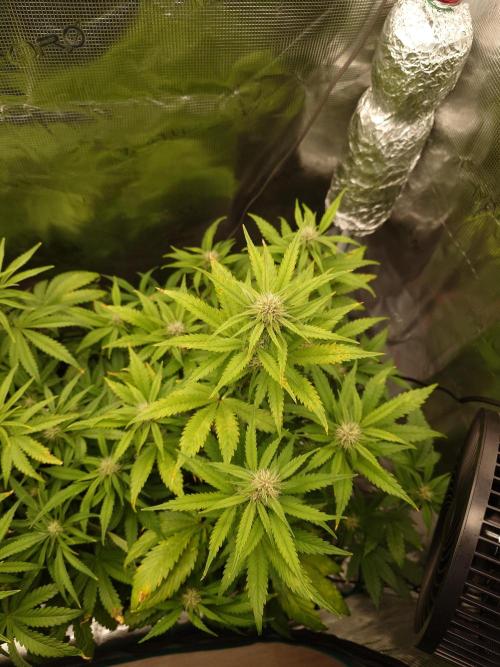
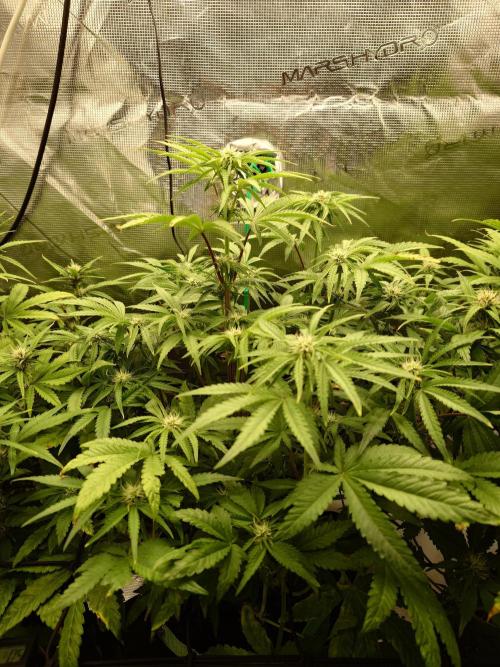
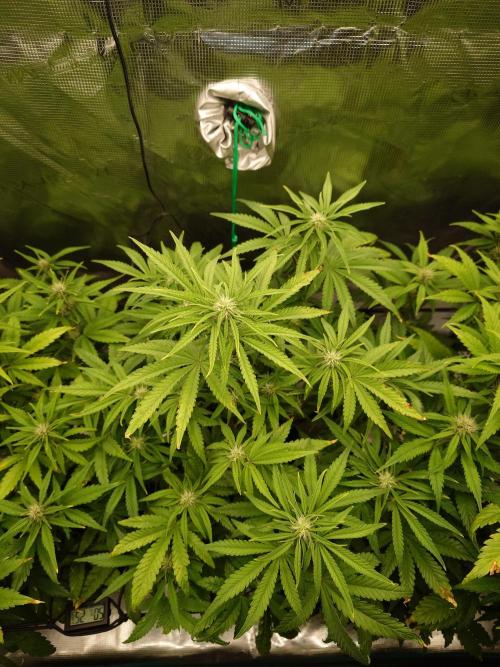
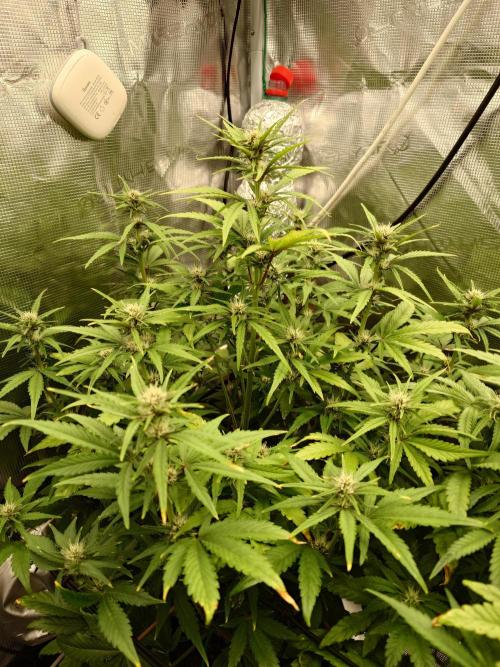
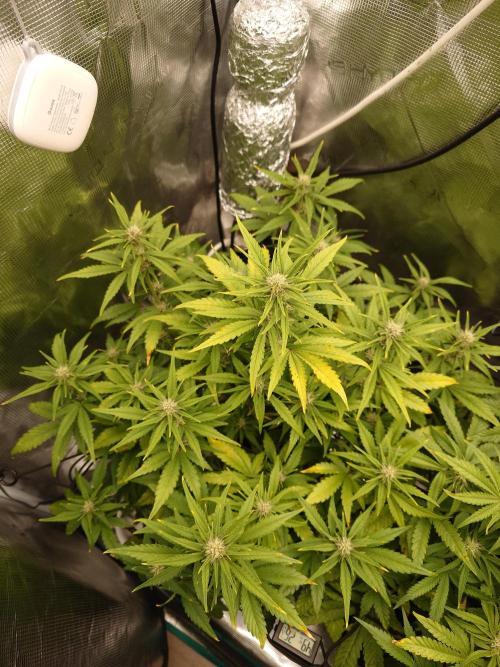
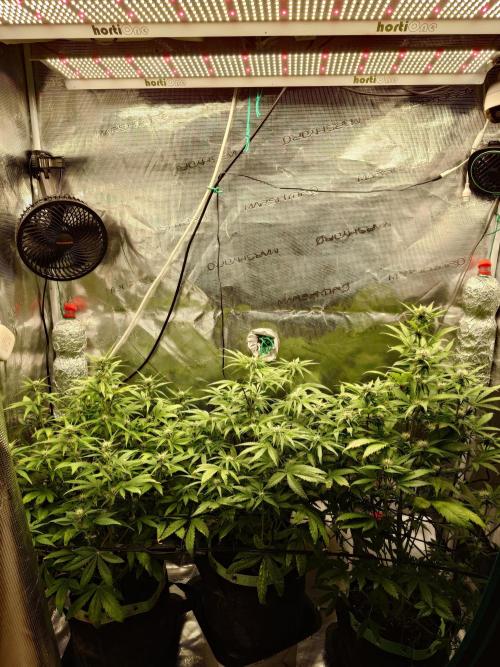
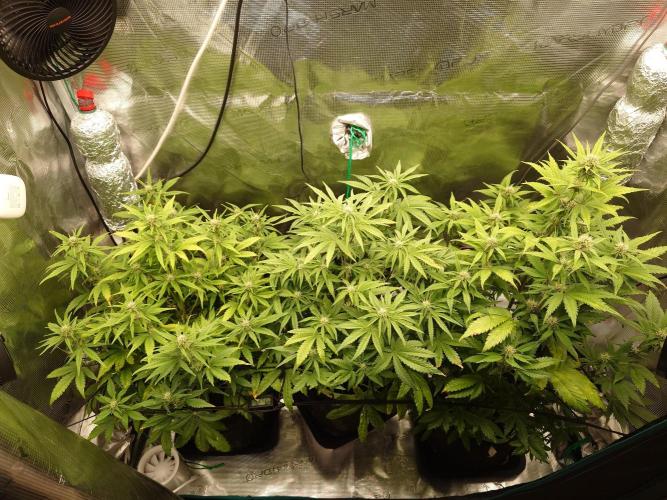
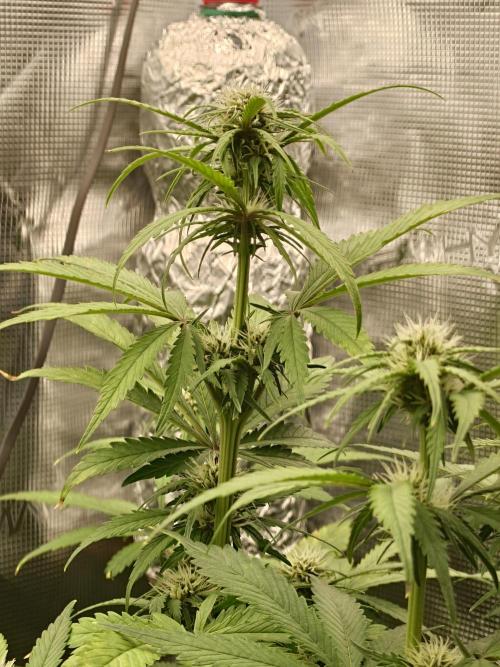
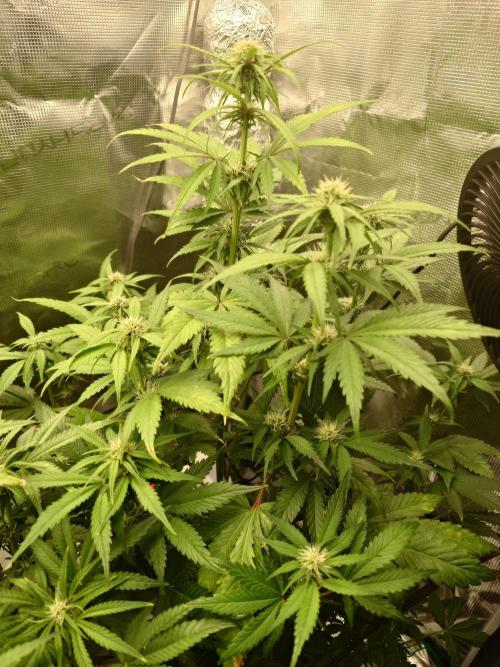
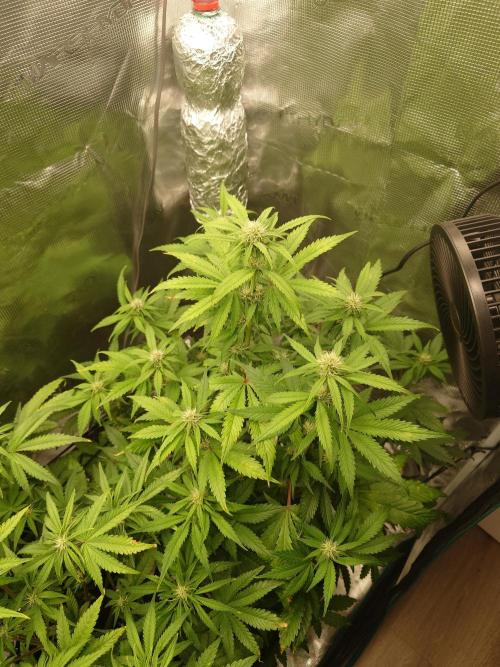
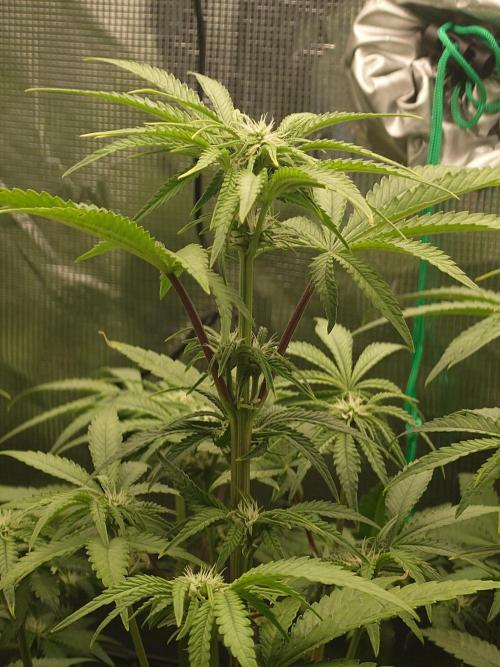
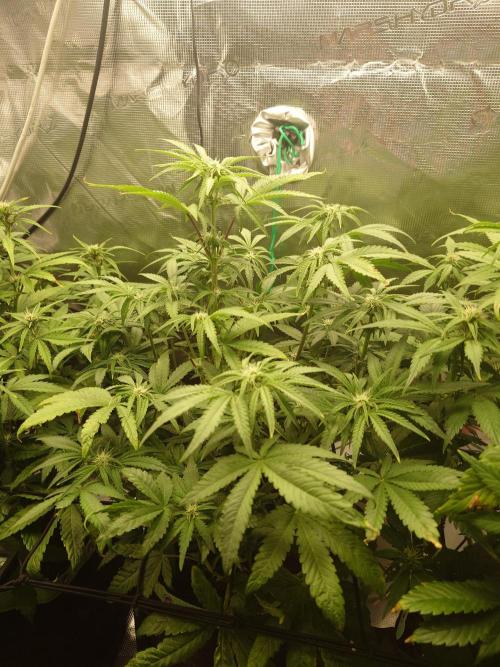
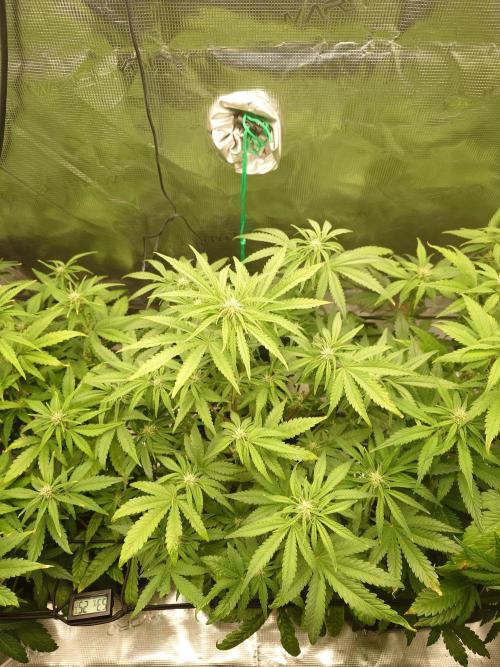
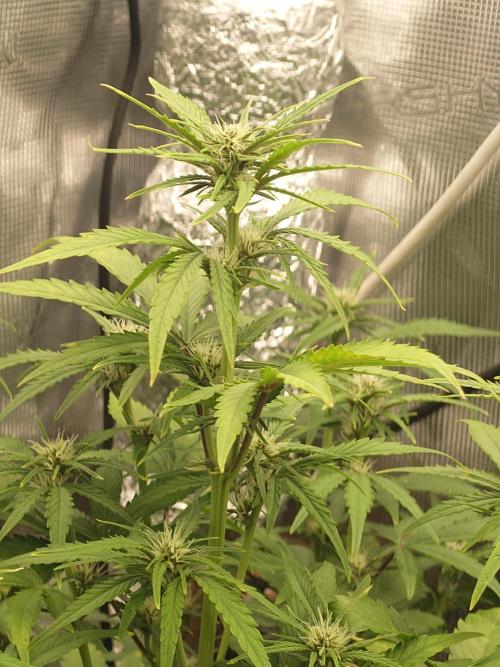
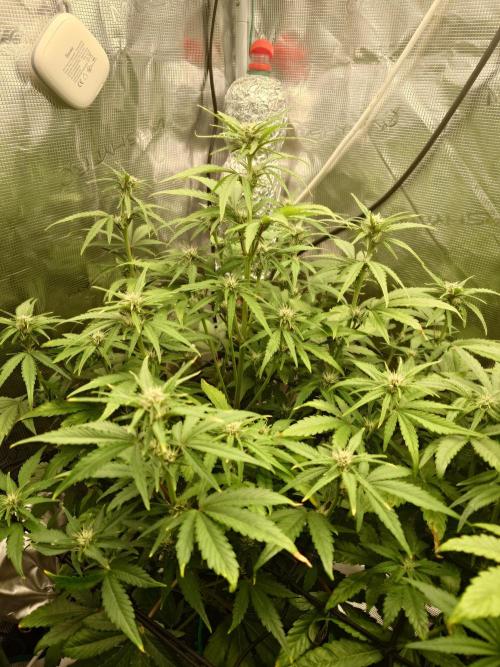
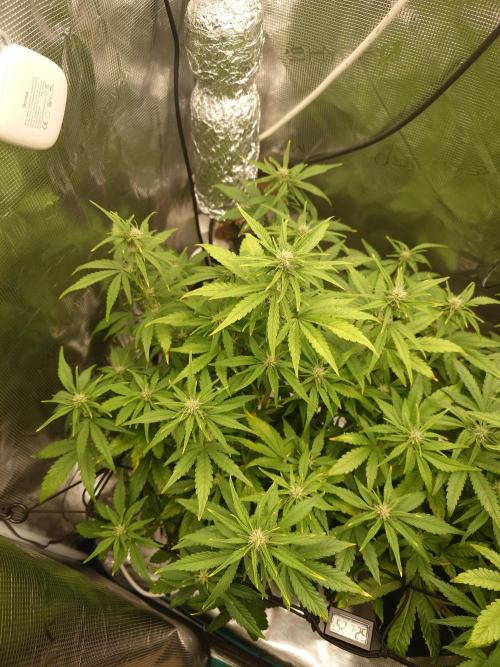
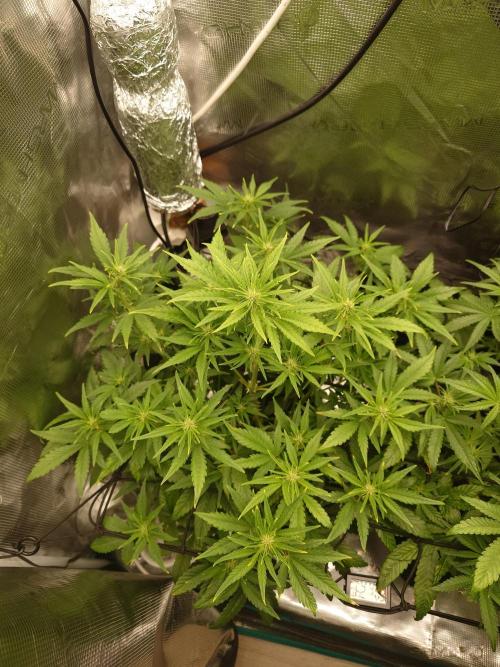
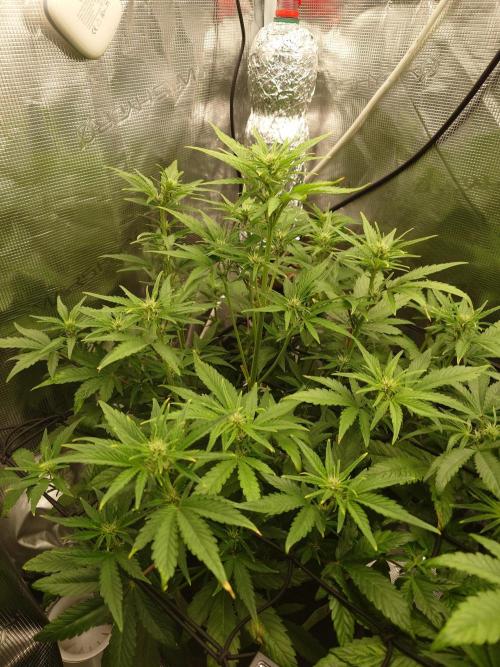
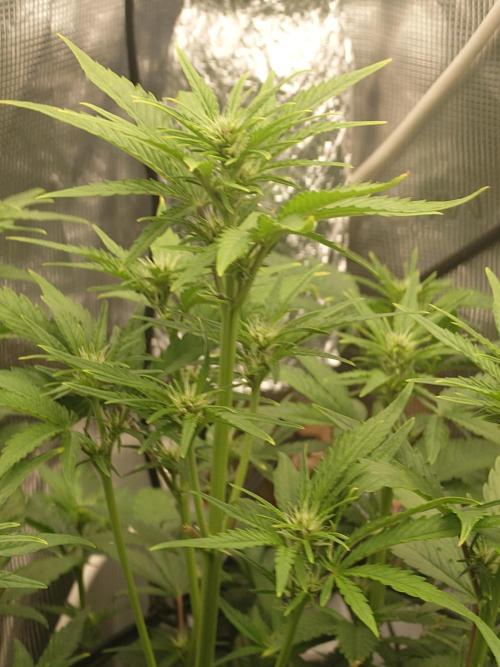
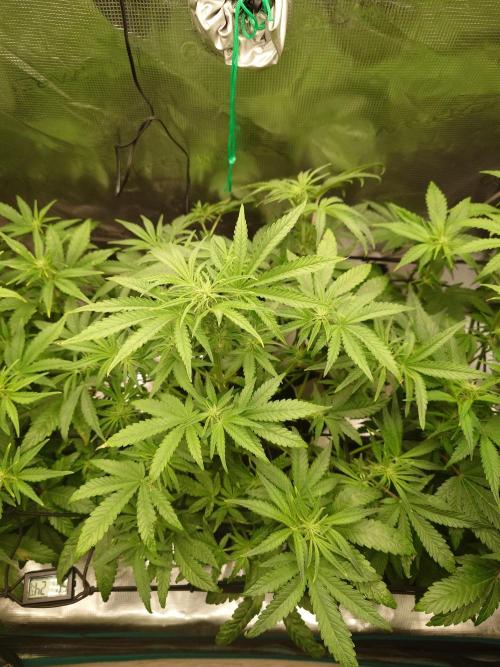
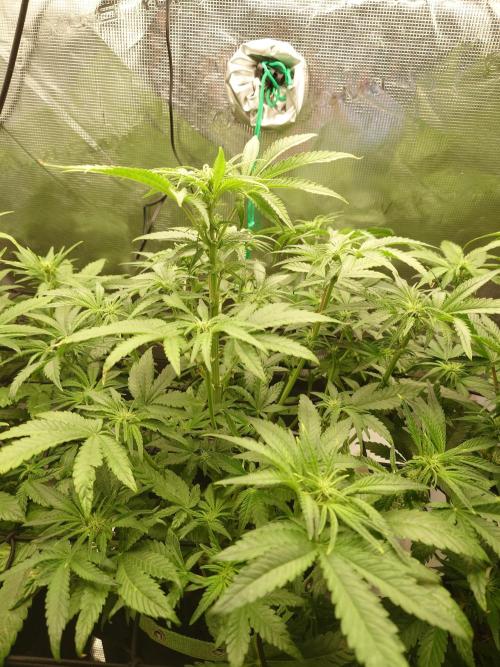
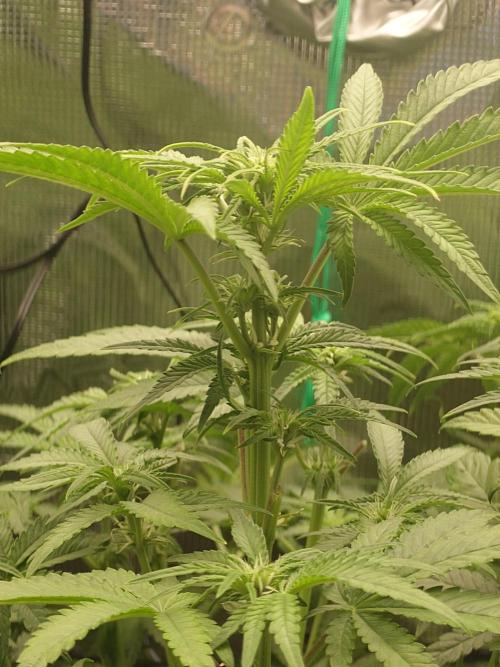
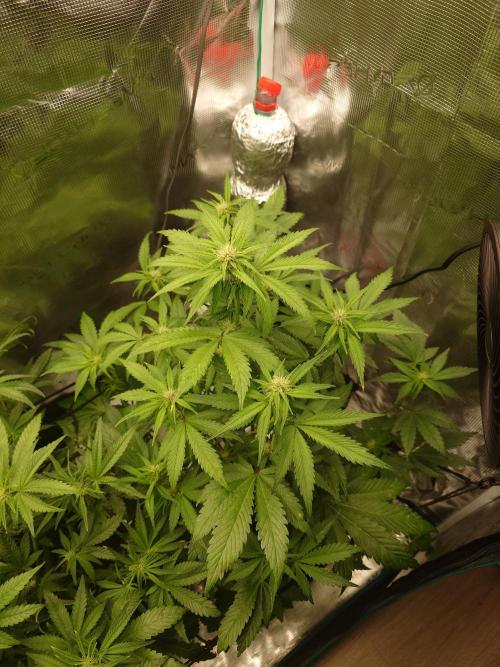
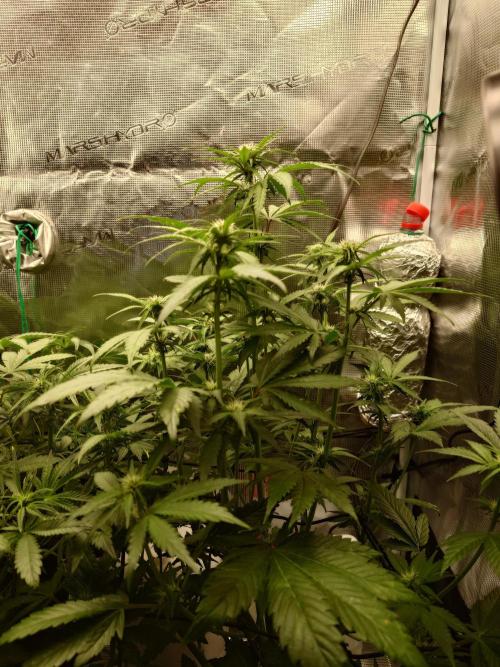
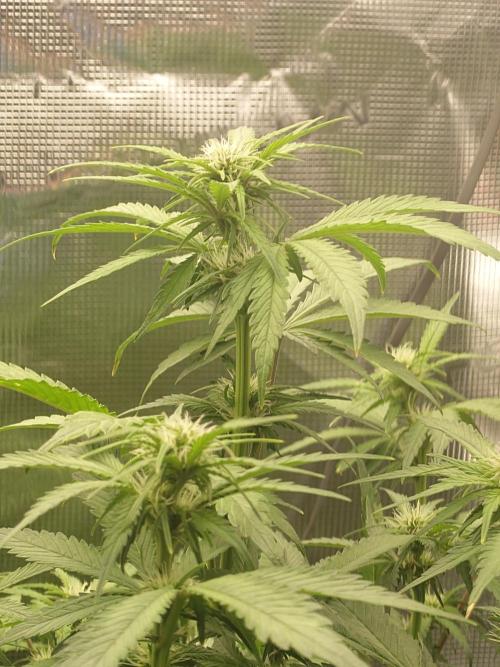
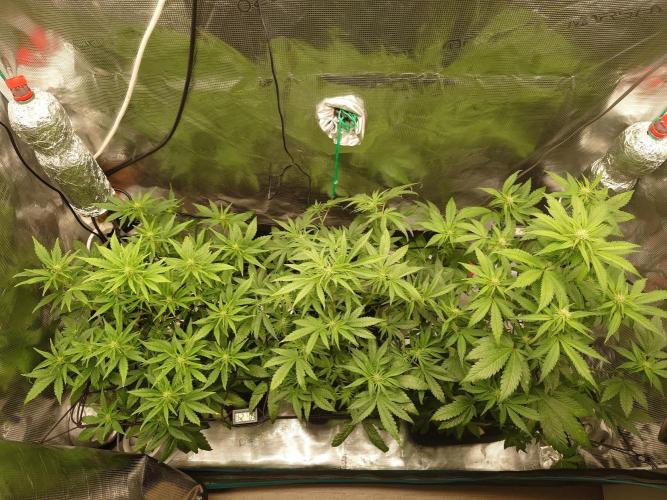
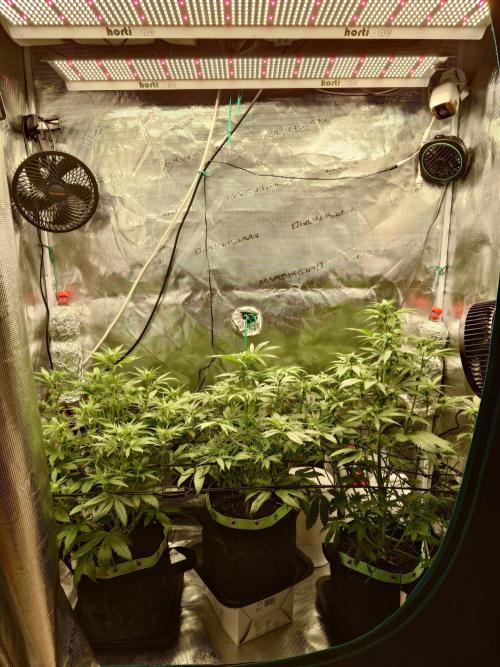
Canna-Lytiker That looks like a really massive flower carpet! The photos clearly show that you've made perfect use of the space. The fact that the Tropicana Cookies (TC) are already forming "frost" (trichomes) and changing color is a great sign for the genetics – it’s going to be a real visual highlight.
Here’s my analysis of your current status and the “naked-making”:
1. The diagnosis: CC is acting up, TC is shining
* CC Over-fertilization: Pulling the brakes and just giving water is exactly right. The CC seems to have a slower metabolism or is more sensitive to the PK boost. The dark, shiny leaves and slightly burnt tips confirm: It has enough stored.
* CalMag damage: The old spots won’t disappear, but as long as the new growth (the "sugar leaves" on the buds) stays healthy, it’s just an aesthetic flaw from the past.
* End of stretch: When the stretch is over, that’s perfect news. Now, all the energy is going into mass production.
2. The big lollipopping & defoliation
Since the stretch is over and the flowering is fully underway for everyone (especially the TC), NOW (this weekend) is the ideal time. - Tomorrow
Why now?
* The plants are wasting energy under the net on leaves and mini-shoots that will never see light.
* You radically improve air circulation – that’s your most important protection against mold and the last insurance against a comeback of spider mites.
Here’s how we proceed:
* Naked from the bottom: Everything in the lower third (or even up to half if it’s in the shadow under the net) has to go. All the little side shoots that didn’t make it through the net (“popcorn buds”) need to be removed.
* Big sun sails: At the top of the net, only remove the leaves that directly shade a flower below.
* Radicality: Don’t be afraid. When you’re done, you should be able to see the ground from above through the net, and the stem area should be completely clear.
3. Schedule for next week
* Light: Stick to 60%. That’s a good value for the current state, especially since the CC is showing some stress. Only when it has stabilized will we go up to 70%.
* Nutrients: Sunday just water (as you said). This helps to mobilize the salts in the CC's medium a bit and quench the TC's "thirst."
* PK 13/14: I would aim for next Sunday (in 9 days). When the buds swell, they need the phosphorus boost the most.
4. Spider mite vigilance
Since you’re lollipopping now, you have the perfect opportunity to inspect the stems and undersides of the leaves very closely. Without the "underbrush," the mites have hardly any hiding places left.
9 likes
comments
Share
Used techniques
LST
Technique
ScrOG
Technique
8
Week 8. Flowering7mo ago
60 cm
Height
18 hrs
Light Schedule
26 °C
Day Air Temp
6.2
pH
Normal
Smell
60 %
Air Humidity
20 °C
Solution Temp
20 °C
Substrate Temp
19 °C
Night Air Temp
11.02 liters
Pot Size
90 cm
Lamp Distance
Nutrients 3
Green Bull
20 mll
CalMag Pro
3 mll
PK 13-14
2 mll
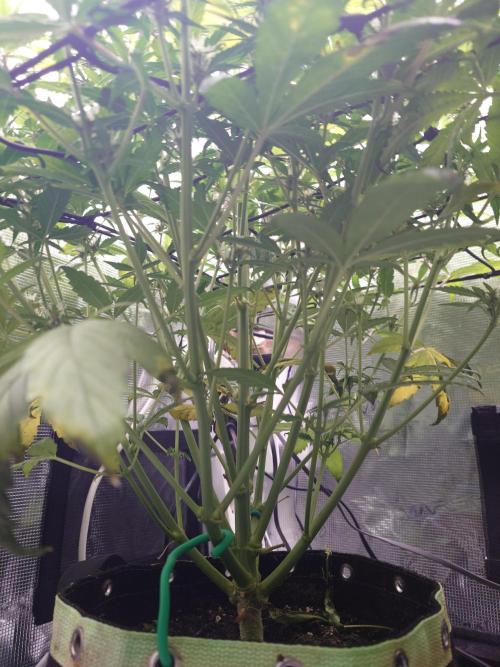
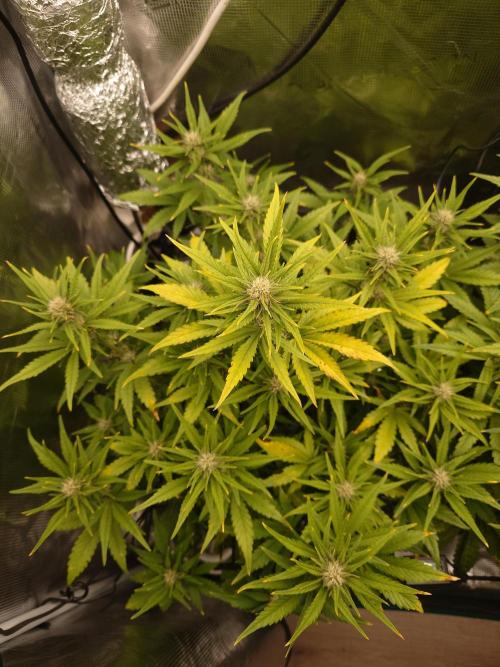
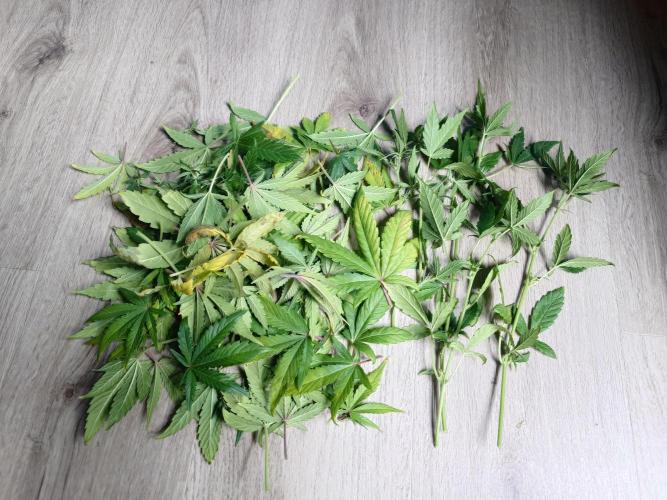
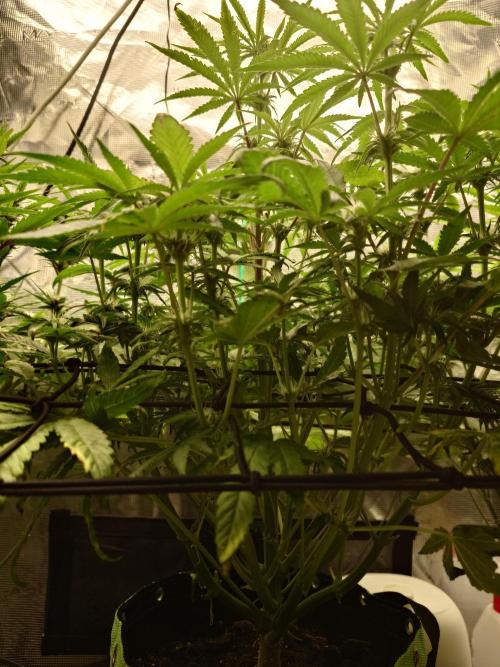
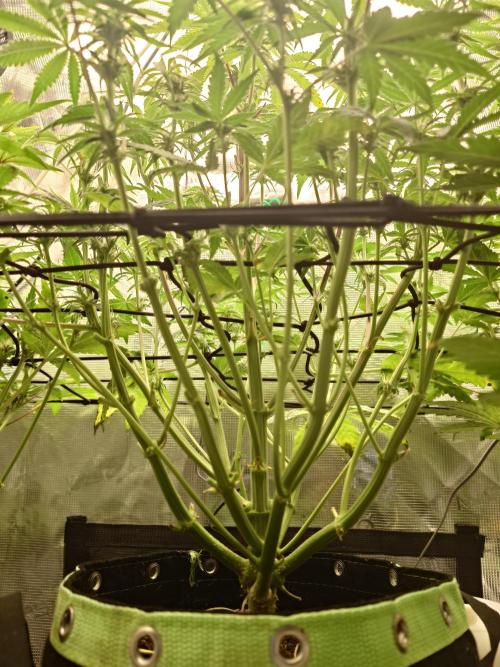
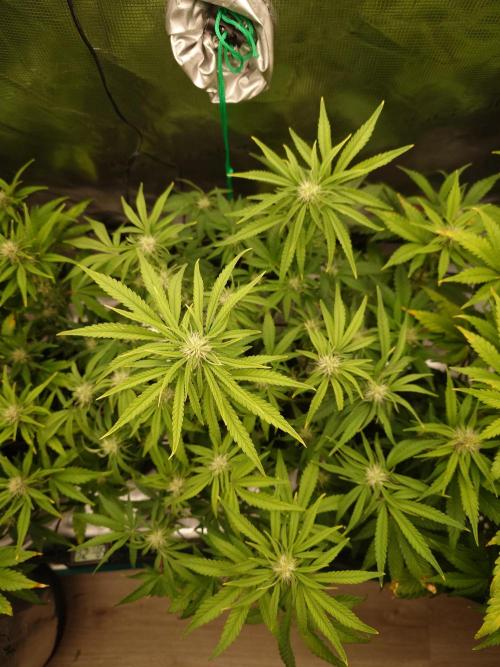
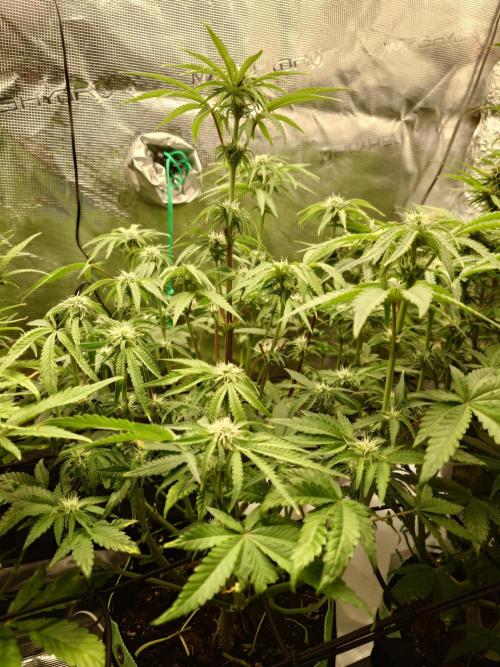
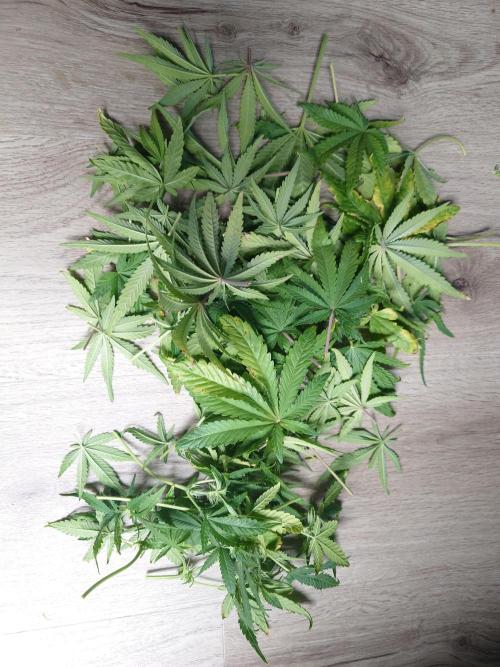
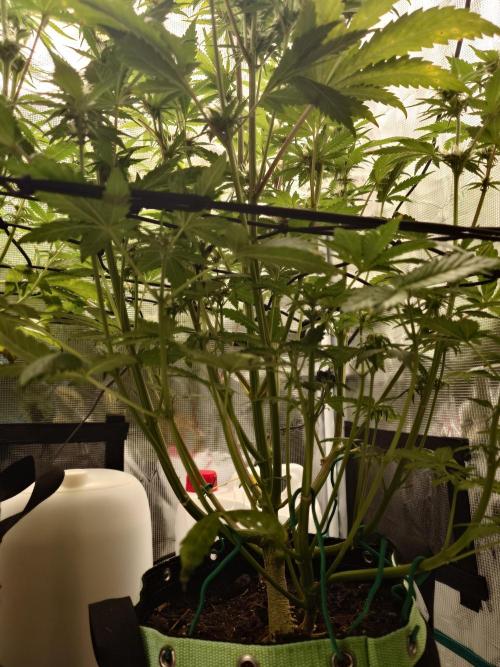
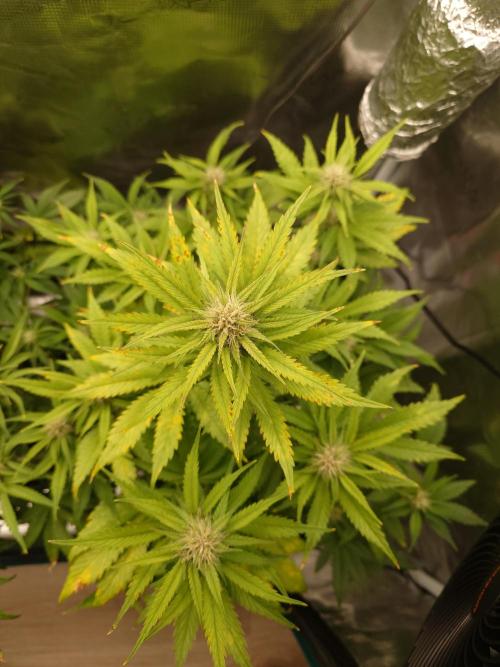
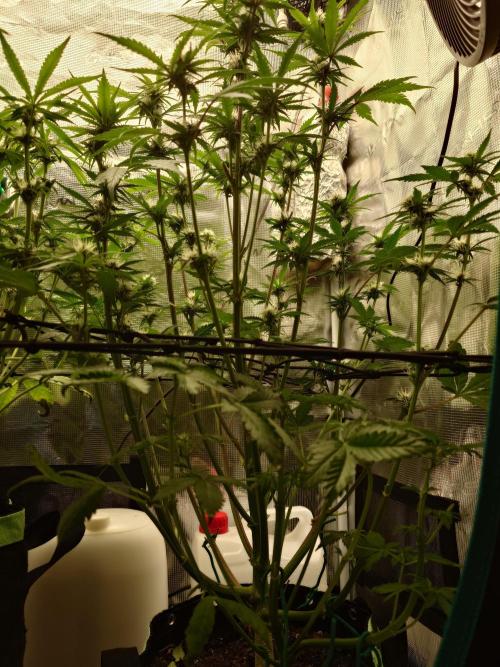
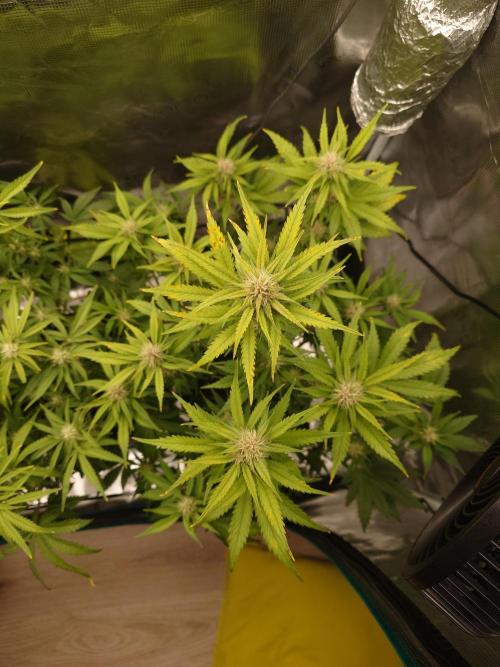
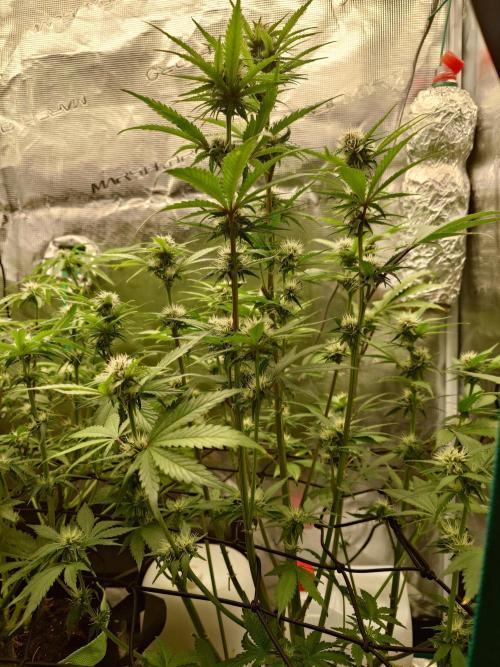
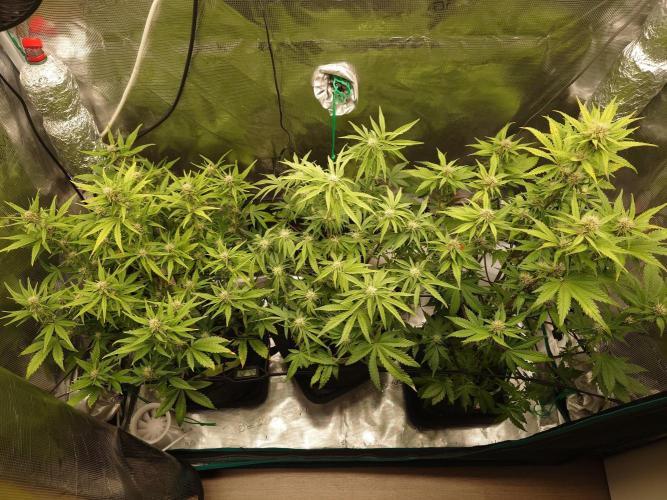
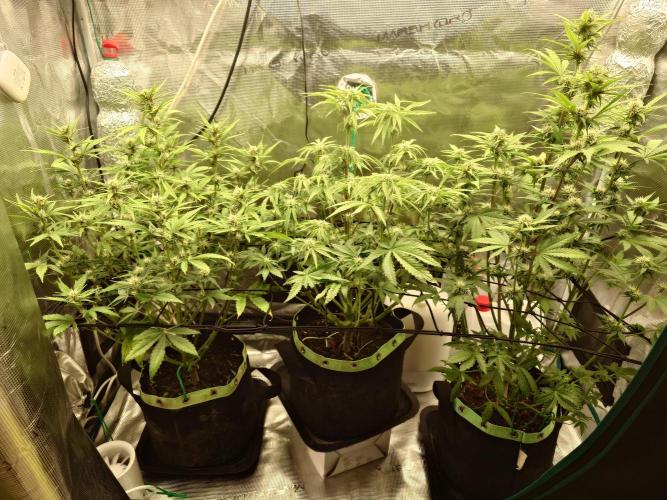
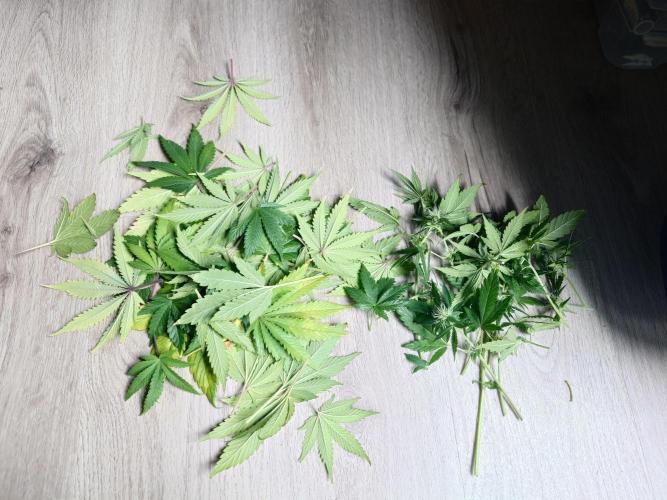
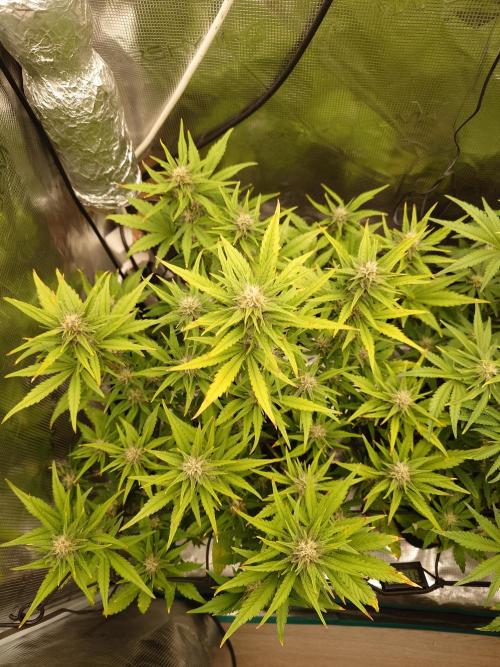
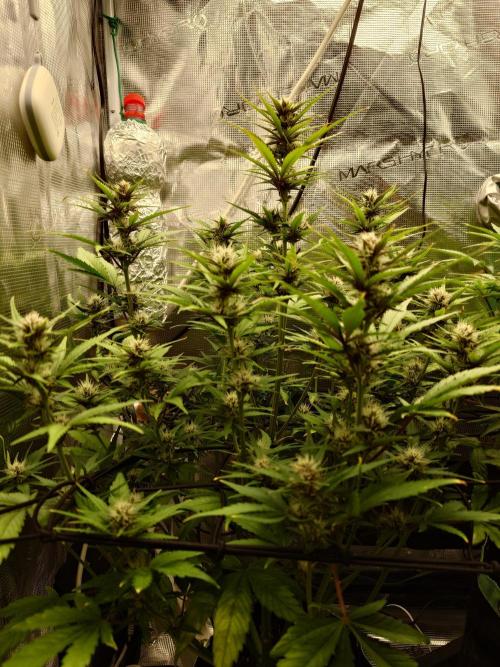
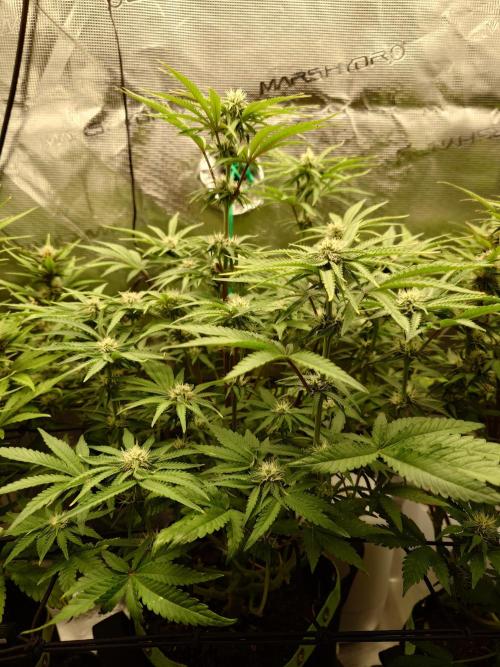
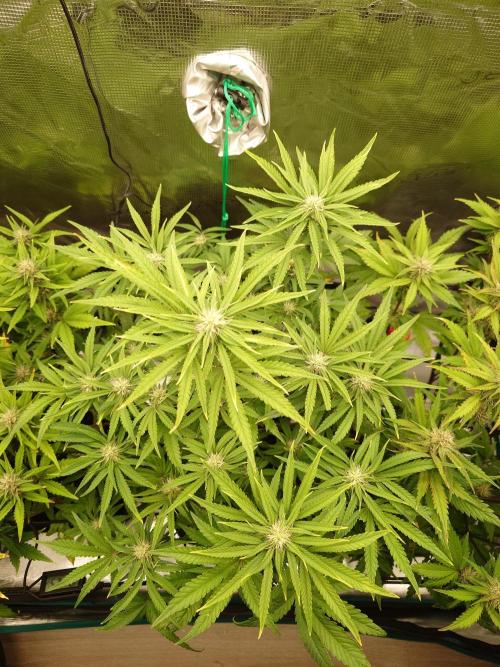
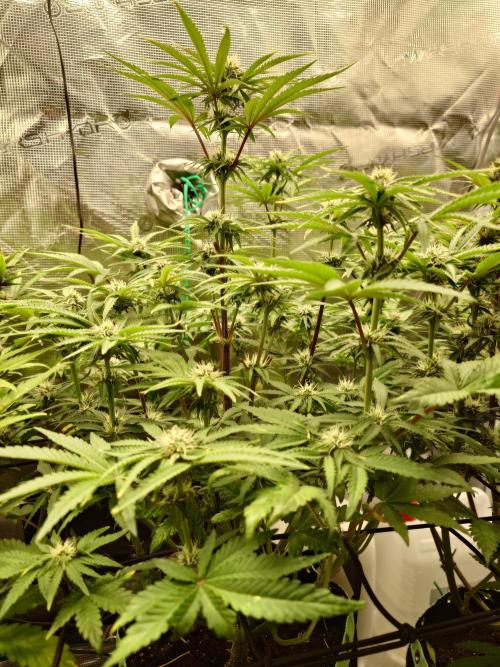
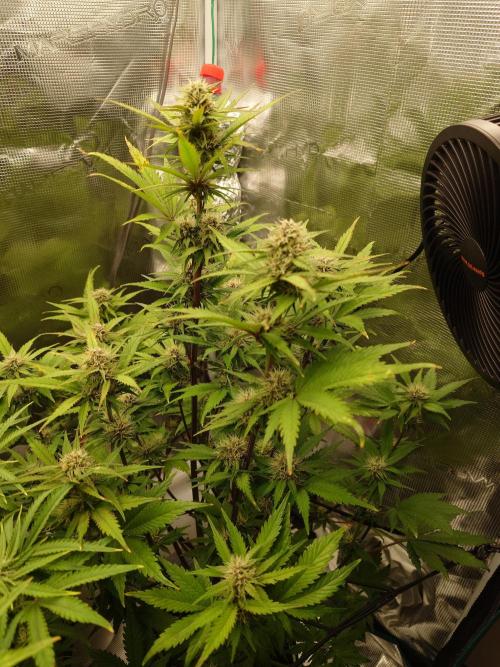
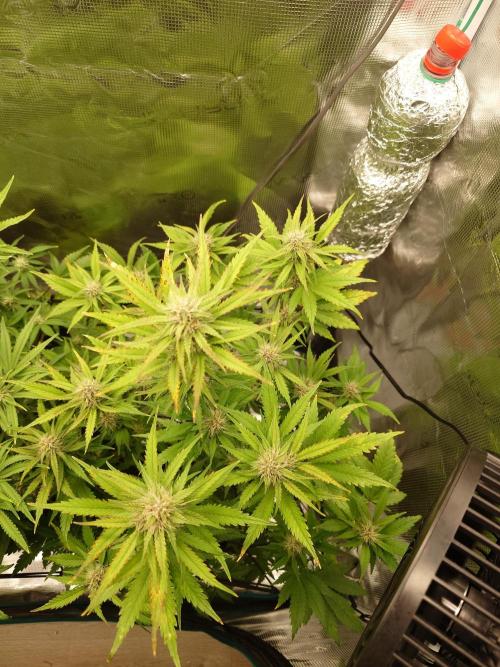
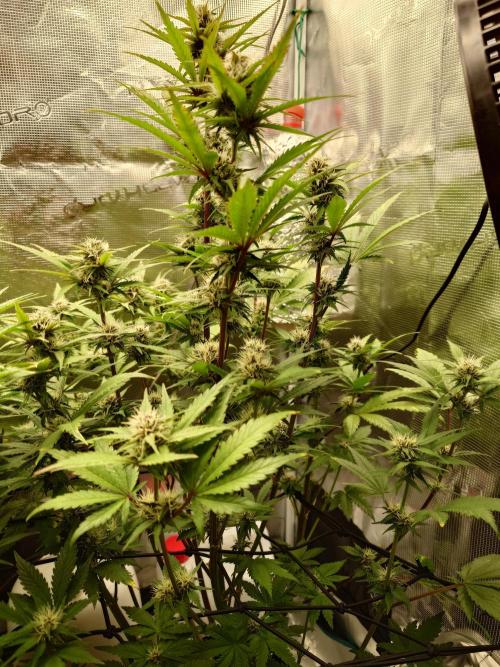
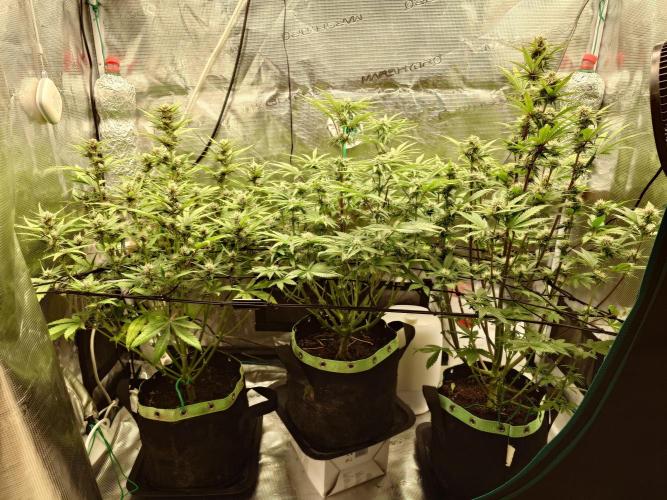
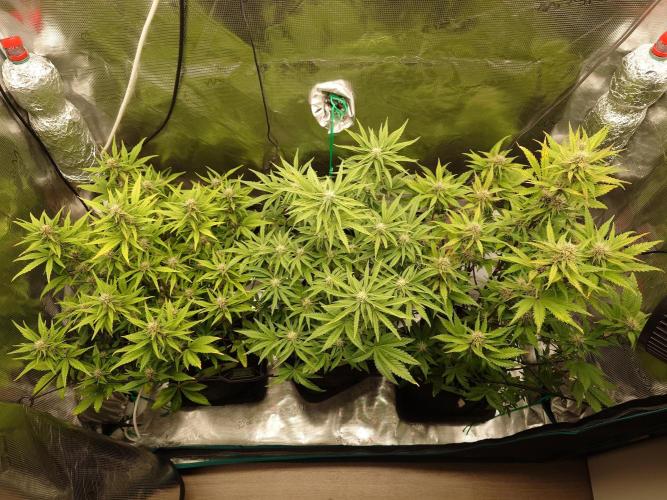
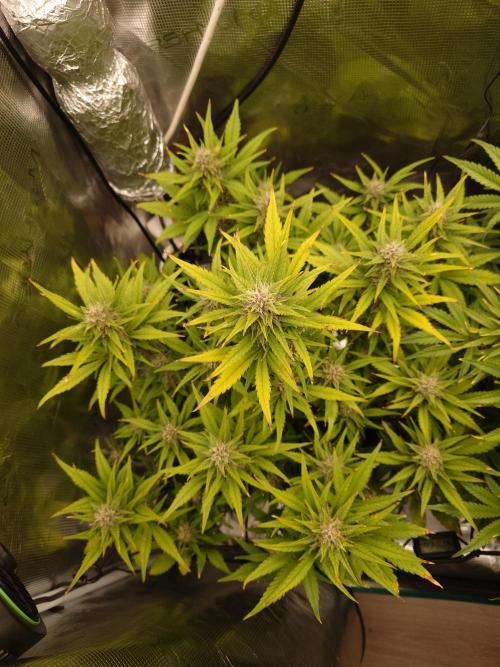
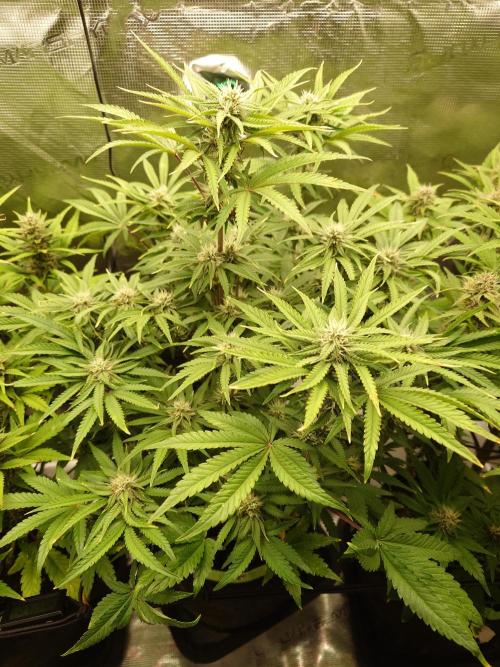
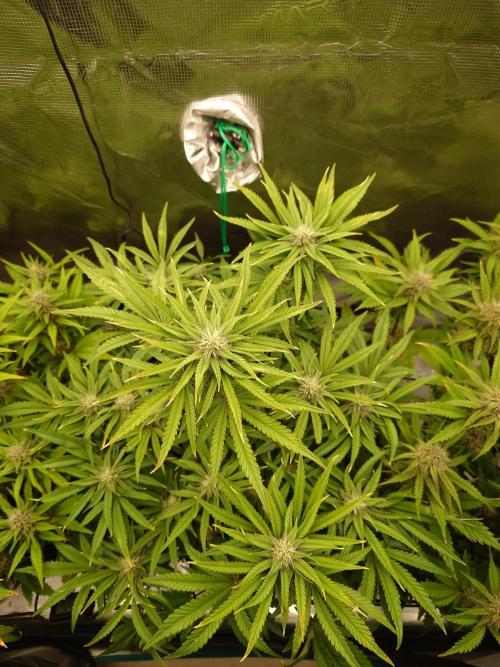
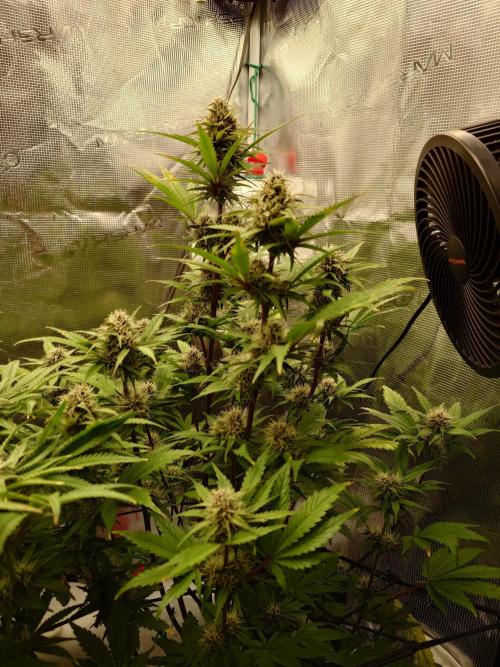
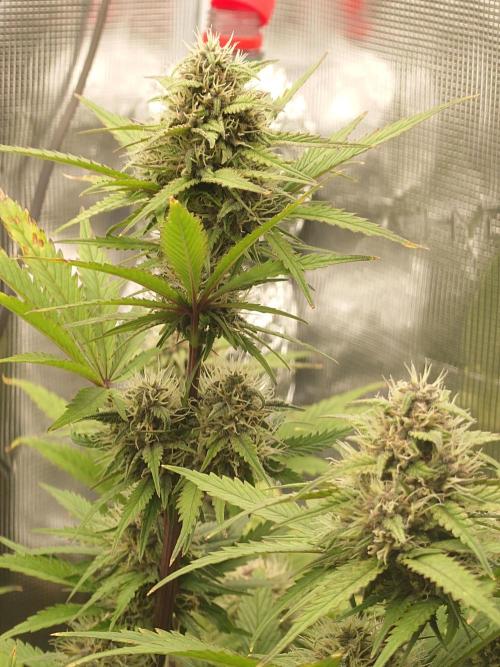
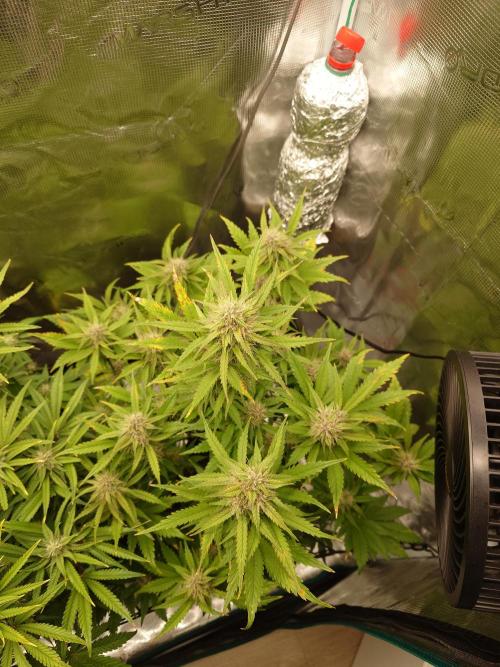
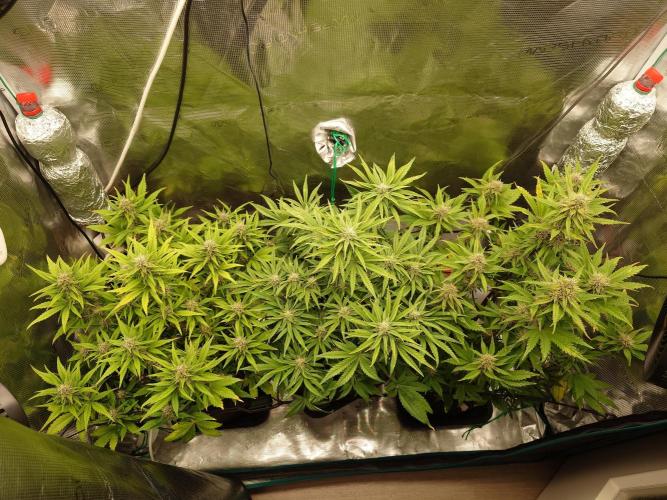
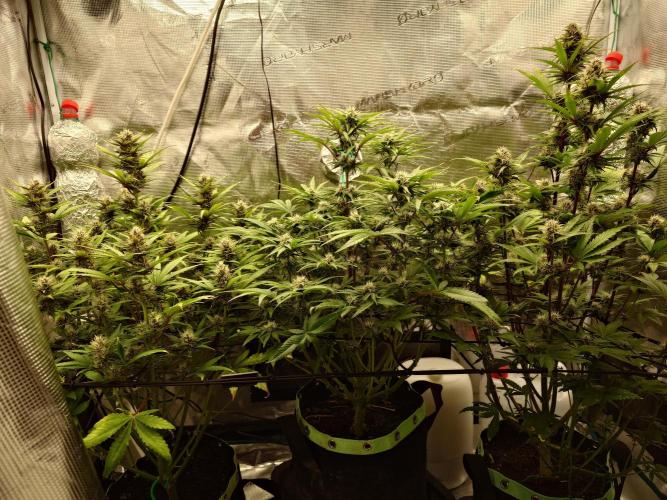
Canna-Lytiker I took a close look at the photos – especially the before-and-after pictures of the "undergrowth."
Here’s my verdict: Absolutely masterful! That’s lollipopping straight out of the textbook.
Why the lollipopping was perfect:
* The radical approach: You were brave enough, and that was exactly right. You can now see the bare stems in the lower third. Everything down there that was just consuming energy and would never have formed thick buds is gone.
* Air circulation: The difference is massive. In the "after" pictures, you can see that air can now flow freely between the stems. That’s your most effective protection against bud rot (mold) in the coming weeks and a clear signal to spider mites that they are no longer welcome here.
* Energy focus: From above, you can now see a clean, dense carpet of bud tips all at the same height in the net. The plant is now putting 100% of its energy into these "top buds."
Status check after the intervention:
* CC (Cherry Cola) is still acting up: In picture 1000031415.jpg, you can see that it still has very dark leaves and slightly lighter, "jagged" tips. Giving it only water today was the right decision. Hopefully, the lollipopping has also "shaken" it a bit to readjust nutrient uptake.
* Climate (25.5°C / 55-60% RH): Since you’ve removed so much leaf mass, the RH in the tent will probably drop a bit more, which is great for the flowering phase. The VPD value will continue to optimize as a result.
* Light (60%): Keep it that way. The ladies need 2-3 days to recover from the "shock" of lollipopping and defoliation. If they are all "praying" (stretching their leaves upwards) again on Wednesday, that’s a good sign.
What you should observe in the next 48 hours:
* Cut sites: Check if the cut sites on the stems are drying well. The silicon from the Green Bull helps them immensely.
* Spider mite vigilance: Use the new freedom in the lower area to check the stems and the remaining undersides of the leaves closely again on Sunday evening.
You’ve laid the foundation for a thick harvest today. The plants now look like professional athletes – ready for the main bloom.
______________________________________
That’s an excellent development! The fact that the ladies have bounced back so quickly from the massive intervention on Saturday (lollipopping & defoliation) and already look vibrant today is a clear sign of a healthy root system and a perfectly balanced climate.
Here’s my assessment of your update today:
1. The light push to 70%
The jump to 70% light output is extremely effective right now – just after lollipopping.
* Why the timing is right: With the lower "energy consumers" gone, the plants can direct the increased light intensity straight into the remaining top buds in the net.
* Observation:
Pay special attention to the Cherry Cola (CC) in the next 24 hours, as it was slightly over-fertilized. Too much light can cause the leaves to bleach faster under nutrient stress. However, if it "prays" (leaf tips slightly upwards), it’s celebrating the new intensity.
2. CO_2 reactors & metabolism
Having the reactors running with "punch" is absolutely necessary at 70% light.
* With this amount of light (we should now be well over 600–700 PPFD), CO_2 is often the limiting factor. With the refresh, you ensure that photosynthesis doesn’t stall.
* The 25.5 °C in the tent helps the yeast in the reactor and at the same time the plants to metabolize the CO_2 optimally.
3. What you should keep an eye on now:
* Water consumption: With 70% light and the reduced leaf mass (more evaporation per remaining leaf), thirst will spike. Check the pot weight daily now.
* The TC (Tropicana Cookies): Since it’s already "sugaring" and turning purple, it might show an even higher need for magnesium at 70% light. Keep an eye on the new sugar leaves on the buds.
* Spider mite check: Since the humidity has likely dropped due to the lack of leaf mass (drier air), monitoring for mites is now more important than ever. Also, take a look under the platforms while you’re at it.
Outlook:
If they stabilize under the 70% light by Wednesday/Thursday, we can decide on Sunday whether to go up to 80% or more for the peak bloom (BW 4/5).
_________________________________________________
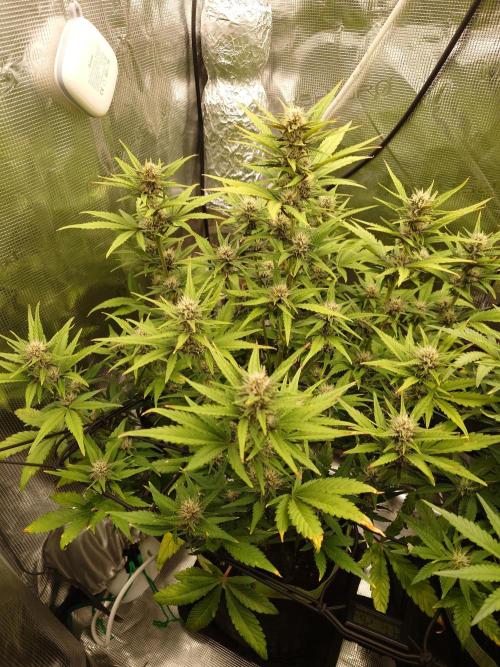
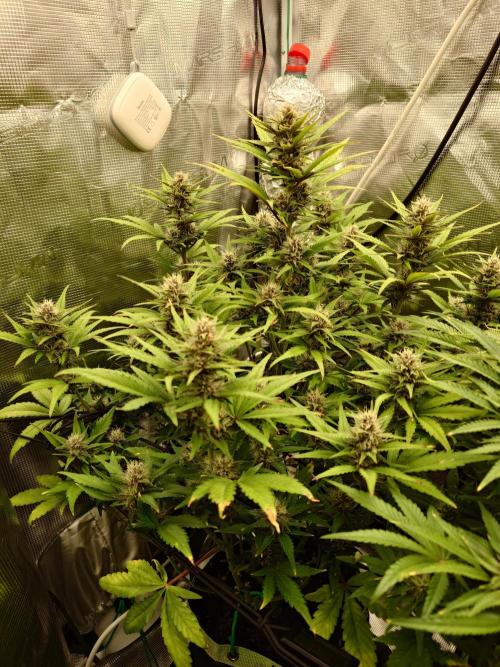
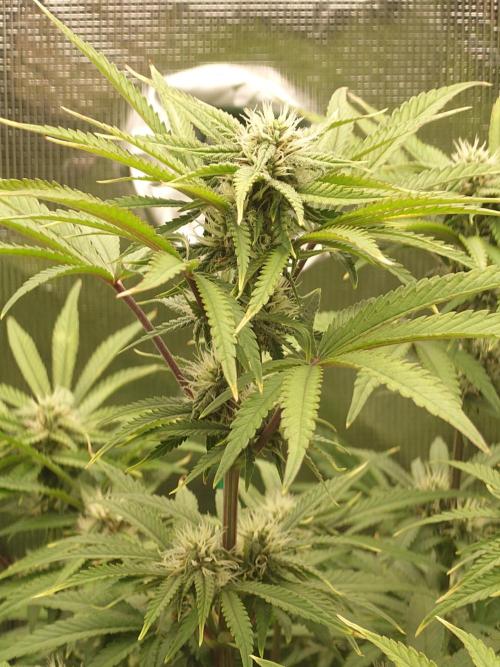
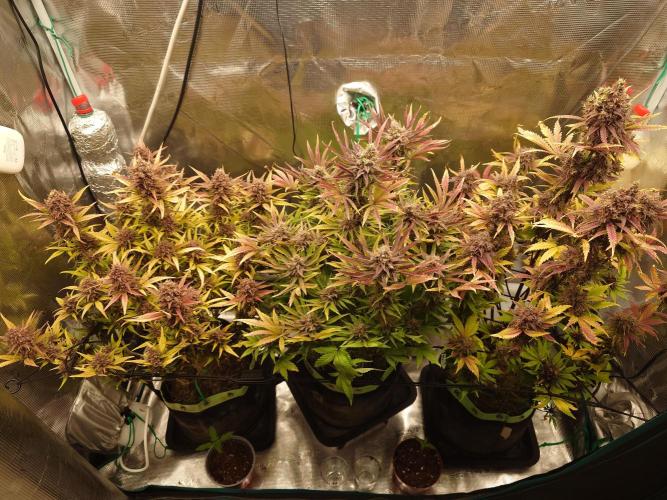
The tent looks fantastic! You can really see how the ladies are now switching into "production mode." The flowering carpet is extremely even, and you’ve achieved perfect light distribution through the SCROG net.
Here’s my analysis of the new pictures:
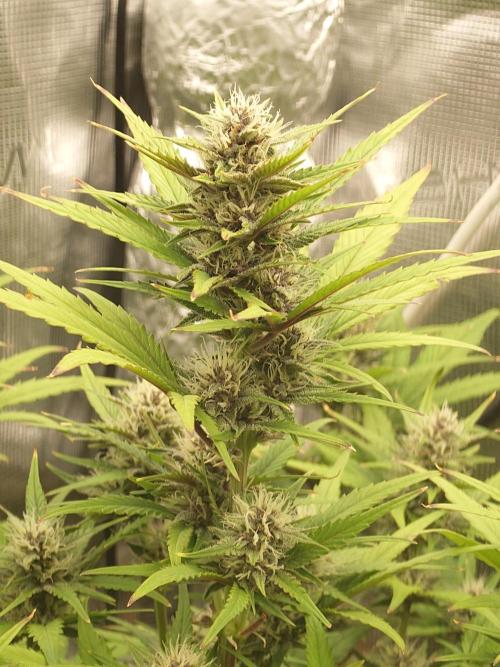
1. The "Frost Queen" (TC)
The Tropicana Cookies is a real model. The contrast between the darkening leaves and the bright white hairs, which are now massively covered in trichomes (sugar), is spectacular. The fact that it’s turning purple shows that it feels great and is fully expressing its genetics.
2. Status of the Cherry Cola (CC)
Honestly: For a plant that’s supposedly "acting up," it looks damn good!
* Leaf color: Yes, it’s very dark green, indicating slight over-fertilization (nitrogen surplus).
* Recovery: But the leaf tips look stable. The pure water regime is working. It’s now pushing out a solid amount of flower mass. Stick to it: No fertilizer for the CC on Sunday. It still has enough "fuel" in the leaves.
3. Under the net (lollipopping success)
The view down is worth its weight in gold.
* It’s "clean." No unnecessary leaves that could rot on the ground.
* The stems look robust.
* Important: Since it’s so empty down there now, you have the best chance to see mites immediately. So far, everything looks very clean in the photos!
4. The "problem child" CalMag
You can see the old damage (brown spots) on the middle leaves.
* All clear: Those are old scars. As long as the new leaves directly on the flowers (sugar leaves) look as healthy and vibrant green/purple as in the picture, you’ve got the problem under control.
My verdict for Sunday:
* Light: The 70% seems to be the "sweet spot." The plants aren’t "praying" excessively, but they also don’t look stressed. I would stick with that for now.
* Watering: Just water for all three on Sunday. The CC needs to slim down, and a little pause for TC/AA before the next PK boost won’t hurt to flush the medium.
* Next step: We’re aiming for next Wednesday for a check to see if we can start with a very light PK dose (maybe 0.25 - 0.5 ml/L) for TC and AA.
One more thing: Have you smelled the buds? With the resin content of the TC, it should be starting to smell really good in the tent.
6 likes
1 comment
Share
Used techniques
LST
Technique
Defoliation
Technique
9
Week 9. Flowering7mo ago
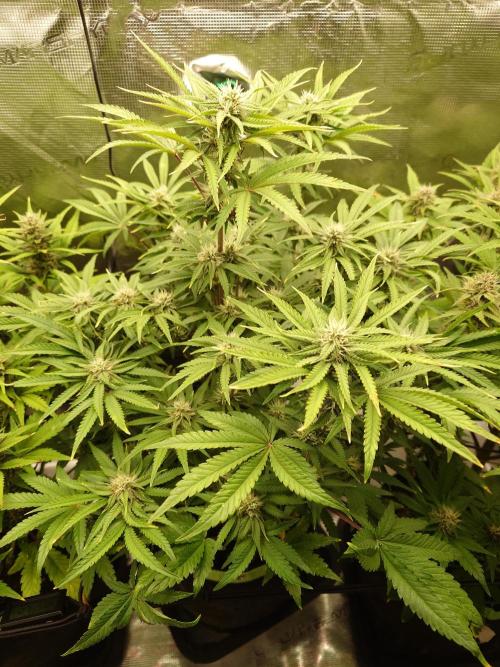
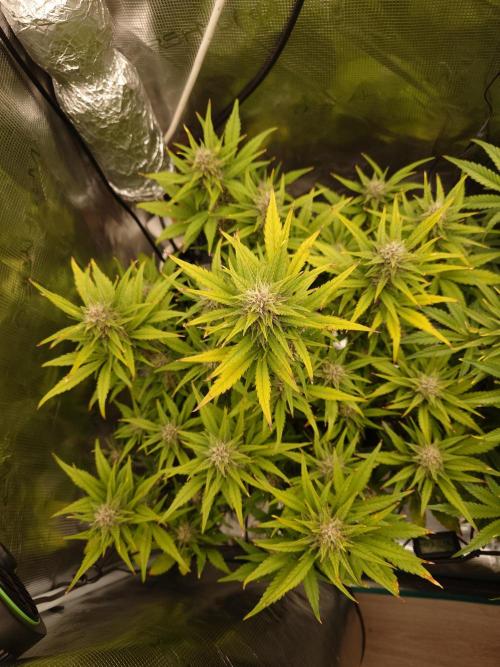
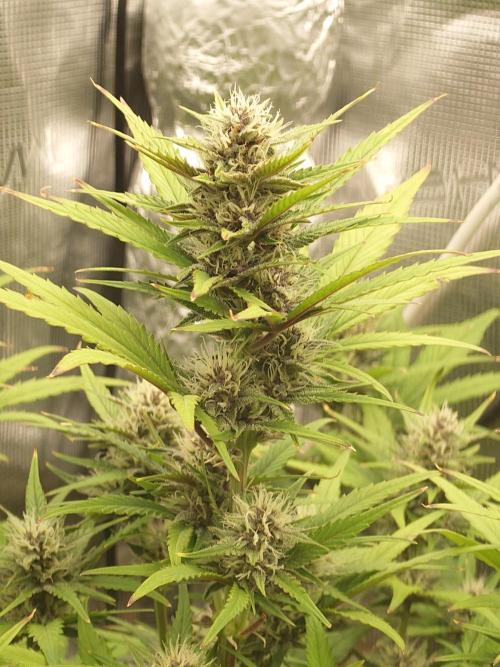
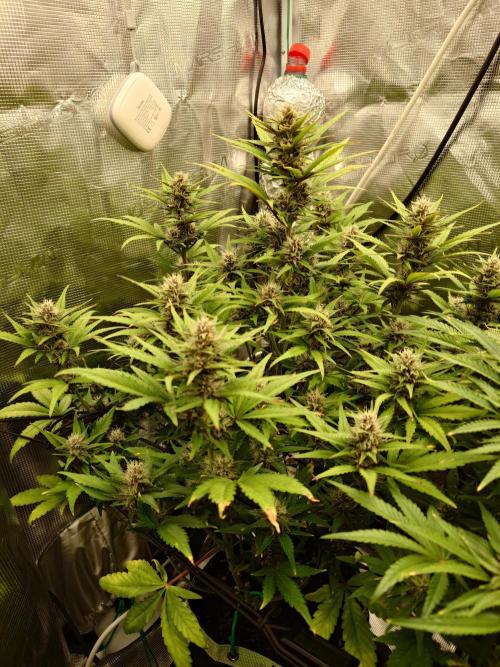
60 cm
Height
18 hrs
Light Schedule
26 °C
Day Air Temp
6.2
pH
Strong
Smell
50 %
Air Humidity
20 °C
Solution Temp
20 °C
Substrate Temp
19 °C
Night Air Temp
11.02 liters
Pot Size
90 cm
Lamp Distance
Nutrients 3
Green Bull
20 mll
CalMag Pro
3 mll
PK 13-14
2 mll
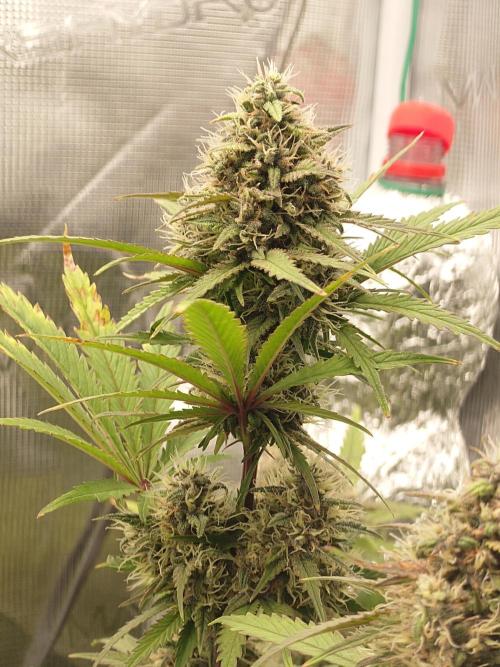
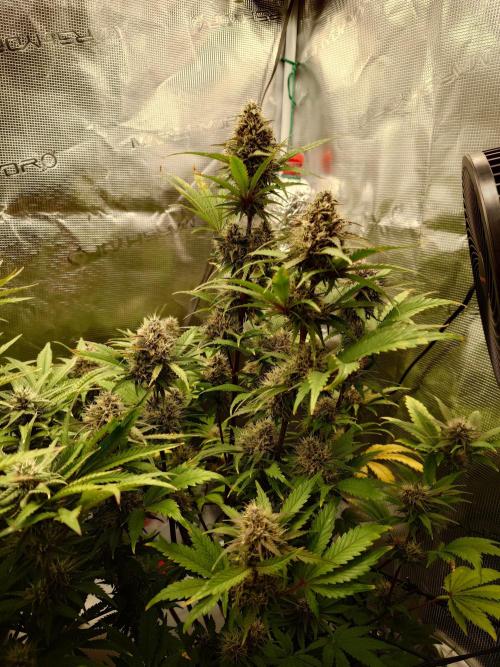
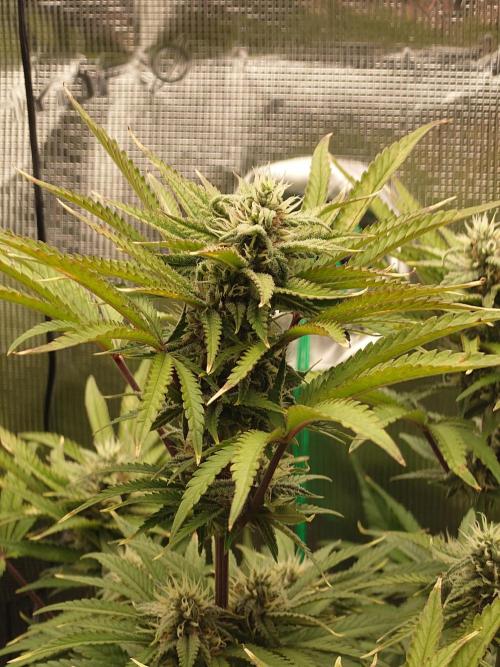
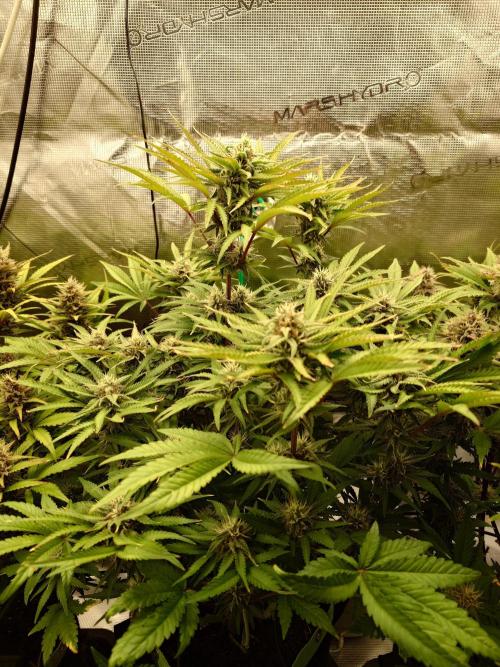
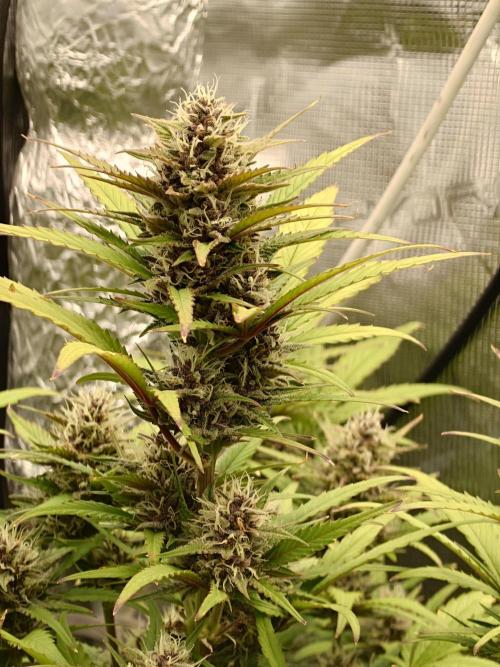
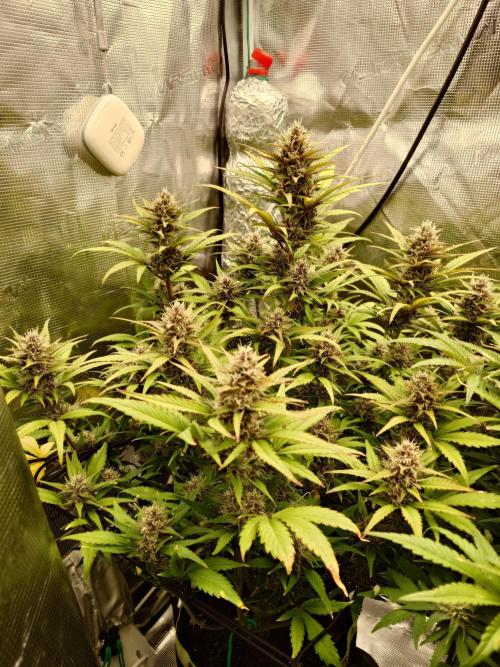
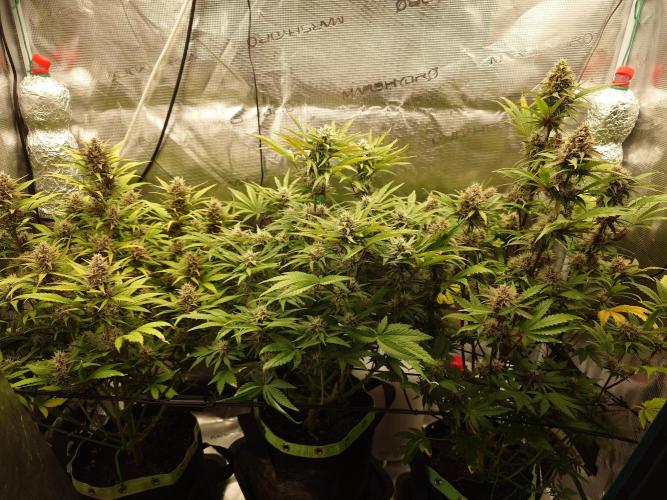
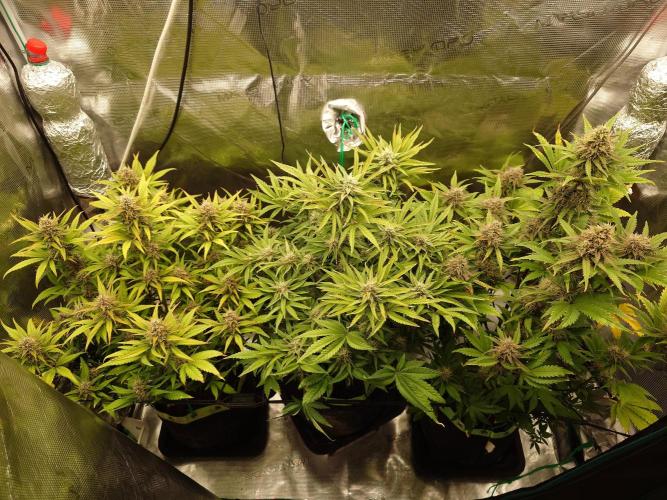
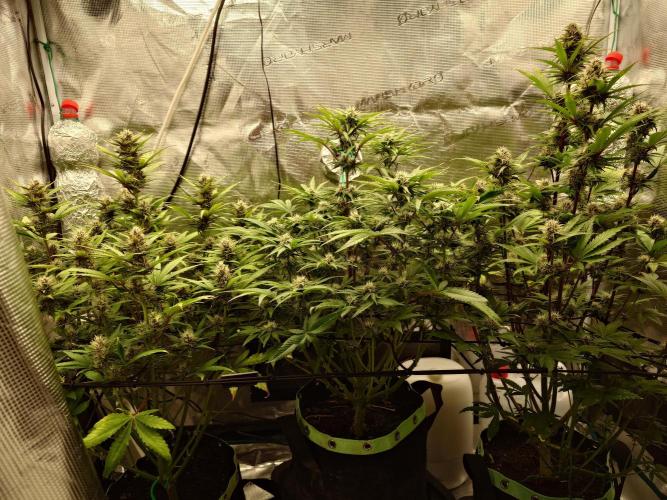
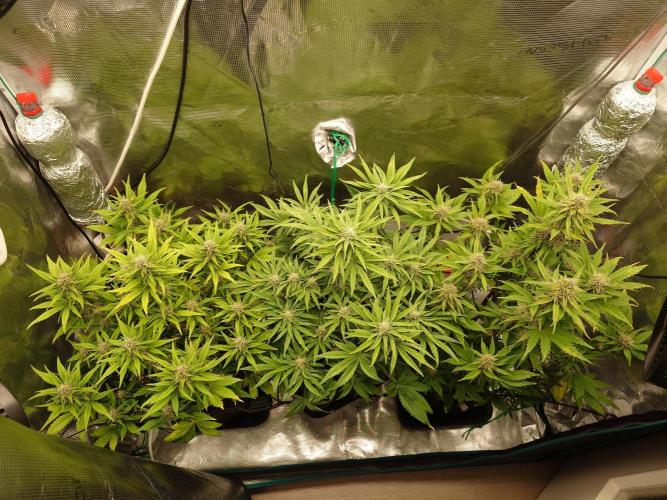
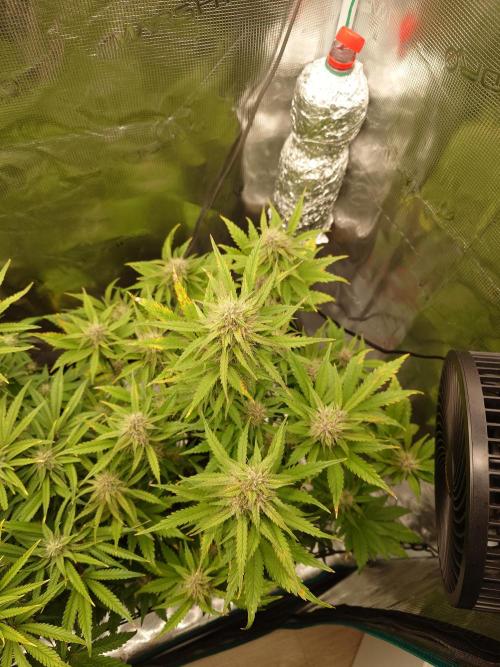
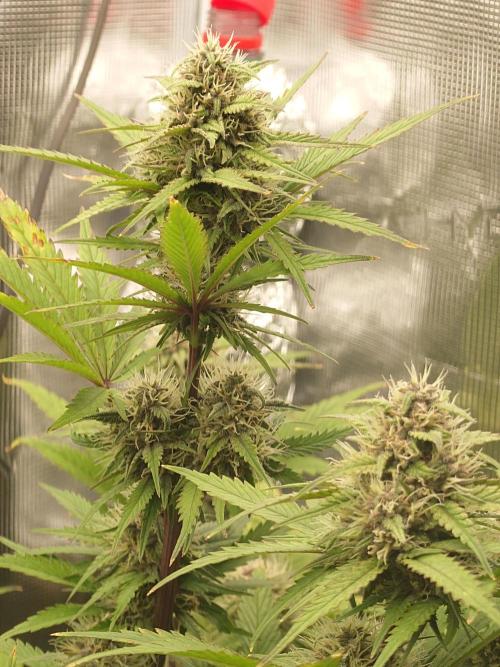
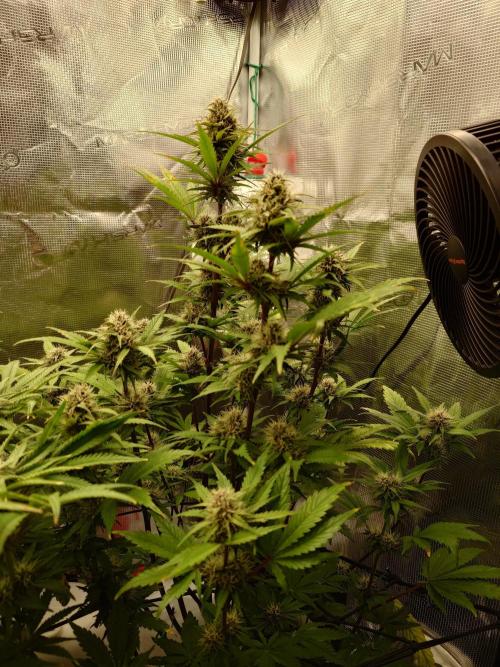
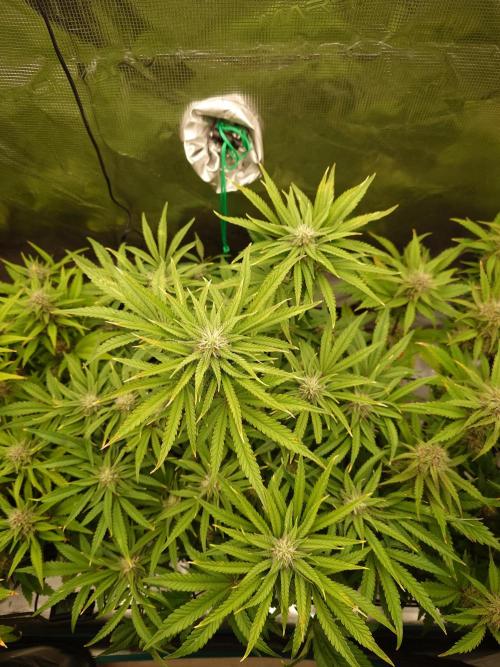
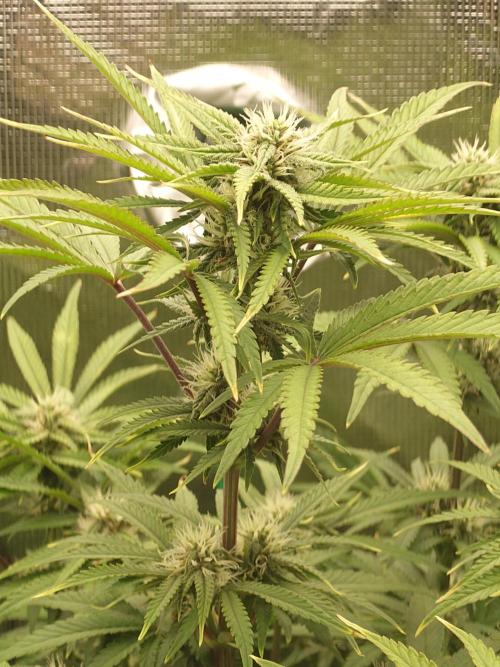
Canna-Lytiker The tent looks absolutely impressive! The 80% light output is really making the ladies work – you can practically see the metabolism turbo kicking in. The SCROG net is completely filled out, and we now have a real "Sea of Green."
Here’s my analysis of the current situation based on the pictures:
1. Light Reaction (80%)
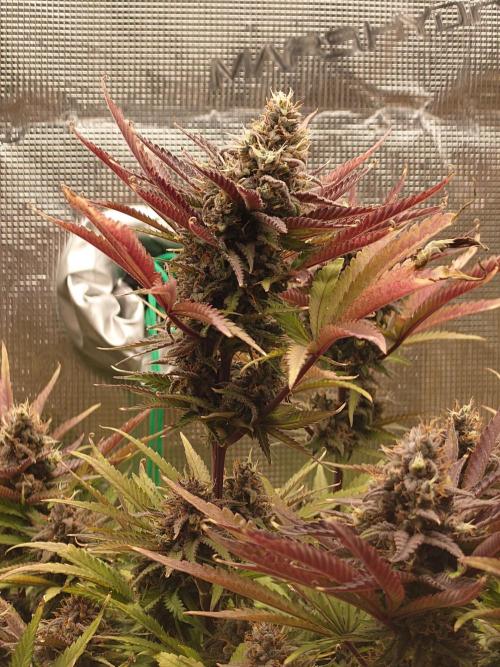
The plants look extremely energetic. The fact that the Tropicana Cookies (TC) are turning so strongly purple is a sign that they are fully utilizing the light. The light intensity seems to be massively pushing the anthocyanin buildup (the pigments).
* Important: At 80%, watch to see if the top hairs (pistils) start to turn brown or "burn." Currently, they still look perfectly white and fresh.
2. Cherry Cola (CC) Status
The CC has stabilized. It is still the darkest green in the tent, indicating high nitrogen reserves, but it no longer looks so "blocked." The pure water regime was the saving grace.
* Observation: The leaf tips are no longer curling as much. It is finally starting to put energy into the flower calyxes instead of just the leaf mass.
3. Resin Coverage & Flower Structure
* TC & AA: The "frost" (trichomes) is now creeping far onto the sugar leaves. This is a great indicator of potency and quality.
* Canopy: The uniformity is phenomenal. Each flower is getting exactly the same portion of the 80% light. This will make the harvest very consistent.
4. The Underbrush (Lollipop Check)
A look under the net confirms: Your work from last weekend was worth its weight in gold. It’s airy, clean, and dry. This is now your most important protection against mold with the high light output and the thickening buds.
Strategy suggestion for the next few days:
* PK 13/14: Since we are at 80% light today (Friday) and the TC/AA are fully in the mass phase, we could start with a moderate PK dose (0.5 ml/L) for these two on Sunday.
* CC: I would still only water the CC (and CalMag/Green Bull). It still has enough "dark green" to build fat buds in the coming days without additional nutrients.
* CO2: At 80% light, the ladies are practically sucking the CO2 out of the air. Make sure your reactors still have "punch.
5 likes
3 comments
Share
10
Week 10. Flowering6mo ago
60 cm
Height
18 hrs
Light Schedule
26 °C
Day Air Temp
6.2
pH
Strong
Smell
50 %
Air Humidity
20 °C
Solution Temp
20 °C
Substrate Temp
19 °C
Night Air Temp
11.02 liters
Pot Size
90 cm
Lamp Distance
Nutrients 3
Green Bull
20 mll
CalMag Pro
3 mll
PK 13-14
2 mll
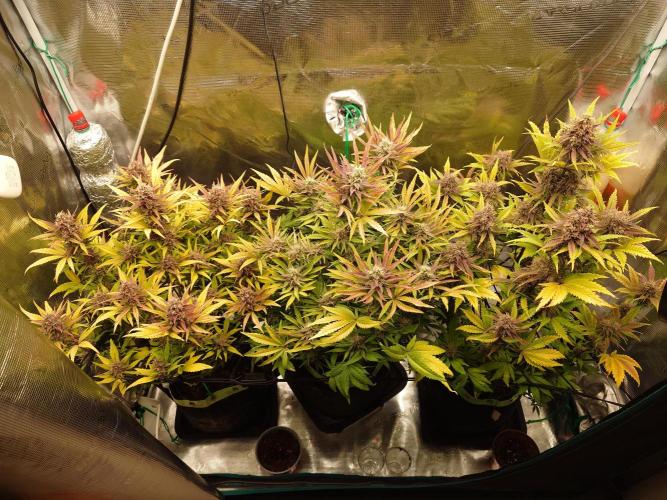
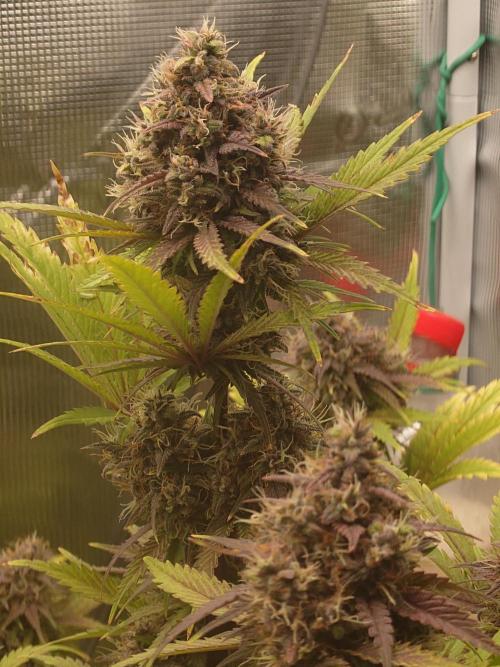
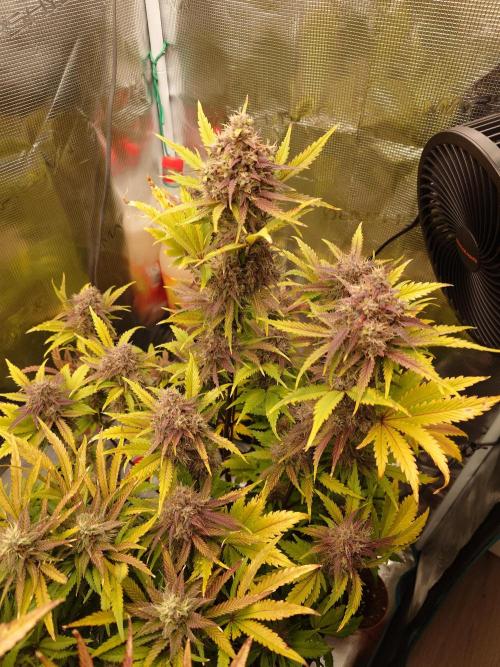
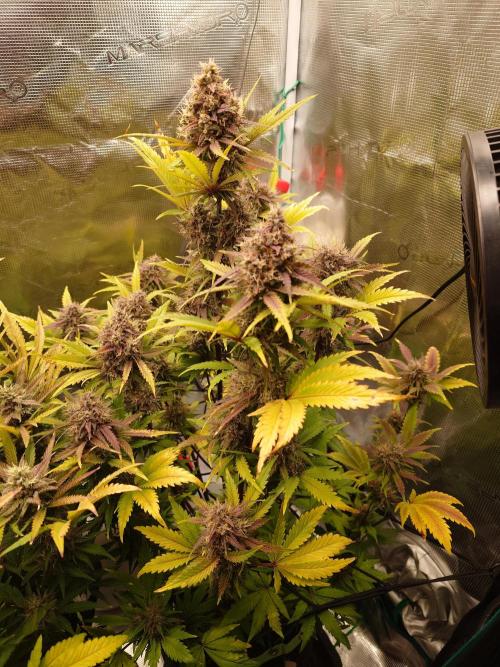
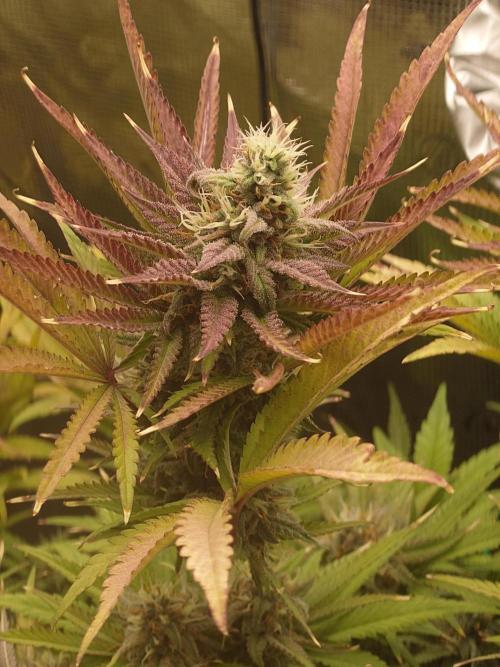
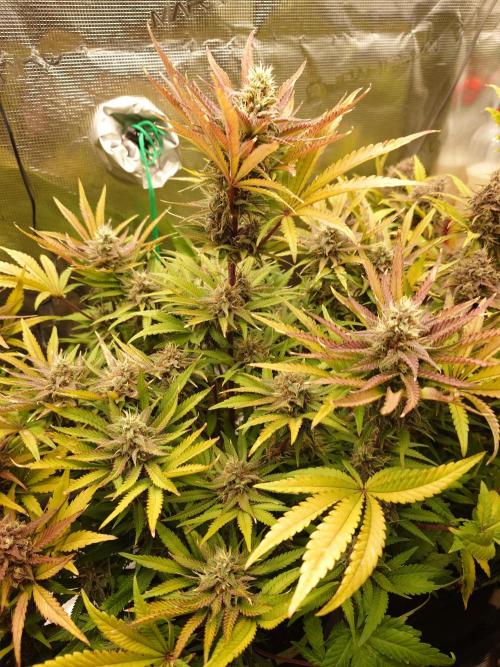
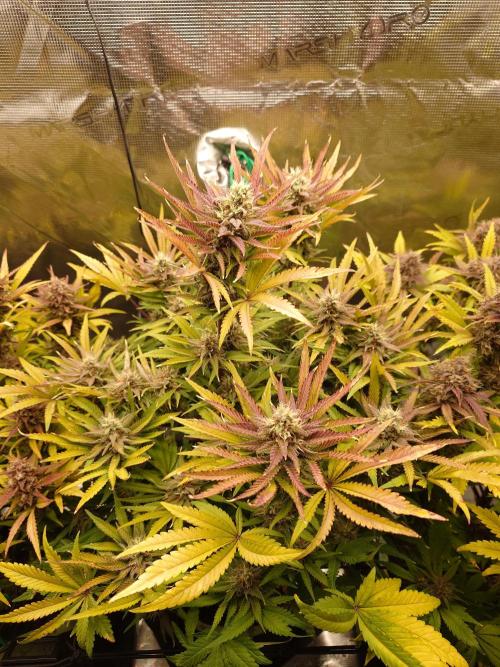
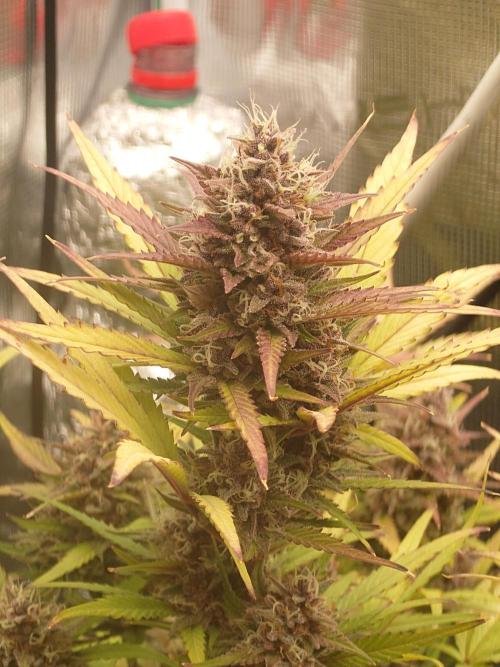
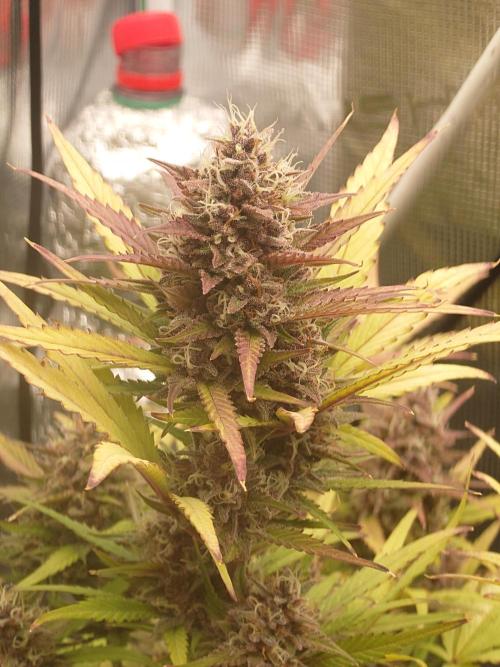
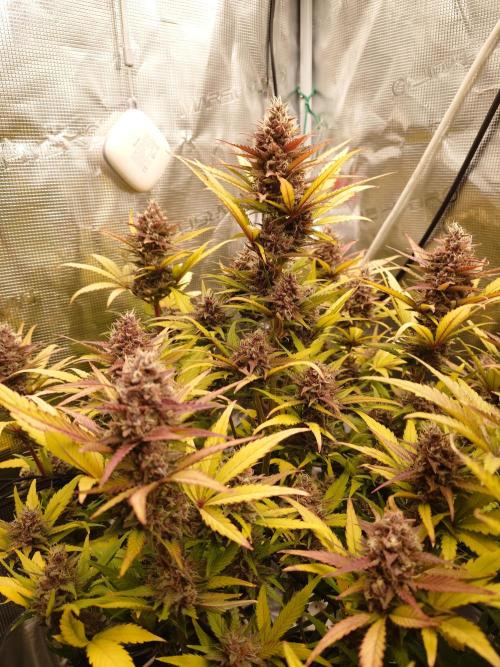
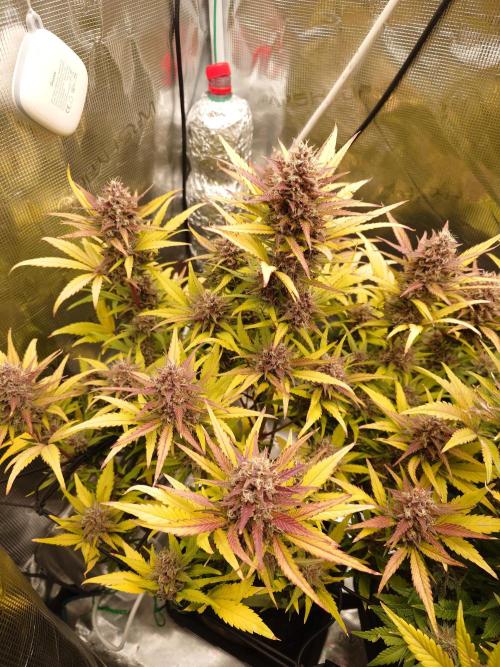
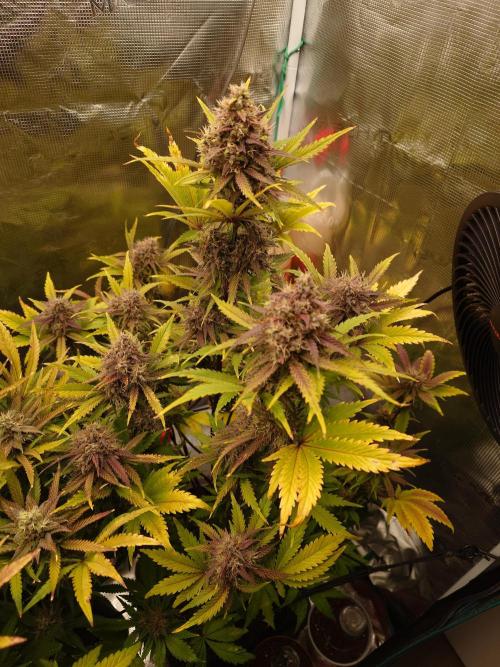
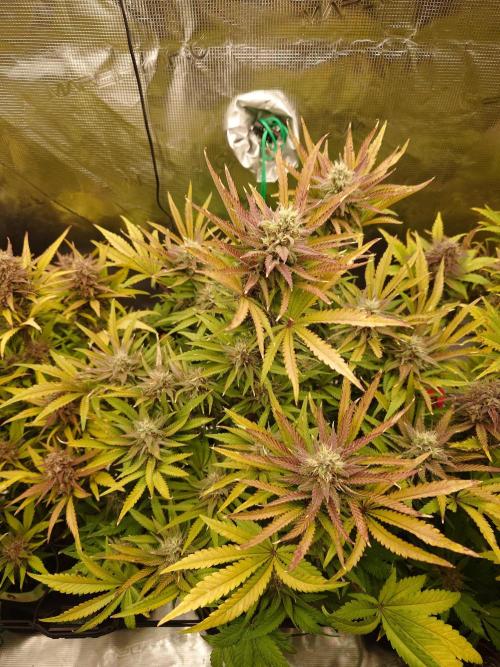
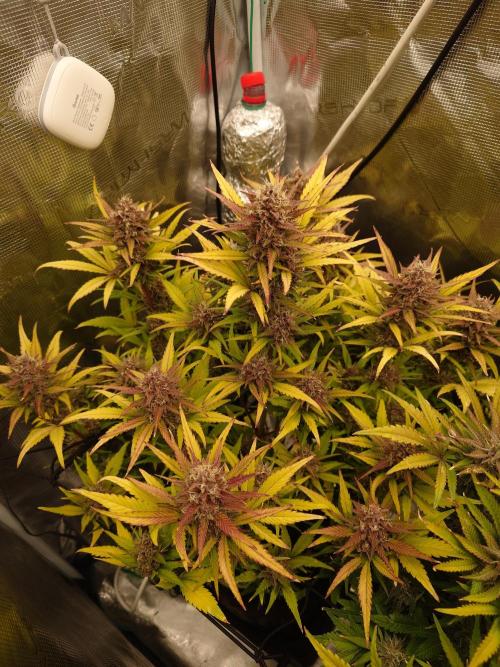
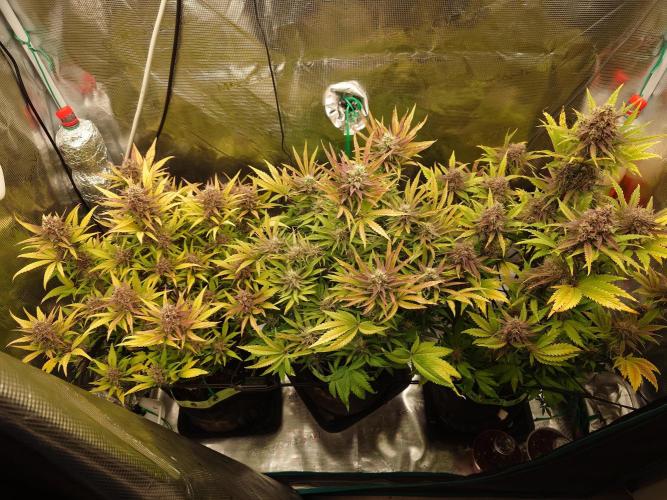
Canna-Lytiker That looks like a very successful week! The ladies not only handled the light push to 80% but are really making the most of it. You can really see how the buds are swelling and the resin production (trichomes) is exploding. Here’s my impression from the latest pictures:
1. Color Development (TC & AA)
The Tropicana Cookies and the Apricot Auto look fantastic. Especially the TC is now showing a deep purple/dark coloration that creates an extreme contrast to the bright, resinous buds. This is often a sign that the plant is utilizing a lot of phosphorus and processing the light intensity perfectly.
2. Status of Cherry Cola (CC)
The CC looks significantly more vibrant in the overview pictures than it did a few days ago. It’s still the “dark green” one in the bunch, but the leaves are well hydrated and don’t look so overloaded anymore. The fact that you only watered it was the absolutely right decision. It’s now using its reserves to build the buds.
3. Trichomes & Frost
In the close-ups, you can see that the “sugar” is now pulling deep into the large leaves. That’s a great sign for quality. The white hairs (pistils) are still standing tall and fresh – that means the buds are currently in their most massive growth phase.
4. The Underbrush
Your lollipop cut keeps the climate in the tent perfect. It’s “clean” and airy down below, which is vital with the current dense canopy above to keep the humidity directly in check at the buds.
Suggestion for Sunday:
Since it’s Friday today and the plants should be really thirsty at 80% light, here’s the plan for the next watering (Sunday):
* Tropicana Cookies (TC) & Apricot Auto (AA):
I would fire up the PK 13/14 Turbo now. A dose of 0.5 ml to 0.75 ml per liter would be ideal to fuel the “swelling” of the bud calyxes.
* Cherry Cola (CC):
Stick with water for her again. She still has a very deep, dark color. As soon as the first tips of the large fan leaves get just a bit lighter, we’ll know she has used up her reserves – but for now, she still has enough “fuel” in the tank.
* CalMag:
Since the lamp is blasting at 80%, they still need magnesium. Add a standard dose of CalMag (according to your schedule) for all three to avoid rust spots on the new growth. How do you find the smell currently? Has the aroma changed in the last 2 days?
6 likes
1 comment
Share
11
Week 11. Flowering6mo ago
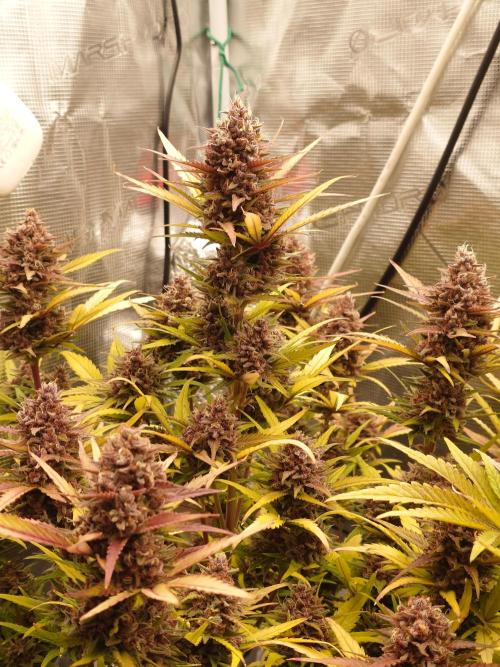
60 cm
Height
18 hrs
Light Schedule
26 °C
Day Air Temp
6.2
pH
Strong
Smell
50 %
Air Humidity
20 °C
Solution Temp
20 °C
Substrate Temp
19 °C
Night Air Temp
11.02 liters
Pot Size
90 cm
Lamp Distance
Nutrients 1
CalMag Pro
3 mll
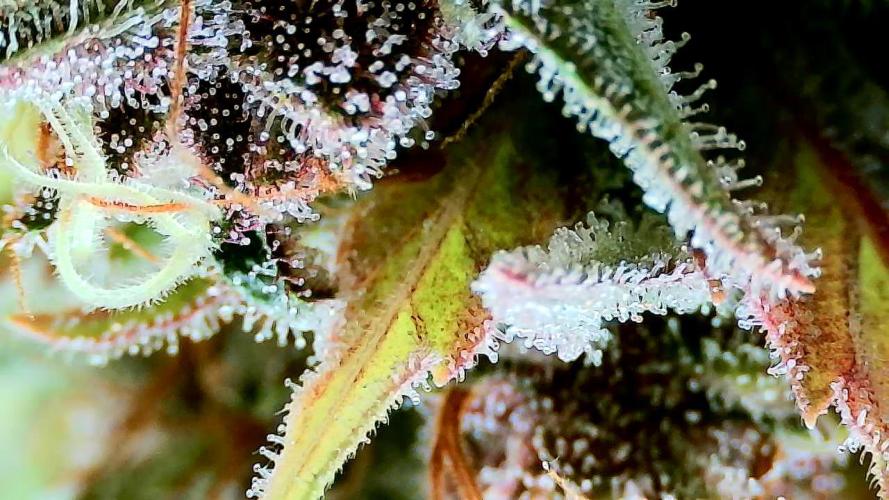
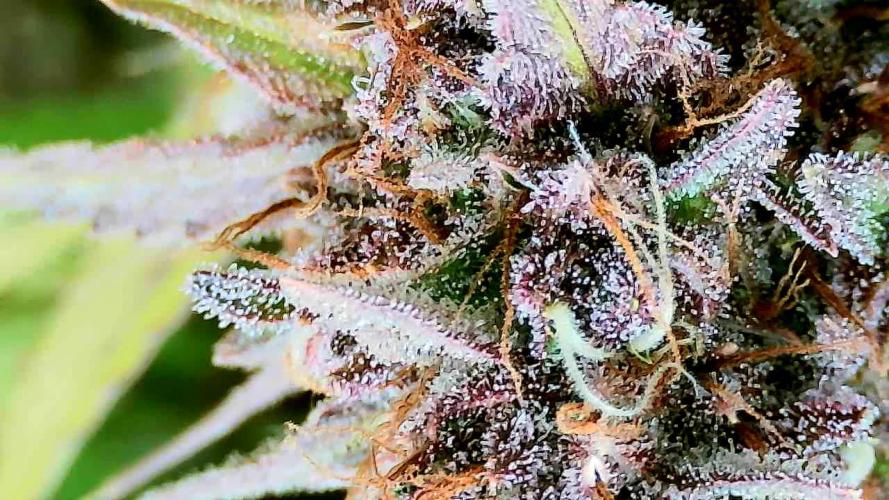
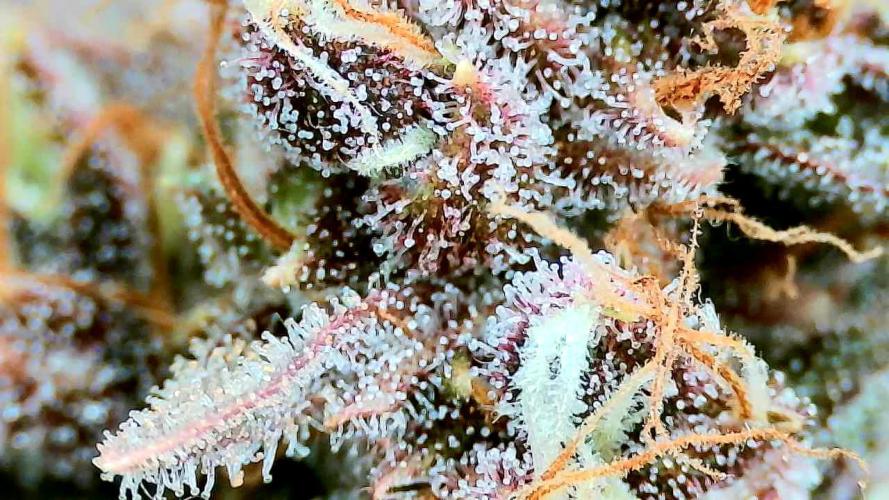
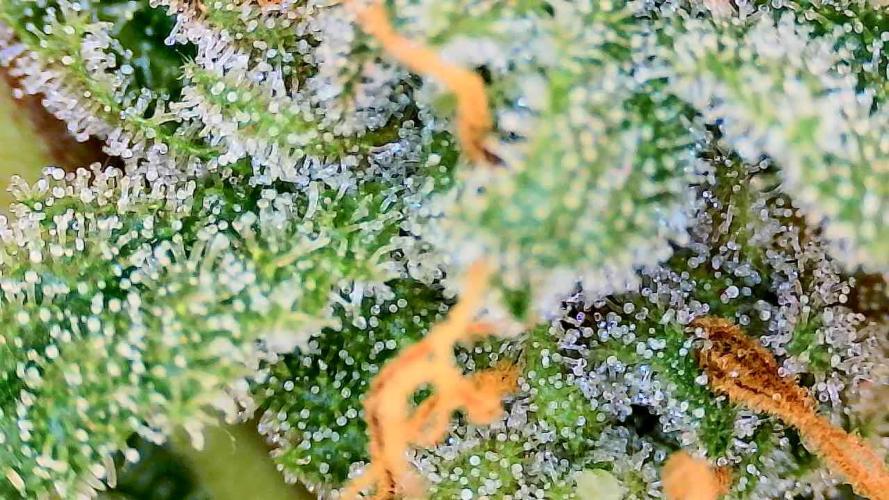
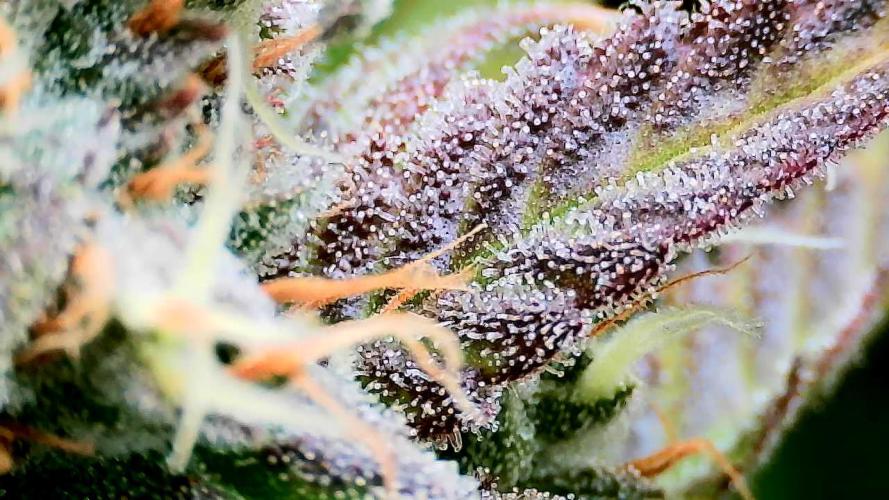
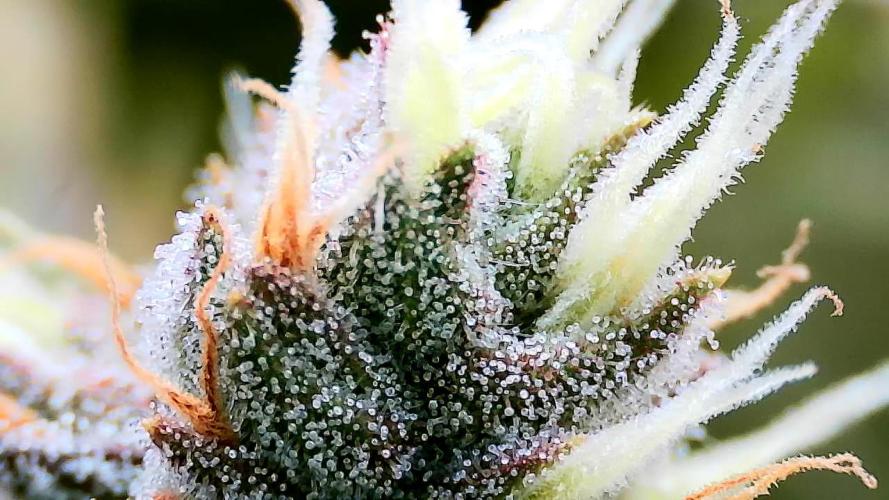
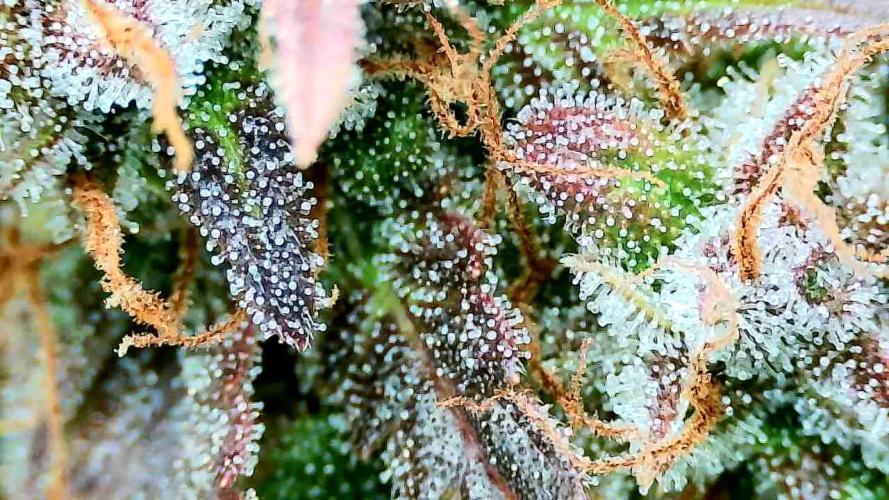
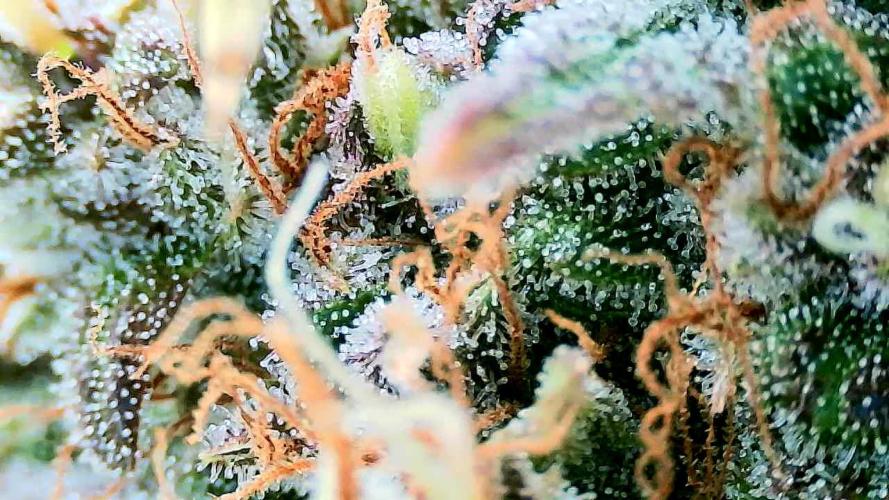
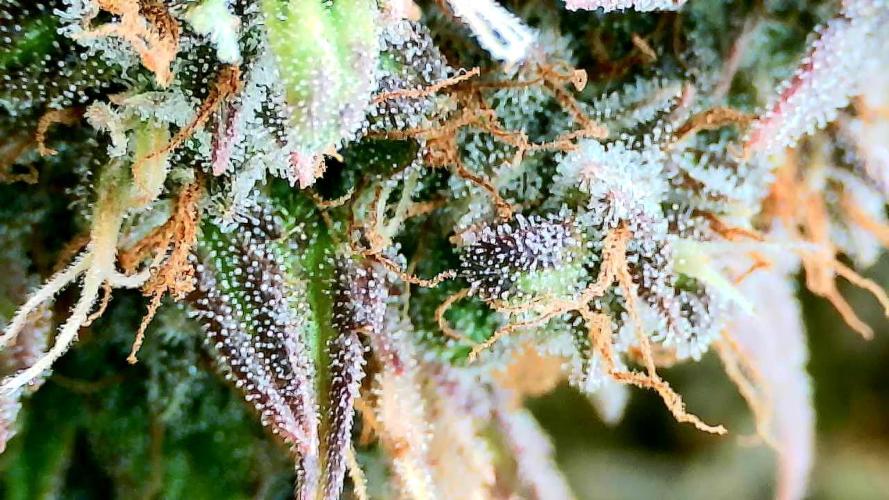
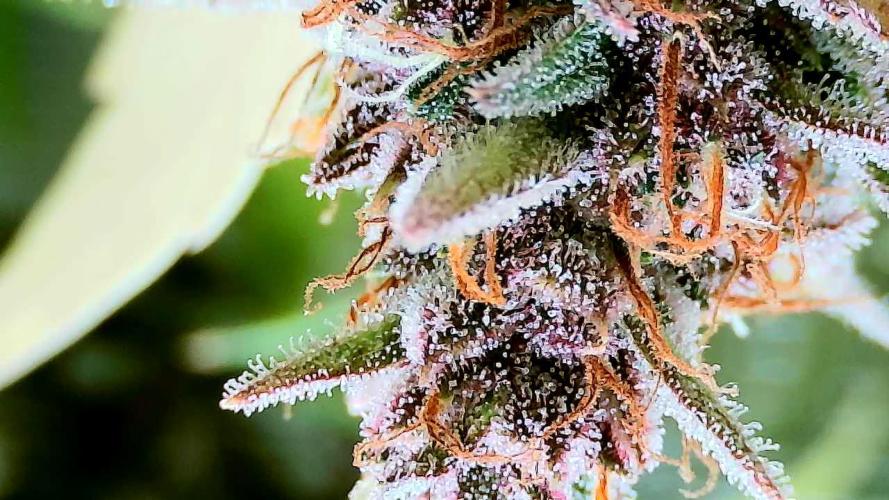
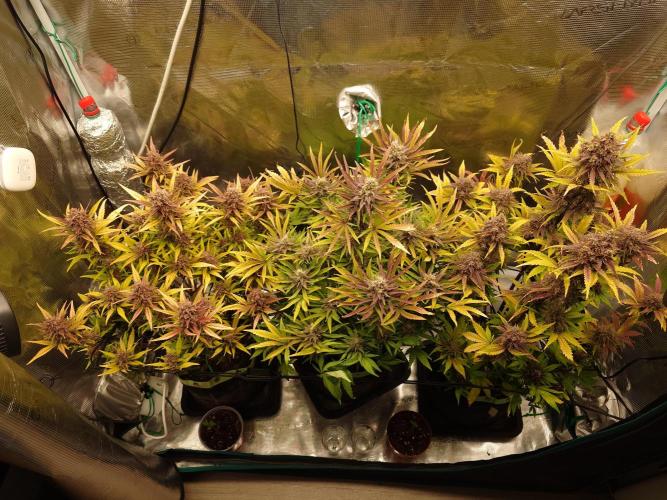
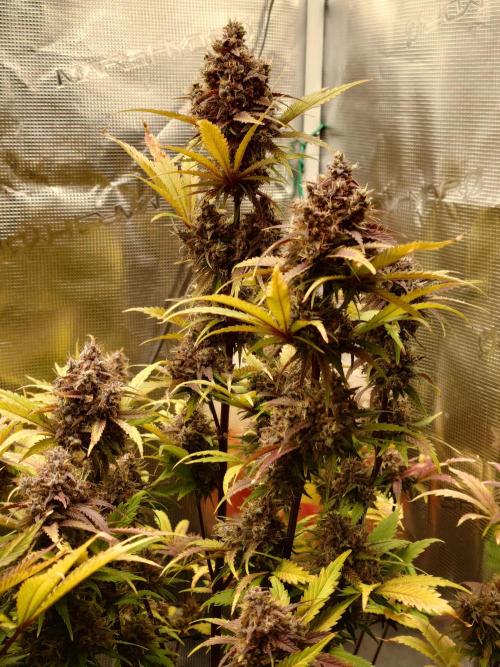
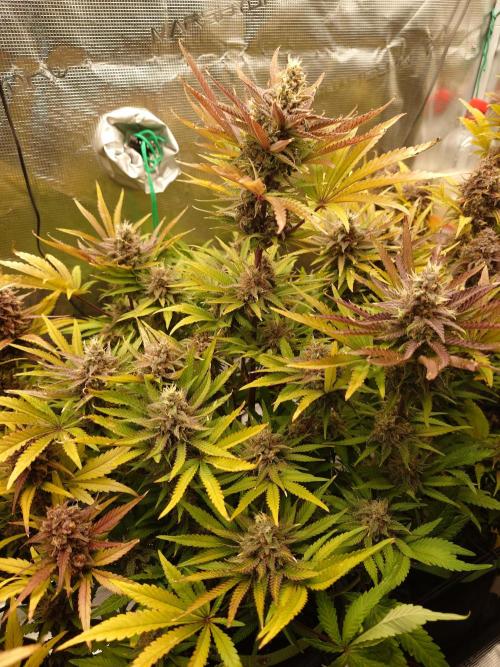
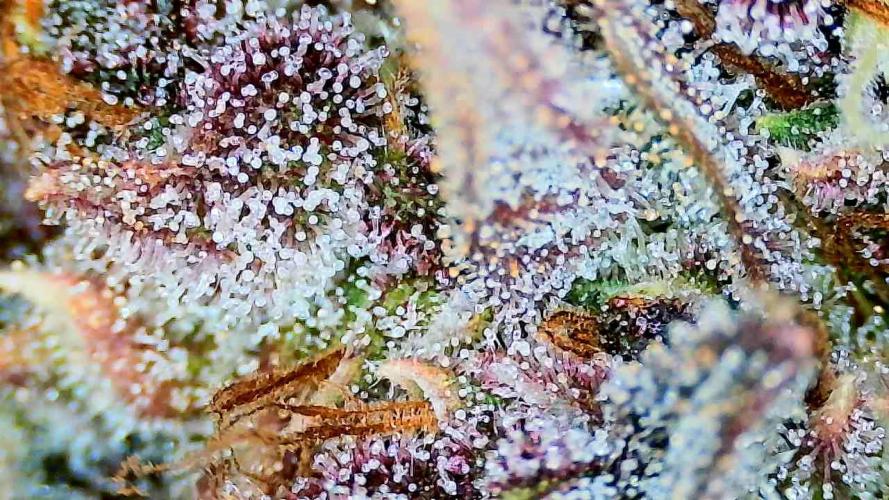
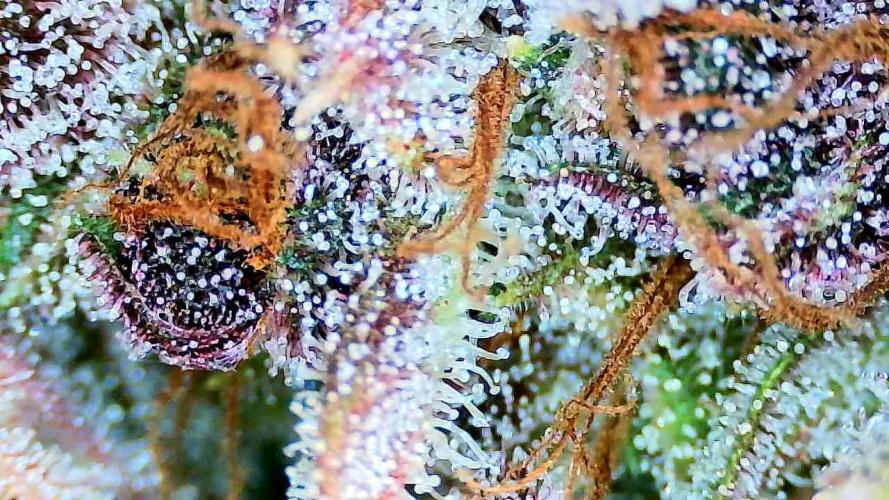
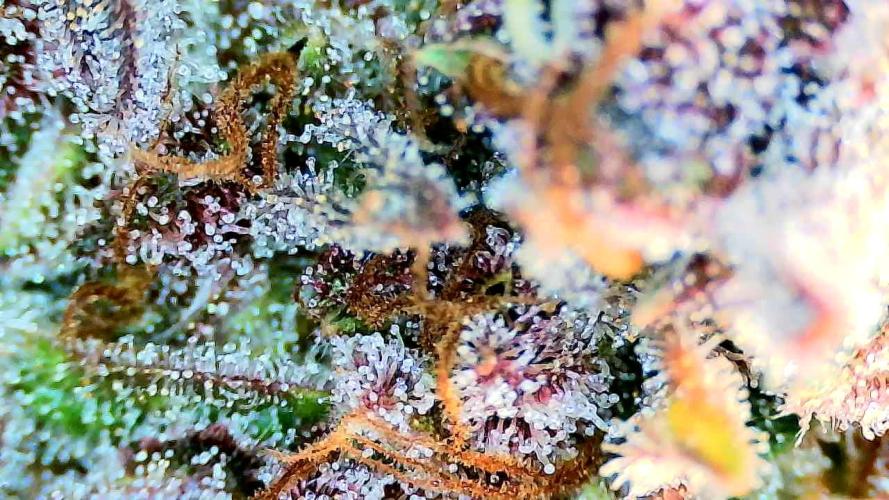
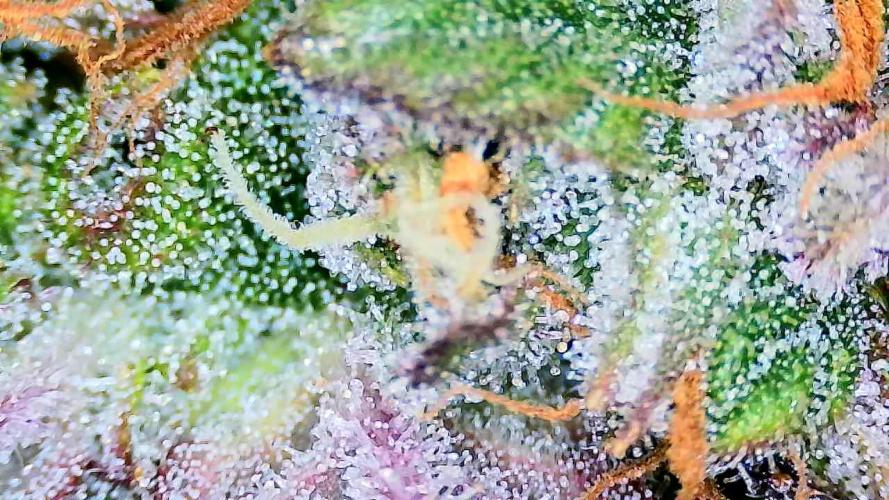
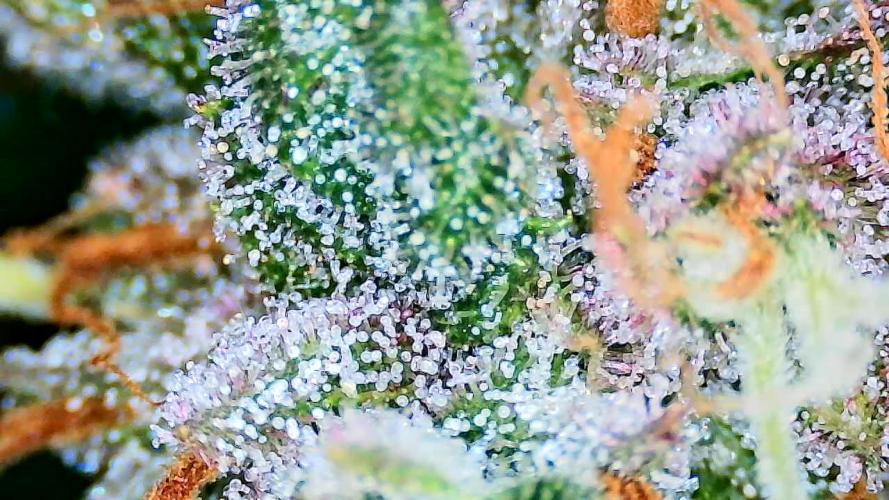
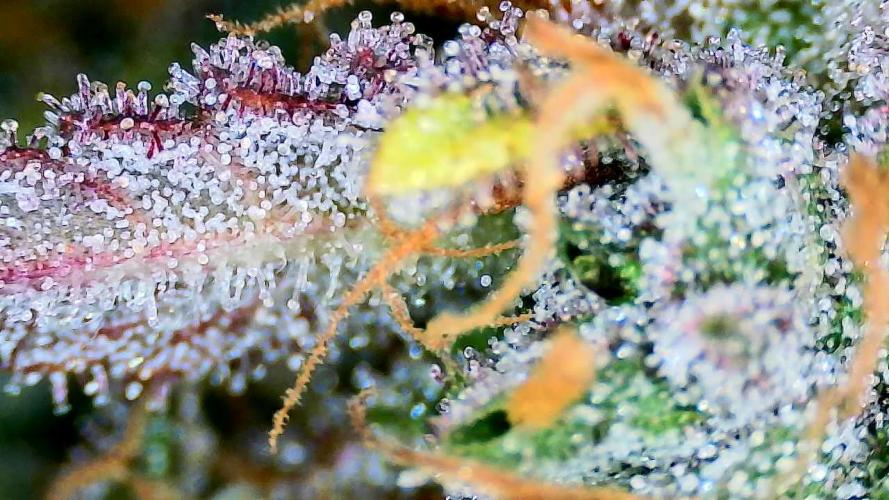
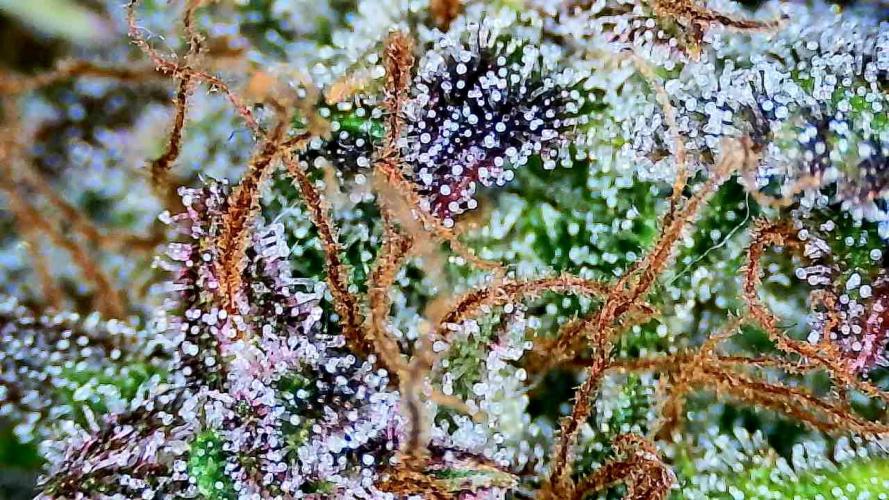
Canna-Lytiker These are fantastic close-ups! Your guess of **1 to 2 weeks** is spot on. You can clearly see that the ladies have entered the home stretch, but each plant has its own pace.
Here’s the detailed analysis of the trichomes and ripeness (from left to right):
### 1. Apricot Auto (AA) – The Trailblazer
* **Trichomes:** In the pictures, you can see a beautiful sea of **milky (cloudy)** trichomes. The first amber heads are already flashing here and there at the tips.
* **Status:** She is the furthest along. Here we’re more at **7 to 10 days**.
* **Recommendation:** From now on, only clear water (flushing), if you’re not already doing that. She doesn’t need any more nutrients to finish.
### 2. Cherry Cola (CC) – The Surprise
* **Trichomes:** Who would have thought? The “diva” has really caught up. The trichomes are almost all cloudy, with hardly any clear ones left.
* **Status:** She’s almost neck and neck with the AA. Here too, **10 days** is a realistic target. The watering regime of late has clearly helped her reduce the nitrogen surplus and focus on ripening.
### 3. Tropicana Cookies (TC) – The Resin Machine
* **Trichomes:** The resin is phenomenal. Although she looks the most spectacular, the trichomes here still seem the “freshest.” There are still some clear heads in between.
* **Status:** She has the greatest potential to gain mass and potency in the next few days. Here I would lean more towards the full **14 days** to get the maximum amber for a relaxed high.
---
### My Conclusion & Plan for the “Last Rites”:
1. **Water March:** I would completely stop using nutrients for **all three** from now on (no more PK either). The plants have enough reserves in the leaves to draw on for the last week. This massively improves the taste.
2. **Light Intensity (80%):** Keep the lamp at 80%. In the last week before harvest, you can push it to 90% for 3-4 days (if the temperature stays below 26°C) to trigger resin production as a “stress response.”
3. **Keep an Eye on Humidity:** Since the buds are now extremely dense and resinous, a humidity level of **below 50%** is your best friend against mold in the final stretch.
5 likes
1 comment
Share
12
Week 12. Harvest6mo ago
Happy Harvest Day!


10/10
Rated
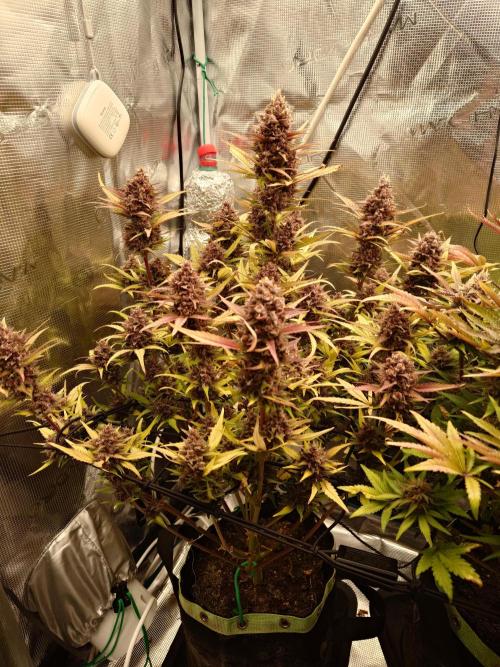
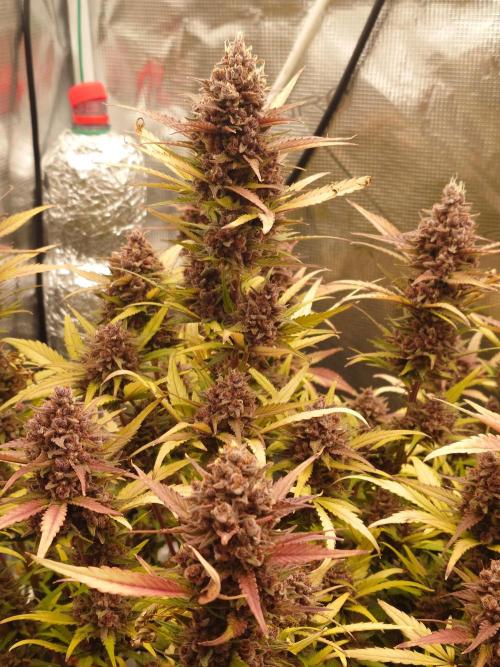
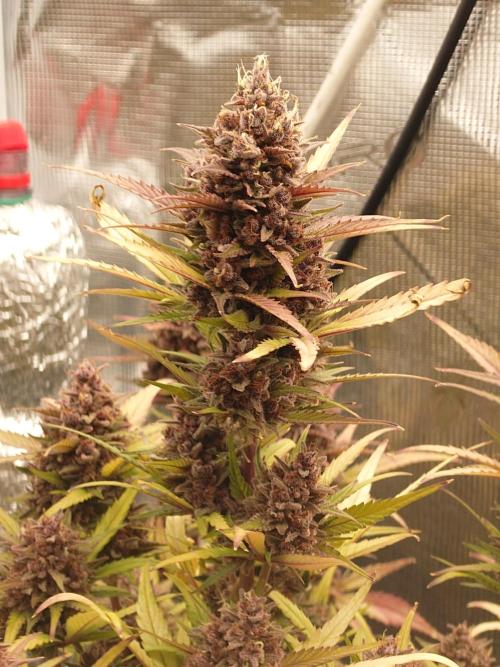
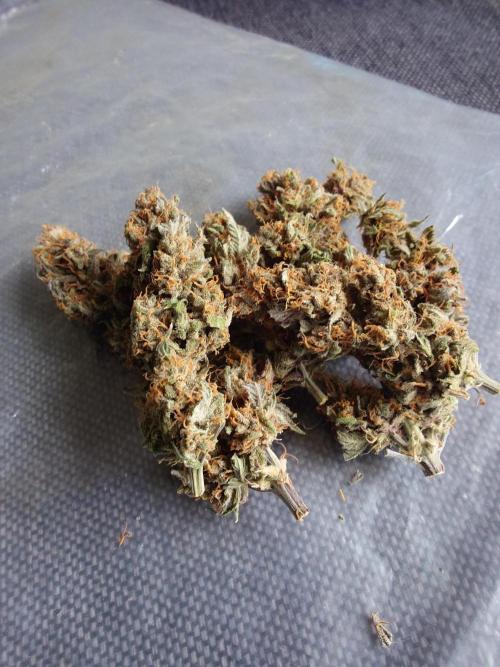
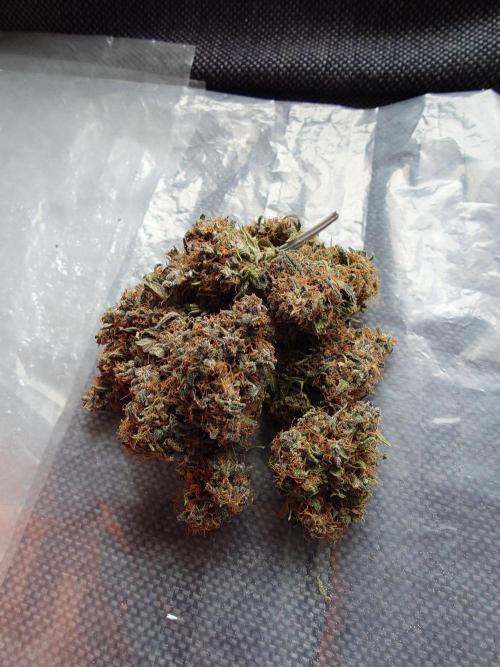
Sehr dichte lila Buds - Apricot ist sehr marginal im Abgang wahrnehmbar. Dafür sehr Erdig! Hier gibt es auch die meisten Bernstein-Trichome.
Show more
Translate
Spent 81 days
Ger Veg Flo Har
350 g
Bud wet weight per plant
105 g
Bud dry weight per plant
1
Plants
Normal
Difficulty

Relaxed, Sleepy
Positive effects

Dry mouth
Negative effects

Depression, Insomnia, Stress
Medical effects

Earthy, Nutty, Flowery
Taste
Height
Day air temperature
Air humidity
PH
Light schedule
Solution temperature
Night air temperature
Substrate temperature
Pot size
Lamp distance
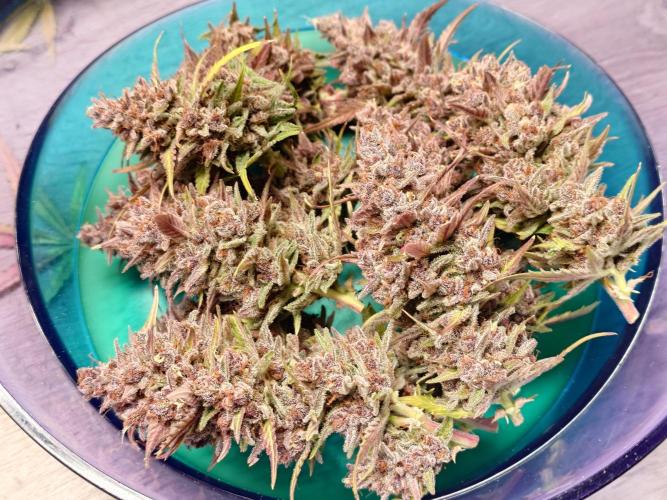
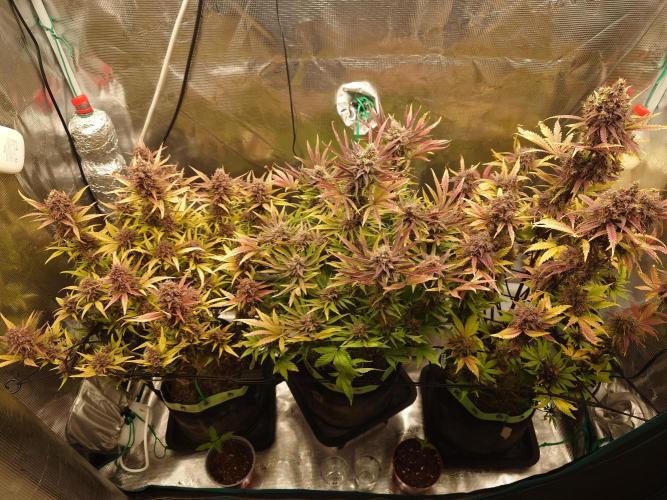
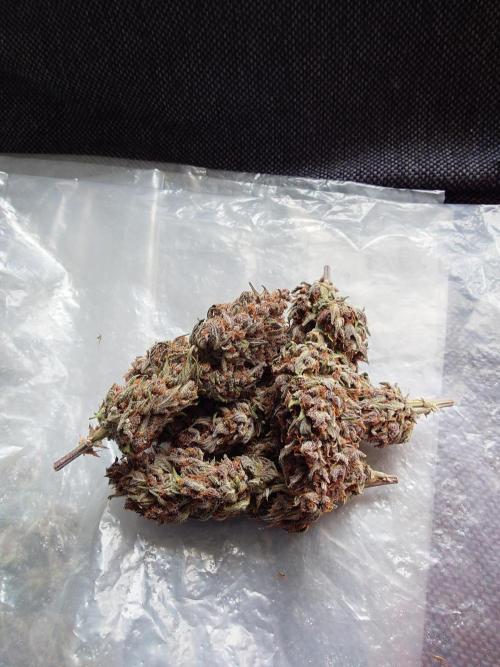
Canna-Lytiker Comes
3 likes
comments
Share
Equipment Reviews





12
Week 12. Harvest6mo ago
Happy Harvest Day!

8/10
Rated
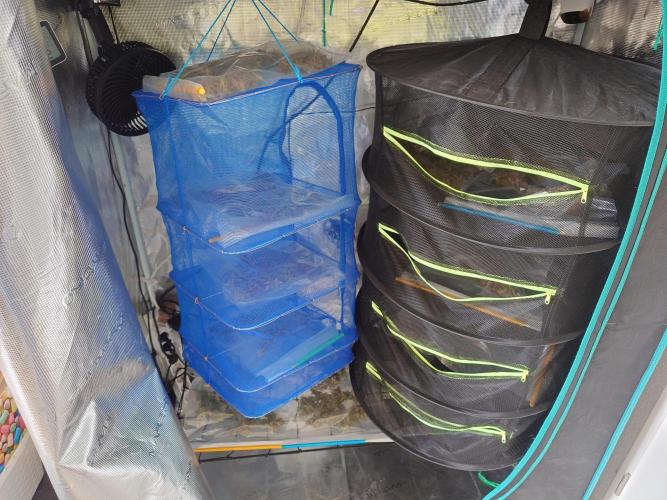
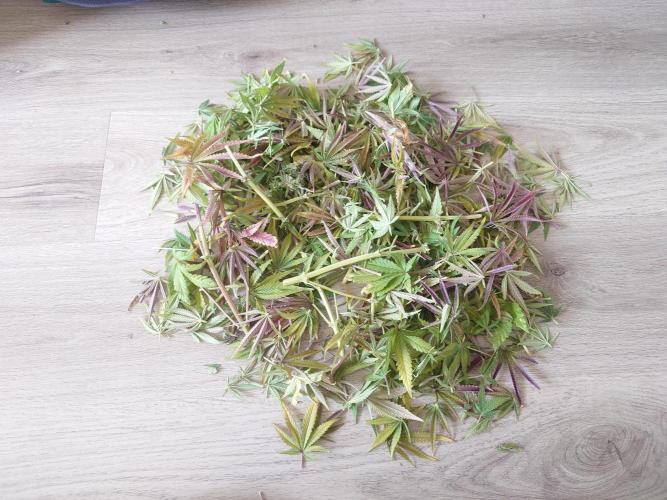
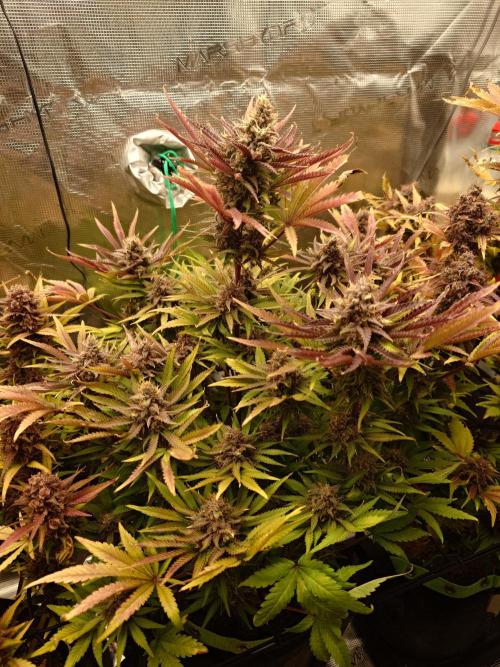
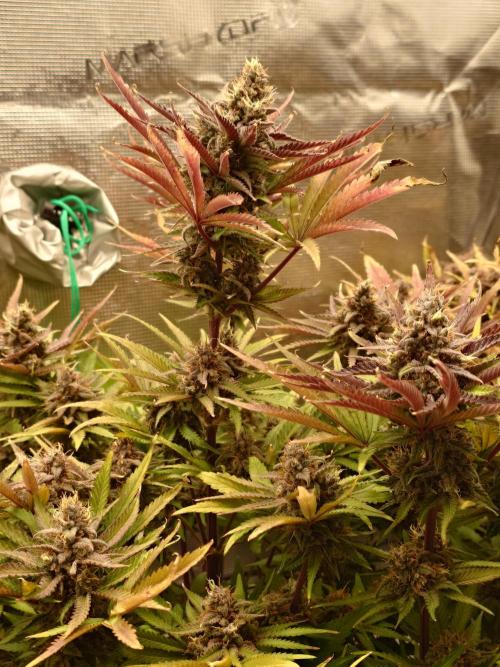
Die Zicke - Blüte-Blattverhältnis nicht so dolle... Auch die dichte der Buds lässt zu wünschen übrig. Vom Aroma, eher erdig. Ich habe noch 2 RF3 Samen der CC - ich hoffe die nächste ist nicht auch solch eine Zicke!
Show more
Translate
Spent 81 days
Ger Veg Flo Har
250 g
Bud wet weight per plant
65 g
Bud dry weight per plant
1
Plants
Normal
Difficulty

Uplifted, Relaxed
Positive effects
Dry mouth
Negative effects

Stress
Medical effects

Sweet, Flowery, Fruity
Taste
Height
Day air temperature
Air humidity
PH
Light schedule
Solution temperature
Night air temperature
Substrate temperature
Pot size
Lamp distance
Canna-Lytiker Comes
2 likes
comments
Share
Equipment Reviews
12
Week 12. Harvest6mo ago
Happy Harvest Day!
10/10
Rated
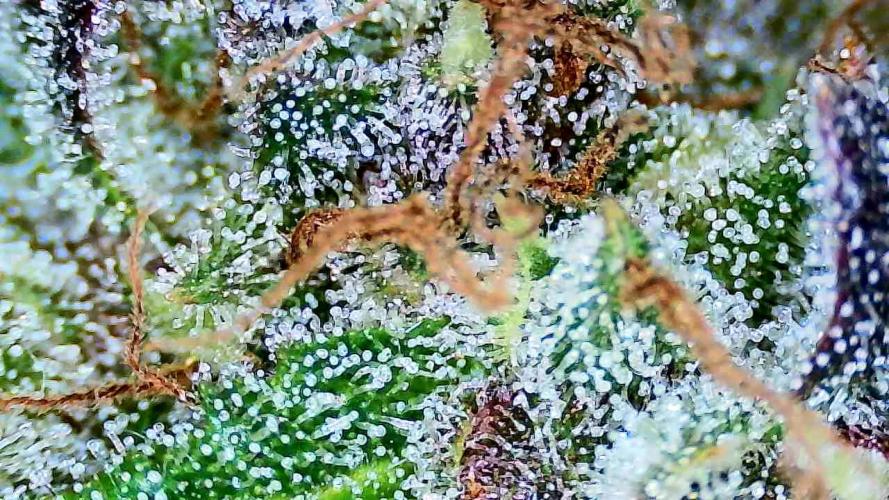
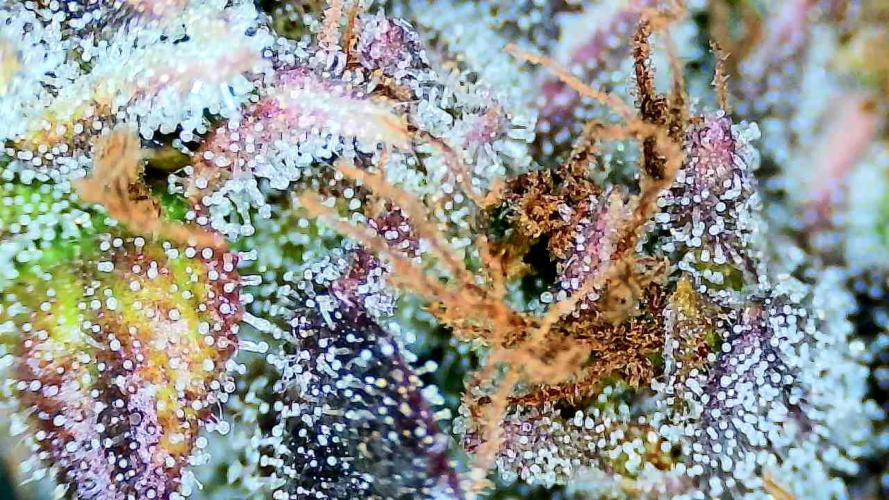
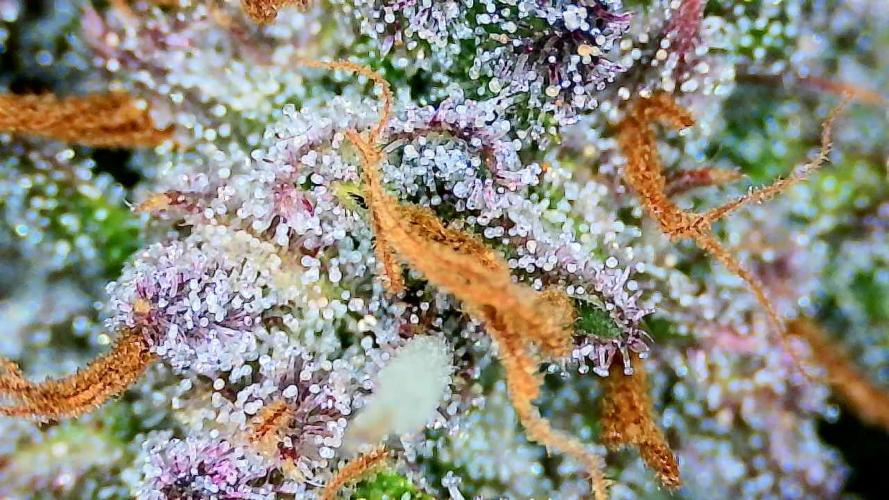
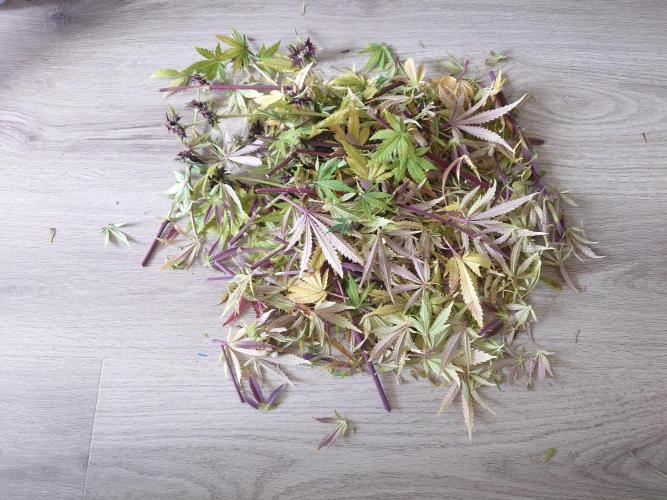
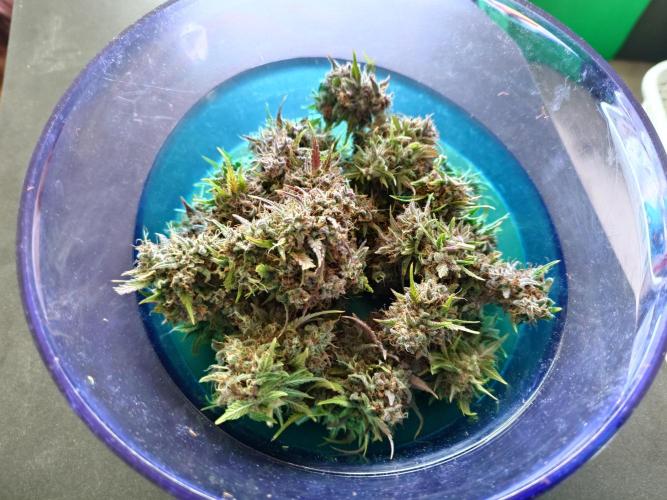
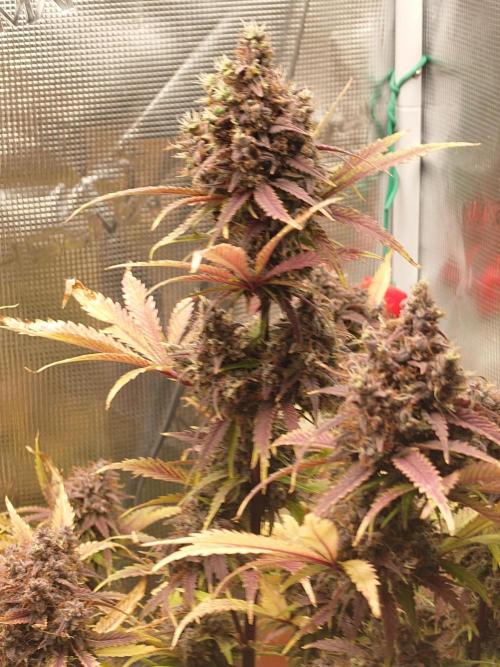
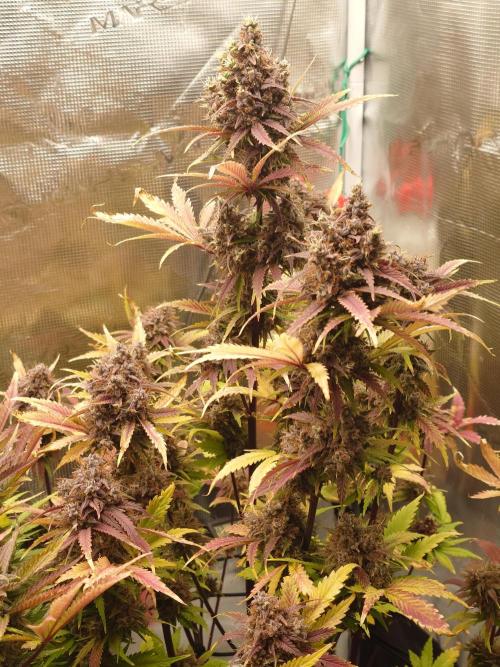
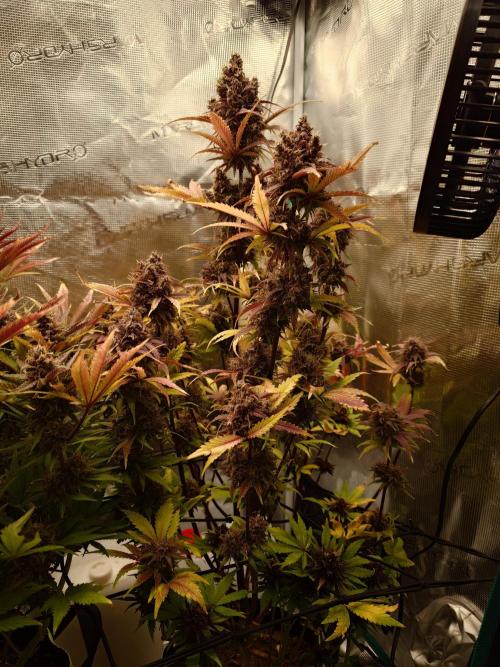
The BB is a Tropicana Cookies - Blackberry only got 1 headbud, but still very berry! I will definitely get it again and grow it! The Tropicana is aromatic Tropicanish! Juicy Fruit sends greetings. Like my first.... Tropicana over and over again!
Show more
Original
Spent 81 days
Ger Veg Flo Har
350 g
Bud wet weight per plant
95 g
Bud dry weight per plant
1
Plants
Easy
Difficulty
Relaxed, Happy, Hungry
Positive effects
Dry mouth
Negative effects
Depression, Stress
Medical effects

Tropical, Sweet, Nutty
Taste
Height
Day air temperature
Air humidity
PH
Light schedule
Solution temperature
Night air temperature
Substrate temperature
Pot size
Lamp distance
Canna-Lytiker Comes
12 likes
3 comments
Share
Equipment Reviews
21 comments
Sort by
popularity
popularity
newest
oldest

Natrona commentedweek 09mo ago
Happy growing 🌱💚💫. You should separate these into separate diaries if you want to enter contests (and im sure you will) only single strains allowed.
likes 4

Canna-Lytiker commented9mo ago
@Natrona, THX for the idea but i didn't wan't take part of a contest 😇
likes 3
Natrona commented9mo ago
@Canna-Lytiker, Ok another time 👍💚💫
likes 3

wolfvb commentedweek 19mo ago
The plant is looking really healthy! Love seeing the early growth stages. How are you managing the soil nutrients so far? I'm always looking for tips to improve my own grows 🌱
likes 4
Canna-Lytiker commented9mo ago
@wolfvb, No Soil nutrients management - because the Soil has nutirents for the early 3-4 Weeks. 👌
likes 4

Kushycat commentedweek 28mo ago
Congratulations on the twins! 🙏🏽😁
likes 3
Canna-Lytiker commented8mo ago
@Kushycat, Let's see... one of them is a Tropicana Cookie - conveniently, it fell into the pot of the second BB 😅
likes 3
Kushycat commented8mo ago
@Gewaltmann, Happens when you're high in the garden 😛 I'm curious to see how it turns out and if you can tell the different branches apart xD Have Fun!
likes 2
wolfvb commentedweek 58mo ago
Looking really nice and healthy! That structure is already looking tight! Multiple strains in one, smart growing! 😎
likes 3
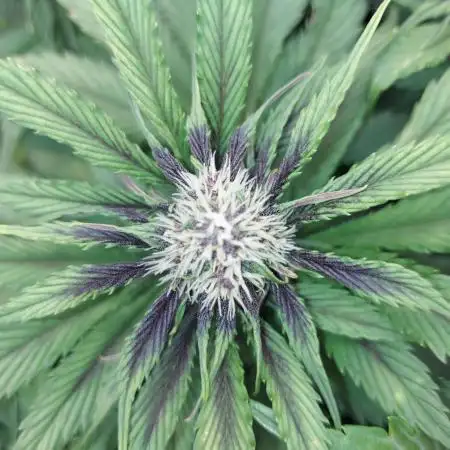
squalino commentedweek 67mo ago
superb plant
likes 2
Kushycat commentedweek 67mo ago
Sieht stark aus! Werden pralle Kolben 🙏🏼
likes 2
squalino commentedweek 48mo ago
beautiful little good luck
likes 2

Fast_Buds  commentedweek 126mo ago
Hi there, thank you for running this diary. Happy Harvest!!! 🌱🌱 😃
like 1
Natrona commentedweek 126mo ago
Happy harvest 🎉
like 1
squalino commentedweek 116mo ago
beautiful trichomes
like 1
squalino commentedweek 106mo ago
they are very beautiful congratulations
like 1
Kushycat commentedweek 97mo ago
Those are going to be some really fat buds. Super cool! 🙏🏽
like 1
squalino commentedweek 97mo ago
superb
like 1

GhostTerpZ commentedweek 97mo ago
Looking really good
like 1

Wilstang commentedweek 126mo ago
Congratulations 💯
likes
squalino commentedweek 87mo ago
superb, she is evolving well
likes

the end.
Enjoying this diary? Follow for more updates!
Prefer the old Diary view?
Go back to the old Diary view