


2026 1st Grow: Mix Grape Field


Dripz
Starkiller x Grape Soda





Box
AC Infinity
Grow Boxes


Filt
AC Infinity
Air Filter




Indoor
Room Type
Defoliation
weeks 4-6, 9-15
12-12
weeks 7-15
LST
weeks 3-6, 12-15
Main-Lining
weeks 3, 5
Topping
weeks 6
ScrOG
weeks 6-8, 11-13
HST
weeks 8
19 liters
Pot Size
1 liters
Watering
Start at Harvest
G
Germination3mo ago
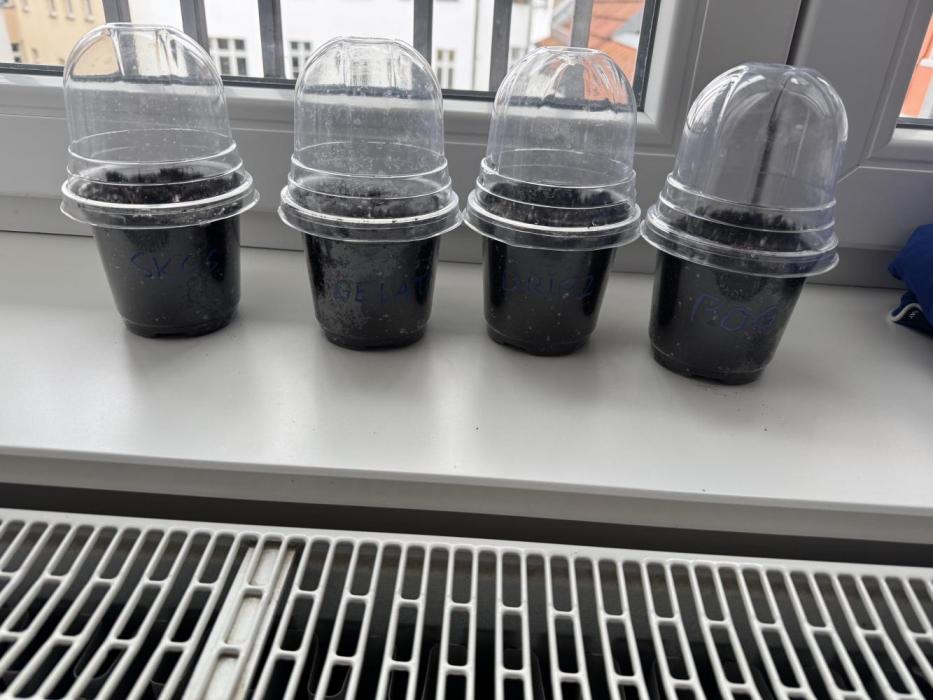
Gardens_of_Of All Germinated
4 likes
comments
Share
Used method
Directly In Substrate
Germination Method
1
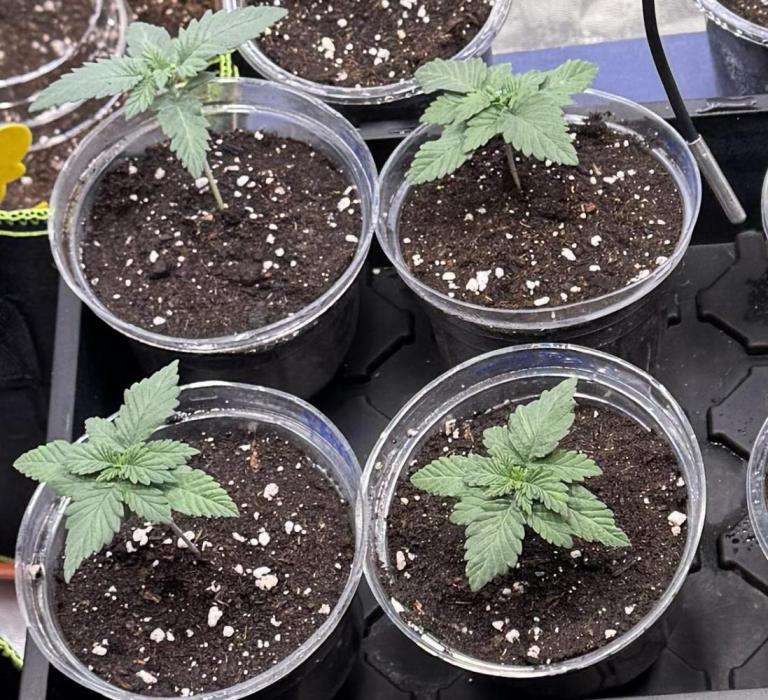
Week 1. Vegetation3mo ago
10 cm
Height
18 hrs
Light Schedule
26 °C
Day Air Temp
6.5
pH
No Smell
Smell
100 PPM
TDS
75 %
Air Humidity
19 °C
Night Air Temp
0.5 liters
Pot Size
0.2 liters
Watering Volume
50 cm
Lamp Distance
Gardens_of_Of The ladies seem to be enjoying life as they complete their first week of flowering. They look healthy, vibrant, and are settling beautifully into this exciting new stage of growth. With the first week behind them, they are off to a strong start, and it will be exciting to watch them continue to develop in the weeks ahead.
5 likes
comments
Share
2
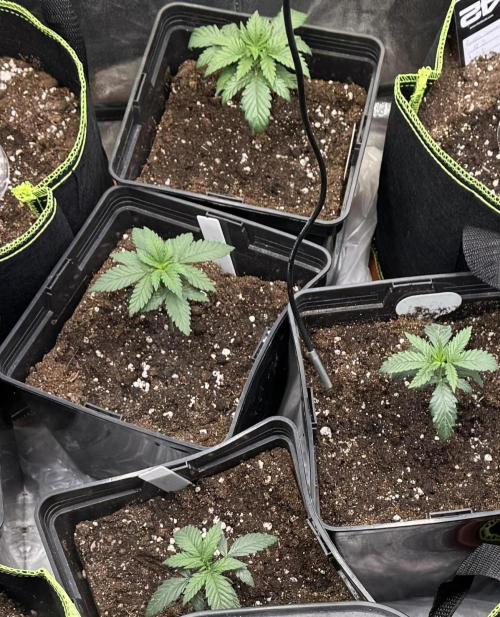
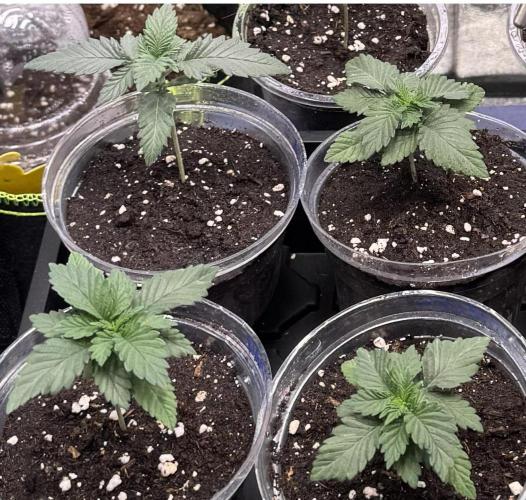
Week 2. Vegetation3mo ago
10 cm
Height
18 hrs
Light Schedule
27 °C
Day Air Temp
6.5
pH
No Smell
Smell
100 PPM
TDS
70 %
Air Humidity
20 °C
Night Air Temp
1.5 liters
Pot Size
0.4 liters
Watering Volume
50 cm
Lamp Distance
Gardens_of_Of I slightly overwatered them early in the week, which caused some of the leaves to curl. After adjusting my watering routine, they responded well and quickly began to recover. By the end of the week, they had also been transplanted successfully, giving them more room to continue thriving as they move through the vefative stage.
4 likes
comments
Share
3
Week 3. Vegetation3mo ago
15 cm
Height
18 hrs
Light Schedule
27 °C
Day Air Temp
6.5
pH
No Smell
Smell
100 PPM
TDS
70 %
Air Humidity
20 °C
Night Air Temp
1.5 liters
Pot Size
0.75 liters
Watering Volume
50 cm
Lamp Distance
Nutrients 1

BioEnhancer
0.26 mll
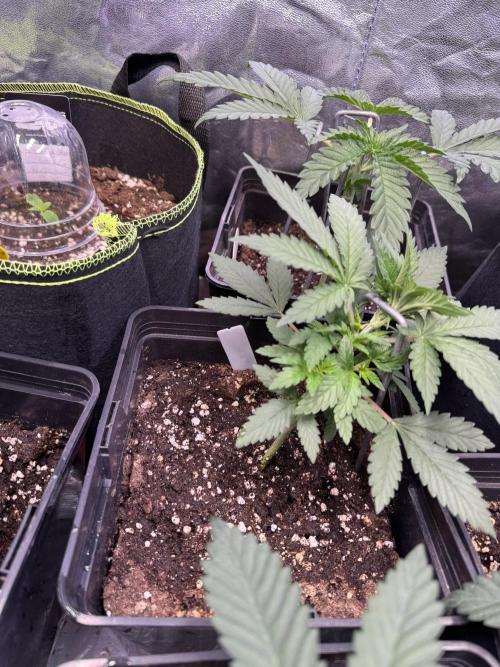
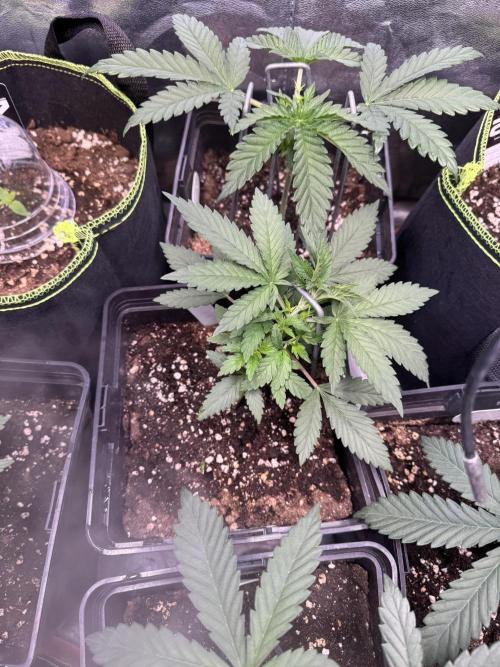
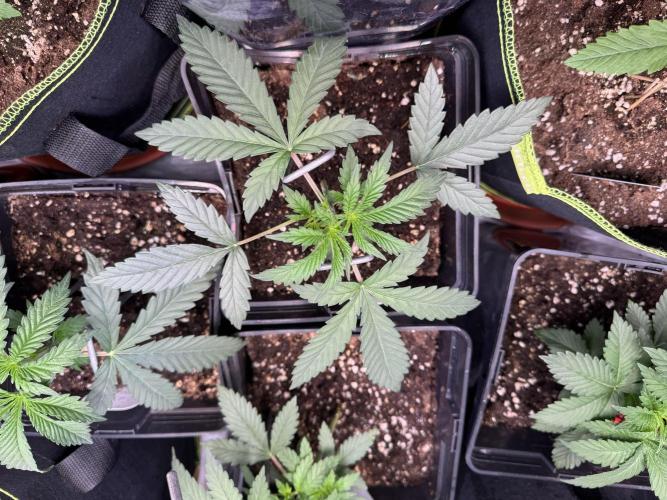
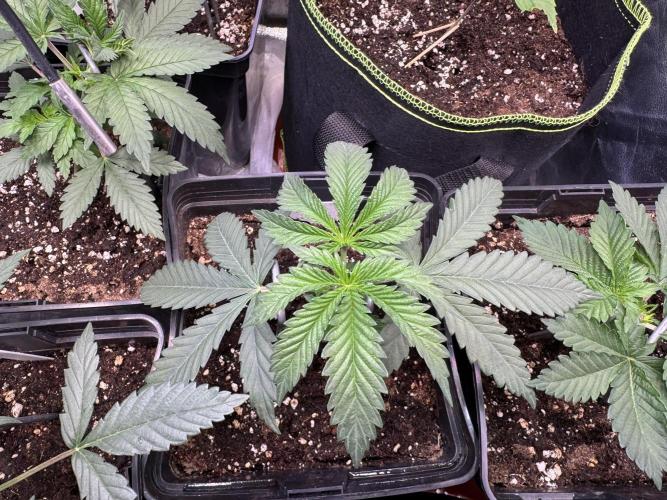
Gardens_of_Of They just keep growing and filling up the tent, showing vigorous and healthy development. Gelato and Planet of the Grapes will remain on the balcony until they are transplanted into 20 L pots. Once that is done, the entire group will be moved into a larger tent, where they'll have plenty of space to continue their vegetative growth.
4 likes
comments
Share
Used techniques
LST
Technique
Main-Lining
Technique
4
Week 4. Vegetation3mo ago
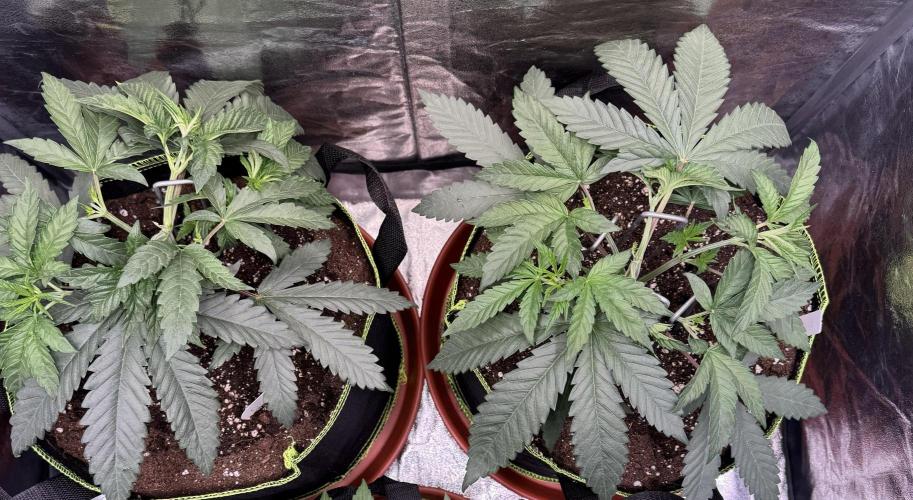
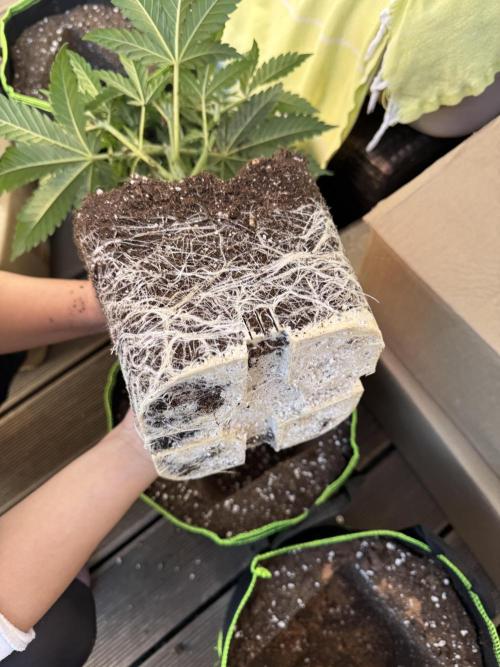
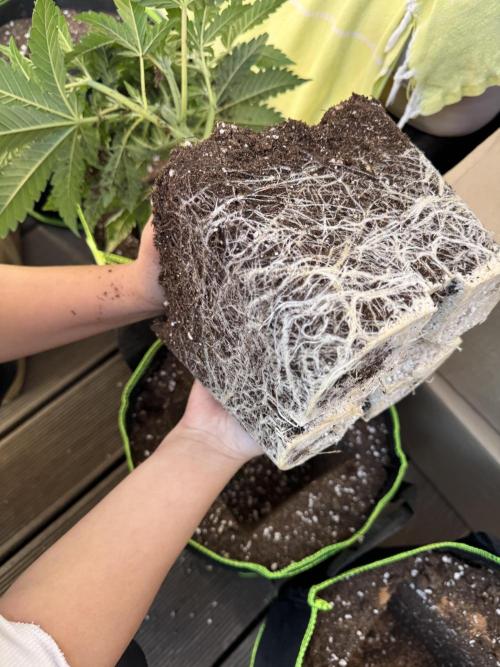
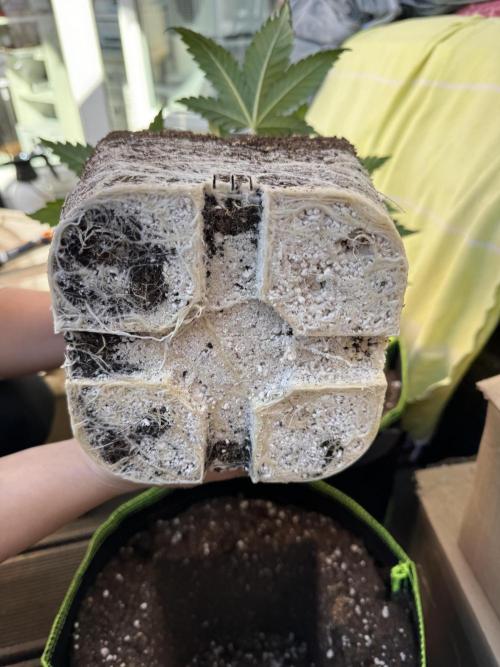
15 cm
Height
18 hrs
Light Schedule
28 °C
Day Air Temp
6.5
pH
No Smell
Smell
100 PPM
TDS
65 %
Air Humidity
22 °C
Night Air Temp
1.5 liters
Pot Size
1 liters
Watering Volume
50 cm
Lamp Distance
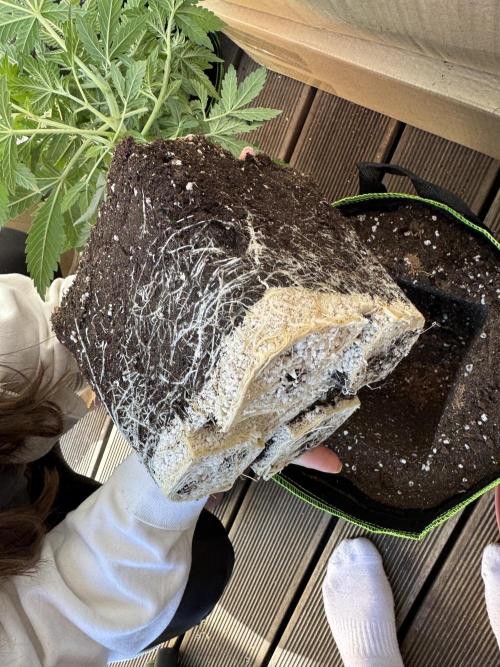
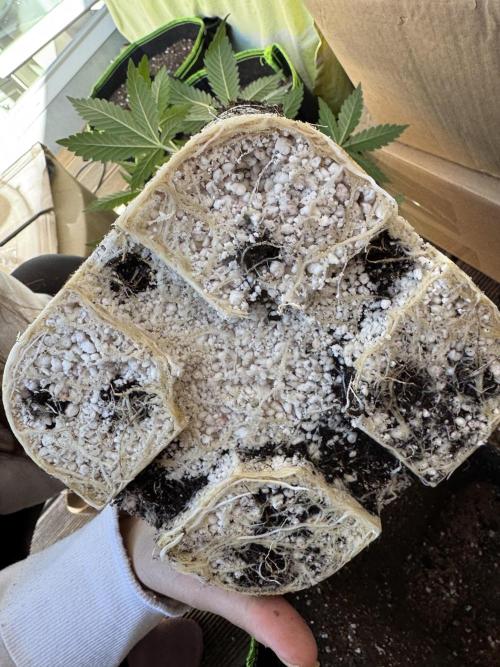
Gardens_of_Of This week marked an important milestone, as all of the plants were transplanted into 20 L fabric pots. During the transplant, I was pleased to see strong, healthy root development across the board—a great sign that they are thriving. To support root health and encourage continued growth, I applied Myrolyzer directly to the root zone before transplanting.
Dripz and Starkiller x Grape Soda have now been moved back into the tent, while Planet of the Grapes and Gelato remain on the balcony. The current weather has been ideal for them, so they're continuing to enjoy the outdoor conditions a little longer.
The plan for the coming week is to move all four plants into the larger 120 × 120 cm tent, where they will spend the final weeks of the vegetative stage before transitioning into flowering. With more space and a stable environment, they should have everything they need to finish veg strong.
4 likes
comments
Share
Used techniques
LST
Technique
Defoliation
Technique
5
Week 5. Vegetation3mo ago
25 cm
Height
18 hrs
Light Schedule
28 °C
Day Air Temp
6.5
pH
No Smell
Smell
100 PPM
TDS
60 %
Air Humidity
22 °C
Night Air Temp
1.5 liters
Pot Size
1.5 liters
Watering Volume
50 cm
Lamp Distance
Nutrients 1

BioBloom
1.3 mll
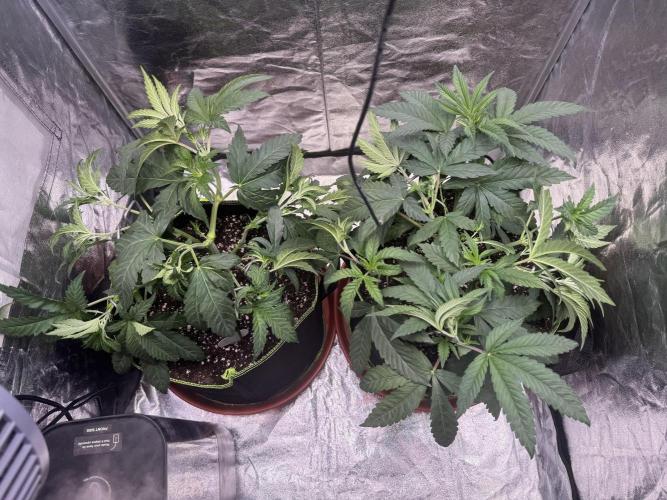
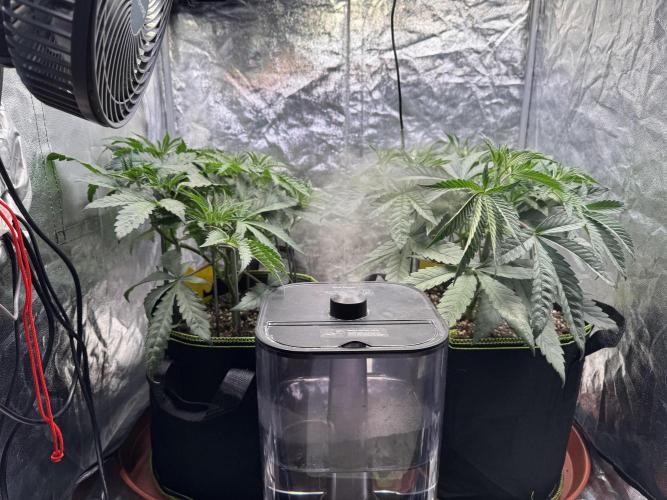
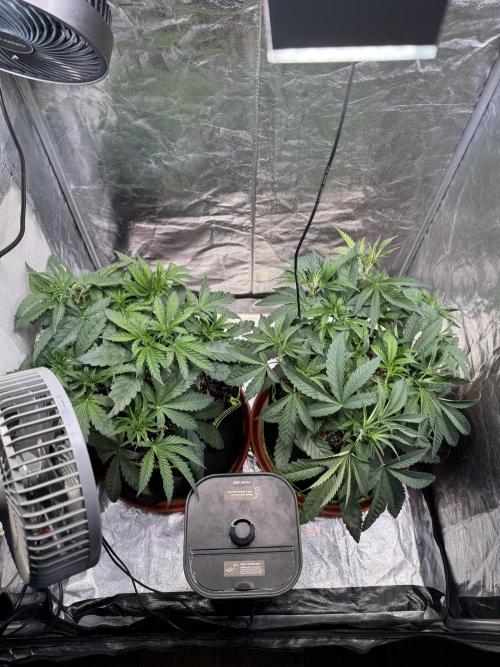
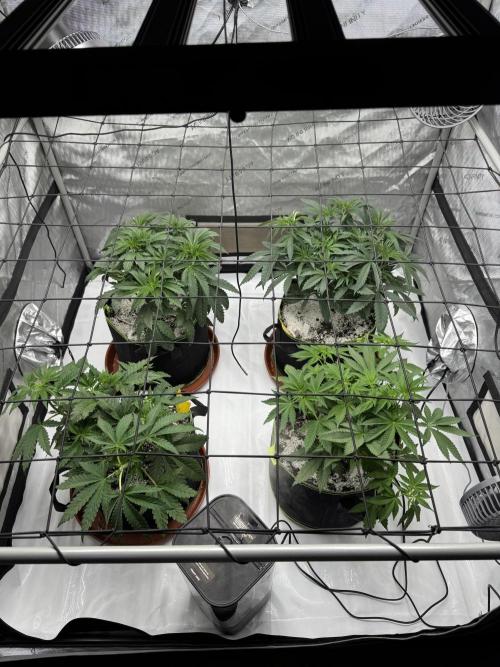
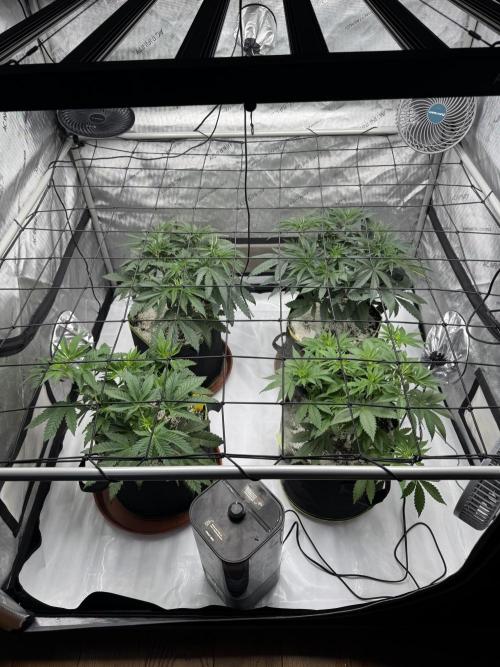
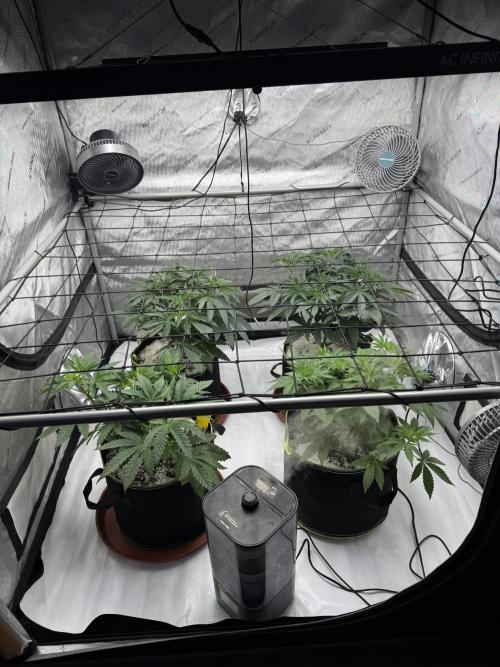
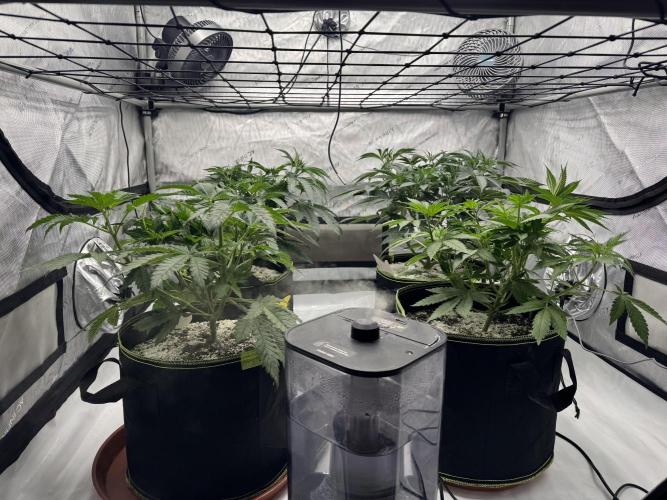
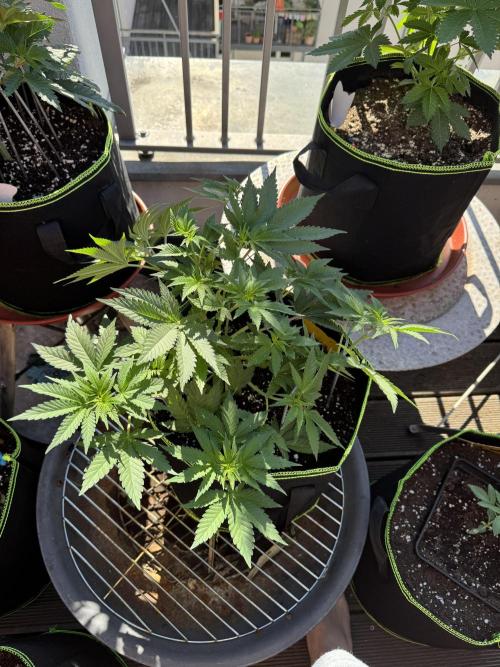
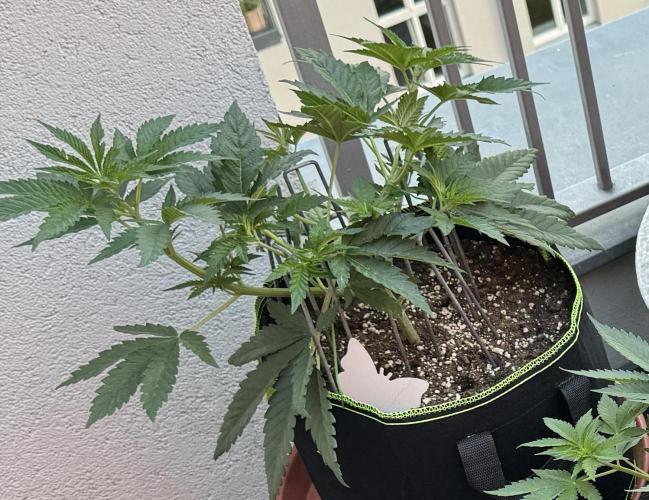
Gardens_of_Of This week, Planet of the Grapes and Gelato spent their final days on the balcony before joining the rest of the garden indoors. Once all four plants—including Dripz and Starkiller x Grape Soda—had been moved into the larger tent, they finally had the space they needed to continue their vigorous growth.
To prepare them for the upcoming flowering stage, I applied Green House Feeding BioBloom at a slightly higher rate than the manufacturer's recommended dosage. Having used this nutrient line successfully on several previous grows, I feel confident in adjusting the feeding schedule based on my experience and the plants' healthy condition.
Next week, I plan to top up the nutrient charge with an additional one-eighth of the recommended dosage, as I expect these cultivars to complete their flowering cycle in approximately nine weeks.
So far, everything is progressing smoothly. The ladies are thriving, filling out the tent nicely, and entering the final stretch of vegetative growth in excellent health.
3 likes
comments
Share
Used techniques
LST
Technique
Defoliation
Technique
Main-Lining
Technique
6
Week 6. Vegetation3mo ago
30 cm
Height
18 hrs
Light Schedule
28 °C
Day Air Temp
6.5
pH
No Smell
Smell
100 PPM
TDS
60 %
Air Humidity
22 °C
Night Air Temp
1.5 liters
Pot Size
1.5 liters
Watering Volume
50 cm
Lamp Distance
Nutrients 1
BioBloom
0.17 mll
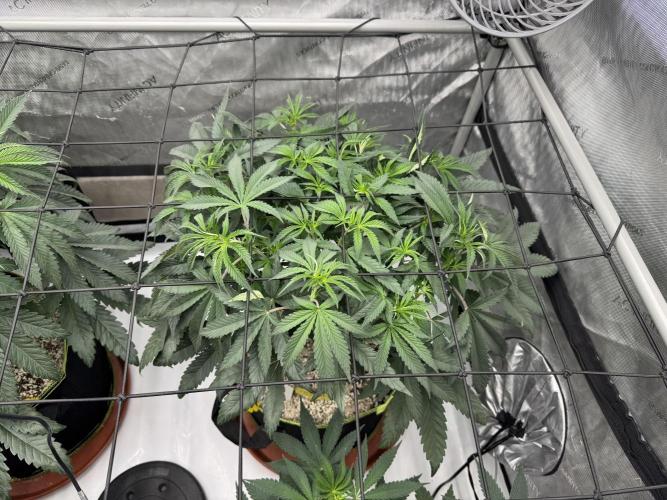
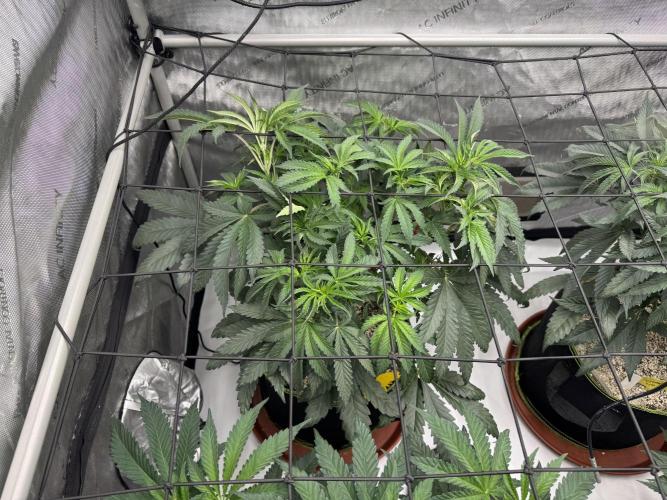
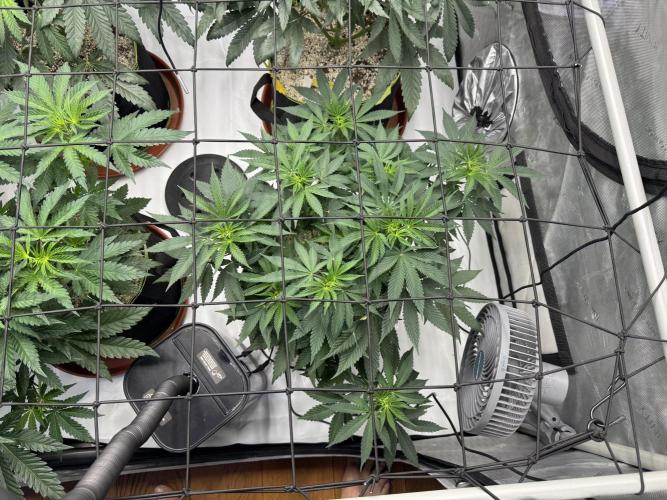
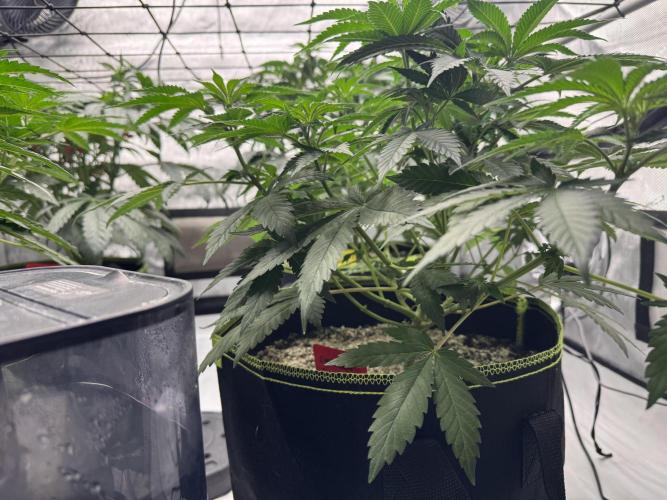
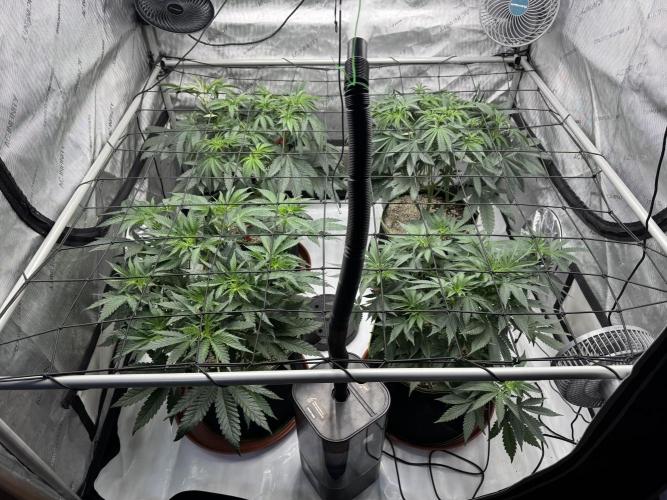
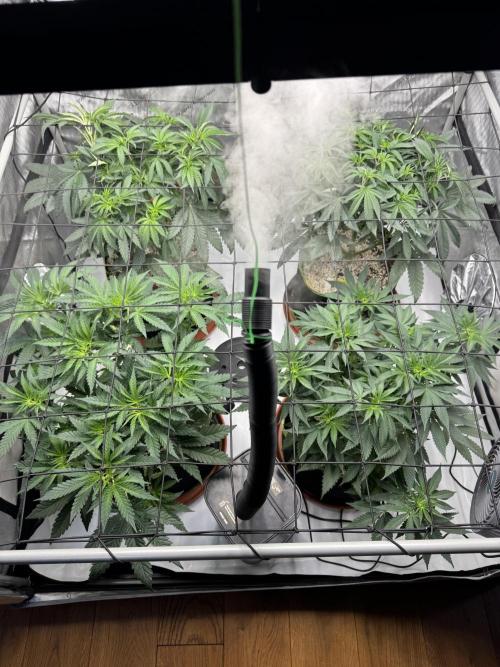
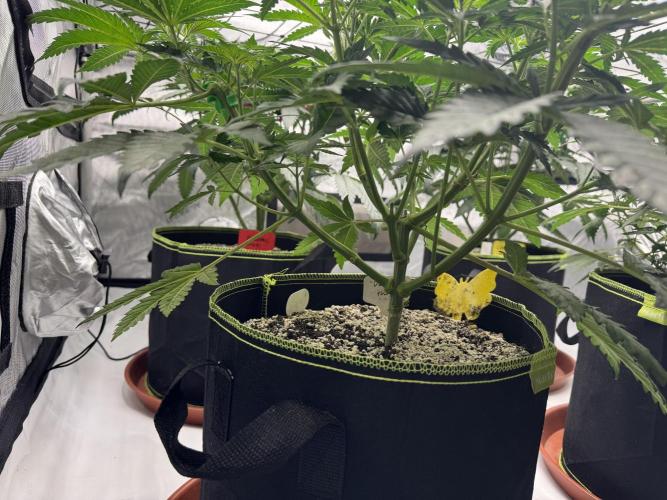
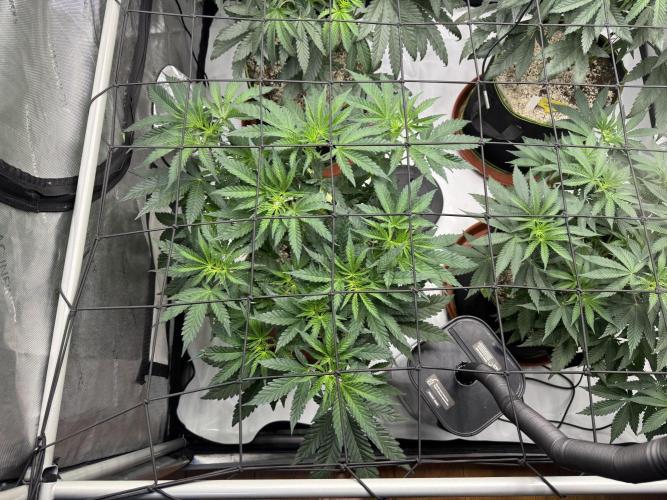
Gardens_of_Of The final week of the vegetative stage has come to an end, and the plants are looking strong and healthy. Almost all of them have reached the SCROG net, creating an even canopy that should provide an excellent foundation for flowering.
Three days before switching the light cycle to 12/12, the plants were carefully defoliated and lollipopped to improve airflow and direct their energy toward the most productive growth. They have nearly filled the entire tent, but this time I have been careful not to overcrowd the canopy. During my previous grow, excessive canopy density led to mold issues, so maintaining good airflow is a top priority throughout this run.
Overall, the plants have developed very evenly, with all but Gelato reaching a similar height. To help her keep pace with the rest of the canopy, I slightly raised the height of her pot. Hopefully, this adjustment will allow her to catch up over the coming weeks.
With the vegetative stage now complete, the garden is well prepared for the transition into flowering. The canopy is healthy, well managed, and ready for the stretch that lies ahead.
3 likes
comments
Share
Used techniques
LST
Technique
ScrOG
Technique
Topping
Technique
Defoliation
Technique
7
Week 7. Flowering3mo ago
45 cm
Height
12 hrs
Light Schedule
27 °C
Day Air Temp
6.5
pH
No Smell
Smell
100 PPM
TDS
60 %
Air Humidity
22 °C
Night Air Temp
19 liters
Pot Size
1.5 liters
Watering Volume
50 cm
Lamp Distance
Nutrients 1
BioEnhancer
0.26 mll
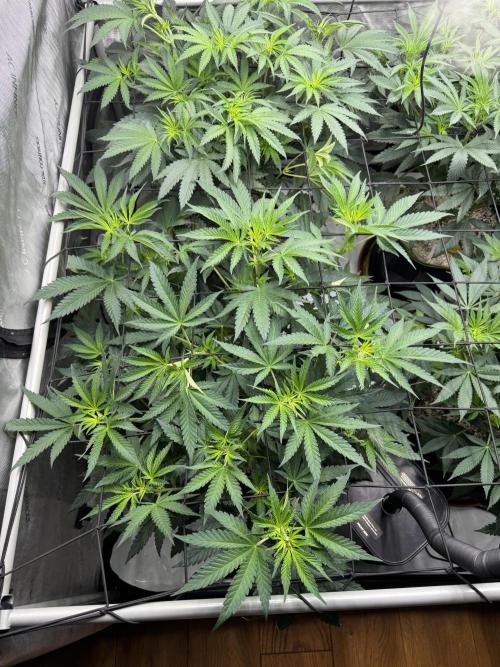
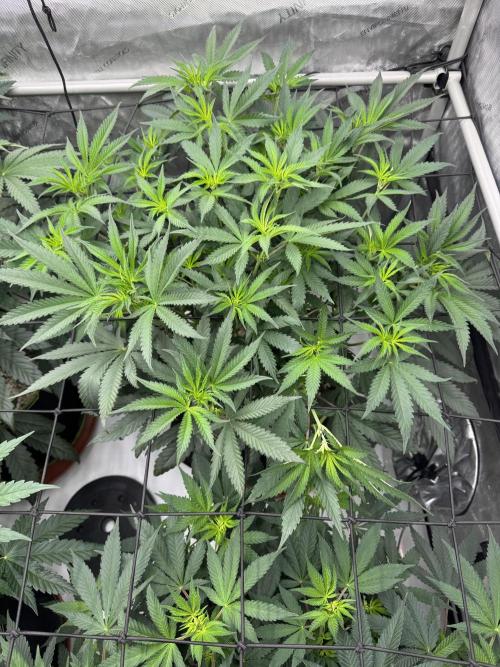
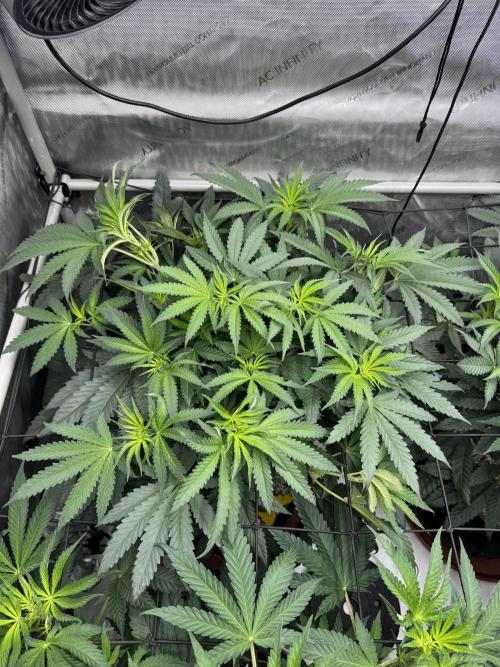
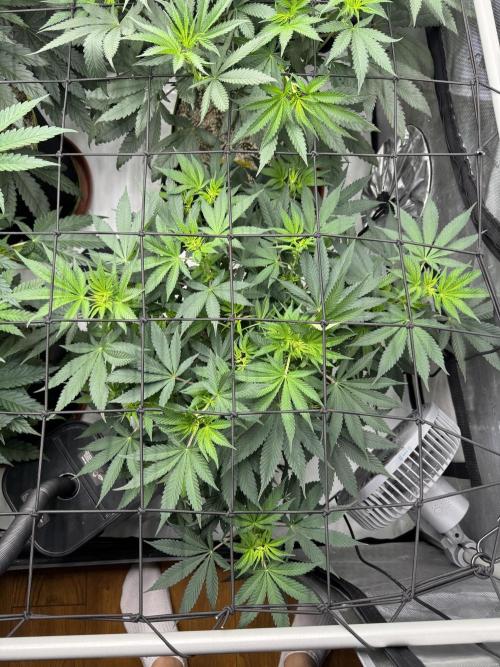
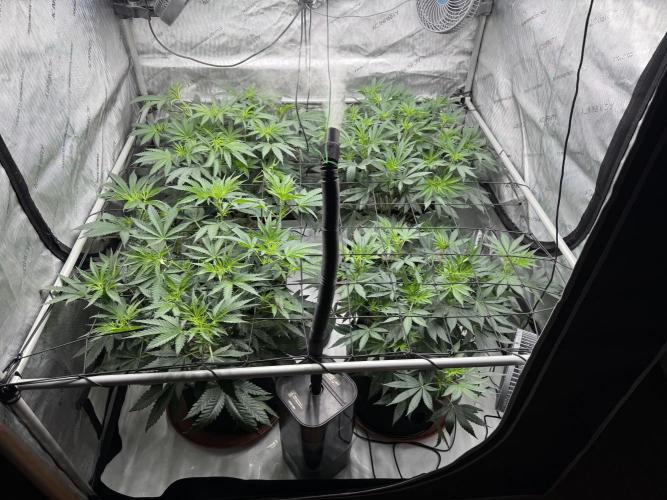
Gardens_of_Of The first week of flowering is now complete, and the plants have transitioned smoothly into the flowering stage. They have begun their initial stretch, reaching eagerly toward the light and showing vigorous, healthy growth across the canopy.
To accommodate this rapid vertical growth, I have been raising the light by approximately 5 cm every two to three days, ensuring a consistent distance from the canopy. At the same time, I increased the light intensity to level 7, providing approximately 700 µmol/m²/s of PPFD, which is well suited for this stage of flowering. Over the coming weeks, I plan to gradually increase the light intensity further, with the goal of reaching between 900 and 1,000 µmol/m²/s as the plants enter peak flower production.
The canopy remains remarkably even, although Gelato continues to be slightly smaller than the others. Rather than being a concern, this appears to be a characteristic of the cultivar, as she simply doesn't seem to stretch as much during the early flowering phase.
Overall, the first week of bloom has gone exactly as planned. The plants are healthy, responding well to the environmental adjustments, and the flowering stretch is now fully underway.
3 likes
comments
Share
Used techniques
ScrOG
Technique
12-12
Technique
8
Week 8. Flowering3mo ago
65 cm
Height
12 hrs
Light Schedule
27 °C
Day Air Temp
6.5
pH
Weak
Smell
100 PPM
TDS
60 %
Air Humidity
22 °C
Night Air Temp
19 liters
Pot Size
1.5 liters
Watering Volume
50 cm
Lamp Distance
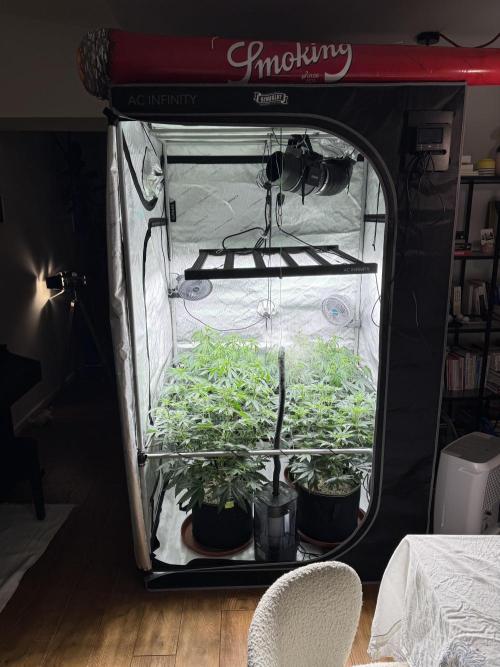
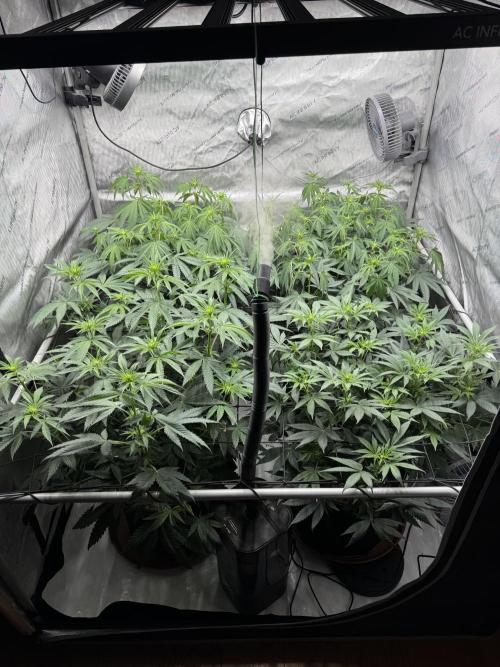
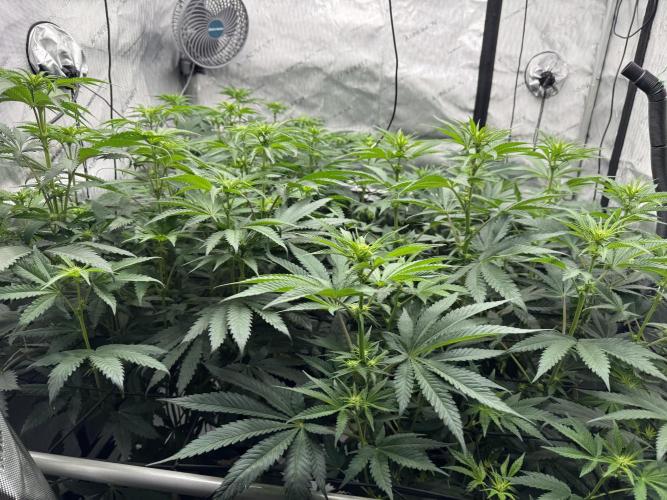
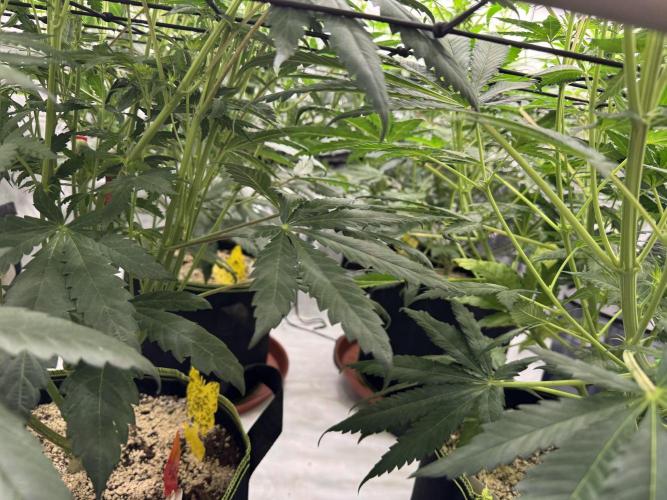
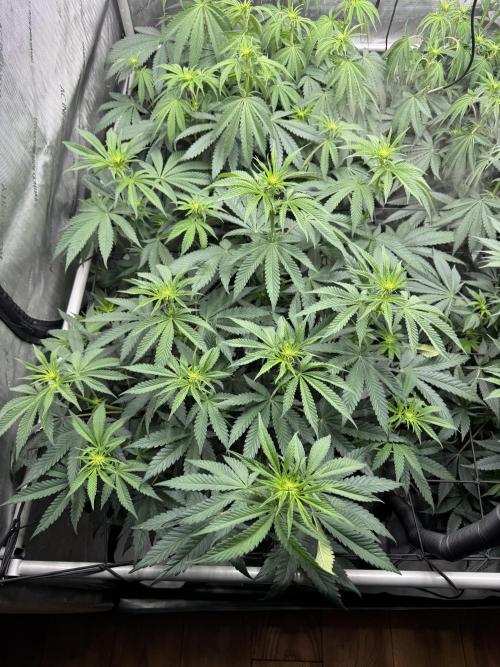
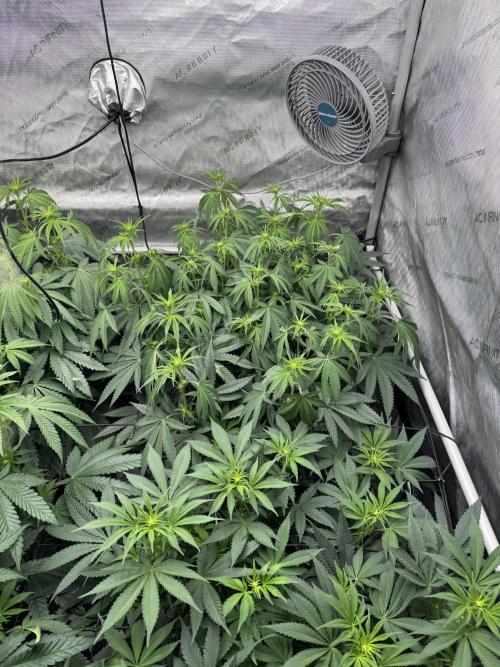
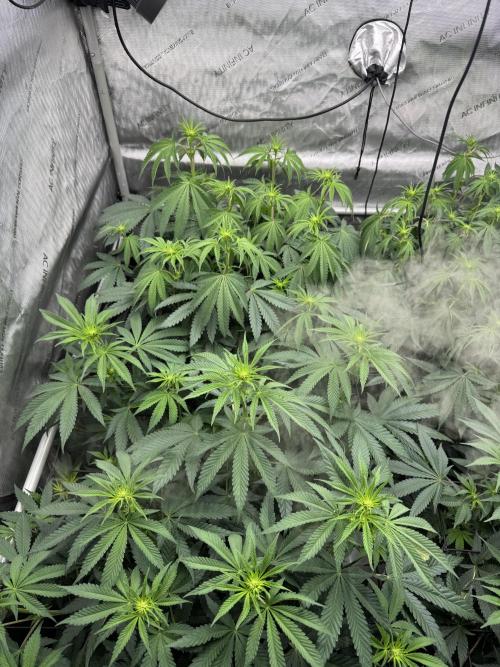
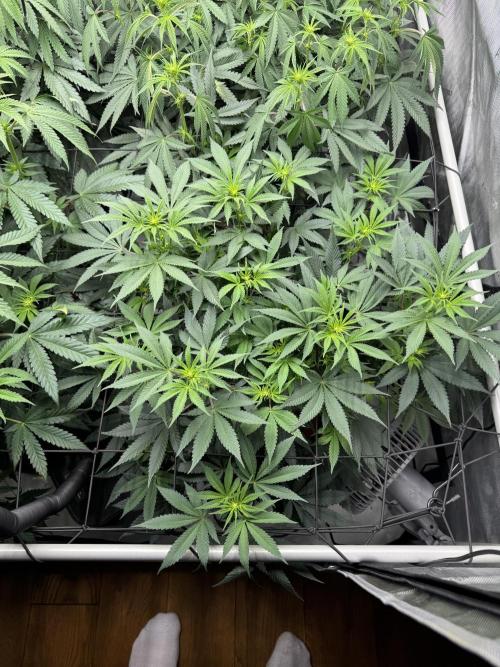
Gardens_of_Of The second week of flowering has come to an end. This week also included Mary Jane, which was as much fun as ever and a welcome break before getting back to the daily routine in the grow room.
The weather was quite rainy throughout the week, making it a challenge to keep the relative humidity below 60%. Fortunately, this is not a major concern at this stage of flowering, but I will continue to monitor it closely as the buds begin to develop and the risk of mold gradually increases.
The feeding schedule remains unchanged. I continue to apply Bio Enhancer every two weeks, along with a weekly dose of Cal-Mag to support healthy growth. Whether the exceptional vigor is the result of the worm humus I incorporated during Week 5 of the vegetative stage or simply the genetics of these cultivars, the plants have been growing explosively. Their response has been outstanding, and the canopy has now filled approximately 85–90% of the available space.
Gelato remains slightly smaller than the other plants, but she continues to develop healthy bud sites throughout the canopy. Although she is less vigorous in terms of stretch, she appears to be thriving in her own way and keeping pace where it matters most.
Overall, everything is progressing exactly as hoped. The plants look healthy, the canopy is nearly full, and the garden is well positioned for the weeks ahead as flower development begins to accelerate.
3 likes
comments
Share
Used techniques
12-12
Technique
HST
Technique
ScrOG
Technique
9
Week 9. Flowering3mo ago
85 cm
Height
12 hrs
Light Schedule
27 °C
Day Air Temp
6.5
pH
Weak
Smell
100 PPM
TDS
58 %
Air Humidity
22 °C
Night Air Temp
19 liters
Pot Size
2 liters
Watering Volume
50 cm
Lamp Distance
Nutrients 1
BioEnhancer
0.26 mll
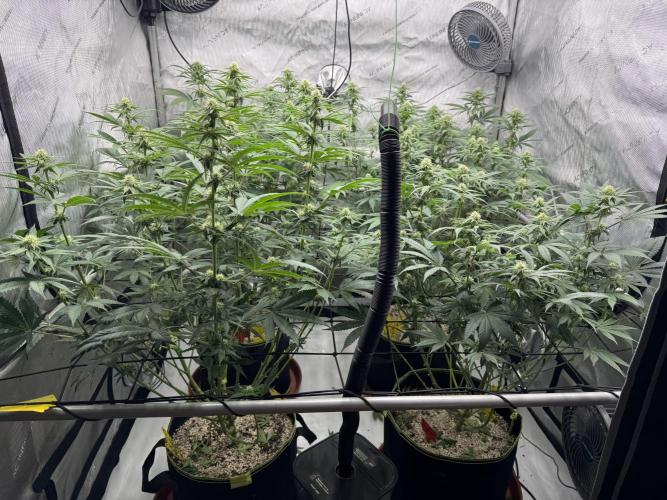
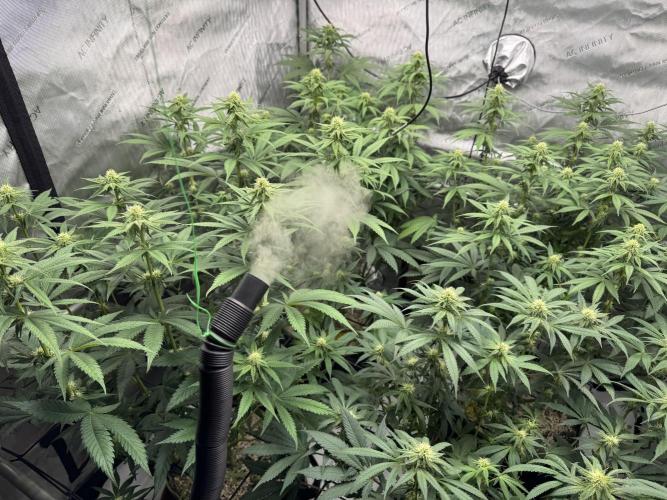
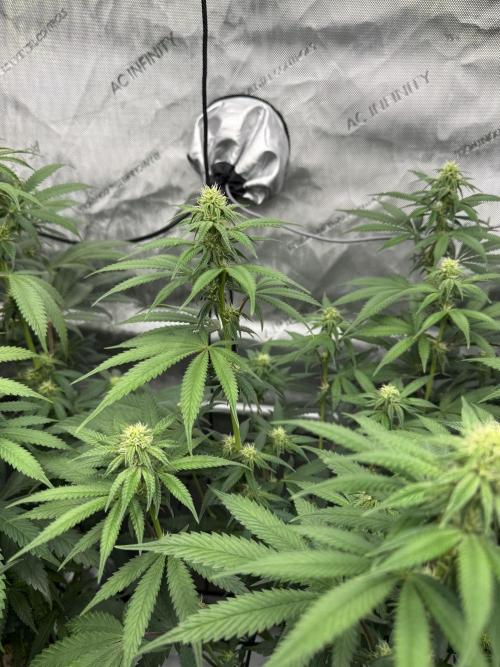
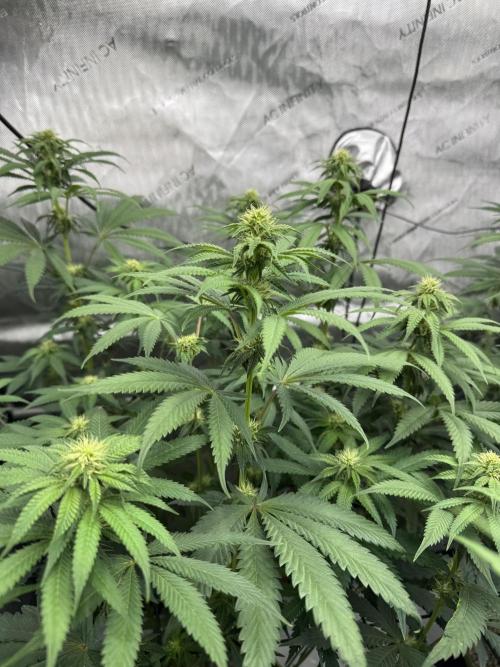
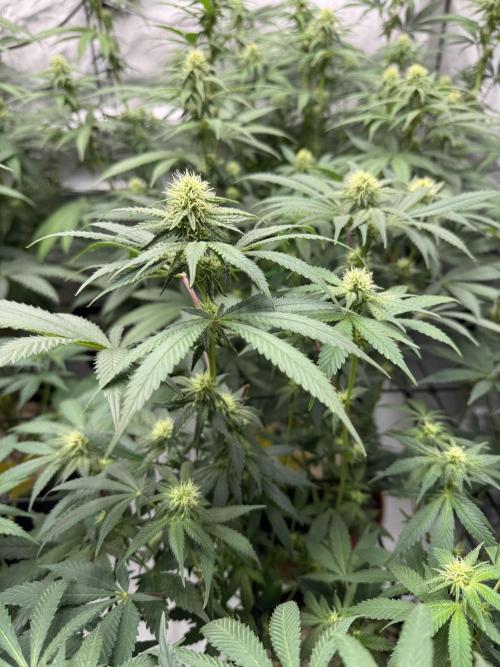
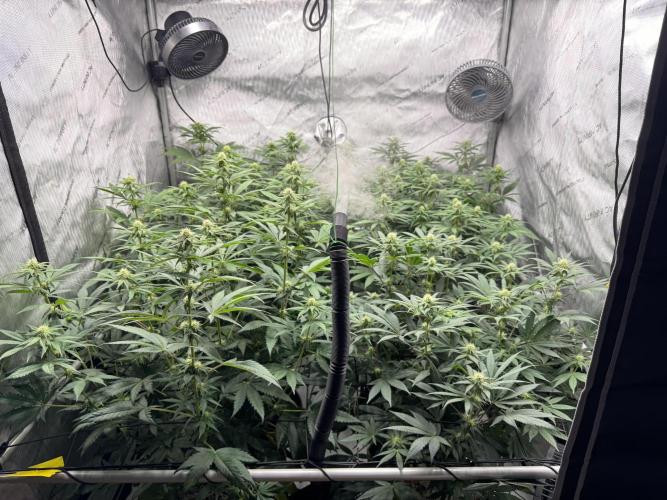
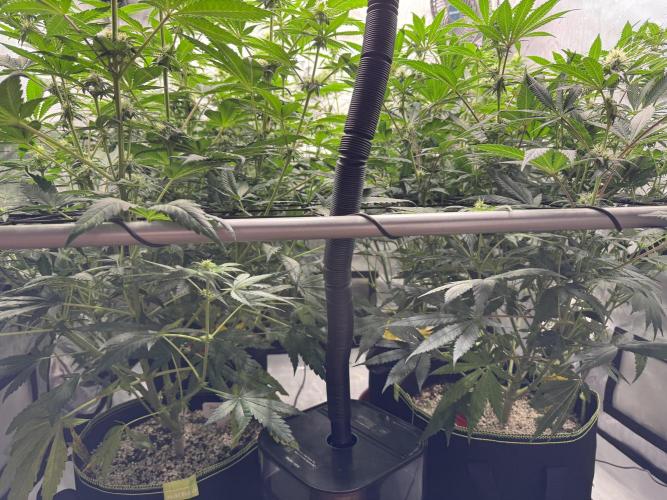
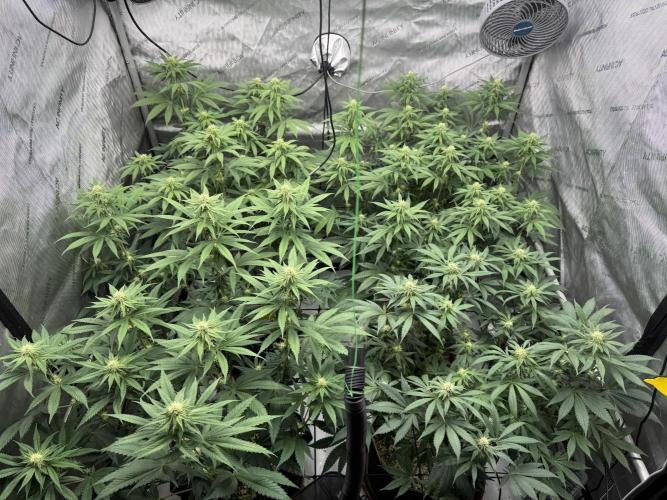
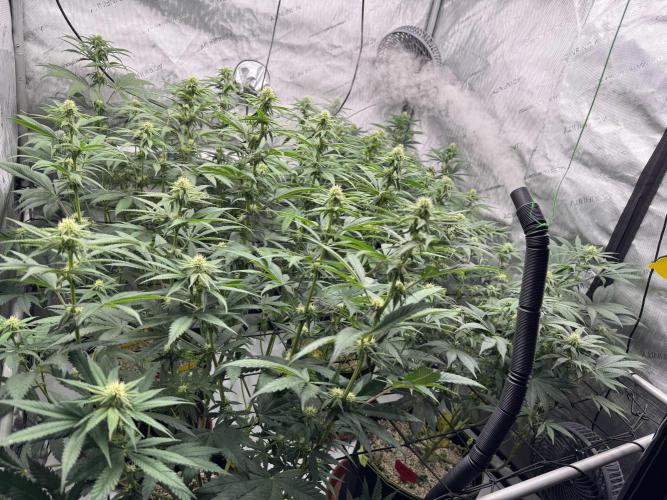
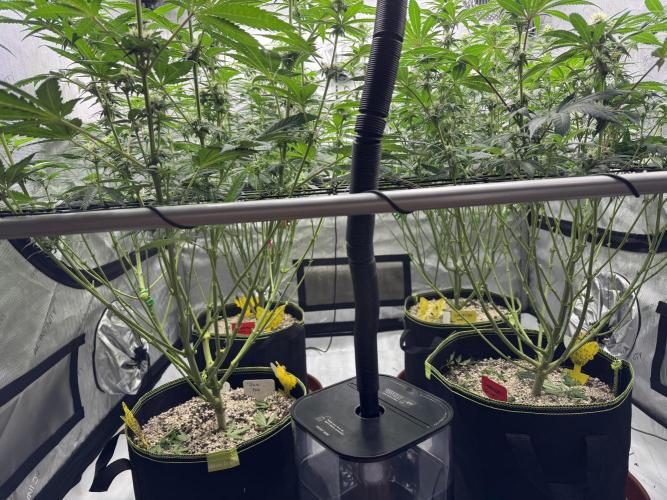
Gardens_of_Of The third week of flowering has come to an end, marking the conclusion of the plants' stretch phase. Watering and feeding practices remained consistent throughout the week, and the garden continues to respond well to the established routine.
Toward the end of the week, I carried out the final round of lollipopping along with a thorough defoliation. The goal was to improve airflow through the canopy and ensure that all developing bud sites receive strong, even light. With the structural work now complete, the plants are well prepared to focus their energy on flower production.
I also noticed that the taller plants were beginning to show slight signs of light stress, with some leaves starting to yellow. To address this, I increased the distance between the canopy and the light to approximately 55 cm, allowing for a more balanced light intensity across the entire canopy.
From this point forward, most of the hands-on work is complete. The weeks ahead will be far less demanding, with the focus shifting primarily to watering, maintaining the feeding schedule, and carrying out only light defoliation when necessary.
For me, this is the most rewarding stage of the entire grow. Over the coming weeks, the flowers will begin to reveal their unique characteristics, gradually expressing their structure, colors, resin production, and aromas. Watching each cultivar develop its own personality—and experiencing their evolving fragrance day by day—is one of the most enjoyable parts of the journey. Now it's simply a matter of patience until those aromas eventually become the flavors of the final harvest.
3 likes
comments
Share
Used techniques
Defoliation
Technique
12-12
Technique
10
Week 10. Flowering3mo ago

85 cm
Height
12 hrs
Light Schedule
27 °C
Day Air Temp
6.5
pH
Normal
Smell
100 PPM
TDS
58 %
Air Humidity
22 °C
Night Air Temp
19 liters
Pot Size
2 liters
Watering Volume
50 cm
Lamp Distance
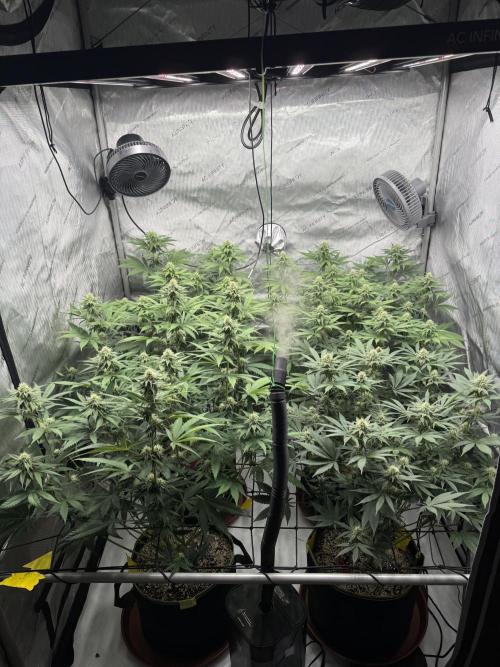
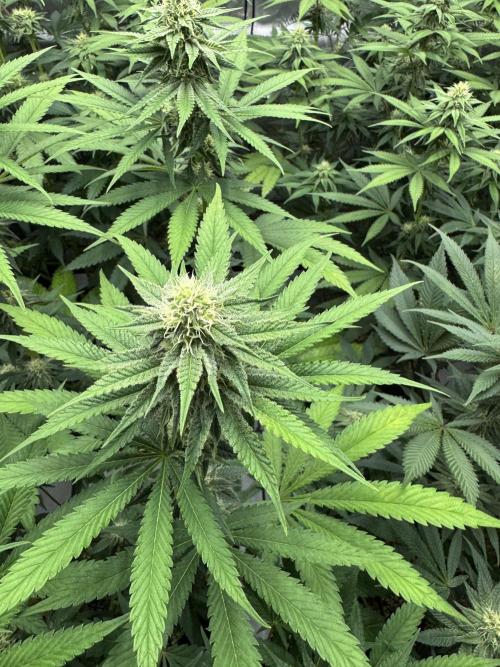
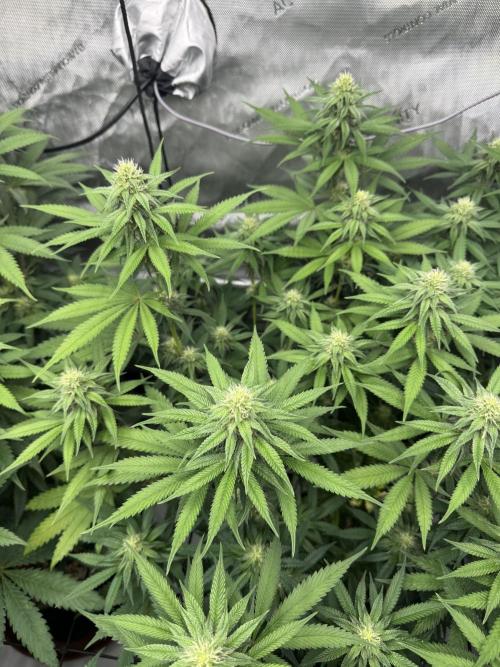
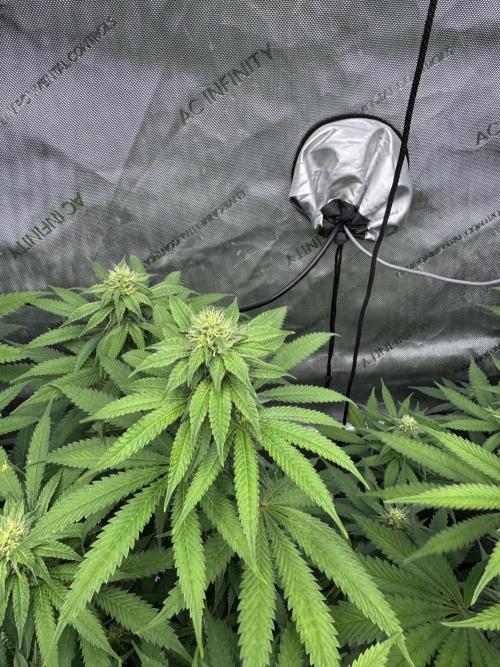
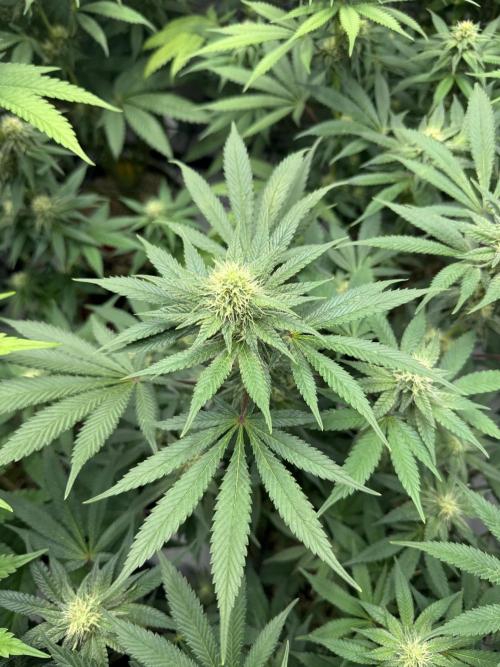
Gardens_of_Of The fourth week of flowering has come to an end, and the plants are now fully focused on building flowers. The bud sites continue to develop steadily, and the first noticeable layer of trichomes is beginning to cover the buds. On some plants, the resin production has become so vigorous that even the fan leaves are starting to develop a visible coating of frost—a promising sign of what's to come in the weeks ahead.
The slight yellowing on the taller plants has not improved yet. As a precaution, I raised the light by another 5 cm to reduce the intensity at the top of the canopy. Over the next few days, I'll monitor their response closely and adjust further if necessary. Aside from the mild yellowing, the plants appear healthy and continue to produce dense, increasingly frosty flowers.
I also carried out a small amount of selective defoliation throughout the week, removing only the occasional large fan leaf that was shading developing bud sites. This time, I took a very conservative approach, avoiding unnecessary stress and allowing the plants to direct their energy toward flower production.
The biggest challenge this week was the ongoing heatwave. Fortunately, my air conditioning unit kept the tent temperature below 29°C. While that is a little warmer than I would ideally like during mid-flowering, it remains well within an acceptable range and doesn't appear to be affecting the plants negatively.
With the garden settling into its rhythm, patience becomes the most important tool. The flowers are becoming noticeably frostier each day, and the unique characteristics of each cultivar are beginning to emerge. Now I'm just hoping the heatwave passes soon so the weather returns to normal and the plants can finish this stage under more comfortable conditions.
6 likes
comments
Share
Used techniques
12-12
Technique
Defoliation
Technique
11
Week 11. Flowering3mo ago


85 cm
Height
12 hrs
Light Schedule
26 °C
Day Air Temp
6.5
pH
Normal
Smell
100 PPM
TDS
58 %
Air Humidity
22 °C
Night Air Temp
19 liters
Pot Size
2.25 liters
Watering Volume
50 cm
Lamp Distance
Nutrients 1

Calmag
0.7 mll
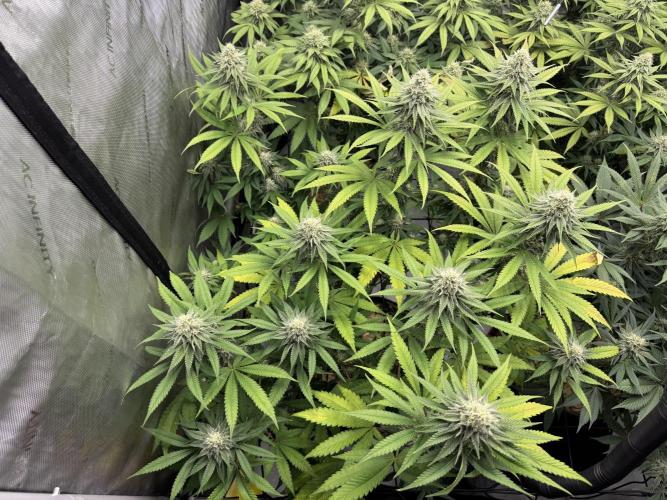
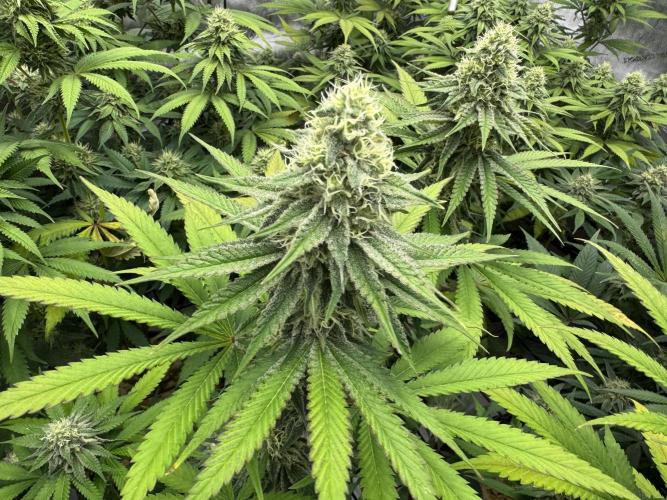
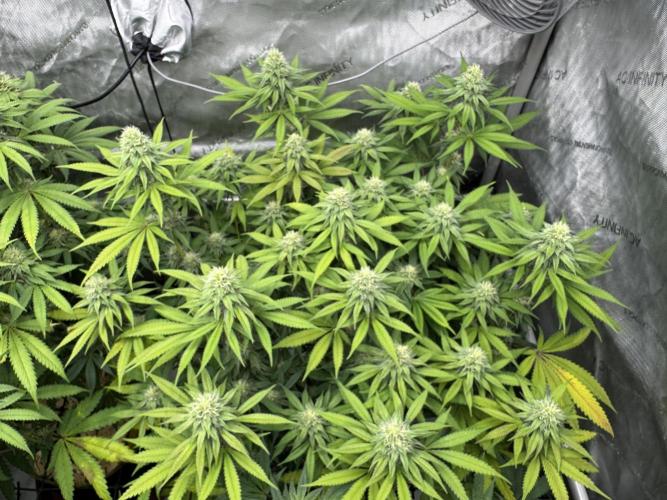
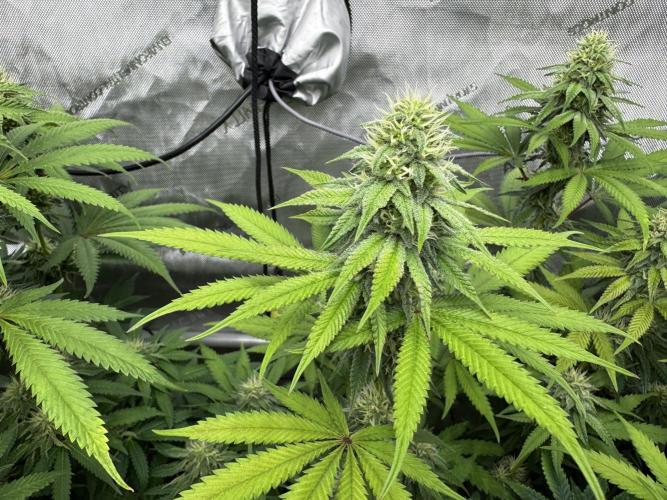
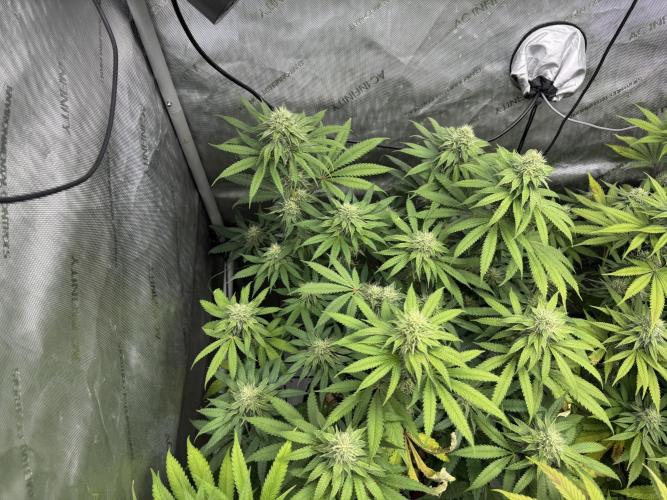
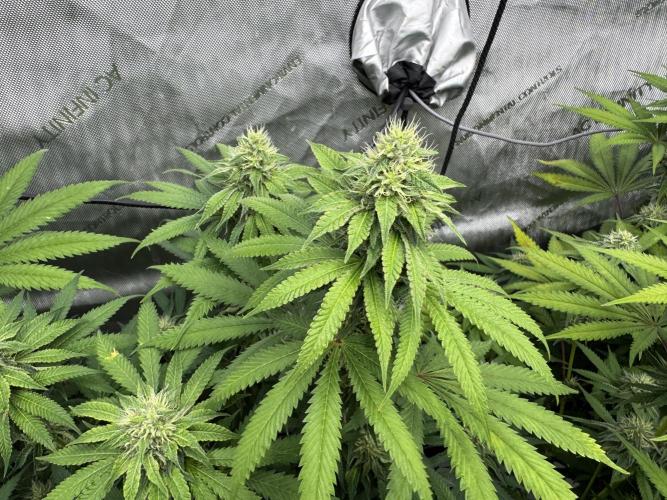
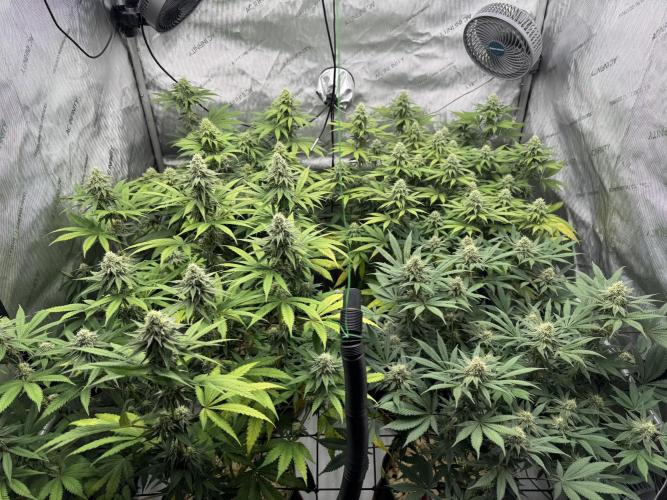
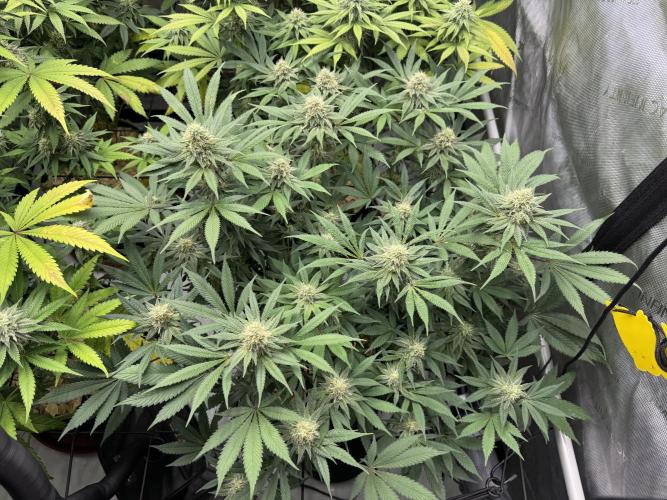
Gardens_of_Of The fifth week of flowering has passed without any major challenges, and overall the garden continues to progress smoothly. After increasing the distance between the light and the canopy, the yellowing on the upper leaves has become noticeably less pronounced. While the adjustment appears to have helped, I am still considering reducing the light intensity from level 9 to level 8 if the plants continue to show signs of stress. For now, I am monitoring them closely and making changes only when necessary.
I also increased the Cal-Mag supplementation after noticing the first signs of a minor deficiency. The plants have responded well so far, and I expect the additional calcium and magnesium to support healthy development throughout the remainder of the flowering cycle.
The flowers continue to gain size and density, with each passing day bringing a thicker layer of shimmering trichomes. Resin production is becoming increasingly impressive, and the individual characteristics of each cultivar are now beginning to stand out more clearly.
At this stage, the grow has entered its most relaxed phase. Most of the hard work is behind me, and my primary focus is simply to maintain the best possible environment. By keeping temperature, humidity, lighting, and nutrition in balance, the plants can do what they do best—steadily building beautiful, resinous flowers as they make their way toward harvest.
6 likes
comments
Share
Used techniques
ScrOG
Technique
Defoliation
Technique
12-12
Technique
12
Week 12. Flowering2mo ago

85 cm
Height
12 hrs
Light Schedule
26 °C
Day Air Temp
6.5
pH
Normal
Smell
100 PPM
TDS
56 %
Air Humidity
23 °C
Night Air Temp
19 liters
Pot Size
2.25 liters
Watering Volume
50 cm
Lamp Distance
Nutrients 2
Calmag
0.7 mll
BioEnhancer
1.04 mll
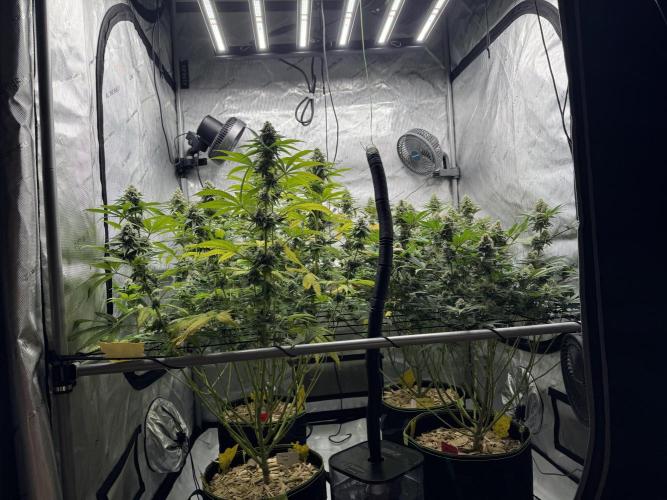
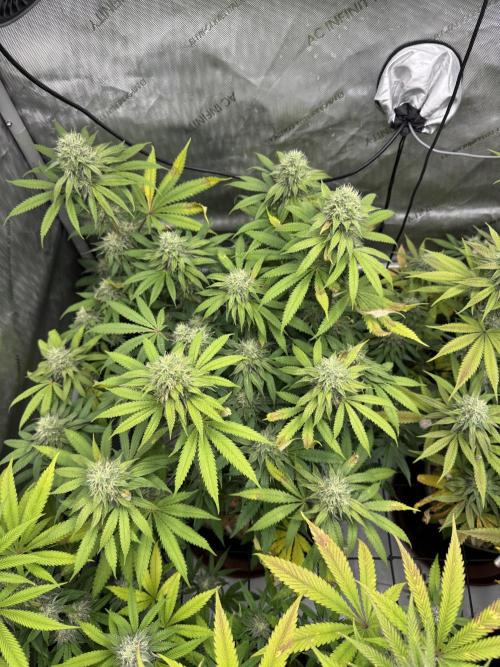
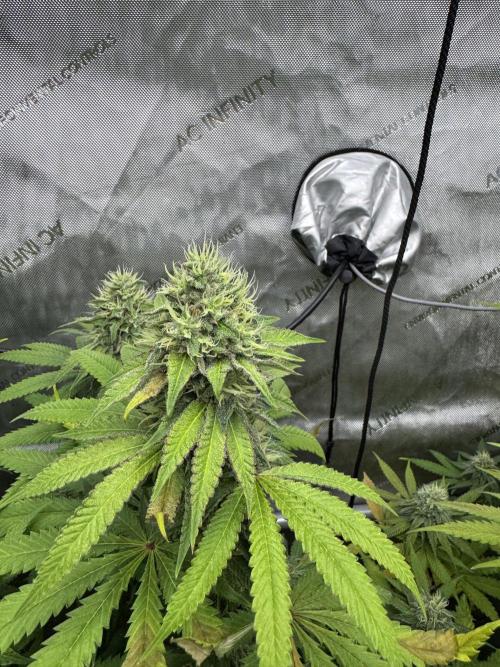
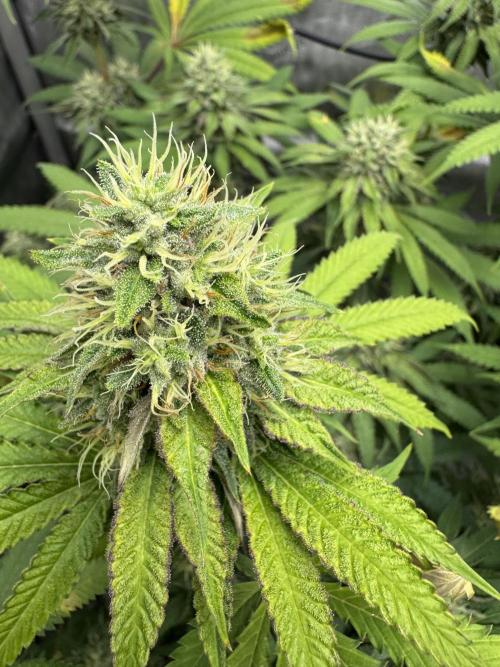
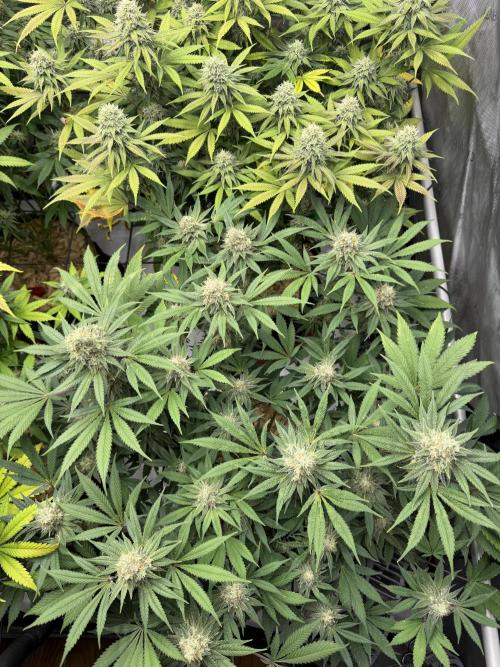
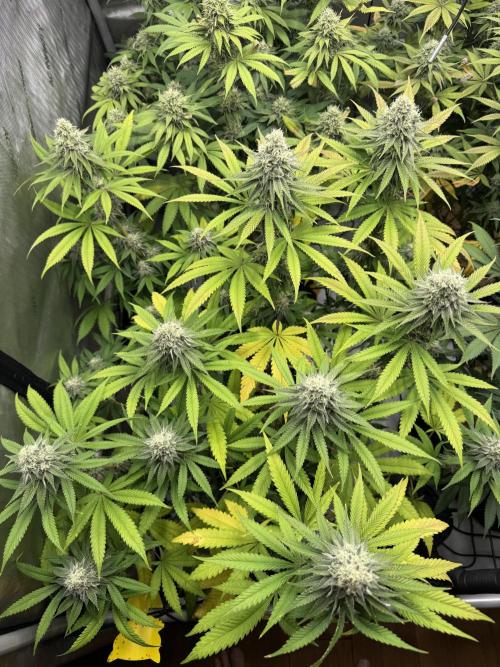
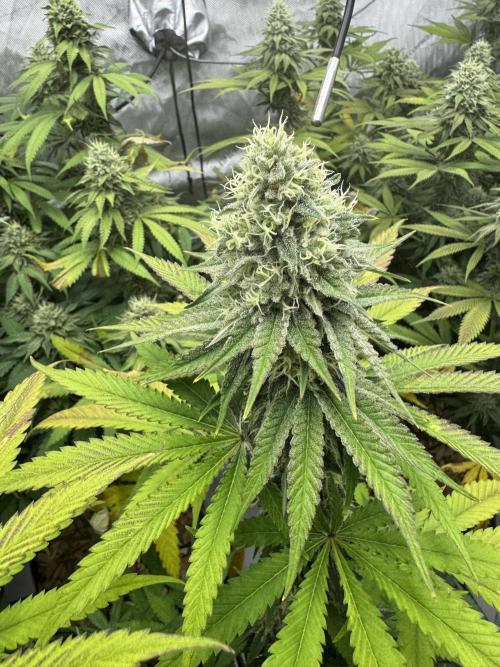
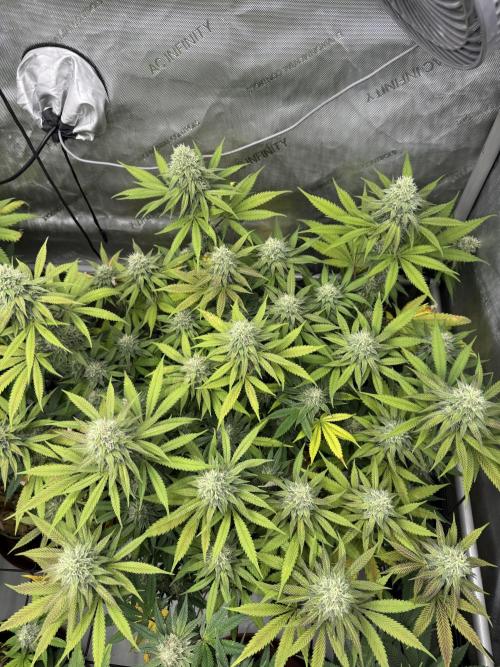
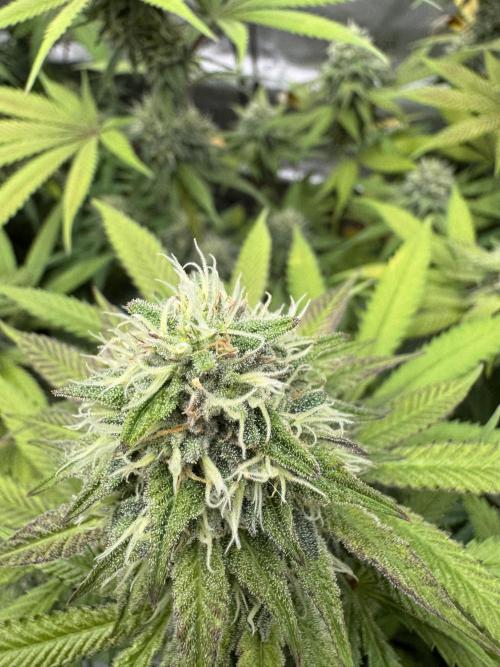
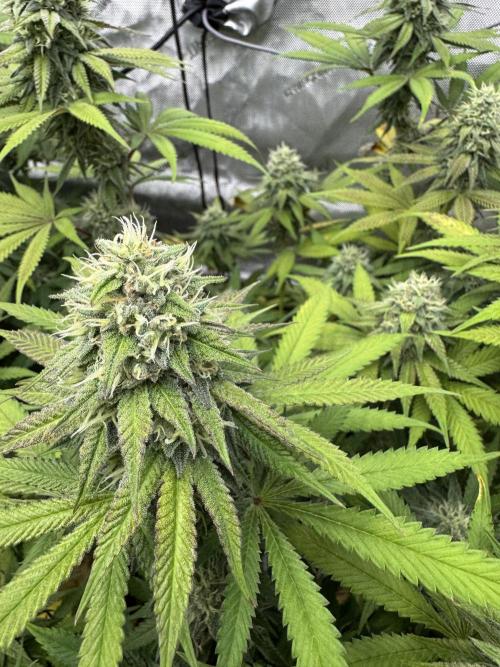
Gardens_of_Of The sixth week of flowering has been remarkably stable, and for the first time in a while the weather worked in my favor. With cooler and more consistent conditions, maintaining the environment became much easier, allowing the plants to focus fully on flower development.
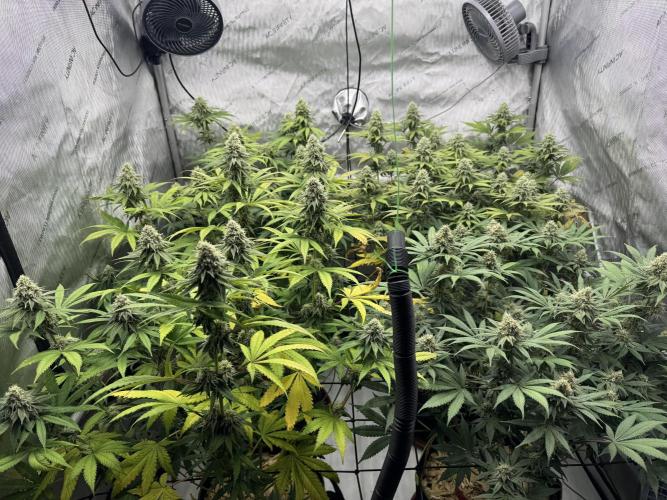
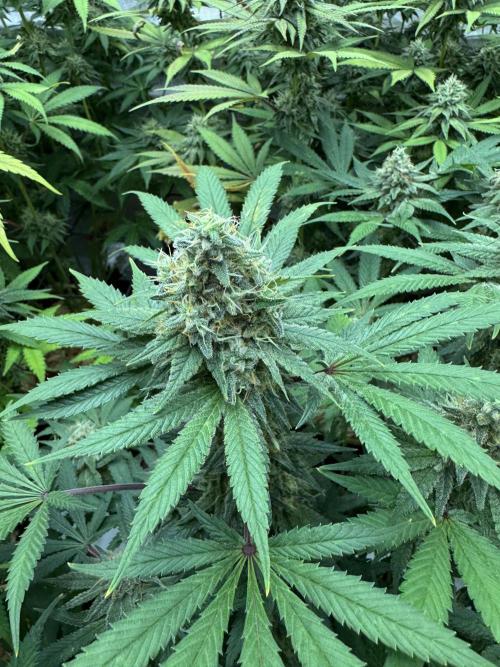
Despite increasing the distance between the light and the canopy earlier, the yellowing of the upper leaves continued to progress. In response, I decided to reduce the light intensity from level 9 to level 8, which is currently delivering approximately 900–1100 µmol/m²/s across the canopy. The adjustment appears to have helped, as the yellowing has noticeably slowed and may have paused altogether.
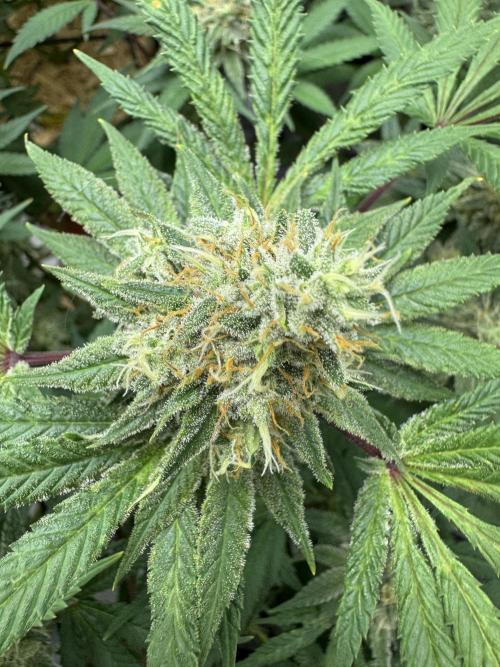
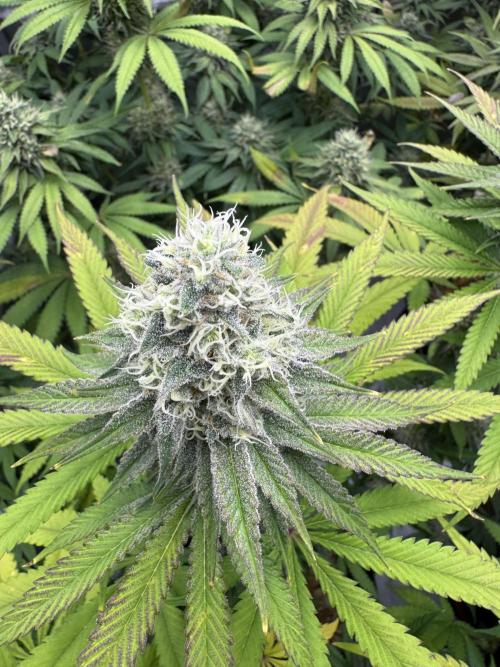
Although some of the top fan leaves have become discolored, the plants themselves remain vigorous and continue to produce increasingly dense, trichome-covered flowers. Resin production is accelerating, and the buds are beginning to gain the weight and structure that signal the approach of the final ripening phase.
As mentioned in earlier entries, the grow is now firmly in cruise-control mode. Most of the intensive work is behind me, and the focus has shifted almost entirely to maintaining stable conditions and allowing the plants to finish naturally. Next week I plan to discontinue both Cal-Mag and Bio Enhancer, after which the plants will complete the run with a 1–2 week flushing period before harvest.
One of the most satisfying moments of the week happened this morning when I noticed the first branch beginning to lean sideways under the weight of its buds. It is a welcome sign that the flowers are gaining substantial mass, but it also means I will need to provide additional support over the coming days as they continue to swell.
With the finish line now clearly in sight, patience becomes the key ingredient. The flowers are getting heavier, frostier, and more aromatic each day, and the garden is steadily moving toward what should be a rewarding harvest.
6 likes
comments
Share
Used techniques
LST
Technique
ScrOG
Technique
Defoliation
Technique
12-12
Technique
13
Week 13. Flowering2mo ago

85 cm
Height
12 hrs
Light Schedule
26 °C
Day Air Temp
6.5
pH
Strong
Smell
100 PPM
TDS
56 %
Air Humidity
22 °C
Night Air Temp
19 liters
Pot Size
2.25 liters
Watering Volume
60 cm
Lamp Distance
Nutrients 2
Calmag
0.7 mll
BioEnhancer
1.04 mll
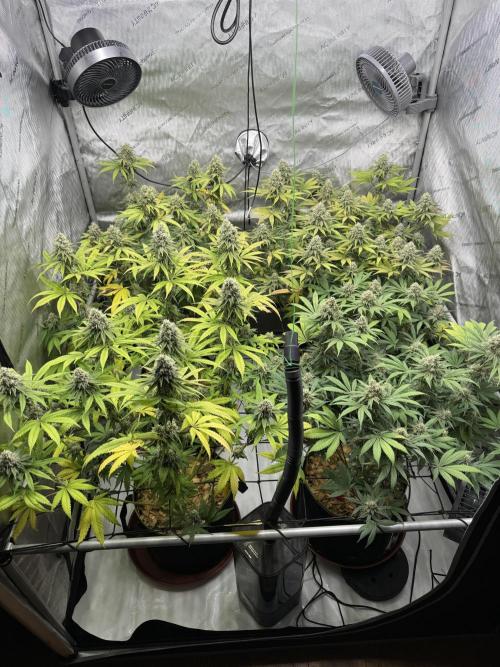
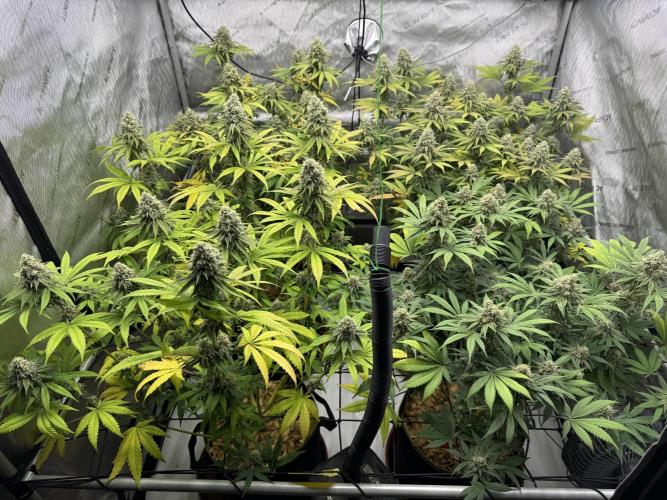
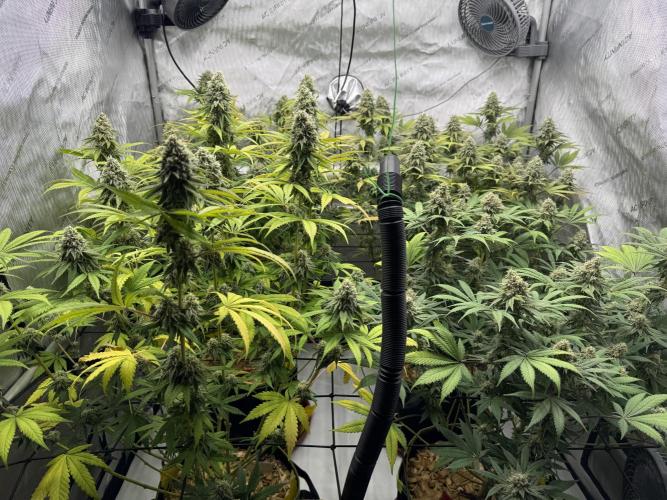
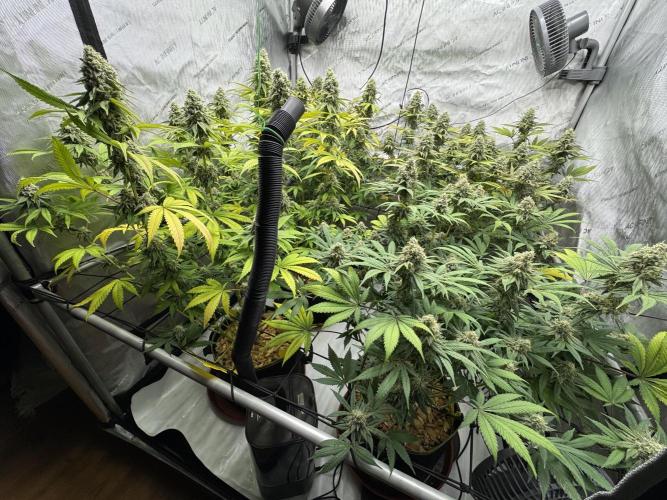
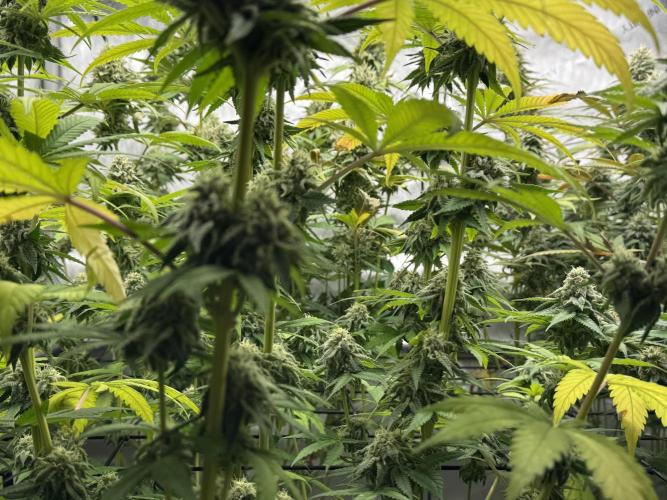
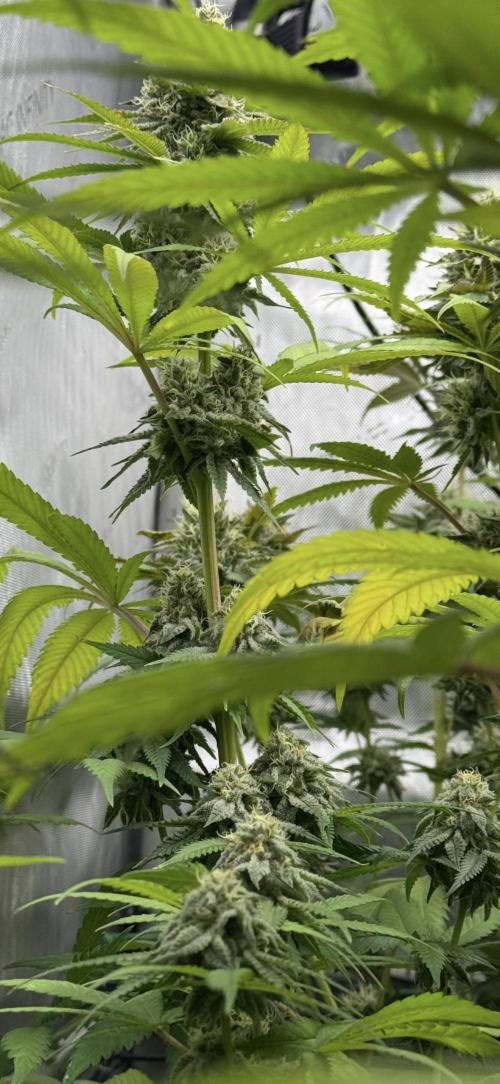
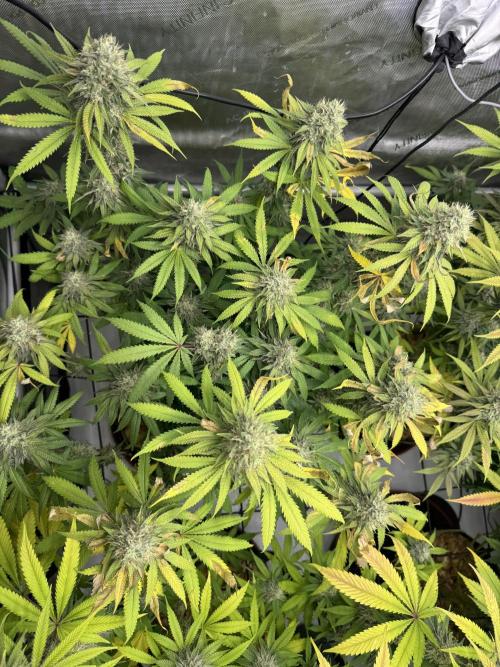
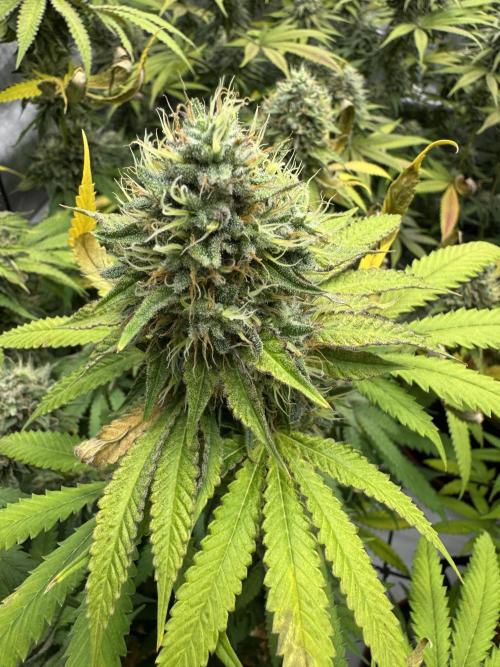
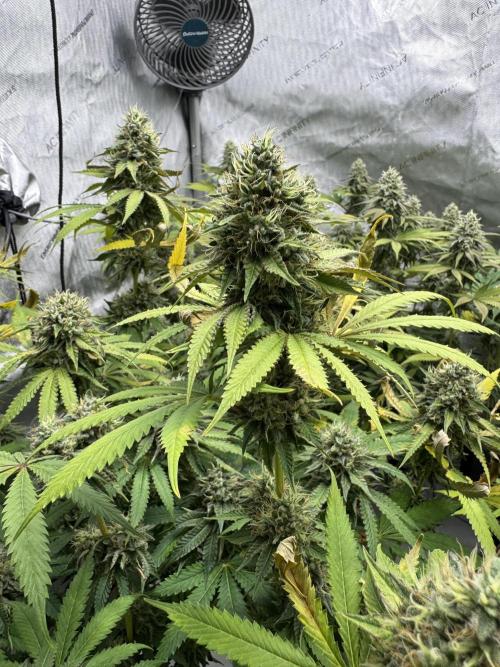
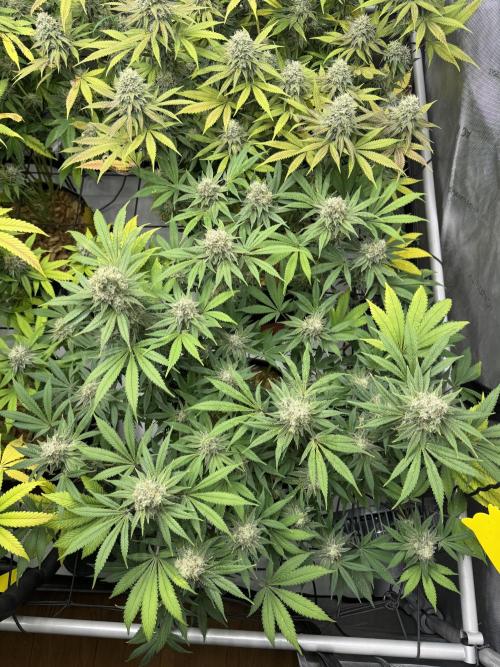
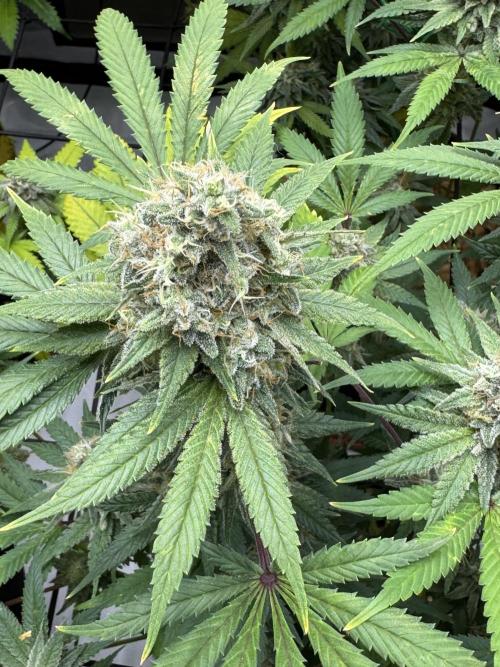
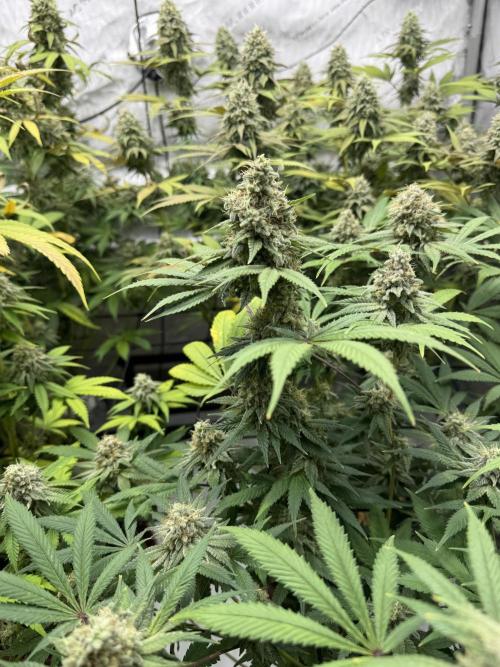
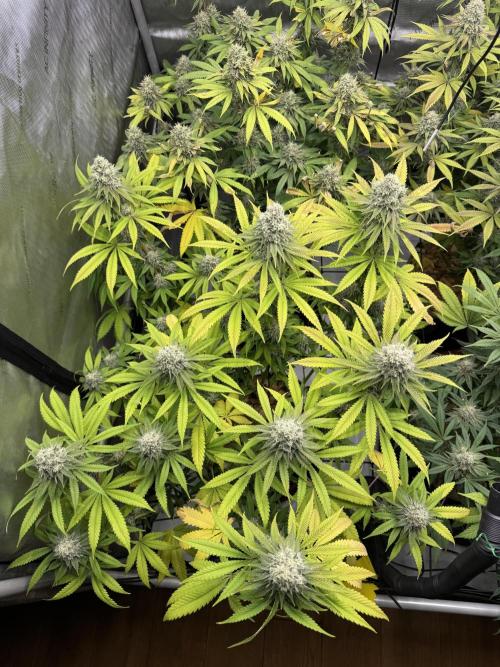
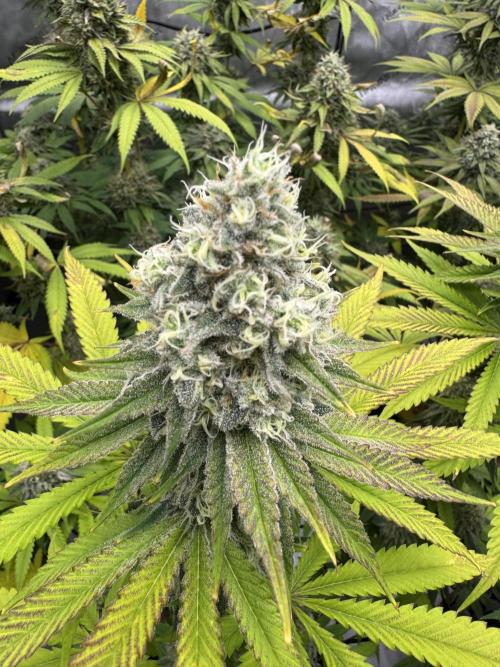
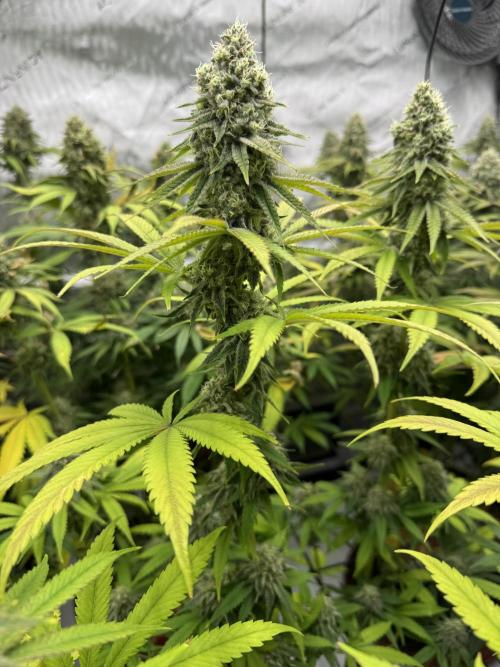
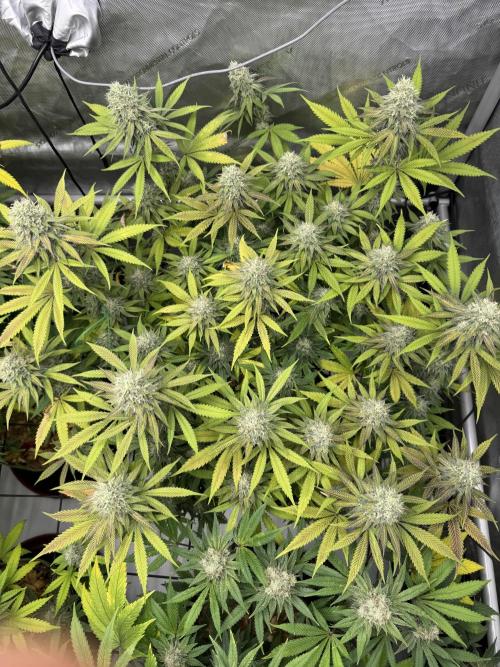
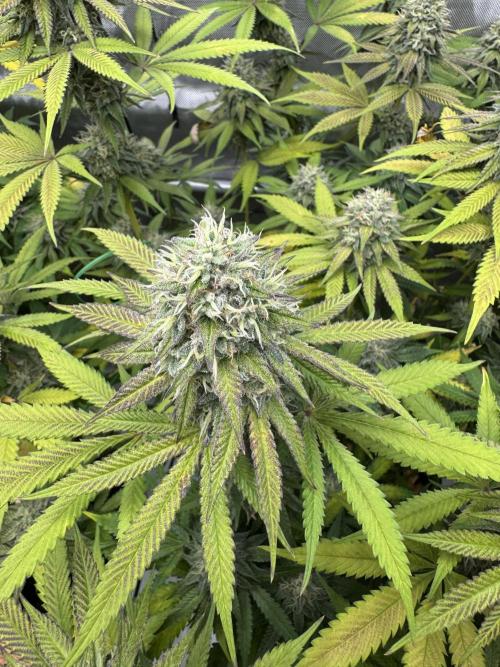
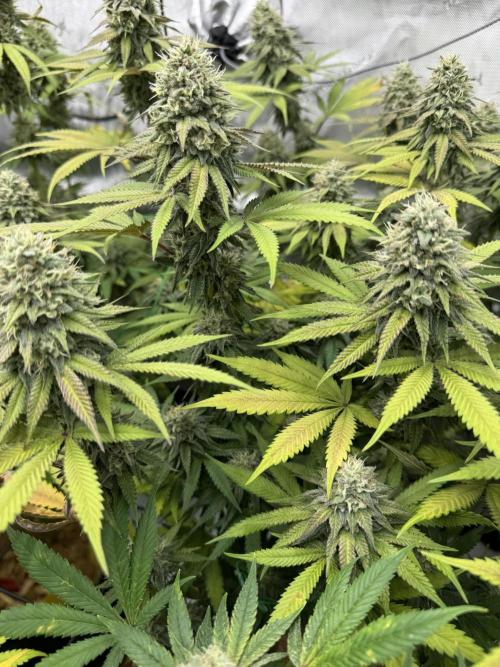
Gardens_of_Of The seventh week of flowering has been one of the more challenging weeks of the grow, primarily due to managing humidity. On several days, I struggled to keep the relative humidity below 60%, which is far from ideal this late into flowering, when dense buds become increasingly susceptible to mold. Even with the dehumidifier running at full capacity outside the tent, the lowest I could consistently achieve was around 62%. While not perfect, it was the best I could manage under the current conditions.
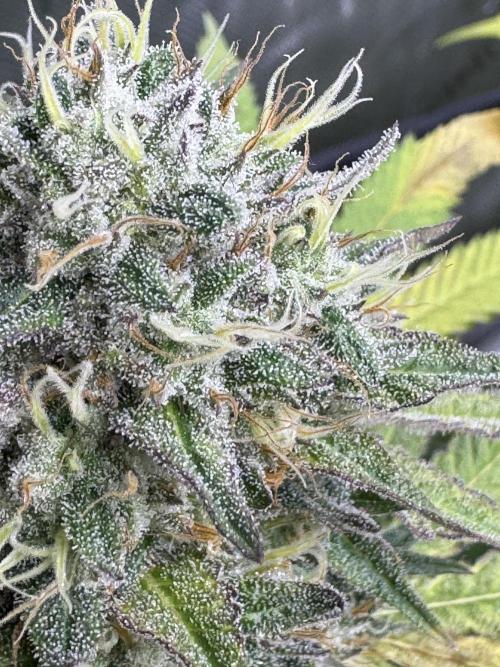
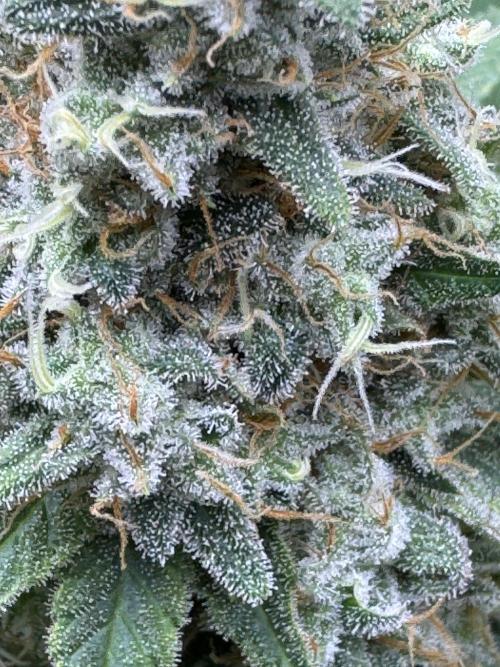
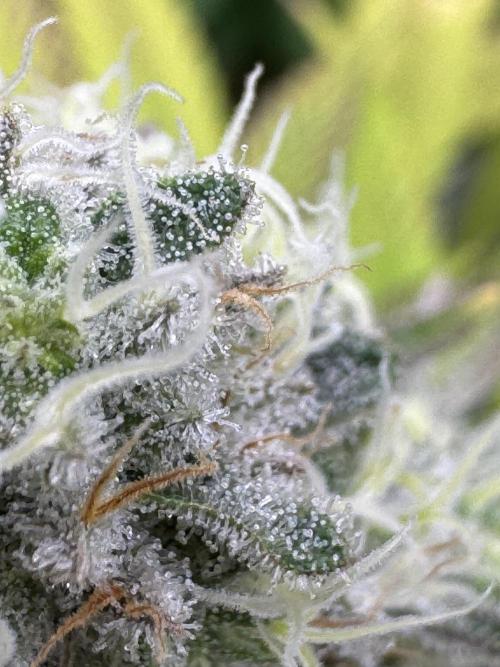
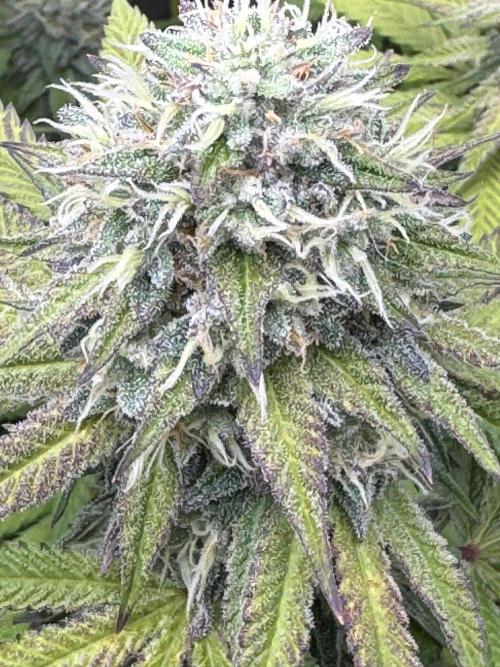
Fortunately, the plants have shown no signs of stress despite the elevated humidity. They continue to develop large, healthy flowers with excellent internodal spacing, allowing for good airflow throughout the canopy. Each day brings visible changes as the buds mature—they continue to gain weight, the trichome coverage becomes even more impressive, and an increasing number of pistils are turning from white to amber, signaling that harvest is gradually approaching.
According to the breeders' recommendations, the plants still have approximately two weeks left to reach full maturity. In many previous grows, I have found that flower development slows considerably after the seventh week. This time, however, the plants continue to surprise me. The buds are still swelling noticeably, and there are plenty of fresh white pistils, suggesting they have not yet reached their peak. With a bit of luck, they will continue packing on mass over the coming days.
As the flowers become heavier, another challenge has emerged. Several branches are beginning to struggle under the increasing weight of the buds. I have already reinforced a few stems with garden wire, but over the next week I expect to start hanging and supporting more branches to prevent them from bending or snapping.
The plan remains unchanged: I intend to let the plants complete the full nine-week flowering period recommended by the breeders. At this point, the greatest challenge is no longer caring for the plants—it's exercising patience. The finish line is finally in sight, but resisting the temptation to harvest early may prove to be the hardest part of the entire journey.
9 likes
comments
Share
Used techniques
LST
Technique
ScrOG
Technique
Defoliation
Technique
12-12
Technique
14
Week 14. Flowering2mo ago


85 cm
Height
12 hrs
Light Schedule
26 °C
Day Air Temp
6.5
pH
Strong
Smell
100 PPM
TDS
56 %
Air Humidity
23 °C
Night Air Temp
19 liters
Pot Size
1.5 liters
Watering Volume
60 cm
Lamp Distance
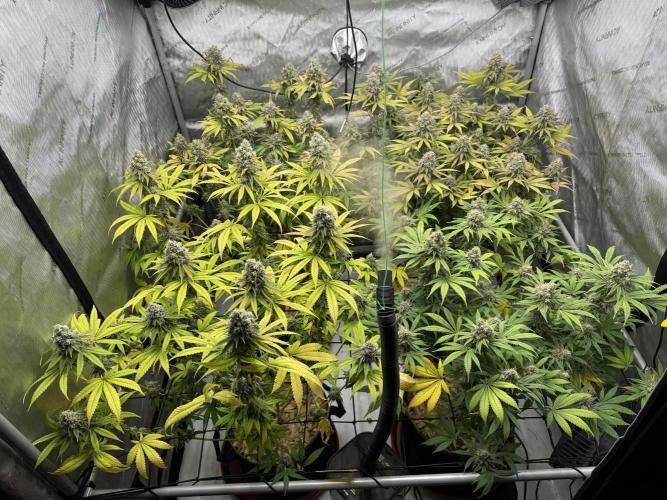
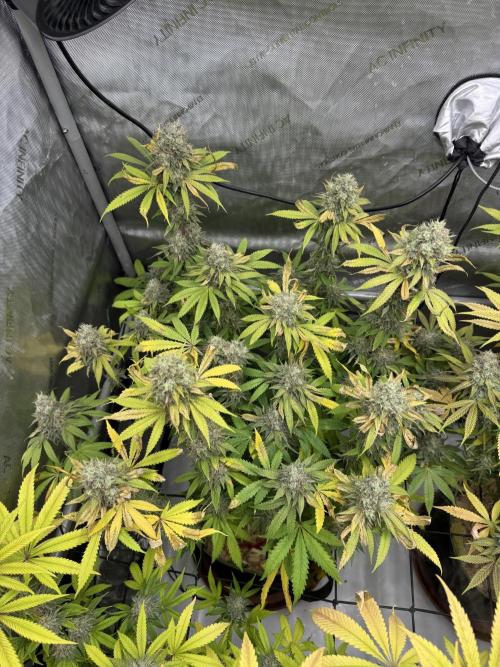
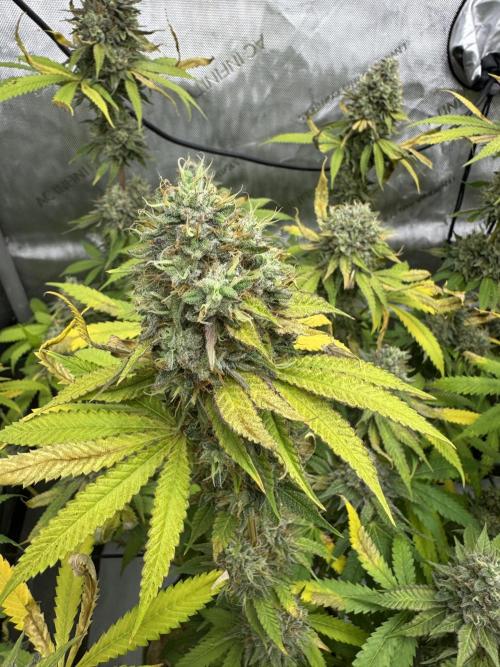
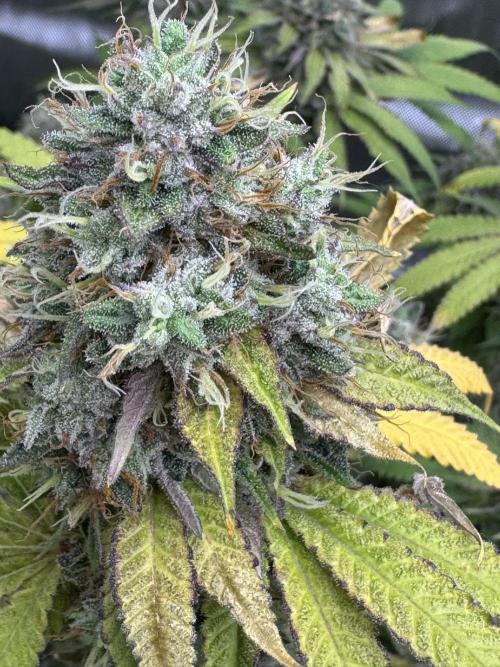
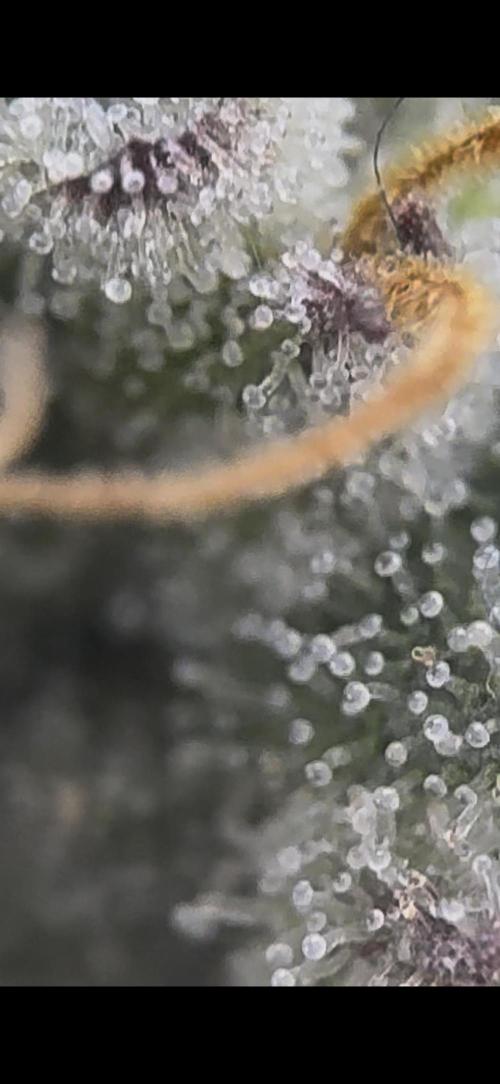
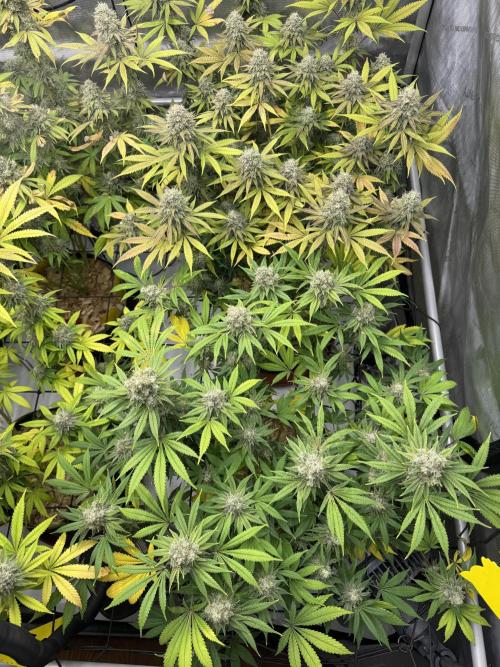
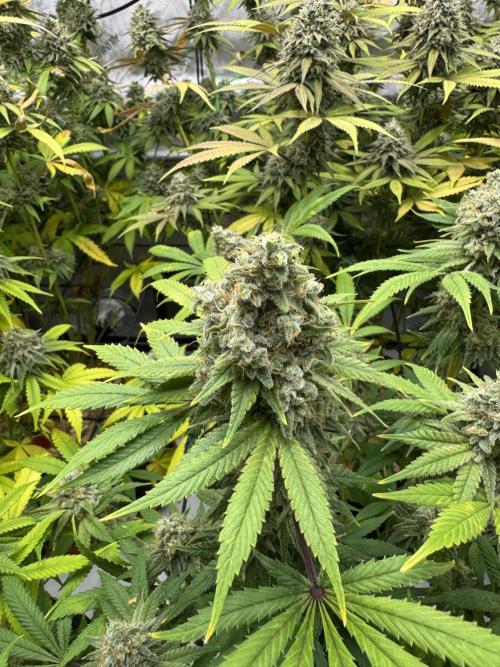
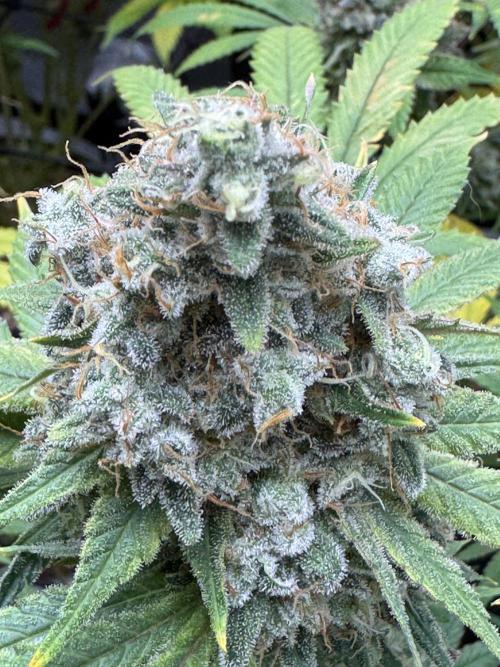
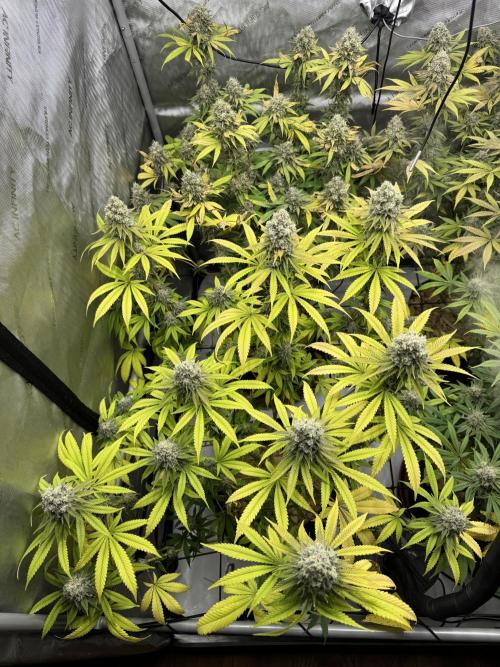
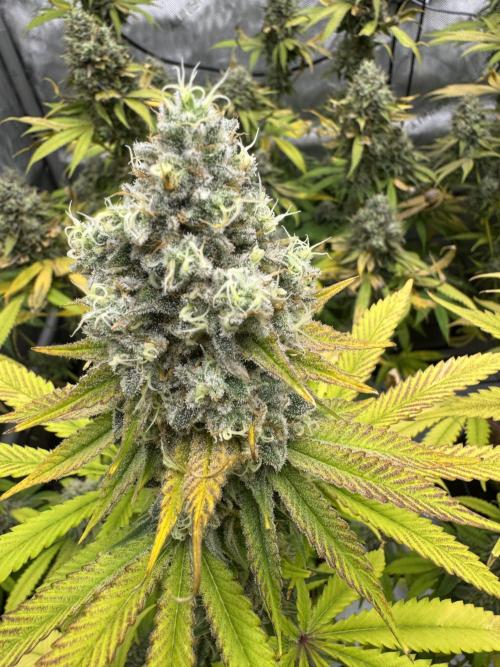
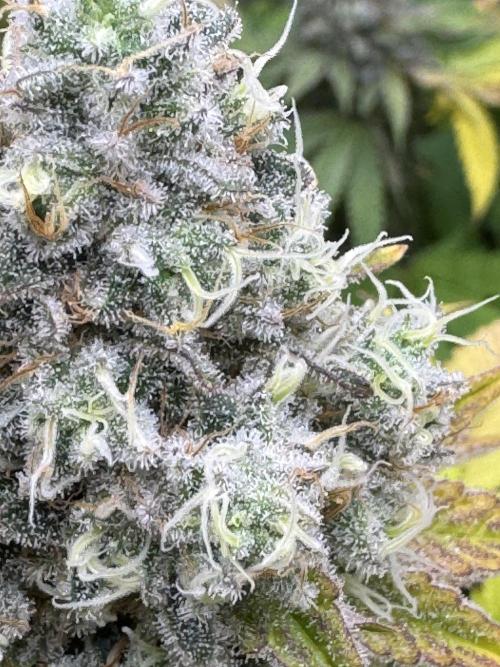
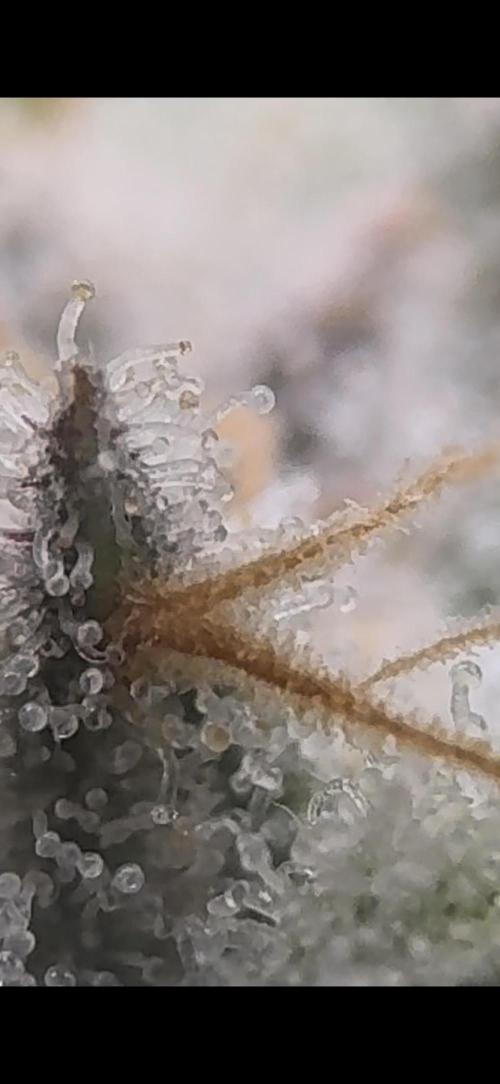
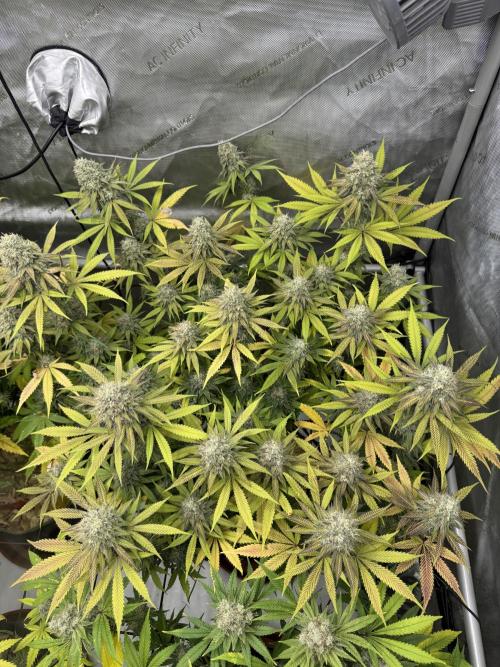
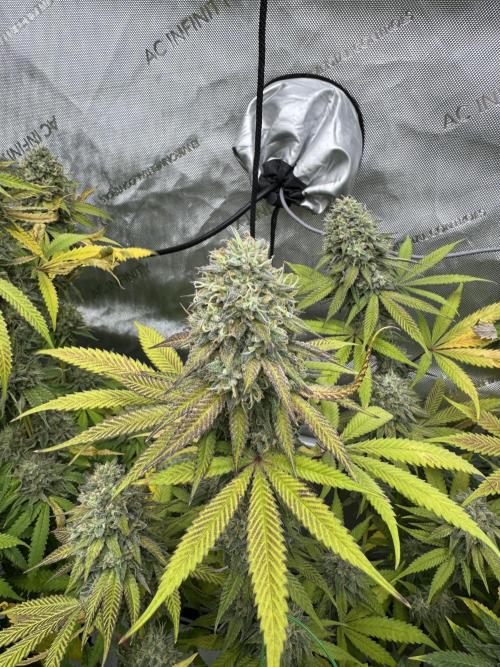
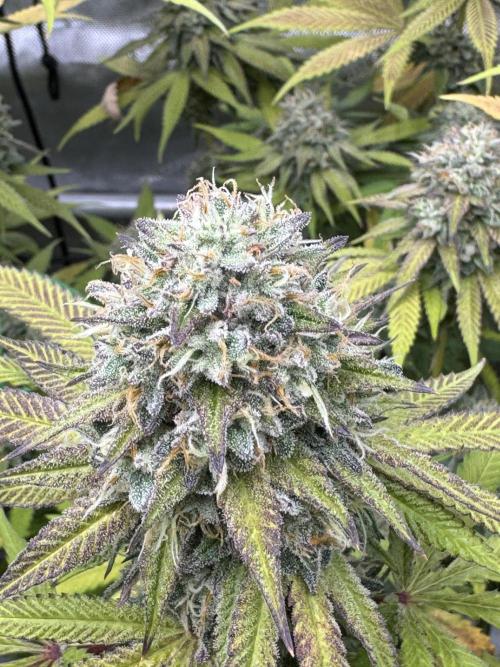
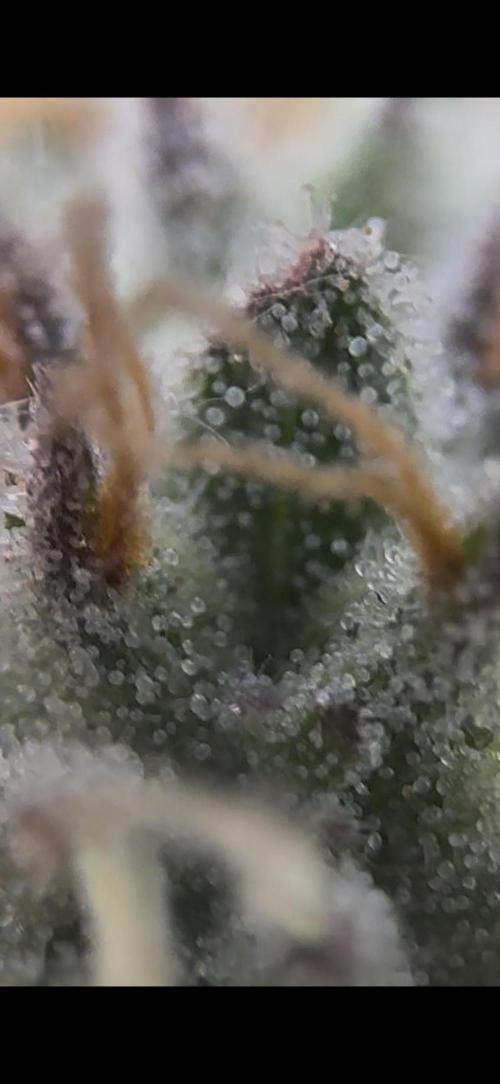
Gardens_of_Of The eighth week of flowering has come to an end, and the finish line is finally within sight. This week, I reduced the light intensity to level 7 to simulate the shorter, less intense days of autumn as the plants enter the final stage of their life cycle. Although the breeders estimate a flowering period of nine weeks, all four cultivars appear to be developing slightly behind schedule. Judging by the current trichome development, it's difficult to imagine they will reach the desired 10–20% amber trichomes by the end of next week.
Fortunately, all of the plants are progressing at roughly the same pace. While they may be taking a little longer than expected, their synchronized development fits perfectly with my plan to harvest the entire tent at once rather than in stages.
Aside from that, the week has been pleasantly uneventful. Environmental conditions remained stable throughout, a welcome change after last week's humidity challenges. Keeping the relative humidity below 60% was no longer a struggle, and on several occasions I was even able to maintain it around 55%, which is about the best my home setup can achieve during the summer months.
Visually, the garden is now embracing its autumn colors. The leaves continue to fade from green to yellow as the plants redirect their remaining nutrients toward the flowers. Each day, I remove two or three yellowing leaves from every plant, gradually cleaning up the canopy while allowing as much light and airflow as possible to reach the ripening buds.
Water consumption has also begun to decline, another clear indication that the plants are nearing the end of their life cycle. They now require less frequent watering, and I have transitioned to reverse osmosis water mixed with approximately 30% tap water. This gentle flushing period will help the plants use up the remaining nutrients as they make their final push toward maturity.
6 likes
comments
Share
Used techniques
LST
Technique
Defoliation
Technique
12-12
Technique
15
Week 15. Flowering2mo ago

85 cm
Height
12 hrs
Light Schedule
26 °C
Day Air Temp
6.5
pH
Strong
Smell
100 PPM
TDS
56 %
Air Humidity
23 °C
Night Air Temp
19 liters
Pot Size
1 liters
Watering Volume
60 cm
Lamp Distance
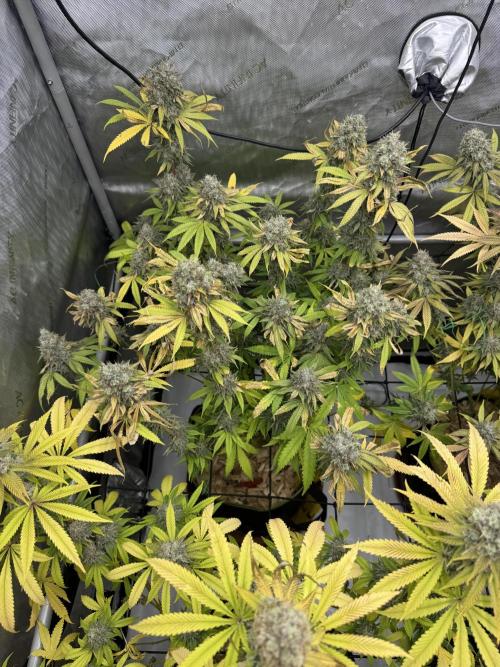
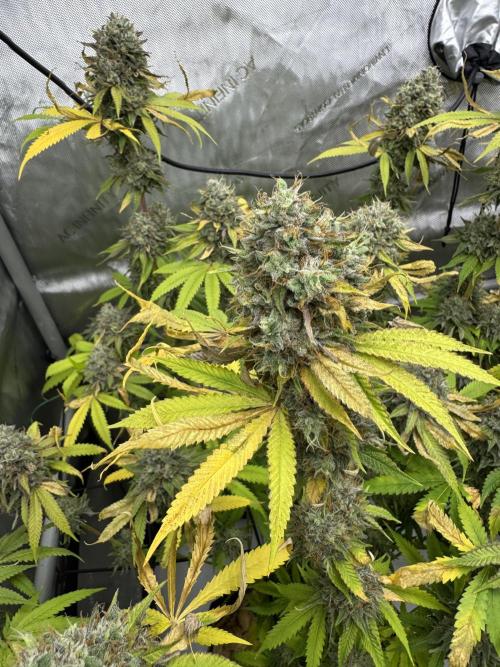
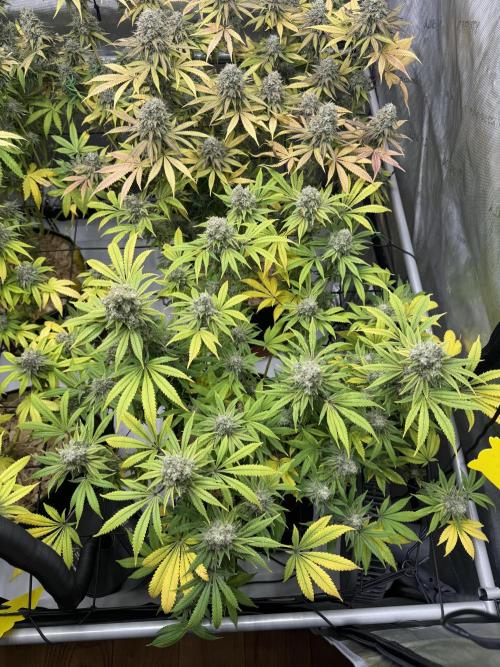
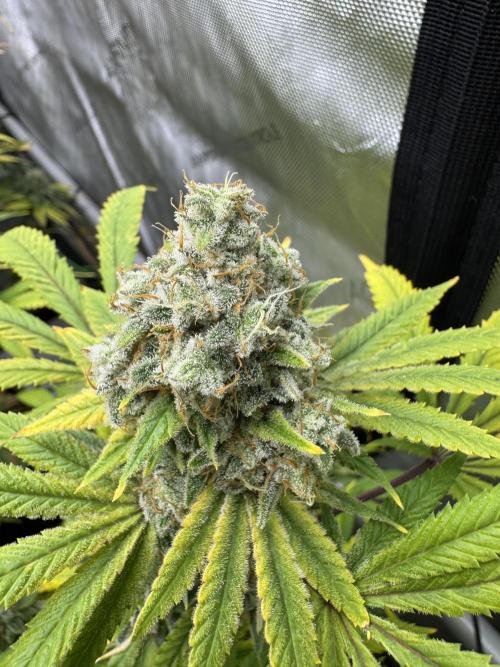
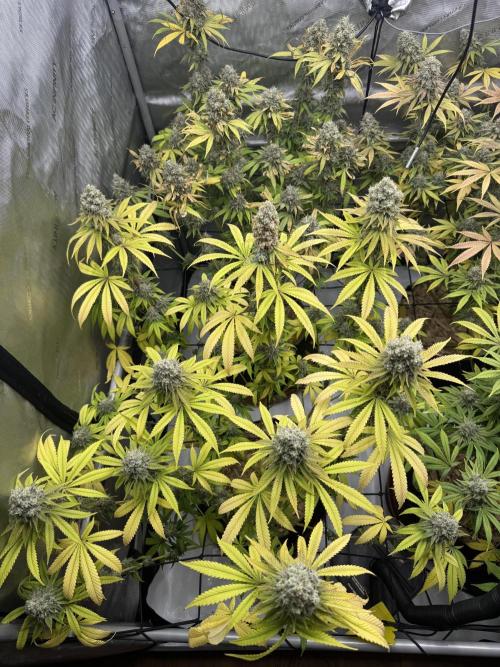
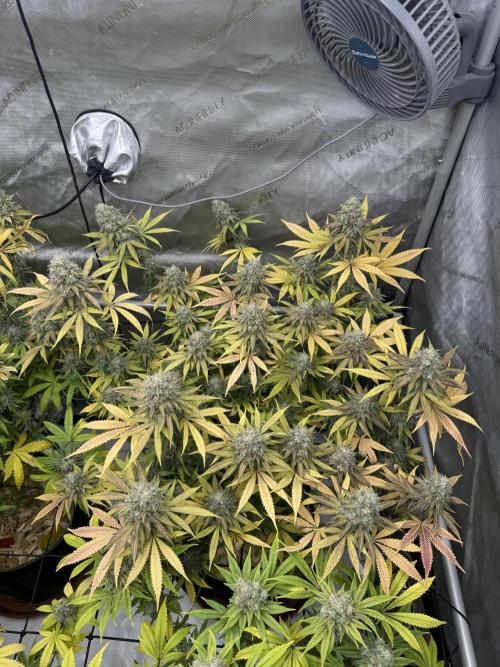
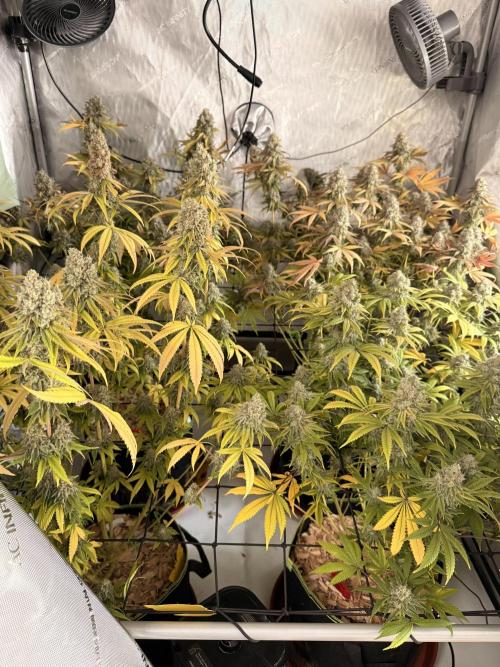
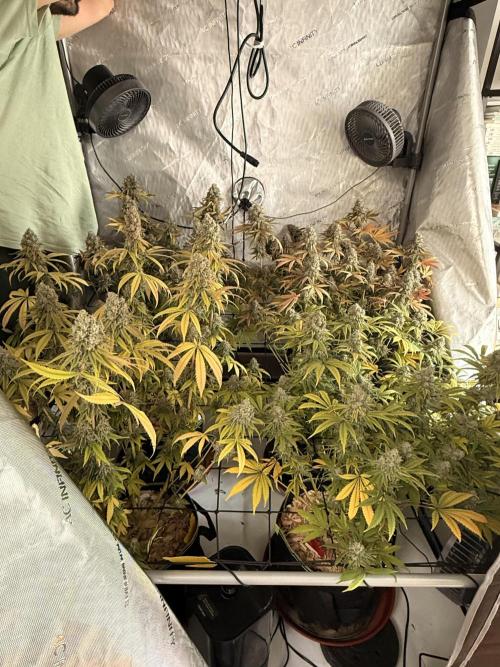
Gardens_of_Of And just like that, the ninth and final week of flowering has come to an end. After months of training, adjusting, observing, and patiently waiting, the girls have finally reached the finish line.
Unfortunately, the last week wasn't entirely stress-free. Humidity became particularly challenging, reaching levels much higher than I would have liked this close to harvest. With the flowers now at their densest, this naturally made me more cautious about potential mold and bud rot.
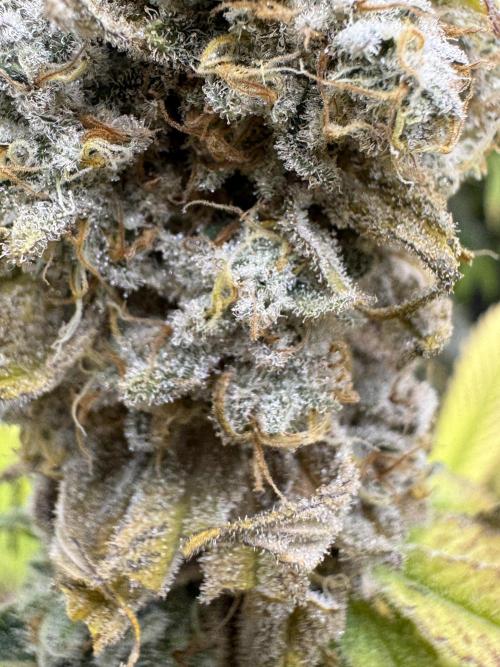
One bud on Planet of the Grapes caught my attention, as it appears to be showing either some localized damage or the early signs of bud rot. I have been monitoring it very closely, and thankfully, the surrounding flowers still look healthy and unaffected. With harvest planned for tomorrow, I don't intend to take any unnecessary risks—if the affected area looks any worse, it will simply be removed during harvest.
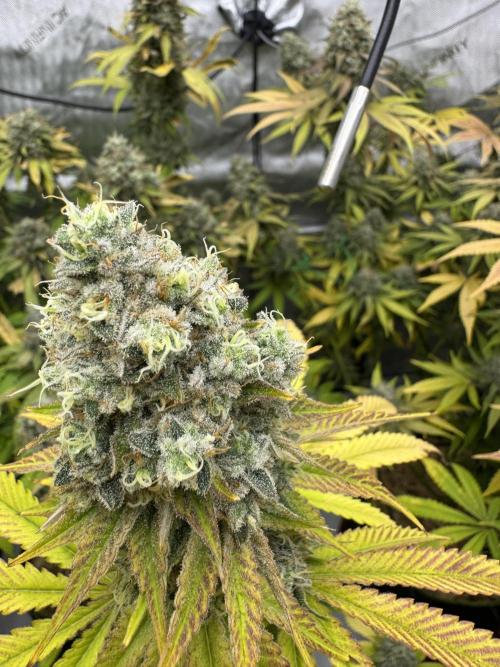
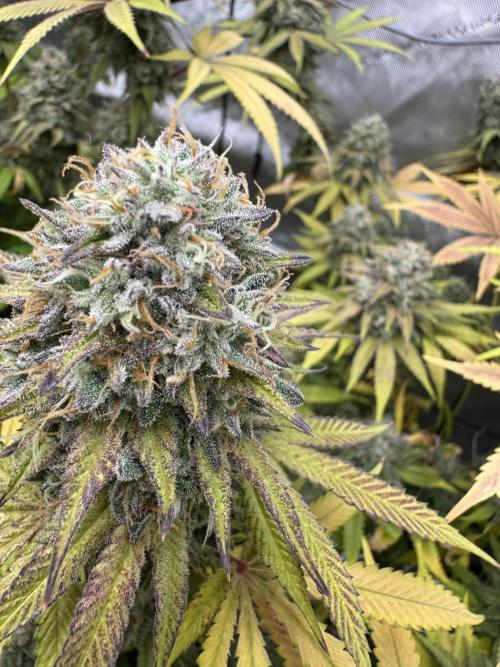
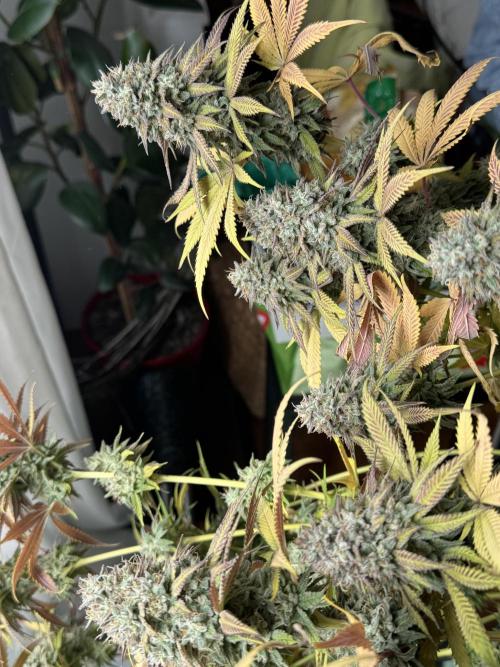
Now for the good news: the girls have finished beautifully.
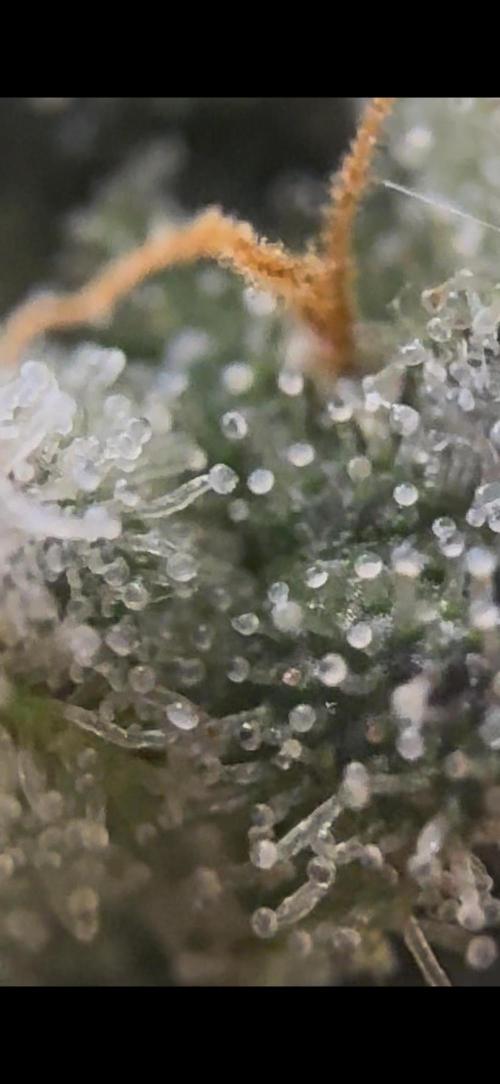
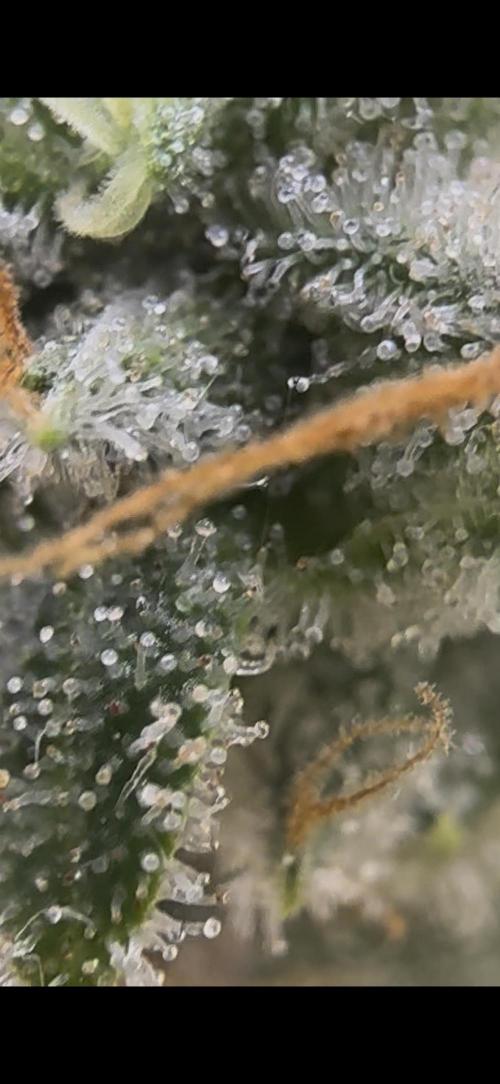
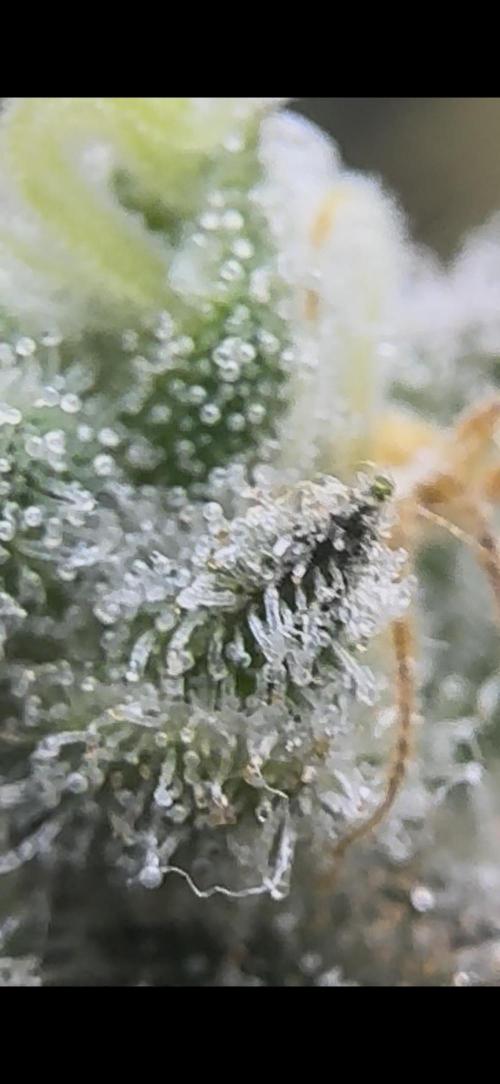
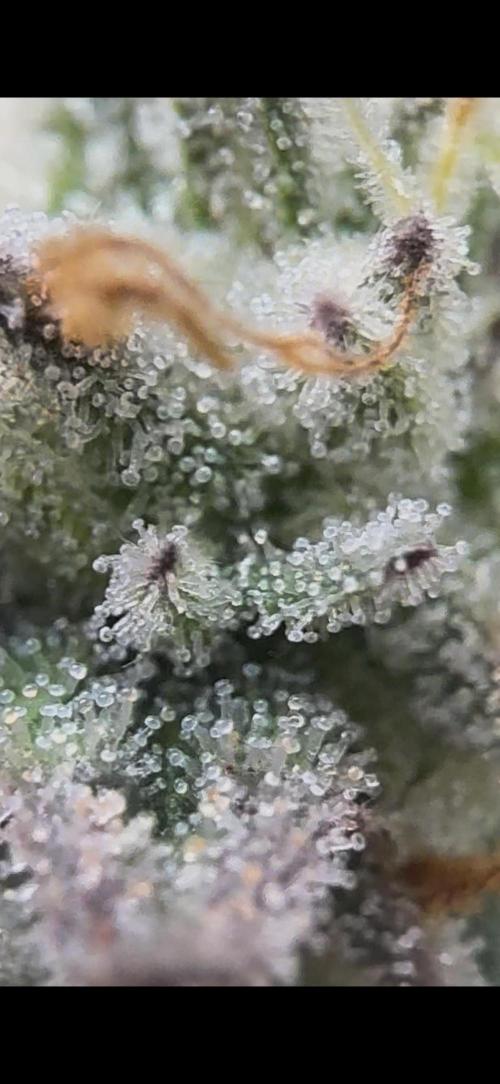
Trichome development is right around where I wanted it to be, with most plants showing approximately 15% amber trichomes, although naturally there is some variation between cultivars and even between individual flowers. Some are slightly further along, while others could probably continue for a little longer.
Nevertheless, I have decided to harvest the entire tent together at the end of Week 9. They have matured closely enough to one another that a synchronized harvest makes the most sense, especially since I would rather not set up a second tent purely for drying.
Looking back, it's satisfying to see how much the garden has changed. What started as four relatively small plants eventually became a completely filled canopy of heavy, frosty flowers. There were challenges along the way—yellowing leaves, summer heat, stubborn humidity, light adjustments, deficiencies, and branches eventually becoming too heavy to support themselves—but the plants kept pushing forward.
And now there is nothing left to adjust.
No more chasing the perfect light distance. No more canopy management. No more wondering how much they will stretch or how large the flowers will become.
Tomorrow, the scissors finally come out.
After nine weeks of flowering and a lot of patience, harvest day has arrived. 🌿✂️
3 likes
comments
Share
Used techniques
LST
Technique
Defoliation
Technique
12-12
Technique
16
Week 16. Harvest2mo ago
Happy Harvest Day!


9/10
Rated
This was my second time growing Planet of the Grapes, and somehow this strain still managed to surprise me.
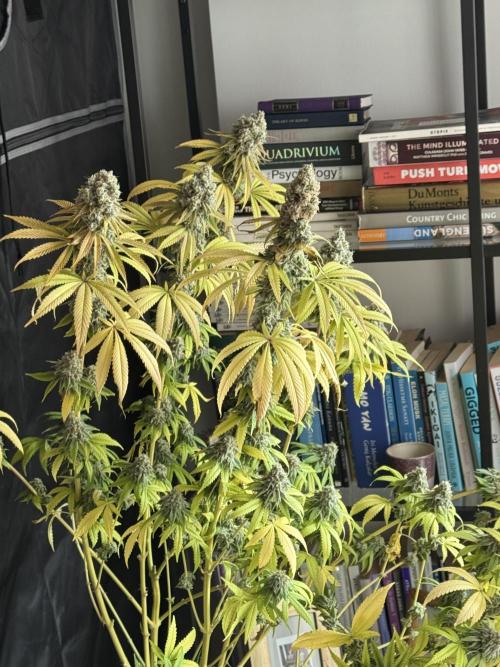
Compared with the phenotypes I encountered during my previous run, this particular plant took a slightly different direction. She didn't develop quite the same extreme layer of frost I remembered, but she made up for it by producing noticeably larger and chunkier flowers. It was an interesting reminder of just how much variation can exist within the same cultivar.
The aroma, however, is unmistakably Planet of the Grapes. That familiar combination of pungent, gassy notes is there, backed by the sweet grape character that makes this strain so distinctive. Even before curing, the flowers already carry that recognizable profile I remembered from the previous grow. I'm very curious to see how those aromas develop once everything has been properly dried and cured.
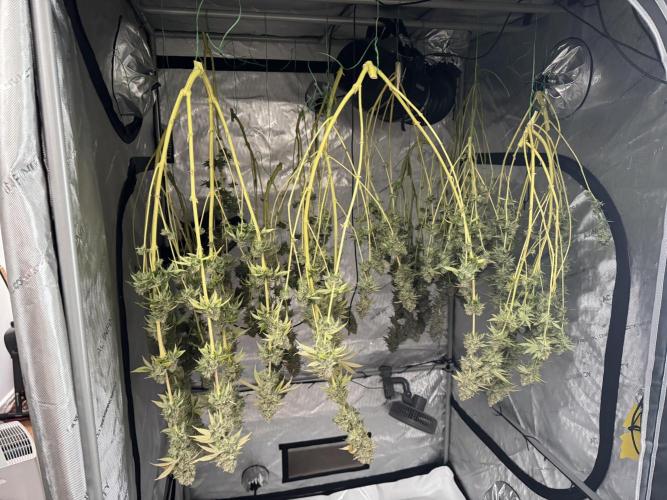
There was one unfortunate moment during harvest. One of the larger buds showed what appeared to be signs of bud rot, despite the flower itself still feeling surprisingly firm and dense. Rather than taking any chances, I removed the entire affected bud before hanging the plant to dry. The rest of the flowers looked healthy, and I wasn't willing to risk potentially spreading the problem throughout the drying tent.
Because of that, I'm slightly hesitant to give the strain top marks for mold resistance. At the same time, I can't really put the blame on the genetics either. During the final weeks of flowering, there were several occasions when humidity climbed to around 65%, which is certainly not ideal when dealing with mature, dense flowers.
Overall, Planet of the Grapes was once again an easy and enjoyable strain to grow. She remained manageable throughout the cycle, developed beautiful flowers, and delivered that characteristic aroma I was hoping to experience again.
If there is one thing I would tell someone considering growing her, it would be this:
Don't necessarily expect enormous yields—but expect an enjoyable growing experience and some seriously impressive-smelling flowers.
For now, this is only my harvest impression. The final chapter still needs to be written. Once the flowers have dried and cured, I'll weigh the harvest and return with the numbers, followed by the most important part of the review: the smoke test.
Show more
Translate
Spent 110 days
Ger Veg Flo Har
1
Plants
1.44 m²
Grow Room size
Normal
Difficulty
Height
Day air temperature
Air humidity
PPM
PH
Light schedule
Night air temperature
Pot size
Lamp distance
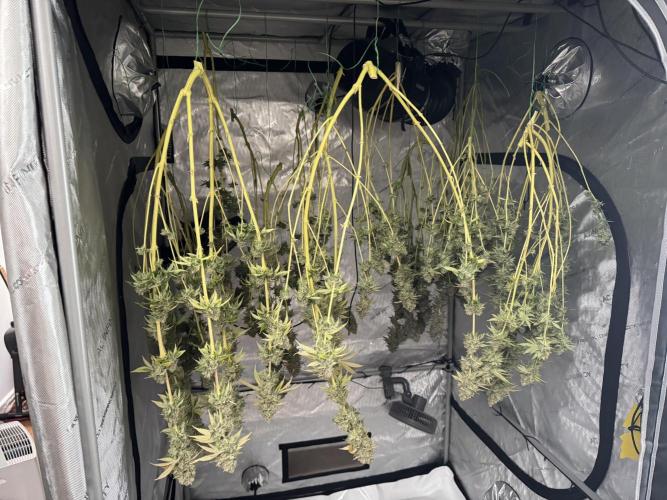
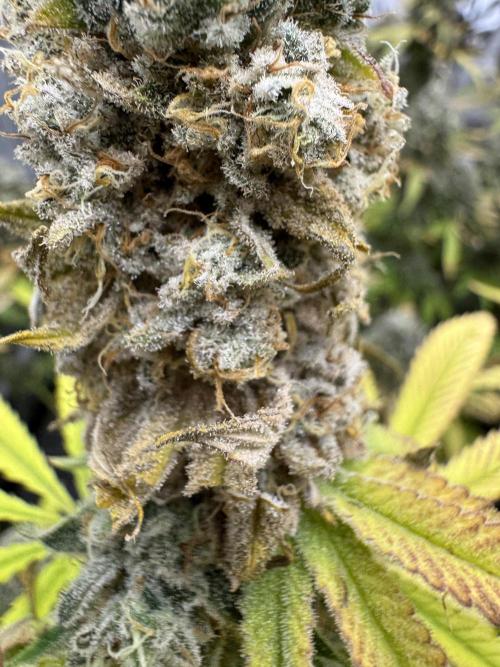
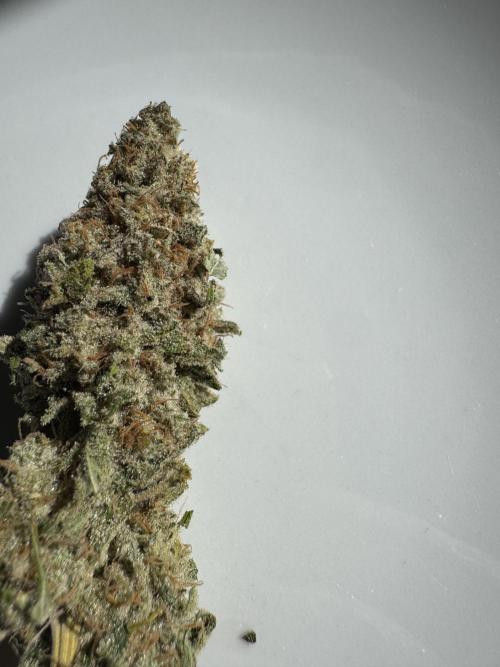
Gardens_of_Of It was a smooth and easy grow overall. Happy with initial results. Excited about the end results...😁
3 likes
comments
Share
Equipment Reviews











16
Week 16. Harvest2mo ago
Happy Harvest Day!

9/10
Rated
This was my second time growing Dripz by James Loud, but in many ways, it feels like my first proper opportunity to see what this strain is actually capable of.
My previous run didn't exactly go according to plan. Poor humidity management combined with an unfortunate light leak eventually turned the entire tent into a disaster. Looking back, I never really gave Dripz a fair chance to express its genetics, so I knew I wanted to come back and try this strain again under better conditions.
And I'm very glad I did.
This time around, Dripz has shown me that James Loud created something seriously interesting here. The aroma immediately reminds me of those distinctive earthy profiles I experienced in California—deep, rich, and unmistakably grounded.
I have to admit that I'm not the biggest fan of heavily earthy terpene profiles. They simply aren't what I naturally gravitate toward. Dripz, however, has something hiding underneath that earthiness that keeps pulling me back for another smell.
There is a subtle candy-like sweetness buried underneath the dominant earthy character. It's difficult to describe precisely at this stage, but that contrast is exactly what makes the aroma so intriguing. The earthiness hits first, followed by this unexpected sweet note lingering somewhere in the background.
That combination has made Dripz one of the strains I'm most curious to revisit after curing. I'm especially interested to see whether that candy character becomes more pronounced as the flowers dry and the terpene profile settles. If it pushes further forward and balances out some of those earthy notes, this could develop into a very interesting final profile.
Visually, the flowers finished beautifully, although the overall yield doesn't appear particularly large. That's really the only reason I'm hesitant to give Dripz a perfect 10/10 at this stage. Of course, appearances can be misleading before drying, so I'll reserve the final judgment until everything has been trimmed and weighed.
For now, though, this grow has accomplished exactly what I wanted it to: Dripz finally got its second chance—and this time, it delivered.
The disaster of the previous run can officially be left in the past. Now comes the part I'm most excited about: seeing how that unusual combination of earthy California character and hidden candy sweetness transforms after a proper cure.
The final weight and smoke test may still have something to say about that rating.
Show more
Translate
Spent 110 days
Ger Veg Flo Har
1
Plants
1.44 m²
Grow Room size
Normal
Difficulty
Height
Day air temperature
Air humidity
PPM
PH
Light schedule
Night air temperature
Pot size
Lamp distance
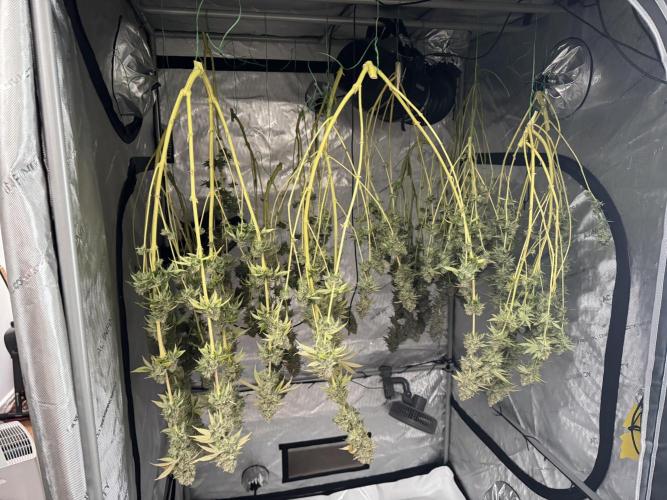
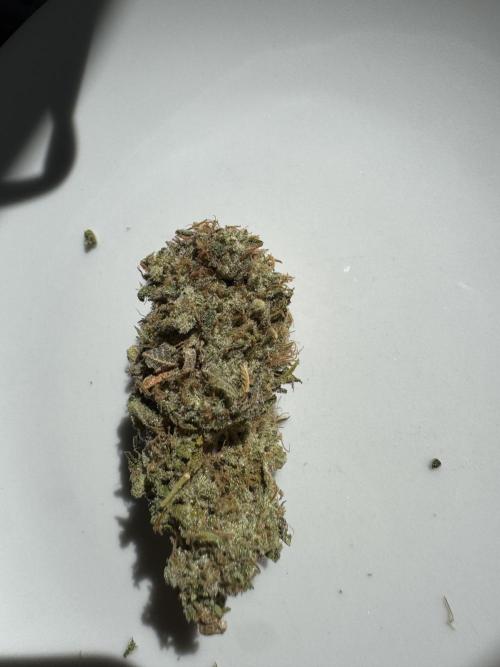
Gardens_of_Of This was an overall smooth run
2 likes
comments
Share
Equipment Reviews
16
Week 16. Harvest2mo ago
Happy Harvest Day!

9/10
Rated
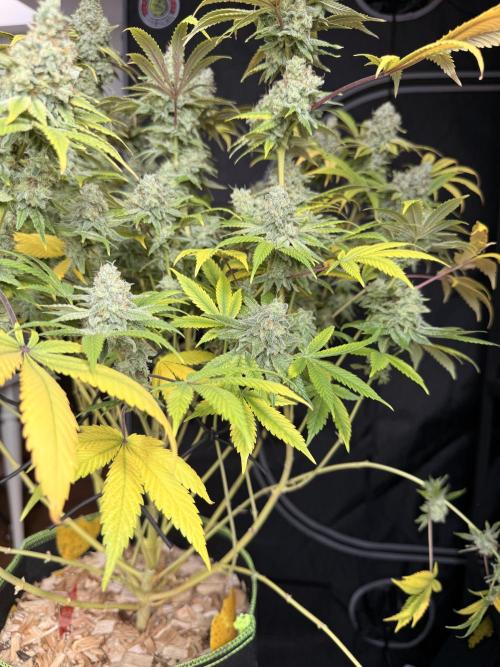
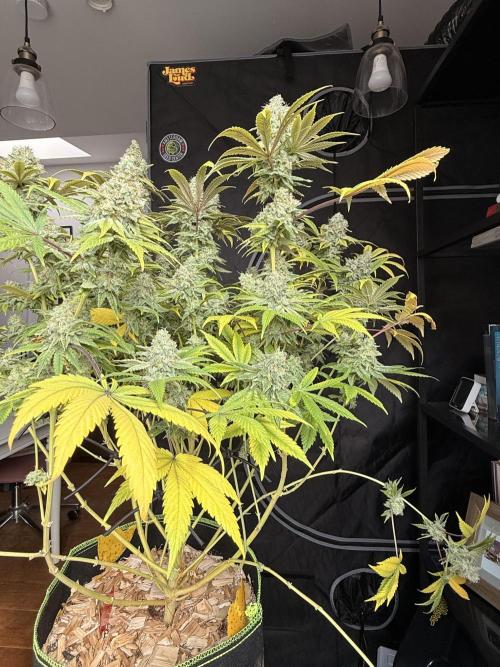
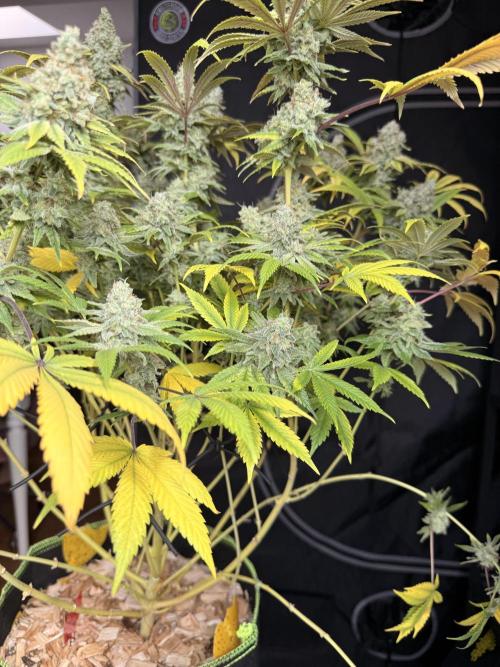
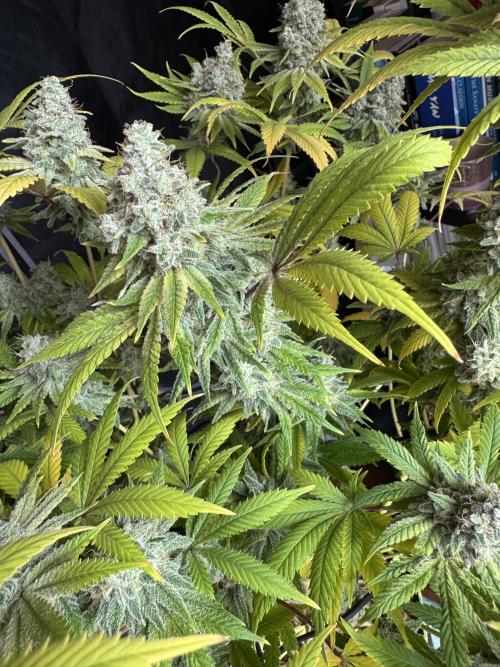
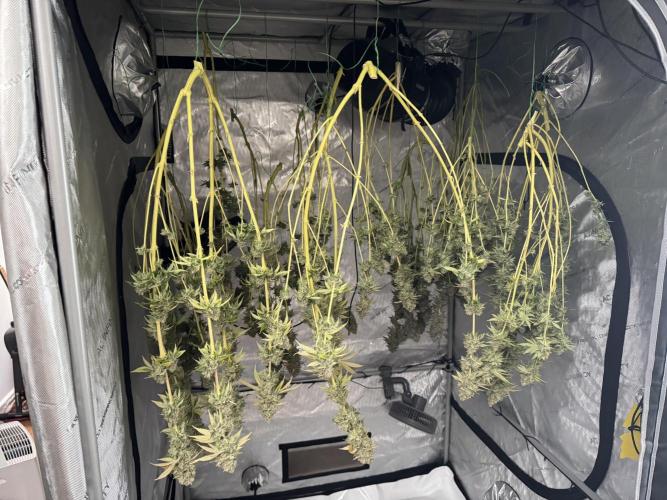
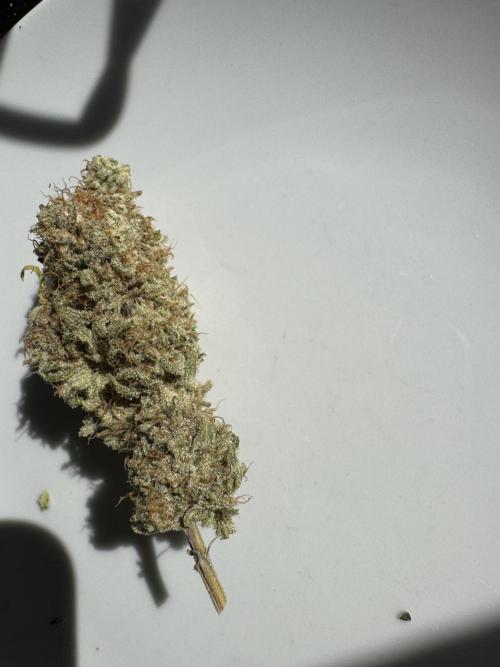
Gelato by Zamnesia Seeds has been on my grow list for quite some time. I originally wanted to run this strain about two years ago but never had the opportunity. This year, I finally managed to make room for her—and after seeing the finished plant, I'm very happy that I did.
From early vegetation all the way through flowering, Gelato was noticeably smaller than the rest of the tent. While the other plants stretched aggressively and quickly filled the canopy, she remained compact and simply continued developing at her own pace.
What she lacked in size, however, she certainly tried to make up for in flower quality.
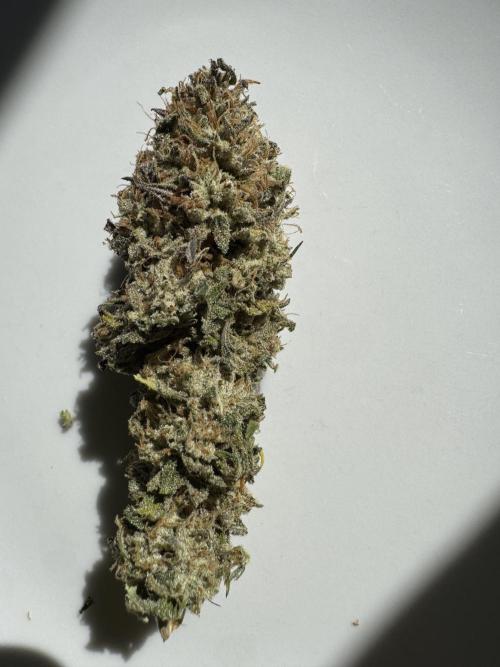
By harvest, she had produced beautiful, golf-ball-sized colas with an impressive coating of trichomes. She may have been the smallest lady in the tent, but those dense, frosty flowers proved that size doesn't always tell the whole story.
One of the things that impressed me most about Gelato was simply how easy she was to grow. Throughout this run, I threw quite a few challenges at the plants: training, periods of high humidity, and some seriously hot summer temperatures. Gelato seemed to take almost everything in stride. She remained healthy, manageable, and surprisingly unfazed by the less-than-perfect conditions.
For that reason alone, I would happily recommend this strain to growers looking for something relatively forgiving and resilient. Based on my experience with this particular plant, she seems capable of handling environmental stress remarkably well without sacrificing flower quality.
The aroma at harvest is predominantly gassy, accompanied by a subtle sweetness hiding underneath. The sweet character isn't particularly dominant at the moment, but it adds enough complexity to keep the profile interesting. I'm curious to see whether curing brings that sweetness further forward and creates a more balanced combination.
So far, I'm very satisfied with the results.
After waiting nearly two years to finally grow Gelato, she didn't disappoint. She may not have been the biggest plant in the garden, but she proved to be one of the toughest—and finished with some seriously attractive, trichome-covered flowers.
Now she just needs some time for drying and curing in the jars.
As with the other strains from this run, I'll return to this review once the flowers have been properly dried and cured. The final verdict will come when I can finally light up that first cured bud and see whether the flavor lives up to the flowers.
Show more
Translate
Spent 110 days
Ger Veg Flo Har
1
Plants
1.44 m²
Grow Room size
Easy
Difficulty
Height
Day air temperature
Air humidity
PPM
PH
Light schedule
Night air temperature
Pot size
Lamp distance
Gardens_of_Of It was a smooth and easy grow overall. Happy with initial results. Excited about the end results...😁
3 likes
comments
Share
Equipment Reviews
16
Week 16. Harvest2mo ago
Happy Harvest Day!
9/10
Rated
This was my second attempt at growing Starkiller × Grape Soda by James Loud, and just like with Dripz, the first run never really gave the genetics a fair chance to show what they could do. That grow ended in disaster largely because of mistakes on my side, so this time I wanted to come back with more experience and give this cross the opportunity it deserved.
I'm very glad I did, because this run was a completely different story.
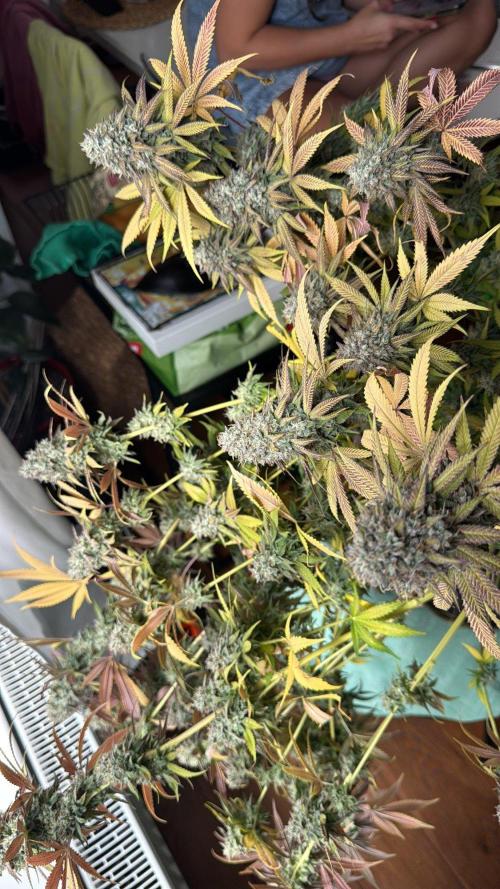
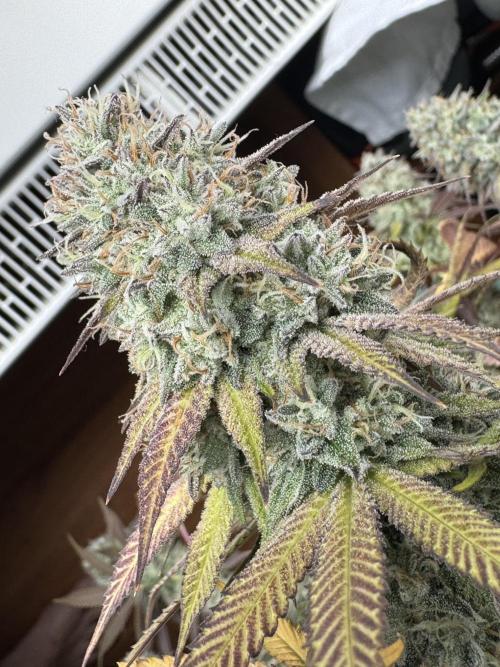
Out of all four plants in the tent, Starkiller × Grape Soda was arguably the most vigorous and visually impressive of the bunch. She grew with confidence throughout the cycle, developed beautifully, and ultimately produced some seriously attractive flowers. From structure to overall appearance, she was simply a pleasure to watch mature.
And fortunately, the aroma doesn't disappoint either.
The dominant character is unmistakably gassy, but underneath that intensity sits a surprisingly smooth combination of creamy, almost vanilla-like notes. It's an intriguing contrast—the sharpness of the gas balanced by something much softer and sweeter in the background. Even before curing, the combination already gives the flowers plenty of personality.
The resin production is another highlight for me. The buds are incredibly sticky, which is always an encouraging early sign, especially since I have always had a soft spot for highly resinous cultivars. Handling the flowers during harvest immediately leaves that unmistakable layer of resin behind, and that alone has made me even more curious about the final product.
At this point, Starkiller × Grape Soda is probably one of the strains I'm most excited to taste from this entire run.
Of course, there is still one very important stage between harvest and the final verdict: drying and curing. Beautiful flowers and impressive aromas can only take you so far, and I know from experience that the way the harvest is handled over the coming weeks can make or break the final result.
If I manage to preserve those terpenes and cure these sticky flowers properly, I have a feeling there could be something exceptional waiting inside those jars.
But with growing, you never really know until the final product is in your hands.
For now, Starkiller × Grape Soda has certainly earned my attention. Vigorous growth, beautiful flowers, heavy resin production, and a gassy profile wrapped in creamy vanilla tones—there is a lot to be excited about here.
The final verdict will come after the cure and, most importantly, the first proper smoke.
Show more
Translate
Spent 110 days
Ger Veg Flo Har
1
Plants
1.44 m²
Grow Room size
Easy
Difficulty
Height
Day air temperature
Air humidity
PPM
PH
Light schedule
Night air temperature
Pot size
Lamp distance
Gardens_of_Of It was a smooth and easy grow overall. Happy with initial results. Excited about the end results...😁
8 likes
5 comments
Share
Equipment Reviews
5 comments
Sort by
popularity
popularity
newest
oldest

Prock666 commentedweek 162mo ago
Congratulations. Why 9/10? It looks like 11/10...😁😁😁
likes 2

Gardens_of_Of commented1mo ago
@Prock666, I just give a 10 once I cure and smoke it :) But, honestly they look 11/10 at the moment :)
like 1

THcHunteR23 commentedweek 162mo ago
Very nice grow 🤩🔥congratulations!
like 1
Gardens_of_Of commented1mo ago
@THcHunteR23Thanks a lot! :😉
like 1
Prock666 commentedweek 161mo ago
Dude, im so jealous about it... What is your gold rules to have this harvest? My goals is about terpenes, I really don't car about Thc or grams per plants... But some day I wish have a plant like this.
likes

the end.
Enjoying this diary? Follow for more updates!

Prefer the old Diary view?
Go back to the old Diary view