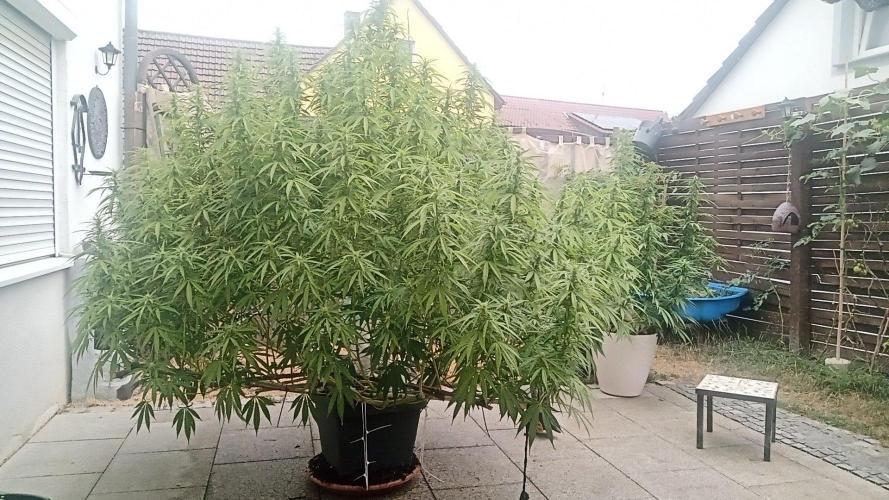
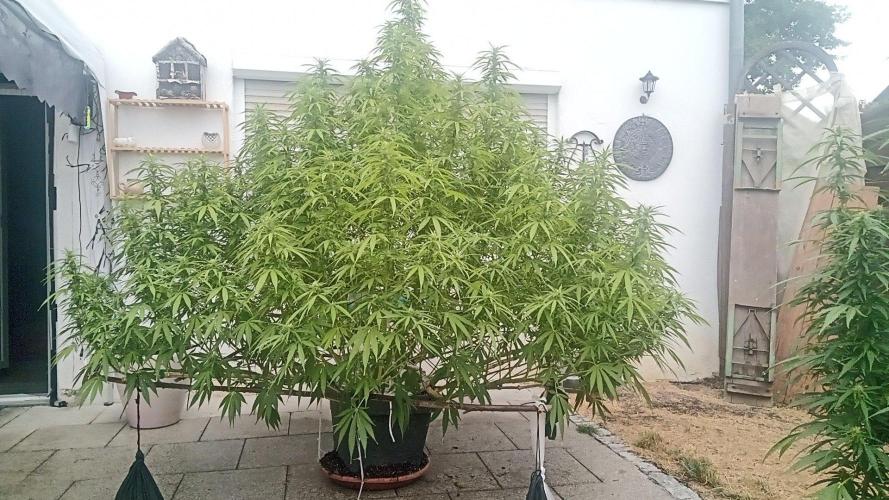
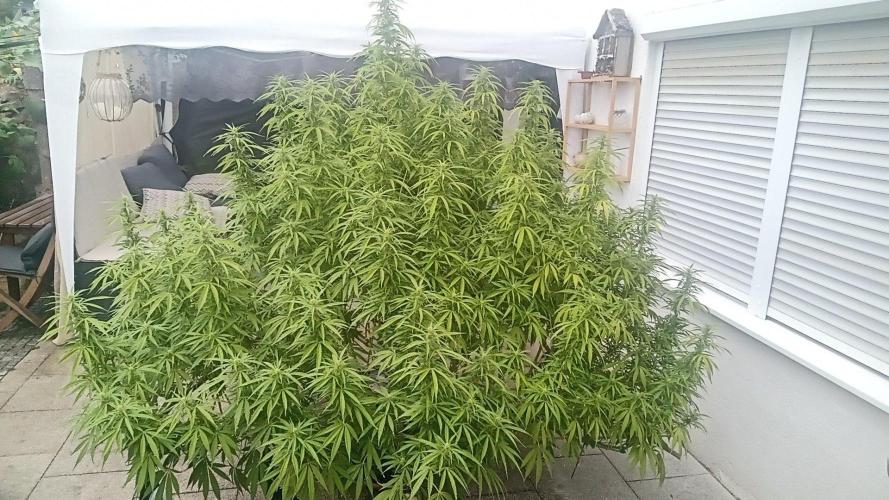
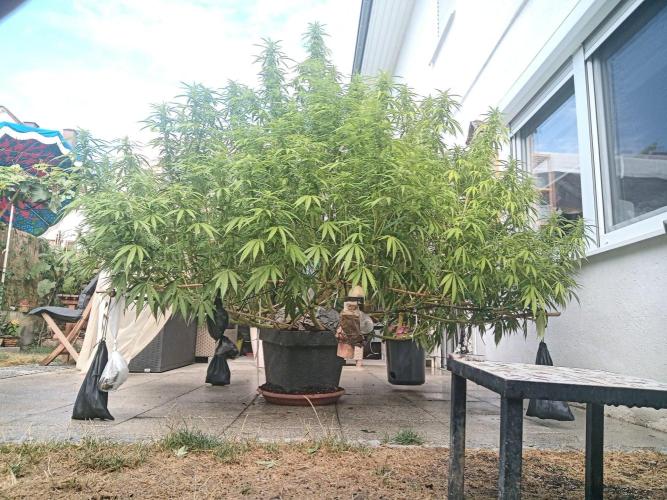
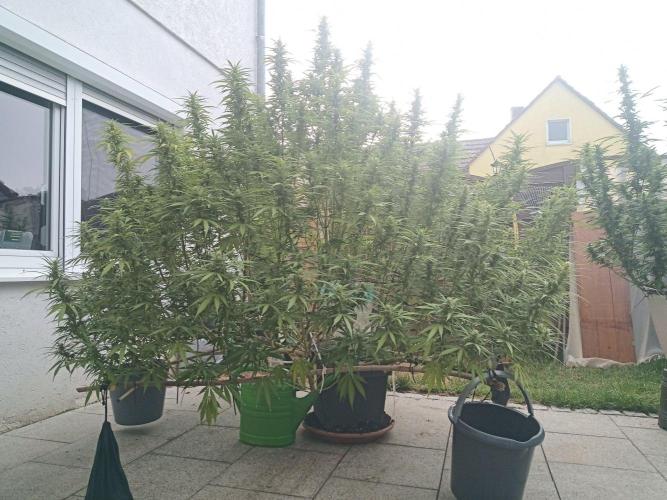
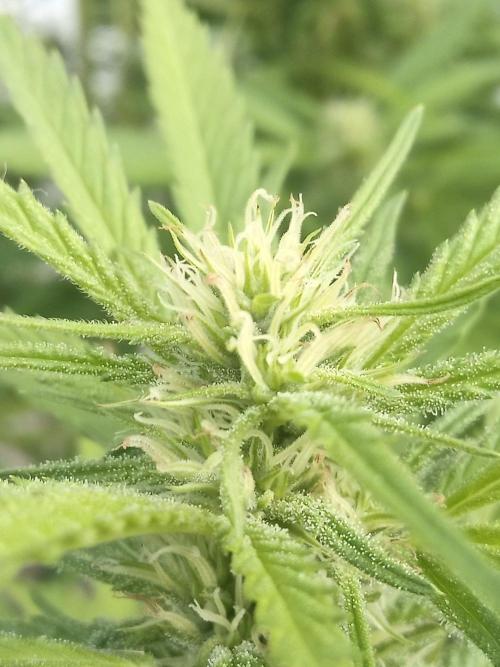
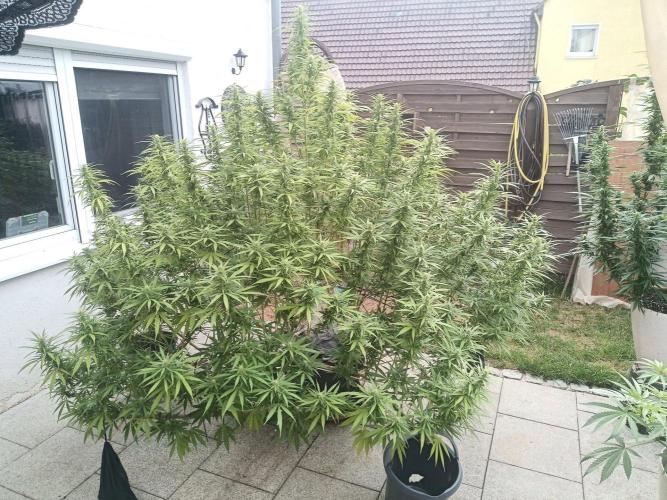
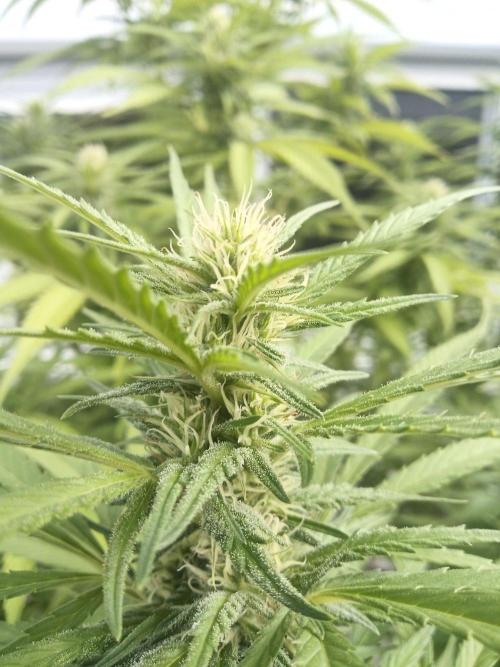
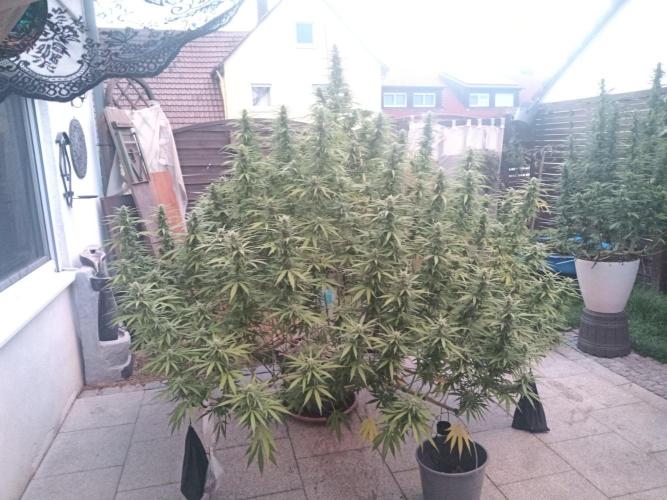
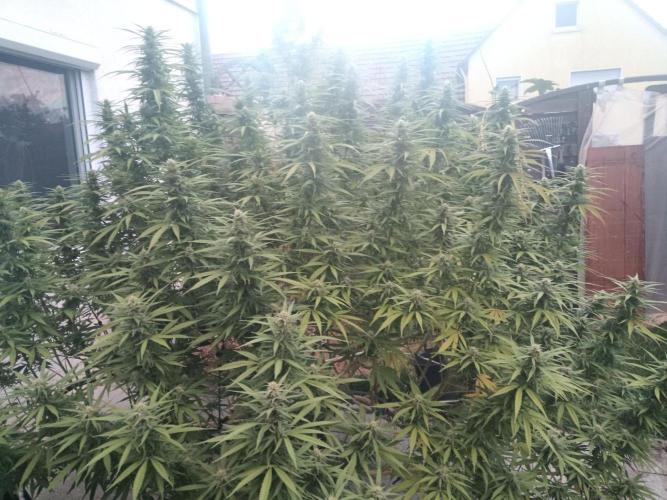
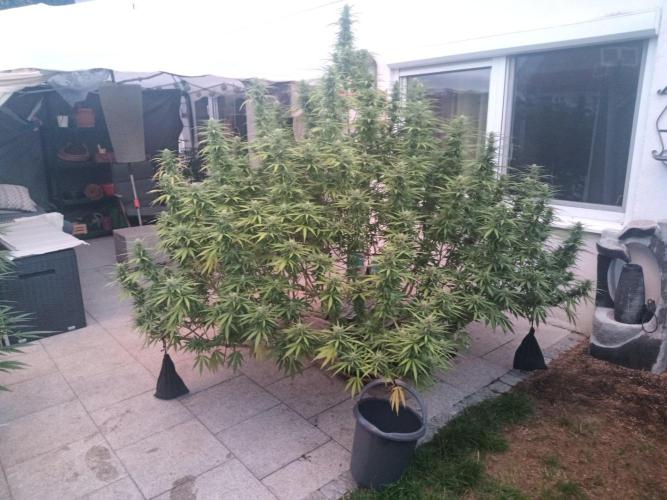
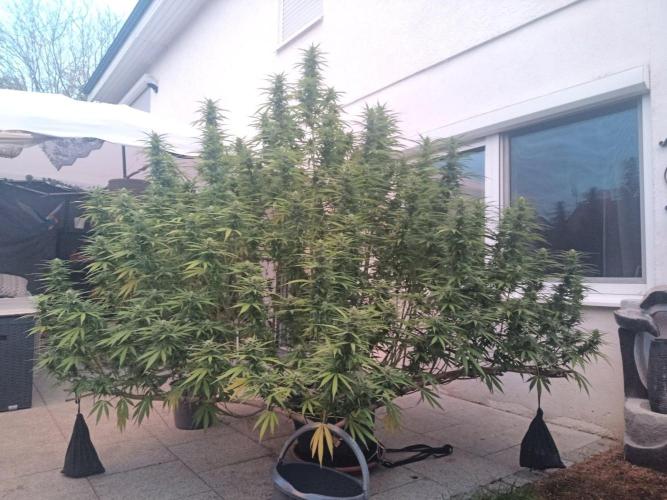
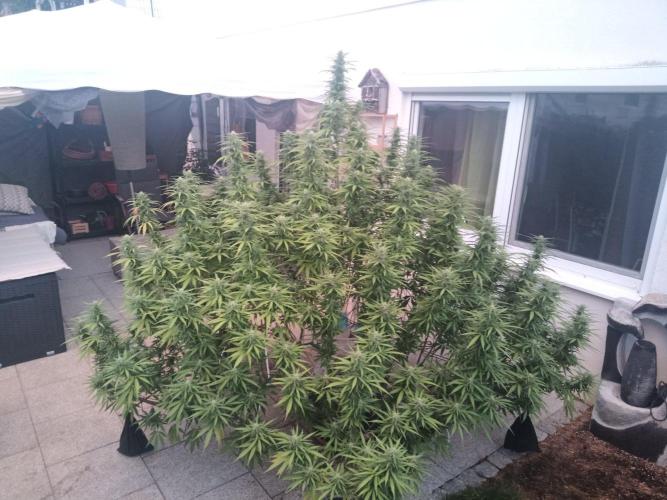
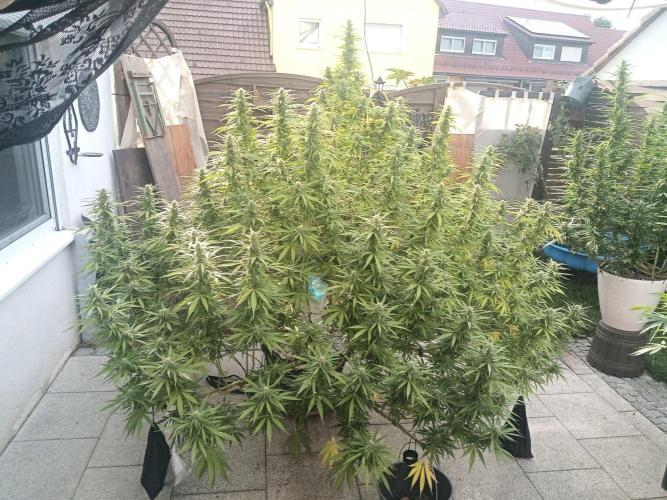
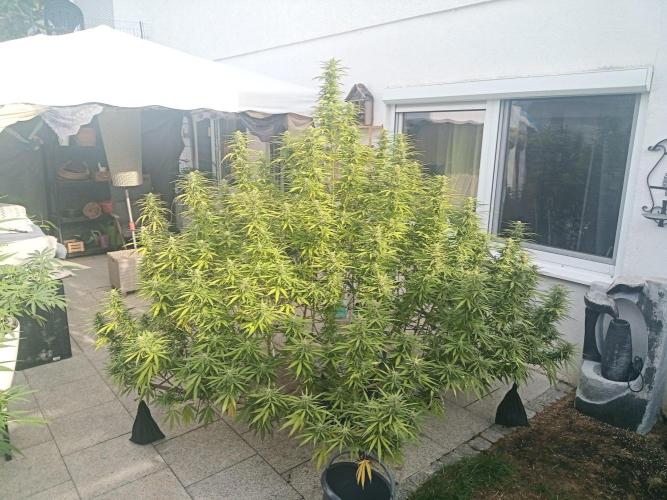
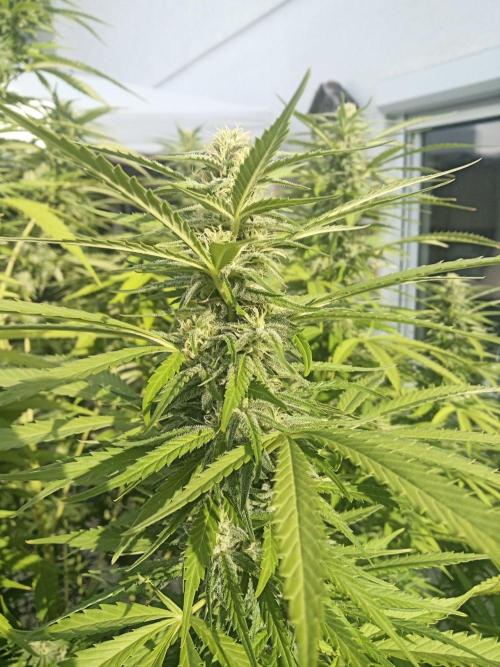
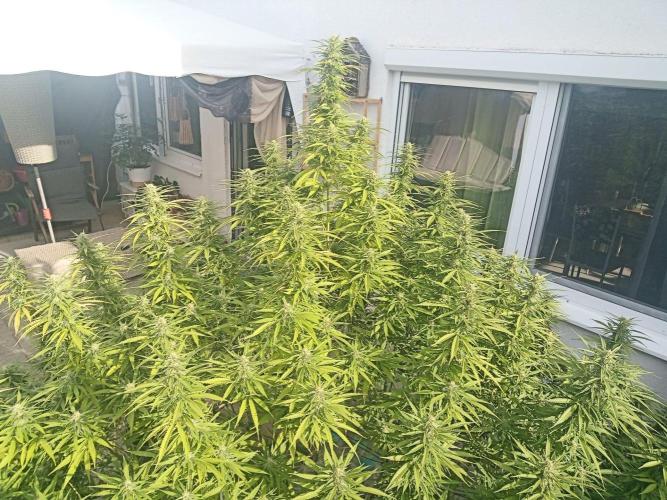
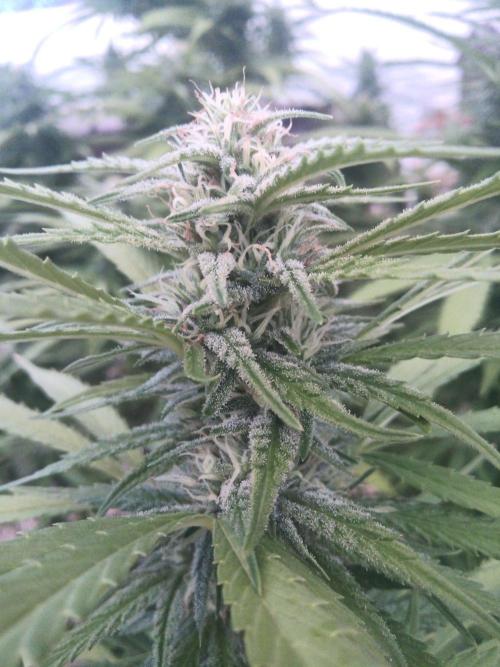
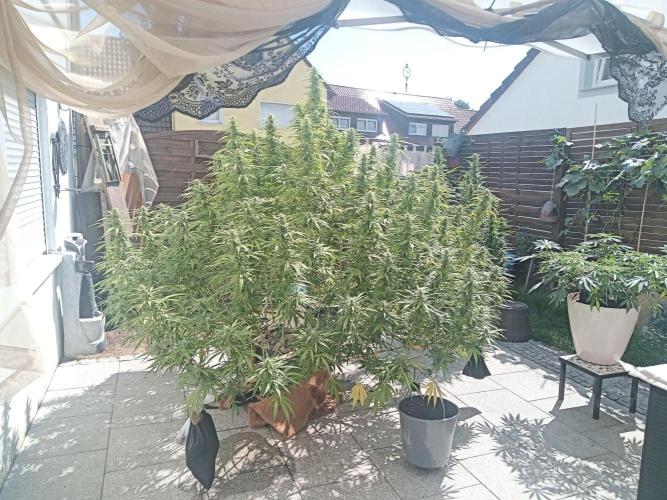
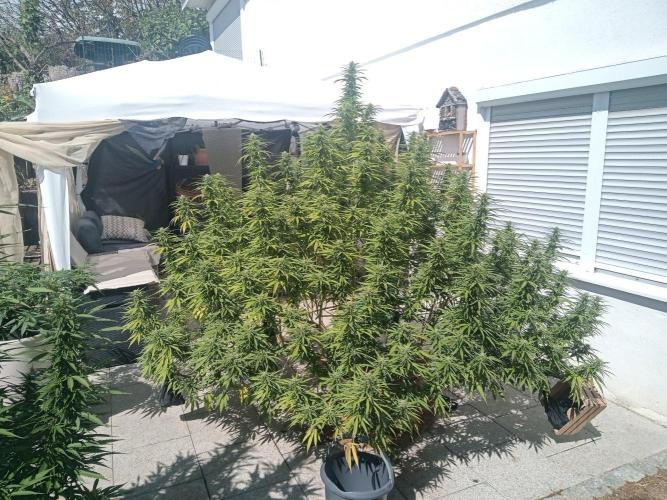
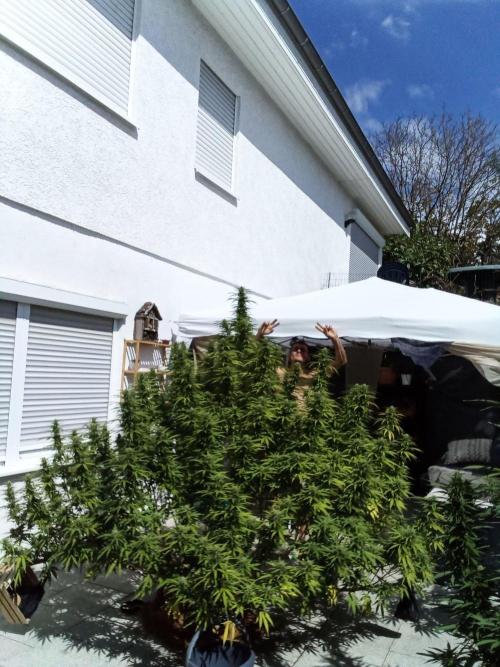
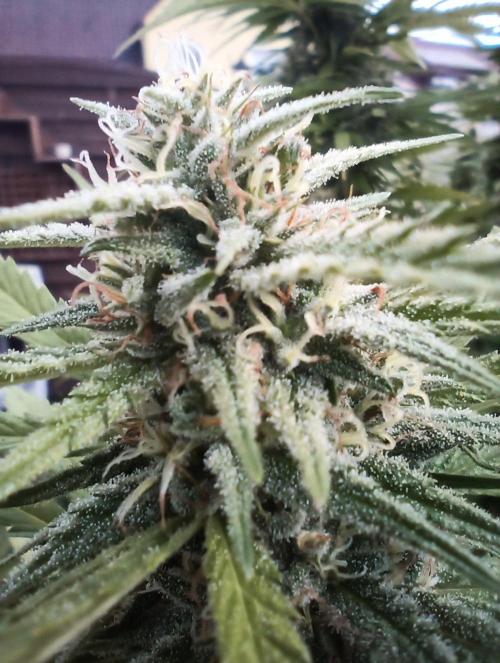
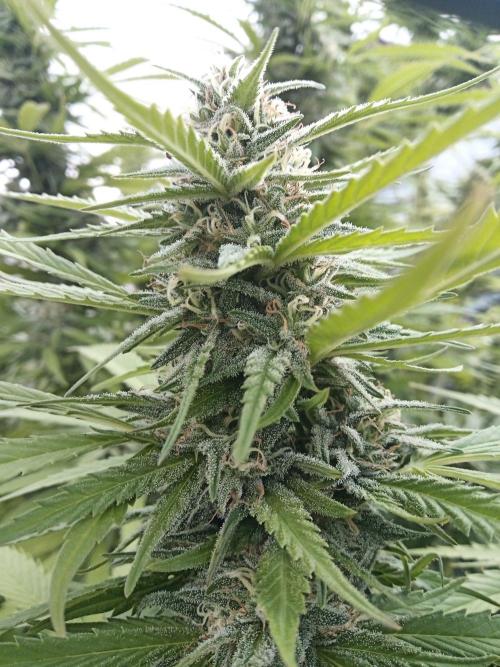
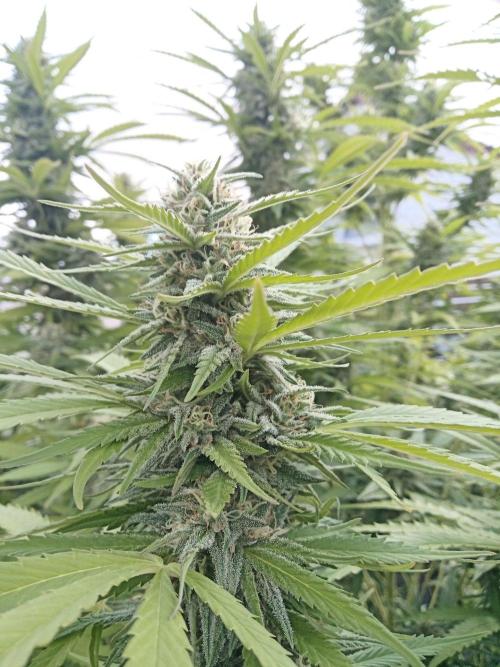
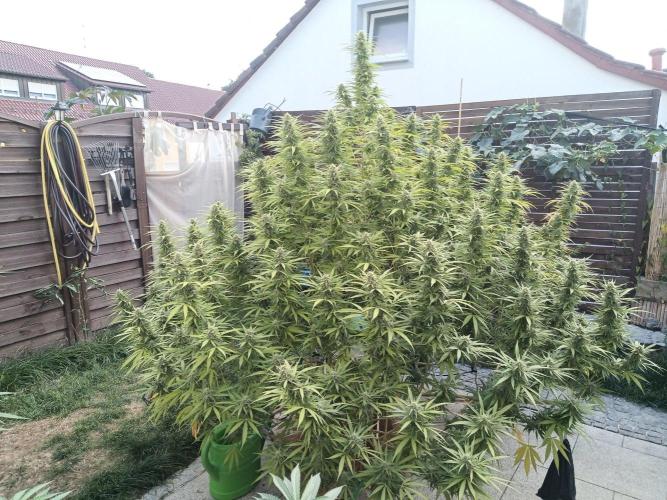
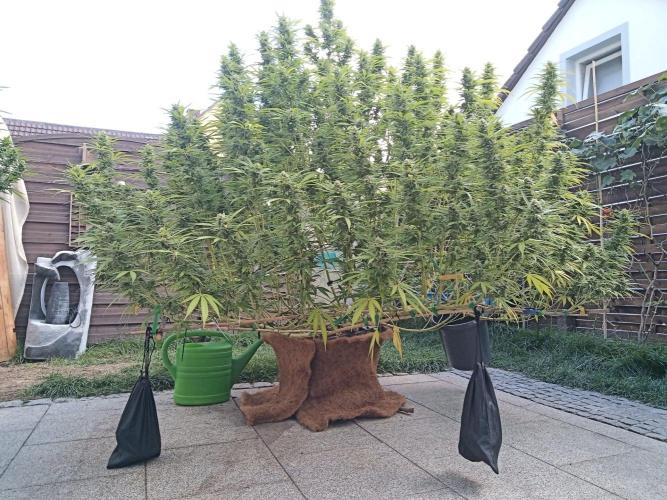
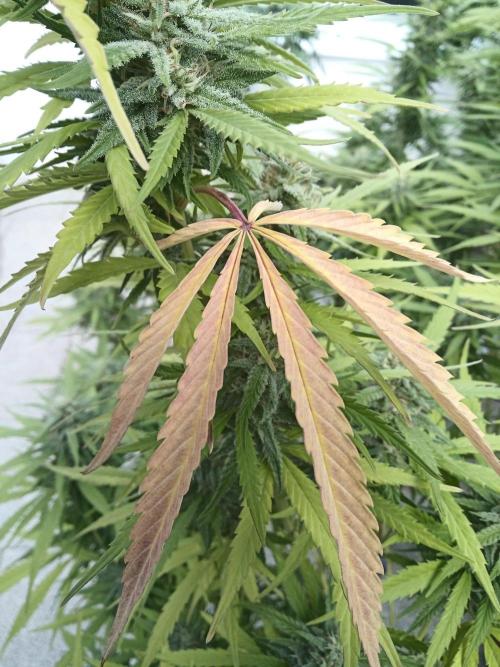
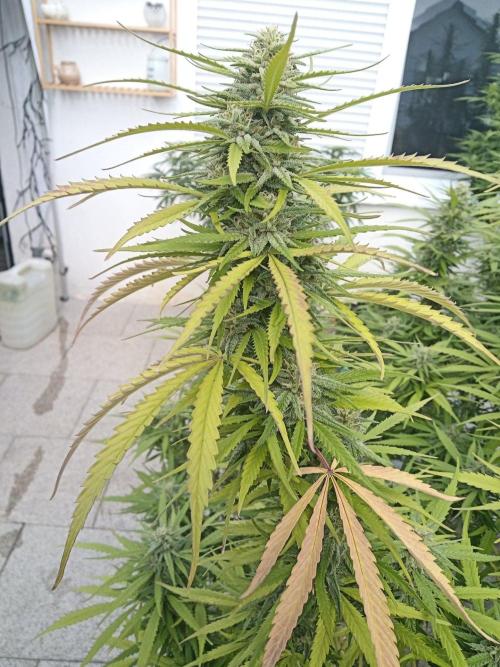
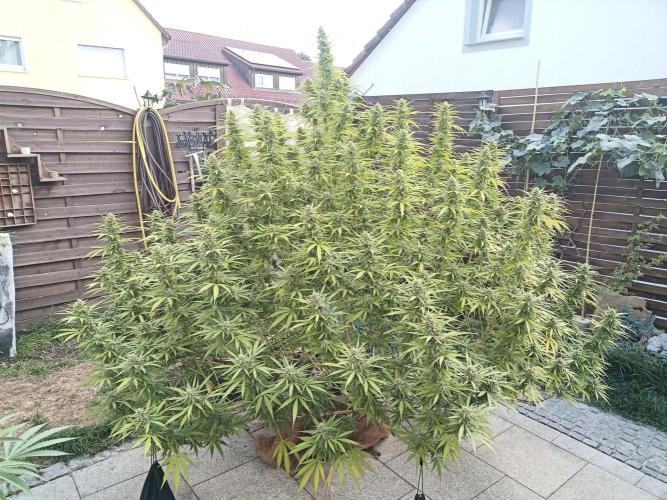
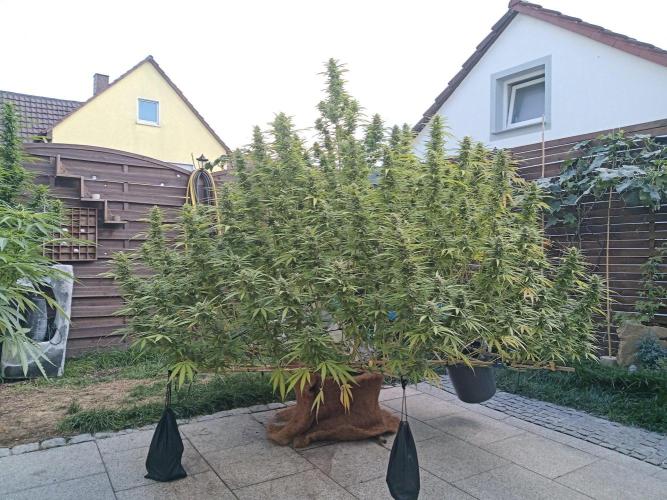
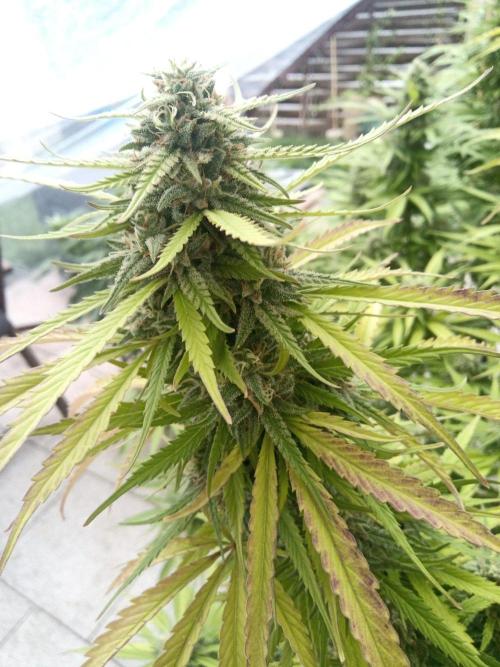
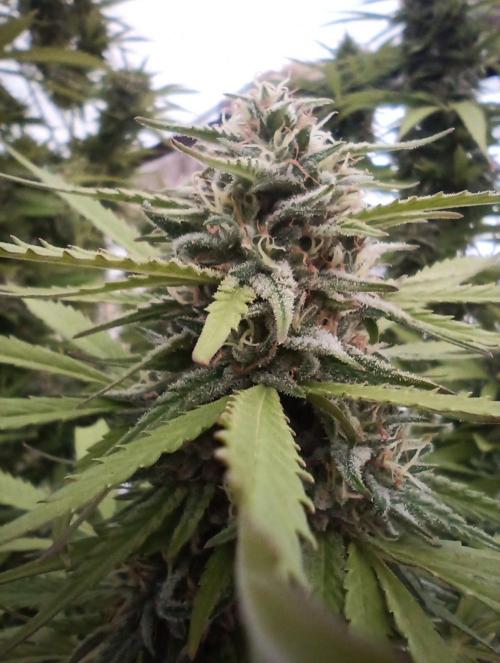
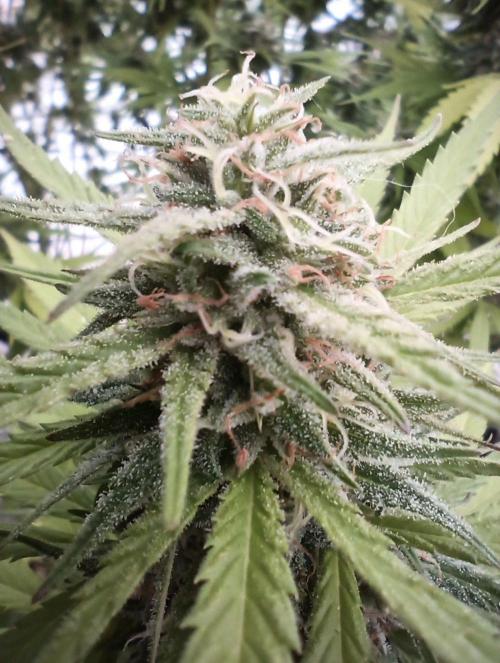
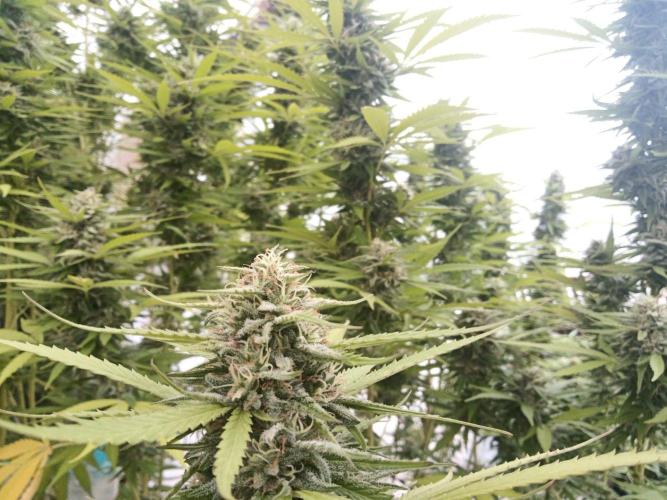
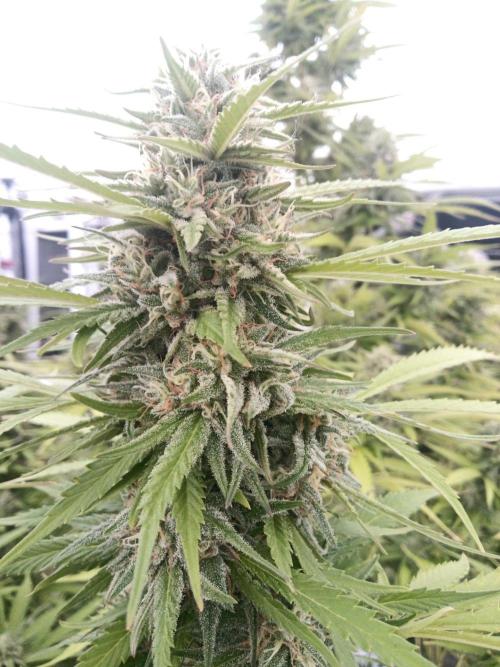
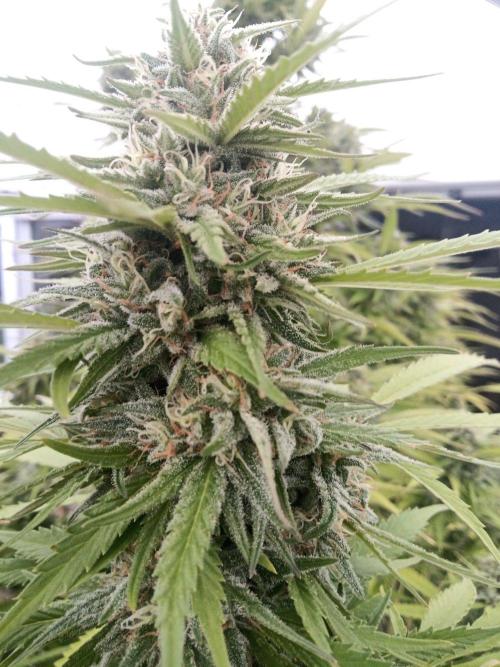
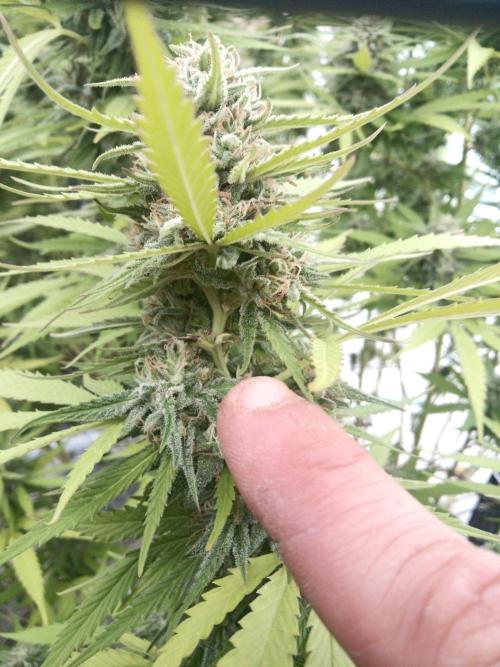
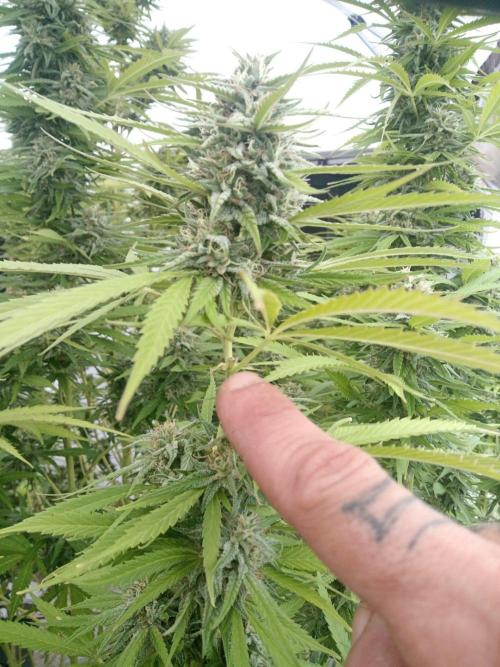
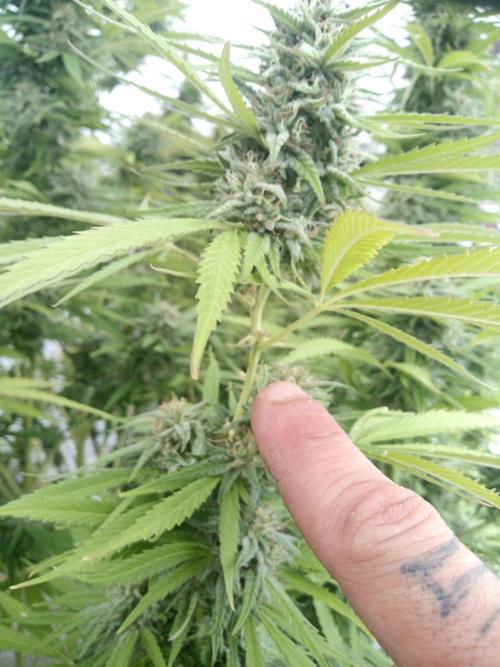
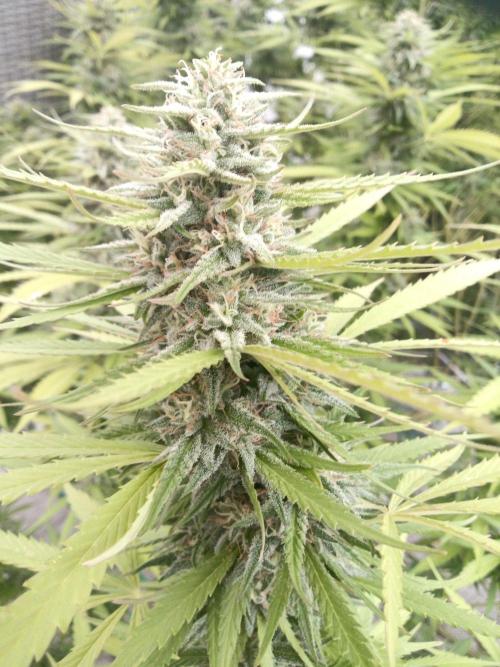
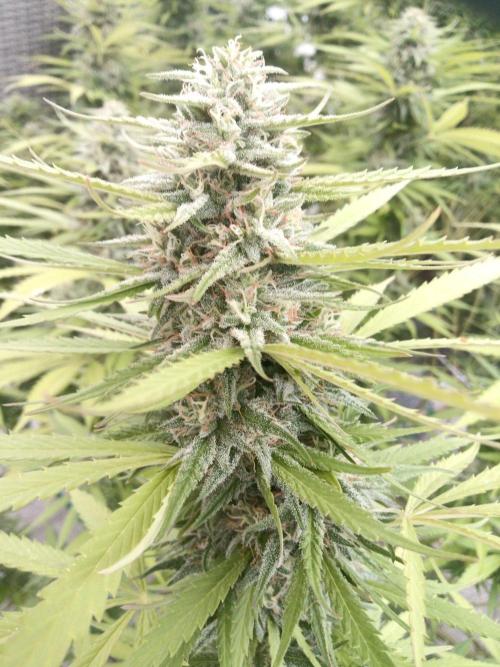
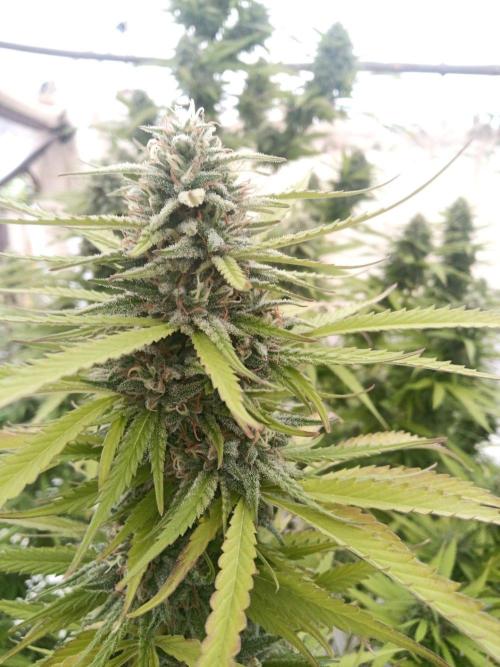
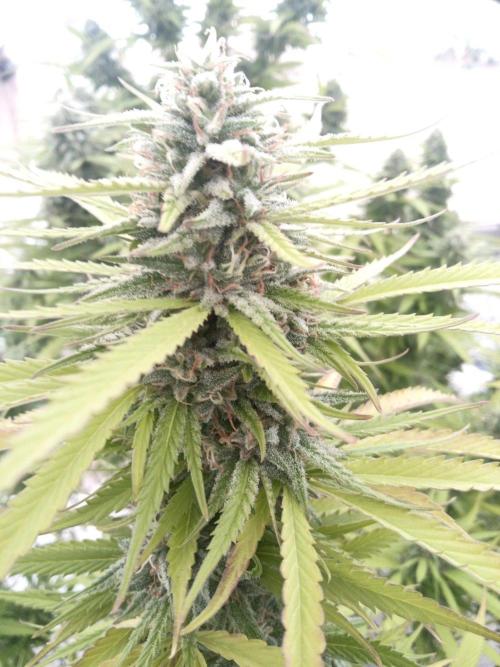
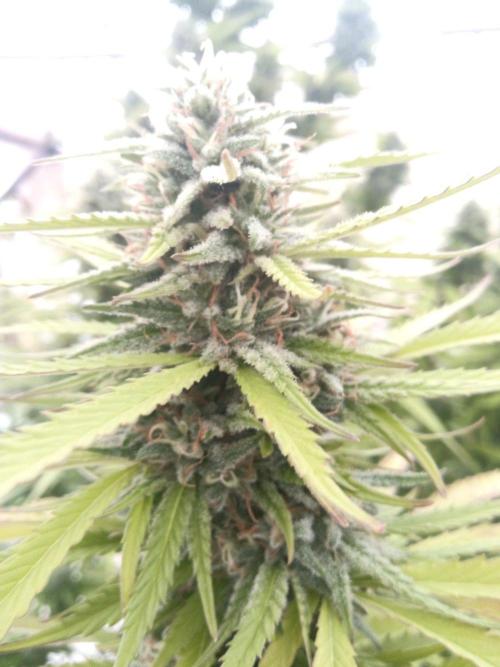
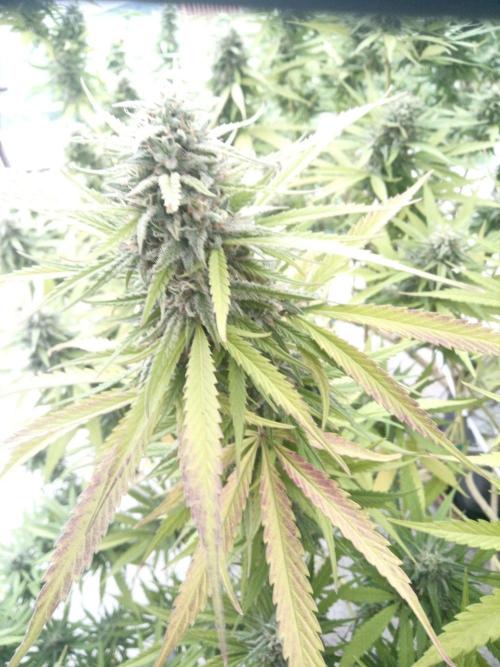
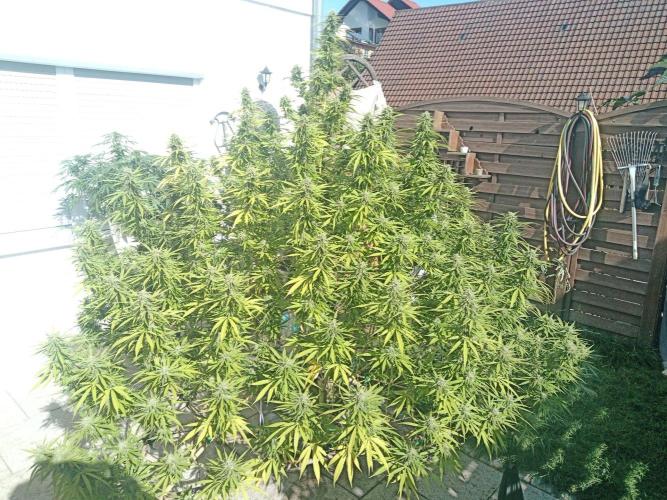
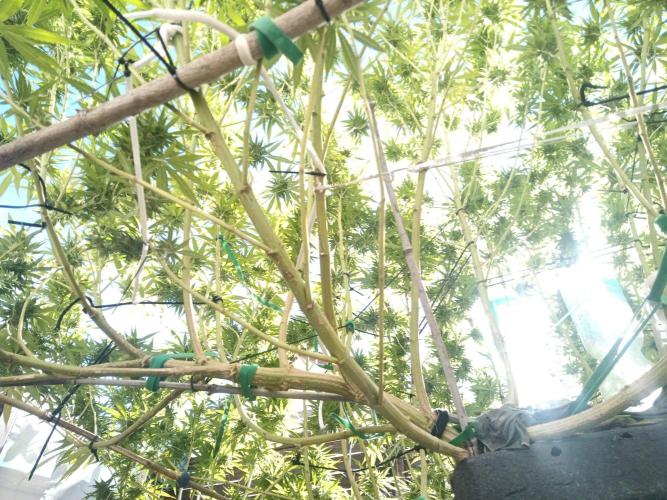
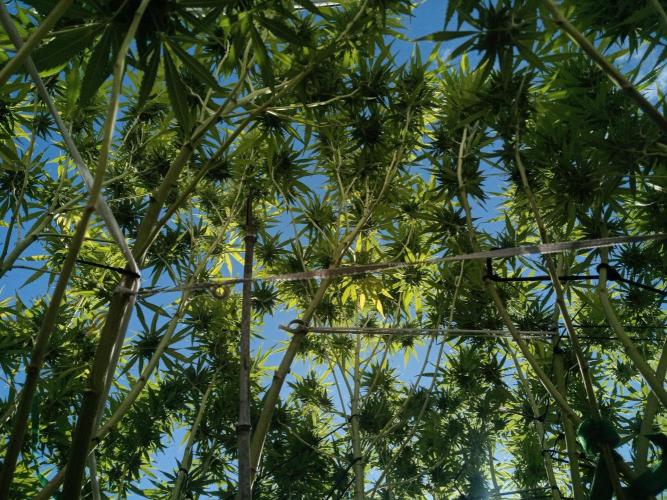
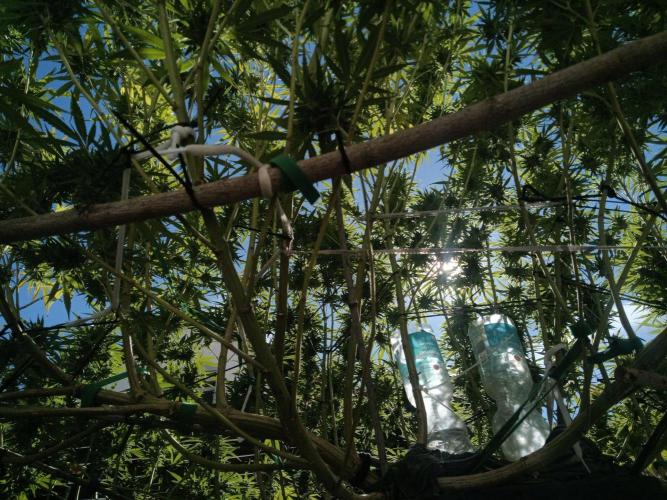
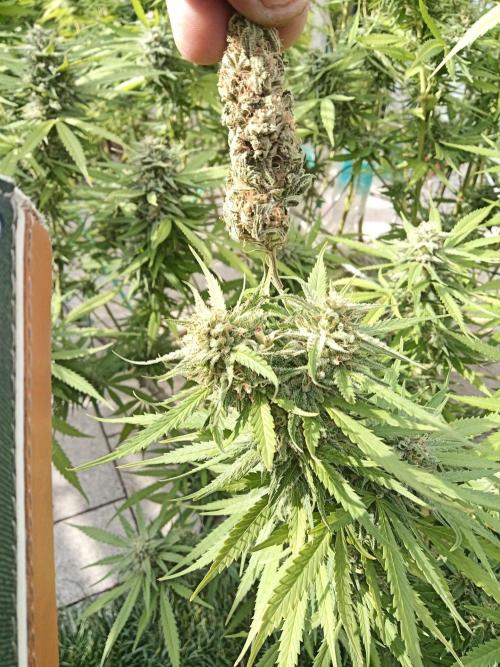
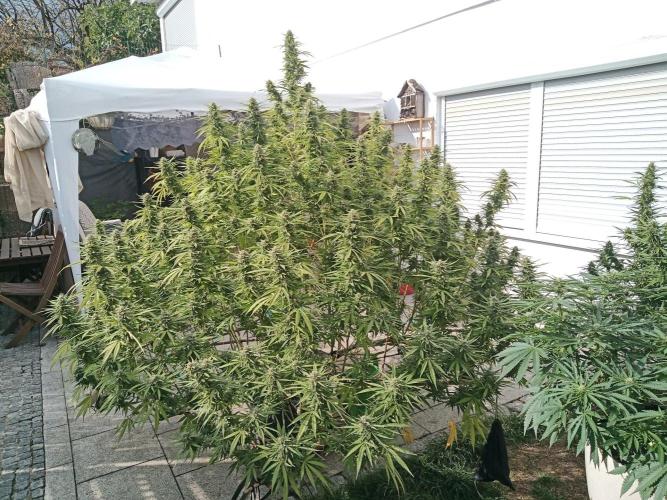
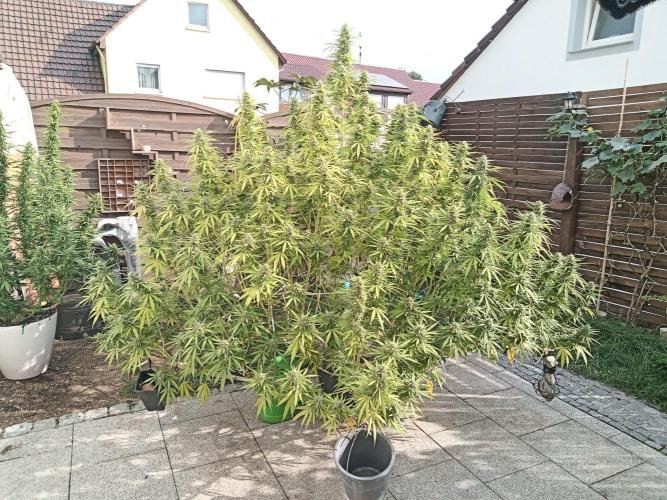
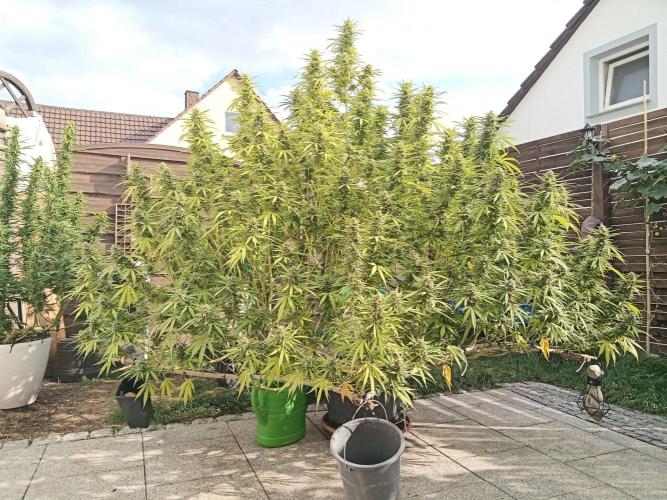
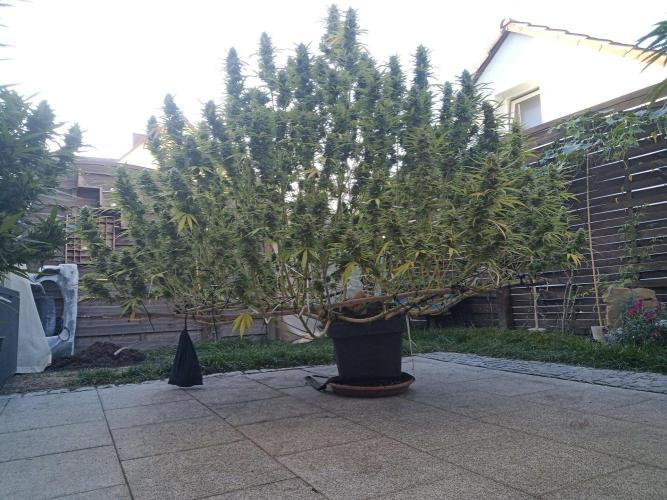
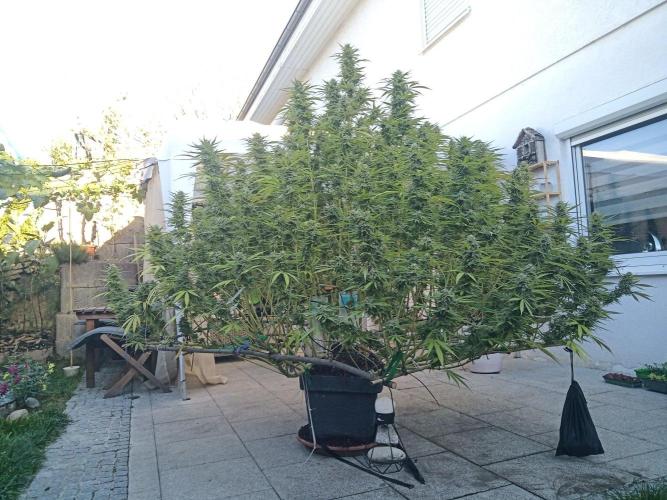
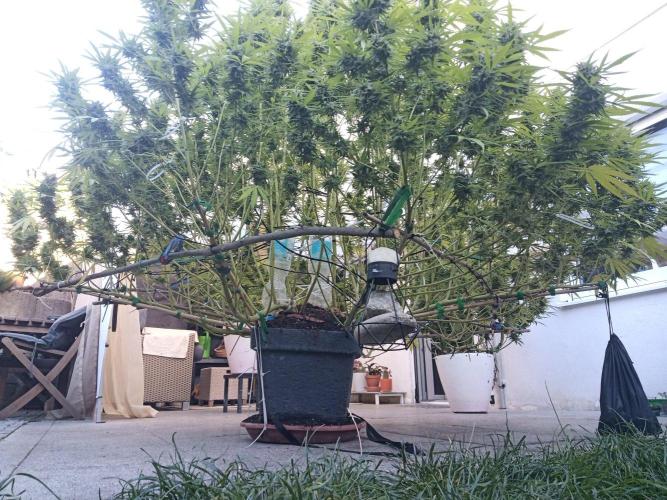
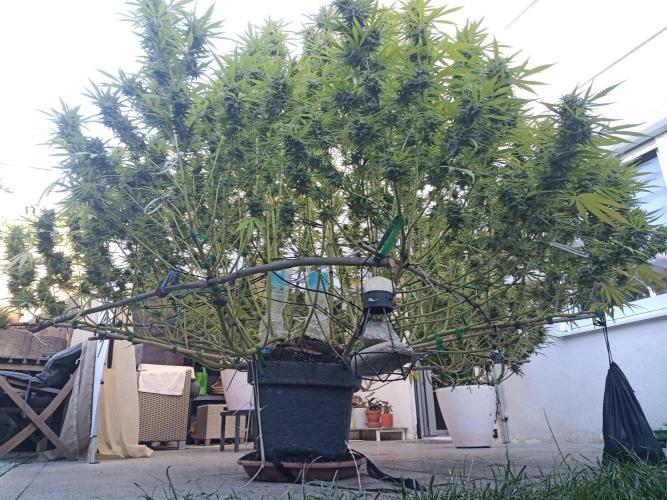
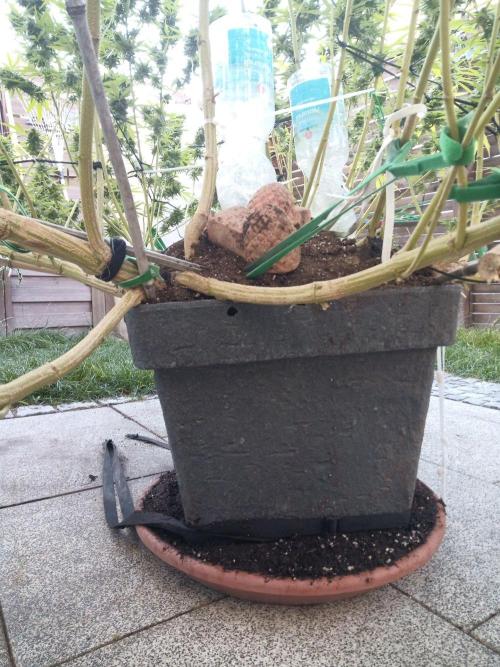
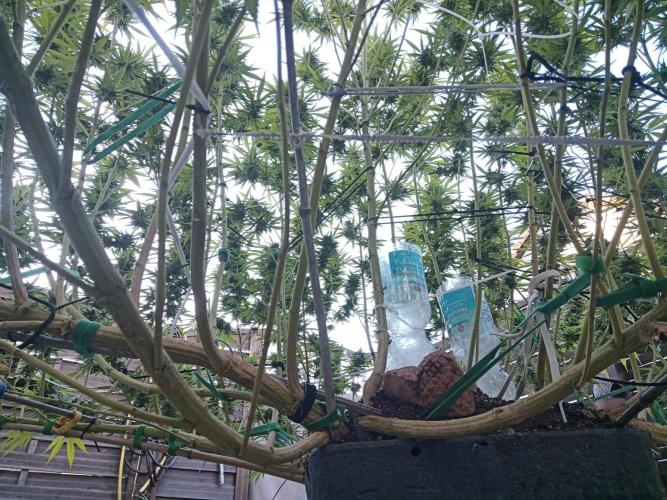
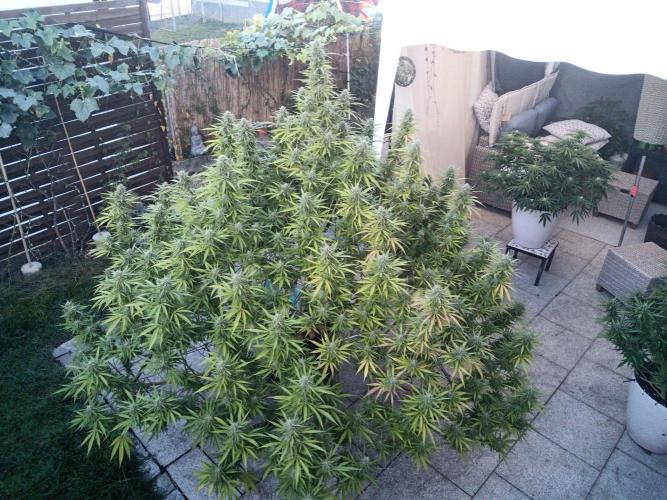
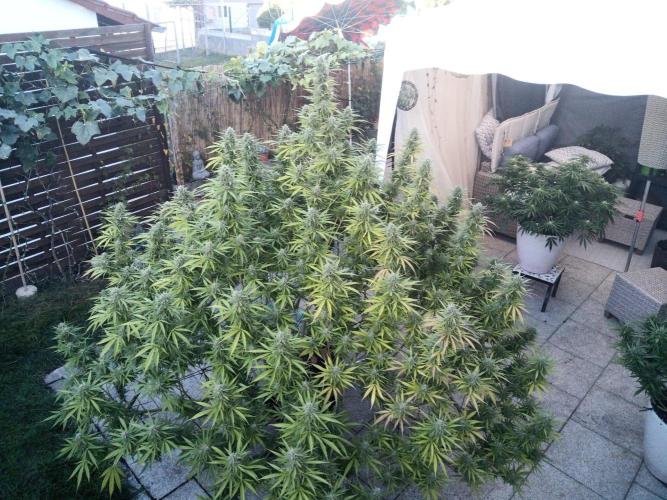
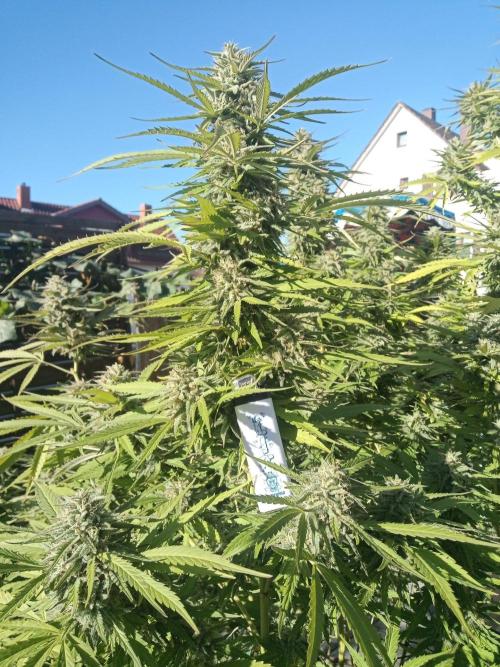
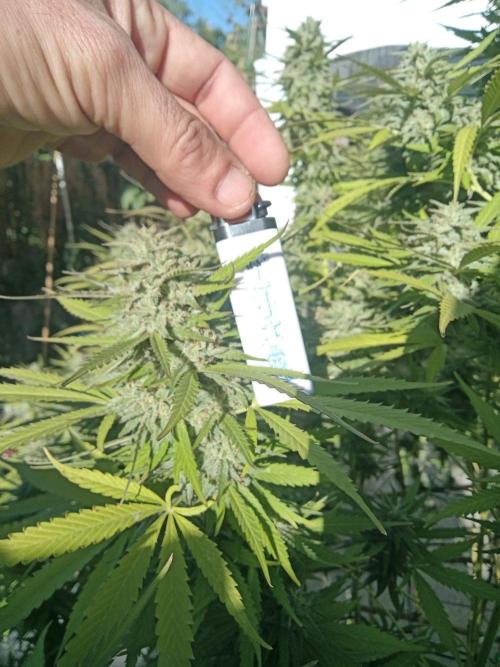
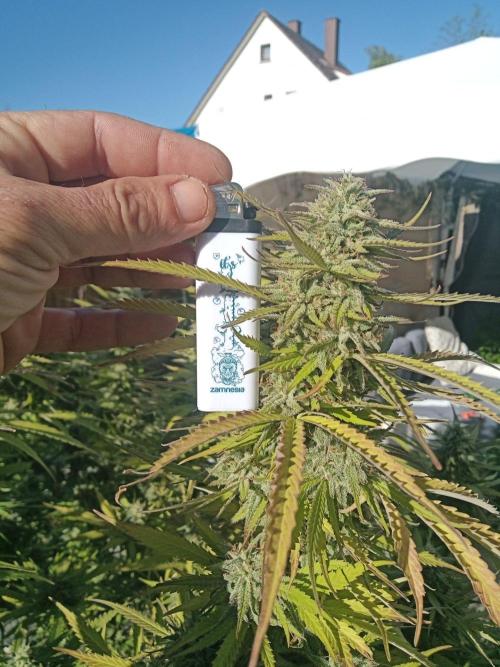
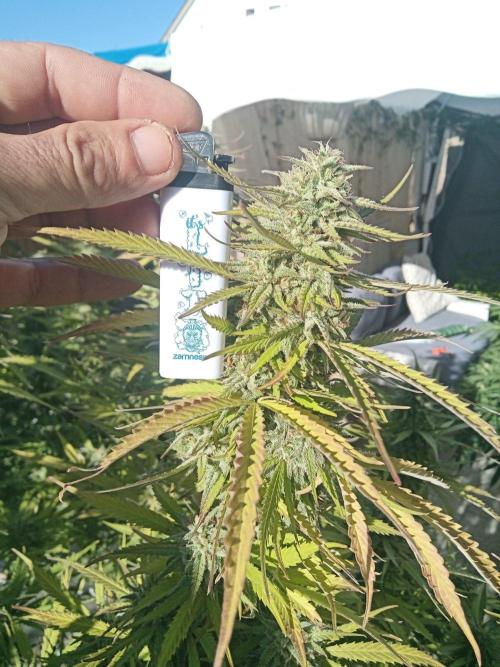
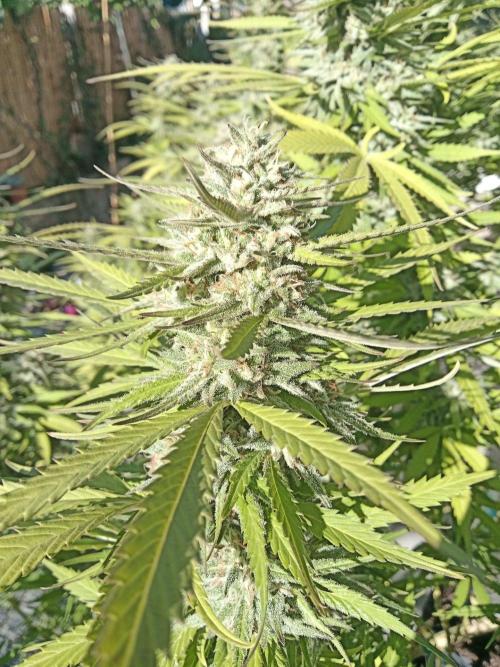
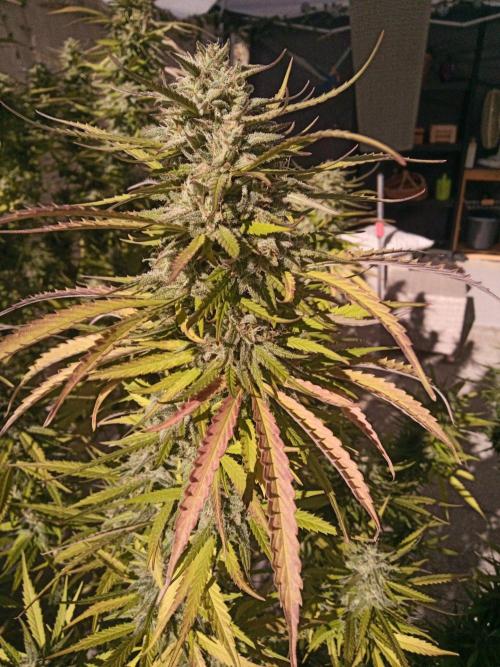
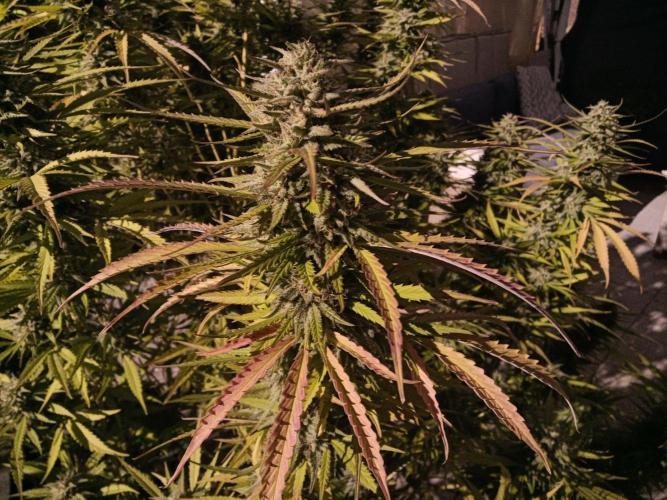
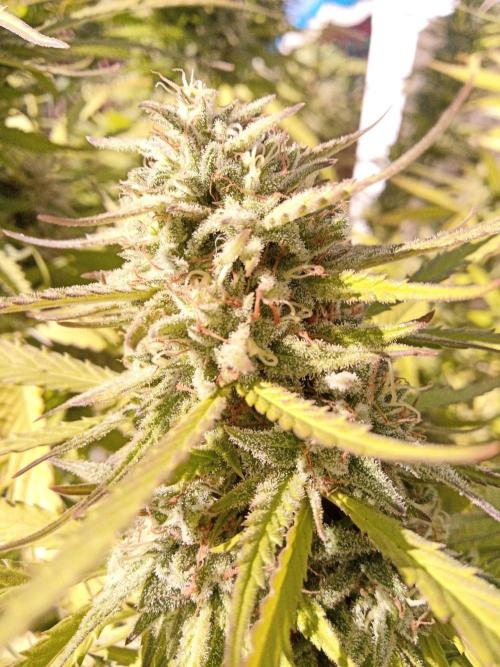
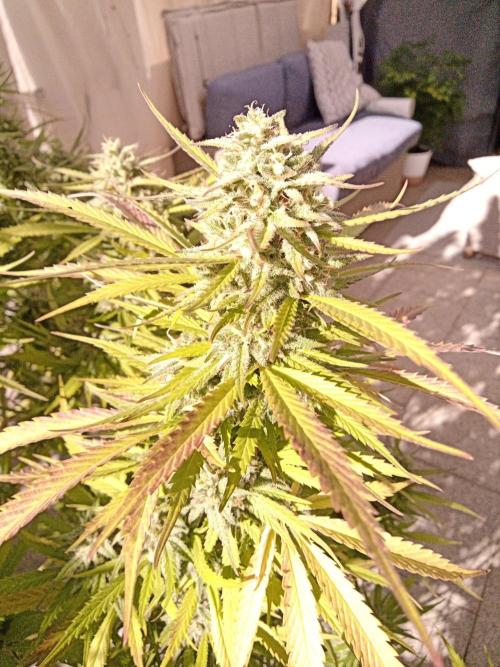
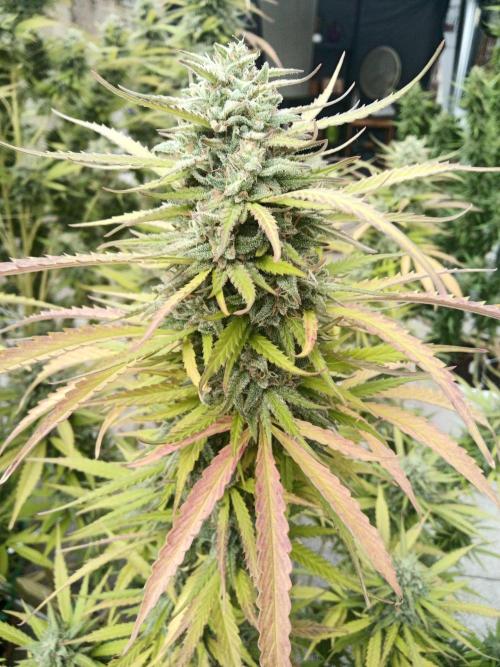
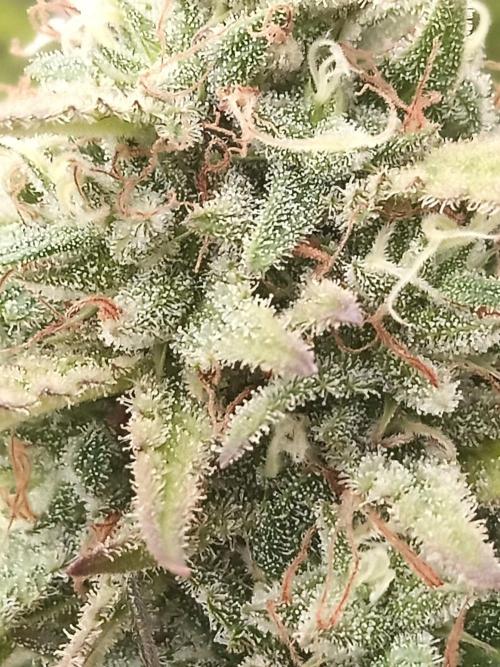
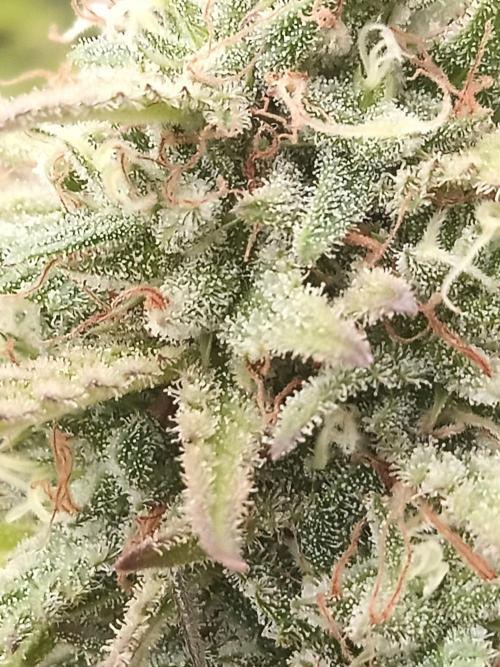
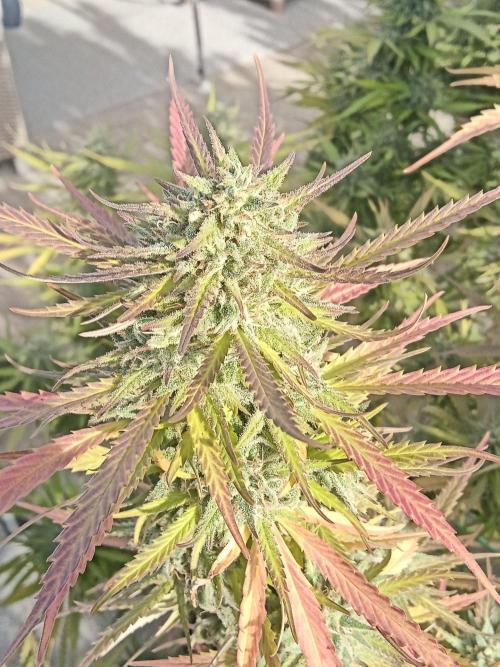
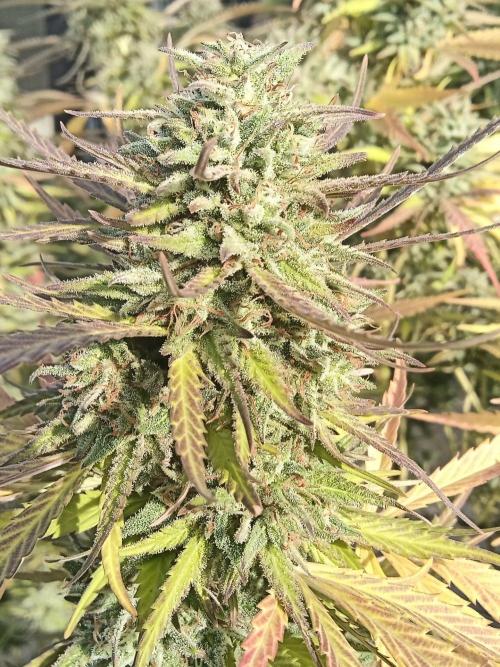
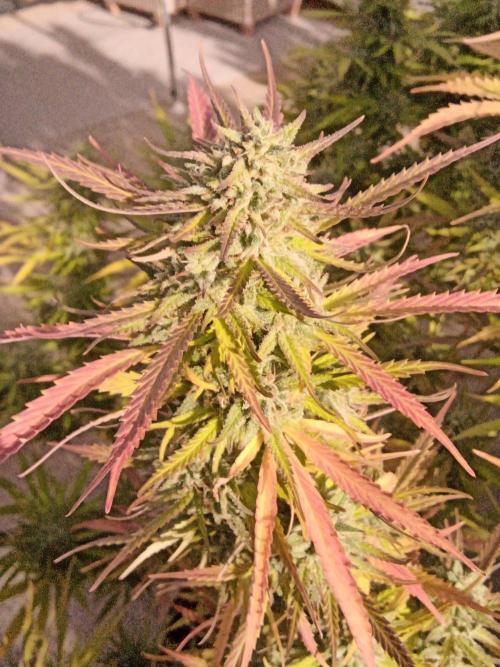
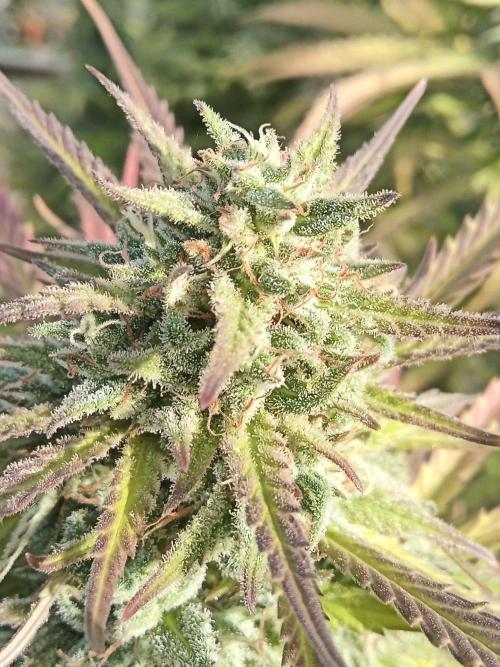
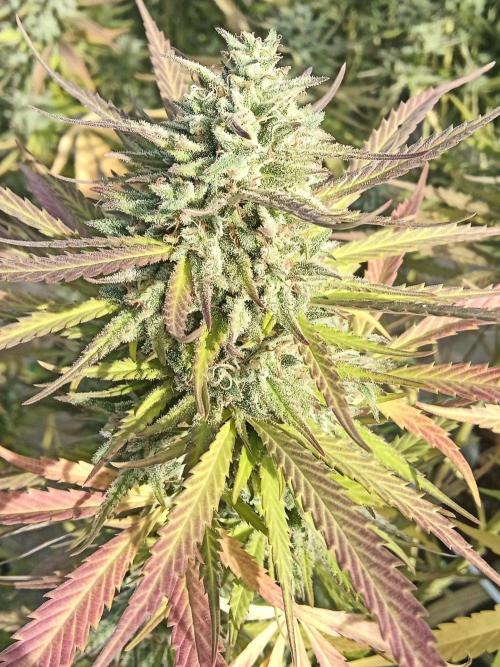
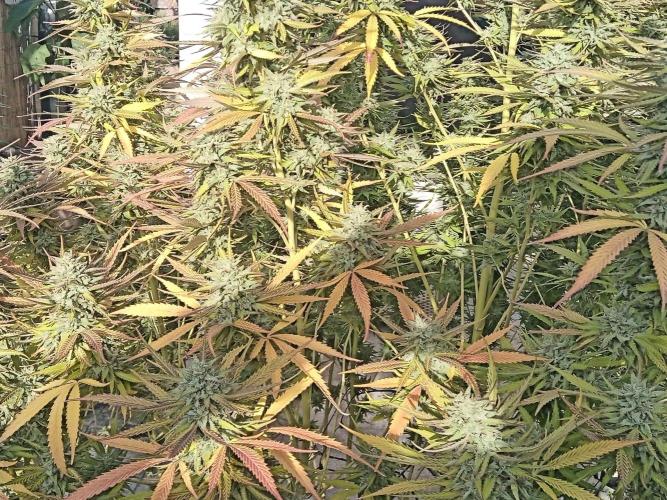
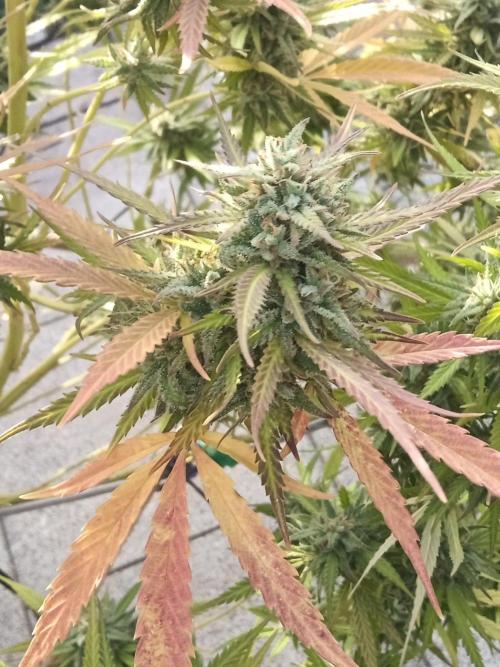
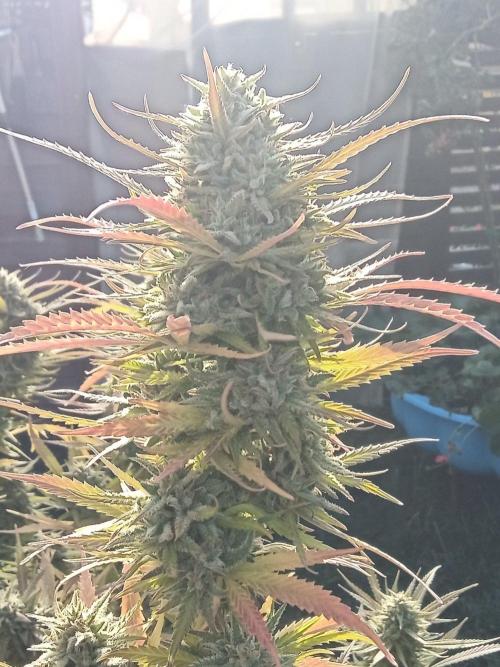
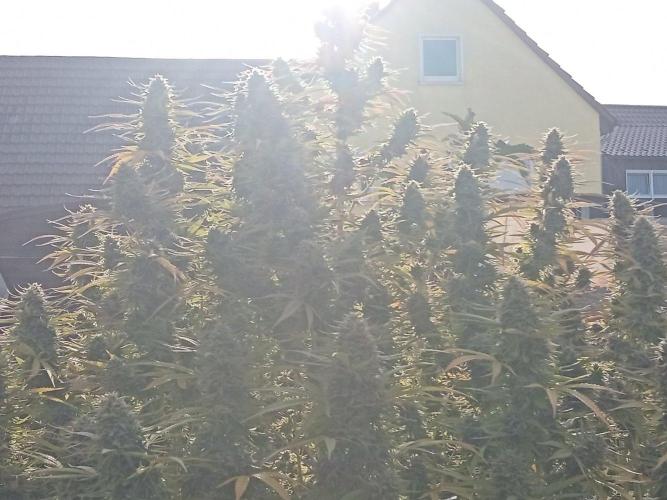
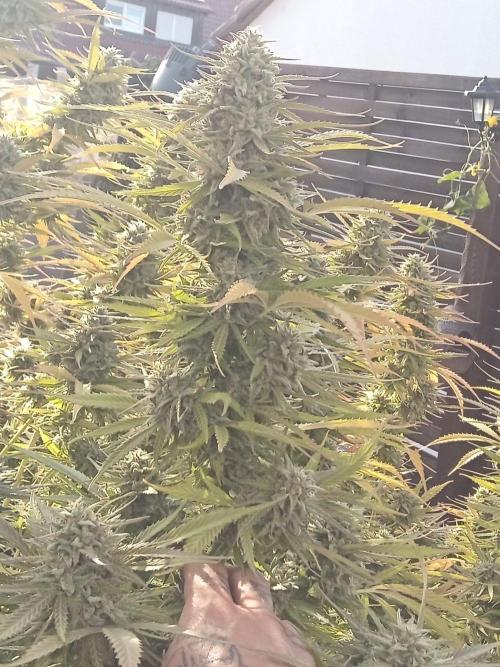
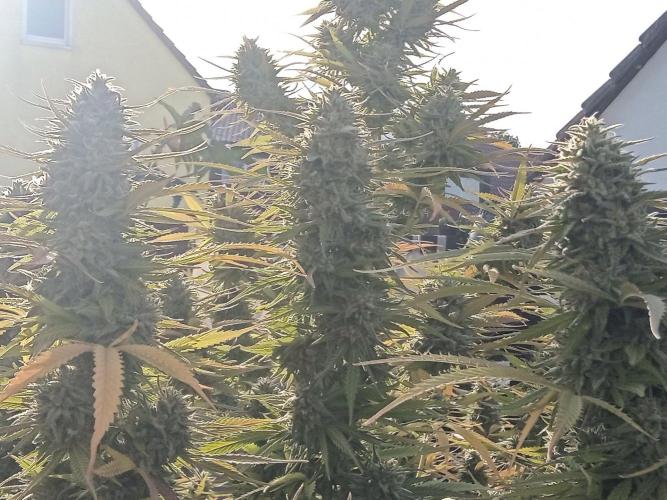
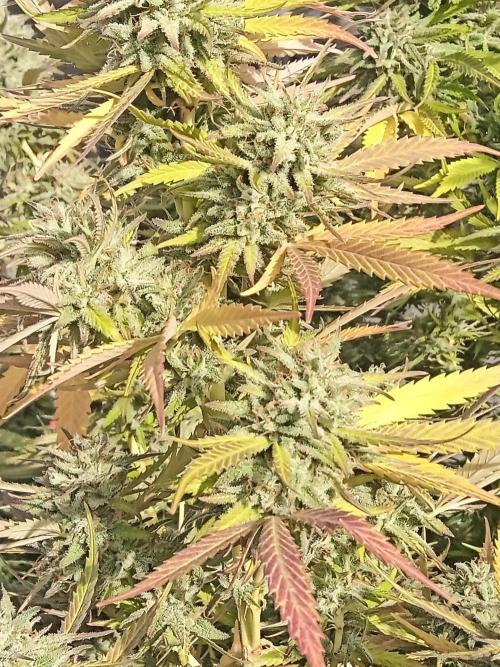
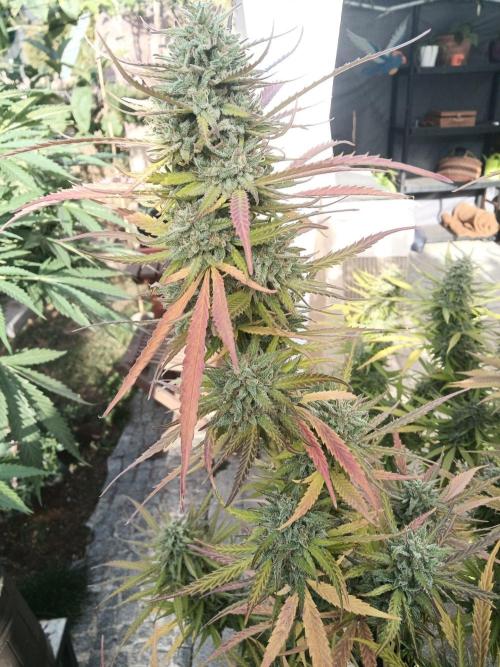
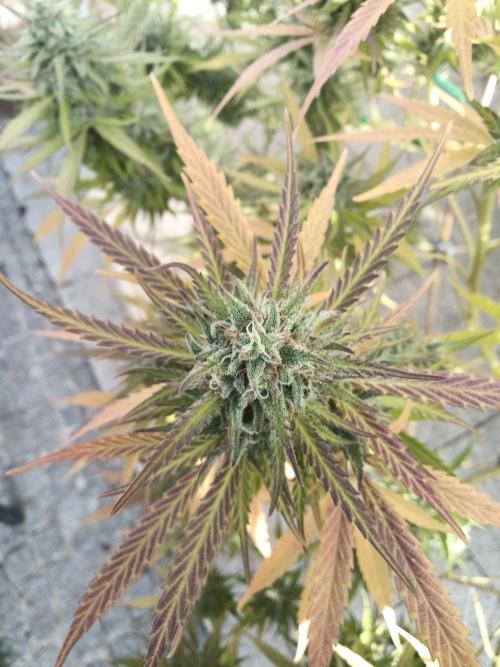
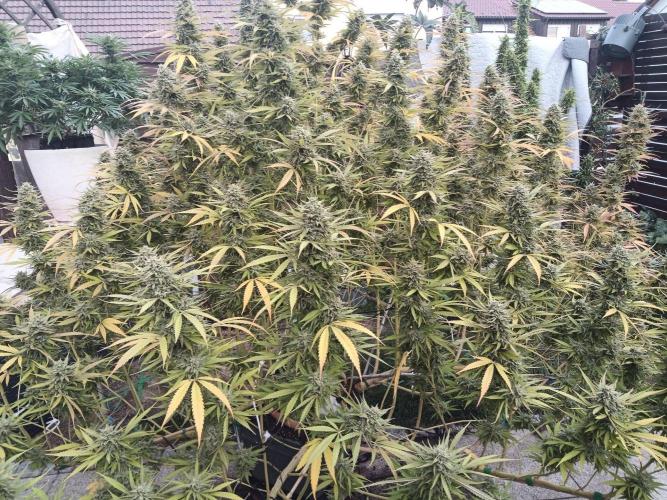
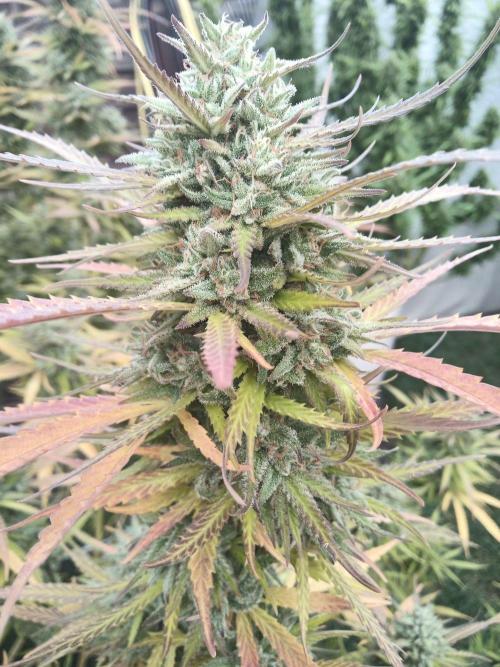
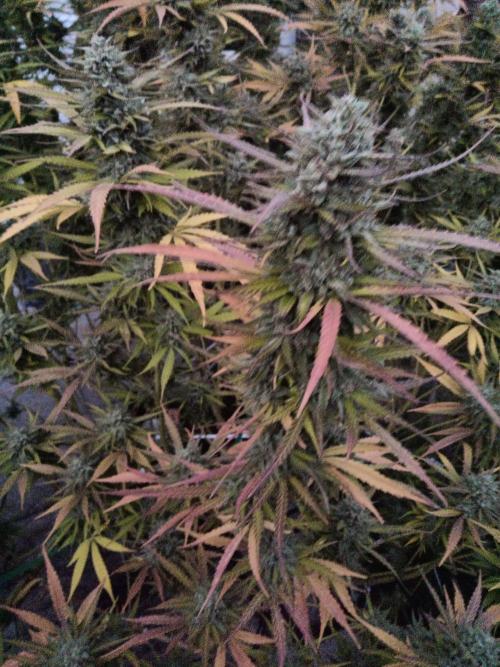
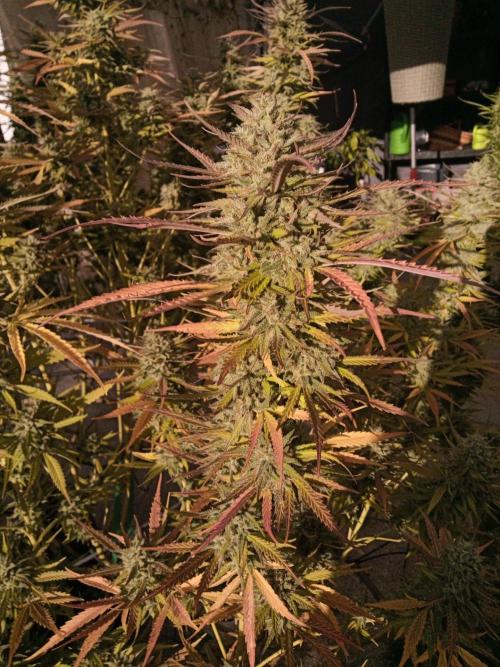
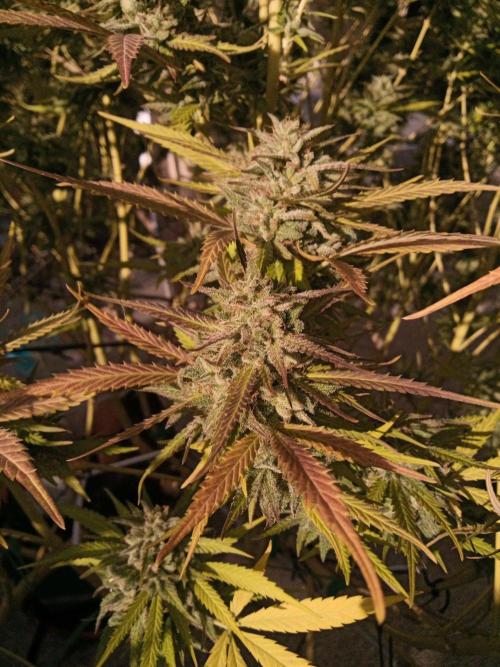
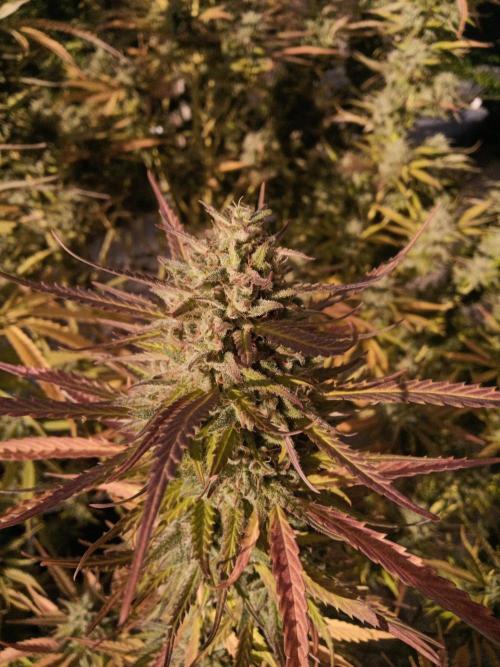
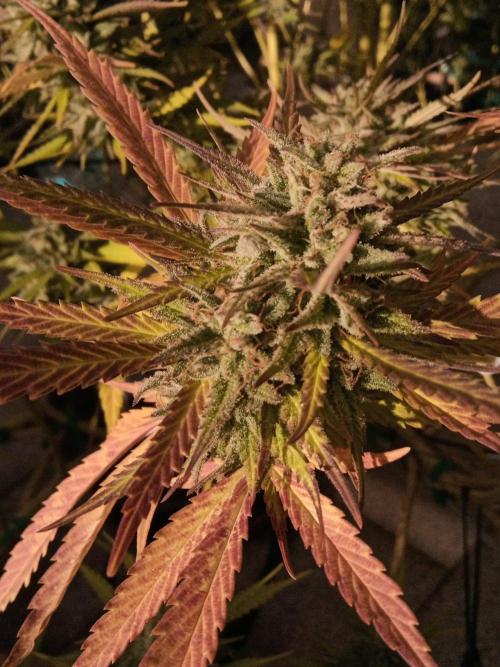
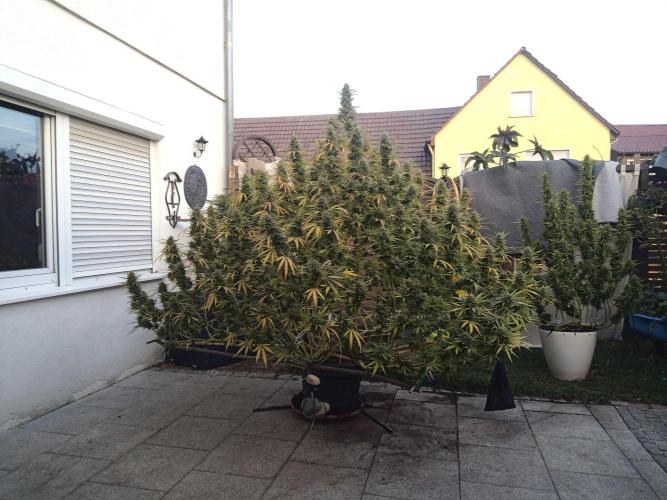
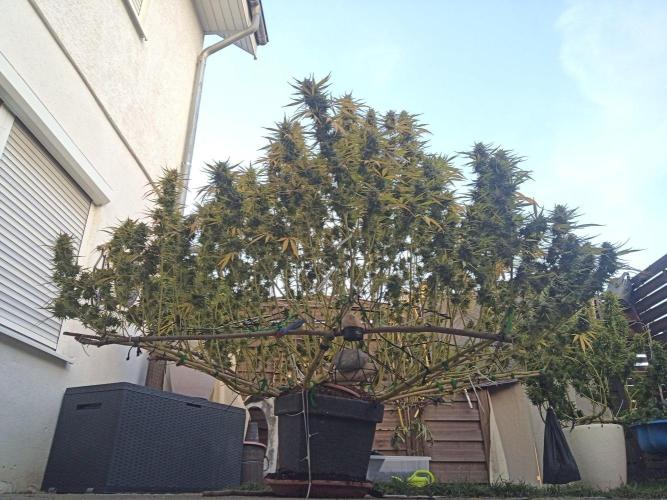
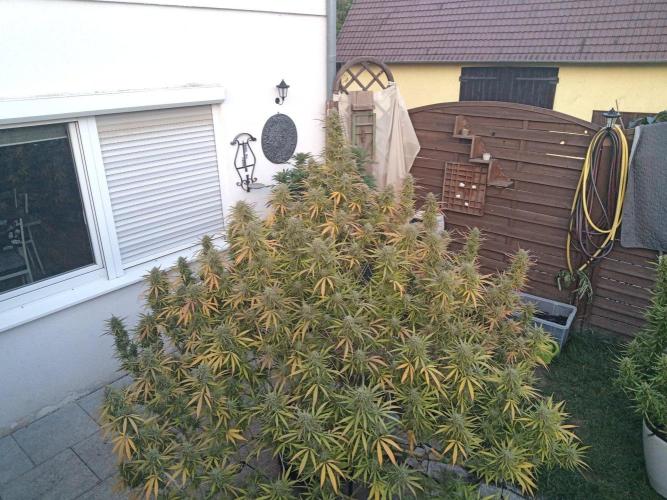
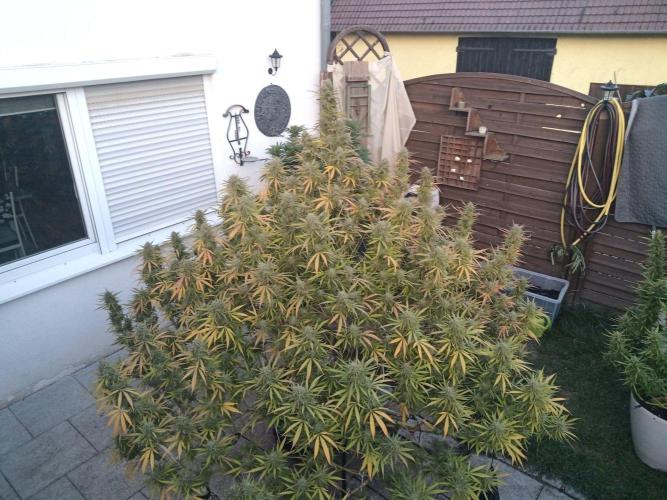
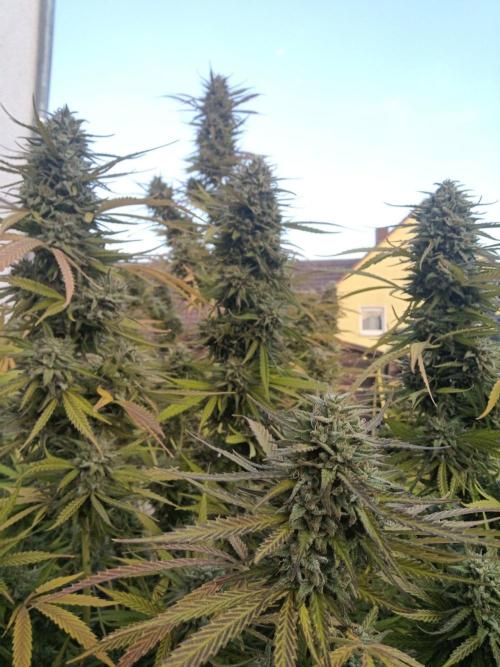
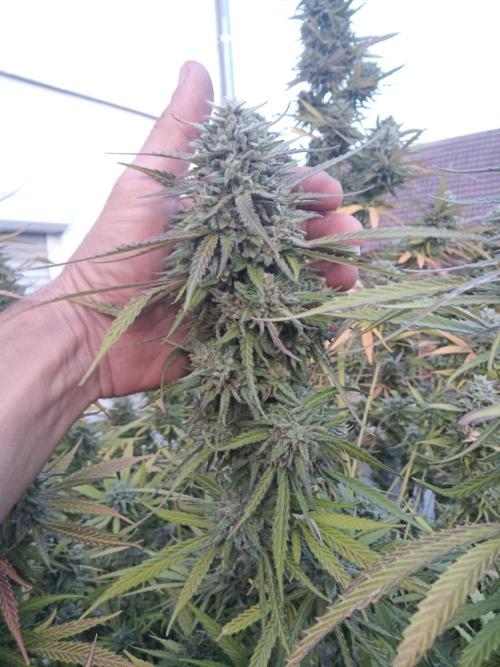
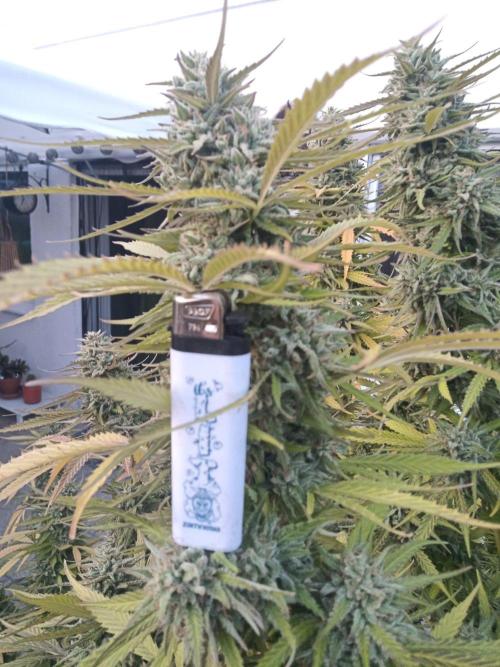
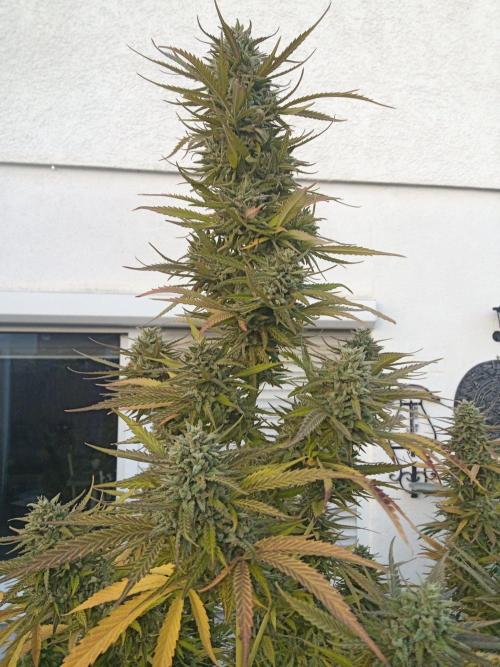
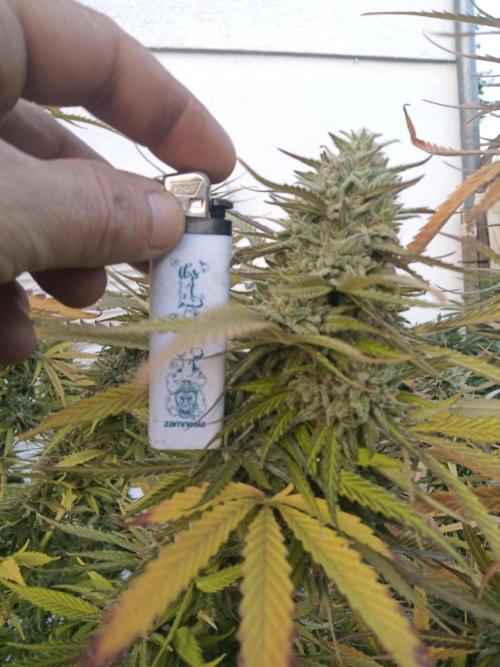
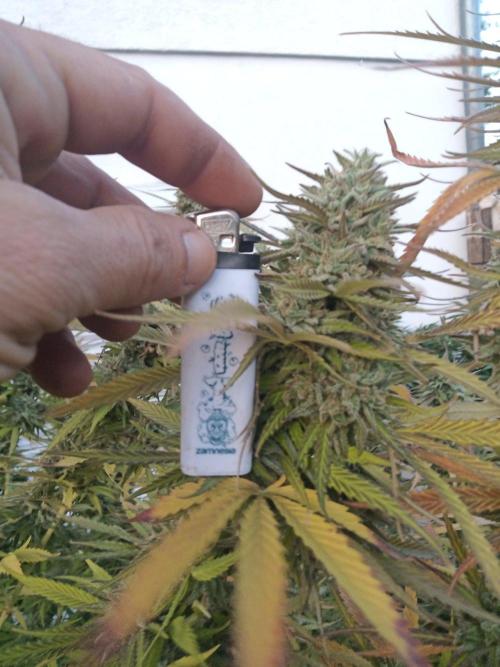
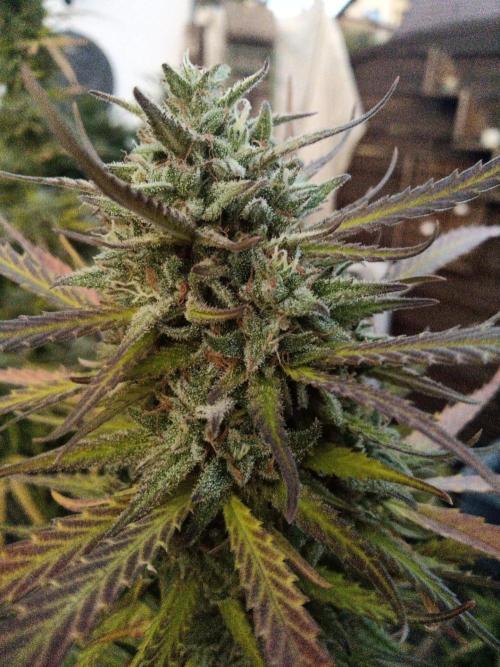
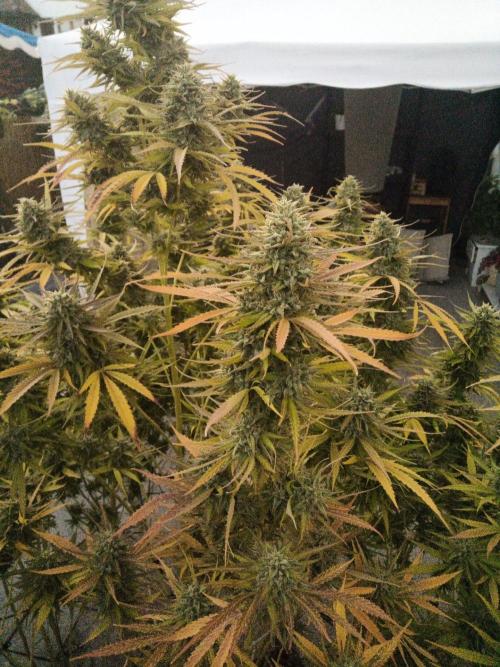
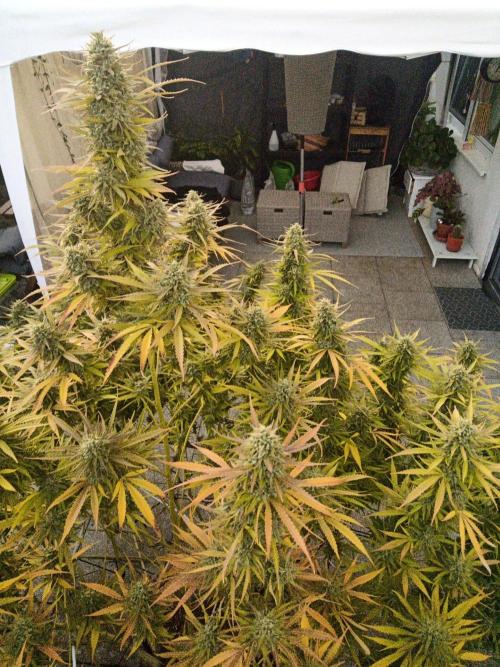
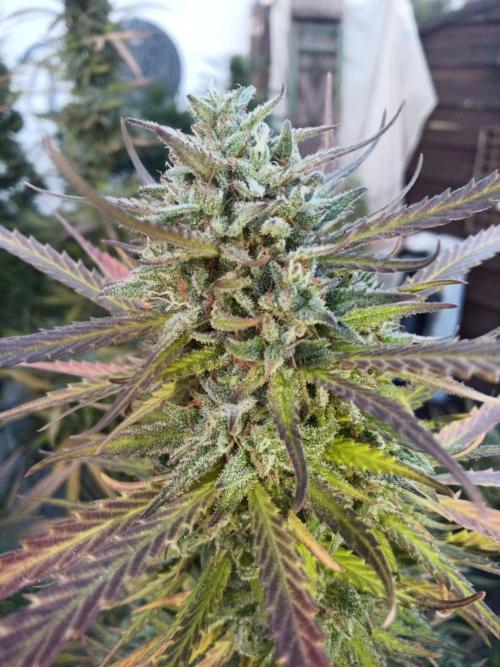
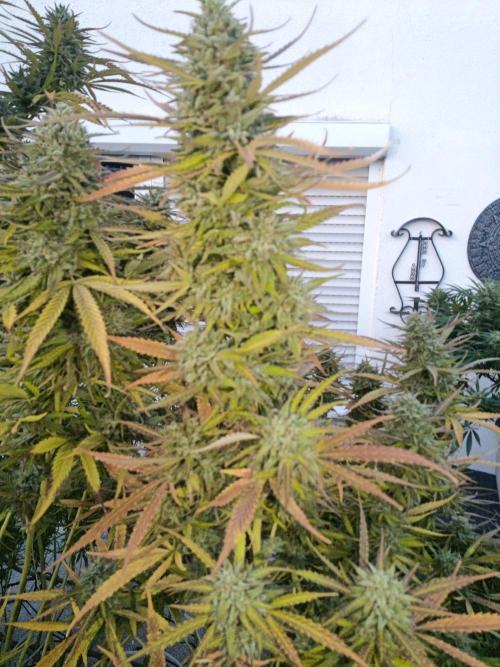
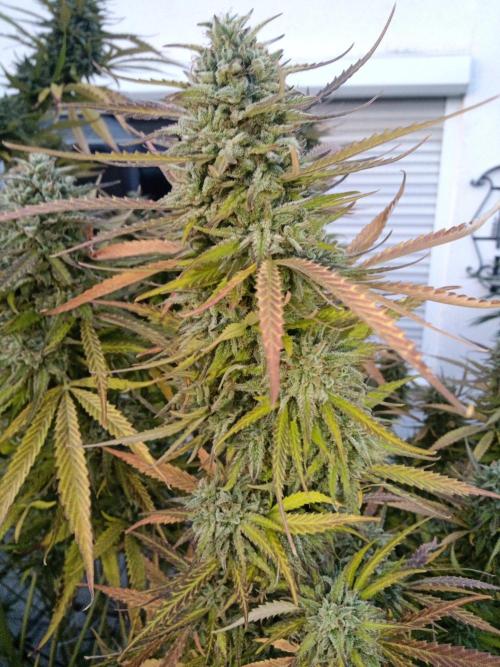
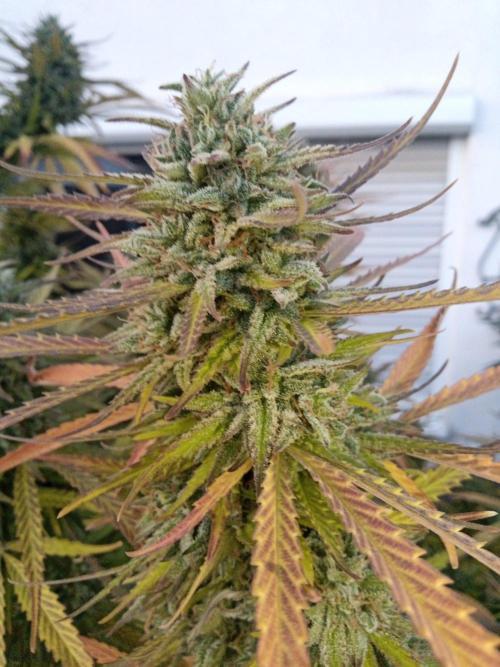
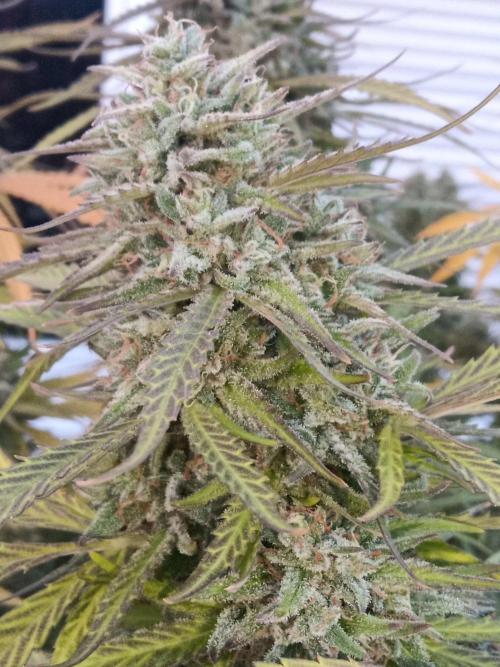
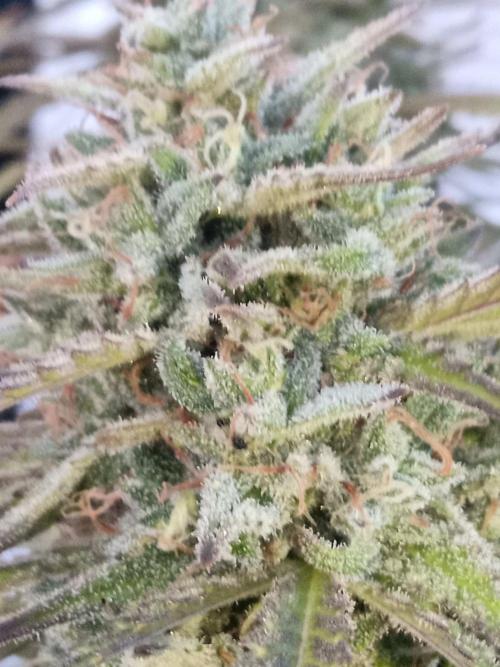
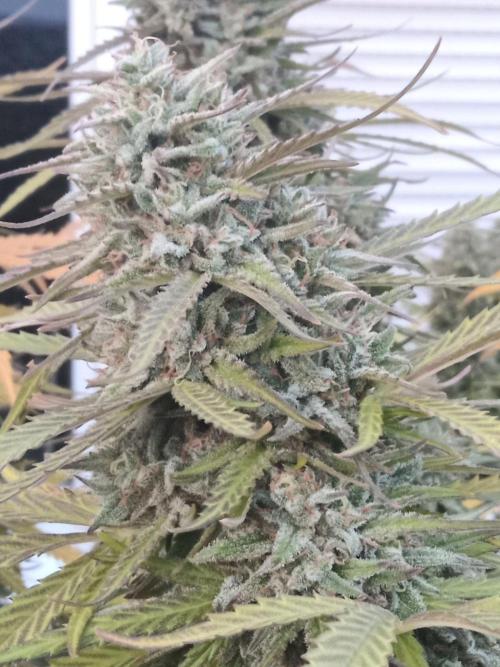
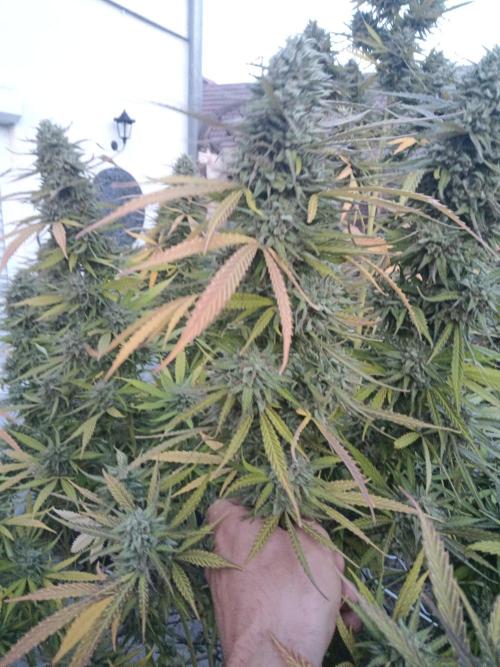
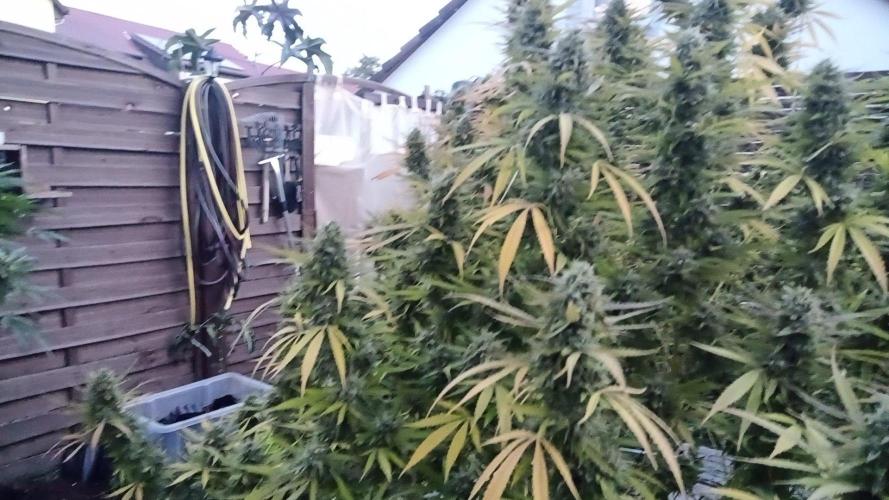
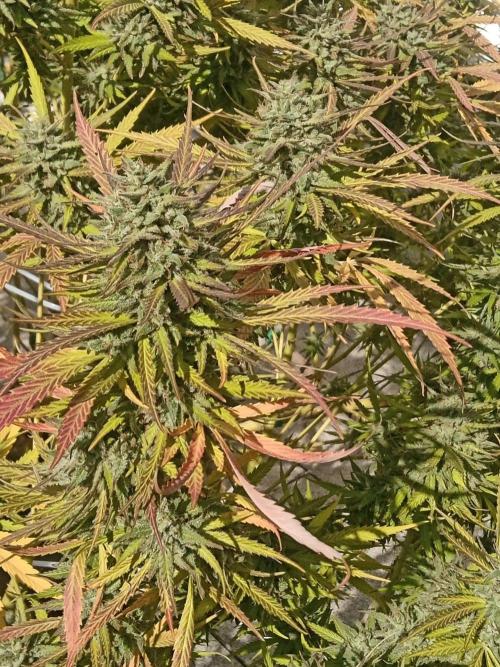
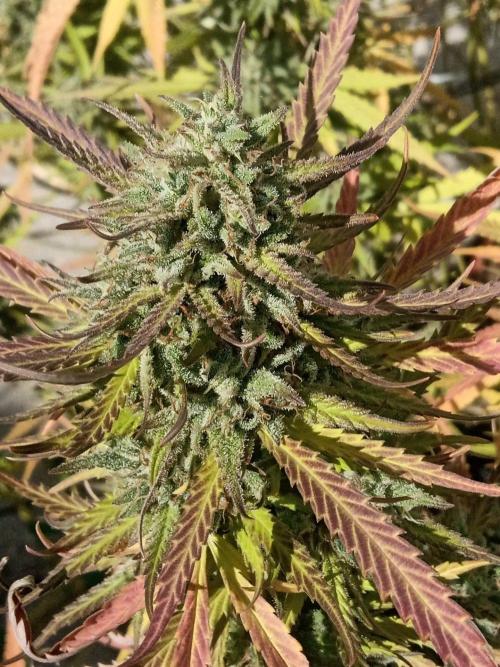
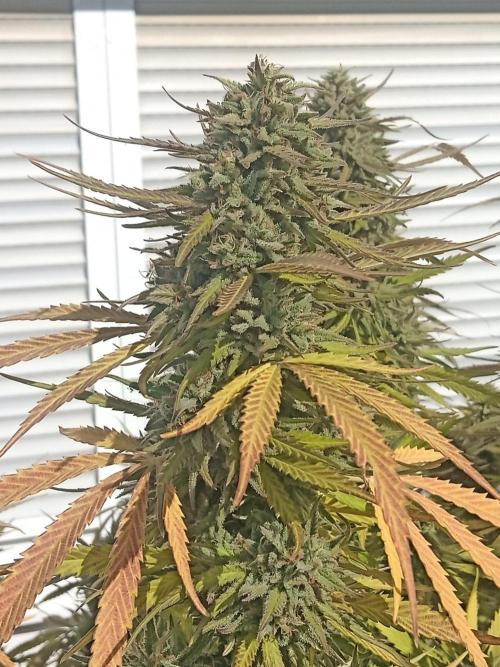
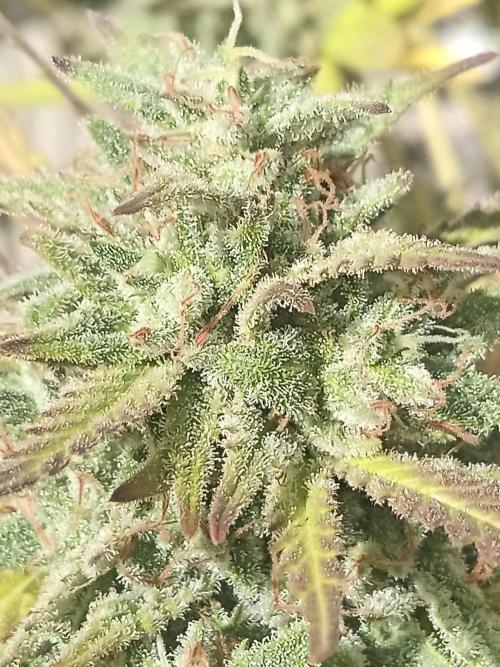
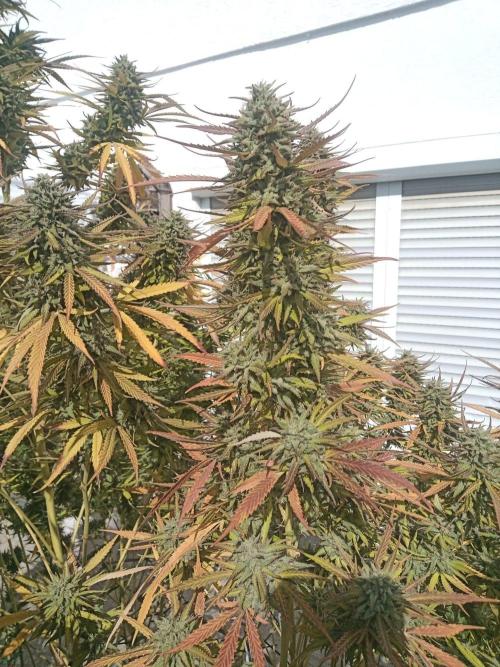
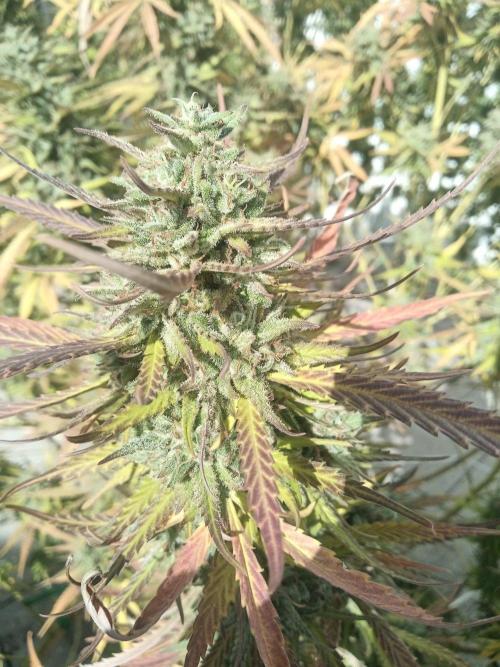
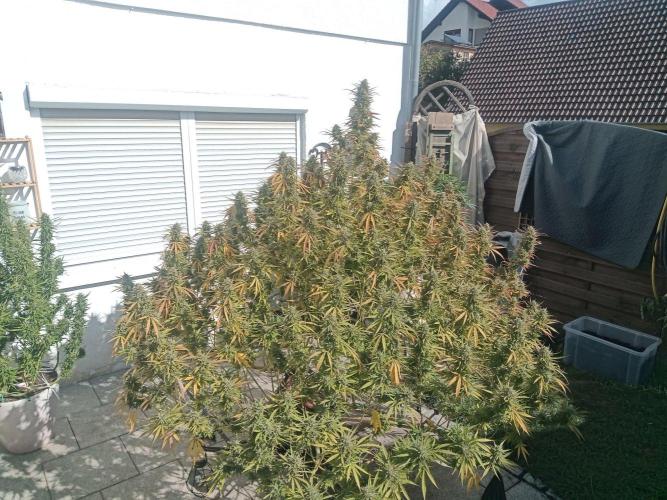
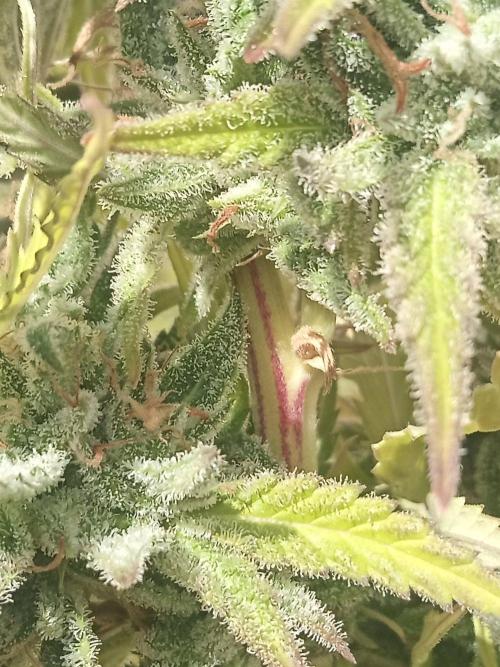
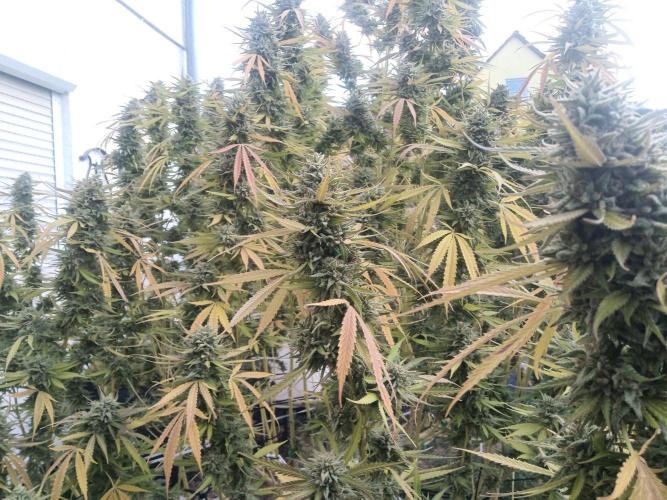
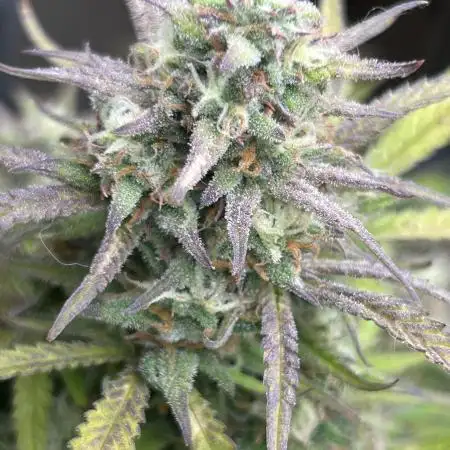
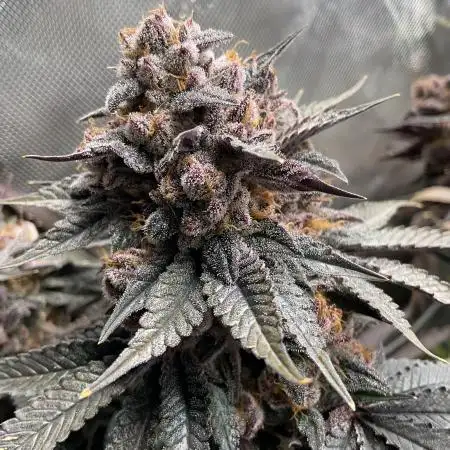
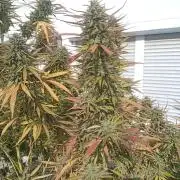
PSK23 The plant is around day 32 of flowering, though I start counting from one week after it actually began. She’s currently measuring nearly 2.4 meters wide and 1.8 meters tall, excluding the pot
11 likes
4 comments
Share
6
Week 6. Flowering
1mo ago
1/25
180 cm
Height
8 hrs
Light Schedule
28 °C
Day Air Temp
6.2
pH
Strong
Smell
28 °C
Substrate Temp
15 °C
Night Air Temp
45 liters
Pot Size
30 liters
Watering Volume
Nutrients 1
Terra Bloom
5 mll
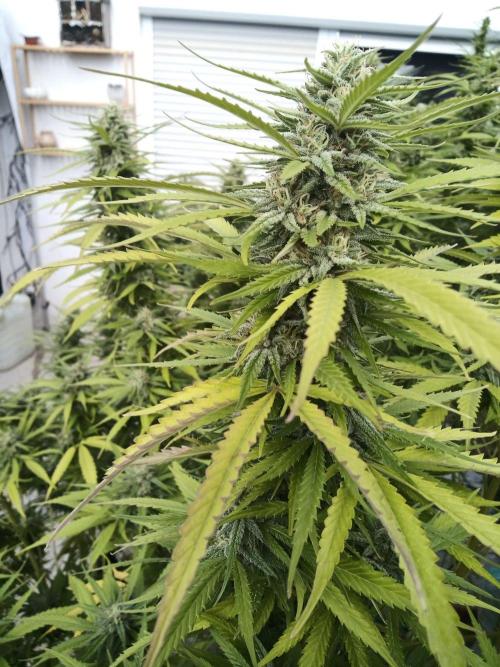
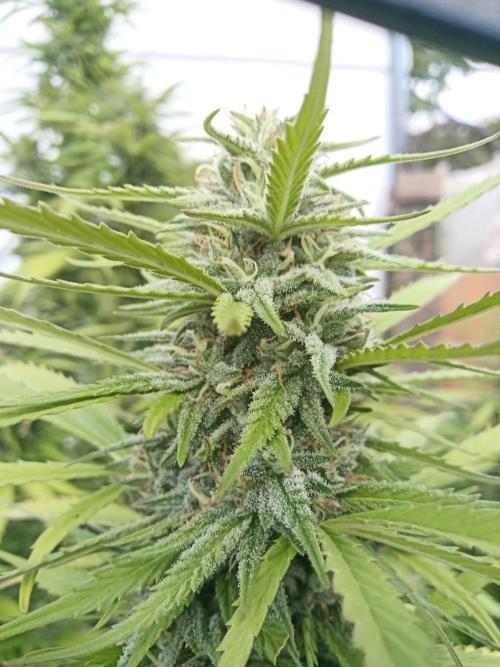
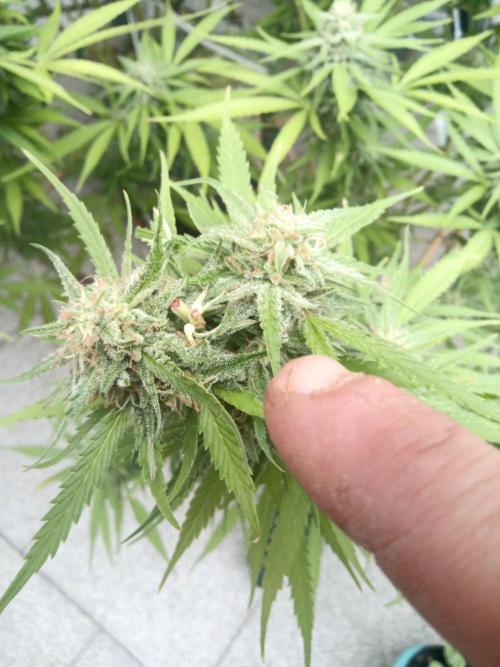
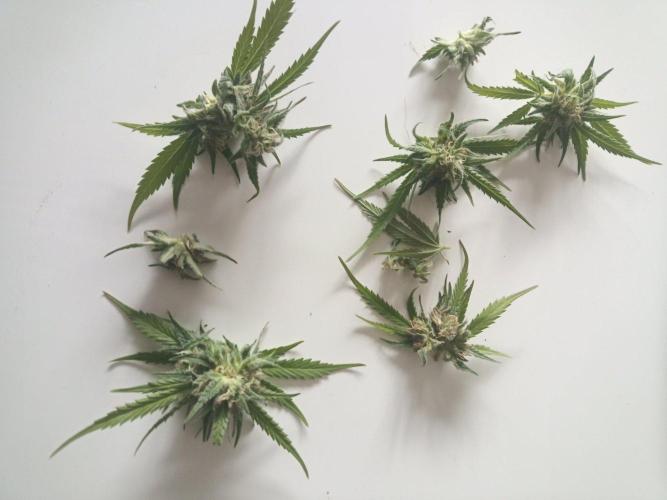
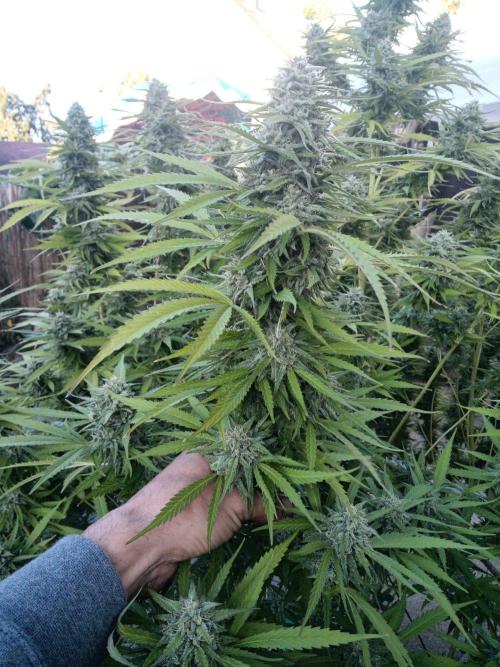
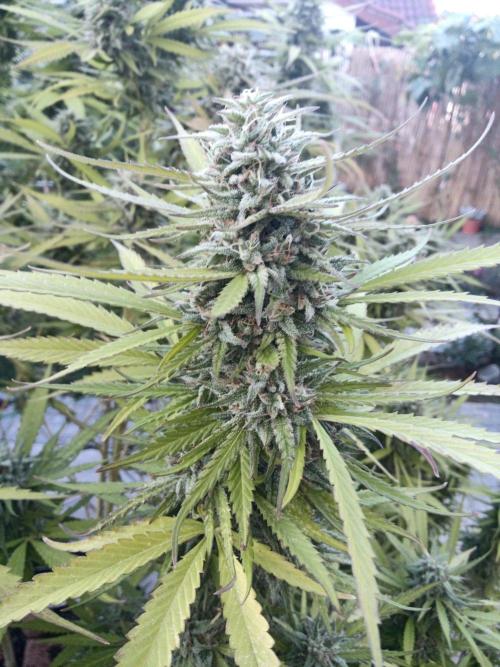
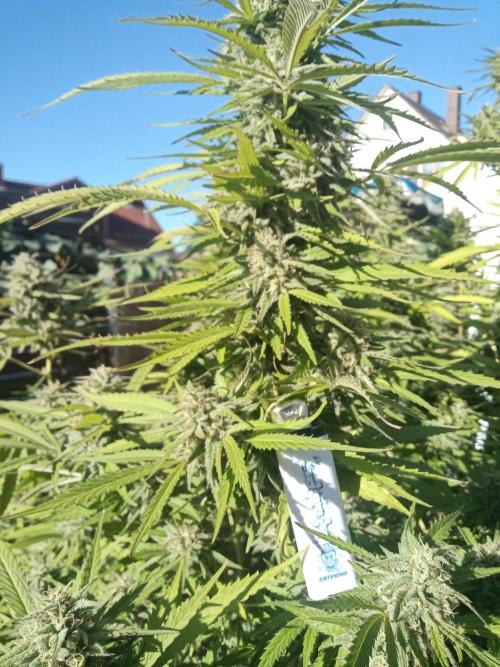
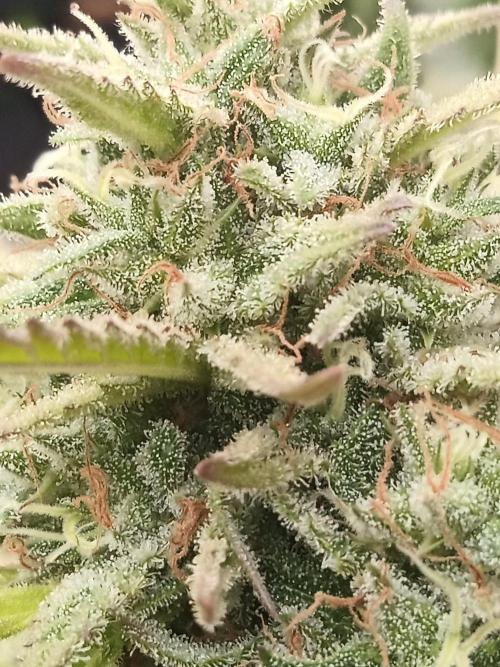
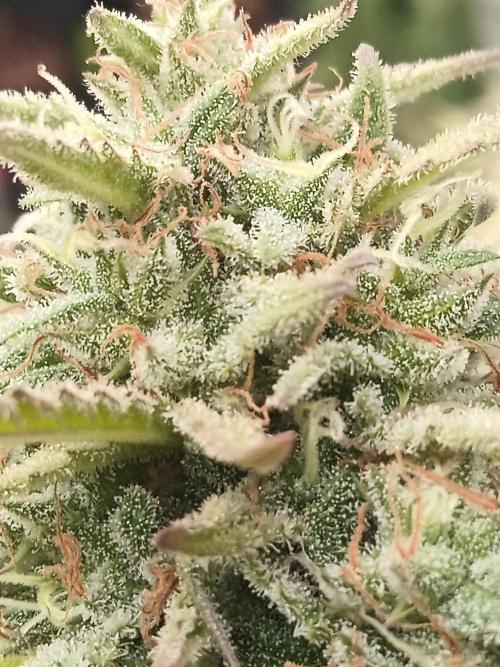
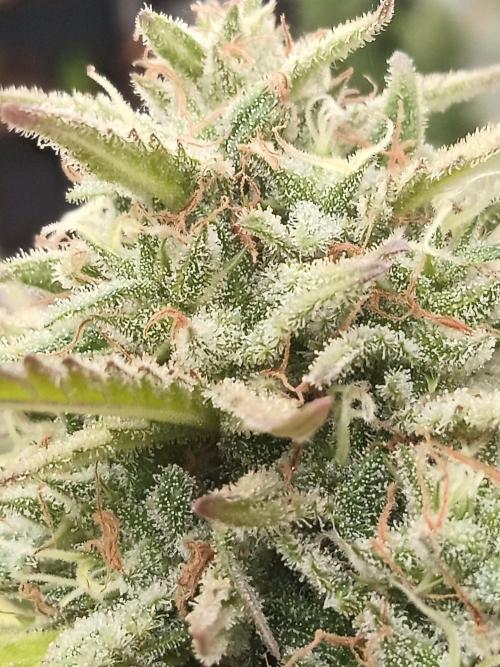
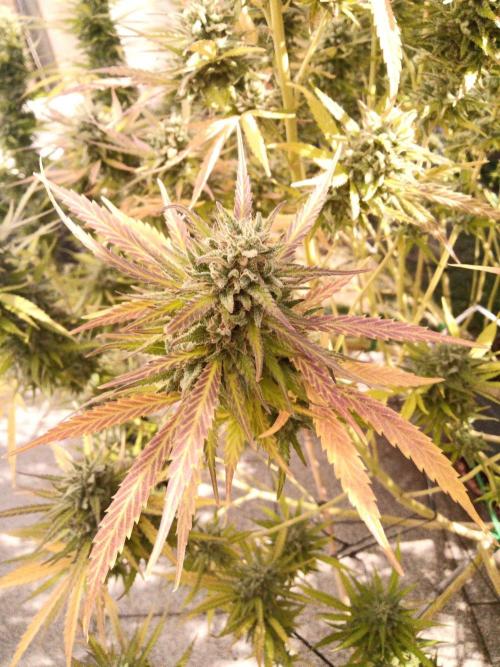
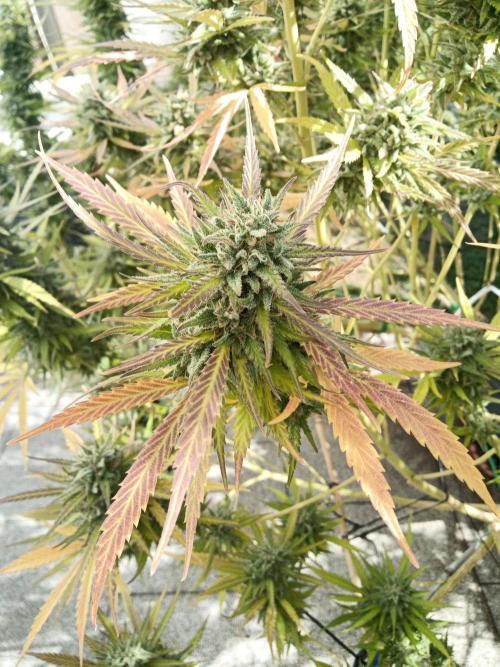
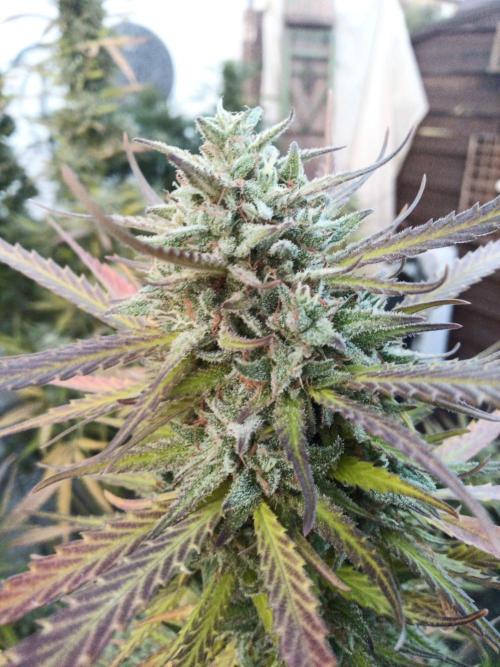
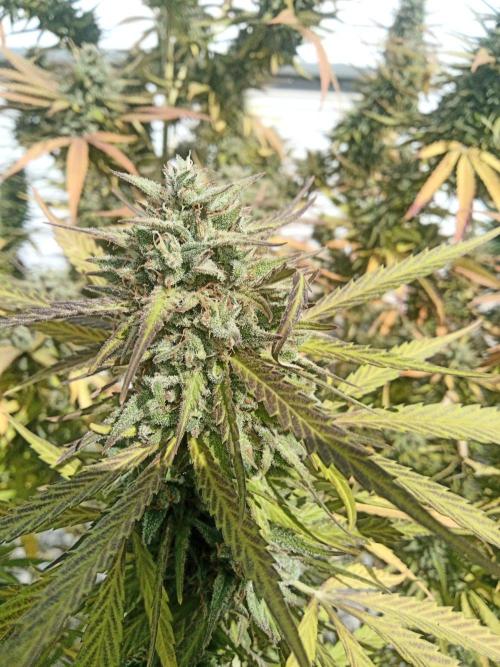
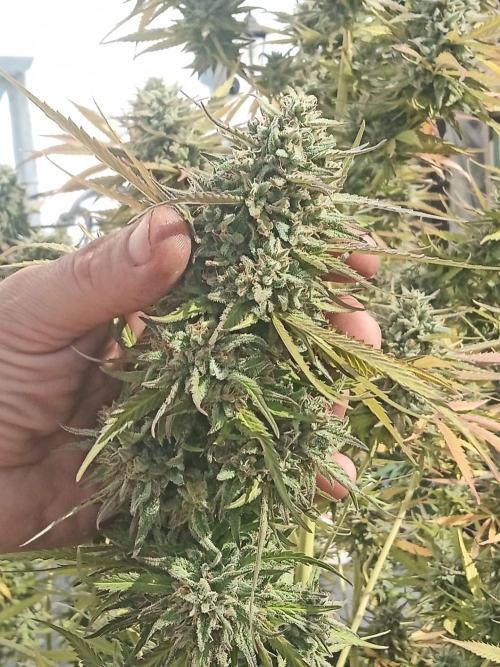
PSK23 At six weeks into the flowering stage, the Los Angeles Kush Cake—a photoperiodic strain—is proving a challenge to manage due to its extensive size. Recent battles with caterpillars and spider mites were clinical, with daily check-ups successfully eliminating the caterpillars. Unfortunately, some compromises to the inflorescences were unavoidable, requiring the removal of about 3 grams of dry product; these are shown in the attached photos. Thanks to meticulous monitoring, I had eliminated two leaves with moth eggs early on, but one was missed, leading to the recent caterpillars. Detecting caterpillars early by watching for black poop on flowers, chewed leaves, or early maturation saves the surrounding buds and secures the harvest.
4 likes
comments
Share
7
Week 7. Flowering
1mo ago
1/75
180.01 cm
Height
8 hrs
Light Schedule
28 °C
Day Air Temp
6.2
pH
Strong
Smell
28 °C
Substrate Temp
15 °C
Night Air Temp
45 liters
Pot Size
30 liters
Watering Volume
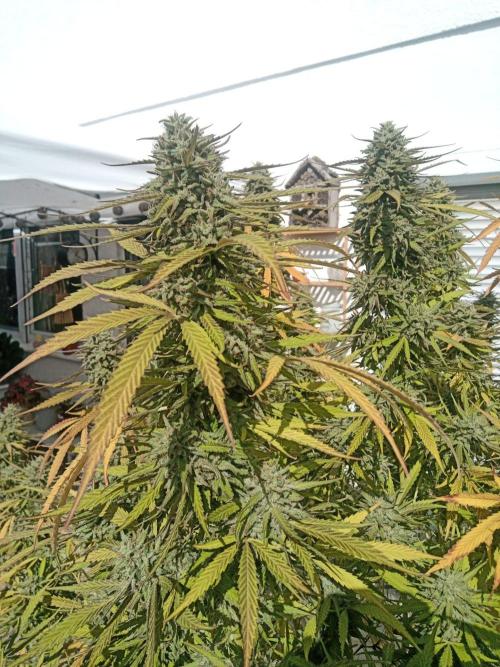
PSK23 The plant has just entered the seventh week of flowering. During the previous week, the sixth, I performed three waterings, tapering from 5ml of Plagron Terra Bloom to 1.5ml per liter for the third watering. Now, starting this seventh week, I am beginning the flushing process with pH 6.0 water to maintain the soil around 6.2. The plant will spend the final 7 to 10 days flushing. Thanks to the pruning techniques used at the beginning, lollipopping wasn't necessary. I also apply a daily, meticulous defoliation method specifically targeting leaves attacked by pests like aphids or spider mites. Furthermore, I use Low-Stress Training (LST) on the larger inflorescences, pulling them outwards to increase light and air penetration. Drawn from years of outdoor cultivation experience, I shelter the plant under a gazebo or tarp during wet or humid nights and provide ventilation to prevent rot. I strongly advise this practice to all outdoor growers; after losing many harvests in the past, I will not allow bad weather to destroy my work.
6 likes
2 comments
Share
Used techniques
LST
Technique
Defoliation
Technique
8
Week 8. Flowering
23d ago
1/13
180.01 cm
Height
24 hrs
Light Schedule
28 °C
Day Air Temp
6.2
pH
Strong
Smell
28 °C
Substrate Temp
15 °C
Night Air Temp
45 liters
Pot Size
30 liters
Watering Volume
PSK23 The queen is now at the end and I'm monitoring the trichomes for perfect ripeness.
3 likes
4 comments
Share
9
Week 9. Flowering
22d ago
1/7
180.01 cm
Height
16 hrs
Light Schedule
28 °C
Day Air Temp
6.2
pH
Strong
Smell
28 °C
Substrate Temp
15 °C
Night Air Temp
45 liters
Pot Size
30 liters
Watering Volume
PSK23 The plant has just entered the drying process, and the parameters in the room are exceptional, with stable temperatures of 17° and humidity varying between 52% and 56%. The room is completely dark, well-ventilated with proper air exchange, and the airflow circulates the air without moving the flowers. Everything is going perfectly.
@Patricia_Zamnesia, Hi Patricia, thank you for the support you offered me a few weeks ago. I really love the genetics of your seeds, and as you can see, when a seed is of top quality and handled by a great grower, the results are excellent! Warm regards
@Patricia_Zamnesia, I can only tell you that the night I trimmed the branches, an extraordinary scent of essential oils was released, it didn't seem to come from anything organic from the magic of nature but something crafted in a lab to attract humans like moths to a bright streetlight. Anyway, I couldn't resist trying a relatively dry flower today and I was truly amazed keeping in mind that the real flavor hasn't manifested yet because the product in question will still need a complete drying and a proper curing.
@Patricia_Zamnesia, Now the plant is on its tenth day of drying. The parameters in the drying room are exceptional, with stable temperatures of 17°C and humidity varying between 52% and 56%. The room is well-ventilated with proper air exchange, and the airflow circulates the air in the room without moving the flowers. There are three more days to go, and overall everything is going perfectly