DutchGlobalCitizen Wall of Green Method (WOG) — Official Technique Description
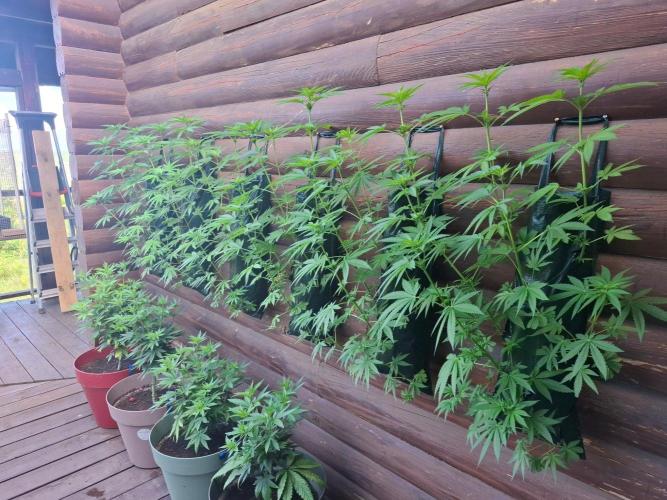
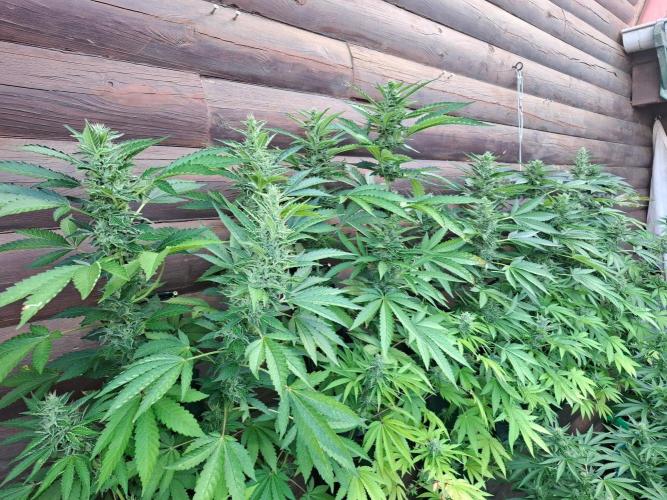
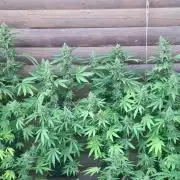
The Wall of Green Method (WOG) is a compact, high‑density plant layout in which multiple small root zones are positioned close together to create a uniform vertical green wall. By grouping plants tightly and guiding the canopy into a flat vertical plane, WOG maximizes light efficiency, space usage, and canopy uniformity.
This method is designed for growers who want a predictable, structured canopy with minimal horizontal spread and maximum vertical density. The result is a visually distinct “wall” of foliage that captures light evenly across its entire surface.
Core Principles
High‑density root placement
Multiple small root zones are arranged in close proximity to encourage vertical canopy formation rather than outward bush growth.
Uniform vertical canopy
Plants are guided upward into a single flat plane, forming a continuous wall of foliage.
Optimized light distribution
The vertical surface ensures consistent light exposure across the entire canopy, reducing shadow zones and improving efficiency.
Space‑efficient layout
Ideal for small grow areas, tents, or limited horizontal space where vertical canopy control is preferred.
Intended Use
WOG is suitable for:
Small indoor grows
Vertical grow setups
Multi‑plant layouts with limited root volume
Growers seeking predictable canopy structure
Documentation‑heavy cycles (GrowDiaries, Reddit, blogs)
Outcome
A dense, uniform, visually recognizable Wall of Green that maximizes light usage, improves canopy consistency, and provides a clean, repeatable grow structure.
Origin
Developed and documented by Anton K, based on St. Eustatius,
a.k.a. DutchGlobalCitizen.
Cycle Details
This diary will include weekly updates featuring photos, canopy development, and full grow‑cycle documentation.
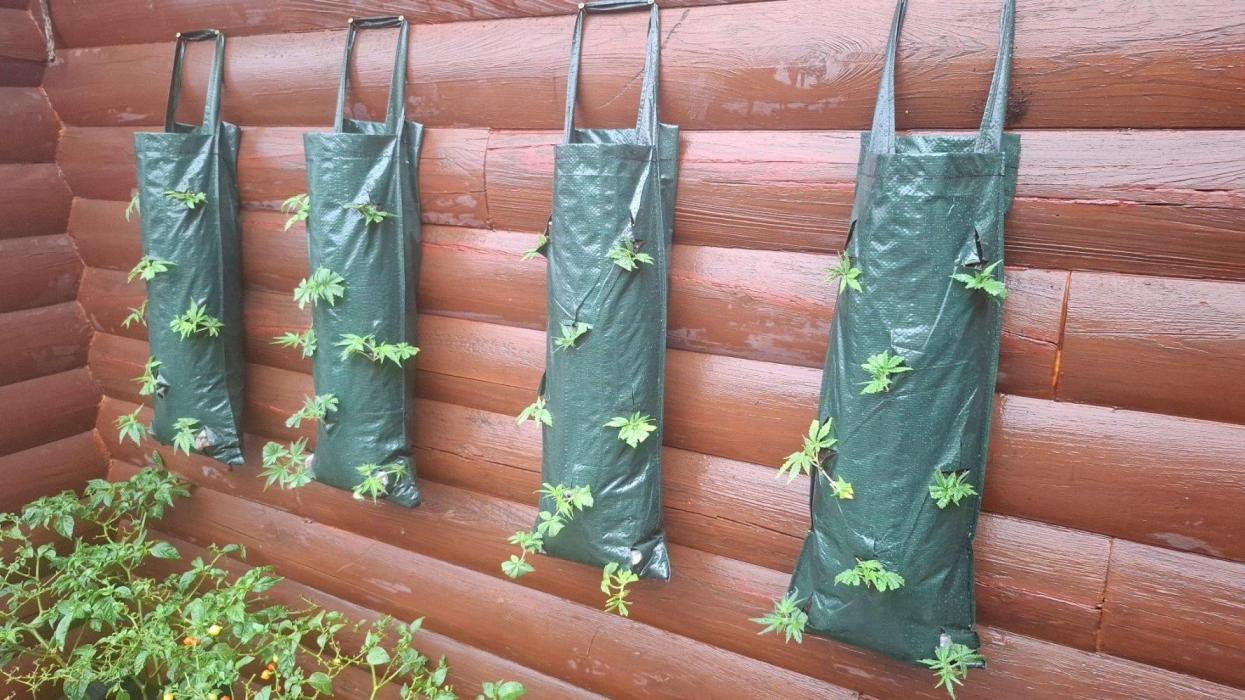
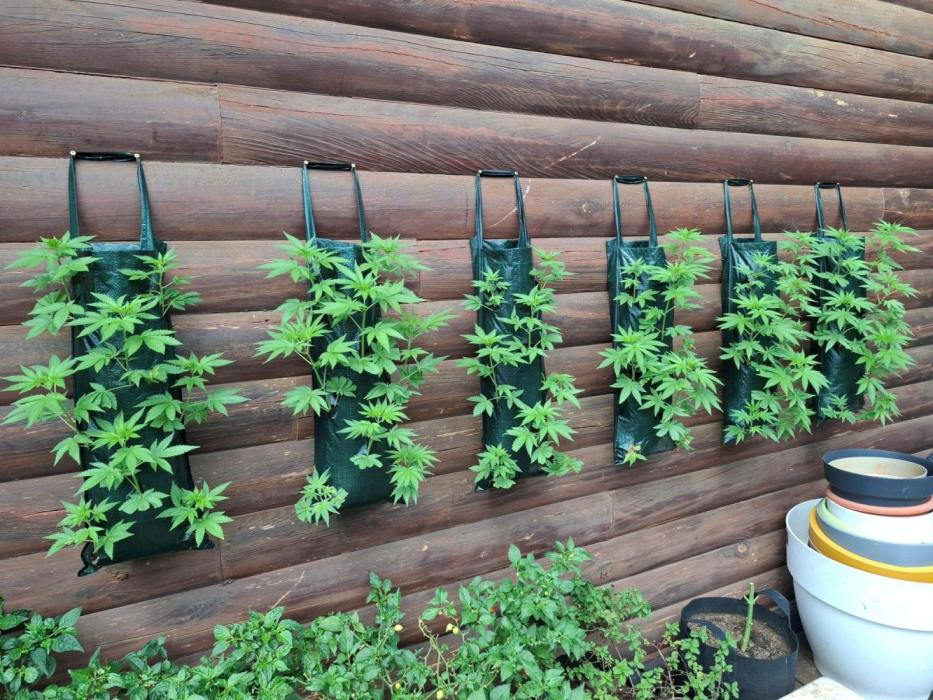
48 clones in 6 strawberry 8‑hole grow‑bags.
I have been thinking about this method for years and am convinced it must work given enough TLC.
We will see…
8 likes
comments
Share
Used techniques
Wall of Green
Technique
2
Week 2. Flowering
1mo ago
15 cm
Height
12 hrs
Light Schedule
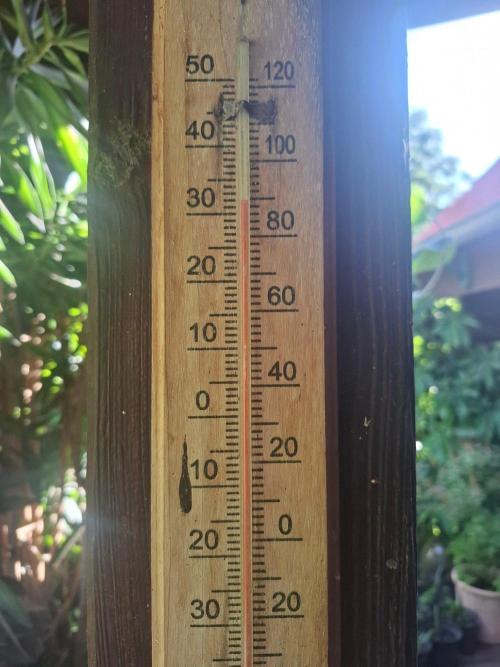
31 °C
Day Air Temp
No Smell
Smell
25 °C
Night Air Temp
2 liters
Watering Volume
Nutrients 1
Alga Bloom
2 mll
DutchGlobalCitizen 48 clones in 6 strawberry 8-hole grow-bags.
Clones have grown roots and are growing rapidly. expect them to grow for a week or 2 before stretching and flowering will start.
Had to adjust to ammount of water/nutrients to reach the bottom clones in the bag. Up to 2 liters per bag per day now.
10 likes
2 comments
Share
Used techniques
Wall of Green
Technique
3
Week 3. Flowering
1mo ago
1/3
45 cm
Height
12 hrs
Light Schedule
31 °C
Day Air Temp
No Smell
Smell
25 °C
Night Air Temp
2 liters
Watering Volume
Nutrients 3
Alga Bloom
3 mll
Max Yield
2 mll
Max Yield
2 mll
DutchGlobalCitizen Clones have grown into healthy young plants, they each find their spot of the wall to get maximum sunlight. First flowers are starting to appear.
10 likes
comments
Share
Used techniques
Wall of Green
Technique
4
Week 4. Flowering
1mo ago
1/2
50 cm
Height
12 hrs
Light Schedule
31 °C
Day Air Temp
Weak
Smell
25 °C
Night Air Temp
2 liters
Watering Volume
Nutrients 2
Alga Bloom
3 mll
Max Yield
2 mll
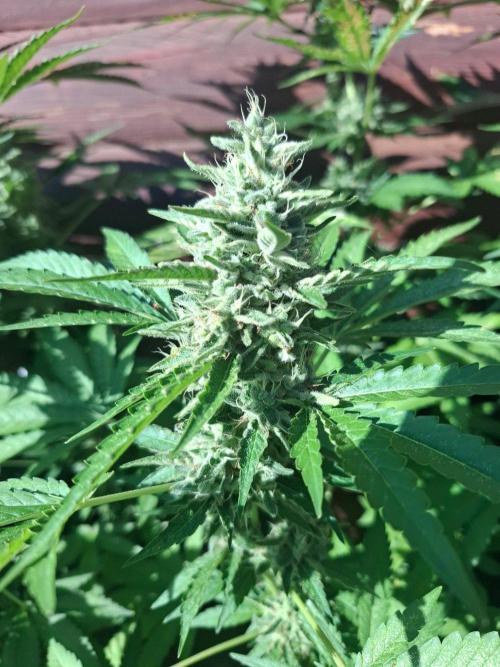
DutchGlobalCitizen The first signs of what can be called "embryonic buds" are forming. Resin production is so high that from certain angles the small buds have a light blue sheen over them.
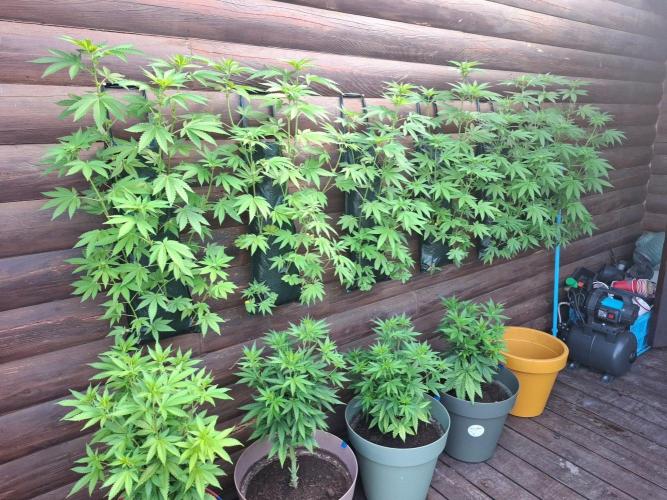
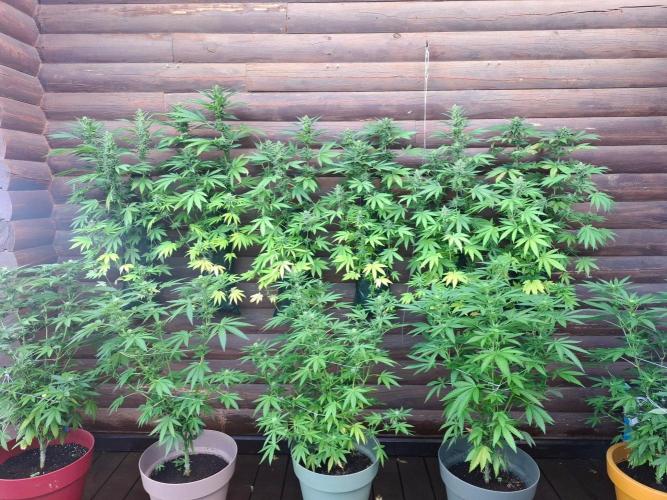
The mothers are put to flower too and are positioned in front of the Wall of Green and are about 3-4 weeks behind in progress.
8 likes
comments
Share
Used techniques
Wall of Green
Technique
5
Week 5. Flowering
21d ago
1/8
55 cm
Height
12 hrs
Light Schedule
32 °C
Day Air Temp
Weak
Smell
27 °C
Night Air Temp
2.5 liters
Watering Volume
Nutrients 2
Alga Bloom
3 mll
Max Yield
2 mll
DutchGlobalCitizen Buds are filling up nicely, vigorous flower growth continues.
I had a storm coming thru this week. Split one of the mothers, now they are supported with twine in the plants.
Besides the daily waterings this setup is kinda stress-free. No training or trimming, plants find their own place with maximum sunlight.
Increased watering from 2 to 2,5 liters a day per bag.
For the Nerds: Notice every pot with a mother has a piece of tape on one side, makes it easier to rotate the pot 90 degrees every 3 days for uniform growth. Plants would grow lobsided otherwise.
15 likes
1 comment
Share
Used techniques
Wall of Green
Technique
6
Week 6. Flowering
14d ago
1/13
55 cm
Height
12 hrs
Light Schedule
32 °C
Day Air Temp
Normal
Smell
27 °C
Night Air Temp
2.5 liters
Watering Volume
Nutrients 1
Alga Bloom
3 mll
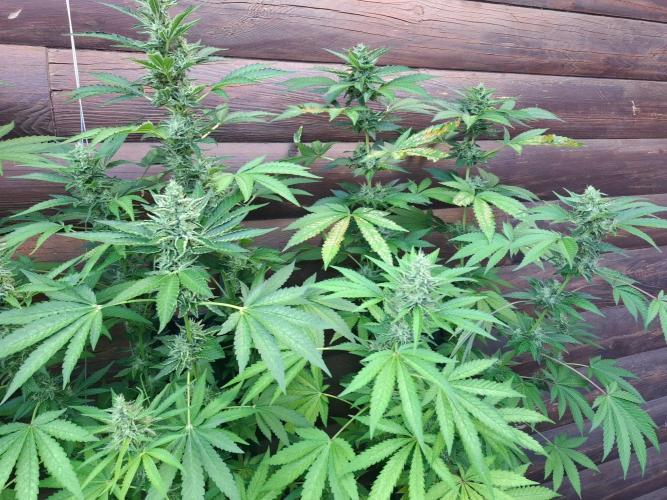
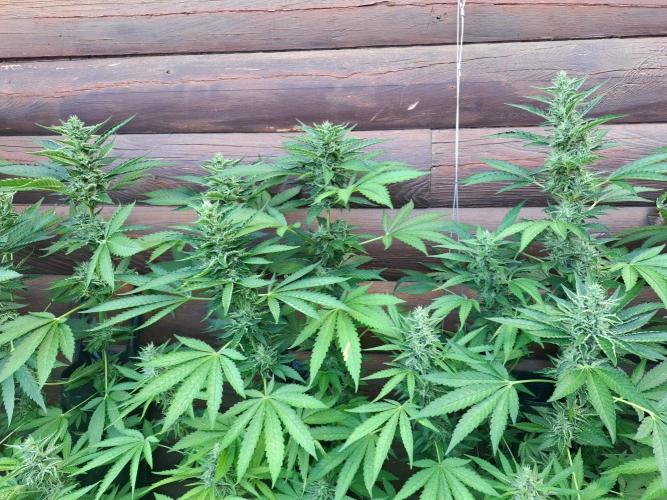
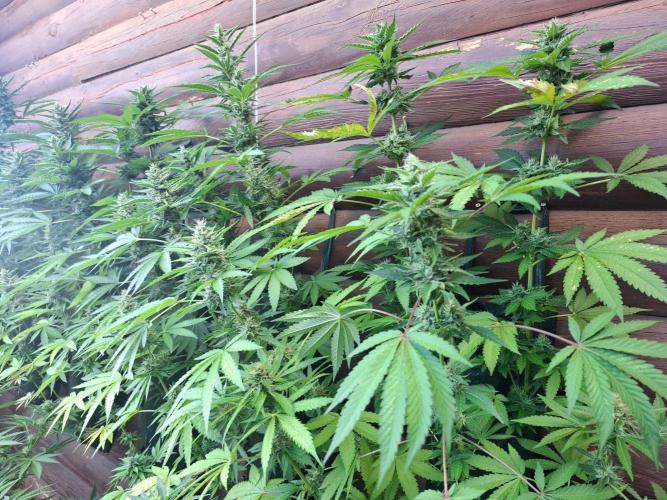
DutchGlobalCitizen Another week of flowering completed and the Wall of Green concept continues to develop exactly as intended.
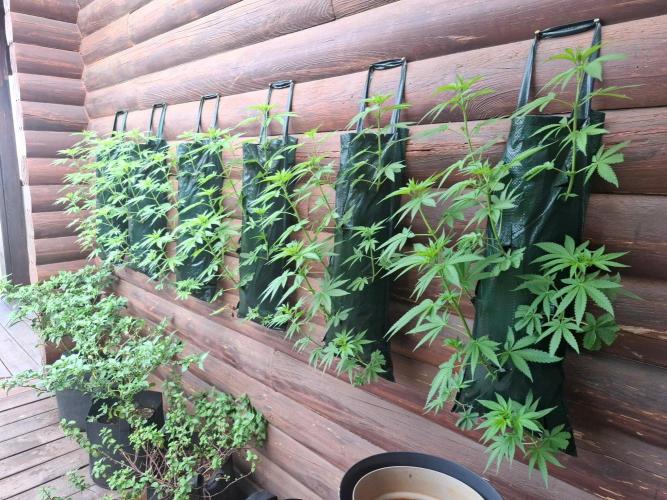
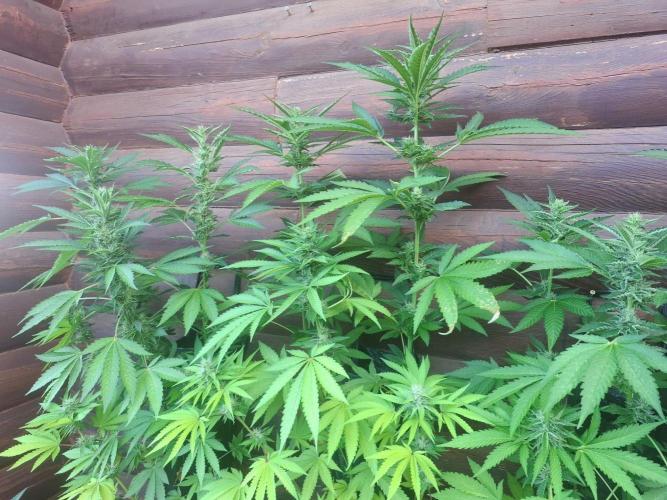
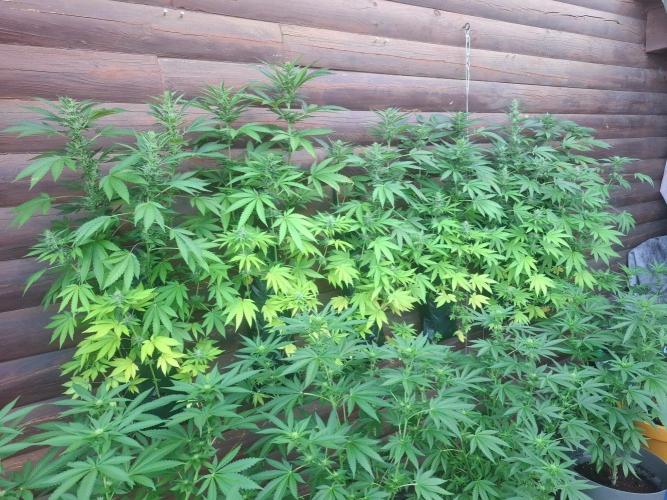
What stands out most at this stage is that the garden is no longer presenting itself as a collection of individual plants. The canopy is increasingly behaving as a single productive flowering wall, with dozens of active bud sites occupying the same vertical plane.
Visible Wall of Green Advantages:
Uniform Flowering Surface
One of the most obvious observations is the consistency of the canopy height. Instead of a few dominant tops overshadowing the rest of the garden, the majority of flowering sites receive similar light exposure due to the wall layout.
Maximized Use of Vertical Space
The wall is being utilized from end to end. Rather than spreading plants horizontally across a floor area, the productive zone is concentrated into a vertical flowering surface.
High Number of Primary Bud Sites
A large number of tops have developed into productive flowering sites. The focus of the layout is not creating one giant cola, but creating many productive colas that together form a continuous harvest zone.
Efficient Light Distribution
The even canopy structure allows light to reach a much larger percentage of the flowering tops compared to traditional bush-shaped plants where only a handful of upper branches receive maximum intensity.
Reduced Empty Space
One difference that becomes obvious when comparing this grow to many conventional grows is how little unused area exists along the flowering wall. Nearly every section contains active flower development.
Current Plant Condition
Bud stacking continues across the entire wall.
Trichome production is increasing steadily.
Most pistils remain white, indicating further swelling is still expected.
Flower sites continue to develop from top to bottom along many branches.
No major signs of stress are visible.
Overall canopy health remains strong.
Interesting Observation
An unexpected benefit of the Wall of Green layout is visual uniformity. While individual plants display natural variation, the wall itself appears remarkably consistent. The eye is drawn to the flowering surface rather than to individual plants.
This may be one of the most important differences between Wall of Green and many traditional grow styles. The objective is not producing a few showcase colas. The objective is transforming an entire growing area into a productive flowering wall.
Looking Ahead
The structure is now clearly established. The next stage will be continued calyx swelling and flower density increases. If development continues at the current pace, the coming weeks should reveal the full production potential of the wall.
For now, the Wall of Green is doing exactly what it was designed to do:
Create a uniform flowering wall containing as many productive tops as possible within a limited growing space.
24 likes
7 comments
Share
Used techniques
Wall of Green
Technique
7
Week 7. Flowering
8d ago
1/5
55 cm
Height
12 hrs
Light Schedule
32 °C
Day Air Temp
Normal
Smell
27 °C
Night Air Temp
2.5 liters
Watering Volume
Nutrients 1
Alga Bloom
3 mll
DutchGlobalCitizen Another week has passed and the Wall of Green continues to challenge my original expectations.
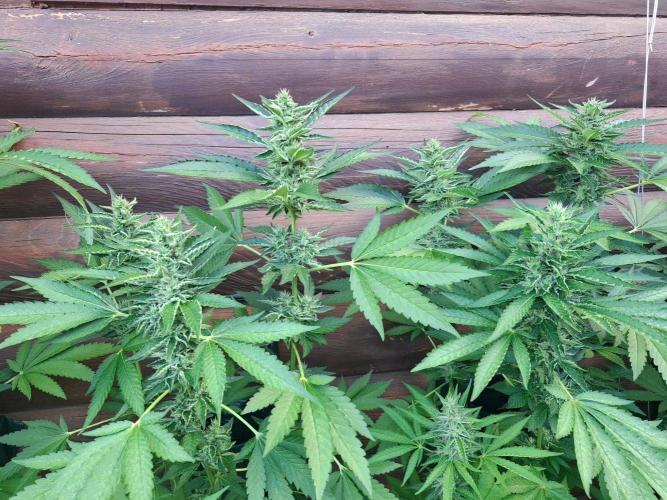
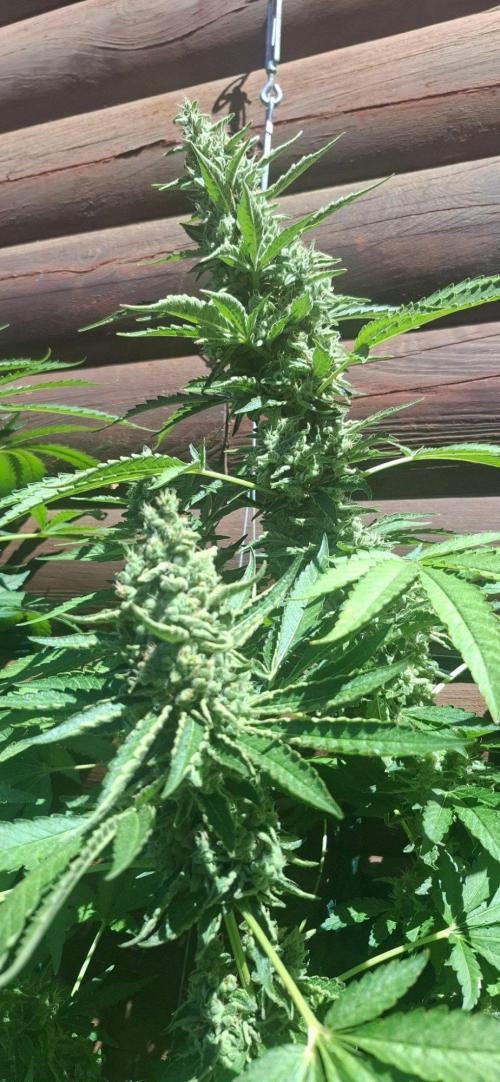
The plants are now well into flowering and the most noticeable change this week is the continued swelling of the buds throughout the canopy. What stands out is not necessarily the size of any individual top, but how much flower development is occurring along the entire length of the stems. Many branches are forming long, continuous colas rather than isolated top buds with large empty internodes between them.
The canopy remains remarkably uniform considering the plant density and the limited root volume available to each clone. Bud sites continue to stack and fill in, while overall plant health remains good. Some tops are slightly ahead of others, but the canopy is still functioning largely as a single flowering surface, which was one of the primary goals of the Wall of Green concept.
This run continues to support one of the central observations of the experiment: the plants appear to be using available canopy space extremely efficiently despite being grown in very small individual root zones.
Observation: Root Volume vs Canopy Efficiency
This week's observations further reinforce a question that has been developing throughout the grow.
Each strawberry grow bag contains roughly 10 liters of substrate shared between 8 clones, resulting in approximately 1.25 liters of growing medium per plant. Conventional wisdom would suggest that such a small root volume should result in heavily limited plant performance.
Yet the plants continue to produce larger and more complete colas than originally expected.
At the start of the project I expected yields in the range of approximately 15-20 grams per plant. As the grow progressed, expectations were revised upward to around 25-30 grams per plant. While final results remain unknown until harvest, the visual development continues to exceed those original assumptions.
The reason for this performance cannot yet be determined with certainty. However, the possibility remains that in a high-density Wall of Green system, canopy efficiency may play a much larger role than root volume alone.
In simple terms:
This shouldn't really be working this well, yet the observations continue to suggest otherwise.
Environmental Observation
Another possible factor discussed this week concerns the placement of the strawberry bags.
Unlike many outdoor grows that place containers against concrete or masonry surfaces, these bags are positioned against a wooden log-home wall. Wood stores and radiates less heat than concrete, potentially resulting in lower root-zone temperatures and more stable growing conditions within the small volume of substrate.
Whether this contributes meaningfully to the unexpectedly strong performance remains unknown, but it is an observation worth documenting for the final analysis.
Looking Ahead
The buds continue to build mass and there are still plenty of white pistils visible across much of the canopy, indicating that the plants are not yet finished. The coming weeks should reveal how much additional swelling and density can still be achieved.
For now, the Wall of Green remains on track, and perhaps more importantly, it continues to produce results that challenge several of the assumptions I had when this experiment began.
As always, thanks for following along.
15 likes
1 comment
Share
Used techniques
Wall of Green
Technique
8
Week 8. Flowering
3d ago
1/6
60 cm
Height
12 hrs
Light Schedule
32 °C
Day Air Temp
Normal
Smell
27 °C
Night Air Temp
2.5 liters
Watering Volume
Nutrients 1
Alga Bloom
3 mll
DutchGlobalCitizen Week 8 marks an interesting turning point in the project.
At this stage, the question is no longer whether the Wall of Green concept works. The canopy answered that question weeks ago. The focus has now shifted toward preserving quality as the plants approach the finish line.
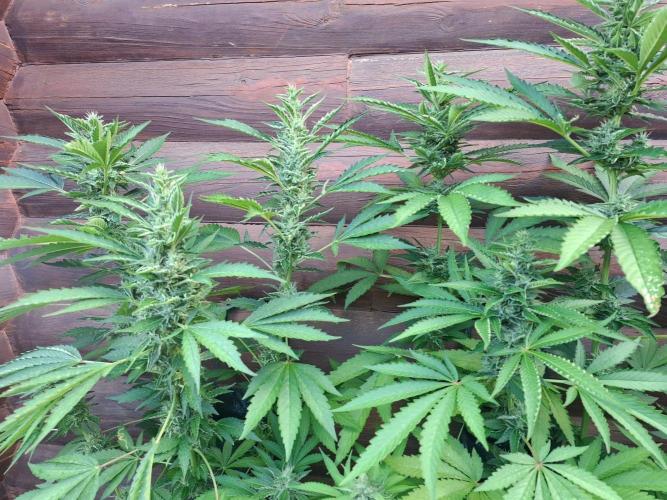
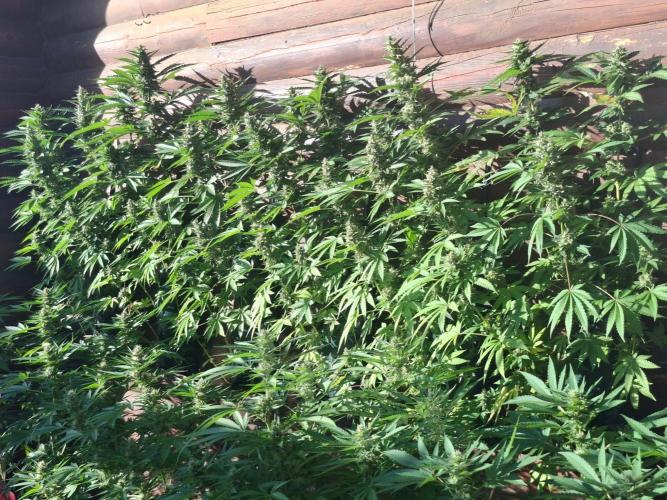
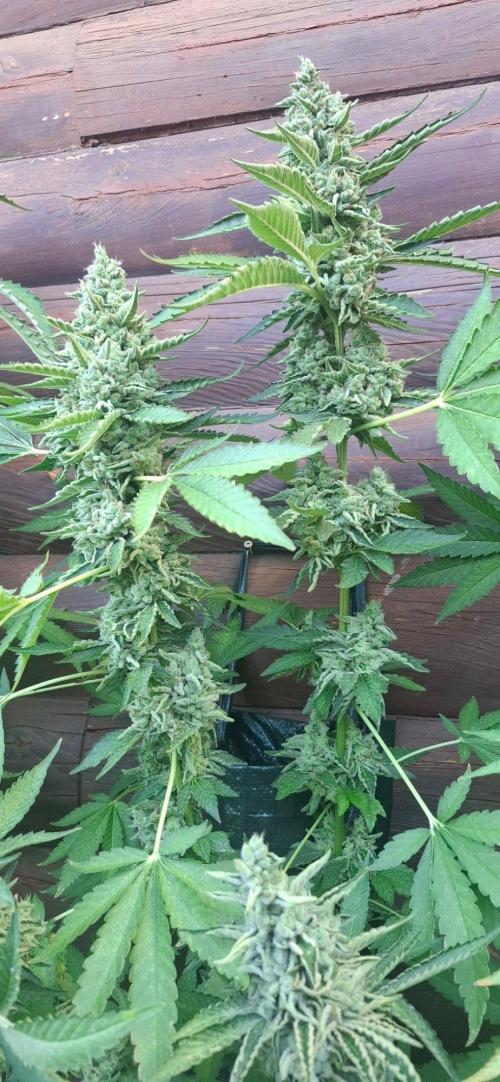
The wall has reached a mature form. Buds continue to swell, more pistils are turning orange, and several colas have developed into long, heavily stacked structures. What stands out most is how efficiently the available space has been utilized. Many of the main stems now carry productive flower sites from top to bottom, leaving surprisingly little unused space between buds.
One observation continues to challenge my original expectations.
Each strawberry bag contains approximately 10 liters of substrate shared by eight clones, leaving roughly 1.25 liters of root volume per plant. Based on conventional assumptions, I expected considerably smaller flowers. Instead, several colas have developed far beyond those expectations.
This does not explain why it is happening, but it continues to support one of the most interesting observations of the entire run:
This should not be working this well, yet the observations suggest otherwise.
Whether the explanation lies in canopy efficiency, environmental conditions, root-zone temperatures, genetics, or a combination of factors remains an open question. What can be observed is that the plants continue to perform remarkably well despite the very limited root volume available to each clone.
Ironically, the success of the canopy has created a new priority.
The flowers are becoming larger, denser, and heavier every week. Several colas now require support, and some are beginning to lean under their own weight. Dense flowers are exactly what every grower hopes for, but on Statia they come with an additional challenge.
Tropical humidity, frequent rainfall, and large compact colas are not always friendly companions.
As a result, monitoring has become a major part of the weekly routine. The largest flowers receive extra attention during inspections, not because of any confirmed problems, but because dense buds naturally deserve closer observation under local conditions.
The most important observation of Week 8 is therefore somewhat unexpected:
The Wall of Green itself is no longer the experiment.
The canopy has already proven capable of producing uniform, productive, flower-packed plants. The challenge now is ensuring that these increasingly large colas safely reach the finish line while maintaining quality.
The wall keeps delivering.
Now it's time to keep watching.
The better the canopy performs, the more important the monitoring becomes.
As always, thanks for following.
I've honestly considered doing this in a grow tent and seeing if it could out do the record on yield from a 3x3/2x2ft tent! This is super cool to see done and so well! 💖✌️💚