


Blood looking
The_Wandererstarted grow question 9mo ago
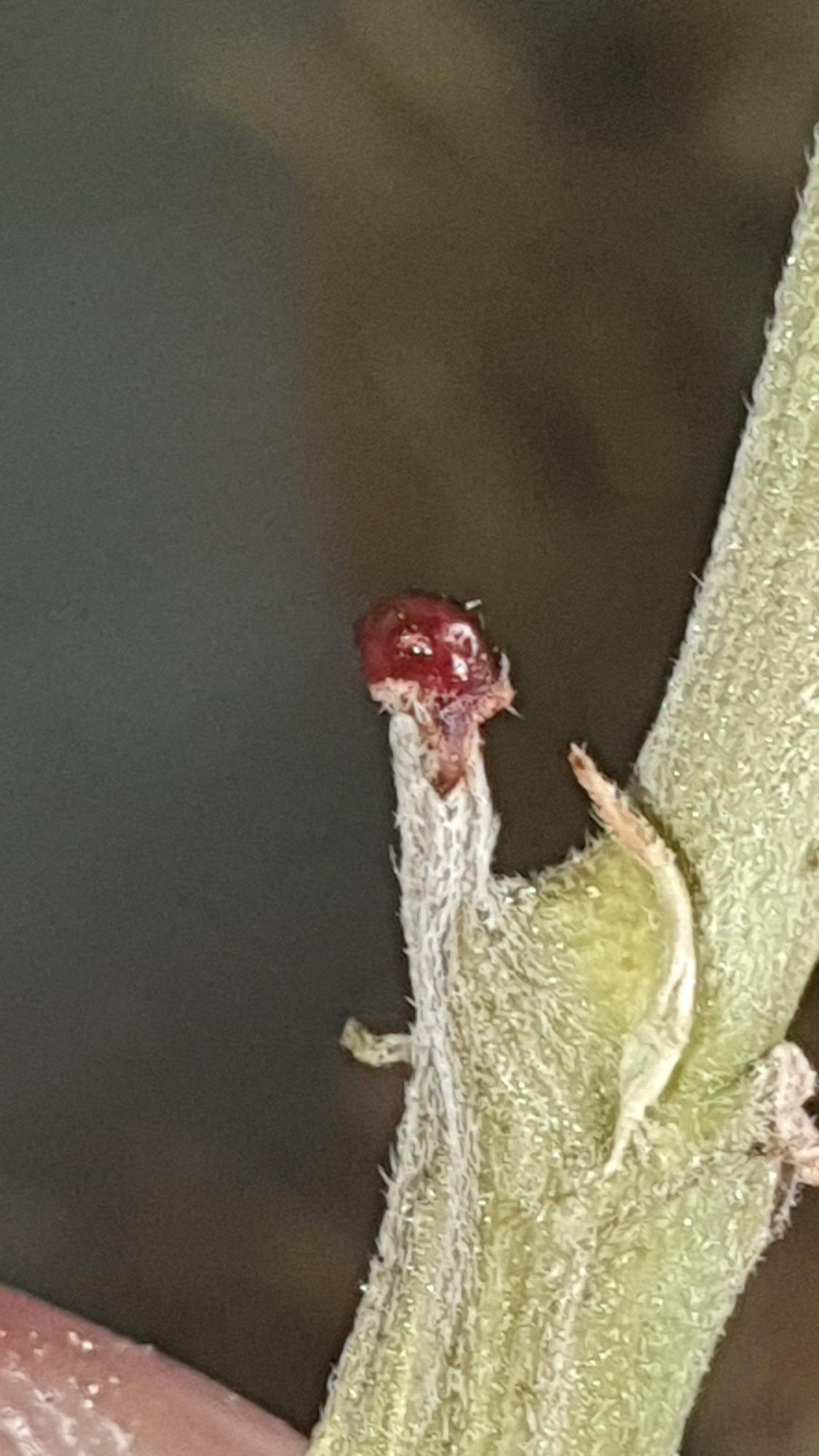
Kind of odd looking. I cut away a leaf during defoliation and the stem looks like it bled. Why did it do that?
2 likes

KuaerSchlaegeranswered grow question 9mo ago
Phloem sap (bleeding): When the plant has a mechanical injury on the stem, nutrient-rich sap can leak out. Certain anthocyanins (pigments) in the sap can color it red or purple, similar to how stems can change color under stress or nutrient deficiency (like phosphorus).

DogDoctorOfficialanswered grow question 9mo ago
😍😍😍 hey buddy how are you my friend?
What you’re seeing isn’t blood, it’s plant sap expressing itself after a fresh wound.
When you cut a leaf or petiole, you open the xylem and phloem vessels. These are under pressure, especially in a healthy, actively transpiring plant. The sap that leaks out can look clear, milky, amber, or even red depending on genetics and chemistry.
Why the red / dark color?
Several factors can stack together:
• Anthocyanins & phenolic compounds
Some genetics produce higher levels of pigments (the same ones responsible for purple, red, or blue hues). When exposed to air, these compounds can oxidize and darken quickly.
• Oxidation
Fresh sap reacts with oxygen, just like a cut apple browns. This can shift color rapidly after the cut.
• Carbohydrate-rich phloem sap
During flower, sap can be thick with sugars and metabolites, giving it a glossy or resinous look.
• Genetic vascular expression
Some cultivars simply push sap more visibly — thicker walls, higher pressure, or different secondary metabolites.
Why some plants do it and others don’t:
This is where genetics really shows. Some plants barely weep at all. Others “bleed” noticeably. Neither is bad, it’s just how that plant manages transport and wound response.
Important part:
👉 This is not disease, rot, or damage
👉 It’s not stress-related on its own
👉 It doesn’t mean anything is wrong
In fact, many growers see this more often on vigorous, healthy plants during active growth or flower.
Growers Love my friend and enjoy your bleeding girls 😍😍😍
1 like
Complain
Similar Grow Questions
Solved

forgettenseedling
Hängende Blätter, Gelbe Spitzen, lila StilHanging leaves even though I just watered them. Does anyone know what it could be? Also, the new leaves are partially yellow at the tips, which is a problem I have no solution for. Can someone help me? The stem is also partially purple.
5y ago
2
2
Solved

SelfmadeRu
Male preflower!!??
Buds. Other
Plant. Spaces between nodes
Plant. Stem · Red or purple
5y ago
1
2


Solved

MarisaG
Help!!!Hi all! My fast Eddy is showing some strong chrolosis, purple stems and clawing. Her growth completely stopped :( I water her every 3 days +/-, fed her once with ghe tripart at half-strengh and pH 6,5. She responded a little to Epsom salt foliar spray... Help please!
Leaves. Curl down
Leaves. Color · Yellow
Plant. Stem · Red or purple
6y ago
1
1
Solved

Gundermann
Calcium deficiency or overfed?Hi.
This is about my Apricot Auto which already suffered the yellow tips/edges. I took that as the result of heat/light stress.
Now she also developed discoloration and brown spots on some of the leaves. It looks like a Calcium deficiency to me, but I am quite uncertain.
Thanks!
1y ago
9
4
Solved

GlockAbuser
Nutrient burn, Light burn, or Phos Def? red stems purple bruises,Noticed red lines leaking red into the leaves with purple bruising, and the starter bottom leaves seem to be turning yellow, with the leaves above looking dark green with spots. Is this signs of light burn or nutrient toxicity? And is it lacking phosphorus or just the strain gen?
Leaves. Color · Dark-purple
Plant. Stem · Red or purple
Setup. Lighting
3y ago
3
4
Solved

Fallingthroughstars
Deficiency or lockoutIs this a simple N deficiency or a lockout? I gave her more N last feeding but nothing seems to have changed. still stunted and still bottom yellow leaves. Should I feed her a micro/bloom mix or flush her??! Her soil ph seems to be correct and ppm so idk if its a build up of salt
5y ago
3
3
Solved

tiny_couch
Yellowing lower fan leaves, a few red stems; N/Mg deficiency or normal low leaf die-off?Is this a Mg or N deficiency or are these leaves naturally dying off? Showing on only one of two plants so far. Appears only on lowest fan leaves. F20, 7L pots BioBizz AllMix and nutes (1mL/L Grow and 2mL/L Bloom). Temp/RH are good. Can't measure pH. Local soft tap water 7-8pH.
Leaves. Edges burnt
Leaves. Color · Yellow
Plant. Stem · Red or purple
6y ago
2
1
Solved

TrilliumTrichomes
Drooping leaves and purple underside of leaves in seedling. (Pics in Diary) Pls help!I'm on day 11, under 315cmh (20") from tops of plants. I am watering with 6.2ph well water. Temps 65-75. Promix HP is grow medium. Pots have adequate drainage.
The Gelatos are drooping, stems are reddish and the underside of the leaves are purple. What am I messing up??6y ago
3
3
Solved

Right2Flower
Stunted Growth, Continue?Hello growers,
My plants are 14 days from breaking soil, my question is will these young plants survive with the temperatures they're experiencing? I'm not sure why else they would be so small for how old they are. Thinking I might get a heated seedling pad and start over.6y ago
4
4
Solved

The_Wanderer
Blood lookingKind of odd looking. I cut away a leaf during defoliation and the stem looks like it bled. Why did it do that?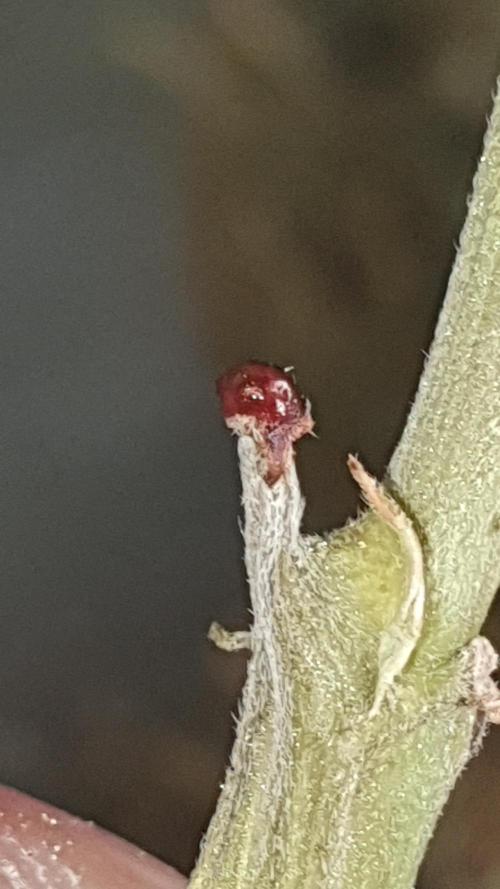
Week 11
Plant. Stem · Red or purple
9mo ago
1
2
Solved

Nick_Frampton
Is this normal?Hey guys and gals, it's my first time growing so I just want to make sure this is a normal looking Seedling. It sprouted about 2 days ago and is smaller than the rest of my seedlings. Maybe genetics? What's your opinion?
Leaves. Curl down
Plant. Too short
Plant. Stem · Red or purple
5y ago
4
4
Solved

nancypotwin
help ): w/everythinghi, i feel like i ask too many questions but i don’t have anybody to ask and i’m really inexperienced (ps i also can’t figure out how to reply to the comments!!) i think this might be too many characters so i’ll post underneath. i noticed some things with my seedlings...
Plant. Stem · Red or purple
Setup. Seedling
6y ago
3
7
Solved

InkedPhoenix420
Is she too far gone or can she come back?Week 8. Biobizz Light Mix, Biobizz Grow, Biobizz Bloom and Top Max (1ml/L up to 2ml/L). Ph 6.2-6.5. Leaves started yellowing just over a week ago so I started to feed with CalMag at 0.6ml/L. Some of the top leaves are starting to die and new growth is turning yellow quickly.
Leaves. Color · Yellow
Plant. Stem · Red or purple
Setup. Strain · Autoflowering
5y ago
1
2



Solved

Jaked
The stems began to turn redGuys, I need your help!
The stems began to turn red. Yesterday it was less, but today it is more saturated and spreads to the veins of the leaves.
Could it be a phosphorus deficiency, or am I worrying for nothing? And what is better to do in this case?
Plant. Stem · Red or purple
3y ago
6
3
Solved

Rafegrow
Tallo hoja lilaHello everyone!
I've noticed a purple color on the leaf stem.
Should I be worried?
Plant. Stem · Red or purple
6y ago
1
2
Solved

stonedJesus
Please help. Last plant died exactly like this. Yellowing drying leaves from the bottom on all fan leaves while shoots get stunted / eventually affected.Transp recently from 1g > 5g. Seemed ok at first day after (no wat) then leaves started rapidly yellowing / drooping. Tent is fairly small 40x40x120. Could it be the heat ? Also took out humidifier but still in same room tent vents. Is Canna Pro Plus watered between 5.8-6.2 ph ?
6y ago
5
8
Solved

Padrino
Red/purple stems and Stunted growGirl Scout monkey and Funky Magnifera have red stems. I gave nutes a few days ago and it cleared all the red stems except for these two. My PH is 6.3 so idk why this is?? Blood orange haze seems little small and can't tell if its stunted. Should I wait or plant another?
Week 3
Plant. Stem · Red or purple
4y ago
1
1