The Grow Awards 2026 🏆 









Higuys this is my first grow,bubba kush(barney far...
cannakileestarted grow question 4h ago
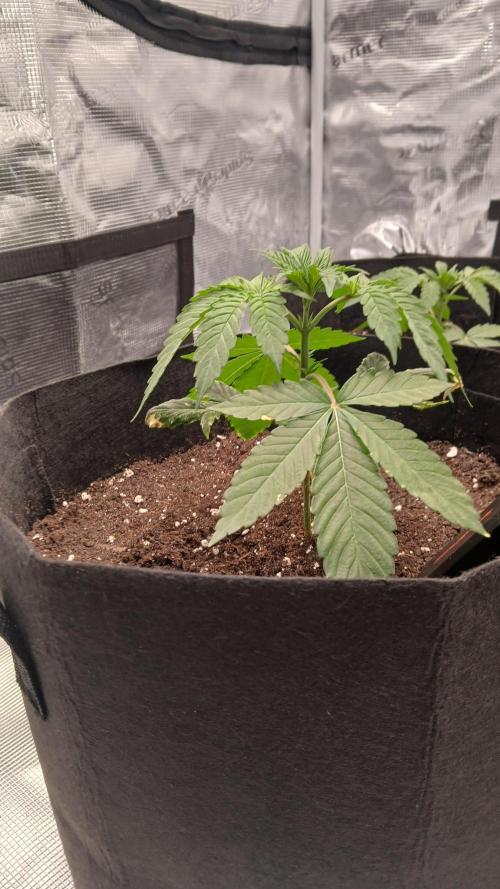
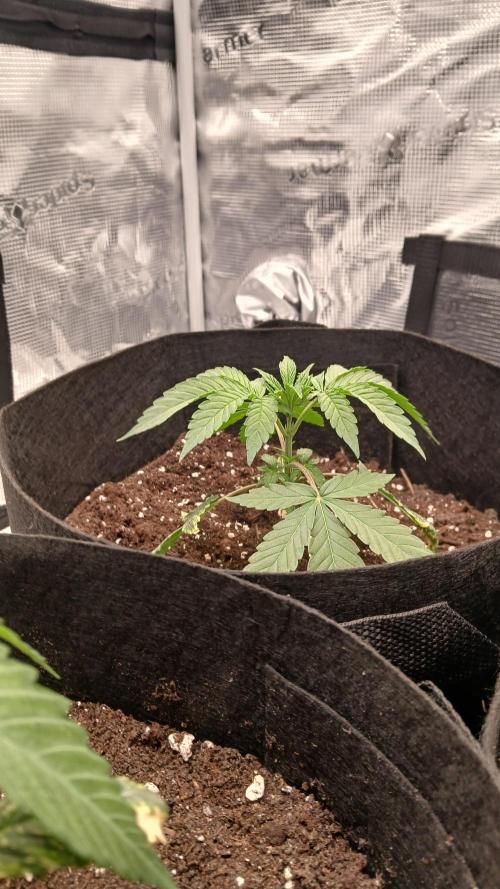
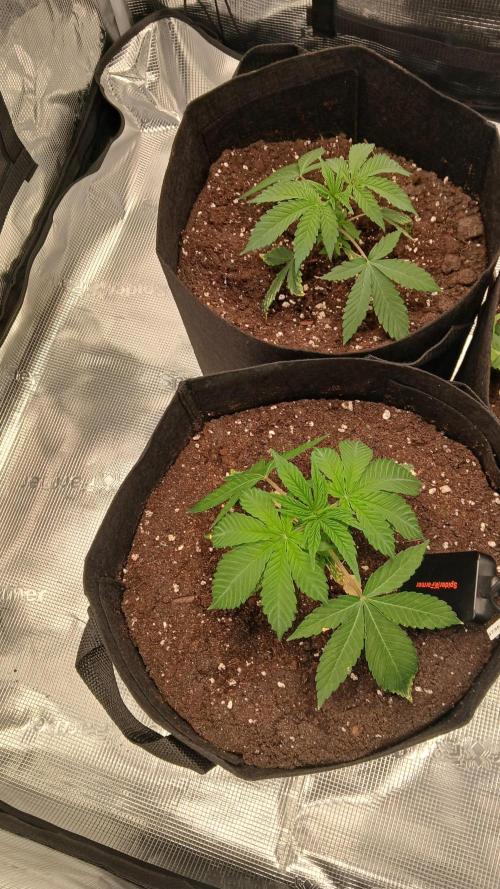
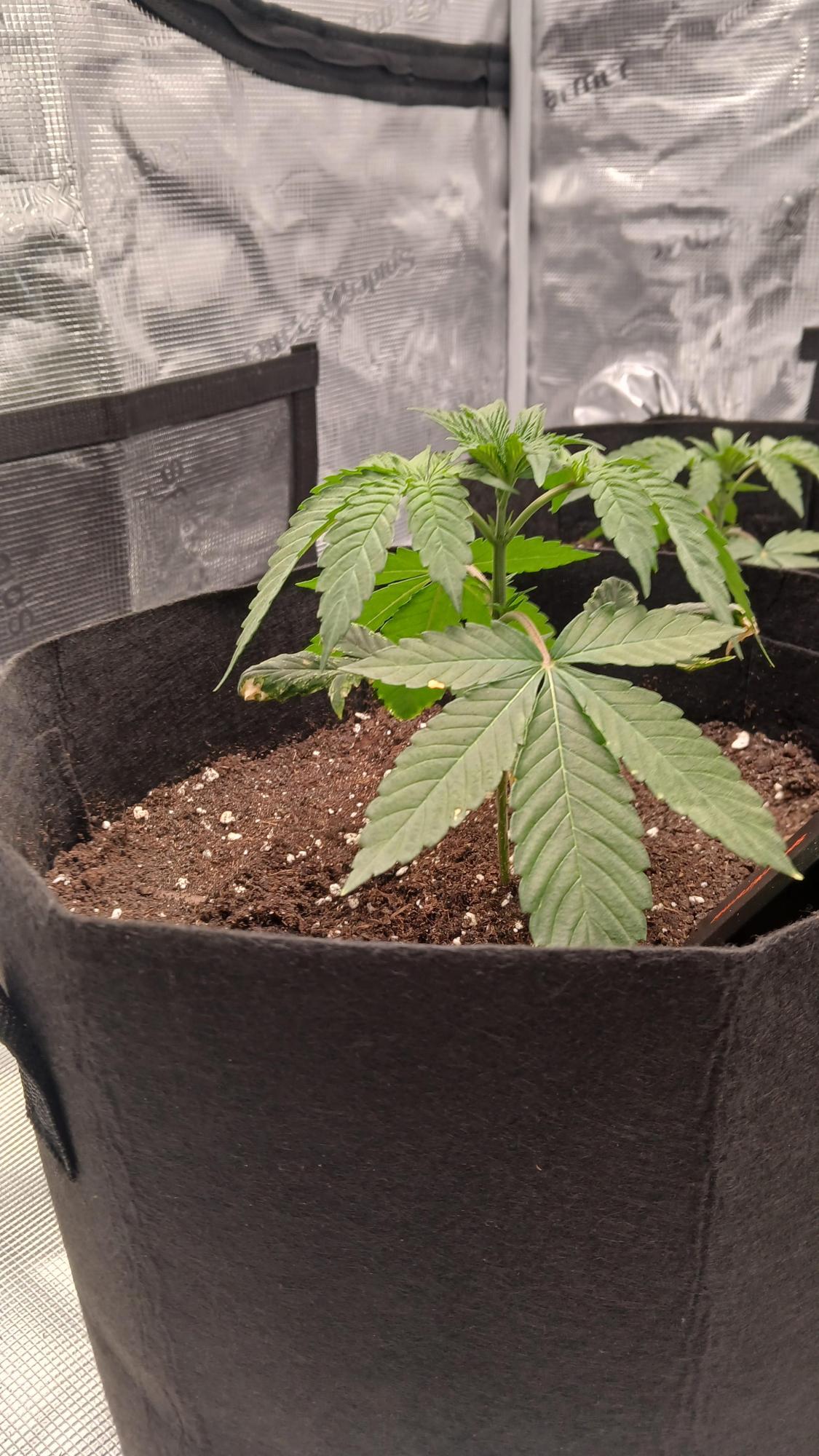
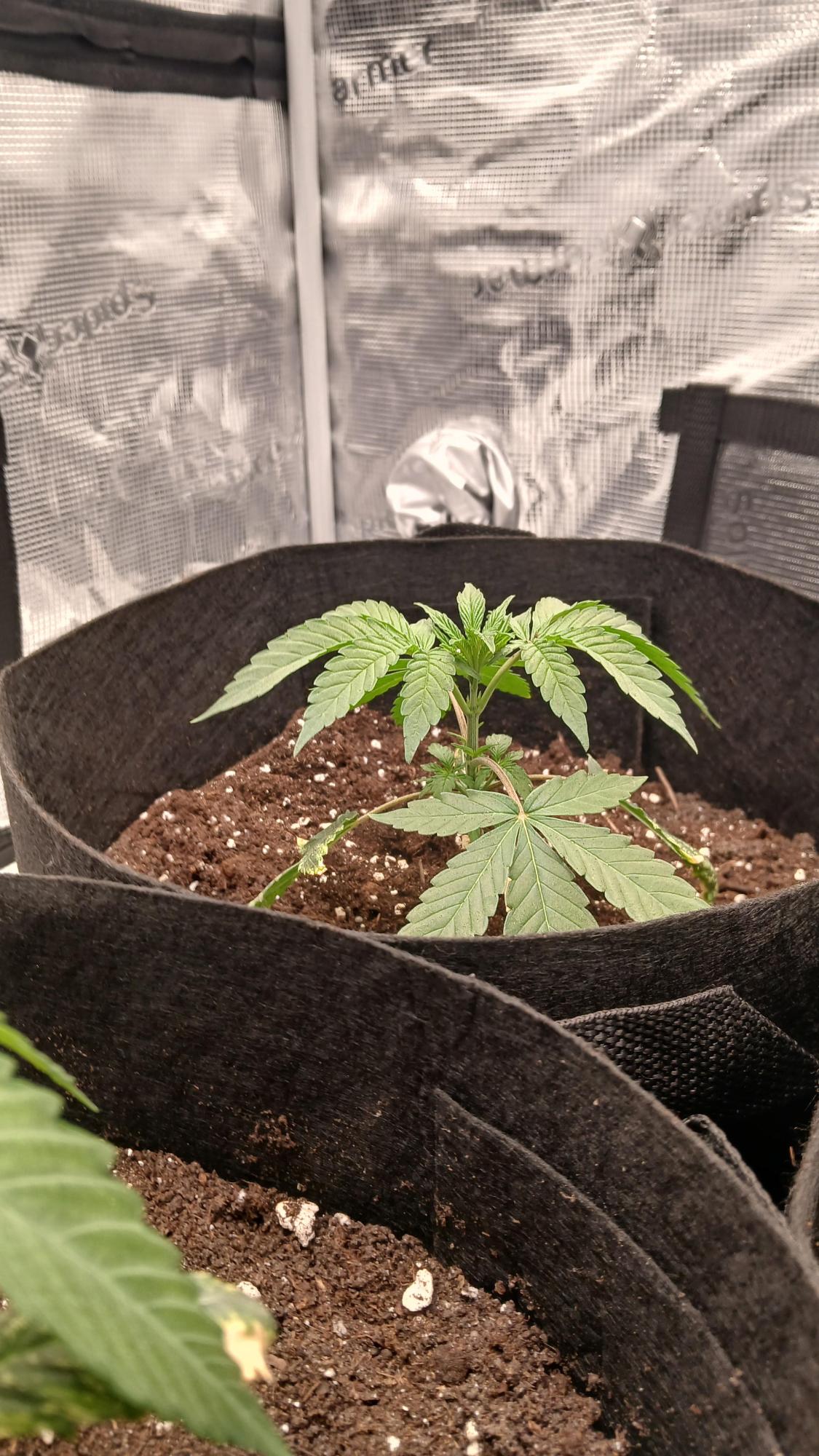
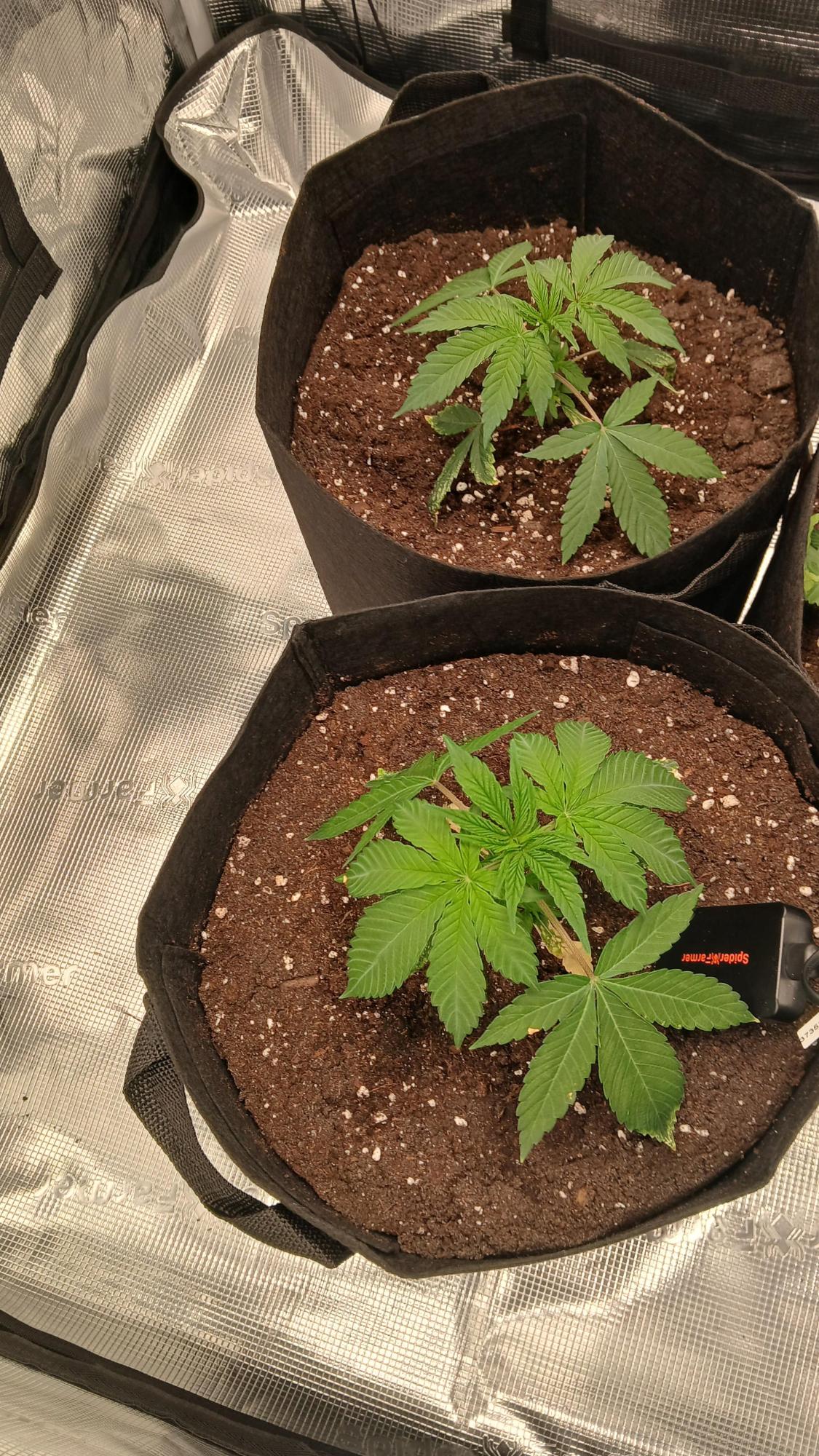
Higuys this is my first grow,bubba kush(barney farm) this is 28 days. 2 days ago i transplate them and powerup ppfd to 400.leaves started to go down is this light stress or smth else ? My parameters is :
:
humidity 60%
Ppfd 400
Soil ec:0.50
Soil.temp:21
Box temp:23
Vpd:1.02
Co2
Open
Leaves. Curl down
likes
Answer
wolfvbanswered grow question 2h ago
Salam! 👋 Welcome to your first grow, Habibi! You picked a legendary strain—Bubba Kush is a tough Indica, she is a tank! 🛡️
If your plants are looking droopy, sad, or wilted 2 days after a transplant, do not panic. This is classic Transplant Shock. 🚑 It happens when the tiny root hairs get damaged or stressed during the move.
Here is your "Recovery Engineering" Protocol: 🛠️
Dim the Lights: 💡 Your plant is recovering from surgery. She doesn't want to run a marathon right now! Lower the light intensity (or raise the light up) for 2-3 days. This stops her from trying to photosynthesize too hard while her roots are offline.
The "No Water" Rule: Did you water the new soil heavily right after transplanting? If yes, stop watering now. The roots need oxygen to heal. If the soil is wet, let it dry out slightly. Roots grow when they search for water! 📉
Humidity: If you can, keep the humidity a bit higher (60-65%). This helps the leaves stay hydrated while the roots are on strike. ☁️
Give her 48 hours of rest and lower light, and she will bounce back stronger than ever.
Happy Growing! 💚
likes
Complain
Green_clawsanswered grow question 3h ago
Hey there!
Welcome to the craft. There’s nothing quite like that first run, especially with a classic like Barney’s Bubba Kush. It’s a pleasure to meet a fellow gardener getting their hands dirty! 🌿
The Bright Side 💡
First off, credit where it's due: your VPD (Vapor Pressure Deficit) is absolutely spot on at 1.02. Managing that balance between temperature and humidity is usually where beginners stumble, but you’ve nailed the "sweet spot" for nutrient uptake and transpiration. Your environmental monitoring is already ahead of the curve!
What’s Happening in the Tent? 📉
The drooping you’re seeing is likely a "double whammy" of Transplant Shock and Light Stress Adaptation.
The Culprit: When you transplant, the roots suffer microscopic tears and lose their "grip" on the soil. During this recovery window, the plant's ability to pull up water is temporarily weakened.
The Light Issue: Moving to 400 PPFD immediately after a transplant is like asking someone to run a marathon right after minor surgery. The plant is trying to photosynthesize at a high rate, but the roots aren't ready to supply the necessary water to keep up, leading to that "heavy" drooping look.
How to Fix It:
Dim the Lights: Drop your PPFD back down to 250–300 for the next 48 hours. Let the plant focus on root establishment, not light processing.
Check Moisture: Ensure the soil is moist but not swampy. Since the roots haven't explored the new pot yet, it's easy to overwater the "empty" soil.
Stability: Keep your temps exactly where they are; 23°C is perfect for recovery.
How to Avoid This:
Next time, keep your light intensity lower for 3 days post-transplant. Think of it as a "recovery room" period before moving them back into the "gym."
The Secret Weapon: Microbes
If you want to play in the big leagues, you need to focus on the Rhizosphere (the root zone). This is where the real magic happens.
Mycorrhizae: When transplanting, dusting the root ball with Glomus intraradices helps create a fungal bridge that extends the root system's reach by up to 10x.
Beneficial Bacteria: Introduce Bacillus subtilis or Veloce. These microbes act like a "security team" and growth stimulator. They produce enzymes that break down organic matter into plant-available food and help the plant produce natural anti-stress hormones.
The Pro Tip: Use a light Compost Tea or a kelp-based microbial inoculant during your first watering after transplanting. The hormones in kelp (cytokinins) combined with microbes will virtually eliminate transplant shock.
You’ve got a great setup and the right instincts. Once those roots settle into that fresh soil, that Bubba Kush is going to explode with growth. Keep that keen eye on the details, and you’re going to have a stellar harvest! 🌬️🍃
Good luck, and happy growing!
Grow on ✌️ 💚
likes
Complain
Similar Grow Questions


Solved
rkomaaa
Help pls!!! something strange is happeningrh 50
day temp 25c
night temp 21
ph 6.2
runoff 6.4/5
i started light with nutsLeaves. Curl down
Leaves. Dropping off
4y ago
3
2
Solved
GarenMaster420
Why are my leaves canoeing down, yellowing and drooping a bit but only at the top new growth?The top leaves near the new growth are drooping down a bit and canoeing downwards as well.
As you can see on the pictures it's only happening to the top of the plant while the bottom leaves still look perfectly fine.Week 9
Leaves. Curl down
2y ago
3
7
Solved
Dillsnills
Some of the leaves on this one plant have brownish rusty spots on em jus looking for some jelpmplzzWondering what deficiency or nute burn or what is going on with this plants, a few of the leaves have minor tips that look brown and have brown kinda rusty spots on em, advice input opinions greatly appreciated. Orange Sherbert Auto, 3rd wk flowering,ph6.5, nute last feeding.Leaves. Curl down
Leaves. Color - Dark-brown
Setup. Strain - Autoflowering
5y ago
3
3
Solved
Jaschkoo0
Overfeeding or something like that?What do you guys think that could be the runoff have 6.2 ph and 1.4 ec i know that o gave to much nutriens a week ago because auf to less calmag but now i gave calmag two times since then and just water so the ec geht's lowr but the plant get even worser looks.Leaves. Tips - Burnt
Leaves. Curl down
1y ago
1
3


Solved
PapaSmurf416
Hello thanks for having me. So all of my velvet Krush seedlings and the Afghan are much smaller than the others. They also all still have quite purple stems. I’m worried about the VK as the leaves are curling downwards did I overwater? Or do they need some food?Week 2
Leaves. Curl down
7y ago
5
2
Solved
StarPlatinum
Early growth sick plants - photoperiodPurpling stem, yellowing leaves, droopy leaves - I’m thinking nitrogen deficiency, but I’m not sure if I should add more nutrients or not to my current solution or if I should flush completely. PPM is at 850, and the PH is 6.3. What are your thoughts?
Any GH nutrient schedules?Leaves. Curl down
Leaves. Color - Yellow
Plant. Stem - Red or purple
3y ago
5
4
Solved
Kershaw1231
Is she okOne of the first leavestep has curled and dried abit is she ok and there is also there things growing underneath as u can see in picture all help be appreciatedLeaves. Curl down
Plant. Wilting
Setup. Strain - Autoflowering
5y ago
1
Solved
GeorgeGrowss
Weird Leaf ProblemNew leaves show strange twisting/curling. Humidity ~50%, temps 28-21°C (D-N). Did LST last week—could twisting be due to reorienting to light? Using All-Mix soil, Bio Grow, Calmag. Water left 24h, not pH'd. Some leaf holes caused by me. Flipping soon—help resolve this issue!Leaves. Curl up
Leaves. Curl down
Leaves. Twisted
1y ago
9
8
Solved
GBaalr
Leaves downHello fellow growers. My seed seems to be having a little leaf downfall. And first two round leaves are completely yellow now. Can it be overwatering problem ? It's in a second week.Leaves. Curl down
Leaves. Color - Yellow
5y ago
1
1
Solved
Bongtokinalkoholik1605
Leaves curlingI'm not sure what's happening ph is 6.5 and trust me when I say this is not a watering issue I've underwatered and overwatered no changes it's something else but I'm open to anything especially if it helps so plz growmies help me out !!Week 4
Leaves. Curl down
4y ago
3
2
Solved
Ph0en1x
Dried Leaves, Lockout or Stress. Week 5 of FlowerPlants suddenly wilting & looking crispy like they're dry, but pots are HEAVY! Suspecting root suffocation/rot ("wet feet"). Hard soil crust might be blocking oxygen. Roots are drowning & can't drink. It just happened yesterday since they look dried. Temp is 25C and Air 50%Leaves. Curl down
Leaves. Color - Yellow
Leaves. Color - Pale
2mo ago
1
8
Solved
Trickybis82
What is the problem here?What could this be? Any idea my fellow growmies.. I see leaf discoloration and leaves turning into claws and breaking.. so I flushed her out using flash clean and then re-watered with nutes and I think i still have a problem look at pics and video any help is much appreciatedLeaves. Tips - Burnt
Leaves. Curl down
Leaves. Color - Dark-brown
4y ago
3
4
Solved
Slaccio
1st Grow Autoflower ProblemsI’m having problems with my autos. They are Assorted from Budha, 2nd week as plants. They both look stressed . One looks shiny and with light stress and the other haves other sympthoms. I’m using HPS 250 and All Mix from BioBizz, no nuts. Nitrogen? Light? Water? Help!Leaves. Curl up
Leaves. Curl down
Leaves. Color - Pale
6y ago
1
2


Solved
MrJoint
THIS IS NORMAL?Tem 1 ou 2 dias que algumas folhas começaram a ficar assim. Me parece que estão a enrolar para baixo ou um pouco tristes, apesar de continuarem crescendo. Gostaria de começar a alimentação delas hoje, mas os medidores de PH e TDS/EC só chegam em 3 dias. Devo me preocupar??Week 4
Leaves. Curl down
5y ago
3
4
Solved
ElRojo
Yellowed leavesShould i cut the older and yellowed leaves? So the plant Will use the Energy to grow new branches?Leaves. Curl down
Leaves. Color - Yellow
5y ago
2
2