


Light Intensity Question

JibbyJackstarted grow question 5mo ago
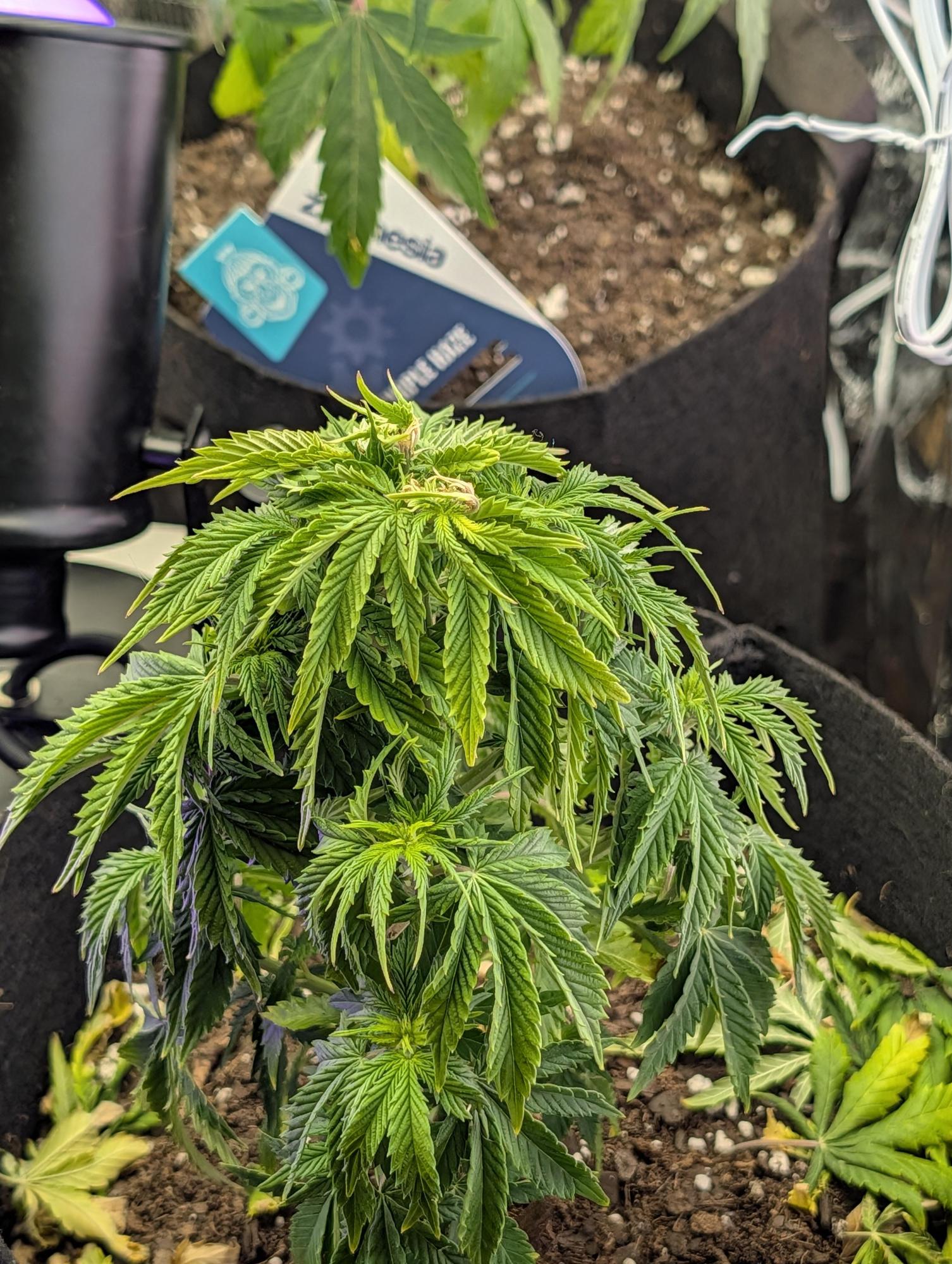
Pretty sure that it was light related. I didn't know that too much light was a thing. Can someone tell me about it? I'm not talking about how much light, more on the intensity factor and how it affects plants. Please?
Solved
Leaves. Curl up
likes

John_Krameranswered grow question 5mo ago
if u'd keep listening to idjits they'll ruin ur grow
UR problem is not THE light
Drought and HOT soil is THE problem
i've been growing with extrime light intensity and can say u with 100% sure THAT IS NOT THE LIGHT
just look what those monkeys had sad to my last question... OMFG what the imbeciles😂😂😂
00110001001001111Oanswered grow question 5mo ago
Whether or not it is related to irrgation is simple.. if it devaites form a couple simple steps, it could be related. It's also possible 2 coinciding things are causing problems, lol. This isn't necessarily either-or proposition.
1) fully saturate. Never partially water. Never spritz the top. Never half-ass the watering. Never choose the volume given... always give what it takes to fully saturate. A little runoff is fine, but in soil runoff is leaching nutrients you paid for in that soil. Easy to minimize as you get used to it.
2) wait for top 1" to dry and repeat. ("dryback" - get enough dryback and it's safe to irrigate)
if that ever causes temporary droop after watering, the medium requires more drainage/aeration amendments in future. Perlite and vermiculite are good options. These basic steps that are mostly the same for all normal potted plants is never the cause of problems. It's the correct way to do it.
Anyway, easy to eliminate if watering is related... if deviating, fix those irrigation practices.
-------------
With the given info, it's more dififcult to rule out light provided...
think of light as speed (rate), and distance is how much light is applied. Speed x time = distance. So, photons per second x time = DLI
This is simplified, as DLI also makes comparing gardens of diffrerent sizes or hours of light operation apples to apples. 35 dli is always 35 dli whether it is applied over 12 hour or 18 hours --- 1m^2 or 6 m^2. DLI is what matters in regard to how much ligh you provide. It's the best way to assess how much light you give per day (read the wiki, don't need to memorize the math, but try to understand the gist of it)
i can't find any specs on square 3 LED 360w grow light...
I can see you are on an 18/6 schedule. So, you should be following what it recommends for 'vege' phase. If it's focused on a smaller footprint recommended for 'flower' and running 100%, it's probably the light (150% too much). If that's the case, then ~67% power will probably be a good starting point. As long as other factors don't change, it's inversely 1:1 related to hours of operation. 18h vs 12h requires 2/3rds power to match same DLI - relative to any 1 light or lights of equal efficacy.
Depending on efficacy, you don't need more than 22-30watts per sq ft over 18 hours. I'd wager this is probably a less efficient light, but i could be wrong. I have a no-name led that is high efficacy, so it's not impossible. Better efficacy is lower wattage required, obviously. this too can help guage whether or not it is the light. ~12 sq ft of solid coverage, if it's a lower efficacy.. if focused on an area smaller than that, also makes the light more likely a problem.
If you have accurate light specs. dividing umol/s PAR ("PPF") production of the light by area in meters-squared, that'll give you a rough estimate of PPFD. Google for a DLI table and reference PPFD with hours of operation for a DLI value. If it's drastically different than 35-40 DLI, again... points toward too much light.
Providing more than 35-40 dli with ambient co2 is just wasting a shit-ton of electricity. A plant 'can' adapt to higher levels of light but it does not make use of all that extra light. It'll simply make use of less light to avoid damaging itself. There's no circumventing this without adding more co2 and tightly controling climate at optimal temp/rh levels. Even that has a ceiling... 65 is a theoretical max and more likely a bit short of that in any common sense context.
tolerating more light does not mean it is using more light.
likes
Complain
Similar Grow Questions
Solved

KodamaFarma
Tips of leaves Curling upwards3 days ago the Tips of the leaves, were Curling upwards and they still are Like that. Can this be a nutritional overflow? I meassured my EC and IT was at 1850 with the 5ml/L hesi Bio bloom.
I give nutrients with every watering. Should i reduce the nutrients a bit to like 4ml/L?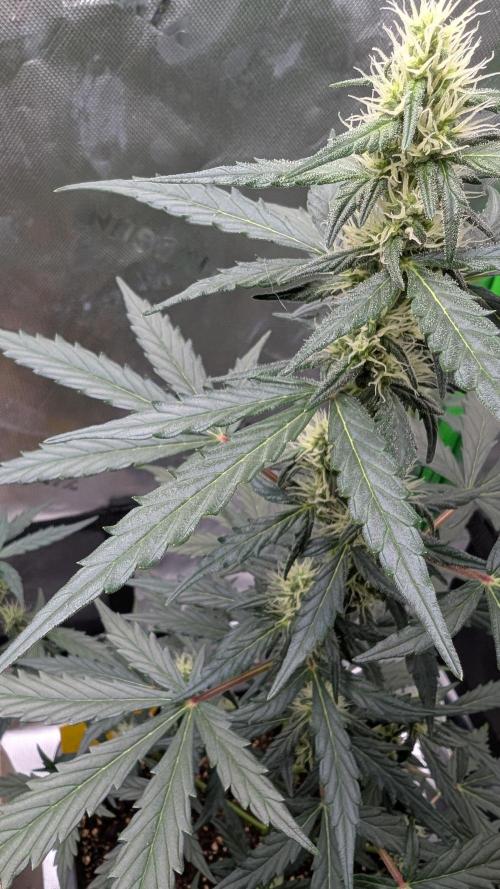
Week 6
Leaves. Curl up
1y ago
7
4
Solved

SmylinPupil
Brown yellow leaves?Can anyone help me? I had this issue with my last early Miss and thought it was a cal mag deficiency. I tried to adjust it last time during flower but it didn’t help. I really only notice it on one of them so far but I would like to fix the problem sooner than later.
6y ago
1
2
Solved

Chubaka26
Help please! First time growingIf i put to strong fertilizer to my plant, some leafs gone yellow and fall out, how do i save my plant?
Leaves. Curl up
Leaves. Color · Yellow
Plant. Too short
4y ago
3
4
Solved

JuanCarlos97
Hello fellow growers :D thx a lot
Firstly, is the reason why my plants (especially cookies) are very slightly curling/folding at the ends of the leaves because the LED is too powerful?(Reason to be worried?)
Secondly, should I start adding nutrients? Just 1/4 of Bio-grow for now?7y ago
1
3


Solved

RakiGrow
Leaves are drying up and turning yellowHello,
Something bad is going on with my Hulkberry plant. I think it might be due to giving it to much fertilizer.
Here is how it looked 2 days ago:
https://growdiaries.com/grow-questions/42518-hulkberry-turning-dry-and-leafs-are-bending-up… Show more
Leaves. Tips · Burnt
Leaves. Curl up
Leaves. Color · Yellow
5y ago
2
2
Solved

HueyBrown
Can I use tin foil for inside the grow box for light reflection?Week 1
Leaves. Curl up
7y ago
3
2
Solved

psamu
Struggling with deficiencies (nutrient lockout?)Hello everyone, I need your help. I've been growing 2 Green Gelato Auto from RQS but I've had some deficiencies for a while now. It's my second grow and it's the first time that I adjust the pH. They are in soil and I'm feeding them with Biobizz liquid nutes at a pH between 6-7.
Leaves. Curl up
Leaves. Dropping off
Leaves. Color · Yellow
5y ago
6
7


Solved

HAPPYCHEFF
The leaves are turning downwards showing their undersidesSo, idk whats happening, it's and outdoor grow, it does not have any pests at all (at least is what i see), I'm using a vegetative organic fertilizer 5-2 3 (only used one) on a living soil and watered just once with bioactive tea, yeaterday it rained so maybe is overwatered
Leaves. Curl up
2y ago
2
3

Solved

WeedDude
lightstress, lockout, nuteburn, nute deficit, age, genetics, ...?lightstress, lockout, nuteburn, nute deficit, age, genetics, ...?
place your bets ladies and gentlemen would love to hear your opinion.
details in diary week 15 and comment DAY 109 - DAY 61 Flowering
Thank you very much 😀
4y ago
3
3
Solved

BufoAlvarez
Slight CurlingWhat to do about the slight curling happening to 2 of my plants? Is it burn from temp/humidity spikes. I had been having issues so I since got a humidity/monitor controller. My lights were very close too so moved them to the recommended distance per the instructions.Week 2
Leaves. Curl up
6y ago
1
1
Solved

BBZGrows
Curling new leaf growth, slight yellowing.I’m getting some strange curling leaves seems to be upwards. It’s only on new growth and I’m seeing a more yellowing color around the tiny curled leaves.
It could be light burn, heat or humidity as the only thing of change over the past days is a random spike in humidity.
Thanks
Leaves. Curl up
4y ago
3
3
Solved

sbgrow
Why are my leaves canoeing?Noticed that the leaves on one of my plants is started to badly canoe. This plant has been lagging behind the other the whole grow (different strain and provider). Not sure if this is a nutrient deficiency, exceedance, or something else. I flushed both plants.Week 7
Leaves. Curl up
4y ago
7
Solved

Bak2Blk
I don't think this is nute burn...So I thought I had a case of mild nute burn but I haven't given the plants any Bloom or Calmag since last Friday, only water so I'm wondering if this is a nute burn issue now. Could it be my PH? Last I tested my run off it was at about 6.65. What's causing this?
4y ago
5
3
Solved

Chill07
Leaves had turned up (taco)Will the taco leaves go back to normal? I've made the adjustment to light moving it higher and switch the veg light off for a couple of hours and use only bloom. Yes I had a nute issue she doesn't seem to need nitrogen the soil must be plenty.
Week 7
Leaves. Curl up
6y ago
1
3
Solved

Lordcrow
Leaves pointing upWhy are my plant's leaves pointing up?
Is this normal?
Week 1
Leaves. Curl up
4y ago
3
3
Solved

Rando1314
Leaves supposed to be this yellow? 2 weeks from harvestSo ab a week and a half ago I sprayed my plants w a h/p 1/10 ratio to get rid of some pests and it worked no effect on plant.Only other things that’s changed is I introduced ladybugs to help kill remaining pests if any.Also 2 wks from harvest.are leaves supposed to be this yellow
6y ago
3
Solved

Goodvibs
Hi all, I have had very slightly yellow tips on this plant for a while. She is mid week week 10.
Two days ago the leaves started to curl and the yellow has spread slightly. Last night I flushed her with PH water and have dimmed the light slightly, anything else I can do 🤙thanks
4y ago
4
5