


Likes
Comments
Share


@Ginger_gnome
Follow
Well after having issues with my 3x3 set up, I decided to move the 2x2 over to the main room and see if it helps get the humidity down. And it did. Went from 65% down to 45% the first day now it goes back and forth between 45% and 50%. Way better then 58% and 66% if you ask me.
I also opened the tent up so that it can get a bit of the extra light from my other lights. Especially as one of the buds is up past the light. Lol been a interesting grow so far thats for sure.
Well that's all for now so happy growing everyone!!!

Likes
13
Share

@NuclearPyro
Follow
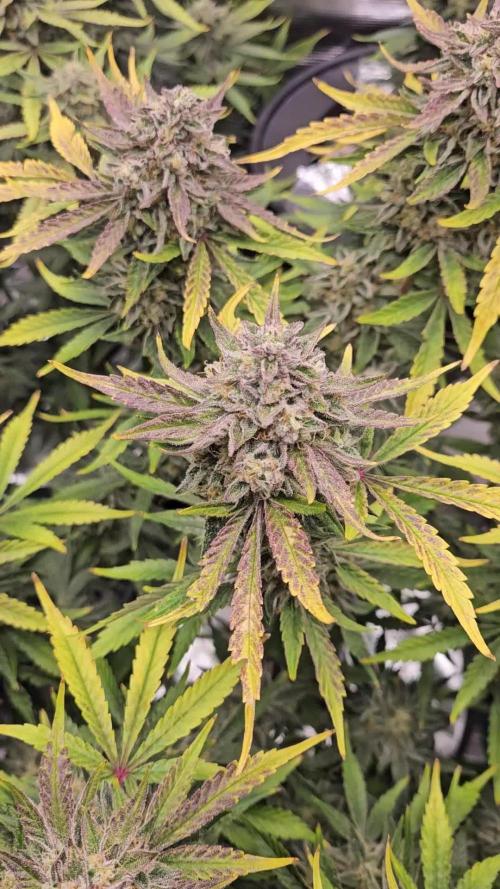
Day 74
Struggling with RH, Temp, and H2O temp. H2O temp cause tent to overheat. Cooled the water down and opened the window to let exhaust out bc it was recirculating warm air. In good range now
Found salt build up in stones and some biofilm on plastic on the stone disc, changed out res and cleaned with dilute bleach (always use dilute bleach when cleaning res buckets).
All is happy except afraid of reveg bc the last 2 weeks sooo much stress bc the weather.
Trichomes are about 70% cloudy. Within harvest window deff. The lil plant bc of stunted growth, might run 2 more weeks depending on trichomes. All bud sites under the bush have white pistols. Just going for that main cola, thats it
The bottom budsites trichomes are 60% cloudy, so wondering if I do a top harvest, let the popcorn buds go another week than finish harvest. Any help please.
These plants smell sooooo sooo sweet and crazy sticky.
Processing
Likes
22
Share


@PrairieFrostGrow
Follow
*
********* Week 8 - May 30 to June 5, 2020 - Day 50 to 56 **********
*
Getting caught up on pictures.........
Bud sites finally set in this week and the girls are in full flower now. They have been switched back to 18/6 light cycle as well........they spent 4 nights at 12/12 so I didn’t want to push it further and risk low productivity in 12/12 or her being overly stressed coming back to 18/6 after too long so it was time to switch back. GSC is staying in her own tent now.....she is too big to go back in with the other girls. I have to order a couple of things to make it work but feel that is the best answer. GSC2 went back into the flower tent with the others and just put her on several risers to bring canopy up. The girls need some leaves removed here and there but there are actually very few leaves in the big picture so I am very reluctant to remove too many.
The girls seemed to grow smaller leaves and bud sites are smaller right now. Lots of branch on GSC but I am not looking to grow branches😃Branches stiffened up more this week and have been working a little more silica into her feed. Strong stock = big yield👍 GSC has been feeding hard this week. She is having no issues going through 3L a day of feed. GSC2 is being fed the same right now and she is also stiffening up and looking more “perky” all the time......forming into a cannabis plant more now🤞GSC2 has done so well with her bad transplant and growing out of the pot almost sideways......she is a fighter!!!
Stay the course for now and get the second environment dialled in for the big girl!!!
Little more detail........
May 30/20 - Day 50
- Dry out day for the girls
- GSC still not set bud sites.....three days at 12/12 now??
- GSC2 is looking taller and side branches are reaching up more.
May 31/20 - Day 51
- 8L water mixed with Dual Fuel @ 2ml, Piranha, Voodoo, Sensyzime, Rezin, Liquid Wt, CalMag @ 1ml = 1300ppm and 5.9pH
- GSC took 5L - runoff 900ppm and 5.7pH
- GSC2 took 3L - runoff 1300ppm and 5.9pH
- Leaf strip harder on both girls today
- GSC is 21” tall and slowly forming bud sites.
- GSC still on 12/12 light cycle
June 1/20 - Day 52
- dry out day
- GSC has a number of hairs coming out today......buds slowly forming, Leaves are smaller.
- moved light cycle back to 15/9 today.......slowly working GSC back to 18/6.
June 2/20 - Day 53
- 7L water with Vitathrive @ 2ml, Rhinoskin, Dual Fuel @ 1.5ml = 950ppm and 5.9pH
- GSC took roughly 4L and GSC2 took 3L.........no runoff from either girl
- GSC has more hairs popping and she is progressing.
- GSC tent back to 18/6 today.
- GSC2 is showing some spotting on her leaves.
June 3/20 - Day 54
- dry out day
- GSC stem is stiffening and hairs are looking good.
- GSC2 is in full flower now as well and looking good....not tall though.
June 4/20 - Day 55
- big water day
- GSC given 6L with Massive @ 3ml, Sensyzime, Rezin, Liquid Wt @ 1.5ml, Dual Fuel @ 1ml = 1025ppm and 6.1pH
- she was super dry and took all 6L no problem,
- GSC2 given 4L with Massive @ 3ml, VeloKelp, Sensyzime, Rezin, Liquid Wt, Dual Fuel @ 1.5ml = 1275ppm and 6.1pH
- GSC2 given some kelp and increased based nutes a bit.
- GSC in veg tent by herself......she is just to big to go back in the other tent!!!!😀
- GSC2 is getting squished a bit in the other tent as well as they are all doing well and filling in the tent.
- GSC2 is put on milk crate to raise her up a bit and some more light on her.
June 5/20 - Day 56
- dry out day
- GSC didn’t look as happy today as I would have thought?
- GSC2 on the other hand is firming up and looking a lot more like a plant in flower now👍

Likes
12
Share


@2Stones1Bird
Follow
Checkout my Instagram @smallbudz to see the Small budget grow setup for indoor use, low watt, low heat, low noise, step by step.
25/10/2019 - First feed I gave her 0.25ml on 250ml of water of Biobizz-Grow, with 6.5ph.
26/10/2019 - Leafs looking a bit crooked, and some pale spot lets hope its not fungus. (gave her 100ml of just PH 6.5 water)
27/10/2019 - Feeding day, gave her 250ml water with 0.25ml Biobizz Grow, 6.4PH (changed feeding to once every 2 days with a plain water interval)
28/10/2019 - Started LST
30/10/2019 - Feeding day, gave her 250ml water with 0.25ml of each Biobizz - Grow,Bloom and Max, 6.3PH, added carbon filter and it raised the temps to 29c
31/10/2019 - A tad too much of nuts, little burn tip. (Sensi Seeds warned me but I still goofed it)

Processing
Likes
11
Share


@Torsfarmer
Follow
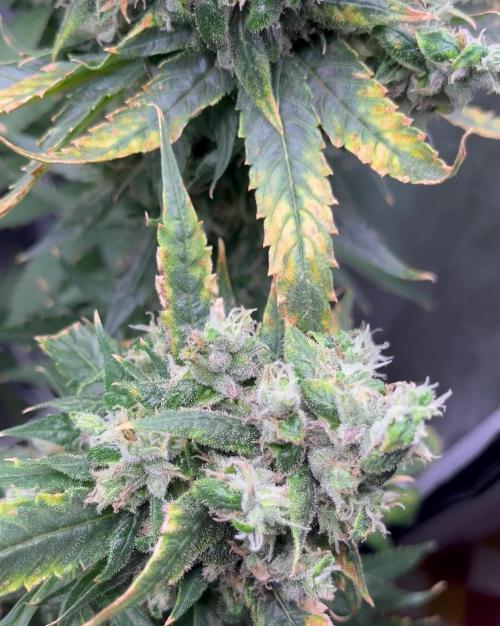
will have to cut these in maximum 1v .. maybe a few days just. weather changing fast now!! Rain all weekend



Likes
21
Share


@Mrs_Larimar
Follow
2023-03-15
All of the Plants had male Flowers, too
one could be saved, in just removing the Male Flowers
and stripping her , so 2 Branches remained
These 2 branches turned out very frosty
she smells like acid Lavender and some diesel

Likes
57
Share


@Salokin
Follow
Hello Growmies!
We've reached the remarkable week 16 with our tenacious plant, and the developments are simply astounding. Following a week of dedicated flushing, the plant continues to mature gracefully, showcasing an unwavering commitment to quality as she ripens. I'll maintain the reverse osmosis (RO) water regimen until she ceases sprouting fresh white pistils, a testament to her ongoing development. It's a delicate balancing act, providing enough support for her increasingly heavy branches burdened by significant gains, yet the plant's structural integrity remains a priority.
Visually, the transformation is captivating; she's commencing a magnificent fade, with the unaffected foliage adopting a rich, deep purple hue, bordering on an almost blackish tone – a stunning display of her natural lifecycle. This chromatic shift isn't just aesthetically pleasing; it's a clear sign of the plant's life cycle progressing towards its grand finale. The chlorosis-free leaves, once vibrant and full of life, are now taking on this regal, somber palette, indicating that maturity isn't far off.
Moreover, the trichome-laden buds are a sight to behold, their calyxes continue to swell, and the once slender branches now require additional support to sustain their own weight. It's evident the rigorous cultivation efforts are paying off – the plant's resilience and your attentiveness have aligned perfectly, resulting in an abundance of almost golfball-sized nuggets that shimmer with resin.
Every plant tells a story, and this one is about to reach its crescendo – the careful nurturing, the attentive adjustments to the feeding schedule, and the delicate handling of her structure have all contributed to this moment. As we continue with the RO water and witness the plant's final stages, it's clear that the harvest will be one to remember.
Stay lifted,
Salokin.

Likes
9
Share


@Oxytiger1995s
Follow
สัปดาห์นี้พวกเธอเติบต่ออย่างต่อเนื่องและแข็งแรง แต่อาจช้าไปหน่อยสำหรับต้น3สัปดาห์ แค่นี้ฉันก็ดีใจแล้ว

Likes
32
Share


@LSnake
Follow
I am very satisfied with the germination that took place in a few days. 🌱💪
This week I will continue to keep an eye on the development of the plant to prevent it from stretching too much in the first weeks. 🔍
I use BioBizz Light soil which for the first few weeks manages to provide enough nutrients, so I will water with a little water every day, to keep the humidity a little higher, without running the risk of overwatering. 🌊❌

Likes
47
Share

@Miketama
Follow
Harvest week for the Milky Way F1 growmies 🙌 Pretty happy with how she handled this cycle, recycled soil first time ever, dead of winter, undersized light for a 100x100 tent… she just kept going 💪
In previous runs I did scaled harvests, and every time I noticed a visible resin boost and even some anthocyanin production on some phenos, confirmed that a sudden light intensity increase late in flower does something interesting.
This time I went a different route: last 6-7 days I stripped most of the non-resinous fan leaves and redirected a lateral bar onto the mid/lower zone to get the same effect. Curious if mechanical stress from defoliation plays a role here too, anyone know anything about jasmonic acid? 🤔
Late flower I pushed the setup to ~200w adding 660nm red bars at 40-50cm, which clearly tightened up the buds compared to previous runs 👀
Pulled the CO2 bottles in flower, without a way to measure it I’d rather focus on VPD and fresh air circulation 🤷 Kept them in veg where humidity tolerance is higher anyway.
Now she’s drying and I can’t wait to see how the wet/dry ratio lands 🌿

Likes
30
Share


@BillMonroe
Follow
Absolutely love the CMH light. :) I can recommend it to everyone.
Flowering with 13/11 on/off
The scrog was a bit late. Next grow I can use it better. Plants are getting their hairs.
No spider mites so far. Haha.
I've added 50 watts of DIY led (see previous week). I think I'll add 50w more. My next step for this coming week will be to get some better air movement because my tent is more crowded now. I've sacrificed a plant spot for my good fan in this grow. The scrog net was installed to widen the canopy as much as possible
Critical XXL is just a day or 2 ahead of Pineapple chunk in terms of hair development. Size-wise Pineapple chunk started huge but the Critical XXL plants caught up and grew larger. Now, PC is making a comeback racing through the scrog net. The Pineapple Chunk makes really large leaves that cover the canopy. Needless to say I am excited to see these strong stems develop their buds.


Likes
12
Share


@DrWeed420
Follow
We are starting the second week!!! The girls feel good, they are growing like crazy. Tomorrow we will transplant them into larger pots (10 l). I also increase the fertilizer dose to 2 ml/l. Maybe I'll start LST training this week. I still keep the lamps at 30 cm, but I increase the light power to 70%. I'm full of enthusiasm, keep it up! Thank you for all the likes and I wish you successful growth as well.
🙂🙃🙂🙃🙂🙃🙂🙃🙂🙃🙂🙃🙂🙃🙂Hello to all cannabis lovers🤩. The girls have already been transplanted into 10-liter pots. I replanted them yesterday, but I only took photos today. Thanks to valuable advice from @Crashoverite, three days ago I stopped fertilizing and watered the plants with clean water. Thank you very much !!! 🙏🤪😁
Likes
Comments
Share


@youdan
Follow
Tuna vera soddisfazione vederla crescere, cambia aspetto tutti i giorni e i profumi sono qualcosa di fuori dal normale! una genetica veramente mozzafiato

Likes
18
Share


@DogDoctorOfficial
Follow
🌱✨ Super Sativa Seed Club Germination Report! ✨🌱
Hey fellow green thumbs! 🌿 Today, we're diving into the exciting world of germination with our latest run from Super Sativa Seed Club. Buckle up, because it's going to be a fun and informative ride!
We started our germination journey with the trusty Cannakan method. This approach is a game-changer for seed enthusiasts looking for robust and quick germination. Here’s how it went down:
Initial Soak: Our seeds (Auto Fast Pete and Auto Northern Dragon Fuel) took a luxurious bath in water for about 30 hours. This soaking period is crucial as it wakes up the seeds and starts the germination process. 🌊🌱
Once our seeds had a good soak, we moved them to soil. This transition is where the magic really begins! The seeds were carefully placed into a rich, well-draining soil mix to ensure they had the best start possible.
🌟 Genetic Breakdown:
1. Auto Fast Pete:
Lineage: This auto-flowering marvel comes from a lineage of speed demons, known for their rapid growth and resilience.
Characteristics: Expect a robust plant with a quick life cycle, perfect for those looking to get results fast. Auto Fast Pete is renowned for its sturdy structure and abundant yields.
Flavor & Effects: With a sweet and spicy profile, it’s a treat for the senses. The effects are balanced, offering a pleasant, uplifting high that's perfect for any time of the day.
2. Auto Northern Dragon Fuel:
Lineage: A powerhouse combination of Northern Lights and Dragon Fuel genetics, this strain is all about strength and vigor.
Characteristics: Known for its impressive growth and high resin production, Auto Northern Dragon Fuel is a cultivator's dream. It has a slightly longer life cycle compared to Auto Fast Pete but rewards with larger yields.
Flavor & Effects: A complex blend of earthy, pine, and fuel notes, it’s both intriguing and satisfying. The high is potent and relaxing, making it great for unwinding after a long day.
🌱🌿 What to Expect:
Fast Growth: With Auto Fast Pete, you’ll see rapid development. It's like watching nature's express train!
Resilient Plants: Both strains are known for their toughness. They handle stress well and are forgiving to minor cultivation errors.
Impressive Yields: Expect a bountiful harvest from both strains. Auto Northern Dragon Fuel might take a bit longer, but the wait is worth it.
Aromatic & Flavorful Buds: Get ready for a sensory delight with rich, complex aromas and flavors.
🌍🌟 Conclusion:
Germination is just the beginning of our exciting journey with Super Sativa Seed Club's Auto Fast Pete and Auto Northern Dragon Fuel. These genetics promise not only a rewarding cultivation experience but also top-notch end products. Whether you’re a seasoned grower or a curious newbie, these strains offer something special for everyone.
Stay tuned for more updates as our plants grow and flourish! Happy growing, and may your gardens always be green and bountiful. 🌿💚✨
Germination method 🌱 @thecannakan
Genetics @supersativaseedclub_official
Nutrition
@aptusholland 🌿
@aptus_world 🌎
@aptus_es 🌍
@aptusbrasil 🌱
@aptus_thailand 🌿
@aptus_portugal 🌳
@aptususa_official 🍀
@aptusplanttechnz 🌺
@aptusplanttechaus 🍃
Ambient controls🎮
@trolmaster.eu @trolmaster.eu.support @trolmaster.support @trolmaster.agro
Soil @promix_growers_eur @promix_cannabis
LED - @lumatekeu
Watering- @autopot_usa @autopot_global
Love and attention- @dogdoctorofficial
As always thank you all for stopping by, for the love and for it all , this journey of mine wold just not be the same without you guys, the love and support is very much appreciated and i fell honored and so joyful with you all in my life 🙏
With true love comes happiness 💚🙏 Always believe in your self and always do things expecting nothing and with an open heart , be a giver and the universe will give back to you in ways you could not even imagine so 💚
More info and complete updates from all my adventures can be found ⬆️link in the profile description ⬆️
Friendly reminder all you see here is pure research and for educational purposes only
💚Growers Love To you All 💚
#SuperSativaSeedClub #GerminationReport #FastPete #NorthernDragonFuel #PlantMagic #GardeningJoy #NatureLovers #PlantPower #Inspire #GrowYourOwn #aptus #aptusplanttech #aptusgang #aptusfamily #aptustrueplantscience #inbalancewithnature #trolmaster #trolmastereurope #trolmastersecrets #Autopots #sssc

Processing
Likes
6
Share


@DeAKiller
Follow
Ho cambiato tutto il sistema di irrigazione, adesso sembra molto meglio, le piante sono in ottima salute
Aggiornamenti:
Al 15 giorno stanno iniziando a uscire le radici dal vaso 😋
Likes
10
Share


Likes
27
Share


@Bread_n_Buds
Follow
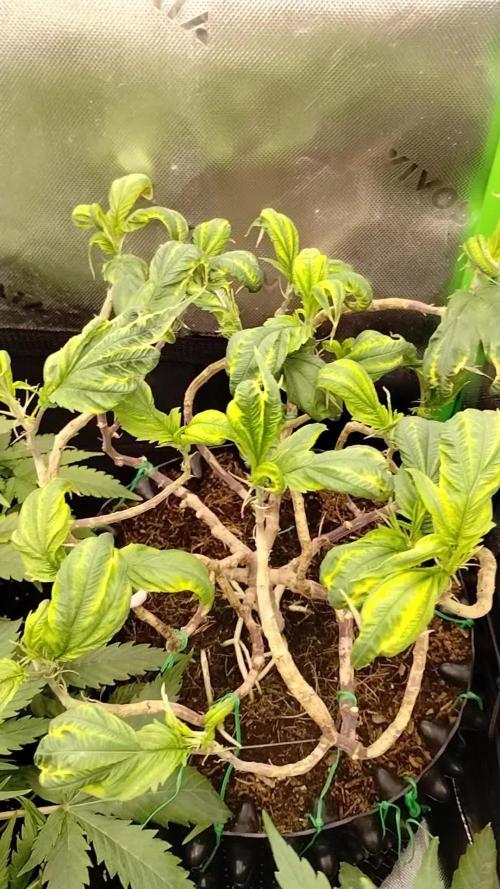
For our Zamnesia girls It's time to work our magic, since October 1st we are in flowering, the plants have vegetated for exactly 4 weeks, a single top was done on some, others are growing straight, some clones here and there still in veg.
Our Test 2 XXXX are the princesses of the grow. They are plants with a wide internodal distance, they eat a lot of fertilizer and are really very healthy. One was topped only once but leaving many branches underneath. The other is growing straight and fast as lightning. We passed October 1st in flowering but this that you see is the photographic documentation of the last week of vegetative. The photos were taken exactly 1 month after birth September 1st - October 1st
--- Technique chosen (depending on the characteristics of the plant) - The plants are not doing very well when it is like this I decide to search for the miracle; on one I did a topping and cleaned a lot and left it in veg, the other one went just a little cleaned straight into flowering.
--- Feeding Program - The fertilizers are always Plagron and I am following the table that I generated on the site depending on the substrate chosen. Create your card and follow it, never be presumptuous my friend as I have been in the past, follow the card and look at the plants, not all need the same amount of fertilizer. We have arrived at the time to give a good hit of iron in the first weeks of flowering, already of life race not sprayed but mixed with fertilizers. We have Switched to fertilizers for flowering.
---- https://plagron.com/en
- Power Roots - 1ml/l
- Alga Grow - 4 ml/l -
Pure Zym - 1 ml/l
- Sugar Royal - 1ml/l
- Vita Race - 3 ml/l
--- The 100% Organic pack by Plagron can be found on Zamnesia at the link: https://www.zamnesia.io/it/11457-pla gron-easy-pack-natural.html
--- We have removed the dehumidifier and now the values range from 45 to 60% we will put the dehumidifiers into operation in the 3/4 week of bloom
// Strain Description // Strain Coming Soon!
- Get a seed of this fantastic strain --- new strain coming soon get others for now.
- Soil and Fertilizers entirely organic --- https://plagron.com/en buy on www.zamnesia.io
- air system
--- https://www.secretjardin.com/
- Light & Growbox- www.marshydro.eu
- Music and sound --- I made my girls listen to 432hz frequencies and music from www.radionula.com
- Z --- You can find these seeds, much more from the world of cannabis, mushrooms and an incredible series of accessories and gadgets on the reference site not only mine but of many growers —— https://www.zamnesia.io
Likes
15
Share


