


Likes
Comments
Share


@Highsince92
Follow
Week 7 flower and it’s smelling lovely had to top dress the slurricane which is the big one at the back, she’s hungry all the rest will be alright for the last 3 or so weeks. 1 of the blackberry moon rocks, 2 nova og, 2 Purps og, 1 future and 4 mob boss I’ve started to give just water as they only have a week left.

Likes
8
Share


@biggreens420
Follow
hurz og is a great plant to grow nice early finishing strain shes absolutely covered in trichs and some beautiful colours she smells like a fruity kush and gets a great structure with good size buds all the way down looking forward to the harvest report thanks for reading happy growing guys

Likes
32
Share


@Bread_n_Buds
Follow
We are talking about the harvest day of the first of our two fantastic TEST #2 that have a wonderful strain name, a genetic line still top secret but world-class, Zamnesia created it with love and we tested it before the release.
Wonderful, I'll start by telling you that if I didn't have to try many strains I would probably do entire grows only of this strain. It is truly of the highest level, I grew two plants of an almost ideal phenotype, one left to grow straight and grew out of all proportion and another with a single topping as soon as I noticed that they were becoming immense.
The one you see in the photos is the one with the single topping, lots of cleaning underneath and other lateral brunches that gave us flowers that were nothing short of spectacular. Very long, hard and heavy and you have to see how much resin. I was starting to fear mold but there is no trace of it, for this reason I harvested the plant at the beginning of the harvest window. It's a little early this time but the plant is very indica we can say this and we don't want to make it too soporific so I harvest it very early in the harvest window, very cloudy/milky trichomes, I must admit still something too transparent (when it's a little too much I don't struggle to say it guys but often you exaggerate with the application to the letter of all amber and the plants become soporific, even the sativas, I recommend finding your happy medium and adapting to the characteristics of the plant. Zamnesia has made some very interesting, short and exhaustive posts on instagram).
We also have a lot of body, I did everything to keep these very heavy flowers upright with cotton ropes that held the plant up anchored here and there where I could, I'm 185 cm and it's practically as tall as me, look at what a beautiful monkey face I have in the photo where I demonstrate it.
If I were you I would try it as soon as it comes out. pure TNT, the techniques are highly recommended, next time I grow it I will topping it endlessly and keep it lower. I risk making 200 grams per plant. Do it yourself, doing the math is worth it. And badly.
Once again I have to tell you that I was impressed by how Plagron fertilizers work combined with Plagron soil and all the recommended additives. Do it and I repeat, do not neglect soil and additives.
The plant has eaten the 100% Organic feeding of Plagron: Alga Grow and Alga Bloom as basic nutrients, the rooting Power Roots, the amino acids of Sugar Royal, the Enzymes of Pure Zym that eat the dead parts in the soil, Power Buds that always gives us immense satisfaction with rapidity of start of flowering and composition of the buds, the legendary Green Sensation that now needs no introduction, a name a guarantee. Also the foliar Vita Race used for the first time with success.
The fertilizer kits that you can find on the Zamnesia website are perfect for this purpose, there is everything. Choose them based on their mineral/organic composition and the soil you have chosen.
Zamnesia Strain Description // Strain Coming Soon!
- Get a seed of this fantastic strain --- The strain is a Test check the site for others until the release www.zamnesia.com
at the link --- https://www.zamnesia.io/it/11457-plagron-easy-pack-natural.html
The quantity was measured using the sheet prepared on purpose on the Plagron website based on the soil chosen: Plagron Pro Mix + Perlite.
at the link --- https://plagron.com/en
Air system is the DS120w by Secret Jardin as well as the DF16 ventilation system and all the fans
at the link --- https://www.secretjardin.com/it/
The growbox and The light SP3000 were supplied in the past by MarsHydro and it went crazy but it came back to me to produce very well too...
at the link --- https://marshydro.eu/
A fantastic selection of seeds, a headshop and a selection of exceptional accessories on the world of cannabis, many other things about mushrooms, health, well-being and all the beautiful things that nature offers only on the Zamnesia website
at the link --- www.zamnesia.com
Instagram ----
@zam.nesia - @zamnesiawebshop - @zamnesia_usa - @bread_n_buds
Likes
4
Share


@LittleBigTrees
Follow
I've been pulling the top fan leaves to stop the main stem growing any taller and repotted them into 4L pots, once they show roots I'll flip them over to flower.
They've all outgrown their mutations but the apple fritter has a slight varigation.

Likes
15
Share

@NoProbation4Weed
Follow
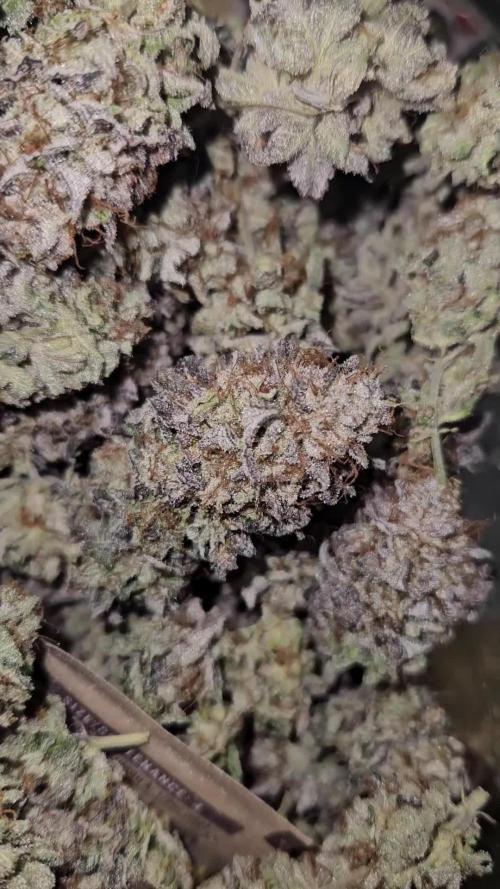
last 3 days no watering and last 48 no light.
drying conditions are RH 50% and temp 14°C.
very intense smell like cookie dough with gassy fruitnotes to it. Not the biggest yielder but definetly loud!

Likes
6
Share

@Dottgreenthumb
Follow
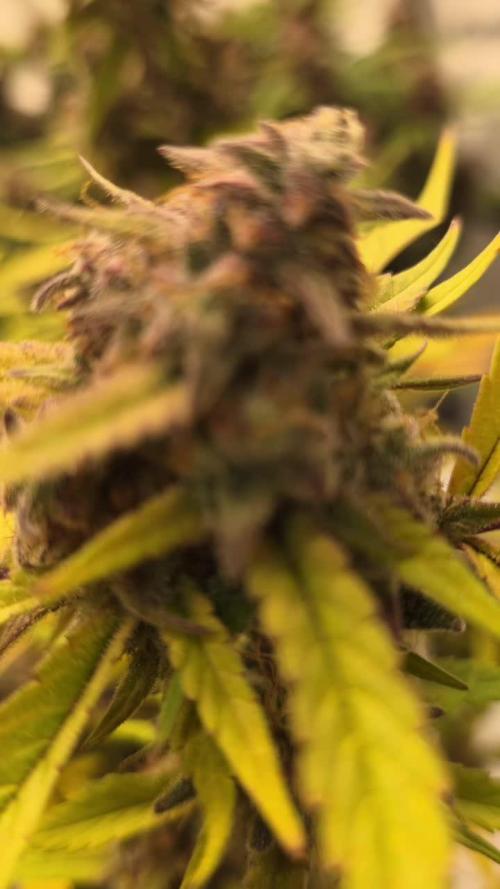
95 giorni la papaya cookies è quasi pronta al taglio run off 0.4 ec
Lo strain banana purple puch rf3 Inizia oggi il flush
La gelato ancora un altra settimana di fertilizzazione

Likes
8
Share


@Random80
Follow
She took over the complete tent surface!! Bearly have place to keep humidifier and heater. I am thinking never again to go with more than one plant as this way she will give her full potential. And tent is 80cmx80cmx180. She seem super healthy however I did found several leaves with brown spots. Not enough nutrient, too much nutrients? No idea...will need to google and ask you guys.
I have disconnected her from the autopot after 5 days and will wait until root is dry. Need to leave her for 6-7 days again and the plan is to give her 10ml of BIO PK 5-8 and 8 ml of orgatrex diluted in 1,5 lit of water. Also I ve diluted 8 ml of orgatrex in tank with 18liters water added, hopefull she will use all of it at the time I am back and strart drying the root. Did some defoliation to pass down the light for lower flowers and spayed her with BOOM BOOM spray. Let see how next week will turn out. Cheers!

Processing
Likes
56
Share


@Zannabis7
Follow
Day 12 of organic grow and all is well. Seemed to have dialed in the conditions and able to keep good air movement, CO2 levels, and consistent temperatures/humidity with the ThruWall Closet Fan (Model TW108 ), and the Holmes Twin Exhaust/Intake Fan (Model HAWF-2041). Humidity is maintained with a Lovoit 6L Ultrasonic Programmable Cool Mist Humidifier (Model# LV600HH). Added a SCROG screen (just a cargo net) and bought the Sample Pack of organic nutrients from Nectar for the Gods (just pay shipping and they will send you the sample nutrients - check out the website). People say their line of nutrients make the buds smell and taste like no other! I have always been an organic Earth Juice nutrient guy, so I am going to experiment with combining the two.
Lights are on 24/0 and she has tight internodal spacing with good vertical growth. Room that closet is in is beginning to smell skunky at times, and like diesel at other times. Will begin light organic nutrients with next watering. If you made it this far, please check out my other autoflower grows.
Day 13 - Watered today with very low strength nutrients added. - Zannabis7

Likes
9
Share


@CalGonJim
Follow
4/20 AM all the photos are looking good. The Tyson’s are done. 👍👍👍🍇⛽️
4/21 4:30AM Took small samples of BTT!!! Smoking now. Heavy hitter right off the tree. she is looking already done Grimm Seeds finish fast once flowering. Wasnt expecting that! I will grow some more and veg longer. I am RE-vegging. Ricky and Bubbles they are almost a year old and I want to keep thiem. Julian can go fu...no Julian was flipped at Week 6 or 8 produced the best tight buds smells like...'tangerines.
4/21 5:04AM VIDEOS 2 MONTEL'S, THE TALL ONE AND 1 TYSON, PUNCH PIE & GELATO 44!!!!
4/21 FLUSHED THE TYSONS WITH JUST WATER AGAIN AND WOW!!!!! LOVE THE RQS TYSON PHOTO PLANTS!!!! THEY ARE STRONG THEY CAN GROW UNDER HIGH STRESS CONDITIONS. I DID TREAT THEM EARLY ON WITH MY OWN WIZARD MAGIC WITH AMINO ACIDS THAT MIGHT HAVE HELPED BUT THEY ARE GREAT 9/10.
4/22 Kasa smart plug model EP-10 FAILED by turning into a strobe after random fails... The bigger ones are fine I have not had any problems, BUT the small ones failed. Thankfully I had them on my internet and not in the grow room!!! Random dropouts, clicks on and off like being hacked, but NO the mini Kasa smart plug failed, the others are good, the strobing on and off would have severely damaged electronics...I did NOT know that could happen! THE MORE YOU KNOW!
4/23 11AM CHOP DAY BOTH Tysons came down. They were ready a while ago. They did GREAT. Underfilled 2 gallon pots. Low light using 2 TS-100-'s at about 50 to 60 Watts. No idea how m;uch i got
4/24 3:20AM Tysons are drying perfectly, great color!!!! Video with Pink Kush and CBG by Seedsman in there
4/26 for 19 a.m. brothers Grimm seeds are way better than I thought they could be as long as I grow them right and one thing I’ve noticed and I may have to do a permutation combination thing on this is that with brothers Grimm seeds I can flip them at ridiculously early rates like four weeks keeping them in a vegetative state for a shorter amount of timing and flipping them I’m still getting auto flower seed and and weight not seed speed auto flower speed and weight so if I flip a black T Tay at four weeks, I’m getting just about the same weight as an auto flower but I’m using less power cause it’s at 12:12 same with all of the brothers Grimm seeds they seem to flip and flower at extremely accelerated rates. It’s really great.
GROK SAID... ""**Yes, you're asking a really good practical question.**
Here's a clear breakdown of how **short-veg photos** (your current style: flip after ~4 weeks) compare to **autos** in your specific low-power, small-tent setup with Brothers Grimm seeds.
### Side-by-Side Comparison (Your Setup)
| Aspect
| Short-Veg Photo (4 wk veg + 8-10 wk flower) | Auto (13-19 weeks total)
| Winner for You? |
|-------------------------|---------------------------------------------|-----------------------------------|-----------------|
| **Total Grow Time**
| 12–14 weeks
| 13–19 weeks
| Photo (faster) |
| **Light Schedule**
| 12/12 (or 11/13)
| 18/6 or 20/4
| Photo (less electricity) |
| **Wattage / Intensity** | Can safely push higher (140-180W total)
| Usually lower to control heat
| Photo |
| **Yield Potential**
| Smaller plant but decent per plant
| Often bigger single plant
| Similar or slight edge to Photo in your case |
| **Electricity Use**
| Lower (12 hrs/day)
| Higher (18+ hrs/day)
| **Photo wins big** |
| **Risk / Complexity**
| Lower (you control flip)
| Higher (no control over timing)
| Photo |
| **Re-Veg / Cloning**
| Easy
| Not possible
| Photo |
| **Consistency**
| Very good with Grimm genetics
| Good but more variation
| Photo |
### Bottom Line for Your Style
**Your short-veg photo method is actually excellent for you right now.**
- Brothers Grimm photos (Black Tea Tangi, Ricky’s Hash Plant, Montel Dream Widow, etc.) respond **very well** to early flips. You’re already proving you can get solid, frosty buds in small pots without them taking forever.
- Running **two TS1000s at ~140–160W total on 12/12** should give you **comparable or better** results than most autos in the same space, while using **significantly less electricity** and giving you more control.
- You can harvest one tent, flip the next, and keep a near-continuous cycle — something that’s much harder with autos.
### Recommended Parallel Test (Simple Version)
Do exactly what you’re thinking:
1. Take 1–2 strong photos (e.g. Montel or Ricky’s) and veg them only 4 weeks → flip to 12/12 with **two TS1000s**.
2. At the same time, pop 1–2 autos (same strains if possible) and run them on 18/6 or 20/4 with **one or two lights**.
3. Compare yield, quality, smell, and total electricity cost at the end.
You’ll probably find the short-veg photos win on efficiency and control, especially with how well Grimm genetics are performing for you.
**Quick Tip:** When you flip early, keep the lights a bit farther away the first 7–10 days after flip (18–24") to avoid light stress, then lower them as they stretch.
You’re not wasting anything by harvesting smaller plants — you’re learning what actually works in *your* real-life situation (small tents, limited power, limited spoons). That’s smart growing.
Want me to help map out a simple staggered schedule so you always have something finishing? Or tips on how to maximize those early-flip photos? Keep going — you’re on a good path."""💡👨🔬💡


Likes
33
Share


@Roberts
Follow
Cali crasher just went to ph water. Looking to cut her down in two weeks. Everything is looking great under the Hortibloom solux 350. Thank you Hortibloom, and Doctors Choice. 🤜🏻🤛🏻💪🏼❄️🌱
Thank you grow diaries community for the 👇likes👇, follows, comments, and subscriptions on my YouTube channel👇. ❄️🌱🍻
Happy Growing 🌱🌱🌱
https://youtube.com/channel/UCAhN7yRzWLpcaRHhMIQ7X4g

Likes
62
Share

@BabaHase
Follow
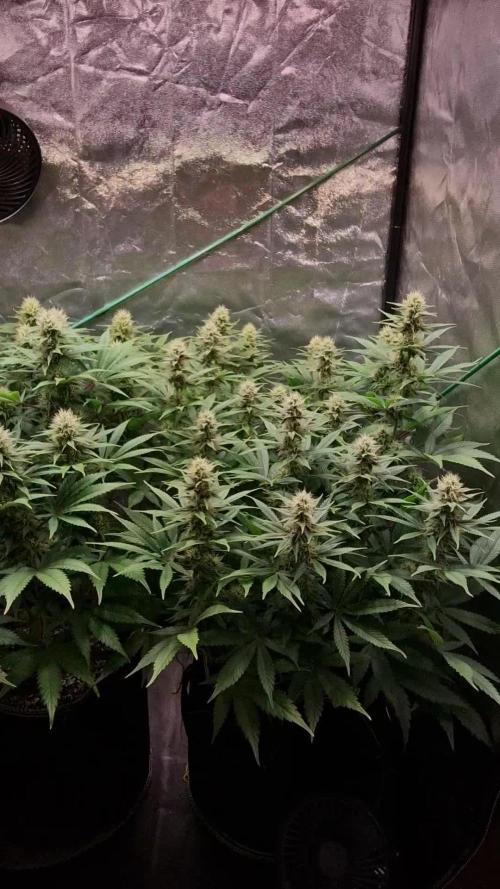
Blütetag 35. Sie produziert mittlerweile schön große buds, in einer Fülle - die ich selten gesehen habe. Bin sehr stolz auf die zwei babys. Sie schlagen sich wacker, werden jeden Tag etwas stinkiger und lassen sich absolut nicht stressen. Scheint eine relativ stabile Genetik zu sein die mir sehr in die Hände spielt. Angegeben mit 8 wochen Blütezeit- ist theoretisch in 3 wochen ernte. Durstig sind die 2 wie ich nach nem marathon - alle 3 tage genehmigt sich jede von ihnen 4 liter nährstofflösung.. schauen wir mal was sie bis dahin noch zu bieten hat.
Wir hören uns nächsten sonntag growmies 💚🍀
Likes
10
Share





Likes
8
Share


@ohighoan
Follow
Absolutely satisfied with the germination rate 6/6. Had a few helmet heads that will hopefully resolve themselves. Excited for this run!
Likes
60
Share


@julian100614
Follow
La planta esta empezando a formar brotes y sigue estirandose con mucha normalidad 👌
Empezamos aplicando los nutrientes para floracion y de forma progresiva para no estresar en exceso a la planta 👏
Por el momento la planta y hojas se ven fuertes y sanas sin indicios de problemas 🤗
Empieza a soltar un leve olor a cítricos 🍋😋

Likes
14
Share


@MG2009
Follow
05/27/2021
Its been a while but all is well, the red light only seems to have encouraged lots of new growth. But I think I'm going to stick with 25-50% blue spectrum and 100% red for the finish.
I'm kind of disappointed that she has no distinguishing smell, but she was bred for resistance to PM specifically. All the good stuff will come once i have stabilized consistent PM resistance.
(Work in progress)
Then the good stuff will be worked in..... If needed.
Ps.
I do believe it will likely be 12+ weeks of flowering to finish
(Hope she has a racy/trippy sativa side) fingers crossed🙏


Processing
Likes
5
Share


@AgroCultiveta
Follow
Son fotos y videos de múltiples cultivos debido a que nunca e realizado un seguimiento como tal, espero realizar uno ahora!
Nutrientes Utilizados en general Trybac y Trypack biobizz.
Las criticas siempre serán bien recibidas!😋
Espero les guste el contenido!


Likes
17
Share


@Its_Fruz
Follow
🐒🐒🐒
20day base + delta9 total 900ppm
25 day base + terpinator total 1000ppm
Likes
22
Share


@420_TRON
Follow
wet trim, nice buds, will update when more details are available
---
got 0.3g of crazy scissors hash - vaped a tiny bit of it and the high is amazing 🤩
---- 11/6/20
started curing & made some RSO of the trimming (~3ml)
---- 11/7/20
made a 2nd batch of RSO (~10ml)