


Likes
Comments
Share


@Wicked_Stix
Follow
The end of week 1 has arrived. We all know how it goes. Just playing the waiting game. At this stage these girls are just working on building their root system. The roots should be hitting the reservoir in the bottom of the buckets soon then they should take off. Got the water pumping and the lights beaming 24 hours a day. Running a low dose of maxigro. Keeping the ph around 6. Will probably be topping them around day 12. Would be amazing if I can get them ready to switch to flower at the end of week 3. But for now I'm just going to check on them 420 times a day hoping they don't die. Might be back next week if they are alive. Happy growing!

Likes
10
Share


@SaintDave
Follow
hello there growers ! 👽🌳🌴🌲🧚♂️ i cant add pics often, but i try to show my growing results as possible. its biggining of the 8th week and i’m pretty satisfied. please comment your advices 🤗

Likes
3
Share


@CanarianGrow92
Follow
Week 5 already, thats why they call it fastbuds... In no time its harvest time! We had some bugs (trips) running around, i think i took them from outside as i was working on my garden, my outdoor plant is also affected, that happens for being a dirty old man 🤦🤷 but not much we can do now, i tried to clean the leaves a bit and remove some, but i think its better to harvest and clean the room as i dont eant any pesticides on the buds, but for the rest quite ok, we gave aome extra pk and bloom this week so lets see how the plants do next weeks 😁
Likes
74
Share

@Schnabeldino
Follow
📅 Week 10 | 🌼🌸🌺 Flower – Woche 4 🌼🌸🌺
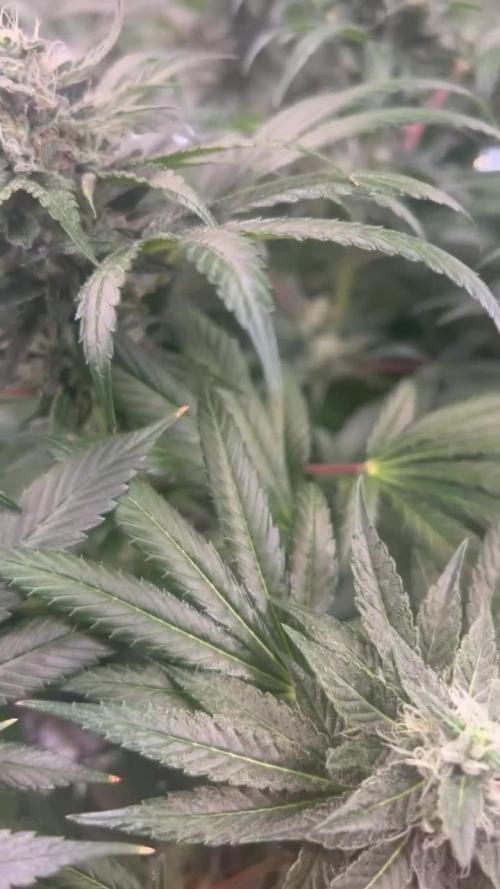
🔸Our Lady 💃 continues to dance through the flowering phase – and how! The buds have grown significantly in volume and now appear more compact and firm. The white pistils are slowly turning orange, a clear sign that ripening is progressing. The trichomes are now ubiquitous – a glittering carpet of resin covers the flowers and gives them that coveted “frosty look.” The sugar leaves are also covered with crystals and have an intense aroma – a foretaste of what is to come. 🍬✨
🔸The plant continues to receive Big Bud from Advanced Nutrients, which it acknowledges with a significantly increased thirst. I now water every two days.
📈 Current Conditions
🌡️🔆 = 27-28°C
🌡️🌜 = 21°C
💨 VPD = 1.4
💨 Humidity = 55%
🔦 PPFD = 900 µmol (12/12)
🔦⌚ DLI = ~38
🛠️ Setup (unchanged)
💡 Lights: 2 x Sanlight Evo 4-120 @ 90%
⛺ Tent: 120 x 120 x 180
🍯 Pot Size: 15 liters
🌱 Medium: Bio-Bizz Light Mix
💊 Nutrients: Advanced Nutrients
💧 Water: Tap water (EC 0.5)

Likes
31
Share

@CannaArchive
Follow
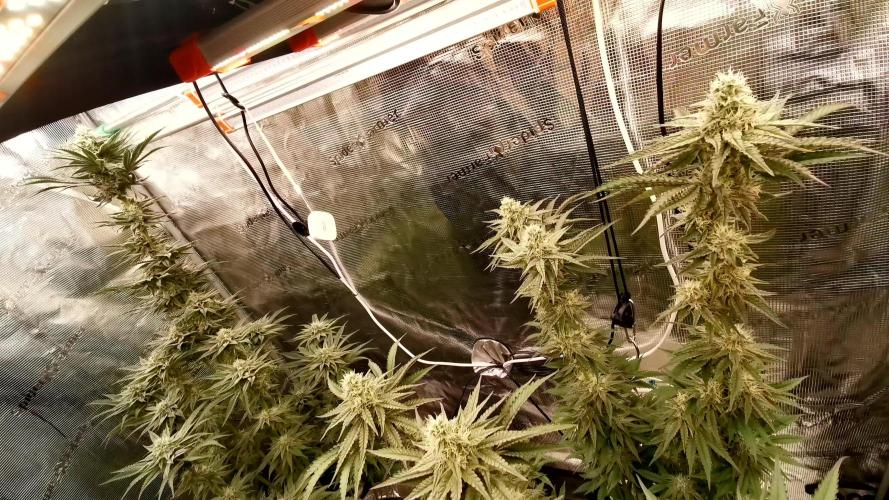
This week the Jelly Donutz clearly entered the heavy resin and terpene production phase 🍩✨
Buds are stacking nicely across the plant and the overall flower formation became much more pronounced.
• Stretch completely finished
• Focus fully shifted toward bud swelling and resin production
• Spear-shaped flowers continue developing across the canopy
The structure remained unchanged at around ~100 cm, confirming that vertical growth has fully stopped. Instead, the plant is now investing all energy into flower mass and trichome coverage 🌸
One of the most noticeable changes this week was the increase in frost production ❄️
Sugar leaves are now heavily coated and trichomes continue spreading deeper into the buds and surrounding leaf material.
The aroma also became significantly louder 👃🔥
The terpene profile is difficult to describe but extremely unique, sweet, fruity and very reminiscent of jam or fruit confiture, with a candy-like background typical of the Jelly Donutz lineage.
Light intensity remained high:
• Top colas receiving up to ~1100 PPFD
• Lower canopy still receiving ~800–1000 PPFD ☀️
Despite the strong light intensity, the plant continues handling it well with only minimal signs of stress.
Water demand remained stable:
• ~4L every 2 days 💧
Feeding this week was intentionally simple:
• RO water + BioBizz CalMag only
Environmental conditions stayed consistent:
• ~24°C temperature
• 50–55% RH 🌡️
No major training or defoliation was performed this week.
The branches were only slightly adjusted and supported with stakes to improve spacing and light penetration through the canopy.
Overall the plant looks healthy, increasingly resinous and very aromatic, with the flowers now entering the stage where density and terpene production begin accelerating noticeably 🍓🔥

Likes
17
Share


@Elpakkio
Follow
Hi guys this circle was a perfect one mix of auto and regular plant lucky everything run good and on time whit my program I will keep you informed about the harvest! I will cut next week the trichomes is half way between milk and Ambra color


Likes
4
Share


@Growstopher
Follow
4.7.25. Just finished up with germination and seedling stage. First week of veg and plant is at 3rd internode so time to tie down method!
Thanks for checking out grow


Likes
29
Share


@CanadianFillmore
Follow
Week 7 begins for LSD. She's bulking up, packing lots of frost and she's got a killer sweat berry citrus smell.
Switched out big bud coco for overdrive.
Thanks for stopping by, tune in next week for another episode 👽🌳🔥

Likes
45
Share


@Ultraviolet
Follow
2nd net is up. Early bud formations are promising. holding up to the extremes pretty well, some leaves taking minor damage, but overall, she is holding up, gave her 1 night at 50F see how she would react, stressful. Not advised as it messes with her metabolism, but I want to see if it triggers any anthocyanin response. Love to see her purp up but no signs yet.
Homework.
If Rubisco activity is impaired and it cannot properly function or regenerate its substrate, the plant's leaves are likely to turn a pale green or
lime green, a condition known as chlorosis. Essentially, Rubisco activity is highly regulated and susceptible to various environmental and metabolic factors that can cause it to become inhibited, leading to an apparent failure in RuBP regeneration due to a lack of consumption.
Rubisco regeneration is intrinsically linked to nitrogen supply because Rubisco is a major sink for nitrogen in plants, typically accounting for 15% to over 25% of total leaf nitrogen. The regeneration phase itself consumes nitrogen through the synthesis of the Rubisco enzyme and associated proteins (like Rubisco activase), and overall nitrogen status heavily influences the efficiency of RuBP regeneration. RuBisCO is a very large enzyme that constitutes a significant proportion (up to 50%) of leaf soluble protein and requires large investments in nitrogen. Insufficient nitrogen supply limits the plant's ability to produce adequate amounts of RuBisCO, thereby limiting the overall capacity for photosynthesis and carbon fixation. Maintaining the optimal, slightly alkaline pH is crucial for the proper function and regeneration of Rubisco. Deviations in either direction (too high or too low) disrupt the enzyme's structure, activation state, and interaction with its substrates, leading to decreased activity and impaired RuBP regeneration. (LIME GREEN CHLOROSIS)
Structural Component: Nitrogen is an essential building block for all proteins, and the sheer abundance of the Rubisco protein makes it the single largest storage of nitrogen in the leaf.
Synthesis and Activity: Adequate nitrogen supply is crucial for the synthesis and maintenance of sufficient Rubisco enzyme and Rubisco activase (Rca), the regulatory protein responsible for maintaining Rubisco's active state. Nitrogen deficiency leads to a decrease in the content and activity of both Rubisco and Rca, which in turn limits the maximum carboxylation rate, Vmax, and the rate of RuBP regeneration Jmax, thus reducing overall photosynthetic capacity.
Nitrogen Storage and Remobilization: Rubisco can act as a temporary nitrogen storage protein, which is degraded to remobilize nitrogen to other growing parts of the plant, especially under conditions of nitrogen deficiency or senescence.
Nitrogen Use Efficiency (NUE): The allocation of nitrogen to Rubisco is a key determinant of a plant's photosynthetic nitrogen use efficiency (PNUE). In high-nitrogen conditions, plants may accumulate a surplus of Rubisco, which may not be fully activated, leading to a lower PNUE. Optimizing the amount and activity of Rubisco relative to nitrogen availability is a target for improving crop NUE.
Photorespiration and Nitrogen Metabolism: Nitrogen metabolism is also linked to the photorespiration pathway (which competes with carboxylation at the Rubisco active site), particularly in the reassimilation of ammonia released during the process.
To increase RuBisCO regeneration, which refers to the process of forming the CO2 acceptor molecule Ribulose-1,5-bisphosphate (RuBP) during photosynthesis, the primary methods involve optimizing the levels and activity of Rubisco activase (Rca) and enhancing the performance of other Calvin-Benson-Bassham (CBB) cycle enzymes.
Biochemical and Environmental Approaches:
Optimize Rubisco Activase (Rca) activity: Rca is a crucial chaperone protein that removes inhibitory sugar phosphates, such as CA1P (2-carboxy-D-arabinitol 1-phosphate), from the Rubisco active site, thus maintaining its catalytic competence.
•Ensure optimal light conditions: Rca is light-activated via the chloroplast's redox status. Adequate light intensity ensures Rca can effectively maintain Rubisco in its active, carbamylated state.
•Maintain optimal temperature: Rca is highly temperature-sensitive and can become unstable at moderately high temperatures (e.g., above 35°C/95F° in many C3 plants), which decreases its ability to activate Rubisco. Maintaining temperatures within the optimal range for a specific plant species is important.
•Optimize Mg2+ concentration: Mg2+ is a key cofactor for both Rubisco carbamylation and Rca activity. In the light, Mg2+ concentration in the chloroplast stroma increases, promoting activation.
•Manage ATP/ADP ratio: Rca activity depends on ATP hydrolysis and is inhibited by ADP. Conditions that maintain a high ATP/ADP ratio in the chloroplast stroma favor Rca activity.
Enhance Calvin-Benson-Bassham (CBB) cycle enzyme activity: The overall rate of RuBP regeneration can be limited by other enzymes in the cycle.
•Increase SBPase activity: Sedoheptulose-1,7-bisphosphatase (SBPase) is a key regulatory enzyme in the regeneration pathway, and increasing its activity can enhance RuBP regeneration and overall photosynthesis.
•Optimize other enzymes: Overexpression of other CBB cycle enzymes such as fructose-1,6-bisphosphate aldolase (FBA) and triose phosphate isomerase (TPI) can also help to balance the metabolic flux and improve RuBP regeneration capacity.
Magnesium ions, Mg2+, are specifically required for Rubisco activation because the cation plays a critical structural and chemical role in forming the active site: A specific lysine residue in the active site must be carbamylated by a CO2 molecule to activate the enzyme. The resulting negatively charged carbamyl group then facilitates the binding of the positively charged Mg2+ion. While other divalent metal ions like Mn2+ can bind to Rubisco, they alter the enzyme's substrate specificity and lead to dramatically lower activity or a higher rate of the non-productive oxygenation reaction compared to Mg2+, making them biologically unfavorable in the context of efficient carbon fixation. The concentration of Mg2+ in the chloroplast stroma naturally increases in the light due to ion potential balancing during ATP synthesis, providing a physiological mechanism to ensure the enzyme is activated when photosynthesis is possible. At the center of the porphyrin ring, nestled within its nitrogen atoms, is a Magnesium ion (Mg2+). This magnesium ion is crucial for the function of chlorophyll, and without it, the pigment cannot effectively capture and transfer light energy.
Mg acts as a cofactor: Mg2+ binds to Rubisco after an activator CO2 molecule, forming a catalytically competent complex (Enzyme-CO2-Mg2+). High light + CO2) increases demand: Under high light (60 DLI is a very high intensity, potentially saturating) and high CO2, the plant's capacity for photosynthesis is high, and thus the demand for activated Rubisco and the necessary Mg2+ cofactor increases. Mg deficiency becomes limiting: If Mg2+ is deficient under these conditions, the higher levels of Rubisco and Rubisco activase produced cannot be fully activated, leading to lower photosynthetic rates and potential photo-oxidative damage.
Optimal range: Studies show that adequate Mg2+ application can enhance Rubisco activation and stabilize net photosynthetic rates under stress conditions, but the required concentration is specific to the experimental setup.
Monitoring is key: The most effective approach in a controlled environment is to monitor the plant's physiological responses e.g., leaf Mg2+ concentration, photosynthetic rate, Rubisco activation state, and adjust the nutrient solution/fertilizer to maintain adequate levels, rather than supplementing a fixed "extra" amount.
In practice, this means ensuring that Mg2+ is not a limiting factor in the plant's standard nutrient solution when pushing the limits with high light and CO2.
Applying Mg2+ through foliar spray is beneficial to Rubisco regeneration, particularly in alleviating the negative effects of magnesium (Mg) deficiency and high-temperature stress (HTS). While Mg can be leached from soil, within the plant it is considered a mobile nutrient, particularly in the phloem. Foliar-applied Mg is quickly absorbed by the leaves and can be translocate to other plant parts, including new growth and sink organs.
Foliar application of: NATURES VERY OWN MgSO4 @ 15.0g L-1 in a spray bottle.
Foliar sprays are often recommended as a rapid rescue measure for existing deficiencies or as a supplement during critical growth stages, when demand for Mg is high. Application in the early morning or late evening can improve absorption and prevent leaf burn.
The starting point [of creativity] is curiosity: pondering why the default exists in the first place. We’re driven to question defaults when we experience vuja de, the opposite of déjà vu. Déjà vu occurs when we encounter something new, but it feels as if we’ve seen it before. Vuja de is the reverse—we face something familiar, but we see it with a fresh perspective that enables us to gain new insights into old problems. Come walk in the enchanted forest.
Likes
39
Share


@KitaKush
Follow
A white christmas for me after all! 😂
Week 13 harvest! Plant 1 = 67 grams/2.3 oz Plant 2= 55 grams/1.9 oz overall= 4.2 oz
(5-7 day dry)
The Gorilla Cookies are soooo damn frosty and stinky…i’ll be drooling at them for a month until I can taste them!!!!
Photos mostly of plant 2..1 was coated in resin but plant 2..the frostiness can be seen from far away! My first top shelf grow 😈…hopefully more to come!
My glove was literally sticking to the stems and getting stuck with plant #2
The stench reminds me of thanksgiving dinner LOL..sausage stuffing and gas is what comes to mind..very savory aroma!
One plant flushed partially the other not flushed and I can tell you that the flushed plant has much more flavorrrr..if this didn’t prove to me that flushing is absolutely essential IDK what would! LOL


Likes
81
Share


@LockDownGrow
Follow
Ok so this week I did a defoliation and a tigh down too the netting , I really was not planning on doing such a big defoliation but the leafs became thick and dense and there was almost no light penitration down too the lower branches of the plant , so she is opened right up now and the humidity and temperature has dropped loads and the air is moving alot better around the leaves and branches , I will not take anything more off her now , I have also added Cal mag too the nutrients for this week only ,
I am very happy with them so far and being new too all this it's all very exciting ,
Thanks for looking :)
Likes
36
Share


@Bubble_Budz
Follow
Grow notes week 3
#1 This plant is healthy and thriving. She’s the first to show pistols which means I should change her status to flowering but I won’t do that until it’s pretty obviously in flower. She’s taking the training nicely and I think I’m starting to figure things out when it comes to training.. the trick is to simply SLOW DOWN.
#2 is looking great! Her leaves are healthy and node spacing is just how I like it to look. She likes LST and seems happy with the maxi grow/bloom series. The roots on each plant are healthy and white
#3 is getting greener each day but I’m starting to believe it’s either genetics or this nutrient line that’s causing this effect.
#4 is the thickest and biggest plant of the bunch. However, she is displaying rust spots and potential calcium or iron deficiency on the lower older leaves. I may have to feed heavier on cal mag while running this nutrient line up.
Thanks for reading this far! I hope you enjoy these time lapses of this weeks growth.. as always
Stay highly dedicated & highly medicated folks 🔥🌿😎💨
Peace & blessings upon you!

Likes
19
Share


@Cardiffgrown
Follow
Another week done some great growth from most, the white widow looks like it might still be decent but that's the joys with autos you never know, I put the megapots and autopots i snuck in without mentioning on with week 3 feed as I done it today end if week 2 along with tucking some leaves & I've been spraying the insides & outsides of the fabric pots trying to keep the moisture up around them I don't know why my temps are so high in the day I just think I need to go LED to be honest it goes down to 25 past 5pm . Anything you guys think I could do on top? Also the plemonade fell over so i had to stand hsr up again should be no problem


Likes
4
Share

@Black_Widow
Follow
Привет садоводы и огородники !
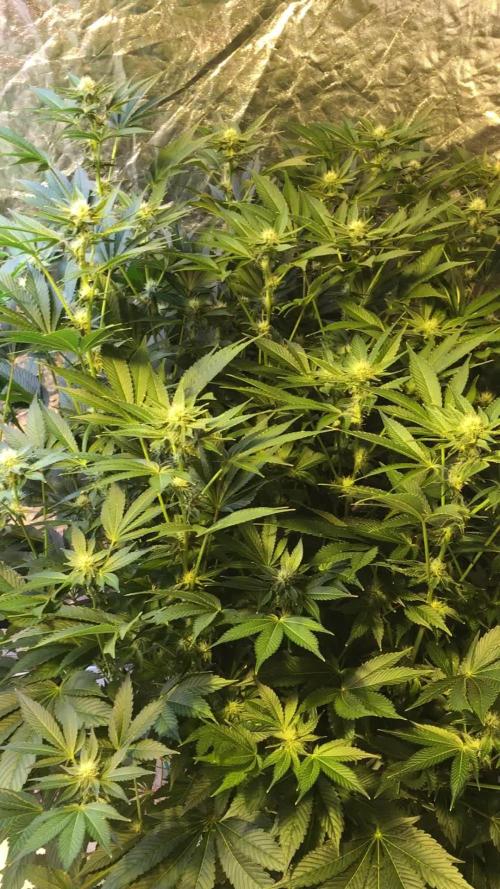
началась новая неделя , а все та же старая проблема -мало места в палатке
на днях я приобрел светильник coolmaster и выиграл пару градусов цельсия в пользу цветов
рачтения чувствуют себя хорошо ,правда тот цветок , что в земле, у него начали немного желтеть листья
а подруга гидропоника вытянулась до 100 сантиметров и было бы очень хорошо растянуть ей стебли в разные стороны ,чтобы дать больше света цветам ,которые ниже
а в общем все вроде нормально растет потихоньку
Привет садоводы
сегодня я полил цветок ,тот что в земле , Ripen и думаю ,что еще пару недель и финиш
