


@Kauchlock
Follow
Trimmed out some, flushed and replenished the nutrients- looking at 3/4 more weeks until it’s done I think!
Plant seems very healthy- and dense! I can see needing proper airflow in harvest will be important. Any insight on Hindu mints/kush afghani strains hit me up!


@Ninjabuds
Follow
7 archive seeds are legit super dense tricomb production like nothing I've seen b4. I would NEVER BUY SEEDS FROM ARCHIVESEEDBANK.COM.... they have great genetics but there customer service is garbage. This summer I spent 50 on these 3 seeds and 125 on a 12 pack of reg seeds of a diff strain the reg seeds didn't grow at all and archive never responded they sold me old ass seeds and stole my 125$ I'm happy I already got 32 seeds from the crappy plant of the 3 that I already cut down. I'm letting the last 2 finish up completely


@Bakeryguy420
Follow
Double fucking grape completely impressed with this outcome leaving tomorrow to head outta state visit family. so I'll miss about 4 days. No worries. When I return just keep flushing down till harvest. She got about 2 more weeks or so cant wait to chop her :) smells so fucking good a super lemony diesel smell for sure. Outcome guestment dry weight around 5 zips and half its remind me of my sweet and sour phenotype


@SpotWeed420Original
Follow
Y bueno Fumetillaas ya en la semana 10 cumpliendo con el propósito de este medio ... Ir informando que pasa x ende querías decirles que nunca medimos ec... La verdad no podía frenar el amarillento o esas carencias ... Controlaba ph y suficiente... Ahora empezaremos a medir ec y ph para poder tener mejor electro conductividady tener mejor absorción de nutrientes ya que medimos macetas después del riego y tenemos una ec de 4.5 a 3.5 la cual deberia estar en otros parámetros por ende ... Siempre tuvimos alimentos suficientes para ellas solo que no teniamos la implementación necesaria... Después de la 11 a 12 cortamos y subimos el final de esta planta que luchó con todo



@Grisly
Follow
Harvest 2025
Grand totals:
Flower - 2893g / 103oz / 6.5lb
Kief - 63g
Trim - 3150g
Plant totals:
Dr Grinspoon - 165g
Auto Glueberry OG Field1- 7g
Runtz - 2g
Auto Glueberry OG Field2 - 94g
Early Harvest Total: 268g
===================
C99 Fast Flowers - 128g
Sugar Cane South - 199g
Sugar Cane North - 74g
Medi Bomb #1 - 438g
Critical Cake Wreck - 534g
Blue Cheese Field + Raspberry Pebbles Field - 725g
Blue Cheese Camp - 341g
Rickie’s Hash Plant - 186g
Main Harvest Total: 2625g





@hawkeye_diesel66
Follow
She is looking great. I topped all of her mains and then waited a few days then started to clean up the bigger fans to expose the lower sites to light and air.


@yan420
Follow
FERMAKOR BARREL MIX – BASE IN USE
(Testing on the Fantasy Feast girl we pulled out of another diary
https://growdiaries.com/diaries/274722-grow-journal-by-yan402 )
(FERMAKOR BASE SYSTEM KOH VERSION diary
https://growdiaries.com/diaries/278391-grow-journal-by-yan402)
(Urea & Micros on the way — first week running without them)
🍶💧🍶💧🍶💧🍶💧🍶
💧 30 L Barrel – Current Working Mix
🍶💧🍶💧🍶💧🍶💧🍶
Step 1 – Calcium Nitrate (Part A)
7 L warm water (~35–40 °C) → added 45 g Calcinit, stirred until fully clear.
That’s the calcium + nitrogen backbone for the feed.
Step 2 – FERMAKOR PK Base (Part B)
15 L water in the main barrel → added 30 ml FERMAKOR PK Concentrate, mixed well.
This forms the main P + K part of the formula.
Step 3 – Combine Solutions
Slowly poured the Calcinit mix into the barrel while stirring — no reaction, still crystal clear.
That confirms the mix is stable and precipitation-free.
🌿 Step 4 – FPJ / FFJ Batch
Added 30 ml homemade FPJ (fish + veg batch) ≈ 1 ml/L.
Color shifted to a light-amber tone — looks alive and active.
🍋 Step 5 – Citric Acid Balance
Added 1 tsp citric acid after everything was blended to fine-tune pH and help chelate micros later on.
📦 Step 6 – Top Up & Check
Filled to the 30 L mark with plain water → pH tested with drops, showing yellow-green — roughly 5.8 – 6.0 range.
Nice clean look, stable smell, no residue.
💧 Current Base Ingredients (Active Mix)
Warm Water ≈ 22 L total
Calcinit 45 g → N + Ca foundation
FERMAKOR PK Base 30 ml → P + K support
Citric Acid 1 tsp → Chelation + pH balance
FPJ / Fish Emulsion 30 ml → Organic enzyme booster
Result: clean amber mix, mild and balanced.
I’ll let this version run for a week before adding anything.
👀👀👀👀👀👀
Observations and changes
👀👀👀👀👀👀
27.10.25 VW27 noticed some min burnt tips so I decreased Calcium Nitrate 45 to → 40g, decided to add two more elements micros and Epsom salts just to make sure they got everything, Fetrilon Combi 1 (Micros): 0.5 g, Epsom salts: 8 g
28.10.25 VW27 she seems devoid of any deficiencies, seems ready for the flip to 12/12
02.11.25 VW27 girl is looking good so I decided to stop making daily videos and do a standard once a week update.
09.11.25 aVW28 7 days since flip,stretch in full swing, first pistils showing, leaf color deep and healthy. Slight tip burn early week → gone after pH stabilized.
Feed stayed clear, no residue, roots clean and sweet-smelling, did what I hope is a last cleanup and pruning🎥
10.11.25 VW29 added Phosphoric acid pH down to the schedule for flowering stage.
14.11.25 FW1 FERMAKOR PK Micros 40 → 50 ml
23.11.25 FW2 got some burnt tips, observe and act accordingly in case it worsens, diluted by 25% for this week.
05.12.25 FW3 about 2 weeks ago Calcium Nitrate 35 g → 25 g, FERMAKOR PK Micros 50 ml → 60 ml
12.12.25 FW4 Calcium Nitrate 25 g → 20 g, FERMAKOR PK Micros 60 ml → 80ml
16.12.25 FW4 Calcium Nitrate 20 g → 17 g, FERMAKOR PK Micros 80 ml → 110 ml
20.12.25 Calcium Nitrate 17 g → 15 g
26.12.25 Ffj fpj 30 →0ml
🌱💦🌱💦🌱💦🌱💦🌱💦🌱
🌿 Day to day tasks & actions 🌿
🌱💦🌱💦🌱💦🌱💦🌱💦🌱
Fed about 5l a day of #1 and on the weekends I do a pure FERMAKOR PK flush 2l runoff
(*RUNOFF reused for tomato plants)
💧💧💧💧💧💧💧💧💧
🌱 Nutrients in 30 L #1 – FERMAKOR (progression kept)
💧💧💧💧💧💧💧💧💧
Calcium Nitrate (Calcinit / Nitcal):
45 → 40 g → 35 g → 25 g → 20 g → 17 g → 15 g
= 1.50 g/L → 1.33 g/L → 1.17 g/L → 0.83 g/L → 0.67 g/L → 0.57 g/L → 0.50 g/L
= 207 ppm N / 253 ppm Ca
→ 184 / 225
→ 161 / 197
→ 115 / 141
→ 92 / 112
→ 78 / 96
→ 69 / 84
PK Concentrate (FERMAKOR Base):
30 → 40 ml → 50 ml → 60 ml → 80 ml → 110 ml
= 1.00 → 1.33 ml/L → 1.67 ml/L → 2.00 ml/L → 2.67 ml/L → 3.67 ml/L
→ balanced 1:1 P:K + light micros (from extract)
Home-made FFJ/FPJ (Fish + Veg):
30 ml → 0 ml
= 1.00 ml/L → 0.00 ml/L
Epsom Salt (MgSO₄·7H₂O): 8 g
= 0.27 g/L → ~26 ppm Mg + ~35 ppm S
Fetrilon Combi 1 (Micros): 0.5 g
= 0.017 g/L
→ Fe 0.7 ppm · Mn 0.7 ppm · Zn 0.3 ppm · Cu 0.3 ppm · B 0.1 ppm · Mo 0.02 ppm
Phosphoric Acid (pH down) + Citric Acid (chelation): as needed
→ First set pH with phosphoric acid, then add a little citric only if you want extra chelation
Target pH: 5.8 – 6.0 (drop test yellow-green)
📦 TOTAL (corrected):
Liquids (PK + FFJ/FPJ):
60 → 70 → 80 → 90 → 110 → 140 → 110 ml per 30 L
= 2.00 → 2.33 → 2.67 → 3.00 → 3.67 → 4.67 → 3.67 ml/L
Solids (CaNO₃ + Epsom + Fetrilon):
53.5 → 48.5 → 43.5 → 33.5 → 28.5 → 25.5 → 23.5 g per 30 L
= 1.78 → 1.62 → 1.45 → 1.12 → 0.95 → 0.85 → 0.78 g/L
YouTube Link: https://youtube.com/-m8h?si=A7x4Zlr2kj-_ga31


@GREENPHOENIX6262
Follow
Fastbuds - Mimosa (2x) 08/27
Coming into week 4 Veg, User error stunted them lightly but things seem back on track.
Exhale 365 C02 bag introduced last week to setup for early flower.
No signs of concern or any deficiencies.
Early flowering has begun
*Mid-Week Update* *08/30*
Both plants have recovered nicely, and placed under trellis net.
Introduced NPK Phosphate
Purged Pure Blend Pro Grow
*End of week recap*
Flowering has begun
Stopped veg nute feed
Introduced Raw NPK Phosphorus and Potassium


@ItsCannaDog
Follow
This week added more red to my lights so they are at 50%red. Also moved lights down and measuring by lux and sittinging about 48000. I didn't switch out nutes this week but just topped off with fresh nutes.


@peterfly98
Follow
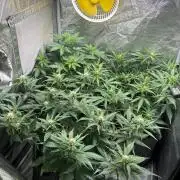
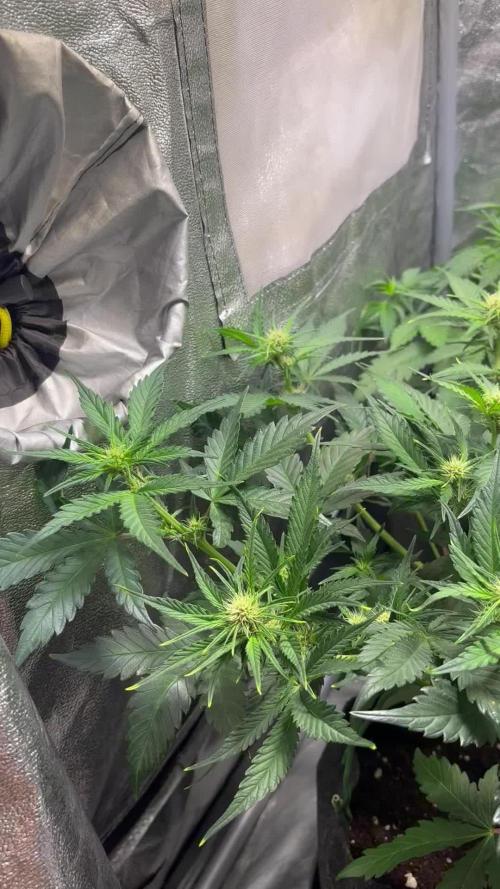
The week has been going great, the tent is full and among the two guavas there is also a frostbanger from fast buds that had a slow start but is catching up quickly and is growing tall since I didn’t do any lst. The guava in front is starting to produce tricomes and her sister is getting there. I’m watering up to 2L every other day and this week was enhancer week. Final lst and I’m not touching anything until they stop stretching, then I’ll defoliate a bit.
Last day of the week, day 35 and growth is very fast, maybe faster then previous runs. Light still at 75% at 35cm, around 700ppfd, DLI 45. I’m not sure if I want to push it more in order to minimize heat into flower.


@HagsGrowsDank
Follow
Jack Herer nugs have swelled up nicely, critical purple and brain cake have a nice terpene profile and are getting some purple colors. Amnesia lemon putting out a pungent lemon smell, will be great for extracts with amazing flavor. Also looking like it’ll go an extra week before getting harvested with the others in 3 weeks.


@Itzjusbizniz
Follow
I was excited throughout this entire process.. The last plant I grew was out of control and didn't make it...
My space is limited so I had to keep it short and learn how to train and top which definitely paid off.
I'll update on the drying and curing process once I get to that point... When it's dry I'm gonna try again with a different strain and breeder.. I love fast buds so one of those seeds will probably be my next choice but would love to get your opinions...
Thanks for checking me out.
To be continued.....
Happy Growing 👋😃
7/20
The babies are dry and sooooo sticky. All the big boys are still a bit wet and can't be Jarred until later in the week.
I know it's early but I did smoke some already oof 🤭
A little hard but smells and tastes really sweet so I think the final product should be wonderful yayer 🤟😜
Keep you posted...
7/24
Definitely happy with the outcome!! She has some curing to do but my friends like it 😁 Now everybody wants to learn how to grow 😳
7/24 PM
When I grind it it smells soooooo good.. Smellavision would really need to be coming in the near future.. I'm so sad I can't share it with you guys... Like I don't know what she's supposed to smell or taste like but I'm a very Happy with my berry flavored cheese 😁
8/18
I loved it!! My friends loved it!! My neighbors loved it!! All the cheese is gone y'all!! 🤣🤣
Will definitely be on the list of seeds to keep around along with my Fastbuds Mexican airlines...
Extremely satisfied with this grow. Way better than expected! 😁👌
May the Seeds be ever in your favor🌱🌱🌱



@sanibelisl
Follow
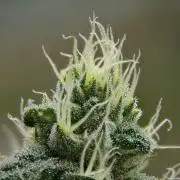
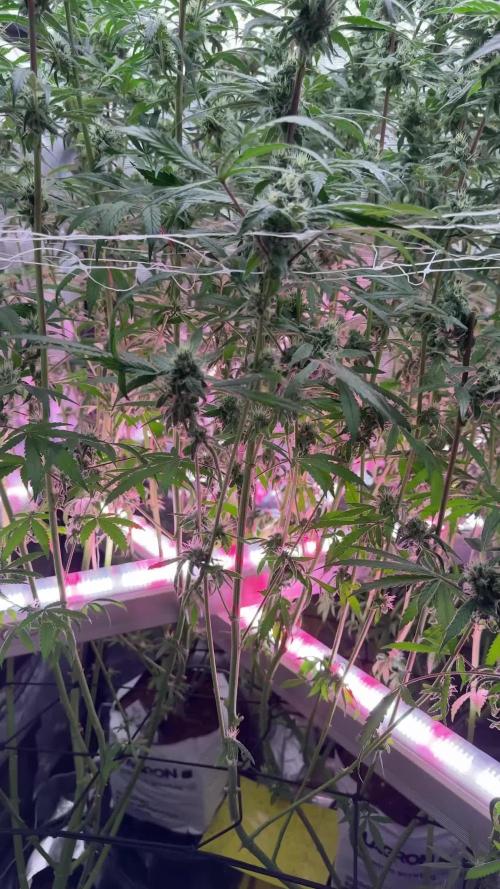
Day 28 and all is going strong for the Mulberry. She has great shape and thick branches that reach the same height as the main trunk. Have removed the bare minimum in foliage but plan on more in the next two days and then it’s time to watch her stretch. She is in the first stages of pre flower with pistils at every node.
She is pretty to look at, strong and commanding. The reason I trust Daz, and all the folks at Night Owl Seeds!
Thank you, Merry Christmas and a Happy New Year
Day 30
Water day. Canna nutes @ 1 tsp per gallon. Growing fast! Stretch

@DogDoctorOfficial
Follow
# 💙 Project Blue Tent – Week 12
## 🥒 Pickle Lemon Haze F1 – Pheno B
### 🌸 Another Girl, Another Story, Another Ridiculously Frosty Week! ❄️📸
Hello everyone, and welcome back to another chapter of Project Blue Tent! 💙🌱
And honestly, my friends...
WHAT IS HAPPENING INSIDE THIS TENT?! 😂❄️
Every week, I think we're going to run out of ways to describe how beautiful these girls are becoming.
And every week, they prove me wrong.
The flowers are developing beautifully, the frost is becoming increasingly impressive, and the whole ecosystem is looking absolutely fantastic.
This week, we're giving Pickle Lemon Haze F1 Pheno B her individual spotlight.
And she certainly has something worth showing!
We spent some time behind the camera again, creating three detailed photo stacks from hundreds of individual photographs. We ended up with stacks containing 299, 299, and 333 photographs respectively.
That's 1,931 individual frames across the three stacks.
Yes, my friends, that's a lot of photographs for one girl! 😂📸
We also made a few environmental adjustments this week. We've brought the temperatures down slightly and increased the output power across the lighting setup.
The overall approach remains the same: observe, adjust when necessary, document the results, and give the plants the stability they need to continue developing.
So, let's take a closer look at Pheno B and see what she's showing us this week!
## 🌸 WEEK 12 – PHENO B IS LOOKING OUTSTANDING
Pickle Lemon Haze F1 Pheno B continues to impress.
She's approximately 145 cm tall, and the plant structure we've established over the previous weeks is now supporting the flowering development beautifully.
The major training work is behind us. The canopy is established, the SCROG nets are providing support, and the flowering sites are developing throughout the plant.
We're no longer in the stage of trying to build the structure.
We're watching the structure do its job while the flowers continue to develop.
And that's one of my favourite transitions in a grow diary.
You spend weeks working on the plant's architecture, making decisions about topping, training, canopy management, and defoliation.
Then you reach a point where you can step back and appreciate the result.
That's where we are now.
The plant is looking beautiful, the canopy remains organized, and the flowers are giving us plenty of reasons to keep the camera close.
And the frost?
Oh, the frost! 😂❄️
## ❄️ THE FLOWERS ARE STEALING THE SHOW
Let's get straight to the obvious.
These flowers are becoming seriously photogenic!
The close-up photographs reveal the intricate details of the developing buds, the prominent pistils, and the trichomes covering the flowers and surrounding sugar leaves.
There's something special about reaching this stage of flowering.
From a distance, you can appreciate the plant's overall structure and how the flowering sites are distributed throughout the canopy.
But when you get close enough to examine the flowers properly, there's an entirely different level of detail to appreciate.
And that's precisely why I enjoy macro photography.
It lets us document the small details that are easy to miss when we're simply looking at the whole plant.
Pheno B is giving us some beautiful subjects to work with, and I wanted to capture that as clearly as possible.
So, instead of taking a handful of photographs and moving on, we spent more time creating detailed photo stacks.
And I think you'll understand why when you look at the results.
😂📸🌸
## 📸 THREE PHOTO STACKS – 931 PHOTOGRAPHS IN DETAIL
This week, we created three separate photo stacks of Pickle Lemon Haze F1 Pheno B.
Here's the breakdown:
- Photo stack 1: 299 photographs.
- Photo stack 2: 299 photographs.
- Photo stack 3: 333 photographs.
That's a combined total of 931 individual frames!
Each stack represents a considerable amount of work, both behind the camera and during post-processing.
And this is where patience becomes essential.
Focus stacking involves combining photographs taken at different focus distances to increase the depth of field in the final image.
When working with macro subjects, the area in focus can be extremely narrow. A small change in focus can bring one section of a flower into sharp detail while leaving another section outside the focus plane.
By combining multiple frames, we can capture more of those details in a single final image.
Of course, the results depend on the source photographs and how well the stacking process handles them.
But when everything comes together, the finished image can reveal a remarkable amount of detail.
And that's what I wanted to achieve with Pheno B this week.
Three stacks.
Hundreds of frames.
One very photogenic girl.
And plenty of frosty details to appreciate! 😂❄️
## 🌿 SAME TENT. SAME ECOSYSTEM. HER OWN STORY.
One of the defining features of Project Blue Tent is that we're documenting the plants individually while keeping their shared growing environment consistent.
The plants share the same tent, reservoir, irrigation system, lighting environment, nutritional program, and general cultivation approach.
That gives us an opportunity to observe their development side by side.
And the similarities remain fascinating.
The plants have developed remarkably similar structures, and their flowering progression has been impressively consistent.
But that doesn't mean the individual diaries are interchangeable.
Each plant deserves her own record, photographs, observations, and development history.
That's why we're documenting Pheno A, Pheno B, and the other cultivars separately.
Even when the plants look remarkably similar, their individual details remain worth recording.
For Pheno B, this week's story is about her continued flower development, the close-up photography, and how she looks following the latest environmental adjustments.
She's sharing the same ecosystem as her sisters, but she's still the star of this particular report.
And today, we're giving her the attention she deserves!
💙🥒🌸
## 💡 LIGHTING – INCREASING THE OUTPUT
We made another adjustment to the lighting setup this week, increasing the output power across the lighting equipment.
The main LEDs continue to provide the primary illumination from above, while the two LumiFlora 150W full-spectrum under-canopy fixtures supplement the lower portions of the canopy.
The under-canopy bars remain arranged in the X-cross configuration beneath the plants.
With the structure now established, this arrangement gives us another aspect of the growing environment to observe as flowering progresses.
We're interested in how the different parts of the canopy develop under the combined lighting arrangement.
At the same time, we've increased the lighting output, so we're keeping an eye on the overall environment and the plants' response.
It's important to remember that increasing light output doesn't automatically guarantee a particular result. The response depends on the conditions around the plants and how they develop over time.
That's why we're documenting these adjustments rather than assuming what the outcome will be.
We make a change, monitor the conditions, and observe.
And Pheno B will continue to be part of that story.
## 🌡️ ENVIRONMENT – SLIGHTLY COOLER CONDITIONS
Alongside the increase in lighting output, we reduced the temperatures slightly this week.
It's a small but meaningful part of the latest environmental adjustments.
Lighting and temperature are connected, so whenever we change the lighting setup or its output, we need to consider the wider environment rather than looking at each setting in isolation.
We're keeping an eye on the day and night temperatures, relative humidity, solution temperature, and substrate temperature while the plants continue flowering.
The idea isn't to keep changing everything for the sake of it.
It's to make deliberate adjustments and then observe how the environment settles.
The latest readings have been updated in the GrowDiaries record, so the conditions listed there are the reference for this week's report.
And that's another reason I appreciate keeping detailed records.
When we look back at the end of the project, we'll be able to see not only how the plants developed, but also which environmental changes took place along the way.
## 🕸️ SCROG AND CANOPY STRUCTURE – THE FRAMEWORK IS THERE
The SCROG structure continues to provide support as the flowering branches develop.
The first net helped us distribute the canopy, while the second net provides additional support to the established structure.
The earlier topping, training, and defoliation also remain important parts of this plant's story.
Those interventions helped us create the architecture we're looking at today.
And now, we're allowing that structure to do its job.
We don't need to keep moving branches simply because we can.
We don't need to keep reshaping a canopy we've already established.
The important thing now is to monitor the plant, observe how the flowers develop, and make adjustments only when there's a genuine reason.
Sometimes the most satisfying part of cultivation is seeing the results of work you completed weeks earlier.
You train the plant, give her time to respond, and eventually you get to appreciate the structure that training helped create.
That's exactly what we're seeing with Pheno B.
## ✂️ DEFOliATION – LETTING THE EARLIER WORK SPEAK
The substantial defoliation performed in the earlier weeks also remains part of this story.
At the time, opening the dense canopy made a dramatic difference to the plant's appearance.
Now, we can appreciate the structure that remained after that work and how the plant has continued developing.
The flowering sites are visible throughout the canopy, the branches are supported, and the plant has had time to respond to the earlier interventions.
This is why I believe it's important to think carefully about timing.
There is a time to train.
There is a time to remove foliage.
There is a time to provide support.
And there is a time to stop interfering and observe.
For Pheno B, the major structural work has already been done.
Now we're concentrating on the flowering development and the way the plant responds to the environment we've established.
## 🌬️ AIRFLOW – SUPPORTING THE ENTIRE CANOPY
The airflow arrangement remains an important part of the shared ecosystem.
With a substantial canopy, we want air moving through the upper, middle, and lower portions of the plants rather than allowing stagnant pockets to develop.
The earlier canopy management helped open the structure, while the circulation equipment supports air movement throughout the tent.
The under-canopy lights also make it important to keep the lower portion of the growing space in mind when assessing the overall environment.
We're looking at the complete picture.
Lighting, temperature, humidity, and airflow all interact.
The goal is to maintain a balanced environment rather than focusing on one parameter in isolation.
And as the plants continue developing, we'll keep monitoring those conditions and making adjustments when needed.
## 💧 IRRIGATION AND DRAINAGE – KEEPING THINGS CONSISTENT
The irrigation and drainage systems remain part of the established setup.
The recorded watering volume is approximately 1.6 litres per plant over 24 hours.
Because the plants share the reservoir and irrigation system, maintaining a consistent approach across the tent is an important part of this project.
We continue observing how the plants are responding and monitoring the system's operation.
The idea is simple: maintain the established setup, record what happens, and avoid unnecessary changes when everything is working as intended.
Good equipment should make our lives easier.
It should help us maintain consistency while allowing us to concentrate on the plants themselves.
And that's exactly the approach we're continuing with this week.
## ⚗️ NUTRITION – THE CORRECT PLAGRON RECIPE
The nutritional program remains unchanged this week.
We're using the PLAGRON Hydro line, with Green Sensation included in the current recipe.
The previous reports are also being corrected where necessary to ensure that Green Sensation is recorded accurately instead of Hydro Roots.
For this week's report, the recipe is:
- PLAGRON Hydro A — 2.2 ml/L
- PLAGRON Hydro B — 2.2 ml/L
- PLAGRON Power Buds — 1 ml/L
- PLAGRON Green Sensation — 1 ml/L
- PLAGRON pH Plus — 0.03 ml/L, as recorded
- PLAGRON pH Minus — 0.03 ml/L, as recorded
The recorded pH is 6.01, and the EC is 2.24 mS/cm.
As the recipe has remained unchanged, we're continuing to record the measurements and observe the plants rather than inventing an explanation for every variation.
The important thing is to document what was actually used, keep the record accurate, and monitor how the plants develop.
That's what makes these diaries useful when we eventually look back at the complete project.
## 🌡️ CURRENT BLUE TENT CONDITIONS
The GrowDiaries record for this week has been updated with the latest environmental readings.
The reference measurements shown in the current record include:
- Cultivar: Pickle Lemon Haze F1
- Phenotype: Pheno B
- Flowering: Week 12
- Height: Approximately 145 cm
- Light schedule: 12/12
- Day air temperature: 27°C
- Night air temperature: 27°C
- Relative humidity: 59%
- pH: 6.01
- EC: 2.24 mS/cm
- Solution temperature: 25°C
- Substrate temperature: 24°C
- CO₂: Approximately 666 ppm
- Pot size: 8 litres
- Watering volume: Approximately 1.6 litres per plant per 24 hours
- Under-canopy lighting: 2 × LumiFlora 150W full-spectrum fixtures
- Under-canopy arrangement: X-cross configuration
- Nutrient line: PLAGRON Hydro
- Green Sensation: 1 ml/L
The temperatures have been reduced slightly, and the lighting output has been increased for this week's update.
The values above reflect the updated record rather than the older Week 11 measurements.
## 🔬 FOUR PLANTS, FOUR STORIES
This is something I want to keep emphasizing throughout Project Blue Tent.
Yes, the reports share some common elements.
That's intentional.
The plants share the same ecosystem, so it makes sense that their reports will cover the same environmental systems, lighting arrangement, irrigation setup, and nutritional program.
But the individual reports are not simply copies of one another.
Each one focuses on a different plant and documents her own development.
For Pheno B, we have the three photo stacks, her individual flower development, and her response within the shared growing environment.
For her sisters, we'll continue documenting their own characteristics and the details that make each plant worth following.
The shared conditions provide context.
The individual observations give each diary its purpose.
And that's what makes the project interesting.
We're not trying to manufacture differences where there are none.
We're documenting what we actually see.
Sometimes that's variation.
Sometimes it's remarkable uniformity.
And sometimes it's a tent full of plants that look so similar you have to remind yourself that they're not clones!
😂💙
## 🔭 LOOKING AHEAD – MORE TO OBSERVE
As we continue through flowering, I'm particularly interested in watching how the flowers develop under the updated lighting arrangement and slightly cooler environmental conditions.
We'll keep observing the canopy, the flowering sites, and the details that become visible through the macro photography.
We'll also continue recording the environmental measurements and maintaining the shared nutritional program.
The next stage will bring more opportunities to document the plants and compare their development over time.
But we're not going to rush ahead.
We have the structure.
We have the established ecosystem.
We have the equipment in place.
And now we have the time to observe the results.
That's what we're here for.
## 💙 FINAL THOUGHTS – ANOTHER BEAUTIFUL WEEK FOR PHENO B
My friends, Pickle Lemon Haze F1 Pheno B is looking absolutely outstanding.
The flowers are beautiful, the frost is impressive, and the close-up photography has given us another opportunity to appreciate the intricate details of her development.
We created three photo stacks from 931 individual photographs, made some environmental adjustments, increased the lighting output, and continued maintaining the established ecosystem.
Nothing about this week required us to reinvent the entire setup.
Instead, we made deliberate adjustments, updated the records, and continued observing.
And that's an important part of cultivation.
You don't need to make dramatic changes every week to make progress.
Sometimes you simply need to understand what you're seeing, record it properly, and give the plants time to respond.
Pheno B is sharing her environment with her sisters, but her individual story is still unfolding.
And I'm looking forward to documenting every step of it.
The canopy is established.
The flowers are developing.
The trichomes are giving us plenty to admire.
The photography is looking beautiful.
And the whole ecosystem continues to be the foundation of this project.
So, for now, we're going to keep doing what we've been doing.
Observe.
Measure.
Document.
Adjust when necessary.
And appreciate the beautiful plants we're fortunate enough to follow.
💙🥒🌸❄️
## 🙏 A HUGE THANK YOU
A huge thank you to Zamnesia for making Project Blue Tent possible and giving us the opportunity to document these Pickle Lemon Haze F1 cultivars individually.
Thank you to PLAGRON for the Hydro nutrient line supporting the project, including Green Sensation as part of the current nutritional recipe.
Thank you to Mars Hydro for the irrigation and drainage equipment helping us maintain consistency throughout the tent.
A massive thank you to Zamnesia for the Phytonaut LED lighting, curved scissors, and clip fans that continue playing important roles in the project.
And a special thank you to LumiFlora for the under-canopy lighting that we're exploring as another part of our cultivation setup.
Thank you to GrowDiaries for providing the platform where we can document the experiments, share the photographs, and record the lessons we learn along the way.
And finally, thank you to everyone following Project Blue Tent! 💙
Your support makes sharing these individual chapters even more enjoyable.
Pickle Lemon Haze F1 Pheno B is looking beautiful, and I'm delighted to have another week of her journey documented.
Until next week...
Keep growing.
Keep learning.
Keep observing.
And keep appreciating the details!
Growers Love, happy growing, and take care everyone! 🌱💙🥒❄️


@GrownwithLED
Follow
The 3 THE PURPS plants from BC-BUD-DEPOT grew very nice and healthy. One of the plant turned totally purple in the leaves and in the bud during flowering, she was A BEAUTY! The buds were of average size and are not too dense, but sparkling with trichomes. The FLAVOR is OUTSTANDING...she is DELICIOUS! Her grape- jolly-rancher (=hard-candy) aroma transcends directly into her flavor when smoked. VERY SMOOTH and an ABSOLUTELY DELIGHT on the inhale and the exhale. The 3 plants harvested 156,2 gram dried bud, which is a nice average yield of 52 grams per plant.


