Likes
Comments
Share
Sorry guys im a lil late with the updates, but I figured you’re only here for the bud porn anyway, so here it go
Likes
Comments
Share
@RunWithIt
Follow
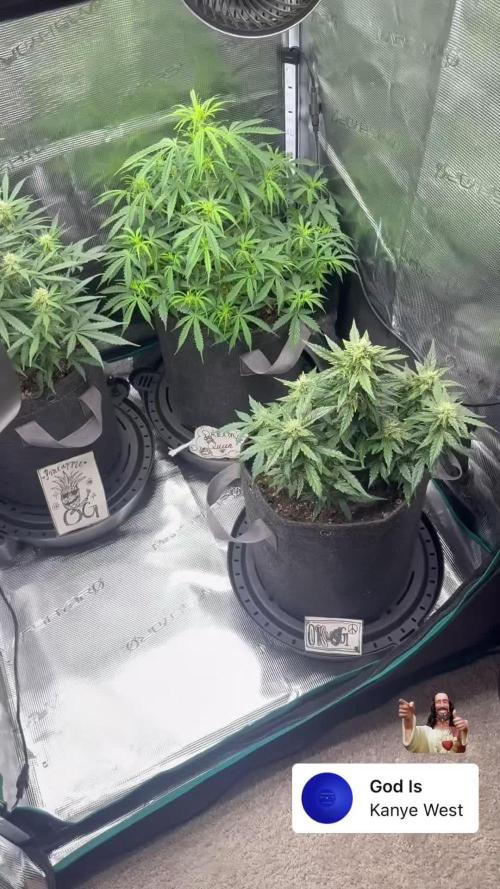
Hey GD. The girls are coming along just how I like it. I did notice a little bit of tip burn the other day. So I hit them all with a flush last night. Going to wait a couple days before hitting them with another feeding. They're all putting off a solid odor now. Two of the banana ogs have a very skunky undertone. While the other one has a solid citrus undertone. But you could definitely tell it's the same strain. (The one with skinnier buds in the back left is the citrus smelling one) Then that brings us to the raspberry hygor which is also putting off a very fruity odor(think berries nestled in mint). Despite underperforming the banana ogs in regards to overall yield. It is nowhere near lacking in quality or terpene content, I believe. I should note I didn't put the pot under it to bring it to the same height as the ogs until last week, so it wasn't getting near as much light as the other plants. Either way, this grow is heading toward the latter end of it's cycle. Hoping to get a bit documented about raspberry hygor on seedfinder as well, since I haven't been able to find any reference material for this strain*. * A little sidebar note I wanted to add was how I sourced these seeds. My brother is affiliated in the cannabis industry here in Cali and hooked me up with these seeds as a Christmas present. He was not able to provide much details than the packaging themselves. One package is labeled 'raspberry hygor' and another is labeled 'banana og'. Each pack containing 25 reg seeds. The banana OG beans came with pollen with which I can experiment in the future.
Processing
Likes
7
Share
Вот накопил фотографии вот как виглидяат 2. Недьеляа идиот,💚🙌🌱🇬🇪
Likes
3
Share
Donnerstag Woche 5 Bisschen Nährstoffe könnten fehlen könnten aber auch die Wurzeln gewesen sein! Waren heute früh zum Teil trocken! Sagte noch.... Aufpassen! Hab es wie zuvor gemacht und unterhalb alles entfernt damit sie die Energie besser nutzen kann, weiß nicht ob das fiming geklappt hat aber die Haze hab ich gespreizt und nochmal gescrogt beidseitig! Auch wieder Bio bizz light und Canna Professional 50/50 und 5 ml rhizotonic! Lampe ist bei 10 cm internodien auch kurz ziehen! Wenn es klappt! Wasser hab ich raus laufen lassen um einen Brand zu verhindern auch Ph neutral also 5,5 Die Alien schaut ganz gut aus außer das sie meines Erachtens etwas zu hellgrün ist! Wachsen tut sie ohne Probleme! Ich dumm Dusel hab noch gesagt.... Ey eigentlich Klasse Sache mit den Wurzeln kannst die direkt düngen! Musst nur die Wurzeln feucht halten!! Dünger haben sie keinen bekommen allerdings ab ich beim Töpfen drauf geachtet das Wurzelwerk nicht zu beschädigen also Topf drücken und langsam seitlich raus Ziehen! Dann sind die Steine auch kein Problem... Normalerweise sind sie eingewachsen! An den Blättern sieht man es ich hoffe nicht das ich sie geschrottet habe! Wurzeln waren über Nacht ausgetrocknet zumindest fast alles was draußen war! Trotz nach Wässern! Topfen haben beide gut überstanden allerdings macht mir die Haze sorgen! Schauen wir die nächsten Tage!! Wachsen alle schön weiter und die Technik hat meines Achten nach auch geklappt! Abstand liegt bei 5 und bei 10 cm Ich hab da auch mal einen Trick gehört bezüglich der Wurzeln, Blütezeit und zusätzliche Produktion aber wann man es macht und außerdem ist es ein sehr großes Risiko! Gleich zu setzen mit dem spalten des Stammes!! Man reißt einen Teil der Wurzeln ab um die Produktion zusätzlich anzukurbeln aber reißt du zu viel ab... Dann hasst du dich selber weil du die Pflanze damit umgebracht hast! Rein theoretisch müsste das ja Reichen wenn du die Pflanze etwas trocknen lässt und dann anheben tust, durch die Steine reißt es auch bedingt!! Nur wann du das machen sollst kann ich nicht genau sagen!! Egal... Kommt Zeit kommt Rat!!! Erst mal auf das Wesentliche beschränken verfeinern kann man immernoch!! Und bei 3 pflanzen, will ich kein Risiko eingehen!! Nicht unbedingt!! Wenn man einmal nicht aufpasst macht sich gleich der Hauswächter auf zur vesite! Typisch Schlange!!! Lass bloß die Pflanzen in Ruhe!! Dienstag Schauen beide wieder gut aus! Nach dem sie Eisen bekommen hat kann man auch sehen das die Verbrennungen aufgehört haben und sie wieder Farbe bekommen hat. Die Alien wuchert wie Unkraut!! Aber das Fimen hat nicht geklappt.... Egal! Anderes Mal! Dachte mir, nachdem er auch schon im grow Room präsent war, zeig ich mal sein Terrarium! Damit auch der letzte Tierfreunde nicht sagen kann es wäre Tierquälerei! Nur er hat das Privileg die obere Etage in Anspruch nehmen zu können, denn die Türen stehen offen!! Und er darf!!!
Likes
3
Share
Smell at night is stupid crazy smell like cake and weed , the noses are crazy on both strains but yeah I’m definitely growing some blueberry cupcake next go around. Yes, the strains are amazing and available at North Atlantic seed company for 15 dollars for three seeds. I had popped six seeds everything germinated.. really good seed . These plants where about four weeks veg 7 weeks in total but yes very easy but really got moody in transplanting but but yes Im please so far these are pheno hunt seeds photos not auto but they have the same deal for them to. Also the colors are coming in strong very light green with purple outlines on the cheese danish x gmintz and the blueberry muffins x nf90 s1 is smelling like cake straight up when prune the bottom leave it make the room smell amazingly like cake .this could be something special in both these strains .
Likes
4
Share
This week marks the final phase for my Blueberry from Zamnesia a truly beautiful plant that has shown its full potential during the last stretch. After completing the last feeding with Overdrive, I officially began the flush with plain water. The response has been perfect: a natural fade across the canopy, with fan leaves turning yellow and purple while the buds stay vibrant, dense, and sticky. Under the loupe, the trichomes are mostly cloudy with about 15–20% amber, showing that the plant is entering peak maturity. The resin production is absolutely insane the buds are coated in a thick layer of trichomes from top to bottom, giving them that frosted, icy appearance that’s classic for high-quality Blueberry genetics. The calyxes are fully swollen, and the pistils have turned a rich orange-brown, curling inward as the plant finishes ripening. This week, the aroma reached its peak an incredibly sweet and fruity blueberry scent with earthy undertones and a subtle creamy note. Every time I open the tent, the smell fills the entire room. The terpenes are clearly well-developed, and the overall fragrance feels deep, natural, and powerful. Structurally, the plant stayed compact but productive, with thick, stacked colas covered in resin. Even the lower buds are tight and solid no airy popcorns, just consistent, frosty flowers. The upper colas are especially impressive, with a perfect balance of purple tones, orange pistils, and silver trichome coverage that makes them look almost unreal under light. The fade has been very smooth thanks to a well-timed flush. The leaves are now fading evenly without any harsh burns, which should ensure a clean, smooth smoke after drying and curing. Trichomes look at their absolute prime right now, so harvest will likely take place within the next few days for maximum flavor and balanced effects. Overall, this Blueberry exceeded my expectations strong, aromatic, full of resin, and visually stunning. The final yield looks promising for its size, with buds that feel heavy, sticky, and extremely fragrant. One of the frostiest and most terpene rich autos I’ve grown so far.
Likes
20
Share
Never afraid to show people the truth and bounce back on these autos. I was absent 5 days. You can the coco went bone dry as dick. Within 7 hours the girl back to her healthy glow. Unfazed I'm so keen for this one. So much purple like my c4. Tall as fuck and nugs are slowly filling in her gapes. All the little ones are so happy. I'm one happy grower :) will update with more photos later today. A nice beautiful update on 3/13 holy fuck just realized today friday the 13th haha. Night queen starting to fill in nicely as the weeks go by. About to hit her with another strong feed. ^_^ Another update on 3/16 before the end of the week bud sites are really starting to fill in now 3 more weeks to go ^_^. Strong feeds all week then going be regular water for about 2 weeks. Give it a nice fade :). Thank you to everyone who watched this beautiful plant grow.
Likes
Comments
Share
Heute wurden die Mädels getoppt und alles haben es sehr gut verkraftet
Likes
10
Share
Day 40 : Watering today community after 3 days. They were too thirsty and drank 2.5L per plant. I added a lot of food to the water. But it finished with 800ppm only. I think Biobizz decreased the density of nutrients. I added 1 co2 tab / 5L as every time. Also made small defoliation to the bottom for all ladies. She have reached 53cm.
Likes
2
Share
@Ninjabuds
Follow
Guava root gmo has some nice deep green leaves I am really liking the seed man genetics they are doing really well anything with gmo in the name will be some gas I’m exc It’s day 41 from seed and all of the plants are really thriving
Likes
10
Share
This girl got delayed in flowering due to the neighbors outdoor lights. Didn't start flowering and it was coming to the end of September (time for early harvest for some outdoor varieties), so I was worried. Almost quit on her all together since she was not kicking into flowering. As a last ditch effort to stress into flowering I cut about half of the branches off. That worked and she finally kicking in and started flowering as September ended. She slowly got into flowering and the developing flowers looked nice. I used Bloom booster and Sweet and sticky to enhance flavor and flower. Curious to see how the end flower comes out. Colas didn't get super fat but looks quality. Should get around 2.5 ounces Dry I would guess. For an outdoor plant that is not that good but all things considered I am happy! I am glad I found this site so I can more accurately log my grows, and I will only be growing seeds from seed banks now so I will have the legit strain and information beforehand. Will update this harvest full when initial hanging is done in 10 days and I jar it all up. Cheers and here is the next harvest 😎
Likes
21
Share
@Mr_Gezeta
Follow
13/05/21 -Riego todas las plantas con 1.8 litros de agua y los nutrientes. -He defoliado bastante las plantas ya que hace 2 días descubrí moho en un cogollo por lo que prefiero defoliar y que no vuelva a pasar a dejarlas así y que se vuelva a repetir. El cogollo lo corté inmediatamente y por ahora parece que no ha pasado al resto de la planta. -Los tricomas ya son en su mayoría lechosos 100% y hay 2 plantas que empiezan a tenerlos naranjas. En 2 semanas como mucho empezaré con la primera poda, ya que mi intención es cosechar en 2 tandas, los cogollos de arriba primero y luego los de abajo.
Likes
5
Share
@CalGonJim
Follow
9/15 12AM MONDAY!!! THEY ARE ALL DOING GREAT!!! VERY HEAVY AMINOS YESTERDAY, NO DAMAGE. 9/15 11:24PM. In plant cells, glutathione S-transferases (GSTs) act as transporters, facilitating the movement of anthocyanins from the endoplasmic reticulum (ER) to the vacuole for storage, though their exact mechanism is still being studied. The synthesis of glutathione (GSH) itself occurs in the cytosol of mammalian cells through two ATP-requiring enzymatic steps, while anthocyanins are synthesized via a separate phenylpropanoid pathway 9/15 11:42PM glutathione metabolism glutathione S-transferases plantsThinkingKicking off 5 searchesLooking at 71 sitesPutting it all together In plants, glutathione S-transferases (GSTs) are a diverse family of enzymes integral to glutathione (GSH) metabolism, primarily functioning in detoxification and stress response. The core of this process involves GSTs catalyzing the conjugation of the tripeptide GSH with various toxic compounds, or xenobiotics, making them less harmful and easier to sequester or transport. Glutathione (GSH) metabolism in plants GSH metabolism is a tightly regulated process that maintains cellular redox balance and protects against stress. Biosynthesis: GSH is synthesized in two adenosine triphosphate (ATP)-dependent steps:(gamma )-Glutamylcysteine synthetase (GSH1) joins L-glutamate and L-cysteine to form (gamma )-glutamylcysteine. In Arabidopsis, this enzyme is located exclusively in the chloroplasts.Glutathione synthetase (GSH2) adds glycine to (gamma )-glutamylcysteine to produce GSH. This enzyme is found in both the cytosol and the chloroplasts.Oxidation and reduction: GSH exists in two forms: a reduced monomer (GSH) and an oxidized disulfide dimer (GSSG).Oxidation: In the process of scavenging reactive oxygen species (ROS), GSH is oxidized to GSSG.Reduction: Glutathione reductase (GR) uses NADPH to reduce GSSG back into active GSH, which is essential for maintaining a high GSH-to-GSSG ratio inside the cell.Degradation: Glutathione can be degraded in the cytosol, apoplast, and vacuoles by (gamma )-glutamyltransferases (GGTs) and other peptidases, allowing for recycling of its amino acid components.Transport and compartmentalization: While synthesis occurs in the chloroplasts and cytosol, transporters move GSH and its conjugates throughout the cell, including to the mitochondria, peroxisomes, and vacuoles. Functions of glutathione S-transferases (GSTs) GSTs are a large, ancient gene family with diverse roles that extend beyond detoxification. The primary functions involving GSH are: Detoxification of xenobiotics and heavy metals: GSTs catalyze the conjugation of the thiol group of GSH to a wide range of electrophilic and hydrophobic substrates, including herbicides, pesticides, and heavy metals. The resulting GSH-conjugates are then recognized by ATP-binding cassette (ABC) transporters and sequestered in the vacuole, reducing their cellular toxicity.Protection from oxidative stress: Stress conditions like drought, salinity, and high light increase levels of ROS, which cause lipid peroxidation. 🚨Some GST isoforms have glutathione peroxidase (GPOX) activity, using GSH to reduce toxic lipid hydroperoxides to less damaging alcohols, thereby protecting cell membranes.Defense against pathogens: During pathogen attacks, GST activity increases to detoxify microbial toxins and secondary defense-related compounds. This helps to bolster the plant's resistance response.Metabolism of endogenous compounds: GSTs play roles beyond immediate stress response by participating in the normal metabolic processes of plants. Examples include:Hormone transport: Some GSTs act as binding proteins (ligandins) that transport plant hormones like auxins within the cell.Metabolite transport: Specific GSTs facilitate the transport of important compounds like flavonoids and anthocyanin pigments into the vacuole.Tyrosine degradation: The zeta GST class (GSTZ) catalyzes a critical step in the breakdown of the amino acid tyrosine.Redox signaling: By influencing the GSH/GSSG ratio and interacting with plant hormones, GSTs can regulate cellular signaling pathways that control growth and stress response. 🚨GSTs and plant stress response The expression of many GST genes is highly inducible by various environmental and endogenous cues, making them key players in a plant's ability to adapt to adverse conditions. Abiotic stress: Drought, salinity, heavy metals, and extreme temperatures all trigger increased GST expression, which helps plants manage resulting oxidative damage. Overexpression of specific GST genes has been shown to enhance stress tolerance in transgenic plants.Herbicide resistance: The ability of crops and weeds to detoxify herbicides through GST-catalyzed conjugation is a well-studied example of GSTs in stress adaptation. Herbicide safeners, chemical agents that protect crops from herbicide injury, work by boosting the activity of these GST enzymes.Developmental processes: Studies have linked the expression of certain GST genes to specific stages of plant development, such as fruit ripening, root and stem development, and flower formation. "" 9/16 12:32am AI Overview In plants, phenylalanine is the precursor for anthocyanin synthesis, a process that involves a multistep pathway in which glutathione (GSH) plays a critical role in the transport of the final pigment to the cell vacuole. Phenylalanine initiates anthocyanin synthesis The biosynthesis of anthocyanins begins with the amino acid phenylalanine, which is produced via the shikimate pathway. The conversion process, known as the phenylpropanoid pathway, involves a series of enzymatic reactions: 1. Phenylalanine ammonia-lyase (PAL): This enzyme catalyzes the first committed step of the pathway, converting L-phenylalanine into trans-cinnamic acid. 2. Downstream enzymatic reactions: A series of additional enzymes, such as chalcone synthase and chalcone isomerase, convert the intermediate compounds into unstable anthocyanidins. 3. Glycosylation: Glycosyltransferase enzymes stabilize the anthocyanidins by adding sugar molecules, creating the final, stable anthocyanin pigments. 4. Glutathione is crucial for anthocyanin transport After synthesis, glutathione is essential for transporting anthocyanins for storage. * Glutathione S-transferases (GSTs): These enzymes bind to the newly formed anthocyanins in the cytoplasm. This binding is a key step that facilitates the transport of the anthocyanin-GST complex across the tonoplast (the vacuolar membrane) and into the vacuole. * Vacuolar storage: Once inside the vacuole, the anthocyanins accumulate and provide color to plant parts, such as flowers, fruits, and leaves. * Catalytic role: Recent research has also found that certain GSTs have a catalytic role in anthocyanin synthesis. They can catalyze a dehydration step to form specific anthocyanidins, significantly boosting production in engineered systems. * The process in summary The synthesis and accumulation of anthocyanins involve a coordinated process of multiple steps: 1. Production from phenylalanine: The amino acid phenylalanine enters the phenylpropanoid pathway, where enzymes convert it into the basic flavonoid structures. 2. Formation of anthocyanidins: Further enzymatic modifications produce the colored but unstable anthocyanidins. 3. Stabilization and transport with glutathione: These anthocyanidins are stabilized by glycosylation and then bound by GSTs (which use glutathione). This binding enables their transport into the vacuole for storage and visible pigmentation. 9/15 12:46AM https://pmc.ncbi.nlm.nih.gov/articles/PMC7238016/ 9/16 1:30AM BKO is looking great!!! Conclusion The “butter frosting” resin on Cookie Apple F1, healthy yellow-green fusiform, and Blueberry KO’s pigmented cotyledons show your anthocyanin-glutathione-phenylalanine strategy is working—phenylalanine drives synthesis, glutathione ensures transport. Tweak amino acids to 100–150 mg/L to reduce tip burn. 9/16 3:34am 9/16 4:31AM Anthocyanin glutathione synthesis phenylalanine proline tmg powder relating current project: * Phenylalanine is a precursor: Phenylalanine is an amino acid and the starting point for the phenylpropanoid pathway in plants. * Anthocyanin synthesis: This pathway creates various secondary metabolites, including the flavonoid pigments known as anthocyanins, which give plants their red, purple, and blue colors. * Pathway activation: Multiple enzymes, such as phenylalanine ammonia-lyase (PAL), catalyze the conversion of phenylalanine into the building blocks for anthocyanin. * Anthocyanin and glutathione synthesis * Glutathione S-transferase (GST): This enzyme is crucial for synthesizing anthocyanins in plants. It transports anthocyanins into the cell's vacuole for storage. * Glutathione (GSH) production: Anthocyanins can promote glutathione synthesis in certain cells. For instance, the anthocyanin cyanidin-3-O-β-glucoside (C3G) has been shown to increase the expression of glutamate-cysteine ligase (Gclc), a key enzyme in GSH synthesis. * Antioxidant effect: By upregulating GSH production, anthocyanins contribute to the antioxidant defense system, protecting cells from oxidative stress. * Proline and glutathione synthesis * Shared precursor: In some organisms, the synthesis pathways for proline and glutathione share a precursor molecule called γ-glutamyl phosphate. * Alternative pathway: Research on bacteria and yeast has revealed an alternative, trace pathway where γ-glutamyl phosphate from the proline synthesis pathway can be diverted to produce the glutathione precursor γ-glutamylcysteine. * Oxidative stress response: Studies in mouse oocytes show that supplementing with proline upregulates genes related to glutathione synthesis (Gclc and Gclm), increases glutathione levels, and reduces oxidative stress. * TMG powder, methylation, and homocysteine * Methyl donor: Trimethylglycine (TMG), or betaine, is a potent methyl donor, meaning it provides methyl groups needed for various biochemical processes in the body, including the methylation cycle. * Homocysteine regulation: One of TMG's primary functions is to convert the amino acid homocysteine into methionine. This helps regulate homocysteine levels, which is important for cardiovascular health. * TMG and proline interaction: In plants and some organisms, TMG and proline act as compatible solutes or osmoprotectants, helping cells stabilize against osmotic stress like drought or salinity. However, in human biology, TMG mainly functions through methylation, while proline is involved in different metabolic and antioxidant roles. * How they all relate The listed components are connected through several overlapping metabolic and regulatory pathways: * Anthocyanin synthesis starts with phenylalanine. * Anthocyanins can promote glutathione synthesis via upregulation of key enzymes like Gclc. * Glutathione synthesis can be influenced by the proline synthesis pathway, as they share an intermediate in some contexts. * TMG powder supports the methylation cycle, which helps regulate homocysteine levels. While TMG and proline serve similar protective roles in some organisms, their primary human metabolic functions differ, with TMG focusing on methylation and proline having distinct roles in antioxidant response and metabolism 9/17 217am Die Hard Christmas Grow 9/18, 11:34 AM. I ordered some square saucers that were cartoonishly too small but they fit inside the AC infinity germination kit and they fit with the Bud Cups perfectly really nice so it’s not a total loss. 9/18 11:45AM mix. Foliar Spray, the rest of the mix ec 0.46 Mixed up Aminos first and separate and use 16 oz for foliar spray. Then mixed up: Root: 1 mL/L Connoisseur A & B GROW, .2 mL/L CaliMagic, .2 mL/L Purpinator. Setria Glutathione: 150 mg/L(Brand: Emerald 250mg capsule.) TMG: 150 mg/L = (Brand Nutricost) Phenylalanine: 150 mg/L (Brand Nutricost) Proline: 150 mg/L (Brand Nutricost). 9/18 228PM AI Overview Glutathione influences plant colors by regulating the accumulation of pigmented compounds, primarily anthocyanins. The tripeptide accomplishes this through its role in transporting pigments within plant cells and in protecting against environmental stresses like UV radiation that can cause oxidative damage. Transporting pigments into plant cell vacuoles Glutathione works with a class of enzymes called Glutathione S-transferases (GSTs) to transport pigments like anthocyanins into the vacuole for storage. Anthocyanin transport: In plants with pigmented tissues, such as purple grapes or red flowers, glutathione-conjugated pigments are transported by GSTs across the tonoplast membrane into the vacuole. This process is crucial for the stable accumulation of pigments. Genetic manipulation: Research shows that manipulating specific GST genes can alter a plant's pigmentation. For instance, silencing a particular GST gene in purple grape hyacinths caused their petal color to shift to a lighter shade of purple. Similarly, defective GST genes in carnations resulted in pale-colored flowers. Protecting against UV light and stress Glutathione helps regulate plant pigmentation in response to environmental factors, especially UV-B radiation. Activating flavonoid production: When plants are exposed to UV light, a surge in glutathione triggers the expression of genes involved in producing flavonoids. Flavonoids, including anthocyanins, can act as protective sunscreens for the plant, and their increased synthesis and accumulation can alter visible coloration. Balancing oxidative stress: Intense UV-B radiation increases reactive oxygen species (ROS) in plants, which can cause oxidative damage. Glutathione is a master antioxidant that helps detoxify these ROS, preventing cellular damage that can affect a plant's pigment-producing mechanisms. Indirectly influencing plant colors By regulating cellular redox status and interacting with other molecules, glutathione also affects pigment expression in more indirect ways. The xanthophyll cycle: As part of a plant's antioxidant system, glutathione helps maintain the reduced state of other protective antioxidants like tocopherol and zeaxanthin. Zeaxanthin is a carotenoid pigment involved in the xanthophyll cycle, which helps dissipate excess light energy. Redox signaling: The balance between reduced glutathione (GSH) and oxidized glutathione (GSSG) is a key cellular signal for stress response. A shift in this ratio during environmental stress can influence the production of secondary metabolites like pigments, allowing the plant to adapt. " 9/19 1:41AM AI Overview The key difference is that anthocyanins are the sugar-containing form (glycosides) of pigments, while anthocyanidins are the sugar-free form (aglycones). Anthocyanidins are the foundational molecules, and when a sugar molecule attaches to them, they become anthocyanins, which are more stable and water-soluble, making them the forms found naturally in plants, such as berries and purple vegetables. Anthocyanidin (Aglycone) Structure: The basic, sugar-free molecule of the anthocyanin structure. Location: Not found freely in nature but is the core component that is then glycosylated. Properties: Color changes with pH, being visible in acidic conditions but colorless in basic conditions. Examples: Cyanidin, delphinidin, pelargonidin, peonidin, petunidin, and malvidin. Anthocyanin (Glycoside) Structure: Consists of an anthocyanidin linked to one or more sugar molecules. Location: Found in the vacuoles of plant cells. Properties: Water-soluble and are the pigments responsible for the red, purple, and blue colors in plants. Function: The sugar attached provides stability, allowing for accumulation in plants and providing antioxidant properties. Examples: Cyanidin-3-glucoside and other derivatives like acylated anthocyanins. " 9/19 2:43AM I also saw a good mans immediate accent into Heaven, that perspective matters too. no less angry about it though. 9/19 10AM Heavy Amino spray 250mg each in 1L of Setria Glutathione and Phenylalanine 9/19 10:10PM The sons and daughters of americas real terror organization carried out the last horror show, and the one before that and before that. It's not a foreign country, it's always the anti white anti human black sheets and badges that did this. 9/19 10:43PM AI Overview Phenylalanine and glutathione contribute to plant colors through different biochemical pathways . Phenylalanine is a precursor for the pigments themselves, primarily anthocyanins, while glutathione is involved in the transport and stabilization of these pigments within the plant cell. Phenylalanine: The pigment precursor The source of aromatic compounds: Phenylalanine is an aromatic amino acid and the starting compound for the phenylpropanoid pathway in plants. This pathway produces a vast number of secondary metabolites, including anthocyanins, which give many plants their red, purple, and blue colors. Color enhancement: Research has shown that increasing the amount of available phenylalanine can lead to more intense red coloration in some fruits, such as mangoes and apples. Pathway stimulation: Phenylalanine ammonia-lyase (PAL) is a key enzyme in this pathway that converts phenylalanine into precursors for anthocyanin biosynthesis. An increase in phenylalanine levels stimulates this entire process. Glutathione: The pigment transporter Anthocyanin transport: After anthocyanin pigments are synthesized in the cell's cytoplasm, they must be transported into the central vacuole for storage. Glutathione S-transferases (GSTs) are a family of enzymes that facilitate this process. Color intensity: A functional GST is essential for proper anthocyanin accumulation. Mutations in GST genes can result in a significant decrease in color intensity, as seen in the pale or white flowers of certain gentian mutants. Mechanism of action: The GST binds to the anthocyanin pigment and moves it from the cytoplasm into the vacuole. If the GST is defective, the pigment cannot be transported correctly, leading to a loss of coloration. Summary of interactions The roles of phenylalanine and glutathione are distinct but cooperative in producing plant colors: Phenylalanine provides the essential building blocks for creating the colored compounds (anthocyanins). Glutathione, with the help of GSTs, ensures these colored compounds are correctly moved to their storage location (the vacuole). This cooperative system explains why mutations or deficiencies in either process can lead to reduced or altered coloration in plants." 9/19 10:51PM AI Overview. Trimethylglycine (TMG) supports the production of glutathione, a vital antioxidant . However, there is no evidence to suggest a direct relationship between these supplements, the amino acid phenylalanine, and the colors of plants. The concepts are linked indirectly via complex biological processes. Trimethylglycine (TMG) and glutathione TMG and glutathione are connected through the body's methylation cycle. TMG as a methyl donor: TMG plays a critical role in the methylation process by donating a methyl group, which helps convert the harmful amino acid homocysteine back into methionine. Support for glutathione production: This methylation cycle, which is supported by TMG, is essential for producing glutathione. Glutathione is a powerful antioxidant that protects against cellular damage and is crucial for detoxification. Supplementation considerations: TMG supplements are sometimes taken alongside other supplements to support health, though consultation with a healthcare provider is recommended. Phenylalanine and the methylation cycle Phenylalanine is an essential amino acid, but its role is distinct from the TMG-glutathione process. Essential nutrient: Phenylalanine is a key nutrient for cellular metabolism. Potential interactions: A separate medical study on experimental hyperphenylalaninemia (abnormally high phenylalanine levels) in chicks observed a decrease in other amino acids in the brain, including those involved in the glutathione pathway. This demonstrates how excessive levels of one amino acid can potentially influence others, though this does not represent a typical interaction. Plant colors The connection between the supplements and plant colors is purely conceptual, as the colors are determined by completely different biological processes. Anthocyanins: The colors of many plants, including red, purple, and blue flowers, come from pigments called anthocyanins. Glutathione in plants: While plants contain glutathione as an antioxidant to combat stress, it influences color by regulating the transport and accumulation of anthocyanin pigments, not by being a pigment itself. TMG and phenylalanine in plants: Plants contain TMG, which functions as an osmoprotectant (protecting against osmotic stress). They also contain phenylalanine, but these substances do not directly determine the plant's visible color." 9/19 11:21PM. !!!!!! this was pointless and im dumber for having read it. !!! Light intensity and spectrum affect metabolism of glutathione and amino acids at transcriptional level: https://pmc.ncbi.nlm.nih.gov/articles/PMC6938384/ 9/20 11:08 AM the seedlings and the four autos are doing just great. The amino spray with phenylene and glutathione really had nice effects no burning nice solid growth even seedlings from basil lavender various lettuce all are perfect.🚨🚨🚨👍👍👍👍👍 9/21 2AM I AM BECOME ANTHOCYANID!!! ITS WORKING AND ON A SEEDLING I SEE THE GELATO COLLORS IN BLUEBERRY KO AND THE LEAF SHAPE OF BUBBLES BLUEBERRY,!!!
Likes
6
Share
@CCGS1mon
Follow
Die Pflanzen zeigen aktuell eine sehr gute Vitalität und ein gleichmäßiges Wachstum. Blattfarbe, Struktur und Standfestigkeit sind unauffällig und entsprechen einem gesunden Entwicklungsstadium. Weitere stressauslösende Maßnahmen sollten vorerst vermieden werden, damit sich die Pflanzen vollständig stabilisieren und ihre Biomasse weiter aufbauen können. Nach ausreichender Wachstumsphase und Erreichen der gewünschten Größe kann planmäßig in die Blütephase übergegangen werden.
Likes
16
Share
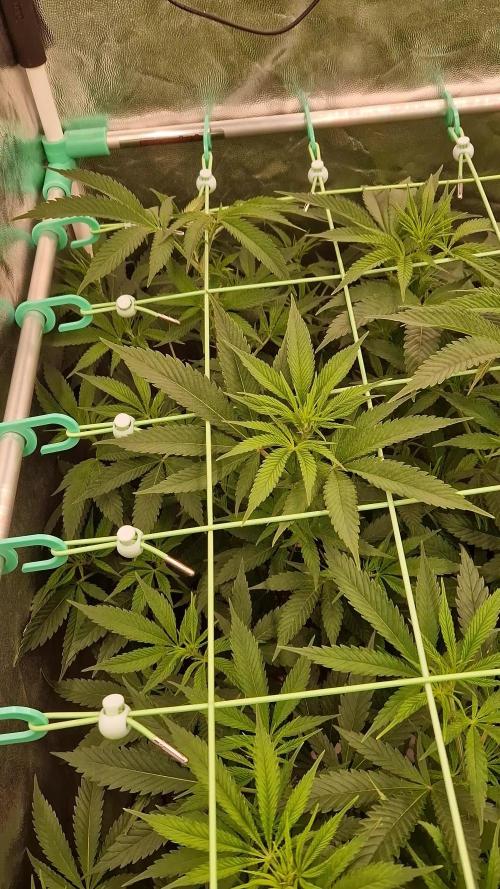
-- day 29 -- Started week 5 off with watering the plants. The nutrients from the soil are probably used by now so I'm adding a first small dose of Alga Grow. -- day 30 -- Its been 10 days since I changed the lights to 12/12. Switched the lights to full capacity with the bloom mode on. -- day 31 -- I'm already seeing the first signs of flowering today. Noticed first signs of light burn so raised the lights to 55 cm above canopy. -- day 32 -- Watered the plants with 2 ml/l alga grow + 2 ml/l bloom. -- day 34 -- I think I've been too cautious with nutrients. Plants are relatively light green colored. Not sure if I mentioned this before but I chose to schedule my lights so that they turn on at 22:00 and off at 10:00 in the morning. I did this because the room warms up with lights on and keeps the temperature up at night without any heating on to save energy. Only disadvantage; I can only look at my plants in the morning and late evening ;)
Likes
6
Share
@MG2009
Follow
06/20/2019 Transplanted! Finally! Into my own compost, see the baby worm in second video, coming out for the camera, As if on prompt. Amended with 0-5-0 to help roots lessen transplant shock.and get her comfy ASAP.She should adjust quite well. It will be a great week outside for transplant according to the weather man.
Likes
77
Share
I'm so excited I have a purple phenotype! I've wanted one for the past year 💜 The flowers are coming along - putting that carbon filter to use 😁 *I hope I'm not infringing on any rules about the music video. I'm very excited about a purple phenotype - I put some music on while updating my GD & this song started playing on YouTube autoplay. 🤣 I had to edit it & add it.*