


Likes
Comments
Share


@alexb420
Follow
painted the senecas for sure, culled the male. both turkish are pretty well seeded out, i’m thinking maybe 20-30 seeds each, 15 fully formed and good. the senecas look lightly pollinated, maybe 15-20, 10 fully formed and good. still will be usable beans. next run after this will be good, hopefully stable genetics. gonna try for a turkish male and focus on the turkish x afghan cross, while saving the seneca x turkish for later.

Likes
14
Share


@Jamescarter
Follow
Fifth week and booming I wanna say chop next week but might hold out extra two weeks start flushing yesterday en she's pack with trics sticky as hell well happy I bought purpanater it's the don swer by it now

Likes
79
Share


@Salokin
Follow
Hello Growmies,
As we conclude week 9 with our Epic Buzz trio, our spirits are high and our grow space is thriving. The introduction of an intake fan has been a remarkable success, significantly enhancing our control over the grow room's climate. Though not manipulated by Tent X's advanced automation, this new system has integrated seamlessly, working wonders for humidity regulation and fresh air circulation. The positive impact on the VPD is clearly reflected in the graph, showcasing a stable environment conducive to plant health and vigor.
The plants themselves are a testament to this success; they've stretched up nicely, with the canopy becoming denser by the day, promising an abundant harvest. Each Epic Buzz, from #1 to #3, stands lush and robust, with a vivacity that indicates they're on the right track. It seems they're set to make us proud, not just as individual specimens but as a harmonious collection within our carefully curated tent.
The precision in our approach continues to be our guiding principle, as evidenced by the meticulous adjustments to our environmental controls, shown in the steady data from our VPD readings. Our hands-on efforts complement the automated systems, creating an ideal balance that our Epic Buzzes are clearly loving.
Looking forward, the prospect of the flowering phase fills us with anticipation. With the canopy now in optimal condition, thanks to our strategic planning and the supportive role of the intake fan, we're poised for the next stage of growth. The thriving Epic Buzz plants, along with our proactive measures like the fly trapping, signify that we're not just growing plants—we're cultivating excellence.
Stay lifted,
Salokin

Likes
9
Share


@Hazebuster888
Follow
Habe 2 tage mit dem schneiden verbracht..
Total getrocknet: 750g 👌😊😁


Likes
12
Share


@LockDownGrow
Follow
Omfg what can I say,
Just look at the size of this auto plant,
She looks over watered but I can sure you she is not,
But just too be sure she had a flush feed this week and sucked that pot dry in just 3 days the same as the feed bucket before that rich of nutrients,
Absolutely no signs of defentcies on any of the plants leaves at any stage this grow,
Just the mutations in the first weeks that have only seemed too make them all very special plants indeed,
Now comes the exiting part,
The bud development,
I really pumped the nutrients this week as you can see,
At the end of this week a stopped giving the plant these addavitves
More roots,
Humic acid,
Growzyime,
Fast bud folar spray,
And big buds,
And have now started too raise the house & Garden A&B soil feed and also there budXL
I also started off early but as a trace amount of there top shooter,
By the end of week I intend on giving them the full recommended of each and only be giving them the house and garden range at full streingh,
I will then wait for the first Amber tricomb then instant flush feeds,
Hopefully I get two weeks from that stage but it is often genetic so as long as I get at least one week and at least 3 feeds of water only then I'm happy
Update I've been told from my photos I need too flush and they over fertililsed so my plans too increase is an
Abort Misson lol
Will not turn back the dial on feeds

Likes
4
Share


@HowtoBubatz
Follow
My Strawberry Gorilla Automatic from Fast Buds is now in its third week of flowering, and I couldn’t be happier with how she’s progressing.
She looks incredibly healthy, with vibrant green leaves and strong branches. The stretch phase is nearly over, and she has developed a solid structure with a well-defined main cola.🌱
One of the most exciting changes this week is the first appearance of trichomes on the main bud. Under the light, they’re starting to sparkle, hinting at the resin production that’s about to take off.
The buds are forming nicely, and I can already smell a faint but promising aroma developing.
So far, she’s responding well to the nutrients and environment, with no signs of deficiencies or stress. If she keeps going at this pace, she’s going to be a real beast by harvest time.😊
Likes
89
Share


@BioBuds
Follow
Wow wow wow... Apollo what have you guys made at SweetSeeds... My dear this strain is a monster and a keeper. Do you want regular-sized plants and buds in 8 weeks? No problem!
Do you want plants that can handle any condition even as a noob? Check! This beast of a strain is out of this world and I'm over the moon with the results.
I can't believe it. Normally I've seen auto's do 30 cms and some buds on top... This is simply alien tech...
I think I have never seen any plant grow that fast... This is something to try if you haven't already...
Completely amazed... And this is while making all sorts of mistakes: too hot, soil also too hot in nutes and temp, hotspots in tent by lacking fans, less PH buffer.
Stuff I learned:
- In my climate: at least 20 liter grow pots, maybe bigger.
- Add hydro corn, I forgot this
- Less bloodmeal and bonemeal
- More perma tea since mine is now too old to use, it will rot the earth.
- More often more water, in smaller pots
- Better ventilation and routing of fresh air.
- Light a little higher also during flower.
- No training is needed, a little defoliation is enough.
Thanks again for visiting and don't forget, these results wouldn't have been possible without my trusty SP-3000, consider to try it and see what this light does!
Hug bud
-

Likes
30
Share


@Canadian
Follow
Still in the process of drying and curing I wait for the snap Branch drying and they're not there yet but I two of the branches were ready and I cut them and taste them even though not cure was smooth and delicious.
I did not collect popcorns I kept everything in small pieces and put it in a pot for edibles. One of them main colas waiting 23.75 grams.
After curing this it is a very enjoyable and smooth blueberry smoke with a very strong THC content plus the very big yield and a very good recovery from abuse make this plant a real champ

Likes
Comments
Share


@SBC84
Follow
Going strong. End of week 3 , gave her a decent tidy up for more light penetration and air flow.
Likes
Comments
Share


@Efflorescent11
Follow
Plant is growing toward the light at a decent height not too long or shorts. 1st sprout is at 2 inches the second sprout is around 2.5 inches

Processing
Likes
31
Share


@Mr_Motalovah
Follow
Hello growers and tokers! 👋 👩🌾 🧑🌾.🔥💨
As you can see these ladies are growing nicely.
They're both at the same height 59cm but one is wider than the other.
Quite nice so far. That's 12cm in one week same as the Royal Gorilla.
Evenly spread canopy, the one that had better shape from the start now has longer colas.
Both are stacking nodes nice and tight.
They have a nice green color to them but you can't really appreciate that in the pictures.
I'm still trying to get a hand of this new phone, I might just go back to the camera. 🤔
Starting to get a little shine to them, I think this strain will be the first in forming trichomes.
They give off a nice smell but I can't put my finger on it yet.
Feeding 1,5L each, every other day. Will be increasing as they ask for more.
How do they ask for more?
When feeding if the soil is drier than normal I give a 150-200ml increment of water.
I do that until they stop feeding so much then i just maintain that amount.
I start reducing if it takes longer to dry.
That works good for me. The old finger in the dirt trick. 👍
Nothing like knowing exactly what your ladies need first hand.
**Info and pictures were taken at day 12 of flower.**
Hope you enjoyed this week's update. Stay tuned for next week. 😃
If you like this check out the other diaries of the strains in the tent. 😄
Take care and stay safe!
One love!✌️🏽


Likes
1
Share
@Olduffybastard88
Follow
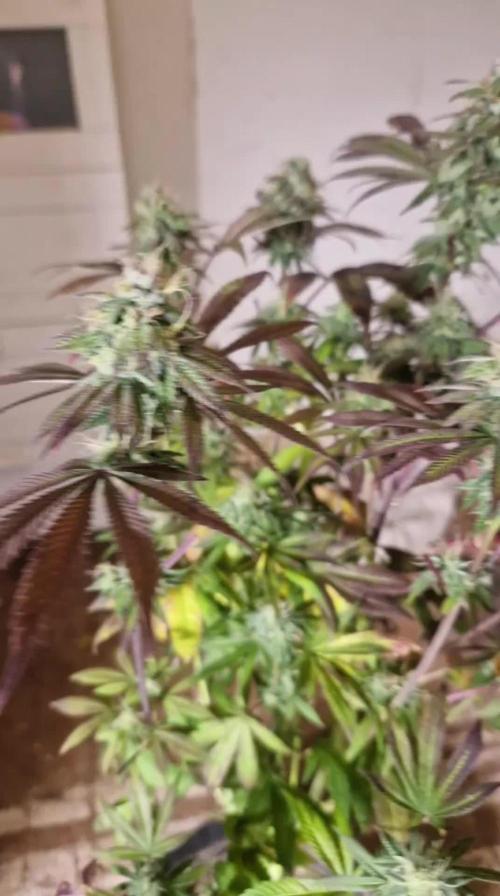
I am waiting for a overall dry weight these plants grew like trees had a big healthy stock and were easy to grow with the good genetics I had no problems with pest I have the next generation vegging already and will.make a diary for them soon as they get big enough and the cycle continues thanks guys

Likes
8
Share


@FairyFarm
Follow
Still Hot AF! We’re at 100F everyday. All except the jelly rancher seem fine with it.
The banana mango isn’t bothered.
It’s interesting the heat difference on strains. All were planted the same time
July 24, for the first time high today will be 90! Not 100! Shooting up like rockets!
July 27th - supercropped the banana mango and it’s crazy wide and like a huge solar array! It rained yesterday! Real, soaking, non-drought rain. The plants loved it…


Likes
37
Share


@TheIceCreamParlour
Follow
Week 12 over!
Cant believe how fast this last 3 months has gone! My 6 ladies are powering on and just keep getting bigger and bigger.
They have had 2 nute feeds this week and now 2 flush feeds. Planning on going with a 10 day flush.
I will continue to upload pictures throughout the week as I'll be asking for a experienced opinion on when to chop. So far I'm seeing literally 1 or 2 amber trichs on the biggest of the 6 but no anywhere else. I'm thinking this is a good sign that my target of cropping next Sunday is still on track. That would be exactly 13 weeks.
Buds are looking so so dense. Hard to get a photo that does them justice but the biggest colas are 75mm thick!
If your here then please also check out my new diaries where I'm running 3 FastBuds strains. These will be going in my environment as soon as the stardawgs are jarred up.


Likes
8
Share


@Piro420
Follow
Finally the stretched stopped.
Cut about 10 tops bent about 20 with 90s. Still right in the lights. They are looking very happy even though they are so close to the light ( thanks to high c02 levels most likely.)
Another week or 2 before I cut the temps and co2 levels down.
Been trimming all leaves below light line.
Stinky and brutally sticky I feel like Clark griswold with pine sap when ever I am bending the tops and such..
I think even with them being in the lights I will still get a few pounds of premium flower to smoke :)
Likes
14
Share


@GoldenWeedGrower
Follow
D64/F20 - 03/06/23 - The situation is under control now. I'm going to change water asap (maybe tonight)
D65/F21 - 04/06/23 - 👉 Water changed, some hours without nutes...
D66/F22 - 05/06/23 - EC 0.8 ph 7.0
D67/F23 - 06/06/23 - EC 0.8 ph 7.3 - added pH-
D68/F24 - 07/06/23 - Added water and nutes EC 0.9 and pH 6.3
D69/F25 - 08/06/23 - EC 0.9 and pH 6.3
D70/F26 - 09/06/23 - Added water and Calmag, Connoisseur Bloom A-B. Added pH-. EC 1.0 and pH 5.5
Likes
2
Share

@Bdog7878
Follow
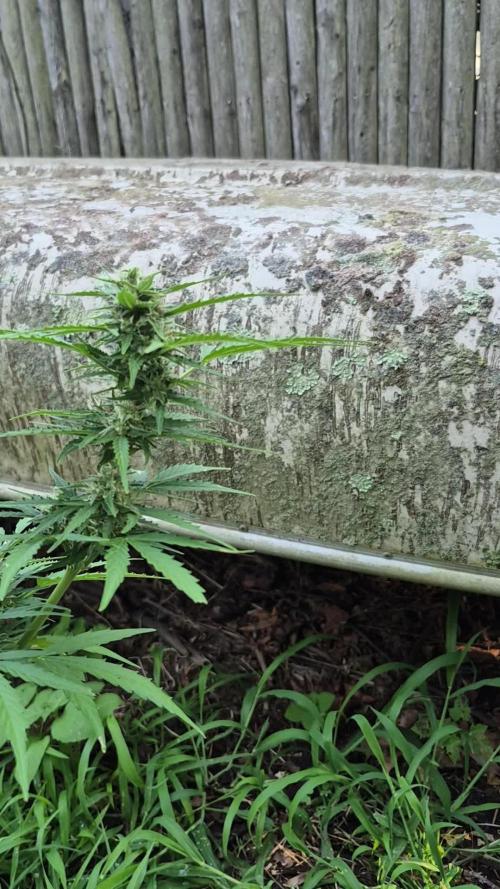
Been sunny no rain all week been watering pretty much everyday. The photos are all doing good. The sour auto is budding nice I am still feeding tiger bloom every 8 days I give 1.5 table spoons to a gallon. Days are shortening quickly expecting photos to start pre flowering soon I

Likes
29
Share

@DogDoctorOfficial
Follow
Before starting this final smoke review, I want to quickly apologize once again for the harvest report being uploaded on the previous flowering week instead of the official harvest tab.
GrowDiaries has been acting a little complicated lately with harvest and smoke review updates, and instead of risking losing photos or information again, I decided to play it safe and upload everything there. So all the harvest, drying and trimming photos are already available in the previous report for everyone who wants to check the full process visually. 🌱
With that said…
Welcome to the final chapter of this beautiful Amnesia Skunk journey. ✨
This report focuses mainly on the curing process, trimming philosophy, smoke review, aromas, preservation, and everything that happened AFTER harvest day.
Because honestly…
harvest is not the end.
It’s just the beginning of the flower becoming medicine.
After drying, every single bud was carefully hand trimmed, exactly like explained in the previous report.
No machines.
No shortcuts.
No aggressive trimming.
Just scissors, trim bins, patience, and intention.
Hand trimming is slower, yes.
But it preserves the integrity of the flower in a completely different way. The shape stays natural, the resin stays attached, the trichomes stay protected, and the flower keeps its personality instead of becoming overly processed.
Everything was saved.
The flowers.
The sugar leaf.
The trim-bin collection.
The resin from the scissors.
Even the finger hash that naturally builds up while trimming sticky flowers for hours.
And honestly… these girls were incredibly generous.
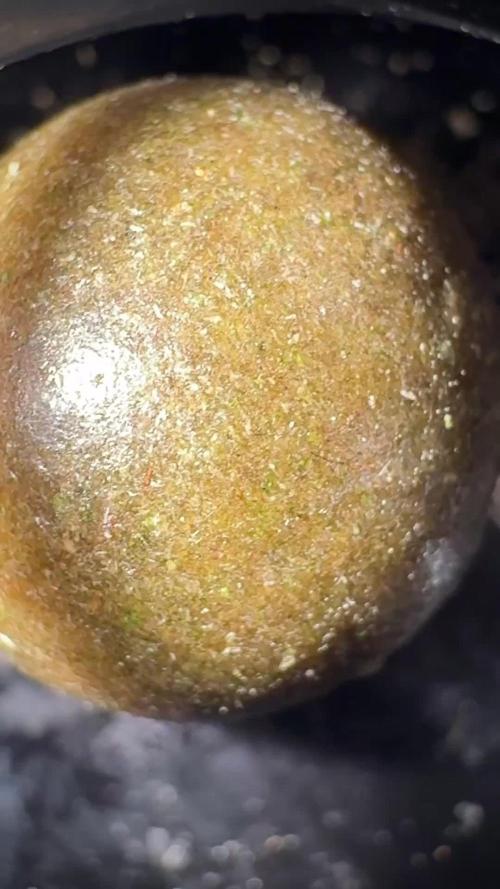
The trim-bin collection itself produced beautiful little resin balls full of aroma and character. Sticky, soft, fragrant, and surprisingly potent for something many people would simply throw away.
And now…
after months of curing…
we are finally smoking this beautiful medicine.
And wow.
This one is honestly difficult to explain properly.
The best way I can describe it is:
it feels like a sunset walk on the beach.
Warm.
Gentle.
Uplifting.
Comforting.
Peaceful.
Colorful.
She’s fruity.
She’s punchy.
She’s sweet.
She touches herbal notes without becoming earthy.
She’s fresh but deep at the same time.
It’s one of those profiles that somehow feels like everything and nothing simultaneously.
Nothing screams too loudly.
Nothing dominates.
Everything works together.
Both phenos ended up being surprisingly similar in terpene profile as well. Different plants, same soul.
And curing only made everything better.
The aromas did not disappear with time.
They intensified.
Every jar opening became louder, deeper, sweeter, smoother and more aromatic than before. The inhale became softer, the exhale became creamier, and the overall smoking experience became incredibly comfortable over time.
This is a long-lasting flower too.
Not only in terms of effect duration, but also in how long the flavor stays dancing in the mouth after exhaling.
The buds themselves stayed extremely dense and compact all the way through cure. Beautifully structured flowers with that satisfying weight and firmness you instantly notice when holding them.
One thing that genuinely surprised me during curing was comparing storage methods.
Part of the flower was cured traditionally in glass jars.
Another part was stored inside the Zamnesia metal vacuum curing containers that came with the setup.
And honestly… I noticed a difference.
The flower stored inside the vacuum container seemed to preserve aromas slightly better and felt more expressive when opening the container. The terpene profile felt a little louder, brighter and fresher compared to the traditional glass jars.
And that actually makes sense.
Oxygen is one of the biggest enemies of long-term terpene preservation. Vacuum-style storage reduces the amount of oxygen surrounding the flower, slowing oxidation and helping preserve volatile aromatic compounds for longer periods.
It doesn’t magically change the flower.
But it absolutely helps preserve what is already there.
And with a terpene profile like this one… preservation matters.
As for effects…
This is simply happy medicine.
Not chaotic.
Not overwhelming.
Not heavy.
Just… genuinely uplifting.
Clear.
Warm.
Positive.
Relaxed.
The kind of flower that makes you want to walk slowly near the ocean while the sun disappears in the distance.
Honestly, I could genuinely see this being a very comforting medicine for people struggling with sadness, low mood, emotional heaviness or difficult days. There’s something emotionally light about this cultivar that feels very welcoming and peaceful.
And comparing the cured flower to the charas and trim-bin resin was also extremely interesting.
The terpene profiles stayed very similar between them all, which was beautiful to notice. But the charas had this extra layer of freshness and brightness that almost felt “alive.”
Maybe because it came directly from fresh living material.
Maybe because of the way fresh resin expresses itself.
Maybe because charas simply carries a different soul.
Whatever the reason…
it was heavenly.
And now, as this diary finally comes to an end, I just want to send love and gratitude to everybody who was part of this journey.
To Zamnesia for the genetics.
To Plagron for the nutrition.
To the gear that kept everything running day after day.
To the platform itself.
To the GrowDiaries community.
To the longtime followers and OGs.
To the new people just discovering the page.
To the curious ones.
To the silent supporters.
To the lovers.
To the skeptics.
To the haters.
To the people who only stopped for 5 seconds.
And to the people who stayed here from seed until smoke.
Thank you. Truly. 🌱
This chapter may be closing…
But another one is already opening somewhere else in the garden.
Stay tuned.
A new diary is coming very soon. ✨
📡 DELETED @ 1K Please stay tuned.we never quit https://www.youtube.com/@TheDogDoctorOfficial NEW 🙏 Thank you for your patience and continued support.
FOR DISCOUNT CODES AND MORE JUST FOLLOW THE LINK https://website.beacons.ai/dogdoctorofficial
📲 Don’t forget to Subscribe and follow me on Instagram and YouTube @DogDoctorOfficial for exclusive content, real-time updates, and behind-the-scenes magic. We’ve got so much more coming, including transplanting and all the amazing techniques that go along with it. You won’t want to miss it.
GrowDiaries Journal: https://growdiaries.com/grower/dogdoctorofficial
Instagram: https://www.instagram.com/dogdoctorofficial/
YouTube: https://www.youtube.com/@dogdoctorofficial Deleted by Youtube - https://www.youtube.com/@TheDogDoctorOfficial NEW
Vimeo : https://vimeo.com/dogdoctorofficial Under construction stay tuned ⸻
Explore the Gear that Powers My Grow
If you’re curious about the tech I’m using, check out these links:
🔆 Lighting & Environmental Control
• Future of Grow — Advanced LED lighting technology
https://www.futureofgrow.com/
DISCOUNT CODE: DOG20
• Lumiflora — Under-canopy LED lighting
https://lumiflorade.com/
• TrollMaster — Environmental controllers and automation gear (past collaboration)
⸻
Genetics
• Zamnesia Seeds — Genetics used in this project
https://www.zamnesia.com/
⸻
🌱 Soil, Substrates, Boosters & Root Support
• Plagron — Substrates, bio mixes, and supportive products
https://plagron.com/en/
⸻
🎒 Storage, Curing & Preservation
• Grove Bags — Curing and storage solutions
https://grovebags.com/
⸻
📸 Photography Equipment & Tools
(Not sponsors, but part of my creative toolkit)
• Sony A6700
• Sony full-frame macro lens + few more
• Stacking photography workflow - learning
• iPhone (for behind-the-scenes shots)
We’ve got much more coming as we move through the grow cycles. Trust me, you won’t want to miss the next steps, let’s push the boundaries of indoor horticulture together!
As always, this is shared for educational purposes, aiming to spread understanding and appreciation for this plant. Let’s celebrate it responsibly and continue to learn and grow together.
With true love comes happiness. Always believe in yourself, and always do things expecting nothing and with an open heart. Be a giver, and the universe will give back in ways you could never imagine.
💚 Growers love to all 💚
📸 P.S. – The Eye Behind the Lens
All photos in this diary (for now — except for the ones showing the camera, which I took with an iPhone) are taken with a Sony A6700 paired with a Sony full-frame macro lens and a few more.
Photography is part of the story — it’s how we share the fine textures, the glow, and the quiet details that words can’t always capture.
I’ve also started experimenting with photo stacking — a technique where multiple images, each taken at a slightly different focus point, are layered together to create one perfectly sharp image from front to back.
It’s not digital enhancement or AI; it’s pure photography — a way to reveal the plant’s beauty in microscopic depth, from trichome to petal.
You’ll even see a few shots of "ghost me" capturing the shots — camera, lens, setup — because every grow deserves not just to be cultivated, but documented like art.
FOR DISCOUNT CODES AND MORE JUST FOLLOW THE LINK https://website.beacons.ai/dogdoctorofficial
NEW DISCORD - Official Server Invite Link : https://discord.gg/ksjAkA5T74
