


Likes
Comments
Share


@HIAZ_urbanbudfarmer
Follow
Been a busy week getting the new setup going. She has been going really well , first week of flower , interested to see how she goes. She is a nice little plant problem free so far.

Likes
5
Share


@KushMan420
Follow
Terra Bloom seems to make a great job (first time using organic & mineral nutrients together). The Smell of N13 is truly wonderful (tasty candy), DBK smells spicy and earthy. The "big flowering" is on a good way. I will start UVB light next week.


Likes
37
Share

@For2itous
Follow
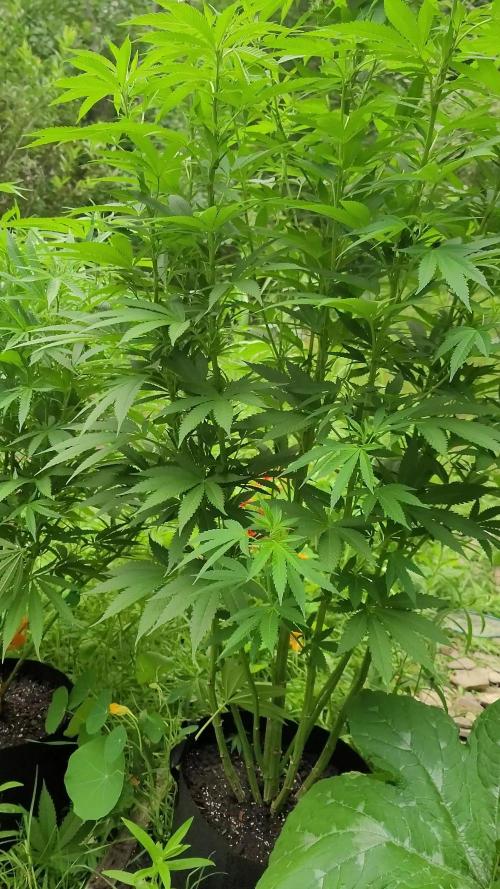
Finally has started to fully flip ? just seeing some buds forming and is really starting to drink alot in this heat. The smell rn just from the leaves + stem rub are already very orange🍊and fruity smelling 😋. Hope she and I do well the rest of the way. Happy growing 🌴

Likes
40
Share


@BLAZED
Follow
Week 16 (Harvest)
1-2 Drying day 1
Temperature: 24.5 to 19.5 degrees
Humidity: 65% to 50%
The girls are ready to be harvested!
Before chopping them down, i took a lot of pictures.
I was able to remove most of the soil from the Biscotti #2 to see the rootball.
I hang the plants as a whole to have a slow dry.
The exhaust fan is on setting 4.
2-2 Drying day 2
Temperature: 19.1 to 17.5 degrees
Humidity: 62% to 57%
I changed the exhaust fan to setting 2 because setting 4 was a bit high in my opinion.
3-2 Drying day 3
Temperature: 19.9 to 18 degrees
Humidity: 62% to 59%
Today i checked up on the drying plants, and i see there are some buds touching other buds, so i chopped the plants in half.
The buds are still to the main stem for a slow dry, but are hanging more spreaded out to prevent any budrot issues.
I changed the exhaust fan to setting 1, as someone told me that it was enough air movement for drying.
4-2 Drying day 4
Temperature: 19.8 to 18.5 degrees
Humidity: 62% to 59%
5-2 Drying day 5
Temperature: 19.9 to 18.8 degrees
Humidity: 62% to 59%
Today i checked on the drying plants and the buds are shrinking a bit, they are getting a little bit crispy on the outside aswell,
I hope they wont dry as fast, and i aim for a 12/14 day dry.
For the next grow i already germinated 2x Chemdog (GreenHouseSeeds) 2x Gorilla Kush (GanjaFarmerSeeds) and 1x Deep Candy CBD (GreenHouseSeeds)
And I have some upgrades planned aswell!
I bought a autopot kit with 4 15L pots, this way the plants will have water and air 24/7 whenever they need it. I have seen alot of great results using autopots so i am very exited to try it out!
And I bought a small camera so i can shoot some weekly timelapses!
Feel free to Follow me if you like to get notified for the upcoming diaries!
Thanks for checking out this diary, peace!
(More harvest updates coming in the next couple of days!)
Huge thank you to Zamnesia for the seeds, and Plagron for the collection of nutrients, and the opportunity to participate in the POWERBUDS contest!
It was a fun and learningful adventure!

Likes
27
Share


@Frosty_farm
Follow
Wow..week 8. Shouldn't she be flowering by now? She's doing a lot better, her leaves are green again and she's growing. I'm proud of her. added some co2 to the tent, I'm curious to see what happens. Day 60.... I'm bringing back her to life. 😊. Day 63 I believe she's alive with all that green

Likes
14
Share


@Toughpuff
Follow
Very good plant to grow 8/10 for me 💯💯🔥 very high yielding with a crazy yield of 131grams of 1 plant very tall and skinny but dense buds 🙏🏽


Likes
9
Share


@Mr_nugs_lover_David
Follow
I Should have been chopped down 5 plants instead of just one however I lost her 4 sisters because of fungal infection due to a high humidity and and a very hot day. Wish I could have been able to get a lot of jars full of this wonderful and magical organics nugs.


Likes
2
Share


@LittleBigTrees
Follow
New growth is fast soon I will put into a 20 litre pot and give her more space to spread out.


Likes
27
Share


@eldruida_lamota
Follow
Vamos actualizar la primera semana de floración de estas Biscotti de RoyalQueenSeeds.
Primera semana a 12/12 en un SOG, se ven con un buen color y avanzan progresivamente.
La humedad es perfecta, la temperatura me gustaría tenerla par de grados más abajo pero aún así es pasable.
Aplico el flash root de Agrobeta y Blue line B de Agrobeta.
Esta semana añadí tucán, gold joker, silver y génesis también de Agrobeta.
Mars hydro:
Code discount: EL420
https://www.mars-hydro.com/
Agrobeta:
https://www.agrobeta.com/agrobetatiendaonline/36-abonos-canamo
Hasta aquí todo, veremos como progresan pronto. Buenos humos 💨💨💨
Likes
4
Share


@civillianwalking420
Follow
Its pretty well upto dis point , just having a pH imbalance but not much , its just kinda slows d growth a lil bit and lookin good by d day cheers
Likes
2
Share

@grownerd94
Follow
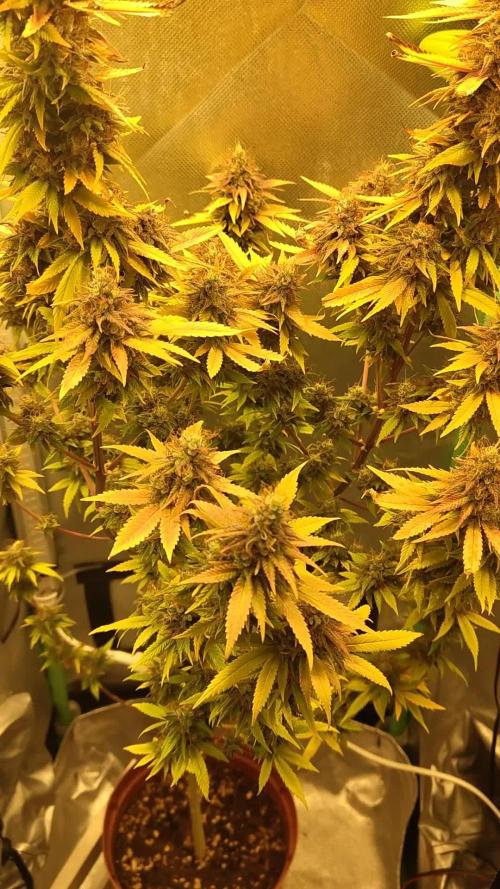
Bin maximal gespannt was diese Test Strain zu bieten hat! Vom Ertrag schon mal maximal zufrieden bisher! 🔥


Likes
26
Share


@GroloCup
Follow
New week, same deal... She's growing and things are looking good. Roots are now starting to make it to the water so she's going to be upgrading to a little stronger brew on the next rez change.


Likes
11
Share


@Skunkiest_bender39
Follow
Lampe 80% power und nur noch 20cm platz, muss wohl nachbinden…
Die krumbles haben einen Weg, sieht mir nach generellem Defizit aus aber vor allem wenig CalMag, oder war schon zu viel und ein lockout könnte durch Zugabe von CalMag provoziert werden. Wir werden sehen. Blätter sehen mies aus Blüten wachsen super, Harzproduktion geht weiter, Geruch wird immer stärker. Mycrene und Limonene liegen in der Luft;). Die Zake stinken extrem nach rohrzucker-hopfen leicht bitter, die krumbles sind beide sehr süs die b2 hat einen mehr als intensiven citrus Duft. Die Zake sind alle sehr unterschiedlich, nur der Geruch ähnelt. Z1 110cm , z2 95cm z3 85cm. Musste sie unterfüttern. Buds an jeglichen wichstyp angepasst. Hatte Glück 3 phänos zu treffen sativa lastig, ausgeglichen, indica lastig. Hoffe die Damen haben genau so viel Spaß wie ich :D


Likes
42
Share


@smoker420
Follow
Moved some plants to spot 2 more of a old lake grown over by reeds and now its dried up perfect to get them wet dry cycles as soil was not drying up at spot one need to build some beds down at spot 1 been putting abit of work in at spot 2


Likes
1
Share


@Maconhista
Follow
High humidity and high temperature variation can cause mold and mildew. Healthy plant and high ventilation prevent the problem!
Likes
Comments
Share

@AkatsukiVirtue
Follow
No huge changes.
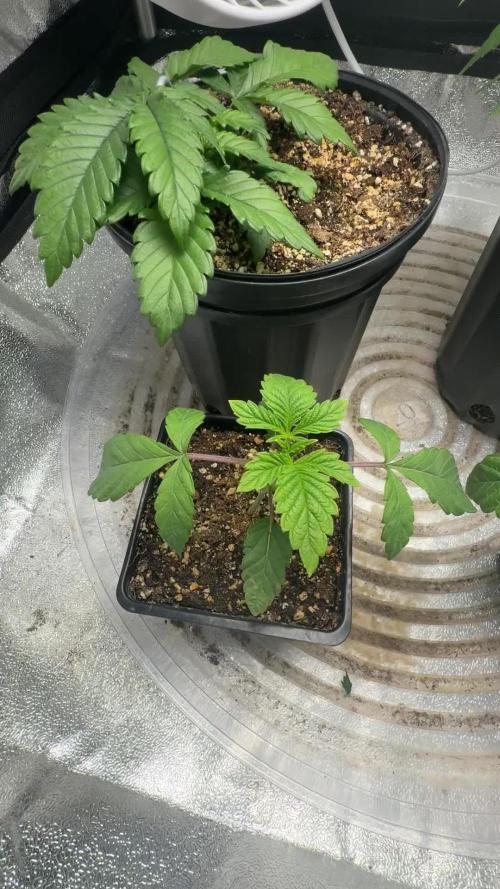
GPA Cookies are still growing albeit slowly due to the cold. I hope it starts picking up soon.
HUGE defoliation on the Chocolate Skunk clone. This girl is responding very well.
Money Maker is just doing its thing! I didn’t expect much from this plant, but that just means it has no pressure and can take its time!


