


@Rinna
Follow
Just a perfect outdoor grow, after last year I wasn't very confident that the plants would finish, but the dry weather helped a lot. It's about the journey too for me, just love to see them grow everyday, combat problems and have a big community here that's always willing to help!


@Growedbypepper
Follow
La planta ha tenido un muy buen desarrollo esta última semana, ha crecido de manera favorable ya solo es esperar a tener el espacio para su floración así que la dejaremos otra semana en vegetativo, aparte de eso no hay mucho que decir las plagas están a raya y se ve en perfectas condiciones desde sus hojas hasta los tallos


@Cultivandomedicinanatural
Follow
Metemos un último apretón de comida porque la planta lo pide y la resina y dureza de las flores me sorprende muy gratamente y el olor super fuerte!! Es una pasada como evoluciona de rápido y de bien.
Se nota en alguna hoja como nos pidió un poco más de calmag y comida, pero están muy sanas y fuertes! Ya están cercanas a su última semana, ya tenemos a 30 cm el foco y las pequeñas están estupendas.😘😍



@MrGrOH1008
Follow
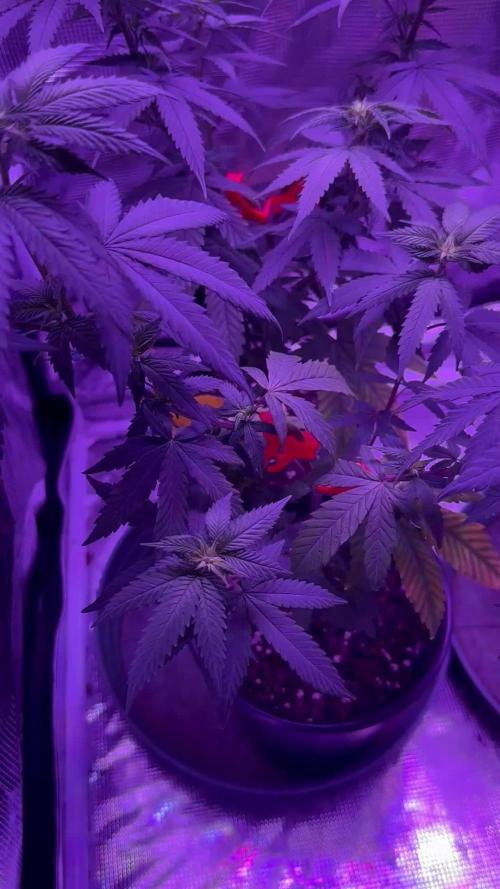
Alots transpired but not really lol. Chopped 3 so far for being male and as you can see this week I may (99% sure) have another male. I’ve given one light feed of Cronk grow, kelp me kelp you, and some cal mag.
So looks like I’ll be taking 3 into flower which is all I wanted to know before spent too much effort and time on em. Prolly transplant the 2 smaller ones this week and just continue to wait it out.
I know next time I could wait a few weeks before popping new beans if they’re regs atleast…


@Roberts
Follow
The Mandarin Squeeze sisters are growing good. The grow room appears to be pest free now. I had neem oil treated the plants twice. I then treated the grow space with ortho home defense. I did not get it on the plants. It appears to have work. Grow diaries is really messed up still, and Is altering my information input on numbers. Hopefully it will be fixed soon. Thank you Spider Farmer, and Terpyz Mutant Genetics. 🤜🏻🤛🏻🌱🌱🌱
Thank you grow diaries community for the 👇likes👇, follows, comments, and subscriptions on my YouTube channel👇.
❄️🌱🍻 Happy Growing 🌱🌱🌱
https://youtube.com/channel/UCAhN7yRzWLpcaRHhMIQ7X4g

shorts_status_processing


@Cogollo_eu
Follow
**Encontrarás la traducción a español al final de la descripción**
If you like this week, please hit a like, it costs you nothing! 👊. Thanks in advance 😉!
From/Desde: 16/09/19 || To/Hasta: 22/09/19
From day/Desde día: 56 || To day/Hasta día: 62
-----IMAGES & VIDEOS-----
V1 - Compiled all growing timelapses into a complete growing video, hope you like it mates!.
V2 - My apologies about the quality of this video buddies, I didn't choose a very good place to record it, and also the GoPro released the manual configured blocked exposure, so there are many color differences among days, as every day upon lights on the GoPro make a new exposure and temp adjustment (The light is 3,000k i don't know why the GoPro read it different daily).
V3 - I'm still learning to record some cool videos, as for example @MyrceneDream ones 👊, and many others.... I'm not doing it well at time.
-----WEEK SUMMARY-----
Hard work times drain my time for the plants and to make content, sorry about that.
At last flowering started, as can be shown in the weekly video, the first 3 days after the full switch to 12, she stayed in a frozen state, no much growing or movement at all. Since the 4th day she started to grow at high speed, a bit more than a cm/day. She's really looking awesome, making some bold branches and defining every part of the plant very well.
Some weeks ago I told that the smell went too strong at home, but it lowered to normal levels last week, now she's smelling more and more each day again ;).
I can say about Alice.K, that I had 0 problems or weird things along the current 9 weeks, she suffered very high temperatures, some insects, and also i'm going hard with nutes, I'm cycling EC reaching 2 sometimes, and she didn't show any excess signs at time, I'm not telling that they're not going to exist on Alice, but not at time, if i see some, i will stop and re-adjust.
Also she has responded very well to every prune or cut I've maded to her, and the distribution is perfect, I'm in love with the form she developed. while i was thinking on 4 external main colas with 12 secondary decent Satellites, she's developing 2 awesome central colas, with 4 secondary and very decent sub-colas, and then 10 excellent satellites, and many small ones that i will cut later on (Already cutted many below the SCROG net).
-----WATERING CALENDAR-----
18/09/19 (Day 58) - 3,000 ml with Tarantula, Piranha, Rhino Skin, Big Bud, Bud Candy & Bud Ignitor @ (1.1 E.C. | PH 6 | 25.7ºC)
22/09/19 (Day 62) - 4,000 ml with Silica Power, Organic Bloom, PK Booster, Bloom Stimulator, Pro Active, Bud Ignitor, Bud Candy, Bud Factor X & Sensizym @ (2.1 E.C. | PH 6.4 | 25.8ºC)
*****ESPAÑOL*****
Por favor, si te gusta esta semana dale un like, no te cuesta nada 👊. ¡Gracias por adelantado 😉!
-----IMÁGENES Y VÍDEOS
V1 - He compilado todos los timelapses de crecimiento en un vídeo de 1 minuto, espero que os guste!.
V2 - Debo disculparme por la calidad de este vídeo compañeros, no escogí una buena posición para situar la cámara y esta además perdió el bloqueo de exposición que le pongo, por lo que al realizar un auto-ajuste automático a diario, hay diferencia en la exposición y el color entre los vídeos de cada día. No entiendo por que siendo siempre la misma luz de 3.000 k la cámara la interpreta diferente cada día.
V3 - Todavía estoy intentado aprender ha hacer buenos vídeos, como pueden ser los de @MyrceneDream 👊 entre muchos otros por ejemplo... De momento no me salen bien, ya iré mejorando.
-----SUMARIO SEMANAL-----
Estoy teniendo tanto trabajo que me está dejando muy poco tiempo para las plantas y para realizar contenidos, lo siento.
Por fin empezó la floración. Como se puede ver en el vídeo semanal, los 3 primeros días de la floración la planta se mantuvo en un estado vegetativo (sin crecimiento). A partir del cuarto día a empezado a crecer a gran velocidad, de momento más de 1 cm al día. De verdad que se ve maravillosa, está engordando bien las ramas y definiendo su partes muy bien.
Hace algunas semanas comenté que ya estaba apestando toda mi casa y aún estaba en crecimiento. El olor fue disminuyendo hasta niveles normales y esta semana de nuevo está volviendo a incrementar su olor día a día.
De momento debo remarcar que en 9 semanas de cultivo que van, la Alice.k me ha dado 0 problemas o cosas raras. Ha sufrido de altas temperaturas, algunos insectos y he empezado a ir fuerte con los nutrientes. Estoy ciclando la EC en los riegos, sobrepasando los 2 en algunos casos, de momento no ha mostrado ningún signo de exceso. Con esto no quiero decir que no los vaya a mostrar si sigo así, pero de momento no lo ha hecho, si en algún momento empiezo a ver signos, ya frenaré y reajustaré.
También es un planta fuerte y con capacidad de recuperación rápida, eso se puede observar en los vídeos perfectamente. Y lo increíble es la distribución que ha adquirido, mientras yo pensaba en una estructura con 4 colas exteriores principales grandes y 12 satélites centrales pequeños, ella me ha sorprendido formándose con 2 cola centrales enormes (para el tamaño del cultivo), 4 colas exteriores grandes y un montón de satélites de tamaño superior al que esperaba, más adelante cortaré los que se queden más retrasados (de momento he cortado mucho de lo que quedaba por debajo de la red)
-----CALENDARIO DE RIEGO-----
18/09/19 (Día 58) - 3.000 ml con Tarantula, Piranha, Rhino Skin, Big Bud, Bud Candy & Bud Ignitor @ (1,1 E.C. | PH 6 | 25,7ºC)
22/09/19 (Día 62) - 4.000 ml con Silica Power, Organic Bloom, PK Booster, Bloom Stimulator, Pro Active, Bud Ignitor, Bud Candy, Bud Factor X & Sensizym @ (2,1 E.C. | PH 6,4 | 25,8ºC)


@XperencdGmanXG
Follow
Again plants are growing very quickly and all I am taking care of is the microbes and the water. Raised rootball temps to 24c plants are liking it.


@TgOgFaRms
Follow
I'm thrilled to share another exciting update on my flourishing journey. We have now reached week 4 of the flowering phase, and I must say it has been an incredible period of growth and progress. The plants continue to stretch magnificently, and the onset of bud production has been truly remarkable. 🌿🌸🌱💪
As we progress through this crucial stage, I remain attentive to the well-being of my plants. They have developed a healthy thirst, consuming approximately 4 liters of water every 2 days. The pH level of the nutrient solution stands at a steady 6.11, ensuring optimal nutrient uptake. Furthermore, the TDS range between 1050 and 1150 provides the ideal nutrient balance. 💧⚖️📈
In light of the unfortunate hermaphroditism incident experienced by a fellow grower, I have been diligently checking my plants for any signs of similar issues. So far, I'm pleased to report that everything is progressing smoothly, and I haven't encountered any Bananas or seeds (it's hard to check the back sides). 🚫🍌🔍
That's it for this week! Happy growing, lads! 🌿🌱💚🌸


@Ganjagrandaddy
Follow
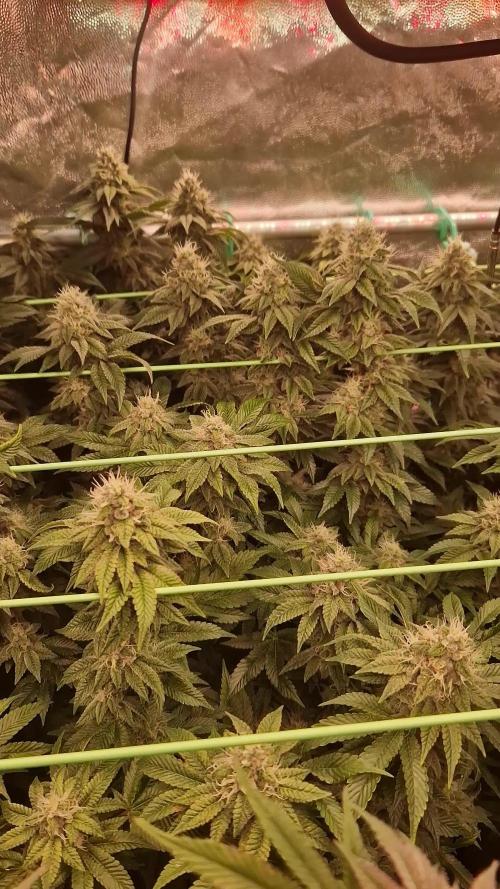
DAY 42 F: Another roasting week in the grow room. Temps have been hitting 37°c still and keeping them watered has been a battle. The water has been taken up instantly and they had built up a little too much nute in the soil. We have a major yellowing of 2 of the middle row plants ( mango x mimosa fast bud cream cookie) They are still building buds but you can see the effort is taking them without the green for photosynthesis. Hopefully they will be fixable over the coming days.
The Banana mash are doing well and even with the heat issues , still bud building. They have shaggy looking buds at present but I am confident they will become more solid soon and swell more. They have a pungent banana hit now and they are so tacky to touch too. The mutant #4 has really spread put at the back of the middle row and is producing some nice looking buds too.
Purple Monkey continue to make me drool when I handle them and the buds up close look so edible. With their sweet candy smell and pinky/reds , i cant wai to try these out. They are just pushing their second pistil flush so should swell nicely over the next week or so. The heat has not bothered these at all it seems and keeping them nice and areated to avoid mould being able to form has been this weeks task. All fed and watered for the day now . Until next week grownies. Be safe and well. Keep the vitamin D up and bask in the sunshine of God green planet . peace and blessings



@TrickzGrowz
Follow
Sie scheint noch ein wenig länger zu brauchen. Sieht aber schon sehr lecker aus was da gewachsen ist.

@Bunterbiber
Follow
What a massive turnaround from last week! Mother Nature finally stopped teasing us and brought the summer heat. We had glorious, non-stop sunshine all week, with temperatures climbing all the way up to around 30°C.
Training & The Stretch: 🌿
I’ve officially put the LST ties away. I didn't touch them at all this week. Looking at them, it feels like the majority of the flowering stretch is finally wrapping up. Now it’s all about stacking those buds!
Feeding Update – Dialing in the Recipes:
With the plants working overtime under the hot sun, the feeding schedule has been quite busy:
Team Organic (Banana Purple Punch & Amnesia Haze): They got a full-course meal this week to support peak bloom. Alongside the tap water and CalMag, I added BioBizz Bio Bloom, Top-Max, and just a tiny dash of Fish-Mix to give the microbes a nice little energy boost.
Team Mineral (Lemon Cherry Cookies & Bruce Banner): They are cruising along nicely on a steady diet of Hesi Bloom Complex paired with CalMag to keep everything perfectly green and balanced.
Current Standings: 📏
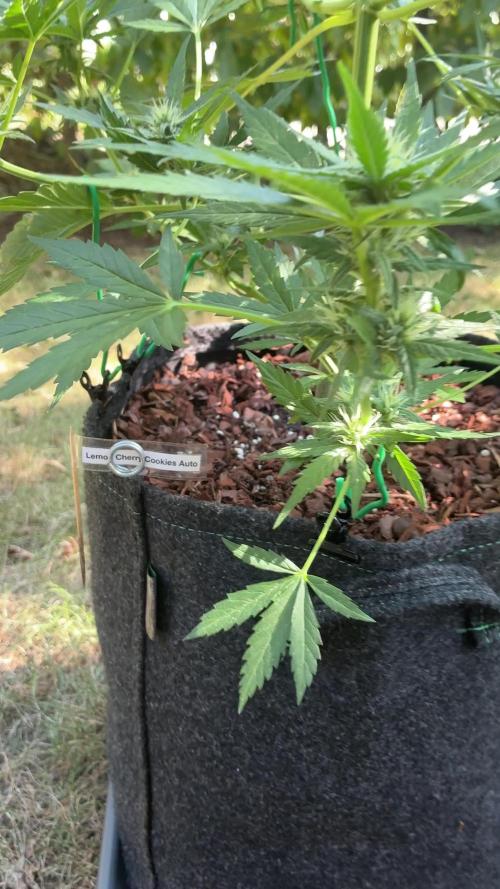
Lemon Cherry Cookies: Still holding her crown as the undisputed giant at 70cm. She seems to have settled into her final height and is looking incredibly majestic.
The Rest: Bruce Banner, Amnesia Haze, and Banana Purple Punch have used the sunshine to catch up beautifully. They are all sitting right around the 50cm mark now, looking sturdy, healthy, and ready for a spectacular show.
The energy in the garden is amazing right now. Let’s hope this beautiful weather stays with us as the buds start filling out!


@Dunk_Junk
Follow
Well that was her last week! 😎
I think she's done well in her 10 litre fabric pot. 😍
Will be harvested within 24h.


@DogDoctorOfficial
Follow
Week 9: Navigating the Path to Harvest!
Greetings once again, fellow cultivators! As we journey deeper into the heart of our botanical adventure, Week 9 brings us closer to the long-awaited harvest of our beloved Epsilon F1. In this week's installment, we dive into the intricacies of nutrient management and the final stages of flower development.
Our Epsilon F1 stands tall and proud, a testament to the care and dedication lavished upon her throughout her growth journey. With each passing week, her beauty becomes more radiant, her buds more plump and resinous. It's a sight to behold, a testament to the magic of nature and the art of cultivation.
Ah, but this week brings a significant shift in our approach to feeding. We've made the bold decision to cut all additional nutrients, relying solely on Fluvic Blast and Enzym+, both trusted companions from the Aptus Holland lineup. Why, you ask? Because at this stage of the game, our focus shifts from nutrient uptake to nutrient utilization. Fluvic Blast, with its rich blend of organic acids and trace minerals, acts as a catalyst for nutrient absorption, ensuring that our Epsilon F1 can make the most of the resources available to her. Enzym+, on the other hand, plays a crucial role in breaking down organic matter, releasing valuable nutrients that might otherwise remain locked away in the soil. Together, these two powerhouses work in harmony to optimize nutrient availability and promote healthy, vigorous growth in the final weeks before harvest.
As we approach the culmination of our journey, let us not forget the lessons learned along the way. From the delicate balance of light and nutrients to the art of patience and perseverance, each day in the grow room has been a lesson in humility and gratitude. We owe a debt of gratitude to Royal Queen Seeds for providing us with the genetic masterpiece that is the Epsilon F1, and to Aptus Holland for crafting nutrients that have nourished our plant from seedling to harvest.
And so, as we bid adieu to Week 9 and prepare for the final stretch, let us take a moment to marvel at the beauty of our Epsilon F1 and the miracle of nature's creation. May her harvest be abundant, her buds potent, and her legacy enduring. Until next time, dear friends, happy growing!
#EpsilonF1HarvestJourney #Week9FinalStretch #BotanicalBeauty #RoyalQueenSeedsGenetics #AptusHollandNourishment
Genetics -Epsilon F1 @rqs_esp @royalqueenseedssp @rqsglobal
Food - @aptusholland @aptus_world @aptus_es @aptus_portugal @aptusbrasil @aptusplanttechaus @aptus_thailand @aptusplanttechnz @aptususa_official
LED @lumatekeu
Controls - @trolmaster.eu @trolmaster.agro @trolmaster.support
As always thank you all for stopping by, for the love and for it all , this journey of mine wold just not be the same without you guys, the love and support is very much appreciated and i fell honored and blessed with you all in my life
With true love comes happiness , Always believe in your self and always do things expecting nothing and with an open heart , be a giver the universe will give back to you in ways you could not even imagine so
#aptus #aptusplanttech #aptusgang #aptusfamily #aptustrueplantscience #inbalancewithnature #trueplantscience #rqs #ApoloMission #MoonHarvestAdventure #playwithlego #lego #legotime #legovideo #tothemoonandback
More info and complete updates from all my adventures can be found Link in the profile description
Friendly reminder all you see here is pure research and for educational purposes only
Growers Love To you All


@gr3g4l
Follow
esta semana le añadí al riego algo de TopMass silicio , la semana anterior se hizo de forma foliar pero la misma noche llovió y posiblemente de nada sirvió así que esta semana se lo añadí al riego. 1ml/l y el Ph me subió a 9,5 Ph.
De no ser algo habitual en cada riego el sustrato lo equilibra y las plantas no lo notan mucho. Por norma general suelo regar entre 6,5 y 7,5 de Ph.
Al ver las picaduras de trips no me quedó otra que empezar con los preventivos, prevenir antes que curar.




@Ultraviolet_
Follow
Remember that, however you are played, or by whom, your soul is in your keeping alone. Even though those who presume to play you be kings or men of power, when you stand before God, you cannot say, 'But I was told by others to do thus,' or that virtue was not convenient at the time. This will not suffice. Remember that.
Day:18
84°F and 65% RH (VPD) for the vegetative stage. Approximately 1.15kPa(assuming leaf temperature is about 2°F cooler than the air), which falls right into the ideal vegetative sweet spot (0.8kPa to 1.2kPa). At 1.15kPa, plants can draw water and nutrients efficiently without risking stress or wilting. It keeps the leaf pores (stomata) open, allowing for ideal carbon dioxide intake and maximizing vegetative growth. VPD is determined by the leaf's temperature, not just the ambient air. Because leaves usually run 1° to 3°F cooler than room air under bright grow lights, my actual VPD will be slightly lower, closer to the 1.0kPa mark. As she transitions from vegetative growth to flowering, one can gradually lower the humidity (to around 45–60%) and drop temperatures slightly to prevent disease from settling inside dense buds when they appear.
Night:6
At 70°F and 60% relative humidity, Vapor Pressure Deficit (VPD) is 0.86 kPa. This is right on the cusp of whats optimal for the vegetative stage. During the nighttime, plants generally close their stomata and undergo cellular respiration rather than photosynthesis. Transpiration slows to a near stop, making VPD less critical at night than during the day. However, maintaining a nighttime VPD between 0.8 and 1.0 kPa is highly beneficial in that it ensures the air is dry enough to prevent powdery mildew or bud rot, but moist enough to keep the plant from undergoing unnecessary stress. This range keeps the environment comfortable for cellular processes and prevents large atmospheric swings. Keeping it all flowing.
(Not pushing them yet, these are photoperiods)
The optimal soil (root zone) temperature for cellular root respiration and nutrient uptake in cannabis is between 68F & 72F This narrow range balances biological energy production (cellular respiration) with the dissolved oxygen levels in the soil, maximizing plant growth and health. Warmer soils hold significantly less dissolved oxygen. When soil temperature exceeds 74F oxygen depletion occurs, inhibiting cellular respiration almost entirely, At 68-72F root cells generate optimal adenosine triphosphate (ATP) via respiration to power root-tip elongation and the active transport of water and nutrients.
Too Hot (Above 78F) Root respiration increases, demanding more oxygen, while the water's oxygen-carrying capacity drops. This creates a prime environment for anaerobic pathogens and Pythium (root rot).
Too Cold (Below 60F) Root metabolism and cellular respiration slow to a crawl. This severely impairs nutrient and water absorption, leading to yellowing, wilting, and phosphorus deficiencies.
A lot depends on whether it's automatic or photoperiod; with photoperiod, there is not as much of a need to push "hard" as the real countdown only begins once the flower is initiated. Automatics, on the other hand, the chronological "clock" begins ticking the moment the seed germinates. It is of critical importance that the seedling growth gets off to the races, understanding that early growth is like compound interest, which will pay off come harvest. This reality is why getting autoflowers "off to the races" early on yields such exponential benefits. The "compound interest" is directly related to the surface area of the leaves. Larger, faster-growing seedlings process more light and build bigger root networks early on, which translates into an explosion of vertical and lateral growth during their short vegetative window.
The margins for error are so thin with autoflowers; this early-stage momentum depends on several critical practices. Seedlings exposed to increased atmospheric CO2 levels early in life will develop at an increased rate. To effectively "extend" or optimize the capacity of Photosystem II (PSII) for increased photosynthetic efficiency. In standard oxygenic photosynthesis, Photosystem II (PSII) is naturally limited to the red-light spectrum, peaking at 680nm. Extending its light-harvesting capacity past 700nm into the far-red region requires bypassing the natural limits of standard chlorophyll a. Adding 730 nm (far-red) LEDs alongside standard red/blue lights has been shown to increase canopy photosynthesis by 20–30% in several crops by acting synergistically with shorter wavelengths. However, the limitation is that excessive, pure IR/Far-red light (without accompanying red light) can trigger the "shade avoidance response," causing plants to grow tall, weak, and spindly rather than robust. Utilizing infrared light (specifically the 700-750 nm far-red range) is a viable method to boost photosynthetic efficiency. It acts as a bridge to allow PSII to utilize a broader spectrum of light, breaking the traditional 700 nm barrier. UVR8-mediated signaling (often in conjunction with CRY proteins) triggers protective mechanisms that maintain the stability of the photosynthetic apparatus (including LHCII and reaction center proteins), thus ensuring that the efficiency of Photosystem II remains higher in UV-B-exposed plants compared to plants lacking this receptor. ΦPSII indictates the rate of electron transfer from water to plastoquinone, which drives the production of ATP and NADPH. There is a close link between ΦPSII and the true rate of CO2 fixation (Φ*co2).
ETR stands for Electron Transport Rate. It measures the speed at which electrons are moved through the thylakoid membranes in a plant's chloroplasts during the light-dependent reactions of photosynthesis. Infrared light (particularly Near-Infrared or NIR) improves cellular energy by interacting directly with the electron transport chain (ETC) in mitochondria. This process boosts adenosine triphosphate production, which acts as a metabolic coefficient multiplier by accelerating enzyme activity dramatically.
Extend then multiply.
Far-Red photons interact with plant photoreceptors to accelerate the plant’s biological "clock" or trigger a shade-avoidance response. Autoflowers don't use the plant's biological clock, although the IR will initiate a shade avoidance and make them stretchy. You can just add equal measures of 660nm-680nm to negate the shade avoidance effect. Replacing nights' "darkness" with a combination of IR+ and 660nm. Because autoflowers don't require a dark period to flower, many growers just blast them with light. 18/6 24/0. However, this ignores the plant's metabolic rhythms, where daytime photosynthesis (light reactions) must be perfectly balanced with nighttime carbon fixation and assimilation (Calvin cycle) to avoid bottlenecking plant development. Cellular respiration is a 24/7 process, but it can only function while the plant has the free oxidative capacity to do so. A 100% photosynthetically active leaf cannot perform cellular respiration. The viral trend of defoliation of every leaf that isn't "getting enough light" is of great detriment overall, putting 100% of the cellular respiratory "workload" and responsibility on the 0/4/6 hours of darkness in sub-optimal conditions for enzymatic activity. Photosynthesis captures nearly 100% of the initial energy as carbon, while cellular respiration is the process that unlocks 90% of that captured energy into usable ATP so the plant can use it. Respiration is considered roughly 30% to 40% efficient. It captures enough of the potential energy in glucose to synthesize around 30 to 38 ATP molecules per glucose molecule. The remaining 60% to 70% of the energy in the sugar is not captured in ATP; instead, it naturally escapes into the environment as heat, which helps regulate plant temperature. In plants, the primary enzymes of the Electron Transport Chain (ETC) and the ATP synthase complexes are typically adapted to function optimally in warmer temperatures (roughly 25°C to 35°C depending on the specific plant strain). As temperatures rise within this physiological range, molecular collisions increase, speeding up respiration and ATP production. The cannabis plant has a branched respiratory pathway. During heat or cold stress, plants activate Alternative Oxidase (AOX). AOX burns sugars to dissipate energy as heat rather than coupling it to ATP production. This pathway actually functions optimally at elevated temperatures to help protect the cell from the damaging build-up of Reactive Oxygen Species (ROS) during heat stress. Enzyme activity generally scales with heat; there is a strict biological limit. If canopy temperatures in a grow room exceed 40°C, the enzymes and their supporting lipid membranes lose stability. Not saying you need to go crazy, just optimize nights the same as we optimize days.
Phosphorus is the driving force behind early seedling development. It acts as the "energy hub" of the plant, directly driving cell division, robust root growth, and the creation of DNA. Without an adequate, easily accessible supply early on, the plant's overall growth potential and final yield can suffer permanently.
E=MC2 looks like a simple multiplication problem; it describes a fundamental physical truth: mass and energy are the same thing. The equation doesn't just calculate a value; it reveals that mass is effectively "congealed" energy. Energy is just numbers. Energy isn't a physical "substance" you can hold or touch. It is essentially an abstract, calculated number that we assign to a system to predict how it will change, interact, or move. A numerical label we attach to matter to track how it behaves. Because the universe runs on laws of symmetry (specifically, that the laws of physics don't change over time), a single global number must be conserved. We call that number "energy".
We don't grow; we facilitate energy conversion.
How well a seedling grows is essentially down to how much knowledge one can acquire to increase the level of conversion to occur. Applying knowledge effectively requires intuition, which comes from hands-on experience. A seasoned stoner learns to read subtle signs—like a slight change in leaf turgor (stiffness), subtle color shifts, or the specific texture of the soil—before a textbook diagnosis can be made. Ultimately, growing is the application of botanical science blended with active observation. Knowledge dictates your potential, but adaptability and attentiveness to the plant's immediate environment determine your results.
1.618 nature mathematically optimizes quantum energy transfer and light absorption efficiency within the photosynthetic machinery, as it naturally dictates energy scaling hierarchies and resonance dynamics. External vibration or electromagnetic wave that perfectly matches a plant's natural frequency directly influences plant growth. Low-frequency sound waves and targeted electromagnetic fields stimulate cellular processes and boost photosynthetic efficiency
Does it produce better yields?
How long is a piece of string? As long as you cut it. But isssss the juice worth the squeeze? The quantum framework of the IVM seems to think so. Good enough for the quantum firmware, good enough for the DNA software. Genetics are not dictated; they are expressed; the rate of that expression is dictated by the environment in which growth occurs.
Quantum Coherence in Photosynthesis occurs When a photon of sunlight strikes a leaf, the energy it carries must travel to a reaction center to be converted into chemical energy. This process operates at nearly 100% efficiency. If the energy moved in a traditional "bunching" or random hopping manner, a large portion of it would be lost as heat. Instead, plants utilize quantum superposition. The energy particle (exciton) doesn't just take one path; it exists in a wave state and explores multiple pathways simultaneously. It essentially "chooses" the most efficient route to the reaction center simultaneously. Research shows that molecular vibrations and the specific network arrangements of chlorophyll molecules (like the naturally evolved Chlorophyll A & B ratios) actively protect against energy overflow, optimizing light capture across different light intensities. Enzymes are the biological catalysts that speed up chemical reactions within a plant's cells, allowing them to grow, metabolize, and repair. Rather than relying solely on the classical kinetic energy of molecules colliding, plants use quantum tunneling. Subatomic particles like electrons and protons (hydrogen ions) can literally "teleport" through energy barriers that they normally wouldn’t have the energy to climb over. This makes vital metabolic reactions happen far faster than classical physics could ever explain.
Chloryphyll b has peak absorption at 460nm (Blue) and at 647nm(Red). If we take the blue peak wavelength 460nm and a UV-B, UVR8 peak absorption wavelength 285nm, Tryptophan-285 (W285) Sensing protein. 460/285=1.618 Φ If we take chlorypyhll b's Red absorption peak 647nm and a UV-A of 400nm, we get 647/400=1.618 Φ. "Structure of light". The cryptochrome photoreceptor (CRY) is a UV-A/blue light receptor that shares this dual sensitivity with several other biological structures and functions, including significant sequence similarity and a common evolutionary ancestor with DNA photolyase enzymes. These are light-activated enzymes that use blue/UV-A light to repair DNA damage caused by UV-B radiation in plants. Synergistic. But Shhh, it's a secret.
Effective quantum efficiency of photosystem II, often denoted as ΦPSII, represents the proportion of light absorbed by Photosystem II (ΦPSII) that is actually used in photosynthetic electron transport. It is a key indicator of how efficiently a plant is using light for photosynthesis, as opposed to losing it as heat or fluorescence. ΦPSII (effective quantum yield of photosystem II) functions primarily as a "multiplier" (a coefficient of efficiency) rather than an additive factor when estimating the overall photosynthetic electron transport rate (ETR). Multipliers are considered far more beneficial than additions because they generate exponential growth, leverage existing resources to their full potential, and create sustainable, self-multiplying capacity, rather than just incremental, linear increases. This fascinating observation is rooted in the intersection of subatomic geometry, fractal scaling, and quantum dynamics. In specific molecular arrangements—such as in conjugated polymer networks or biomolecular architectures—the Golden Ratio (PHI) naturally dictates energy scaling hierarchies and resonance dynamics. Mathematically tied to the fine-structure constant, which defines the strength of the electromagnetic interaction. The Golden Ratio can be mapped geometrically as the Golden Angle (137.5 degrees) in atomic structures, linking the charge of the electron to fundamental quantum constants like Planck's constant.
Electromagnetic.
The Golden Angle (137.5): This angle is derived from the Golden Ratio (1.618). It is the smaller of two angles created when a circle is divided such that the ratio of the arcs equals the Golden Ratio.


@Cannabeast40
Follow
Here we go 😊
Planning & germination 👍
I´m really looking forward to this run, the SpectrumX from Medicgrow with
build in PPFD, 4 spectrums V1, F1, VS, FS and 880 Watt is definitely serious business 👊
Trying out a new soil in this grow.
The plant mulch is an exclusive mixture of harped mulch, nutrient-rich natural fertiliser,
hill sand and long-term matured compost. The mixture provides a porous and airy structure,
which ensures that both water and nutrients are easily accessible to the plant's roots.
Stay tuned and Keep it green 😎
