




Likes
15
Share


@AdamCajda
Follow
Girls started to flower about a week ago and so far looks good and healthy to me. I have only 20cm space left above the light so I truly hope the stretch phase is getting to the end :) I feel like every grow I have done so far I thought I switched too early and in the end I worry about the space so my next grow will be experiment 12/12 from seed. I have seen very interesting diaries utilising this method so I can't wait to test it.
Not much else to mention,
standard 2.5 EC (my starting tap water is 0.4 probably due to chlorine?)
ph 6.0
humidity is around 55% and 60% during the night, I will definitely get dehumidifier foe the last month, because mould has been my biggest enemy during my previous grows.
temp is getting close to 29 celsius during the day. I just ordered some additional clip fans so it hope fully helps to reduce any possible heat stress.
I defoliated quite heavily about a week ago and when I finished and put them back, I was a bit worried if I didn't go too hard on them, however just two days ago it was back to normal. Did little bit of defoliation once again today, got rid of some bottom branches and older fan leaves getting no light at the bottom.
Really excited about next few weeks, if you have any advice let me know in the comment section.
Thanks for checking and have a great day!

Likes
4
Share


@CanarianGrow92
Follow
Week 7 for the Apricot from fastbuds 420!!!
We gave the last week of xpert nutrients feeding and will continue now with only water, harvest time is soon and at the moment the buds are looking great, nice smell in the tent and the buds are nice and covered in trichomes!
The plants are not that big but of course i have quite some plants together in the tent
and 7 liter pots so they stayed a little smaller, next time i will do maybe less plants but with the bigger 420 fastbuds airpots!


Likes
21
Share


@BleedingGums
Follow
Hello Growers 🙏🏿
Start of week 4
Day 22
- placed the plants with the lowest hight on some books, so they all get the even amount of light
-noticing that that plants slowly touch the back and side walls of the tent ,
Day 23
-they had 30 h of light with no sleep, and now the flower phase begin
-start of 12-12 cycle
-bottom leaves start to fall off
Day 24
- forgot to turn the van on... almost everything was wet after the night
-first day of 12-12 they liked it... start to see growth in height
- had to adjust the height of the lights
Day 25
-added some soil, cause some roots were watching out of the soil
- removed all baby leaves , and most of the row above
- gave them each 1,5-1,7l after 1 h after waking up
- noticing huge stretch in height every day, need to adjust the light almost daily
If u notice something or have any tips for me that might help, please let me know !

Processing
Likes
8
Share


@Energie111
Follow
it was a super week, the girls grew nicely, the full moon is always effective. :) I like to grow cannabis.

Likes
44
Share


@ElRojo
Follow
Week 10 day 65, the main cola Is getting fatter
Day 67, Sorry the video Is really confusing but i have literally no space to move
Day 70, end of week 10 starting tommorow gonna give her 18/6 so She can grow some nice and big buds 💚





Processing
Likes
3
Share


@cmstacker01
Follow
Week 3 flowering.
Buds are
slowly forming, plants still going good, cold weather is hitting my area now, hope it won't last long, might extend flowering period by a couple days if it stays this cold.

Likes
16
Share


@DreamIT
Follow
Sponsored by:
💫PARADISE SEEDS💫-💡VIPARSPECTRA💡-💐GREEN BUZZ LIQUIDS💐-🛠️WEDRYER🛠️
15/8 Today I moved it into flowering in the small box that I haven't used in a while.
17/8 water
19/8 water
__________________________________________
Personal advertising (contains affiliate links)
__________________________________________
🦄 winners and holders of the most prestigious awards, since 1994 they offer genetics of the highest quality! Anonymous shipping!
✅https: //bit.ly/Paradiseseeds_
__________________________________________
Did you know that Green Buzz Liquids fertilizers are 100% vegan? A complete line of products ready to give the best to each of your plants! Visit the site and see my journals to see how they work 🦄
🤯 And with the code "dreami t" you will immediately receive a 15% discount on your purchases
✅https: //bit.ly/GreenBuzzLiquidsPro
__________________________________________
👀 Are you looking for a good lamp to start with? 👀
🌞Viparspectra has something more than the others, take a look at their site.
⏩ Use "GDVIP" for an extra discount or "DREMIT3" for an extra 5 %% discount
👀 Search for it on Amazon
✅Amazon USA: https://amzn.to/30xSTVq
✅Amazon Canada: https://amzn.to/38udUVe
✅Viparspectra UE: bit.ly/ViparspectraUE
✅Viparspectra USA: bit.ly/ViparspectraUS
______________________________________________
🌈 Tired of blowing on your weed hoping it dries quickly? Check out the Wedryer website! You will find a well-made accessory that will help your weed dry in just 8-10 days without the annoying risk of finding mold or other annoyances! (no affiliate links)
✅https: //bit.ly/Wedryer_
______________________________________________
📷🥇Follow the best photos on Instagram 🥇📷
https://www.instagram.com/dreamit420/
Backup
https://www.instagram.com/dreamit4200/
🔻🔻Leave a comment with your opinion if you pass by here🔻🔻
🤟🦄💚 Thank you and good growth 💚🦄🤟

Likes
4
Share


@Barcelona_Farmers710
Follow
Mientras yo me divertía en la spannabis las niñas se ponian cada vez mas resinosas farmers!! Solo basta ver la shining haze para darse cuenta que el mammoth p es brutal!!👌🏻


Likes
Comments
Share

@Diaaz
Follow
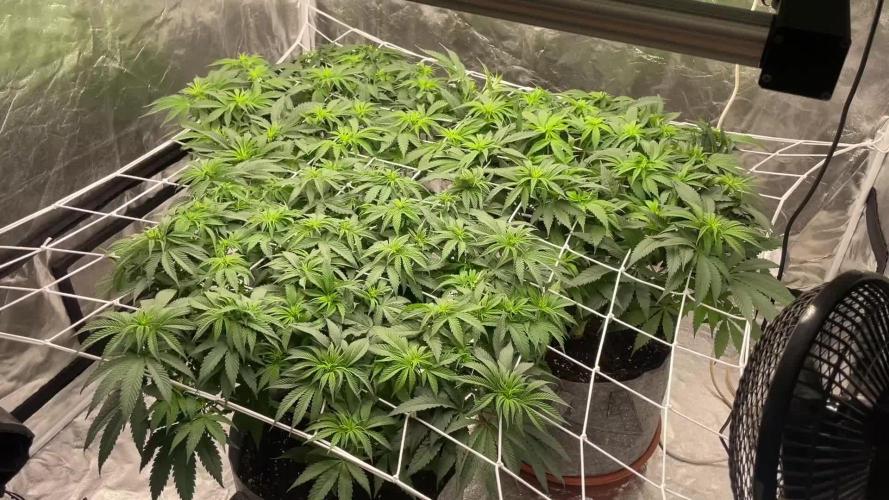
First week of flower is here! Everything go well, everything under net defoliated :)
Likes
11
Share


@420DeepGrow
Follow
Gracias al equipo de MSNL Seeds y XpertNutrients sin ellos esto no sería posible.
💐🍁 CBG SOUL FEMINIZED:
CBG Soul es un híbrido rico en CBG con una proporción Indica/Sativa 50/50, creado por sus efectos calmantes y relajantes. Sus sabores dulces, limón y cítricos se complementan con terpenos limoneno y mirceno, ofreciendo una mezcla única para el alivio y disfrute terapéutico.
🚀🌻 Consigue aqui tus semillas:
https://www.marijuana-seeds.nl/cbg-soul-feminized-seeds
🍣🍦🌴 Xpert Nutrients es una empresa especializada en la producción y comercialización de fertilizantes líquidos y tierras, que garantizan excelentes cosechas y un crecimiento activo para sus plantas durante todas las fases de cultivo.
Consigue aqui tus Nutrientes:
https://xpertnutrients.com/es/shop/
📆 Semana 11:
Por fin comienza el buen tiempo y parece que a ella le gusta, ha explotado esta semana y parece que quiere crecer bastante.
De momento no tiene mucha rama lateral y ya no se aprecia carencia alguna.
Continuo con las dosis de nutrientes recomendada por el fabricante.

Likes
16
Share


@HowtoBubatz
Follow
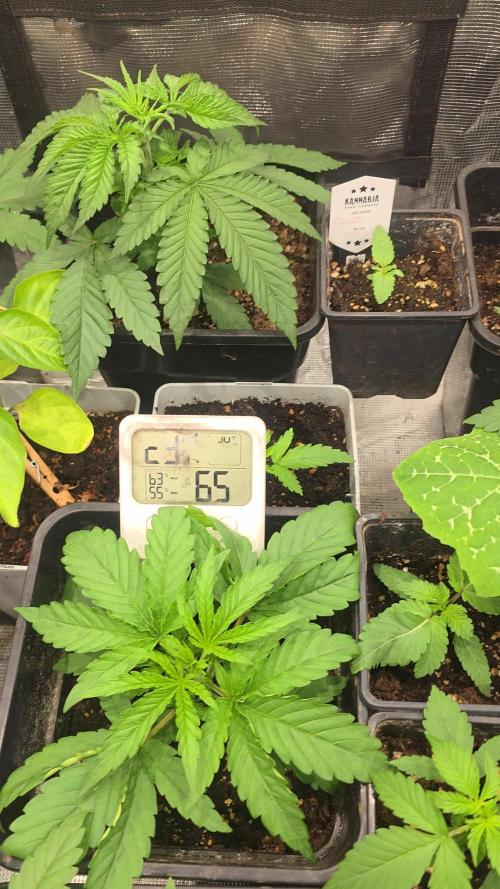
The Plant didnt grow much in high and is growing just above the Earth.
Maybe i sat it to deep, or its the Genetik i dont know lets see where it goes.



Likes
6
Share


@BLAZED
Follow
Week 16 (Harvest)
30-1 First day of darkness.
Temperature: 27.9 degrees (lights on) 18.8 degrees (lights off)
Humidity: 65% (highest) 48% (lowest)
31-1 Second day of darkness.
Temperature: 24.5 degrees (lights on) 19.5 degrees (lights off)
Humidity: 65% (highest) 50% (lowest)
1-2 Drying day 1
The Saparot is ready to be harvested!
Before chopping her down, i took a lot of pictures.
I was able to remove most of the soil to see the rootball.
I hang plant as a whole to have a slow dry.
The exhaust fan is on setting 4.
2-2 Drying day 2
Temperature: 19.1 to 17.5 degrees
Humidity: 62% to 57%
I changed the exhaust fan to setting 2 because setting 4 was a bit high in my opinion.
3-2 Drying day 3
Temperature: 19.9 to 18 degrees
Humidity: 62% to 59%
I changed the exhaust fan to setting 1, as someone told me that it was enough air movement for drying.
4-2 Drying day 4
Temperature: 19.8 to 18.5 degrees
Humidity: 62% to 59%
5-2 Drying day 5
Temperature: 19.9 to 18.8 degrees
Humidity: 62% to 59%
Today i checked on the drying plants and the buds are shrinking a bit, they are getting a little bit crispy on the outside aswell,
I hope they wont dry as fast, and i aim for a 12/14 day dry.
Cant find the temps for 6-2 to 2-13.
I do have a video when she was at the half of the dry process.
14-2
Trim day, yay!
She was easy to trim, the buds are nice and dense, and there was not a too high bud/leaf ratio!
She dried for 14 days.
End results:
Dried buds: 81 Grams.
Dried Trim: 18.5 Grams.
I am really surprised how good these genetics are! If you like CBD, i really suggest trying JYM Seeds out!
The Saparot smells very fruity almost like a fruity coctail. The buds are super dense, and very bag appealing.
After some months of curing the sweet fruity smell changed to a more sour smell, but still smells amazing!
To be honest, i cured her a bit poorly, burped too less, and because the buds are so compact she holds moisture better then normal, so she tastes harsh, but thats on me.
I have a pack of JYM's Sour Fruit aswell, so i will for sure try it out again! And my hope is already very high :D
Thanks for following my diary, and feel free to check my others out aswell!
See you at the next one!
Likes
8
Share

@Oldwied
Follow
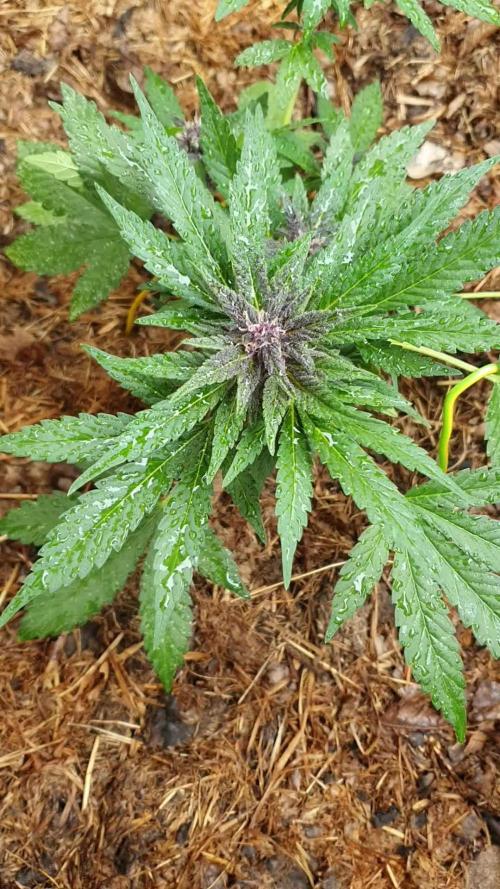
The beautiful purple color becomes more and more intense.
The growth is still slow but the buds are slowly swelling.
Day 56
Photoshooting
Likes
3
Share

@cmstacker01
Follow
Dense nuggets, identical plants.
Pretty easy to trim. Don't think this species is really fungus prone,small buds but very dense.
Will update smoke report later.
Need to cure now at least 4 weeks.
Will post and update in september.