


Likes
Comments
Share


@gottagrowsometime
Follow
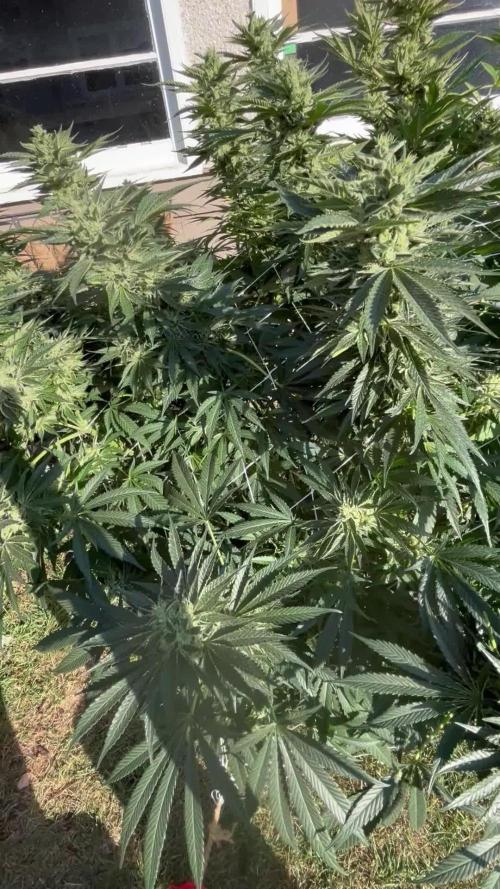
Well, I really didn't have to do much with this Gal. She is very low maintenance. Very fruity, smelly and is full bodied.
She lost some of her hardness after a 48hr dark rest, it has made her really sticky, and I was expecting this to happen as the leaf to calyx ratio is high in this pheno. But she makes up for it in smell, let's hope it tastes as nice. I'm not too worried About it not been, as the other 3 GFS I harvested were good, even if I marked 1 wrong.
Have hung dry this gal whole, I let it dry out in the coco and took it apart (the pot) and broke away the substrate to leave the roots and let it dry as natural as I can with no stress. This my 1st time doing this, have done it on all 3, so let's hope wasn't a bad idea, will update on smoke report as soon as she's dry.

Likes
16
Share

@Northern_Ent
Follow
Sep 20: Lemon Cream Kush smells great and the buds are looking really nice. Nice big and hard buds covered in white trichomes. Life is good.
Did a second flush as the buds need another week and I like how the first flush went. Otherwise just pHed water.


Likes
16
Share


@DaddyPrime2
Follow
7/10/24
testing testing. can i post updates now?
beautiful buds. the leaves are changing into a blue color. it reminds me of some of the blue city diesel i got from a buddy back in the medical days.

Likes
13
Share


@Robeeriegenetics
Follow
Ooooooweeeeeee they’re all doing so good even the extras that I threw in flower with out cloning are doing great .. in just 2 more weeks I’ll throw the donor plants into flower
Likes
11
Share


@Willy_Balls
Follow
15.08
Second week going great. The mimosa pheno I hunted is a true monster. Thick stem already nearly as big as the 1.5 inch rockwool cube. Easily over 1 m high. Stacking beautifully.
I have a new setup for the 5x5 tent.
Vevor EC fan 150mm. With temp and humidity controller paired with prima clima 900m3h carbocone filter which is huge.
Also new Mars hydro fc e 8000 light with Bluetooth controller. So far very cool. We will see how it performs.
Since I have co2 boosted we will have it cranking at max when the girls hit the bulk phase.


Likes
8
Share


@DankStank
Follow
Sour diesel and northern lights are ready to be chopped. I will put them in the basement in the dark for at least a day before I cut them down. The clone from the expert haze had to be tossed because I found spider mites on it and then found them on my expert haze plant outdoors. I shouldn’t have brought the clone inside, oops I will not be making another clone of this plant. I have found caterpillars all over everything and didn’t want to spray the buds with pesticides so every day a couple of times a day I would remove them. They eat a lot so I don’t have as much production at harvest. I will be more aggressive with the expert haze with pest control.


Processing
Likes
10
Share


@Dunk_Junk
Follow
Well she doubled her height this week. She is the smallest in the batch. If I'm honest I didn't expect her to make it this far. During germination I disturbed & agitated the box by knocking it 😡 this led to the very tip of the taproot being severed off but crucially this was below the 'hairs' that extend out horizontally. I took a gamble and planted her expecting it to be a mortal wound but mother nature again shows her resilience.
Above all else I've learned that nature strives very hard to survive. It's kinda humbling really.........
Likes
245
Share


@Nor_Cal_Kannabliss
Follow
July 19th : Thought i'd get to the video tonight but didn't.
July 20th : Video update musical style.. Hope you all enjoy! Plants are growing fat now.. Loving it!! Thinking last week for the Lemongrass but we will see..
July 21st : Busy
July 22nd : Lost track of time and didn't get to pictures.
July 23rd : Man are they fattening up nicely. Still debating on a light upgrade. If I do that then I'll want a bigger tent.. Oh the wicked web this hobby weaves! *lol*+
July 24th : Had a lot on my plate today couldn't get the shots I wanted.
July 25th : Phone died was on instagram way to much...

Likes
28
Share


@PrairieFrostGrow
Follow
*
************** Week 8 - May 30 to June 5, 2020 - Days 50 to 56 from germination ****************
*
This was a good growth week. KK has many white hairs on bud sites she is filling in and bulking up. pH numbers still higher so keeping an eye on the amount of base nutes to minimize lockouts. Leaf color is doing good and she is on her way. When the medium is in the correct range she is swelling and looking happy. She has been good with heavier feedings but she is also outwardly happier when the pot is on the dry side. More oxygen around the roots is my assumption.
She is a beautiful little plant and is bushy.....trimming will take a little bit of work but its all good......not bending over her top is giving her a nice shape. Lots of leaves😀 She tight nodal spacing and is certainly growing as a little bush. Great strain for those concern about height restrictions!!!
Note: I have running with the Green Plant line for nutes and I am very happy........I also have some Advanced Nutrients bottles that have not been used so I am fitting them in as it seems appropriate. I really like Piranha, Voodoo, Tarantula, Sensyzme, and Overdrive......don't see me stopping having those bottles around garden.
Little more detail..........
May 30/20 - Day 50
- 4L feed with Sensyzime @ 1.5ml/L = 315ppm and 4.4pH
- runoff in the pot before feeding was 7.1pH.
- runoff after feed was 5.8.
- leaves are an okay color, not too dark, and she is doing well.
- bud sites getting larger.
May 31/20 - Day 51
- 4L heavier feed: CalMag & Rezin & Lwt @ 1ml/L, Rhino @ 1.5ml/L, Vita & Kelp @ 2ml/L, Massiv @ 3ml/L = 700ppm
- fair bit of runoff, not checked.
- good growth overnight......happy getting their medium down to 5.8 yesterday.
- This girl seems happier when her pot is on the lighter side.
June 1/20 - Day 52
- 3L feed with Massive @ 2ml and Dual Fuel @ 1.5ml = 1300ppm, pH 4.4
- Pulled a few leaves.....take more on weekend.
- She is wide but not going to be too tall......under 24" idea I suspect.
- Bud sites are a medium size and her hairs are white but not huge.
June 2/20 - Day 53
- 2.5L feed: Terp & Massive @ 3ml/L, Vitathrive @ 2ml/L, Rezin & LWt & Dual Fuel @ 1.5ml/L = 1300ppm 4.6pH.
- she is doing well......buds continue to get bigger.
- still don't know what the hell with the pH?
June 3/20 - Day 54
- 2L feed: Sensyzime @ 2ml/L = 315ppm and pH to 4.9
- she has reacted well to take some of leaves and her branches are more defined all the time.
- just gave her some enzymes today to keep the roots clean of the salts.
- raised her up more in the tent to get closer to light. Set her on another riser.
June 4/20 - Day 55
- dry out day
- her leaves are growing back quickly and she is appearing happy.
- she has reacted well to the increased light intensity!!
June 5/20 - Day 56
- 3L feed: AN Big Bud & Vitathrive & Rezin @ 2ml/L, Liquid Weight @ 1.5ml/L
- 1050ppm and 4.4pH going in.
- no run off from the girls......they are eating!!
- crazy.......4.4pH going in and she loves it!!
- took more leaves to expose some more sites.
- She is firming up well. Not rushing to take more leaves.
That will wrap up week number 8 already! The girls are fighting a few issues but overall they are performing well. Killer Kush plants would fill in a 4 x 4 nicely and create a great canopy with 6 plants. As always with the girls I have grown.......@Sweet_Seeds has selected nice characteristics for this strain!! 👍💪
Likes
16
Share


@OutdoorRebelGenetics
Follow
Well started flush on out door cheese well greenhouse indoor only just preflowering off site so less pics like the gorilla frisan duck so yeah more pics this week peace ended up chopping cheese 2 as bud rot struck so got rid and got 11.3 grams wet from 1 so quite low yield mould resistances not the best not the most crystals I have seen nor the least it's a 2 out of 10 so far yeah staying at 2 as was fun to grow but yeil was disgraceful 1.6 g dried she had the cheese smell and taste but little vegy so going to cure the remainder try in 2 weeks utterly as for the rest can't wait frisan duck has like 70+branches so she's going to be a nice harvest no pre flower yet peace
Likes
17
Share


@Foggedaboudit
Follow
My oh my the bouquet on these cherries! Absolutely pumped for these!


Likes
4
Share


@PolezGardn
Follow
Day 69 flower, the ladies have become very fat! the white hairs are also slowly turning orange!


Likes
37
Share


@Cheeba_Inu
Follow
As of day 63, the Blue Dream'Matic is bulking up well and getting closer to what may be a really great harvest. The smell off the plant has gotten unreal, both powerfully sweet and distinctly of blueberry. The buds are completely frosted with trichomes, and some of the pistils are turning orange, so the plant is getting closer to harvest by the day. I am sticking with this current nutrient profile until the final few days of ripening when I will run extra enzymes and perform a short flush.
Thanks for reading!
Likes
9
Share


@NOLOGIK
Follow
while I was bending the plant, after leaving it bent I noticed that the apical one had collapsed and the leaves had receded, all this in 30/50 minutes ... I then loosened the fold bringing it as it was before ...
Was it the LST that gave this stress? or other?💪✋


Likes
3
Share

@kdifiori_
Follow
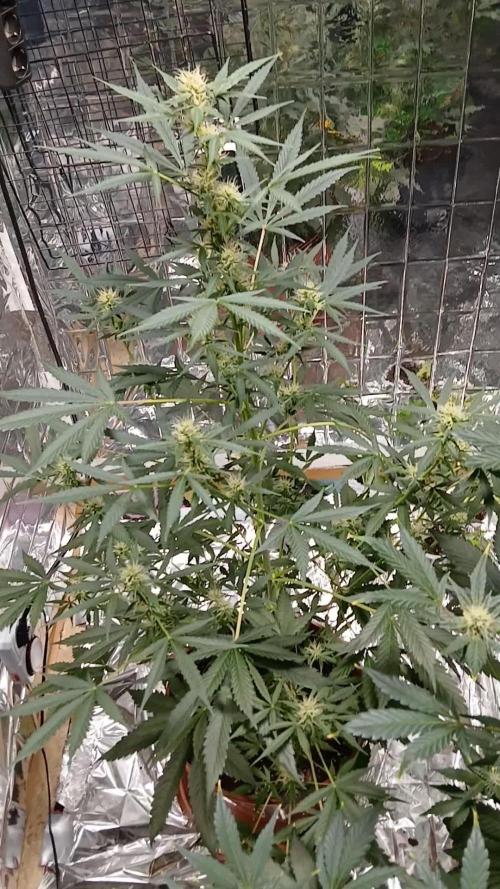
And just like that, month number two is over!
What started out as just a little seedling has quickly grown into a plant nearly a meter tall.
This week, it drank two liters of nutrient enriched water. I stopped using Bloom A and B to make room for Atami’s Blossom Builder.
Are you ready for next week?
Likes
41
Share

@PrairieFrostGrow
Follow
Sweet Seeds Cream 47 grow 2020.
Sweet Seeds Cream 47 was finally run and she was a great experience…….as always there was something to be learnt here but in the end these girls were super frosty and finished super fast! Done in 8 weeks Veg and you keep ALL the trim for further processing😊 Stayed under 30” for height and can fight off many issues including pests and temps……as well as cracked stems and broken branches😊
I believe I ordered these in 2018 after my first experience with Sweet Seeds and Gorilla Girl photo. I was so impressed I had wanted to try something else from them. Then I don’t know what happens…..something else newer or possibly more interesting at the time comes along and you push this seed pack to the back. For some reason AK47 has been the strain I have played with a couple variants of and these girls finally had their chance. The seed pack I have has a date stamp of 2016…….not a worry Growmies, seen lots of other growers popping 10 year old genetics from seed and thy will still work out fine. Just sharing a little reminder that its about storage…….I keep mine in a sealed container in a different fridge in a dark spot😊 As an example, these were 4 years old and I got two girls from my three seeds…..works for me😊
Beginning the diary……during germination everything is rosy and you are going to set things on fire!!!!!!
Germination started on July 11/20 with two seeds. First one came up from coco 7 days later on July 18 and C472 was actually the third seed and was put into a rapid rooter on July 19 and came up from coco on July 23…….that left us with C472 actually being 5 days behind C471. Quick note….C472 was a bigger girl at the finish line even though she was 5 days younger and being grown in the 3 gal pot vs the 5 gal pot.
Typical photoperiod process and went to solo cups and then to 1 gal and then a final upsize to either a 3gal or 5gal. I put one in each. At the start of this diary I wanted to focus on seeing the difference in yield between a 12L and 20L pot and is it worth the extra media and nutes? Well things change and you have to go with the punches😊
Early veg and building root mass……..come one girls, lets see some snow white roots!!!!
The girls were grown in 90 – 80% coco and 10 - 20% Perlite……..COVID made many things hard to get here and there this past year and I believe and I even had to use some Vermiculite as I couldn’t get perlite. As in the previous couple of grows I battled pH drift in this run as well. Quick note…….I am now mixing my media with 65% coco, 25% peat, 10% perlite and the current run is doing very well for both autos and photos……pH is holding at 6.1 in media rather than damn 7.2 a couple of weeks later, may consider dropping peat a little next run to 20% or 15% and increase the coco by the same percentage to see the impact😊😊😊
By the end of 7 days they had a whopping 1 set of single blade fan leaves out and the thought of a second set of leaves. Then by the end of 14 days they really rocked and we had a set of 3 blade leaves out and a sliver of green forming the first set of 5 blade fan leaves……..on fire they were😊😊😊😊 With the girls facing an 8 week veg, I was in no rush.
At the end 21 days they were roughly 7” tall and it was time for their first upsize to a 1gal pot. They were finally transplanted on day 23. C471 had a better root development that C472 and she was slightly bigger so was eyed as the pheno to get the 5 gal pot in the future. Usual Mycorrhizae added to the holes and in the pots and further microbes to supplement the girls. Need the roots to more plentiful than what they currently are. The girls loved the extra room and week 5 saw good growth as side branching developed and the leaves became bigger……on course!
Late veg and forming a canopy for flower……SCROG or not?????:
Weeks 4 and 5, plus the start of 6, the girls continued to flourish and grow in 1 gal pots. Being feed a couple of times a week they continued to progress. The girls had reached a little of 10” tall and it was time to top them. Not sure about LST or SCROG at this point, I knew they had to fill half the tent, so I went a head and topped the girls on day 37 between the fourth and fifth nodes. The girls grew a little different shaped fan leaves and they were more “pointy” and long in growth……and long lateral growth fan leaves. She wanted to grow laterally on her own…..bonus!
The girls reacted will to the toping over the next days and kept a solid growth. This strain has tight node spacing and will not grow into 5’ monsters like the Gorilla Girl strain they were grown beside. Finally at day 50, Sept 6/20, the girls were given their final home and transplanted a last time. C471 with more vigorous growth was given the 5 gal pot to fill with roots while C472 was designated the 3 gal pot.
I finally decided that a SCROG was going to be the answer because the other girls in the tent will need to be kept tied down. Problem was that these girls won’t stretch much but the other girls will……how the hell to SCROG that situation otherwise you have nodes 12” taller than others and creates a tough canopy to give the correct amount of light??? Solution was to put C47 girls on boxes and rise them up. Took a guess at the potential height difference in the strains and figured I should plant at least a 12” riser of some type. It actually worked out not to bad……they were coming through the top of the SCROG first but as they grew things balanced out between the strains😊
In week 9 the girls took off and we finally had a good canopy to start flower with……all the girls were down low and touching all sides of the tent and each other. Getting them ready to SCROG I decided to perform LST for a couple of weeks and ensure the branching grows to the side and not straight up. They formed 4 main tops on each girl and the side branches were thick. Bud Ignitor added to the feed in week 9 and we are ready…….lets change the light and watch the explosion Baby 😊😊😊 Still only positive thing happening in the grow to this point!!
Flower time and filling up the tent with sticky buds………my F@#%ing tent is too small for the girls:
Okay Growmies……we are on fire, all 4 girls are growing with pistols popping, branches bent everywhere and put in the first layer of the SCROG……..right on!! Soon reality sets in and the fictitious Gremlins arrive to F my grow and actions☹️ Getting ready for putting the net and decided to cut to low branches from C471 as they just don’t have any thickness to them. Concern was that she was now down to 6 main branches on her…..don’t break any!! Mid week I check the tent in the morning and there is a damn fan laying on top of C471!!! That’s no good but shit happens, no visible damage to the plant…..or the fan😊
So we get through week 1, IPM spray done and net is in, and moving into week 2 of flower my heart stopped when I noticed a huge crack in the main stem of C471……WTF??????? So on day 12 of flower I am looking at two girls with cracked main stems…..one C47 and one Gorilla Girl……WTF everything is the same, why did this happen for no apparent reason? Answer - - - - usual “grower F-up”…….I topped the girls to close to the lower node when done and I should have the scissors up against the node above and left a larger “nub” on top……I had them against the node below when I cut and little to no nub left on top!!!! Once they were trained a bit and started growing harder, the stem didn’t have any more strength and cracked right in the middle of the main stem! Learning point……remember to always leave a good piece of stem at the top when using scissors……hasn’t been an issue for me in the past when “pinching” tops as they develop, this was though☹️
So what to do now they are doing awesome????? Well, that is why I support Grow Diairies and continue to use the site outlining my grows……I asked for help and other opinions about what happened😊 Sure enough within hours, I had some input from fellow growers, thanks again @Mr_Motalovah who pointed out quickly what I had done because they had shared about what has happened to them in the past……thanks a bunch for the input Growmie….you rock!! Now that I know what I screwed up, we vaped a bunch of bud and put on the MacGyver Hat and fashioned some supports and ties out of a pool noodle, zip ties, tape, and more weed😊 Tied the girls up and kept the area moist for a week! She never did weld right back together at the crack because it was too major and at a high stress point for the branches. I feel this certainly contributed to C471 not being as big a yielder as I am sure she should have been.
So now we are getting back on track, forget all the other shit of the last two weeks, stay positive and lets rock this grow😊 There was lots to be positive about as the second lay of SCROG is in, the girls are 20” tall and looking happy with leaves up. She has some huge fan leaves and starting to really show some trichomes already! Right on Sweet Seeds……they are pulling through and doing awesome now! Problem I am now having is keeping the air movement in the tent as these four girls are killing it and I am out of room. If I don’t help with more room or air movement, the yield and quality of the bud will suffer……they will finish and all is good but there will be lost opportunity. I really struggle to grow 4 plants in a 3’ x 3’ tent. I am always out of room and can’t get the light down as low as I want. This grow is a perfect example of that. Not to mention how to cool them off and reduce light intensity when ripening in the last two to three weeks?? I need a bigger freaking tent….finally bit the bullet and ordered a 4’ x 4’ tent for flower. Will then have a 4’ x 4’ for photos and keep one of the 3’ x 3’ for autos. Through week 3 of flower and going now Baby, just waiting on a new tent😊
Late flower and watching them buds swell……no worries now, let the deficiencies fly!!!:
Now in week 4 of flower and the girls are getting very big. The trichome production has kicked in and they are looking happy everyday at this point. Tips up everyday and they are loving the light and feed at this point. Chugging along and feeling like we will feed them though week 6 and flush for weeks 7, 8, and 9 and take down about day 62 or so. Feed moved into Big Bud and silica going to keep the stems strong so they support the bud weight. Her nodes have stacked very well and for week 4 she is chunking out nicely! The girls are pretty dark green now at this point and looking healthy. Again, buds are big and they are frosty…..the grow is going very well.
New tent finally arrives in week 5 and we move the girls to a new home with more room for air and light penetration lower on the branches. Had to cut the girls out of the SCROG and added bamboo to the other strain being run with these girls. Since C47 was not very tall, they were not supported. So feeling that everything is good and we are moving forward. Like I say, feeling good, but I think the girls had their issues in weeks 5 and 6 and I didn’t really pick up on it. They had battled high pH through the grow, again why the media change this run, and it seemed to stall the girls. I think I was so focussed on the success of the Gorilla Girls that I didn’t really pick on the fact these girls were slowing down. At any rate, they looked very good and frosty and still eating so we kept going, there were even resin rails beginning to form on fan leaves and they are 24” tall😊 LST helped to keep them short, along with topping. She is showing that she will make hash people happy!!! Awesome trichomes for this stage of growth…..excited as hell!
We move into week 6 and start working on some flushing. She is dark now and concerning. Her hairs are starting to red here and there and I am seeing some colour in the buds. She smells of a strong floral or something that almost “stings” your sinuses…..sorry for description but it was good strong smell. Flush should have begun at the start of this week, six. Instead, it was not given until week 7, almost too late at this point. She had slowed down her drinking and was not uptalking much anymore. Her buds looked beautiful but her leaves were dark. Yup…..F#$% I missed her and she will not finish with the colours that she should. Not much you can do at this point. She was given Flawless Finish twice and roughly 7 days of plain watering before darkness. Then on November 8, Day 51 the girls went into darkness……..the trichomes had matured and it was time. This strain should have stopped her feeding at the end of week 5 and keep the water only for up for 2.5 weeks idea and colours should pop on her…….not one week like I did☹️
After two days of darkness the girls looked gorgeous and faded a little more than when they went in……right on. The buds are beautiful with the light colour of purple on some calyxes and red hairs in there. Frosty as all heck and sticky like crazy😊😊😊
Harvest, dry, cure and smoking Cream 47 from Sweet Seeds……..is she Sweet Smoke??
Remembrance Day was harvest for the girls. They ran their 53 days and its time to cut them down. It was a little surprising to see that C472 had better bud production that C471 since she was the slower grower. At the same time, it was not surprising as C471 had her stem split and this impacted her yield because of a challenge getting the amount of nutrients she wanted up the stem. She made it to the finish line though and was still making me smile at the end😊 can’t ask for much more than that really! Again, I wanted to compare 3 gal vs 5 gal but this diary simply didn’t work out that way. (one should also use clones for a better test of this and not seeds but its all good because I was just having fun😊)
I hope that my pictures show her level of trichome production as very good to excellent. She has a lot of crystal in her buds and they are sticky. They hung for 10 to 12 days, took a couple of days to finish his time, and went it jars. I kept ALL fan leaves and of course sugar leaves…….in the freezer right now waiting for the next edible or hash run……grower bonus😊 not to mention the crazy good kief in the tray from trimmings you can enjoy as the grower😊 Full Melt Hash!!!
The yield was not the largest for this girl and you can see that in the pictures by the amount of leaf in the buds. They didn’t swell right up……again going back to weeks 5 and 6 in flower I suspect☹️ This is my smoke and I am not worried about yield to be honest. Therefore, even though I only pulled a couple of ounces from each girl…….its primo smoke! The lung expansion is huge and takes my breath away for a couple of seconds as well😊 One dab the size of a rice grain for light weight friend and he was sleeping on the couch 15 minutes later😊 Anyone have insomnia issues?? She is a strong one but with my crazy tolerance she is a nice day to evening smoke for me.
That will wrap it up for this grow and Cream 47 for 2020. Have a few ounces to enjoy plus still have another seed to keep the dream alive😀👍 Should have cloned her........there are so many options though👊 Still, would love to have ran her again knowing that she is done at the start of week 8 and hit the flush properly. On to the next one though.
She was indeed Sweet Smoke!!! Cheers @Sweet_Seeds another one you should be proud of😍😎👊
Likes
80
Share


@RickJames_Mcdank
Follow
Well I flushed her this week. Only water.
As you can see she is getting fatter and she is still shooting pistils.
So I am just waiting till she stops doing that then she will be ready to harvest.👻
