


Likes
Comments
Share


Likes
1
Share


@CaliJ
Follow
white widow auto from RQS, harvest of 200 grams dry for 6 plants in 7 liter pots, really happy for my first 🤩. after 4 weeks in a jar (which breathes 10/15 minutes a day), the taste and the smell are magnificent, the effect is excellent for the day, I will grow again, for sure, really a pleasure to smoke 🤩

Likes
8
Share


@Borberad
Follow
Mega Duft in der letzten wochen interessanter Weise 11/2 bis 2 Wochen vor der angegeben Blütedauer fertig das Pflänzchen scheinbar einen schnellen Strain erwischt.😀

Likes
54
Share


@Rasta_Faraev
Follow
У Халка все в порядке, поливаю каждый день, опрыскиваю мегафолом русским, вообщем норм вроде. Скоро для корней штука придёт, тоже должно понравиться. Буду добавлять фото в течение недели. Такой формат привлекательнее как по мне.
14.09.21 9 дней, рост начался, корешки заполняют стакан. К концу неделю пересажу в мешок 10л.
15.09.21. 10 дней, реакция на вчерашнюю подкормку рутфармом вместе с основным кормом хорошая, переживал из за ррм раствора=900. Но все нормально. Халк кушает и не давится. Но наглеть не надо, все в меру.
17.09.21 халк реально толстая малышка. Обратите внимание на фото, при росте 5-7см ствол толстый мама мия. Завтра буду пересаживать в мешок 10л, всем спасибо, до встречи 🙏✌️


Likes
4
Share

@DogDoctorOfficial
Follow
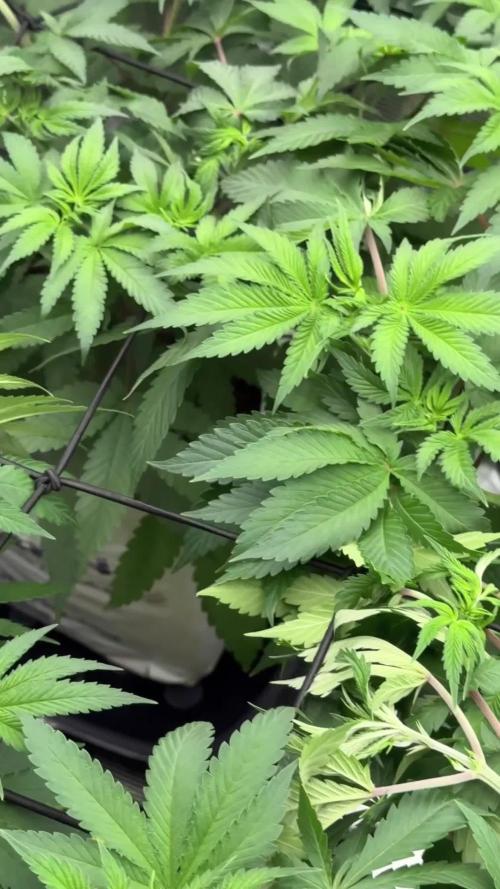
🥒 Project Blue Tent – Week 6
Pickle Lemon Haze F1 – Pheno B (Folder 14B)
Hello everyone, and welcome back to another chapter of Project Blue Tent! 💙🌱
If you're joining the adventure for the first time, welcome!
Project Blue Tent follows four individual plants, each documented in its own dedicated diary from seed to harvest. Every plant grows under the exact same lighting, environment, irrigation schedule, nutrition and care. By keeping every variable consistent, we can truly appreciate how each phenotype develops its own unique character while also seeing the impressive uniformity that modern F1 genetics can offer.
Today we're checking in with Pickle Lemon Haze F1 – Plant B.
────────────────────────
🌱 Week Six – A Sea of Green
This week the Blue Tent has become exactly what I imagined when this project first began.
Instead of four individual plants competing for attention, the canopy is slowly merging into one beautiful sea of green.
One small adjustment changed the appearance of the entire tent.
Although Plant B measured around 66 cm or so in last week's report, I decided to lower and tighten the SCROG net across the whole tent. That means all four ladies are now sitting at approximately 60 cm, allowing every centimetre of new growth to be directed horizontally through the screen instead of vertically.
That's the real objective now.
We're no longer chasing height.
We're building surface area.
Every branch tucked beneath the screen today becomes another future flowering site tomorrow, and every empty square that disappears brings us one step closer to a perfectly even canopy.
Plant B continues embracing this process beautifully.
────────────────────────
🌿 Pickle Lemon Haze F1 – Plant B
This phenotype continues showing the same personality she's displayed since the beginning.
She's wonderfully balanced.
While her sister naturally wants to stretch, Plant B seems perfectly happy expanding outward, producing a dense framework filled with healthy side branches.
The recovery after topping now feels like a distant memory.
Every new shoot is developing with confidence, and the canopy is becoming fuller with each passing day.
The stems continue thickening, the internodal spacing remains compact, and perhaps my favourite observation of all...
The foliage.
The leaves have developed that rich, healthy green colour every grower loves to see.
It's the kind of colour that quietly tells you the plant is comfortable.
Comfortable roots.
Comfortable environment.
Comfortable nutrition.
Sometimes healthy plants don't need dramatic stories.
They simply grow.
────────────────────────
🕸️ The Beauty of SCROG
Every day begins almost the same way.
Open the tent.
Look across the canopy.
Find a few branches reaching above the screen.
Guide them gently into the next empty square.
Done.
It's one of those techniques that rewards patience far more than force.
There are no dramatic bends or stressful training sessions.
Just small daily adjustments that slowly transform individual plants into one unified canopy.
Looking across the Blue Tent now, it's becoming harder to tell where one plant finishes and another begins.
That's exactly what a healthy SCROG should look like.
────────────────────────
🌡️ Blue Tent Environment
The environment continues providing exactly what these ladies need.
Average conditions remained:
• 🌡️ Day Temperature: 30°C
• 🌙 Night Temperature: 25°C
• 💧 Relative Humidity: 58%
• 🥥 Root Zone Temperature: 24°C
• 💦 Nutrient Solution Temperature: 18°C
• ⚗️ pH: 5.8
• ⚡ EC: 1.92 mS/cm
• 💨 CO₂: Approximately 450 ppm
• 💡 Light Schedule: 18/6
• 💧 Irrigation: 1.2 litres per plant per day
Despite the warm weather outside, stable conditions inside the tent continue allowing the plants to recover effortlessly from training while maintaining vigorous vegetative growth.
────────────────────────
🥥 Feeding & Irrigation
One thing I've learned over the years is that consistency often produces better results than constant adjustments.
Since increasing the feeding slightly a couple of weeks ago, the plants have responded exactly as I hoped.
The richer green colour has returned, growth remains vigorous, and there are no signs suggesting the recipe needs changing.
Current feeding schedule:
• Plagron Hydro A — 1.9 ml/L
• Plagron Hydro B — 1.9 ml/L
• Plagron Hydro Roots — 1 ml/L
Each plant continues receiving approximately 1.2 litres of nutrient solution every day through the Mars Hydro automatic drip irrigation system.
The automatic drainage system removes the runoff beneath the grow bags, preventing nutrient buildup around the roots while keeping the growing area remarkably clean.
It's one of those systems that quietly does its job every day while making the entire grow more consistent.
────────────────────────
📸 Looking Closer – Discovering a Different World
One of the greatest joys of documenting these diaries has nothing to do with nutrients or training.
It's photography.
More specifically...
Macro photography.
Most people look at a cannabis plant and see leaves.
A macro lens tells a completely different story.
Suddenly the stems become covered in thousands of tiny protective hairs.
The beautiful purple pigmentation running through the branches begins revealing itself in incredible detail.
Young leaves show delicate textures that are almost impossible to appreciate with the naked eye.
Even the smallest leaf veins become intricate natural patterns.
The more time I spend behind the camera, the more I realise how much beauty exists in places we normally overlook.
Macro photography has changed the way I walk through the grow room.
It slows me down.
Instead of simply checking on the plants, I find myself truly observing them.
Every stem.
Every new leaf.
Every tiny detail nature has quietly been creating all along.
Growing teaches patience.
Macro photography teaches appreciation.
Together they've made me enjoy this hobby even more than I already did.
────────────────────────
🌿 Looking Ahead
The mission for next week remains simple.
Continue filling the SCROG.
Maintain the stable environment.
Trust the process.
The canopy is becoming flatter every day, and with each branch finding its own place beneath the screen, the excitement for flowering continues to grow.
There is still plenty of work ahead.
But there is absolutely no rush.
Healthy plants reward patience.
────────────────────────
💙 Thank You
A huge thank you to Zamnesia for making Project Blue Tent possible, from these outstanding Pickle Lemon Haze F1 genetics to the complete ecosystem surrounding this grow.
A heartfelt thank you to Plagron for providing the Premium Growbags together with the Hydro nutrient line that continues producing vigorous growth and beautifully healthy plants week after week.
A special thank you to Phytonaut for the outstanding LED lighting, delivering compact growth, incredible structure and a wonderfully even canopy throughout the Blue Tent.
A sincere thank you to Mars Hydro for the automatic drip irrigation and drainage system that has brought consistency, cleanliness and simplicity to every day inside the grow room.
Thank you to GrowDiaries for providing growers around the world with a place to document their journeys, share knowledge and continue inspiring one another.
And finally...
Thank you to every one of you following Project Blue Tent.
Whether you've been here since germination, recently discovered these diaries, leave comments every week or quietly follow along from the background, your support truly means the world to me.
Every week these plants teach me something new.
I hope, through these diaries, they're teaching a little something to all of us.
Until next week...
Growers Love, happy growing, and I'll see you all soon. 🌱💙
Likes
23
Share


@Joni2017
Follow
Day 54, defoliation of the lower parts😎🌼 she continues to grow very healthy 🙌 size 78 cm👏🏻👏🏻 temperature 26º C ☀️, humidity 65% 💧 watering 750 ml alternating one day with nutrients and another without nutrients with osmotized water 💦💦 Session 45 min. of binaural sounds for growth and healing 🎼 and music 😉👍
Likes
39
Share


@Grileon
Follow
10% discount code for Zamnesia shop - GROWITGD
--
Another series of topping done, so that there will be 8 main branches.
Roots look amazing, healthy, white, and bushy.
UPDATE:
Did some heavy defoliation for fan leaves and LST on all 8 main branches.

Likes
8
Share

@TrickzGrowz
Follow
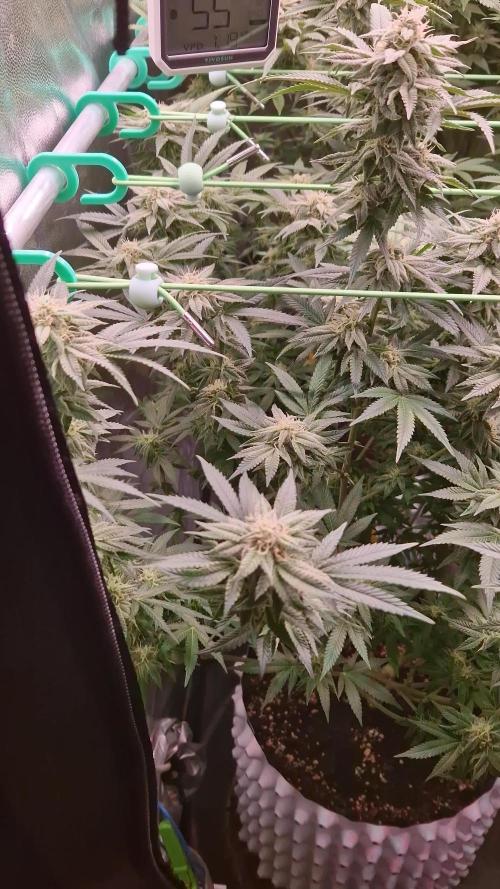
Viele kleine Popcorn Buds. Das nächste mal bei der Sorte dann doch weniger Triebe vielleicht.

Likes
15
Share


@Jr104th_st
Follow
Got 3 weird looking ones and 9 clones I don't want and 3 plants good growing one it's penut butter breath don't know make or female got it from a seed of some bud I bought in Vegas @woodys_official_
Likes
27
Share


@helpmamagrow
Follow
Sooo many bud sites!!!! I’m not even sure if I should defoliate more or try to bend and tuck leaves around but there are so many bud sites it’s impossible to get them all exposed to light without removing a lot of fan leaves. Cannot wait until those buds grow and fatten up!

Likes
2
Share


@MrGrowDiarie
Follow
Day 28
She looks good but not perfect, wait for the next weeks ,also she is in preflower


Likes
9
Share


@Roberts
Follow
Fast version A is doing good. I just did a solution change today. Everything is going well. Thank you Dutch Passion, SSSC, Medic Grow, and Athena nutrition. 🤜🏻🤛🏻🌱🌱🌱
Thank you grow diaries community for the 👇likes👇, follows, comments, and subscriptions on my YouTube channel👇.
❄️🌱🍻 Happy Growing 🌱🌱🌱
https://youtube.com/channel/UCAhN7yRzWLpcaRHhMIQ7X4g.


Processing
Likes
10
Share


@DrDuhboto
Follow
Very Happy plants, soaking up the rays.
When you place your face near the buds you get an amazing sweet fruity aroma, the leaves smell like skunk and cheese.
Each plant is getting 10 liters every 4 days. I water with 6.3ph tap water twice for every time I add nutrients.
I use Alaska fish fertilizer when its been a few times since a nutrient feed but the plants are showing no deficiency's.
They are Fed by a drip system which takes 16 hours to deliver the 10 liters to each plant, this works really well in the Fabric smart pots.
I use metal racks to keep the plants off the ground then place a drip tray underneath each plant. When using the drip system very little run off occurs.
I added a spider farmer sf-1000 to the room, it is full spectrum and ir, and is great for getting the corners of the room or the less dense areas of the canopy.

Likes
1
Share
@DogDoctorOfficial
Follow
🍮 Chem Brûlée – Pheno A
Week 5 | Giant Leaves, Big Dreams
Welcome back to another chapter of the 8×8 Adventure!
If you’ve been following this project from the beginning, you’ll know that every phenotype is writing its own story. Although they all share the same room, the same environment, the same lighting schedule, and very similar nutrition, each plant continues to express herself in completely unique ways.
That’s exactly why I love phenotype hunts.
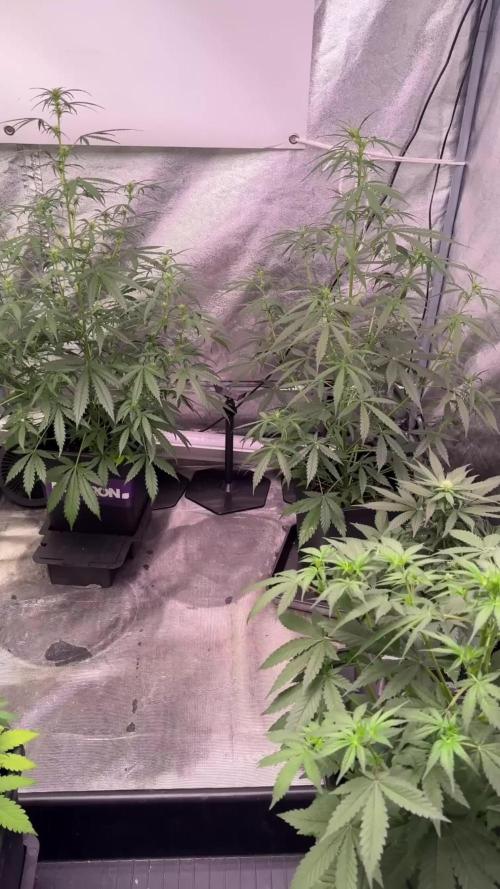
This project follows every plant individually using the 12/12 From Seed method, allowing each lady to decide for herself when she’s ready to leave vegetative growth behind and begin flowering.
This week…
Chem Brûlée Pheno A left absolutely no doubt.
Flowering has officially begun.
⸻
🌼 The First Flowers
One of the most exciting moments during any grow is seeing those first bright white pistils appear.
These delicate hairs are the female reproductive organs of the plant and mark the true beginning of flower production.
During these first weeks, the plant is shifting priorities.
Instead of investing all her energy into producing stems and leaves, she now begins building the framework that will eventually become dense, resin-coated flowers.
Every new white hair is another small step toward harvest.
It’s always an exciting stage to witness.
⸻
🍃 Those Incredible Fan Leaves
The first thing anyone notices about this phenotype…
Those leaves.
They’re absolutely enormous.
Some of these fan leaves are nearly twice the size of my own hands—and I definitely don’t have tiny hands!
Large fan leaves often indicate a plant that is photosynthesizing efficiently, capturing as much light energy as possible to fuel rapid development.
They’re essentially giant solar panels.
As long as they’re healthy, standing proudly, and maintaining a rich green colour, they’re doing exactly what nature designed them to do.
At this stage I prefer to let them work.
Every healthy leaf is another energy factory helping build the flowers that are only just beginning to form.
⸻
🌱 Gentle Training
Training continues to remain incredibly simple.
No aggressive bending.
No topping.
No heavy defoliation.
Instead, we’re relying mainly on gentle leaf tucking and subtle low-stress training to improve light penetration while allowing the plant to maintain her natural structure.
Sometimes the best training isn’t forcing a plant into shape.
Sometimes it’s simply helping her reveal the shape she already wanted to grow.
So far…
She’s rewarding that patience beautifully.
⸻
💧 AutoPot Life
Chem Brûlée Pheno A is growing on the AutoPot irrigation system.
Once the root system becomes established, the AquaValve automatically delivers nutrient solution from below whenever the plant drinks enough to lower the water level inside the tray.
There’s no timer.
No electricity controlling irrigation.
No daily watering routine.
The plant simply feeds herself whenever she needs it.
It’s a remarkably elegant system that encourages consistent moisture levels while reducing stress caused by repeated drying cycles.
This week I’ve also included photos comparing the nutrient solution used in the AutoPot reservoir with the hand-feeding mix used for the non-AutoPot plants.
Although the recipes are very similar, the EC differs slightly because plants growing on AutoPots receive a constant supply of nutrients, allowing for a more stable feeding strategy.
Every cultivation method has its own rhythm.
Learning those rhythms is part of becoming a better grower.
⸻
🍽️ Feeding Strategy
This week we adjusted the nutrition slightly to support the transition into flowering.
The bloom nutrients are now beginning to take over while still providing enough support for the final stretch before flower production accelerates.
As always, every adjustment is based on observation rather than routine.
Healthy plants tell you what they need.
You simply have to learn how to listen.
⸻
🌡️ Environmental Conditions
The room continues running beautifully.
Average conditions this week included:
• Day temperature: 31°C
• Night temperature: 25°C
• Relative humidity: 67%
• Nutrient solution: 21.6°C
• Root zone: 21°C
• CO₂: 639 ppm
Humidity remains slightly higher during this transitional phase because the plants are still producing large amounts of fresh vegetative growth while stretching into flower.
Over the coming weeks, humidity will gradually be reduced as flowers begin gaining density.
The room itself is really starting to come alive now.
Every day the canopy looks fuller, healthier, and more vibrant than the day before.
Watching an entire room evolve together never gets old.
⸻
📸 Capturing the Journey
This week’s update includes bird’s-eye views, side profiles, close-ups, and room shots to document every stage of Chem Brûlée A’s development.
One of my favourite details is simply seeing those giant fan leaves from different angles.
Months from now they’ll be part of the story, reminding us where this beautiful lady began before her canopy disappears beneath a forest of flowers.
That’s why I enjoy documenting everything.
Not just the destination…
But every step that leads there.
⸻
🔮 Looking Ahead
Next week I expect Chem Brûlée A to continue stretching while producing many more pistils across the canopy.
Bud sites should become more clearly defined, and the first signs of flower stacking will begin to appear.
Training will remain minimal, allowing her natural structure to continue developing while we simply guide her when necessary.
Sometimes the biggest changes happen quietly.
This feels like one of those moments.
⸻
💚 Thank You
A huge thank you to everyone following this 8×8 Adventure.
Whether you’re here to learn, compare phenotypes, improve your own garden, or simply enjoy watching these incredible plants grow, I’m grateful you’re sharing this journey with me.
Special thanks to:
💚 GrowDiaries for giving growers around the world a place to learn, document, and inspire one another.
Zamnesia for providing the genetics that make this phenotype hunt possible.
🌱 Plagron for the nutrition supporting every stage of this grow.
💡 Future of Grow LED for delivering the light that powers every day of development.
🌿 TrolMaster for helping maintain a stable environment around the clock.
And finally…
Thank you to every grower, follower, supporter, silent reader, friend, and even the occasional critic. Every visit, every comment, every bit of encouragement helps make these diaries something truly special.
I’ll see you all next week, where Chem Brûlée Pheno A will continue transforming those giant solar panels into the energy needed to build what promises to be some truly beautiful flowers.
Until then…
Growers Love and happy growing, everyone. 🌱🍮💚


Likes
5
Share


@dauntless
Follow
Week 5 started July 24, 2022
Growth is still strong into week five, I see no pre flowering, I think that is because she started really slowly due to me getting used to this new light, etc.
July 27, 2022
Smells like lime sherbet up in here. LST, light defoliation to get some light on the lower colas. Really watered in today for the first time soaking the media, she is stretching and I see maybe some hairs for pre-flower - hope not too too soon though, I'd like more height than nine inches before she fully stretched
Likes
10
Share


@Troy_Farms
Follow
Week 4 of flower and looking great. I cut too much of my Fox Farm Grow big out of the feeding regiment and maybe a little Potassium deficency showing as well. Gave a full water change and should be on point now for the rest of flowering. She is stacking quickly.


