Likes
38
Share
@kijani
Follow
small things put big things into perspective this week ... it sure feels longer than 7 days this baby plant week ... the new seedling is doing great, and with the new home I don't have to mess with it as much. i have to bring the light very close to the seedling to prevent stretching. unfortunately, the light directly above the seedling prevents me from really enjoying the growth visually and taking lots of pictures, still, the camera and timelapse helps. i think i should have started the seedling elsewhere then brought it to the pot when the roots were developed more, but it is safer here - even if it seems a little slow growing. i think the growth will sprout once the roots are directly exposed to the pressurized nutrients. it was fun dosing and using the diy doser, even though I had to prepare and dispose of a 50-gallon nutrient batch when I only really needed 2 gallons for the hpa garden. still, I can't measure things accurately manually so the plant(s) has a better chance this way. also, i get to run the doser commands manually, which is making me learn and understand better the challenges it will take to make multi-zone dosing reliably autonomous girlfriend and i are looking forward to a second week of grow
Likes
8
Share
Third one in the video, candy kush express, beautiful compact plant, she is growing fast and has a beautiful structure. She won't need long to finish her flower cycle ⚡
Likes
19
Share
Yellow butterfly came to see me the other day; that was nice. Starting to show signs of stress on the odd leaf, localized isolated blips, blemishes, who said growing up was going to be easy! Smaller leaves have less surface area for stomata to occupy, so the stomata are packed more densely to maintain adequate gas exchange. Smaller leaves might have higher stomatal density to compensate for their smaller size, potentially maximizing carbon uptake and minimizing water loss. Environmental conditions like light intensity and water availability can influence stomatal density, and these factors can affect leaf size as well. Leaf development involves cell division and expansion, and stomatal differentiation is sensitive to these processes. In essence, the smaller leaf size can lead to a higher stomatal density due to the constraints of available space and the need to optimize gas exchange for photosynthesis and transpiration. In the long term, UV-B radiation can lead to more complex changes in stomatal morphology, including effects on both stomatal density and size, potentially impacting carbon sequestration and water use. In essence, UV-B can be a double-edged sword for stomata: It can induce stomatal closure and potentially reduce stomatal size, but it may also trigger an increase in stomatal density as a compensatory mechanism. It is generally more efficient for gas exchange to have smaller leaves with a higher stomatal density, rather than large leaves with lower stomatal density. This is because smaller stomata can facilitate faster gas exchange due to shorter diffusion pathways, even though they may have the same total pore area as fewer, larger stomata. Leaf size tends to decrease in colder climates to reduce heat loss, while larger leaves are more common in warmer, humid environments. Plants in arid regions often develop smaller leaves with a thicker cuticle and/or hairs to minimize water loss through transpiration. Conversely, plants in wet environments may have larger leaves and drip tips to facilitate water runoff. Leaf size and shape can vary based on light availability. For example, leaves in shaded areas may be larger and thinner to maximize light absorption. Leaf mass per area (LMA) can be higher in stressful environments with limited nutrients, indicating a greater investment in structural components for protection and critical resource conservation. Wind speed, humidity, and soil conditions can also influence leaf morphology, leading to variations in leaf shape, size, and surface characteristics. Small leaves: Reduce water loss in arid or cold climates. Environmental conditions significantly affect gene expression in plants. Plants are sessile organisms, meaning they cannot move to escape unfavorable conditions, so they rely on gene expression to adapt to their surroundings. Environmental factors like light, temperature, water, and nutrient availability can trigger changes in gene expression, allowing plants to respond to and survive in diverse environments. Depending on the environment a young seedling encounters, the developmental program following seed germination could be skotomorphogenesis in the dark or photomorphogenesis in the light. Light signals are interpreted by a repertoire of photoreceptors followed by sophisticated gene expression networks, eventually resulting in developmental changes. The expression and functions of photoreceptors and key signaling molecules are highly coordinated and regulated at multiple levels of the central dogma in molecular biology. Light activates gene expression through the actions of positive transcriptional regulators and the relaxation of chromatin by histone acetylation. Small regulatory RNAs help attenuate the expression of light-responsive genes. Alternative splicing, protein phosphorylation/dephosphorylation, the formation of diverse transcriptional complexes, and selective protein degradation all contribute to proteome diversity and change the functions of individual proteins. Photomorphogenesis, the light-driven developmental changes in plants, significantly impacts gene expression. It involves a cascade of events where light signals, perceived by photoreceptors, trigger changes in gene expression patterns, ultimately leading to the development of a plant in response to its light environment. Genes are expressed, not dictated! While having the potential to encode proteins, genes are not automatically and constantly active. Instead, their expression (the process of turning them into proteins) is carefully regulated by the cell, responding to internal and external signals. This means that genes can be "turned on" or "turned off," and the level of expression can be adjusted, depending on the cell's needs and the surrounding environment. In plants, genes are not simply "on" or "off" but rather their expression is carefully regulated based on various factors, including the cell type, developmental stage, and environmental conditions. This means that while all cells in a plant contain the same genetic information (the same genes), different cells will express different subsets of those genes at different times. This regulation is crucial for the proper functioning and development of the plant. When a green plant is exposed to red light, much of the red light is absorbed, but some is also reflected back. The reflected red light, along with any blue light reflected from other parts of the plant, can be perceived by our eyes as purple. Carotenoids absorb light in blue-green region of the visible spectrum, complementing chlorophyll's absorption in the red region. They safeguard the photosynthetic machinery from excessive light by activating singlet oxygen, an oxidant formed during photosynthesis. Carotenoids also quench triplet chlorophyll, which can negatively affect photosynthesis, and scavenge reactive oxygen species (ROS) that can damage cellular proteins. Additionally, carotenoid derivatives signal plant development and responses to environmental cues. They serve as precursors for the biosynthesis of phytohormones such as abscisic acid () and strigolactones (SLs). These pigments are responsible for the orange, red, and yellow hues of fruits and vegetables, while acting as free scavengers to protect plants during photosynthesis. Singlet oxygen (¹O₂) is an electronically excited state of molecular oxygen (O₂). Singlet oxygen is produced as a byproduct during photosynthesis, primarily within the photosystem II (PSII) reaction center and light-harvesting antenna complex. This occurs when excess energy from excited chlorophyll molecules is transferred to molecular oxygen. While singlet oxygen can cause oxidative damage, plants have mechanisms to manage its production and mitigate its harmful effects. Singlet oxygen (¹O₂) is considered a reactive oxygen species (ROS). It's a form of oxygen with higher energy and reactivity compared to the more common triplet oxygen found in its ground state. Singlet oxygen is generated both in biological systems, such as during photosynthesis in plants, and in cellular processes, and through chemical and photochemical reactions. While singlet oxygen is a ROS, it's important to note that it differs from other ROS like superoxide (O₂⁻), hydrogen peroxide (H₂O₂), and hydroxyl radicals (OH) in its formation, reactivity, and specific biological roles. Non-photochemical quenching (NPQ) protects plants from damage caused by reactive oxygen species (ROS) by dissipating excess light energy as heat. This process reduces the overexcitation of photosynthetic pigments, which can lead to the production of ROS, thus mitigating the potential for photodamage. Zeaxanthin, a carotenoid pigment, plays a crucial role in photoprotection in plants by both enhancing non-photochemical quenching (NPQ) and scavenging reactive oxygen species (ROS). In high-light conditions, zeaxanthin is synthesized from violaxanthin through the xanthophyll cycle, and this zeaxanthin then facilitates heat dissipation of excess light energy (NPQ) and quenches harmful ROS. The Issue of Singlet Oxygen!! ROS Formation: Blue light, with its higher energy photons, can promote the formation of reactive oxygen species (ROS), including singlet oxygen, within the plant. Potential Damage: High levels of ROS can damage cellular components, including proteins, lipids, and DNA, potentially impacting plant health and productivity. Balancing Act: A balanced spectrum of light, including both blue and red light, is crucial for mitigating the harmful effects of excessive blue light and promoting optimal plant growth and stress tolerance. The Importance of Red Light: Red light (especially far-red) can help to mitigate the negative effects of excessive blue light by: Balancing the Photoreceptor Response: Red light can influence the activity of photoreceptors like phytochrome, which are involved in regulating plant responses to different light wavelengths. Enhancing Antioxidant Production: Red and blue light can stimulate the production of antioxidants, which help to neutralize ROS and protect the plant from oxidative damage. Optimizing Photosynthesis: Red light is efficiently used in photosynthesis, and its combination with blue light can lead to increased photosynthetic efficiency and biomass production. In controlled environments like greenhouses and vertical farms, optimizing the ratio of blue and red light is a key strategy for promoting healthy plant growth and yield. Understanding the interplay between blue light signaling, ROS production, and antioxidant defense mechanisms can inform breeding programs and biotechnological interventions aimed at improving plant stress resistance. In summary, while blue light is essential for plant development and photosynthesis, it's crucial to balance it with other light wavelengths, particularly red light, to prevent excessive ROS formation and promote overall plant health. Oxidative damage in plants occurs when there's an imbalance between the production of reactive oxygen species (ROS) and the plant's ability to neutralize them, leading to cellular damage. This imbalance, known as oxidative stress, can result from various environmental stressors, affecting plant growth, development, and overall productivity. Causes of Oxidative Damage: Abiotic stresses: These include extreme temperatures (heat and cold), drought, salinity, heavy metal toxicity, and excessive light. Biotic stresses: Pathogen attacks and insect infestations can also trigger oxidative stress. Metabolic processes: Normal cellular activities, particularly in chloroplasts, mitochondria, and peroxisomes, can generate ROS as byproducts. Certain chlorophyll biosynthesis intermediates can produce singlet oxygen (1O2), a potent ROS, leading to oxidative damage. ROS can damage lipids (lipid peroxidation), proteins, carbohydrates, and nucleic acids (DNA). Oxidative stress can compromise the integrity of cell membranes, affecting their function and permeability. Oxidative damage can interfere with essential cellular functions, including photosynthesis, respiration, and signal transduction. In severe cases, oxidative stress can trigger programmed cell death (apoptosis). Oxidative damage can lead to stunted growth, reduced biomass, and lower crop yields. Plants have evolved intricate antioxidant defense systems to counteract oxidative stress. These include: Enzymes like superoxide dismutase (SOD), catalase (CAT), and various peroxidases scavenge ROS and neutralize their damaging effects. Antioxidant molecules like glutathione, ascorbic acid (vitamin C), C60 fullerene, and carotenoids directly neutralize ROS. Developing plant varieties with gene expression focused on enhanced antioxidant capacity and stress tolerance is crucial. Optimizing irrigation, fertilization, and other management practices can help minimize stress and oxidative damage. Applying antioxidant compounds or elicitors can help plants cope with oxidative stress. Introducing genes for enhanced antioxidant enzymes or stress-related proteins over generations. Phytohormones, also known as plant hormones, are a group of naturally occurring organic compounds that regulate plant growth, development, and various physiological processes. The five major classes of phytohormones are: auxins, gibberellins, cytokinins, ethylene, and abscisic acid. In addition to these, other phytohormones like brassinosteroids, jasmonates, and salicylates also play significant roles. Here's a breakdown of the key phytohormones: Auxins: Primarily involved in cell elongation, root initiation, and apical dominance. Gibberellins: Promote stem elongation, seed germination, and flowering. Cytokinins: Stimulate cell division and differentiation, and delay leaf senescence. Ethylene: Regulates fruit ripening, leaf abscission, and senescence. Abscisic acid (ABA): Plays a role in seed dormancy, stomatal closure, and stress responses. Brassinosteroids: Involved in cell elongation, division, and stress responses. Jasmonates: Regulate plant defense against pathogens and herbivores, as well as other processes. Salicylic acid: Plays a role in plant defense against pathogens. 1. Red and Far-Red Light (Phytochromes): Red light: Primarily activates the phytochrome system, converting it to its active form (Pfr), which promotes processes like stem elongation and flowering. Far-red light: Inhibits the phytochrome system by converting the active Pfr form back to the inactive Pr form. This can trigger shade avoidance responses and inhibit germination. Phytohormones: Red and far-red light regulate phytohormones like auxin and gibberellins, which are involved in stem elongation and other growth processes. 2. Blue Light (Cryptochromes and Phototropins): Blue light: Activates cryptochromes and phototropins, which are involved in various processes like stomatal opening, seedling de-etiolation, and phototropism (growth towards light). Phytohormones: Blue light affects auxin levels, influencing stem growth, and also impacts other phytohormones involved in these processes. Example: Blue light can promote vegetative growth and can interact with red light to promote flowering. 3. UV-B Light (UV-B Receptors): UV-B light: Perceived by UVR8 receptors, it can affect plant growth and development and has roles in stress responses, like UV protection. Phytohormones: UV-B light can influence phytohormones involved in stress responses, potentially affecting growth and development. 4. Other Colors: Green light: Plants are generally less sensitive to green light, as chlorophyll reflects it. Other wavelengths: While less studied, other wavelengths can also influence plant growth and development through interactions with different photoreceptors and phytohormones. Key Points: Cross-Signaling: Plants often experience a mix of light wavelengths, leading to complex interactions between different photoreceptors and phytohormones. Species Variability: The precise effects of light color on phytohormones can vary between different plant species. Hormonal Interactions: Phytohormones don't act in isolation; their interactions and interplay with other phytohormones and environmental signals are critical for plant responses. The spectral ratio of light (the composition of different colors of light) significantly influences a plant's hormonal balance. Different wavelengths of light are perceived by specific photoreceptors in plants, which in turn regulate the production and activity of various plant hormones (phytohormones). These hormones then control a wide range of developmental processes.
Likes
Comments
Share
I made these seeds myself, letting the Male pollinating the Female in the same tent. I dropped pollen with a paintbrush on 2 different occasions, then shook the male over the female a couple times as well. Harvested most the seeds after the female plant died of thirst, around Bloom Day 65-67, but some earlier around Bloom day 53-55. These seeds were soaked then direct sowed. Originally using 6 seeds but settled on 10. Success germination rate of 100%. Bred by Dark Horse Genetics, purchased Chem Berry D from Parkland Flowers then reproduction by moi. Who knows where this project will go. I collected a whole bunch of seeds, they seem to be very healthy.
Processing
Likes
16
Share
Hello everyone, Been busy this week working around the house so not much I can say. Heres a little video of there growing... See you guys next week
Likes
43
Share
~ FastBuds PAPAYA SHERBET Photoperiod~ Well here we go on another journey together through 'Canna-land' and this one's kinda special... forget that, it's VERY special because this is FastBuds newest surprise for the community, a FEMINIZED PHOTOPERIOD STRAIN!🤯 I was fortunate enough to score these seeds, of which only 1000 were available and can't wait to see what this strain can do! This Papaya Sherbet, according to FastBuds, is a hybrid with a 9-10 weeks flowering period. For a more detailed and accurate description of this strain the following from FastBuds says it best: "Combining the massive stature of Papaya (Oni Selection) with the strength and resilience of one of our best keeper cuts (Sunset Sherbet), this strain develops into a big, expansive bush adorned with numerous bud sites that later transform into a generous harvest of medium-sized buds. Papaya Sherbet flowers deliver a signature flavor of premium cannabis with subtle citrus undertones that emerge upon inhaling. During growth, her aroma makes for a sweet yet pleasantly bitter fragrance, giving you an idea of what the smoke will taste like. Notably stress-resistant, Papaya Sherbet is a great choice for growers working in challenging environments. She is very forgiving and rebounds quickly from any adversity, allowing growers the freedom to experiment with confidence that she will take everything like a champion she is. This strain embodies resilience, flavor, and abundant yields in every grow cycle." Sounds like an epic strain and I personally cannot wait for this lady to strut her stuff!😍 ________________________________________________________________________________________________________________________________________________________________________________________________________________________________________________________________________________________________________________________ The Setup: This is going to be an outdoor grow, but I have started the Papaya Sherbet photoperiod indoors as our weather is still a bit too chilly to put a newly sprouted seedling outside (nighttime temp's dipping regularly into the 40's℉). The plan is simple... let her grow inside under a 19/5 light schedule until the nighttime temperatures are in the mid 50's℉, which shouldn't be long. After which, she'll be moved outside and transplanted into the soil which I have already setup and inoculated with beneficial microbes from BioTabs and slow release dry amendments from Gaia Green. Once she's established herself outside she'll be given periodic top dressings of Gaia Green 4-4-4 and 2-8-4 along with worm castings and Compost Tea's. Her grow area is approx. 5'x5' and I have posts and a trellis net set up already for when she gets bigger to aid in training her. Let the fun begin!🤪💚 ________________________________________________________________________________________________________________________________________________________________________________________________________________________________________________________________________________________________________________________ Weekly Updates: 7/2- Eight weeks since breaking ground and the FastBuds Papaya Sherbet photoperiod is really starting to get going now despite our extremely hot and humid weather. The weather continues to be hot and humid and the daily watering continues. 7/4- 🎉HAPPY 4th of JULY!🎉 The FastBuds Papaya Sherbet photo has taken the heat like a champ and is transforming into a very LARGE and beautiful lady! She's over 5 feet tall now and is stretching! She has maintained excellent vigor, color and has shown great resistance to pests and other stressors! 7/6- Yesterday we had a thunderstorm pass through early in the day, which provided about an inch of rain in a short time. I went ahead and watered in the afternoon, but only gave the Papaya Sherbet photoperiod approx. 3g of water from the well, via garden hose.🌱🚿. 7/8- The daily watering continues, as does our blistering hot🔥weather. All is well with the FastBuds Papaya Sherbet photoperiod and today, after watering her with 5g of well water, I gave her a good going over, looking at all the leaves topside and underneath and removing any leaves that were either yellowing or had other issues. Well folks, Week Eight is a wrap and the Papaya Sherbet photoperiod from FastBuds is going strong! See ya next week! Thank you for checking out my diary, your positive comments and support make it all worthwhile! 💚Growers Love!💚😎🙏
Likes
Comments
Share
@DrGrow420
Follow
The plants have continued to grow very fast this week, easily doubling in size again. I moved them closer to the light to 80 cm from 90cm. Watering as needed and I am keeping the soil surface moist with light watering twice a day. I fed some Biobizz Biogrow and some organic teas this week. Low stress training was very effective and the plant responded well except one which stated quite short. I will see if it bounces back or it may be stunted.
Likes
6
Share
@Greenline
Follow
Smell kind of strawberry champagne And sorbet. Super sweet And fruity.definitely 9 week. In week 5-7 start to put some weight on it but in 7-9 still put more and more 3 layer of trellis and they didn’t make it :))) all of them start to fall down. A little problems in veg cuz I was using organic guanokalong than I switched to mills (the best I think in the European market at least) they to great results. I was using them before, I was growing zkittlez than and same shit fucking great results,I definitely recommended mills full line. Try it and see for your self.I hope that post help you in a way other and you make an idea how that strain develops in flower. Oh yah she stretched till week 4-5 so be aware when you put them in flower. For ipm program I use atlantica full line all of them bio extracts and they make it. I was fighting with trips and you all know how hard is to fight with them. Not even 1 sign of trips after a few weeks of atlantica ipm. Anyway I definitely recommend this strain and I will grow again and again alongside with others for sure.
Likes
23
Share
Day 78🌱🙂🍊 This lady is doing her great job, Buda are increasing rapidly 🌱 difference between top flower and bottom is evident. For this reason I’m quite sure I’m going to cut in two times, around 85/87 days I’ll cut the high part of biggest bud and around day 95 the rest of the plant. Day 80🌱🌱🌱🙂🍊 I’m going to go up to 90/95 days, smell now is really strong 👃🌱🤣 I keep giving some water when is really dry because some parts of the plant still needs it. Day 81 🌱🌱🌱🌱🙂🍊 Hi all fellows, today a big defoliation cleaning to improve light in the bottom Part of the plant before harvest. I tought to harvest in like 10 days but as I have some water yesterday I noticed that she’s been quite not drinking anymore. I’ll give another 2/3 days before harvest. I will be perfectly in 85 days from seeding. Smell is crazy now, I can smell cotton, orange, chocolate, pinus.. can’t wait to try it. Let’s see! ANY SUGGESTION IS REALLY WELCOME 🌱🌱🌱🌱🌱🌱🌱🏆🏆🏆🏆😊😊😊😊
Likes
7
Share
@eYo4Terpz
Follow
Sie haben in der Vegi 1x Komposttee bekommen und in der Blüte 1x Pro Monat immer am Ende des Monats hin! Ich nutze mehrere angepasste Rezepte je nach Stadium und Bedarf der Pflanze! Ein guter Komposttee ist alles! Ich arbeite außerdem mit 100% Osmosewasser! BIOCANNA + ZAMNESIA Gute Kombination!
Likes
28
Share
2020-02-18 (Day 81) - I spoke too soon. This girl is stretching WAYYYY more than any other girl in the tent, I have to raise 1 light daily it seems. All in all even with the asymmetry this is the most beautiful plant I've grown. As stated in my other journals my heater crapped out and I am not buying another one so she'll have to deal with the cold night time temps. Hopefully the stretching slows down and she can start putting all her energy towards bud development. This is the thirstiest of all the other plants in the tent drinking roughly 1 gal every other day. Stay tuned to see this girl develop!
Likes
41
Share
@Mother
Follow
Kaiydaan started showing signs of Flowering early last week. A few stigmas, Pre-Flowering, but still more Vegetative. So I decided to consider this week "Flowering". She was popping stigmas before 21 days. So far these WeedSeedsExpress genetics have shown to be exceptional. I will be slowly reducing her Veg feedings and slowly working in Bloom nutrients. I feed very sparingly as the soil has been amended with all the good stuff, organically. I think my light may have been too close, so I raised it a couple of inches to 20". I'm not 100% sure it was too close, but it's better to be safe than sorry. July 1, 2021 Little calyxes have started showing all over Kaiydaan. Kaiydaan has really breezed into Flowering without any hiccups *knock on wood. July 2, 2021 I did some tucking-of-the-leaves and some mild LST on the entire crop. I had to tuck one of Kaiydaan's taller tops. I snapped one of her other tops, but quickly got her into 🚑Urgent Care and she's as right as rain. July 3, 2021 That main top, I tucked on Kaiydaan, has turned right back up and has put on some height. Trichomes are starting to pop and the leaves are sticky. She still has no smell or none that I've noticed. July 5, 2021 I'm still dialing back the Veg nutrients on Kaiydaan and Freeman. J is still vegging strong, very light defoliation as she is ALL tops. We're only 1 month away until My Freeman's birthday! July 6, 2021 I just watered the girls, they're not big drinkers yet, a liter every 3 days. J seems to be a different Pheno from the rest. Her leaves have more texture and she appears to be all tops (likely due to the FIM'ing she underwent) and she is over a week behind Kaiydaan and Freeman.
Likes
50
Share
@GMSgrows
Follow
Sleepy Joe's are wide awake and throwing some nice flowers. Stacking up nice and starting to show some trichomes now. Odours in the room are very pleasant. Hoping these ladies hit their high tech levels. 34% is nothing to sneeze at.
Likes
7
Share
@Nikkov
Follow
Well, another week has passed and the end of the second week has come and the pistils have already shown themselves and I continue watering with top crop bloom, first time testing this fertilizer and I'm only using two of them, top veg and top bloom, next cycle I'm going to use General Hydroponics fertilizers because I have a friend who uses them and he's having great results, I still want to talk to my friends about this strain because I think it hasn't grown as it should, but anyway we're studying to improve ourselves for the next ones, the rest is all experience for the next ones it grows. =D
Likes
2
Share
@Cornfed
Follow
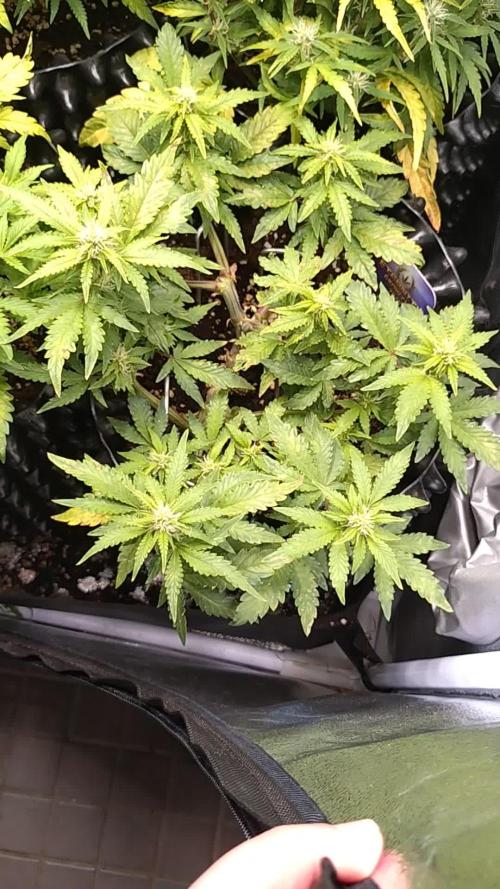
This week I added a new controller to handle up to 8 functions. I installed a new heater, my old humidifier and some LED strips to the controller. Targeting a VPD at 1.0 day and night. Trying to keep the nutrient ppm under 900 and ph at 6.0 in the reservoirs. Ordered a second ph pen because I don’t trust my readings. Will be here by Thursday. Friday: Checked the ppm in the reservoirs and it’s at 1,000. Added more RO water with extra nitrogen to bring the ppm level down to 925. Saturday: I installed an updated AC Infinity controller 69 Pro Plus (controls 8 pieces of equipment) which allowed me to add a humidifier, corner LEDs and a heater to the controller. Overall I’m extremely impressed with this AC Infinity equipment. My VPD is within the range I want to achieve (.8-1.1). I programmed it to maintain 78 degrees and 67% humidity during the day, 73 degrees and 63% humidity at night. Charts posted also show the impact of an open tent compared to the closed environment. The heater is constantly pushing fresh air into the tent, so I don’t need to cycle the exhaust fan often. Rewired the tent again and moved the controller later that night. I mounted the controller on the wall. Added Mars Hydro UV/IR lighting to fill out all 8 slots on the controller. Sunday: I checked the ph in the reservoirs (6.8….i had filled it with 6.0 ph) and the ppm (1200 ppm…I had filled it with 900). So evaporation and possibly a mismeasurement of ph. I topped ff reservoirs with slightly stronger nutes and adjusted ph to 5.8 in the reservoirs. Poor magnesium absorption could be driving some leaf yellowing. Effective tomorrow, I’m switching over to Heads Formula which consistently feeds GH Flora series nutes at Micro (6ml/g), Bloom (9ml/g) and cal mag (3ml/g). Turned on the UV/IR lights for 3 minutes every 8 hours. I’m easing the plants up to 5 minutes every 6 hours which will provide the recommended 20 minutes of IR per day. This will help the plants stretch a little more. Monday: checked ph and ppm in reservoirs. 6.1ph and 880ppm. VPD remains stable except when I open the tent. Tuesday: checked ph (6.4) and ppm (880) in reservoirs. Added .5ml of ph down to two reservoirs. Still see slight yellowing between the veins but it’s not getting worse (might be improving). Adjusting ph down to 6.0 target might have solved this. The plants grew by 1-2” last night…..is the infrared light working already? Decided to mix up fresh nutes for the reservoirs following Heads formula. 6ml Micro and 9ml Bloom per gallon of RO water. Added 5 ml of CalMag too. Ending ppm was 1080 which is too high, so I diluted down to 880 with RO water. 6.0 ph. Wednesday: plants grew another .75 inches last night. I topped above the 5th node. Thursday: added RO water with heavy cal mag to reservoirs to increase amount of CalMag available.
Likes
31
Share
@THCpapa
Follow
Week 13 in the garden, and it's been a week of contemplation and admiration. Despite my initial plan to flip the plants, I decided to give them another week in vegetation. It's like I'm sculpting a masterpiece, carefully grooming the plants into a perfect botanical sculpture. Working with my plants feels like art – it requires skill, love, dedication, and a sense of playing God. As I look at the tent, I can't help but feel a sense of pride and joy. These green beauties are turning out amazing, and I'm filled with overwhelming happiness whenever I get the chance to speak to people about them and show them off. But the time has come to take the next step in their journey. They're being flipped this week for sure, ready to embark on the next chapter of their growth. It's bittersweet, but I know it's all part of the magical process of growing these wonderful plants. Here's to Week 13 – a week of artistry, joy, and the promise of new beginnings. 🌿🎨
Likes
4
Share
Cada día falta menos, empecé a reducir los fertilizantes y próximamente se viene el lavado de raíces, los planes están en cortar los cocos principales y bajar la lámpara para que los cogollos mas bajos completen su maduración. No pude con la manija y me saque un coquito para ver como van, parecen bañados en azúcar jajaja