


Likes
Comments
Share


@MadeInGermany
Follow
Hey guys :-)
She is growing great and will be ready for the flowering tent in the coming days :-)
A few cuttings are taken beforehand.
Was poured 2 times with 1 l each.
I'm looking forward to the start of flowering :-)
have fun and stay healthy 🙏🏻
👇🏼👇🏼👇🏼👇🏼👇🏼👇🏼👇🏼👇🏼👇🏼👇🏼👇🏼👇🏼
‘Powered by GreenHouse Feeding’
Copy the link for 10% off all Nutrients 👇🏼
https://shop.greenhousefeeding.com/affiliate/MadeInGermany_PassionGrower
👇🏼👇🏼👇🏼👇🏼👇🏼👇🏼👇🏼👇🏼👇🏼👇🏼👇🏼👇🏼
You can buy this strain at :
https://www.amsterdamgenetics.com/product/choco-cheesecake/
👇🏼👇🏼👇🏼
Use the coupon code: madeingermany
for 10% on all Amsterdam Genetics seeds
Water 💧 💧💧
Osmosis water mixed with Cal/Mag (24 hours stale that the chlorine evaporates) to 290 ppm and Ph with Ph- to 5.8 - 6.4
MadeInGermany

Likes
Comments
Share


@PatriciaGant
Follow
Dane, We all should help one another.
Human beings are like that.
We should live by each other’s happiness - not by each other’s misery.
We don’t want to hate and despise one another, share the Joint.
And mother earth is rich and can provide for everyone.
We can Grow enough Happiness, In this paradise, there is room for everyone.
We only exist to bring joy into the world and The way of life can be free and beautiful,
but we have lost the way.
Grow High and Give the world A smile.
At the end we own nothing more then all our memories, lets make them amazing for everyone,
nothing to loose only everything to win.
A last kiss goodby, a second one, softer and long as a sign, that you are woth it.
That Everyone worth who loved and give.
Enought Hippie Talk, now have a nice day and an even better grow, thx for watching by.
((From Seed 🌱
week report:
i love the "banana split" in the leafes

Likes
39
Share


@Roberts
Follow
Bubble OG Gum autoflower grew really well. Super frosty colas with a sweet bubble Gum smell. The grow was fairly smooth. I did treat once for mites when she was going into flowering. Beside that there was no major issues. Thank you Ganja Farmer, Spider Farmer, and Athena blended line nutrition. 🤜🏻🤛🏻🌱🌱🌱
Thank you grow diaries community for the 👇likes👇, follows, comments, and subscriptions on my YouTube channel👇. ❄️🌱🍻
Happy Growing 🌱🌱🌱
https://youtube.com/channel/UCAhN7yRzWLpcaRHhMIQ7X4g


Likes
48
Share


@DogDoctorOfficial
Follow
Gather 'round, because it's time for the grand finale of my Tropicana Cookies Auto journey. Week 10 has arrived, and boy, oh boy, this gal has been an absolute delight from start to finish. Let's dive into the final chapter of this epic adventure!
I harvested my lovely lady at day 69 from seed, and let me tell you, it was a celebration of beauty and abundance. Picture this: a majestic all-girl harvest, suspended upside down for a glorious two-week drying extravaganza. At a temperature of 60 degrees Fahrenheit (15 degrees Celsius) and a relative humidity of 60%, the drying process unfolded like a symphony of perfection.
Now, let's talk trichomes, shall we? Oh, those glorious little resin factories! This Tropicana Cookies Auto has blown my mind with the sheer amount of trichomes it boasts. It's like a frosty wonderland, sparkling like a million tiny diamonds. I've never seen trichomes in such numbers, shapes, and colors before. It's a trichome party, and everyone's invited!
But let's not forget the benefits of the drying process. By allowing our precious buds to dry slowly and evenly, we're enhancing their flavors, aromas, and overall quality. It's like fine wine, my friends, getting better with age. Patience is the name of the game, and trust me, the reward is worth every second of anticipation.
Now, let me take a moment to give a big shout-out to @Fast_Buds. They've truly outdone themselves with this Tropicana Cookies Auto. It's like they sprinkled magical trichome dust all over these seeds, ensuring a frosty experience like no other. They've got the genetics game on lock!
So, my fellow cannabis enthusiasts, as we bid farewell to this remarkable journey, let's cherish the memories, the lessons learned, and the joy shared. From seed to harvest, this Tropicana Cookies Auto has captured our hearts and ignited our passion for the green wonders of the world.
May your drying process be smooth, your trichomes plentiful, and your buds burst with flavor. Thank you, Tropicana Cookies Auto, for gracing my garden with your extraordinary presence. You've left an indelible mark in my cannabis-growing adventures.
Keep cultivating with love, spreading the joy of this amazing and holy plant we all love so much, and remember, my friends, trichomes are like the glitter of the cannabis world—bright, beautiful, and absolutely fabulous!
As always thank you all for stopping by and for supporting me on this journey, i am super passion about growing and fell blessed to have you all with me on this new journey <3 <3 <3
Genetics - Fast Buds Tropicana Cookies Auto
Ligth - LUMATEK ZEUS 465 COMPACT PRO
Food - APTUS HOLLAND
Tent - MARS HYDRO
All info and full product details can be find in can find @
https://2fast4buds.com/
https://aptus-holland.com/
https://autopot.co.uk/
https://lumatek-lighting.com/
<3 <3 <3 Growers love to you all <3 <3 <3
Tropicana Cookies Auto is the perfect variety for growers of all levels, especially beginners as this strain performs very well outdoors and indoors, and can produce up to 500gr/m2 in 56-63 days without needing extra maintenance. Reaching up to 110cm, this strain grows fairly tall with medium-sized branching, showing its mixed heritage. Definitely the right choice for those with a high tolerance looking to get their hands on the strongest autoflowers out there. Thanks to the 27% THC, you can expect an extremely powerful and long-lasting high that’ll boost your mood and give you that extra push you need to start your days on the right foot. This variety offers the whole range of citrusy and woody flavors with a strong candy-sweet background that will keep you coming back for more and more.
Bud description
Tropicana Cookies Auto produces gorgeous dark purple flowers, so expect really dark buds with gorgeous hues of pink, purple and blue, and thick dark-orange hairs that get completely covered in resin by harvest time, giving them an almost shiny-white appearance.
This variety develops a typical Indica-like structure and very few sugar leaves that will make your trimming sessions a breeze. But make sure to store your trimmings as the gorgeous flowers reek of a mouth-watering blend of lemon peels, orange juice, and sandalwood that gives it almost a citrus candy-like flavor that makes for the most aromatic hash and extractions.Smoke report
Thanks to the 27% THC, Tropicana Cookies Auto’s effect starts with an energizing head rush that gets your mind up and running while leaving you in a nice calm state. As the Indica-dominant side kicks in, the powerful cerebral effect gradually moves downwards and hits your whole body with a deep relaxation that leaves you with a joyful stoney sensation that alleviates chronic pain while leaving you in an overall happy and positive state of mind.
It’s the perfect daytime and nighttime strain as it can boost your mood and enhance a night out with friends but can also quiet your mind as you get ready for a good night of sleep. No matter the scenario, expect a powerful high that lasts for hours on end.Plant appearance
Tropicana Cookies Auto reaches up to 110cm and develops a tall main cola with shorter side branches, typical of hybrid strains. You can expect a stocky yet tall main cola with medium-sized side branches and thin fan leaves that fade into a yellowish hue with a beautiful dark purple tint. Thanks to the excellent selection, this variety develops a short internodal spacing that makes the medium-sized flowers look like they’re growing stacked on top of each other. It’s the ideal choice for growers who want to get big yields without having to deal with huge plants, as this monster yielder can produce up to 150g per plant while growing relatively short.
Grow tips
This variety grows super dense buds so make sure to space out the branches by tying them down, this way you improve airflow which helps prevent mold and other pests. Tropicana Cookies auto reek of a delicious sweet and sour smell so make sure to flush thoroughly to enhance the aromas even more. This terpene heavyweight finishes with lots of resinous sugar leaves that make for fantastic hash and extractions so remember to have your trim bucket ready!Flavor
Tropicana Cookies Auto boasts remarkably sweet flavors that resemble a blend of lemon peels and fresh orange juice, with subtle floral undertones that make it the perfect choice for extractors looking for unique terpene profiles.
Expect an overall citrusy zest that’ll coat your whole mouth and leave a delicious tropical candy-like flavor aftertaste. The sweet and sour flavors get balanced out with a herbal background that gets stronger as you exhale and gradually opens up, bringing out the whole range of woody, floral, and spicy flavors, making it the perfect choice for the most flavorful extracts

Likes
Comments
Share


@GreeneScene
Follow
Day 15 Update : Decided to grab a tape measure to check canopy heights on a whim and discovered that my light was hanging 35 inches from “Cellie” Cereal and Milk . Wowzers 👀! So I raised the plant to be 26 inches from the light that I also dimmed down to about 40% . It works out that I can try to get the most out of the end of flower stretch for the older gal who shall no more than be mentioned for reference to accentuate the great glorious glamorous “Cellie”.
The humidity plummeted after I did a major defoliation of the older gals so I adjusted the airflow rate of the lower in-line fan and the upper inline exhaust fan with the carbon filter .
I lowered them both to the lowest setting & the humidity returned to “normal”
Let me explain my reasonings/thinking behind my adjustments which are experimental at BEST.
It’s worth also mentioning without having to preset a single thing on my 70pint Dehumidifier located inside this tent it is legitimately only plugged into my PRESET humidistat controller which is set to 50%-46% RH WITH an alarm on highs of 55% and lows of 43% . In real life what this translates to is when this humidity controller triggers the dehumidifier ON @50%RH immediately the fan of the Dehumidifier begins running. However this does not help the rising humidity that is occurring (it will reach 55%-60.2%RH ). Given a fixed amount of time , the condenser(atleast what it sounds like . .again, it could be anything) turns on . It is when this “condenser” “sounding” component begins working that the humidity IMMEDIATELY plummets down to my low point of 46%
So to make a long story short the humidity gets vacuumed to 46%RH & the dehumidifier turns off, bc of the PURPOSEFUL EXPERIMENTAL TWEAKING making all air exchange fans low leveled the humidity slowly but steadily rises to 50%RH then the dehumidifier is triggered on but only the fans initially and the humidity eventually reaches 55%RH-60.2%RH & then the humidity gets all its hair snatched out by the dehumidifier and drops back down to 46%RH.
😮💨😮💨😮💨😮💨 with all that said of anybody was even interested per my tents leaf canopy height temperature average good to great OR LITE GREEN TO DARK GREEN VPD for my temperature begins @ 60 & ends @ 52 which is kind of a perfect storm for OUR GIRL “CELLIE” oooooooorrrrrrrrrrr sssssssoooooo I think/hope .
She still hasn’t needed watering since being transplanted, she should now ready and willing to stretch those toes and we need the opportunities to top water that soil a few times to make those dry amendments available to her .
More pics of later the week coming as we go . . Hopefully . Diligence is a practice
Day #17: giving her some water today, no specific amount just until she feels the right amount of “heavy”. She was given 3 different batches of water once ph’d to 6.3 once ph’d to 6.7 one ph’d to 6.5. She’s grown an inch in 2 days.
Also swapped out the smart hygrometer system to a different brand . So far it has all the capability I was looking for but I need to run 2 more experiments to know for certain it lives up to my needs and its price tag 😁
Day 18 Update: she grew an inch taller nice 👍
The smart hygrometer system has reported/experience Bluetooth failures twice already(although I don’t know exactly what that means considering I purchased this for it’s Wifi capabilities )
I didn’t think to check it whilst I was away so I cannot yet say If it meets my final expectation/need
I bought a soil ph meter & it indicates “my mix” is at 3.1 ph 👀 hmm 🤔 I’m wondering if this is a must fix or can I get by .eventually she will be transplanted and at that time I can use my new digital soil ph probe to construct her new blend moving forward but I am curious is I mixed another batch at 3 something ph would it matter ?
In the beginning I wasn’t ph’ing any of my watering just because I assumed my soil mixture was highly acidic because of the 70ish pecernr peat moss base . I also assumed that it would be acid fixing for the water I put in it and therefore wouldn’t need to ph it and I did just fine just giving plain old tap water when thirsty until I experience VPD issues & in an effort to pinpoint what my exact issue was and how to fix it I of course eliminated all the variables and dialed in on my ph of my feed water and now my soil so it leaves me wondering does the soil need to be relatively 6.1 ph or is the 3.1 I’m flying at alright also . I checked the other 3 currently in here getting through flower & two of them are in the 3’s for ph & one of them is 6.2(the largest of them all) how ever she was the largest of them all always and oddly enough I mixed one big batch for them and transplanted them at the same time so I get two of them having the same ph as “Cellie” but the other that is in ph heaven is an oddball
Should I top her here or supercrop later hmm I need to decide my vision for this thing
Day 19 Update: ponytailed her youngest internode for about 16hrs she aggressively popped out of it twice ! It didn’t even work for 24hrs when I try it again it’ll be before the internode is so strong . Also rigged up a 16in oscillating wall-fan that currently being held with 2 zip ties , 2 rubber bands , & a smidget of duct tape and MAJORITY OF FAITH keeping it in place . The biggest plus to my added circulation is that I got the 16in fan for ! A win is a win . Pics uploads will be held for the next 3 days until the end of week 3 upload .
Drop a thumbs up
Day 20 Update : THE FAN FELL! But no one was damaged or injured . I re-rigged it . This time with duct tape , 3 popsicle sticks , 2 heavy duty zip ties & 1 regular strength zip tie . SHES SOLID NOW 😂 I did some solid rigging this time & have videoed my handy work .
Also I forgot to turn my A/C back on before leaving the house so temps and humidity skyrocketed and swung for 9 hours until I got home . The temp in the tent was 84.4 and the humidity went from 42.4 to 57.5 to 42 every three mins.
Day 21 Update : SHES A PRETTY GIRL. RQS says Cereal Milk is a slightly sativa dominant hybrid but the pheno of this particular seed seems to lean more towards indica I’m not mad at it ! I’m getting more stoked to see what she can do. She still hasn’t received any additional water since day #18.

Likes
248
Share


@Ju_Bps
Follow
Hello my friends 👨🌾👩🌾,
The Banana Purple Punch 🍌🍌🍌💜💜💜🥊🥊🥊looking good, flip started🔥
This mid week the first pistils are poped.
I've continued to give 250ml each 2 day, since start week I give 500 ml/plants each 3 days.
And started fertilizer
I've given
200 ml water + rhizo
500 ml water + rhizo + canna tera
500 ml water + cannazym
PH@6
I've set up my new jewelry today 🔥🔥🔥🔥, this fc3000 look very nice.
Lamp @50% and 50 cm of the canope.
Next week, will be first blooming week 🌲🌲
See you next week and have a good week end my friends 🔥👨🌾👩🌾
Thank to Mars Hydro and @marshydrococo2 for sponsoring the FC3000 ❤️❤️, as well as @Fast_Buds for sponsoring the Seeds ❤️❤️
If you want a litle discount on your Mars Hydro order, add this coupon to your cart,
"Ju_Bps"
Thanks community for follow, likes, comments, always a pleasure 👩🌾👨🌾❤️🌲
Mars Hydro - FC3000
https://www.mars-hydro.com/fc-3000-samsung-lm301b-led-grow-light
42 Fast Buds - BANANA PURPLE PUNCH🍌🌲
https://2fast4buds.com/seeds/banana-purple-punch-auto
Likes
6
Share

@Fyno_TH
Follow
🌸 Flowering Week 2 — PM Battle & Bloom Progress
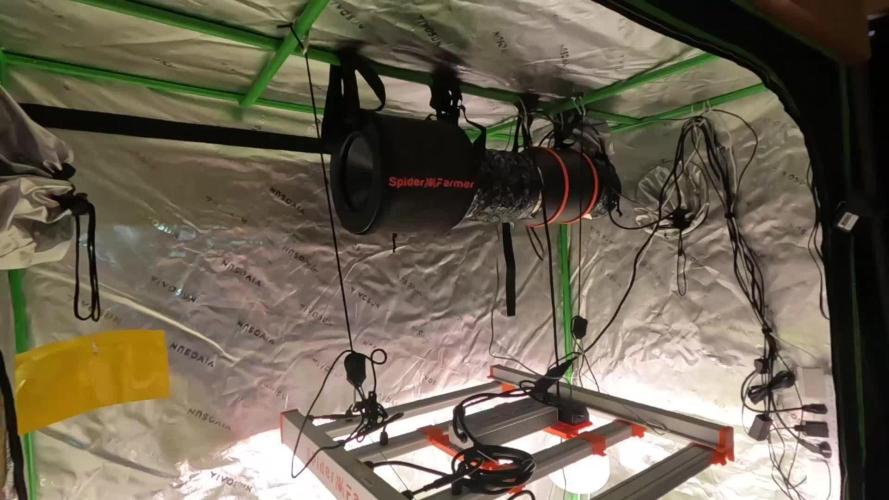
Week 2 of flower and the girls are stacking up beautifully 🌿🔥. The stretch continued strong — canopy looks full and healthy under the Spider Farmer G3000 💡. Bud sites are now clearly forming, and the structure is holding firm after earlier LST training.
This week I continued powdery mildew treatment — used Hydrogen Peroxide 3% (H₂O₂) spray about 3 times since it first appeared. Most spots are gone, only a few tiny areas left. I’ve been keeping RH low and airflow strong with clip fans and the new dehumidifier running 24/7 🌬️💧.
Feed mix (per L):
• Corex 1 ml/L
• CalMag 1 ml/L
• Mira 0.5 ml/L (pH adjust)
• Florex 1 ml/L
• Aurora 1 ml/L
• Bud Candy 2 ml/L
• Terpinator 5 ml/gal (~1.3 ml/L)
• Eldex 1 ml/L
💧 Watered around 15L total with 10–20% runoff, ppm ~1500–1600 @ pH 6.0.
Switched to pure RO water this week for cleaner feed and better control of mineral balance 🙌.
🌡️ Temps: 26–28 °C (day) / 23 °C (night)
💧 RH: 50–55% (after dehumidifier setup)
📝 Observation: PM almost gone — continuing light H₂O₂ misting until it’s fully cleared. Stretch slowing down, early flowers forming nicely 💪.
💡 Tip: For growers in Thailand — using an RO system helps stabilize ppm and pH in local water, especially if tap or street refill water fluctuates a lot.
Excited to see the flowers bulk up in Week 3 — hoping for a clean, healthy canopy ahead 🌸✨

Likes
46
Share


@GanjaReaper
Follow
Day 21:
So we are currently in day 21, I finished all my work for my growroom.
They where pushed into flowering 5 days ago. They always need to settle first before even turning into that stage.
So my gues that in the end of the next week we will start to see the first indicators.
I still gave them veg nutrients this week since they are still in growing stage.
I did notice that many plants have weak stems and where sloppy underneeth. Didn't liked that, so in order to have thicker stems and branches I decided to top all the plants ( not showing in these picutues, i did that after making the pictures)
Topping your plants will create stronger thick stems and branches!
Also removed the first 1-2 internodes on each branch. I kept 5 or 7 branches each plant. I can't remember the ''science'' behind it but I have been told that many years ago by fellow OG Dutch growers and Family members.
Anyway It is importend to have uneven branches. So 5, 7 or even 9 but never 6 or 8.
Normaly I would have loved a huge main cola and it is known by many amnesia growers to not top the plants because they make beautifull thick main colas.
On the other hand, when having this much plants on each m2, it will create weak stems and branches.
I rather have strong plants with thick stems and branches to transport all nutrients properly and not breaking when having buds on them or having to mayor support them.
The leafs, stems and branches look fine to me. No stress or deficiencies. 1/3 of them like to drink thought which is a good thing but it really enjoying.
Now I have to weigh by lifting the pots which one needs more or less feedings lol. Instead of giving them all like 5 seconds of water.
Might show you guys my feeding ''barrel'' next week. It is a 250L one.
Untill next week.

Likes
3
Share


@CharruasFarm
Follow
Espero el apoyo de la comunidad para ganar el premio de TrolMaster 🤞🤞🤞


Likes
10
Share


@Xspellsx
Follow
Had issues with RH this week have 2 humidifiers now a 1100 and 2200 eva dry and seavon. Seavon is better!!and cheaper!! Jet fuels growing tall buds as to where the plat punch is filling in most likely do to the indica dom on plat punch and all the sativa fuel strains in jet are just amazing it just pushes hard the whole time really great strain to grow. Tried TNB naturals co2 seems to have done something i have plumping wherever i put the bottle doesnt matter if its under the plants remember air gets sucked out the top so its going to pull air from below to the top with co2. Directly under plants no good toooo much moister off in the corner by a vent! 2 led lights going one 600watt using only red and whites the a 1500 full blast all colors veg and bloom. The bloom on the 1500 is only red its a Templay light no red and white but its working getting a little more stretch on that side of the tent. Found good info on using mutes drain to waste.. Alot of salt present (this is against whats commonly mentioned online) around the roots makes the plant compete with the soil or medium and produces shit tons more sugars and essential oils this goes actually for all plants grown hydro or drain to waste. If u feed one time then not the next ur stressing ur roots out hard thus stunting ur growth especially in late bloom. My plan is to feed until 8 to 10 days prior to planned harvest of 63 days in flower from switch. Then FloraKleen every other day with blackstrap


Likes
30
Share


@SooSan
Follow
12/12 + 40 jours
Vu qu’il y a 16 plantes mais que sur growdiaries on ne peut mettre que 8 variétés j'ai divisé en 2 diaries pour le bas de la tente
1️⃣
🏠 90x60x90
☀️ FC-E 4800 => puissance a 20%
🍁
1x Black Bomb / Philosopher Seed
2x Amnesia Lemon / PEV Seeds
1x Blueberry / PEV Seeds
1x Blueberry / 00 Seeds
1x Wappa / Paradise Seed
1x Dark Phoenix / Green House Seed
1x Quick Sherbet / Exotic Seeds
1x Mango Cream / Exotic Seeds
1x Banana Frosting / Sensi Seed
1x Hindu Kush / Sensi Seed
3x Fast Mix / Sweet Seed
📎 https://growdiaries.com/diaries/122084-grow-journal-by-soosan
📎https://growdiaries.com/diaries/124052-grow-journal-by-soosan
2️⃣
🏠 30x60x50
☀️TS1000 => puissance a 50%
🍁 4x Quick Sherbet - Exotic Seed
📎 https://growdiaries.com/diaries/122080-grow-journal-by-soosan


Likes
14
Share


@GoldenWeedGrower
Follow
D15/V11 - 15/04/23 - Added water and nutes EC 0,7 pH 6.4
D16/V12 - 16/04/23 - Nothing
D17/V13 - 17/04/23 - Nothing
D18/V14 - 18/04/23 - Added water and nutes
D19/V15 - 19/04/23 - Nothing
D20/V16 - 20/04/23 - Added water and pH+
D21/V17 - 21/04/23 - Nothing
Likes
42
Share


@Dunk_Junk
Follow
She grew 12cm this week. Now 27cm tall.
She seems to be very bushy already. It could be a nice sign!


Likes
Comments
Share


@Lucidite
Follow
Sat 7/8:
- Transplanted a runted Purple Lemonade auto into a small plastic pot (1/2 litre), from 3 gal fabric pot. Put it back in the veg tent where there is more room. It is wasting space in the flowering tent. Suspect over watering early on as issue.
- Shifted a Grapefruit auto from the veg tent to the flowering tent to replace the Purple Lemonade. A little early, so it is on a pedestal to reach the canopy.
- Planted a Fastberry and a Gorilla Cookie auto.
- Harvested 20g wet from the CBD20:1 (8w).
Sun 8/8:
- Changed light cycle from 18/6 to 20/4.
- Fed plants, varying mixture by plant age. CBD20:1 is now only on water at every feed.
- Tied main stem down on Grapefruit auto (3w).
- Set up endoscope camera to capture the Grapefruit response to LST.
- Continued lollipopping Strawberry Pie (5w) and Kosher Cake(4w).
Tues 10/8:
- both the Gorilla Cookie and the Fastberry seeds popped. I’ve put them under icecream containers in the veg tent so they don’t dry out too quickly.
Wed 11/8:
- Small targeted watering with no feed.
Thurs 12/8:
- feed plants that needed to be watered.
Sat 14/8:
- Harvested the remaining CBD20:1 at 9 weeks, 73g wet
- Harvested undersized Lemon Pie at 8 weeks, 26g wet.
- Planted a Gelato auto and a Wedding Cheesecake auto from Fast Buds.
Next weeks diary: https://growdiaries.com/diaries/118288-grow-journal-by-lucidite
Likes
23
Share


@adam_pawloski87
Follow
This week went very well! One will be getting cut an hung to dry while the rest finish up with one more week of flush ! These ladies are smelling so lovely I hope you all enjoy! Stay tuned for next week! Cheers 😤💨💨💨💨💨
Likes
4
Share

@poloq_mauriceloetel
Follow
Environment + Pests + Setup
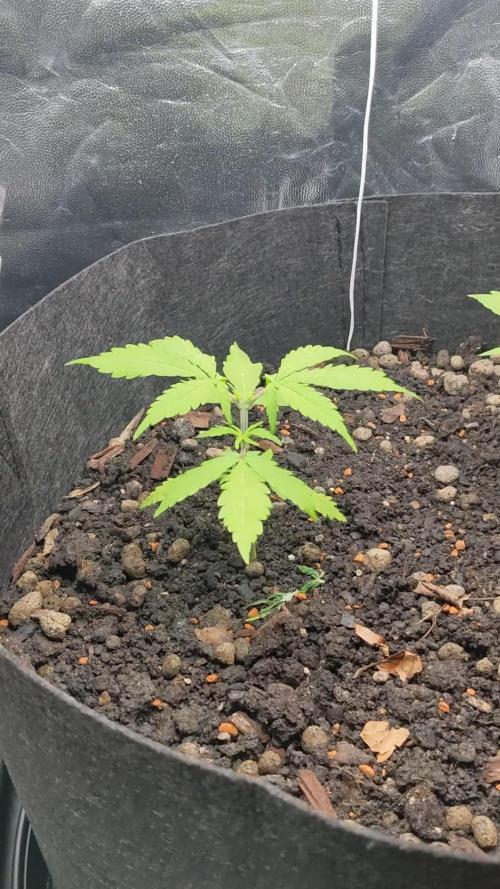
This week (at day 31) I decided to end the battle against fungus gnats. Even after almost three weeks of dried-out soil, dozens of adult insects could be seen, which told me that there were pockets of moisture that I coouldn't influence. Accordingly, I went back to the original plan I had outlined earlier: bring the system into balance and use sand and nematodes. Since I should no longer have any problems with low RH, I have also reactivated the exhaust fan, which lead to the values you can see above.
Nutrients + Environment
From the outset, the plants showed a slight nitrogen deficiency, which was evident in their rather pale, light green color. This is probably due to the fact that the substrate (until now) did not contain enough moisture to allow metabolic and decomposition processes to proceed efficiently. Directly after watering I got reassured that my choice was right and the soil still alive, healthy, and ready to 'get back to work': look at those springtails!
Plants
On day 30, I topped the plants. Both had already formed three nodes and started to develop healthy side branches at all of these nodes. So, according to my plan, I removed the main shoot, leaving enough space for the stump to encapsulate without damaging the healthy plant. I also removed one shoot from each of the middle nodes, as I don't want branches that already grow towards the center (the branches will grow towards the light anyway, and this way I can ensure that there is enough air circulation and room for expansion).
Upcoming:
Start of LST