The Grow Awards 2026 🏆
Likes
Comments
Share
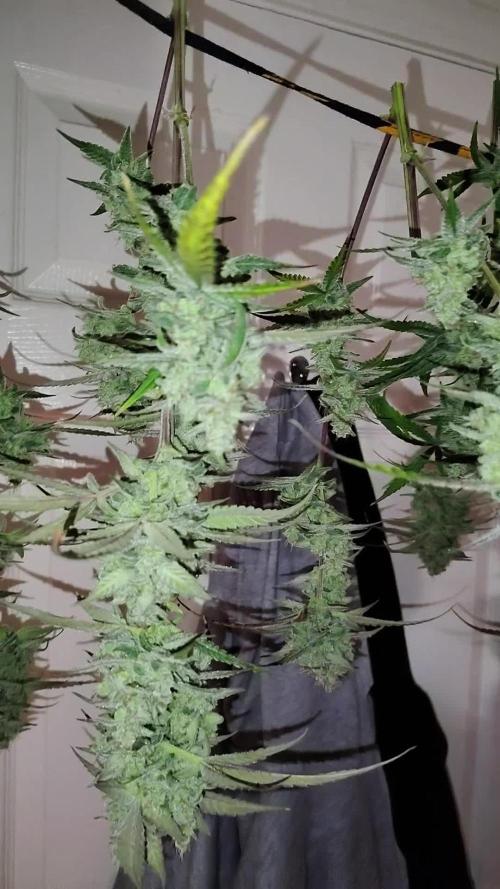
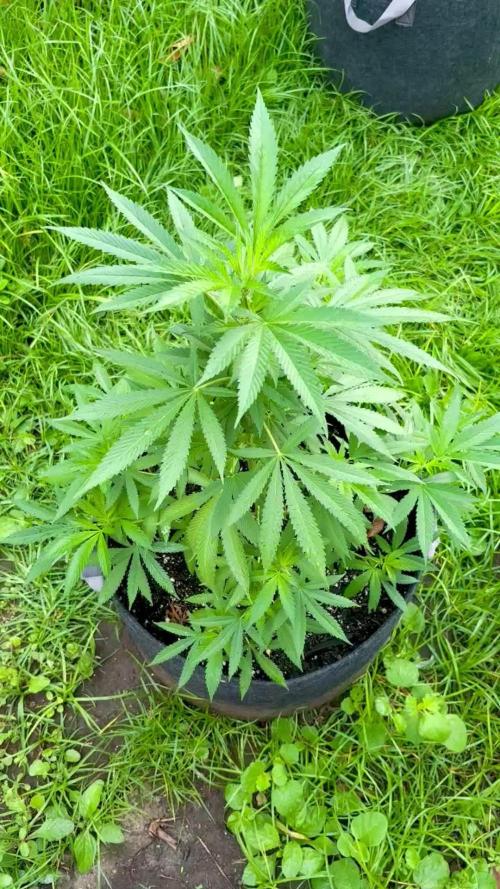
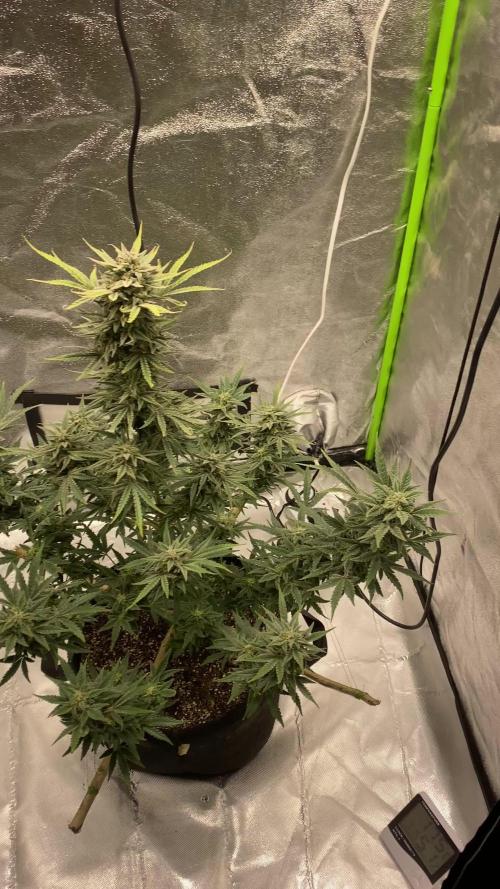
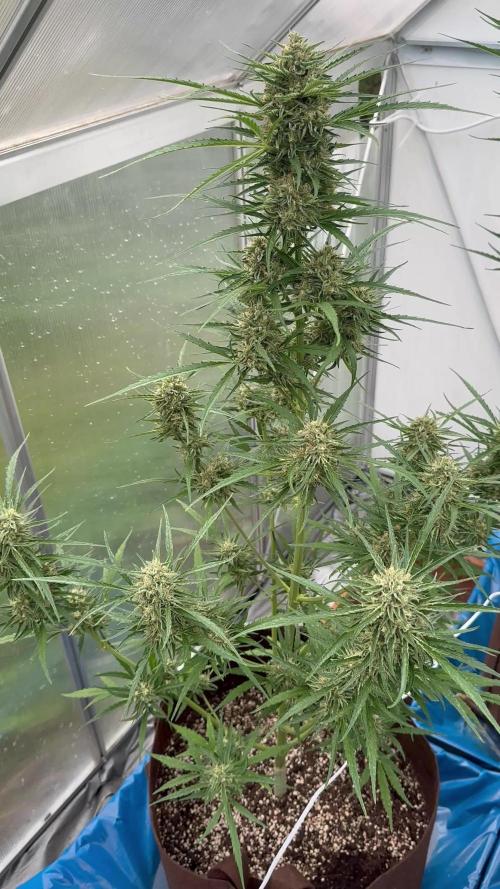
This is a great strain from a great seed company in Canada, 34 street seeds. I have had great results from germination to harvest with their strains and these Cookies are no different. Nice tight nugs, some great tasting hard hitting smoke 💨 They grew easily enough, no disease or weirdness that couldn’t be solved by proper NPK. This would be a great strain for beginners looking for an easy harvest, with some good bud to show. I definitely did not maximize the potential of this strain this go around, but I still have 2 seeds from the 5 and it will make it back to my garden again. ❤️🇨🇦😎💨
Likes
48
Share
Info: Unfortunately, I had to find out that my account is used for fake pages in social media. I am only active here on growdiaries. I am not on facebook instagram twitter etc All accounts except this one are fake. Have fun with the update. Flowering day 28 since time change to 12/12 h Hi everyone :-) . The growth is unstoppable 😅. I think that the next few days the buds will start growing properly :-). As always, the water was completely changed every 12-16 days. Otherwise there is nothing to report this week :-). Have fun and stay healthy 🙏🏻 You can buy this Strain at https://www.amsterdamgenetics.com/product/kosher-tangie-kush/ Type: Kosher Tangie Kush ☝️🏼 Genetics: Kosher Kush X Tangie 👍 Vega lamp: 2 x Todogrow LED CXB3590 COB 55 W 1 x Sanlight S2W 62 W 💡 Flower lamp : 2 x Todogrow LED CXB3590 COB 55 W 1 x Sanlight S2W 62 W 💡 ☝️ Grow Aero System : Growtool 0.8 ☝️ Fertilizer: Canna Aqua Vega A + B , Canna Aqua Flores A + B , Rizotonic, Cannazym, CANNA Boost, Pk 13/14, Canna Cal / Mag, Canna Ph - Grow, Canna Ph-Bloom ☝️🌱 Water: Osmosis water mixed with normal water (24 hours stale that the chlorine evaporates) to 0.2 EG. Add Cal / Mag to 0.4 Ec Ph with ph- to 5.2 - 5.8 💦 💧
Likes
12
Share
@chrisss
Follow
Day 57) nothing Day 58 ) Fed ph”d recharged water, half a gallon Day 59) nothing Day 60) Fed calmag and bloom , lotta calmag cuz I see cal def Day 61) nothing Day 62) flush with 2 gallons of phd water Day 63)
Likes
18
Share
I don’t think I ever had white powdery mildew and I was just noid of every little dust particle that came around. All good. I’m now battling high temps as we don’t have central air and it’s mid 90s outside. Most likely about to buy an ac unit. LST seemed to go ok but we shall see. Overall very pleased w my results so far. Cheers
Likes
8
Share
So, absolutely against the recommendation I received from a friend of mine who's been growing for 20+ years, I pruned/defoliated my plants up a bit this week. I decided to for a few reasons. - the plants were really dense with foliage, many leaves overlapping and pushing other leaves - most of the bud sites were shaded under several layers of leaves - the leaves pilling up would have been restricting airflow quite a lot, I want to prevent budrot or mold by increasing aeration - I wanted to control where the plants were growing, and focus their energy into the buds - with this being an outdoor grow late in the season with less sun I felt it was more important to expose the developing buds to the sun With all that said, I think my plants have responded extremely well to the pruning in the last few days. I've never pruned or defoliated before so this is going to serve as a test for me. I like doing new things and seeing what happens. No matter what, these plants look really good right now and I'm sure I'll get a decent harvest, I'm trying to push it from decent to fantastic. My PPM is a bit high, though none of the plants look like they're being hindered by it. I did a partial water change on 2 of the 3 (the one in the 3 gallon bucket and the one that looks more like and indica). The 3 gallon bucket plant was at a PPM of 5000ish so I made sure to get it more in line with the other two, and with the partial water change I got it to around 2000. The other plants are sitting at right about 3000. I will continue to monitor the plants and check PPM, if it doesn't go down next week I think I'll do another partial water change. I want to keep pumping in nutrient while preventing any burn or lockout. Trichomes are no observable on the two plants in larger buckets. The smaller bucket plant was the last to sprout, so it's about a week or two behind the others. This week has been pretty poor weather where I'm at. Lots of rain and clouds. I've kept the plants under cover but still in direct sunlight. This coming week is supposed to be clear sky again so I'll move them to capture the most light once the rain stops. I know defoliation is debatable, especially with outdoor grows, but I like to push boundaries. Here's a list of the things I've done with this grow: - kratky method hydroponics (other than a partial water change I have added no water since starting in buckets, no airstone, no pump) - Winter grow (shortest light period of the year here) - Topping (and it looks like one is more like FIMing, also one grew as if it were topped without my input) - Dense nutrient load (I've added more nutrient in this grow than any grow I have previously done. Mostly because I never achieved super large buds and I'm really aiming for that this time) - Water change (like an aquarium, I've never done a water change other than flush before, this week called for it with the high PPM which I think was residual from nutrient loading in veg so I wanted to make sure there's room for the flower nutes) - Defoliation/pruning (nothing too crazy or drastic, started this week and don't plan to trim again unless I see a need to)
Likes
18
Share
This plant is finally seeing some better days, the first time using coco loco that the medium Burned the plant. She's fully recovered and I will move her to a 3 gallon and hopefully the next 4 weeks of veg is a smooth one
Likes
52
Share
You don't become confident by shouting affirmations in the mirror, but by having a stack of undeniable proof that you are who you say you are, outwork your self-doubt. Nitrogen fixation is a chemical process by which molecular nitrogen (N2), which has a strong triple covalent bond, is converted into ammonia (NH3) or related nitrogenous compounds, typically in soil or aquatic systems but also in industry. The nitrogen in air is molecular dinitrogen, a relatively nonreactive molecule that is metabolically useless to all but a few microorganisms. Biological nitrogen fixation or diazotrophy is an important microbe-mediated process that converts dinitrogen (N2) gas to ammonia (NH3) using the nitrogenase protein complex (Nif).[2][3] Nitrogen fixation is essential to life because fixed inorganic nitrogen compounds are required for the biosynthesis of all nitrogen-containing organic compounds, such as amino acids and proteins, nucleoside triphosphates and nucleic acids. As part of the nitrogen cycle, it is essential for agriculture and the manufacture of fertilizer. It is also, indirectly, relevant to the manufacture of all nitrogen chemical compounds, which include some explosives, pharmaceuticals, and dyes. Nitrogen fixation is carried out naturally in soil by microorganisms termed diazotrophs that include bacteria, such as Azotobacter, and archaea. Some nitrogen-fixing bacteria have symbiotic relationships with plant groups, especially legumes.[4] Looser non-symbiotic relationships between diazotrophs and plants are often referred to as associative, as seen in nitrogen fixation on rice roots. Nitrogen fixation occurs between some termites and fungi.[5] It occurs naturally in the air by means of NOx production by lightning.[6][7] All biological reactions involving the process of nitrogen fixation are catalyzed by enzymes called nitrogenases.[8] These enzymes contain iron, often with a second metal, usually molybdenum but sometimes vanadium. Green clover (Fixation) White clover (Fixation) Red Clover. (Fixation) Yellow Clover. (Fixation, deeper roots) Sweet Thai Basil. (Terpenes) Italian Basil. (Terpenes) Chamomile.(Oil production) Borage.(Pest attraction taste) Lavender.(Pest attraction smell) Marigold(Pest attraction visual) Mycorrhizae are beneficial associations between mycorrhizal fungi and a plant’s root system. Mycorrhizal fungi spores germinate in the soil, creating filaments (hyphae) that penetrate the root cells, thus establishing a symbiotic relationship. This collaboration leads to the development of both intra-radical and extra-radical networks of filaments, enabling efficient exploration of the soil for enhanced access to nutrients and water. Consequently, these vital resources are transferred to the plant, resulting in numerous benefits for crop cultivation. Various mycorrhizal products are available in diverse formulations (powder, granular, and liquid), concentrations, and qualities. Ongoing advancements in products, technologies, and research are reshaping our understanding of mycorrhizae. Despite these positive developments, certain misconceptions persist. In the following discussion, we aim to clarify the truths and dispel the myths surrounding mycorrhizae products. MYTH #1 A HIGHER NUMBER OF MYCORRHIZAE SPECIES MEANS BETTER RESULTS. Contrary to common belief, having a higher number of mycorrhizae species in a product does not translate to better results; in fact, it often yields the opposite outcome. A plant can sustain only one association with a particular mycorrhizal fungi species. Introducing multiple species creates competition among them, which is not advantageous for the plant. The initial colonizer does not ensure the highest success; instead, it gains precedence. It is recommended to select a product with a concentrated presence of a single mycorrhizae species known for its effective performance, rather than opting for a product with multiple species at lower concentrations. MYTH #2 ECTOMYCORRHIZAE ARE EFFECTIVE FOR CANNABIS PLANTS. Although ectomycorrhizae can colonize five to ten percent of plant species, cannabis is not among them. Ectomycorrhizae do not penetrate the root cells; instead, they develop around the roots and on the exterior. For cannabis plants, it is essential to seek out endomycorrhizae. Endomycorrhizae are capable of colonizing 70% to 90% of plant species, including cannabis. Unlike ectomycorrhizae, endomycorrhizae penetrate the root cells, forming structures like arbuscules for the exchange of nutrients and water with the plant. MYTH #3 WHOLE INOCULANT (PROPAGULES) PERFORM BETTER THAN ONLY VIABLE SPORES. The propagule count specified on most mycorrhizae products indicates the presence of spores (viable and unviable), hyphae, and root fragments. However, it is crucial to note that only viable spores, those with the capacity to germinate, can successfully colonize a plant’s root system. Spores are to mycorrhizal fungi what seeds are to cannabis plants—a fundamental component enabling fungi reproduction. Consequently, even if a mycorrhizal product boasts millions of propagules, its effectiveness hinges on the presence of viable spores. Without viable spores, the product will not contribute to plant development. Therefore, the genuine value of a mycorrhizal inoculant lies in the quantity of viable spores it contains, as only viable spores can efficiently initiate symbiosis. MYTH #4 ALL METHODS OF APPLICATION YIELD IDENTICAL RESULTS. To establish the symbiosis, mycorrhizal fungi spores must be close to the plant roots. The optimal recommendation is to directly apply mycorrhizal inoculant to the roots, either in powder, granular or slurry form. This method ensures maximum proximity between the spores and the roots, facilitating a rapid establishment of symbiosis. Particularly with crops like cannabis, which have a short growing cycle, employing this technique is the most effective way to obtain optimal benefits. Alternatively, techniques such as blending the inoculant with the soil are effective, but there may be a delay in the establishment of symbiosis. This is because the roots need to grow and come into contact with the dispersed spores throughout the growing media. MYTH #5 MYCORRHIZAE CAN ONLY BE GROWN ON LIVING PLANTS. While the predominant method for commercially producing mycorrhizae involves growing them on the root systems of living plants (in vivo production), it is not the exclusive nor the optimal technique. In fact, this production approach has notable drawbacks that the “root organ culture” method just does not have (in vitro production). In vitro production occurs in meticulously controlled, aseptic laboratory conditions, allowing for the consistent generation of products that are viable, highly concentrated, species-specific, and free from pathogens. Achieving such precision and quality is impossible when relying on the cultivation of mycorrhizal fungi on plants exposed to external conditions. In conclusion, it is crucial to take all these factors into consideration when choosing the appropriate product for your crop to fully harness the wide array of benefits provided by a high-quality mycorrhizal product. STRONGER PLANT – Stress resistance. FASTER GROWTH – Improve plant structure and shorter veg time. INCREASE YIELD – Overall more biomass. IMPROVED QUALITY – Increase cannabinoids and terpenes content.
Likes
8
Share
@shwable
Follow
Welcome to week 11💚 I am a bit confused because the Sundae Driver seems to be a hermie, but I will wait to see. Strawberry Gorilla has some CalMag deficiency, exit water has PH of 5.9 so thats slightly to low but nothing serious to worry about imo.
Likes
19
Share
Week 1 Day 1 - 8/12/2023 1st Water change Day! Such a special time it is when you remove the little bit of Nutes that you gave them as an appetizer and you give them their first real meal. Added 39 Gallons of Water to my system SILICA= .5mil/Gal = 19.5 = 20mil Root Drip = 1mil/Gal = 39mil Cal Mag= .25mil/Gal = 9.75 = 10mil FLoraMicro= 3.0mil/Gal = 114mil FloraGro = 2.0mil/Gal = 78mil FloraBloom = 2.0mil/Gal =78mil ORCA= .5mil/Gal = 19.5 = 20mil Week 1 Day 2 - 8/13/2023 Everything is looking good the roots are making thier way to the water and the new grow is looking nice and green. Week 1 Day 3- 8/14/2023 Everything is right on track, they are looking beautiful and in the praying postition all leaves happily lifting towards the light. Week 1 Day 4- 8/15/2023 Looking beautiful today and looked like she could use her first haircut.. gave her a TOP off. Roots are laying in the water everything is looking right on track.. Week 1 Day 5- 8/16/2023 walked in and the humidity was under 60.... ohh noooooo.. So I added 2 humidifiers to the tent and attached them to my InkBird controller which is set to 62. She had roots nicely in the water.. this grow is on!!! Week 1 Day 6- 8/17/2023 Humidity was a little low this morning, so I refilled the humidifiers. Other than that, the temp looks great, the PH looks great, the PPM looks good the plant is in the praying position and all damage from the little drowning seems to have been fixed. Happy Happy. Week 1 Day 7- 8/18/2023 Yay.. week 1 in the books, roots in the water growth has started first hair cut given and both side nodes are growing. Everything is looking good and on track.. A lot better than week one of the last grow when I had them drowning week 1. Really excited on how this grow is going to come out.
Likes
56
Share
@Aedaone
Follow
The temperatures, humidity, and watering volume(if measured) in grow conditions are all averaged for the week. The pH is soil pH. Any watering done by me is well water which is 7.6 pH and 50° F. Any listed nutrients are ml/gallon of soil. Day 1 we have lots of sunshine and temperatures in the mid 80's F. I watered today about 1.5-2 gallons per pot directly from the hose. Well water is 7.6 pH and about 50°F. #1 and #2 got topped today. #2 was topped in the evening at 6.30 p.m. I waited for it to get a little more space between the nodes, so there's a bit of stem above the node. This will help it to not split. Day 2 we had thunderstorms and rain in the morning followed by sunshine. The #3 plant was topped today. Day 3 we had lots of sunshine, temps in the mid 80's. That evening we had thunderstorms and rain which became severe that night. Hail was in the forecast but we missed it 🙏. I noticed the number 1 plant was growing crooked. I had moved the pots to get more sunlight and the one was uneven. I did some moving and adjusting today and hopefully it will straighten up. Day 4 we had rain in the morning followed by rain and thunderstorms intermittently into the night. Day 5 we had rains early morning and then cloudy most of the day. We have sunshine in the forecast for the weekend. 🙏🙏🙏 All pots were top dressed with 50ml of ferrous sulfate. Day 6 We had sunshine in the morning and afternoon. Clouds began to move in about 3.30p.m. Suddenly about 4:00 p.m. we had a severe thunderstorm that produced heavy rain and grape sized hail. Thankfully the hail only lasted a few minutes. There was some damage to this group, but only leaves. Day 7 we had sunshine, but cooler temperatures with highs reaching low to mid 70's. The plants began to show some Interveinal chlorosis in the new growth on day 5. I checked pH and it's above 7 in the pots. I added ferrous sulfate to counter this. On day 6 I noticed the #3 plant falling behind from receiving less direct sunlight. I've run out of space to accommodate the suns procession. I moved it to a better place for it to receive more sunlight. This week produced challenges. The topping was successful, but the position of the plants prevented some of them from receiving maximum direct sunlight. It took a few days to notice the affect on growth. We did not have much height gained this week. There was the issue with rising pH again, but this was promptly dealt with. We survived the challenging weather. Overall a successful week as lots of downward root growth was achieved. This will be evident next week as plants shoot up.
Likes
14
Share
@thebito
Follow
17/05 - Colheita realizada. Flores cortadas nas bases dos galhos para serem pesadas antes da secagem. Após isso foram removidas todas as fan leaves maiores e de fácil remoção e as flores foram deixadas em uma rede de secagem dentro da estufa. 18/05 - flores retiradas da rede e penduradas no teto da estufa com barbantes, pois estavam ficando amassadas > 21.3ºC - 22.3ºC / rh 52% - 64% 19/05 - 21.5ºC - 22.1ºC / rh 45% - 50% 20/05 - 21.7ºC - 22.3ºC / rh 46% - 51% 21/05 - 17.9ºC - 21.9ºC / rh 48% - 84% 22/05 - 20.1ºC - 23.3ºC / rh 49% - 81% 23/05 - 23.5ºC - 24.1ºC / rh 56% - 60% 24/05 - 23.5ºC - 24.0ºC / rh 46% - 65% 25/05 - 26/05 - 23.8ºC - 24.3ºC / rh 64% - 65% > flores aparadas e preparadas para a cura, sobra da poda guardada para dry sift, flores guardadas em jarros herméticos com higrômetros, ainda sem sachês de umidade
Likes
24
Share
Day one of week 4. Nutes (BioBizz Grow) 50% of recommended dose have gone in today, I will increase the dose to 1ml for the next watering in 2/3 days. Will introduce BioBizz Bloom next week if no Nutes burn this week. Will do some more LST training tomorrow after another full 18 hrs of sun.. UPDATE - 13th September: Day 2 of week 4, gave the girls a very little trim and some more LST today.. New growth coming through nicely.. UPDATE - 14th September: Day 3 of week 4, Nutes (BioBizz Grow) went in today at 1ml per litre. A little more LST and I finally topped the girls 😍.. UPDATE: 16th September: Day 5 of week 4, 3rd lot of BioBizz Grow Nutes at 1ml/l per plant. Pleased with my four ladies progress so far! Peace ✌️🏼 🍃
Likes
31
Share
@Chubbs
Follow
SuperSativaSeedClub PurplePunchOG Auto Week 3 Weekly update on these 3 little ladies. For week 3 on autos I'm used to them being a little bigger but still a lot of time left so hopefully they'll surprise me. I did a defoliation this week taking off the bigger leafs that where at soil level. I also topped one to see how it reacts to it before I do the other two. I still might try some LST training once a little bigger still undecided at the moment. All in all Happy Growing
Likes
10
Share
Likes
97
Share
@Wastent91
Follow
Ehi ragazzi come va tutto bene? Questa settimana la crescita è stata davvero esplosiva!!! La genetica XL della sweet seeds nonostante io l abbia toppata al 4 internodo è già 70 cm!!! Spero nn cresca di più xké ho paura poi di bruciare le foglie e i fiori come mi è già successo anche con l ultimo ciclo, apparte questo sta evolvendo tutto bene ,grandi foglie a ventaglio si moltiplicano e le cime iniziano già a intravedere il colore ,per fortuna,viola di questo splendido fenotipo!! 😽😋💪🍀 Che piacere vederla crescere e che la mia piccola grow box con pochi accorgimenti si è riempita di verde ! Forse grazie alla magia che fa la luce FC E3000 che diffonde la luce dappertutto uniformemente e si vede che le piante ne stanno beneficiando come non ho mai visto in vita mia ! Grazie a Mars Hydro e Sweet seeds che stanno rendendo possibile questo progetto!! Buon 420 a tutti!! 💪😼👍🧙‍♂️🌿✨🌲💨😂
Likes
22
Share
The strain handled all my mistakes as a new grower great and is one of the reasons why I chose these strains. Just to name, bad Ph, over watering, over feeding was giving full dose instead of half, not watering to run off, not checking ppms and flushing right before harvest instead of weeks prior. I was not expecting the trichomes to look like diamonds as the video doesn’t do any justice. They really sparkle.
Likes
2
Share
Semana 4 floración Fase: Máximo Engorde Estructural / Fin de Crecimiento Foliar ​El cogollo central se muestra denso y maduro estructuralmente, en pleno ciclo de ganancia de peso. La cubierta de resina es total y profusa, confirmando la alta eficacia de los protocolos de estimulación. Esta semana marca la última aplicación foliar de Algas Marinas y Aminoácidos, así como la segunda y última aplicación de Ácido Salicílico, para dar un impulso final a la producción de resina antes de suspender tratamientos foliares y evitar riesgos fúngicos en la floración avanzada. El control de drenaje y la medición de pH y PPM del lixiviado continúan siendo críticos para asegurar la salud radicular y la eficiencia en la absorción.