


Likes
Comments
Share


@Ju_Bps
Follow
Hello my friends 👨🌾👩🌾,
Week was great! I got my new lamp, SP3000 from Mars Hydro 💡💡.
The girls are beautifull 😍, we have lot of hedgehogs 🦔, already frosty ❄️❄️
A nice smeel when I open the tent 😋😋.
The canope is nice 🌲🌲, we have a nice rectangular green screen, as expected.
I didn't remove leaves, I know in few weeks some of them will be died, so I'll let the nature do is job.
So I just kick off the big leaves.
💦 1 Watering this week 1.5l/plant .
Water + Cannazym + Sugar Royal
PH@6
I continue to spray with water each day, but probably the last week I did it, I don't like put water on the buds...
I'll start the flowering nutes next week, I didn't give this week, so I'll start the schedule week 2 Flo.
Lamp @100%
After 1 week, I love this lamp, very nice for 120x60, all the canope is covered by the lamp.
Thanks community for follow, likes, comments, always a pleasure 👩🌾👨🌾❤️🌲
See you next week 👊👊
Mars Hydro - TS 1000
https://www.mars-hydro.com/ts-1000-led-grow-light
Mars Hydro - FC3000
https://www.mars-hydro.com/fc-3000-samsung-lm301b-led-grow-light
Mars Hydro - SP3000
https://www.mars-hydro.com/sp-3000-samsung-lm301b-greenhouse-led-grow-light
The High Chameleon - Vannila T
https://www.thehighchameleon.com/shop/vanilla-t-5

Likes
28
Share


@PrairieFrostGrow
Follow
*
************** Week 6 - May 16 to 22, 2020 - Days 36 to 42 from germination ****************
*
Calling this week a flower week but it is certainly more of transition week.
Been battling a busy life along with pH issues this grow. Starting to get both under control😃 Not sure what is up with the pH but running through some 5.5pH feeds to help keep it in mid to low 6 range. She started to feed more this week, her pot drying out quicker. Wanting to get the pH in line as I want to be giving her 6.1 feeds right now.
This girl has stayed in the fabric pot while two other girls were transplanted to plastic pots to help with the pH. I suspect the issue is around these fabric pots?? I have cut two large slits in the bottom of the pot to let the excess moisture run out easily and not allow it to sit in the bottom. It felt like there was some slowness in grow at the middle of the week so reviewed the fresh air and ensure circulation is flowing properly.
She is really wide in structure and slower growing vertically. By the end of the week she was looking wonderful for the end of flower. Her size is perfect and will be starting a stretch soon. She has been getting silica so its time to get her branches pulled out while they still bend easily. LST was done in the middle of the week.
Started the introduction of Rezin and Terpinator now to her feed.
Little more detail.......
May 16/20 - Day 36
- 2L feed - Velokelp, Rezin @ 2ml, Sensyzime, Liquid Weight @ 1ml, Massive @ 3ml, Dual Fuel @ 1ml
- 1000ppm and 4.5pH.
- She took all the feed today without runoff. She is getting hungry
- she is taking her time perking up.
- funny,,,,,,she looks like LST has been done to her but its just her growth
May 17/20 - Day 37
- 2L feed - Piranha, Voodoo, Dual Fuel @ 1.5ml Rezin, L. Weight, CalMag @ 1ml Massive @ 2.5ml
- 1050ppm and 5.5 pH going in.
- She seems to be forming a good root ball......it takes over two lites to get runoff now.
- still working on her buds....pistols are there.
- Pulled a couple of the large fan leaves at second node from the top....blocking too much light now.
May 18/20 - Day 38
- 3L feed - Piranha, Voodoo, Dual Fuel, Rezin, L. Weight, Vitathrive @ 1.5ml Massive @ 3ml
- 850ppm and 5.7pH
- run off numbers: 490ppm and 6.1pH ———- perfect!!
- LST done today and side branches pulled down.
May 19/20 - Day 39
- Dry out day
- standing up today and reacted well to stripping and training yesterday
May 20/20 - Day 40
- 2L feed - CalMag, Sensyzime, Rhino @ 1.5ml Dual Fuel @ 1ml = 650ppm and pH 6.1
- Pots were light today when lifted so she is eating well, also the slit in the bottom of the pot helps to dry out faster
Many 21/20 - Day 41
- 1.5L feed - Rezin and Terpinator @ 1.5ml = 160ppm and 5.7pH
- she is doing good, just not going crazy....hmmmmm
- increased fan speed to ensure good circulation
May 22/20 - Day 42
- dry out day
- she is trying to set her buds but they still are not quite there
- She’s a wide girl.....LST working
- She darker but not a big concern.
So we are at the end of week 6. I sure don’t see her being done in two weeks......suspect will be looking at 70 day range at least.

Likes
11
Share


@TitanRage420
Follow
I am living in South Africa, Cape Town, we are heading into summer now so it is the right time to plant.... I potted this lady today so when the sun is out she'll be going outside.
Likes
4
Share

@fridge
Follow
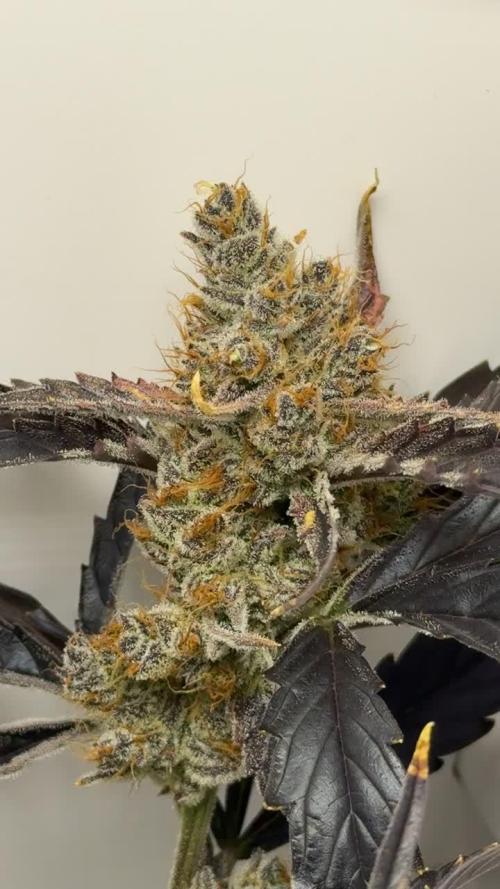
end of week 7 flower | plant is insane | never had such purple plant | strong guava smell | no generic terps | i feel like its going to be a real dessert!| i will keep this running one more week | the plant doesnt really consume co2 anymore


Likes
35
Share


@DjDaveAtHome
Follow
Things are winding up! Have been flushing #2 for a couple of days. Replacing half the water each day.PPM is under 100 and that's been consistent for a day. The harvest will be going into a dark closet in a day where it will stay for 7-10 days (7 I'm sure), then be jarred for curing. 20 branches harvested!
BHB#1 is still packing it on! Guesstimate, two more weeks. Will start flush Wednesday taking 50-75% solution out and replacing with water.
Weights will be shared after #1 has dried.
Have had a couple 'testers' already and am not disappointed. Harvest was better than my last soil grow and this first DWC was not a disaster. I'm happy with it. Learned a crap ton and will be trying it on the next grow going into flower. Blueberry Headband and a Dinafem DinaMed CBD Plus.
Nothing to follow it up. Taking the summer to make fem seeds, clones and hopefully enjoying the Summer.
Be safe, everyone and good growing.
Blueberry Headband (2) from Humboldt Seeds.
https://www.humboldtseeds.net/en/blueberry-headband/
Lighting
https://www.horticulturelightinggroup.ca/products/260w-qb-v2-led-kit
DWC Nutients
https://generalhydroponics.com/floraseries
FloraGro .5 ml/l
FloraBloom 2.5 ml/l
FloraMicro 1.5 ml/l
Cal Mag 1.5 ml/l
https://generalhydroponics.com/calimagic
Diamond Necter: N/A
https://generalhydroponics.com/diamond-nectar
SuperThrive: .5 ml/l
https://superthrive.com/
Epsom salts
Tarantula
https://www.advancednutrients.com/products/tarantula/
https://hylineproducts.com/products/hygrozyme/#one
Grozyme: 2.5 ml/ltr
Brown Slime Root Rot Organic Microbe Tea
8 liters RO water
5 ml (1 tsp) organic sulphur free molasses
5 ml Alaskan Organic grow fertilizer (or something comparable)
5 ml Alaskan bloom fertilizer (or something comparable)
5 ml Seaweed or kelp fertilizer
Handful of composted horse pucky
Worm castings, sea soil, Gaia General Purpose and Bat Guano Phosphate optional
* add after brewing
2-4 ml Advanced Nutrients Tarantula

Likes
4
Share



Likes
8
Share


@DoMoNe
Follow
Following RQS auto guide : https://www.royalqueenseeds.com/blog-how-to-grow-autoflowering-cannabis-n83
WEEK 5: FLOWERING BEGINS#29 12.4. - #35 18.4.
#29 12.4.
-Opened new week with new pics and basic diary structure
-Noticed the temps have gone up to 29'c , raised lamps, will see if i can make the tent cooler by removing some instulations during this week, it should not go to subzero degrees outside anymore.
-Opened the side air intake hatch a bit to give more outside air directly in to tent, also took out the ventilation pipe so that the incoming air now comes in at plant height (not freezing temps anymore)
-Took out few fanleaves again
-Moved temp meter from soil level to middle of the pots
-Topped(or fimmed) the purplematic #2 which is non-LST, unlike the non-topped/fimmed purplematic #1 which is LSTd
-Should water now daily about liter / plant / 24h (with nutes) : Watered 2x 1,75liters with stated nutes
Mostly following https://www.royalqueenseeds.com/blog-how-to-grow-autoflowering-cannabis-n83 on waterings (1ltr/24h, so would mean 4-5liters in my tent)
#30 13.4.
-Opened 'side hatch' fully
-Didnt water, soil was moist
-Hopefully got the in-tent temp now lowered to steady 25'c, outdoors about 0-12'c daily for this week
#31 14.4.
-Once again removed all LST, the form of the plant still stays, might start ScrOG:n next week, possibly
-Added 1½liters Coke bottles to each pot, will see how much the water drains in a 24h, if it really doesn't, ill just lift the bottles tomorrow and let it run.
#32 15.4.
-Nothing here
#33 16.4.
-Removed bottles, added 1,5liters overall to pots and what was left of in each bottle to each pot
-Temps are keeping steady now, also Hum is what it says at the RQS's AF guide
-So far this week about 0,55liters/24h/plant, dunno if i should nor can increase the watering from current rhytm,
will see if i can draw a water line closer to tent so wont have to carry so much water, or get a 20liters containers or something
#34 17.4.
-Nothing here
#35 18.4.
-Water 1,5liter / plant (6liters in total) with normal nutes
-Nice grow after removing LST this week, will start ScrOGin next week
-Also have to defoliate next week way more as the plants are getting a bit too bushy


Likes
7
Share

@AumShanti
Follow
ॐ
WEMBLEY x MENDOCINO - Pyramid Seeds
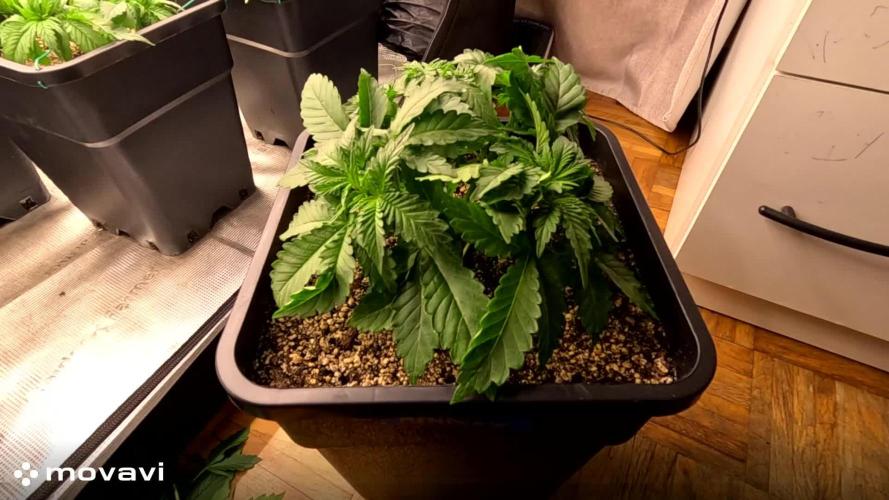
11L pots, 720W led, Remo Nutrients
"Bedroom setup"
These are free seeds which i got as reward...
1 of 5 made it...
3rd week of vegetation from 9.3.2026. to 15.3.2026.
This week i did topping, defoliation, and wireing hehe
and notices that from one branch spot 3 branches coming out (mutant branch)... :)
As days goin im just spreading her and pulling wires every day.
Shes healthy and took topping with no issue.
Take care and much love :)
ॐ

Likes
21
Share

@Nedizzle
Follow
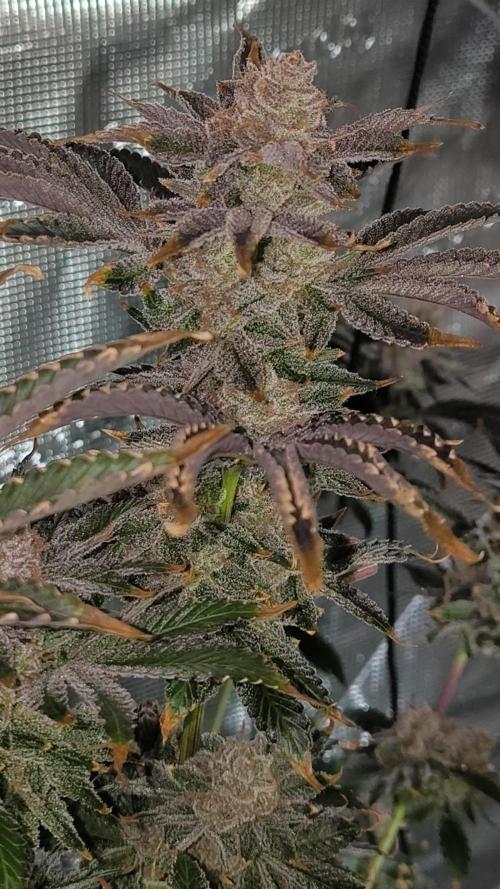
Harvest day on day 66. She's a big gyal. I gave her Flawless Finish for 5 days.
Jealousy was harvested a week before, because she stopped drinking and was "done".
I already tested one J and it was pretty strong.
Not much more to say, enjoy the pictures and videos. I'm hyped for the next run, but i will start somewhere in July.
I will return with the harvest reports in two weeks.
Cya 🌌🍁

Likes
5
Share

@AvadaKedavra
Follow
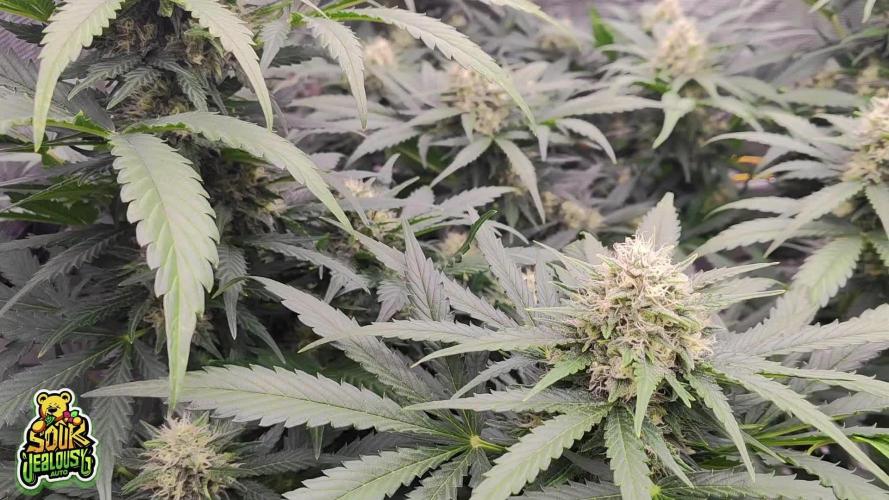
Howdy, here's a brief Week 9 update:
It's become autumn in the tent! Temps are dropping, plants are showing signs of senescence one by one (although some reluctantly so, am I right SJ?).
Headbanger, as expected, is finishing up first. Leaves are crisping up, colors are showing a slow, clean fade. I was pretty sure I burned her a little juding by the green tips, but Mephisto previously described this on the profile page, so maybe a little bit of both?
Mango, finally cut out of the scrog net and turned 180°, got light-burned AGAIN and I am since giving her as many stable days as possible to get off the stress-edge, to retain those remaining beautiful terps. She is finishing faster due to a troubled history, but I am very proud to have her (alive at this point) and already learned a LOT about sativas.
SJ is still watching the show from the corner, has settled building her rainforest canopy, and is just slowly bulking every day. Most content plant (well, as indica representation more resilient anyway), is hesitantly absorbing some Nitrogen from her fluffy, roughy, textured canopy. She'll let me know when things go south.
Not gonna lie, OSMH, after some reasearch into her "natural" soil conditions, already caused me to try and wrap my hot dehumidifier exhaust around the pots, in order to avoid scary root temp collapses during nights towards 15°C. I am giving the plants warm-ish waterings to raise soil temps slightly, but watching her suffer more is driving me a little nuts. She definitely managed to take a scratch at the little pride I still had remaining 😂
I clipped some videos from my personal vid log, enjoy. I think I have a LOT of larf incoming 😓. Don't be greedy.


Likes
18
Share


@Nune2021
Follow
Hey sorry das ich es nicht vorher geschafft habe bzw nicht komplett dokumentiert habe aber die Pflanzen machen sich gut für die Umstände vor der Blüte haben die Pflanzen Nährstoff Probleme gezeigt oder das kommt von dem Insektizid das ich angewendet habe weil ich mit trauermücken zutun hatte

Likes
2
Share


@Comfrey
Follow
Drei Eiswasser Spülungen und etwas kühlere Nachttemperaturen haben zwar etwas an der FarbeRichtung bläulich geändert, allerdings blieb das erwartete Purple vollständig aus.
Die Blüten sind sehr klebrig und der Duft ist deutlich aber nicht besonders intensiv.
In der letzten Woche habe ich einige männliche Blüten heraus geknipst und mir sind auch ein paar Samen aufgefallen. Das selbe Problem hatte auch meine Hindu Kush.
An Tag 97 habe ich die Pflanze nach 48 Stunden Dunkelheit abgeschnitten und kopfüber aufgehängt.

Likes
10
Share


@yaron
Follow
Most of the day the ladies are under a roof due to rain.
Maybe tomorrow a bit of sunshine but the weekend doesnt look good.
Like i said another rainy Day,hang in there ladies!
Likes
7
Share


@Mr_nugs_lover_David
Follow
She's starting the week phenomenally, she has gone trough a really nice stretch and she's ready to start producing her beautiful flowers, cannot wait to see her in ful flower!! Follow me on this journey!

Likes
23
Share


@SonomaSungrown
Follow
Skipped a week in my journal due to travels.
Had my neighbor water my plants.
Having some minor early deficiencies with my photoperiod plants (particularly the chem brulee)... so I decided to go ahead and give everything a solid feeding of Foop Bloom 1, 2 and Sweetener. This is their first ever bottled feeding. Have been running on supersoil and a prayer.
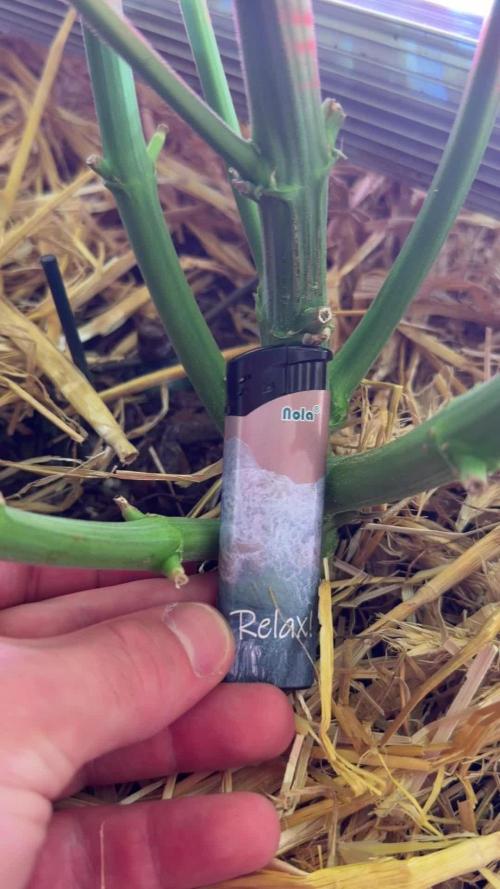
Also top dressed everything and mulched with rice straw to help with the soil drying out a bit too quickly.
Leaves have been yellowing on all three. Mostly relegated to the interior of the plants.
Chem Brulee is looking a bit too yellow overall, as well.
French Macaron is a 66in. Chem Brulee is 56in. Pineapple Meatball is 45in.
I have a sneaking suspicion that my neighbor didn't water them quite enough while I was gone.
Will probably continue with the Foop feedings... probably at least once per week. Don't want to overdo it.
Also top dressed with my flowering top dress mix and mulched all plants with a thin layer of rice straw.
8/4 Sprayed with Neem Oil and Castile Soap
8/5 Sprayed with Gravenstein Apple FFJ and OHN
8/6 Sprayed with Neem Oil and Castile Soap (this will likely be the last time I spray with Neem Oil, as I don't want residual oils as buds start swelling. Also fed 1/4 strength FOOP to ensure we head off any deficiencies.


Likes
15
Share


@Roope
Follow
Ewerything works and im so bananas right now and broud of those ladys that comment will be,
Start u'r own project and dont race becouse somebody may have 20+year of more info and they get moster no epic size planta but thats the goal be like pro at this lifetime.
Aint do any modification only extra bag of co2 and wery mild start nutriments so stay in tune!