


Likes
Comments
Share


@HerbalEdu
Follow
expected flowering: 7-8 weeks
Germination method: cotton disc with tap water with 4ml/l root juice and 1ml/l acti-vera
Tent: BlackBox Silver 90x60x180cm (3'x2'x6')
Extractor: 220 m³/h
Soil: Biobizz All-Mix
SF-2000 @85cm @50%
germination: 10/11 They took a little longer than usual to open up, all but one seem to grow vigorously enough afterward.
sprout: 9/10 ; 9 transplanted in soil at first then another one transplanted 36H later i may transplant the last one if the root finally start to grow. First two are showing 20h after transplant. 35h after transplant 7 are showing. 42H after transplant 9 are showing and seem to form their first set of true leaves normally. Last one showed a little later but doesn't seem to form it's first true set of leaves.

Likes
3
Share


@Combright
Follow
Frosty af, smells like berries or something like that. I need to press rosin from this one.

Likes
82
Share


@BigBadLion
Follow
Hey guys! 👏
Hope everyone is doing well! This week was interesting. I made a small flush because I wanted to know how much salt my plants had in the soil (considering I've fed my plants with a lot of nutrients the past few weeks) aaaaand the results were quite interesting! They obviously had tons of salts! Here are the results of the runoff water:
Falco
5.94 pH
1139 ppm (2278 us/m)
Max
5.85 pH
2352 ppm (4704 us/m)
Roko
5.64 pH
2453 ppm (4906 us/m)
Boomer
5.72 pH
1765 ppm (3530 us/m)
Surprisingly enough the plants that had the "worst" runoff values were the plants who had the most foliage and their leaves were the greenest. The pH "loss" of all the plants was also within the expected margin so that's good! 👌 The buds look beautiful and I also noticed some of the plant leaves are starting to turn purple 😍 the smell is also getting stronger and it's quite citric, I love it!
Anyway, that's all for now. Thanks for reading! 🙌

Likes
9
Share

@poloq_mauriceloetel
Follow
Training
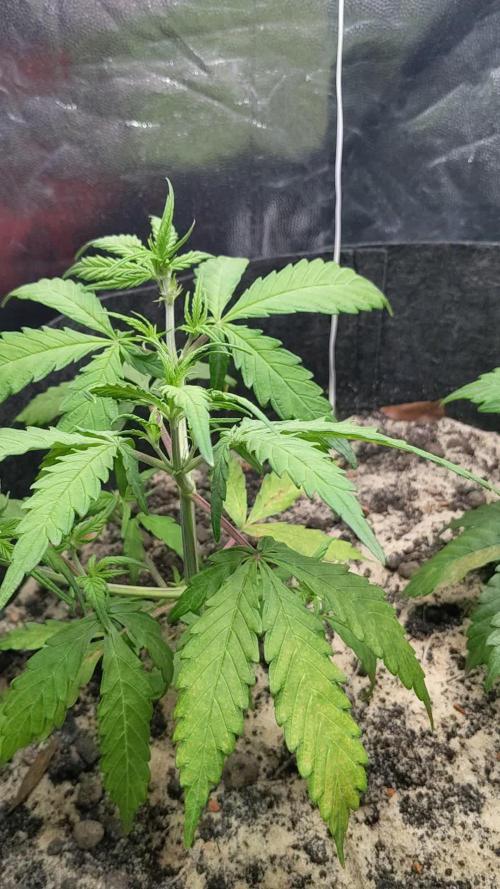
This week was the start of the LST and, with that, a continuous gentle defoliation to ensure that the new shoots are getting a lot of direct light. Leaves (especially sun sails) growing over new shoots are either pressed down or, if necessary, removed. When LSTing, I always focus on gently bending the branches in the desired direction every day, without disregarding the natural structure of the plant. Once they reach a length of about 5 cm, I start to secure them with training stakes(*1). This way, the risk of damage (as well as overall stress for the plant) is kept to a minimum.
Setup
The lamp is now at max. intensity and min. distance (35 cm) at around 650 - 700 PPFD.
(*1) I built the training stakes myself to match my needs (enough length, natural material, no sharp edges, slightly downward facing angle).
Pests + Living Soil + Environment
The combination of nematodes and sand seemed to work immediately, because the number of Sciaridae quickly dropped to about 2 - 3 adult flies per day. Still, on day 40 (8 days after adding the sand) I removed it again, because:
- it was rather intended to support the nematodes (fewer new larvae),
- the Sciaridae had fallen to a level that seemed acceptable,
- it would keep the soil too anaerobic and moist in the long term.
The decision also had a positive effect on the RH(*2) (approx. 10% increase).
(*2) Relative humidity fluctuated slightly from day to day, but generally remained around 50%. Although removing the sand (at the end) of this week increased the RH, I only evaluated this ‘new average' RH from the following week onwards.
Environment + Plants
The stabilization of the environmental conditions and the increase in light, have allowed the plants to grow intensively this week. In the beginning, the relative humidity was still a little lower than I would like, but acceptable since the plants were still quite small and didn't need to be watered as often (large amount of substrate with corresponding buffering effect to keep the plants healthy.
Plants
During the seedling phase, I observed slight deficiency symptoms that at first glance looked like a nutrient problem (potassium, calcium, ...?). Since I cannot control the nutrient content as precisely as I could with a hydroponic system e.g., and the damage was manageable and occurred during a phase in which I also stressed the plants by allowing them to become too dry, I simply ignored it... with success. Since the system has been back in balance, there have been no further incidents of this kind.
*Gorilla Z Auto was 20 cm tall, Mimosa Cake Auto 12 cm.
(Pre-)Flower
I have also been able to observe pre-flowering, which is consistent with my other observations. [Autoflowering genetics in particular do most of their growing during this phase, which lasts just under two weeks, roughly starting from week 3 - 5.]


Likes
33
Share


@iLoveGoodWeed
Follow
The orange colours looks great can't wait to smoke this strain. She have 2 weeks left and harvest time 🍊🍊🍊


Likes
22
Share

@TrickzGrowz
Follow
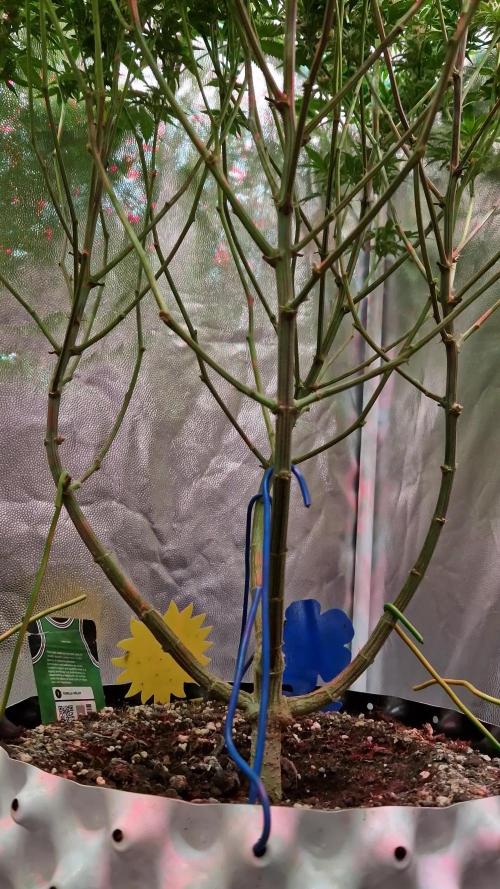
Sehr dunkle Blätter. Sehr frostige Buds. Langsam erkenne ich, dass sie bestimmt kein Highyielder wird. Aber krass wie viele Trichome zu sehen sind!
Processing
Likes
10
Share


@UrbanFog
Follow
The ladies are starting to stretch and flower.
We also did a defoliation and lollipop session at the end of week 2 flower.
Canopy and bud sites look good and are a plenty. Looking forward to next couple of weeks.


Likes
11
Share


@DedeLirante
Follow
Day 56 - 29/05/2025
I'm considering this water as part of week 9 and did it fit the flush schedule correctly aligned with my required dates.
As Mango Cream and Strawberry Cola 1 are going to the last couple weeks, I decided to start the flushing process over them. They already stopped the bulking phase and we concentrate the next weeks on terpenes and flavours development.
Mango Cream buds are pretty dense like a rock. The Strawberry Cola has 70% of Mango Cream density. Pretty well too.
I bought the Athena Fade to run a complete nutrient line following the Blended program + Fade. Let's see the results.
On Strawberry Cola 2, as it's one week late because was one week later to soil, I keep following the feed chart as well. I reduced the NPK nutrients and increased the PK solution for bulking.
By my schedules, I'll harvest Mango Cream and Strawberry Cola 1 at June 12th and Strawberry Cola 2 at June 19th.
Let's keep progressing!
🌞 ~900ppfd
🌡️~27°C
⏬💧~50%
📏 45cm distância
Mango Cream
3,5L RO water with 12ml of Athena PK + 12ml of Athena Fade + 5ml of Athena Cleanse
EC 1.7
PH 6.2
EC Run Off 3.4
Strawberry Cola 1
3,5L RO water with 13ml of Athena PK + 11ml of Athena Fade + 5ml of Athena Cleanse
EC 1.7
PH 6.0
EC Run Off 4.4
Strawberry Cola 2
3,5L RO water with 5+5ml Athena Bloom B+A + 11ml of Athena PK + 4ml of Athena CaMg + 5ml of Athena Cleanse
EC 2.0
PH 6.2
EC Run Off 2.9
This week is working in progress and should be updated as soon as possible they growth.
Day 59 - 01/06/2025
They are going so well and smelling like crazy.
The last couple days my city was impacted by a heat wave and the temperature increased as fuck. I needed to remove the carbon filter to improve the air extraction.
They are super frosty and I'm anxious to harvest them. It's planned for 12th June and the late Strawberry Cola for 19th.
I was roughly enjoy a hangover when I was watering them and I watered with week nutes schedule. My fault, so bad. But hopefully they will hold until next watering where I should water only with 1/5 of schedule just to not strip the nutrientes from the soil and maintain the flush schedule reducing nutrients.
Let's keep progressing!
🌞 ~900ppfd
🌡️~27°C
💧~50%
📏 45cm distância
Mango Cream
3,5L RO water with 12ml of Athena PK + 12ml of Athena Fade + 5ml of Athena Cleanse
EC 1.8
PH 6.0
EC Run Off 4.5
Strawberry Cola 1
3,5L RO water with 12ml of Athena PK + 12ml of Athena Fade + 5ml of Athena Cleanse
EC 1.8
PH 6.0
EC Run Off 4.7
Strawberry Cola 2
3,5L RO water with 5+5ml Athena Bloom B+A + 12ml of Athena PK + 5ml of Athena CaMg + 5ml of Athena Cleanse
EC 2.1
PH 6.0
EC Run Off - 6.7 (It's weird)
I don't know why I got this run off EC, it doesn't make sense due the previous EC Run Off. forgot to clean the tray and I think there was minerals solidified because I got 6.7 on run off.
But let's keep following it.
This week is working in progress and should be updated as soon as possible they growth.
Cheers! 🍁🤞🏽



Likes
44
Share


@Chedderbob112
Follow
El living la Vida chedda mother Fukin Bob 112 here wee fuking go usual rite troops need tae go see a man aboot a dug


Likes
33
Share


@nonick123
Follow
Día 71 (24/03) La planta lo ha pasado mal tras 2 días sin riego (casi 3 ciclos completos de 12 horas de luz sin riego...)
A lo que se suma altas temperaturas en mi zona, han tenido 28 ºC durante las horas de luz...
Las hojas inferiores se encuentran caidas y alguna quebradiza...
Le hago un riego con 750 ml H2O EC 0,45 a ver si se recuperan....
Día 72 (25/03) Riego con 250 ml H2O EC 0,45
Elimino las hojas quebradizas que no se van a recuperar después de la "sequia" que han pasado
Se encuentra en buen estado general y formando nuevos pistilos! 😍💥
Día 73 (26/03) Riego con 250 ml H2O EC 0,45
Día 74 (27/03) Riego con 500 ml H2O EC 0,45 con BIO PK 5-8 a 10 ml / L (solo Limon Blanco)
Riego con 100 ml H2O EC 0,45 (el resto)
Reviso los tricomas, y GG4 Sherbet FF y Blueberry Pie F1 solo les faltan unos días! 😍💥
Día 75 (28/03) Riego con 400 ml H2O EC 0,45
Día 76 (29/03) Riego con 500 ml H2O EC 0,45
Día 77 (30/03) Fiesta de la Cosecha!
Reviso los tricomas y están un 10% ambar, 85% nublados y 5% transparentes
🚀 FastBuds 15% DISCOUNT code "NONICK" 2fast4buds.com @fastbuds.official
🚀 Khalifa Genetics - https://khalifagenetics.com/product/lemon-blanco-v3/ @khalifa.genetics
💦 BioTabs 15% DISCOUNT code "GDBT420" biotabs.nl/en/shop/ @biotabs_official
🌱Substrate PRO-MIX HP BACILLUS + MYCORRHIZAE @promixmitch @promixgrowers_unfiltered
💡2 x Mars Hydro FC1500 EVO Led Grow Light (2024 NEW FC 1500-EVO Samsung LM301H 150W LED) - https://marshydro.eu/products/fc1500-evo-led-grow-lights/ - https://www.amazon.de/dp/B0CSSGN5D8?ref=myi_title_dp
Likes
2
Share

@PapaTerps
Follow
Shake Back - Compound Genetics
Week 4 Bloom
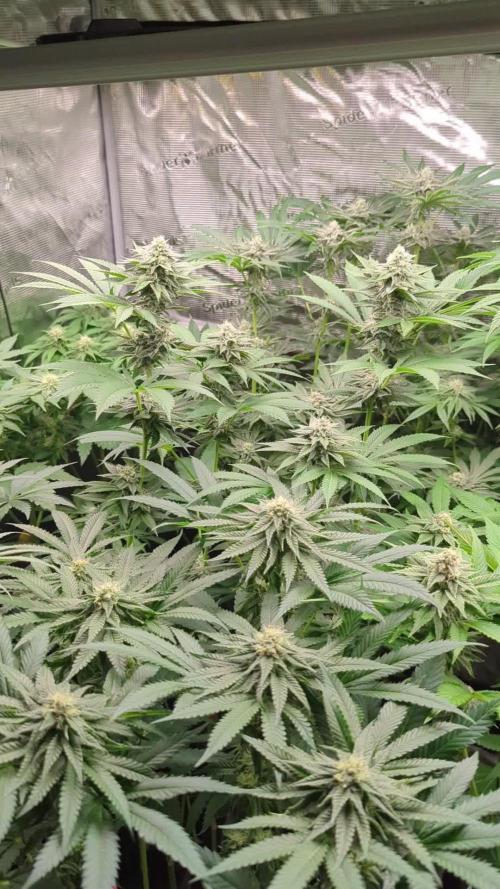
🌸 She has developed her flower into closely nit stacks of budsites and has started to bulk up! Her smell is coming through now, a fresh apple sharpness followed by a spicy herbal scent - very interesting. All the girls have been moved into the Spider Farmer 8x4, because the 5x5 and 4x2 were too difficult to manage 👍🏻
✂️ I cut away some sugar leaves from the main colas, to improve light penetration and airflow, but no other work was required today👌🏻
💧 Watered every three days with 3L of RO water - nutrients were mixed individually, in order and then finally pH'd to 6.3. I've increased her nutrients again to keep up with her flower production.
💡 PPFD: ~700
♒ VPD: 1.61kPa
🌱 Days from seed: 91
🌸 Days in Bloom: 30

Likes
2
Share

@The_Doctor_Green
Follow
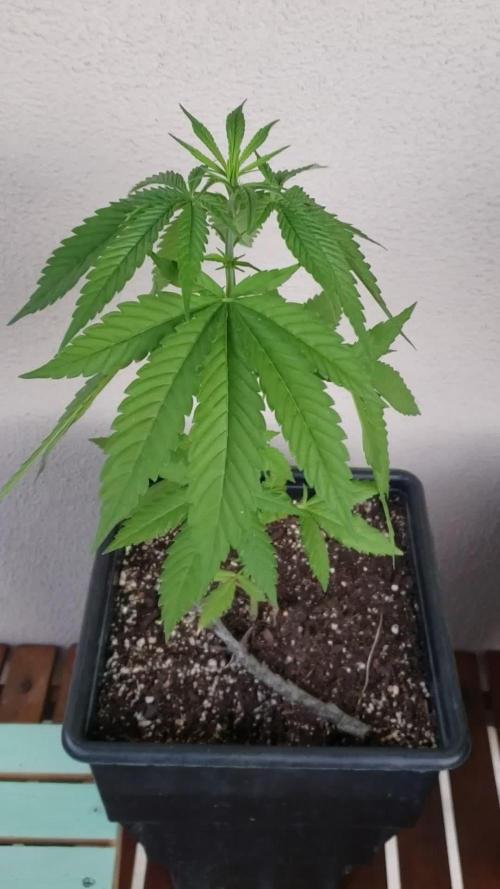
Hola a todos!!!!
Espero que anden bien!!..
Esta gorilla cookies viene creciendo bien y fuerte, ya empieza a largar un poco de olor, me ha sorprendido bastante 🤩💪.
Esta semana solo regué con top veg 2ml x litro de agua.
El resto de los días solo lo hice con agua.
Likes
6
Share


@Awt_genetics
Follow
Leaves starting to turn purple , will start flushing in two days to take it to 60 days flowering .

Likes
5
Share

@Hitthejuan
Follow
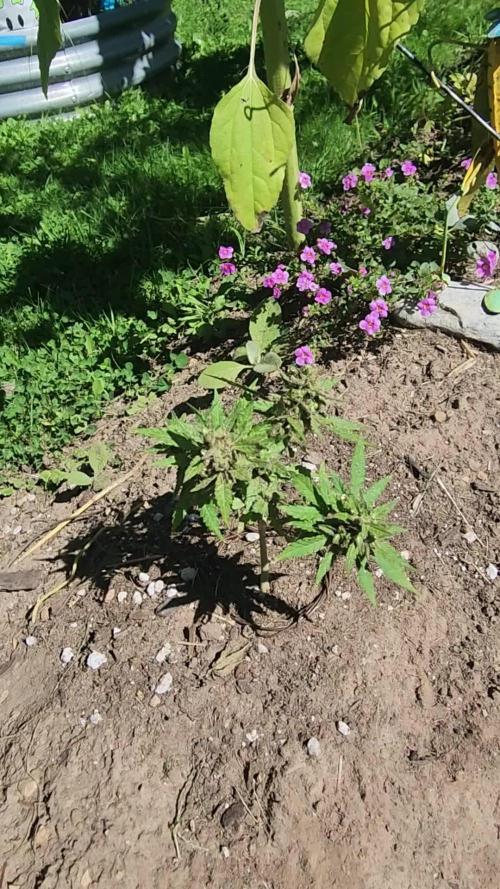
September 8th 2026
Mix Pack Auto RF3
This week temperature averaged highs around 79°F to 81°F and lows around 57°F to 66°F. Conditions were mostly clear, foggy at times in the early mornings, and generally dry. Rain coming for the next week off and on.
Humidity has been between 60% to 90%.
Plant A (Apple Strudel Auto RF3) was kept in a small tent this past week because its been rainy and wanted to collect pollen. Brought it back outside on Friday. Going to let it finish outside before I chopper down. Want the seeds to develop more maybe 2 to 3 more weeks at most. I did collect pollen and then use it on some other Auto plants i got inside. Snoop's punch, Mango Surbert, Apricot Scone, Velvet Moon, Schedule 3 are the plants i pollenate it with. Just one or two stems on each plant. Very excited to see what kinda babys they make. It also pollenate its self on the stems i didnt spry with silver thiosulfate spray.
Plant B (Strawberry Gorilla Auto RF3 ) was chopped in half. Half im going to smoke. All i got was about an 8th out of it.
I took it to my friend's to smoked it.
It was great nice body and head high very tasty. The other bottom half i pollenate it with the Apple Strudel Auto RF3 and very excited to see the outcome on these ladies. They should be all female seeds i believe. Im calling these seeds (Strawberry Apple Gorudel auto) 😆 🤣
Likes
3
Share


@doglas
Follow
Just continue to use canna nutritions and seems like biobizz all mix and canna have a lot of leaf growth other than light mix soil but all growing nicely some leafs yellowing at the bottom but might be light issues its only 2x 150w ts1000 and cant penetrat through the top leaves
Ph 6.2-6.5
Ppm 1100
Humidity during rainy days 70% dry days 60%
Temps not going over 26 and below 17


Likes
21
Share


@Lazuli
Follow
Was fun to grow and looks beautifull in any garden 💜 u can really taste the blueberry crossed in this strain