Likes
Comments
Share
@ganjawhat
Follow
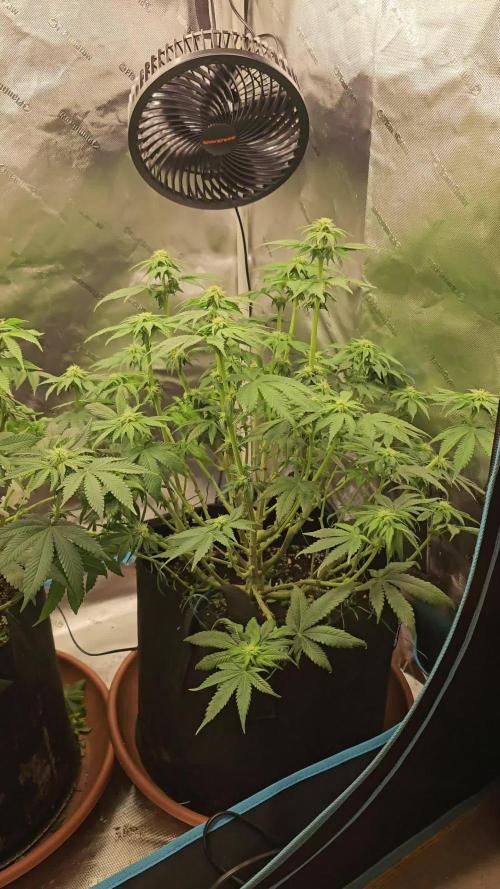
[26/2/2023] Week 1 of flowering Add a new strain here - Gary Payton x Jealously 2 plants ( + 1 week for flowering ) - Move Dante's inferno outside, she is not a strong
Likes
3
Share
Likes
Comments
Share
@Krisis
Follow
It’s been a long time. Hiiii, hope you’re well ?🙀 06-27-26. Popped the bean into a cup of happy frog soil. Sprayed it with some water & sprayed a sandwich bag and topped the cup. Opened it a couple times a day to let in fresh air. I clearly pulled my usual noob shit and didn’t put the seed deep enough. We have helmet head. Oh no! I put a drop of water on the shell and covered the cup back with the baggie. Hoping the humidity helps her wiggle out. I have faith. If not I’ll try and get it off later.. and hope I don’t kill it lol. I’m going to use 2 different soils. If you wondered what was going on with substrate list. For seed starting I used happy frog because it’s not hot enough to burn the little baby. On transplanting, I’ll be using the Coast of Maine. Never used it before. Hope it’s nice. I included information down below for you if you’re interested. 👇 Z42 is a limited-edition F1 hybrid created from a carefully selected Z3 (Terphogz) and Candy Fumez (Bloom Seed Co.), both phenotypes hunted in-house for vigor, structure, visual appeal, and, most importantly, exceptional terpene expression. The Z3 parent comes from a seed run sourced directly from Terphogz several years ago, where only one standout phenotype was selected and preserved. The Candy Fumez was chosen after a large in-house hunt of around 50 plants from Bloom Seed Co., keeping only the loudest and most expressive female. The cross was made this Summer in a small batch and immediately stood out for its strong hybrid vigor and outstanding aromatic profile. Z42 develops medium-to-tall plants with solid branching and produces dense, resin-heavy flowers covered in thick frost, finishing in around 8–9 weeks.The terpene profile delivers loud Z candy sweetness layered with tropical fruit, creamy sherbet tones, and a smooth sweet fuel finish, a rich candy gas expression that translates clearly from aroma to smoke. Released as a true small-batch F1 with no large-scale reproduction planned, Z42 is a collector’s drop designed for boutique growers, pheno hunters, and terp lovers looking for rare, flavor-driven genetics. When it’s gone, it’s gone.
Processing
Likes
7
Share
dia 21 •se seleccionan 16 plantas •se realiza transplante a macetas de 11 litros •riego foliar con acidos humicos y aminoácidos •se instala el riego por goteo
Likes
52
Share
Lacewings seemed to have mostly killed themselves by flying into hot light fixtures. I may have left the UV on which was smart of me :) Done very little to combat if anything but make a sea of carcasses, on the bright side its good nutrition for the soil. Made a concoction of ethanol 70%, equal parts water, and cayenne pepper with a couple of squirts of dish soap. Took around an hour of good scrubbing the entire canopy. Worked a lot more effectively and way cheaper. Scorched earth right now, but it seems to have wiped them out almost entirely very pleased. Attempted a "Fudge I Missed" for the topping. So just time to wait and see how it goes. Question? If I attached a plant to two separate pots but it was connected by rootzone, one has a pH of 7.5 ish the other has 4.5. Would the Intelligence of the plant able to dictate each pot separately to uptake the nutrients best suited to pH or would it still try to draw nitrogen from a pot with a pH where nitrogen struggles to uptake? Food for stoner thought experiments! Another was on my mind. What happens when a plant gets too much light? Well, it burns and curls up leaves. That's the heat radiation, let's remove excess heat, now what? I've always read it's just bad, or not good, but when I look for an explanation on a deeper level it's just bad and you shouldn't do it. So I did. How much can a cannabis plant absorb, 40 moles in a day, ok I'll give it 60 moles. 80 nothing bad ever happened. The answer, finally. Oh great........more questions........ Reactive oxygen species (ROS) are molecules capable of independent existence, containing at least one oxygen atom and one or more unpaired electrons. "Sunlight is the essential source of energy for most photosynthetic organisms, yet sunlight in excess of the organism’s photosynthetic capacity can generate reactive oxygen species (ROS) that lead to cellular damage. To avoid damage, plants respond to high light (HL) by activating photophysical pathways that safely convert excess energy to heat, which is known as nonphotochemical quenching (NPQ) (Rochaix, 2014). While NPQ allows for healthy growth, it also limits the overall photosynthetic efficiency under many conditions. If NPQ were optimized for biomass, yields would improve dramatically, potentially by up to 30% (Kromdijk et al., 2016; Zhu et al., 2010). However, critical information to guide optimization is still lacking, including the molecular origin of NPQ and the mechanism of regulation." What I found most interesting was research pointing out that pH is linked to this defense mechanism. The organism can better facilitate "quenching" when oversaturated with light in a low pH. Now I Know during photosynthesis plants naturally produce exudates (chemicals that are secreted through their roots). Do they have the ability to alter pH themselves using these excretions? Or is that done by the beneficial bacteria? If I can prevent reactive oxygen species from causing damage by "too much light". The extra water needed to keep this level of burn cooled though, I must learn to crawl before I can run. Reactive oxygen species (ROS) are key signaling molecules that enable cells to rapidly respond to different stimuli. In plants, ROS plays a crucial role in abiotic and biotic stress sensing, integration of different environmental signals, and activation of stress-response networks, thus contributing to the establishment of defense mechanisms and plant resilience. Recent advances in the study of ROS signaling in plants include the identification of ROS receptors and key regulatory hubs that connect ROS signaling with other important stress-response signal transduction pathways and hormones, as well as new roles for ROS in organelle-to-organelle and cell-to-cell signaling. Our understanding of how ROS are regulated in cells by balancing production, scavenging, and transport has also increased. In this Review, we discuss these promising developments and how they might be used to increase plant resilience to environmental stress. Temperature stress is one of the major abiotic stresses that adversely affect agricultural productivity worldwide. Temperatures beyond a plant's physiological optimum can trigger significant physiological and biochemical perturbations, reducing plant growth and tolerance to stress. Improving a plant's tolerance to these temperature fluctuations requires a deep understanding of its responses to environmental change. To adapt to temperature fluctuations, plants tailor their acclimatory signal transduction events, specifically, cellular redox state, that are governed by plant hormones, reactive oxygen species (ROS) regulatory systems, and other molecular components. The role of ROS in plants as important signaling molecules during stress acclimation has recently been established. Here, hormone-triggered ROS produced by NADPH oxidases, feedback regulation, and integrated signaling events during temperature stress activate stress-response pathways and induce acclimation or defense mechanisms. At the other extreme, excess ROS accumulation, following temperature-induced oxidative stress, can have negative consequences on plant growth and stress acclimation. The excessive ROS is regulated by the ROS scavenging system, which subsequently promotes plant tolerance. All these signaling events, including crosstalk between hormones and ROS, modify the plant's transcriptomic, metabolomic, and biochemical states and promote plant acclimation, tolerance, and survival. Here, we provide a comprehensive review of the ROS, hormones, and their joint role in shaping a plant's responses to high and low temperatures, and we conclude by outlining hormone/ROS-regulated plant-responsive strategies for developing stress-tolerant crops to combat temperature changes. Onward upward for now. Next! Adenosine triphosphate (ATP) is an energy-carrying molecule known as "the energy currency of life" or "the fuel of life," because it's the universal energy source for all living cells.1 Every living organism consists of cells that rely on ATP for their energy needs. ATP is made by converting the food we eat into energy. It's an essential building block for all life forms. Without ATP, cells wouldn't have the fuel or power to perform functions necessary to stay alive, and they would eventually die. All forms of life rely on ATP to do the things they must do to survive.2 ATP is made of a nitrogen base (adenine) and a sugar molecule (ribose), which create adenosine, plus three phosphate molecules. If adenosine only has one phosphate molecule, it’s called adenosine monophosphate (AMP). If it has two phosphates, it’s called adenosine diphosphate (ADP). Although adenosine is a fundamental part of ATP, when it comes to providing energy to a cell and fueling cellular processes, the phosphate molecules are what really matter. The most energy-loaded composition for adenosine is ATP, which has three phosphates.3 ATP was first discovered in the 1920s. In 1929, Karl Lohmann—a German chemist studying muscle contractions—isolated what we now call adenosine triphosphate in a laboratory. At the time, Lohmann called ATP by a different name. It wasn't until a decade later, in 1939, that Nobel Prize–-winner Fritz Lipmann established that ATP is the universal carrier of energy in all living cells and coined the term "energy-rich phosphate bonds."45 Lipmann focused on phosphate bonds as the key to ATP being the universal energy source for all living cells, because adenosine triphosphate releases energy when one of its three phosphate bonds breaks off to form ADP. ATP is a high-energy molecule with three phosphate bonds; ADP is low-energy with only two phosphate bonds. The Twos and Threes of ATP and ADP Adenosine triphosphate (ATP) becomes adenosine diphosphate (ADP) when one of its three phosphate molecules breaks free and releases energy (“tri” means “three,” while “di” means “two”). Conversely, ADP becomes ATP when a phosphate molecule is added. As part of an ongoing energy cycle, ADP is constantly recycled back into ATP.3 Much like a rechargeable battery with a fluctuating state of charge, ATP represents a fully charged battery, and ADP represents a "low-power mode." Every time a fully charged ATP molecule loses a phosphate bond, it becomes ADP; energy is released via the process of ATP becoming ADP. On the flip side, when a phosphate bond is added, ADP becomes ATP. When ADP becomes ATP, what was previously a low-charged energy adenosine molecule (ADP) becomes fully charged ATP. This energy-creation and energy-depletion cycle happens time and time again, much like your smartphone battery can be recharged countless times during its lifespan. The human body uses molecules held in the fats, proteins, and carbohydrates we eat or drink as sources of energy to make ATP. This happens through a process called hydrolysis . After food is digested, it's synthesized into glucose, which is a form of sugar. Glucose is the main source of fuel that our cells' mitochondria use to convert caloric energy from food into ATP, which is an energy form that can be used by cells. ATP is made via a process called cellular respiration that occurs in the mitochondria of a cell. Mitochondria are tiny subunits within a cell that specialize in extracting energy from the foods we eat and converting it into ATP. Mitochondria can convert glucose into ATP via two different types of cellular respiration: Aerobic (with oxygen) Anaerobic (without oxygen) Aerobic cellular respiration transforms glucose into ATP in a three-step process, as follows: Step 1: Glycolysis Step 2: The Krebs cycle (also called the citric acid cycle) Step 3: Electron transport chain During glycolysis, glucose (i.e., sugar) from food sources is broken down into pyruvate molecules. This is followed by the Krebs cycle, which is an aerobic process that uses oxygen to finish breaking down sugar and harnesses energy into electron carriers that fuel the synthesis of ATP. Lastly, the electron transport chain (ETC) pumps positively charged protons that drive ATP production throughout the mitochondria’s inner membrane.2 ATP can also be produced without oxygen (i.e., anaerobic), which is something plants, algae, and some bacteria do by converting the energy held in sunlight into energy that can be used by a cell via photosynthesis. Anaerobic exercise means that your body is working out "without oxygen." Anaerobic glycolysis occurs in human cells when there isn't enough oxygen available during an anaerobic workout. If no oxygen is present during cellular respiration, pyruvate can't enter the Krebs cycle and is oxidized into lactic acid. In the absence of oxygen, lactic acid fermentation makes ATP anaerobically. The burning sensation you feel in your muscles when you're huffing and puffing during anaerobic high-intensity interval training (HIIT) that maxes out your aerobic capacity or during a strenuous weight-lifting workout is lactic acid, which is used to make ATP via anaerobic glycolysis. During aerobic exercise, mitochondria have enough oxygen to make ATP aerobically. However, when you're out of breath and your cells don’t have enough oxygen to perform cellular respiration aerobically, the process can still happen anaerobically, but it creates a temporary burning sensation in your skeletal muscles. Why ATP Is So Important? ATP is essential for life and makes it possible for us to do the things we do. Without ATP, cells wouldn't be able to use the energy held in food to fuel cellular processes, and an organism couldn't stay alive. As a real-world example, when a car runs out of gas and is parked on the side of the road, the only thing that will make the car drivable again is putting some gasoline back in the tank. For all living cells, ATP is like the gas in a car's fuel tank. Without ATP, cells wouldn't have a source of usable energy, and the organism would die. Eating a well-balanced diet and staying hydrated should give your body all the resources it needs to produce plenty of ATP. Although some athletes may slightly improve their performance by taking supplements or ergonomic aids designed to increase ATP production, it's debatable that oral adenosine triphosphate supplementation actually increases energy. An average cell in the human body uses about 10 million ATP molecules per second and can recycle all of its ATP in less than a minute. Over 24 hours, the human body turns over its weight in ATP. You can last weeks without food. You can last days without water. You can last minutes without oxygen. You can last 16 seconds at most without ATP. Food amounts to one-third of ATP production within the human body.
Likes
57
Share
@nonick123
Follow
Día 13 (06/05) Nos acercamos al final de la fase plántula. A ver si ahora empiezan a crecer de forma explosiva! He sido muy estricto con los riegos, dejando que el top hasta el nudillo se seque completamente! Día 14 (07/05) Hago una mejora en la tienda. Hasta ahora tenia intracción pasiva, pero ahora he instalado una turbina para que impulse aire fresco dentro de la tienda Día 15 (08/05) Con el calor que hace me sorprende que las macetas sigan aguantando la humedad, pero al hundir el nudillo sigue húmeda. Mañana haré un riego de nuevo Día 16 (09/05) Relleno el top con sustrato para compensar la compactación y dar mas soporte a las plantas Riego con 300 ml solo H20 - pH 6,2 Día 17 (10/05) Baño de sol de dos horas. Día 18 (11/05) Baño de sol de dos horas Día 19 (12/05) Riego 750 ml H2O + Regulator 0,15 ml/l + CaMg-Boost 0,25 ml/l + Startbooster 0,25 ml/l - pH 6.2 💦Nutrients by Aptus Holland - www.aptus-holland.com 🌱Substrate PRO-MIX HP BACILLUS + MYCORRHIZAE - www.pthorticulture.com/en/products/pro-mix-hp-biostimulant-plus-mycorrhizae
Likes
47
Share
Info: Unfortunately, I had to find out that my account is used for fake pages in social media. I am only active here on growdiaries. I am not on facebook instagram twitter etc All accounts except this one are fake. Have fun with the update. Hey everyone 😀. Another nice week goes by with a great development :-). Next week it will be placed in the flower chamber with a time interval of 12/12 hours. 1 g of GHSC enhancer was added per liter of water. I sprayed neem oil again as a preventive measure, hence the dark shine :-) The tent was completely cleaned and the humidifier was refilled. I wish you all the best 🙏🏻 You can buy this Strain at : https://www.exoticseed.eu/ Type: Herz Og ☝️🏼 Genetics: Larry OG X Kosher Kush Indica 60 % / Sativa 40 % 👍 Vega lamp: 2 x Todogrow Led Quantum Board 100 W 💡 Bloom Lamp : 2 x Todogrow Led Cxb 3590 COB 3500 K 205W 💡💡☝️🏼 Soil : Canna Coco Professional + ☝️🏼 Fertilizer: Green House Powder Feeding ☝️🏼🌱 Water: Osmosis water mixed with normal water (24 hours stale that the chlorine evaporates) to 0.2 EC. Add Cal / Mag to 0.4 Ec Ph with Organic Ph - to 5.5 - 5.8 .
Likes
12
Share
Sorry been away for so long. Been super busy at home and at work. Had turned my favorite pheno of the zkittz berry ade and turned into mother
Likes
37
Share
Heatwave is here:( Equipment is struggling. Hard to watch over grow room constantly. Surge protector tripping out as the equipment never cools down or has a break. A/C and dehumidifier running 24 hrs. Plus I had to hook up another a/c unit for the family. Got to keep them cool at night too. I’d feel bad if my ladies were cooler then my girls 😜 Got new lights but they were to intense even at the recommended distance. Just had to much light and to much overlapping made it to intense. I took out the 2 smaller 600’s and now just have the 2-2000’s in there but with the heatwave I had to dim them to 50% and now 25% incase I don’t get home in time from work and not able to open tent all the way as equipment is not doing the job in this heat:( also if the circuit trips out again then I don’t want the temps to sky rocket. Last few times it trip temps and humidity increased to 86F and 65% RH, mind you I corrected it within the hour of it happening each time, so not to bad and that’s at the top of the canopy and lower into it didn’t quite get that high as on the floor it only raised to 82F. And for my troubles I see what I believe is the start of burnt leaves:( I should have known better as the top growth seemed to be a bit lighter and stretchy:( I’ll have these lights better dialled in for next time! Grow on!
Likes
1
Share
@GLeee
Follow
Removed 4 fan leafs, they shaded newly developed branches.
Likes
9
Share
Grow Sponsored by MARSHYDRO HIGH EFFICIENCY WHITE LED LIGHT: Newest SMD LED technology provide highest PAR/LUMEN output(743umol@18"), designed to replace a single-ended 250watt HPS; MARS HYDRO TS 1000W Plants Growing lamp makes you get 30% higher yield compare OLD blurple led lights, Max 2.0g yield per wattage (power draw) LOW ENERGY CONSUMPTION GROW LIGHTING : Consuming only 150W with 342 LEDS! It saves up to 50% energy than other led grow lights. Perfect for 2.5x2.5ft,Max coverage 3x3ft. Over 90% light energy can be absorbed by plants; higher intensity and more even coverage in a MARS HYDRO grow tent, reflective area, or by crossing over using multiple TS1000 SUNLIKE FULL SPECTRUM LED INDOOR GROWING: 660-665nm Red IR/3200-4200Knm/5200-6800Knm, infinite close to natural light, best for all plants all stages growing, rapid plant response from seed to flower and increase yield & crop quality‎ HIGH REFLECTIVE & NOISE FREE-Fanless LED GROW SYSTEM design will make your growing life easy and quiet, quickly heat dispersing material aluminum reducing light lost to aisles and walls, increase the light intensity up to 20%, allowing your plants receive more energy and without burning your plants for maximum headroom Get your own at https://www.amazon.de/dp/B07ZVFBR34
Likes
151
Share
I can not believe.😲 We have reached the end of another magnificent journey made together on this splendid platform which gives ease and opportunity to learn and perform in the best crops I can already tell you that this baked tent is one of the best weeds I have ever grown so far! But this can also be seen from the contents. Spectacular colors, solid gems....and resin in rivers Stay updated for the white smoke 😋😎
Likes
18
Share
We have 3 clones, 2 just regular clones taken in veg and 1 clone a few weeks later once in the early budding of the flower. Will be a good side-by-side visual comparison of the benefits of monstercropping. They have been kept at a minimal photosynthetic rate for 3-4 weeks under predominantly blue light 💙 to try to shorten internodal spacing. (Yes it could be faster) No rushhhhh. Starting diary at week 1 germination but in reality, they are fully stabilized and at least a month old. Just to get stuck right in I decided to super crop the base of the stem early hoping it creates a strong knuckle. This may backfire incredibly, only time will tell. Also topped it too, never topped a flower bud before but oh well, if this wee plant survives it's gonna be something. Initially, I wanted to start it in a regular pot as this creates a solid rootball base before upsizing it to air-pots.
Processing
Likes
7
Share
@x_grower
Follow
Last week plants were looking super healthy and responded very well to the second topping so I decided to flip the light schedule few days later. They already started stretching and the smell is noticeably enhanced.
Likes
6
Share
@Rinna
Follow
The girls are looking happy. 4/4 germinated and are all doing fine so far. Very excited for this run as the Falcon 9 x Peach Ozz cross sounds very tasty to me. Also interested to see how similar the four different plant will be.
Likes
3
Share
Smell is amazing it's like a dank mango with a lemon twist. Had to attach the carbon filter. Few brown hairs but still not ready.
Likes
15
Share
Ultima piccola defogliazione per eliminare le cime più basse che non prendevano abbastanza luce, pizzicato le apicali per bloccare la crescita verso l'alto e aumentare la portata delle cime. A più o meno metà della fioritura mi sembra che le piante siano ad un ottimo punto, continuiamo su questa onda
Likes
14
Share
@BudXs
Follow
A couple days from ripened nanners and they should start cumming all over the place. Will be saving this (what I believe to be) very special pollen and crossing with some of the lower bud sites on the slurricane that remains in the garden. Will also allow the polyploid cola to pollinate itself and collect the S1's. Very excited for these nanners