


Likes
Comments
Share


@Unkraut
Follow
got hermies in flower week 2...tried to remove most but it seems they spread their love already....found seeds on all other plants :( plant still looked great and got a great yield!


Likes
10
Share


@Froggman
Follow
Thickening up nicely! Got some nutrient issues on the LSD, but not nearly as bad a previous grows.

Likes
13
Share


@BigDaddyK
Follow
Crazy growing going on , looking we’ll see for yourselves, I don’t want to say anything as pictures speak louder than words 💪
Also we now have conclusive proof that soil plants ripen faster , the soil ones look at least 1 week ahead with flowers forming
Adding biobizz nutrients to Soil plants , watered 3l each Friday
Changed solutions Saturday
Reduced daytime to 1130
Watered 3.5 l monday soil ones definitely ahead - why ? They all exactly the same plants

Likes
3
Share


@TyRun
Follow
Intermediate Results
Overview
This grow was intense! Setting up the grow consumed so much of my time and focus that I started slacking at work, and it took me a month to get back on track. But hey, what’s the point of a job if it gets in the way of growing? 😉 In the end, everything worked out, and I gained invaluable experience.
This was my first grow using coco coir. At first, I didn’t get it, but then it just clicked! Now I’m hooked: "I’m here to stay." Coco is more controlled than soil, flushes easily, and you can introduce beneficial microbes, which thrive in it. My main takeaway from this grow? If you buy coco, don’t forget CalMag!
Next time, I’ll definitely install HEPA filters at the intake. The amount of dust was insane, and the grow box pulls air like a vacuum cleaner. Watching the timelapse, you can see the box sucking in every bit of dust. I vacuumed the intake filters weekly. The plant was incredibly sticky, but that also meant it caught a lot of lint and fibers between trichomes, especially visible under a microscope. Smoking microplastics? No, thank you!
---
On CO2
CO2 only works if everything else is dialed in. If the plant experiences stress from deficiencies or overfeeding, you can forget about it. Since CO2 supplementation requires turning off the exhaust fan, it’s hard to manage temperature and humidity. The plant releases so much moisture that RH jumps to 80% within minutes. It’s doable, but definitely a challenge.
---
On Magnetic Fields
No clue what’s happening here yet, but it’s fascinating! I’ll test again with a control sample.
---
Nutrients
Dreams do come true—I’ve tested almost everything Advanced Nutrients offers. It wasn’t all smooth sailing; their feeding charts need adjustments for your conditions, and you usually need to feed less than recommended. Overall, I’d say the nutrients performed 100%, and I see no reason to switch. I’ll stick with them for future grows.
---
Strain
This strain is reliable, though not the most productive. It flowered exactly as advertised and delivered a frosty finish. It tolerated all my mistakes like a champ—especially mold. Despite an abandoned SCROG plan turning the plant into a bouquet, there wasn’t a single mold spot, even in the densely packed lower buds that got almost no light. Zero mold issues!
---
Aroma
As advertised: pine, wood, and citrus. At first, I thought it smelled like grapefruit, but now I’m leaning toward bergamot. Bergamot with a classic weed aroma—a recognizable twist on the usual scent. During the grow, the smell was strong, but the carbon filter handled it perfectly.
---
Flavor
It’s too early to say, but the flavor is definitely there! Embarrassingly, all my past harvests tasted the same—like nothing. Just smoke. This one has a distinct sour taste. I’m excited to see how it develops after curing.
---
Effect
Too early for a full review, but I love what I’ve tried so far. The high lasts about three hours, with euphoria and relaxation. It’s the perfect evening strain. I’ve smoked a lot over the years, but I’ve never experienced true euphoria—until now. Guess I’ve been stuck with garbage and ditch weed before. 😅 It’s not a strain for productivity or chores, but it’s perfect for chilling, watching something, or chatting. No anxiety, just great vibes. It feels like having a beer after a long day: you relax, and life feels good again.
---
Roots
The roots were healthy—maybe too healthy! While the AirPot (20L) prevented root circling, it didn’t eliminate it entirely. There were dead zones at the bottom where roots circled around the perimeter. A dense root mat formed at the bottom (so dense you couldn’t poke a finger through it), which likely contributed to salt buildup. Breaking through that mat required more water, and I suspect this caused EC to spike 1.5x the next day if there was no runoff. Next time, I’ll mix some pumice with the substrate at the bottom, about 3–4 cm deep.
---
Timelapse
I only got the timelapse running after the switch to flowering, so it’s not from the beginning. Still, it’s an incredibly useful tool for understanding growth rates. I’ll definitely use it for future grows. Comparing yesterday to today is one thing, but rewinding a week to see how things were is game-changing. I recommend it! You can even use an old phone with a timelapse app if your camera doesn’t support it by default.
---
What’s Next
I’ve grown fat buds before, but I’ve always neglected curing. This time, I’m doing it by the book with full control. Drying in the grow box with RH controlled at 50–60% (averaging 55%) for a slow, even dry. Temps are kept between 20–23°C, with frequent venting to keep it below 21°C for terpene preservation. After 7–10 days, when small stems snap with a characteristic sound, I’ll trim and jar them with humidity sensors. For the first two weeks, I’ll burp the jars twice daily, then reduce to once daily for the next two weeks. After that, I’ll monitor the RH sensors and adjust as needed. I’ll share the details after curing is complete.
After drying, I’ll weigh the buds, take photos, and share another post in a month or two after curing to report on the flavor and aroma.
For now, I’m taking a breather, fine-tuning my setup, and preparing for my next grow: Wizard Trees - Zangria S1.

Likes
7
Share


@fabialien
Follow
A esta semana le cambiamos radicalmente la solución para que de esta semana en adelante su nutrición sea de la misma linia, principalmente para tener un control del PH en la solución nutritiva .
Likes
7
Share


@UrbanBoer
Follow
What a mission, finally I am at the end of my four cycle, she’s my last plant to be harvested, sadly she lost 60% of her bud, her main stem and a lot of brunches snapped 😭😭😭😭😭😭 off during heavy rains, I cannot believe it, it has been four months last I posted, 😂😂😂😂, I so sorry, rest assured she reached harvest and there is proof, what a journey… so many times I wanted to give up and uproot her, but look at her now, she’s the most potent strain in the 4th cycle, and trumps everyone with aroma, taste and high. Cannot wait to do it again, this time with mOre maturity and care. She gave me 63grams, though the scale says 67, the plastic I weighs 3 grams.
Processing
Likes
20
Share


Processing
Likes
7
Share


@Kindbudz
Follow
And we are off to the races. This lovely Moon Walker Kush will be our mother plant and I will be taking clones from it repeatedly. My flower room will cycle back and forth between my Sunset Sherbet and Moon Walker kush. I am excited to get these diaries under way. Also check out my Instagram page as I’m doing an awesome giveaway! @kind_budz_crops

Likes
10
Share


@DreamIT
Follow
Sponsored by:
🦎THE HIGH CHAMELEON🦎-💡VIPARSPECTRA💡-💐GREEN BUZZ LIQUIDS💐-🛠️WEDRYER🛠️
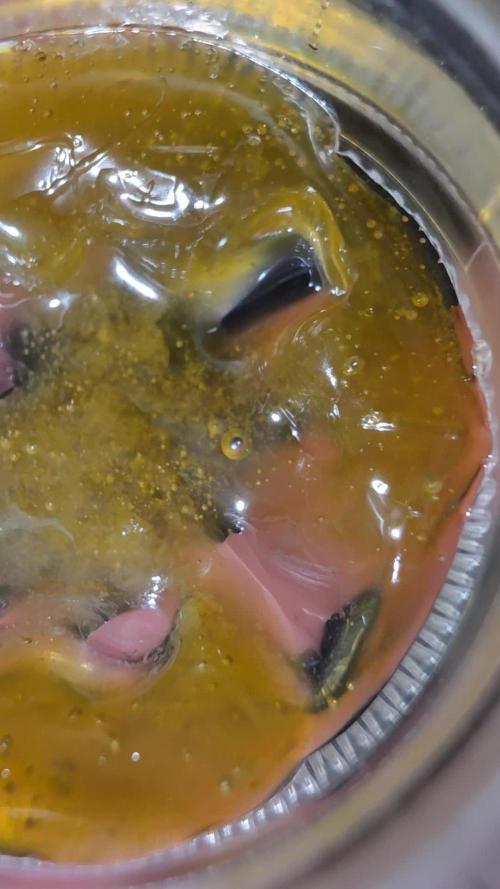
30/9 Maybe I should start a guide on how NOT to grow marijuana .... First step: don't leave 20 plants in 40x60 centimeters of space for a whole month. Second step: Don't give nutrients randomly just to make them survive. step three: avoid giving birth to a dog at home (if your house is very small). Otherwise you find yourself with plants like this: malnourished, yellow and ready to die. Solution? Immediate racking and flowering. Time one week and it will be as good as new!
Obviously all is not lost, quite the contrary. The High Chameleon's genetics prove to be extremely strong and resilient! But don't mistreat them like I did !!!!
a clone was taken to preserve the plant, waiting for the final result.
Number 2 shows more foliage than number one which has suffered the most.
__________________________________________
Personal advertising (contains affiliate links)
__________________________________________
🦄 Check out The High Chamaleon website, their first selection criterion is the strong signature of terpenes by taking rare strains while being 100% organic and respecting nature. Safe anonymous shipping!
✅ https://bit.ly/TheHighChameleon
__________________________________________
Did you know that Green Buzz Liquids fertilizers are 100% vegan? A complete line of products ready to give the best to each of your plants! Visit the site and see my journals to see how they work 🦄
🤯 And with the code "dreamit" you will immediately receive a 15% discount on your purchases
✅https: //bit.ly/GreenBuzzLiquidsPro
__________________________________________
👀 Are you looking for a good lamp to start with? 👀
🌞Viparspectra has something more than the others, take a look at their site.
⏩ Use "GDVIP" for an extra discount or "DREAMIT3" for an extra 5 %% discount
👀 Search for it on Amazon
✅Amazon USA: https://amzn.to/30xSTVq
✅Amazon Canada: https://amzn.to/38udUVe
✅Viparspectra UE: bit.ly/ViparspectraUE
✅Viparspectra USA: bit.ly/ViparspectraUS
______________________________________________
🌈 Tired of blowing on your weed hoping it dries quickly? Check out the Wedryer website! You will find a well-made accessory that will help your weed dry in just 8-10 days without the annoying risk of finding mold or other annoyances! (no affiliate links)
✅https: //bit.ly/Wedryer_
______________________________________________
📷🥇Follow the best photos on Instagram 🥇📷
https://www.instagram.com/dreamit420/
Backup
https://www.instagram.com/dreamit4200/
🔻🔻Leave a comment with your opinion if you pass by here🔻🔻
🤟🦄💚 Thank you and good growth 💚🦄🤟






Processing
Likes
5
Share


Likes
4
Share


@Nachtjasmin
Follow
Zum ersten Mal habe ich mich im LST versucht. Denke dass ich darin noch etwas zu grob bin.
Für konstruktive Kommentare, Kritik und Verbesserungsvorschläge bin ich immer offen und dankbar :)

Likes
36
Share


@Freddd
Follow
harvested first 1/3 at end of week 13 rest at end of week 14 after seeing no change in the trichomes, of which a lot stayed clear but that OK. It might be a strain where they don't all go cloudy. After chopping 1/3 down it seemed like more stuff just kept coming up, it's the plant that keeps on giving. In the end I was smoking this for about 3 weeks before I got to finally get a dry weight yesterday which was 7.5 tip not including what I smoked over the past three weeks which I estimate at a minimum of 1.5 ozs. So the total yield was 9 oz. This really did knock my socks off. I thought I'd get 7 in my dreams. There was likely a bit more than 9 but I just got too stoned to keep track properly.
Buds are covered in crystal and the quality extended all the way down the branch, they are hard and dense and fluff out well.
Unfortunately if I'd had known this was going to be such a big yield I'd have kept better records of what I used, when I say 9 oz that's because there was 7.5 a couple of days ago curing, and I'm estimating 1.5 oz smoked over the past three weeks, I'm allowing 1/2 oz per week for the past three weeks but in reality I've smoked more than that. per week so 9 oz is an absolute minimum the actual figure is more like 10 oz.
The stone is exceedingly stoned but mellow, you forget how stoned you are. Does not cause too much munchie problem or dry mouth. Lots of flavour when used with the FireFly 2 and the flavours are still changing, but I'd call it herbal.
The defoliating scrog and hydro set up made it easy to deal with but I can see this plant causing some difficulties for those not experienced in dealing with a bushy plant prone to mould.
The Viparspectra did a pretty sweet job, using an average of about 270W at the wall.000


Likes
39
Share


@Roberts
Follow
Bubble OG Gum is doing great. 7 days old, and already found the solution. Beside that nothing else to report. She is off to a great start. Thank you Ganja Farmer, Athena, and Spider Farmer. 🤜🏻🤛🏻🌱🌱🌱
Thank you grow diaries community for the likes, follows, comments, and subscriptions on my YouTube channel. I greatly appreciate all the support. 🌱🌱
🌱https://youtube.com/channel/UCAhN7yRzWLpcaRHhMIQ7X4g

Likes
54
Share


@Baked_in_the_Bluegrass
Follow
Not a lot to allow as she is only 4 days old, popped on June 13 after 5 days in the coco loco.
Check back next week and hopefully we have some more action to report.
Likes
150
Share


@Ferenc
Follow
Day 80, 22nd of October 2020: 3rd week of flowering! Happiness she needs a lot of boost hard to keep up. She loves fertilization too much..... I mean before always craving for nitrogen now qould need more potassium and phosphorus hard to keep up. I also detect deficiency based on the leaves getting lighter and brown spots but I do feed her as much as I can really.
This week i have relised the first nice trichomes started "sitting" on the leaves as well and the pistils coming out nicely pre flowers forming. Let's go.
Likes
5
Share

@sunshinegroww
Follow
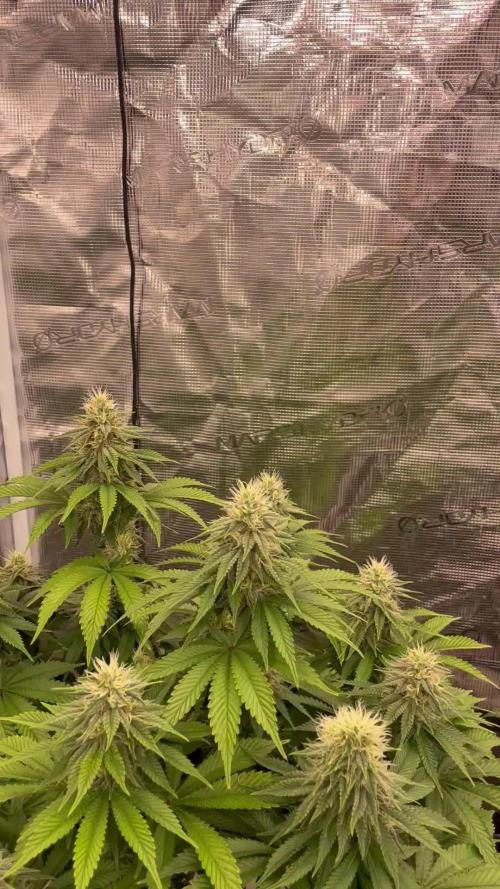
Hello week 6 looking 🔥 2 yellow leafes i think underwater as pretty hot now ☀️☀️☀️?❤️


