


Likes
Comments
Share


@LittleBigTrees
Follow
They've stretched through the net a fair bit , all different heights.
Defoliated reasonably hard on day 20 .
Started sugar royal at half dose this week.
Will start green sensation also from plagron from week 4 as recommended.


Likes
3
Share


@Mr_nugs_lover_David
Follow
Beautiful strain so far, hope she was gonna grow a little bigger but she's did get very big,she's starting to produce a very nice smell. Let's see what happens guys.

Likes
28
Share


@TrueNorth
Follow
Okay growmies here we are at the end of our PURPLE LEMONADE by FAST BUDS. It was such a pleasure to grow, i learned so so so much this run that will help me through the rest of my adventures. The beginning was tough as i am new i over watered and did not ph the water and what i mistake. But its okay i learned. She bounced back like nothing and produced these HUGE, THICK, DENSE BUDS!i remember the panic i had week 2-3 and wanted to scrap all of this and start over.... thank the weed gods i didnt because look at this masterpiece. I always said in the passed weeks comments i hope my ugly duckling becomes a beautiful queen. And here she is. She was SOOO HUNGRY AND THIRSTY! Over 5L a day guys..... and not a SINGLE drop would come out of the bottom.... over a all a pleasure and amazing grow. I will for sure grow again and again. I would love to Try this out door or in a 10L pot can probably get this beast to be the size of a 5x5 easily! She responded so well to LST and topping... slowed it down but it was so worth it guys lmao.... like honestly OVER HALF A POUND!!!!!!
GROWMIES! I LOVE LOVE LOVE YOU ALL SO SO MUCH! Thank you for all the continued support and likes and comments and help. Id be no where with this with out all of you. And thank you to the FAST BUDS team and to you heather! Grow diaries thank you for the plat form. I love you guys. All of you. All my sponsors. Thank you.
Until
Next time growmies! Stay positive, stay safe, stay high.

Likes
44
Share


@TragicTerps
Follow
Alright boy-o!!! let's flip the script and do some growing, put what I can out here and see what we get. One thing is for sure...
Screw 12/12 from seed its not useful for me and I'm tired of the waste.
Oh, and ApPAreNtLy if you don't prove grow skills as a new grower, people get butt hurt and it only goes downhill from there... so here we go this tents about to get full.
Cheers!
Thank you @marshydroeleen for the light and let's see what this light can do.
That said, Let's talk set up.
My 3x3 is powered by the MarsHydro TS1000 and is being cooled via air recirculation. This is achieved with my 4" ipower inline fan.
Humidity isn't an issue for me by nature of climate. My tent temperatures are easily controlled simply by stopping air recirculation. It is dried out simply by restarting the fan. This is in pat due to running the driver external of the tent to provide a few degrees less in the tent. Humidity is increased by stoppage and this also increases the Temps very slightly until at about 78f.
Now all of this would normally be a chore to keep track of, however my yardsale score ($80) included a Titan Controls Saturn 6 with the photocell addition makes this as easy as plugging it in.
Now, if that score wasn't sweet enough it also included the co2 tank and valve to boot. This is currently set up and plumbed in the top of the tent. This won't be plugged in and operating until the first week of flower. Until then it's ready to go.
I filled my sub irrigated 3.5gal planters with SUNSHINE company mix#4 with mycorrhizae and watered with 1/3gal of water from the tap. The transplant went smoothly and we will start watching this lady turn things back around. This will be a good show of what the strain has to offer.
After a good thorough cleaning the tent is set and the ladies are in. There will be new ladies joining the tent in a few weeks but for now these ladies return to veg in peace.
I hope to turn this nightmare of a run into a sponsorship worthy run. So cheers to the new challenge and let's get growing.
--------------------------------------------------------------------------
Sponsors
@marshydroeleen and the MarsHydro company for the TS1000.
@expertseeds thank you for the new genetics can't wait to smoke!

Likes
151
Share


@PapaNugs
Follow
Girls are doing great! Especially for entering the final week! They are getting watered every day to every other day. Letting them dry out a little. Got hit with some recharge and mammoth P for the first time. Just cause I got some for Black Friday.
Pulled plant number four from the other tent. Wanted to wait for some amber and happy I did

Likes
11
Share


@emeraldlabs
Follow
The final stretch. She MAY be foxtailing a bit, but she’s a 9-10 weeker (more typical?), pretty even throughout plant (so likely genetic?), and I plan to harvest in max 1 week so we will ride it out.
Video/photos taken 112 days after breaking soil, day 63 of flower.
UPDATE: Chopped on 3/21, day 69 of flower

Likes
21
Share


@Excalibur
Follow
02 October 2018 -
Day 99
3rd day of flush and we see her begin to grow nicely.
Day 100 -
Happy lady as she gets densier and begins to really smell.
Day 101 -
She is maturing lovely.
Day 102 -
Orange pistols curl. She is on her way.
Day 103 -
Mature and ready. has thickened up significantly.
Day 104 -
Water topped up and pH balanced 5.4
Day 105 -
Trimmed after the video.

Likes
14
Share


@GoldenWeedGrower
Follow
The heat stress is always a problem in my grows but now I have a new climatization system that can really help me !

Likes
12
Share


@DrShotzUK
Follow
Gorilla punch and banna purple punch …
Looking healthy so far so good , smells are strong already even during veg.
Will update with more photos once they reach pre flower
Likes
49
Share


@masterofsmeagol
Follow
7/18 Plants are looking great. I was able to rearrange the plants so they have a little bit more space and so I can get around every plant. I have small random pest damage (i.e. I caught a four lined plant bug while hunting jpn beetles) but not enough h to warrant treatment. I will probably spray before flower. Sun's out amd plants were praying. I rotated a couple and it only took a few hours for them to "straighten out." I went to look again rhis morning and made the final determination to expand the cage. I'm looking for the 2x4's and the wire in the next couple days. The work that ive done now will but me sometime. I wonder how this rain impacted my soil.
7/19 Plants are looking fantastic. The stretch is starting. One purple punch looks like it's beginning to flower. I think I'm entering the transition period. Jpn beetle damage is evident but not significant. I defoliated a leaf with a a leafminwr or something in it. It's so much easier to get around the plants now. I'm seeing some chunks missing sporadically though. Went to the roses out back and found TONS of jpn beetleson top of each other reproducing. They destroyed that rose bush. I'm going to keep it as a trap plant. My dad's girlfriend wanted to spray it but that doesn't make sense as theflowers are all gone. Dad's grabbing the materials to extend the cage today I think. Right now I can get around every plant but the two big ones in the back. I just cant get to the backs of them and they are huge. Almost reaching the top of the cage. A 4'-6' extension will do wonders in flower. Can't wait.
UPDATE: Dad got the 2x4's and we assembled the extension and attached it. He's grabbing the wire as I type this. This worked out beautifully. I had no idea how big the blueberry cheese in the 50 gallon was! This extension (4ft i think) is PERFECT! Then I can get a little extra wire and pull it out if I wanted to. I think I have another 2x4 that I'm going to use in the middle. Lots of great pics and a video I'll upload tomorrow. Hot af today and humidity still super high. Even the commercial dudes was surprised I don't have wpm l and that judging by some of my plants structure that I may do better than I think. I certainly hope so. I WATERED 3 GALLONS OVER THE WHOLE GARDEN. The blueberry cheese in smart pots were drooping. They drink far more water than tje others. I would've given more but we are supposed to have thunderstorms. I left my back tarp off for the night. It will increase airflow and wind is down. I feel like this is going to be my year.
7/20 I updated and loaded everything on the app but notjing would save. Did it again in the website hopfully this saves
i didnt put it all up. Didn't water the plants today. Bags seemed okay weight wise. Good thing I did the extension yesterday because those three plants were drooping they were so thirsty. I focused most of the water yesterday on those plants that needed it. The others were somewhat dry but still had some weight. Like i said the blc drinks much more water than any of the other plants. I'm impressed with the growth I'm seeing. Especially since I have been being very stingy with the water and I've only fed like twice and that was just the kelp me/you and big bloom in negligible amounts. I'm watching for deficiencies. I'm just not seeing them. I'm picking up the wire and finishing the extension and then rearranging things. I'll update.
UPDATE: WATERED 4 GALLONS CONCENTRATING ON THE PLANTS THAT WERE DROOPING THE MOST. FINISHED ENCLOSURE AND INCREASED PLANT SPACE. TRELLIS WILL GO UP THIS WEEK. VIDEOS WILL BE UPLOADED TOMORROW.
7/21 I should've watered more volume last night. I noticed two plants that seemed much lighter than the rest. After some deliberation I gave them each a half gallon of water. One was the purple punch in the 10 that's huge amd the other was that huge blueberry cheese. I think I'm going to swap places with them, take out a pallet and get some other way to elevate that ONE plant and I'll have even more room. Then I'll add my supports. It's a dream working in there now. I noticed some small interior leaves being used up and dieing. I defoliated them but it was only a couple. I'll need to start nutes at some point. Doesn't need it yet though. I'm going to add some kelp me/you for the heat stress. I need to get the watering down better but it's more difficult when they each have different needs. I kinda have to read the plant. I'd rather be overwatered than underwatered. I tried to upload what I could but some won't.
UPDATE: I went over to clip off some fencing that was doubled up AND just to check on tge girls. Found two caterpillars (small but hairy so they were older not the inch worms and possibly what has been contributing to damage on those plants. Things are spread out so it will be harder for insects to move from plant to plant and I have better air flow. I worry that leaving my tarp off might lead to high winds and plants not able to take it buf I digress. I'll add supports later. Plants are huge and drinking far more water than I've been giving them. When I got there several were drooped right over and dry as a bone. The bags are essentially all roots now. I mixed up 8 gallons of water and split it between the plants. I gave less to the two Co trainer plants that weren't drooping and the 10 I watered yesterday that wasn't drooping but for the most part the ones that needed if got at least a gallon or more. The others a little under a gallon. It might rain A LITTLE tonight too. Oh, and since it's been so hot I added 1/2 tsp per gallon of kelp me kelp you to help the plants deal with heat stress. I also noticed that some of the very bottom interior leaves are being used up. I have a feeling ill need to switch to nutes pretty soon. Plus I need to suppirt those plants if I'm going to leave that tarp off and Gove them air. Took a video. But it won't upload here. I'll have to wait till tomm.
7/22 Didn't have much timevthis morning bit I dod a video. Boy those plants loved that water and that kelp. This morning everyone was standing straight up at attention. Supposed to get rain last night but didn't. Good thing I watered. I think I'm going to up the water next watering and then again to the 10% mark if necessary. Especially with the Blueberry cheeses. I'm noticing that a FEW INTERIOR leaves are showing nute deficiencies so I'm probably going to have to start feeding soon. I'll update later.
UPDATE: Went back over and cut off the extra wire. I'm going to need to water more volume. Specifically on two plants. The two huge blueberry cheese in 20 gallon smart bags dries out much faster than the rest. I'll have to out that on a different schedule or increase the amount given. Next watering will be 1.5 or 2 gallons a plant and it might be tomorrow from what I was seeing. It's super hot and with the added airflow the bags dry out faster. I also went through EACH plant looking for pests and defoliating old leaves that needed it. Plants are still nice and green but a VERY few older interior leaves are showing deficiencies. I know this is Normal especially since they are trying n g to transition to flower. I also saw pest damage on a couple plants. Four lined plant bug. I already found the one on the other plant and killed it but I'm considering doing a spray before flower. I'm thinking either captain Jack as a "catch all", BT which works great but mostly just on pillars or the organocide bee safe 3 in one pesticide. I also have pyrethium and other things. Thus far picking things off manually has been good enough. At the very least they will get an application of BT very soon.
7/23 Held off on watering this morning. Supposed to get thunder storms I DID split a gallon with two blueberry cheese that were the lightest in the 20 gallon smart pots. Thet drink way more. My water volume is going to need to increase. We haven't had nearly enough rain. I'm going to bump it up to 1.5 to 2 gallons each plant which will be 10% for the 20s and a little less for the others. I'm still seeing various pest damage. Nothing bad but I found another couples leaves that were chomped on by a four lined plant bug so I'm debating applying something tonight when I water. I'm also noticing old leaves being used up and some interior leaves showing slight deficiencies. It will be time to start nutes soon. I'll update as I go.
UPDATE: GOT THE FEELING I NEEDED TO CHECK THE PLANTS. SOMETHING DODNT LOOK RIGHT ON THE CAMS. WENT OVER AND EVERY PLANT BUT THE TWO I SPLIT A GALLON WITH AND THE PLANT IN THE 50 WERE DROOPED RIGHT OVER. LIFELESS. I SHOULD'VE WATERED THIS MORNING BUT I DIDNT HAVE TIME. I FIGURED THEY COULD WAIT UNTIL NIGHT. EACH PLANT GOT 1.5 GALLONS AT LEAST. I USED SIXTEEN OR SEVENTEEN GALLONS ON THE GARDEN. I GAVE EACH CONTAINER PLANT ONE GALLON AND GOT RUN OFF FROM BOTH. IM NOTICING SKIGHT FADING IN LEAVES BUT IM NOT INTRODUCING NUTES TO UNDERWATERED PLANTS. I THINK 10% IS GONNA BE TGE MAGIC NUMBER. 2 GALLONS EACH. EVEN THE 10 GALLON SMART POT. ALMLST AS BIG AS THE 30S BUT DRIES OUT QUICKER.
7/24 Plants looked fantastic this morning. Defoliated a few leaves that needed it. Showed my commercial buddy and he said things looked fantastic. Since the soils still holding nutes and I'm not seeing many deficiencies I may hold off on feeding. I'm starting early flower now. I will be using nutes soon. I think ive got the watering schedule pretty much down.


Processing
Likes
18
Share


@Barcelona_Farmers710
Follow
Esta la pasaremos junto las 2 Runtz x Strawnana y la tiger bomb al armário grande, cuando acabemos el seguimientos de Royal Queen Seeds! Entrenaremos el Scrog por primera vez.🤙🏻

Likes
114
Share


@GMSgrows
Follow
Gave these ladies a feed at 2.4 ec 400 ppm of Massive Bloom Formulation, 600 ppm of Floranova Bloom, and 200 ppm of Floranova Grow. Girls have all begun flowering now. Gelato is finally strated, Silver Widow is full on flower and the Breakup Cake is rockin.
Weather has been a little better this last week. Were hoping for a good dry fall.
Thnx growmies. You guys and gals are all great.👍

Likes
29
Share


@GrownwithLED
Follow
After week 16 of this grow my 'Fruity Terps'-plants are ready to harvest. I check the trichome-heads with a handheld-microscope (magnification of 150, available in every growshop) and see that all have turned milky and some start to turn amber already. That means PEAK-THC (=all trichome-heads have turned milky) has been reached inside the trichome and it is time to harvest. If I would let them go longer now and continue to flower them, more of the trichome heads will turn amber as the THC breaks down again to other cannabinoids, and the effect of the cannabis will get more sedative when smoked. For some chronic pain patients this is what they want from their medicine, therefore it is advisable for them to let the weed flower than recommended.
The aroma coming out of the tent is STRONG and DELICIOUSLY FRUITY! 😍 The fade from the flush has turned the bigger fan-leaves yellow or purple now, this shows the plant is using her own sugars now and has used up all nutrients saved inside her. That is exactly what I want, since a well flushed plant ensures a clean, smooth smoke when the buds are dried. This is my MEDICINE and I use it against my chranic back-pain from hernia, therefore I have to make sure I can consume my medicine as pure and clean as possible.
All my plants have grown big buds, which are glistening with TRICHOMES, the SANlight EVO4-120 LEDs did an OUTSTANDING JOB! In combination with the BIO NOVA nutrients, all plants THRIVED throughout the cycle and were able to grow healthy to their full potential.


Likes
39
Share


@MOSS_FIGURE
Follow
Easy for grow, If you haven't tried this strain. You should hurry and buy the seeds.
A link for buy 👉🏻( https://2fast4buds.com/ )
Likes
4
Share

@LivingSoilGrown
Follow
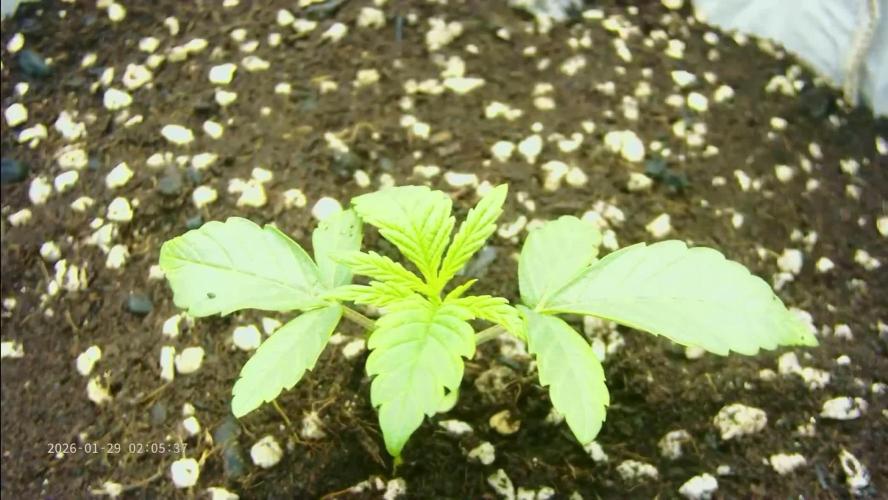
The Cherry Strudel has progressed from seedling stage to the vegetive stage. Rooting in strong, nice healthy new growth.

Likes
84
Share


@Hempire
Follow
Im doing a bit of defoliation, moreover the leaves that covering the buds, i cut some small branches on the bot of the plants, to keep energy for the distal parts of the branches.
Every 2 day approximately, to no stress a lot the plants, I pinch the apex of MD1, MD2 and BB1, that my secondary branches go up, until the height of the apex central.
Nutriments :
2,0 mL/L of rhizotonic, 2,5 mL/L of cannazym every watering.
2,0 mL/L of terra vega every 2 or 3 watering in case of they need (N) until the final of the strecht (first 2 weeks of bloom).
I will put 5L every watering (pots of 18L) and I will analysed the drain of every plants to check pH and the fertilizer amount.
Im really proud of theses plants, they are strong, resistant (the trunks are huuuge, moreover the Moby dick from Dinafem) and so healthy !! The MD 3 has reacted really really good with the topping ! Im impressed and quite sure do topping next time ;)
I hope they will give me the best of themselves !!!! Lets wait the final of the strecht 😉


Likes
Comments
Share


Likes
9
Share


@guitarrasrockeras
Follow
comenzamos la semana realizando varias tecnicas de cultivo tales como poda apical y defolicacion inferior hasta el quinto nodo mas o menos. seguimos a la espera de que sigan creciendo para ya pasar al metodo scrog.
Saludos

Likes
30
Share


@Silverback_Guerilla
Follow
11/9:
I fed them today. Started tapering off the One. Stopped giving Beastie Bloomz and started them on Cha Ching, plus the normal doses of silica, signal, and sweet & sticky.
