


Likes
Comments
Share


@MrGrowthSpurt
Follow
What's up Growmies 🤟🏽
Welcome back to another week #10 overall and #3 flowering.
She is doing well and continue to stack on buds, I continue to fed her the same schedule and dosage of nutes, it seems to be working well.
Everything seems to be going well so far nothing new to report, until next week my friends Happy growing and may the grow goddesses bless you all with a bountiful harvest!

Likes
8
Share

@Webacca
Follow
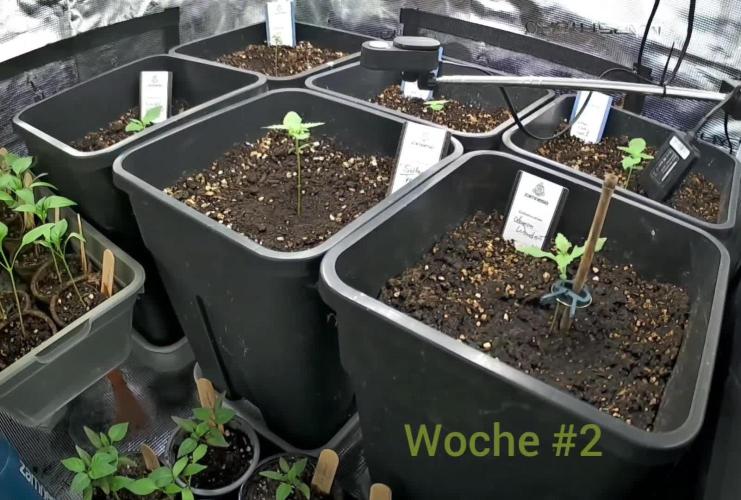
Start in Woche drei.
Mittlerweile sehen die 3 auch aus, wie kleine Canna Ladies. Selbst die Black Ice hat aufgeholt und zeigt gezackte Blätter 😍
Sonst keine besonderen Schübe, keine Probleme, alles gut.
Darf gern so weiter gehen.
Beleuchtung erhöht (von 17 auf 20 mol/m²/d DLI bei max. 480 μmol/m2/s PPFD)
Am Ende der Zeitraffer für w2.


Likes
62
Share


@OwlGang_Uk
Follow
Week 1 - The Plants Are Looking Nice & Healthy, I’m Very Satisfied With How The Grow Is Going So Far, It’s Quite Fascinating Watching Them Grow Right Before My Eyes. #OwlGang


Likes
2
Share


@PrinceOfHerbs
Follow
The flower becomes larger and larger and a wonderful fragrance begins to develop.
pH value is 6.4
Pictures ca from flowering day: 10
Processing
Likes
12
Share


@rhodes68
Follow
9/28 Week 11 Bulking
She looks good bulking nice, leaving nuets as is till flush when ready.
9/30
Trics going well, she is bulking well , got no complaints just impatient
Still looking at next week for flush
10/3
Into flush this morning, trics 90% white 10% clear
VERY potent looking

Likes
18
Share


@Staffedition
Follow
Привет друзья. Моей растихе сегодня 112 дней
20.10 перевёл свет в режим 12/12
Начал применять LST технику на 19 дне и продалжаю применять её через день, а 18 августа добавил ДЕФОЛИЗАЦИЮ
С 20.08 ДЕФОЛИЗАЦИЮ делаю каждые 3,4 дня
С 20.08 LST технику делаю каждые 4.6 дней
На сегодняшний день влажность 54%
5.09.2023 заметил высокий Ph 7.9
С 48 дня Ph не ниже 5.8
На сегодняшний день Ph 6.0
Начал кормить с 60 дня Canna Terra Vega
PPM 870
Всем мира и добра!
Не забудь поставить лайк❤️, если понравилась как прошла неделя
И читайте наш TELEGRAM: https://t.me/smail_seeds
#Smail_Seeds 😀
Likes
12
Share


@AllieO
Follow
3/12: looks like a few weeks left. Buds are dense AF. Leaves are still looking sad. Opted to give light nutrients today. Not going to lie, as much as I love growing, I'm ready for a break!
Likes
10
Share


@MrJones
Follow
Original Sensible Seeds White Crystal Meth Auto finished out nicely compared to where it had started out, there was a time within the first 3 weeks that I was going to trash the plant, the plant looked fried, I am sure it was just a weird start, but Original Sensible Seeds genetics are always strong, and this girl bounced back and yielded 197 grams of pre-dried weight of truly great looking buds, I would love for an opportunity to gro this one outgain.

Processing
Likes
14
Share


@TegridyCal
Follow
The Pineapple Express is growing very well, it was in the critical moment, the first "topping" took a minimum but it performed very well and the new brunches are ready together with some beautiful solar panel leaves.
Likes
6
Share

@Fyno_TH
Follow
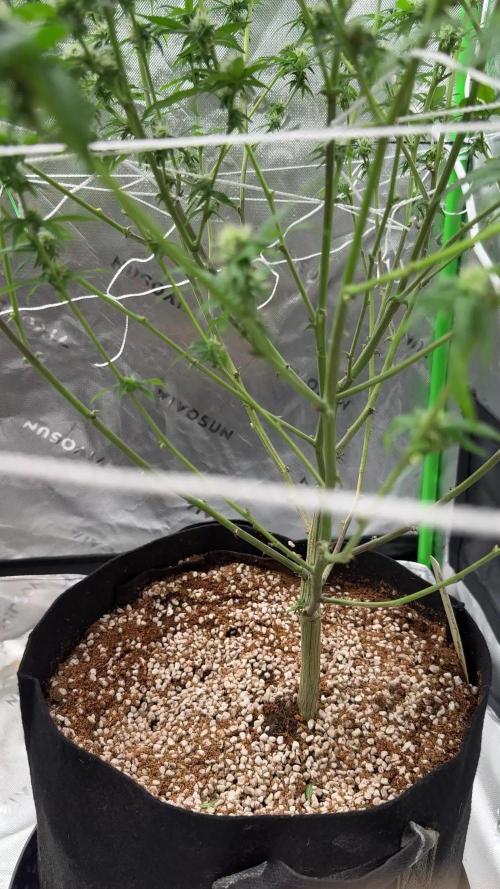
🌸 Flowering Week 3 — Full Power & Frost Incoming!
The girls are in full bloom and loving life right now 💪🌿! After fighting off a bit of PM earlier in flower, everything’s back under control — clean leaves, perfect airflow, and that deep green shine again. The canopy is packed and reaching up strong under the Spider Farmer G3000, which is blasting perfect light across every top 💡.
Buds are stacking fast, pistils glowing white, and early trichomes already catching the light ✨.
Feed Mix (per L):
🌿 Corex 1 ml/L
🌿 Mira 0.5 ml/L (pH adjust)
🌿 Florex 2 ml/L
🌿 Aurora 1 ml/L
🍬 Bud Candy 2 ml/L
💧 Terpinator 5 ml/gal (~1.3 ml/L)
🌱 Oxyroot 1.5 ml/L
🛡️ Athena IPM (foliar every 2–3 days)
💧 Fed ~15–18 L with 10–20 % runoff
⚗️ PPM 1760 | EC ≈ 3.5+ @ pH 6.0
🌡️ Temps: 26–28 °C (day) / 23 °C (night)
💧 RH: 45–50 %

Likes
7
Share


@ganjawhat
Follow
the 2nd week of veg. one of my plant growing weird I need to top it! and it's working very well with new 2 benches for sure. Actually I'm not a fan of topping auto flower ( cause I'm not a professional grower yet ) but it's fine to try it once, Peace! thank you
Likes
2
Share

@Bread_n_Buds
Follow
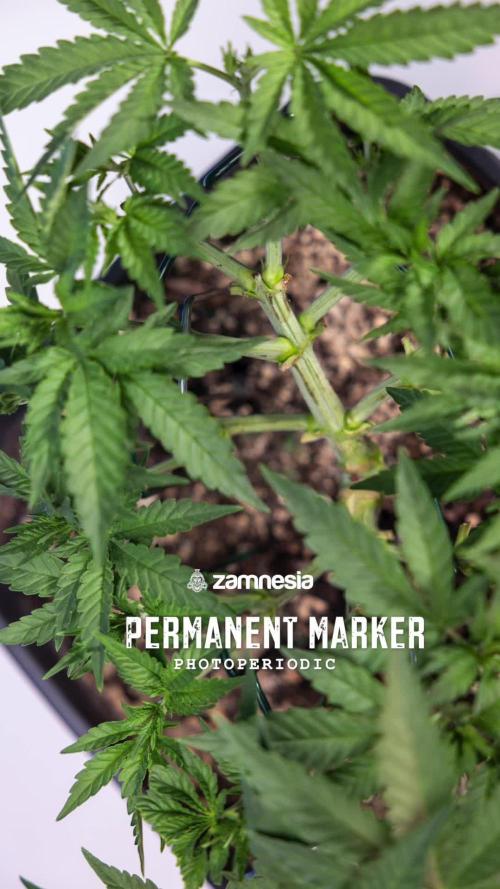
Our White Truffle by Zamnesia is a very interesting plant,
it has slightly irregular internodes, at least this one I got, there is a bit of a need to invent a different main lining than usual, but both Zamnesia and I love to take a gamble and we are sure to bring home a good result.
Remember that we are growing a plant worked with the techniques indicated and one left to grow without pruning to preserve its speed, in the previous/next diary you will find the other plant of the same strain.
In this diary we find the plant worked with Main Lining. We topped the second internode and maybe it was a bit too early, or we simply found a plant with slightly irregular internodes and now we are developing according to irregular brunches, I cut some off, I top some and send it to flower shortly.
Slow down with nitrogen while doing this technique, you may not need everything that is recommended by the manufacturers, so if the leaves become too dark or worse, the tips of the leaves arch downwards and the leaf becomes "crunchy" we are at the moment to lighten or stop the basic grow fertilizer. .
Comparison is the salt of experience, so the plant in the other diary will be worked very differently, go and see it to compare them.
We have started the Plagron fertilization program, we are in 100% organic configuration, the soil is recycled Promix + 1/3 fresh soil + 10% Perlite + RQS Mycorrhizae Mix (4 g in the mix, 1 g under the small fiber pot).
We are feeding // 1 ml/l Power Roots - 1 ml/l Pure Zym - 1 ml/l Sugar Royal - 2 ml/l Alga Grow
We sprayed 3 ml/l Vita Race Foliare once a week.
https://plagron.com/it
We always have the excellent Mycorrhizae from RQS running in the soil
https://www.zamnesia.io/it/5778-mix-micorrize-easy-roots.html
Try this strain, it's an autumnal delicacy ---- // https://www.zamnesia.io/it/11184-zamnesia-white-truffle-semi.html
Zamnesia Brief Description // The result of crossing GG and Peanut Butter Breath, White Truffle boasts a first-class lineage, taking the best of some of the best American cultivars. And as you would expect, she has a lot to offer: a high THC content, an irresistible flavour and a relaxing, carefree effect. Oh, and let's not forget that she's incredibly easy to grow too! Buy your seeds today and enjoy easy harvests of delicious, USA-grown bud.
And as you would expect, she has a lot to offer: a high THC content, an irresistible flavour and a relaxing, carefree effect. Oh, and let's not forget that she's incredibly easy to grow too! Buy your seeds today and enjoy easy harvests of delicious, USA-grown bud.
The whole world of growing and more is here at Zamnesia - just take a look around the site and you'll find "the best that nature has to offer" in all shapes and colours.
The new strains are amazing and the old ones are no exception...
-- // www.zamnesia.com

Likes
55
Share


@Ultraviolet
Follow
2nd net is up. Early bud formations are promising. holding up to the extremes pretty well, some leaves taking minor damage, but overall, she is holding up, gave her 1 night at 50F see how she would react, stressful. Not advised as it messes with her metabolism, but I want to see if it triggers any anthocyanin response. Love to see her purp up but no signs yet. Remember, For every molecule of glucose produced during photosynthesis, a plant needs to split six molecules of water. This process provides the hydrogen needed for synthesizing glucose and other organic compounds, while oxygen is released as a byproduct.
Homework.
If Rubisco activity is impaired and it cannot properly function or regenerate its substrate, the plant's leaves are likely to turn a pale green or lime green, a condition known as chlorosis. Essentially, Rubisco activity is highly regulated and susceptible to various environmental and metabolic factors that can cause it to become inhibited, leading to an apparent failure in RuBP regeneration due to a lack of consumption.
Rubisco regeneration is intrinsically linked to nitrogen supply because Rubisco is a major sink for nitrogen in plants, typically accounting for 15% to over 25% of total leaf nitrogen. The regeneration phase itself consumes nitrogen through the synthesis of the Rubisco enzyme and associated proteins (like Rubisco activase), and overall nitrogen status heavily influences the efficiency of RuBP regeneration. RuBisCO is a very large enzyme that constitutes a significant proportion (up to 50%) of leaf soluble protein and requires large investments in nitrogen. Insufficient nitrogen supply limits the plant's ability to produce adequate amounts of RuBisCO, thereby limiting the overall capacity for photosynthesis and carbon fixation. Maintaining the optimal, slightly alkaline pH is crucial for the proper function and regeneration of Rubisco. Deviations in either direction (too high or too low) disrupt the enzyme's structure, activation state, and interaction with its substrates, leading to decreased activity and impaired RuBP regeneration. (Lime/yellowing)
Structural Component: Nitrogen is an essential building block for all proteins, and the sheer abundance of the Rubisco protein makes it the single largest storage of nitrogen in the leaf.
Synthesis and Activity: Adequate nitrogen supply is crucial for the synthesis and maintenance of sufficient Rubisco enzyme and Rubisco activase (Rca), the regulatory protein responsible for maintaining Rubisco's active state. Nitrogen deficiency leads to a decrease in the content and activity of both Rubisco and Rca, which in turn limits the maximum carboxylation rate, Vmax, and the rate of RuBP regeneration Jmax, thus reducing overall photosynthetic capacity.
Nitrogen Storage and Remobilization: Rubisco can act as a temporary nitrogen storage protein, which is degraded to remobilize nitrogen to other growing parts of the plant, especially under conditions of nitrogen deficiency or senescence.
Nitrogen Use Efficiency (NUE): The allocation of nitrogen to Rubisco is a key determinant of a plant's photosynthetic nitrogen use efficiency (PNUE). In high-nitrogen conditions, plants may accumulate a surplus of Rubisco, which may not be fully activated, leading to a lower PNUE. Optimizing the amount and activity of Rubisco relative to nitrogen availability is a target for improving crop NUE.
Photorespiration and Nitrogen Metabolism: Nitrogen metabolism is also linked to the photorespiration pathway (which competes with carboxylation at the Rubisco active site), particularly in the reassimilation of ammonia released during the process.
To increase RuBisCO regeneration, which refers to the process of forming the CO2 acceptor molecule Ribulose-1,5-bisphosphate (RuBP) during photosynthesis, the primary methods involve optimizing the levels and activity of Rubisco activase (Rca) and enhancing the performance of other Calvin-Benson-Bassham (CBB) cycle enzymes.
Biochemical and Environmental Approaches:
Optimize Rubisco Activase (Rca) activity: Rca is a crucial chaperone protein that removes inhibitory sugar phosphates, such as CA1P (2-carboxy-D-arabinitol 1-phosphate), from the Rubisco active site, thus maintaining its catalytic competence.
•Ensure optimal light conditions: Rca is light-activated via the chloroplast's redox status. Adequate light intensity ensures Rca can effectively maintain Rubisco in its active, carbamylated state.
•Maintain optimal temperature: Rca is highly temperature-sensitive and can become unstable at moderately high temperatures (e.g., above 35°C/95F° in many C3 plants), which decreases its ability to activate Rubisco. Maintaining temperatures within the optimal range for a specific plant species is important.
•Optimize Mg2+ concentration: Mg2+ is a key cofactor for both Rubisco carbamylation and Rca activity. In the light, Mg2+ concentration in the chloroplast stroma increases, promoting activation.
•Manage ATP/ADP ratio: Rca activity depends on ATP hydrolysis and is inhibited by ADP. Conditions that maintain a high ATP/ADP ratio in the chloroplast stroma favor Rca activity.
Enhance Calvin-Benson-Bassham (CBB) cycle enzyme activity: The overall rate of RuBP regeneration can be limited by other enzymes in the cycle.
•Increase SBPase activity: Sedoheptulose-1,7-bisphosphatase (SBPase) is a key regulatory enzyme in the regeneration pathway, and increasing its activity can enhance RuBP regeneration and overall photosynthesis.
•Optimize other enzymes: Overexpression of other CBB cycle enzymes such as fructose-1,6-bisphosphate aldolase (FBA) and triose phosphate isomerase (TPI) can also help to balance the metabolic flux and improve RuBP regeneration capacity.
Magnesium ions, Mg2+, are specifically required for Rubisco activation because the cation plays a critical structural and chemical role in forming the active site: A specific lysine residue in the active site must be carbamylated by a CO2 molecule to activate the enzyme. The resulting negatively charged carbamyl group then facilitates the binding of the positively charged Mg2+ion. While other divalent metal ions like Mn2+ can bind to Rubisco, they alter the enzyme's substrate specificity and lead to dramatically lower activity or a higher rate of the non-productive oxygenation reaction compared to Mg2+, making them biologically unfavorable in the context of efficient carbon fixation. The concentration of Mg2+ in the chloroplast stroma naturally increases in the light due to ion potential balancing during ATP synthesis, providing a physiological mechanism to ensure the enzyme is activated when photosynthesis is possible. At the center of the porphyrin ring, nestled within its nitrogen atoms, is a Magnesium ion (Mg2+). This magnesium ion is crucial for the function of chlorophyll, and without it, the pigment cannot effectively capture and transfer light energy.
Mg acts as a cofactor: Mg2+ binds to Rubisco after an activator CO2 molecule, forming a catalytically competent complex (Enzyme-CO2-Mg2+). High light + CO2) increases demand: Under high light (60 DLI is a very high intensity, potentially saturating) and high CO2, the plant's capacity for photosynthesis is high, and thus the demand for activated Rubisco and the necessary Mg2+ cofactor increases. Mg deficiency becomes limiting: If Mg2+ is deficient under these conditions, the higher levels of Rubisco and Rubisco activase produced cannot be fully activated, leading to lower photosynthetic rates and potential photo-oxidative damage.
Optimal range: Studies show that adequate Mg2+ application can enhance Rubisco activation and stabilize net photosynthetic rates under stress conditions, but the required concentration is specific to the experimental setup.
Monitoring is key: The most effective approach in a controlled environment is to monitor the plant's physiological responses e.g., leaf Mg2+ concentration, photosynthetic rate, Rubisco activation state, and adjust the nutrient solution/fertilizer to maintain adequate levels, rather than supplementing a fixed "extra" amount.
In practice, this means ensuring that Mg2+ is not a limiting factor in the plant's standard nutrient solution when pushing the limits with high light and CO2.
Applying Mg2+ through foliar spray is beneficial to Rubisco regeneration, particularly in alleviating the negative effects of magnesium (Mg) deficiency and high-temperature stress (HTS). While Mg can be leached from soil, within the plant it is considered a mobile nutrient, particularly in the phloem. Foliar-applied Mg is quickly absorbed by the leaves and can be translocate to other plant parts, including new growth and sink organs.
Foliar application of: NATURES VERY OWN MgSO4 @ 15.0g L-1 in a spray bottle. For those high-intensity workouts when 1 meal a day is just not enough!
Foliar sprays are often recommended as a rapid rescue measure for existing deficiencies or as a supplement during critical growth stages, when demand for Mg is high. Application in the early morning or late evening can improve absorption and prevent leaf burn. The plant was getting a little limey yellow in the centre. Shortly thereafter, she was back in business, green mostly regenerated. The starting point [of creativity] is curiosity: pondering why the default exists in the first place. We’re driven to question defaults when we experience vuja de, the opposite of déjà vu. Déjà vu occurs when we encounter something new, but it feels as if we’ve seen it before. Vuja de is the reverse—we face something familiar, but we see it with a fresh perspective that enables us to gain new insights into old problems.
Confidence is evidence... nothing more. You are confident because you have driven 10,000 times, you are confident because you have spoken 10,000 times. People think confidence is a feeling, but it's not. If you want more confidence, then you need to create evidence, take more shots, collect more data, build more experiences, take more risks; fail, confidence doesn't come first; it is the reward you get for doing the work. no one else wants to do.


Likes
47
Share


@L_Tetragrammaton
Follow
Very easy strain to get some large yields out of. Thanks to Sweet Seeds for the chance to grow some great unique strains!

Likes
5
Share

@Kaya666
Follow
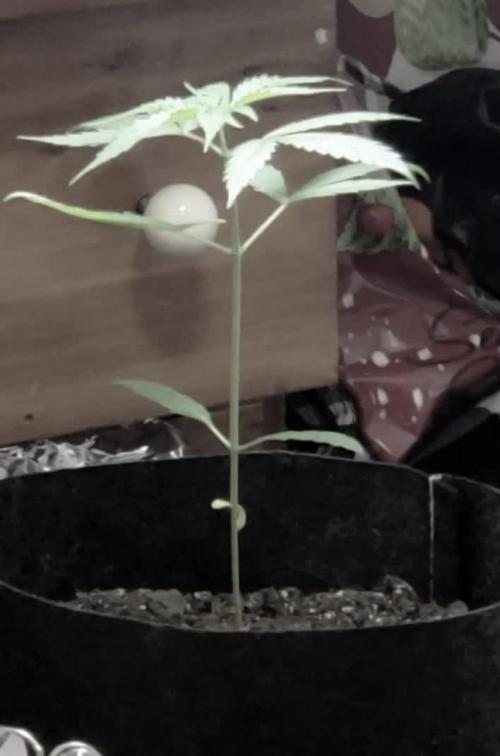
Last week of actual veg! I plan to stick to the same old lighting and watering schedule this week but am gonna experiment with a foliar feed of the potassium humates to see how she likes it. I figure it's better to test things like that now than in flowering. She's beginning to develop something between the nodes, though it's still too early to tell for sure if she's a girl. (It was a feminized seed so I certainly HOPE so!)
This plant has given me absolutely zero problems despite being in the most maligned soil under a weak-ass CFL bulb AND transplanted, which is supposed to be a no-no for autos. It def looks unmistakably like pot now lol so I've gotta figure out where to hide it should the landlord come in. (Legal state, illegal building). Hoping this Ona Pro Gel will be sufficient to offset the stench once she starts reeking. 😁
So my 1st attempt with the humates was a fail. I for some reason thought the pH was too high so I sprayed some white vinegar into the mix to bring it down, which it did. But then I read that you're NOT supposed to mix the two, plus I'd possibly made the solution way too strong by using online "recipes" vs. what the package said: 1 tsp per gallon water. YIKES. I'd used 0.7 grams in 2 liters the 1st time. 🤦🏻
Thankfully I only sprayed that mix on the two bottom leaves before realizing what I'd done, so I sopped it up, poured out the rest and made a more dilute mixture without the vinegar this time. I used my little 8 Fl. oz spray bottle to mist the plant from a healthy distance before her brief dark period, which is where she's at now.
Did a 2nd foliar feed the following day and she's looking just dandy! (Aside from the twisty taco leaves at the top lol). After watering, she was incredibly bloated with leaves curling downward in that tell-tale "over watered" claw. How this is possible when I water only 1x every 7 days, grow in a fabric pot, keep fans on her at all times and am using moisture control soil is beyond me, but it would appear this plant HATES water. The soil was bone dry when I watered & I even pH'ed the water this time before giving her a drink.... no luck. Oh, and the H2O is room temperature every time. Same 16.9 FL oz. purified drinking water as last time...
After some reading it looks like this strain is just highly finicky and somewhat harder to grow than other autos, though most people ended up happy with the results. This also explains why she's so tall with so few leaves/branches: they say Zkittlez Auto stretches like crazy. I'm gonna try to stop obsessing now.
I added a 2nd CFL bulb (yellow) to see if it boosted her growth any, and sure enough, I got some noticeable and rapid change in her appearance after only one night. So that was a good thing. Next week will be when I switch to 20/4 light schedule and try a soil feed of the Potassium Humates with her once-weekly watering lol. Stay tuned.
Final update for the week: I put pipe cleaners on the ends of her big branches to help open up the bud sites. It's too late for actual LST, plus she's so sensitive I doubt she'd like it. Don't wanna waste 1-3 days recovering from that. But I'll probably lop off 2, if not 4, leaves early next week. (1-2 sets total). She's not leafy enough to "leaf tuck" as planned but some of those bottom ones are def redundant.


Likes
4
Share


@sunnykuyall
Follow
04 - 07 May 2023 - Germination Week
08 - 14 May 2023 - Veg week 1
15 - 21 May 2023 - Veg week 2
22 - 28 May 2023 - Veg week 3
29 - 04 June 2023 - Veg week 4
05 - 11 June 2023 - Veg week 5
12 - 18 June 2023 - Flower weel 1


Processing
Likes
4
Share


@GrowSmith
Follow
Warmed up this week 23,22 degrees dried soil out so required feeding, She grew taller this week also

Likes
4
Share


@GothBotanical
Follow
Week 9 has officially started, and she's entering the final phase with some real beauty. Buds are swelling up across the canopy with a thick layer of frost and lots of white pistils still pushing. Trichomes are now clearly visible under magnification with early signs of cloudiness, but no amber yet. The lower fan leaves have started to fade naturally, and I’m starting to see hints of purple coming through on some of the sugar leaves and bracts. I gave her a full-strength compost tea at the end of Week 8 and topped off the auto-watering base to keep her coasting. Temps have been high due to a heat wave, spiking around 88°F, but airflow and moisture have been stable thanks to the dual fan setup and bottom watering. I also added DE to the topsoil to knock back a few gnats and placed sticky traps nearby. No training this week so far, just light tucking and one small defoliation session in the center of the canopy to improve airflow. She's healthy, sticky, and starting to ripen — right on track for harvest in the next couple of weeks.