


Likes
Comments
Share


@LittleBigTrees
Follow
After locking them out for close to a week , I managed to get them going again.
Just waiting for some Amber trichomes to show up now.


Likes
11
Share


@Chuckwaggon420
Follow
This week would be the end of week 2 and the end of streach. Gave a dose of build a flower beggining of the week and they have responded fast they are big for inside plants pretty much whole 5x5 is covered. Did lil defoliating to get the overlaps of bud sites and could tell a diffrence after a few days. Have a slight sknunky bud smell when first open tent. Still just hand watering every other day when meeter runs below a 3. Going great still stay tuned!!!


Likes
38
Share


Likes
60
Share


@1Right_Angle
Follow
Oct 1
- plant was flushed tonight with 25 gallons of water, more of a precaution, and it was a first, mid-grow flush
Oct 4th
- top-dressed soil with Kelp Meal, scratched it in; 1/tsp per Gallon of soil
- foliar spray (mist) every 3rd day for now. In flower, foliar applications become weekly events, until the 3rd week of flower, then it's stops
- next meal planned for is 7.6L / 2 gallons. That is the planned max for the grow
Oct 5th
- air flow between the Pots was Non-existent… so I gave them a little room to assist with the drying times.
6th
- plant was fed 7L
7th
- last day of the week.

Processing
Likes
4
Share


@ReelEyezEnt
Follow
So its come to the end of the first week and the little ones are doing great. At the start of the new week they will get their first watering and we will start a consistent schedule.

Likes
16
Share


@Jays_Not_Here_Man
Follow
**Update** 96.5 grams dry from 1 Autoflower! Amazing smells, still has some of the 🍈 funk. She needs to cure to let the Terps and Flavors come out. She is still very sticky and resinous. Will update once a week or two of cure is done, but with the 1 joint I smoked, full heavy hitter, body buzz and heavy head high. Looking forward to the finished product.
This plant flourished with little work on my part. Good nutrients, and not being too hands on let this beast do her own thing. I would definitely recommend as a beginner strain/auto flower to go with, she is easy to see through to the end. Didn’t really need much attention until flower came on and she fed hard for phosphorus and potassium while she stacked. I’ve got some of her cousins already sprouted and am looking forward to trying some different techniques to see what she can do! Happy growing all 🌱😎

Processing
Likes
3
Share


@levensfiets
Follow
GIRL SCOUT IS THE ONE WITH 16 MAIN STEMS: MAINLINED WHILE TOPPING 4-TIMES
Absolutely this one is the best one i've ever grown. this girl tastes just so amazing, and the bud formation was great and REALLY dense :)
for a third grow also this was a pretty chilled out project, not much in terms of pests, deficiencies or whatever.
loved the plagron grow+bloom (terra) and the PK booster (greensensation) here :)


Likes
10
Share


@CrazyFlowers07
Follow
Ciao a tutti oggi 3/06/2022 è il primo giorno di vita della pianta ✌️🏼✌️🏼 Buon seguimento 😝😝

Likes
3
Share

@The_Doctor_Green
Follow
Hola a todo el mundo!!!.
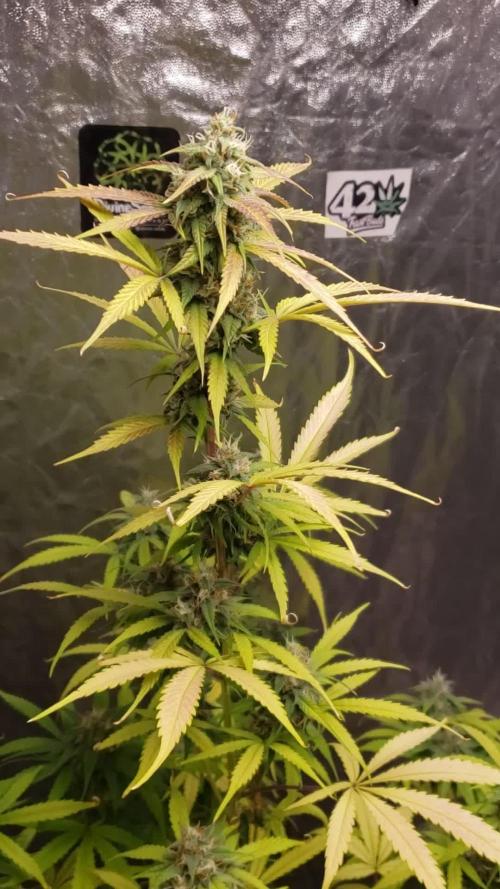
Esta semana solo regué con agua, ya que he visto las hojas no muy bien. Y mañana ya comienzo con el lavado de raíces.
Espero ansioso el corte🤪🤪🤪😅😅😅
Hoy 22/10/25 es el dia 70, mañana comenzare el lavado de raiz.
El video corresponde al día 70

Likes
12
Share


@ciansta
Follow
Germinated for 24 hours in a glass of water, 48 hours in a paper towel and then I planted them into biodegradable seedling pots. Northern Lights looking a bit ahead of the Dosidos seeds but that was expected I’ve grown Northern Lights before and they sprout real quick. One of the Dosidos’ first true leaves is looking a bit wonky but we’ll see how it goes I suppose.
Processing
Likes
8
Share


@hi_bengal
Follow
So far so good! Watering with ph'd water at 6.3 to 6.5. Running a 18/6 light schedule using a 135w hlg quantum board. This little girl is growing like crazy! 😊 She'll be 3 weeks old in 4 days.

Likes
19
Share


@Deepgrow
Follow
Esta ha sido la ultima semana de crecimiento, mañana pasan a 1212 por fin, porque no aguanto mas tiempo. Los desajustes del PH parecen haber sido resueltos.
Las Hulberry muestran algunas carencias debido al abono organico aplicado en el sustrato, al estar puestas en el Autopot, parece que este abono se disuelve mal, pero las riego igual que el resto para no sobrefertilizar.
La proxima semana mas.
Likes
39
Share


@Silverback_Guerilla
Follow
11/2:
I fed them yesterday except for the 3 x SP's, the short OS(c), and the last Blackberry (a). Those 5 plants were each flushed with 8 gallons of warm water and Liquidsoil.
11/5:
I watered the ones that will be harvested tomorrow so hey will be turgid for a rough trim.
Took photos of the ones slated for execution. They'll be in the dark til tomorrow night.
11/6:
Harvested and washed the 3 x SPs, the last Blackberry, and one of the OS's.
Hanging to dry -
My closet looks so empty now with only 11 plants in there...
11/7:
I flushed all 3 of the Lemon Pies, and the purple Wedding Cheesecake with 8 gallons of warm water each, including Liquidsoil. Everybody else got fed for probably the last time.
Likes
35
Share


@Hiroots420
Follow
Impecable cosecha de Sweet Cheese, se llenó todo el espacio de secado de buenas cabezas, próximamente actualizaré números finales de cantidades pero hasta el momento se lo ve muy prometedor.
Likes
Comments
Share


@peeptho
Follow
I put the seeds into Papertowel, after that i put them direcvtly into the Medium.
2 of them died after a few days so i removed them and moved my last 2 Seeds into the new tent that just arrived
Allready decided to Flowering i go buy a 120x120 thent with 2 TSL 2000 300w LED for even bigger Space because im still waiting for my other Seeds who i gonna imidiatly Germinate when they get deilverd and move them into the tent with the 2 ladys.
Likes
17
Share

@Naujas
Follow
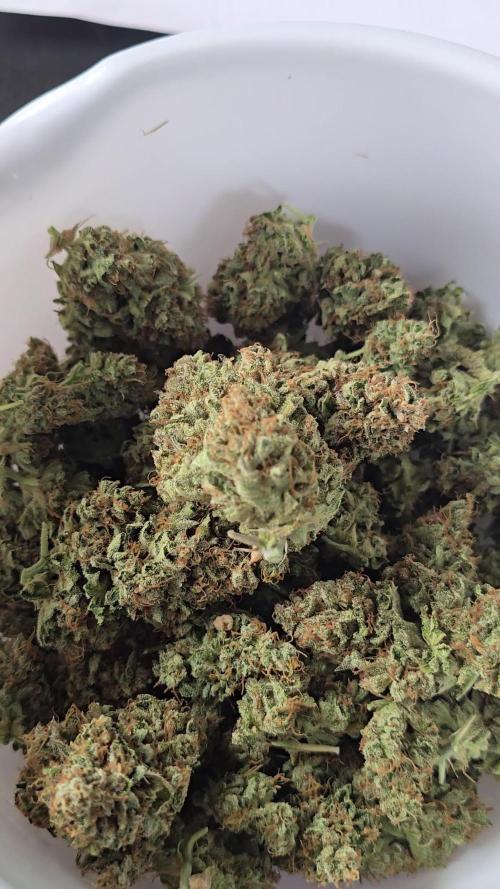
Harvest day has finally arrived for my Frostbanger Auto, and I’m very happy with how this run turned out.
She finished at 69 days from seed and impressed me from start to finish. Throughout flowering she developed a strong, sweet aroma that became richer and more noticeable every week. By harvest time, opening the tent released an amazing smell that filled the entire room.
The buds developed beautifully, with excellent frost coverage and plenty of sparkling trichomes covering the flowers and sugar leaves. Visually, she became one of the prettiest plants I’ve grown, showing great structure and dense, resin-coated buds.
Final wet weight came in at 230g, which I’m very pleased with. The plant stayed healthy, responded well throughout the grow, and rewarded me with a solid harvest and outstanding bag appeal.
Overall, Frostbanger Auto was a pleasure to grow. Great aroma, heavy trichome production, beautiful buds, and a satisfying yield. Now it's time for drying and curing, and I can't wait to see how the final quality develops over the next few weeks.
Final stats:
🌱 Strain: Frostbanger Auto
📅 Harvested: Day 69
⚖️ Wet Weight: 230g
❄️ Trichome Production: Excellent
👃 Aroma: Sweet, strong, and very pleasant
🌿 Overall Impression: Beautiful plant with great resin production and a rewarding harvest
⭐⭐⭐⭐⭐ Very enjoyable grow from start to finish
Likes
2
Share

@TheBulldozerSicily
Follow
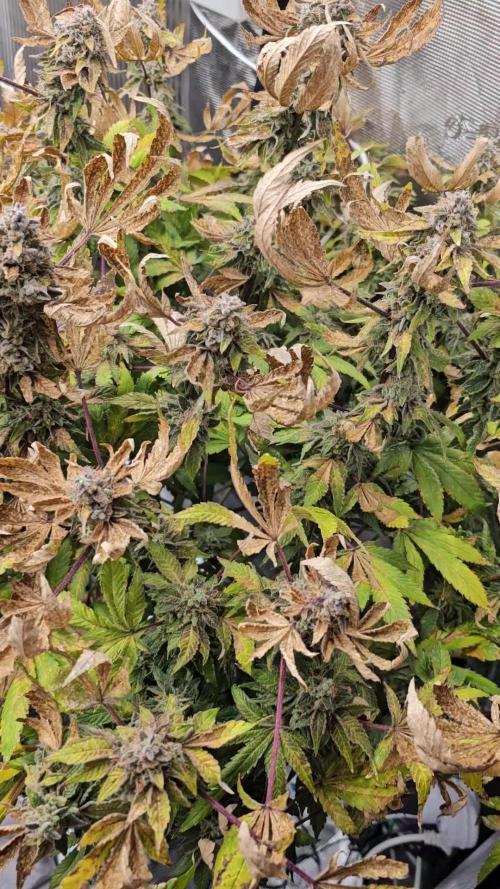
Le piante continuano a bere solamente, acqua demineralizzata +10% rubinetto e 1% enzimi... continuano a maturare lentamente, non appena vedro un po di tricomi ambrati raccoglierò,..la fretta mi ha sempre giocato brutti scherzi raccogliendo sempre un po in anticipo, questa volta otterò un risultato piu strong!!
Happy growing everyone!!!
Likes
11
Share


@dataTwiiix
Follow
je suis donc arrivé à la bout de la 4eme semaime de flo. en comptant la semaine de pré-flo avec.... j'ai hâte de voir le bout je vais vous avouez!
Encore une semaine qui se termine j'ai commencé le rincage de "La Rica CBD 1:1" #1 et la cropped je pense les récolté ds une dizaine de jours, d'après ça fiche technique elle devrais déjà être a point mauis je préfère attendre une semaine de plus et la rincer dans les rêgles.
la wWidow vas peut etre recevoir ça dernière dose d'engrais quoique la #1 me semble presque prête a réfléchir!
j'ai remplacé le BIOBIZZ topMax par un produit de chez CANNA biocanna boost accelerator un engraissage sur deux, j'ai aussi du combattre une carrence en fer sur la quasi totalité des plants que j'ai résolu en partie ou du du moins résorbé graçe au produit de chez GHE : essential (une mixture d'oligo sous forme de chelaté)
