


Likes
Comments
Share


@Onlygrow99
Follow
Este próximo día 14/06/23 entraremos en la 3º semana de crecimiento. A día 12/06/23 llevamos 28 días desde que se empezó a germinar.
ya están todas trasplantadas a la macetas definitiva de 7 litros. Las he regado con roots + crecimiento + calmag + enzym. Todo de BOOM nutrients.
He realizado el trasplante en 1 hora y 50 minutos en la mañana del lunes 12/06/23 en directo, en twitch.tv/xmackobox

Likes
10
Share

@OlyGrower
Follow
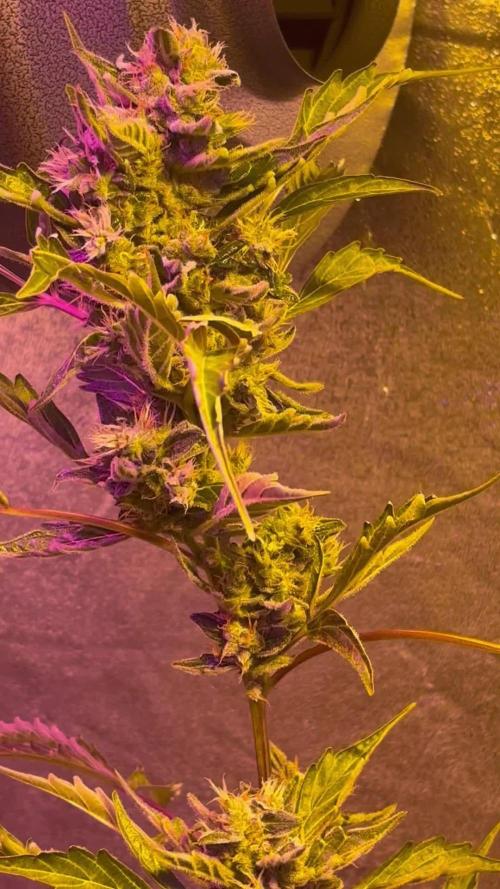
2/18 - Harvest time in a few days for 3 of them
Random pictures taken of the grow from the last couple weeks. Just keeping them in water and nutes.
Really not feeding much to the ones I’m harvesting.
Sitting around watching them, planning the dry cure
All the clones came through like champs even in shitty rockwool cubes I used. Gave a few away to a friend.
I’ll do individual reviews of the strains I grew next few weeks but this overall coco in DWC grow has gone great. Especially considering how lazy I was purposely this grow as I got back into things.
Takeaways:
-The winner of this run of 5 strains was the Tropicana cookies Auto. By far. Awesome plant, huge fruity buds.
-The amnesia haze grew weird. 3’ and only3 bladed leaves. Is a genetics issue w phenotype, see pic 5.
-Also I got a bad genetic pheno of gorilla cookie FF where it stays unnaturally short. See pic 10.
- original glue autoflowers produced a lot, but not a keeper for me. I got 2 way different phenotypes. Meh
- The strawberry gorilla turned into a bush. Not for me
Buds grew not to my taste or style.
I’m just picky but I would only grow the Trop Cookies again out of these strains. Growing a Purple Lemonade FF next that I have high hopes for 😜
DWC for the win
Laters. 👋


Likes
Comments
Share

@GoldenWeedGrower
Follow
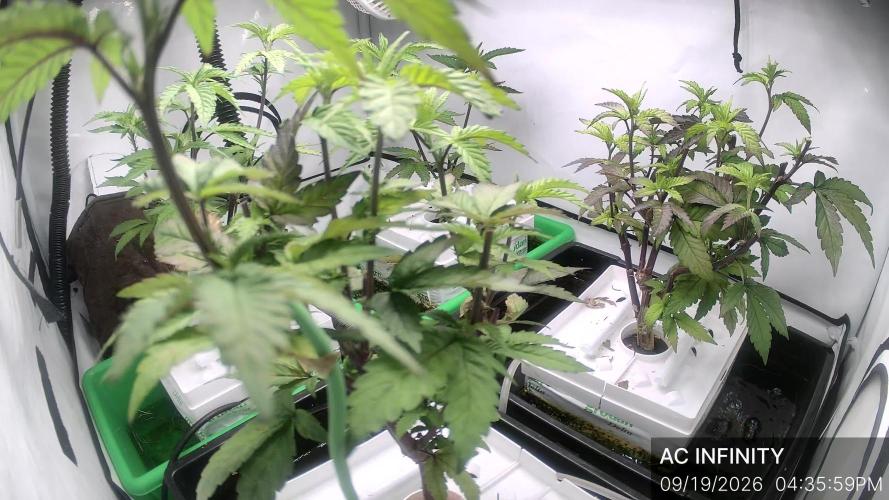
D19 19/09 : Start a new clones diary. I've got the new Spectron 7 from AC Infinity and I would experiment with new features starting from timelapse 😋
D22 22/09 : First timelapse done, jus posted.


Likes
18
Share

@GERGrowDesigns
Follow
Dear Growers ,
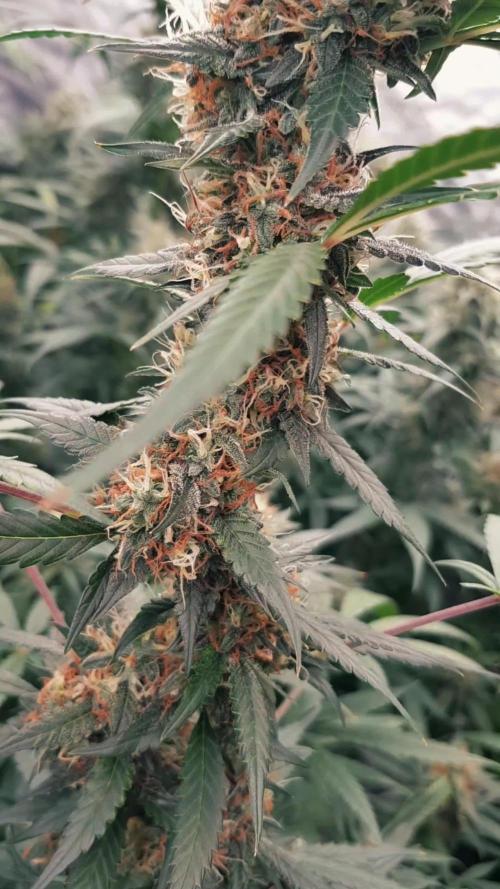
Welcome to Week 8 or Flower week 5 // Day 56-63 from Blimburn Blackberry Moonstones Auto.
Incase of Moving to a New Home . I Decided to skip 3-4 Weeks from every Diarie of the 12x12 Automatic Project . Everything should be Normal in the next Weeks .
Whether you're a beginner or an expert, you are warmly invited to join, ask questions, and share your own experiences along the way!
Project Setup & Conditions:
• Brand/Manufacturer: Blimburn Seeds
• Tent: 222cmx150cmx150cm
• Light: 2x 720 Watt Full Spectrum
• Humidity: 50%
• Soil: Narcos Organix Mix
• Nutrients: Narcos Products
• pH Value: 6
Get Your Epic Blimburn Seeds Genetics or Explore the whole seeds/headshop or Merchandise from This Amazing Breeder.
Just Take a look with some time in your pockets with this Link [https://blimburnseeds.com/?blb=dstp8dm]
Get another 10% Discount using the code [DSTP8DM] at the checkout.
If you want Germinitation results like mine , check out Kannabia Seeds with my link [https://www.kannabia.com/de?ref=61966] and grab the germination device or the strains I used . Trust me – it’s worth it for sure !
Get another 20% Discount at all products using the code [GGD] at the Checkout .
Stay curious and keep up Growing —we look forward to welcoming you back for the next chapter soon!

Likes
4
Share


@Strife957
Follow
This week was hottt
Record breaking temps wer cooking my girls sooo
I let them out.
I took out their light also (saturday)
I also put green celophane on all the house windows (that dont have blinds) because i dont want the house lights to disrupt their sleep. ( i dont know how sensitive they r )
Next week will be their first full week of flower

Likes
1
Share


@Felixcommi
Follow
Buds are getting ripe. Pistils are 75% brown and trichomes on buds have amber and are cloudy and sugar leaves have 30% amber. Flushing next week for a few days then chopping.


Likes
8
Share


@LoccoMotive
Follow
🌿 Woche 3
Eine weiter recht heiße Woche.🌡️🔥
🌱 Wachstum
Beide Damen haben einen schönen Wuchs und Grünton.
Die anfängliche leichte Verbrennung hat sich perfekt rausgewachsen.
Nun sollte die Livingsoil den Job super ausführen können.
Noch sehen sie beide auch sehr identisch aus.
💧 Only Water
Ich habe mich dazu entschieden, meiner Livingsoil ein wenig mehr unter die Arme zu greifen.
Ein Grow-Kollege hat mir verschiedene Dinge empfohlen, die man machen kann.
Ich habe mich dann für 2 Mittel entschieden, die mein Only Water Experiment nicht aushebeln:
🔹 Effektive Mikroorganismen von Multikraft
🔹 Mycorrizae von R&R
Beide Mittel gelten nicht als Dünger für die Pflanze, sondern als Booster für den Boden.
Dementsprechend kann man diesen Run immer noch als Only Water bezeichnen 💦✅
📟 Blumat und Gießen
Ich freunde mich immer mehr mit dem Blumat Digital an.
Ich wüsste nicht, wie ich ohne ihn durch den Mulch den Gießzeitpunkt ermitteln sollte.
Rumwühlen oder den Topf heben ist leider keine Option ❌.
Deswegen bin ich wirklich froh, dass es ihn gibt 🙏.
Ich gieße weiter nach Fahrplan:
🕒 Alle paar Tage bei 110 mbar
🚿 2 l Wasser
Diesmal habe ich etwas EM Bodenbuster mitgemischt.
Damit hab ich dann den Boden mit zusätzlichen Mycorrizae geimpft.
☀️ Wetter
Wenn man bedenkt, dass es tagelang locker über 33 °C heiß war 🌡️🔥
und ich dazu keinerlei RLF-Unterstützung hatte 💨❌
– sehen beide Damen top aus ✅.
Manchmal denke ich: „Oh Gott, geht das gut?“ 😅
Aber ich lass es drauf ankommen.
Und bis jetzt läuft alles nach Plan 🛸✨
🎶 The Grow must go on! 🌱🔥
Likes
107
Share


@Afterglow
Follow
Начинаю растить новый сорт моим собственным методом. Я его называю корона, хотя больше подходит название Multiple Symmetric Lollipopping. Это что-то среднее между Main Lining, Low Stress Training и SoG. Суть заключается в том, что мы делаем Topping выше 4-го этажа и затем все 8 основных веток разводим по сторонам. Четыре нижние ветки по диагонали, четыре верхние крест-накрест. В итоге получается эдакий равномерный круг веток, растущих на одной высоте, так как мы легко можем контролировать высоту каждой ветки. Принципиально можно и 10 и 12 веток делать, но мне хватает 8. Желательно иметь широкий горшок, чтобы было куда разводить ветки. Надеюсь когда-нибудь появится новый метод MSL с моим авторством.
Итак, взял две семечки, а победитель по росту переедет в большой горшок.
Гроубокс у меня самодельный. Две лампы HLG 100, но по факту обе работают по 50ватт. Встроено два фильтра и два канальных вентилятора. Один работает постоянно, второй включается автоматически при превышении верхнего порога температуры. Дверки на защелках, проклеены уплотнителем чтобы не пробивался свет и запах. Внутррение габариты от лампы ШДВ - 67х48х68 сантиметров. Помещается два куста, но я предпочитаю растить только 1.
Как проращиваю семена?
1. Они всегда хранятся в холодильнике. При попадании в теплую и влажную среду семена получают сигнал к росту и быстрее всего прорастают, буквально за 14-16 часов.
2. Берем нужные семена и кладем в теплую воду (18-22 градуса Цельсия) на 3-4 часа. Это нужно, чтобы скорлупа размягчилась, а семечко согрелось и получила достаточно влаги.
3. Слегка маникюрными щипчиками расщепляем скорлупу. Делается специально, чтобы как можно раньше корешок начал получать воздух. Чем быстрее раскрывается скорлупа, тем быстрее начинает прорастать корень и уменьшается риск загнивания.
4. Садим в таблетку или сразу в готовый субстрат. Обычно я сажу сразу в готовый субстрат, но в этот раз решил попробовать в торфяной таблетке, чтобы выбрать победителя по активности роста.
Как я готовлю кокосовый субстрат?
1. Я никогда не использую старый субстрат. Во-первых, я применяю микоризу и множество других грибков и бактерий, которые для маленьких ростков будут слишком концентрированными и могут навредить. Во-вторых, в старом кокосе очень много старых корней, которые обязательно будут гнить. С одной стороны это хорошо, но по факту это приводит к загниванию субстрата и образованию плесени.
2. Беру половину брикета, развожу в воде, промываю в проточной воде (попеременно горячей и холодной) пока не вымоется вся морская соль и затем размешиваю с вермикулитом и перлитом.
3. Заливаю полученный субстрат на 15-20 минут удобрением Cal-Mag (1000 PPM), чтобы субстрат набрал катионов кальция и магния, иначе первую неделю полива кокос будет забирать эти вещества из полива, а растение будет голодать. Если измерить PPM воды после внесения Cal-Mag и через 20 минут, то увидите, что PPM упадет до 600-700 единиц. Это кокос вобрал в себя соли.
4. Заливаю удобрением, в случае трех-компонентного Grow-Micro-Bloom в соотношении 3-2-1, PPM 1000. Также оставляю на 15-20 минут. Нужно это затем, чтобы кокос теперь равномерно вобрал в себя другие катионы (железо, цинк, медь, калий, ну и азотистые соединения, как то мочевина и аммоний). То есть мы целенаправленно вымываем излишки кальция и магния.
5. Затем, уже поливаем нашим удобрением с PPM 600-700 чтобы чуток снизить концентрацию.
6. В этот готовый буферизированный субстрат потом и попадет пророщенное семечко.
Как я поливаю?
В течение первых трех недель я поливаю через день. И не важно, высох субстрат или не высох. Кокосовый субстрат это позволяет. Далее приходится поливать каждый день, потому что развитая корневая система осушивает весь субстрат за сутки под чистую. Никогда не поливаю чистой водой - это только нарушает PH внутри субстрата и приводит к стрессу растения. Если нужно промыть субстрат, то готовится несколько поливов с нужным удобрением. Вспомните про то как после промывки падает PPM. Вот тоже самое происходит и при поливе чистой водой: питательные элементы вымываются с кокоса и когда вы начинаете "кормить" растение, оно голодает, потому что кокос все отбирает, чтобы делиться "потом", когда "насытится".
PH на веге всегда около 5.6-5.8, на цветении 5.8-6.1. PPM стараюсь держать на уровне 700. На цветении 1200-1400. Если вы дочитали до этого момента и увидели страшную цифру в 700 PPM, то на самом деле ничего страшного в этом нет. Если вы возьмете обычную землю, разведете водой и померяете PPM, то он там будет куда более высокие показатели. На самом деле растение способно жить даже при PPM в 5000 единиц. Поливать растение с PPM 300 - это слишком бедная смесь. Как правило, все руководства ориентируются на земляной грунт, а производители страхуются и дают заниженные нормы, чтобы покупатели случайно не сожгли свои растения. Но если если у вас есть PH и TDS измерительные приборы, то вы смело можете щедро кормить свое растение, а оно вам ответит буйным ростом и плотными шишками.
Всегда руководствуюсь золотым правилом проверки дренажа:
PPM растет PH падает: у растения несварение и что-то оно не может усвоить.
PPM падает PH растет: растение голодает, либо нарушен ионно-катионный баланс.
PPM стоит PH растет: все идет хорошо.
В каждом случае нужно понимать что было сделано ранее и корректировать действия.
Итак:
19.01.2021, в 12:00 замочил семечки в воде
19.01.2021, в 16:00 расколол аккуратно семечки и посадил в торфяную таблетку
19.01.2021, в 23:00 уже одна семка начала вылезать из торфа, хотя утапливал. И это всего лишь прошло 7 часов. Чувствую кандидат на пересадку уже показал себя.
20.01.2021, в 16:00 эта же семечка уже отрастила корешок и полностью показалась из торфа.
21.01.2021, в 10:00 выскочило из торфа и готова расправить листики. Вторая семечка пока сохраняет молчание.
21.01.2021, в 17:00 росток вот вот начнет разрывать скорлупку чтобы выпустить первые семядоли. Перенес в гроубокс под лампу.
23.01.2021, в 10:00 умер... так и не увидев свет. А вот её младшая сестра неожиданно вылеза из торфа и вытянулась за ночь на 2 сантиметра, пока были отключены лампы. Пришлось ей вручную снимать скорлупу.
23.01.2021, в 15:00 младшая сестра уже показала хвостик корня с другой стороны торфяной таблетки. Завтра надо будет пересаживать уже в нормальный горшок
24.02.2021, в 14:00 девочка переехала в новый дом. Первые листики стали размером с семядолями. Поздравления принимаются, мы проросли.
Likes
29
Share


@Jjthejetplane79
Follow
Topdressing with biofish and fishbone meal water in with em1 mix the two meals 50/50 1 cup per plant. Really not much I do other than observe now. Blumats set up all I can do is make occasionally a compost tea with alfalfa meal and ewc lobster compost blend splash of molasses. Em1 2x a month.
Likes
3
Share


@LeRaar
Follow
Problemas de ph en el hidro debido a la inexperiencia.
Nutrientes segun tabla.


Likes
14
Share


@BillMonroe
Follow
thinking about adding root stimulator. Still have not needed to water the pots. The plants love 24/0.
Going to need fan and filter relatively soon...


Likes
5
Share

@Pot_Portraits
Follow
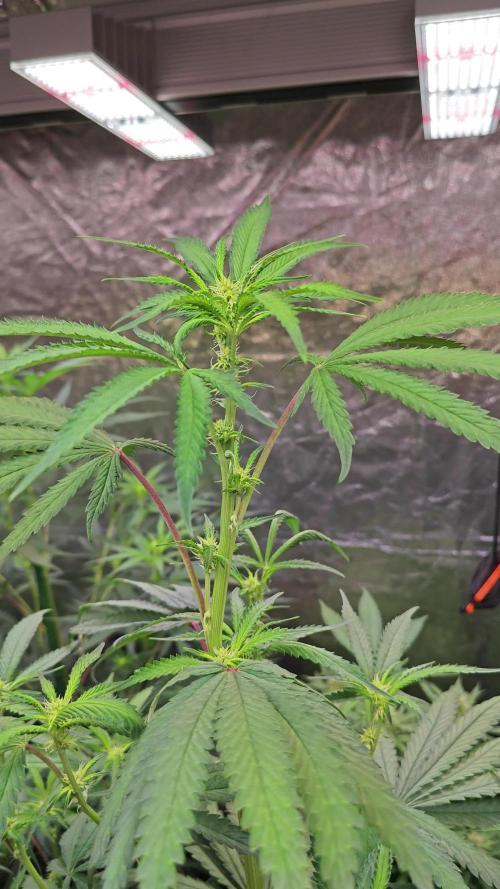
Flower week 2 ! She is doing amazing, tallest plant in the tent, she is much happier now with lower water moisture levels.
She is growing super fast, every day she puts in weight !
Very happy with this one !

Likes
64
Share


@DevilsBud
Follow
New week for Anesia Captain future
Anesia Captain future is doing great topping is done and doing some last LST on them preparing them for flowering soon cannot wait
19/10/2 made 360 video today enjoy🤣
20/10/21
Thinking of switching to flowering soon don't want them to grow to big in 8L pots
21/10/21
Decided to order some 11L pots to transfer them in so before flowering i probably transfer them so roots can grow some more also gone try Mycorrhiza Mix with transfer
More photos Tru the week
visit www.marshydro.eu
for your best gear and use the PROMO CODE: DEVILSBUD
Some info about the Marshydro FC-4800
Superb Quality LED Chips: The whole light is composed of 1206 pcs Samsung lm301b and Osram 660nm chips. More than two times as many LEDs are used to drive the grow lights at low currents and to avoid overdrive. Quality is guaranteed and efficiency is up to 2.8 μmol/j.
Even PAR Distribution and High PPFD Output: The multi-light bar design and the densely distributed light chips enable the LED grow lights to achieve the optimum PPFD required for plant growth over the entire effective coverage area.
Specifically Designed Spectrum: To ensure even plant growth, blue and red light are enhanced on the basis of a full spectrum combination. Not only does this accelerate plant growth, but it also improves the yield and quality of the plants at the same time.
Dimming Daisy Chain Function: The dimming function saves on electricity costs and enables brightness from 10% to 100% for the different stages of plant growth. A single master light can connect up to 30 lights in a daisy-chain system.
Business LED Grow Light: The light's wavy heat sink dissipates heat quickly and the IP65 waterproof allows the light to operate in humid conditions. 180° collapsible feature for easier installation. All these features provide favorable assistance for commercial cultivation.
And some tent info
●【Lock All Light Insid】MARS HYDRO Grow Tent Interior is made of diamond mylar. Non-toxic to the environment, no harm to plants. High-quality 1680D canvas being double stitched, (ALL OTHERS BRAND grow tent is 601D canvas) which is tear-proof for perfect light locking, No light leaks or rips at all.
●【Durability Grow Tent】Stable Metal corner adapters and poles are the trustful supporters of the tent. No rusting nor paint-falling. Quick easy tool-free installation. Carries strong heavy-duty SBS zippers, double layer lining to create a light-proof seal.
●【Easy Observation of your Plants】Special peeks window made by double layers of cloths. Observe the growing conditions of your plants without opening the tent and avoid disturbing plants. The peek window also serves to dissipate heat and ventilate air.
●【Removable Tray Keep Clean】The package includes a removable waterproof floor tray to hold soil and fallen leaves. The tray can be taken out easily to wash. Removable and water-proof makes cleaning easy.
●【Good Ventilation&Fast Assembly】 Circular double-sleeved vent holes with adjustable nylon strap for air circulation by exhaust fan, ducting, carbon filter, or reflector. Better allows proper light, heat, and airflow. Quick tool-free installation. Reinforced by a sturdy metal frame to ensure security and stability, supports up to 140lb. Perfectly safeguard your plants to thrive even in winter.

Likes
23
Share


@frogDUDE
Follow
So far so good - starting to move indoors at night as the overnight lows are dipping to 5 degrees C- just a bit too cold!! Daytime temps still between 20-25 so still good for life outdoors during the day 💚💚

Likes
125
Share


@Regenwurm
Follow
Die 8 Blütewoche ist erfolgreich abgeschlossen!
Tage der Wachstumsphase = 32 Tage.
Tage der Blütephase = 56 Tage
Wachstum h in Blütewoche 7= 0 cm
Blütenbildung: Hoch
Ich stelle erst jetzt fest, das es sich bei einer der Pflanzen um einen Mutant handelt.
Ich habe bisher noch nie eine Mutierung feststellen können und bin gespannt wie es endet da ich natürlich noch
keine Erfahrungen damit habe.
Wenn ich es richtig recherchiert habe handelt es sich bei ein und derselben Pflanze um mehrere Mutationen
Im Einzelnen...
Mutation 1= strähnige Blüten (wie bei der Dr. Greenspoon öfter mal vorkommt)
Mutation 2 = Gigantismus (doppelt so viele DNA Ketten wie regulär)
Es wäre super wenn hier jemand der Erfahrung mit diesen Mutation hat mir eine Hilfestellung mit dem Umgang geben könnte.
2 mal in dieser Woche mit Purolyt Mischung 1:25 besprüht
Lichtstärke: 85 %
Lichtabstand: 37 cm
Std Tag/Nacht: 12/12
Temperatur Tag: 25-26,5 Grad
RLF Tag: 55-61%
Temperatur Nacht: 20-21 grad
RLF Nacht: 50-60 %
VPD Wert: ca. 0,95-1,1
PH Wert Wasser/Düngelösung: 6,2
EC Wert: 1,4
Ventilator Oszillation: Stufe 2
Befeuchter: aus
Entfeuchter: mit Steuerung an
Zusätzlicher Entfeuchter: 1 Stk außerhalb vom Zelt im Raum
Bewässerung: 1* Wasser PH 6,6 EC 0,1/ 5 * bewässert mit Dünger mit den o.g. Mengen
Purolyt Besprühung: 2 mal
Controlling: Grow Control
Dünger: Greenbuzz Nutrients
Licht: Pro Emit Vollspektrum
Abluft: EC Carbon Active 750 m3 gesteuert/PrimaKlima 480m3
https://greenbuzznutrients.com/de/
Danke an Greenbuzz
Ihr bekommt 25 % Rabatt bei der Nutzung des Codes auf der GB Homepage
https://greenbuzzliquids.com/de/shop/
Code: GD42025
(Mindestbestellwert 75€)

Likes
26
Share


@Mrs_Larimar
Follow
2022-11-13
The Plant looks happy and Green,
she gets Daily aSolution packed with beneficals and nutes
like listed
small Flowers appear
website for for my Fertilisers:
https://greenbuzzliquids.com/en/shop/
Code: mrs_larimar
Breeder Info:
👉Black Sugar is an indica dominant hybrid of Black Domina, L. A. OG and Critical.
It has kept the medicinal properties of L. A OG, a good flowering rate on the Black Domina lineage,
and the compact size of the classic Critical strain. With its small growth, the strain produces large yields
of up to 600gr/m2 on bushy branches. The buds are very dense and stinky.
Black Sugar has a high THC level. The variety has a fruity citrus aroma. Dense smoke gives the effect of relaxation and body buzz.
Good for Smoking before going to bed. It can become one of your favorite Seedsman strain
Genetics Black Domina x L.A OG x Critical
Harvest 450 - 500 g/m²
Flowering 50 - 55 days
THC 20.0%
CBD 1.0%
