Likes
Comments
Share


@Ryno1990
Follow
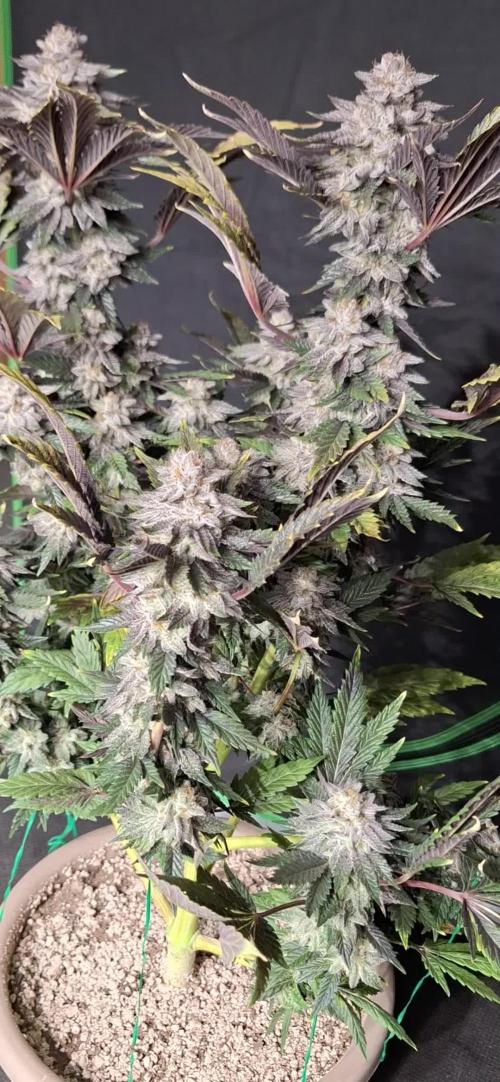
The Purple Goat Cheese is growing pretty good comming into week 4 of veg she's been topped an a couple leafs plucked off to open up some lower branches to the light over all she's been growing good no problems yet she's been loving this medic grow fold 6 led
Ending week 4 the Purple Goat Cheese has started to get some growth with her she's starting to come back good after being topped took a couple extra days but she's starting to pick up on some growth

Likes
4
Share


@losgrowershermanos
Follow
Preparando 1L de solução, Receita enraizamento.
1ml/L.
Rega com fertilizante, bem pouco. Aproximadamente 50ml em cada vaso.
As folhas parecem saudáveis, um verde bem claro.
Processing
Likes
1
Share


@Teddy01500
Follow
Bonjour à tous, ces derniers jours ce sont bien passé pour mes petit bébés elles grandissent doucement mais sûrement.C’est la première fois que je travail avec cette gamme de produits (je vous est mis des photos des produits 😉) pour l’instant j’en suis satisfait après, il faut voir le résultat final ce qui est moins facile 😂. Mes petit bébés commence leurs 5ème semaine (je me suis trompé d’une semaine 😕 désolé 😉) trop pressé!!! 😂 de mettre de nouvelles photos 😜. Je vous dis à là semaine prochaine vivement 😉 bonne journée à tous. Je vous remercie 😉.


Likes
1
Share

@birdmountain
Follow
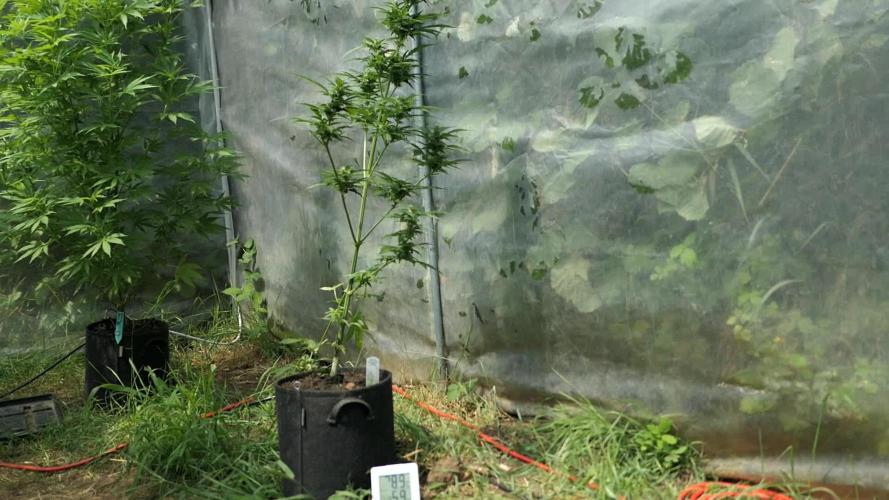
Sie wächst immer noch in den unteren Seitentrieben weiter, obwohl sie schon gut blüht. Leider hat der Grauschimmel sie nicht verschont und ich musste ein kleines Stück eines Buds entfernen. Der Ventilator im Folientunnel weht auch sie nun direkt an um die Luftfeuchtigkeit in den Blüten zu senken und die Wasserversorgung wurde heruntergefahren. Hoffentlich schafft sie es bis zur Ernte in ca. 3-4 Wochen. Auto Cinderella Jacks benötigen etwas länger, dafür wachsen sie auch stärker. Sie ist die größte meiner diesjährigen Autoflower Pflanzen. Leider habe ich auch an ihr etwas Bud rot gefunden und sofort entfernt. Ich vesuche den Autoflowers den bestmöglichen Platz unter dem Ventilator zu geben.
Der durch Schneckengewicht abgeknickte Zweig hängt zwar, aber er wächst bereits sich biegend nach oben.
Bis nächste Woche!
---
It is still growing in the lower side shoots, even though it is already flowering well. Unfortunately, gray mold has not spared it, and I had to remove a small piece of a bud. The fan in the foil tunnel is now blowing directly on it to reduce the humidity in the flowers, and the water supply has been reduced. Hopefully, it will make it to harvest in about 3-4 weeks. Auto Cinderella Jacks take a little longer, but they also grow stronger. It is the largest of my autoflower plants this year. Unfortunately, I also found some bud rot on it and removed it immediately. I try to give the autoflowers the best possible place under the fan.
The branch, which was bent by the weight of snails, is hanging, but it is already growing upwards.
See you next week!

Likes
42
Share


@Canna96
Follow
I had alot of fun growing this strain, everytime I opened the tent and smelled that delicious strawberry, it really brought a smile to my face. I have tried Strawberry Pie #1, and she is delicious. The buds are extremely dense, and have a very nice pink and green contrast. I haven't tried #2 or #3 yet, but I am very much looking forward to it after some more curing time.
I ended up making bubble hash out of the trim, and I got 8 grams, which I pressed into 4.7 grams of rosin, and all I can is that this is some of the best tasting and strongest rosin I have ever tried, let alone grown. I will be posting some videos of the flower being pressed once it is properly cured. I will say that after smoking, I realized I need some more Sativa for daytime use, so I am giving my Gorilla Cookies to a friend, and starting some Orange Sherbet instead. As a delicious night time/dessert smoke, and especially for those into concentrates, you absolutely can't go wrong. Thanks for checking me out and blaze on!

Likes
29
Share


@MadeInGermany
Follow
Info:
Unfortunately, I had to find out that my account is used for fake pages in social media.
I am only active here on growdiaries.
I am not on facebook instagram twitter etc All accounts except this one are fake.
Flowering day 15
since the time
change to 12/12 h.
Hey guys :-) .
The lady is developing beautifully, week after week :-).
The stretch has started.
This week I will clean everything down below so that the energy goes to the upper part.
This week it was poured 3 times with 1 l each time (for nutrients, see table above).
The entire tent was cleaned and everything checked for health.
Stay healthy 🙏🏻
You can buy this Nutrients at :
https://greenbuzzliquids.com/en/shop/
With the discount code: Made_in_Germany you get a discount of 15% on all products from an order value of 100 euros.
You can buy this Strain at :
https://www.amsterdamgenetics.com/product/kosher-tangie-kush/
Type:
Kosher Tangie Kush
☝️🏼
Genetics:
Kosher Kush
X
Tangie
👍
Vega lamp:
2 x Todogrow Led
Quantum Board 100 W
💡
Bloom Lamp :
2 x Todogrow Led
Cxb 3590 COB 3500 K 205W
💡💡☝️🏼
Soil :
Canna Coco Professional +
Nutrients :
Green Buzz Liquids :
Organic Grow Liquid
Organic Bloom Liquid
Organic more PK
More Roots
Fast Buds
Humic Acid Plus
Growzyme Big Fruits
Clean Fruits
Cal / Mag
Organic Ph - Pulver
☝️🏼🌱
Water: Osmosis water mixed with normal water (24 hours stale that the chlorine evaporates) to 0.2 EC. Add Cal / Mag to 0.4 Ec Ph with Organic Ph - to 5.8

Likes
106
Share


@Natrona
Follow
Sponsored grow 👉WeedSeedsExpress👈
Harvest
Love Potion grew in my AC Infinity 4x4 with 4 other plants. I harvested her April 12, 90 days after germination. Love Potion demonstrated strong resistance to mold, bud rot and pests. Based on her appearance of burnt and curled leaves, she did not recover after overfeeding then flushing in mid growth cycle. I trained her hard by topping her twice and tie downs to all limbs. Even though Love Potion is an auto, she seemed to tolerate this stressful training.
Because of the mix of strains growing in the tent, no smell was discernable. Now as it hangs by herself, she smells fruity and sweet. Love Potion remained under 2 feet tall after topping. Even without topping, she would remain short. This would make Love Potion very good strain for small closet grows. Love Potion grew without difficulty or issues. Produced a nice outcome. Wet weight 358g.
Your likes and comments are appreciated. Thanks for stopping by.
Thank you @WeedSeedsExpress for this opportunity to grow your strains.
Growers love 💚🌿
💫Natrona💫


Processing
Likes
37
Share


@TheIceCreamParlour
Follow
Hey! Welcome to my next grow. Decided to give autos a swerve for a while for a few reasons. I've had a bad run of germination from my last few attempts. Also some of the plants I have been growing have flowered far too early which would be a huge waste of valuable tent space.
Big shoutout and thank you to the team at RQS. James contacted me and asked if I could run one of their strains in my setup. I'm a big big fan of blueberry strains so decided to give the Haze Berry a go! James sent me 5 seeds out along with a sweet box of goodies.
To my delight all 5 seeds have germinated in water so all 5 are now in the tent. Seeds in soil today (11.02.19). They will undergo the full Ice Cream Parlour experience meaning topped at the 3rd node. Supplemented with 1200ppm co2. LST and Scrog under the usual Maxibright 315w laps and an extra LED to boost them along mid flower.
Keep checking back for updates. I'll be giving this strain my complete attention aiming for a big yeild and quality buds.
Update - I put seeds into water on 8.02.19. Moved the sprouted seeds to 20 litre pots on 11.02.19. Now 13.02.19 they have broken the surface of the coco and showing their cotyledons. I will start supplementing 1200ppm Co2 from tomorrow.

Processing
Likes
3
Share


@Mr_nugs_lover_David
Follow
She looks very good,she's not the frostiest in the garden yet but has the same smell as her sisters very sweet tones and think she's gonna produce very decent buds,compact and stinky nuggets. Let's see how she performs. 😊🌱💚✌️💎

Likes
3
Share

@0Education
Follow
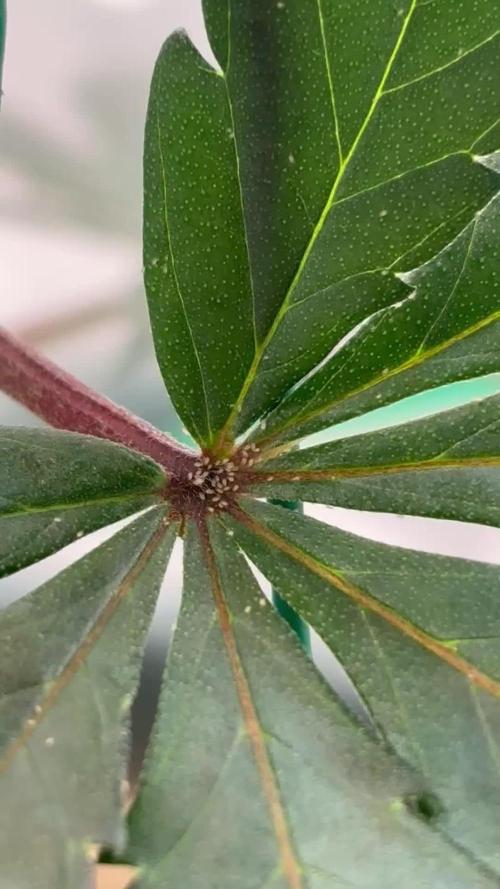
Focusing on training. ZDF looks perfect. The Grandpas cookies did have a slow start, and leaves aren't as healthy as the ZDF, but she is picking up speed. Gonna flip soon. Flip 6-10
Likes
4
Share


@Kayotic
Follow
Last defoliation
Moved to the 4×2, under the SF2000
Getting fat and frosty
Watering every other

Likes
10
Share


Likes
8
Share


@Random80
Follow
She was left alone for 10 days but it turns out that I managed to leave just the right amount of water in autopot. She used all the water and dried out her root just at the same time when I was back. She recovered nicely from overwatering and went pretty high witch was expected for part of sativa genetics in her. She was already in flowering phase but I still I decided to apply some heavy LST to lower her down and spread around the grow tent since she is the only one in. She has now covered 70% of my 80x80cm grow tent. Also I used BOOM BOOM spray twice to save her from LST shock.
First added bactrex 1 gr, orgatrex 20ml in 1 lit (BIO TABS) . After that I was using combination of 2ml orgatrex and 2ml of BIO PK 5-8 in 1 lit water with each watering. And she really started to use loads of water, 1,5 lit per day.
No photos during week 5 so I added early week 6

Likes
48
Share


@Rangaku
Follow
The GSC took off this week on a stretch and are looking really sativary long and pointy . Flushed again this week and will start sneaking in some bloom nutes once the stretch is done .
Likes
6
Share


@Santi_nf
Follow
3 semana en flora de las autos las demás están empezando a florecer algunas más rápidas que otras pero todo muy parejito

Tutti Candy · Zmoothiez

Critical Widow · Pev Seeds

Sweet Skunk Fast Version® · Sweet Seeds
Skywalker OG Runtz XL Auto · Sweet Seeds

Cheese Berry · 00seeds

Hard Diesel · Gea Seeds

Scrambler Haze · Blimburn Seeds
AK · Gea Seeds
Cachalote · Gea Seeds
Gealato Kush · Gea Seeds
Gorilla Glue #4 · Gea Seeds
Somango · Gea Seeds
Likes
4
Share


@GizaWRZ
Follow
Plants looks nice and heathy after some defoliation but they are still pretty small 🤔 dont know what is the reason, hopefully they gonna get bigger 🙏
Likes
6
Share


@masterofsmeagol
Follow
5/4 I stupidly watered everything this morning. They were pretty much perfect weight for transplant......then I watered them. Oh well. If that's the worst mistake I make I'll be ecstatic. Went back over and found my 1 gal and 2 of those wierd slanty airports that tapers and holds like a gallon and a half and washed them. I mixed up 12 gallons of soil in a garbage bag and mixed it thoroughly with my gloved hands. It's mixed good. Looking at my plants in sadness thinking, "today could've been the day" and noticed a Special Kush of average size I didn't water that weighed in the 220's. I was happy. I filled the pit arpund a cup before removing it leaving the perfect hole. Mykos and water were poured in. Plant came out of the cup REALLY easy. Suprisingly easy. This wasn't totally dry. I was amazed it came out so easy so I kinda rolled it around looking at the roots. I started lowering it in the hole and I felt something break away but it webt DIRECTLY into the hole made for it. I tucked some soil around it but it was pretty tight from packing it around the empty cup. Didn't take a picture but the plant is fine. That was an average size plant too. So I may have to give some of the strains I popped later a little longer before I transplant. After everything's been transplanted I'll need to change lighting again. I think I'll open the window and use the hps and the l.e.d on the days and nights cThat's these girls won't be hardening off. I so wanna go plant those others but my intuition tells me to wait until morning and it's been serving me well. A couple can stay in cups longer. Not much longer but still.
5/5 Transplanted everything but two this morning into 1 gals with 1/2 happy frog half ocean forest. Mykos and water used during transplant. Found put the l.e.d was on for 24hrs for a while. I made sure the timer switch was ON but it was a different cord plugged in. Oh well. All transplants went perfect. I'm picking up an adapter for the outlet so I can plug the power strip into the timer and only use one timer. I had to hang the 150watt hps back up with the 1,000 watt equivelant 105 true watts. I hope this lighting setup works. Chemdog #4 and One MK Ultra will be transplanted later today or later in the morning. I also opened the shade to the south facing window. Shits getting real.
EDÌT: I FINISHED TRANSPLANTING THE LAST TWO PLANTS AND PICKED UP THE ADAPTER SO I COULD HANG THE HPS NEXT TO THE L.E.D. THEY WERE FIBE WHILE I WAS GONE. EASIEST TRANSPLANTS EVER. THEY ALL LOOKED PERKY AND HAPPY SIX OR SEVEN HOURS POST TRANSPLANT. I OPENED THE CURTAIN TO (SOUTH FACING WINDOW) BUT I MADE SURE THE PLANTS WEREN'T IN THE DIRECT LIGHT. EVEN THOUGH IT WOULD PROBABLY BE FINE. LAST TIME I HAD SEEDLING IN DIRECT LIGHT. I'LL PLAY IT BY EAR BUT IM HAPPY.
EDIT 2. Went back over to meditate by the stream and do my qigong. It's 75 and BEAUTIFUL today. The girls will be going out for a few hours on days like this. Anyway when I went in I was surprised to see everything looking nice and happy with praying leaves. Nothing is in direct sunlight but damn that window let's in a lot of light.
5/6 Girls LOVED the transplant! They seem to be all happy. No stress. Easiest transplant I've done. Leaves are praying upwards so I think the lights are approx tje right distance. They'll be going outside soon to harden off. It's been in the 70s but it's rainy now. I'll play it by ear according to weather. I'll continue to monitor lighting and I may lower the hps.
5/7 The soil was super dry when I went over this morning. Everything looked awesome though. I used about a half gallon watering. I don't want to water to run off. I want to keep the nutes IN the soil. It's also easier to fix an undet watered plant than an over watered one. It came out to about a half gaterade bottle on the biggest and half that on the smallest. I'll gradually increase water after I monitor the response. The water sat on the soil for quit a while so they definitely needed it. Looking good so far.
5/8 Soil lookeddry this morning. I think I'm going to up the water. Last time I dod seeds I gave like a pink. Some plants still had a little dampness where I watered that I could see. Others looked dry but happy. I gave the REAL dry bigger ones a small circle around the rootball. Just in case. I'm thinking of lowering the hps slightly so it's at least level with tje L.E.D. That window being open gives tons of light. If u moved them slightly left they'd get DIRECT sun most of the time. I'll be bringing them outside soon to start hardening them off.
EDIT: WENT TO CHECK THE GIRLS AT 5 TO MAKE SURE THEY WERENT DRIED OUT. THESE GIRLS ARENT JUST GETTING BIGGER BY THE DAY THEYRE LOOKING BIGGER FROM MORNING TO NIGHT! ITS BEEN RAINING LIKE CRAZY BUT WE WILL HAVE GREAT WEATHER NEXT WEEK AND I'LL BE BRINGING THEM OUTSIDE. I'M SUPER HAPPY WITH GROWTH SO FAR. ILL PROBABLY HST (TOP/FIM) AT THE NEXT NODE. I WANT THEM TO SETTLE IN NICELY BEFORE STRESSING THEM.
5/9 I may have stupidly uploaded doubles of pictures from today. Soil LOOKED real dry. I gave the plants their first real watering. I still went light. Almost a gallon with all plants. I know many say I should be watering to runoff but I want to keep the nutes in the soul as long as I can I don't want to overwater. I always start out careful. Once they show they xan tolerate it I'll increase water next time. This weekend it will be raining but after that we are getting some real good weather and I'll he taking the girls out to begin hardening off. I also need to take a look and top/FIM the plants now that they are settled. Also need to wash grow bags and sanitize outside.
5/10 It's pouring out. Horrible night and morning but this is about cannabis. After the watering ALL the plants shot up in size! Substantially. Leaves are over the sides of containers. I think I'm somewhere close with the watering schedule. I may bring the hps light down a little. I also NEED to start HST. I need to FIM and/or top these girls. Unfortunately I've been dealing with medical problems of my wife so I haven't got to it. If I get some sleep I may do something this morning or in the afternoon.

Likes
13
Share


@Mazgoth
Follow
Im starting to using organic blackstrap molasses with water and one time just ph water.So im doing that for a week and then last week im flushing with only water