


Likes
Comments
Share


@Wishar_Garden
Follow
Week 13 (04/07 - 10/07)
06/04
Chopped her today, planned to keep her going until end of this week but needed space in flowering tent
She is smelling real good
Couple branches found some leaves with spider mites
She foxtailed quite a bit on the top due to her being too close too LED, couldn't get it higher

Likes
13
Share


@TPBzh
Follow
This week been quite busy. I had to be very careful to my bending clips, because I had left them too long on some branches and they were very hard to take off without breaking everything. It was very stressy for everyone in this story...but i manager to limit the damages and took off all of them. The final result is not bad, i think they are having a good shape, even if it is still quite a job to maintain all those branches
They are very strong, and making nice big leaves.
I had to defoliate them, but i don't want to do it too much, not so easy to judge.
They are now flowering and look healthy, will increase a bit their cocktail this next week.
I've started to give them 4 hours of night time this week, will see if that got an effect.
Feel free to let me know what u think about it.



Likes
11
Share


@420DeepGrow
Follow
📆 Semana 5
El engorde entra en su fase más intensa. Los cogollos aumentan rápidamente de tamaño, los cálices se apilan y la producción de resina se acelera, mientras la planta alcanza uno de los mayores consumos de agua y nutrientes de todo el cultivo, aumento al máximo bloom Booster y dejo de aplicar silicio para que asimile mejor el PK.
⚡ EC: 1.7 - 1.8
💧 pH:6.2 – 6.5
🌡️ Agua:21°C
🌫️ Humedad: 55–60%
💡 Intensidad: 1000–1100 PPFD
🔥 Nota de cultivo: La estabilidad en el riego, la nutrición y el ambiente será clave para conseguir cogollos más densos y resinosos.
Seguimos creciendo fuerte 💪!


Likes
10
Share


@Elguacho420
Follow
Muy buenas noches muchach@s.... Bueno, comento!, segunda semana de crecimiento de las lemon cookies kush! 🌱 Cómo ven hoy fue día de selección de las q para mi, novato, fueron las mejores para trasplantar a estas macetas q ya son las definitivas, las regué con ½lts de agua c/u, prendí el otro led y ahora hay una fiesta ahi dentro q no saben, terrible!!.. 😎🕺🏻💡 Bueno, ya las ven, están re lindas... Así q ya no las molesto más... Ahí están trankilamente... La semana que viene les cuento más... Buen finde y buenos humos para tod@s... 🔥 💨💨💨
🇪🇸🤝🏻🇦🇷

Likes
8
Share


@dank604
Follow
Well it seems to be slowing down in length over the past few days, just hit 21". Hoping it doesn't get any taller as I've had to keep adding spacers to my spacebucket.
I've still got some spots which I'm thinking could be light/heat stress. I'm adding cal-mag with my nutes at ph 6.3, flush a couple weeks back showed ph 6.3 runoff too so I believe it's not a lockout issue, hoping the community can chime in.
Hoping to see the buds fill out more with some frosty leaves soon.

Likes
44
Share


@Roberts
Follow
Bubba Kush Mintz Autoflower is growing great. She got some selective defoliation, and gets kst as needed. She is showing her first pistils, and will very stretching a lot in next few weeks. She is looking great. Thank you Aeque Genetics, Spider Farmer, and Athena. 🤜🏻🤛🏻🌱🌱🌱
Thank you grow diaries community for the 👇likes👇, follows, comments, and subscriptions on my YouTube channel👇. ❄️🌱🍻
Happy Growing 🌱🌱🌱
https://youtube.com/channel/UCAhN7yRzWLpcaRHhMIQ7X4g
Processing
Likes
22
Share


@Luv2Grow
Follow
Day 43 - First day of week 7 today and she looks really good just not sure if she’s really starting to flower yet. I’m hoping this is just typical of the GC strain.
Day 44 - No major changes, she’s growing and I’m loving the looks of her. Will continue uploading daily pictures.
Day 45 - She’s looking really good and budding more and more each day. Gave her straight pH’d water today and tomorrow and will give her another feeding on Saturday. She’s drinking almost a gallon of water a day.
Day 46 - Things are looking good with this girl. Bud sites are growing daily and this thing is a beauty. Gave her another feeding of just pH’d water and will “feed” her tomorrow.
Day 47 - ALL is looking good and she’s looking purdy. Gave her a feeding with the foxfarm nutes today. Did a true measurement to the biggest branch and she’s at 25.5”. Will continue to measure each day to see how much she’s growing in a 24 hour period.
Day 48 - Looking gorgeous and still stretching. Grew another two inches and is sitting at 27.5” right now. She’s really starting to fill in now and looking forward to the next few weeks.
Day 49 - The way thing thing is growing, she’s gonna be a beast. Gave her straight pH’d water tonight and will give her a feeding tomorrow. Looks like she finally stopped stretching, sitting at 27.5” still so hopefully she’ll start putting on the weight.
Likes
2
Share


@Luke_Lee
Follow
———————————————
WEEK 11 / DAY 72-78
BLOOM WEEK 4 / DAY 22-28
Mars Hydro FC-E3000
Floragard Professional GrowMix
11L fleece bags
Light: 50cm
Schedule: 12/12;
PPFD: 1050umol/m2/s
DLi: 45mol/m2/d
21° C - 65RH
3L per Plant
Hesi Bloom Complex (4ml/1L water)
Hesi Phosphor Plus (2ml/1L water)
BioBizz CalMag (1ml/1L water)
PH 6,5
Fan, extractor and pump ON 24/0.
————————————————————
•Day-72 / Bloomday-22
The fourth week of flowering begins.
•Day-73 / Bloomday-23
The plants were each watered with 3 liters of water with fertilizer solution.
They were also defoliated a little.

Likes
18
Share


@ZouzouCanna
Follow
On ajoute le paillis (paillis de bois dur) et les vers (red wigglers et night crawlers) au prochain pot de 25gallons !
We add mulch (hard wood mulch) and worms (red wigglers and night crawlers) to the next 25gal fabric pots !

Likes
3
Share


@LonelyStonerz
Follow
Transplanted two more of these blueberry autos into 5gal buckets. Did some training on one and am going to leave the rest. I took that video yesterday check out the REBOUND one day later, clearly NO transplant stress whatsoever!

Likes
1
Share


@Tastecraft
Follow
This cherry bomb is crushing it on all fronts. The smell is epic citrus berry. I’ve got her on a drip line now, with two 2gal/hr emitters running for 5 mins a couple of times a day. Can’t wait to watch the buds really fill in now.

Likes
2
Share

@GoodTimesOrganics
Follow
Welcome Back!💚
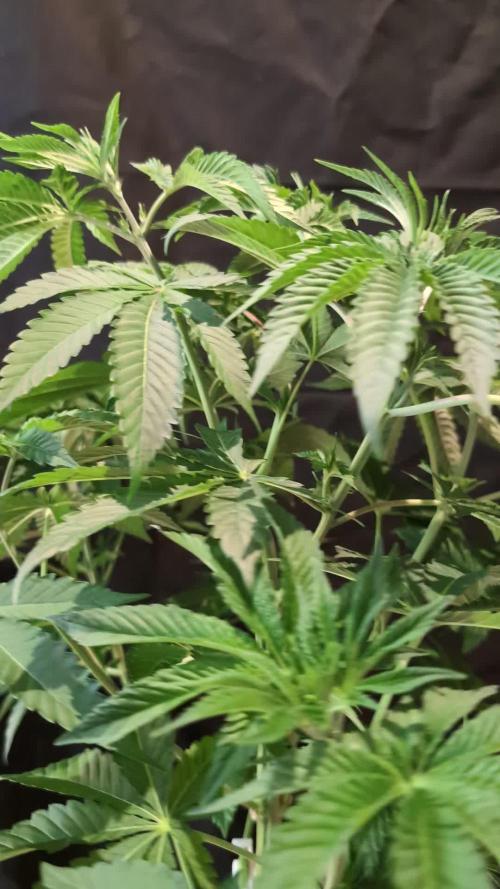
Die Sleepy Joe geht weiterhin gut in die Breite und unter den buschigen breiten Blättern beginnen sie die Seitentriebe allmählich nach oben zu bohren. Durch das abbinden der Seitentriebe bekommt die Pflanze nun ihre gewünschte Form.
Die Pflanze wird am 10.10.2025 in die Blüte übergeleitet.
Die Pflanze wirkt relativ kompakt und gut beieinander, was so typisch für eine starken Indicawuchs ist.
Die Umgebungsgegebenheiten sind weiterhin optimal:
—————
🌞 Temp: 24°C bis 26°C
🌚 Temp: 18°C bis 19°C
💨 RH: 68%
VPD: 0,7 kPa👍
—————
Grüne Grüße 🥦
Likes
21
Share


@Brujha77
Follow
Beginn Woche 3.
Wasserwechsel und neue Nährlösung für den AutoPot angesetzt.
Deutlicher Unterschied der beiden zu sehen (deutlich mehr Strech im AutoPot).
Aber auch die 2. Im Airpot steht gut da.
AutoPot 30l Tank
(Gedüngt wird nach dem Plan von Terra Aquatica für Coco).
Airpot wurde mit Greenhouse Feeding biolinie gedüngt je 4g/l
Ende Woche 3 und was soll ich sagen...
Bisher schaun beide gut aus, aber der Unterschied zwischen Airpot/AutoPot is schon Enorm (Vergleich hinkt etwas da ja auch Unterschiedlich gedüngt).
Der EC ist recht hoch, hoffentlich geht's gut. Leitungswasser kommt mit 0,8 aus dem Hahn.....

Likes
38
Share

@Sadhus
Follow
**Semaine 7 : Septième Semaine de Floraison – Phase Bulking Avancé (1-7 avril 2026)**
**Note :** Mise à jour hebdomadaire. Tout reste RAS, les plantes continuent leur bulking de manière très propre et homogène. Données consolidées TrolMaster + GrowOps (semaine 7 / semaine 11 globale).
### Contexte et Objectifs de la Semaine
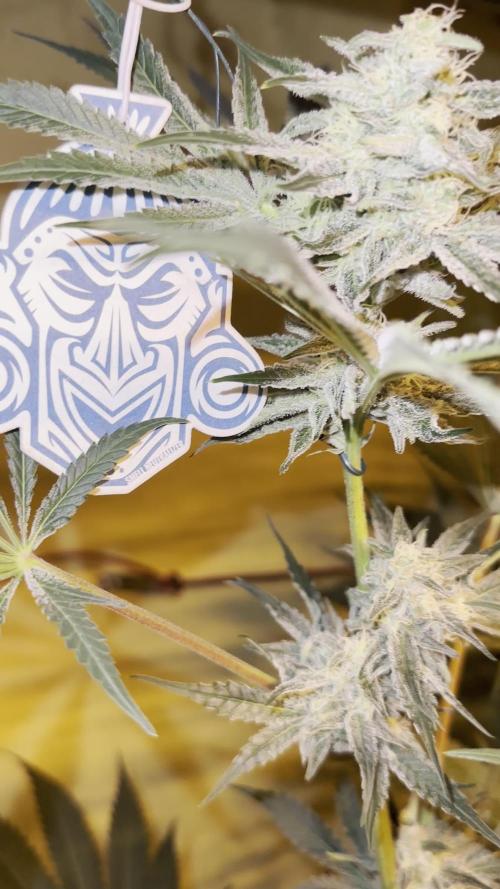
On est maintenant en **bulking avancé**. Les buds ont pris beaucoup de volume, les calices sont bien gonflés et la production de trichomes s’intensifie. Le stretch est terminé depuis longtemps, toute l’énergie est concentrée sur le remplissage floral, la densité et la résine.
Steering : **végétatif maintenu** (irrigations fréquentes, runoff 20-30 %, dryback nuit 8-12 %, VWC stable).
Objectifs : continuer le gonflement maximal des buds, booster la résine et les terpènes avec UV 90 min/jour, garder une stabilité parfaite des paramètres et éviter tout stress qui pourrait freiner la prise de poids finale.
**Petit point éducatif : Bulking avancé et rôle des boosters**
En semaine 7, la plante entre dans la phase où les buds « prennent du poids » rapidement. Le steering végétatif reste essentiel car il permet une absorption continue et élevée des nutriments sans stress hydrique excessif.
La combinaison actuelle (Cocos A+B + PK 13/14 + Sugar Royal + Green Sensation + Pure Zym + Silica Force + Cal-Mag Amino) est particulièrement adaptée :
- PK 13/14 et Sugar Royal alimentent directement la formation des fleurs et augmentent le poids sec.
- Green Sensation + Pure Zym stimulent le métabolisme et la santé racinaire en coco.
- Silica Force renforce les parois cellulaires (meilleure résistance et densité).
- Cal-Mag Amino prévient les carences classiques en flo (jaunissement bas ou pointe brûlée).
Maintenir EC autour de 2.6 et pH 5.8-6.0 évite les lockouts tout en permettant un uptake optimal. C’est le moment où on voit vraiment le retour sur investissement des boosters.
### Observations des Plantes
La plante dominante mesure toujours **150 cm** et domine clairement avec une structure massive, une canopée dense et une vigueur impressionnante. Le stretch est complètement stabilisé.
Les buds continuent de grossir de manière visible, les calices sont bien remplis et les trichomes se multiplient (brillance sucrée de plus en plus prononcée sur les sites supérieurs et moyens). Pistils commencent à changer de couleur et à s’enrouler.
Santé générale : excellente, feuillage vert profond, aucune feuille jaune ou nécrosée, zéro pest, zéro signe de stress ou carence. La plante secondaire suit correctement. Clones restent vigoureux. Les plantes sont pleinement concentrées sur le gonflement et la résine.
### Paramètres Environnementaux (TrolMaster + GrowOps – synthèse semaine 7)
- **Température jour** : 23-25 °C (moyenne live ~23.3 °C, cible 24 °C)
- **Température nuit** : 18-20 °C
- **Humidité jour** : 64-74 % (live ~58.9 %, cible 62 %)
- **Humidité nuit** : 49-59 %
- **VPD** : 0.8-1.2 kPa (live 0.94 kPa → idéal pour bulking)
- **PPFD moyen** : 750-777 (max ~814) → DLI 32 mol/m²/jour (optimal)
- **UV Light** : 90 min/jour (maintenu)
- **Far Red Light** : 30 min en fin de cycle
- **CO₂** : setpoint 900 ppm jour (enrichment actif)
- **EC solution** : 2.6 mS/cm (live 1.85-2.95 selon moments)
- **pH solution** : 5.8-6.0 (live 6.43, runoff 5.8-6.2)
- **Runoff EC** : 4-5 mS/cm
- **Irrigation** : Fréquente (4-5 cycles/jour)
- **Runoff % daily** : 20-30 %
- **Night dryback** : 8-12 %
- **Steering** : Végétatif confirmé
### Nutrition et Irrigation (Soupe actuelle)
**Nutriments utilisés cette semaine (doses par litre) :**
- Cocos A → 1 ml
- Cocos B → 1 ml
- CANNA PK 13/14 → 1 ml
- Green Sensation → 0.1 ml
- Pure Zym → 1 ml
- Sugar Royal → 1 ml
- Cal-Mag Amino → 1 ml
- Silica Force → 1 ml
- pH- → 0.5 ml (ajustement à 5.8-6.0)
Eau à ~20 °C, temp solution ~15-18 °C.
Irrigation fréquente avec dryback contrôlé → excellent équilibre pour maintenir le bulking sans excès ni carence.
### Problèmes et Ajustements
**RAS total.**
Aucune alerte GrowOps, aucune intervention nécessaire. Les paramètres restent très stables, le steering végétatif fonctionne à merveille et les plantes répondent parfaitement aux boosters. Aucun signe de fatigue ou de ralentissement.
### Plans pour la Semaine 8
- Maintenir steering végétatif + EC 2.6 (possible léger ajustement PK selon gonflement)
- UV rester à 90 min/jour
- Défoliation légère et ciblée (seulement les fan leaves qui bloquent vraiment la lumière sur les buds inférieurs)
- Photos rapprochées pour suivre l’évolution des trichomes et de la densité
- Commencer à réfléchir à la date de flush (généralement semaines 8-9 selon maturité des trichomes)
Ce journal sera mis à jour hebdomadairement.
#GrowLegendary #Zamnesia #Plagron #EternityGrowCup2
Les buds gonflent bien, les trichomes se développent et la plante dominante à 150 cm reste superbe. On approche du pic de résine, tout se passe idéalement ! 🌱✨
Likes
1
Share


@Urunascar
Follow
Terminando el stretching, se van llenando los espacios donde faltaban flores, espero que la circulación de aire sea suficiente, estoy regando de 2 a 3 veces al día dependiendo de que tanto estoy en casa para atenderlas, siempre riego hasta un 20% de escorrentía como mínimo (20% de la entrada). Un día me saltee el riego de la tarde y llegue a un dryback del 50% (generativo) no les gustó nada a las plantas y me mostraron signos de exceso de salinidad enseguida, ya volvieron a la normalidad y para el final de esta semana baje la EC de entrada a 1600EC


Likes
109
Share


@Prototype0181
Follow
Flipped on 17-7 to flower🌺 and the first issue came 🤷 the sativa dom cookie ( stretchy girl ) couldnt handle the feed and got a little burned, nothing to bad. She's going on a water only diet next two rounds.


Processing
Likes
16
Share


@Mrg7667
Follow
Great week all seemed to recover from transplant and lst! With new growth coming in
No more signs of any knats either wich is awesome hopefully thats gone.
Trying to keeping main branches at 10inches so i just lst them as needed
DDS are way more resilient when it comes to training choco i dint have ti adjust much or many

Likes
25
Share


@Ultraviolet
Follow
ANTHOCYANIN production is primarily controlled by the Cryptochrome (CR1) Photoreceptor ( !! UV and Blue Spectrums are primary drivers in the production of the pigment that replaces chlorophyll, isn't that awesome!
1. Diverse photoreceptors in plants
Many civilizations, including the sun god of ancient Egypt, thought that the blessings of sunlight were the source of life. In fact, the survival of all life, including humans, is supported by the photosynthesis of plants that capture solar energy. Plants that perform photosynthesis have no means of transportation except for some algae. Therefore, it is necessary to monitor various changes in the external environment and respond appropriately to the place to survive. Among various environmental information, light is especially important information for plants that perform photosynthesis.
In the process of evolution, plants acquired phytochrome, which mainly receives light in the red light region, and multiple blue light receptors, including his hytropin and phototropin, in order to sense the light environment. .. In addition to these, an ultraviolet light receptor named UVR8 was recently discovered. The latest image of the molecular structure and function of these various plant photoreceptors (Fig. 1), focusing on phytochrome and phototropin.
Figure 1
Ultraviolet-visible absorption spectra of phytochrome, cryptochrome, phototropin, and UVR8. The dashed line represents each bioactive absorption spectrum.
2. Phytochrome; red-far red photoreversible molecular switch
What is phytochrome?
Phytochrome is a photochromic photoreceptor, and has two absorption types, a red light absorption type Pr (absorption maximum wavelength of about 665 nm) and a far-red light absorption type Pfr (730 nm). Reversible light conversion between the two by red light and far-red light, respectively(Fig. 1A, solid line and broken line). In general, Pfr is the active form that causes a physiological response. With some exceptions, phytochrome can be said to function as a photoreversible molecular switch. The background of the discovery is as follows. There are some types of plants that require light for germination (light seed germination). From that study, it was found that germination was induced by red light, the effect was inhibited by subsequent far-red light irradiation, and this could be repeated, and the existence of photoreceptors that reversibly photoconvert was predicted. In 1959, its existence was confirmed by the absorption spectrum measurement of the yellow sprout tissue, and it was named phytochrome. Why does the plant have a sensor to distinguish between such red light and far-red light? There is no big difference between the red and far-red light regions in the open-field spectrum of sunlight, but the proportion of red light is greatly reduced due to the absorption of chloroplasts in the shade of plants. Similar changes in light quality occur in the evening sunlight. Plants perceive this difference in light quality as the ratio of Pr and Pfr, recognize the light environment, and respond to it.
Subsequent studies have revealed that it is responsible for various photomorphogenic reactions such as photoperiodic flowering induction, shade repellent, and deyellowing (greening). Furthermore, with the introduction of the model plant Arabidopsis thaliana (At) and the development of molecular biological analysis methods, research has progressed dramatically, and his five types of phytochromes (phyA-E) are present in Arabidopsis thaliana. all right. With the progress of the genome project, Fi’s tochrome-like photoreceptors were found in cyanobacteria, a photosynthetic prokaryotes other than plants. Furthermore, in non-photosynthetic bacteria, a homologue molecule called bacteriophytochrome photoreceptor (BphP) was found in Pseudomonas aeruginosa (Pa) and radiation-resistant bacteria (Deinococcus radiodurans, Dr).
Domain structure of phytochrome molecule
Phytochrome molecule can be roughly divided into N-terminal side and C-terminal side region. PAS (Per / Arndt / Sim: blue), GAF (cGMP phosphodiesterase / adenylyl cyclase / FhlA: green), PHY (phyto-chrome: purple) 3 in the N-terminal region of plant phytochrome (Fig. 2A) There are two domains and an N-terminal extension region (NTE: dark blue), and phytochromobilin (PΦB), which is one of the ring-opening tetrapyrroles, is thioether-bonded to the system stored in GAF as a chromophore. ing. PAS is a domain involved in the interaction between signal transduction-related proteins, and PHY is a phytochrome-specific domain. There are two PASs and her histidine kinase-related (HKR) domain (red) in the C-terminal region, but the histidine essential for kinase activity is not conserved.
3. Phototropin; photosynthetic efficiency optimized blue light receptor
What is phototropin?
Charles Darwin, who is famous for his theory of evolution, wrote in his book “The power of move-ment in plants” published in 1882 that plants bend toward blue light. Approximately 100 years later, the protein nph1 (nonphoto-tropic hypocotyl 1) encoded by one of the causative genes of Arabidopsis mutants causing phototropic abnormalities was identified as a blue photoreceptor. Later, another isotype npl1 was found and renamed phototropin 1 (phot1) and 2 (phot2), respectively. In addition to phototropism, phototropin is damaged by chloroplast photolocalization (chloroplasts move through the epidermal cells of the leaves and gather on the cell surface under appropriate light intensity for photosynthesis. As a photoreceptor for reactions such as escaping to the side of cells under dangerous strong light) and stomata (reactions that open stomata to optimize the uptake of carbon dioxide, which is the rate-determining process of photosynthetic reactions). It became clear that it worked. In this way, phototropin can be said to be a blue light receptor responsible for optimizing photosynthetic efficiency.
Domain structure and LOV photoreaction of phototropin molecule
Phototropin molecule has two photoreceptive domains (LOV1 and LOV2) called LOV (Light-Oxygen-Voltage sensing) on the N-terminal side, and serine / on the C-terminal side. It is a protein kinase that forms threonine kinase (STK) (Fig. 4Aa) and whose activity is regulated by light. LOV is one molecule as a chromophore, he binds FMN (flavin mononucleotide) non-covalently. The LOV forms an α/βfold, and the FMN is located on a β-sheet consisting of five antiparallel β-strands (Fig. 4B). The FMN in the ground state LOV shows the absorption spectrum of a typical oxidized flavin protein with a triplet oscillation structure and an absorption maximum wavelength of 450 nm, and is called D450 (Fig. 1C and Fig. 4E). After being excited to the singlet excited state by blue light, the FMN shifts to the triplet excited state (L660t *) due to intersystem crossing, and then the C4 (Fig. 4C) of the isoaroxazine ring of the FMN is conserved in the vicinity. It forms a transient accretionary prism with the tain (red part in Fig. 4B Eα) (S390I). When this cysteine is replaced with alanine (C / A substitution), the addition reaction does not occur. The effect of adduct formation propagates to the protein moiety, causing kinase activation (S390II). After that, the formed cysteine-flavin adduct spontaneously dissociates and returns to the original D450 (Fig. 4E, dark regression reaction).
Phototropin kinase activity control mechanism by LOV2
Why does phototropin have two LOVs? Atphot1 was found as a protein that is rapidly autophosphorylated when irradiated with blue light.
The effect of the above C / A substitution on this self-phosphorylation reaction and phototropism was investigated, and LOV2 is the main photomolecular switch in both self-phosphorylation and phototropism. It turns out that it functions as. After that, from experiments using artificial substrates, STK has a constitutive activity, LOV2 functions as an inhibitory domain of this activity, and the inhibition is eliminated by photoreaction, while LOV1 is kinase light. It was shown to modify the photosensitivity of the activation reaction. In addition to this, LOV1 was found to act as a dimerization site from the crystal structure and his SAXS. What kind of molecular mechanism does LOV2 use to photoregulate kinase activity? The following two modules play important roles in this intramolecular signal transduction.
Figure 4
(A) Domain structure of LOV photoreceptors. a: Phototropin b: Neochrome c: FKF1 family protein d: Aureochrome (B) Crystal structure of auto barley phot1 LOV2. (C) Structure of FMN isoaroxazine ring. (D) Schematic diagram of the functional domain and module of Arabidopsis thaliana phot1. L, A’α, and Jα represent linker, A’α helix, and Jα helix, respectively. (E) LOV photoreaction. (F) Molecular structure model (mesh) of the LOV2-STK sample (black line) containing A’α of phot2 obtained based on SAXS under dark (top) and under bright (bottom). The yellow, red, and green space-filled models represent the crystal structures of LOV2-Jα, protein kinase A N-lobe, and C-robe, respectively, and black represents FMN. See the text for details.
1) Jα. LOV2 C of oat phot1-to α immediately after the terminus
Rix (Jα) is present (Fig. 4D), which interacts with the β-sheet (Fig. 4B) that forms the FMN-bound scaffold of LOV2 in the dark, but unfolds and dissociates from the β-sheet with photoreaction. It was shown by NMR that it does. According to the crystal structure of LOV2-Jα, this Jα is located on the back surface of the β sheet and mainly has a hydrophobic interaction. The formation of S390II causes twisting of the isoaroxazine ring and protonation of N5 (Fig. 4C).
As a result, the glutamine side chain present on his Iβ strand (Fig. 4B) in the β-sheet rotates to form a hydrogen bond with this protonated N5. Jα interacts with this his Iβ strand, and these changes are thought to cause the unfold-ing of Jα and dissociation from the β-sheet described above. Experiments such as amino acid substitution of Iβ strands revealed that kinases exhibit constitutive activity when this interaction is eliminated, and that Jα plays an important role in photoactivation of kinases.
2) A’α / Aβ gap.
Recently, several results have been reported showing the involvement of amino acids near the A’α helix (Fig. 4D) located upstream of the N-terminal of LOV2 in kinase photoactivation. Therefore, he investigated the role of this A’α and its neighboring amino acids in kinase photoactivation, photoreaction, and Jα structural change for Atphot1. The LOV2-STK polypeptide (Fig. 4D, underlined in black) was used as a photocontrollable kinase for kinase activity analysis. As a result, it was found that the photoactivation of the kinase was abolished when amino acid substitution was introduced into the A’α / Aβ gap between A’α and Aβ of the LOV2 core. Interestingly, he had no effect on the structural changes in Jα examined on the peptide map due to the photoreaction of LOV2 or trypsin degradation. Therefore, the A’α / Aβ gap is considered to play an important role in intramolecular signal transduction after Jα.
Structural changes detected by SAXS
Structural changes of Jα have been detected by various biophysical methods other than NMR, but structural information on samples including up to STK is reported only by his results to his SAXS. Not. The SAXS measurement of the Atphot2 LOV2-STK polypeptide showed that the radius of inertia increased from 32.4 Å to 34.8 Å, and the molecular model (Fig. 4F) obtained by the ab initio modeling software GASBOR is that of LOV2 and STK. It was shown that the N lobes and C lobes lined up in tandem, and the relative position of LOV2 with respect to STK shifted by about 13 Å under light irradiation. The difference in the molecular model between the two is considered to reflect the structural changes that occur in the Jα and A’α / Aβ gaps mentioned above.
Two phototropins with different photosensitivity
In the phototropic reaction of Arabidopsis Arabidopsis, Arabidopsis responds to a very wide range of light intensities from 10–4 to 102 μmol photon / sec / m2. At that time, phot1 functions as an optical sensor in a wide range from low light to strong light, while phot2 reacts with light stronger than 1 μmol photon / sec / m2. What is the origin of these differences? As is well known, animal photoreceptors have a high photosensitivity due to the abundance of rhodopsin and the presence of biochemical amplification mechanisms. The exact abundance of phot1 and phot2 in vivo is unknown, but interesting results have been obtained in terms of amplification.
The light intensity dependence of the photoactivation of the LOV2-STK polypeptide used in the above kinase analysis was investigated.
It was found that phot1 was about 10 times more photosensitive than phot2. On the other hand, when the photochemical reactions of both were examined, it was found that the rate of the dark return reaction of phot1 was about 10 times slower than that of phot2. This result indicates that the longer the lifetime of S390II, which is in the kinase-activated state, the higher the photosensitivity of kinase activation. This correlation was further confirmed by extending the lifespan of her S390II with amino acid substitutions. This alone cannot explain the widespread differences in photosensitivity between phot1 and phot2, but it may explain some of them. Furthermore, it is necessary to investigate in detail protein modifications such as phosphorylation and the effects of phot interacting factors on photosensitivity.
Other LOV photoreceptors Among fern plants and green algae, phytochrome ɾphotosensory module (PSM) on the N-terminal side and chimera photoreceptor with full-length phototropin on the C-terminal side, neochrome (Fig. There are types with 4Ab). It has been reported that some neochromes play a role in chloroplast photolocalization as a red light receiver. It is considered that fern plants have such a chimera photoreceptor in order to survive in a habitat such as undergrowth in a jungle where only red light reaches.
In addition to this, plants have only one LOV domain, and three proteins involved in the degradation of photomorphogenesis-related proteins, FKF1 (Flavin-binding, Kelch repeat, F-box 1, ZTL (ZEITLUPE)), LKP2 ( There are LOV Kelch Protein2) (Fig. 4Ac) and aureochrome (Fig. 4Ad), which has a bZip domain on the N-terminal side of LOV and functions as a gene transcription factor.
4. Cryptochrome and UVR8
Cryptochrome is one of the blue photoreceptors and forms a superfamily with the DNA photoreceptor photolyase. It has FAD (flavin adenine dinucle-otide) as a chromophore and tetrahydrofolic acid, which is a condensing pigment. The ground state of FAD is considered to be the oxidized type, and the radical type (broken line in Fig. 1B) generated by blue light irradiation is considered to be the signaling state. The radical type also absorbs in the green to orange light region, and may widen the wavelength region of the plant morphogenesis reaction spectrum. Cryptochrome uses blue light to control physiological functions similar to phytochrome.
It was identified as a photoreceptor from one of the causative genes of UVR8 Arabidopsis thaliana, and the chromophore is absorbed in the UVB region by a Trp triad consisting of three tryptophans (Fig. 1D). It is involved in the biosynthesis of flavonoids and anthocyanins that function as UV scavengers in plants.
Conclusion
It is thought that plants have acquired various photoreceptors necessary for their survival during a long evolutionary process. The photoreceptors that cover the existing far-red light to UVB mentioned here are considered to be some of them. More and more diverse photoreceptor genes are conserved in cyanobacteria and marine plankton. By examining these, it is thought that the understanding of plant photoreceptors will be further deepened.

Likes
6
Share


@Jack22
Follow
What do you think about these first days? The humidity is not much stable but I’m planning to buy a humidifier in the next week.