




Likes
2
Share
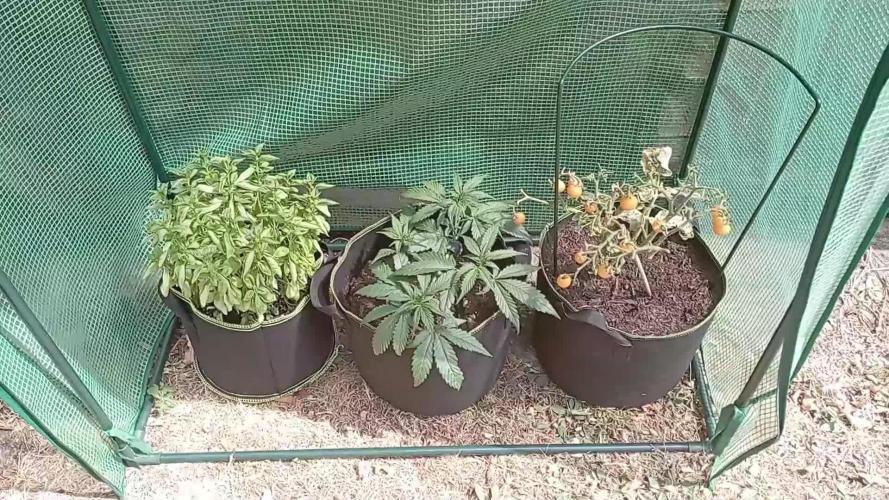

@Selkot
Follow
Great growth this week, I was able to train the two upper branches and remove the lower branches from the four main colas.
The cross-shaped structure is now wide enough, so I can let the four colas grow freely toward the sun. It's still over 30°C during the day here, with only two hours of rain all week! We're experiencing record-breaking heat...
There are still no signs of flowering. The pre-stretch should begin this week, and I expect the first pistils to appear within the next 7–10 days. In the meantime, Ill keep lightly cleaning up the lower growth and gradually increase the nutrient dosage.
This Strawberry G is proving to be incredibly tough: not a single sign of nutrient burn or deficiency since day one despite a very basic substrate, no unnecessary stem stretch that would have made her weak, and no heat stress day or night that could have slowed her growth.
So far, I'm very impressed with this third-generation strain!


Likes
14
Share


@TheCannaProphet
Follow
~ FASTBUDS TESTER #2202 ~
Well friends, here we go on another 'canna-venture' together!
The grow room has had a complete remodel and some upgrades done to it including brand spanking new 4x8 and 4x4 tents and a Trolmaster Hydro X controller along with a new Control Panel.
This tester strain is one of six tester strains that FastBuds has graciously provided me with and I'm looking forward to seeing what this girl has to offer when she's grown to her full potential!
One drawback of 'testers' is I have little to no information on it other than its number and that it's an autoflower... 🤪 But, it's ALWAYS a blast growing them for me because not knowing a lot allows me to just concentrate on the essentials: Light, Environment, Water, Nutrients and possibly a bit of LST... not complicated, just basics like keeping a constant temperature and RH in the tent at a level that gives a good VPD, watering when almost dry and maintaining proper light levels according to their stage of growth.
____________________________________________________________________________________________________________________________________________________________________________________________________________________________________________________________________________________________________________________________________________________________________________________________________________________________________________________
~THE SETUP~
~Initially seeds were lightly scuffed, then soaked for 3 hours in 78℉ distilled water after which they were transferred to moist paper towels laid out in a Jiffy Pellet plastic starter tray with lid. Underneath the tray was placed a Vivosun Heat Mat with Controller that was set to 78℉ where they stayed until their tap roots emerged.
~Planted into Jiffy Peat Pellets that were hydrated with distilled water warmed to 78℉ with a 7.0 ph.
~Once roots emerge from the Jiffy Pellet they're transferred to their fabric pots.
~Grown 100% organic in a 4g Gronest fabric pot and a 3g fabric pot by Wraxly filled with Mother Earth 70/30 Coco/Perlite medium and initially amended with Dr. Earth 4-4-4 / Earthworm Castings / Dr. Earth Flower Girl 3-9-4 and Coast of Maine Stonington Blend Organic Plant Food 5-2-4.
~19/5 light cycle for the entire run with supplemental UVA added during flower. Lights are controlled by a Trolmaster Hydro X controller set for a 15min Sunrise/Sunset simulation.
~Top dressing every 3-4 weeks with slow release dry amendments and Earthworm castings.
~Straight water ph'd @ 6.2-6.8 when needed and bi-weekly Compost Tea's.
____________________________________________________________________________________________________________________________________________________________________________________________________________________________________________________________________________________________________________________________________________________________________________________________________________________________________________________
Weekly Updates:
12/1- I soaked both seeds for 3 hours in 78℉ distilled water after which they were transferred to moist paper towels laid out in a Jiffy Pellet plastic starter tray with lid. Underneath the tray was placed a Vivosun Heat Mat with Controller that was set to 78℉ where they stayed until their tap roots emerged roughly 24 hours later.
12/3- Today their tap roots were about 1/2 to 3/4" so at 11 am I transferred them into Jiffy Peat Pellets that were hydrated with distilled water warmed to 78℉ with a 7.0 ph using a tine off of a plastic fork as a 'mini trowel' to make a hole in the pellet and to gently cover the tap root, leaving only the seed head slightly exposed. This method accomplishes most of the initial work the seed has to do by eliminating having to orientate itself, push it's root down and head up. By 10pm the #1 seed had her cotyledon leaves opened and the #2 isn't far behind!
12/5- Well this is the full Day One for the #2 FBT #2202 and the second day for her sister! I'll keep them in the covered/heated Jiffy tray until I see their roots beginning to emerge from the peat pellet, then I'll transfer them gently into their respective fabric pots. The #1 will be going into the 4g Gronest pot from FastBuds and the #2 will reside in a 3g pot by Wraxly, which I'm trying out for the first time.
12/7- Yesterday I checked the #1 tester and she had roots starting to emerge from her pellet so I transferred her into her 4g Gronest pot. After making a hole in the medium for the peat pellet, I coated the entire surface with Xtreme Gardening Mycos then placed the pellet in the hole and planted her in. Lastly, I watered her in with about 4oz of de-chlorinated water with 3ml/g of FishShit added which was then ph'd to 6.4 @ 75℉ after which I placed a humidome over her for 24hrs to ensure that the humidity stays constant.
The #2 tester is doing great and I'm confident that she should be ready to transfer into her fabric pot in the next couple of days!
😎💚 Thank you for checking out my passion in life! Please visit as often as you wish and I hope you enjoy this journey as much as I know I will! Grow Strong! 💪😎🤙
Likes
10
Share


@TrimQueen
Follow
This week I have moved out from my last apartment and have moved into a new one. Now she has had more space to develop. She is showing her first pistilos but the smell still under control. Here is winter and too windy, so the smell prob is not a big prob. I'm Intending to let her bloom for at least 2 months / or 2 months and half more. Feed her with 4-14-8 organic yesterday. Shes responding good about it.
Likes
5
Share


@Lagriculteur420
Follow
This week plant continue growing and Blooming, i Can see the very first small pistil, i've reworked my lst and made a top crop superguano top dresses

Processing
Likes
15
Share


@MG2009
Follow
05/19/2020
All going well, have to grow in containers this season, I might be moving before harvest so only veggies in the ground.
But all are adjusting well 😊
I will give more details on individual plants shortly
#1 is10" tall new growth looks good getting thick.
#2 is 11.5" tall
#4 is 7" tall but healthy
#5 is 16"
Likes
26
Share


@GroloCup
Follow
New week, same deal... She's growing and things are looking good. Roots are now starting to make it to the water so she's going to be upgrading to a little stronger brew on the next rez change.

Likes
Comments
Share


Likes
32
Share


Likes
4
Share


@Mr_nugs_lover_David
Follow
The plant looks super bushy and also very very strong and happy, she's growing super fast, and she's also enjoying life man, really happy to see this lady enjoying, she has been mainlain ed by removing the main stem and allowing the 4 secondary low ones to become the main ones, after that she got topped on each main apical and that's how we have now on week 9 this beauty, a fat runtz muffin bush! 😍

Likes
2
Share
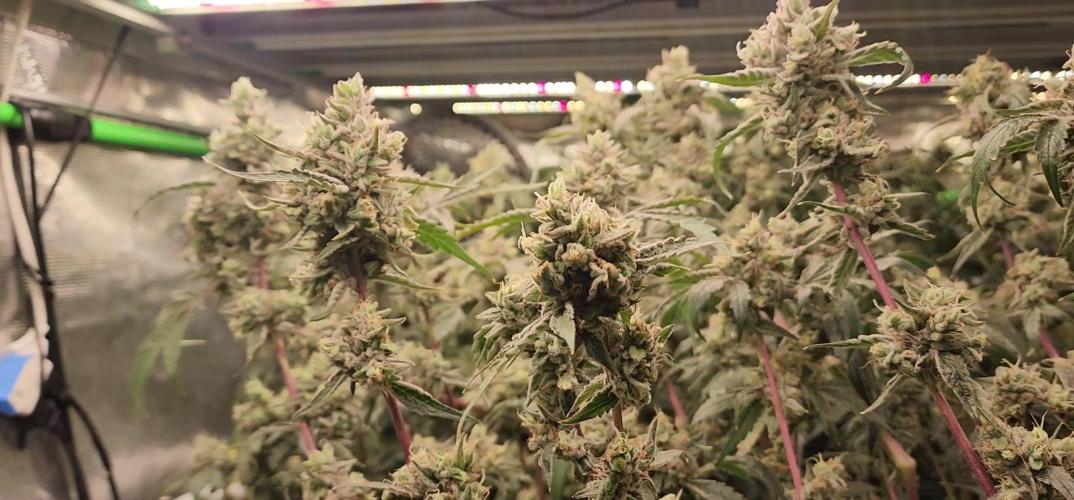

@Ensign420
Follow
|»» LOG DISCLAIMER: Not intended as a grow guide. Grow log entries are usually posted 3-4 weeks later and are for my learning reference. ««|
Introduction - Week 23 Summary -
Ensign's log, stardate 17759.5,
Another grow week..
In the main tent, nothing but general checkups and straight RO water.
In the veg tent, been tending to solo cup waterings. Also transplanted rooted Coco Coins and topped the garden.
Furthermore, started the next grow cycle and cut more clones to begin my first breeding project.
Peace & Good Memories Father..
Onwards to next week..
[START OF WEEK 23]
==========================================================
---------- [ 3x3 VEG TENT - GR3 ] ----------
Heady OG BX1 #1 - WEEK 15 - Full Veg
TKO #2 - WEEK 05 - Full Veg
Chill Out OG #3 - WEEK 12 - Full Veg
Chill Out OG #2 - WEEK 08 - Full Veg
---------- [ 4x4 MAIN TENT - GR30 ] ----------
Chill Out OG #2 - WEEK 23 - Full Bloom Wk9
TKO #2-2 - WEEK 17 - Full Bloom Wk9
Heady OG BX1 #1 - WEEK 19 - Full Bloom Wk9
04/06/26 → 04/12/26 [WEEK 23]
This Week's Estimated Goals
----------------------------------------------------------------------------------------------
DLI: ~16 mol/m²/d
PPFD: ~400 μmol/m²/s
VPD: ~1.2 kPa
This Week's Meter Readings & Averages
----------------------------------------------------------------------------------------------
Light On/Off: 16:00 - 10:00 | Wattage: ~268.6W [LV03]
Distance From Canopy: ~[19”, 3”, 3”]
Plant Height: ~[33”, 49”, 49”]
Max Plant Height: ~52” [Lamp-to-Soil Distance]
DLI: ~14.73 mol/m²/d
PPFD: ~372 μmol/m²/s
VPD: ~0.61 kPa
Soil %: ~[53.7, 43.9, 47.6, 43.3, 50.0, 56.1, 49.0, 58.3, 50.7, 89.4]
==========================================================
Day 01 - Monday - 04/06/26 - Total Days: 152
-----------------------------------
Daily Averages ~[+01:00]
- Temps: 77.7°F [25.4°C]
- Humidity: 81.1%
- VPD: 0.61 kPa
- Soil %: [52, 41, 47, 41, 51, 57, 48, 59, 51, 88]
-----------------------------------
- [22:19]: Night check on the 4x4 tent.
--- Wow the garden is looking incredible and smelling even better.
--- The under canopy is looking great.
--- Harvest day is now 9 days away.
- [22:24]: Checked the Ecowitt soil moisture sensor data:
------------------ [ 3x3 VEG TENT – GR3 ] ----------------
------ 52% - [CH01 » M1 » VBL – Heady OG BX1 #1-1]
------ 41% - [CH02 » M2 » VBR – TKO #2]
------ 45% - [CH03 » M3 » VFL – Chill Out OG #3]
------ 41% - [CH04 » M4 » VFR – Chill Out OG #2]
----------------- [ 4x4 MAIN TENT – GR30 ] ---------------
------ 50% - [CH05 » P1 » FLT – Chill Out OG #2]
------ 57% - [CH06 » P1 » FLB – Chill Out OG #2]
------ 48% - [CH07 » P2 » BLT – TKO #2-2]
------ 59% - [CH08 » P2 » BLB – TKO #2-2]
------ 51% - [CH09 » P3 » FRT – Heady OG BX1 #1]
------ 88% - [CH10 » P3 » FRB – Heady OG BX1 #1]
--------- Veg: ~38%-45% | Flower: ~45%-55%
--------- General: ~30% [Dry] «| ~45-60% [Moist] |» ~70% [Wet]
- [22:38]: Checked the 3x3 veg tent.
--- Veg garden is looking great.
--- Two solo clones need watering.
- [22:44]: Here are the starting initial watering ranges:
------ Heady OG BX1 #1-2 » 255.4g → 335.4g
------ Gorilla Goat #1-2 » 294.4g → 325.4g
--------- General Weight Range: [Dry] ~275g «| [Dryback] ~300g |» ~325g-400g [Wet]
--- Both cups were last watered 2-4 days ago.
--- Took the starting weight of both clones before watering,
------ Heady OG BX1 #1-2 » 286.3g
------ Gorilla Goat #1-2 » 292.4g
--- While on a scale,
--- Evenly misted the top of both cups with RO water.
--- Did not spray the top growth.
--- Misted 10-20 sprays. Waited a moment, then misted again.
--- Repeated this process until both cups weighted at least 300g.
--- There was no runoff.
- [23:04]: Took the saturated weight of both cups after watering,
------ Heady OG BX1 #1-2 » 365.4g
------ Gorilla Goat #1-2 » 365.4g
--- Updated the wet weight and watering dates for both cups.
--- Placed both cups back into the tent.
--- Woah veg cuttings in the propagation tray look under-watered.
--- Misted each Coco coin with 10-15 sprays of RO water.
--- Also misted the top growth and added more RO water to the bottom drip tray.
- [23:19]: Checked the humidifiers.
--- Tanks are still full and no leaks found.
Day 02 - Tuesday - 04/07/26 - Total Days: 153
-----------------------------------
Daily Averages ~[+01:00]
- Temps: 77.7°F [25.4°C]
- Humidity: 82.2%
- VPD: 0.58 kPa
- Soil %: [52, 41, 46, 41, 50, 56, 48, 59, 50, 89]
-----------------------------------
- [20:39]: Night check on the 4x4 tent.
--- The garden is smelling incredible and buds are stacking weight.
--- The terpenes are definitely on the fuel-side (from fuel, earthy, floral, fruity/sweet).
--- Unfortunately based on terpenes, Chill Out OG is probably not for me. Although still have both the #2 and #3 as mothers in the veg tent.
--- More impressed with the growth of the #3 pheno which seems to express more broad-leaf growth (similar to the TKO #2 pheno) and may decide to flower her later. Will keep both mother plants for now, but unfortunately, probably won’t be breeding with them.
- [20:45]: Checked the Ecowitt soil moisture sensor data:
------------------ [ 3x3 VEG TENT – GR3 ] ----------------
------ 52% - [CH01 » M1 » VBL – Heady OG BX1 #1-1]
------ 41% - [CH02 » M2 » VBR – TKO #2]
------ 48% - [CH03 » M3 » VFL – Chill Out OG #3]
------ 41% - [CH04 » M4 » VFR – Chill Out OG #2]
----------------- [ 4x4 MAIN TENT – GR30 ] ---------------
------ 49% - [CH05 » P1 » FLT – Chill Out OG #2]
------ 56% - [CH06 » P1 » FLB – Chill Out OG #2]
------ 48% - [CH07 » P2 » BLT – TKO #2-2]
------ 59% - [CH08 » P2 » BLB – TKO #2-2]
------ 51% - [CH09 » P3 » FRT – Heady OG BX1 #1]
------ 89% - [CH10 » P3 » FRB – Heady OG BX1 #1]
--------- Veg: ~38%-45% | Flower: ~45%-55%
--------- General: ~30% [Dry] «| ~45-60% [Moist] |» ~70% [Wet]
- [20:46]: Checked the 3x3 veg tent.
--- Veg garden is looking healthy.
--- Clones don’t need watering and propagation cuttings are looking a lot better.
- [20:58]: Checked the humidifiers.
--- Tanks are still full and no leaks found.
--- With harvest 8 days away, have already started to plan out the next grow cycle which will also be my first long-term breeding project.
--- Need to ultimately decide on mother plants to breed to the keeper pheno of the Heady OG BX1 (#1).
--- As of right now, plan to do a full tent pollination in the main tent with 4 mother plants. Currently the mothers will be:
------ Heady OG BX1 [Mendo Dope Farms] (#1 pheno)
------ TKO [James Loud Genetics] (#2 pheno)
------ Garlic Budder [Humboldt Seeds Company] (original #1 pheno)
------ Gorilla Goat [Irie Genetics] (#1 pheno)
Day 03 - Wednesday - 04/08/26 - Total Days: 154
-----------------------------------
Daily Averages ~[+01:00]
- Temps: 78.8°F [26.0°C]
- Humidity: 81.6%
- VPD: 0.62 kPa
- Soil %: [53, 41, 48, 41, 48, 56, 49, 58, 50, 89]
-----------------------------------
- [16:05]: Evening check on the 3x3 veg tent.
--- Veg garden is looking great.
--- TKO #2 needs watering.
- [16:09]: Here is the starting initial watering range:
------ TKO #2 » 252.5g → 335.5g
--------- General Weight Range: [Dry] ~275g «| [Dryback] ~300g |» ~325g-400g [Wet]
--- Been 3 days since the last watering.
--- Took the starting weight before watering,
------ TKO #2 » 252.5g » 284.9g
--- While on a scale,
--- Evenly misted the top of the cup with RO water.
--- Did not spray the top growth.
--- Misted 10-20 sprays. Waited a moment, then misted again.
--- Repeated this process until the cup weighted at least 300g.
--- There was no runoff.
- [16:22]: Took the saturated weight after watering,
------ TKO #2 » 252.5g » 365.7g
--- Updated the wet weight and watering date.
--- Placed the cup back into the tent.
--- Going to start cutting clones for the next grow cycle.
- [16:47]: Filled a measuring cup with 1 cup of RO water.
------ Added 1/8tsp of Horticultural Aloe
--- Mixed the solution and poured it straight into a clear solo cup.
--- Placed the PVC rig into the cup just above the aloe water.
--- Okay! Time to take the cuttings!
--- Using a pair of clean trimmers,
- [17:35]: Cut several clonal cuttings.
--- Only need one cutting to root, but took extra cuttings of each cultivar.
--- Made sure to trim most of the branches leaving a top node or two.
--- Did not cut any leaf fingers and made sure to cut the tip of the stalk (about 45-degree) before placing each cutting into the cup of aloe solution.
--- Made sure each tube on the PVC rig had the correct names labeled.
- [17:36]: Also topped and defoliated the entire veg garden.
--- Mulched the trimmings.
--- Placed the cup into the veg tent.
--- Have the cup resting on top of the drip tray (front center pot).
--- Will change the water out tomorrow and plan to start rooting in two days.
--- The current rooting Coco Coin cuttings probably need to be transplanted into solo cups by now.
- [17:44]: Checked for roots and all Coco Coins had roots.
--- Going to transplant one of each pheno.
--- Planting into clear cups with bottom holes cut out for drainage.
--- Will also be using opaque red cups (without holes) to keep the roots protected from light damage.
--- Partially filled the clear cup with recycled BuildASoil 3.0 potting soil.
--- Made sure the soil at the bottom of each cup was well compacted and had enough room for the Coco Coin.
- [18:04]: Inoculated each cup with Great White mycorrhizae along with a bit of Beauveria Bassiana.
------ Sprinkled 1/16tsp of Great White
------ Sprinkled 1/64tsp of Beauveria Bassiana Plus
--- Mainly tried to dust the center of each cup.
- [18:07]: Placed a rooted Coco Coin into each inoculated cup.
--- Made sure each cup still had enough room for more soil.
--- To fully hydrate all Coco Coins, misted each with about 20-30 sprays of RO water.
- [18:17]: Gently filled each cup with more soil.
--- Completely covered each Coco Coin making sure to tuck the sides in.
--- Each Coco Coin is about 1/4-1/2 inch below the top soil.
--- Marked the names on each cup with blue painter's tape.
--- Also defoliated both cups and removed the lowest fan leaves.
- [18:35]: Covered the soil with BuildASoil Organic Straw Mulch.
--- Made sure the top soil was completely covered.
--- Culled the extra Garlic Budder and Chill Out OG phenos.
--- Mulched the trimmings.
- [19:01]: Filled a measuring cup with 2 cups of RO water.
------ Added 1/64tsp of Quillaja Saponaria Extract [60]
------ Added 1/16tsp of Horticultural Aloe
------ Added 1/16tsp of Horticultural Coconut
------ Added 1/8tsp of Mycrobe Complete
--- Mixed and poured the solution straight into a spray bottle.
- [19:03]: Took the initial dry soil weight before watering,
------ Garlic Budder OG#1 » 276.8g
------ Chill Out OG #3 » 260.0g
--- While on a scale,
--- Evenly misted the top of both cups with the wetting solution.
--- Did not spray the top growth.
--- Misted 10-20 sprays. Waited a moment, then misted again.
--- Repeated this process until each cup weighted at least 300g.
--- There was no runoff.
- [19:36]: Took the saturated weight after watering,
------ Garlic Budder OG#1 » 335.4g
------ Chill Out OG #3 » 335.3g
--- Marked the date, pheno names, and weight ranges on each red opaque cup with blue painter's tape.
--- Then placed both clear cups into their corresponding red cups.
- [19:41]: Placed both cups into the 3x3 veg tent,
--- Removed the seedling plug tray and have both cups resting in the propagation drip tray.
--- As for PPFD, at the lowest light intensity (and raised ~14 above the tray), the PPFD is around 40 μmol/m²/s which gives a DLI of 2.59 mol/m²/d under an 18/6 light cycle.
- [19:45]: Checked the Ecowitt soil moisture sensor data:
------------------ [ 3x3 VEG TENT – GR3 ] ----------------
------ 58% - [CH01 » M1 » VBL – Heady OG BX1 #1-1]
------ 42% - [CH02 » M2 » VBR – TKO #2]
------ 48% - [CH03 » M3 » VFL – Chill Out OG #3]
------ 41% - [CH04 » M4 » VFR – Chill Out OG #2]
----------------- [ 4x4 MAIN TENT – GR30 ] ---------------
------ 48% - [CH05 » P1 » FLT – Chill Out OG #2]
------ 56% - [CH06 » P1 » FLB – Chill Out OG #2]
------ 48% - [CH07 » P2 » BLT – TKO #2-2]
------ 58% - [CH08 » P2 » BLB – TKO #2-2]
------ 51% - [CH09 » P3 » FRT – Heady OG BX1 #1]
------ 89% - [CH10 » P3 » FRB – Heady OG BX1 #1]
--------- Veg: ~38%-45% | Flower: ~45%-55%
--------- General: ~30% [Dry] «| ~45-60% [Moist] |» ~70% [Wet]
- [19:47]: Checked the 4x4 tent.
--- The garden is smelling and looking great.
--- Buds are all ripening and smelling gassy and dank.
--- The under canopy is looking clean and all pots look good.
--- Took the trimmings from earlier and top dressed each pot.
--- Tried to spread the trimmings evenly.
- [20:07]: Quickly checked on the RO reservoir and auto-watering system.
--- Everything looked good and no leaks detected.
--- The gravity feed was holding steady at ~2 psi of pressure at ~22” from the floor.
--- Checked the humidifiers.
--- Tanks are still full and no leaks found.
Day 04 - Thursday - 04/09/26 - Total Days: 155
-----------------------------------
Daily Averages ~[+01:00]
- Temps: 79.2°F [26.2°C]
- Humidity: 80.7%
- VPD: 0.65 kPa
- Soil %: [57, 46, 51, 43, 49, 56, 49, 58, 51, 89]
-----------------------------------
- [19:06]: Night check on the 4x4 tent.
--- Garden is smelling dank and buds are looking frosty.
--- Bud growth is finishing up quite nicely and terpenes are louder than ever. Nice.
--- The under canopy is also clean and pots look good.
- [19:11]: Checked on the BluMat soil moisture sensors:
------ Chill Out OG #2 » 99mbars
------ Heady OG BX1 #1 » 59mbars
------ TKO #2 » 84mbars
--------- Watering Range: [Too Wet] ~25mbars «| [Ideal Target] ~40-80mbars |» ~125mbars [Too Dry]
--------- BluMat Max Values: [10mbars «||» 750mbars]
- [19:14]: Decided to make a slight adjustment to Chill Out OG #2’s watering carrot.
--- Using the BluMat key, increased the water moisture by rotating the tension cap slightly counter-clockwise.
- [19:15]: Checked the Ecowitt soil moisture sensor data:
------------------ [ 3x3 VEG TENT – GR3 ] ----------------
------ 56% - [CH01 » M1 » VBL – Heady OG BX1 #1-1]
------ 47% - [CH02 » M2 » VBR – TKO #2]
------ 50% - [CH03 » M3 » VFL – Chill Out OG #3]
------ 44% - [CH04 » M4 » VFR – Chill Out OG #2]
----------------- [ 4x4 MAIN TENT – GR30 ] ---------------
------ 48% - [CH05 » P1 » FLT – Chill Out OG #2]
------ 55% - [CH06 » P1 » FLB – Chill Out OG #2]
------ 49% - [CH07 » P2 » BLT – TKO #2-2]
------ 58% - [CH08 » P2 » BLB – TKO #2-2]
------ 52% - [CH09 » P3 » FRT – Heady OG BX1 #1]
------ 89% - [CH10 » P3 » FRB – Heady OG BX1 #1]
--------- Veg: ~38%-45% | Flower: ~45%-55%
--------- General: ~30% [Dry] «| ~45-60% [Moist] |» ~70% [Wet]
- [19:18]: Checked the 3x3 veg tent.
--- Veg garden is looking healthy.
--- Two solo clones need watering.
- [19:21]: Here are the starting initial watering ranges:
------ Heady OG BX1 #1-2 » 255.4g → 335.4g
------ Gorilla Goat #1-2 » 294.4g → 325.4g
--------- General Weight Range: [Dry] ~275g «| [Dryback] ~300g |» ~325g-400g [Wet]
--- Both cups were last watered 3 days ago.
--- Took the starting weight of both clones before watering,
------ Heady OG BX1 #1-2 » 296.9g
------ Gorilla Goat #1-2 » 262.8g
--- While on a scale,
--- Evenly misted the top of both cups with RO water.
--- Did not spray the top growth.
--- Misted 10-20 sprays. Waited a moment, then misted again.
--- Repeated this process until both cups weighted at least 300g.
--- There was no runoff.
- [19:39]: Took the saturated weight of both cups after watering,
------ Heady OG BX1 #1-2 » 365.4g
------ Gorilla Goat #1-2 » 365.5g
--- Updated the wet weight and watering dates for both cups.
--- Placed both cups back into the tent.
- [19:47]: Time to swap the aloe water out for the cuttings.
--- Filled a clear cup with fresh RO water (1.5cups).
--- Gently lifted the PVC rig out of the cup of aloe water and set it gently into the RO cup.
--- Going to let these soak for another day before transplanting into Coco Coins for rooting.
--- Solo cups in the propagation tray look good and no need to water.
- [19:58]: Checked the humidifiers.
--- Tanks are still full and no leaks found.
Day 05 - Friday - 04/10/26 - Total Days: 156
-----------------------------------
Daily Averages ~[+01:00]
- Temps: 79.1°F [26.2°C]
- Humidity: 82.0%
- VPD: 0.61 kPa
- Soil %: [55, 47, 47, 45, 52, 56, 49, 58, 51, 89]
-----------------------------------
- [20:44]: Night check on the 4x4 tent.
--- Five more days until harvest and the garden is looking and smelling great.
--- Buds are ripening and terpenes are smelling loud and dank.
--- Under canopy is looking clean and pots are all good.
- [20:48]: Checked the Ecowitt soil moisture sensor data:
------------------ [ 3x3 VEG TENT – GR3 ] ----------------
------ 55% - [CH01 » M1 » VBL – Heady OG BX1 #1-1]
------ 46% - [CH02 » M2 » VBR – TKO #2]
------ 46% - [CH03 » M3 » VFL – Chill Out OG #3]
------ 45% - [CH04 » M4 » VFR – Chill Out OG #2]
----------------- [ 4x4 MAIN TENT – GR30 ] ---------------
------ 51% - [CH05 » P1 » FLT – Chill Out OG #2]
------ 56% - [CH06 » P1 » FLB – Chill Out OG #2]
------ 49% - [CH07 » P2 » BLT – TKO #2-2]
------ 58% - [CH08 » P2 » BLB – TKO #2-2]
------ 51% - [CH09 » P3 » FRT – Heady OG BX1 #1]
------ 89% - [CH10 » P3 » FRB – Heady OG BX1 #1]
--------- Veg: ~38%-45% | Flower: ~45%-55%
--------- General: ~30% [Dry] «| ~45-60% [Moist] |» ~70% [Wet]
- [20:55]: Checked the 3x3 veg tent.
--- Veg garden is looking healthy and good.
--- The next grow cycle of cuttings are ready to be rooted in the Coco Coins.
- [21:04]: Filled a measuring cup with 2 cups of RO water.
------ Added 1/64 of Quillaja Saponaria Extract [60]
------ Added 1/32tsp of Horticultural Aloe
------ Added 1/16tsp of Mycrobe Complete
--- Mixed the solution thoroughly.
- [21:05]: Dropped 6 Coco Coins into the measuring cup.
--- The coins immediately started to expand.
------ [» ~5 MINUTES LATER «]
--- Placed each fully saturated Coco Coin into half-cut clear cups.
--- Using a squeeze bottle filled with Clonex,
- [21:16]: Gently filled each pre-made hole with Clonex rooting gel.
--- Using a pair of clean trimmers, made a final 45° cut.
--- Also stripped and scrapped some of the stem’s outer membrane.
--- To help with planting, gave each Coco Coin a squeeze to loosen the coco.
--- Made sure to insert each stem straight and snug with the tip about a 1/4 inch from the bottom of the Coco Coin.
--- Also secured the stem by pinching and pressing in the top of the Coco Coin.
- [21:39]: Once each cutting was planted,
--- Placed each Coco Coin into the propagation plug tray.
--- Made sure to keep each cutting properly tagged.
--- Did not spray the top growth with any water.
--- As far as PPFD,
--- At the lowest light intensity (and raised ~14 above the tray), the PPFD is around 42 μmol/m²/s which gives a DLI of 2.72 mol/m²/d under an 18/6 light cycle
--- Culled the extra cuttings.
- [23:00]: Checked the humidifiers.
--- Tanks are still full and no leaks found.
--- Since the next grow cycle is going start off my first breeding project, plan to reverse Heady OG BX1 (#1 pheno) to pollinate TKO #2
--- As this will also be an open air pollination, plan to include Heady OG BX1 #1 as a pollen receiver along with Garlic Budder (original #1 pheno) and Gorilla Goat (#1 pheno). Regrettably, have decided to not include Chill Out OG #2
--- If successful, plan to pheno hunt through the Heady OG BX1 to TKO seeds for keeper phenos to begin trait stabilizing.
--- Anyways.
--- One impossible task at a time..
Day 06 - Saturday - 04/11/26 - Total Days: 157
-----------------------------------
Daily Averages ~[+01:00]
- Temps: 77.9°F [25.5°C]
- Humidity: 81.8%
- VPD: 0.59 kPa
- Soil %: [54, 46, 46, 46, 50, 56, 50, 58, 51, 90]
-----------------------------------
------ [ » NO GROW LOG ENTRIES FOR TODAY « ]
--- Peace & Good Memories Father.. 🖖
Day 07 - Sunday - 04/12/26 - Total Days: 158
-----------------------------------
Daily Averages ~[+01:00]
- Temps: 77.2°F [25.1°C]
- Humidity: 81.3%
- VPD: 0.59 kPa
- Soil %: [53, 45, 48, 46, 50, 56, 50, 58, 51, 92]
-----------------------------------
- [20:03]: Night check on the 4x4 tent.
--- Garden is looking great..
--- Under canopy is clean and pots look good..
- [20:09]: Checked the Ecowitt soil moisture sensor data:
------------------ [ 3x3 VEG TENT – GR3 ] ----------------
------ 53% - [CH01 » M1 » VBL – Heady OG BX1 #1-1]
------ 44% - [CH02 » M2 » VBR – TKO #2]
------ 47% - [CH03 » M3 » VFL – Chill Out OG #3]
------ 45% - [CH04 » M4 » VFR – Chill Out OG #2]
----------------- [ 4x4 MAIN TENT – GR30 ] ---------------
------ 52% - [CH05 » P1 » FLT – Chill Out OG #2]
------ 56% - [CH06 » P1 » FLB – Chill Out OG #2]
------ 50% - [CH07 » P2 » BLT – TKO #2-2]
------ 58% - [CH08 » P2 » BLB – TKO #2-2]
------ 52% - [CH09 » P3 » FRT – Heady OG BX1 #1]
------ 93% - [CH10 » P3 » FRB – Heady OG BX1 #1]
--------- Veg: ~38%-45% | Flower: ~45%-55%
--------- General: ~30% [Dry] «| ~45-60% [Moist] |» ~70% [Wet]
- [20:40]: Checked the 3x3 veg tent.
--- Veg garden is looking healthy..
--- Two solo cups need watering..
- [20:48]: Here are the starting initial watering ranges:
------ Heady OG BX1 #1-2 » 255.4g → 335.4g
------ Gorilla Goat #1-2 » 294.4g → 325.4g
--------- General Weight Range: [Dry] ~275g «| [Dryback] ~300g |» ~325g-400g [Wet]
--- Both cups were last watered 3 days ago.
--- Took the starting weight of both clones before watering,
------ Heady OG BX1 #1-2 » 281.5g
------ Gorilla Goat #1-2 » 245.6g
--- While on a scale,
--- Evenly misted the top of both cups with RO water.
--- Did not spray the top growth.
--- Misted 10-20 sprays. Waited a moment, then misted again.
--- Repeated this process until both cups weighted at least 300g.
--- There was no runoff.
- [21:14]: Took the saturated weight of both cups after watering,
------ Heady OG BX1 #1-2 » 365.5g
------ Gorilla Goat #1-2 » 365.4g
--- Updated the wet weight and watering dates for both cups.
--- Placed both cups back into the tent.
--- Cuttings in the propagation tray are looking good..
- [21:27]: Checked the humidifiers.
--- Tanks are still full and no leaks found.
--- Onwards to next week..
[END OF WEEK 23]



Likes
Comments
Share
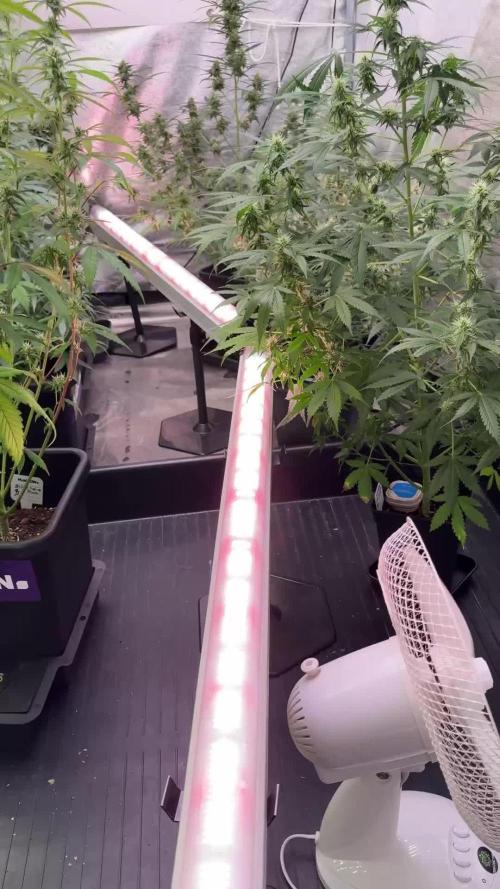

@DogDoctorOfficial
Follow
💜 Purple CousKush Auto by Zamnesia | Pheno B | Week 9
🌿 Elegant, Green & Right On Point
Some plants make you work for the compliments.
Others simply stand there and make you smile.
Purple CousKush Pheno B is definitely becoming one of those plants.
Week after week, she has maintained the same quiet elegance that made me like her from the beginning.
She isn't trying to dominate the room.
She isn't trying to become the tallest.
She isn't demanding constant intervention.
She's simply growing.
And growing beautifully.
This week, I'm looking at her and seeing something I really love:
consistency.
The plant is healthy.
The structure is beautiful.
The foliage is incredibly lush and deep green.
The flowers are developing exactly where I want them to be.
And those little developing buds are starting to take on that beautiful golf-ball-like formation, with the flowers becoming increasingly defined along the branches.
She is simply...
on point.
Exactly where she should be.
And honestly?
She's a delight to grow.
🌸 Week 6 Flower – Right Where She Needs To Be
Purple CousKush Pheno B remains around 96 cm, keeping her firmly in the more compact category of the 8×8 Adventure.
But by now, I've stopped looking at her height as a limitation.
It's simply part of who she is.
She's built a compact, balanced architecture and she's using it extremely well.
The branches are carrying developing flowers.
The bud sites are becoming more pronounced.
The structure is filling in.
And the entire plant has that beautiful feeling of a flowering plant moving confidently through her cycle.
There is no rush.
No drama.
No obvious need for correction.
She's just progressing.
And at this point in flowering, that's exactly what I want to see.
💚 That Green...
Let's talk about the colour.
Because honestly...
look at her.
That deep, lush green is one of the first things that catches my eye every time I look at this plant.
The foliage has that rich, healthy appearance that makes the flowers stand out beautifully against it.
And I'm starting to think there's something bigger happening here.
Across this 8×8 Adventure, I'm seeing remarkably lush foliage on a lot of these girls.
And while genetics obviously play an enormous role — enormous — I'm increasingly convinced that the quality and consistency of the nutrition program are also contributing to what we're seeing.
Good genetics give you the potential.
Good nutrition helps the plant express that potential.
And when the two come together under a stable environment...
That's when things get interesting.
So this week, I definitely want to give Plagron some extra love.
Because I'm genuinely impressed by the overall health and colour we're seeing throughout this run.
But let's be very clear:
It starts with genetics.
Without good genetics, there is only so much a grower can do.
You can have the best environment.
The best lights.
The best nutrition.
The best equipment.
But you still need a plant with something worth expressing.
And these Purple CousKush girls are giving us exactly that.
Genetics first.
Then cultivation.
Then environment.
And when those pieces come together...
you get plants like this.
🌸 The Buds Are Starting To Look Like Little Golf Balls
This is probably my favourite visual change this week.
The individual flowering sites are becoming increasingly rounded and substantial.
Those little clusters are beginning to look almost like small golf balls forming along the branches.
Not finished flowers.
Not mature colas yet.
But clearly developing structures that are gaining shape and volume.
And surrounded by those beautiful white pistils?
Absolutely gorgeous.
The contrast between the deep green leaves, the developing green flower structures and those bright white hairs is something I could photograph all day.
Every week, the flowers become a little more defined.
A little more substantial.
A little more recognizable.
And that's when you start realizing just how quickly flowering is moving.
She's building.
Quietly...
but she's building.
? Those White Hairs
The pistils remain beautifully prominent across the flowers.
Bright.
Fresh.
White.
And reaching outward from the developing calyxes.
They're one of those visual indicators that make the progression of flowering so easy to appreciate when you're documenting the same plant week after week.
You look at a photograph from several weeks ago.
Then you look at her now.
And suddenly you see it.
The flowers have changed.
The structure has changed.
The plant has matured.
She's no longer simply starting to flower.
She's becoming a flowering plant.
And we're getting closer and closer to seeing what this phenotype ultimately wants to become.
🌿 No Need To Touch What Isn't Broken
One thing I particularly appreciate about this phenotype is how little she asks from me.
The canopy doesn't look like it needs another major intervention.
The structure is open enough.
The flowers have space.
The foliage is healthy.
Air can move through the plant.
Light can reach the important areas.
So I'm not going to manufacture work.
There's a temptation in cultivation to always be doing something.
Cut this.
Move that.
Remove another leaf.
Adjust something.
Change something.
But sometimes...
the plant is telling you to leave her alone.
And I'm listening.
She's doing beautifully.
So she gets to keep doing beautifully.
💡 Light, Structure & Flower Development
The lighting strategy remains consistent, with the Future of Grow Black Series providing the primary overhead light and the Lumiflora system adding light beneath the canopy.
The interesting part now isn't whether the plant has light.
She does.
The interesting part is how she's using the environment we've created.
Her compact structure gives her a naturally efficient architecture.
The flowering sites are distributed through the plant rather than being buried inside an excessively dense mass.
And with the canopy management we've already done earlier in the run, we're now in the phase where I want to let the plant use the space we've created.
We're not chasing perfection.
We're not trying to expose every flower.
We're simply giving her a good environment and allowing her genetics to do the rest.
And she's doing exactly that.
💜 Same Genetics. Different Personality.
Her sister continues to be one of the great examples of why phenotypes are so fascinating.
Same strain.
Different expression.
Different architecture.
Different personality.
And that's exactly why I love growing multiple phenotypes side by side.
You can read the breeder's description.
You can read the genetics.
You can read what other growers experienced.
But eventually...
you have to grow the plant yourself.
And then she tells you the truth.
Purple CousKush Pheno B has told me that she likes being compact.
She likes building a balanced structure.
She likes staying relatively low.
And apparently...
she really likes making beautiful little flower clusters.
😂💜
I'm perfectly happy with that.
🌱 The 8×8 Adventure Is Showing Its Personality
This is one of my favourite aspects of this entire project.
Twelve different genetic expressions.
One room.
One general cultivation philosophy.
One environment.
And yet...
completely different plants.
Some stretch.
Some stay low.
Some become monsters.
Some become little jewels.
Some need intervention.
Some practically tell you:
"Doctor, please stop touching me. I'm doing fine."
😂
Purple CousKush Pheno B belongs firmly in that last category.
And I respect her wishes.
💧 Feeding & Irrigation
The flowering nutrition program continues with the established Plagron lineup:
Terra Bloom — 2.2 ml/L
Pure Zym — 1 ml/L
Sugar Royal — 1 ml/L
Power Buds — 1 ml/L
Green Sensation — 1 ml/L
pH Plus / Lemon Kick — as required
Current recorded conditions are approximately:
💧 pH: 6.0
⚡ EC: around 2.0 mS/cm
🌡️ Solution temperature: 25°C
🌱 Substrate temperature: 26°C
💦 Watering: approximately 1.2 L / 24h
? Pot size: 15 L
And again, I want to emphasize something I've been noticing throughout this run.
The foliage quality is impressive.
That doesn't come from one magic bottle.
It's the combination.
Genetics + nutrition + environment + light + irrigation + consistency.
Take away any one of those pieces and the picture can change dramatically.
But when they're all working together?
You get this.
A happy, lush, beautifully developing plant.
🌡️ Environment
The room continues running under stable conditions:
☀️ Day temperature: 29°C
🌙 Night temperature: 25°C
💧 Relative humidity: 60%
🌱 Substrate temperature: 26°C
💧 Solution temperature: 25°C
💨 CO₂: approximately 639 ppm
💡 Light schedule: 12/12
That consistency continues being one of the foundations of this entire experiment.
We're not trying to make every plant behave identically.
We're giving every plant a stable environment and letting the genetics show us what they're capable of.
And Purple CousKush Pheno B seems very comfortable inside it.
🔬 Genetics Deserve The First Shout-Out
I want to make this point especially clear because it's easy in a grow diary to give all the credit to the equipment.
The lights matter.
The nutrition matters.
The environment matters.
The grower matters.
But before any of that...
there is a seed.
And that seed carries the genetic potential.
Without good genetics, none of the other pieces can magically create something that simply isn't there.
That's why I'm genuinely happy with what Zamnesia has given me to work with in this run.
Purple CousKush Pheno B is showing us her own interpretation of those genetics.
And I really like what I'm seeing.
Then you add a consistent Plagron nutrition program, stable environmental conditions, strong lighting and careful observation...
and you give that genetic potential a good place to express itself.
That's the recipe I'm interested in.
Not one magic trick.
A complete system.
👀 Looking Ahead
Now my curiosity is really starting to build.
Those little golf-ball-like flower formations should continue developing.
The flowers should continue gaining volume.
The pistils will eventually begin changing as maturity approaches.
Resin production should continue increasing.
And that compact structure should slowly become increasingly dominated by mature flowers.
I don't want to predict the final result yet.
We're not there.
But I can say one thing with confidence:
I really like where she's going.
And that's enough for this week.
💜 Final Thoughts – A Delight Of A Plant
Purple CousKush Pheno B continues being exactly what she has always been.
Elegant.
Compact.
Beautiful.
Quietly impressive.
And this week, she's showing us even more of that personality.
The deep, lush green is absolutely gorgeous.
The bud formation is becoming increasingly pronounced.
Those little flower clusters are starting to look like miniature golf balls developing along the branches.
The white pistils are everywhere.
The structure is beautiful.
The plant is healthy.
And she is exactly where she needs to be.
Honestly...
I have nothing to complain about.
And sometimes that's the best report you can write.
😂💜
I'm also increasingly convinced that what we're seeing across this room is a beautiful combination of genetics and quality nutrition.
The genetics give us the potential.
The nutrition helps support that potential.
The environment allows it to be expressed.
And the rest is simply keeping everything consistent enough for the plant to do what she already knows how to do.
Grow.
Build.
Flower.
And shine.
So this week, Purple CousKush Pheno B doesn't need a dramatic story.
She doesn't need a rescue.
She doesn't need a big intervention.
She just needs her spotlight.
Because she has earned it.
A huge thank you once again to Zamnesia for these beautiful Purple CousKush genetics, Plagron for the nutrition that continues helping these girls maintain such impressive foliage and development, Future of Grow for the Black Series lighting, Lumiflora for bringing additional light beneath the canopy, TrolMaster for environmental control, and of course to everyone following this crazy 8×8 Adventure here on GrowDiaries.
Every phenotype has a personality.
Every plant has a story.
And Purple CousKush Pheno B?
She's writing hers quietly.
No drama.
No complaints.
Just deep green foliage, beautiful flower formation, bright white hairs and a plant that's becoming more impressive every single week.
Elegant. Compact. Beautiful. And absolutely on point. 💜🌿
Let's give this girl the spotlight.
She deserves it.
Until next week...
Keep shining, beautiful girl. 💜✨
Growers Love and happy growing! 🌱💚


