


Likes
Comments
Share


@Chumpkilla
Follow
*Here is a link to video on the Harvest. https://youtu.be/aZUOrljaioc
9/23/23 - Day 114 - Today was going to be the Chop, but I will wait one more day. I was not able to dedicate the full time I needed to make this happen today, so I decided I would give it one more day.
One thing I am noticing is the color of the leaves. I've always wanted to grow a strain that has purple in it, and it looks like this plant turned super purple. I couldn't tell because of the lights.
9/24/23 - Day 115 - I'm 2hrs away from chopping. With the Leaf box, you have to stay on your timeline, No rushing it, and no waiting. Always right on time. I started the grow at 3 pm 115 days ago so from 3 pm - 3 pm is a full 24/hrs. I'll update after 3 p.m. I already have my tripod, tools, cleaning materials, etc., up and ready. We will drain the water, ill then remove the roots and clean out the tub. Then, I'll start to remove the branches one at a time. Once they are removed, I will then get the hanging supports in place. Then I will hang them upside down and hope there is enough room. :)
I've noticed I have a lot of views on this grow. One thing I feel I should do a better job of (based on all the messages I received) is documenting the process that I follow throughout the grow. So I'll start my next grow in November. I'll document it with better "this is how I do this in Leaf" type details. 2 hours and counting! See you at 3 PM!
9/24/23 - I started at 3 p.m. and finally finished around 9 p.m. Holy shit, am I tired...... I have a lot of pictures and videos to upload. I'll add some photos tonight with some videos to follow tomorrow. I don't know how much I have yet, I need to wait until I can jar them to weigh them. I was able to get all the buds off and hung. With a couple of bags of A/B stock (Snicklefritz) of leftovers that I didn't want to hang. In just the Snicklefritz, I had 219g of wet buds. Ill know the full dry amount in a couple of days.
I was REALLY happy with the amount of buds. There were more than 75 branches of bud to hang/dry. Its the most weed I have grown ever.
Now that the buds are all back in the box. The Leaf box will handle all of the drying process. It will maintain temperature as well as humidity. I now wait and check daily to check for dryness.
Here is a link to video on the Harvest. https://youtu.be/aZUOrljaioc
9/26/23 - The buds are way more dry today. Im getting some really nice citrus smell from them. I think one more day should work before I start putting them in jars. I already trimmed them. Its a prefrence on trimming before/after drying. Becuase I had so much I wanted to make sure there was enough air space. This is my first grow in this box so this will be floor, theres no where to go but up from here. Im hoping to finish out this journal in September with a final weight.

Likes
8
Share


@y11dos
Follow
So far i feel like the plants have all decent health, for one of them i build a little think to stand on because its 10-15 cm smaller in height so that it would have the same height than the others and gets enough light for sure. I defoliatet completly i think by now, and i will just let buds develop from now
Im so curious how it evolves during the next few weeks

Likes
Comments
Share




Likes
30
Share


@MrJoint
Follow
✌️🎃 Thank you for checking my cultivation.
💧 Watering with Ripen for start roots wash.

Likes
11
Share


@mike97
Follow
After 72h darkness time to cut this ladies. Smell is stronger that I imagine.
Now 7/10 days drying, aiming for a slow dry and then a proper cure.
Likes
43
Share


@TheBulldozerSicily
Follow
Venerdi 29/03/2024
Inizio controllo
Ec 3844 ph 4.6
Aggiungo 50 lt acqua osmotica
Ottenendo
Ec 2133 ph 5
Aggiungiamo dose per 60 lt
48 grow 96 micro 144 bloom
60 cal mag 60 sensizym 60 rhino skin 60 bud candy 60 bud factor x 60 big bud 60 g megabud
Ottenendo
Ec 3114 ph 5.9
Likes
8
Share

@Susquihanna
Follow
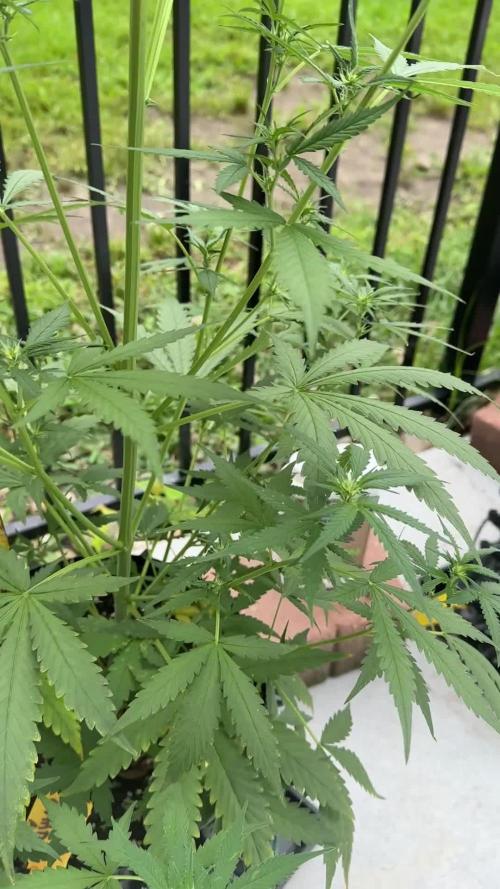
Divine Seeds Website says this Auto Candy could be as tall as 100-120 cm. My Auto Candy is 41 inches which translates to 104cm. On POINT.
What started out to be a little on the bushy side ended up sprouting up like a teenager.
Divine Seeds Website says this Auto Candy should be flowering in 60 days. My Auto Candy is flowering in 42 days--WHY??--Why is it flowering 18 days sooner?? Please advise. Maybe it is this wonderful @advancenutrient jungle juice that I am using:) I do know that the past couple of weeks have been excruciatingly HOT. This week is incredible cool--Thank you Jesus for the break in weather.
It will be very interesting to see what this cooler weather does during this flowering season.
Keep the comments and conversations coming this way. Be Happy!!

Likes
17
Share

@Bncgrower
Follow
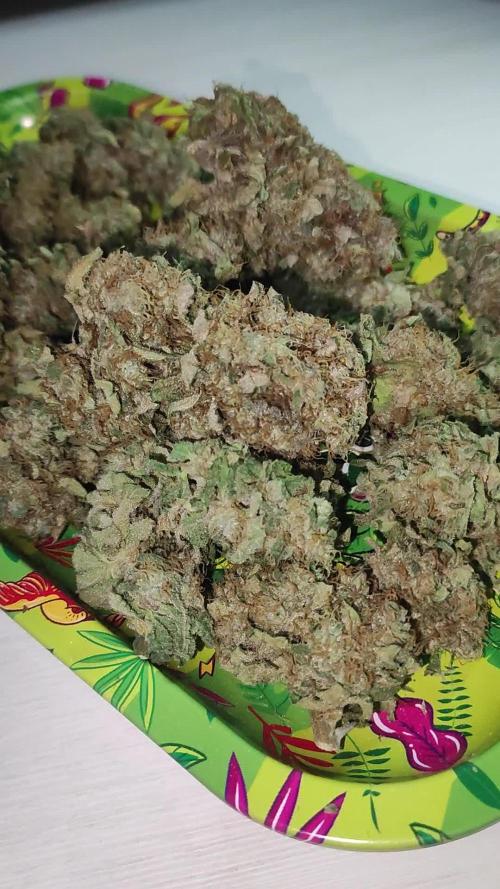
Harvested last night, truly strong smell, cultivation was absolutely perfect from start to finish. Very happy with the result, anxious for the drying and curing process! Thank you for following along.. 🤜🤛🌱🌿🌲
Likes
77
Share


@deFharo
Follow
Bienvenidos amigos, he cumplido 19 semanas de vida, 11 de floración y una como reina del jardín!! 😍... mi nombre creo que es Amnesia, soy algo olvidadiza 😵, mi apellido es Kush y desciendo de antiguos linajes Haze y Kush, soy fruto del mestizaje de plantas emigrantes y reúno en mis genes las mejores sativas de dos continentes...llámame AKU!! 😘 y si te acercas a mi... te regalaré aromas complejos e intensos, a incienso, madera y frutas ácidas que recuerdan a lima y pomelo.
Esta semana he bebido 3247ml de agua de riego, un 4% menos que la semana anterior, pero es que las temperaturas bajaron mucho desde hace 4 días, todas las plantas de la carpa de cultivo nos hemos juntado para darnos calor.
Ahora dedico todas mis energías en hacer crecer mis flores, y poco a poco, las hojas más grandes comienzan a cederme sus nutrientes, y al hacerlo, el bello color verde cambia y se tiñe de amarillo vetado, como las mechas en el cabello de las hembras humanas, ahora también soy, la tigresa del jardín de la alegría 🐯!!... I loved! 😍
24/04/21
La vida de reina es un lujo, todas mis compañeras me admiran y quieren ser como yo! Pero les va a resultar difícil tener unas colas tan gruesas como las mías.
Hoy mi jefe me ha dicho que un día vendrá con unos amigos para que me admiren también... serán raros seguro!! 😁
Mi cultivador me ha hecho una mezcla de riego muy nutritiva, para que siga engordando mis colas y no me falte de nada:
Hidrolato potásico de leonardita con fósforo (Humato PK) al 1,5%, Biol de frutas con Microorganismos Eficientes -EM (MMA, BAL, Vitaminas, Ca, Mg, Fe, Cu...) al 1,5% y melaza. PH: 6.64, EC: 1.30.1400ml... muy rico!!
27/04/21
Hoy me han hecho un riego muy suave, porque he comido mucho últimamente y mi cultivador no quiere que me empache. Una mezcla sólo con agua de montaña y melaza. PH: 6.60, EC: 0,40. 1600ml.
También me han añadido nutrientes y minerales sólidos en el sustrato, para que coma poco a poco cuando lo necesite... I loved! 😍
He estado emocionada todo el día con la visita de los amigos de mi jefe... hasta que han llegado! 😕 traen también a un cantante dicen que nos divertiremos, pero... todos parecen salidos de un funeral! 😲 es extraño, me miran y me dicen que me quieren, que estoy muy guapa y bla, bla, bla... pero creo que son simples saqueadores de marihuana!! 😡
Los conocía a todos, excepto a una niña repelente, siniestra y antipática que se llama Miércoles... creo que ya la odio!! 💀 El resto han estado fumando, y de vez en cuando me miraban y sonreían... me daban miedo, hay uno de ellos, muy grande, al que nadie hace caso o se ríen de él, no le invitan a fumar ni a beber, dicen que lo hacen porque no es feliz... ah que gente tan extraña!! 😟
Y comenzó la actuación, se apagaron las luces y Chet empezó a cantar, triste, todos aplaudían y chillaban... yo lloré!! 😪
"...Almost blue
Almost touching it will almost do
There's a part of me thats always true... always..."
Hasta la próxima semana....
SALUDOS A VUESTRAS PLANTAS!! 👸🐅🌲
================================= 🙄☮️👇🙏👌🤛👍👉👉👉❤️💜❤️👈👈👈🤜👌🙏👇☮️🤩🖐️🏻 =================================

Likes
1
Share

@Pokerdud
Follow
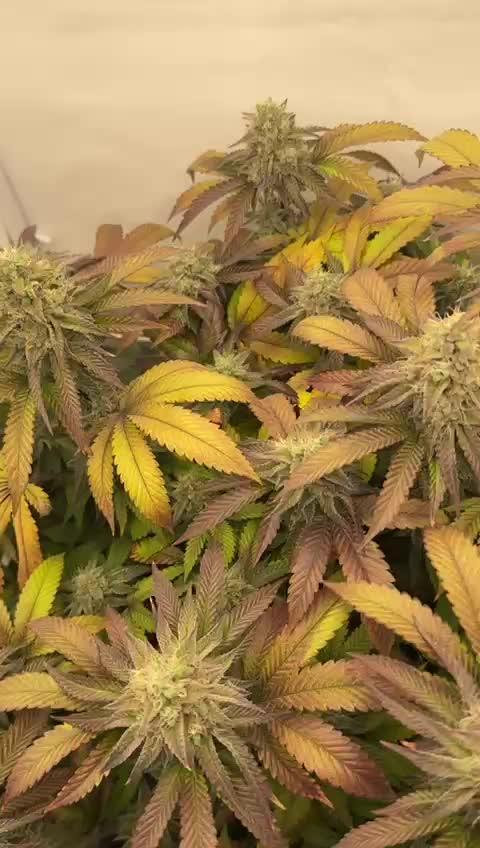
Die Pflanze hatte etwas Hitze Stress und Wassermangel aber wird sich denke ich gut erholen. Sonst die Buds sehen sehr gut aus und werden immer größer und kompakter bzw. schließen sich gut zusammen.
Heute ca. beginnt die 6 Blüten Woche.
Likes
17
Share

@AestheticGenetix
Follow
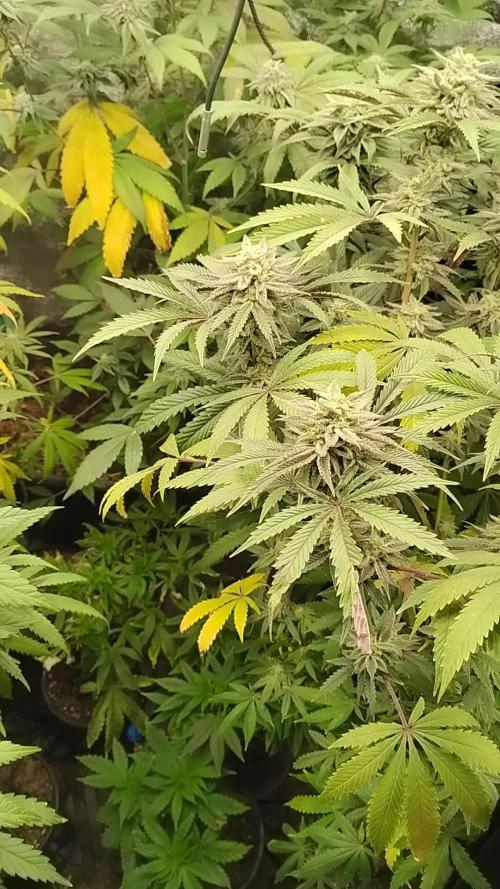
Sexy plant, can't wait for the seeds that come from this 🤙🏽
Check out my YouTube for long form content that I can't post here
https://youtube.com/@aestheticgenetix?si=pSk5e-kvp-nVYccc
Likes
2
Share


@Thedibber
Follow
Still not feeling too good but I did a little video of the current grows. Also added 4x new genetics to 2L livingsoil pots for the next run 😇

Likes
12
Share


@CannaArchive
Follow
So, the big day finally came!💚
I harvested the plant and got her cut and hung up to dry. But before that, she spent a solid 72 hours in complete darkness to finish off. (A little boost before the chop)🌿
Everything went as planned and is looking pretty good so far.
Nothing out of the ordinary, just smooth sailing through the final stage. Now it’s all about patience while it dries properly. Can’t wait to check out the final results in a couple of weeks! 🌱
Likes
2
Share


@Cavusesco
Follow
Block 1: Ali
i will do nothing with this plant. He is the Boss the highest
Block 2: Abbas
Topping at 5.node
Week 4
Block 3: Latif
Topping at 6. node
Week 4
Block 4: Vince
Removed 8 big leafs which are made shadows to the buds
Likes
10
Share


@TiRobotProds
Follow
Les site d'usine grossissement de jour en jours, bientôt engraissement des colas au Méga pk.


Likes
22
Share


@shwable
Follow
Harvest Week 24💚
she made it to 300g wet weight after a slight wet trim. The buds are really solid and smelling amazing fruity, gassy and floral.
Now she is drying and I will update the harvest as soon as I know the dry weight.

Likes
14
Share


@UnkleSkunk
Follow
Ed arriviamo ad "oggi"
Sono le ultime foto che ho fatto
La pianta inizia a bere di più...
Sto passando alla fertilizzazione x la fioritura...
Guardando le dimensioni delle foglie la pianta dovrebbe darmi molte soddisfazioni
Defogliamento leggero come sempre
Likes
21
Share


@ArucambaAutoflowers297
Follow
The fbt29 is on day 77 and is a few weeks from harvest. Expecting her to go over 90 days. She's hella frosty and smells exactly like her sibling did. Great signs of stability from the fastbuds tester.
Zkittlez and forgotten cookies are on day 40 and got their first training. Theyre in stretch since a few days ago.
More big girls in the making :D
Orange Sherbet is on day 20. So far she's on schedule. This strain seems to be sensitive to nitrogen.
The grape walker kush and fugue state are on day 14 and are doing well after dealing with heat issues last week

Likes
13
Share


@Ginger_gnome
Follow
First week went without any major issues. Plants been growing fine and you can see there is 4 steams on this plant that are growing a bit taller then the rest. The SE-3000 is running at 100% rite now and with the PPM set too 1000 for the Co2 it's getting lots of light and growth.
Temperature and humidity have been stable for the most part. Was having g issues with my dehumidifier tho for a few days. I believe it was over heating a bit and was auto shutting off. So the my humidity would spike up to 75-80% but luckily it was during lights off and I was home when it happened. After moving a few things around and turning it off for a hour it seems to have corrected itself. Good caz I don't really want to have to buy a new one yet lol.
For my nutrients I'm slowly bring it up. By the end of week 2 I should have it closer to 1000 ppm. I also stopped using airstones in my tank because I was having a few issues. Now I'm just using a water pump on a timer. Turns off when lights turn on and the back on a hour before the turn off.
I've got most of my fans now running at 100%. Only ones that are still only running at 50% are my two lower section fans. With them set to that I find the temperature and humidity at all 4 corners of the room are close enough that I should have zero issues.
Well that's all for now so keep growing everyone!!!