The Grow Awards 2026 🏆
Processing
Likes
Comments
Share
@
Follow
Likes
52
Share
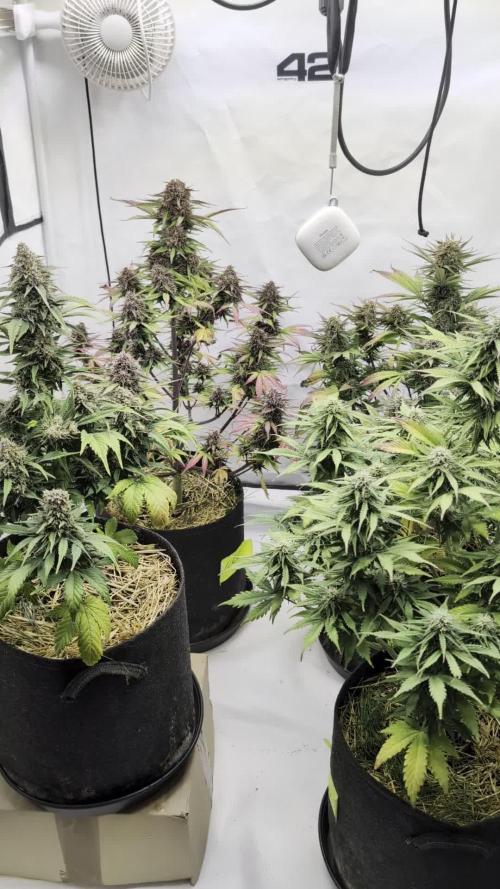
Lacewings seemed to have mostly killed themselves by flying into hot light fixtures. I may have left the UV on which was smart of me :) Done very little to combat if anything but make a sea of carcasses, on the bright side its good nutrition for the soil. Made a concoction of ethanol 70%, equal parts water, and cayenne pepper with a couple of squirts of dish soap. Took around an hour of good scrubbing the entire canopy. Worked a lot more effectively and way cheaper. Scorched earth right now, but it seems to have wiped them out almost entirely very pleased. Attempted a "Fudge I Missed" for the topping. So just time to wait and see how it goes. Question? If I attached a plant to two separate pots but it was connected by rootzone, one has a pH of 7.5 ish the other has 4.5. Would the Intelligence of the plant able to dictate each pot separately to uptake the nutrients best suited to pH or would it still try to draw nitrogen from a pot with a pH where nitrogen struggles to uptake? Food for stoner thought experiments! Another was on my mind. What happens when a plant gets too much light? Well, it burns and curls up leaves. That's the heat radiation, let's remove excess heat, now what? I've always read it's just bad, or not good, but when I look for an explanation on a deeper level it's just bad and you shouldn't do it. So I did. How much can a cannabis plant absorb, 40 moles in a day, ok I'll give it 60 moles. 80 nothing bad ever happened. The answer, finally. Oh great........more questions........ Reactive oxygen species (ROS) are molecules capable of independent existence, containing at least one oxygen atom and one or more unpaired electrons. "Sunlight is the essential source of energy for most photosynthetic organisms, yet sunlight in excess of the organism’s photosynthetic capacity can generate reactive oxygen species (ROS) that lead to cellular damage. To avoid damage, plants respond to high light (HL) by activating photophysical pathways that safely convert excess energy to heat, which is known as nonphotochemical quenching (NPQ) (Rochaix, 2014). While NPQ allows for healthy growth, it also limits the overall photosynthetic efficiency under many conditions. If NPQ were optimized for biomass, yields would improve dramatically, potentially by up to 30% (Kromdijk et al., 2016; Zhu et al., 2010). However, critical information to guide optimization is still lacking, including the molecular origin of NPQ and the mechanism of regulation." What I found most interesting was research pointing out that pH is linked to this defense mechanism. The organism can better facilitate "quenching" when oversaturated with light in a low pH. Now I Know during photosynthesis plants naturally produce exudates (chemicals that are secreted through their roots). Do they have the ability to alter pH themselves using these excretions? Or is that done by the beneficial bacteria? If I can prevent reactive oxygen species from causing damage by "too much light". The extra water needed to keep this level of burn cooled though, I must learn to crawl before I can run. Reactive oxygen species (ROS) are key signaling molecules that enable cells to rapidly respond to different stimuli. In plants, ROS plays a crucial role in abiotic and biotic stress sensing, integration of different environmental signals, and activation of stress-response networks, thus contributing to the establishment of defense mechanisms and plant resilience. Recent advances in the study of ROS signaling in plants include the identification of ROS receptors and key regulatory hubs that connect ROS signaling with other important stress-response signal transduction pathways and hormones, as well as new roles for ROS in organelle-to-organelle and cell-to-cell signaling. Our understanding of how ROS are regulated in cells by balancing production, scavenging, and transport has also increased. In this Review, we discuss these promising developments and how they might be used to increase plant resilience to environmental stress. Temperature stress is one of the major abiotic stresses that adversely affect agricultural productivity worldwide. Temperatures beyond a plant's physiological optimum can trigger significant physiological and biochemical perturbations, reducing plant growth and tolerance to stress. Improving a plant's tolerance to these temperature fluctuations requires a deep understanding of its responses to environmental change. To adapt to temperature fluctuations, plants tailor their acclimatory signal transduction events, specifically, cellular redox state, that are governed by plant hormones, reactive oxygen species (ROS) regulatory systems, and other molecular components. The role of ROS in plants as important signaling molecules during stress acclimation has recently been established. Here, hormone-triggered ROS produced by NADPH oxidases, feedback regulation, and integrated signaling events during temperature stress activate stress-response pathways and induce acclimation or defense mechanisms. At the other extreme, excess ROS accumulation, following temperature-induced oxidative stress, can have negative consequences on plant growth and stress acclimation. The excessive ROS is regulated by the ROS scavenging system, which subsequently promotes plant tolerance. All these signaling events, including crosstalk between hormones and ROS, modify the plant's transcriptomic, metabolomic, and biochemical states and promote plant acclimation, tolerance, and survival. Here, we provide a comprehensive review of the ROS, hormones, and their joint role in shaping a plant's responses to high and low temperatures, and we conclude by outlining hormone/ROS-regulated plant-responsive strategies for developing stress-tolerant crops to combat temperature changes. Onward upward for now. Next! Adenosine triphosphate (ATP) is an energy-carrying molecule known as "the energy currency of life" or "the fuel of life," because it's the universal energy source for all living cells.1 Every living organism consists of cells that rely on ATP for their energy needs. ATP is made by converting the food we eat into energy. It's an essential building block for all life forms. Without ATP, cells wouldn't have the fuel or power to perform functions necessary to stay alive, and they would eventually die. All forms of life rely on ATP to do the things they must do to survive.2 ATP is made of a nitrogen base (adenine) and a sugar molecule (ribose), which create adenosine, plus three phosphate molecules. If adenosine only has one phosphate molecule, it’s called adenosine monophosphate (AMP). If it has two phosphates, it’s called adenosine diphosphate (ADP). Although adenosine is a fundamental part of ATP, when it comes to providing energy to a cell and fueling cellular processes, the phosphate molecules are what really matter. The most energy-loaded composition for adenosine is ATP, which has three phosphates.3 ATP was first discovered in the 1920s. In 1929, Karl Lohmann—a German chemist studying muscle contractions—isolated what we now call adenosine triphosphate in a laboratory. At the time, Lohmann called ATP by a different name. It wasn't until a decade later, in 1939, that Nobel Prize–-winner Fritz Lipmann established that ATP is the universal carrier of energy in all living cells and coined the term "energy-rich phosphate bonds."45 Lipmann focused on phosphate bonds as the key to ATP being the universal energy source for all living cells, because adenosine triphosphate releases energy when one of its three phosphate bonds breaks off to form ADP. ATP is a high-energy molecule with three phosphate bonds; ADP is low-energy with only two phosphate bonds. The Twos and Threes of ATP and ADP Adenosine triphosphate (ATP) becomes adenosine diphosphate (ADP) when one of its three phosphate molecules breaks free and releases energy (“tri” means “three,” while “di” means “two”). Conversely, ADP becomes ATP when a phosphate molecule is added. As part of an ongoing energy cycle, ADP is constantly recycled back into ATP.3 Much like a rechargeable battery with a fluctuating state of charge, ATP represents a fully charged battery, and ADP represents a "low-power mode." Every time a fully charged ATP molecule loses a phosphate bond, it becomes ADP; energy is released via the process of ATP becoming ADP. On the flip side, when a phosphate bond is added, ADP becomes ATP. When ADP becomes ATP, what was previously a low-charged energy adenosine molecule (ADP) becomes fully charged ATP. This energy-creation and energy-depletion cycle happens time and time again, much like your smartphone battery can be recharged countless times during its lifespan. The human body uses molecules held in the fats, proteins, and carbohydrates we eat or drink as sources of energy to make ATP. This happens through a process called hydrolysis . After food is digested, it's synthesized into glucose, which is a form of sugar. Glucose is the main source of fuel that our cells' mitochondria use to convert caloric energy from food into ATP, which is an energy form that can be used by cells. ATP is made via a process called cellular respiration that occurs in the mitochondria of a cell. Mitochondria are tiny subunits within a cell that specialize in extracting energy from the foods we eat and converting it into ATP. Mitochondria can convert glucose into ATP via two different types of cellular respiration: Aerobic (with oxygen) Anaerobic (without oxygen) Aerobic cellular respiration transforms glucose into ATP in a three-step process, as follows: Step 1: Glycolysis Step 2: The Krebs cycle (also called the citric acid cycle) Step 3: Electron transport chain During glycolysis, glucose (i.e., sugar) from food sources is broken down into pyruvate molecules. This is followed by the Krebs cycle, which is an aerobic process that uses oxygen to finish breaking down sugar and harnesses energy into electron carriers that fuel the synthesis of ATP. Lastly, the electron transport chain (ETC) pumps positively charged protons that drive ATP production throughout the mitochondria’s inner membrane.2 ATP can also be produced without oxygen (i.e., anaerobic), which is something plants, algae, and some bacteria do by converting the energy held in sunlight into energy that can be used by a cell via photosynthesis. Anaerobic exercise means that your body is working out "without oxygen." Anaerobic glycolysis occurs in human cells when there isn't enough oxygen available during an anaerobic workout. If no oxygen is present during cellular respiration, pyruvate can't enter the Krebs cycle and is oxidized into lactic acid. In the absence of oxygen, lactic acid fermentation makes ATP anaerobically. The burning sensation you feel in your muscles when you're huffing and puffing during anaerobic high-intensity interval training (HIIT) that maxes out your aerobic capacity or during a strenuous weight-lifting workout is lactic acid, which is used to make ATP via anaerobic glycolysis. During aerobic exercise, mitochondria have enough oxygen to make ATP aerobically. However, when you're out of breath and your cells don’t have enough oxygen to perform cellular respiration aerobically, the process can still happen anaerobically, but it creates a temporary burning sensation in your skeletal muscles. Why ATP Is So Important? ATP is essential for life and makes it possible for us to do the things we do. Without ATP, cells wouldn't be able to use the energy held in food to fuel cellular processes, and an organism couldn't stay alive. As a real-world example, when a car runs out of gas and is parked on the side of the road, the only thing that will make the car drivable again is putting some gasoline back in the tank. For all living cells, ATP is like the gas in a car's fuel tank. Without ATP, cells wouldn't have a source of usable energy, and the organism would die. Eating a well-balanced diet and staying hydrated should give your body all the resources it needs to produce plenty of ATP. Although some athletes may slightly improve their performance by taking supplements or ergonomic aids designed to increase ATP production, it's debatable that oral adenosine triphosphate supplementation actually increases energy. An average cell in the human body uses about 10 million ATP molecules per second and can recycle all of its ATP in less than a minute. Over 24 hours, the human body turns over its weight in ATP. You can last weeks without food. You can last days without water. You can last minutes without oxygen. You can last 16 seconds at most without ATP. Food amounts to one-third of ATP production within the human body.
Likes
5
Share
@Deli_Weed
Follow
Esta semana engordaron bastante las flores, los últimos dos dias de esta semana deje de regar con nutrientes, pura agua 🚿 para empezar el flush
Likes
13
Share
Likes
18
Share
@RFarm21
Follow
Semana 4 maio - 10 maio 4 maio - feeding day (2l) 7 maio - flush 2.5L 10 maio - flush
Likes
11
Share
@NoLimitQ
Follow
11/02/21 Вытащил все зацепы из почвы чтобы перераспределить ветки. Сделал легкую тренировочку LST. Установил дополнительный свет из COB LED чипа (мультиспектр) на 50 Вт с линзой. Скоро с aliexpress придет второй такой же чип и после этого я уберу ЭСЛ105 Вт. Собрал еще один дополнительный светильник из 2x COB чипа (по 10 Вт каждый) с цветовой температурой 3000К. Завтра повешу в бокс. 12/02/21 Опрыскал из пульвика водой. 13/02/21 Полив водой 1 литр. Оборвал нижние веерные лопухи и перераспределил ветки, т.к. они начали вытягиваться. При тренировках начинаю чувствовать запах от растения - он приятен =) 14/02/21 Установил вентилятор поближе к растению, опрыскал из пульвика водой. 16/02/21 Полив раствором GHE: 1,5 литра воды отстоянной кранухи + MGB (3ml/2ml/3ml)
Likes
1
Share
@Ninjabuds
Follow
Discount code NINJABUDS: Air cube GROwACE.com Discount code NINJABUdS: ELUfAH Everything looks healthy for now. Nothing big to update yet I have not chosen which 6 plants I’m going to keep yet. I’m only going to keep one plant of each strain
Likes
7
Share
Day 63 of flower. I started the flush. I'm very satisfied with the grow, the cookies Is fattening up day by day..She Is so frosty and smell so good. Huge top colas by the way..9 on 15 off as light schedule. Maybe i Will flower her till day 70 or 77.
Likes
61
Share
@Amaya
Follow
С середины недели превела на компот для предцвета 2/2/2мл. на литр G/B/M, его NPK профиль такой: N120:P50:K150:Ca50:Mg60 Появились листья с 15 пальцами.
Likes
7
Share
LST, HST and defoliated second time, Fimmed main 1x, fimmed all tops 14 days later, fimmed all resulting tops 3 weeks later. well over 100 tops and counting, removed all tiny branches off the mains. pre loli.. lol Ill let em up in a few days. should be well beyond the 20" circumference of the 20 gal pots. Gonn a flower 2 in the space , and 2 in my newly acquired 48x48x80 tent. Shopping a few Flowering beasts to put in for the next phase. Love to get 2x https://opticledgrowlights.com/products/slim-720s-dimmable-led-grow-light-720w-triple-dimmer-3500k-uv-ir-lh351h-v2. Oh well, we will see. HAppy growing peeps!
Likes
7
Share
@Kushizlez
Follow
Day 52-64 (Day 54) I’m going to thoroughly inspect each plant and remove bananas if found. So far it’s only been the one on #7 but I don’t want to take a chance. I’m also going to give a watering with some runoff. (Day 55) Can’t find anymore bananas but that one. I will probably find a few bag seeds but who knows. It’s way too late for pollen to really have effect anyway. These 5 plants finish nice and early compared to my other tent flipped on the same day. I would never take this strain 65+ days like last time. I would do 56-60 days next time I flower this strain (Day 58) Holy shit this tent is fading like crazy now. They are starting to show some beautiful autumn colors. #1 #5 and #7 are definitely done. #3 and #6 could use a little more time so I’ve decided to take them down on the 24th. I haven’t seen anymore bananas and the one that popped out on #7 has shriveled up and receded. (Day 63) I’m seeing what look like seed pods starting to form in some of the main colas on my picture perfect pheno. #7 is showing 3 or 4 little bananas too. All of the top buds are definitely done so I’m going to harvest as soon as the lights come on tomorrow. I’m going to give one last watering right now and then harvest. I’ve noticed that harvesting a watered plant will extend the dry time by a few days and that’s exactly what I’m looking for. A nice slow dry. Plants are being full plant hung + dry trimmed and tent is being kept at 60-65 degrees and 60-65% RH. Cutting everything down was a pain in the ass. I had to individually cut each square the scrog net so it wouldn’t contract and squish all the buds. I chopped down my other tent as well so I have no other plants in flower right now.
Likes
29
Share
Info: Unfortunately, I had to find out that my account is used for fake pages in social media. I am only active here on growdiaries. I am not on facebook instagram twitter etc All accounts except this one are fake. Flowering day 65 since time change to 12/12 h. Hey guys :-) We arrived in the last days before the harvest 😊. The buds have swollen again the last few days. The trichomes are 90% milky and 10% amber 👍. This week it was poured twice with 1.2 l each time (for nutrients, see table above). As always, it is put in the darkroom for 48 hours before it is harvested. There is still a harvest update and a final update after fermentation 👍. Until then, I wish you all a lot of fun with the update and stay healthy 🙏🏻 You can buy this Nutrients at : https://greenbuzzliquids.com/en/shop/ With the discount code: Made_in_Germany you get a discount of 15% on all products from an order value of 100 euros. You can buy this Strain at : https://www.amsterdamgenetics.com/product/kosher-tangie-kush/ Type: Kosher Tangie Kush ☝️🏼 Genetics: Kosher Kush X Tangie 👍 Vega lamp: 2 x Todogrow Led Quantum Board 100 W 💡 Bloom Lamp : 2 x Todogrow Led Cxb 3590 COB 3500 K 205W 💡💡☝️🏼 Soil : Canna Coco Professional + Nutrients : Green Buzz Liquids : Organic Grow Liquid Organic Bloom Liquid Organic more PK More Roots Fast Buds Humic Acid Plus Growzyme Big Fruits Clean Fruits Cal / Mag Organic Ph - Pulver ☝️🏼🌱 Water: Osmosis water mixed with normal water (24 hours stale that the chlorine evaporates) to 0.2 EC. Add Cal / Mag to 0.4 Ec Ph with Organic Ph - to 5.8 - 6.4
Processing
Likes
51
Share
2/12: I moved the Platonium, both Sucrose Overdose, and the last Muscadine Wine into the dark. The Velvet Sugah Bref, GG4, and Berry Bomb are the last plants from this diary, and they are just getting water and Liquidsoil. They are all in the closet now and getting blasted with extremely cold winter air and intense UVB for their last week. 2/13: I harvested the Platonium, both Sucrose Overdose, and the last Muscadine Wine tonight. Sexy sexy bitches...ooh la la! Not embarrassed to say that I got major wood while giving them a bath...😜
Likes
51
Share
@nonick123
Follow
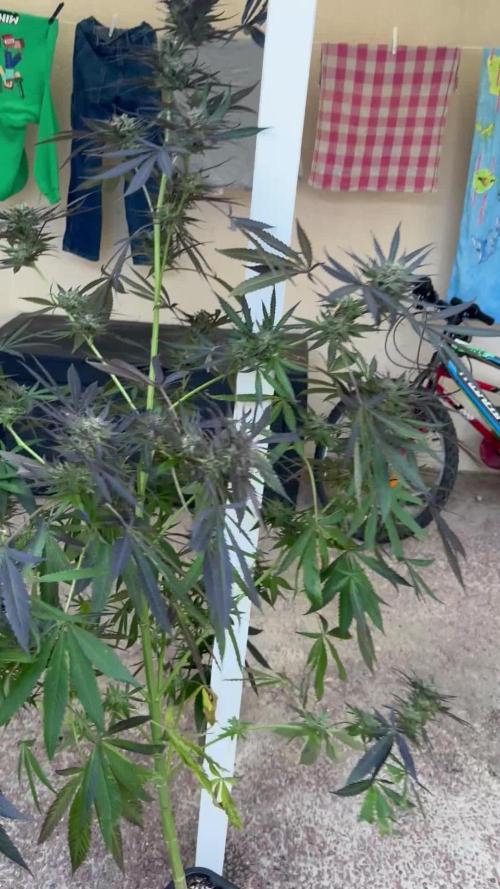
Día 43 (02/12) CBD Auto 20:1 #1 no para con el stretch! 🚀😍 Le elimino algunas hojas de abanico que tapan la luz a los cogollos inferiores Está empezando a pedir más agua cada día, pero no me extraña con lo grande que es! CBD Auto 20:1 #2 está empezando a engordar y engordar los cogollos 💥😁 OG Kush Auto tiene unos erizos preciosos! Día 44 (03/12) CBD Auto 20:1 #1 sigue imparable. Elimino algunas hojas de abanico OG Kush Auto se empieza a mostrar más sedienta en la formación de cogollos! Día 45 (04/12) CBD Auto 20:1 #1 sigue imparable. Elimino algunas hojas de abanico más! OG Kush Auto también le elimino algunas hojas de abanico Día 46 (05/12) CBD Auto 20:1 #1 Schwazzing / defoliación intensiva OG Kush Auto Defoliación! Día 47 (06/12) CBD Auto 20:1 #1 repetimos Schwazzing / defoliación intensiva debido a que la planta no para! Es increíble lo que crece esta planta! Día 48 (07/12) OG Kush Auto ha empezado a aumentar el consumo de H2O, y se muestra sedienta en esta fase. Mañana aumentaré el volumen de riego de 750 ml a 1.000 ml Debido a que se acerca una ola de frio, hago una mejora sustancial en la tienda Coloco un radiador de aceite + un termostato digital Wifi (controlador de temperatura) para poder controlar el radiador Me encanta porque desde la App puedo programar eventos en función de cualquier parámetro, de modo que puedo controlar la histéresis del radiador 😁 Tras un par de días de pruebas, consigo una temperatura estable de 22 - 24 ºC con luces ON! 😁 Día 49 (08/12) CBD Auto 20:1 #1 ha crecido increíblemente esta semana comparándola con la semana anterior! Un monster pheno! CBD Auto 20:1 #2 hago riego con 750 ml H2O RO + BIO PK 5-8 10 ml/l. ¡Un empujón para la recta final de floración! Tiene unos colores preciosos en los cogollos! Con tonos rosas y morados en los ápices! 😍 LSD-25 Auto hago riego con 750 ml H2O RO + BIO PK 5-8 10 ml/l. ¡Un empujón para la recta final de floración! Está preciosa con ese morado casi negro que presenta en cogollos y hojas, unido a los pistilos de color naranja fuego conforme van madurando OG Kush Auto tiene una formación de cogollos impresionante, y ha empezado a cubrir de tricomas todas las hojas que salen de los cogollos 😍 Lo único preocupante es que ha empezado a mostrar algunas manchas marrones en las hojas de los cogollos... Riego con 1 litro de H2O RO + 1 g/L de BACTREX para ver si le ayuda con la gestión de este exceso / deficiencia 💦Nutrients by Bio Tabs - www.biotabs.nl/en/ 🌱Substrate PRO-MIX HP BACILLUS + MYCORRHIZAE - www.pthorticulture.com/en-us/products/pro-mix-hp-biofungicide-plus-mycorrhizae "GDBT420" 15% DISCOUNT code for the BIOTABS Webshop https://biotabs.nl/en/shop/
Likes
22
Share
This is my first grow and I'm following the canuck method because it's the easiest . Eventually I would like to get into high frequency fertigation with a coco medium but I want to produce a great smoke in soil first to get some experience.
Processing
Likes
13
Share
We are really happy to show youethe progress of the girl's, we are going to upload the week's that'we couldn't Upload from the app, we are getting really frosty on these two Epic Genetics Strains, the epical widow and epic spigol Field, both really beautiful Strains
Likes
4
Share
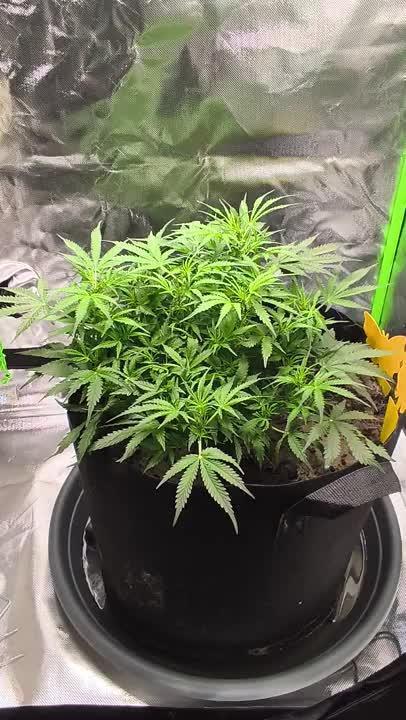
This week I've been pulling the top fan leaves to stop the plant growing taller and to allow the side branches to catch up. I also started feeding them. I will probably repot and switch to flower next week now they've all outgrown their mutations.
Likes
2
Share
Tequila Sunrise - Week 9: ¡Nuggets of Hope Under the Brandenburg Sun! ¡Hola from the land of sunshine, amigos! This week's been a real turn-around for our Tequila Sunrise! Seems like Mother Nature finally got the memo and decided to crank up the heat. All that sunshine has been a welcome change, and our little señorita is definitely basking in its glory. The most exciting part? hose flower buds are starting to look downright delicious! They're getting nice and dense already, packing on trichomes like there's no tomorrow. This is where things get interesting, though. With all this sunshine comes the threat of rain and humidity, which could spell trouble for those tight nugs. We'll have to keep a close eye on things and maybe even improvise a little rain shelter if needed. But hey, that's all part of the adventure, right? Speaking of adventure, the slug war seems to be a distant memory. Those plastic chair thrones are proving to be a fortress of solitude for Tequila Sunrise! No slimy visitors have dared to breach its defenses. Victory is sweet, my friends! However, it wouldn't be a proper telenovela without a little subplot, would it? Looks like a few sneaky weeds decided to join the party in Tequila Sunrise's pot. No worries, though, they'll be evicted faster than you can say "fiesta foul." We can't have any unwanted guests stealing the spotlight from our main star! And the star of the show is definitely looking frosty, amigos! Those buds are getting a beautiful coat of trichomes, sparkling like diamonds in the sun. To give you a closer look at the battle scars and the frosty magic happening, I even put together a little video. Check it out and let me know what you think! Things are definitely looking up for Tequila Sunrise! With a little sunshine and a whole lot of good vibes from all you growmies, she might just surprise us with a decent harvest after all. Stay tuned for next week's update.
Likes
151
Share
Hi guys, What's up? Welcome back to Queen Peaky's Flower Gardens After decapitating the apical bud we will give another week to recover from the shock suffered and then we will spend them in the flowering phase . Stay updated 😝m
Likes
13
Share
@gr3g4l
Follow
Aunque dejaron de crecer a lo bestia como lo hicieron en preflora, 25-30 primeros dias a 12/12h. han seguido creciendo hasta ahora y esta semana me tocó volver a calzarlas todas para que estubieran a una misma altura. Esta semana viene bién cargadita de nutrientes con tres riegos , dos o tres dias entre uno y otro, según veo o creo que lo necesitan. Seguiré regando mitad mitad, agua de grifo / destilada . El primer riego de la semana 3 ml/L de top Candy y un pelin de ácido cítrico para bajar el PH. EC 1,03 , PH 7,00 El segundo riego con Bud y Bloom, 1,5ml/L y 3ml/L respectivamente más ácido cítrico para bajar PH. EC 1,30, PH 6,9 El tercero con Delta9 y callMag. 4ml/L. y 0,5ml/L respectivamente más ácido cítrico para baja PH. última poda de hojas abanico, 2 o 4 de cada y poda de yemas para que no compitan con los apicales que reciben luz. También me tocó fijar mejor los troncos con alhambre de jardineria para que estos no se doblen por el peso y pierdan por aquí algo de energia. No tengo claro si fuí capaz de disminuir el exceso de nutrientes por lo que durante toda esta semana y hasta final de flforación se mantiene una EC baja. mezclando mitad agua del grifo mitad destilada y así consigo mantener esa EC . El haber regado en crecimiento y principio de flora con un agua tan dura y alcalina hizo que las plantas muestren el aspecto que muestran
Likes
15
Share
Moved this week so mostly just fed them. Switched to just water.