Likes
Comments
Share
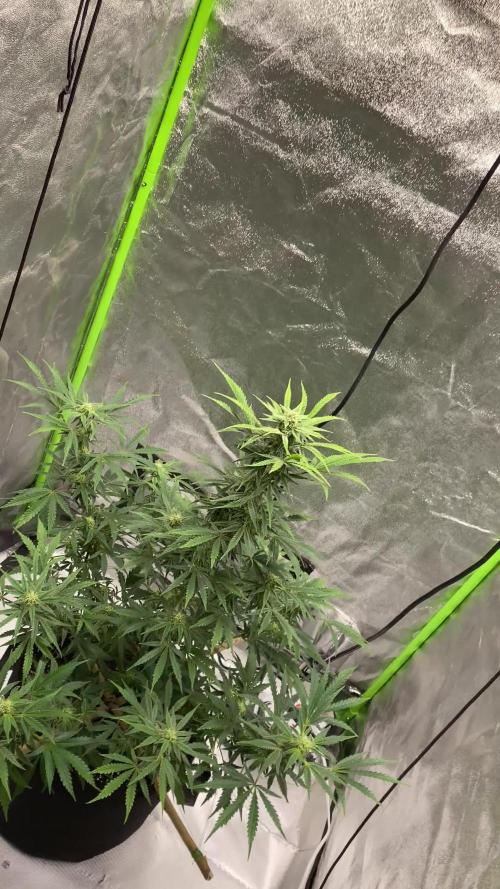
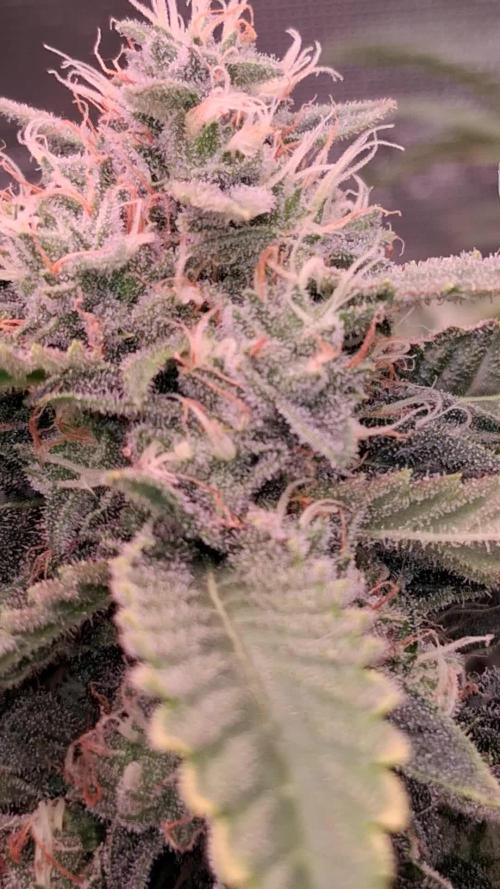
This was the girls last week! I decided to call them finished on day 63 the tricomes are almost all cloudy, with a small amount of amber. I’ve learned that they continue to degrade as you dry and cure your flower, so I’m trying something new for me, and pull them a little earlier than I usually would. In addition, after watching a podcast (Dude Grows Show) if you don’t know, check it out… I decided to run the lights for 18 hours instead of 12/12 for the last 5 days before harvest. The idea behind this, is to stress the plant enough to increase its natural sunblock/protections, which would be terpenes and tricomes just before you harvest, while also possibly quickening the finishing time for your plant. The group was discussing the benefits of this (listed above) while some already had implemented these practices when finishing plants. The recommended time to run extra light time would be around the last 5-9 days of the plant, without having any nanners or weirdness happening with your plants. Anyways, they finished amazing, sticky, stinky and heavy ❤️ the Terps are crazy on these strains….Harvest details to come. Thanks for stopping by 💚🇨🇦👊
Likes
11
Share
@Sejnik
Follow
Tento týden jsem provedl pořádnou defoliaci a odstranění nízkých větví, které se nedostanou na světlo. Zakoupení odvlhčovače nepomohlo snížit vlhkost.. budu muset pravděpodobně v budoucnosti zalévat menším množství vody. D82/19 Čtvrtek Každá z holek dostala 1,5l vody bez živin. Poté jsem rozpustil 2x RQS bloom booster tablets ve 13 litrech vody do které jsem přidal i ostatní živiny vypsané výše. Tento roztok jsem rozdělil mezi mé dívky. Každá tím pádem dostala 3 litry vody a částečně jsem tím propláchl substrát jako prevenci usazování solí.
Likes
2
Share
Week 8 – Day 59 (Flower Day 29) 🔄 Recap Still using diluted osmotic water, but the drain pH remains stubbornly low – stuck between 5.6 and 5.8 📉 After trying with Canna pH+, I’ve decided to switch back to BioBizz pH+, which worked reliably in my last grow to raise pH when using Advanced Nutrients. Apparently, the combination of Canna pH+ and AN doesn’t play well together 🤔 🌿 Plant Status – White Widow 📏 Height: 110 cm – she’s still growing steadily 💡 I had to dim the LED slightly – currently around 950–1000 PPFD ✅ She’s handling the light intensity very well, no signs of stress ⚗️ Feeding at 100% Advanced Nutrients Masterline 📌 Summary White Widow looks great overall. Even with the suboptimal drain pH, no visible issues so far. Still, I’ll try to bring the pH up slightly again – BioBizz pH+ is on the way.
Likes
55
Share
What's in the soil? What's not in the soil would be an easier question to answer. 16-18 DLI @ the minute. +++ as she grows. Probably not recommended, but to get to where it needs to be, I need to start now. Vegetative @1400ppm 0.8–1.2 kPa 80–86°F (26.7–30°C) 65–75%, LST Day 10, Fim'd Day 11 CEC (Cation Exchange Capacity): This is a measure of a soil's ability to hold and exchange positively charged nutrients, like calcium, magnesium, and potassium. Soils with high CEC (more clay and organic matter) have more negative charges that attract and hold these essential nutrients, preventing them from leaching away. Biochar is highly efficient at increasing cation exchange capacity (CEC) compared to many other amendments. Biochar's high CEC potential stems from its negatively charged functional groups, and studies show it can increase CEC by over 90%. Amendments like compost also increase CEC but are often more prone to rapid biodegradation, which can make biochar's effect more long-lasting. biochar acts as a long-lasting Cation Exchange Capacity (CEC) enhancer because its porous, carbon-rich structure provides sites for nutrients to bind to, effectively improving nutrient retention in soil without relying on the short-term benefits of fresh organic matter like compost or manure. Biochar's stability means these benefits last much longer than those from traditional organic amendments, making it a sustainable way to improve soil fertility, water retention, and structure over time. Needs to be charged first, similar to Coco, or it will immobilize cations, but at a much higher ratio. a high cation exchange capacity (CEC) results in a high buffer protection, meaning the soil can better resist changes in pH and nutrient availability. This is because a high CEC soil has more negatively charged sites to hold onto essential positively charged nutrients, like calcium and magnesium, and to buffer against acid ions, such as hydrogen. EC (Electrical Conductivity): This measures the amount of soluble salts in the soil. High EC levels indicate a high concentration of dissolved salts and can be a sign of potential salinity issues that can harm plants. The stored cations associated with a medium's cation exchange capacity (CEC) do not directly contribute to a real-time electrical conductivity (EC) reading. A real-time EC measurement reflects only the concentration of free, dissolved salt ions in the water solution within the medium. 98% of a plants nutrients comes directly from the water solution. 2% come directly from soil particles. CEC is a mediums storage capacity for cations. These stored cations do not contribute to a mediums EC directly. Electrical Conductivity (EC) does not measure salt ions adsorbed (stored) onto a Cation Exchange Capacity (CEC) site, as EC measures the conductivity of ions in solution within a soil or water sample, not those held on soil particles. A medium releases stored cations to water by ion exchange, where a new, more desirable ion from the water solution temporarily displaces the stored cation from the medium's surface, a process also seen in plants absorbing nutrients via mass flow. For example, in water softeners, sodium ions are released from resin beads to bond with the medium's surface, displacing calcium and magnesium ions which then enter the water. This same principle applies when plants take up nutrients from the soil solution: the cations are released from the soil particles into the water in response to a concentration equilibrium, and then moved to the root surface via mass flow. An example of ion exchange within the context of Cation Exchange Capacity (CEC) is a soil particle with a negative charge attracting and holding positively charged nutrient ions, like potassium (K+) or calcium (Ca2+), and then exchanging them for other positive ions present in the soil solution. For instance, a negatively charged clay particle in soil can hold a K+ ion and later release it to a plant's roots when a different cation, such as calcium (Ca2+), is abundant and replaces the potassium. This process of holding and swapping positively charged ions is fundamental to soil fertility, as it provides plants with essential nutrients. Negative charges on soil particles: Soil particles, particularly clay and organic matter, have negatively charged surfaces due to their chemical structure. Attraction of cations: These negative charges attract and hold positively charged ions, or cations, such as: Potassium (K+) Calcium (Ca2+) Magnesium (Mg2+) Sodium (Na+) Ammonium (NH4+) Plant roots excrete hydrogen ions (H+) through the action of proton pumps embedded in the root cell membranes, which use ATP (energy) to actively transport H+ ions from inside the root cell into the surrounding soil. This process lowers the pH of the soil, which helps to make certain mineral nutrients, such as iron, more available for uptake by the plant. Mechanism of H+ Excretion Proton Pumps: Root cells contain specialized proteins called proton pumps (H+-ATPases) in their cell membranes. Active Transport: These proton pumps use energy from ATP to actively move H+ ions from the cytoplasm of the root cell into the soil, against their concentration gradient. Role in pH Regulation: This active excretion of H+ is a major way plants regulate their internal cytoplasmic pH. Nutrient Availability: The resulting decrease in soil pH makes certain essential mineral nutrients, like iron, more soluble and available for the root cells to absorb. Ion Exchange: The H+ ions also displace positively charged mineral cations from the soil particles, making them available for uptake. Iron Uptake: In response to iron deficiency stress, plants enhance H+ excretion and reductant release to lower the pH and convert Fe3+ to the more available form Fe2+. The altered pH can influence the activity and composition of beneficial microbes in the soil. The H+ gradient created by the proton pumps can also be used for other vital cell functions, such as ATP synthesis and the transport of other solutes. The hydrogen ions (H+) excreted during photosynthesis come from the splitting of water molecules. This splitting, called photolysis, occurs in Photosystem II to replace the electrons used in the light-dependent reactions. The released hydrogen ions are then pumped into the thylakoid lumen, creating a proton gradient that drives ATP synthesis. Plants release hydrogen ions (H+) from their roots into the soil, a process that occurs in conjunction with nutrient uptake and photosynthesis. These H+ ions compete with mineral cations for the negatively charged sites on soil particles, a phenomenon known as cation exchange. By displacing beneficial mineral cations, the excreted H+ ions make these nutrients available for the plant to absorb, which can also lower the soil pH and indirectly affect its Cation Exchange Capacity (CEC) by altering the pool of exchangeable cations in the soil solution. Plants use proton (H+) exudation, driven by the H+-ATPase enzyme, to release H+ ions into the soil, creating a more acidic rhizosphere, which enhances nutrient availability and influences nutrient cycling processes. This acidification mobilizes insoluble nutrients like iron (Fe) by breaking them down, while also facilitating the activity of beneficial microbes involved in the nutrient cycle. Therefore, H+ exudation is a critical plant strategy for nutrient acquisition and management, allowing plants to improve their access to essential elements from the soil. A lack of water splitting during photosynthesis can affect iron uptake because the resulting energy imbalance disrupts the plant's ability to produce ATP and NADPH, which are crucial for overall photosynthetic energy conversion and can trigger a deficiency in iron homeostasis pathways. While photosynthesis uses hydrogen ions produced from water splitting for the Calvin cycle, not to create a hydrogen gas deficiency, the overall process is sensitive to nutrient availability, and iron is essential for chloroplast function. In photosynthesis, water is split to provide electrons to replace those lost in Photosystem II, which is triggered by light absorption. These electrons then travel along a transport chain to generate ATP (energy currency) and NADPH (reducing power). Carbon Fixation: The generated ATP and NADPH are then used to convert carbon dioxide into carbohydrates in the Calvin cycle. Impaired water splitting (via water in or out) breaks the chain reaction of photosynthesis. This leads to an imbalance in ATP and NADPH levels, which disrupts the Calvin cycle and overall energy production in the plant. Plants require a sufficient supply of essential mineral elements like iron for photosynthesis. Iron is vital for chlorophyll formation and plays a crucial role in electron transport within the chloroplasts. The complex relationship between nutrient status and photosynthesis is evident when iron deficiency can be reverted by depleting other micronutrients like manganese. This highlights how nutrient homeostasis influences photosynthetic function. A lack of adequate energy and reducing power from photosynthesis, which is directly linked to water splitting, can trigger complex adaptive responses in the plant's iron uptake and distribution systems. Plants possess receptors called transceptors that can directly detect specific nutrient concentrations in the soil or within the plant's tissues. These receptors trigger signaling pathways, sometimes involving calcium influx or changes in protein complex activity, that then influence nutrient uptake by the roots. Plants use this information to make long-term adjustments, such as Increasing root biomass to explore more soil for nutrients. Modifying metabolic pathways to make better use of available resources. Adjusting the rate of nutrient transport into the roots. That's why I keep a high EC. Abundance resonates Abundance.
Processing
Likes
31
Share
day 58: trichomes are 100% clear. still a few weeks before harvest
Likes
124
Share
Day 1 drying: Really nice strain! Easy to grow, medium dosage of nutrients. Smells amazing, I’m really curious how they will end up after the drying. Let’s see in some days. Drying day 7: finished and damn the terps are amazing! Smells and taste amazing. It reminds me of amnesia but in a mix with mimosa. Super special. I do really recommend trying this one out. But I would recommend using living soil over coco!
Likes
2
Share
@EtnoGrow
Follow
Seeing how the results are, the big ones I made apical and fmi species or the one you cut 3/4 I think they came out in a few days, some just cut the leaf and sprouted, I helped the biggest one with its final production and all of them general the different techniques, although curious results for a beginner, the techniques were not done well, they were cut halfway or only the leaves and not the apex itself ahahahaha, it turned out but very good in the end I would say
Likes
37
Share
Week 8 in the books, cruising to the finish line two more hard watering each and 48 hrs of darkness starting Friday. Genetics: Natty Roots Seed Co Instagram: @green_house_lab
Likes
6
Share
@LX1977
Follow
J-29 arrosages eau (pH 6.6) J-31 arrosages avec engrais (pH 6.6) J-33 arrosages eau + diamond sugar (pH 6.5) J-35 arrosages eau + nématodes bénéfiques (2eme phase du traitement contre les larves de mouches de terreau)
Likes
4
Share
@t0m420
Follow
Since now the plants are ok...zero deficiencies or problems Hopefully next week the plants will start flowering stage.
Likes
115
Share
Week 3 Blossom Ballet: Cherry Cola's Floral Extravaganza Unleashed Greetings, fellow green enthusiasts! We've hit Week 3 in the enchanting flower journey of our beloved Cherry Cola Auto, and let me tell you, the botanical ballet within the tent is reaching an unprecedented crescendo. Our green queen is unleashing a floral extravaganza that's nothing short of spectacular. As we dive into the heart of Week 3, the tent is transformed into a vibrant canvas of blooming beauty. The once-lush bush has metamorphosed into a floral symphony, each bud site a note in a melodious composition. The topping technique deployed earlier is now revealing its full glory, with multiple colas reaching for the spotlight. The decision to release our Cherry Cola from training supports continues to pay dividends. She's embracing her freedom with a wild elegance, and the tent is now an immersive experience of green abundance. The bushy ballet is a testament to the success of our horticultural endeavors, creating a living masterpiece. The topping triumph from the previous weeks echoes in every corner of the tent. The colas have matured into regal structures, each vying for attention in this botanical drama. The decision to venture into topping during the vegetative phase has proven to be a stroke of genius, enhancing both yield potential and structural beauty. Ah, a crucial note in our nutrient symphony! I introduced Potassium (K) to our water mix, adding another layer of vitality to our Cherry Cola's performance. P-Boost's phosphorus prowess, coupled with Topbooster's organic grace, dances in harmony with the added Potassium, contributing to the formation of hefty buds and enhancing the overall flowering response. Visual euphoria reigns supreme as our Cherry Cola daily unfurls new growth, showcasing the sheer energy and vitality she possesses. It's not just a plant; it's a living canvas of horticultural artistry that leaves me in perpetual awe. As we wrap up Week 3, Cherry Cola Auto stands as a living testament to the joy and wonder of cultivation. The floral odyssey is far from over, and the tent is a stage for a botanical performance that promises to linger in our memories. Stay tuned, fellow enthusiasts, as the Cherry Cola Chronicles continue to unfold! Genetics Cherry Cola Auto @Fast_Buds @fastbuds_genetics_official @fastbuds_official @fastbuds_espana Nutrition: @aptusholland @aptus_world @aptus_ Love, Care, and Attention: @dogdoctorofficial As always, thank you all for joining me on this journey, for your love, and for it all. My horticultural odyssey would never be the same without you. Your love and support are cherished, and I feel both honored and blessed to have you in my life
Likes
35
Share
Week 8 there hasn’t been any drastic changes for either of the girls. Girl #1 is looking better and better each day. Girl #2 is just being as stubborn as can be. Girl #2 still hasn’t showed any signs of flowering. I’m gonna continue to be patient with her she’s a very late bloomer. I can’t believe she’s been in veg for 8 weeks.I know some of you expert growers have experienced a long veg similar to my experience.Not sure if it’s good or bad luck just yet being my first run of autos. I have to admit. When i saw this week coming to The end and girl #2 wasn’t showing signs of flowering, I got down face to face with her quietly whispering (You better flower soon or it’s time for the trash can 😂😂) lol 😆 I had a weak moment was very frustrated. I thank all of you that have shared your information cause without it I would have been panicking. I’m gonna be patient and let the plant tell me when she’s ready. Everything has been running smoothly. I have given both girls light bloom nutrients. I have learned so much and it has been a pleasure watching the magic happen. Thank all of those who have viewed my diary. Thank you again for your support.
Likes
32
Share
@EBPbyEVD
Follow
Hey people! ✌️✌️ So, at the time of this post, it's day 60 of flowering. 🌸🌸🌸 We're nearing the finish line. This week, the seeds started popping out in all directions. Feeding remains unchanged: AB 20ml/5L. Today, I noticed some scary numbers on the runoff, measuring at 2500ppm. Next watering, I'll give them plain water. I'll continue feeding until the very end. The taste of the buds isn't our focus in this grow, and what kind of buds can we expect anyway? I continue to train the big plant as it started leaning to one side. I've tied it to the pot for support. My bet is that in 2-3 weeks, we'll be harvesting, collecting seeds, and running some bubble hash. There's a new addition to the grow box. I added a Barney's LSD auto since it's outgrowing my small box. I also planted 7 no-name seeds that came my way by chance. Curious to see what comes out of them. Well, until next time, have a great time! ✌️✌️
Likes
9
Share
@NanoLeaf
Follow
End of Week 6 Added CO2 with regulator and controller! Added the trellis net to spread out the canopy and get more even light to bud sites. The ladies have lost some momentum and they're drinking less because of the pest issue. Although they should be growing faster because of the CO2 supplementation I'm sure when the thrips are gone they will explode. I also performed some HST by removing fan leaves and softly pinching and bending some of the stems to open up the canopy whilst keeping the stress at a minimal. Pest Report: Still fighting the thrips... Every time I spray Bio-Insek and Xterminator (Agro-Organics) it deals with the problem for a few days until the eggs and larvae that the thrips left behind hatch and start munching on the plants again. The ladies are strong and healthy and get a slight wilt when I haven't sprayed IPM for a few days this tells me that its not a major issue but I need to get rid of them especially because I want to flip to flower soon. It seems that the problem is under control. Now I will apply it weekly to make sure those buggers are ELIMINATED.
Likes
3
Share
@PlantMike
Follow
Nothing new to report with sticky broccoli. She got a topping and a light defoliation of some of the megs fan leaves so she could clear lateral growth. Growth is steady and with these established pots there isn't much need for intervention by me while in veg. Flipped to flower 2/17. Here we go for flower!
Likes
5
Share
Week 6 These girls stretched like 10cm in a week had to control them. Defoliation followed by SCROG technique to help control the height. Fertilizers Plagron: grow 4ml , bloom 5 ml , Vita race 4ml, power bud 1 ml , power roots 1ml . Pest: applied spider boom as a preventive measures. Always better to prevent 1ml per liter sprayed on the leafs bottom and top. I am growing other strains but nothing is bushier or bigger than the Lemon Orange.This strain is definitely strong and easy to grow so far.
Likes
8
Share
This week i flushing a plant 7-10days and use ice burn. And close a light before hardvest 2days
Likes
23
Share
Gracias al equipo de Kannabia, Marshydro, XpertNutrients y Trolmaster sin ellos esto no sería posible. 💐🍁 RS11: Las variedades de marihuana son cada vez más grandes y mejores, y la Rainbow Sherbet #11 de Kannabia ha llegado para revolucionar tu mundo con su extraordinario contenido de THC del 30% y sus terpenos increíblemente deliciosos. Con una genética 70% índica, esta descendiente de la Pink Guava y la Sunset Sherbet ofrece muchas características interesantes, como su espectacular belleza. Sus cogollos a veces adquieren una tonalidad azul y brillan con una gruesa capa de tricomas, por lo que parecen piedras preciosas cannábicas. Germina las semillas en exterior o interior, y prepárate para quedarte con la boca abierta. La Rainbow Sherbet #11 no necesita muchos cuidados para producir plantas robustas y vigorosas. Incluso los principiantes podrán conseguir un buen botín cuando llegue el momento de la cosecha, y los cultivadores que ya tienen experiencia no tendrán problemas para hacer que sus plantas rindan al máximo. Con un poco de LST podrás maximizar su producción, y tras 9 semanas de floración en interior conseguirás alrededor de 450-500g/m². Al aire libre, esta variedad puede generar hasta 500-600g por planta. El nombre de esta variedad augura un montón de sabor, y la Rainbow Sherbet #11 cumple con creces. Sus cogollos tienen un aroma extremadamente complejo que convierte cada fumada en un viaje aromático. Las fragancias que más destacan son las afrutadas (principalmente a cerezas y bayas), así como las cítricas. Esta mezcla va acompañada de unos matices terrosos y especiados y de un toque de pino. Tras unas cuantas caladas, los efectos de la Rainbow Sherbet #11 aparecen con toda su fuerza, potenciando la alegría y la creatividad, calmando el cuerpo y la mente, y ayudándote a olvidar las penurias del día. 💡TS-3000 + TS-1000: se usaran dos de las lámparas de la serie TS de Marshydro, para cubrir todas las necesidades de las plantas durante el ciclo de cultivo, uso las dos lámparas en floracion para llegar a toda la carpa de 1.50 x 1.50 x 1.80. https://marshydro.eu/products/mars-hydro-ts-3000-led-grow-light/ 🏠 : Marshydro 1.50 x 1.50 x 1.80, carpa 100% estanca con ventanas laterales para llegar a todos los lugares durante el grow https://marshydro.eu/products/diy-150x150x200cm-grow-tent-kit 🌬️💨 Marshydro 6inch + filtro carbon para evitar olores indeseables. https://marshydro.eu/products/ifresh-smart-6inch-filter-kits/ 💻 Trolmaster Tent-X TCS-1 como controlador de luz, optimiza tu cultivo con la última tecnología del mercado, desde donde puedes controlar todos los parametros. https://www.trolmaster.com/Products/Details/TCS-1 📆 Semana 4: Aparecieron un monton de erizos esta semana, el temporal ha hecho algo de mella en la carpa al bajar las temperaturas aunque todo sigue correcto. Continuamos con las dosis de nutrientes recomendadas por el fabricante.
Likes
12
Share
@chrisss
Follow
Day 57) nothing Day 58 ) Fed ph”d recharged water, half a gallon Day 59) nothing Day 60) Fed calmag and bloom , lotta calmag cuz I see cal def Day 61) nothing Day 62) flush with 2 gallons of phd water Day 63)