




Likes
49
Share


@smzzz
Follow
Hey lads, i've fixed my pH problem. i think i'll just give them water for now
Buds keep increasing in size, they are so sticky it's insane.
The smell is huge, one of them smell a lot like citrus candy with a touch of earthy, and looks kinda different to the others,she was my "weakest one from seed", but she is now my favorite, for sure.
The 2 others have a hugeeee lemon smell, like a concentrate, realy strong
Tried to take trichomes pictures, Not working that much :(
I'll say 2 or 3 weeks to go !
see ya next week

Likes
25
Share


@Bongman
Follow
Hi Guys,
Week 17. I think F2 is almost ready for harvest. I got some deficiencies on some of the leaves. WIll Upload photos when its time for her to wake up. I am scared that it might be light leaks due to the new 6 in fan I added for air out flow cause to temp is too high for flowering. The problem is the ducting. I used some cheap ducting that came as a package from my Phresh carbon filter... BE SURE TO CHECK FOR LIGHT LEAKS ON DUCTING and not just the grow area and the appliance lights. Will add more later.
9th June update: F2 is ready to be taken down. WIll Flush today and let it dry out for two or three days then its harvest time.
QUESTION: How to tell if nutrients are flushed. Leaf color/Deficiencies right before harvesting. For my two plants in this grow.
F1 - Healthy dark green color leaves, which was bigger and taller due to the early transplant to larger pot Mid Veg. I flushed a few days before harvest and almost all the leaves were healthy looking and dark green.
F2 - A lot of thin dried and yellowish brown leaves that look like a lot of different deficiencies, which was shorter but collas are much bigger. It is short because I didn't transplant until 2 weeks into flower. . About to flush and harvest this week but the leaves are all showing heavy deficiencies. Does that mean there are still a lot of stored nutrients in the plant?????? thanks for the help in advance.
BM

Likes
202
Share


@CrazyHorse
Follow
Hello my beautiful friends 😇 😇 😇
After 3 weeks on grow period flowering stage is here 💪 💪 💪
Day- 22
The girls started to be very bushy, as they start showing first sign of flowering I go into the action and I proceed a small defoliation 🙌
Nothing big just to maintain a healthy growth and airflow 😇 😇 😇
Day- 23
Around two or three days ago I make a new tank of 10l... Nearly entire solution goes 😇
I have got heavy drinkers here 😂 😂 😂
All the best, You Lovely Girls Growers 💪💪💪

Likes
13
Share


@OlgaLatepu
Follow
Slowly but surely, it's growing all right.
The plants are keeping low and bushy.
I have three plants, each with 3 different heights. One normal, one growing sideways and one that's kind of a dwarf.
Only 3 months to go!


Likes
42
Share


@MrJoint
Follow
🍁Dicas e sugestões? As meninas agradecem.
📸Update de fotos, vídeos e informações diariamente.
DAY 15
Muito feliz com a germinação da COP, ela está se desenvolvendo muito bem. Good girl!
💡Coloquei a luz em 50% de potência e gostei do resultado.
💦Reguei a C1 e C2 (250ml cada) com BACTOHEMP bacilos e bactérias + Acophyllum extrato de algas. Elas parecem felizes :)
DAY 16
Escoras de apoio para C3 e C4 até o transplante. COP está muito bem.
O transplante será realizado antes das meninas dormirem (menos stress para as raízes) e serão regadas com 💦1L de água + 🥄1 colher de chá de BACTOHEMP.
DAY 17
C1 e C2 estão cheias de vigor.
COP e C4 reagiram muito bem ao transplante.
C3 um pouco triste com o processo.
DAY 18
Todas as meninas estão lindamente bem!
C3 já está com mais saúde e feliz, 24h após o transplante.
📝NOTA:
💡Aumentei o dimer do Led para 75%
⚠️Temperatura aumentou 3°C no growbox.
DAY 19
🚫🐜Antes das meninas dormirem vou borrifar óleo de neem (250ml) para evitar pragas e insetos.
DAY 20
Hoje foi dia de beber água! Dia de rega, as meninas estão todas saudáveis.
DAY 21
C1 e C2 estão com muita sede! Estava regando 125ml/dia, hoje aumentei a para 250ml/dia.
Após a difícil germinação COP está crescendo muito bem.
🎃Obrigado por verificar o meu cultivo.

Likes
33
Share


@microgrowshow
Follow
One of my favourite plants to grow so far. I learned a TREMENDOUS amount, especially all the ins and outs of supercropping. Although I did end up breaking my stalk, she turned out quite nice! I can definitely see myself supercropping plants in the future just to play around. The terpenes are also really nice on this girl. I can't wait to make some bubble hash and rosin. And I generally can't wait to grow this girl again knowing what she needs now in terms of training. Will also be nice to see the difference with organic dry amendments vs the FF wet nutrients I used.
Likes
15
Share


@Mr_Prawn
Follow
Empiezan a salir unas manchas marrones, tengo muchas hojas, estoy pensando en defoliar.
Likes
Comments
Share


Likes
9
Share

@DE_BW
Follow
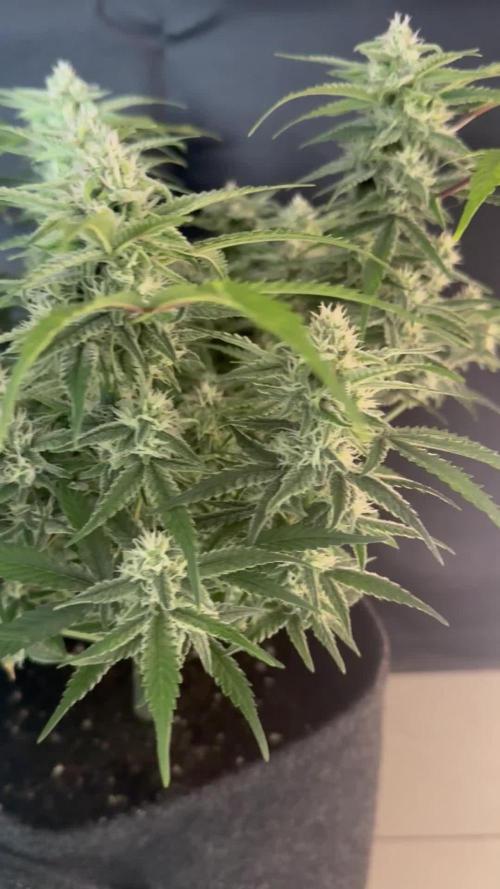
Week 4 of flowering shows strong structural development with many evenly distributed bud sites and the first signs of stacking. The canopy opened up well after selective defoliation, allowing light to reach the second layer, while resin production and bud formation continue to accelerate.
Likes
47
Share


@KA_LE
Follow
I decided this week to start adding nutrients at a very low dose at 1/8th of the recommended dose. I'm quite happy with how growth is progressing so far. There is a slight deformation in one of the first leaves but i'm not worried about it at this stage.
Likes
9
Share


@MassEric
Follow
Well, the outrageous stretch continues. At this point I'm not even sure I'll give this strain another shot. I *really* dislike the scraggly tall plants like this. Maybe for outdoors someone might take a shot on them. The plant on the right is still racing skywards and isn't showing me that is is slowing down. I'm going to have to start bending here.
grrrrrrr. Oh well, I've given the clones I took early on to a buddy for his outdoor grow.
Moving forward I have to really start thinking about more support up top. Thinking of nabbing a second net.
I've got a few seeds of this strain left and I'm wondering if I should bother to hope for a different pheno or just move on to another strain.

Likes
26
Share

@TheCannaProphet
Follow
😎Week 3
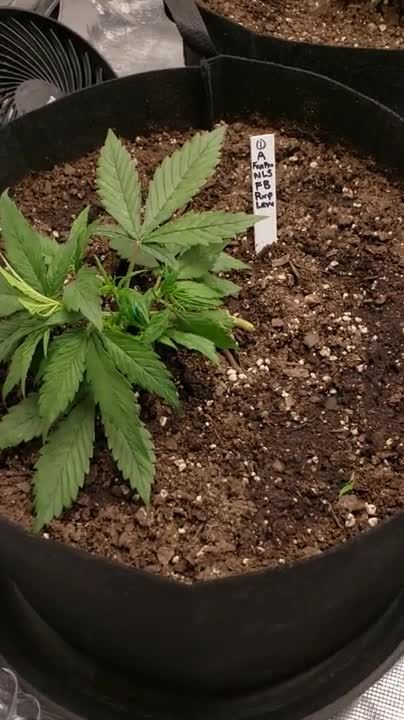
8/2- Here we go into week three and I'm looking to see some explosive growth happening in the tent soon!😃 The girls are all running 2 1/2" to 4" in height with the Seedsman Gelato OG's and FastBuds Purple Lemonade currently kicking all the others butts!💪 Gave a good watering this morning 2hrs after lights on with non-chlorinated water ph'd to 6.4. I plan on maintaining that watering schedule from here on out. I refilled the humidifier with non-chlorinated water ph'd to 6.5. Love the new setup with the two HLG quantum boards, 4 plants per light, and currently running at 400w per light. I'm looking forward to some record yields with this new setup using these 650R's! Temp's/RH/VPD are where they need to be at this point with daytime temp's maxing @ 83 Deg F/ nighttime @ 68 Deg F, RH @ 55%, VPD @ 9.0😀
8/3- Started compost tea last night, ingredients were; 5g de-clorinated 7.0ph water & 5tbsp unsulfured molasses, 4 cups worm castings, 1 cup alfalfa meal, 1 cup kelp meal, 2tbsp bat guano, 1 scoop Great White mycorrhiza and 3tbsp Neptunes Harvest seaweed extract which were added after the air was turned on and the 'bag' was in the bucket.
I fimmed the FastBuds Purple Lemonade #2 and Seedsman Gelato OG #1, LST'd the FastBuds Crystal Meth #1 & #2, and the Seedsman Zkittles #1. Whilst doing all that I noticed my old friends the fungus gnats so I immediately placed sticky traps in all pots....little bastards! I went online and ordered Nematoads who will have a field day with the gnats!
The girls all got watered in from the top and bottom with de-chlorinated straight water ph'd to 6.6 @ 76deg 225ppm, lights still @ 36" above the soil and running @ 400w each.😎
8/4- Gave the girls compost tea for breakfast. The tea had brewed for 38hrs., had 854ppm and ph'd @ 7.1...PERFECT! I split 4g of the tea between the eight ladies @ 1/2 gallon each. I also topped the FastBuds Crystal Meth #2 and Seedsman Gelato OG #2 and checked and adjusted LST on all. Temp's, RH, and VPD all on point with the girls are showing it!
8/5- Soil felt moist so skipping water today and will feed early AM. All the ladies have taken on a deeper shade of green and are really starting to take off since receiving the compost tea yesterday and they'll be going crazy by the end of this week going into week four. The FastBuds Crystal Meth #1 & #2 are both showing early flowering signs already and are starting to get some purple coloration in new growth which looks natural, not a deficiency. I topped the FastBuds Purple Lemonade #1 and Seedsman Zkittles #1 and checked/adjusted LST on all.
8/6- Gave a good watering this morning with 4g of de-chlorinated water ph'd to 6.8, went through, and tucked leaves on all the girls to keep exposing lower bud sites to the light so that we have a nice even canopy for flower! All the girls have either been topped, fimmed or LST'd at this point and all I'll be doing from here on out is tucking leaves and possibly some very minor defoliation if needed,
8/7- All the girls look very happy this morning and are starting to get ready for that stretch at the beginning of flower. The FastBuds Crystal Meth's are the shortest, along with the Seedsman Zkittles #1 and the CM's are already showing pistils but I'm not declaring that they're in 'flower' quite yet.
8/8- Gave all the ladies a good water in this morning with .5g each of de-chlorinated water ph'd to 6.9 @ 76deg. Went over all the girls and tucked shade leaves to expose bud sites, removed a couple of the ones that couldn't be tucked, and were blocking numerous bud sites. I also continued with LST on all bending branches outward to expose them to more of that HLG 650R goodness!
Likes
2
Share


@Delta9tetrahidro
Follow
En esta etapa no agregue ningún nutriente a la solución para evitar que la planta tenga gusto al nutriente, así dicen los expertos que queman esta hierba. Yo lo hago solo por deporte, no porque lo fume. mantuve el ph en condiciones estables a como dictan los científicos en este rubro. la próxima😁 semana corto las plantas y las pongo a secar.
Likes
24
Share

@Suemchen
Follow
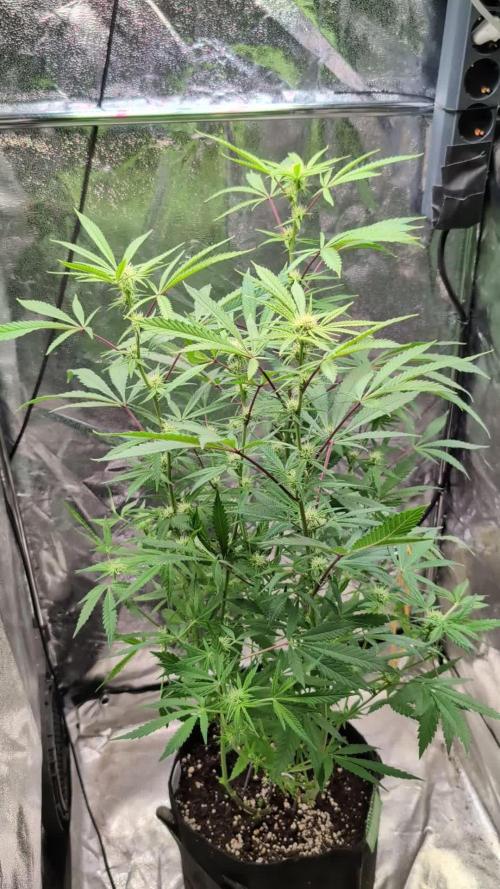
Sanlight EVO 3-60 at 80%
Day 85: watered with rain water and 1 ml/l Cal Mag 👌🏻
Day 87: Defoliated and watered with rain water and 1 ml/l Cal Mag 👌🏻
Day 90: looking good and watered again🌊. Watered with rain water and 1ml/l Powerzyme, 1 ml/l Hesi Boost, 1 ml/l Cal Mag, 1 ml/l Alg a mic and 1 ml/l Green Sensation. EC at 1.6 and a pH of 6.4 .
Likes
5
Share

@fadedgreentaurus
Follow
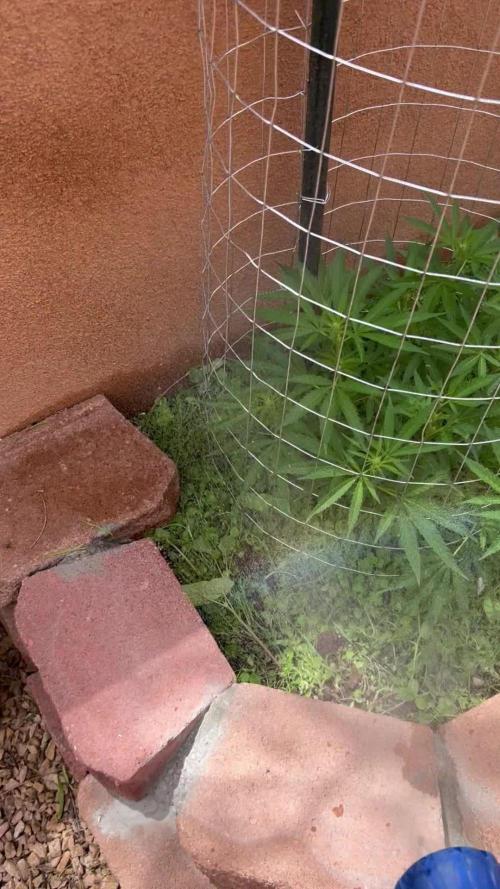
Strong week plants are bulking and showing signs of reveg, tops are all small popcorns these ladies should get huge and throw off a ton of tops.


Likes
37
Share


@DogDoctorOfficial
Follow
🌱 Germination Journey with Terpyz Mutant Mentha de Croco 🌱
Hey Grow Fam! Today kicks off an exciting adventure with Terpyz Mutant Mentha de Croco genetics. I’ve got 10 regular seeds ready to sprout, and I’m looking forward to discovering some beautiful female phenotypes—and maybe even a standout male for potential future breeding. It’s been a while since I’ve worked with regular seeds, so I’m thrilled to dive in!
Germination Process Overview:
Here’s a step-by-step rundown of the germination setup and process, with a special focus on the equipment and nutrients that are helping these seeds thrive right from the start.
Step 1: TheCannaKan Germination Pod 🌱
For germination, I rely on TheCannaKan—a device I’ve come to love and trust. It’s designed to create the perfect microclimate for seed germination, and within just 24 hours, the seeds started showing signs of life. By the 32-hour mark, they were all ready to be transferred to the next stage! I can’t recommend this gadget enough for anyone serious about getting strong, early growth from their seeds.
• Why TheCannaKan?
• Humidity Control: Ensures seeds stay hydrated without oversaturation.
• Stable Temperature: Maintains an even temperature around the seeds, so there’s no shock or stalling.
• Enhanced Oxygenation: Keeps fresh air circulating, helping prevent mold and ensuring seeds don’t suffocate.
Step 2: Transfer to Root Riots & Aptus Holland Supplements 💧
Once the seeds were sprouted, I transferred them into Root Riots, known for their excellent water retention and structure that encourages strong root growth. Root Riots also have a pH-balanced, spongy texture that makes it easy for roots to penetrate, promoting sturdy, healthy root systems.
At this stage, I started using Aptus Holland’s Regulator and Startbooster at 1ml/L each. Here’s why I chose these products for early growth:
• Aptus Regulator (1ml/L): Helps strengthen the plants against environmental stresses by supporting cell wall structure. It’s a fantastic choice for giving young seedlings an early boost in resilience.
• Aptus Startbooster (1ml/L): This product provides essential microbes and nutrients that stimulate root growth and early plant vigor. Especially for regular seeds, the early root development makes a noticeable difference in later growth stages.
Step 3: Lighting with Future of Grow (FOG) LED at 200 PPFD 💡
For lighting, I’m using a Future of Grow (FOG) 600W LED. For the germination stage, I’ve dimmed it to around 200 PPFD (photosynthetic photon flux density), which provides just enough light for healthy, strong seedling growth without overwhelming them.
• Why Low Intensity?
• 200 PPFD ensures that young plants aren’t exposed to too much light, which could cause stress or stunting. This level of intensity is perfect for encouraging healthy development without risking “stretching.”
• The FOG LED provides a balanced spectrum tailored to plant growth, setting up these young sprouts for success as they grow.
Step 4: Environmental Control with TrolMaster Tent X Controller 📲
For monitoring and control, I’m using the TrolMaster Tent X Controller, which lets me dial in every aspect of the environment to make sure these little ones have the perfect conditions for germination and early growth.
• TrolMaster Benefits:
• Precision Control: Adjust temperature, humidity, and lighting all in one place.
• Notifications: Sends updates in real-time to my device, so I can make adjustments as needed without being physically present.
• Consistency: Maintains stable conditions around the clock, reducing stress on seedlings and ensuring they’re thriving.
Grow Tips & Reflections:
Germination is one of the most crucial stages in a plant’s lifecycle. Starting with strong genetics like Terpyz Mutant Mentha de Croco, combined with a solid germination setup and the right nutrients, creates the foundation for a successful grow.
💡 Quick Tips for Fellow Growers:
• Hydration Balance: Don’t oversaturate! Moisture levels should be high enough for the seeds to sprout but not so wet that they drown.
• Light Management: A low PPFD for young seedlings prevents stretch and keeps nodes tight, preparing them for a healthy vegetative phase.
• Environment Consistency: Use a reliable controller like the TrolMaster Tent X to manage your settings, and consider monitoring tools for real-time adjustments.
Shout Outs to the Community:
Big thanks to Terpyz Genetics for these incredible seeds, Aptus Holland for their top-notch nutrients, Future of Grow for the stellar LED lights, and TrolMaster for the amazing controller. Also, shout out to all of you in the growing community—you make this journey exciting and filled with endless learning. Let’s keep growing and sharing together!
That’s it for the germination update! Next up, I’ll be monitoring growth closely to identify strong females (and maybe a standout male for breeding). Stay tuned for updates on our Mutant Mentha de Croco adventure—this is just the beginning!
Genetics - Mentha De Croco
https://terpyz.eu/products/menta-de-croco-fern-type?_pos=1&_sid=e9237cbcb&_ss=r
DogDoctorOfficial Discount Codes @ terpyz.eu - DOCTOR 15% off
Nutrition - @aptusholland
https://aptus-holland.com/
Led Power @ F.O.G. Future Of Grow
https://www.thefuturofgrow.com/en/online-store/BLACK-SERIES-600-p489093171
Controls @ TrolMaster
https://www.trolmaster.eu/tent-x
As always thank you all for stopping by, for the love and for it all , this journey of mine wold just not be the same without you guys, the love and support is very much appreciloved and i fell honored with you all in my life
With true love comes happiness Always believe in your self and always do things expecting nothing and with an open heart , be a giver and the universe will give back to you in ways you could not even imagine so
Growers Love To you All 💚

Likes
4
Share


@TS_Greens23
Follow
The orange 🍊 sherbet germinated really easily,,and took off ,,,apart from my sexy fingers breaking a couple branches early on in the grow,,she recovered quickly and was still able to produce a respectable harvest of flower,,,I did enjoy growing this strain,,and I look forward to smoking some of her ,,,for sure


