


Likes
Comments
Share


@Stork
Follow
Day 120
PH 5.8
EC 0.2
PPM
DLI 6h
PPFD/
Water 18c
Day 121 Tue
PH 6.0
EC 0.2
PPM
DLI 6h
PPFD/
Water 18c
Day 123
PH 6.0
EC 0.2
PPM
DLI 6h
PPFD/
Water 18c
Day 125
PH 6.0
EC 0.2
PPM
DLI 6h
PPFD/
Water 18c


Likes
3
Share


@Bread_n_Buds
Follow
Our Tangerine Dream have a name and promise scents that remind us of our land and so let's go home!
Remember that we are growing 1 Plant worked with the techniques and one left to grow without cutting techniques with a bit of LST.
She is in the main lining phase, unfortunately we have broken like fools a small side arm but for the rest we continue on an excellent path.
Comparison is the salt of experience so the plant in the other diary will be worked very differently go and see it to compare them.
We have started the Plagron fertilization program, we are in 100% organic configuration, the soil is recycled Promix + 1/3 fresh soil + 10% Perlite + RQS Mycorrhiza Mix (4 g in the mix, 1 g under the small fiber pot).
We are administering // 1 ml/l Power Roots - 1 ml/l Pure Zym - 1 ml/l Sugar Royal - 3 ml/l Alga Grow
We sprayed Vita Race Foliare 3 ml/l.
https://plagron.com/en
The doubts about the compatibility between Pure Zym and mycorrhizae have been dispelled, they can get along according to Plagron experts. If someone tells you that enzymes eat mycorrhizae, which in principle may seem possible, explain to them that it is not true.
https://www.royalqueenseeds.it/growing/452-easy-roots-mix-di-micorrhize.html
Taste this strain a little bit, it's a cross of legendary strains ---- // https://www.zamnesia.io/en/10966-zamnesia-seeds-tangerine-dream.html
Short Description Zamnesia // When legendary genetics are crossed, something exceptional can only be born. Tangerine Dream is the result of crossing classic strains. With citrus and sweet aromas and flavors, vigorous growth and euphoric and stimulating effects, Tangerine Dream by Zamnesia Seeds has it all. But don't take our word for it: order your seeds now and discover it for yourself.
You can find the whole world of growing at Zamnesia and much more take a tour of the site and you will find "all the best that nature has to offer" in various shapes and colors.
The new strains are fantastic and the old ones are no exception...
--- // www.zamnesia.com

Likes
2
Share

@Emerald_Gardens
Follow
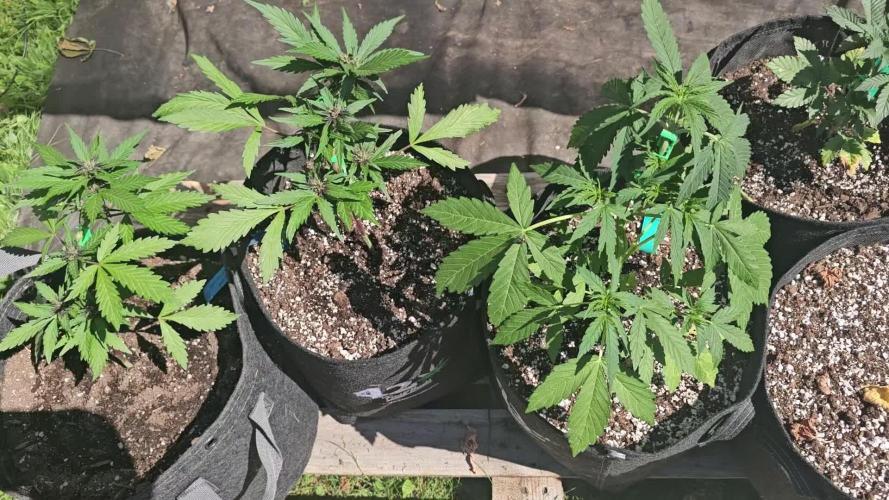
This week shows low stress training is starting the even out the canopy. The purple lemonade auto is now in flower however the OG Kush auto is still in veg mode. The mystery third plant is in early veg. We are now in full swing feed. And this weeks nutrients was green planets gp3, GP liquid weight, GP rezin, Gp root builder, and lastly cronk nutrients cal mag at a tds of 1220ppm and 6.3PH

Likes
11
Share


@madlangs
Follow
All going extremely well in the room. No problems. Purple punch is just starting to fade
20.4.23
Filled tank with winter frost
23gal
Ec 0.8
Ph5.9
Outside pineapple chunk
Looking lovely.
17.4.23
3L watered on top with
15ml bio heaven
12ml top max
Then put 750ml plain water on top
21.4.23
Started feeding winter frost
Ec6.4 no ph down

Processing
Likes
50
Share


@UKauto
Follow
Stretch seems to be over now.
Starting to get a little bit frosty.
Creeping along slowly but surely.
Fed her plain water begining of the week and a little cal/mag.
I'm away for new year so thought I'd upload upto today.
Hopefully she packs a bit of weight on over the next few weeks
Fingers crossed eh.
Likes
11
Share


@growerflowerweed
Follow
buenp no estoy seguro de como van las semanas pero ya la otra corto esta vuelta y empezaos a darle el ucrado y secado ideal para poder aprovechar este buen bouquete ya que el olor es relaente delcioso y pues esperamos que al momento de curar y secar mantengan esos olores tan exquisitos

Likes
12
Share


@HerbalBlazer
Follow
Time to put them in there new home, I'm using around 45l of living soil per pot.

Likes
22
Share


@CanarianGrow92
Follow
Wonderful tangerine smell, all strains are looking and smelling more or less the same, some buds are a bit bigger and some other showed some more stretching when we switched to flower but in general wonderful strain, lets see if the buds taste as good as they smell 😜
Week 4 already! We start to see a small nutrients deficiency, time to add some more organic stuff, i didn't applied too much so it seems it was food for 4 weeks, great as i dont want to give too much nutrients, I heard that organic nutrients gives a better taste and avoid salt accumulation in the roots, i always have been a typical grower using bottles but lets see, at the moment very happy, buds are looking good, i do need to add some sugars I think 🤔


Processing
Likes
1
Share


@josh_meredith1235
Follow
They seem to be going into early flower so time to up the bloom nutes, seem to love there new light

Likes
12
Share


@WheezyMango
Follow
After keeping an eye on the tricomes I've seen most of them turn white so last night I mixed 1.5ml/L of flawless finish and saturated the soil and left to set overnight this morning I flushed all 3 plants so far they dont look stressed out at all I was scared being my first time yet I still dont know if it was successful
Likes
5
Share


@Insaniac_0
Follow
Veg Week 3 Day 21 to 27 - 4/17 to 4/23
A lot more to talk about this week. It's topping and transfer week.
I started the week off (day 21exactly) by making sure I had at least 5 to 6 nodes of growth and topped P1 down to the 4th node and P2 down to the 2nd node as a test. (typically I top to the 3rd) I also removed all other node branches and fan leaves and usual. I left a large stump in my tops so the nodes can use it to grow around and help support the larger weight of a mature plant. I gave a couple of days of recovery while I hand spread the nodes daily to train the new waterways through the nodes. I changed my schedule and watered a day after and then transferred the plants into their forever pots/top watered in
Feed this week was .5gal transfer and top feed at 100ppm total before add-ins. I used 100ppm Veg concentrate mix (recipe week 2)
I then also added 1ml/gal of CaliMagic (General Hydroponics 1-0-0) and ph balance this week was for 6.2
Feed plan next week will be a final top feed of .5gallon and then turn the reservoir on.
Videos:
Topping and
Transfer

Likes
12
Share


@GanjaFarmerGrow
Follow
A beautifull Week 5 is behind us...
She is going FANTASTIC for an legal BIO grow...
Amazing branches and BIG size from BIG Seedbank...💪💪👌👆
Great genetics...
I hope she keeps going like this...
fingers crossed..🙏


Likes
18
Share


@raulmoat123
Follow
Quick update week 3 flower these girls are putting on weight very very quickly. The blue gelato buds are already becoming dense like stones . Watermelon punch literally is the most satisfying smell I have smelt in a while . Wedding cake is the biggest in my tent and most gassiest plant. The terple inhouse genetics are also massive will show the inhouse section next week , just takes to long to take them out of tent


Likes
37
Share


@eezeegrow
Follow
Well, I've had a problem. One of my automatic plug has failed and the light has been on for 3 days 24h/day. I've had some problems because of this but I think (I hope) I've recovered.
This will be the last week with ripen and then water for the last week. Buds are still nice and it seems that everything is ready for the harvest. 😉

Likes
26
Share


@Snacks_for_Argus
Follow
Hello fellow growers!
This is my first entry on growdiaries. I've been growing for about two and a half years, and got most of my knowledge following other growers from this site. I've decided to start sharing my own grows, so I can learn from experienced growers even more, and help other growers too if I can. This is around my 7th grow now.
I didn't document any of the veg for this plant, and only started documenting since Week 4, but going forward I will be trying to document the whole cycle of the plant.
I'm running x2 ETHOS Fanta Sea RBX & x2 ETHOS Citradellic Sunset. I vegged them for around two months in 1 liter pots, than transplanted them to the larger 15 liter pots and into my flowering tent for about a month. I usually flip them after a week or so from transplanting, but this time I was abroad and I didn't want to flip them and not tend to them during the first weeks of flowering, when the huge growth spurt happens, so I decided to flip them after I come back.
The result ended up being with all plants growing and stretching like crazy during my time away, before even flipping. Once I flipped, I threw in a scrog net and bended as much as possible. A week later ended up putting up another scrog net. I was afraid that the plants would stretch right under the lights, but now during week 4, any growing seems to have stopped and the plants energy is being channeled into the buds.
During the first 3 Weeks of flowering, I had a huge issue with humidity which stayed around 70%. Problems stemmed from being in a basement, bushy plants, bad ventilation & perspiration from AC + Heat from light fixture. I learned much more about humidity from this grow. It's much more stable now after adding another dehumidifiert, fixing the ventilation and defoliating heavily.
See you next week for the next entry!

Likes
49
Share


@masterofsmeagol
Follow
MAY 17th I'll water the 10th planet again tomorrow. Things are going amazing! I topped one of the blueberry cheeses and fimmed another. I'm not seeing any stress. If they seem good I'll hst some of the others. This doing ONE thing at a time helps figure out problems. It's 75 right now but it was 39 this morning.
UPDATE: IT STARTED FUCKING SNOWING TODAY. Forecast looks good and others are putting plants out. I'll hold off. They'll go to the garage soon for hardening off. Looking at other diaries I had much bigger "clones" but they always come full of problems (see last year). These plants are the healthiest ivecever grown. I'd rather have a healthy plant half the size than a clone with a bunch of issues. Tomorrow I'm planning to wash my stakes and grow bags. I'll get the palletts in position and move my cage. I also am considering either putting a small pvc cover on my cage or finding a way to attack something to the trellis system for heavy rains. If anybody has ideas I'm all ears.
5/18 DIDN'T WATER TODAY. Soil was dry but the pots were heavy. I could feel some moisture through the drain holes. I think it would've been alright either way but I'm erring on the side of caution. I'll check again later in the day. I topped one and fimmed anotger of the blueberry cheese. The purple punch is quickly catching g up to her sisters. I HAD to add a small ring around one of the purple pounce plants as it was WAAAAY lighter than the others. It's possible it could've gotten less water than the others last time due to its positioning. I'm also considering adding silica next feeding. So much left to do before they go outside. Oh and it was fucking snowing here yesterday! May 17 and it was snowing middle of the day. Morning temp wad 31 this morning so I'm staying cautious and making sure I have all my ducks I'm a row before I go outside. I'm also weighing options to either add a pvc hoop on top of my cage or look into protecting plants individually come late fall with our horrible weather. I'm leaning towards the pvc top. I think that would greatly help things.
UPDATE: Went back over at four and everything's looked great. Leaves praying to the sun. Topsoil is dry as fuck but I can still feel a little bit of moisture through the drain holes plus they have a little heft left to them. I plan on watering tomorrow and see how that goes. I wanted to add silica but I'm afraid of changing to much or raising the ph of the soil.
5/19 Found out that my scale will actually weigh the three gallon pots! I don't have an empty one to fill with dry soil to compare though. WATERED everything today. Topsoil was totally dry. Some plants had some heft to them. However I last watered on the 15th so I decided to cut back on the amount of water and see how that goes. Instead of the full 28oz powerade bottle I gave them a little over half. I tried for approx 16fl Oz per plant. Everything is looking great. Other than the little runt. I don't know whatcthecdeal is with that one bit it may get given away or culled. I also FIMed a purple punch.
UPDATE: Went back over around 11 and boy weren't the plants looking good. I'm moving my cage and sanitizing my pallets tomorrow. I sanitized my grow bags. I vleaned them with the baking soda and water and a scrub brush but since I had that problem with fusarium last year I then soaked them in a h2o2 solution for 20 mins before rinsing them off and letting them dry. I am so stoked for this season. Wondering about the pvc top and whether it's necessary 🤔. I have TONS of heavy equipment (well dad does) but the smallest thing we have is a backhoe and a bulldozer neither which I'm to inclined to use to move big plants. I thought that since the door to that garage is large enough to drive a front end loader in than if I could find a way to make my pallets mobile I could bring them in if storms are coming. I worry to much. I also got rid of anything that could gave spires on it. Ilk need to wash my plastic trellis netting and the bamboo as well but better safe than sorry.
5/20 Plants are still growing like weeds and are the ones I HST are recovering nicely. Soon they'll go out to the garage and spend their days outside in the sunshine and their nights inside the garage while I harden them off. Having trouble uploading stuff right now.
5/21 Topped two blueberry cheese and one purple punch. Plants are still doing great. We are getting close to go8ng outside in tye forever homes in smart pots ranging from 10gal to 50 gals. I still need to sanitize the pallets but this week I plan on hardening these girls off fully.
5/22 I weighed a couple of the plants and they were different. I think I got a couple 7lbs one that was 6 something and a heavier one that was 8. Looks like I've found the right amount. I plan to water tomorrow. They'll be moved in the next couple days to the garage and I'll let them fill the 3's before they go in their final homes. Plants are recovering from HST great. Still getting cold nights here. Honestly if I didn't have a major life event happen they'd be outside hardening off now
5/23 Watered everything with approximately 18oz of water. I am either going to move plants outside today to indirect sun (even though they've handled full sunlight from an open window) in the garage and keep the light going for a little longer. They need to fill their pots before they go in their forever homes. I've got some work to do but it will pay off.
EDIT: Cage has been moved to its new home. A huge pallet takes up most of it but I have littler ones that will fit in. I just haven't had a chance to disinfect these. I'm probably going overboard but I'm not fucking around with that fusarium or other any pathogens this year. I'm going to use the systemic organocide once I go outside. It's going to rain tomorrow amd might be cold but I still move the plants to the garage in the morning.
Likes
37
Share


@UKPersonal420
Follow
17/MAY/21 D:10: Didn't have any time over the weekend to visit the tent so I was excited/nervous about what state my girls would be in... And wow, she has definitely sprouted up and gained some decent growth. Very happy with how she is growing in my new setup!
A very faint odour of the generic weed smell as I opened up the tent door, she is already leaving a weedy smell on fingers after gently inspecting the leaves.
Gave her some water and a very light feeding of Advanced Nutrients pH Perfect Sensi Grow Part A & B
18/MAY/21 D:11: All is well, I keep forgetting to take a dustpan and brush so I can clean the floor 😱 Will make a reminder for next visit. Other than that, she's looking great, Out of seedling phase, and she is slowly starting to veg nicely now 😁
20/MAY/21 D:13: She has packed on a nice amount of foliage, certainly looking so far like a typical Kush bush 😄
I am thinking about planting that Strawberry banana seed daily!
21/MAY/21 D:14: Decided to top her, I am going to leave the fan leaves over the weekend just to help with recovery & growth. I have removed all new growth that would grow into anything other than a fan leaf.
I am following "Nugbuckets" mainlining technique, I have found a very useful step by step adaptation of this technique by "Nebula" ( https://www.growweedeasy.com/mainlining-nugbuckets ) A really interesting read, if you haven't I'd suggest checking it out! This is a tried and proved method, managed by many growers. So if it goes wrong, all responsibility is on myself.
Thanks for stopping by!
Peace
Likes
29
Share


@Dankdan
Follow
Okay so they have put some size on just hoping they get fatter haha did a full nute change to but all going good